







Abstract
Since the 1970s, popular movements organized around the struggle for housing have been strong in São Paulo. Based on four central agendas – slums and precarious neighborhoods upgrading; better rental conditions; urban improvements and land tenure in peripheral subdivisions; and public funding for housing production – housing movements have consolidated as an essential political player in São Paulo, intersecting with the struggles for health, education, transportation, and urban infrastructure. With local action and national organization, São Paulo’s housing movements are responsible for empowering the community, qualifying their dialogue, preparing for confrontations with the public authorities, and ensuring access to housing through public programs via organized building squatting. This paper analyzes the importance of São Paulo housing movements and its prominent female participants in São Paulo in conquering social rights.
Based on the analysis of housing movements’ experience in São Paulo, the article aims to advance the debate on their performance in struggling for and institutionalizing social rights in early 21st century Brazil, particularly among the poor and racial minorities. Brazil is a country of continental dimensions featured by significant and profound regional differences, so it is not easy to establish a national history of housing movements. Nonetheless, as will be shown, the São Paulo experience is paradigmatic and serves as a reference. This article also covers the central role of São Paulo’s housing movements in the organized social movements national articulation.
Over five decades since the emergence of the first organized social movements in São Paulo’s peripheral neighborhoods for urban up-grade, housing movements have become essential players in the struggle for low-income households’ rights (especially the right to the city). Initially, the movements focused on specific demands rooted in the peripheral neighborhoods’ daily lives, such as the lack of water supply, paved roads, transportation, or daycare centers. In the 1980s, the movements’ organization transformed them into active players in the struggle for urban reform and social rights conquest. As Brazil’s Military Dictatorship ended and the new Federal Constitution (1988) was approved, the 1990s were the time for institutionalizing the movements, first locally and then in national networks and organized groups.
In the 2000s, representatives of organized social movements actively participated in municipal administrations (and even in federal government), partly configuring what Holston (2008) and Caldeira (2017) referred to as insurgent citizenship and Miraftab (2009) as invited spaces. In the São Paulo municipality, for instance, social movements’ leadership participated as directors of the Housing Company. On the federal level, housing movements participated actively in the creation of the Ministry of Cities (2003) and worked within is technicians during more than one decade. Since 2016, after President Dilma Rousseff’s impeachment, the criminalization 1 of housing movements and public policies’ dismantling have taken over politics, only worsening after President Jair Bolsonaro won the presidential election of 2018.
This article is structured into five parts. In the first two, I present a history of the housing movements in São Paulo and its national articulations as a joint effort for political participation, emphasizing the importance of self-management and self-help strategies for the housing movements. In the third part, I demonstrate how spaces have been transformed from invented spaces into invited spaces (Miraftab, 2009). Following that, some active movements squatting and occupying 2 buildings in downtown São Paulo will illustrate the permanent creation of invented spaces by the organized housing movements. The current reality of the struggle for housing in São Paulo presents new delimitations and configurations discussed in the final section, which require further theoretical readings in conquering rights and the struggle against socio-racial exclusion.
From the outskirts to the city: The consolidation of housing movements
Brazil is one of the most urbanized countries globally, with 84.35% of its population living in cities (IBGE, 2010; UN-HABITAT, 2012). This intense urbanization process occurred throughout the second half of the 20th century, brought about by rural-urban migration and the late demographic transition cycle. In São Paulo alone, the population grew from 1.3 million people in 1940 to 10.4 million in 2000, reaching 12.3 million in 2020.
In addition to intense population growth, another essential feature of large Brazilian cities is the profound social inequality, with income concentration and significant portions of the population living below the poverty line.
3
Across the country and especially in São Paulo, the population growth and development created urban sprawl. São Paulo is Brazilian biggest and richest city. Its industries and economic growth were based in migrant workforce that included ex-slaves, mostly from the Northeast states, and some immigrant workforce, mostly from Italy, Spain and Japan. Housing for low-income populations, previously based mainly on rent, commenced primarily through self-building ownership in popular peripheral subdivisions (irregular or clandestine lands), expanding and consolidating a poor, unstable periphery.
4
This model was known as “tripod peripheral subdivision – house ownership – self-building,” but it also occurred through self-building in favelas (slums) (D‘Ottaviano et al., 2020). There were almost no housing policy for very poor families and none with race or ethnic guidelines. “Brazilian cities eloquently show the inequalities and precarious living conditions of the poor population. Formal mechanisms of access to land and housing, whether through the market or public policies, have always been insufficient, serving, at most, only part of the real needs of the population and usually through low-quality housing solutions. We also see a low degree of access and integration to urban infrastructure and equipment” (Cardoso, 2016: 29).
According to the 2010 Census, 5 52.6% of all Brazilian adults earned less than three minimum wages (around 600 US Dollars) and is considered very poor families. From this total, 52.0% was black 6 and 48.5% was women. In São Paulo municipality, the very poor are 45.4% of the adults, 43.1% black and 51.3% women. Black and women are also most part of the illiterate Brazilian adults: 66.7% and 65.0%. In São Paulo, theses percentages are lower: 52.6% of black inhabitants and 51.6% women are illiterate. It is important to notice also that 11.4% of Brazilian households are located in slums, were 68.3% of the inhabitants are black and 51.2% women. In São Paulo this percentage goes up to 9.9%, where 60% is black and 51.1% women. Different from US and other global north countries, besides race, gender is a central issue for Brazilian inequalities.
Historically, as living conditions remained poor and inequality intensified, a series of housing movements emerged in São Paolo in the 1970s. Organized on the basis of workers’ associations, these were local movements and pursued the goals of neighborhood associations’ guidelines, such as increasing access to water supplies, electricity, transportation, schools, and daycare centers.
One significant movement arose in 1984, intending to gain better housing conditions: Mooca’s Backyards [Quintais da Mooca], an offshoot group of the Workers’ Association of Mooca Region. Mooca is a traditional migrant working-class neighborhood in eastside São Paulo in which many tenement houses used to exist. Mooca’s Backyards was responsible for carrying out studies on the tenants’ quality of life, mobilizing residents to demand better housing conditions and instituting rent control.
Made up mostly of women, as the ones responsible for the households, the movement’s organization took place in assemblies and meetings, often held in spaces provided by the Catholic Church (Neuhold, 2009: 41). As a first mobilization, Mooca’s Backyards tried to negotiate with the municipal administration to use land in Mooca to build popular housing via a self-help task force. 7
The first official Meeting of Housing Movements was held in 1984 with the theme: “For a cooperative of mutual aid and self-management.” It had the participation of the Federación Uruguaya de Cooperativas de Vivienda por Ayuda Mutua (FUCVAM), whose model for housing cooperatives was the main reference of São Paulo movements. The meeting – organized by independent technicians working in the joint efforts of São Paulo and São Bernardo do Campo 8 – was the first attempt at articulating alternatives to the current housing policy. The lack of dialogue with the municipal administration led to political actions as a strategy to impose pressure on the municipality. In May 1985, the Municipal Secretariat of Social Welfare was occupied by families from Mooca’s Backyards. The families left only after the city government promised to build new homes in the region (Neuhold, 2009). The subsequent action took place at the headquarters of the municipal government in downtown São Paulo. The negotiation between the housing movement and the government led to the reform by the state government public housing company of two buildings in the eastside that were remodeled and transformed into housing units for low-income households.
The first wins of Mooca’s Backyard over the public authorities showed the importance of articulating and organizing families living in tenement houses. With the creation of new groups, the need for strategic organization among the various groups became clearer. In 1988, the Unification of Tenement-Housing Struggles (ULC) represented the first legally institutionalized struggle for housing in the city, with the central guidelines of improving quality of life and access to decent housing. That same year, the creation of the Union of São Paulo Housing Movements (UMM-SP) brought together the various housing movements active in the city (Pitta, 2019; Rodrigues, 2021). ULC emerged within the Mooca Workers’ Association, which dates to 1979. When I joined ULC, there were still workers in the factories because Mooca hosted some SENAI courses [National Industrial Training Service]. So, people were studying this subject. The battle was with families, mainly women, mothers who worked in the factories. Because Mooca is a working-class neighborhood, the struggle was for daycare since people had nowhere to leave their children. ULC arose based on this argument; soon afterward, it struggled for social rates in the tenement houses... nevertheless, more houses had to be done. And for ‘more’, I referred to housing downtown (Pitta, 2019).
Significant actions organized by the housing movements – especially in eastside São Paulo – happened in 1987 and 1988. One of the most important wins of the peripheral movements was the recognition by the real city, in spite of their being irregular or clandestine. This created the possibility of public investment in these peripheral neighborhoods. From the 1990s on, housing struggles started out focusing on downtown São Paulo as the peripheral movements firmed up. At that time, it was clear that living downtown meant a greater possibility of employment, a decrease in commuting time and expenses, and improved access to public services and urban facilities.
Housing movements in Brazil and the self-management agenda
In large Brazilian cities’ peripheral areas, social organizations’ players were necessary to improve access to housing and health, education, transportation, and urban infrastructure. Housing as a right became an autonomous agenda throughout the 1980s, initially rooted in the workers’ movements’ agenda, as in the Mooca case. In addition to being one of the significant mobilizations and popular organization banners, the struggle for housing brought together slum dwellers, residents of peripheral subdivisions and of tenements, homeless people, and indebted people, among others.
Most part of the participants and movements leaders were (and are until today) women, usually migrants from Brazil’s northeast region and single mothers. Although socio-racial or gendered aspects were not central on the political demands objects points at that moment, poor black and brown female empowerment and their liberatory process became an important part of the housing movements’ achievements. (Hein et al., 2020)
In São Paulo’s case, the emergence and consolidation of housing movements were strongly linked to the Catholic Church’s support, especially the Pastorals of Housing, and the political agenda of self-management ownership. According to the National Union for Popular Housing (UNMP)’s leader Evaniza Rodrigues (2021), throughout the 1980s, the Catholic Church’s parishes were the meeting places for social movements. There was no clear separation between religious activities and a neighborhood association or a political meeting. Over time, activities became more organized, and tasks gradually separated. The Pastorals of Housing started to offer training activities. Social movements and the church were connected by values, principles, education, bottom-up governance, and solidarity ideals. Some churches involved with the top pastorals got pretty teamed up with politics, mainly in the movements against the military dictatorship. There were no clear separations; the church meeting could also be a neighborhood association meeting or even a meeting for political discussions (Rodrigues, 2021).
The creation of the UMM-SP, for example, occurred from the association between a priest in eastside São Paulo and the Pastoral’s participants. 9 During the military dictatorship (1964–1985), the church legitimated the housing struggle and, to a certain extent, protected its participants. 10 As re-democratization took place, the growing organization and institutionalization of housing movements transformed them into autonomous organizations withdraw from the Catholic Church.
The self-management ownership agenda, in turn, came out to be defended by housing movements as a basis of social emancipation. Moreira (2009) and Ferreira (2014) argue that the self-management agenda’s consolidation overlaps with the urban reform movement to a certain extent. The debate on urban reform carried out by the social movements was centered on the social function of property, the right to the city, and democratic management, directly inspired the struggle for housing by the movements working in slums, tenement houses and squatters. According to Rodrigues (2013): This action’s background questions social and economic structures and social injustices as an integral part of the financial system. It also questions the preponderance passed onto the private capitalist sector in producing the built space and the city (...) (Rodrigues, 2013: 25).
The influence of self-management ownership around the world – especially in Uruguay – also influenced Brazilian housing movements. Amid the dictatorship, in the 1970s, the ABC Paulista metal workers’ strike movements had broad support from popular movements, leading to re-democratization and the founding of the Workers’ Party and the Single Central of Workers [Central Única dos Trabalhadores] in 1983. In this context of socialist enthusiasm, several initiatives for essential democracy, autonomy, and self-management emerged, deepening in the following decades (Ferreira, 2014: 165)
However, the approval of a self-management-driven housing policy was very slow and the social movements were important players during all the processes. Conferences, councils, public hearings and the Caravans’ national mobilizations for Housing and Struggling Journey were some of the strategies used by the movements (Ferreira, 2014; Lago, 2012; Rodrigues, 2013).
According to the UNMP Housing Self-Management Primer:
Housing movements cease acting only as a claiming movement that denounces inequality and the absence of a public policy for the population’s immediate needs to start performing purposefully and interloping in urban policy construction. Based on their experiences, they include the proposal for self-managed joint efforts with the elaboration of popular law initiatives and the creation of institutional instances of participation.
The Housing Movement begins to struggle for the right to intervene in the housing policy deliberately in the various expressions of the urban issue, in the slums, in the tenement houses, in irregular subdivisions, and, mainly, in defense of producing housing through the self-management process (Rodrigues et al., 2019: 10)
In this context of self-management support, the Fund for Assisting Population Living in Sub-Normal Housing (FUNAPs Comunitário) program, 11 implemented by the São Paulo City Hall Luiza Erundina’s administration (1989–1992), was the primary reference in the Brazilian self-management program.
One of the main innovations implemented by Erundina was the recognition of the real city and its specificities (former programs only included the legal “regular” city). This orientation helped the City Hall develop programs to tackle specific urban and housing problems, such as housing improvements in tenement houses; slums upgrading; land tenure regularization of slums; and new housing via self-managed joint efforts between the city and residents (D‘Ottaviano, 2021).
FUNAPs Comunitário was developed on an experimental basis by municipality technicians historically engaged with the struggle for urban reform and with self-managed popular movements. It intended to meet the population’s needs that earned less than four minimum wages 12 (M.W) living in precarious housing. The funds could be applied on a non-refundable basis, turning the program into an alternative for those who did not have access to the (national) Housing Financial System, which was ruled by the State National Bank and had no kind of subsidy, therefor was limited to middle income families (Ferreira, 1998; Ronconi, 1995; Santo Amore, 2004).
Besides creating paradigmatic architectural projects (Ronconi, 1995), FUNAPS-Comunitário was responsible for firming up self-management as a feasible housing provision option. Since then, self-managed housing production has been conceived through a partnership between government, housing movements, and technical assistance, with financial support from the city government.
Even though self-management ideals date back to organized social movements and housing movements from 1970’s (Paz, 1996), the scope of public policies incorporated the self-management agenda into it only after consolidating the self-management experience brought about by FUNAPS-Comunitário. The FUNAPS-Comunitário’s experience was also significant to consolidate housing movements as leading players in the struggle for housing and the right to the city, featuring them as City Hall’s partners.
Movements and housing policy
Between the late 1980s and early 1990s, housing movement organized themselves in national networks and groups throughout the urban reform scope.
National Urban Reform Movement (1985).
At the national scale, the first specific representation of housing movements was the National Confederation of Neighborhood Associations (CONAM), created in 1982. The association of the exiting local residents’ associations had the ambition to strengthen their agendas and struggles through a national central coordination. In 1982, the first Foundation Congress of the National Confederation of Neighborhood Associations was held in São Paulo, resulting in the creation of CONAM which brought together state federations, municipal unions, community associations, neighborhood entities to spread its impact to public and housing policies (Ferreira, 2014: 73 and 74). Today, CONAM brings together more than 550 municipal entities and 22 state federations. 13
The creation of the National Urban Reform Movement resulted from the organization of social movements (later the National Urban Reform Forum 14 ) in 1987, during re-democratization and drafting the new Federal Constitution (1988). It was responsible for the Popular Urban Reform Amendment that proposed: “(i) limits on private property and private appropriation of the city; (ii) the fulfillment of the social function of the property; (iii) and the direct participation of citizens in urban management” (Ferreira, 2014: 83 and 84). The Popular Amendment included two chapters on Urban Policy to the 1988 Federal Constitution.
In 1989 and 1990, two national organizations of housing movements emerged within the National Urban Reform Movement’s sphere: the National Union for Popular Housing (UNMP) and the National Movement for Housing Struggle (MNLM). UNMP emerged from the mobilization of housing movements to create a System and a National Fund for Popular Housing. UNMP is currently operating in 19 Brazilian states and brings together homeless and tenants, slum dwellers, borrowers, construction and residents’ associations, and occupations. From national representation by state, grassroots groups articulate the affiliated movements locally. The entire organization strongly is influenced by the Base Ecclesial Communities, the origin of many leaders within the housing movements (Rodrigues et al., 2019). Its central focus is on housing via self-management. The MNML has continuously worked on urban reform, popular participation, and the social function of property, and only recently in housing production. The participants are very low-income families mostly represented by women. In São Paulo, the women are mostly migrant (from northeast), black and single-mothers.
A final national articulation created was the Central of Popular Movements/CMP [Central dos Movimentos Populares] in 1993. It encompasses not only housing movements but also the most diverse organizations and popular movements. In several ways it has contributed to the struggle for housing: by managing groups to carry out occupations of buildings and land; by negotiating with the various spheres of public power (municipality, states, or Union); and by demanding public housing provision programs.
Housing movements active in São Paulo, 2021.*
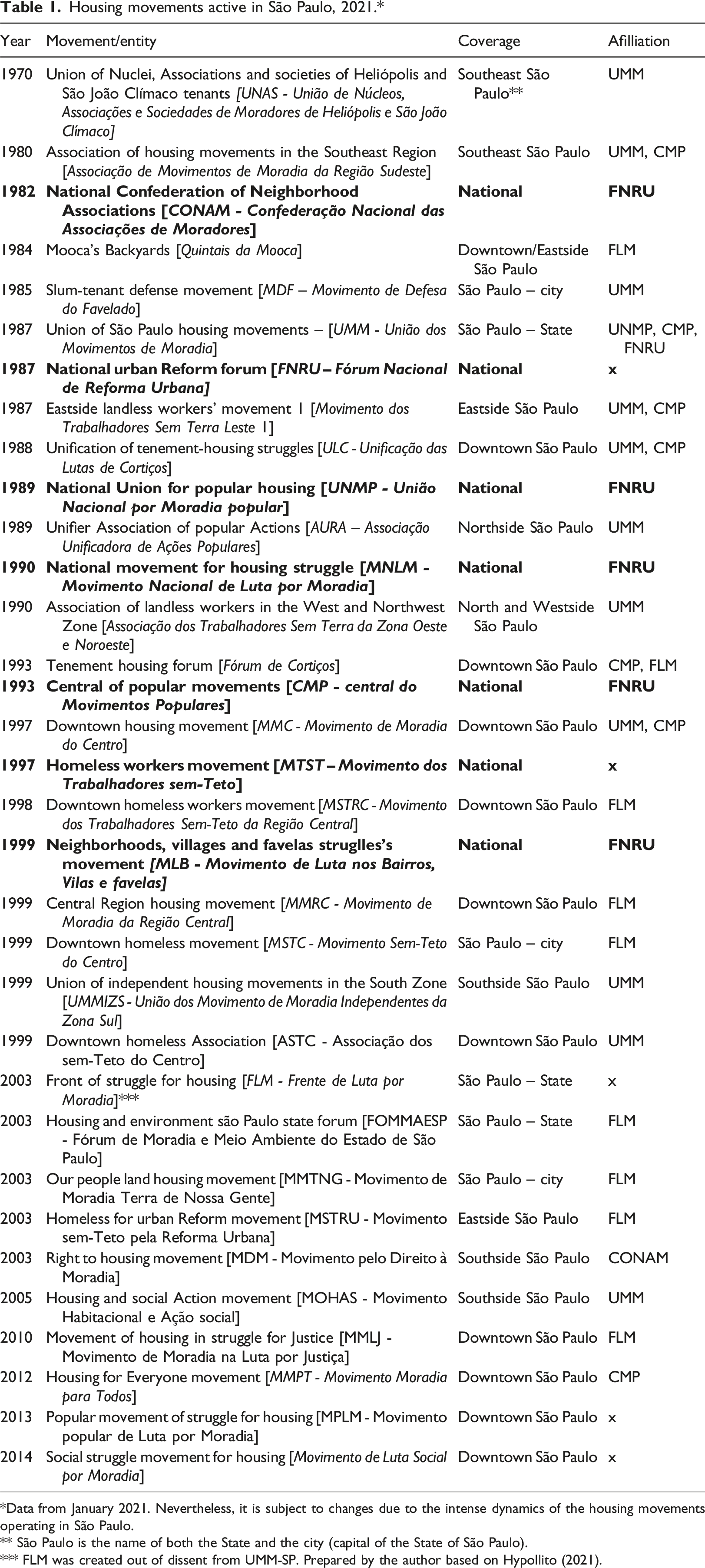
*Data from January 2021. Nevertheless, it is subject to changes due to the intense dynamics of the housing movements operating in São Paulo. ** São Paulo is the name of both the State and the city (capital of the State of São Paulo). *** FLM was created out of dissent from UMM-SP. Prepared by the author based on Hypollito (2021).
It is important to notice that the income has been the central question to public policies and housing programs in Brazil. Besides income, the second historical question is gender, with special rules for women (specially single mothers) to access public housing. Race and ethnic are only emerging recently as important subjects for the housing movements. As it is possible to see in Chart 1, there is no movements’ name that refers to race or ethnicity.
Since their creation, all associations and movements across the national territory have actively participated in national mobilizations to struggle for social rights, especially those related to housing. As a result of two decades of intense mobilization, in 2000 Constitutional Amendment 26 was approved, which included housing among the Federal Constitution’s fundamental social rights (Art. 6). In 2001, the approval of the City’s Statute (Federal Law 10.257) regulated the Federal Constitution’s articles 182 and 183 (concerning Urban Policy). The City’s Statute represented an essential new regulatory framework for urban policy and management, defining instruments that aimed to guarantee the right to the city, decent housing, the social function of property, and the democratization of urban governance (Fernandes, 2011).
In 2003, at the beginning of President Luis Inácio Lula da Silva’s (2003-2010) first term, activists from social movements and technicians became part of the federal government’s technical team, primarily because of the newly created Ministry of Cities. 15 During this period, public conferences were also instituted at three scales (municipal, state, and federal) to discuss different policies. The meetings supported an institutional process of participatory discussion of urban policies that congregated necessarily state, movements, universities and citizens’ deputies. The first Conference of Cities, held in 2003, created the National Council of Cities (2004). The various social segments appointed delegations in the city, such as housing movements, class associations, and teaching and research associations (Ferreira, 2014).
In addition to the effective participation of social movements in discussing public policies, national conferences were responsible for approving important guidelines for housing movements: including the addition of self-management among the housing policy’s guidelines (2003), creation of a social housing production program (2005 and 2007), and revision of its rules and resources expansion (2010).
The new urban policies executed in the early 2000s incorporated many of the housing movements’ guidelines, such as the creation, in 2004, of the first federal housing program based on self-management and, in 2005, of the National Social Interest Housing System (SNHIS), and the National Social Interest Housing Fund (FNHIS). SNHIS aimed to organize a national structure to implement policies and programs to promote access to housing for low-income populations. The FNHIS was designed to fund these policies and programs. According to the approved guidelines, housing movements should be able to directly access the Fund. Minha Casa Minha Vida Program 16 (PMCMV) created right after (2009), prevented the access to the National Fund.
In 2006, the federal government regulated the use of State assets for social housing purposes. 17 This period also increased the institutionalization of the participation of social movements organized in the various spheres of Brazilian public management, such as Municipal and State Housing Councils, in a process that Miraftab (2009) refers to as invited spaces. São Paulo housing movements were very active first in the legislation proposals and approvals, at federal and municipal levels, and then in the formulation of several housing programs that included the participation in the municipal government for a couple of years (2015–2016) and in all its councils since their were created.
Housing movements and occupations in São Paulo nowadays
In the institutionalization of popular participation and the financing of housing programs for the low-income population, the advances underwent the first impact in the 2015 economic crisis, soon followed by President Dilma Rousseff’s (2011–2016) impeachment in 2016. The virtuous moment of the institutionalization of housing movements as important players of the housing public policy design and implementation that occurred during the first decade of the 2000s had phased out by 2019 when Jair Messias Bolsonaro (2019–2022), a far-right politician, won the presidency.
Between 2009 and 2020, housing policy was restricted to a single program: the Minha Casa Minha Vida Program (PMCMV). During this period, the PMCMV contracted 5.8 million new housing units: 1.8 million out of them for 0–3 M.W. strata,
18
with public subsidies that could subsidize up to 95% of the property’s value. Out of this total, housing movements, cooperatives, or social organizations were responsible for producing 78,600 units via self-management. The renovation of buildings that used to belong to the Union and São Paulo City Hall resulted from the movements’ long-lasting efforts to struggle for quality housing downtown using underutilized public assets (D‘Ottaviano, 2021; Rossetto Netto, 2017). Some main examples are Iracema Eusébio, Dandara, Hotel Cambridge, and Lord Hotel buildings, as Figure 1 shows. Renovation works at the Lord Hotel, São Paulo, 2020. Source: Letícia Casagrande Dupont, 2020.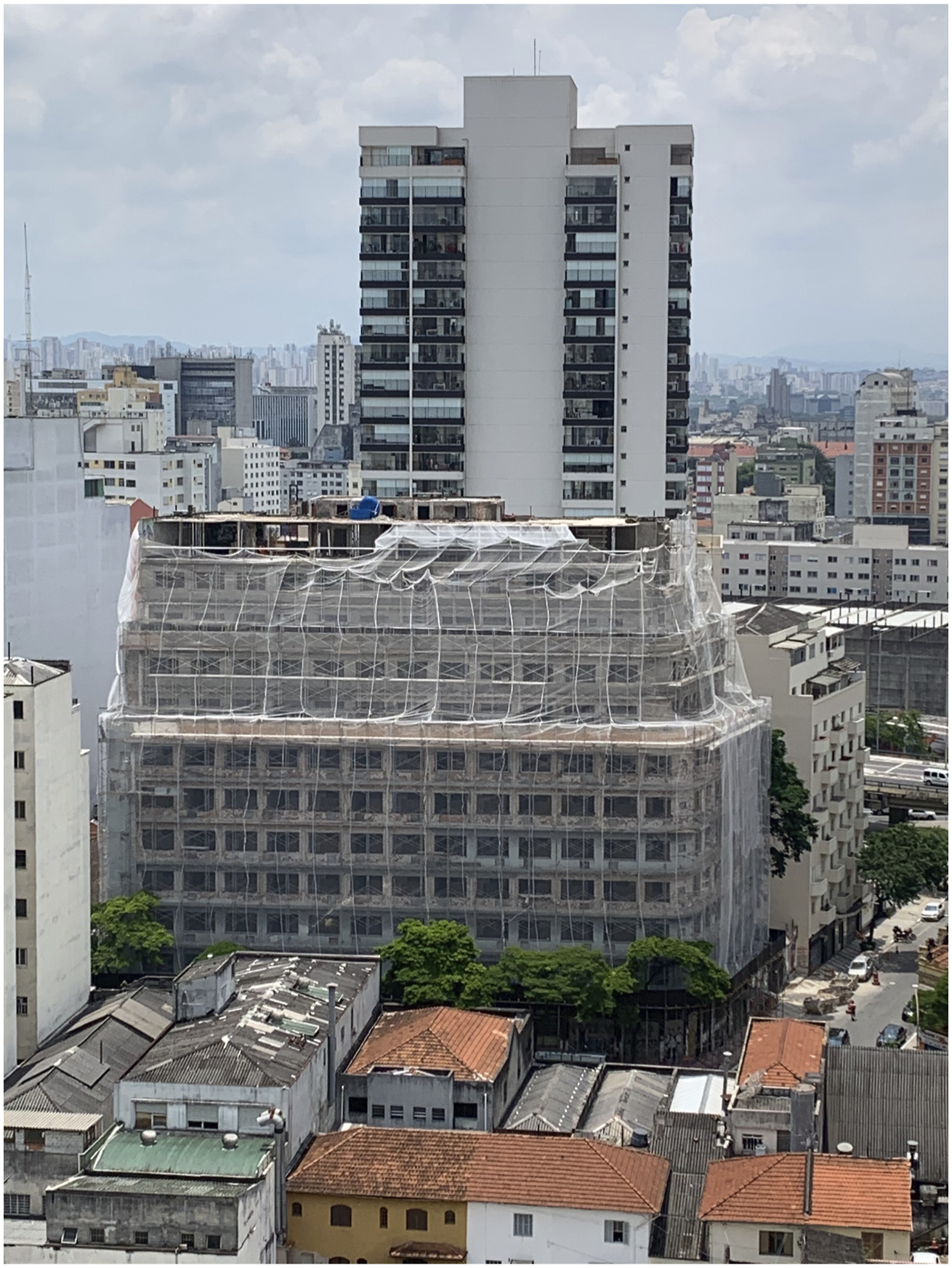
Since President Bolsonaro’s election in 2019, the federal government has criminalized 19 housing movements, threatening rights suppression, leaders’ persecution, and subsidized low-income housing programs’ closure. As part of this dismantling of legal achievements and advances, this context led to postponing the 6th National Conference of Cities previously scheduled to happen in 2016. The Ministry of Cities’ and the National Council of Cities’ dissolution occurred soon after the new president took office in 2019. Currently, a bill 20 is debated in the National Congress to include social movements’ leaders among that subject to be classified as terrorists.
On the other hand, the territorial disputes and the constant struggle for the right to housing and the city continues. An increasing number of empty buildings in the central areas of large Brazilian cities – São Paulo, Rio de Janeiro, Porto Alegre, Recife, Belo Horizonte – has been acquired by organized housing movements and even by independent family groups (D‘Ottaviano, 2019; Murad, 2019; PMSP, 2013; Ramos, 2009).
In downtown São Paulo alone, citizens occupied 31 buildings in January 2013, 50 in 2016, and more than 70 in 2018 (Comdec, 2018; PMSP, 2013). Empty structures in the downtown area include old apartment buildings, hotels, offices, and former factories. Many buildings are vacant due to legal proceedings, possessory disputes, or solely speculation. The occupation of empty buildings remains a strategy to pressure the government for wider-reaching housing solutions. Still, it is also the current housing solution for thousands of families. In 2018, 45872 families lived in squatters and occupied land in São Paulo, 3.300 families in occupied buildings in the city center (D‘Ottaviano, 2019).
The housing movements operating in downtown São Paulo are, in general, rooted in the Union of Housing Movement or the Front of Struggle for Housing (FLM). UMM has the practice of carrying out immediate occupations to put pressure on the government in its various spheres to negotiate the use of buildings and land for housing purposes. The movements linked to the Front of Struggle for Housing (FLM), founded in 2003 due to dissent from UMM, were guided by the principle of occupying buildings to effectuate housing. This is the case of some of the oldest occupations in town, such as Prestes Maia (Figures 2 and 3), Mauá, José Bonifácio, and 9 de Julho (Bloch, 2008; Murad, 2019). Prestes Maia occupation, São Paulo, 2018. Source: Julia Murad (2019). Prestes Maia occupation, São Paulo, 2018. Source: Julia Murad (2019).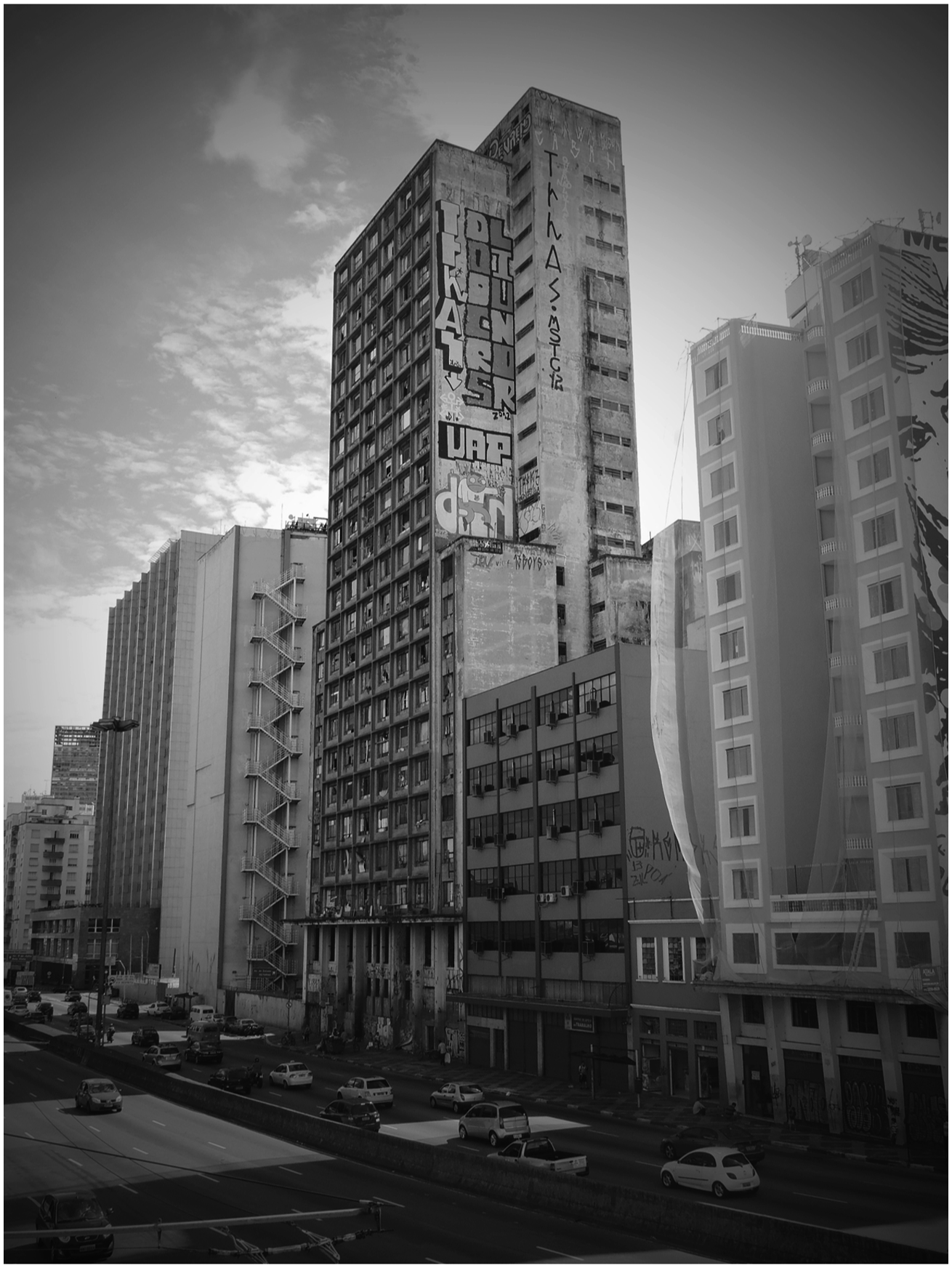
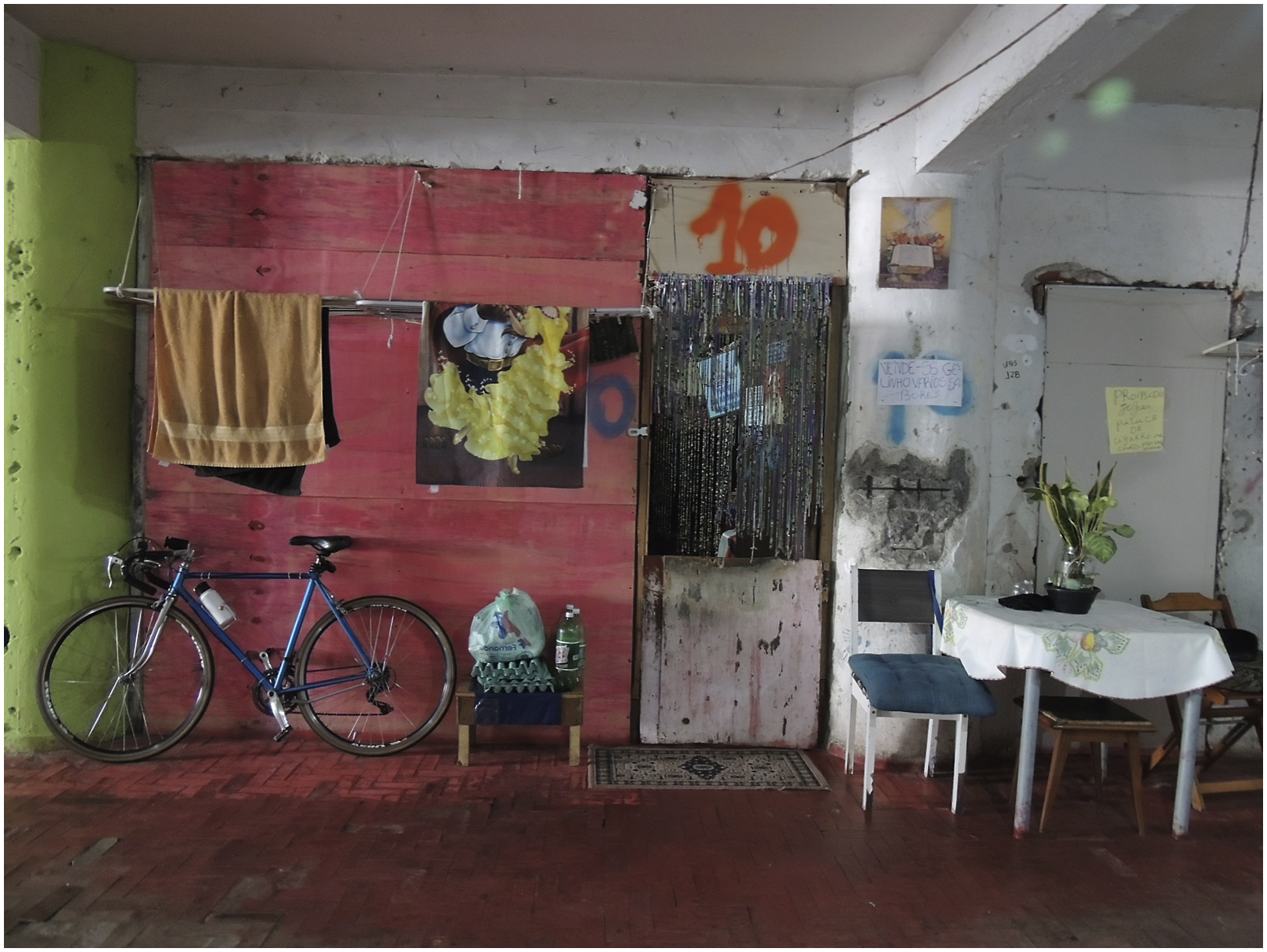
Occupying empty buildings is the leading strategy housing movements use to pressure public authorities and efficiently draw public attention to underutilized public and private buildings (Earle, 2012, 2017). According to Ivaneti Araújo, leader of Ocupação Mauá: It is not just occupying to stay there. We gotta occupy the place to show the government that there is a family in need of housing and that we don’t have to queue to access a right. (...) [the organized movement] is saying that every citizen has the right to housing (Araujo, 2021).
For these families, living downtown means a greater possibility of accessing jobs, decreasing travel expenses and time, and widening access to public services and equipment.
According to a survey carried out by City Hall in May 2018, 206 occupations took place in the city spread over almost the entire municipal territory. In the downtown alone, 53 buildings housed 6085 people (Comdec, 2018). From this total, 16 occupations were installed in former public buildings, some of which used to belong to the Metropolitan Housing Company [Companhia Metropolitana de Habitação] (COHAB-SP). As a result, a total of 1535 families, or 4709 people, lived in public buildings. 45% of buildings were occupied more than 5 years ago and 25% between three and 5 years ago. Less than a third of the structures were “new” occupations, less than 3 years old.
In addition to day-to-day survival, the movements carrying out the occupations struggle to guarantee the possession of the structures for later adaptation or renovation through public programs (municipal and federal). To this end, they also count on independent partners to monitor the legal proceedings and prepare the projects for the buildings’ adequacy and renovation. Keeping a close partnership with various independent technical advisors [assessorias técnicas] has been a fundamental differential in São Paulo’s housing movements’ performance since FUNAPS-Comunitário.
The Dandara building (Figure 4), located downtown, exemplifies the success of housing movements’ various actions. The building is a former seat of the Court of Justice, which had been vacant for 10 years. Initially owned by the Federal Government, after more than 5 years of negotiations and various occupations, in 2009, the Union transferred it to ULC for housing purposes. Dandara has 120 housing units and is the first project to renovate a previous building that was approved by the Minha Casa Minha Vida Entidades Program (PMCMV-Entidades). Overcoming program’s bureaucratic barriers and operational difficulties was only possible due to the long history of ULC and its unique partnership with Integra technical advisors (Rossetto Netto, 2017). Within the scope of PMCMV-Entities, 12% of all contracted housing units are in São Paulo (D‘Ottaviano, 2021). Dandara building, São Paulo, 2018. Source: D‘Ottaviano (2019).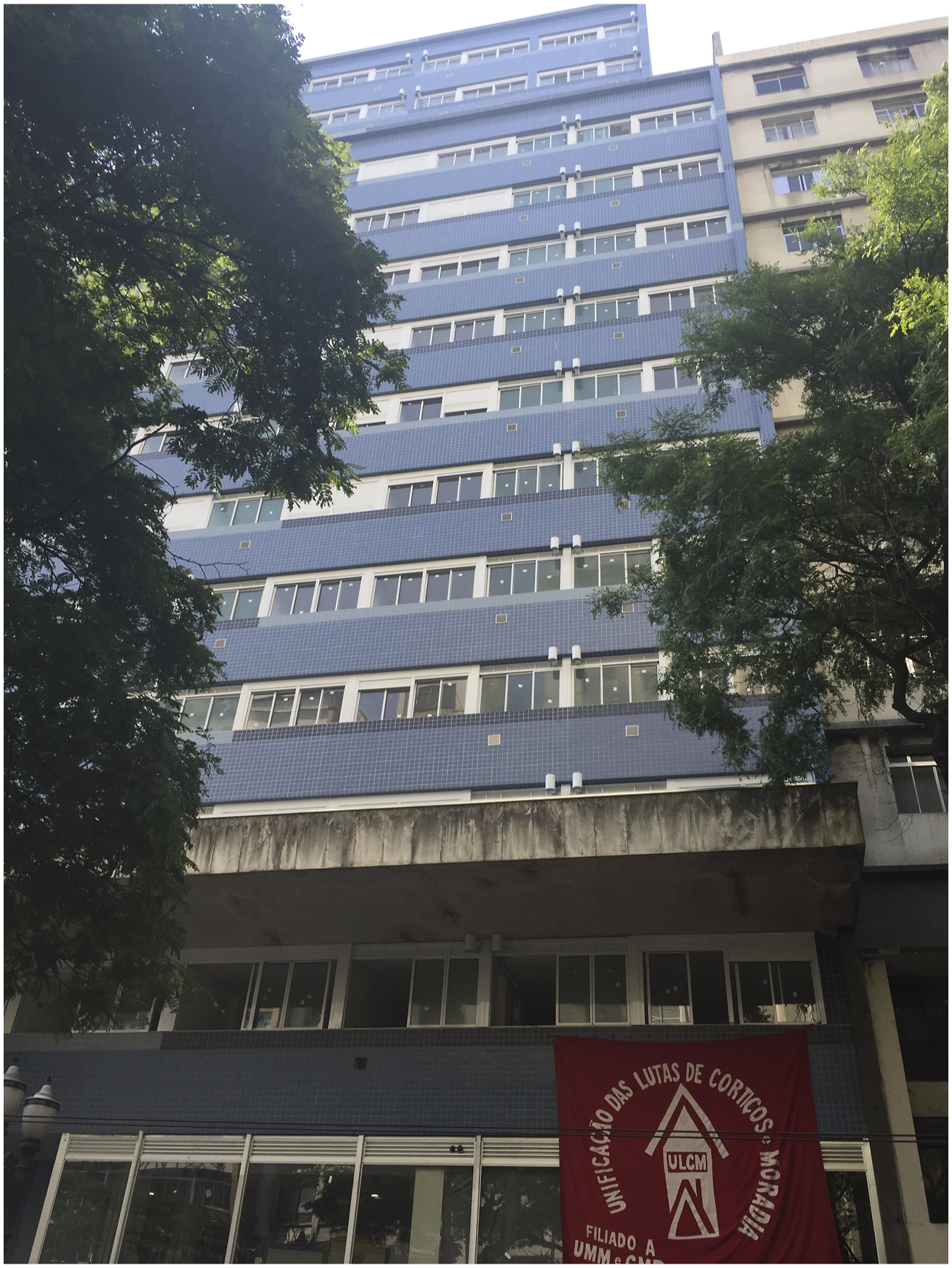
The termination of federal programs such as the PMCMV-Entities has led housing movements to mobilize alternatives in partnership with independent technical advisors and civil society associates. In July 2021, after a long negotiation process, the city of São Paulo Municipal Government approved the Pode Entrar Program in July. The program uses the Urban Development Fund to construct “popular housing units” and renovate buildings belonging to the municipality, especially those located downtown. There is still no project approved by the Program, by at least three housing movements have building reformation projects ready to submit to the approval by the municipality.
Meanwhile, Downtown Homeless Movement headed the proposal for a Popular Public Partnership (also known as PPPop). The housing movements’ leaders proposed to assume Civil Society Organizations’ role in managing, adapting, and maintaining occupied public buildings. They made use of the typical model of partnership with the third sector to accomplish that. In return, the government would guarantee the buildings’ occupation for a minimum period of 20 years.
The 9 de Julho Occupation’s coordinators associated with the Downtown Homeless Movement presented the first proposal for a PPPop to the Housing Secretariat of São Paulo’s Municipality in 2020. The building was initially owned by the National Institute of Social Security and had been unused since the 1970s. Different housing movements have also occupied it for more than 20 years. The proposal shows how it is possible to respond to demands for adequacy and improvements, such as fire safety measures, electrical and hydraulic systems, based on the movement’s management.
Emergency and resistance
Although São Paulo’s housing movements experience could be seen as insurgent citizenship (Caldeira, 2017; Holston, 2008), the political national and local realities have changed considerably over the past decade since the early 2000s. Recent events confirm that achievements can be fleeting and quickly dismantled, even when accounting for legal advances. The current fact of criminalizing movements, destroying institutional representation structure, and interrupting public investment in housing programs, sets off new configurations that require further empirical studies.
The paths of the families participating in the housing movements as tenants in occupations, tenement houses, or peripheral subdivisions, have been tremendously precarious. Families join housing movements when they are in extreme need. With their support and training networks, participation in housing movements represented an effective change in these families’ lives. Housing movement leaders – such as Sydney (ULC), Ivanete (MMLJ), and Vera (ULC) – are examples of activists’ livelihoods strongly shaped by participation in the struggle for housing. The process of participating in grassroots groups, in training activities, and on “party days,” as they refer to the moment of the occupation of an empty building, is responsible for making activists engaged and aware of their rights.
ULC’s current president Vera says that her participation took place as she believed that it could effectively change her story:
There is a saying like this: “you gotta do it and stay” because you gotta believe that you will make a dream come true. Our goal is to get ourselves out of that terrible life we used to live: whether we had dinner, or had lunch, or paid the rent. (...) I am an uneducated person because I have no study, no schooling... I didn’t go to college. Everything I learned was in practice, right, and thus, the movement’s day-to-day life (Padilha, 2018).
The struggle for housing has always been ignited as an emergency struggle. With the conquest of housing and the guarantee of a place to accommodate their families, it becomes possible to struggle for new rights: for instance, education, transportation, or health care.
Most militants are made up of migrant low-income women that joined the housing movements out of necessity. They acquire knowledge from participating in the various activities provided by organized movements. Learning happens through participation in a continuous sharing process. The leading roles belong to those who come up with the resistance strategies to face the emergency that challenge them. 21
The history of the São Paulo housing movements, the leaders’ and militants’ reports, and the permanent struggle for sustaining rights up-to-date show that being awarded rights often overlap with effective citizenship. Currently, the daily life of housing movements in São Paulo holds, above all, a character of permanent resistance. For this reason, based on some of the movements operating in downtown São Paulo, I suggest here the idea of
Footnotes
Acknowledgements
I would like to thanks the women-leaderships from São Paulo housing movements, especially Jomarina (MMCR), Netti (MMLJ), Carmen (MSTC), Vera (ULC) and Evaniza Rodrigues (UNMP), for their permanent and persistent interlocution.
Declaration of conflicting interests
There is no potential conflicts of interest with respect to the research, authorship, and/or publication of this article.
Funding
The author(s) disclosed receipt of the following financial support for the research, authorship, and/or publication of this article: This paper is based on the research projects “Between self-regulation and formal government: the challenges of self-build housing and facilities” (2015/50130-3), “Access to land in Brazil: property is the only option?” (2017/12191-6) both funded by The São Paulo Research Foundation, FAPESP, and “Housing and Self-Management: overview, practices and perspectives” founded by National Council for Scientific and Technological Development, CNPq (423328/2021).
