






Abstract
Urban planning in Türkiye has become increasingly subject to judicial oversight through lawsuits filed by professional chambers, particularly the Chamber of City Planners. This article examines the judicialization of urban planning in Ankara based on the judicial actions of the Chamber —defined as the increasing exposure of planning to judicial assessment and decisions rather than democratic processes—while also tracing how litigation has functioned as a professional strategy of contestation that has important consequences for democratic politics and spatial justice. Based on analysis of Chamber activity reports documenting the lawsuits from 2000 onwards and in-depth interviews with Chamber executives, we identify four systemic and interrelated features driving judicialization: rent-seeking instrumentalization, top-down authoritarian governance, political Islamist spatial politics, and global Southern characteristics. Through lawsuit examples—Atatürk Forest Farm, Bank of Provinces, Saraçoğlu Neighborhood, and piecemeal plan amendments—we demonstrate two primary consequences. First, judicialization shrinks democratic space by displacing contestation from public forums into courtrooms, limiting participation to planning and legal experts, while constraining the Chamber’s potential to contribute to the expansion of democratic space. Second, it exacerbates spatial injustices through temporal uncertainties: politically connected developers and investors acquire building rights rapidly while working-class neighborhoods wait indefinitely. The analysis reveals judicialization’s paradox—simultaneously responding to authoritarian urbanism while reinforcing democratic erosion. The article concludes that legal mechanisms alone cannot sustain democratic urban politics, requiring complementary strategies building broader democratic capacity and inclusive engagement beyond captured judicial venues.
Introduction
Urban spatial interventions such as master plans, plan amendments and other sorts of profit-driven spatial interventions of central and local governments in Türkiye’s cities have increasingly become subject to lawsuits in the past few decades. Two organizations are at the center of this process: The Chamber of City Planners and the Chamber of Architects. Having branch offices in cities across the country, they are the leading professional bodies having officially recognized authority over controlling the practices in the fields of urban planning and architecture, respectively. Both chambers operate within the Union of Chambers of Turkish Engineers and Architects (TMMOB), established in 1954 as a “public institution” under Article 135 of the Turkish Constitution, mandated to monitor architecture, engineering, and urban planning activities in the public interest. TMMOB’s politicization accelerated during the 1960s when socialist professionals gained control, redefining chambers as instruments of social transformation rather than merely technical oversight (Batuman, 2008a). Recent authoritarian consolidation particularly following the 2023 elections documented by Çağlar (2025), Esen (2024), Esen et al. (2025), and Yılmaz, 2020; Yılmaz and Turner, 2019, has targeted TMMOB’s constitutional authority through legislative amendments restricting its monitoring powers and judicial autonomy 1 .
In the case of Chamber of City Planners, the officially recognized authority is enacted by the branch offices in two ways; firstly, through conducting a professional audit to control whether the urban development plans are in line with the principles of the profession, namely the protection of the public interest, plan unity and plan hierarchy, and secondly, by filing lawsuits against the plans or plan decisions that violate these principles. Our study shows that these lawsuits are highly influential in the practice of urban planning leading to an increasing exposure of urban planning to judicial assessment and decisions, instead of an inclusive and broader discussion among citizens affected by the plan, planners and the elected officials. We argue that, this conflict-laden condition of urban planning corresponds to a politically contested process of judicialization of urban planning, in which Chamber’s strategic use of courts emerges as a key mode of contestation, with significant consequences for the present and the future of urban development and democracy in Ankara. The article puts forward original research evidence to elaborate the process of judicialization of urban planning in Ankara, interrogating its features, causes and consequences for urban spatial justice and democracy, as well as its implications for the role of professional actors in contributing to the expansion of democratic space.
A well-known definition of the concept of judicialization of politics originates at the intersection of political science and legal studies. Vallinder (1994) defines it as the expansion of the province of the courts or the judges at the expense of the politicians and/or the administrators. In a similar vein, Hirschl (2006) describes it as the reliance on courts and judicial means for addressing core moral predicaments, public policy questions, and political controversies. These definitions underline the increasing role of the judiciary in political decision-making processes, which has been observed in various contexts globally. Importantly, in the global Northern literature from which these foundational accounts emerge, judicialization is treated as an implicitly neutral phenomenon — a normalized policy option and conflict resolution mechanism that operates alongside, rather than against, democratic processes. At urban scale, judicialization is defined as legal and judicial mediations and arbitrations in urban social and political conflicts (Mehmood and Cousins, 2022), which is a definition developed precisely in the context of global Southern cities, where such mediations carry a distinctly problematic character. More specifically, it involves the judicial examination of urban spatial interventions –such as urban development plans, exceptional development decisions, specific planning notes and changes including interventions like the declaration of an urban area as an urban renewal zone-that possibly lead to their suspension or cancellation.
By contrast, the global Southern literature on judicialization, including Mehmood and Cousins’ (2022) work, departs decisively from this neutral framing. It treats judicialization not as a routine feature of governance but as a symptom of democratic deficits, institutional weaknesses, and the subordination of planning to capital interests — in short, as a problem rather than a solution. This article is closer to this second, critical understanding of judicialization. At the same time, a third dimension is introduced by debates on authoritarian legalism: where judiciaries are instrumentalized by ruling powers, legal mechanisms simultaneously serve as sites of contestation and instruments of control (Esen, 2024). This dual character is particularly salient in Türkiye’s transformation toward competitive authoritarianism since 2015 (Esen et al., 2025). Unlike global Northern models, the judiciary’s role in urban planning in Türkiye must be understood as embedded within authoritarian consolidation, where legal venues become arenas for both resistance and repression 2 . While disputes in urban planning involve technical questions about zoning and regulations, they carry profound political implications determining access to urban space and resource distribution. Containing these political questions within courtrooms—rather than through participatory processes—represents depoliticization through legal politicization. Urban studies and planning scholarship, however, have left this critical dimension largely underexplored, despite judicialization’s rising impact on urban policies and plans in the global South. Furthermore, despite its crucial socio-spatial consequences, as shown elsewhere too (Sotomayor et al., 2023), appeals to law in urban planning disputes are typically studied as isolated cases rather than as social practices that are both the outcomes of and the causes for broader dynamics. This article provides an analytical perspective based on the case of Ankara, contributing empirically informed critical analysis to this promising area of urban scholarship. Its empirical focus, however, is deliberately bounded: rather than documenting judicialization as an instrument of authoritarian consolidation — a broader process exceeding the scope of the available evidence — the article examines the Chamber of City Planners’ legal strategy of contestation and how this strategy has become increasingly democratically constrained under neoliberal authoritarian transformation.
The article proceeds as follows. Section two discuss the concept of judicialization in urban planning, focusing on global Southern particularities where this process has notably accelerated. Section three examines judicialization in Ankara: the first subsection presents our methodology and case selection; the second subsection provides critical analysis of judicialization of urban planning in Türkiye through the legal actions of the Chamber of City Planners Ankara Branch Office (hereafter “the Chamber”). We give examples of lawsuits examples filed by the Chamber that elucidate why plans and spatial interventions are sued. The third subsection discusses specific dynamics within the process of judicialization. The final section examines broader consequences for spatial justice and democracy. We argue that judicialization has a temporal dimension: implementation delays create uncertainties producing urban spatial injustices. These uncertainties perpetuate inequalities between haves and have-nots, differentiated by their power to influence the judiciary and to acquire building rights, confirming Raco et al.’s (2018) argument about politicized planning temporalities. As regards to urban democracy, judicialization displaces political disagreements from streets and squares to courtrooms and expert review. We conclude with a call for future research and a broader public discussion on the spatial and political consequences of the judicialization of urban planning.
Urban development and judicialization of urban planning in the global South and in Türkiye
Judicialization is observed both in the global South and North, with extensive literature across policymaking domains (Hawkins and Rosete, 2019); nevertheless, its characteristics differ due to structural divergences between contexts. Although Tate Tate and Vallinder’s (1995’s, as cited in Kramarz et al., 2017) definition -‘a process that involves the transfer of decision-making power from the legislature, cabinet, or civil service to the courts’- applies to both contexts, the normative and analytical status of judicialization diverges sharply between them. In the global Northern literature, judicialization is implicitly treated as a neutral phenomenon. It is viewed as a normalized policy option and conflict resolution mechanism alongside political processes (Vallinder, 1994). Although the non-democratic nature of the judicial review processes of popularly approved urban plans is recognized (see Sturzaker and Gordon, 2017), judicialization itself is not treated as an overall planning problem in the global North.
In the global South, recent years have witnessed increasing judicialization of politics with negative connotation, as demonstrated by studies from Latin America, South Africa and Southern Asia. Here, judicialization is not a neutral backdrop but a symptom and a consequence of deeper structural problems. This stems from global South’s rapidly developing late-capitalist character and institutionalization problems, which make urban policies in general and spatial planning instruments in particular, vulnerable to accelerated capital investments, business interests, market-driven large-scale urban transformation and infrastructure-led urban development (Lancione and McFarlane, 2021; Roy and Ong, 2011; Schindler, 2017; Schindler et al., 2022; Schindler and Kanai, 2021). The global Southern perspective helps contextualize judicialization dynamics in Türkiye for an international readership, given the Southern characteristics of Türkiye’s urbanization experience as well as the strong relationship between the global Southern problems -democratic deficit, urban informality, problems of accountability, lack of financial resources- and the judicialization processes. Therefore, although it is beyond the scope of this article to review the scholarship in the field exhaustively, we examine the global Southern urbanization, its contextual features and current problems of urban planning and policy making in Türkiye.
Increased migration, informal population movements; slums, squatter areas, and unauthorized development challenge formal urban planning in the cities of the global South (Kelsall et al., 2021; McFarlane, 2012; Roy, 2011; Schindler, 2015). Schindler (2017) reveals that conflict-laden urban political landscape and capital-driven territorial transformation have shaped contested Southern geographies where formal-informal relations unfold through variegated urban policymaking (Penpecioğlu and Bayırbağ, 2024; Robinson and Roy, 2016; Schindler, 2015). Informality in global Southern urban politics reconfigure legal-illegal boundaries, enabling states to rapidly and selectively legalize informal urban developments or define them as illegal through legislative power (Roy, 2004, 2009). As Roy (2009) manifests through the case of India, a global Southern urban planning regime may become an informal entity, where ambiguity and exception prevail through state policies and continuous societal negotiations.
Judicialization of politics is examined in a growing interdisciplinary global Southern literature (Lamprea, 2017). Latin American socio-legal scholars use the concept of judicialization and legal mobilization to analyze the increasing use of litigation and legal action in different policy fields, such as LGBT rights, health policy, environmental policy, though without explicit urban perspectives (Sotomayor et al., 2023). Accordingly, judicialization arises often out of frustrations with local participatory planning mechanisms and the transparency of decision-making (Sotomayor et al., 2023), especially when claims remain unheard through traditional representative political channels (Lima, 2018), becoming functional for those ‘unable to find representation in the usual political institutions’ (ibid.). This framing of judicialization as a response to institutional failure rather than as a neutral governance mechanism, is the one that most closely informs our analysis of the Türkiye case.
As regards to the possible consequences of judicialization, two arguments come to the fore. First is related to democratic accountability. In their study on the judicialization of environmental policy in Argentina, Kramarz et al. (2017) argue that judicialization redraws the boundaries between state organs; by transferring the decision-making power from the legislative or the executive branch to the judiciary and this leads to serious accountability losses, since the judiciary itself is the institution that is supposed to check the other two branches of government. In other words, there remains no further institution that will check judiciary’s decisions. Secondly, the containment of urban planning disputes within judicial venues represents what Swyngedouw (2009) terms “post-political” governance—the displacement of political antagonism through technocratic frameworks that present political choices as technical-legal necessities. Mehmood and Cousins (2022) demonstrate that judicialization produces such post-politics across diverse global Southern contexts, since political-ecological questions transferred to the courts rest on ‘a distancing of the political away from engaged forms of pluralism and public debate towards legal and technocratic policy making’.
However, in Türkiye’s authoritarian context, this post-political logic operates alongside overtly repressive mechanisms, which opens a third analytical dimension: the relationship between judicialization of urban planning and the broader judicialization of political power under authoritarian conditions. Debates on authoritarian legalism illuminate how, in contexts like Türkiye, the judiciary is not merely a passive arena into which planning disputes flow, but an active instrument of political consolidation. Municipalities governed by opposition parties face not only judicial challenges to their planning decisions but also systematic bureaucratic pressure, financial constraints, and—in some cases—the appointment of government trustees to replace elected mayors (Esen et al., 2025). This suggests that judicialization of urban planning occurs within a broader pattern of authoritarian control over urban governance. The article does not set out to provide a comprehensive empirical account of judicialization as authoritarian consolidation, which is a task that would require a different evidential base. Rather, the authoritarian legalism literature serves here as a contextual frame explaining why the Chamber’s legal strategy of contestation (the empirical core of this article) has become increasingly fragile and paradoxical: courts that once offered a venue for challenging planning decisions are themselves being transformed by the same authoritarian dynamics that drive those decisions. Thus, although each of these three dimensions - judicialization as a neutral governance mechanism, judicialization as a symptom of democratic deficit and institutional failure and judicialization as embedded within authoritarian consolidation-capture a distinct and real aspect of the phenomenon, the analysis is anchored in the second understanding while drawing on the third as a contextual backdrop to account for the specifically authoritarian form that judicialization takes in Türkiye. We now turn to examine how this process of judicialization has specifically unfolded in urban planning in Türkiye.
Judicialization of urban planning in Türkiye
Urban planning in Türkiye evolved alongside modernization efforts beginning in the early Republican Era, adopting European-inspired institutions and legal frameworks to meet the needs of a modern national bourgeoisie (Tekeli, 1980). Ankara, declared capital in 1923, became the first planned city, symbolized nation-building and modern Türkiye, in contrast to Ottoman Istanbul (Batuman, 2013). Post-1950 policy shifts prioritized urbanization under conservative governments, triggering rural-to-urban migration and rapid urbanization without adequate industrialization and capital accumulation, resulting in widespread urban informality. Although Türkiye lacks a colonial past and incorporates characteristics from both the global North and the South, its urban trajectory since the 1950s aligns it more closely with global Southern urbanism.
Within this historical trajectory, professional chambers—including the Chamber of City Planners—emerged as key institutional actors in urban governance. However, it is crucial to recognize that these chambers are not unified democratic actors but contested institutional terrains characterized by internal political factionalism and competing professional ideologies. As Batuman (2008a, 2008b, 2015) demonstrates through his analysis of the Chamber of Architects, professional chambers in Türkiye have historically experienced generational conflicts between reformist and radical factions, organizational paralysis resulting from ideological divisions, and complex relationships with state power wherein professional self-interest often intersects with public interest claims. 3 The Chamber of City Planners’ lawsuit strategy, while ostensibly defending planning standards, similarly reflect particular factional positions rather than unified professional consensus, operating as a site where different political orientations and professional interests compete to define the appropriate relationship between planning expertise and political power.
Alongside the role of professional chambers, the state has played a central role in shaping urbanization processes in Türkiye. The state plays a leading role in contested urban development by transferring public properties to private companies (Karaman, 2013; Kuyucu and Ünsal, 2010) and orchestrating diverse groups to reconcile their competing interests through authoritarian and neoliberal policies (Bayırbağ et al., 2023; Gülhan, 2022; Penpecioğlu et al., 2022; Penpecioğlu and Taşan-Kok, 2016; Taşan-Kok, 2015; Yeşilbağ, 2022). However, this orchestrator role generates conflict: top-down imposition of large-scale projects faces criticisms, litigations, and protests (Bayırbağ, 2013; Özdemir and Eraydın, 2017; Penpecioğlu, 2016, 2013; Eraydın and Tasan-Kok, 2014; Kayasü and Şenbil, 2014). Like the global South, formal-informal and legal-illegal processes shift rapidly, producing deep-rooted uncertainties, prolonged delays and exacerbated social and spatial inequalities that dominate urban planning processes (Ay and Penpecioğlu, 2024; Kuyucu, 2014). In addition to these socio-political contestation and socio-spatial injustices, political struggles between governmental and oppositional forces, particularly central-local government conflicts have triggered lawsuit proliferation and protracted litigation, distorting the functioning of urban planning instruments (Ay and Penpecioğlu, 2024; Kuyucu and Danış, 2015; Özdemir and Eraydin, 2017; Özdemir-Ulutaş, 2023). Urban plans, laws, courts, and the judicial system have become strategic terrains of struggle between proponents and opponents of profit-driven authoritarian and neoliberal urbanization (Penpecioğlu et al., 2022). This contested urban landscape produces protracted and suspended planning processes, extensive use of legal mechanisms and uncertainties inconstant with societal needs (Ay and Penpecioğlu, 2024; Bayırbağ et al., 2023; Özdemir-Ulutaş, 2023). As the article reveals, judicialization reproduces these uncertainties, inconsistencies and socio-spatial injustices.
Three features of urban planning in Türkiye are crucial for understanding judicialization: (i) instrumentalization to rent-based interests, (ii) top-down nature within an authoritarian policy context, (iii) instrumentalization to political Islamist spatial politics. These features culminate in neoliberal authoritarian planning coupled with Islamist ideological motives. First, planning authorities use development plans to justify rent-seeking interventions that generate or maximize land rent, benefiting powerful capitalist interests. Second, regarding its top-down authoritarian nature, participatory mechanisms are weak or nonexistent, and decisions exclude diverse social groups including planners themselves. Current regulations require municipalities to publicize plans for 30 days for objections; Municipal Assemblies must decide on objections within 15 days. Those dissatisfied can then pursue legal action at administrative courts. Beyond this objection period and litigation option, municipalities and the Ministry of Environment, Urbanism and Climate Change (MoEUC) that also has planning powers must consult other public institutions during plan-making processes. Thus, lack of civil society participation is one of the serious problems of urban development planning in Türkiye, expressed not only by planning academia (Keskin et al., 2019; Ünlü, 2006), but also by the practicing planners themselves, as one of the planners working for the Chamber interviewed described: Participation is very weak. Only selected people are invited to consultancy meetings, if any; only those that the municipality knows what he/she will say. Those who really have something to say, who have an objection are not invited. Especially urban transformation is an area where public participation is highly necessary, but we see that it is carried out without it. (CR1)
Third, instrumentalization of planning for political Islamist ideology and its spatial politics drives judicialization, as many contested spatial interventions aim to destroy the modernist republican urban spaces (See the Building of Bank of Provinces below).
Methodology
Three-stage research design.
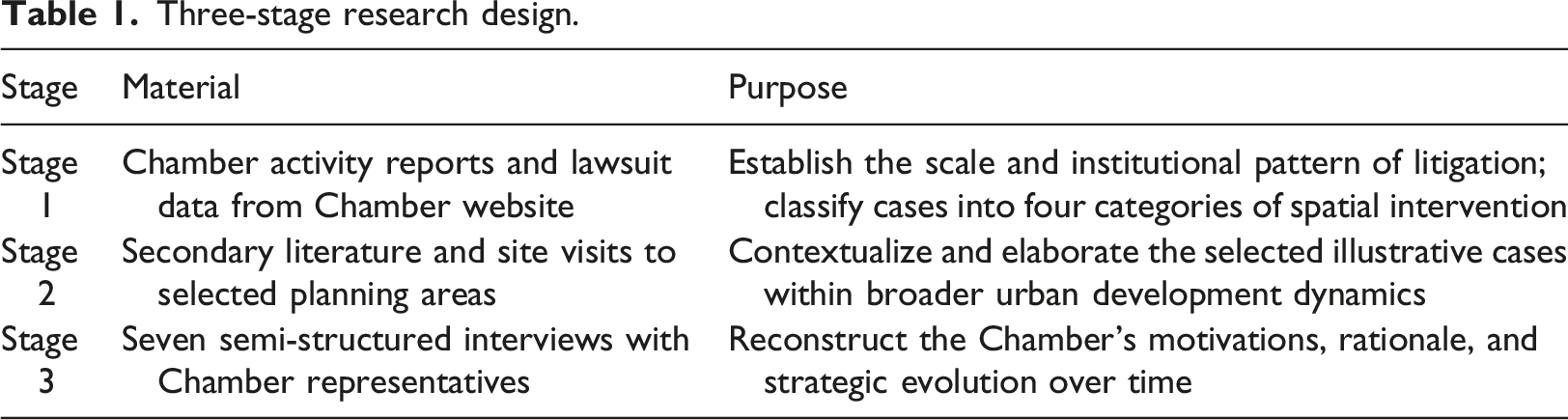
In the first stage, the article draws on the activity reports of the Chamber of City Planners and quantitative data acquired from the Chamber’s website on legal actions. The activity reports provide factual records of institutional action; lawsuits filed, their objectives, developments in the court process, press reflections, and the Chamber’s own press releases. The activity reports used are 1) 2016-2017 Activity Report, (2) 2018-2019 Activity Report, (3) 2020-2021 Activity Report and 4) 2022-2023 Activity Report, (5) 2022-2024 Activity Report. The quantitative data is acquired from the Chamber’s website on legal actions 4 . This material is treated as Chamber-reported data rather than as an independently generated dataset: it establishes the scale and institutional importance of litigation and allows identification of the types of spatial interventions that have been subject to legal challenge, but it does not constitute an independent analysis of the lawsuits themselves. Such an analysis — coding and systematically examining the full universe of approximately 500 cases in terms of court outcomes, judicial reasoning, or legal transformation — would constitute a research project in its own right and lies beyond the scope of this article. Drawing on the Chamber’s reported information, we developed a four-fold classification of the types of spatial interventions that have been legally challenged: (1) loss of public space, (2) destruction of collective memory, (3) market-driven land-use change, and (4) privileged development rights. One illustrative case was selected for each category to offer in-depth analysis of how judicialization unfolds in specific spatial interventions and produces particular consequences for democratic politics and spatial justice. The cases are illustrative rather than comparative or representative; they are selected to exemplify each category of spatial intervention and to make the analytical argument tangible, not to sustain claims about the full population of lawsuits.
In the second stage, the selected cases are further elaborated through secondary literature on the relevant planning areas and site visits to each of the four planning areas. This stage situates the individual cases within the broader urban development dynamics of Ankara and provides contextual grounding for the analytical claims made about each type of spatial intervention. Several of the photographs used in the article were taken during these visits.
Interviewees by year.
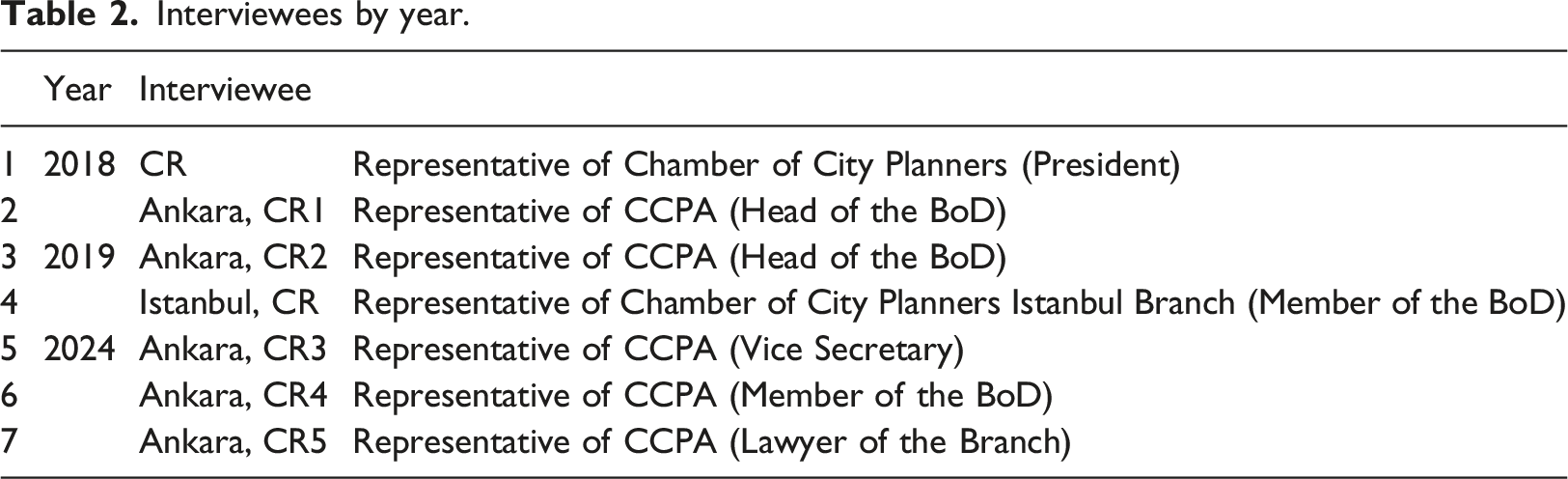
The Chamber is obviously not the only stakeholder in judicialization of urban planning in Ankara, but the primary institutional agent having statutory authority to audit plans and file lawsuits. Since both the activity reports and the interviews originate from the Chamber, the evidentiary base necessarily reflects the Chamber’s institutional perspective. We treat this as a productive focus rather than a limitation: the article is explicitly about the Chamber’s legal strategy of contestation — its rationale, its evolution, and its democratic limits — rather than about broader patterns of legal mobilization or changing court behavior. The following sections reflect and discuss the research findings, based on the Chambers legal strategy.
Findings
Our findings are organized in three sub-sections: the institutional process through which judicialization unfolds, selected lawsuits to demonstrate how judicial decisions influence the urban planning practice, and the consequences of judicialization for spatial justice and democratic politics.
Lawsuits as a part of the institutional structure of the Chamber
The Chambers file lawsuits against the plans at administrative courts on the grounds that they violate the basic principles of urban planning and the public interest. The Activity Reports explicitly state why they have been carrying out this process. For example, in 2016–2018 Activity Report, the reasons are listed as (i) land rent policies reproducing the existing power relations, (ii) increasing domination over space, (iii) the violation of the constitution and the rule of law, (iv) public policies deepening social inequalities and spatial contradictions, (v) power competition terrorizing the spaces we live, (vi) destruction of the nature and public spaces, (vii) destruction of our collective memories, (viii) disrespect to science, technic and our profession, (ix) capitalists increasing their wealth by exploiting laborers.
In the activity reports, the website of the Chamber and in interviews, the process of filing lawsuits is called “legal struggle”. The first stage in this legal struggle is the functioning of the PICs established within each Branch. As stated by CR3 and CR4, PICs, as the oldest and most active one among all commissions of the Chamber, examines all the development plans prepared and announced to public by the MoEUC and Ankara Metropolitan Municipality. In that respect, they exercise an epistemic authority on the planning process. Each PIC member is elected among the members of the BoD of the respective Branch, who are themselves urban planners. The PIC prepares the criteria for filing lawsuits. It examines the plans in line with the “planning principles” and the existing planning legislation, which also posits on the notion of public interest, and makes recommendation to the BoD of the Branch about which plans are not in line with the planning principles and need to be sued. The decision of the BoD of the Branch is then evaluated by the Chamber’s BoD. The lawyer of the Branch (CR5) gives legal advice but the final decision about filing a lawsuit is made by the Chamber’s BoD.
As stated both in the reports and interviews, the lawsuits were first started to be filed by the Chamber in 2000. The Chamber has also authority in seven other cities through Chamber representations (Erzurum, Gaziantep, Kahramanmaraş, Malatya, Şanlıurfa, Van and Zonguldak). Having over 700 lawsuits in Ankara since 2001, it has been the most active one in the country in terms of filing lawsuits. This number reaches more than 1200 lawsuits in total, accounting to more than 1/3 of the sum of the total number of lawsuits filed by each branch office since the early 2000s (CR2).
Figure 1 demonstrates that there had been a sustained increase in urban planning lawsuits both in Türkiye and Ankara until around 2015. Notably, lawsuits have continued even after the 2019 local elections brought opposition governance to Ankara. One Chamber representative explained: Mansur Yavaş came in, and yes, after Melih Gökçek there was some relief. But in practice, not much changed. He came without a new team, kept the same planning staff, and the municipality continued planning the same way. We're still filing lawsuits over the same issues. I'm speaking strictly from a planning perspective. In daily life, things may feel better, but in terms of plan-making and technical capacity, there was no real break. And because of that, the press stopped listening — it became, “RPP is in power now, so be quiet.” Meanwhile, flooding continues. A young woman drowned in a basement apartment in Ankara — that should never happen. Stream beds are still opened to development, and we still have ongoing lawsuits over valley areas. (CR3) Total number of lawsuits by year in 2000–2024 period.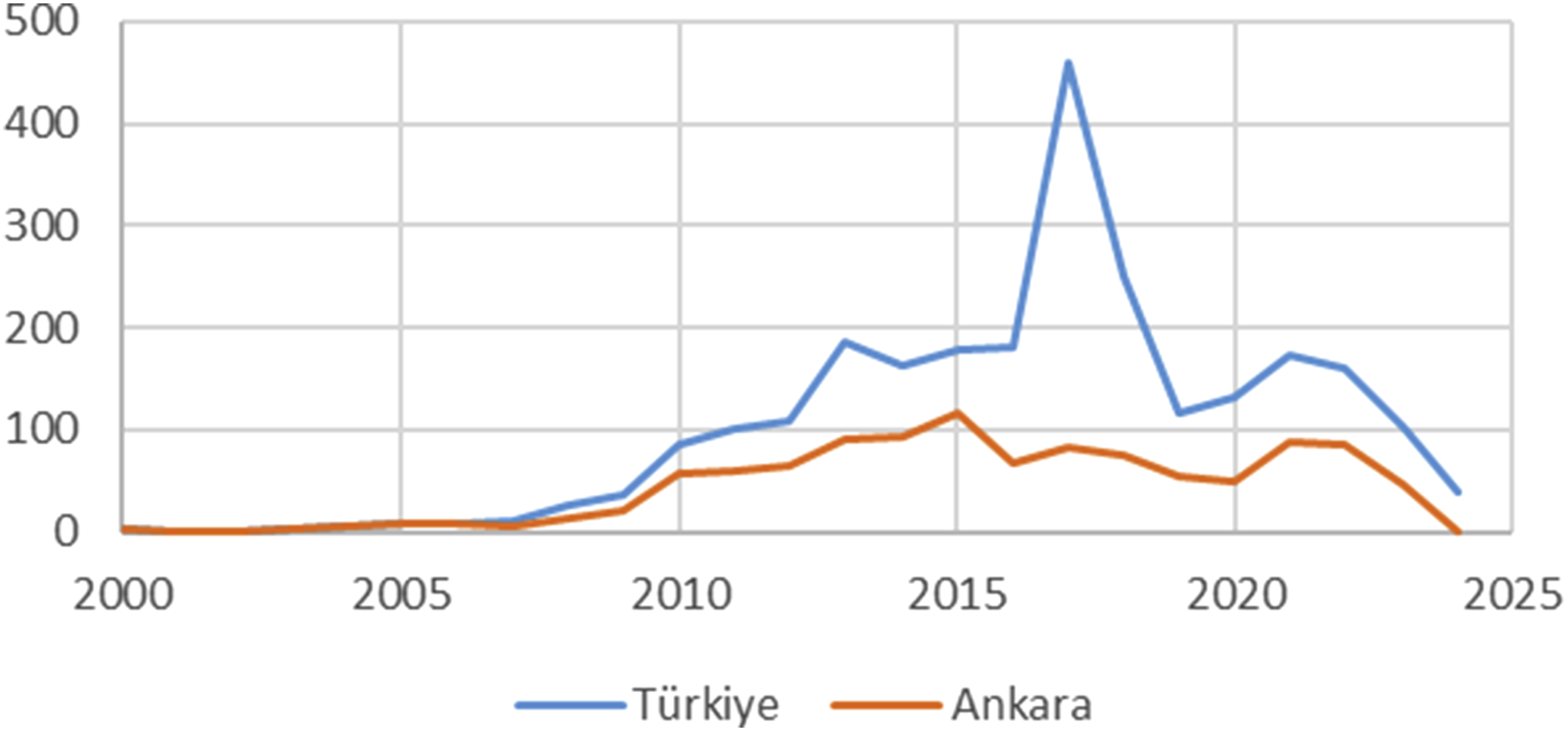
This continuity demonstrates that judicialization is driven by systemic features, rather than partisan control alone. Opposition governance has not fundamentally transformed the planning regime that generates legal challenges.
As illustrated in Figure 2, there has been a decrease in the number of lawsuits in 2023. CR4 explains this as follows: “it used to be easier and took less time to make such decisions in the past, but now Chambers have to be more selective because filing a lawsuit is a costly process and it has increasingly become a financial burden”. In that respect, in 2024 and 2025, no new lawsuit is filed by the Chamber and in the last couple of years, both the number of lawsuits and the rate of winning began to decrease. As Figure 2 shows, for the first time after 2020, the number of cases lost exceeded the number of cases won. CR4 links this situation to the general political atmosphere: When there used to be more participatory channels, when the administration responded to our disagreements on the plan, we did not need to have that many lawsuits. After starting to file more lawsuits, we have always been very careful and mostly successful until recently. We won most of the cases. However, no one explicitly puts into words but something happened, particularly in 2023. Our lawsuits started to be dismissed without any justification of decision. Unlawfulness escalated. Distribution of lawsuits by outcome in 2014–2023.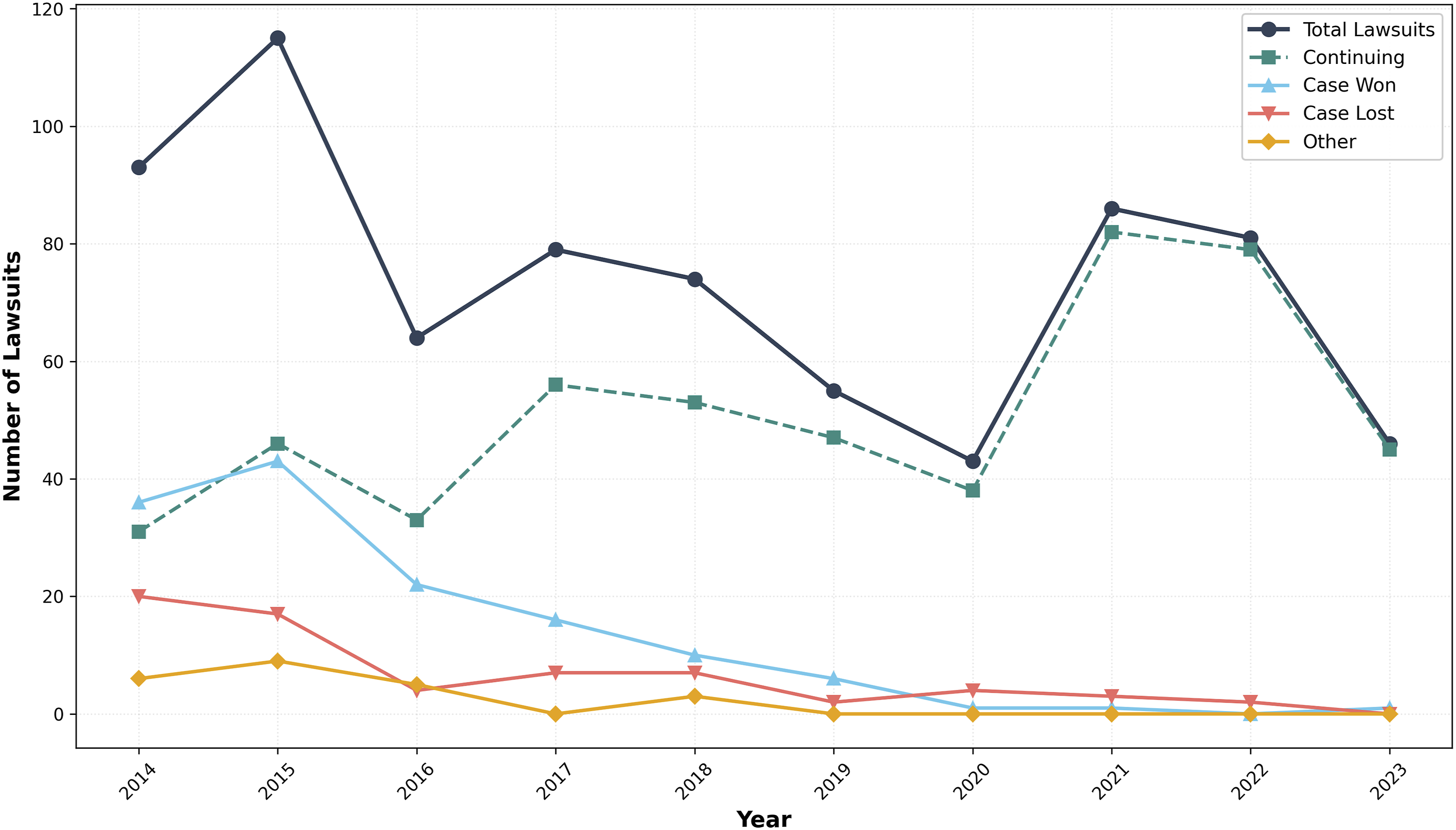
Judicial decisions and urban planning practice
Our analysis of Chamber’s activity reports reveals that spatial interventions subject to lawsuits are numerous and varied; including urban development plans at various scales, specific planning decisions, urban renewal or regeneration projects, infrastructure projects, flagship projects, demolition decisions for historically significant buildings, and piecemeal plan changes granting privileged development rights to specific individuals or interest groups. While these interventions differ substantially in form and scope, our examination identifies a consistent pattern in their contested outcomes. Legal challenges systematically arise when interventions produce at least one of four distinct yet interrelated consequences: (1) loss of public space, (2) destruction of the collective memory, (3) market-driven land-use change, (4) privileged development rights. From each of these categories, one illustrative case is selected: (1) Atatürk Forest Farm, a vast urban green space, (2) Demolition of the building of the Bank of Provinces (a public institution), (3) Saraçoğlu Neighborhood, a public housing area, and (4) Piecemeal plan amendments.
We have selected these four examples to illustrate our four-fold classification of contested spatial interventions while demonstrating their interconnected nature (see Figure 3). Atatürk Forest Farm exemplifies all three dimensions simultaneously—market-driven land-use change, loss of public space, and destruction of collective memory. The Bank of Provinces demolition highlights the destruction of architectural heritage for ideological purposes. Saraçoğlu Neighborhood demonstrates market-driven gentrification intersecting with collective memory erasure through displacement of a historic public housing community. Piecemeal plan amendments represent the most frequent form of judicialization, embodying privileged development rights favoring powerful actors while undermining planning integrity. Illustrative cases linked to four-fold classification.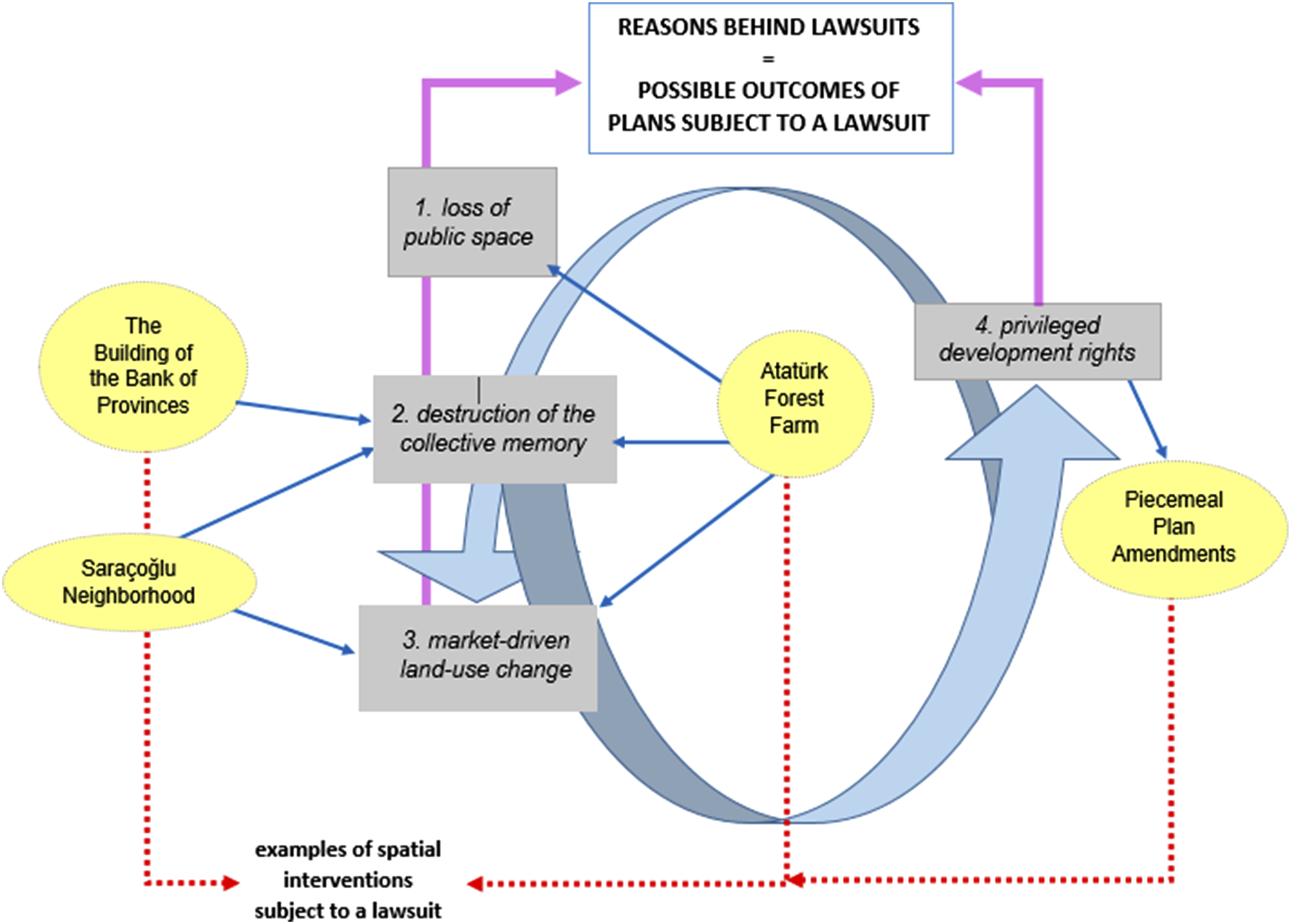
Our intimate knowledge of Ankara, gained through decades of living and working in the city, enabled us to identify these cases both for their legal significance and profound impact on the urban fabric and collective experience. While Ankara serves as the case study due to our experience with the city and the high volume of lawsuits filed there, the patterns of judicialization observed are generalizable across Türkiye. The dynamics of market-driven land-use change, loss of public space, and privileged development rights are evident in planning conflicts nationwide, though Ankara’s particular significance as the modern nation’s capital, with its concentration of architectural and cultural symbols from the early Republican era (Batuman, 2015), makes the destruction of collective memory dimension especially pronounced in this context.
Atatürk Forest Farm (AFF) in Ankara exemplifies privatization of urban public space. Established upon the order of Atatürk, the founder of the Turkish Republic, as an urban park with agricultural, agriculture-based industrial and recreational facilities, approximately 2/3 of this largest inner-city green space of the city has been gradually privatized, mostly from 1980s onwards parallel to the rise of neoliberal urban policies (Keleş, 2012). In 2010s, Ankara Metropolitan Municipality adopted plans for different sections of the urban park, including a privately owned amusement park (Ankapark). The Chamber sued these plans for destroying a 1st degree agricultural area. Although the Chamber won, construction continued after the area was reclassified as “not any more a 1st degree agricultural area” (2016–2017 Activity Report, 2018). Finally, the construction finished and Ankapark was opened in March 2019. This case exemplifies top-down planning decisions implemented rapidly, without any sort of public discussions or consultations, beyond the legally required 1-month objection period, unknown to most citizens.
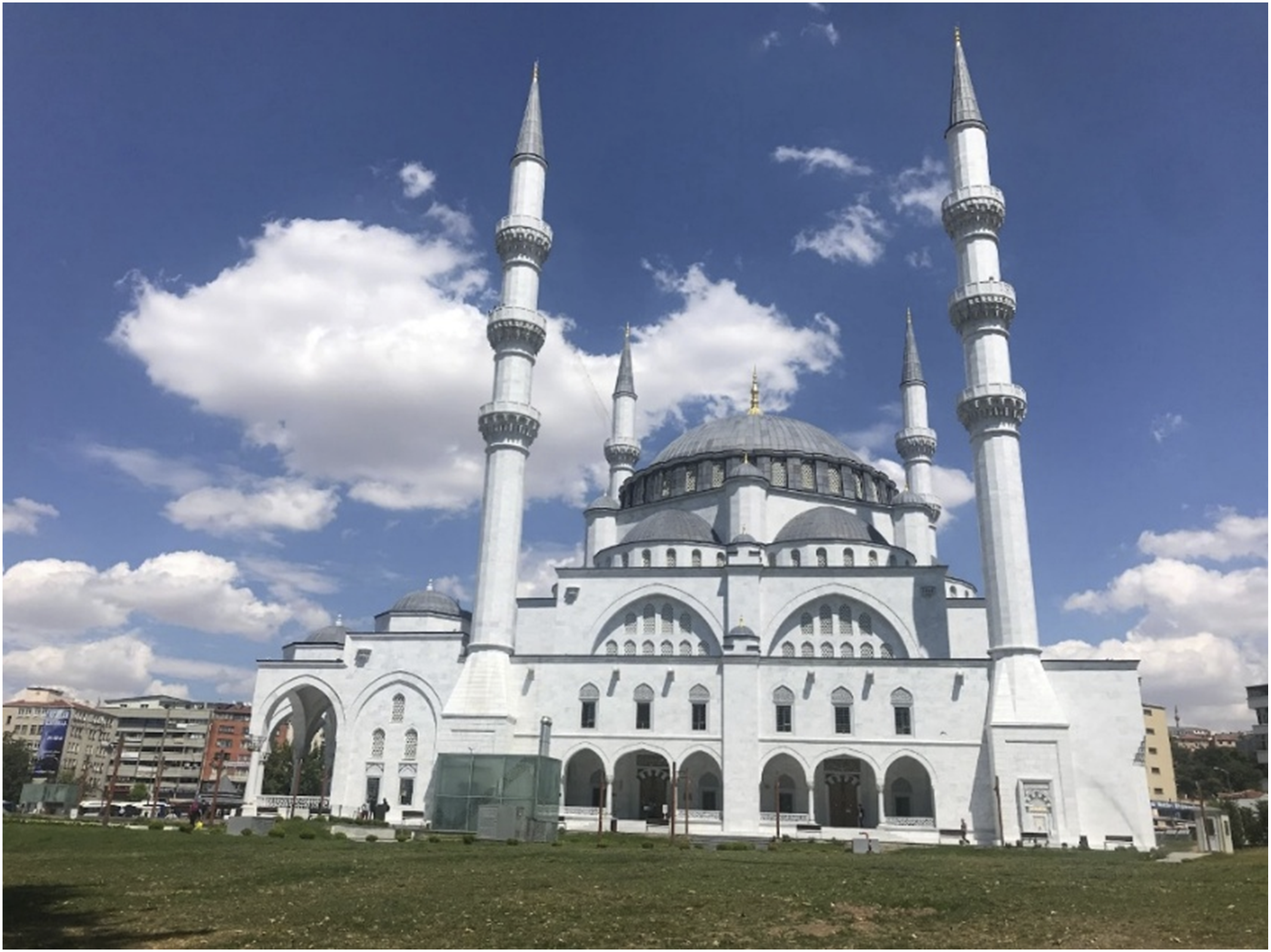
Plan amendments for mosque constructions are typical interventions damaging the collective memory. At Hergelen Square in Ulus, Ankara’s historical center, a mosque construction led to the demolition of a public building constructed in 1937, the Building of the Bank of Provinces (İller Bankası in Turkish), by famous architect Seyfi Arkan. This building, registered as cultural heritage, exemplified Türkiye’s modernist architecture and formed a unitary street facade with other modernist era buildings. Ironically, demolition created not the mosque itself, but its courtyard -a huge construction for new open space. Both the Chamber of City Planners and the Chamber of Architects opposed demolition through campaigns, parliamentary visits, social media, press release, and legal action, yet the building was demolished in 2016. A huge mosque was constructed in the square and the space left by the building is now a grass courtyard of the mosque. The Chamber later stated demolition aimed to make the mosque more visible, described the whole process as ‘ignorance’ and added: ‘Perhaps we had the only example in the world of a public building being pulled down only to plant grass’ (2020–2021 Activity Report, 2021) (Figures 4 and 5). Building of the Bank of Provinces, Ulus, Ankara (Source: Photo archive of Chamber of Architects, Ankara Branch). The mosque built on the plot of the building of the Bank of Provinces, Ulus Ankara (Source: Author’s own archive).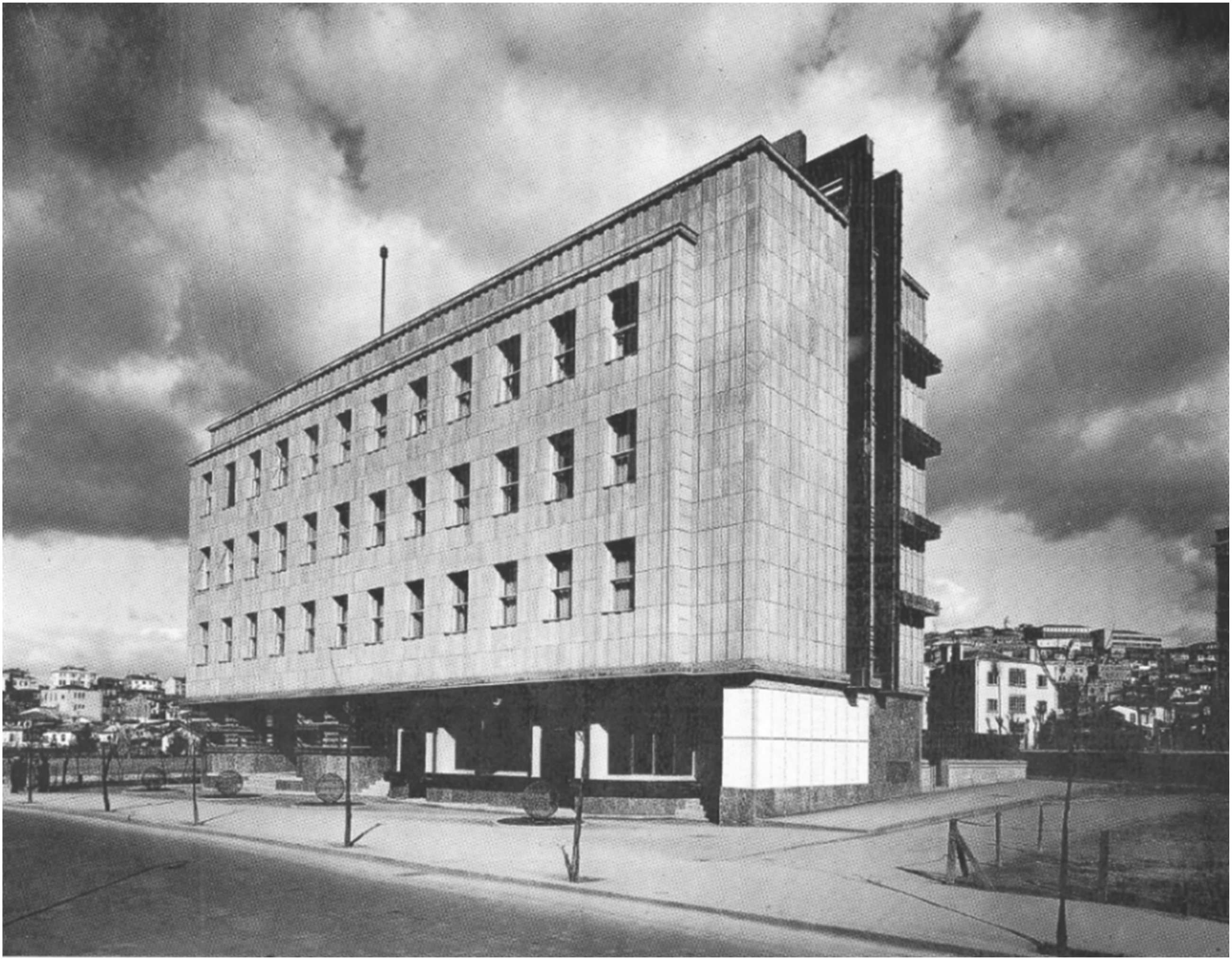
Saraçoğlu Neighborhood exemplifies spatial interventions sued for leading to market-driven land-use change and loss of collective memory. It was Türkiye’s first public housing for civil servants, designed by German architect Paul Bonatz and constructed in 1944–1946 as a part of a green axis through the city center (CR3). One interviewee describes it as an example of staged authenticity (Rowley, 2018): “It was beautiful. I used to stay at friends’ place there. Now it is gentrified. It might look nice to some, but gives the feeling like you are in a film set, but not in a real place” (CR4). The 2020–2021 Activity Report describes the neighborhood as vibrant, at the intersection of commercial, administrative, educational and cultural land uses, with protected buildings and 210 monumental trees. Dispute arose when by the Council of Ministers (CoM) declared the neighborhood a disaster risk area in 2013. The Chamber sued the decision and won, as no disaster risk existed. CoM re-declared it risky; the Chamber sued it again and won. This exemplifies how disaster risks are used to legitimize rent-maximizing projects, rather than address actual risks, as argued elsewhere (Bektaş, 2014; Kuran and Kuran, 2016). Residents were forcibly displaced (CR3), although Chamber’s legal action prevented total demolition. The MoEUC introduced new plans replacing middle-class public housing with mixed-used luxury development (shops, hotels, high-end housing), contradicting Ankara’s upper-scale plans (2022–2024 Activity Report, 2024). The process repeated in the form of plan adoption - court cancellation-until 2022. Despite Chamber’s lawsuit, implementation was completed by 2024 (Figure 6). Saraçoğlu neighborhood, Ankara (Source: Archive of Pelin Kılıç from CCPA).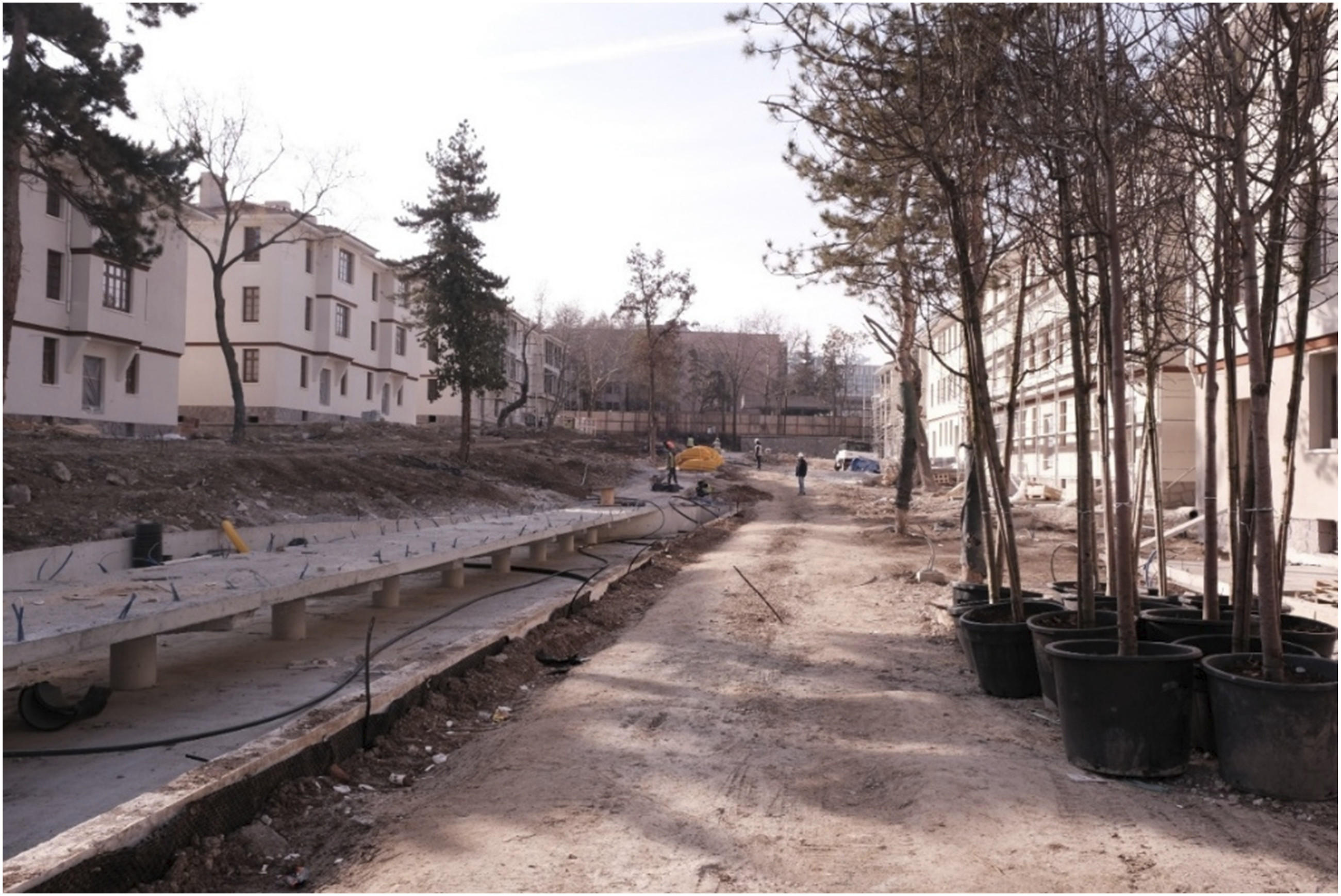
Piecemeal plan amendments granting privileged development rights are frequently subject to lawsuits and constitute a major problem of Türkiye’s planning system: ‘Municipal Assemblies have the power to approve plans and plan changes, and the latter has become the main task of municipal assemblies. It even became a crucial income generating activity for municipalities and this ruins plan unity.’ (CR1). Such amendments, made upon request of powerful interest groups or individuals, convert public green spaces or increase the floor area ratios, leading to unjust land rents increases. Ünlü (2006) defines this as “individualization of urbanism”, causing urban quality decline. Interviewees noted these interventions intensified from 2000 onward in southern Ankara (CR3, CR4, CR5), exacerbating spatial injustices since “it was only for the powerful rich people to influence the municipal assemblies and have plans amended” (CR3). Single-lot plans amendments transformed areas zoned for villas or rural style housing into high-density development for high-income groups (CR5) resulting in approximately 20 million extra housing units, exceeding Ankara’s needs (CR4). One interviewee recalled: ‘Because of these changes, the southern entrance to the city is now filled with skyscrapers that look like office buildings but are actually residential. The area has lost its sense of identity to such an extent that I get lost whenever I go there’. (CR3).
Consequences for spatial justice and democratic politics
Judicialization of urban planning in Ankara stems from neo-liberal and anti-democratic systemic features leading to the rent-seeking, unjust and authoritarian nature of planning interventions. The revanchist spatial agenda of the political Islamist ideology constitutes another crucial driver. This picture enables neoliberal and centralized urban planning (Ergenç and Yüksekkaya, 2024) maximizing land rent, causing profound urban problems highlighted throughout the article. Judicialization emerges as a reaction to prevent or solve these problems, but has two counterproductive, interrelated consequences regarding democracy and urban spatial justice. Understanding these two consequences requires unpacking the multifarious, co-existing and interplaying dynamics surfacing throughout judicialization. While in-depth elaboration of each dynamic exceeds this article’s scope, we highlight the main lines.
The so-called ‘planning principles’ or the notion of public interest are frequently used by planning scholarship, practitioners, judges, and our interviewees; yet lack written explanation. This raises difficulties in planning practice and legal processes leading to competing public interests among different actors as one interviewee noted: “It is both good and bad. Good because, if they are written, then they would be amended piece by piece. Bad, for example, sometimes experts in lawsuits can make quite persuasive justifications for unjust interventions in terms of what they understand from public interest” (CR 5). The final decision on the public interest is made not through public discussion, but by the court itself within judicialization. Judicialization also transforms the terms of debate from political and normative questions to technical-legal ones. Instead of asking “What kind of city do we want?” or “How should urban resources be distributed?”, disputes focus on narrow questions of legal compliance: Does this plan violate hierarchy principles? Is the public interest adequately protected? While these legal principles may incorporate normative concerns, their translation into technical-legal language strips away the explicitly political character of urban conflicts.
Another dynamic of judicialization of urban planning is the limited ties with the grassroots, which contributes directly to the shrinking democratic space. Our findings reveal conflictual and complicated relationships between the Chamber’s legal struggle and grassroots mobilizations. While Özdemir and Eraydın (2017) demonstrate how legal and street-level struggles co-exist and co-evolve in Türkiye’s urban movements, authoritarian turn has weakened the latter. Internal divisions also hinder collaboration: “In 2009, we organized an “Urban Transformation Forum” bringing together different movements, neighborhood representatives around the city, but this endeavor ended up with a failure because of the different fractions in the opposition did not want to come together” (CR4). Additionally, grassroots organizations increasingly prefer filing lawsuits through the Chamber over street level protests. As one interviewee noted: “In many occasions, local people and their grassroots organizations want us to file lawsuits on their behalf against plans in their neighborhoods, while we prefer that they do this themselves, because their ownership matters in the legal processes”. These findings confirm Sotomayor et al. (2023) and Lima (2018): judicialization responds to failed participatory mechanisms and closed political channels.
State’s failure to recognize judicial decisions is a decisive dynamic of judicialization
5
. All our interviewees, particularly the ones we interviewed in 2024, repeatedly emphasized that judicial decisions that cancelled plans or plan amendments were disregarded by the planning authorities, either MoEUC or municipalities. One of them explained the situation in detail: Implementation continues despite the court decisions to cancel them. Municipalities has been implementing a method for a long time: A development plan (or a plan amendment) is prepared; we file a lawsuit against it because it is against the legislation. The judicial process lasts long, approximately 9 months including the expert review to be done and a first decision to come. Meanwhile, the building permit has already been given, and the construction comes to its maximum point. After this long period, in case we win the case, the plan is cancelled. The building license is also cancelled, and the construction stops for a short time. The planning authority then immediately approves another plan that is same with or very similar to the cancelled one. There are even cases where the building permit is not canceled and the construction continues, despite the legal process. Once the construction has reached a certain point, they turn this into an acquired building right. In other words, the spatial intervention envisaged by the plan is implemented although the plan has been cancelled. (CR3).
In addition to the state’s inability to recognize the judicial decisions, the lawsuits themselves can be handled in an unjust way, disrespecting the rule of law. This issue is right at the nexus of the temporalities of planning (Raco et al., 2018) and urban spatial injustices, as the same planner indicates: “This is a recurring process that makes the issue of urban spatial justice one that needs to be discussed. There are plans that are cancelled more than 10 times. This situation causes people to wait for their building rights for years” (CR3). This happens parallel to the weakening of the rule of law, powerful groups of mainly political and capitalist elites can influence the lawsuits to finalize in a relatively short time with advantageous decisions for them. For example, as CR3 explained in detail as a continuation of her comment on piecemeal plan amendments: “especially in the south, you see buildings of 40–50 storeys, while in the east, in mainly low-income areas, there are people who have been waiting for building rights for 25 years”. This is because in the former case, the powerful groups were able to prevent the cancellation of a plan that increased the building rights in their property, while the less powerful ones have to wait in a climate of temporal uncertainty. As Raco et al. argue, ‘…diverse interests engage in a politics of temporal framings, and different interests possess diverse capacities and skills to exploit temporal fractures…’ (Raco et al., 2018). This situation is also conceptualized as the ‘politics of waiting’ (Ay and Penpecioğlu, 2024), as a result of the long delays in the implementation of plans and projects due to these recurring lawsuits create ambiguities and no clear prospect for future. This uncertainty is not merely technical but political, differentially affecting actors. Well-resourced developers and politically connected actors navigate uncertainty through expertise, connections, and capacity to absorb delays and costs. In contrast, smaller actors, opposition-governed municipalities, and community organizations face greater vulnerability. Thus, uncertainty is the reality mostly of low-income, working-class segments of the society (Ay and Penpecioğlu, 2024; Özdemir and Eraydin, 2017). This result has also a paradoxically negative effect on the relationship between the working-class neighborhoods and the Chamber, since these neighborhoods see the Chamber as responsible for uncertainty. This in turn further weakens the already limited grassroots relations between the neighborhoods and the Chamber we mention above.
Concluding remarks
The article examines judicialization of urban planning in the case of Ankara based on the judicial actions of the Chamber of City Planners—its increasing subjection to judicial oversight—analyzing dynamics, causes, and consequences for democratic politics. The Chamber drives this process through legal audits and lawsuits against planning decisions violating legal principles and public interest. The analysis in the article identifies two primary consequences: exacerbated uncertainties deepening spatial injustices and shrinking democratic space.
We demonstrate how judicialization both responds to and reproduces the four systemic features driving authoritarian urbanism in Türkiye. The Chamber’s litigation targets rent-seeking interventions—from Atatürk Forest Farm’s privatization to piecemeal amendments granting privileged development rights in southern Ankara—yet legal challenges often fail to prevent project implementation. Judicialization emerges precisely because top-down decision-making excludes meaningful participation, as Saraçoğlu Neighborhood’s forced displacement exemplifies, but simultaneously displaces contestation into courtrooms rather than enabling democratic engagement. The Bank of Provinces demolition reveals how political Islamist spatial politics drives litigation as modernist spaces become battlegrounds. Finally, judicialization reflects and amplifies global Southern characteristics—rapid formal-informal shifts, deep uncertainties, and spatial inequalities that differentially affect various actors. Thus, while the Chamber contests each dimension, judicialization paradoxically reinforces these conditions by channeling opposition into increasingly captured judicial venues.
A major consequence of judicialization is the production of systematic uncertainties that differentially affect various urban actors, thereby reproducing and potentially deepening spatial injustices. Similar to the politics of urbanism in the global Southern cities, the politically connected groups that are powerful to influence court processes, mainly the political and capitalist elites, can acquire extremely high building rights in a fast-paced manner, while less powerful groups of mainly working-class neighborhoods have to wait for their building rights in an ambiguous situation. Put differently, the temporalities of planning are at work in a politicized way in very different parts of the worlds, and as a result of diverse dynamics.
Another major consequence of the judicialization of urban planning is the shrinking democratic space, in which the political is contained in the courtroom and the potential for street level social mobilizations/movements diminishes or is foreclosed. Thereby, the politicization does not reach larger masses with claims of democracy and equality. The right or opportunity to raise these claims is limited in specific times and spaces and to certain knowledgeable actors, such as the planners, experts, lawyers, and judges that decide on the public interest, rather than creating a ‘proper democratic political sequence’ (Swyngedouw, 2009), involving larger masses from different segments of the society, having different claims and in a sequence of various times and spaces.
On the other hand, what we mean here is not necessarily post-politicization. The Chamber of City Planners and the Chamber of Architects in the judicialization process are not necessarily apolitical or post-politicized actors or professionals, they rather act with activist motivations, as shown in several studies (Batuman, 2006, 2008a, 2008b; Özdemir-Ulutaş, 2021, 2023). In that respect, these institutions and many of their oppositional actors are increasingly politicized. Moreover, some of them are even criminalized since some of their representatives are sentenced to imprisonment because of their involvement in the Gezi Park Protests 6 . More recently, in March 2025, prosecutions were started against a number of experts, bureaucrats and mayors of local governments in Istanbul that are ruled by the main oppositional party (Republican People’s Party), including judicial interventions directed at Istanbul Metropolitan Municipality and its mayor, Ekrem İmamoğlu, developments that have been widely interpreted as exerting pressure on locally elected authorities and the institutions of democratic representation at the metropolitan scale. It was decided that these people, among whom were city planners too, would be tried in detention. For many people, including the planners and the Chamber of City Planners, the reason behind their arrest is their commitment to protect the right to the city of the people of Istanbul and its ecology and, in line with this commitment, their intention to stop the rent-based large-scale projects of the national government. These prosecutions and arrests show that local governments and planners have been under a high and risky political pressure, leaving the Chambers increasingly little room for maneuver other than filing lawsuits.
Our analysis finally demonstrates how urban planning -often treated as a technical domain-becomes a crucial site for understanding authoritarian governance and resistance. Its judicialization, on the other hand, reveals a paradox by representing both a response to authoritarian urbanism and a symptom of democratic erosion. Moving beyond this impasse requires recognizing that legal mechanisms alone cannot sustain democratic urban politics, particularly in authoritarian contexts where judicial independence is systematically undermined. While legal challenges may achieve tactical victories and maintain some space for contestation, they must be complemented by strategies that build broader democratic capacity and inclusion.
Several dimensions identified in this article open productive research avenues. Further research could examine how different actors like chambers, municipalities, private developers, community organizations deploy legal strategies across lawsuit types. Employing mixed methods combining quantitative analysis of lawsuit types, outcomes, and temporal patterns with qualitative in-depth case studies focusing on specific lawsuits would also enhance our understanding of judicialization. Such research would also deepen the analysis by examining the broader authoritarian transformation of urban governance in Türkiye and its relationship to the judicialization of urban planning. Opposition-governed municipalities face not only judicial challenges to their planning decisions but also systematic political pressures and bureaucratic obstructions, financial pressure through withheld transfers and imposed debts, and — in some cases — the removal of elected mayors and the appointment of government trustees (Esen et al., 2025). This pattern suggests that judicialization of urban planning operates as one element within a broader repertoire of authoritarian control mechanisms.
Footnotes

Ethical considerations
This article does not contain any studies with human or animal participants. There are intervieeves and their verbal consent is obtained at the beginning of the interview and no identifying information is given in the article.
Funding
The authors received no financial support for the research, authorship, and/or publication of this article.
Declaration of conflicting interests
The authors declared no potential conflicts of interest with respect to the research, authorship, and/or publication of this article.