






Abstract
The importance of quality of service (QoS) in categorizing cloud services has been increasing as the quantity of services offered by the cloud continues to grow. Cloud Computing is an internet technology that allows customers to use computing resources and pay based on demand in real-time. Various cloud service providers now offer similar services at different prices and performance levels, making it crucial but difficult for consumers to choose the best cloud service. The current techniques for selecting a cloud service allow users to provide choices in a quantifiable way. However, because many QoS variables are connected and not independent, the combined weights approach does not consider correlations between QoS attributes and can generate unreliable results. Our solution to this challenge involves implementing a cloud service architecture that considers customers’ choices and selects the best cloud service based on QoS limitations. We propose a hybrid cloud service selection approach that integrates principal component analysis (PCA) with a combined weighting mechanism incorporating both objective and subjective criteria. This dual strategy offers two key advantages: (1) it achieves a more well-rounded weighted result through the combined weighting strategy, and (2) it employs PCA to eliminate redundancy by removing correlations among QoS criteria, thereby enhancing the robustness of the selection process. The effectiveness and reliability of the proposed approach have been validated through simulations using the real-world QWS dataset, demonstrating its feasibility and superior performance in identifying the best cloud services.
Keywords
Introduction
Cloud Computing has proven to be an excellent approach for transferring information technology (IT) services for several years (Buyya et al., 2009; Chen et al., 2022; Hwang & Lee, 2021). It provides users with internet access through flexible and massively scalable IT resources. Users can easily access services through a shared pool of flexible computing resources with minimal administrative effort, as stated by the National Institute of Standards and Technology (Latif et al., 2022; Mell & Grance, 2011). Additionally, it offers a way to locate apps and find new ones. Users may access a range of services using the cloud infrastructure of various commercial cloud service providers (CSPs), such as Amazon, Microsoft, and Windows. The cloud computing model provides three distinct types of services: software-as-a-service (SaaS), platform-as-a-service (PaaS), and infrastructure-as-a-service (IaaS), representing software, platform, and infrastructure. The client's requirements offer these services. Cloud Computing users can meet their IT needs by using virtualized resources online instead of owning their own computer infrastructure. Cloud Computing has transformed the business operations of small-, medium-, and large-scale organizations by lowering costs, providing on-demand services, increasing service flexibility, and becoming scalable. After becoming aware of these benefits, several businesses have begun outsourcing their operations to cloud-based computer technologies. Because of this, the utilization of cloud computing and its development have increased exponentially (Hazra et al., 2022). In our concept, the cloud agent's function or aim is to recognize the finest services from a given collection of CSPs by considering both cloud users’ subjective and objective evaluations (Radulescu & Radulescu, 2018). When choosing a cloud service, it is usually necessary to align the customer's needs with the capabilities of various service providers. With the increasing number of service providers and the variations in pricing, service offerings, and quality, evaluating and choosing the most suitable services for customer needs can be challenging. It is essential to use various evaluation criteria for specific cloud services offered by different providers to find the best service provider for customer requirements. A short time ago, multicriteria decision making (MCDM) emerged as the most successful governing tool, proving its ability to solve real-world challenges (Kumar et al., 2021; Panda et al., 2015, 2016; Tomar et al., 2017; Tomar & Jana, 2021). Therefore, finding the applicable CSP is difficult for MCDM issues. In this problem, several cloud service alternatives are evaluated and ranked based on various criteria that depend on specific consumer choices (Garg et al., 2013; Kumar et al., 2018; Tiwari & Kumar, 2021). A number of these elements are based on the preferences of specific users. There is a possibility that a cloud service alternative will have a high throughput if it has a rapid reaction time. The weighted summation of quality of service (QoS) data may result in recurrent computations over the information regarding QoS attributes. If the quantity of QoS characteristics increases, the level of repeated computation will increase, increasing the time required for calculation. When faced with this circumstance, the current process for selecting cloud service alternatives struggles to effectively and efficiently evaluate the QoS merit of the provided options (Qi et al., 2016).
In Jatoth et al. (2019), the authors are responsible for developing the widely known MCDM approach and the technique for order of preference by similarity to ideal solution (TOPSIS) method. This strategy revolves around the principle that an optimal solution should have the lowest geometric range from the best possible solution and extend from the worst solution (Mei & Xie, 2019; Panwar et al., 2019). However, most research studies focus on identifying which cloud services are best for either objective evaluation (defined in terms of numbers, such as cost, time, speed, etc.) or subjective evaluation (defined in terms of qualitative expressions, such as strategy, management, etc.), but not both. This is because either is used to examine the bulk of cloud services. However, many of these systems have handled objective and subjective decisions similarly, leading to significant noise in the selection procedure. This is problematic as it adds complexity to the selection procedure. It is necessary to approach these types of assessments differently. Specifically, this is because regular cloud users, often confronted with a multitude of quantitative data, cannot simplify the objective appraisal process. On the other hand, subjective assessment is easier to understand than objective evaluation; nonetheless, it is not entirely trustworthy because it may involve partiality and malicious evaluation. Nevertheless, there is a need for further development to ensure consistency in the approaches that consider objective and subjective assessment (Keshavarz-Ghorabaee et al., 2021; Nejat et al., 2022). In this research, we developed an innovative hybrid model to ensure the selection of the best cloud service alternative based on QoS values. The main goal of the presented hybrid model is to reduce the size of the selected criteria without sacrificing substantial information, while maintaining an assessment procedure that is both expressive and simple for cloud services. In light of these issues, we have developed a method for evaluating cloud services that is both effective and precise. The principal component analysis (PCA) and combined weights of the best–worst method (BWM) and entropy form the foundation of this technique. PCA (Pearson, 1901) reduces the data dimension and removes correlation between QoS criteria. Additionally, weights of entropy ( Hwang et al., 1981; Stewart et al., 1997) and BWM ( Rezaei, 2016; Rezaei, 2015) are blended according to customer preferences. The weight of every QoS criterion is determined using entropy and BWM. We integrate the combined weights with PCA to ease the process of selecting cloud service alternatives. In general, this contribution offers an approach that is more efficient and quicker to minimize the limitations of the earlier research, which were characterized by a high processing need and multicollinearity characteristics. First time that combination weights (entropy and BWM) and PCA are specifically applied to problems requiring the solution of a selection process.
The primary contributions that this paper makes are as follows:
To assess the cloud service alternatives according to the presented QoS factors, we construct a hybrid cloud services selection model by utilizing MCDM approaches. An efficient and trustworthy method has been presented to reduce correlations between QoS criteria in complex decision-making issues. We facilitated greater satisfaction for cloud customers by organically combining objective and subjective analysis. We carry out an experiment using a real-world dataset to illustrate the reliability and efficiency of the proposed technique.
The paper is organized as follows: The literature review is presented in Section 2. The motivation for cloud service selection is given in Section 3. The proposed framework for cloud services selection is presented in Section 4. The proposed approach for selecting cloud services is discussed in Section 5. The case study and simulation analysis of the proposed approach are discussed in Section 6. The performance evaluation of the proposed methods is presented in Section 7. The conclusion and potential future scope are discussed in Section 8.
Related Work
When numerous CSPs are considered, service selection ( Hashemkhani Zolfani et al., 2018; Xie et al., 2021) is one of the hardest study areas for cloud computing academics to investigate. The author presented the hybrid MCDM model in the work (Jatoth et al., 2019) to select cloud services from various options. As part of their examination, they have considered objective and quantitative factors. Additionally, they have incorporated the expanded gray TOPSIS approach with the analytic hierarchy process (AHP) to determine the rank of the cloud service alternative. Furthermore, to illustrate the robustness of their model, they have carried out a sensitivity analysis. In Saha et al. (2021), the authors present a hybrid MCDM approach using VIseKriterijumska Optimizacija I Kompromisno Resenje (VIKOR) and analytic network process (ANP) to choose cloud services based on benefit and nonbenefit attributes. The ANP divides criteria into four subnets: benefits, opportunities, costs, and risks. Using these subnets, ANP determines the local rank of the cloud service alternatives. The global rank of the cloud service alternatives is then determined using the VIKOR method. The algorithm's stability and resilience were demonstrated through a sensitivity analysis to prove its effectiveness. This paper presents a service selection brokering model incorporating subjective and objective weighting methodologies for selecting cloud services. Subjective opinions are gathered to compute the subjective weight, while the objective weight is calculated using benchmark data for cloud services. In addition, the subjective weight is determined by the user's preferences and comments, whereas the objective weight is determined by employing Shannon's entropy approach (Chauhan et al., 2021). When objective weighting approaches are utilized, the weight of the criterion is determined by applying a specific computing procedure to a provided decision matrix. There is no participation from the decision makers (DMs) in selecting their cloud service alternatives. The entropy method, also known as Shannon's entropy method, is one of the objective weighting techniques. Other techniques include the weighted least-squares method (Chu et al., 1979), the Bayes approach ( Vinogradova et al., 2018), linear programming techniques for multidimensional analysis of preference (Srinivasan & Shocker, 1973), PCA (Croux et al., 2013), and the mean square deviation method (Subramanian & Savarimuthu, 2016). Subjective weighing approaches include determining the weight by employing the views of management directors. DMs’ preferences and their perspectives are reflected in the weight distribution. The DMs typically rely on surveys and linguistic terminology when expressing their opinions. A few examples of subjective weighting procedures are BWM (Rezaei, 2016), simple multiattribute rating technique (Edwards, 1977; Von Winterfeldt & Edwards, 1993), Simos process and improved Simos procedure (Simos, 1989), ANP (Saaty, 1996), stepwise weight assessment ratio analysis (SWARA; Keršuliene et al., 2010), and AHP (Saaty, 1977). The authors developed an efficient and effective two-phase technique in the study (Xie et al., 2021) to address the problem of dependability in cloud service composition. To enhance the quality of service (QoS) and reduce the space required to locate the ideal service composition, they have combined the chaotic Gauss-based particle swarm optimization with the k-means clustering approach. The cloud customer utilizes these QoS standards to assess the various cloud-based services available to the client. A frequent scenario in which a client or decision-maker picks a cloud service that is most suitable for their requirements according to various QoS criteria that conflict with one another (Kang et al., 2013; Luo et al., 2013).
In Kumar et al. (2022), the authors presented PCA–BWM-based techniques aimed at effectively selecting the optimal cloud service from various alternatives, thereby improving decision-making processes. The techniques are validated through experiments that showcase their suitability, utilizing the QWS dataset while varying CSPs and QoS criteria. The authors determine that choosing the optimal cloud service is complex because of the existence of various interrelated QoS criteria.
In Tomar et al. (2023), the authors present a hybrid MCDM methodology that integrates both subjective and objective weights for the effective evaluation of CSPs. The authors employ the AHP to determine subjective weight, while the entropy method is utilized for calculating objective weight. When dealing with n decision criteria, the AHP necessitates n(n − 1)/2 pairwise comparisons. In contrast, the BWM only requires 2n − 3 comparisons. Because BWM utilizes fewer comparisons, the criterion weights it produces are generally more reliable and lead to more precise evaluations compared to those generated by AHP (Heo et al., 2022). The summary of MCDM-based related work on cloud service selection is presented in Table 1.
Summary of MCDM-Based Related Work on Cloud Service Selection.
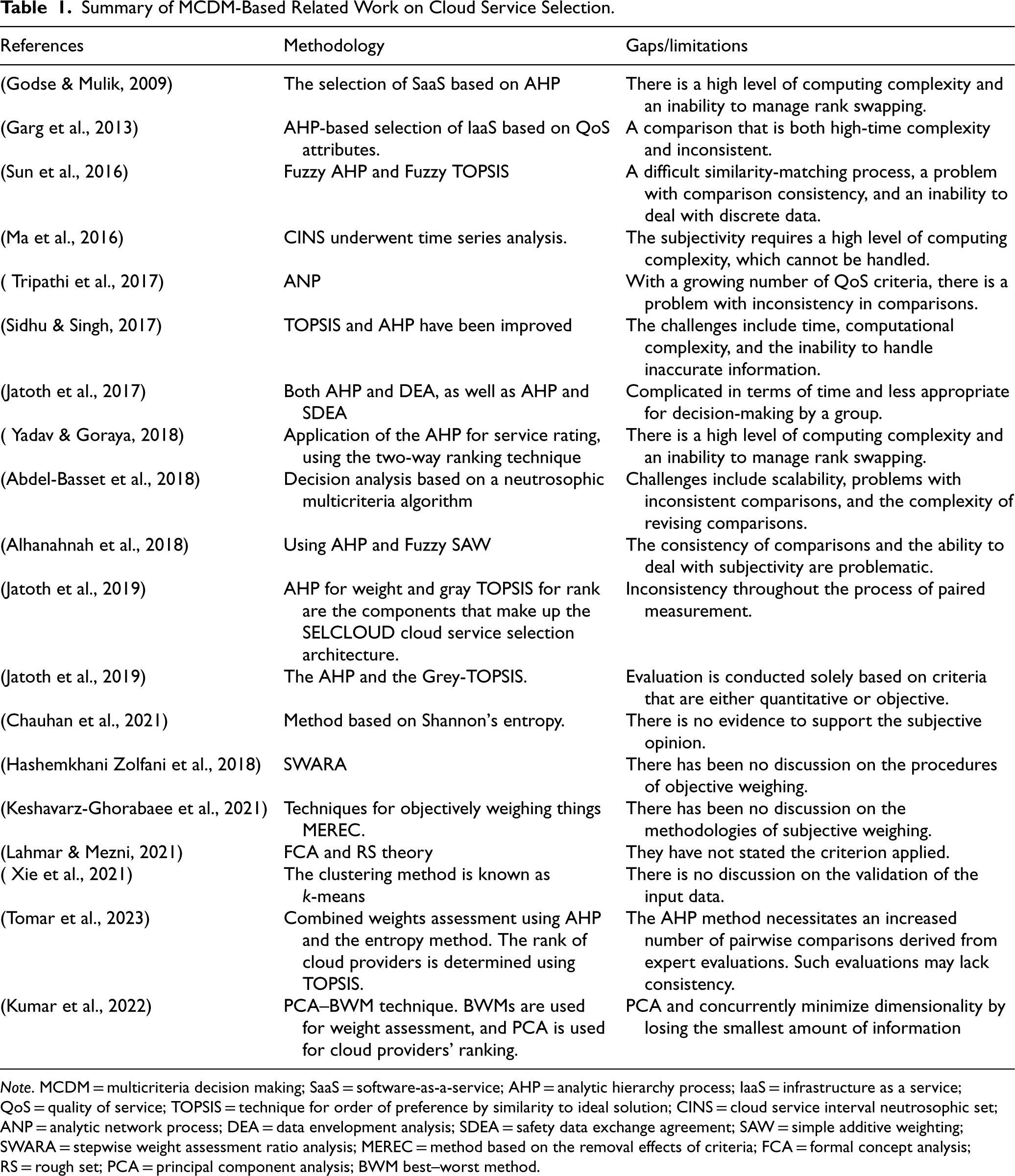
Summary of MCDM-Based Related Work on Cloud Service Selection.
Note. MCDM = multicriteria decision making; SaaS = software-as-a-service; AHP = analytic hierarchy process; IaaS = infrastructure as a service; QoS = quality of service; TOPSIS = technique for order of preference by similarity to ideal solution; CINS = cloud service interval neutrosophic set; ANP = analytic network process; DEA = data envelopment analysis; SDEA = safety data exchange agreement; SAW = simple additive weighting; SWARA = stepwise weight assessment ratio analysis; MEREC = method based on the removal effects of criteria; FCA = formal concept analysis; RS = rough set; PCA = principal component analysis; BWM best–worst method.
Multiple research studies have demonstrated a significant link between various QoS characteristics, highlighting their importance in evaluating service performance. The article mentions a correlation model specific to business services (Luo et al., 2013), but it primarily concentrates on explaining the features of this model without applying it to the actual selection of services. Furthermore, the research investigates a PCA-based method for selecting web services (Kang et al., 2013), aiming to improve the decision-making process in choosing web services based on relevant quality metrics. Many existing methods for selecting cloud services have challenges. First, when we add more criteria to make decisions, it becomes more complex to implement and requires more computing power, which can lower performance, especially in real-life situations. Second, these methods struggle to assign weights to QoS attributes properly, making it difficult to do this accurately and efficiently. Third, they do not work well when we need to consider both objective and subjective assessments. Fourth, using a uniform standard for all QoS attributes can create inconsistencies between positive and negative attributes. To solve these challenges, we created a hybrid strategy for choosing the best cloud services by focusing on their correlations. Our approach is different from existing methods. We offer two main benefits: first, our combined weighting strategy results in a better-balanced outcome, and second, we use PCA to eliminate correlations among QoS attributes, identifying the best cloud services based on their QoS values.
Let us say that service providers can satisfy functional requirements of clients and are prepared to supply their services with QoS metrics such as reliability, throughput, availability, latency, response time, and so on. QoS characteristics are not independent of one another but rather correlate with one another. In this scenario, selecting a cloud service that is both accurate and efficient from among the available providers according to these QoS criteria becomes a difficult challenge for consumers using cloud services, and using a real dataset QWS and datasets comprising 2507 web services and nine QoS criteria, such as availability, response time, throughput, reliability, scalability, compliance, best practices, latency, and documentation. However, in this paper, we selected only five QoS criteria, namely response time (Res), reliability (Rel), availability (Ava), throughput (Thr), and latency (Lat), to evaluate services ranking and test our hypothesis (Al-Masri & Mahmoud, 2008).
We calculated the Pearson correlation coefficient of the QWS dataset and displayed it in Table 2. The Pearson correlation coefficient value was between −1 and 1. We found a significant positive Pearson correlation coefficient between reliability and throughput, with a value of 0.669923. A positive Pearson correlation coefficient between latency and availability is also indicated by a value of 0.651889. Conversely, the relationship between response time and throughput exhibits the most negative Pearson correlation coefficient, with a value of −0.10628.
Correlation Coefficient of the Five QoS Criteria in QWS Datasets.
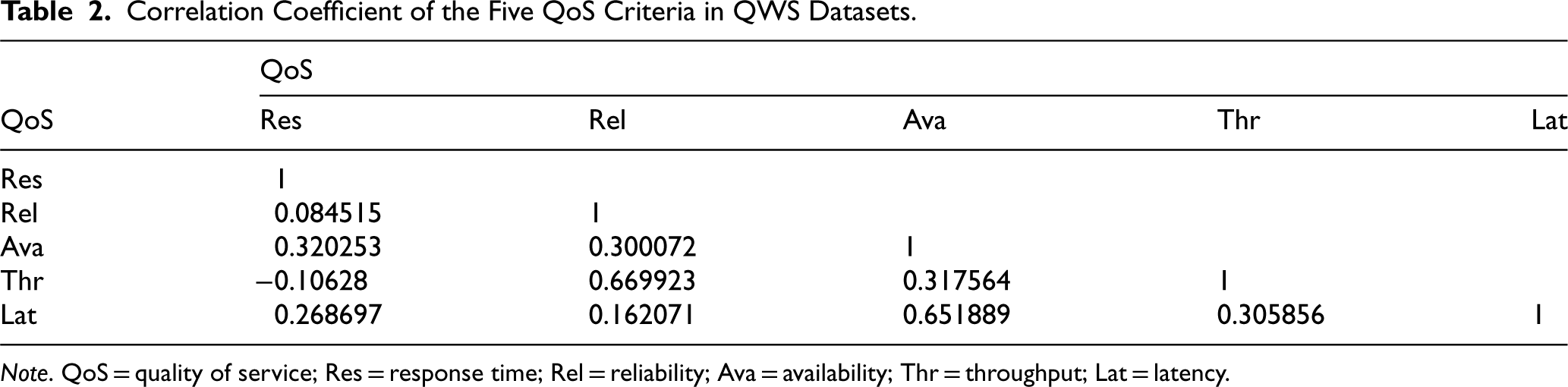
Correlation Coefficient of the Five QoS Criteria in QWS Datasets.
Note. QoS = quality of service; Res = response time; Rel = reliability; Ava = availability; Thr = throughput; Lat = latency.
This result indicates that specific QoS parameters associated with cloud services are interconnected rather than independent. As a result, the current methods for selecting cloud services are ineffective in these situations, leading to inaccurate choices when determining which cloud services to use.
In addition, the proposed framework for service selection, as shown in Figure 1, employs the technique we have provided to evaluate various services based on individual customer decisions and the QoS information offered by the service provider. It is made up of four essential elements, which are as follows:
Repository: A cloud service repository is a comprehensive storage system with detailed information about cloud providers. This includes functional and nonfunctional attributes, unique identifiers, artifacts, and service-level agreements related to the services offered by service providers. Discovery Engine: The Cloud Service Discovery Engine is a critical component that interacts directly with cloud consumers to find suitable services based on specific needs and preferences. It often relies on essential subcomponents such as the service matchmaker and the service filter to effectively narrow down the cloud service alternatives. Selection Engine: This component, known as the Cloud Service Selection Engine, interprets and converts QoS values to assist in discovering services that best meet the user's needs. Service Pool: The Cloud Service Pool is a repository that contains information regarding services and their associated features as offered by various service providers. This pool serves as a centralized source for all available cloud service alternatives.
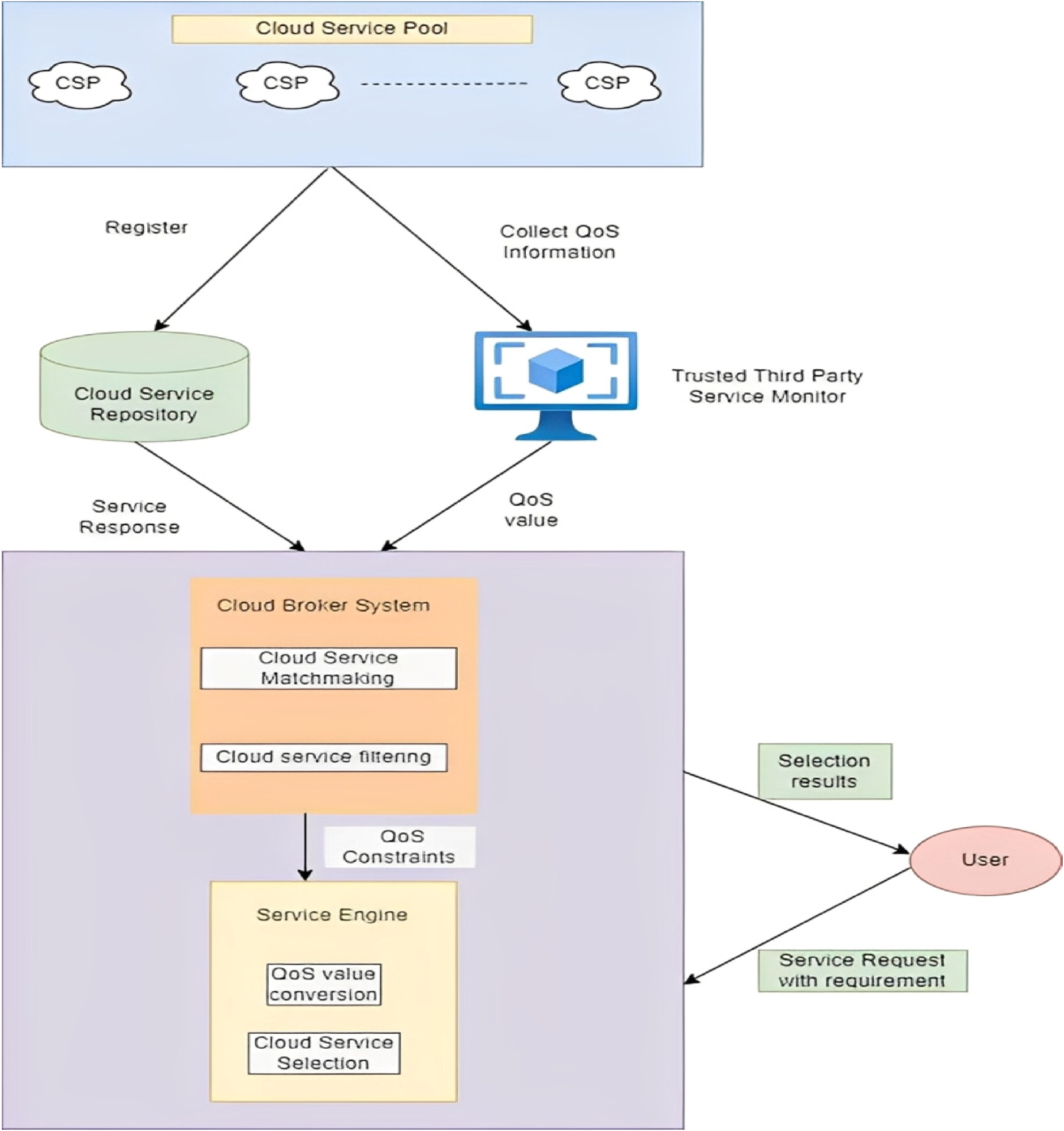
Best cloud service selection framework.
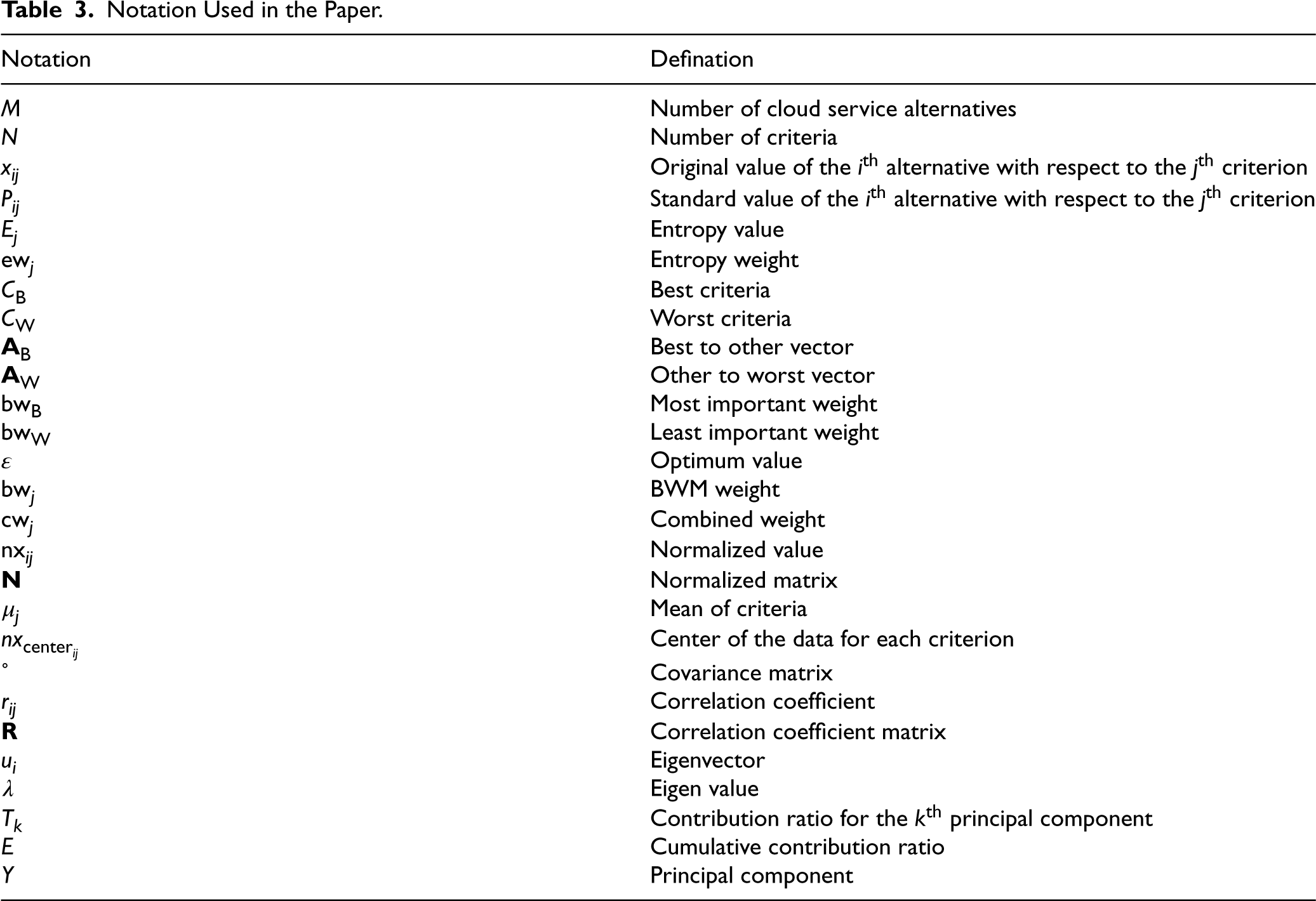
A table listing the notations used to indicate various parameters in this paper is provided in Table 3.
Notation Used in the Paper.
The schematic diagram in this section presents the proposed approach. The semantic diagram subsection is mentioned below. A semantic diagram followed by a comprehensive procedure is outlined to facilitate the selection of the most suitable cloud service alternative from the available alternatives.
Schematic Diagram
This subsection will discuss our proposed service selection approach, highlighted using a flow chart in Figure 2. The process of selecting a cloud service technique consists of significant steps, which are as follows:
Determine cloud service alternatives and selection criteria used in the service selection process. In this service selection process, 11 cloud service alternatives were considered, and five criteria were considered: response time (CT1), reliability (CT2), availability (CT3), throughput (CT4), and latency (CT5). Gathering information for the decision-making process regarding the decision matrix using QWS datasets. Using the entropy technique, get the subjective weights and then use the BWM to determine the objective weights for each criterion. A combination of subjective and objective weights is required to calculate the assessment criteria weights. Using the PCA approach, eliminate any correlation between the QoS criteria. Using hybrid PCA and combination weighting (entropy and BWM), we evaluated the various cloud service alternatives and ranked them according to their performance values.
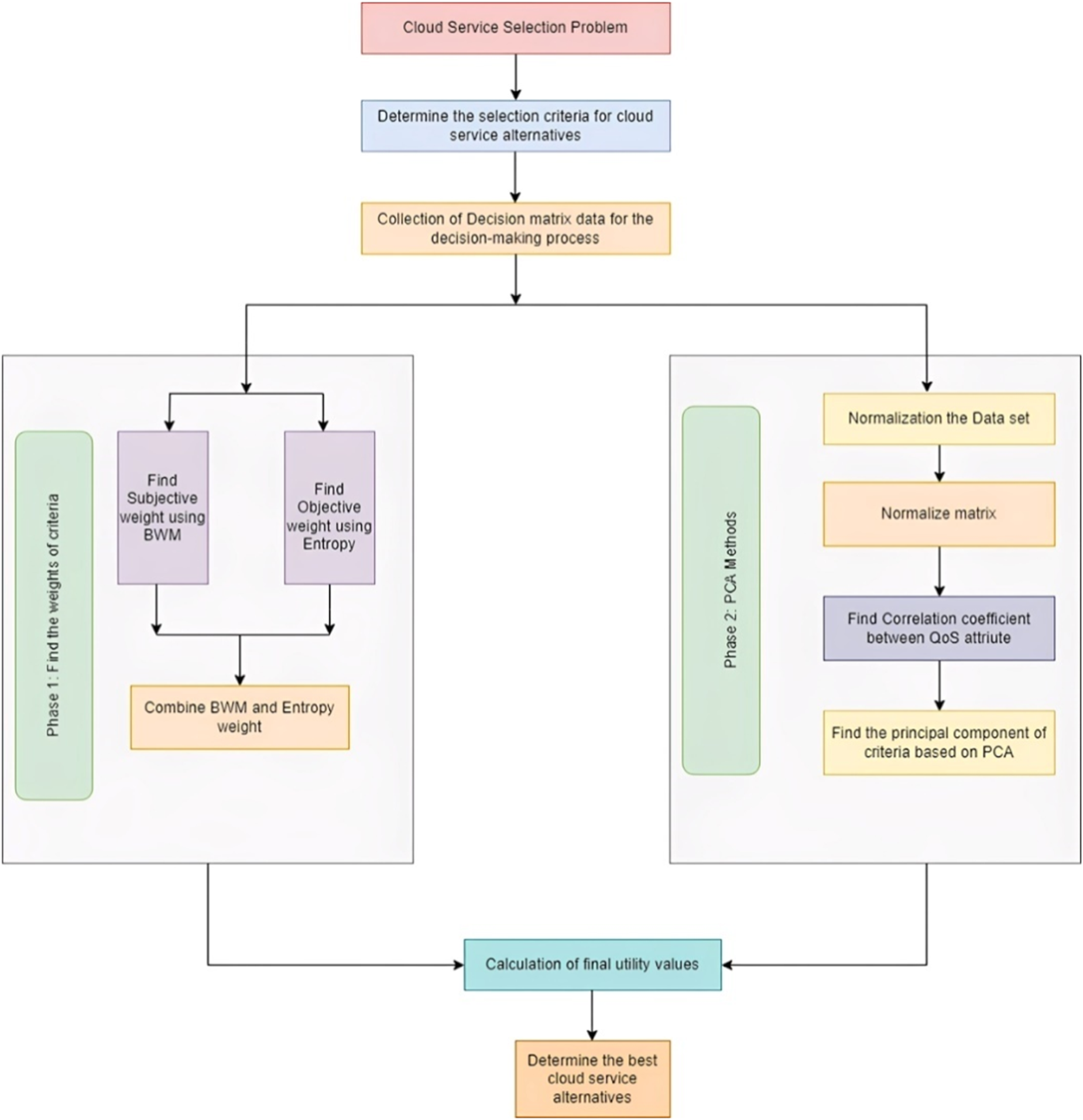
Flowchart of proposed hybrid model.
One important step in the service decision-making process is determining the weights of the criteria. These weights significantly impact how cloud service alternatives are ranked according to their preferences. Typically, criteria are not equally important, and the importance of each criterion can vary according to the needs of the cloud user. Therefore, it is crucial to effectively evaluate each criterion's relative significance. The problem of selecting cloud services is addressed by analyzing the correlation between various QoS attributes, including objective and subjective elements. Objective and subjective features are collected according to the QoS values of services and the individual decisions of customers regarding different QoS attributes.
5.2.1 Entropy Weight Approach for Objective Evaluations
Due to the approach's reliance on objective data, it is possible to overcome disruptions brought about by human activity to achieve more accurate findings. Information theory is where Shannon first introduced the concept of entropy theory (Stewart et al., 1997). Entropy theory is concerned with thermodynamics. Entropy is a technique that calculates the entropy weights of different QoS criteria to prioritize them. The following steps are executed:
Step 1: Determine the standard value of various service possibilities: The value specified for the jth QoS requirement for the ith service. A definition of its computation technique is as follows (Gorgij et al., 2017; Li et al., 2012):

Here
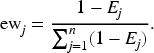
m is the total number of cloud service alternatives. n is the total number of criteria. Pij is the standard value of ith cloud service alternatives with respect to jth criteria. Step 2: Determine the entropy value for each QoS criterion: The entropy, which is defined as (Dong et al., 2018), may be identified and calculated for each QoS criterion.

In this context, Step 3: Calculate entropy weight for each QoS criterion: The entropy weight
5.2.2 BWM for Subjective Assessment
The BWM assesses the subjective weight of each QoS criterion. It is considered a novel MCDM approach (Rezaei, 2015) that provides greater consistency and requires fewer pairwise comparisons than the well-known AHP method. To determine which factors are more important in a paired comparison, the BWM employs a nine-point scale developed by Saaty (1980). The BWM and the AHP often utilize Saaty's basic nine-point scale, which ranges from 1 to 9, as shown in Table 4. The steps for the BWM method are as follows:
Step 1: With the decision-maker's assistance, identify the best and worst criteria from all the available criteria. The most significant criterion is selected as the best criterion (CB), while the least significant criterion is selected as the worst criterion (CW). Step 2: Assess the preference of the best criterion over all other criteria using Table 4. The best-to-others vector is as follows:
Cj represents criteria from the set (C1, C2,…, Cn)
where

Pairwise Comparison for BWM Preferences Using Saaty's Basic Nine-Point Scale.
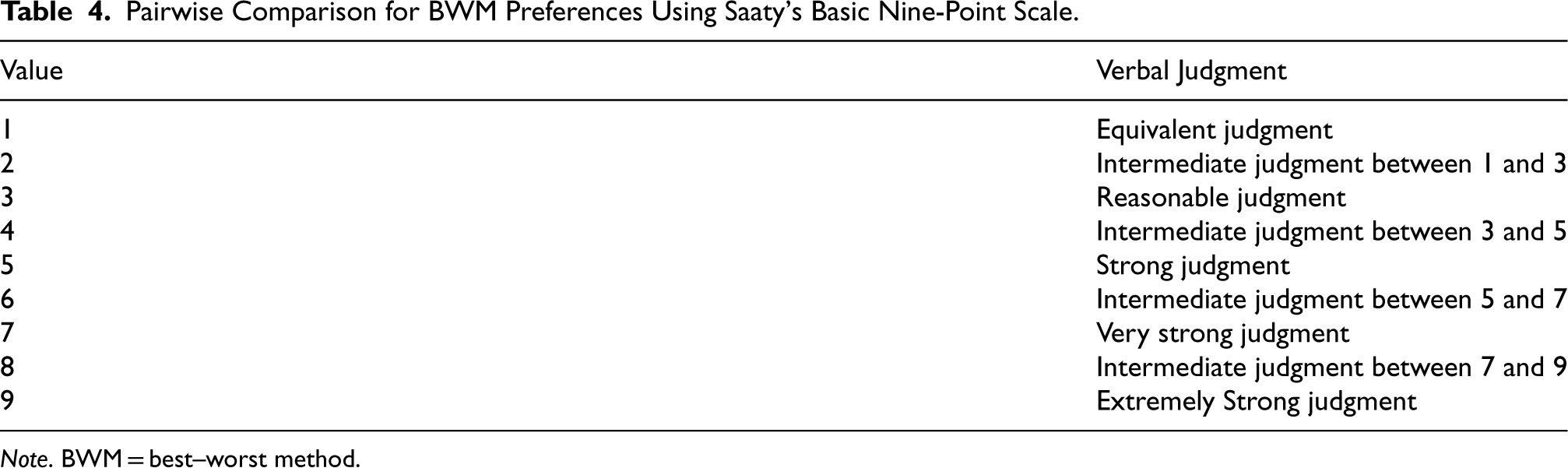
Note. BWM = best–worst method.
Step 3 Cj represents criteria from the set (C1, C2,…, Cn)
Step 4: A vector


5.2.3 Combine the Objective and the Subjective Weights for Each QoS Criterion Using the Geometric Mean
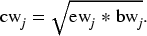
The geometric mean is more appropriate if the weights vary over an extensive range. The entropy weight (ew
j
) and BWM weight (bw
j
) are combined using geometric mean. The combined weights (cw
j
) are shown below:
This research utilizes a PCA approach to remove criterion correlation, simplifying the selection of services and yielding more precise service selection outcomes. Additionally, the information about users’ weights for different criteria is crucial for service assessment. We first include users’ QoS weight into PCA algorithms to rank the cloud service alternatives according to performance metrics. The process of decision-making incorporates the PCA approach (Wold et al., 1987). The PCA approach minimizes dimensionality by analyzing the correlation between the QoS characteristics. It does so without significantly sacrificing information by converting a set of associated QoS characteristics into an independent primary component. These are the steps to follow:
Step 1: Develop a normalized matrix for cloud services and QoS criteria

Normalized matrix Step 2: Compute the covariance matrix 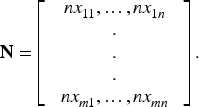
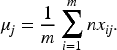
Second, we calculate the center of the data for each criterion as

Then, we calculated covariance matrix 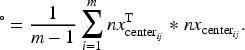
Step 3: Compute the Pearson correlation coefficient matrix Step 4: To identify principal components and compute the eigenvalues and eigenvectors of the correlation coefficient matrix 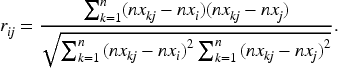
Next, determine the eigenvector 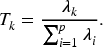
Then, we compute cumulative contribution ratio E as:
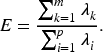
PCA theory (Nejat et al., 2022) holds if the cumulative contribution ratio is E > 85%. We employed m principal components λ1, λ2,…, λ
m
, where m ≤ p. Each principal component Yk is computed as
The final set of principal components Y is represented as:
Y = (Y1, Y2,…, Ym) replaces the original QoS criteria (C1, C2,…, Cp).
In this subsection, we first calculate the weighted normalized matrix. The weighted normalized matrix is calculated as follows:

The combined weights cw
j
of the jth QoS criteria are determined by utilizing the entropy and BWM techniques, and j is equal to 1, 2,…, p. Then, we calculate the final utility value using PCA to rank cloud service alternatives.
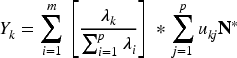
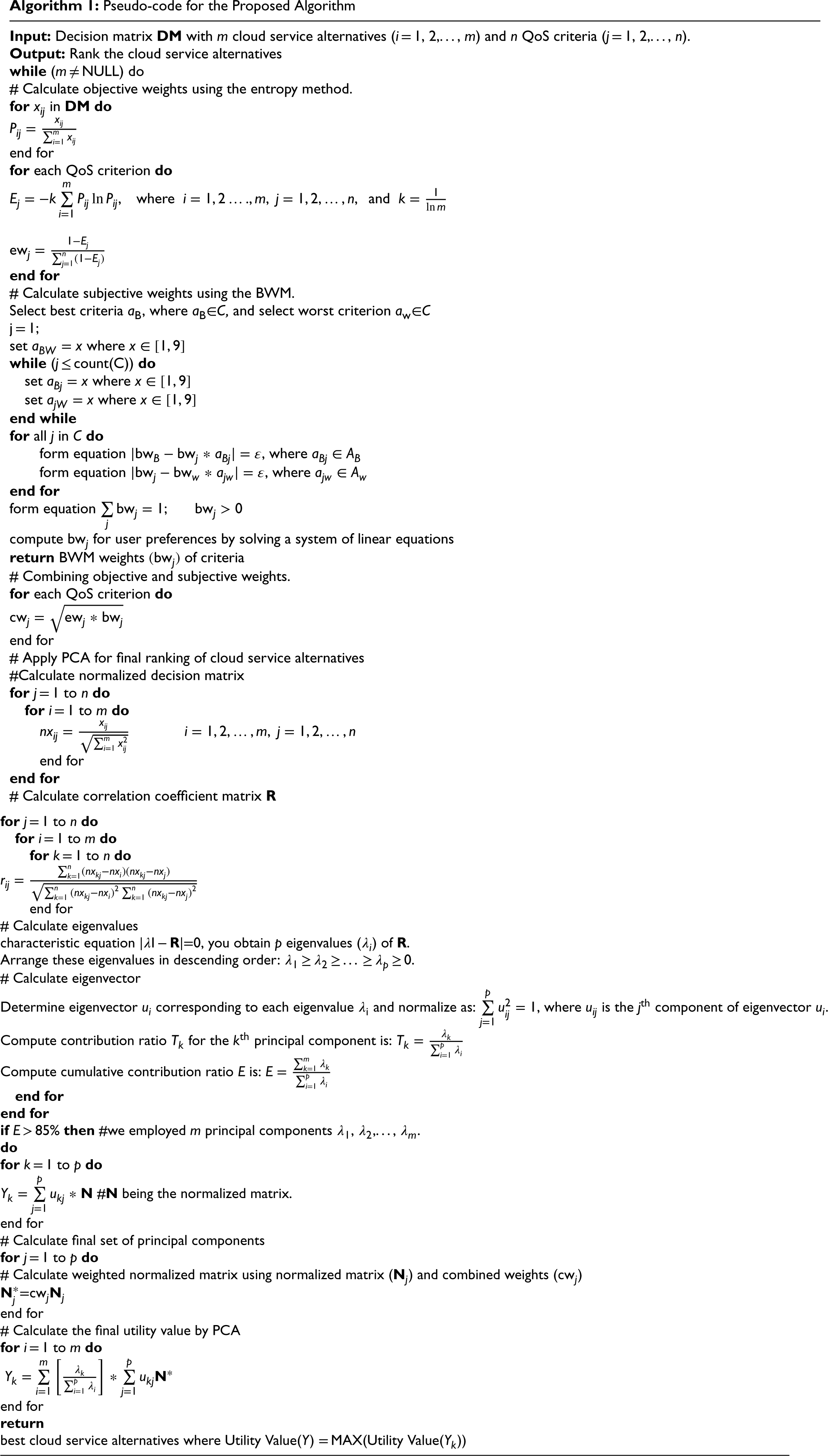
Rank the final utility values after sorting them in ascending order as they are sorted. After careful consideration, the best cloud service with the highest utility value will be chosen. Algorithm 1 presents the proposed approach pseudo code, which is given below.
Case Study and Simulation Analysis
We have used the QWS datasets, which are open to the public, to gather data from multiple cloud service alternatives. The QWS dataset is available on the website https://qwsdata.github.io. In this section, we use a real-world QoS dataset to evaluate the effectiveness of the proposed hybrid model. Note that Eyhab Al-Masri, a researcher from Guelph University, is responsible for developing this dataset (Al-Masri & Mahmoud, 2008). Evaluation studies based on the QoS selection problem have used the QWS dataset (Lu & Yuan, 2018; Nivethitha et al., 2019; Qi et al., 2016). This dataset has received widespread acceptance within the academic community. We conducted simulation analysis using a Python 3.7 environment. For our simulation research, we exclusively used version 2.0 of the QWS dataset, which includes ratings and classification features. This dataset comprises 2,507 real-world web services and their quality values for nine criteria: availability, response time, throughput, reliability, scalability, compliance, best practices, latency, and documentation. The Web Service Crawler Engine was employed to gather a wide range of web services from the World Wide Web, which are included in the QWS dataset. In evaluating performance, we considered 11 cloud service alternatives: A_1, A_2, A_3, A_4, A_5, A_6, A_7, A_8, A_9, A_10, and A_11 with the same functionality, focusing on five QoS criteria: response time (CT1), reliability (CT2), availability (CT3), throughput (CT4), and latency (CT5). In real-time and performance-sensitive applications, five criteria are commonly recognized as the most critical factors influencing user-perceived service quality and performance. Response time, availability, and reliability are all factors that directly influence the user experience. However, in this paper, we selected only five QoS criteria. The CT1 and CT5 of these quality standards are negative, whereas the remaining criteria are positive. The decision matrix based on these 11 cloud services and five QoS criteria is presented in Table 5. The proposed hybrid model has been validated through a case study using the actual QoS dataset. The objective is to determine whether or not the proposed plan is feasible, successful, and advantageous.
Decision Matrix of 11 Distinct Cloud Services With Five Attributes.
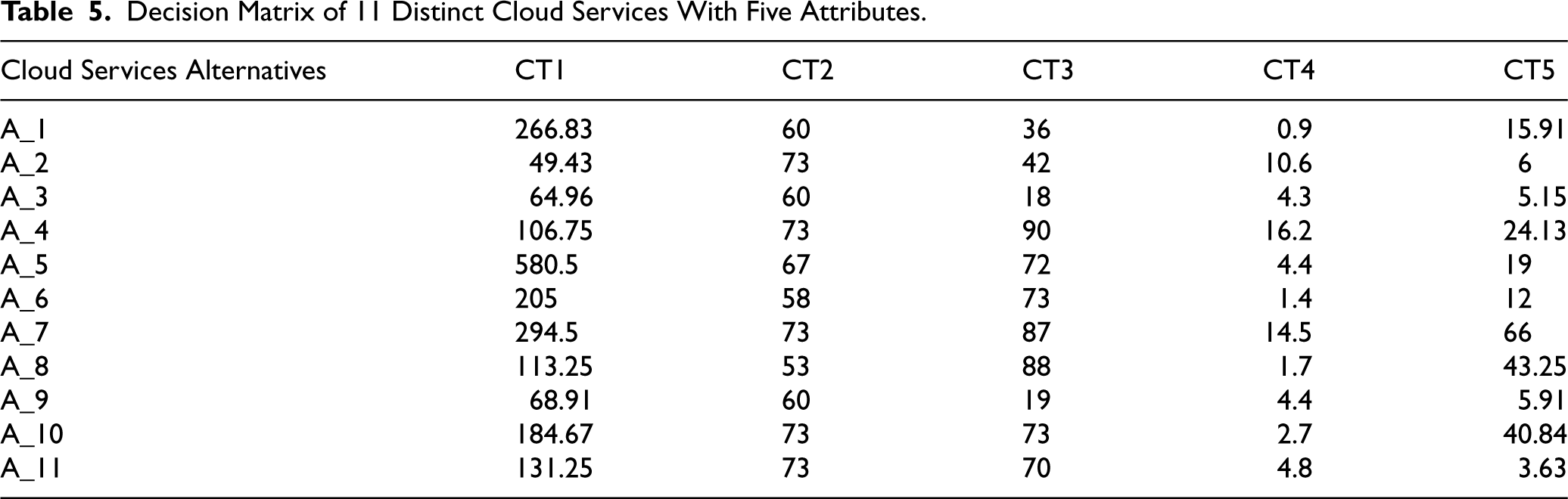
Decision Matrix of 11 Distinct Cloud Services With Five Attributes.
Calculate the entropy weight of each criterion
Calculate BWM weight of each criterion: Initially, we determine which QoS criteria are the best and worst. CT1 is the best criterion, while CT4 is the worst. Following the determination of the best and worst criteria, Table 8 displays the relative preference for the best cloud service alternative relative to other criteria and, correspondingly, the preference for other criteria over the worst criterion. Equations (6) to (8) were used to derive the weights of each criterion. Table 9 displays the determined BWM weights for each criterion.
Combine entropy and BWM weights for each QoS criterion: We calculate the combined weight of every QoS criterion using equation (9). The results of the combined weight are displayed in Table 10.
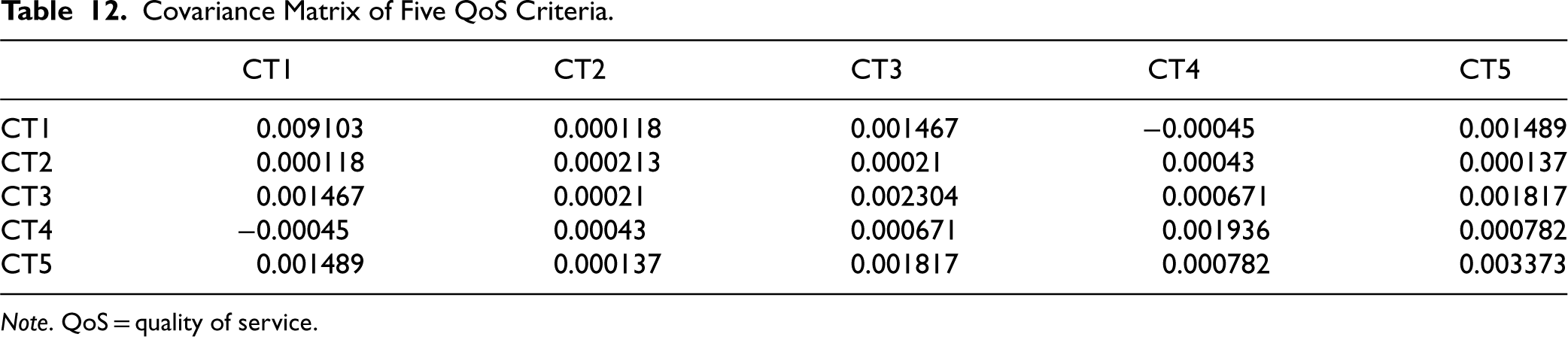
This study uses the PCA approach to remove the criterion correlation, which makes selecting services simpler and produces more correct selection outcomes. Furthermore, weight for different criteria is essential for evaluating services. We incorporate combined QoS weights (entropy and BWM) into PCA algorithms and then rank cloud service alternatives according to performance metrics. Each cloud service alternative is ranked using the PCA approach. Specifically, we employ the vector normalization approach to normalize the matrix by equation (10) and remove the contradiction between the QoS criterion. Table 11 displays the normalized matrix. Table 12 displays the covariance matrix of CT1, CT2, CT3, CT4, and CT5, which we compute using equations (12) to (14).
Characteristic Proportion for Each Criterion.
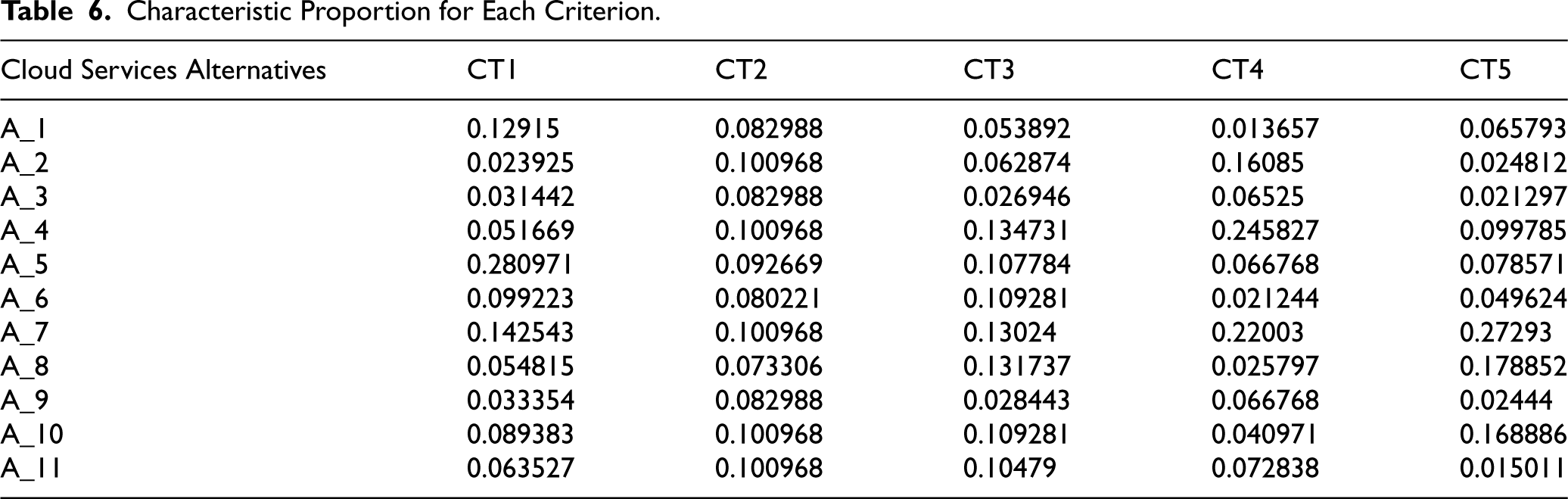
Characteristic Proportion for Each Criterion.
The Entropy Weight of Each Criterion.

Best-to-Others and Others-to-Worst Pairwise Comparison.
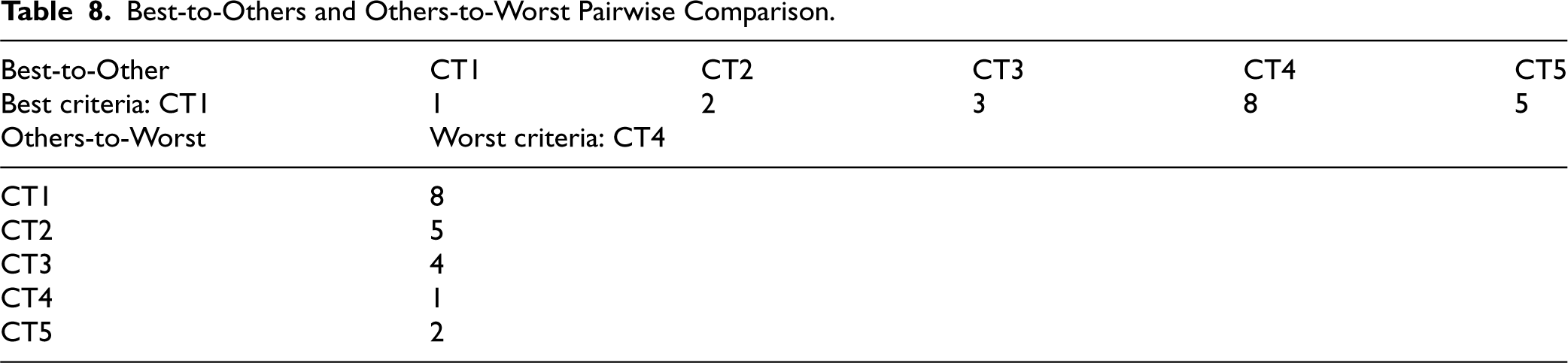
BWM Weight of Each Criterion.

Note. BWM = best–worst method.
Combined Weight for Each Criterion.

Normalized Decision Matrix.
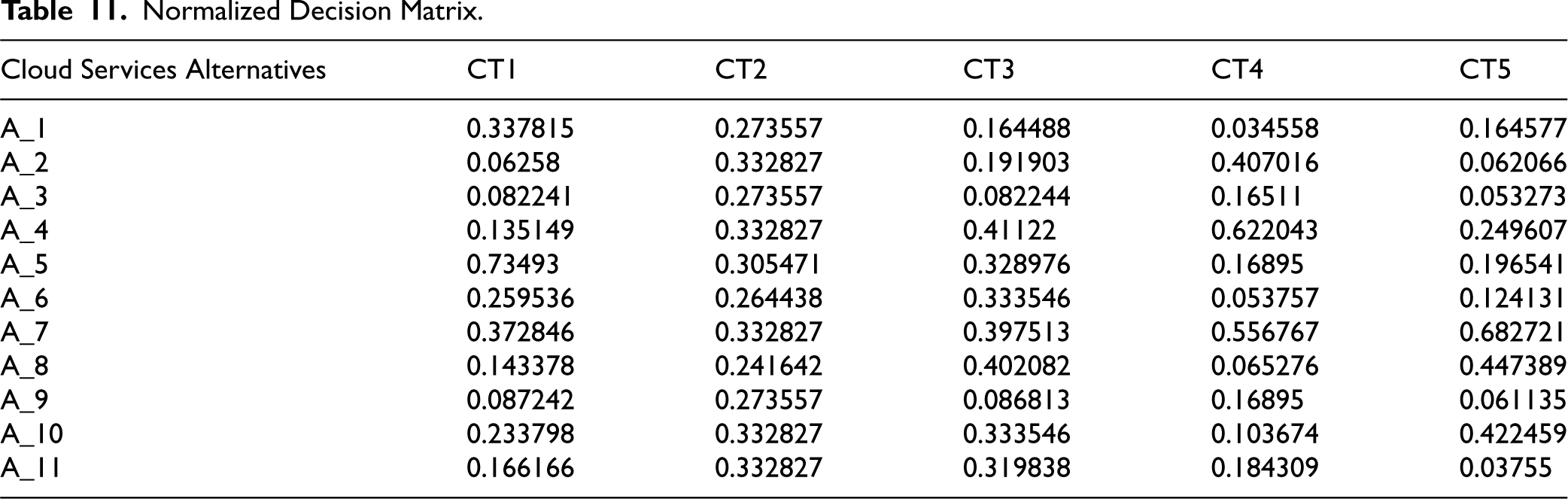
Covariance Matrix of Five QoS Criteria.
Note. QoS = quality of service.
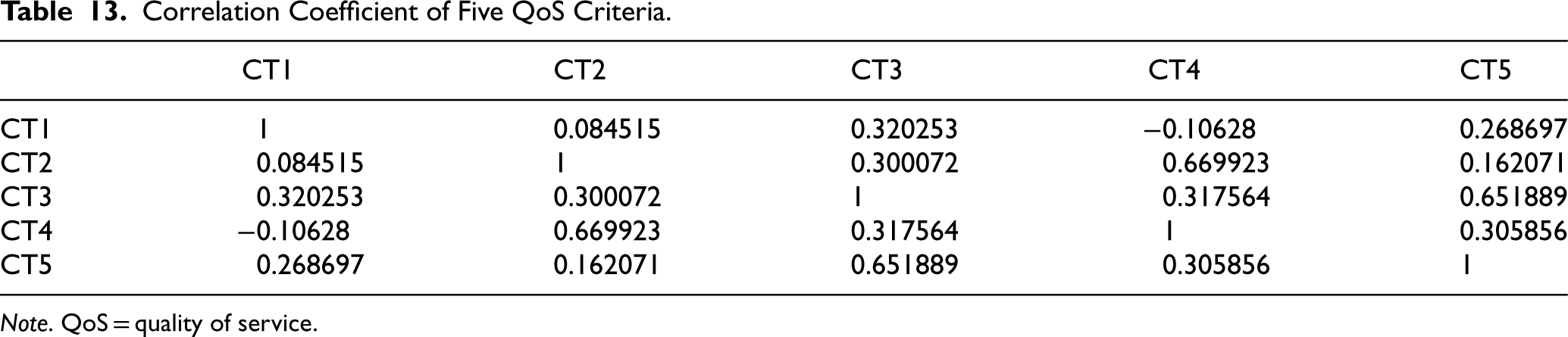
Table 13 displays the correlation coefficient matrix we computed using equation (15) between the QoS criteria. At a value of 0.669923, we can see a significant positive connection between reliability and throughput. A positive correlation of 0.651889 exists between availability and latency. Furthermore, a significant negative correlation of −0.10628 exists between response time and throughput.
Correlation Coefficient of Five QoS Criteria.
Note. QoS = quality of service.
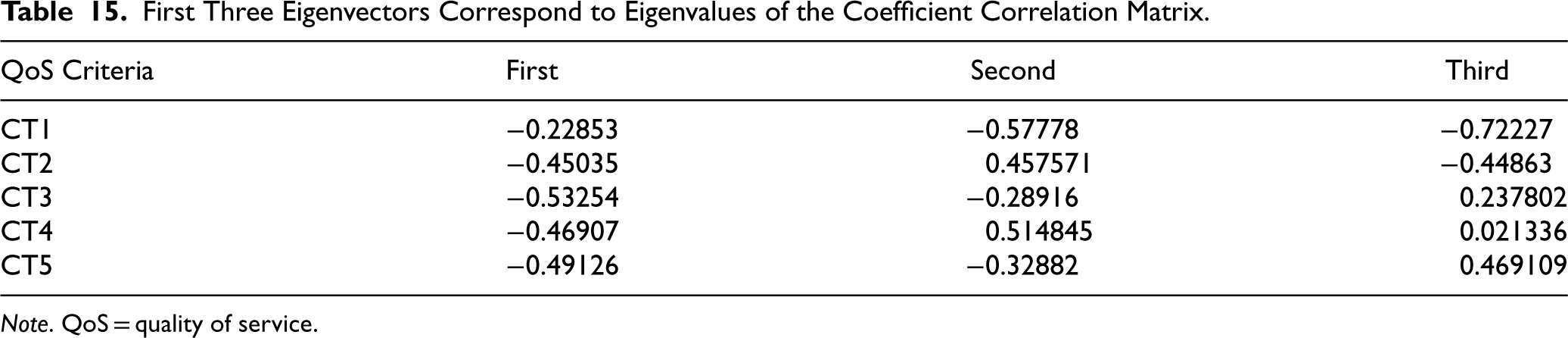
Table 14 displays the computed correlation matrix eigenvalues. It also presents the cumulative contribution and contribution ratios for each eigenvalue using equations (16) and (17). We can see that the cumulative contribution ratio of the first three components rises to 87.22% in Figure 3, which is a sufficiently high percentage. Consequently, as seen in Table 15, the first three eigenvectors, which correspond to eigenvalues, replace the other criteria in the utility evaluation process.
Eigenvalue of Correlation Matrix of Coefficients and Rates of Their Contributions.

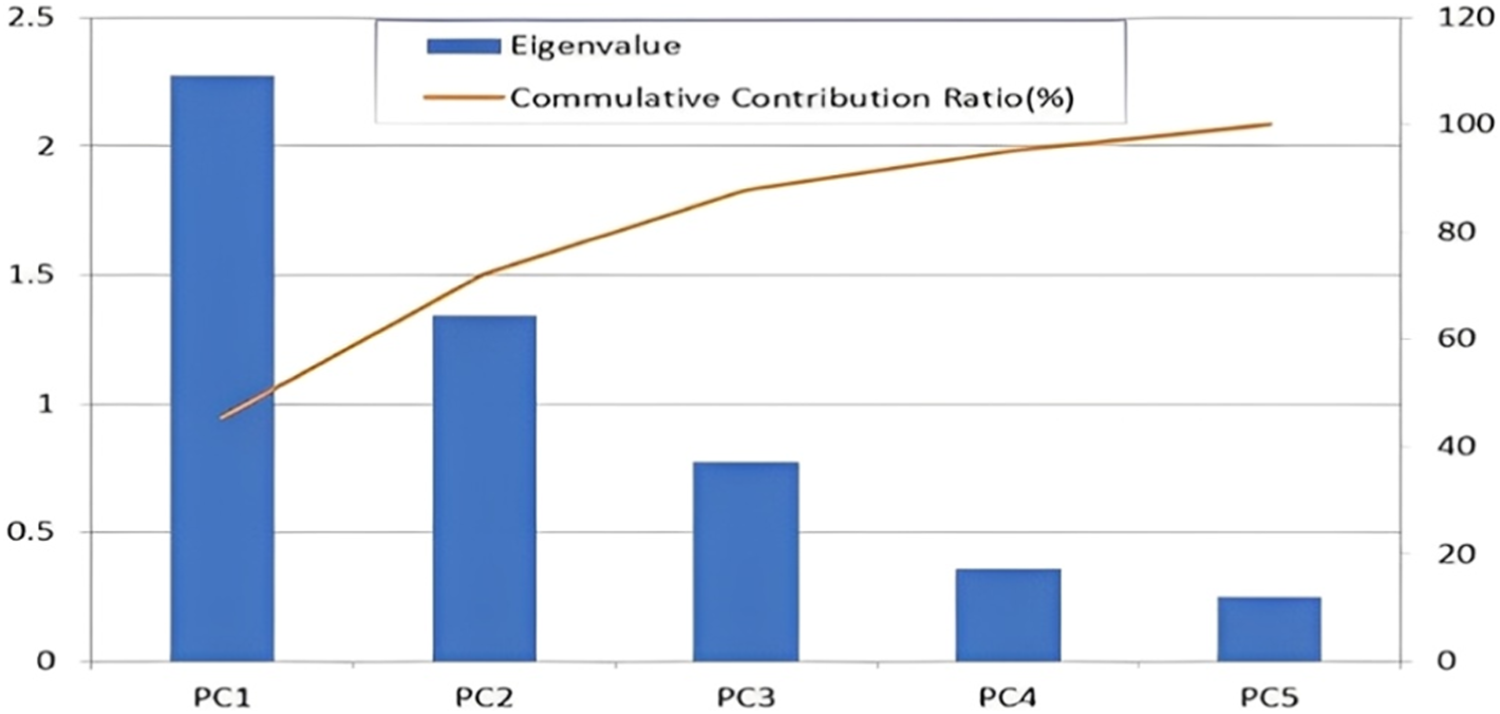
Cloud service selection using PCA.
First Three Eigenvectors Correspond to Eigenvalues of the Coefficient Correlation Matrix.
Note. QoS = quality of service.
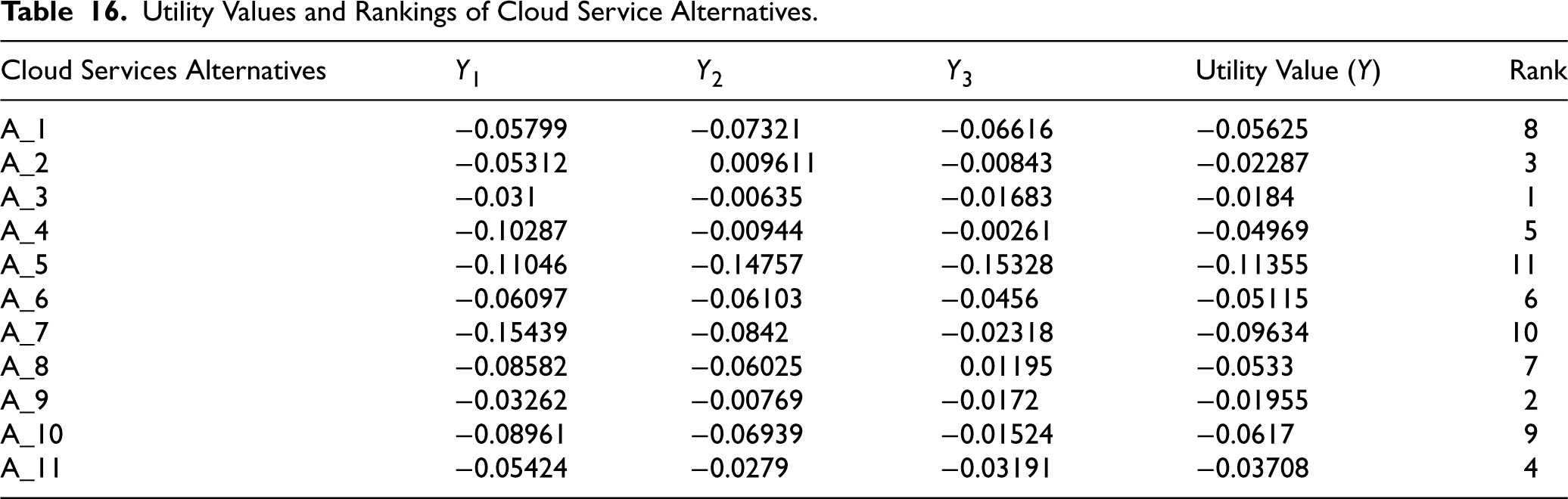
Now construct the three independent principal components Y1, Y2, and Y3 as below:



Next, we derive a new evaluation function FUNC_Y (Y1, Y2, Y3) = 0.45445469
Utility Values and Rankings of Cloud Service Alternatives.
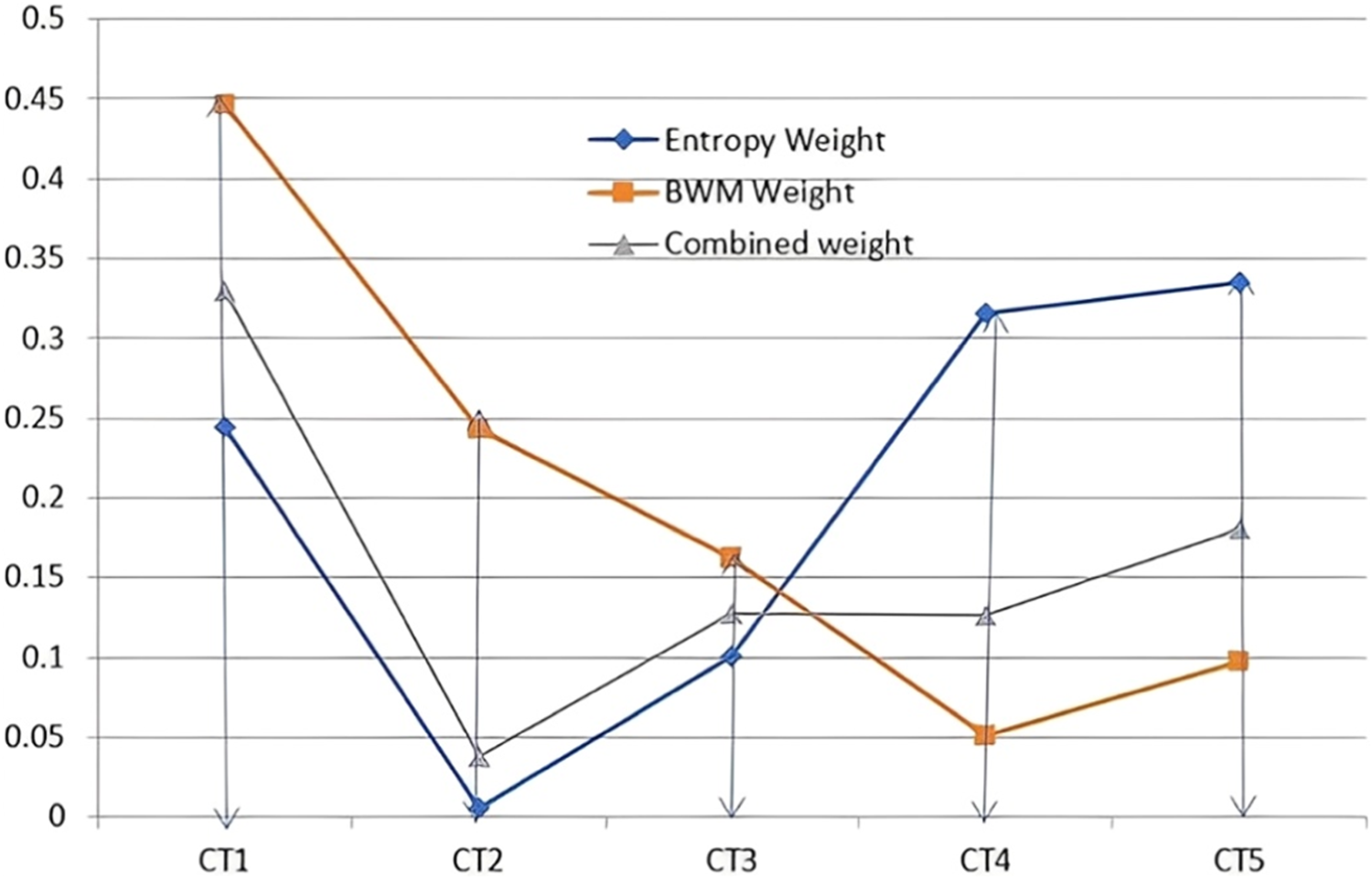
Comparison analysis for entropy, BWM, and combined weights.
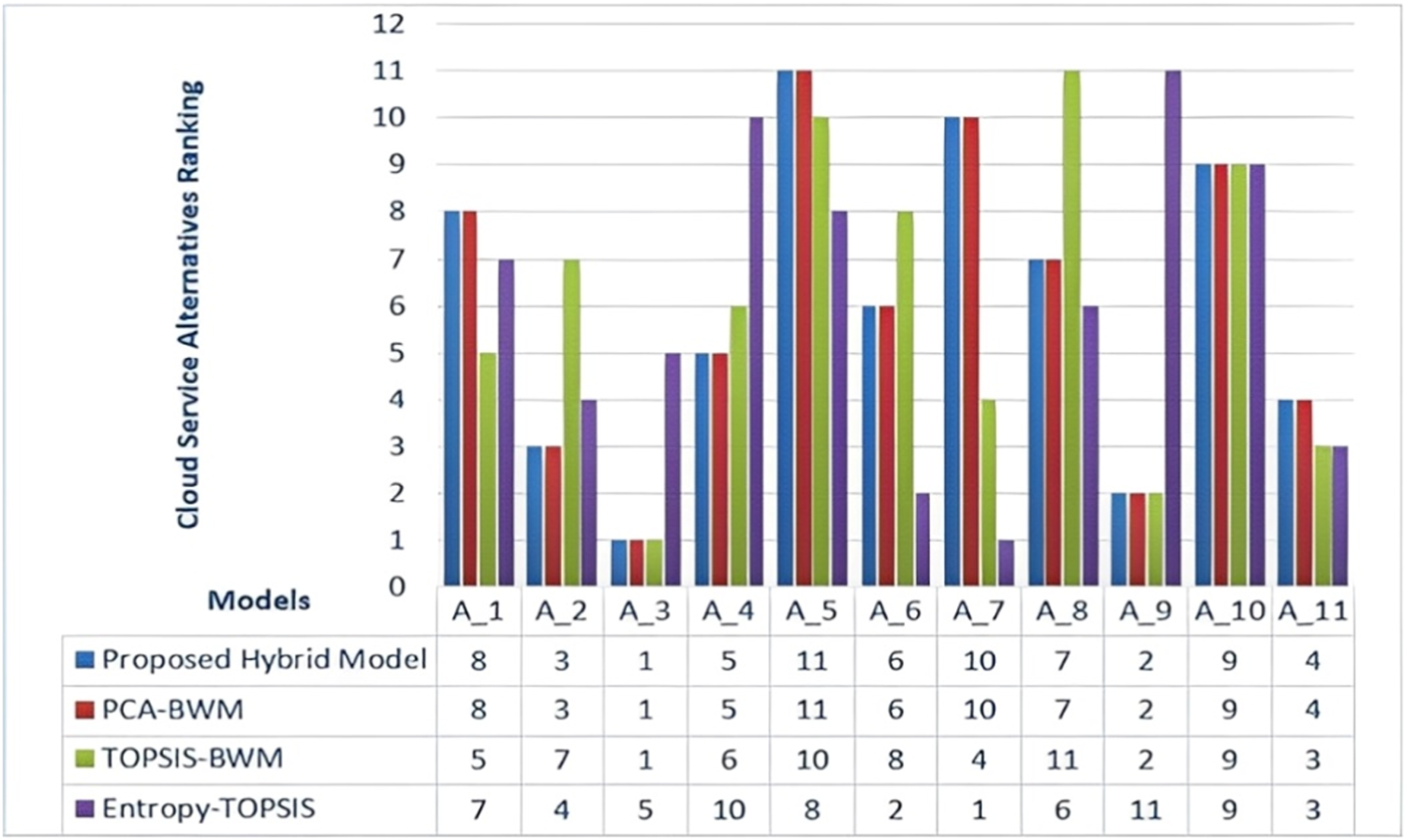
Ranking cloud service alternatives using various methods.
To evaluate the hybrid proposed model's performance, including rank comparison analysis, reduce the number of dimensions in the selection criteria, and conduct sensitivity analysis in this section.
Rank Comparison Analysis
Figure 4 illustrates the significance of integrating BWM and entropy weights, as there is a difference between the two. For instance, with an entropy weight of 0.243929 and a BWM weight of 0.446247, CT1 was considered the most significant criterion. As a result, for a well-rounded weighted result, the combined method of weights is more appropriate. Hence, using the combined weighting approach would yield a more comprehensive outcome.
We do a comparison analysis to determine the proposed hybrid model's effectiveness. The main objective is to compare our findings with those of other well-known MCDM techniques, such as PCA-BWM, BWM-TOPSIS, and entropy-TOPSIS, to clarify the extent of accuracy of rankings calculated using the proposed hybrid model (Kumar et al., 2022; Sidhu & Singh, 2017; Singh & Sidhu, 2017). For comparison, we employ the identical QWS dataset and set of criteria as those in our case study. After comparing, we found that the recommended scheme performs comparably to the other approaches. Figure 5 shows the rankings of all cloud service alternatives determined using the proposed hybrid model, PCA-BWM, BWM-TOPSIS, and entropy-TOPSIS. Consequently, it is possible to conclude that the hybrid model's results are exact and accurate. The performance of the proposed hybrid model is consistent with that of existing MCDM techniques. In most ways, for instance, A_3 is the best cloud service alternative. According to most approaches, the cloud service alternatives A_9, A_2, and A_11 are ranked second, third, and fourth, respectively.
Reducing the Number of Dimensions in the Selection Criteria
We know that selecting cloud service alternatives involves many QoS criteria, which can be challenging to manage without the assistance of sophisticated computer software. Regarding cloud service evaluation, the fundamental objective of the proposed hybrid model is to simplify the process while simultaneously reducing the dimensionality of selection criteria without sacrificing a substantial amount of information. We observe that the number of significant components is consistently lower than the total number of initial QoS criteria. These findings prove that the proposed hybrid model eliminates some assessment criteria and makes selecting cloud service alternatives more straightforward.
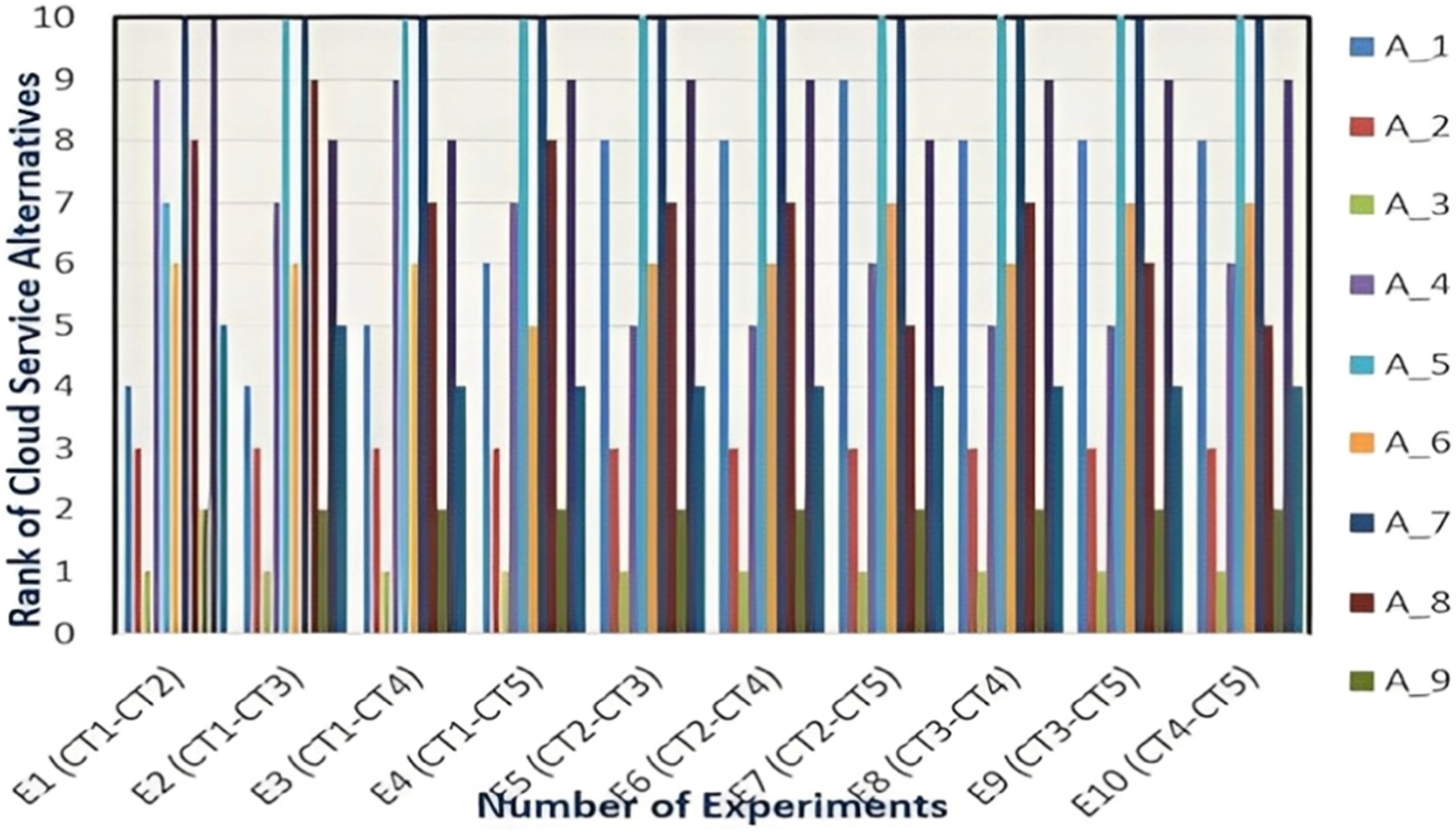
Result of sensitivity analysis.
With the help of sensitivity analysis, we validate the robustness and efficiency of the hybrid model developed in this section. To carry out the sensitivity analysis, we examine how the ranking of the cloud service alternatives may shift when subjected to varying weight values. In this scenario, we carry out the entire procedure to track the changes in various situations. We simulated several situations by sequentially adjusting the weights associated with every QoS criterion. For instance, the expression C1–C2 suggests that the weights of the CT1 and CT2 criteria have been exchanged. The ranks of cloud service alternatives are generated for each scenario by analyzing the impact of alterations to the weight of the criteria. We gave 10 experiments (E1 to E10) each a unique name. We utilized the case study data to execute the proposed hybrid model in each experiment. Figure 6 presents the results of 10 different experiments. The results of all 10 of the studies showed that A_3 was the best cloud service alternative. Among the cloud service alternatives, A_9 and A_2 rank second and third in 10 experiments. As seen in Figure 7, the cloud service alternative A_11 is ranked fourth in eight out of 10 studies. Finally, the sensitivity analysis indicates that the weights of the linked criteria directly impact the ranking of service providers. Therefore, we can conclude that the approach is trustworthy and logically ranks cloud service alternatives in line with the stakeholders’ preferences.
Conclusion and Future Work
Much attention is paid to selecting cloud services due to their increasing demand and availability in the business sector. It might be difficult for consumers to select the best service if there are many QoS variables to consider. Most QoS factors are generally interconnected, but the existing research does not consider this interdependence. In a proposed hybrid approach, we study connections among QoS criteria to cloud service alternatives and analyze the negative influence of these correlations on the selection of cloud service alternatives. The proposed model utilizes a hybrid PCA and a combination of weight methods (entropy and BWM) to analyze the various cloud service alternatives and rank them according to their performance values. Both objective and subjective elements are taken into consideration by the proposed model. In this case, the objective weights are determined using information on the QoS criteria supplied by a trustworthy third party, while the subjective weights are derived from the preferences of cloud customers concerning various QoS criteria. The final step involves combining these weights and applying them to assess and rank the cloud service alternatives. The proposed approach distinguishes itself from existing research in several important ways. First, it employs PCA to reduce the dimensionality of QoS factors, thereby simplifying the selection process. Second, it mitigates correlations among QoS criteria, leading to more reliable and realistic selection outcomes. Extensive experimentation on real-world datasets demonstrates the practicality and effectiveness of the proposed framework. Furthermore, a sensitivity analysis is conducted to ensure the robustness and consistency of the methodology.
In the future, we will assess the proposed algorithm's performance by integrating it with other MCDM techniques. We will then test it using additional real-life scenarios. The proposed framework can potentially be expanded to include nonquantifiable QoS and connected criteria. We can enhance our ranking system by utilizing uncertainty as a fuzzy set and employing stochastic programming to manage various QoS factors.
Footnotes
Funding
The authors received no financial support for the research, authorship, and/or publication of this article.
Declaration of Conflicting Interests
The authors declared no potential conflicts of interest with respect to the research, authorship, and/or publication of this article.
