







Abstract
Despite the sustainable development goals’ (SDGs) emphasis on inclusion, marginalized youths are denied full participation due to discriminatory practices. Despite a few studies examining the SDGs and their social targets, none has examined young people’s awareness of the SDGs in Scheduled Castes (SCs). In our study, we analysed the narratives of 40 SC youth in seven districts of Tamil Nadu, who have historically been marginalized. In this study, we examined how SC youth experience social exclusion and what factors contribute to their lack of awareness of schemes and programmes. We suggested ways to promote the involvement of SC youth in achieving Tamil Nadu’s SDGs.
Introduction
The United Nations introduced the term sustainable development in the Brundtland Commissioner Report (1987) due to emerging concerns over environmental degradation and exploitation of natural resources. The major aim of the sustainable development goals (SDGs) is to address the economic, environmental and social issues in developing and developed countries. All societal segments are strongly encouraged to participate in the adaptation, implementation, monitoring, follow-up and review process to achieve the SDGs. The 2030 agenda accentuates the major role of children and youth in achieving the SDGs. Youth participation in member states’ implementation of the 2030 Agenda has been fairly limited up to this point, but it is now beginning to increase (United Nations, 2015). Young people should be the frontline stakeholders to achieve the SDGs. Youth are the efficacious source of development of the nation. They are the future leaders who possess the capacity to bring positive changes and induce more growth in the country (Hwang & Kim, 2015). India, which is the youngest country in the world in terms of youth population, can bring enormous developmental changes to the country. The SDGs implemented at the Indian level would bring great effort through mainstreaming the youth and their participation in the SDGs. But, unfortunately, the interconnected social, cultural and political problems affect the efficient participation of youth in SDGs. In India and Tamil Nadu, the marginalized youth (Scheduled Caste [SC]/Scheduled Tribes [ST] youth), rural youth and semi-urban youth, minority youth (Muslims and Christians), disabled youth, female youth and transgender youth are vulnerable and are not efficiently participating in the SDGs. Exclusion on grounds of class, caste, gender or race affects the active participation of youth in the SDGs.
Social Exclusion: An Exploration of European and Indian Context
Different understandings of the concept of social exclusion have been unfolding over the years. In the 1960s and 1970s, socially excluded people were analysed based on their physical and psychological attributes who were called ‘social misfits’ (Haluwalia et al., 2021; Silver, 1994). Later the concept was examined in terms of the economic condition of people through the concept of ‘poverty’ (Peet, 1975). At present, scholars try to understand the concept of social exclusion in a comprehensive way that involves multi-dimensional contravention of political, social, economic, civil and cultural rights. In general, social exclusion is ‘excluding a group of individuals from participation in the society’. However, social exclusion differs from country to country based on the pattern of life and the culture which are limited by geographical boundaries. The terms ‘rigidity’ and ‘immobility’ help in our understanding of the fundamental cultural differences that contribute to social exclusion. Dr B. R. Ambedkar insisted in 1987 that India’s caste system is a rigid one where people’s mobility has been constrained due to stringent customary laws. Sheth (2011) added that the idea of ‘untouchability’ is a fundamental aspect of Hinduism, which is solely practised by people in India. According to Thorat (2010), caste is a condition of imposed exclusion that results in an unequal distribution of rights. The social category of each person was predetermined before their birth; therefore, they have no choice. There were no places in the world where this kind of isolation existed (Haluwalia et al., 2021). As a result, caste exclusion differs from other exclusions and majorly affects the participation of a group of people in a common social sphere.
Social Inclusion: Means of Social Integration
Over the years, there has been an evolution in the way we think about development, and this idea has changed. Thus, it has become clear that economic expansion alone will not ensure the welfare of the populace (Gent, 2017), and development should thus offer a realistic and meaningful framework that takes into account social, economic, political and technological elements (Kumar & Yadav, 2015). Social inclusion is a versatile concept of providing the right to access resources by increasing the opportunities and participation of socially excluded communities (Silver, 2015). Social inclusion is a process of creating a way to disintegrate the ‘group monopolies’ by enhancing the social mobility and interaction of people with different social backgrounds and bringing social cohesion and integration (Silver, 1994).
Sustainable Development Goals: An Affirmative Action to Promote Social Inclusion
By encouraging full participation of the excluded and expanding the number of equal citizen members, the practice of exclusion can be lessened. By highlighting the roles and responsibilities of each community and encouraging participation from all people worldwide, the SDGs place a strong emphasis on the inclusive participation of all communities, regardless of their age, gender, class or caste (Gupta & Vegelin, 2016). Social inclusion is incorporated into the SDGs both implicitly and explicitly (Goals 10, 16 and 17). The SDG encourages the equal participation of all the communities in all 17 goals where people can meet their needs, solve their problems, have access to opportunities and enhance their social, economic, political and cultural mobility. As SDG is a political idea that has a direct impact on the social and cultural system of Indian society, the political institutions and organizations of India joined together to implement SDGs at the national level, state level and panchayat level. For institutional set-up at the central level, the National Institution for Transforming India (NITI) Aayog which is the public policy think tanker monitoring the SDGs implementations in the forms of schemes, policies and programmes (Tripathi, 2022) The SDGs are achieved through the implementation of various central and state government schemes, policies and programmes. Though all the member countries have the same goals, it is important to understand the social, economic, political, cultural, psychological and spiritual status of different countries to ensure the propriety of the SDGs. Therefore, the participation in the schemes and policies of union and state governments is the direct analysis to measure the participation of SC youth in SDGs. Knowledge and awareness about the schemes are necessary to increase active participation.
Consciousness: A Means of ‘Reflective Participation’
The English nouns awareness and consciousness are distinct but linked. While consciousness is the act of understanding awareness, awareness is the condition of being knowledgeable (Das, 2021). Being alert and aware of your surroundings might help you make decisions (Das, 2021). Consciousness is defined as a subjective awareness of oneself in psychology (Cherry, 2020). According to sociology, reality can reproduce itself through consciousness. Individual awareness and societal consciousness are two more revisions in sociology (Spirkin, 1975). Individual experiences connected to a vast network of social relationships make up social consciousness (Ammentorp, 2007). The ‘conscientization’ process created by Brazilian sociologist Paulo Freire is consistent with how sociologists view consciousness. In one of his writings titled ‘Pedagogy of the Oppressed’, Paulo Freire established this method of conscientization, also known as critical awareness, as a critical way to discover the truth.
According to Freire, ‘Concretization is a critical approach to reality, stripping it down so that you can recognize the myths that lie and uphold the dominant structure’ (Freire, 1970). Freire went on to say that oppressed people who are used to being oppressed need critical consciousness to be able to ‘read the world’, a world where access to resources is restricted for some people. Contrary to a fatalistic scenario, this critical consciousness will encourage reflective engagement and push individuals towards change (Freire, 1970).
Accordingly, the current study emphasizes that SC youth’s awareness increases their reflective participation. Social inclusion will result from increased participation. Since social inclusion is a requirement for social cohesiveness, which may have an impact on political stability and nation-building (Koehler, 2021).
Government’s Role in Promoting Social Inclusion: Tamil Nadu’s Case
The SDGs go into considerable detail regarding the issues posed by different types of exclusion and marginalization as well as the solutions, which include institutional adjustments, participatory institutions and the development of proactive policies. However, there are still caste-based discriminatory practices in India, and atrocities committed against SC people have a particularly negative impact on Tamil Nadu. Even though Tamil Nadu is a progressive state with an ideological commitment to social justice and welfare initiatives designed to enhance equality and social justice, caste issues have gotten worse because of the dominant caste’s growing caste consciousness. Between January 2016 and December 2020, almost 300 homicides that were related to caste-based discrimination occurred (Rajasekaran, 2021). Additionally, it was stated that caste-based discrimination cases were not being vigorously prosecuted. The president of Viduthalai Chiruthaigal Katchi and Member of Parliament Thol. Thirumavalavan issued a plea over the surge of violent occurrences against Dalits in 2021 the data revealed by the National Crime Records Bureau (NCRB) that despite the State Vigilance Committee being established to properly probe caste-related matters (The Hindu, 2022). Such caste-related violence has a particularly adverse impact on the SC youth’s engagement in development initiatives and schemes, particularly regarding job mobility and decision-making (Mosse, 2018). Therefore, the state government must take adequate action against the caste atrocities in Tamil Nadu, since caste prejudice negatively impacts SC people and makes it difficult for them to successfully participate in the SDGs.
In contrast, the radical social reformers raise that ‘Why are Tamil Nadu’s dominating castes so proud of their caste heritage?’. Despite the deep roots of Dravidian ideologies and the influence of Dravidian organizations, why have caste-related issues in Tamil Nadu not been resolved? Why do members of the dominant caste continue to treat SC members unfairly and with contempt? The aforementioned concerns have been brought up for a variety of reasons. In actuality, caste pride and gender bigotry are feudal notions. Brahmanism, patriarchy and class (feudalism) have long been ingrained in the psyche of Tamil Nadu’s dominating castes. Tamil Nadu also has a close connection to popular culture, especially Tamil movies and customs. Caste pride is influenced psychologically by how domination and symbols of caste are portrayed in the media (Rajendran, 2017). The government, social assistance agencies and the judiciary must actively and frequently intervene to remove these barriers (Anbuselvan & Saravanan, 2020); in addition, policies (Subramanian, 2018) and programmes targeted at underprivileged groups like SC and ST must be implemented.
Materials and Methods
In India, the caste system is rooted in people’s cultural and social lives, which have a significant impact on the political and economic domains of society. The goal of the current study is to highlight the social realities of SC youth who are marginalized, discriminated against and denied access to resources and opportunities. The qualitative study approach was chosen because it offers an understanding of the background as well as detailed subjective experiences of the activities, interactions, and relationships of the SC youth. Additionally, the outcome of the Focus Group Discussion was analysed thematically to present how SC youth perceive current events in their lives and how they interact with their environment. The narrative analysis supports the qualitative data by elaborating on the causes of the SC youth in Tamil Nadu’s marginalized life occurrences (Riessman & Quinney, 2005). The respondents for the study were chosen using multi-stage purposive sampling. Table 1 shows how the SDGs were classified based on the fundamental, developmental, and basic needs of SC youth.
Classification of SDGs.
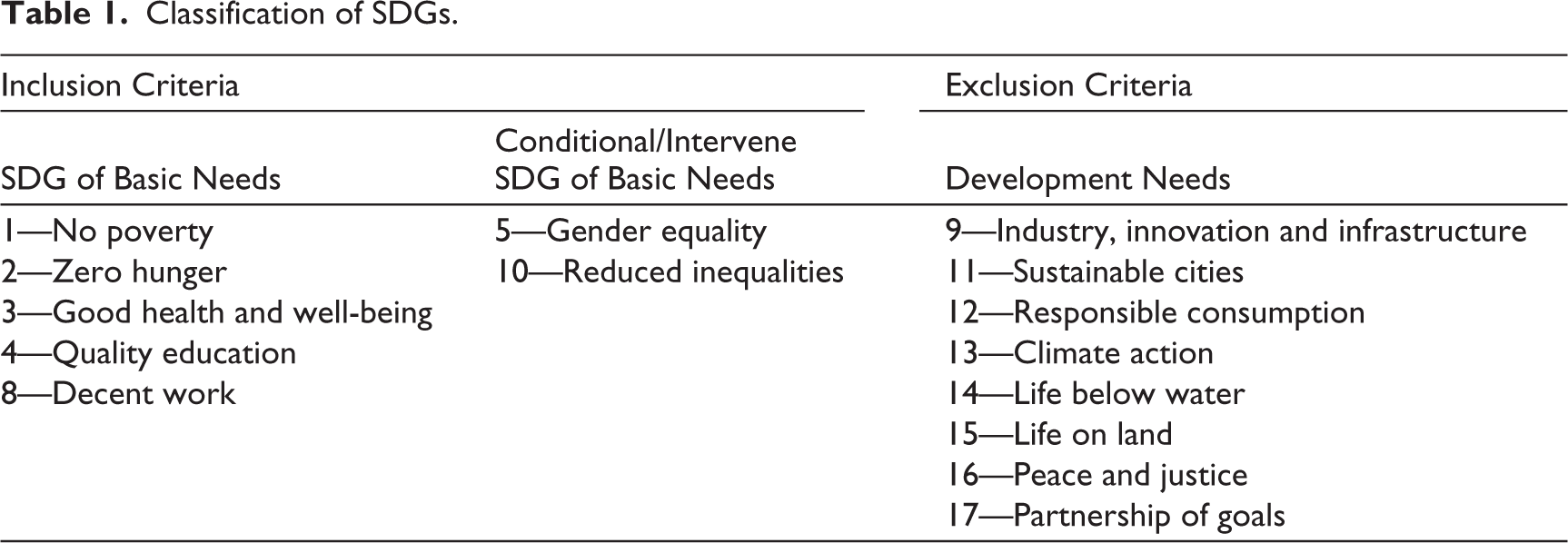
Study districts included Ramnad, Viruthunagar, Dharmapuri, Villupuram, Chennai, Kanchipuram and Tiruvallur in Tamil Nadu. India’s Ramnad, Viruthunagar and Dharmapuri districts are considered aspirational due to their aspirational status and predominately SC populations. The aspirational district programme is a project of the Union Government in which socioeconomically underdeveloped districts from the Indian States are chosen and subjected to various special programmes and policies to improve the livelihood and living conditions of the residents in the districts. Ramnad, Viruthunagar and Dharmapuri are the aspirational districts in Tamil Nadu.
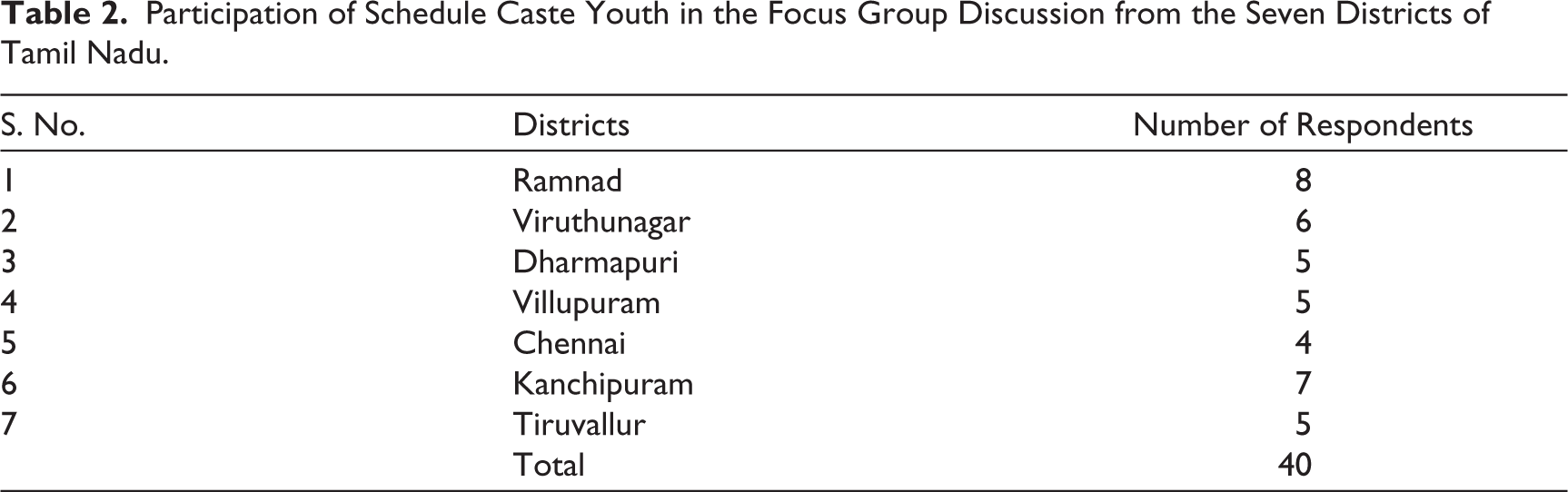
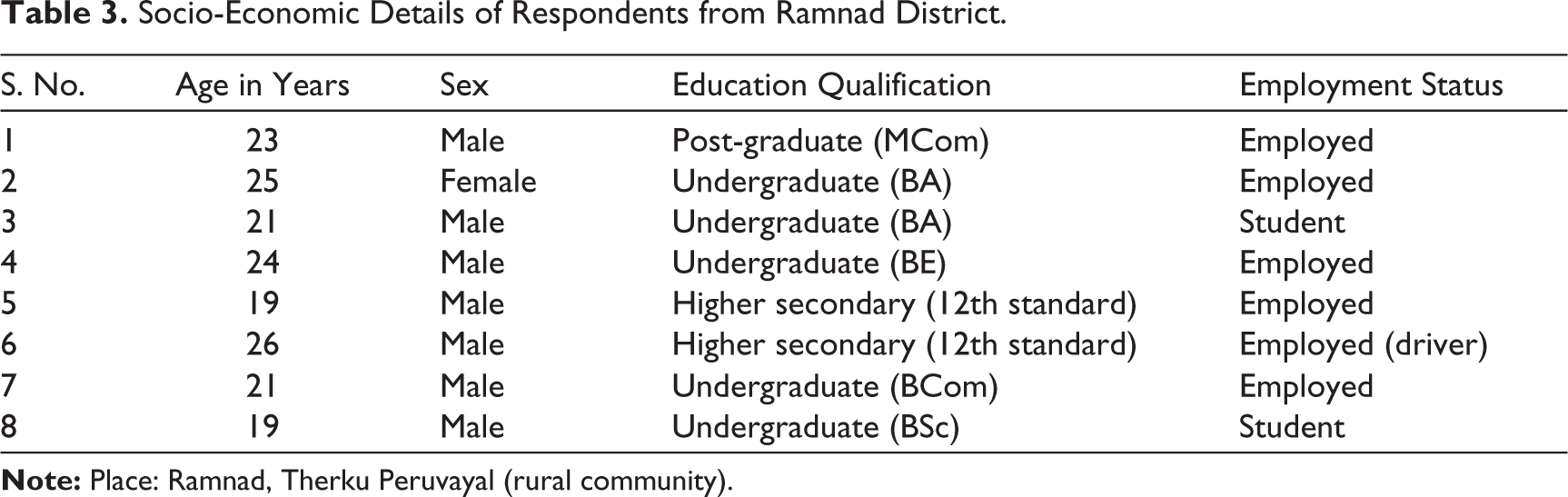
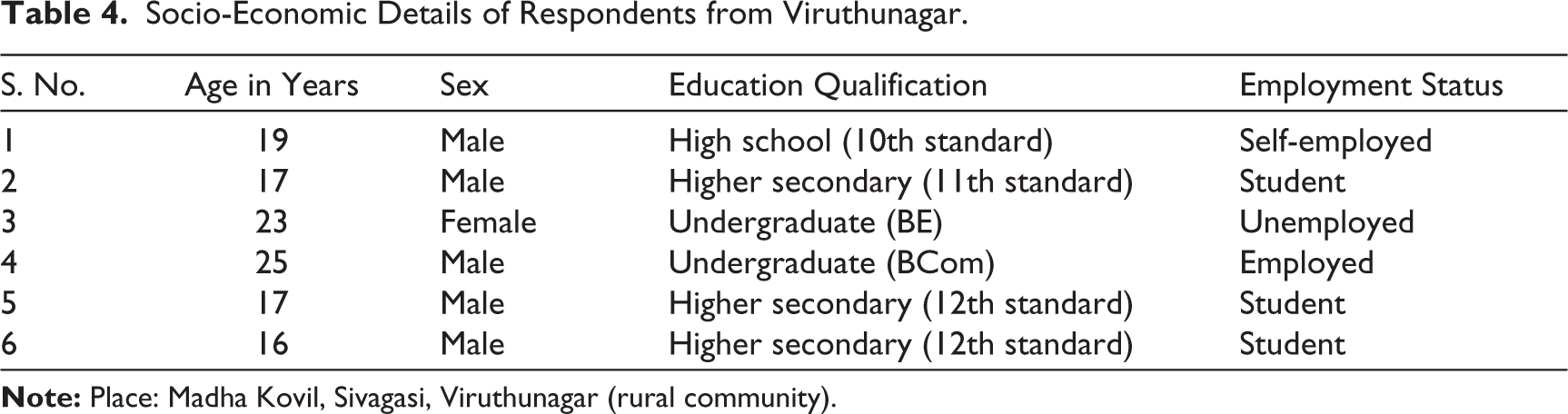
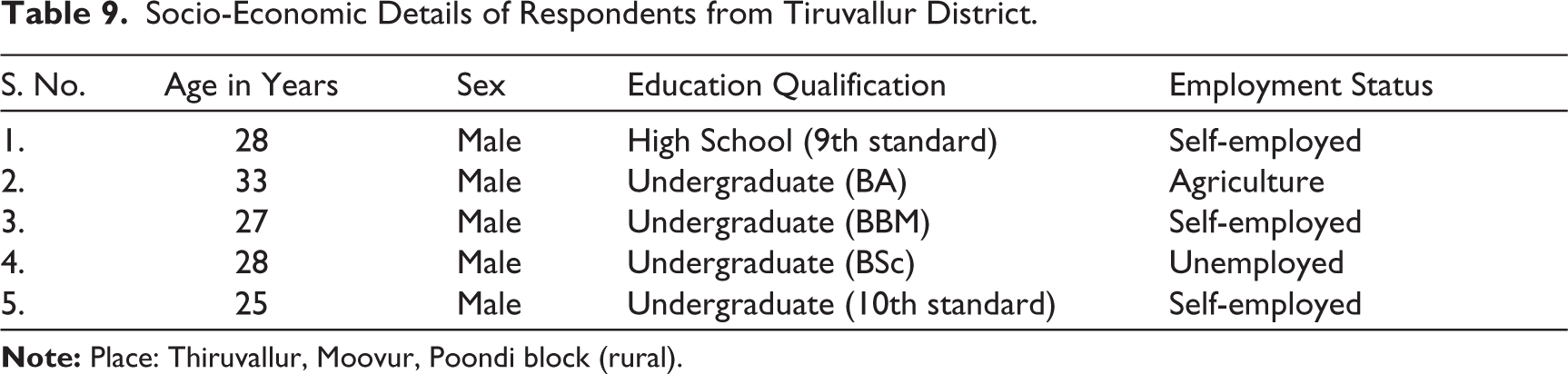
Villupuram, Tiruvallur, Chennai and Kancheepuram were chosen next because they have a higher percentage of SC residents than other districts in Tamil Nadu. The purposeful selection of Nehru Yuva Kendra Sangathan (NYKS) was the second stage. The only grassroots Indian youth organization, NYKS, encourages youth to execute various community development activities while also focusing on the development of students and non-students, rural, urban and semi-urban youth, and youth from marginalized communities (NYKS, 2012). Owing to the study’s focus on marginalized youth, specifically SC Youth, NYKS were selected, and with the support of the District Youth Coordinators (DYCs), who are the heads of the NYKS (2012), the authors were connected with the SC youth clubs from the seven districts. In addition, one youth club was purposefully chosen from each district under the direction of DYCs. Seven youth groups in total, representing seven districts in Tamil Nadu, were chosen for the investigation. Five FGDs were done in rural areas, one in semi-urban areas, and one in urban areas out of the seven districts. Tables 3–9 offer a detailed depiction of districts, inhabitants and other socio-economic data. Respondents were chosen among the total number of youth club members of each youth club based on their availability during data collection, and the total number of respondents from each youth club is shown in Table 2. Four of the 40 respondents were women, while 36 were men.
Participation of Schedule Caste Youth in the Focus Group Discussion from the Seven Districts of Tamil Nadu.
Socio-Economic Details of Respondents from Ramnad District.
Socio-Economic Details of Respondents from Viruthunagar.
Socio-Economic Details of Respondents from Dharmapuri.
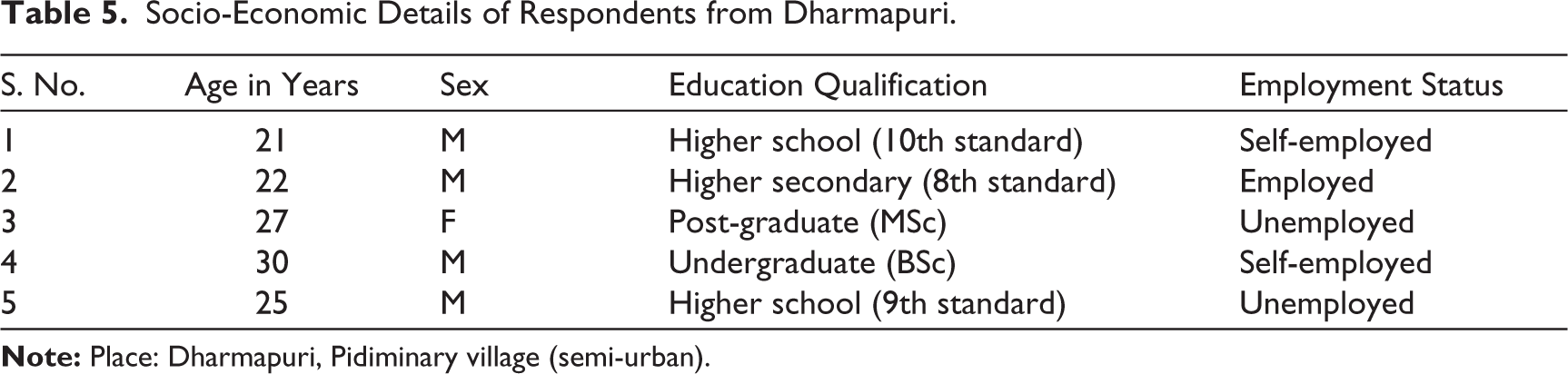
Socio-Economic Details of Respondents from Villupuram District.
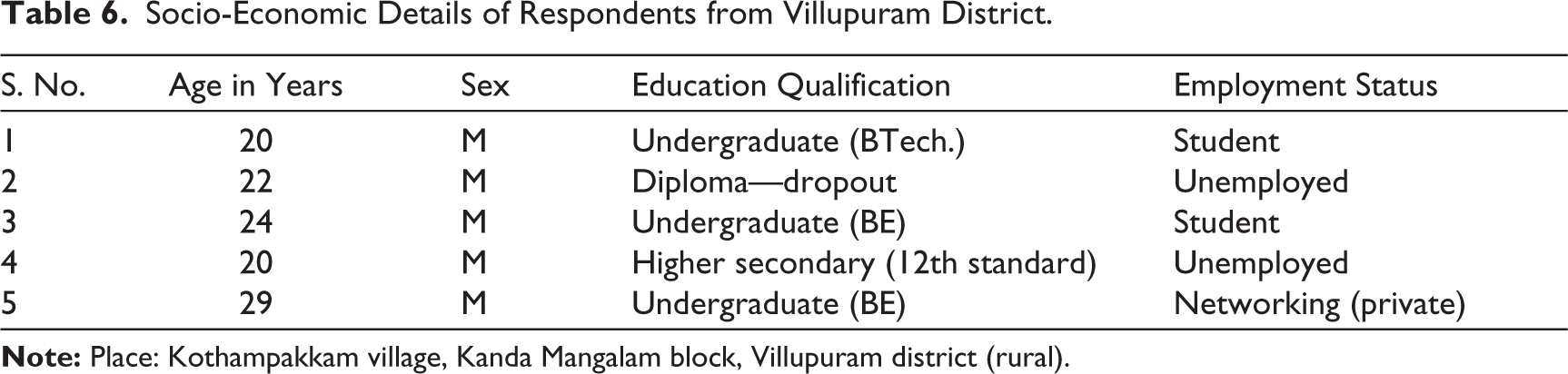
Socio-Economic Details of Respondents from Chennai District.
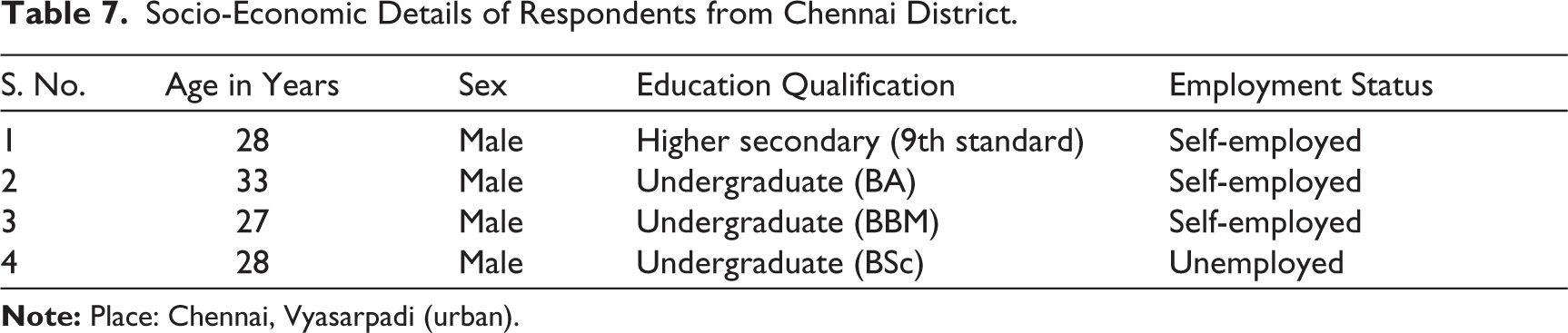
Socio-Economic Details of Respondents from the Kancheepuram District.
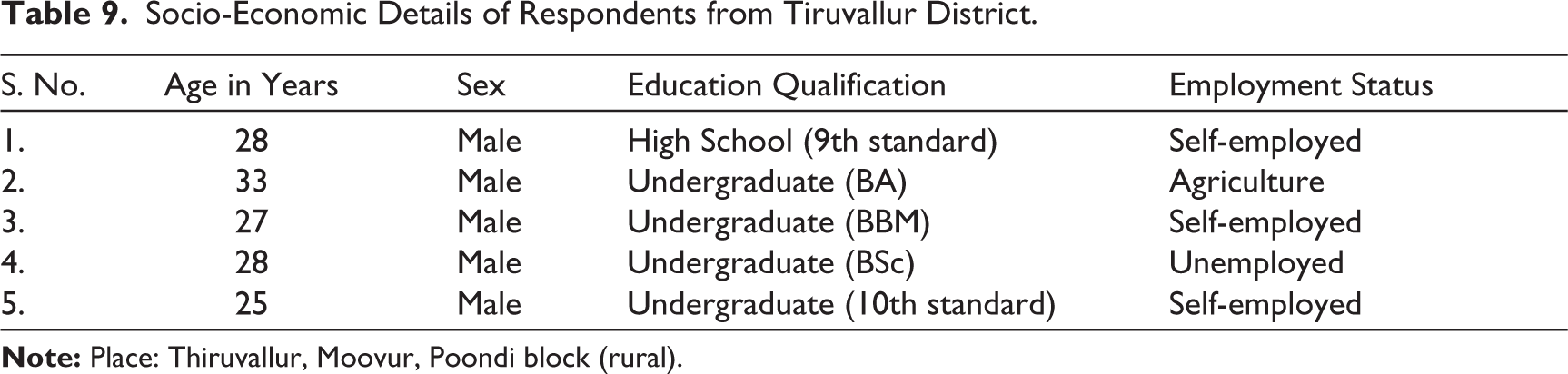
Socio-Economic Details of Respondents from Tiruvallur District.
To assure the moral and legal validity of the social work research, informed consent was sought verbally and in writing from each respondent. Strong focused group discussion criteria were created by the authors to assist the qualitative and narrative study, explore how SC youth participate in group dynamics and promote integrity by sharing different points of view. The instructions were written in English and then translated into Tamil (regional language). To identify the aspects and causes that contributed to the respondent’s opinion of life experience, probing questions were posed. Every FGD is held in seven districts between 9 April and 2 May 2022. To create a logical chain of proof, the FGDs were coded and grouped based on themes and sub-themes (Wong, 2008).
Socio-Economic Background of the Respondents
The analysis focuses on the educational qualifications and employment status of the respondents from seven districts in Tamil Nadu, taking into account their socio-economic background. The findings are presented in the inference section.
Inference
Inferences drawn from Tables 3 to 9 indicate that the majority of the youth who participated in the study are male. It was observed during the study that the presence of strong cultural orientation in both rural and urban areas prevents female SC youth participation in youth clubs, so the intersectionality of gender and caste greatly affects female SC youth participation in society. The tables also show that the majority of young people in SC have access to higher education, and the majority of young people who took part in the study are working. However, for young people, underemployment is the biggest issue. The main causes of young people’s underemployment are their lack of access to opportunities and their inadequate access to skilled education. The employment and educational situation of SC youth in urban and rural locations is the same. Even urban SC youth find it difficult to get suitable employment depending on their educational background.
Theoretical Framework
The system theory and integration theory of Talcott Parson would be relevant for the present study to comprehend the caste as a hierarchical system that strongly insists on the boundaries between the subsystems based on the connectedness of functional and structural relationships that exist among the subsystems grounded with the cultural perceptions of individuals. Talcott Parson offered several analytical axes to comprehend the ‘system’. According to the axis of ‘The Hierarchy of Relations of Govern’, which is consistent with the current study, both the subsystems and the system comprise a hierarchical segment where the agencies and institutions control people’s behaviour and the organism (society). Talcott Parson’s perspective on integration aimed to clarify the justifications for the division of systems and subsystems. Parson thought that some type of societal integration helped people become more collective and helped create systems with boundaries. Along with the claim that normative cultures are essential for integrating societies to sustain equilibrium, Parson also noted how ‘legal norms’ require integrative functions (Calhoun, 2002).
For the current study, which is concentrating on the divisions formed by the cultural and social system compromised via the political initiatives by undergoing the process of rebuilding, it is essential to take into account legal standards as an integration. One of the legal norms proposed by the Indian political system for the marginalized who are being excluded and discriminated against by the systems and institutions are the schemes and programmes of both the union and state governments. To increase their engagement in the SDGs through schemes, the SC youth should be informed of the programmes that are available to them. The hierarchy of relations of control and the dissolution of boundaries are significantly impacted by the increased participation of SC youth in the SDGs.
Results and Analysis
The study is primarily concerned with the critical issue of SC youth awareness of the SDGs in seven districts of Tamil Nadu. Additionally, the following sub-factors have been identified and presented, including the social experience of SC youth exclusion and the hurdles and significant issues they encounter that hinder their awareness of welfare programmes in line with the SDGs.
Awareness of SDGs Among the Scheduled Caste Youth
The study examined the perceptions of SC youth towards the SDGs by exploring their awareness of schemes and policies. To participate in SDGs, SC youth must be aware of them. But more significantly, how have SDGs been implemented at the union, state and local levels? To create plans and strategies for reaching global goals, it is crucial to be aware of how knowledge from around the world is being disseminated domestically. The SC youth, in contrast, lacked sufficient knowledge of the programmes and schemes that were created especially for them. The following are the responses of all the SC youth from the seven districts.
Question: Do you aware of sustainable development goals?
Respondent’s answer: I never heard of the sustainable development goals and I do not know anything about that.
It was revealed that the SC youth were unfamiliar with the term SDGs itself as well as its relevance and purpose. To achieve the SDGs, the SC youth must be aware of 17 goals and their targets. However, they are unaware of the schemes and programmes that the state and union governments of India implemented and are aligned with SDGs. A lack of awareness of schemes and programmes will hinder their overall development. It has to be noted that without the involvement of the youth especially the marginalized youth, the achievement of SDGs will not be realized and fulfilled. So, the SDGs should reach the population without any discrimination.
Poverty, Hunger and Health (SDG 1, 2 and 3)
Question: What are the common schemes in your village that you are aware of?
Answer: I know about the public distribution centres, 1 mid-day meal schemes 2 and Amma Kappitu Thitam 3 provided by the Tamil Nadu government.
When the marginalized (SC) suffer from poverty disproportionately as a result of inequality, it becomes unfair (Borooah, 2014; Diwakar, 2014; Rao, 2010). Hence, for the population of scheduled castes, basic requirements including food, housing, water and health are the main concerns. Their participation in programmes and policies is determined by the importance of the needs of the marginalized. The study reveals that the SC youths are aware of programmes aimed at reducing hunger, poverty and health issues. The thrive to progress and meet other needs will grow once the basic requirements are met, as mentioned in Maslow’s theory of the hierarchy of needs.
Education and Employment (SDG 4 and 8)
Question: Do you aware of the post-matric scholarship scheme for SC students? 4
Answer: Yes, I know about the scholarship and my college is providing the scholarship (21-year-old respondents, Kancheepuram)
Question: Do you aware of Higher Studies (e.g., PhD) scholarships for SC students?
Answer: No, I do not know anything about that (40 respondents, seven districts).
Question: Several government-sponsored entrepreneurship initiatives support young people by offering loans and incentives. Are you interested in starting your own business with government support?
Answer: The world of self-employment, business, and entrepreneurship is not for us. For that, we need money. Even if we start with government money, we are afraid that we might not be able to repay the loan; what if our business fails? Even in the event of a financial crisis, we do not have any savings or backups.
One of the initiatives of the Tamil Nadu government is the full-time PhD scholars’ incentive programme, which offers complete financial support to encourage students from SCs to pursue PhDs. SC youths are aware of educational efforts. Nonetheless, awareness does alter depending on the level of education. For instance, they know about the post-matric scholarship that promotes SC to enrol in higher education and they participate in it, but they are unaware of the full-time PhD incentives that the government provides to help them advance their educational standing. Aspirations are lacking in SC youth because they are denied their fundamental rights and needs, which makes them averse to aspirations. Similar to this, the discussions with SC youth indicate their lack of awareness of employment opportunities. The government offers several programmes to improve the economic status of SC youth. Due to factors including population growth, resource scarcity, poverty, illiteracy, poor educational opportunities, and so on, employment is one of the greatest challenges confronting young people in India. One of the main causes of unemployment and employment discrimination among SC youth is social inequality. Understanding caste is crucial for analysing youth unemployment rates because, according to caste proponents, caste divisions were predicated on the division of labour. Because of poverty, caste becomes a determining factor for work options and affects the opportunity for self-employment (Das, 2021).
Gender Equality and Reduced Inequalities (SDGs 5 and 10)
It is found from the Focus Group Discussion that SC youth were unaware of programmes to promote gender equality and reduce inequities. The youth in SC is aware of the welfare programmes offered by the state and union governments, including maternity programmes, pregnancy nutritional kit programmes and marriage financial assistance programmes. But women’s safety and security programmes were unfamiliar to the youth in the SC.
Question: Why are you the only female in the youth group?
Answer: I would like to join the youth group. I fought with my parents as a result and joined. Regarding my neighbourhood friends, I do not know. They might not be permitted by their parents or they might not feel at ease working with male friend’s members (24-year-old respondent, Viruthunagar).
In addition to the data provided by the SC youths, the study found that there were not many SC female youths attending community meetings. Our research revealed that female youths are not encouraged to join youth organizations. As a result, they are even excluded from the opportunity to participate in the current study. Because discrimination against SC women is not limited to matters of gender and economics, the social constraints imposed on SC female youth would surely have an impact on their participation in, and rights in, the economy, culture and politics (Sabharwal & Sonalkar, 2015). The intersectionality idea of feminism emphasizes the exacerbated effects of multiple forms of inequality on women. Three major aspects of inequality—age, gender/sexuality and caste—combine to intensify problems for SC women and female youth. Young women from scheduled castes experience growth barriers as a result of the gender gap. It is important to increase male participants’ understanding of gender equality by overcoming stigmatized attitudes, even though the female participants in the FGDs were aware of the programmes designed to ensure the security, safety and welfare of women.
As a result, the SC youth were aware of the SC/ST Prevention of Atrocities Act, inter-caste marriage programmes and other programmes to reduce inequity that were available to them. But, if proactive policies and initiatives are developed, it is a fact that the complicated and interconnected system of political, social, religious and cultural values would lessen inequality.
Reasons for the Lack of Consciousness Among the SC Youth About the SDGs
To access the programmes and schemes that apply to them, the SC Youth must overcome a variety of obstacles. The communication gaps between local panchayats and the villages, the lack of administrative support regarding awareness and sharing of information about the schemes, discrimination in the distribution of resources based on various grounds and individual interest are the factors that have an impact on the consciousness of SC youth in SDGs that emerged in the FGDs. The issues raised by the SC youth during the FGDs are primarily related to the gram panchayat political structure. The 73rd Amendment Act of 1992 established the panchayat raj system of governmental administration in India. The three-tier system of political administration at three levels, namely district level (zila parishad), block level (panchayat samiti) and village panchayat (gram panchayat) is one of the most notable aspects of the panchayat raj in India. Gram panchayats, a kind of decentralized governance, are in charge of running their respective communities’ internal affairs (Kumar & Yadav, 2015). ‘The states shall take steps to create village panchayats and invest them with such powers and authority as may be necessary to allow them to function as units of self-government’, the Indian Constitution states.
The community can be mobilized through the local panchayat for social and economic transformation (Chopra, 2001). However, the analysis of the focus group discussions (FGDs) held in the seven districts revealed conflicting views on the role of gram panchayats.
Local panchayat officials tended to use their friends, family, and acquaintances for government initiatives. Without our understanding, the government’s shared benefits reach the preferred individuals of the panchayat leaders despite worries about eligibility.
To alleviate the discriminatory practices in the distribution of resources in the community, it is essential to understand the social category of the elected panchayat president. As a result, the political establishment, which has been highly influenced by cultural views, has an impact on the SC youth’s awareness of the SDGs. In addition to the cultural basis for discrimination, the political organizational structure’s use of illegal power, or ‘coercion’, has a significant impact on the community-level engagement and understanding of youth from SCs. Also, the young from scheduled castes’ limited understanding of the programmes and policies have an impact on their awareness of the SDGs.
The programs that you mention are ones that I am aware of. But I am unaware of the requirements for eligibility, how to contact the scheme, or how to use the scheme. I am unaware of everything. I’m hesitant to consult higher-ranking officials. Even when we approach them, they refuse to provide information about the eligibility requirements and other specifics about the programs. Only with full disclosure of the schemes can we approach the officials to apply for the programs. If not, they won’t even respect us. (Villupuram, 24 years old respondent)
The old experience of interactions between the government official and a citizen determines their relationship (Moyson, 2016). Individual experiences cannot be generalized but it is a matter of common factors identified by several individuals. In the aspect of the analysis of efforts produced by the individuals to enhance their consciousness about the schemes, the reactions of SC youth during the FGDs gravitated towards the relationship of citizens and government officials. As the government and citizens are the two major stakeholders of the present article, it is inevitable to describe the relationship between the government and its citizen. Government officials are the actors in the distribution of public resources to the people. The social factors, power factors (positions) and class factors (have’s and not) influence the relationship between government officials and SC youth and have a direct impact on their consciousness. The disrespectful behaviours towards the SC youth discourage their participation in SDGs which affects their growth and impact the development of the states and country. As discussed under poverty, hunger and health, the awareness of schemes also affects individual needs, choices and interests. It becomes an essential priority for the SC youth to know about the schemes lined with basic needs. For SC youth civic participation, citizenship is subordinate needs over food, shelter and health. For example, it is unethical to encourage the youth to contribute to their community development when she/he struggling for a single meal for the day, whereas it was founded through the FGD that the SC youth considers education and employment as their basic needs which are unfulfilled to date, and the opportunities provided for them to access education and employment are being restricted on the ground of their social category.
Discussion
Caste-based discriminatory behaviours fundamentally lower the SC youth’s standard of living. Their mental health and sense of self-worth are negatively impacted by the stigma and prejudice of society, which keeps them helpless and voiceless. So, it is crucial to provide the SC with inclusive opportunities through social reform, political action and legal measures.
Caste discrimination makes it difficult for SC youth to access their rights. The lack of knowledge and involvement among SC youth was caused by insufficient information sources and caste-based prejudice in the distribution and dissemination of the schemes to SC youth, which left the young without hope for access to their rights. Youth engagement in the SDGs is hampered by non-SCs’ lack of cooperation and SC panchayat leaders’ ignorance of programmes. The functioning of youth clubs is impacted by the DYCs of NYKS’s lack of motivation, their limited understanding of the cultural context, their inability to think strategically, mobilize resources, network, monitor and supervise, as well as their lack of commitment and lack of training. As a result, SC youth’s awareness and engagement in community development and SDGs are weakened.
Thus, instead of a natural process of change, the human recognition of unfair treatment leads to political and social movements of change, which impose legitimate and coercive control over people through the creation of laws, administrations and organizations. Dr B. R. Ambedkar was a proponent of equal rights under the Indian Constitution and believed that by allowing people of the SCs and STs to particular legislative and public service reservations, their rights would be protected. The fulfilment of fundamental needs is the ultimate aim of human existence. The word ‘basic’ itself implies that it is essential to maintaining human existence. However, it was found that the basic requirements of the SC youth in Tamil Nadu were not being met, which is their social reality. The goal of sustainable development is to safeguard resources for the future. The sociological fact is that people in developing and underdeveloped nations do not have a present though. If a nation wants to increase the involvement of youth in its development, it must first meet the youth’s basic needs. Then, without strict enforcement, the nation may observe the youth’s gradual involvement in social, economic and political issues. Change must thus come to the youth of the SC in the form of programmes. It represents a forward step in the process of ‘transformation’ and goes beyond the simple idea of gaining benefits. It is rooted in the idea of enhancing structural and systematic mobility.
Implication
The study sheds light on the social reality of India’s underprivileged youth. The results of the study show that caste-based discrimination has an impact on young people’s engagement with SDGs. The SDGs are international development instruments that highlight everyone’s right to participate, especially young people, who are key to the SDGs’ success and implementation. The study has a wider scope for comprehending the issues faced by marginalized youth and improving their engagement in SDGs through context-specific actions and legal enforcement by preserving the values of social justice and human rights by government organizations at the micro and macro levels.
Conclusion
Youth awareness of the SDGs, however, can only be ensured by the successful implementation of policies and initiatives targeted at SCs. The study findings reveal that SC youths are unaware of the SDGs and are vulnerable as their entitlements have been denied based on caste discrimination. The panchayat presidents from non-SC communities tend to be partial in distributing resources based on caste. So, the Government of Tamil Nadu must ensure that the SC youth must achieve SDGs through legal enforcement, context-specific approaches and welfare measures; also specific mechanisms must be devised for the inclusion and effective participation of SC youth in the government programmes and schemes. The NYKS, village panchayat, and the district administration have a greater role in knowledge dissemination of SDGs among the youth. Also, the Government of Tamil Nadu must ensure social justice, peace and harmony through law enforcement agencies and promote values and democratic participation through NYKS and local governing institutions. Also, the Government of Tamil Nadu must sensitize the elected panchayat presidents to uphold democracy, equality, social justice and inclusion in discharging their duties and services to the citizens.
Footnotes
Declaration of Conflicting Interests
The authors declared no potential conflicts of interest with respect to the research, authorship and/or publication of this article.
Funding
The authors received no financial support for the research, authorship and/or publication of this article.