







Abstract
Dropout of students from tribal communities has been persistently hampering the goals of universal and inclusive education. The persistence of the issue of dropout among Scheduled Tribe (ST) students has received increased attention in the New Education Policy (2020) as a crucial aspect in achieving universal inclusive education in India. With this background, the study determined dropout first and then made a comparative analysis across dimensions including social category, gender, educational zones and dropout rates (aggregate). Finally, the study tried to determine the reasons for the dropout among tribal students at the upper primary stage. The study applied a descriptive survey method to carry out the research and purposive sampling for sample selection. Inquiry forms (Structured questionnaires) were used for the collection of data. Data analysis was carried out through Microsoft Excel v. 2021 and SPSS v.29, and frequency counts, percentage and descriptive statistics were used for statistical analysis. The study found a significant proportion of student’s dropout at the upper primary stage, as the dropout rate is 11.38%, and the majority of them, that is, 59.62%, belong to tribal communities. And the same for tribals was found to be 18.16%. Tribal males were found to leave school more (23.92%) compared to tribal females (21.62%) at the upper primary stage. Similarly, inter- and intra-zonal differences have also been found in dropouts. Educational zones (Hariganwan and Kangan) with major tribal populations and enrolment were found to have high dropout rates. The reasons responsible for the dropout were illiteracy, poverty, hereditary occupation, sibling care, early engagement, lack of mobile schools, school distance, irrelevant pedagogy/curriculum and low achievement in academic pursuits. The results highlight the necessity for coordinated and result-oriented efforts from concerned stakeholders, including students, parents, tribal chieftain, teachers and administration, to effectively address the context-specific and broader determinants of dropout, thereby promoting sustained school continuity at the upper primary stage.
Conceptual Background
Despite global commitment articulated in 2015 by the United Nations and its member nations, including India, to achieve sustainable development goals (SDGs) such as SDG 4, 5 and 10 by 2030, significant challenges persist, especially in addressing the concerning tribal dropout rates. The basic principle of that agenda, ‘Leave no child behind’, seems like a ‘promise in peril’ (SDG Report, 2023) due to numerous factors. India marked by a rich diversity of communities, languages, cultures, regions and religions has steadily progressed in achieving SDGs, especially in matters of education. India is determined to bridge gaps in education that arise due to vast diversity and strives that every child’s path to learning and success remains unobstructed, regardless of their birth or ethnicity. India’s school education policy underscores the unwavering commitment to building bridges that span the gaps among different social categories in accessing, engaging with and excelling in school education. The recent educational policy of India, that is, NEP-2020, in its part I, Chapter 6, stresses for ‘Equitable and Inclusive Education: Learning for All’. But even after 76 years of independence, disparities still exist among disadvantaged groups including gender, geographical, disabilities, socio-economic and cultural identities. A healthy chunk of students drop out of school after completing their primary education, as it is reflected by the middle stage GER-90.09% (NEP, 2020). NSSO (2017–2018) reported that 30 million students of 6–17 years of age are out of school (OoSC) in India, and most of them are dropouts belonging to tribal communities.
Dropout is a global, complex and developmental phenomenon with varied connotations (Abotsi et al., 2018; Kishore & Shaji, 2012). Any students who exit school prior to completion of a given stage of education are known as dropouts and the dropout rate is the percentage of such students. Upper primary is the mid-way stage between primary and secondary education in India. Completing upper primary schooling is a prerequisite for access to secondary education. Efficient stage transition is extremely important due to the fact that it determines the efficiency of the educational system, reduction of wastage, stagnation and child marriage, opportunity for further education, and has other social and economic benefits (Abu-Ghaida & Klasen, 2004; Raj et al., 2014). Therefore, persistence in stage transition plays a key role in the progression of students towards further education. India, to a great extent, has been successful in enhancing enrolments at the primary education stage throughout the country and is almost near to universal primary enrolment, that is, 102.7 (Mehta, 2022). In India, 90.2% and in Jammu & Kashmir (J&K), 86.09% of students transited from elementary to secondary stage in 2016-17 and for Schedule Tribes (ST), transition rates were 83.29% and 75.08%, respectively. An estimated 13.72% of tribals of J&K drop out, compared to 6.58% STs and 5.67% aggregate dropouts at the upper primary stage at national level (NIEPA, 2018). India is witnessing significant dropout, especially from marginalized tribal students, while transiting from upper primary to secondary stage. On one hand, India adopted SDGs and assured to reach universal education (primary/secondary) by 2030, but on the other hand, 20% of South Asian and 11.1 million Indian children aged 12–14 years are OoSC (UIS, 2016). In J&K, the Samagra Shiksha Project Director reported 10,500 OoSC children (Geelani, 2022). The problems of OoSC and dropout at the national and State/UT levels hamper India’s educational visions and expected targets.
Numerous studies have been conducted that shed light on tribal dropout (Bhat et al., 2022; Government of Odisha, 2022; Gul & Ganai, 2016; Joy & Srihari, 2014; Kotwal et al., 2007; Sharma et al., 2020; Singh, 1994). Empirical evidence demonstrates interstate, gender, ethnic and stage variations in dropout rates in India. Studies of Kingdon (2002), Mitra et al., (2023), Bhagavatheeswarana et al. (2016), Sharma (2022), Bhat and Khan (2023), Venkatesan and Mappillairaj (2023) display gender, spatial and ethnic gaps in dropout. The majority of tribals reside in remote rural geospatial settings. Tribal areas lack access to education/schools (Bhat, 2007; Pajankar, 2016). Tribal communities are patriarchal and prefer the education of sons and deprive female children of resources and education (Bhat, 2022; Deaton, 2000). Literature has shown many contributing factors to dropouts in mainstream as well as in tribal areas. Dropout can be seen in initial grades where children as a result of their low academic and individual capabilities discontinue school (Bhat & Waza, 2023; Rumberger & Lim, 2008; Lamb et al., 2011). Kamanda and Sankoh (2015) stated that household wealth, coupled with other educational forces, contributes to dropout. Marphatia et al. (2019) revealed biosocial factors as predictors of school dropout. Inefficient school/educational systems also restrict the continuation of children in schools (Reddy & Sinha, 2010). Studies have demonstrated that the children from destitute families are likely to discontinue education (Banik & Neogi, 2014). Studies have also shown differences in dropout with respect to gender, region, social groups and educational stages. The prioritized education for mainstream elite groups results in pathetic survival and completion rates of disadvantaged social sections, including ST (Dhesi, 1998). Tribal areas are distanced with distinct topography and lack school accessibility (Pajankar, 2016). Inter-state regional disparities have been observed in the schooling of children in India, and the schooling outcomes are affected by wealth and community type (Mohanty & Rammohan, 2015). The intricate issue of tribal dropout cannot be overlooked. This article examines the dropout rate of tribals at the upper primary stage at the district level and makes a comparative analysis with aggregate, gender, and intra/inter-educational zones dropouts. Moreover, it studies the sociocultural, economic and demographic background of dropouts to ascertain reasons for dropout.
Research Methodology
Study Area
Shows Map of Study Areas, India, Jammu and Kashmir, and Ganderbal, Designed by Author Himself.
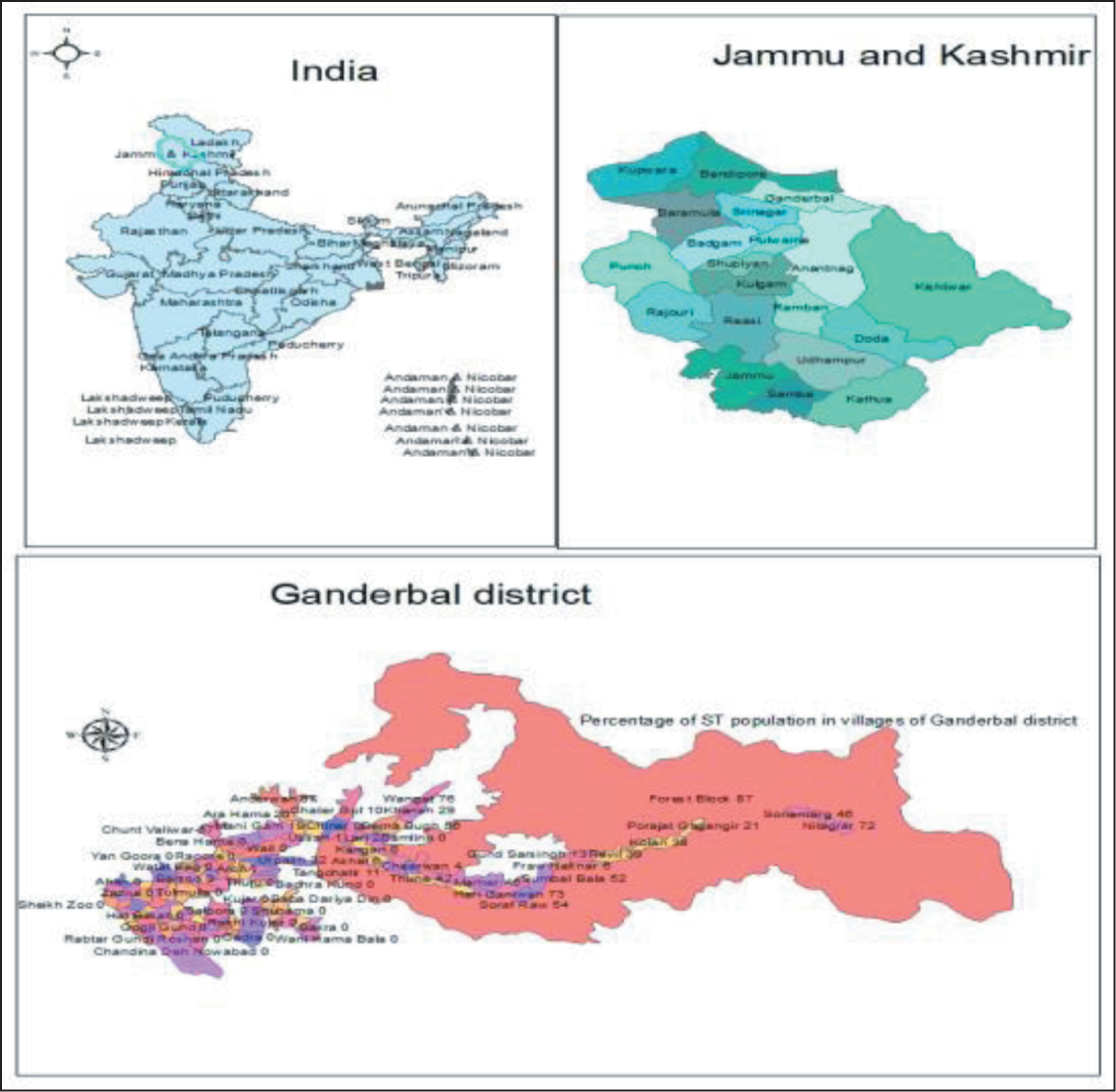
The study took place in the Ganderbal district, located in Jammu and Kashmir (India). District Ganderbal is one of the eight districts, recently formulated in April 2007 to ensure harmonious growth and development of the region. Located between 34.23 N and 74.47 E, possessing an area of 1045 sq. kms, the district stretches from Safapora on the western side to Zojila on the eastern side with a length of 125 kms, a width of 10–20 kms and a height of 1,650–3,000 metres above sea level. The district is surrounded by four districts: Srinagar (South), Bandipora (North), Kargil (North-East) and Anantnag (South-East). On the edge of Nallah Singh near Duderhama, the district administrative centre/headquarter is located. Administratively, there are six tehsils (Ganderbal, Kangan, Lar, Tullamulla, Wakura and Gund); seven community development blocks (Ganderbal, Kangan, Lar, Sherpathri, Wakura, Safapora, Gund); and four educational zones (Ganderbal, Kangan, Tullamulla and Hariganwan).
The reasons for selecting district Ganderbal as the research setting are that 70% area of the district is hilly/semi-hilly, where different ethnic and tribal Gujjar & Bakarwal communities are residing. The district is bestowed with Sindh Valley, which attracts nomads of different districts and is known for its lush green, alpine pastures and meadows. The population figures of Ganderbal stand at 2.94 lakh (297,446) comprising 2.37% in proportion to the entire population of J&K. Moreover, the district of Ganderbal comprises 20.53% of STs, who are marginalized and disadvantaged educationally, economically and politically. Ranked 18th in J&K literacy rates, the literacy rate of district Ganderbal is 58.04% (68.85 male and 45.7 female), and ST literacy is just 43.6% (53.4 male and 32.4 female), below the national/state level and district average, demonstrating significant regional and gender gaps of 14.4% and 21%, respectively.
Method, Sampling and Statistical Procedure
The researcher used descriptive survey method and a purposive sampling technique in the study. First, the investigator surveyed all educational zones of the district and obtained enrolment records of all students, including their Grade VI and VIII registration rolls. The zonal educational offices were provided inquiry forms (structured questionnaire) that possess questions regarding tribal enrolment from the academic years (2015 to 2018). The inquiry forms were then personally collected from zonal education offices.
To ascertain the reasons responsible for the dropout of ST students, the researcher personally visited upper primary schools of the Kangan and Hariganwan zones because they account for 95% (150 out of 158) of dropouts of tribal students. Teachers played a great role in identifying/tracing dropout tribal students and acted as mediators, which helps in developing rapport and trust with dropout cases. The researcher selected 40 dropout students purposively and employed a structured questionnaire to elicit reasons for the dropouts from sampled tribal students. The collected raw data was coded in Microsoft Excel version 2019 and analysed using the data analysis tool pack. The coded data were statistically analysed using frequency counts, percentage statistics and mean.
Results
In Ganderbal district, the percentage of students who dropped out before finishing their upper primary education was 11.38%. Of the entire cohort of students in Class VI during the 2016–2017 academic year, 265 did not progress to complete Class VIII by the 2018–2019 academic year. A significant proportion of these dropouts, that is, 59.62% belong to the tribal communities. The proportion of tribal boys was slightly higher compared to girls (Table 1).
Number of Dropouts and Dropout Rate (All and Tribals).

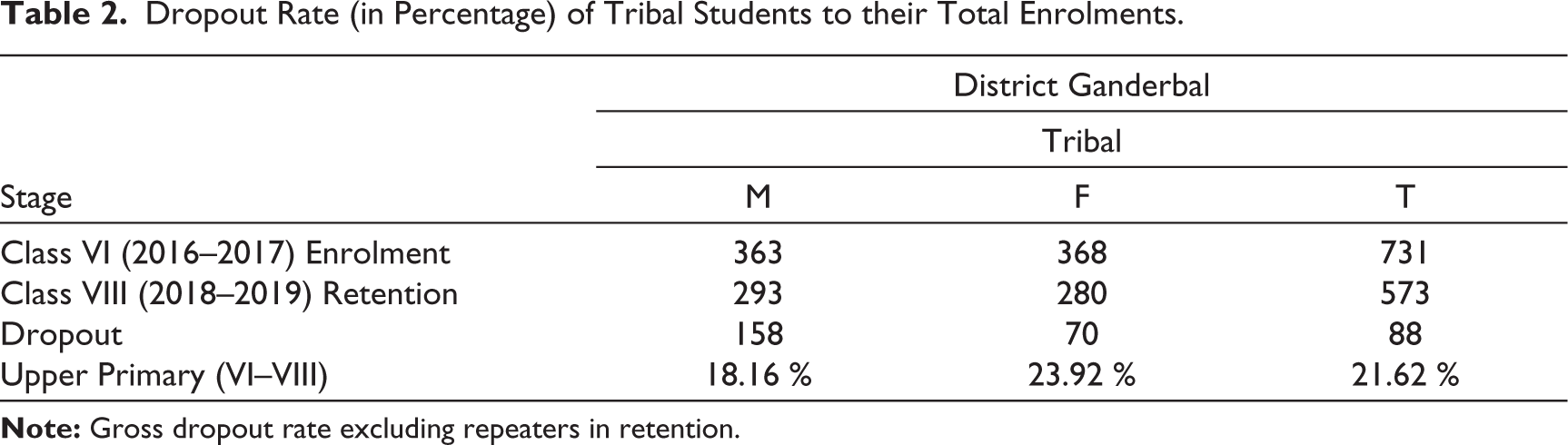
From 2016–2017 academic year to 2018–2019 academic year, 21.62% of tribal students dropped out during the transition from class VI to class VIII. This means that of the entire cohort of 363 tribal students who started Class I in 2016–2017, 158 did not finish Class VIII by 2018–2019. The dropout rate among female cohort students was 23.92%, higher compared to male cohorts (18.16%). Additionally, the overall dropout rate among female students was higher than that of male students. The gaps in dropout rates between males and females were 2.22% for all students and 5.72% for tribal students (Table 2).
Dropout Rate (in Percentage) of Tribal Students to their Total Enrolments.
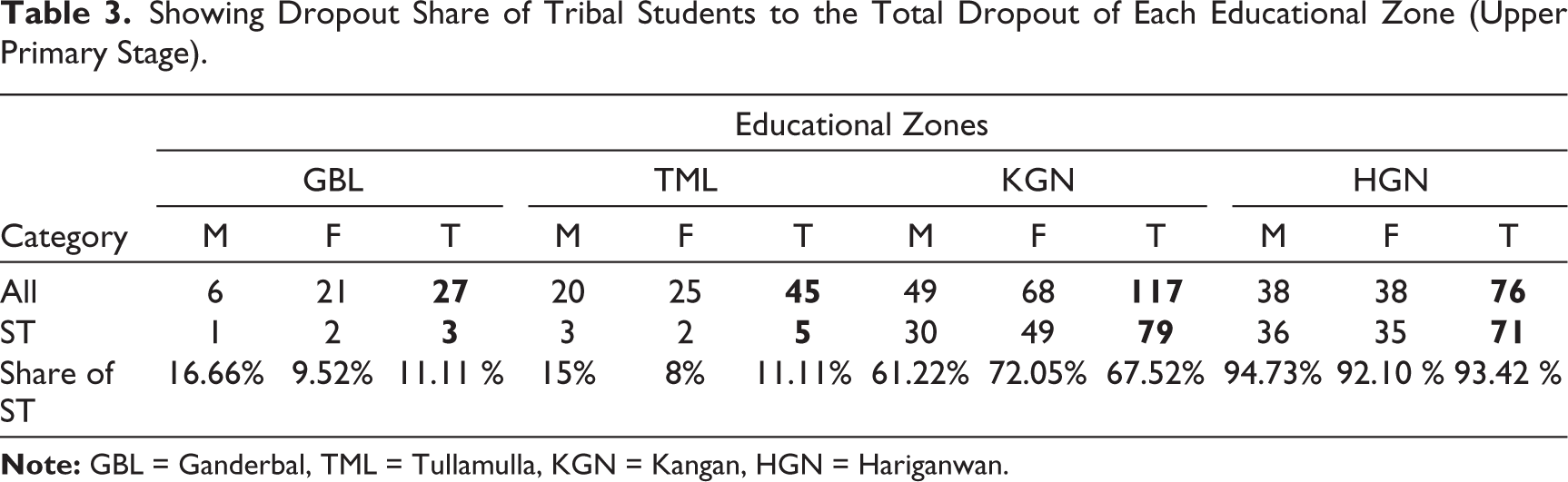
In the upper primary stage, of the 27 students who dropped out in the Ganderbal zone, 3 (11.11%) were from the tribal communities and, 16.66% among them were males and 2 (9.52%) were females. In the Tullamulla zone, out of the 45 students who dropped out, 5 (11.11%) were from the tribal communities, and male students were 3 (15%) and females were 2 (8%). In the Kangan zone, out of the 117 students who dropped out, 79 (67.52%) were from the tribal communities. This included 30 (61.22%) males and 49 (72.05%) females. And in the Hariganwan zone, out of the 76 students who dropped out, 71 (93.42%) were from the tribal communities, comprising 36 (94.73%) males and 35 (92.10%) females (Table 3).
Showing Dropout Share of Tribal Students to the Total Dropout of Each Educational Zone (Upper Primary Stage).
In the district of Ganderbal, the overall dropout rate for upper primary students was 11.38%. When looking at the different educational zones, Ganderbal had the lowest GDR at 5.03%, Tullamulla had 10.8%, Kangan had the highest at 16.14% and Hariganwan had 11.68%. It is worth noting that the DR for females was higher than for males in all zones, with Kangan having the highest female DR. Additionally, it is worth noting that there was a gender gap in the overall DR in all the educational zones of the Ganderbal district (Table 4).
The Dropout Rate of Students (Aggregate & ST) of District Ganderbal to Total Dropout of the District.
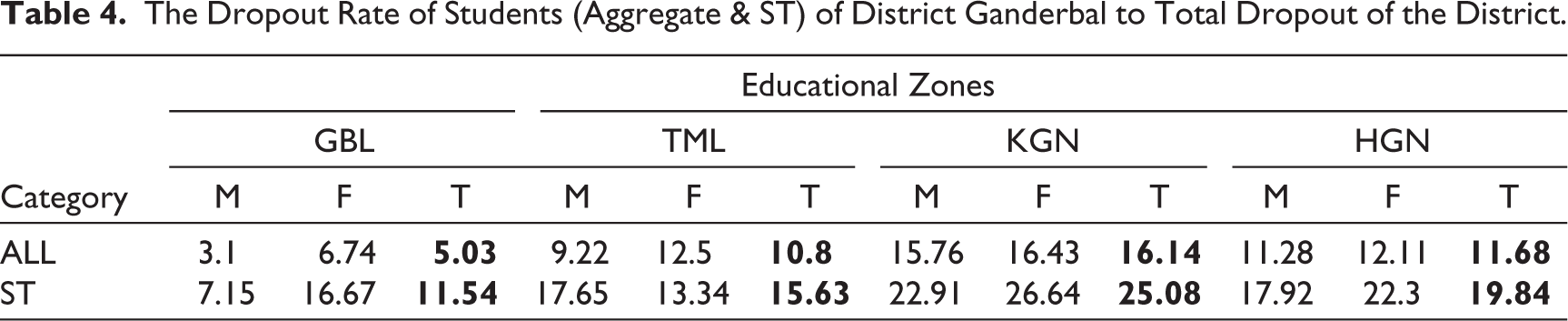
Among the total, 21.62 % (male 18.16%, female 23.92%) tribal dropouts of the Ganderbal, Zone GBL has 11.54% (male 7.15, female 16.67%), zone TML has 15.63 % (male 17.65%, female 13.34%), zone KGN has 25.08% (male 22.91%, female 26.64%) and zone HGN has 19.84% (male 17.92 %, female 22.3 %). Zone Hariganwan has the highest DR of tribal students, followed by Kangan, Tullamulla and Ganderbal zones. The gender disparity in DR is also prevalent in district and its educational zones. The female DR at the upper primary stage is highest in the Kangan zone, followed by Hariganwan, Ganderbal and Tullamulla zones, and the same for male students is highest in Hariganwan, followed by Kangan, Tullamulla and Ganderbal zones.
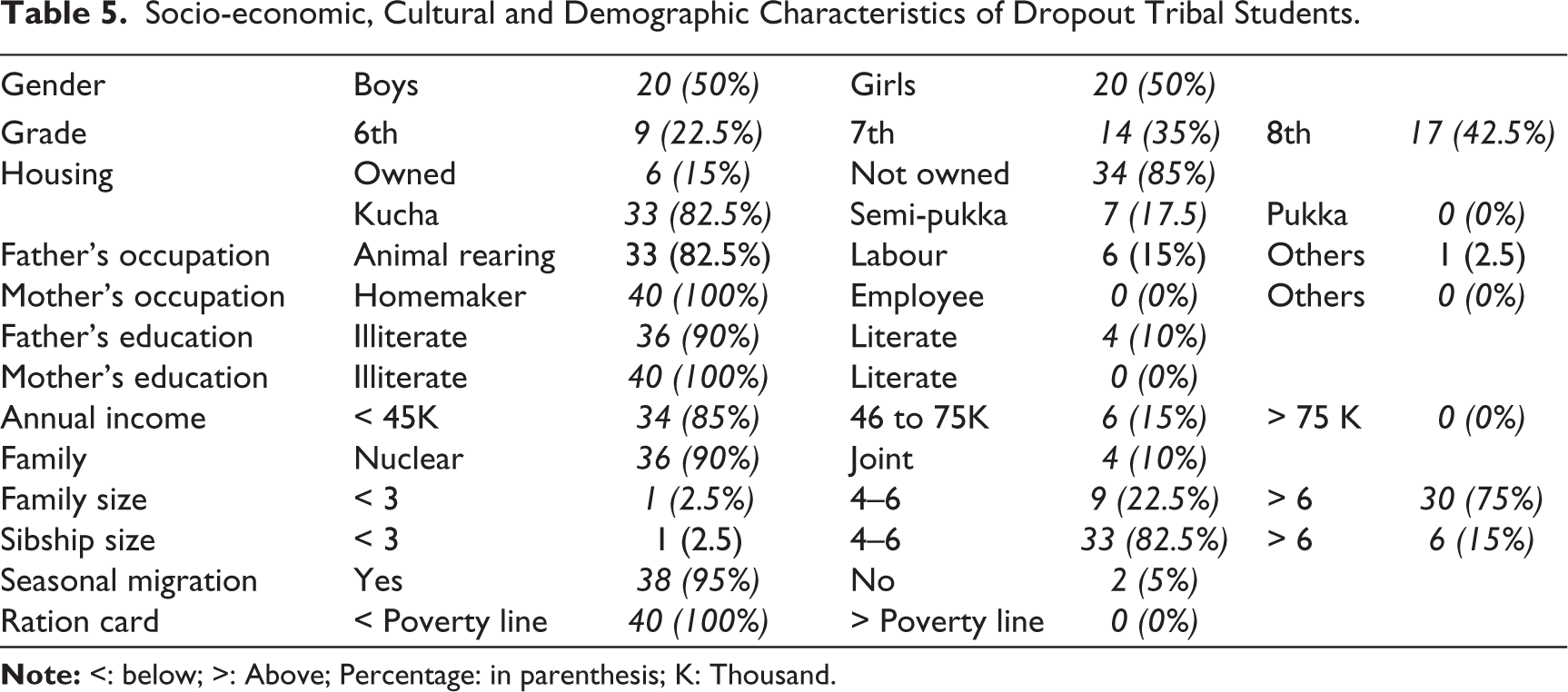
Tribal communities have a distinct socio-cultural and occupational system. They live in hilly areas and Kucha dwelling structures made of mud, stones and wood. The majority (82.5%) of dropout tribal students resided in Kuccha houses, built on forest land, therefore lack ownership. Occupationally, they mainly raise sheep, goats and livestock for years, and then sell them. As Table 5 shows, the majority (82.5%) of dropout students had animal rearing as their father’s occupation. Their sustenance mainly depends on hereditary occupation of animal rearing. The occupational pattern involves shifting seasonally from summer to winter pastures and vice versa to raise and feed their domesticated animals. As a result of it, they spent most of their time on altitudes, hilly slopes and pastures, thereby lacking time for other progressive pursuits like education. Their unique hereditary occupation and the involvement of their children in such occupation become hurdles in their path towards achieving and continuing education, resulting in massive illiteracy rates and dropouts in the community. Parental illiteracy was found among a significant majority of dropout cases. They are poverty-ridden tribes sustaining on domesticated animals and forest produce with no arable land. The dropout tribal students possess lower family incomes and their parents earn less than 45K annually. Culturally, such communities usually possess large family and sibship size, making it more difficult to address the sustenance of the family and educational needs of children.
Socio-economic, Cultural and Demographic Characteristics of Dropout Tribal Students.
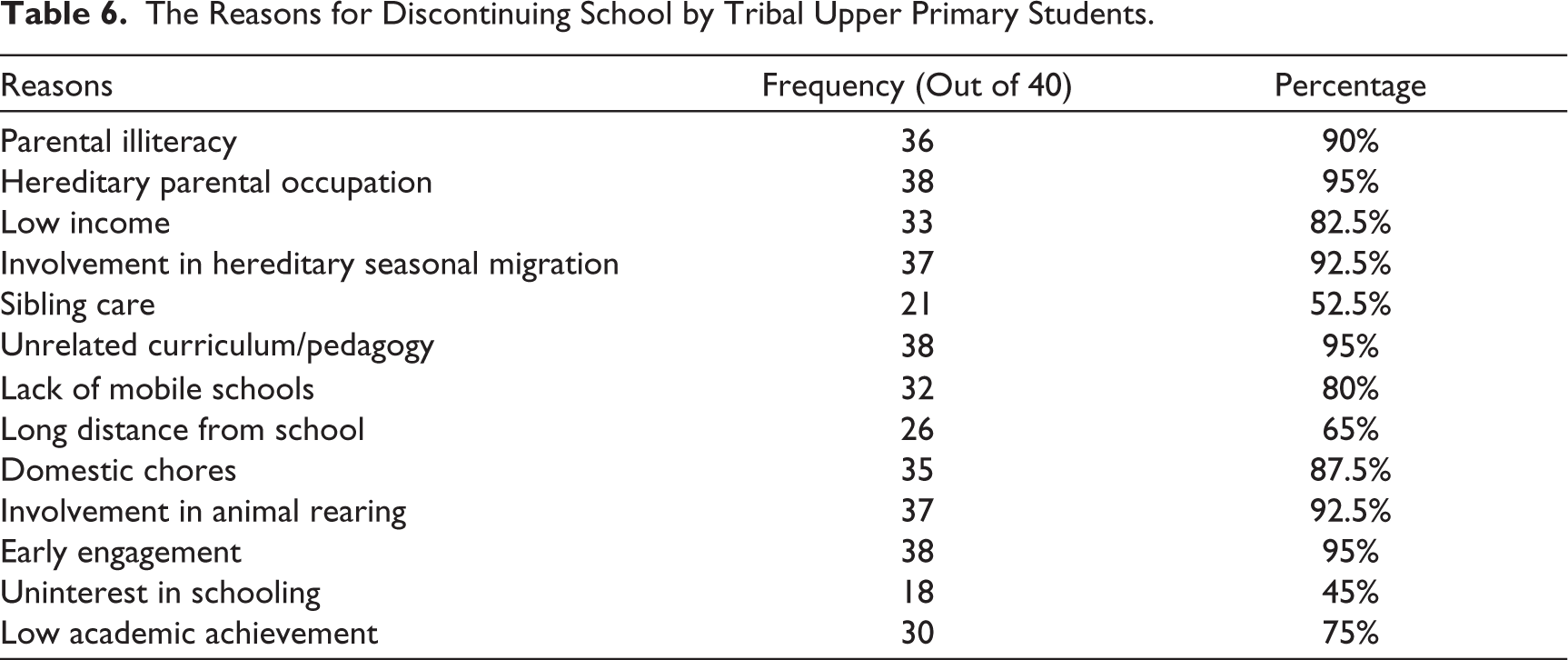
The reasons for quitting school at the upper primary stage especially by tribal students are numerous and wide, ranging from personal, cultural, economic, familial and personal facets (Table 6). Among the reasons causing dropout among tribal students at the upper primary stage are parental illiteracy, occupation, low income, seasonal migration, unrelated education, shortage of mobile schools, engaging children in traditional occupation and work, school access and poor educational performance. To enable tribal students to continue and complete the upper primary stage, the issues of tribals must be addressed at the earliest for the benefit of such tribal communities.
The Reasons for Discontinuing School by Tribal Upper Primary Students.
Discussion
Since independence, the government, academicians and researchers have focused on key issues in tribal education. Significant progress has been made over the past seven decades in various educational indices. Many issues in tribal education like lack of schools and non-enrolment were addressed by specific interventions, initiatives and affirmative actions. Similarly, other key issues faced by tribals were ascertained and addressed as well. However, new problems arise in tribal education from time to time. The government has been successful in enhancing school access, enrolling tribal children, enhancing GER in schools, but problems of retaining them in school till course completion emerge. Tribal dropout is a complex phenomenon. It is looked through various prisms, such as the psychology of the child and parents, economics of the family, sociocultural traditions, school and home environments, access, availability, geography, mobility, and so on. Empirical studies have focused on various issues in tribal dropout and stated tribal dropout is a significant issue persistent since independence and continuing till date. Dar (2022) found 85% of students of Khag, Budgam, abandoned school at the upper primary stage. The study found a wise gender disparity with boys figuring higher (57%) than girls (43%). The study cited parental reservations in sending their children to school. Bhat and Khan (2021; 2022a) ascertained trends in school education of J&K and found dropout rates of tribals for upper primary level were alarmingly high, surpassing those of lower primary levels. From the academic year 2014–2015 to 2018–2019, there was a significant increase in the dropout rate, with 8.13% of boys and 9.47% of girls dropping out in 2014–2015, while the numbers rose to 12.77% of boys and 15.28% of girls in 2018–2019. Inter-district variation in the degree of dropout rate exists in J&K. The results align with the findings of Nabi and Usmani (2020), who delved into the education of Gujjar and Bakarwals in Uri (Baramulla) and found that a staggering one-third of students were dropping out. Similar to their study, this research highlights that the main causes behind this trend are the nomadic lifestyle, the focus on livestock rearing and various health concerns. Arun and Premkumar (2019) revealed high dropout rates among tribal students in both Jammu and Kashmir and India. They also found that there are variations in the dropout rates based on location, level of education and gender. At the upper primary level, a significant number of children (58.75%) drop out in school in Manipur, and the female percentage was high compared to their counterparts. Poverty, mismatch between school and labour market, child labour, school distance and prolonged illness were mainly responsible for the high dropout rate of students at the upper primary level (Vungngaihlun et al., 2018). Dar (2019) discovered that mobile pastoralist communities, specifically Bakarwal boys, have an even higher rate of dropping out of the school. The reasons include the difficulties in balancing school and household responsibilities, focus on cattle rearing by boys, limited access to schools and teachers, poor school infrastructure and lack of accountability for teachers. A total of 68% of tribal girls dropped out before Grade VIII in J&K (Gul & Ganai, 2017). The study revealed a disturbing trend, displaying a high number of Gujjar girls of Poonch leaving school prematurely. This issue was attributed to various reasons like their nomadic lifestyle, negative societal perceptions, low level of education among parents, financial struggles and the involvement of children in activities like seasonal migration and labour work (Chowdhary et al., 2017). Nearly, 3.7% dropout rate was found in Chhattisgarh state in 2012, with significant inter-district, category and gender variations. Students belonging to tribal families demonstrated a high dropout rate compared to SC. The study found daily labour, low wages, domestic work, sibling care, a dearth of teachers and low aspiration and rate of return from education (SCERT Chhattisgarh, 2014). Significant dropout (19.40%) was observed at the upper primary stage due to parental illiteracy, high family size, child labour, parental unwillingness, sibling care and low motivation (Joshi et al., 2013). Joshi (2010) also holds similar views and found differences in India, as far as gender, location and social category are considered in dropout rates. Studies conducted at the district level showed a poor scenario of tribal education in Kupwara because of mobile school shortage, coupled with school inaccessibility and long distance (Bhat, 2007, 2008; Lone, 2019; Malik & Bhat, 2006; Malik et al., 2007). In 2006, Bano delved into the issue of education among Gujjars and Bakarwals in the Keller and Shopian blocks of the Shopian district (J&K). The findings were disheartening, as the study revealed that a substantial number of students were dropping out of school at the elementary level. Specifically, nearly two-thirds of students in Keller and over 60% in Shopian were forced to abandon their education. A closer examination of the data showed that the dropout rate was higher among males than females. Many empirical studies conducted on tribals of Jammu and Kashmir provide a great deal of evidence of tribal dropout. Looking intensively through literature available on tribal education, tribal dropout seems to be a complex phenomenon stemming from various factors. Language barrier (Bashir, 2016; Bhat & Khan, 2020, 2022c), seasonal migration (Shakeel, 2020; Suri, 2014; Tufail, 2014), transhumance (Khatana, 1976), poor educational access (Bhat, 2007; Bhat & Khan, 2022b), poor SES (Koundal, 2011), illiteracy (Abdullah et al., 2020), pastoralism (Dar, 2020), morbidity issues (Manhas, 2021). The contribution of the factors in dropout needs to be reduced to sustain students of tribal communities in schools.
Conclusion
The study concluded that dropout among tribals is still very high at the upper primary stage compared to aggregate dropout. Moreover, gender and zonal (inter and intra) disparity has been found in dropouts. Tribal males drop out more at the upper primary stage compared to females. Educational zones with high tribal enrolments figure prominently in dropouts when dropouts were examined within and between education zones. The study found illiteracy, hereditary occupation, poverty, seasonal migration and involvement of tribal students in seasonal mobility and animal rearing, sibling care, dearth of mobile schools, long-distance schools, uninterest in schooling, alien curricula and instructional medium and low performance in academics to be the main reasons behind the dropout of tribal students.
Recommendations
This study has demonstrated tribal dropout rates and multifaceted barriers that prevent tribal students from continuing upper primary education in Ganderbal (J&K). Many dropout barriers found in the study align with empirically established literature and few are context specific. Hardly, it can be found that solitary barrier enables dropout; in fact, it is a complex, entangled and dynamic phenomenon, amplified by sociocultural, economic/occupational systems and natural disadvantages faced by such students. Collectively, the above results emphasize the need for concerted and collective efforts and interventions from multiple stakeholders, spanning students, their parents, NGOs, village and community tribal chiefs, educational administration and school teachers to mitigate the context-specific and other dropout determinants hampering school continuity at the upper primary stage.
The study recommended stringent measures must be taken to address tribal dropout. There exists a lack of clarity and uniformity among states in recognition of dropouts. Some states flag/label dropout as one who remains absent for a week, some consider a month-long absence of students, while others determine dropout at the end of grade or year. The week-long absence from class must act as an alarm or early warning sign of potential dropout students. For such students, early warning, tracking, monitoring, mapping systems must be in place for early identification, assessment and resolution of their problems. Tribal people migrate seasonally (bi-annually) and hereditary shifting brings the problem of prolonged absenteeism in schools. Mapping prolonged absent tribal students involved in such mobility, their travel routes and destination pastures and provisioning school access to them through mobile schools will mitigate their dropout. Though there are provisions for mobile schooling for tribal communities in Ganderbal, empirical evidence has shown they are limited, non-functional and unable to maintain a balance between occupation responsibilities and education needs. The accountability and real-time monitoring of such schools will enhance the school stay of transhumant tribal students. Flexible re-entry in schools will be helpful in curbing tribal dropout and absenteeism. The parental involvement and engagement of students through persistent parent–teacher interactions, participation/collaboration in school events, activities and committees help them to gauge the performance and barriers experienced by them. The parents will get involved, and at the same time, will get adequate feedback about their home and school activities, helping them to balance the educational needs of their children. School access, unavailability and formal education systems have been significant barriers to staying in school for children of tribal communities due to their hereditary transhumant and pastoral and cultural practices. This can be addressed by shifting to non-formal, alternative schooling and digital mediums of learning and education.
Poverty has been a major obstacle in compelling parents to engage their children in hereditary occupation, labour force and tie their nuptial knots, intensifying dropouts. The provision of free learning materials, financial assistance after grade completion, other forms of scholarships and NGOs/CSR initiatives will reduce the financial burden of parents, ensuring the educational continuity of their children. In tribal communities, illiteracy is rampant especially among women. Mass adult literacy initiatives specially targeting women of tribal communities and mass orientation programmes regarding issues facilitating dropouts will help in further education of their future generation. In a tribal village, community and religious chiefs hold special status and have a large influence in the communities and are instrumental in resolving issues of varied nature. Their involvement and appointment in educational matters like enrolment drives and consultation with parents of dropout children will, to great extent, curb dropouts. The educational setup in itself requires large-scale transformation to cater to the contextual culture and community needs. The existing formal educational system, curriculum, pedagogy and assessment are meant for mainstream communities; thus, they appear alien to distinct tribal communities located in remote areas. The curriculum, pedagogy and assessment in native languages of tribal communities will prove beneficial in generating their interest in education, ensuring continuation in school, thereby mitigating dropouts among tribals.
Footnotes
Declaration of Conflicting Interests
The authors declared no potential conflicts of interest with respect to the research, authorship and/or publication of this article.
Funding
The authors received no financial support for the research, authorship and/or publication of this article.