







Abstract
This study examines gender role strain in the Indian context by exploring how individuals across age and gender experience tension between personal identity and societal expectations. Using a convergent parallel mixed-methods design, data were collected from 213 participants in North India, stratified into Gen Z and Gen X cohorts across binary gender lines. Grounded in Pleck’s (1981, The myth of masculinity, 1995) Gender Role Strain Paradigm, this study operationalizes strain through an eight-item questionnaire capturing self-role discrepancy and perceived socialized dysfunction across four domains (behaviour, appearance, personality and interests) complemented by semi-structured interviews. Quantitative analysis revealed that Gen Z females experienced the highest internal conflict across domains, while Gen X males reported the least. Appearance was the only domain in which socialized dysfunction showed significant group differences. Qualitative insights highlighted patterns of voiced resistance, silent compliance, performed masculinity and emotional disconnection across cohorts. The findings reveal how evolving gender norms, especially among Gen Z groups, intensify identity strain, while Gen X individuals often normalize or internalize it. This research contributes insights into gendered stressors in transitional societies and underlines the need for deeper consideration of how age and gender intersect in shaping lived realities.
Keywords
Introduction
Society has long engineered identities through rigid roles, mass-manufacturing ideals of masculinity and femininity that silence the raw self. In India, where tradition and modernity coexist, gender remains a breathing reality intersecting with age to shape how roles are learned, negotiated or silently carried (Chaudhuri, 2012; Pande, 2025). Situated in this context, the present research examines gender role strain across generations (Gen X and Gen Z) and genders (males and females) in urban North India.
Post-colonial India carries the weight of both indigenous patriarchy and colonial moral codes, even as urbanization, increasing awareness of gender injustice, legal reforms and digital access reshape gender roles (Kumari & Siotra, 2023; Patil, 2021). Yet, structural inequalities remain, women’s work is still concentrated in informal and unpaid labour, men continue to face breadwinner pressure (Chaurasia & Kewalramani, 2025), and India’s gender gap rankings reflect disparities across economic, educational, health and political domains (International Labour Organization, 2018; World Economic Forum, 2025). Gendered emotional patterns persist, with men often socialized into suppression through ideals of toughness and control (Martin, 2024; Mohla & Neera, 2023), and women more likely to internalize distress through norms of self-sacrifice (National Institute of Mental Health and Neurosciences, 2016), alongside biased educational messaging that reinforces rigid scripts early in life (Kalra et al., 2021). While academic discourse frequently highlights overt gender-based discrimination, what remains invisible is the internal dissonance: a private conflict that occurs when one’s sense of self does not align with socially prescribed roles.
Across the life course, generational location influences how people internalize and contest gendered expectations (Gangal et al., 2024; Risman, 2018; Scarborough et al., 2021). Gender, therefore, is not static but historically situated: norms that shaped an older cohort can contrast sharply with those shaping a younger cohort, even embedded in shared cultural values (Woodman, 2018; Yildiz & Bilgin, 2023). Generation X (1965–1980) came of age in a period where gender socialization was shaped by family structures, institutional authority (Rothfuss, 2021) and comparatively stable gender scripts (Hill Cone et al., 2025), with their formative years unfolding before the deep penetration of digital media and algorithm-driven exposure to alternative gender narratives (Sonni, 2025). Generation Z (1997–2012) has grown up amid rapid globalization, social media visibility (Dimock, 2019) and increased public conversation around gender equity and identity (Hovorun et al., 2024), making them more likely to question rigid gender roles. In this transition, Gen Z often finds itself fighting inherited gender expectations, while Gen X is more frequently required to unlearn roles that were once socially rewarded and taken for granted (Fazloon & Usman, 2024). This study focuses exclusively on Gen X and Gen Z, excluding Millennials, because they represent two cohorts positioned at sharply different socio-historical points in India’s transition, with Gen X shaped by pre-digital socialization and normalized role continuity (Giarla, 2019), and Gen Z shaped by accelerated cultural change and heightened identity reflexivity (Karmakar & Chandola, 2023), allowing clearer examination of how age and era intersect to produce distinct patterns of GRS in contemporary life.
Theoretical Framework
Joseph Pleck introduced the gender role strain paradigm (GRSP) in 1981. He argued that traditional gender roles are inherently contradictory and dysfunctional, causing stress or ‘strain’ for individuals who attempt to conform to them (Levant & Richmond, 2016). Pleck (1981) stated that GRS occurs when individuals: fail to meet societal gender expectations (self-role discrepancy), experience negative consequences even when they conform (socialized dysfunction) or face punishment or stigma for violating gender norms (trauma).
In India, traditional expectations of docile femininity and stoic masculinity, reinforced through family systems, media narratives, caste-based codes of honour and religious moralities, create an inescapable web where deviation from normativity is punished through shame or violence (Pandya & Bhangaokar, 2022; Shukla, 2015). Women experience GRS both as role overload (managing domestic and professional work) and role contradiction (modern aspirations vs. traditional expectations). Urban women may access education and employment, yet still internalize guilt for ‘neglecting’ domestic duties (Aziz, 2023). For men, GRS often emerges from a need to meet hypermasculine ideals of being providers, decision-makers, emotionally controlled and sexually dominant (Arshad & Shahed, 2021). Socialized dysfunction strain is especially evident, as boys are taught emotional suppression that later manifests as aggression, substance use or relationship breakdowns (Baugher & Gazmararian, 2015). LGBTQ+ individuals face the pressure to conform to heteronormative gender roles, and the marginalization within queer spaces for not fitting dominant gender expressions (Fields et al., 2015). Each intersection (e.g., caste and religion) magnifies strain in unique ways that cannot be flattened into universal gender experiences (Crenshaw, 1989).
Though understudied, literature on GRS in India highlights gaps in representation, particularly across rural-urban divides and its cisheteronormative and male-centric focus (Harrington et al., 2022). Much of the work on GRS lacks methodological innovation, particularly in the absence of open-ended tools. The current study adopts a mixed-methods approach as it explores GRS through the experiences and perceptions of Gen Z (18–28) and Gen X (44–60) adults in the domains of behaviour, appearance, personality and interests. These domains were chosen because gendered expectations are most strongly communicated and policed through how people act, look, embody traits and engage with interests, making them culturally relevant and practical (Mahalik et al., 2003; Pleck, 1981). The research questions catered by the study are as follows:
How do levels of self-role discrepancy differ between Gen Z (18–28) and Gen X (44–60) adults across the domains of behaviour, appearance, personality and interests? How do levels of socialized dysfunction differ between Gen Z and Gen X adults across these domains? Within each generation, what gendered patterns (men vs. women) emerge in narratives of strain, and how do participants explain the sources of that strain in daily life? In what ways do the qualitative narratives illuminate or challenge the statistical patterns identified in RQ1 and RQ2, offering a fuller picture of GRS in transitional urban India?
Methodology
This research adopted a convergent parallel mixed-methods approach (Creswell & Plano Clark, 2011), wherein quantitative and qualitative data were gathered simultaneously, analyzed independently and integrated during interpretation. Quantitative frequencies and qualitative themes were merged in a domain-by-construct joint display; convergence and divergence were identified and informed in the discussion. The study operationalized Pleck’s GRSP (1981) through two constructs: self-role discrepancy and socialized dysfunction, applied across four domains—behaviour, appearance, personality and interests.
Instrument Development and Scoring
Eight items were adapted verbatim from Helgeson’s (2016) gender role strain classroom exercise (The Psychology of Gender, 5th ed., p. 118). Items 1–4 tap self-role discrepancy and Items 5–8 tap socialized dysfunction across the four domains as shown in Table 1.
Items Used to Measure Self-role Discrepancy (1–4) and Socialized Dysfunction (5–8).
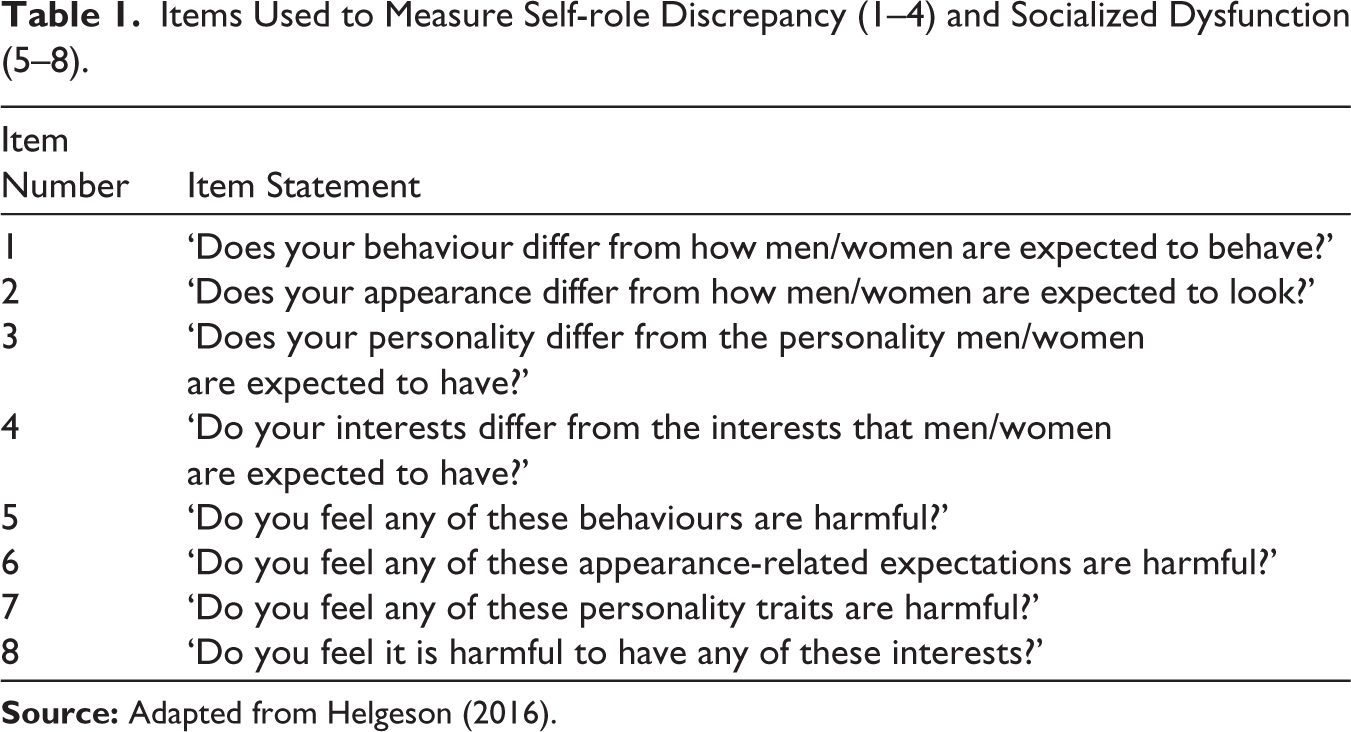
Participants answered each prompt as yes/no, a format chosen to minimize respondent burden, before the interviews. ‘Yes’ was scored 1, ‘No’ scored 0 and summed within each construct (range = 0–4). Internal consistency (KR-20) in the present sample was 0.70 for discrepancy and 0.74 for dysfunction (Gen Z); 0.67 and 0.72, respectively (Gen X). Two gender-psychology researchers rated item-to-domain alignment (83% agreement), providing preliminary content validity.
These items were adapted from a classroom exercise rather than a validated scale; coefficients and validity checks reported above should be viewed as preliminary.
Drawing on survey research methodology (Groves et al., 2009) and critical incident analysis (Flanagan, 1954), the study prioritized culturally grounded, experience-near indicators of GRS over standardized global measures to ensure ecological validity.
Quantitative Component
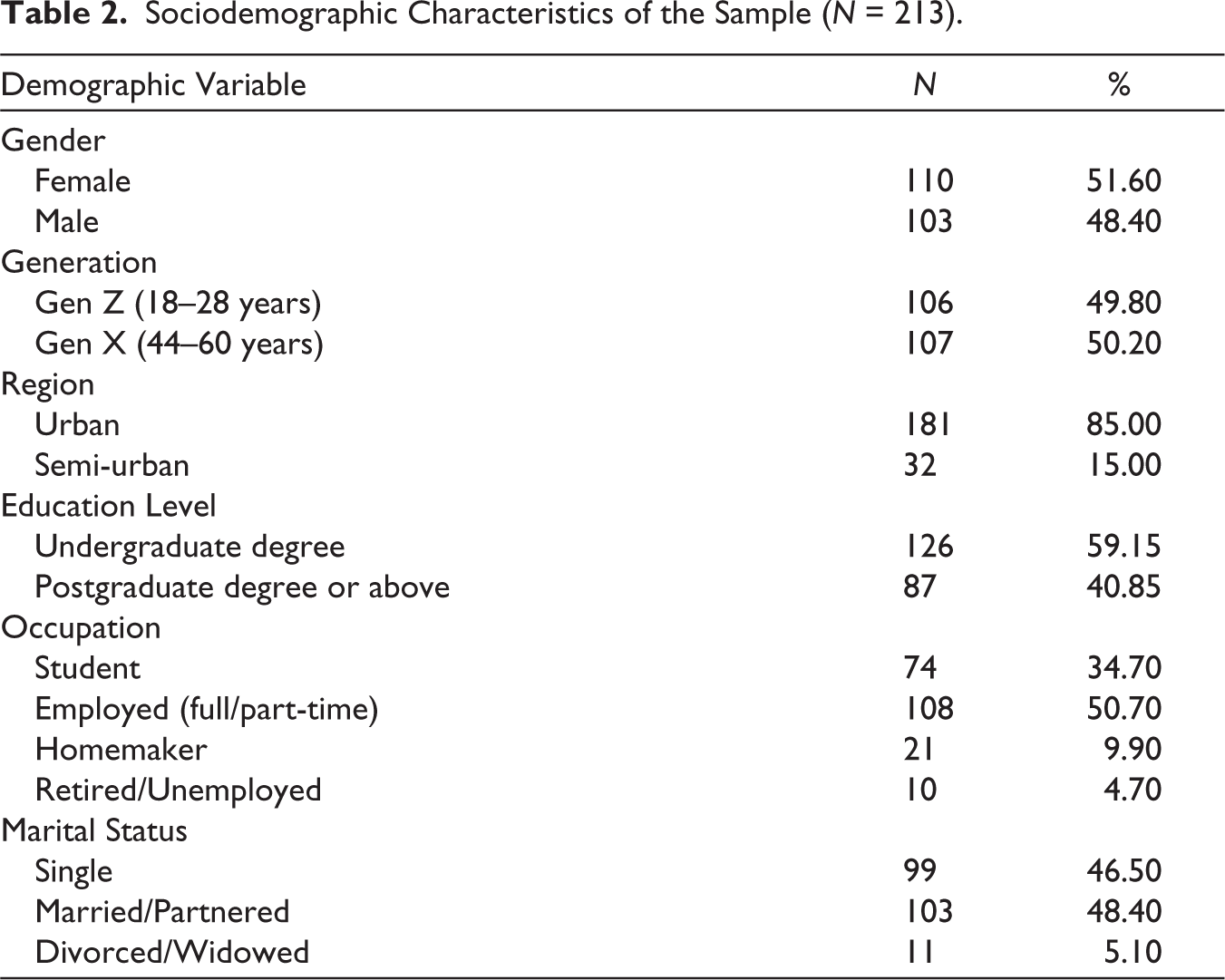
A total of 213 participants (ages 18–28, 44–60) completed the self-role discrepancy scale, with 201 participants completing the socialized dysfunction scale due to minor attrition (Table 2). Purposive sampling was used to recruit participants who: (a) self-identified as male/female, (b) residing in urban/semi-urban North India, (c) belonged to Gen Z (18–28) or Gen X (44–60) cohorts, and (d) were proficient in English or Hindi. Exclusion criteria included non-binary or gender-diverse individuals, rural residents, participants outside North India and those from other generational cohorts. A sensitivity power analysis using G*Power indicated that (α = 0.05, power = 0.80, df = 3) the obtained sample (N = 213) was sufficient to detect small-to-medium effects (w = 0.23) in χ2 tests. Although the study aimed to include Millennials (Gen Y), of the 63 individuals contacted during the pilot phase, 41 (≈65%) declined participation, citing demanding work schedules, and the remaining 22 participants did not constitute a statistically viable cohort for the planned χ2 analysis. Participants were recruited through university networks, online forums, workplaces and community outreach, without incentives.
Sociodemographic Characteristics of the Sample (N = 213).
Quantitative data were analyzed using SPSS, with cross-tabulations and Pearson’s χ2 tests employed to explore associations between age-gender categories across domains. Eight chi-square tests were run (four domains × two constructs). To control the family-wise error rate, a Bonferroni adjustment was applied: αᴮ = 0.05/8 = 0.00625. Effect sizes were reported using Cramér’s V (0.10 = small, 0.30 = medium; Cohen, 1988).
Qualitative Component
Parallel to the survey, participants were invited to participate in semi-structured interviews focused on eliciting rich, narrative accounts of internal dissonance in relation to gendered expectations. Although the initial interview target was 50 participants, only 40 were interviewed, as theoretical saturation was achieved. Interviews, conducted in English or Hindi, lasting 45–60 min, were conducted either in person or via phone. Participants were asked two broad, open-ended questions: (a) ‘How has your experience of being a man/woman in today’s world shaped your everyday life?’ and (b) ‘In what ways do you feel pressured to behave, look or express yourself based on your gender?’ Additional probes were introduced based on participants’ responses, guided by the three-dimensional narrative inquiry space (Clandinin & Connelly, 2000), attending to temporality, sociality and place. All interviews were subjected to the same analytic process: manual transcription, domain-based organization and narrative analysis. Informed consent was obtained, and confidentiality was strictly maintained throughout the study. For participants whose personal details or quotations appear in the findings, pseudonyms were used to protect their identities.
Qualitative data were based on narrative inquiry, which allows for the in-depth study of individuals’ experiences in context; we engaged with participants in the field, creating field texts and writing both interim and final research texts, presented in the article as critical incidents or verbatim narratives. Field texts were composed with attention to the three-dimensional narrative inquiry space, across multiple interactions with participants and were co-composed through participants’ and researchers’ reflections on, and of, earlier life experiences.
As narrative inquirers, we justified our inquiry on personal, practical and social grounds and we kept revisiting and negotiating with participants to clarify, substantiate or shift them. Being part of the two generations studied, we could situate ourselves within participants’ possible lives. However, we made sure that it does not become an autobiographical narrative inquiry; we collaboratively negotiated our engagement while allowing participants the space to express their experiences without hesitation.
Results
Chi-square analysis showed significant gender-generation differences in self-role discrepancy across all four domains, with appearance yielding the strongest association. Appearance was also the only significant domain for socialized dysfunction, especially among Gen X women. Cramér’s V indicated near-moderate associations overall, with the largest effects in the appearance domain.
Behaviour-related Gender Role Strain
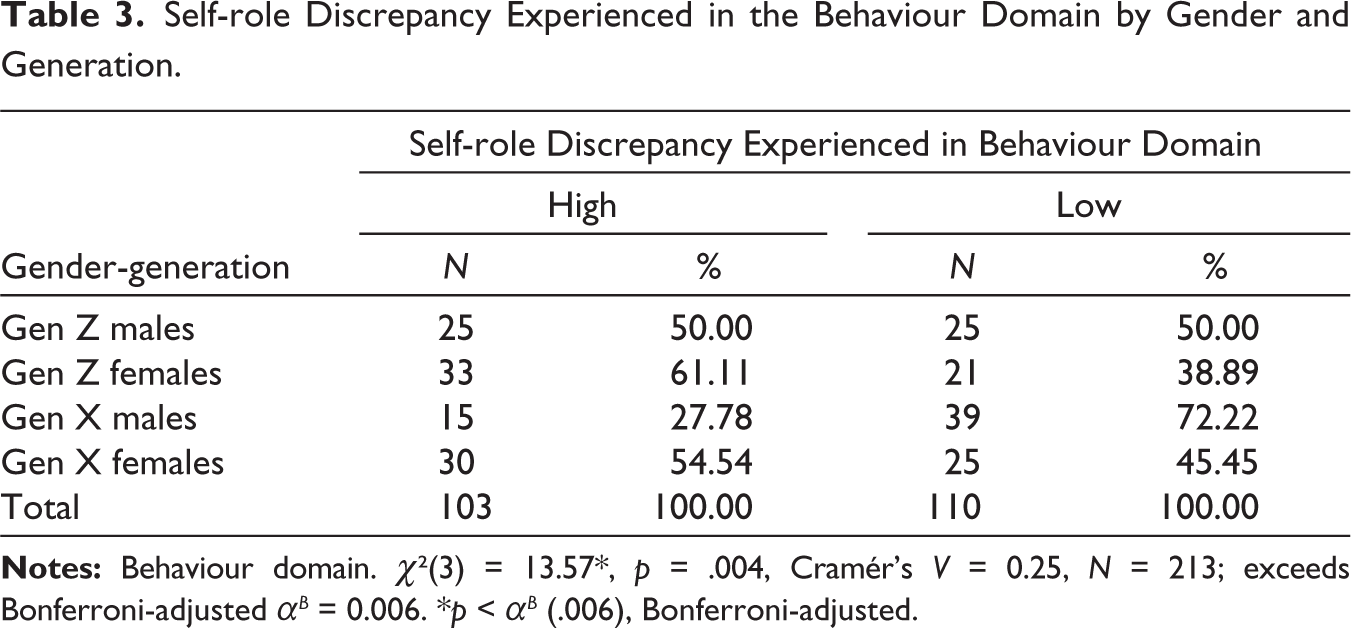
As shown in Table 3, Gen Z females report the highest self-role discrepancy and harm perception, while Gen X males report the lowest.
Self-role Discrepancy Experienced in the Behaviour Domain by Gender and Generation.
Gen Z females positioned themselves at the centre of their lives, with higher autonomy and aspirations. However, participants reported restrictions on the expression of negative emotions such as anger or frustration. Nikita, a 21-year-old philosophy undergraduate, reflected: ‘I can’t even show my frustration with words, because “girls from good families” don’t behave like this’. Socialized dysfunction was evident as compliance with traditional gender roles increases vulnerability, often inviting exploitation. Riya, a 22-year-old content writer, recounted a high-school experience: ‘The quieter girls were asked to stay back, the teacher would touch them inappropriately’.
In Gen Z male participants, softer skills and positive emotions such as love, care and respect were perceived as highly uncharacteristic. Seeking any form of assistance or guidance was perceived as a sign of weakness. Karan, a 19-year-old engineering student: ‘My friends say I’ll never get a girlfriend if I will be so respectful’. While many dismissed these expectations as natural (‘I am a man, and this is how I behave’), they also acknowledged the strain of constantly being ‘on’: ‘If I don’t fight or mock, I become the target’. Young men reported not just enacting masculinity but defending their right to exist within their social hierarchies.
Selflessness placed noticeable strain on Gen X females, as their personal desires took a backseat. The expectation to ‘prove affection and loyalty’ led to emotional exhaustion, worsened by emotional dependence on husbands or children. Meena, a 44-year-old criminal lawyer, expressed: ‘I feel guilty when I don’t want to cook for my kids or my husband’. Especially for working women, the clash between public visibility and private duties heightened the strain. Lata, a 44-year-old government official: ‘I constantly feel pressured to always put family first’. Socialized dysfunction manifested as a loss of identity as they felt chained to the role of caregiver, sacrificing their dreams, happiness and individuality. Sarita, a 50-year-old homemaker, confessed: ‘I have nothing to look forward to in my life except their achievements now’.
A primary expectation reported for Gen X males was to be the breadwinner and provider for their families. The pressure to ‘hold it all together’ was felt as they were often expected to assume roles of authority, both in the workplace and within their families. Anil, a 51-year-old insurance agent: ‘I suffered a chronic illness in the past. All I could think about was the kids’ school fees’. Strong opposition to dowry and domestic abuse was perceived as a deviance, highlighting that masculinity is still defined by its capacity for dominance or even violence. Gen X men faced a paradox of emotional incompetence coupled with the pressure to maintain social prestige and uphold reputations, distancing them from authentic connections. Vinod, a 55-year-old retired police officer, reflected: ‘My kids don’t share anything about their personal lives with me because I never shared my life with them’.
Appearance-related Gender Role Strain
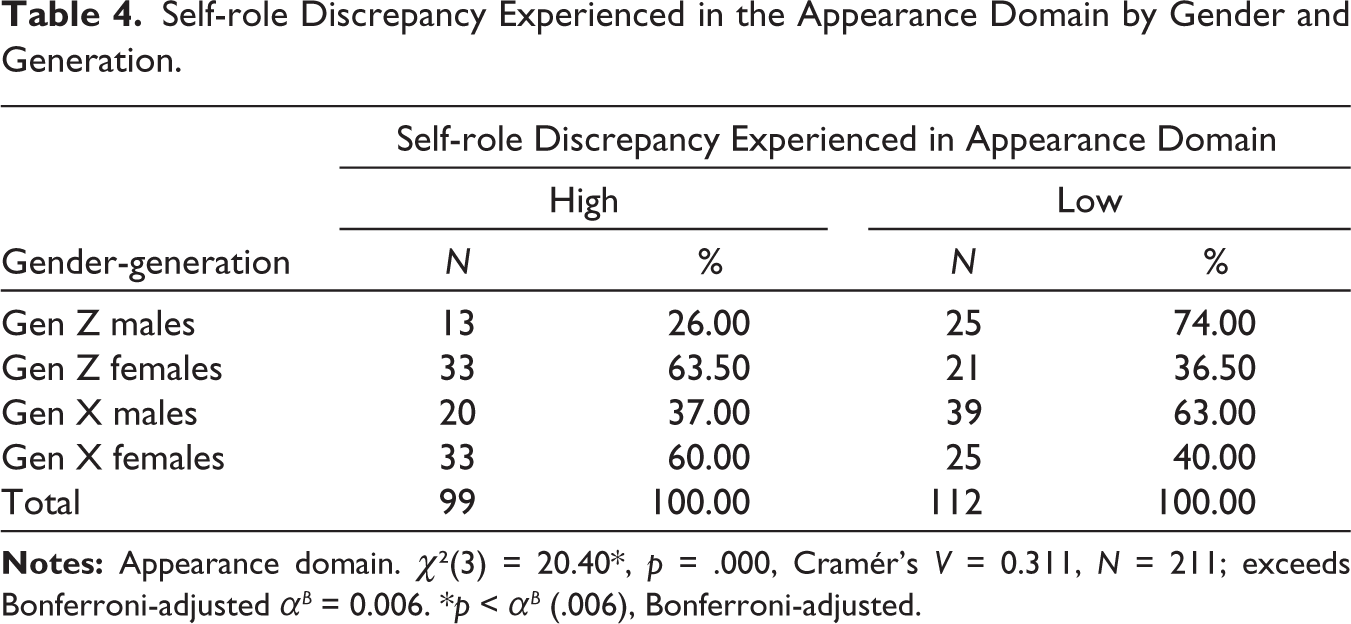
Referring to Table 4, Gen Z females show the highest self-role discrepancy, while Gen Z males report the lowest. Gen X females perceive these expectations as most harmful, whereas Gen Z males are least affected (as seen in Table 5).
Self-role Discrepancy Experienced in the Appearance Domain by Gender and Generation.
Socialized Dysfunction Experienced in the Appearance Domain by Gender and Generation.
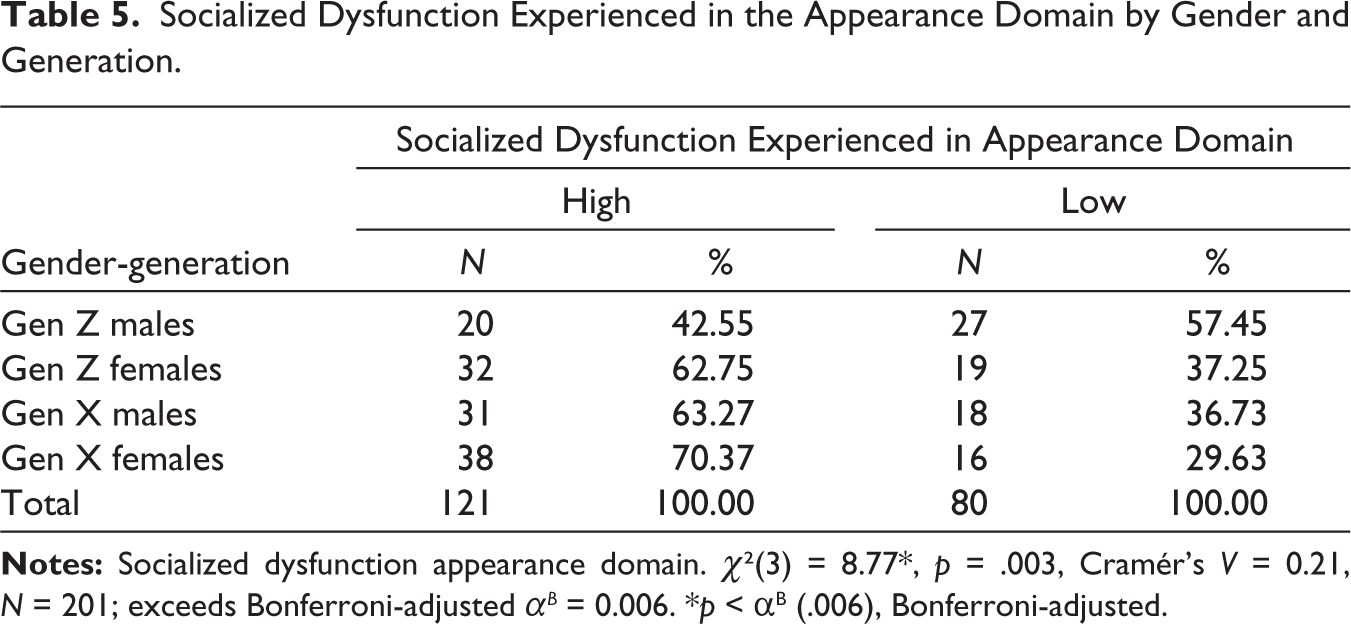
Gen Z females openly embraced body hair and adopted attire often associated with men. These choices left participants feeling torn between their bodily autonomy and the ‘public gaze’. Aakriti, a 22-year-old freelance artist: ‘My sister is fair and is complimented for her looks. I feel uncomfortable with my own skin tone’. In terms of socialized dysfunction, many shared feelings of pressure that pushed them toward strict dieting, skin-lightening and painful grooming routines, where external validation was more important than the internal efforts to reject it.
In Gen Z males, muscularity and physical strength came up frequently as an appeal to romantic interests, reinforcing the idea that masculinity is often judged by body size. Raghav, a 24-year-old gym enthusiast: ‘I have to maintain my physique because girls like muscles’. A few also spoke about how showing interest in grooming or dressing well sometimes led to derogatory comments or assumptions about their sexuality, highlighting how appearance was strictly policed by peers.
Gen X women spoke of dissatisfaction with their physical appearance, whether related to weight, hair length or not conforming to beauty standards promoted by the media. Participants spoke about the struggle of choosing between traditional clothing and more modern styles. Neelam, a 48-year-old homemaker: ‘I prefer dressing in traditional attire, but my husband wants me to wear Western clothes’. The reported fear of judgement ‘What will others say?’ dictated the relationship they have with their bodies. Masking insecurities becomes a daily negotiation for them, where their self-image is inevitably distorted, and they are ‘never truly comfortable in their own skin’.
When it comes to appearance, the pressure on Gen X men tends to focus on two primary aspects: projecting their masculinity and demonstrating their success and power. Participants supported the belief that a well-groomed, physically fit and sharply dressed man naturally commands respect. Anil, a 51-year-old banker: ‘In the end, how much you earn is the last factor’. Participants reported dysfunction as they expressed discomfort with evolving grooming trends, equating practices like skincare, hairstyling or accessorizing with a loss of masculine authenticity. Manoj, a 51-year-old business owner, reflected: ‘Nowadays, boys apply makeup or nail polish. In our time, a man just looked like a man’.
Personality-related Gender Role Strain
As shown in Table 6, Gen Z females report the highest self-role discrepancy, while Gen X males report the lowest. Gen Z males perceive the most harm, with Gen X females reporting the least.
Self-role Discrepancy Experienced in the Personality Domain by Gender and Generation.
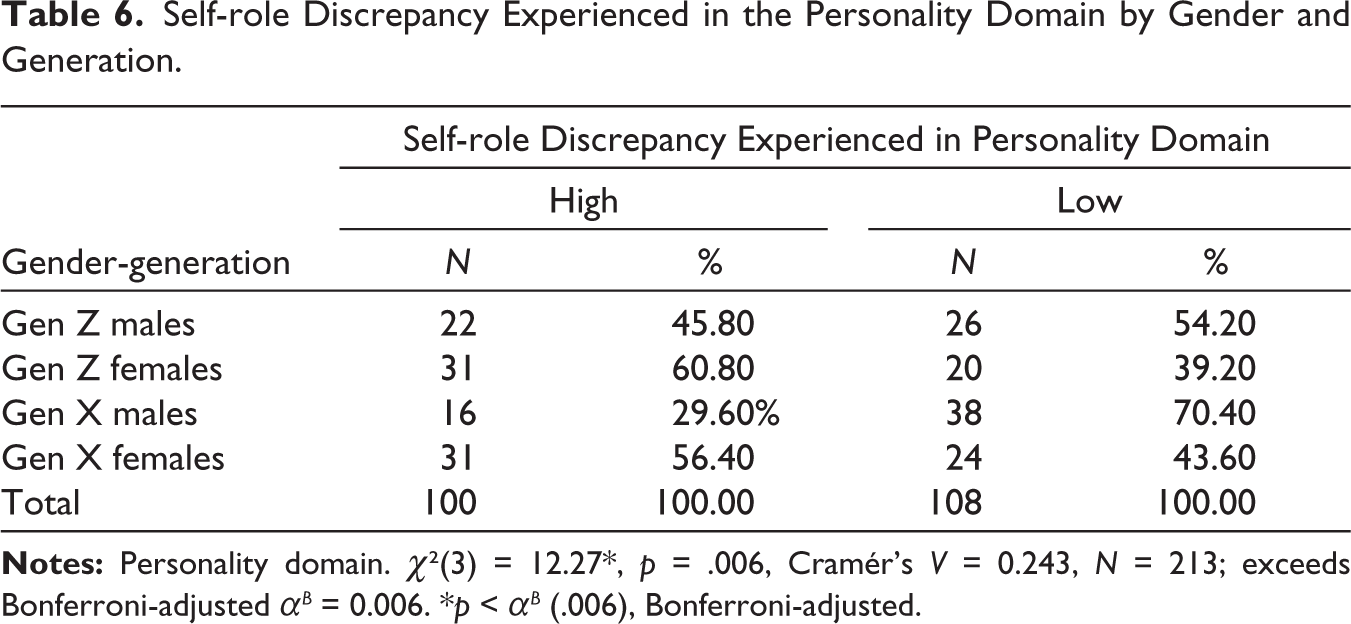
Gen Z females, primarily associated with emotional sensitivity and nurturing roles, are now embracing radical shifts in mindset, prioritizing independence. Meghna, a 24-year-old management trainee: ‘I know I’m good at what I do, but if I talk about my achievements, people say I’m arrogant’. Socialized dysfunction manifested as a constrained sense of self, where the expectation to balance ambition with humility led to self-monitoring, reinforcing a cycle of hesitation and self-suppression in personal and professional spaces.
Gen Z males reported feeling pressured to assert dominance, often bordering on violence, while also being expected to protect others as a means of valorizing themselves. Socially, emotional detachment was rewarded, with a prevailing expectation that men should exhibit limited social skills, such as reduced empathy. Participants highlighted socialized dysfunction in the form of emotional isolation, leaving men deprived of essential support. Yash, a 21-year-old economics student, reflected: ‘If something’s bothering me, I just keep it to myself’.
Gen X females struggled to assert themselves without being labelled selfish. Many felt obligated to be emotional anchors, to be emotionally available while suppressing their own needs. Lalita, a 50-year-old homemaker: ‘As a housewife, everyone’s problem is your problem’. In terms of dysfunction, the expectation to be submissive has left many women believing they have lost their voice and their agency. This slow erosion of self-worth was reported as causing sudden outbursts toward family members.
Financial, emotional and psychological resilience were perceived as the cornerstone of Gen X masculine identity, while the open expression of feelings was viewed as a departure from male norms. Vivek, a 57-year-old school principal, shared: ‘Being men, my son is expected to not share and I am expected to not ask’. Socialized dysfunction revealed the subtle ways in which society deprives men of the emotional flexibility to inhabit safer, more expressive psychological spaces.
Interests-related Gender Role Strain
Table 7 shows that Gen Z females face the highest self-role discrepancy and perceive more harm, while Gen X males report the lowest.
Self-role Discrepancy Experienced in the Interests Domain by Gender and Generation.
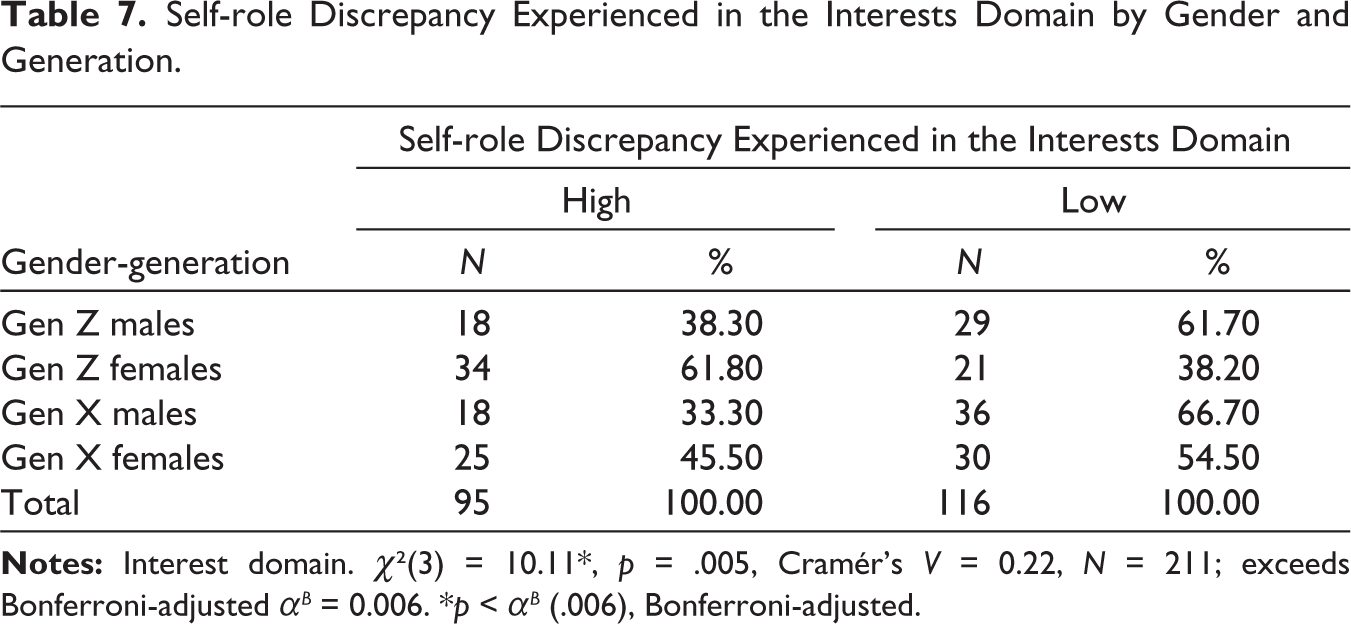
Gen Z women spoke with excitement about things like sports, politics, biking and gaming—spaces usually associated with men. Sanya, a 22-year-old architecture student: ‘Now, women are in every field breaking stereotype’. Participants described gendered hobbies as lonely and uninspiring, especially when compared to the energy and teamwork they observed in spaces typically occupied by boys.
Gen Z males often described how being accepted socially meant taking part in high-energy or physically intensive activities like sports or adventure outings. Behaviours like smoking, alcohol use and reckless driving were frequently celebrated. Aayush, a 19-year-old psychology student: ‘I am made fun of because I am pursuing a career in arts’. Socialized dysfunction pointed out how such rigid norms can silence individual preference and normalize risky behaviour as a pathway to social approval.
Gen X women reflected on how, as they grew older, their socially accepted interests became increasingly confined to household duties and caregiving responsibilities. Interests that extended beyond domestic boundaries were brushed off as inappropriate or unproductive. Participants shared how this pressure led them to quietly abandon the things they truly cared about. Jyoti, a 52-year-old homemaker, admitted: ‘My interests are expected to revolve around cooking. I say, “Oh, I do it because I enjoy it,” because it is easier to accept for myself too’.
Gen X men shared adopting healthier habits, moving away from smoking and drinking, while prioritizing family needs over personal indulgence. Their interests often focused on career-driven goals, like investment or entrepreneurship. Many spoke about immersing themselves in these activities as a way to avoid deeper emotional introspection, using distractions as a coping mechanism.
Discussion
Gender role strain remains an unacknowledged phenomenon in India, despite the country’s deeply entrenched gender norms (Pande, 2025). While Western research has explored this concept extensively (Levant & Richmond, 2016), Indian scholarship has yet to address its pervasive yet invisible hold over people’s lives. This study captures how individuals perceive and articulate their own struggles with gendered expectations. The study reveals distinct GRS patterns, with Gen Z females facing the highest self-role discrepancy, while Gen X males report the least, except in appearance, where Gen Z males show the lowest. Socialized dysfunction is largely insignificant, except in appearance, where Gen X females report the highest harm and Gen Z males the least. Qualitative narratives both reinforce and complicate these patterns, revealing how strain is expressed, concealed, normalized or resisted.
The higher self-role discrepancy among Gen Z females is understood through a convergence of generational, structural and psychological processes. While education, urban exposure and feminist discourse provide Gen Z women with language to question gender norms (Desai & Andrist, 2010; Lamberg, 2023), the qualitative narratives revealed that resistance attracts social sanctions: being labelled ‘arrogant’, ‘too bold’ or morally inappropriate. In this sense, qualitative data illuminate why self-role discrepancy is highest in this group: the ability to imagine alternative identities coexists with continued pressure to conform within collectivist social settings (Anand, 2024; Barthwal, 2023). In contrast, the lower self-role discrepancy reported by Gen X males quantitatively appears to suggest reduced strain. However, qualitative narratives challenge this interpretation. Gen X men rarely named their experiences as stressful, yet their reflections were marked by emotional distance, difficulty expressing vulnerability and resignation toward rigid provider roles. This divergence illustrates that low reported strain does not indicate absence of strain, but may reflect its normalization and the internalized disincentive to acknowledge vulnerability (Berke et al., 2020; Manirajah, 2013).
Quantitatively, appearance emerged as the only domain with significant group differences in socialized dysfunction, with Gen X females reporting the highest dysfunction and Gen Z males the least. Qualitative narratives from Gen X women explain this pattern by highlighting lifelong scrutiny of women’s bodies as markers of respectability, morality and ageing ‘appropriately’ (Ahmed-Ghosh, 2009; Wallach et al., 2017), aligning with research on ageism and gendered body politics (Åberg et al., 2020; Helfert & Warschburger, 2013). For Gen Z males, the lowest appearance-based dysfunction is contextualized by their narratives of relative freedom, where non-conformity is often socially rewarded (Gualdi-Russo et al., 2022). Here, qualitative data do not contradict the quantitative findings but clarify the cultural logic behind them. Lack of significant findings in other domains of socialized dysfunction is explained by the normalization of gendered expectations in areas such as behaviour, personality and interests, where individuals are socialized to see their roles not as imposed but as ‘natural’ or ‘appropriate’ (Levant & Richmond, 2016; Pandya & Bhangaokar, 2022). Participants across groups described behavioural expectations, traits and ‘acceptable’ interests as commonsensical ways of being.
Gendered contrasts within generations further illustrate this dialogue. Gen X women displayed ‘generationally silenced strain’, echoing research by Curran et al. (2016) and Panchal et al. (2016), where women’s societal value is tied to ideals of sacrifice, leading to participants’ stories of self-neglect and the burden of caretaking. This mirrors Hochschild’s (1983) concept of emotional labour, where constant emotional regulation depletes one’s inner resources. In contrast, Gen Z women, despite resisting gender roles, faced backlash such as being labelled ‘arrogant’ or ‘too bold’ (Kelmendi & Gemini-Gashi, 2022; Sumadevi, 2023). Crenshaw’s (1989) theory of intersectionality contextualizes this, showing how generational status, gender and exposure to modernity intersect to create unique pressures.
Among male participants, a similar generational divide in qualitative narratives emerged. Gen X men reflected quiet resignation, emotional disconnection and discomfort with changing self-care norms, reflecting hegemonic masculinity (Connell & Messerschmidt, 2005; Jewkes et al., 2015). Carvalho (2024) and Mohla and Neera (2023) have similarly found that suppressed emotionality in Indian men correlates with mental health concerns. In contrast, Gen Z men showed a form of ‘performed masculinity’ as they enacted strength, stoicism and dominance under peer pressure (Smiler, 2006). Their unwillingness, or inability, to name emotional discomfort reflects what Tagore (2024) discusses as the invisibilities of male vulnerability in Indian settings. When compared across genders, a notable contrast emerged: while women are emotionally overextended, men are emotionally under-resourced—two parallel outcomes of gender socialization.
Analyzing strain across the four domains reveals significant patterns. Appearance was the most visibly strained domain for women, with Gen Z females resisting conventional beauty standards (Imelda et al., 2024), while Gen X women internalizing them (Wallach et al., 2017). In behaviour, Gen Z females faced tension between assertiveness and social censure, echoing Iwamoto et al. (2023), who noted how non-conforming behaviour in women attracts moral judgement and poor health. Conversely, Gen Z and Gen X males upheld behavioural norms of dominance and restraint, though reporting psychological fatigue, paralleling Connell’s (2005) theory of hegemonic masculinity and its emotional toll (Barragán, 2024). The personality domain showed women’s experiences of being labelled ‘aggressive’ or ‘overconfident’, while men continued to be rewarded for stoicism (Levant & Richmond, 2016; Mahalingam & Balan, 2008). In interests, Gen Z females embraced non-traditional hobbies, Gen X participants, especially men, felt pressured to centre interests around productivity and utility, with Gen Z males reporting peer pressure to adopt high-risk or hypermasculine interests (Iwamoto & Smiler, 2013; Su et al., 2009).
Thus, this research highlights that GRS in India arises not merely from deviance but from compliance, where living within accepted norms itself produces emotional fatigue and identity distortion. Addressing this issue requires culturally grounded strategies that bring families into the conversation, confront rigid social templates and create space for honest, everyday dialogue about gender.
Implications of the Study
Theoretically, this study advances the GRS framework by embedding it within a generational Indian context, demonstrating that strain is also produced through sustained compliance with socially sanctioned roles. By integrating quantitative indicators with qualitative narratives, the study extends beyond Western, male-centric models to capture how age and socio-historical location shape strain. Practically, the findings call for generationally sensitive psychosocial interventions: for Gen Z females, gender-affirmative counselling and campus spaces to address self-role discrepancy; for Gen Z males, peer-led emotional literacy programmes to reduce isolation and challenge stoicism; for Gen X females, community-based narrative groups to support identity reconstruction; and for Gen X males, family systems interventions to promote intergenerational emotional dialogue. Across groups, psychoeducational programmes for families, schools and workplaces are essential to recognize compliance-related strain in transitional contexts.
Limitations of the Study
Participants were purposively sampled from urban North India, excluding rural, lower socio-economic and non-Hindi-speaking groups, limiting generalizability. The sample (N = 213) reflects a narrow slice of India’s demographic diversity. Eligibility was limited to self-identified Gen Z and Gen X men and women, excluding LGBTQIA+ individuals, Millennials and other cohorts, restricting insights across identities. The study relied on a non-validated, context-specific instrument, as existing Western-centric measures are insufficiently sensitive to everyday gendered experiences in India. As data were self-reported, cross-sectional and conducted in English or Hindi, they are constrained by social desirability, limited causal insight and possible loss of nuance in translation.
Directions for Future Research
Future research should use stratified sampling across rural and urban areas, multiple Indian states, caste and class groups and broader age cohorts (e.g., Millennials), while including transgender, non-binary and intersex participants to capture intersectional experiences. It should develop and validate culturally relevant multidimensional tools, use longitudinal designs to track strain across life transitions, test context-sensitive interventions and strengthen qualitative work through formal coding, multiple coders and participatory approaches.
Conclusion
This research offers a pioneering examination of gender role strain in India through open-ended inquiry. Quantitative findings showed that Gen Z females reported the highest self-role discrepancy, Gen X females the greatest appearance-related dysfunction and Gen X males the least overall strain, while qualitative patterns revealed participants describing how they were raised within rigid gender expectations, only to encounter a society in flux. These findings suggest a critical need to move beyond merely encouraging role flexibility. Instead, interventions must begin to question the relevance of the roles themselves, in how families, institutions and media continue to prioritize conformity over authenticity.
Footnotes
Acknowledgements
The authors sincerely thank all participants who generously shared their time and personal experiences for this study. Gratitude is extended to faculty members, peers and anonymous peer reviewers for their valuable feedback and critical insights.
Authors’ Contribution
AA: Conceptualization, methodology, investigation, data curation, formal analysis, visualization, writing - original draft.
SJT: Supervision, validation, writing - review & editing, project administration, resources.
Consent to Participate
Verbal informed consent was obtained from all participants prior to participation, in accordance with the approval granted by the Institutional Ethics Committee for Human Research (IEC).
Consent for Publication
Verbal informed consent for publication of anonymized responses was obtained from all participants. Personal identifiers have been removed, and pseudonyms have been used to ensure confidentiality.
Data Availability Statement
Not Applicable.
Declaration of Conflicting Interests
The authors declare no potential conflicts of interest with respect to the research, authorship and/or publication of this article.
Ethical Approval
This is to confirm that prior to commencing the study, ethical approval for all protocols was obtained from the Institutional Ethics Committee for Human Research (IEC), the parent institution, under the Reference Number DRC/82(Mis)/2025/697.
Funding
The authors received no financial support for the research, authorship and/or publication of this article.