







Abstract
This article demonstrates an experiment in re-capacitating students of architecture to deploy their professional privileges to make space for members of the community who may not otherwise be seen or heard. The study deploys audiovisual collaborative design practices such as listening, visual representation and ‘imagining together’ in facilitating three collaborative design cases in two locations in Cairo: at Dar El-Sameya orphanage and Maq’ad Sultan Qaitbey historic religious complex, as part of a creativity enhancement module conducted at Newgiza University. Data were gathered from participant observations on site, in addition to students’ group presentations during parallel feedback session presentations at the university, and individual reflections submitted by the end of the course. The results demonstrate the different conditions that contributed to the outcomes of the creativity enhancement module and show how it provided the students, especially those who study in a private university, the unique opportunity to engage with and learn about other lived realities in the diverse city of Cairo. The study encourages a re-evaluation of knowledge co-production in universities to better reflect societal diversity and cultivate approaches that place people at the centre.
Introduction
Kim Dovey describes architects and urban practitioners as ‘imaginative agents’ (Dovey, 1999) that are not only able to imagine a better world and bring their visions to life but are also able to empower others to do the same. The awareness of the ways in which power is mediated through the creation of the built environment is the first step needed to be able to deploy architects’ professional agency. Architects need to be self-aware of how their professional privileges allow them to be more ‘heard’ and ‘seen’ by others, then take the steps needed to deploy that power in the ways in which they act, speak and deliver projects to serve their communities. Scholars like Weseley et al. (2022) demonstrated pedagogical experiences that have been implemented in activating architects’ and urban planners’ agency to address inequalities through educational programmes developed for community leaders in Argentina and co-learning workshops with housing rights activists in India and non-governmental organisations (NGOs) in Brazil.
Most pedagogical experiences that have been implemented in architecture education in Egypt have focused on enhancing architects’ ‘individual creativity’. Amin (2024) explored the effect of different genres of music on architecture students’ creative expression. El Halwagy (2022) proposed ‘a set of steps and stages’ for creating an educational environment that supports students’ innovation and creative thinking—one that enables students to express ‘their’ ideas clearly. In these kinds of studies, the idea of setting standards for creativity can be debatable: Who gets to decide what is considered creative and what is not? On the other hand, studies have tested creativity assessment techniques such as the Consensual Assessment Technique and proved it to be valid and reliable (Watters, 2017). Contemporary architects continue to urge their peers to ‘loosen up’ and think about architecture, and architectural creativity in expanded ways, away from standardised thinking. Urban planners like Kamalipour, for example, even started defying the stigmatisation of informal settlements, looking at their ‘improvisation’ as a form of creativity (Kamalipour, 2020).
This article demonstrates an experiment in re-capacitating students of architecture, as part of a creativity enhancement module in Newgiza University. By applying innovative audiovisual practices, such as ‘listening’, ‘visual representation’ and ‘imagining together’, in facilitating three collaborative design cases in Cairo (at Dar El-Sameya orphanage and Maq’ad Sultan Qaitbey religious historic complex), the article demonstrates the different conditions that shaped the outcomes of the collaborative design cases and the creativity enhancement module.
An Open Innovation Paradigm: Moving Beyond Individual Innovation
According to Chesbrough (2003), ‘Open innovation implies the use of both internal and external flows of knowledge to accelerate internal innovation in order to extend the market for the external usage of innovation’. It creates a new innovation paradigm where innovation is not limited to individual genius (say, Thomas Edison and Nicola Tesla) but an act of ‘collective genius’ (Hill et al., 2014). Innovative businesses such as LEGO, Netflix and Philips have been recently offering users the space to manifest their own creativity and contribute to the company’s innovations, blurring boundaries between production, distribution and consumption, and shifting towards softer, knowledge-based capitalism (Thrift, 2005, 2006). Scholars have been rethinking knowledge co-production in universities as well, in order to advance equality ambitions and recognise the diversity in societies and global crises (Cazanave-Macías et al., 2022). Universities such as Harvard and the Massachusetts Institute of Technology have started using an integrated approach in which the university uses its assets and facilities to investigate, test or demonstrate innovative technologies or services by, with and for their communities (Verhoef & Bossert, 2019). While the students might take part for a shorter period of time, universities can continue to support the community within a broader long-term vision of city regeneration and planning conversations (McVicar, 2024).
In the last decade, policymakers and city planners have been increasingly investing in ‘Hackathons’ to face local and global urban challenges. Hackathons are well known for capitalising on the ‘collective genius’ by gathering people passionate for innovation for an intensive period of time to generate ideas and solutions (Perng et al., 2018). The term ‘hacking’ has been used with the built environment to refer to the process of clever or playful appropriation of existing technologies or bending the logic of a particular system beyond its intended purposes, to serve one’s goals (De Lange & De Waal, 2019). These softer knowledge dynamics of open innovation create a more inclusive bottom-up process of city-making where cities are ‘never complete, and can constantly be remade for better or for worse’ (Sassen, 2011).
This bottom-up approach in city-making demonstrates the tendency of architects and urban practitioners to ‘loosen up’ and adopt an ethos of hacking. Here, architects deploy their professional agency in various participatory levels: working in partnership (as equals) with communities to give form to their visions (Dwyer & Thorne, 2007), working with communities in the ideation process and then actively using the architect’s skills and knowledge in the service of the community (Porter, 2010) or creating tools and methods that communities can use on their own without the help of the architect (Zilliacus, 2016). The nature of the outcomes can vary between the different modes of collaboration, where some tend to be more technical than others.
These collaborative design practices demand new tools for ‘non-professional’ architectural expression other than the prevailing professional architectural representation tools (such as architectural detail drawings). People have made representations in order to communicate since the dawn of time. Carvings and paintings of symbolic images are a living testimony of such early human representations. The oldest drawing ever produced by humans goes back to 74,000–100,000 years ago by African Homo sapiens, our oldest known ancestors (Henshilwood et al., 2018). Writing, in contrast, was adopted much later in history: the earliest examples go back to 3400
Other tools and techniques for involving non-professionals in collaborative design practices include sharing food, playing games and hands-on model making. Traditional Japanese food has been used in an art space in Japan to gather residents to discuss community issues while ‘eating together’ and revitalise a shanty neighbourhood (Da Silva, 2021). Interactive games have been used for integrating people (non-professionals) who are typically left out, in the development of the 2041 masterplan of the Indian city of Delhi (Janu & Shahdadpuri, 2021). Hands-on model making has been used as a tool to engage non-professionals in the development of a community centre for an expat women community in London, along with finding inspiration from pictures and walking tours in the neighbourhood (Petrescu, 2007). Finally, the new hacker architect/urban planner, according to Gardner (2015), achieves their work by trial and error, by capitalising on media attention and by forging partnerships with public and commercial parties.
Methodology
The study is based on three collaborative design cases that were carried out by sophomore architecture engineering students from a private university in Cairo, Egypt as part of a ‘creativity-enhancement’ module originally developed by University College London as an academic collaborator with the architectural programme in Newgiza University (NGU). The first collaborative design case was conducted in the spring semester of 2024 at the Dar El-Sameya orphanage (henceforth referred to as ‘Dar’) in Dokki neighbourhood in Cairo, where 39 students worked with 10 children and their caregivers for the redesign of their backyard. The second collaborative design case was conducted as an extra-curriculum activity in the winter break of the year 2025 at Maq’ad Sultan Qaitbey (henceforth referred to as ‘MASQ’), a religious complex in historic Cairo, where 5 students (who had also participated in the practice at Dar) worked with 20 children from the neighbourhood to envision a better future for the area. The third collaborative design case was conducted in the spring semester of 2025 in MASQ again, where 38 students worked with 15 children from the neighbourhood to redesign the main complex square. Audiovisual collaborative design practices were conducted in the three cases over the course of five visits (that lasted an average of three hours each). Tools for listening, representation and imagining future visions together were deployed as demonstrated in Figure 1.
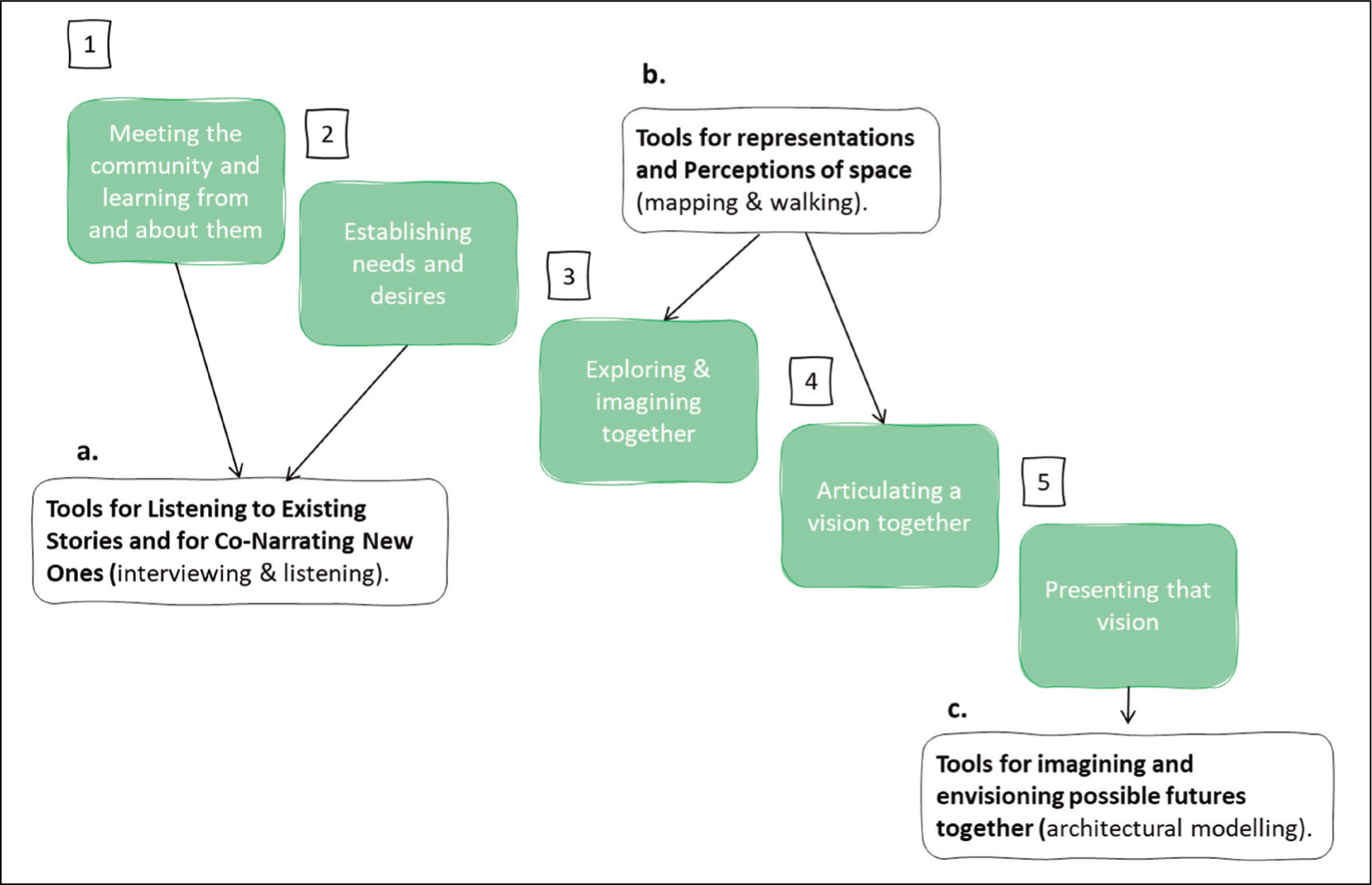
First, the ‘listening’ practices were used to provide a broader perspective on the surroundings. Their main objective was to suspend the architect brain, not jump into conclusions on how to renovate the place, and give participants who might not otherwise be heard the opportunity to speak. It was carried out through semi-structured interviews and varied between focus groups and one-on-one conversations that developed in between other ‘ice breaking’ activities and fun games. Second, walking and cognitive mapping practices were used to provide representation and understanding of the non-professionals’ perception of space. Walking was carried out in pairs who took turns in leading to explore different perspectives of the place. Cognitive mapping was carried out in place; the facilitator would ask a community member to draw on a piece of paper/create a collage of their typical day in the orphanage or arriving at MASQ (focusing on their feelings, especially related to the place). Finally, architectural modelling (physical and digital) was used to help the wider local community of non-professionals envision the proposed design ideas and provide their feedback in a fun and engaging way.
A qualitative comparative analysis of the three collaborative design practices in the two settings (Dar and MASQ) was conducted, demonstrating the different conditions that contributed to the outcomes of the creativity enhancement module and the collaborative design cases. Data were gathered from participant observations on site, students’ group presentations during parallel feedback session presentations at NGU, and individual reflections submitted by the end of the course.
Collaborative Design Practices at Dar El-Sameya and Maq’ad Sultan Qaitbey
Dar is an orphanage located in Dokki neighbourhood, a high-density residential area in Cairo’s urban core. It is known in the neighbourhood as being next to an elderly home. The orphanage occupies a four-story building with a backyard. It is gated to control the flow of the kids and visitors to and from the orphanage. The orphanage houses 10 boys between 5 and 13 years old. It is run by an elderly woman and her husband (who live in proximity to the orphanage), a retired military general, and six other staff members (two male members and four female members in their 30s to 40s), including the senior couple’s son and his wife. The building holds other community services, as the orphanage is part of a bigger charity non-governmental organisation.
MASQ is a religious complex within burial grounds. The area not only includes valuable architecture monuments but also living communities that have preserved the traditional ways of life. Since 2014, Cairo-based consulting office ARCHINOS architecture, in cooperation with the Historic Cairo Project of the Ministry of Antiquities, has been working on the monuments’ preservation alongside the community development through things such as hosting children’s camps, and teaching women traditional crafts. The complex consists of listed heritage buildings such as a Qaitbey mosque and Maq’ad Qaitbey hub. The latter is a community and cultural hub that was the main venue where participatory workshops were held, among other crafts workshops and galleries.
The study demonstrates the different conditions that contributed to the outcomes of three collaborative design practices in different locations through the same collaborative design practices: listening, representation and imagining together. The conditions were derived inductively from case observations demonstrating recurring factors such as collaborations with NGOs, building trust with community members, flexibility in the process, as well as contextual differences such as the scale of the project (architecture/urban) and ratio of community members to students (as demonstrated in the qualitative comparative analysis matrix of the three collaborative design cases in Table 1).
Qualitative Comparative Analysis Matrix of Collaborative Design Cases.
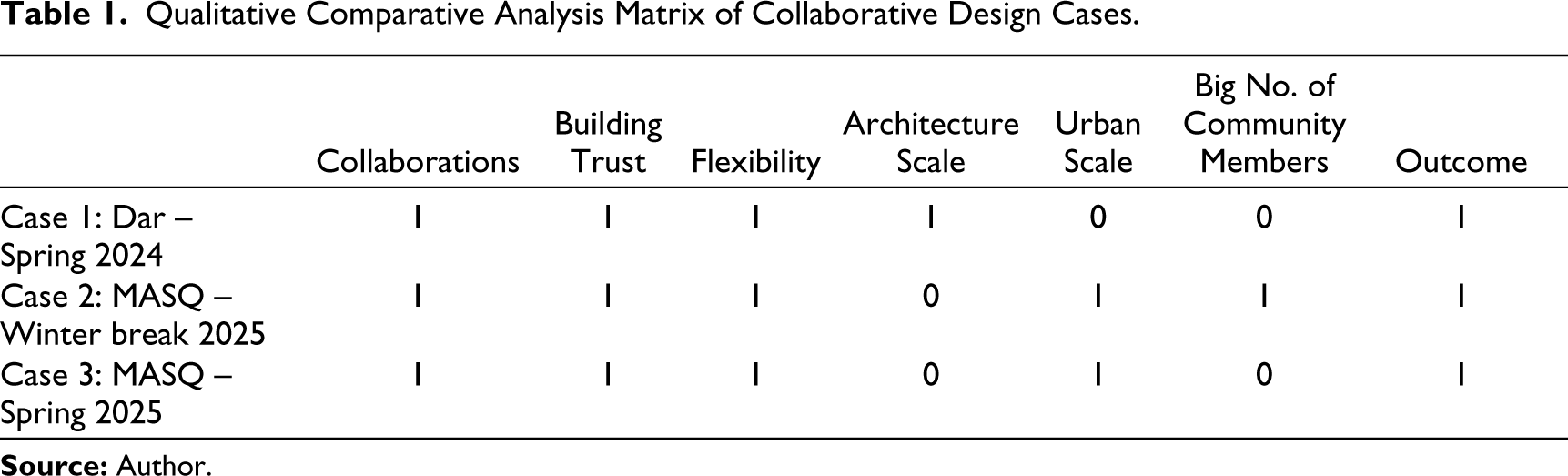
The following sections explore these conditions with respect to each of the collaborative design practices applied: listening to existing stories for co-narrating new ones, representations and perceptions of space, imagining and envisioning possible futures together.
Listening to Existing Stories for Co-narrating New Ones
Listening was an essential skill for students to master, after securing collaborations with NGOs to conduct collaborative design practices with the community. Listening, especially in the initial two visits, was key to building the community’s trust in order to participate throughout the process. The objective of the first two visits was meeting the community and learning from and about them. The students talked about the project and themselves made space for the kids to speak about themselves:
As soon as we entered, I could see looks of excitement and worry from some of the kids. We all sat in a circle, on couches and chairs and got a chance to say our name and a thing we love. For some children it was easier than others, but they all did an amazing job. (Student, individual reflections submitted at the end of the course, 1 June 2024) At the outset, we kept the questions casual, concentrating on basic introductions like names, hobbies, and preferred food. We wanted to refrain from delving into the renovation process immediately, so as not to overwhelm them. My personal objective was to genuinely connect with them and uncover their passions. (Student, individual reflections submitted at the end of the course, 1 June 2024)
Other than suspending the ‘architect’ brain and giving people who might not otherwise be heard the opportunity to speak, students learned that listening was something that had to be reflected in facilitators’ actions as well. They made this observation in the first collaborative design case at Dar, the orphanage:
Our initial priority was gaining their trust, we couldn’t give empty promises, lie about anything, and we had to always answer them with full transparency, also with the added consistency we were able to maintain their friendship and honour their small social openness into understandable behaviours and clear actions. (Students, group presentation, 12 May 2024)
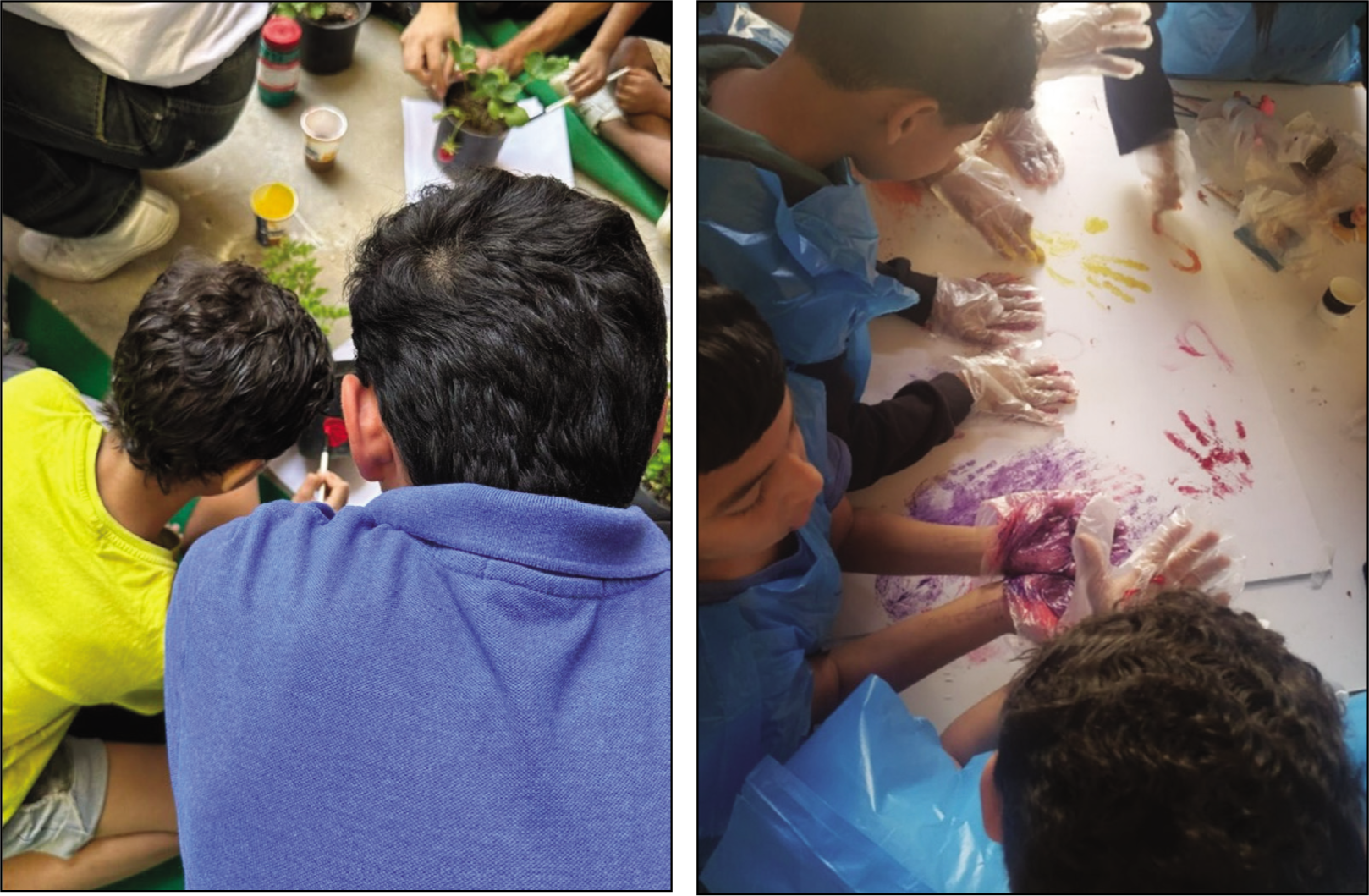
The ‘listening’ happened in different forms in a stimulation event. Activities ranged from sharing a meal together, sports, planting and artistic activities (as shown in Figure 2). The students, working in small teams, created innovative ways for the kids to express themselves. For example, to depict the children’s dream jobs, the students used cut-out photo frames, where the child puts his/her head through a cut-out costume of their dream profession; one frame said ‘I want to be an Engineer’, another one said ‘I want to be a teacher’, etc. Other teams helped the children create their own puppets as another way to help them open up and engage as well. Listening was also supported by research about the two study sites from published articles and social media, which looked at the context of orphanages in Egypt and the kind of environment at Dar and about conservation and rehabilitation practices carried out with the community at MASQ by ARCHINOS architecture firm, and desk research about the local crafts in the area.
The bigger ratio of students to community members required some organisational measures, such as dividing space and time between consecutive teams and creating parallel workshops. The collaborative design case at MASQ as an extra-curricular activity in the winter break on the other hand allowed a bigger ratio of community members to students, with more number with kids during school break, and less of students available and committed to work during the school break.
Students, as the facilitators of the participatory project, noticed that not all kids warmed up to them equally. Some kids were sharing more than others, and some were almost not sharing at all. Students started encouraging the kids who were not participating, letting them know that their participation matters. Students learned from the activities that although the kids had varied hobbies and desires (such as boys being obsessed with football, others tending to have more artistic inclinations than the rest), they all wanted to express themselves and be seen, and heard.
Establishing trust was essential for keeping the children engaged throughout the process. While the number of participants was constant in the case of Dar as the children lived there, participation had to be earned in the case of MASQ—children living in the neighbourhood received invitations to participate. Students had to encourage them to keep coming for the participatory design process. Hence, the increasing number of participating children in MASQ was a good sign. At Dar, even though students won the community’s trust by fulfilling promises and proving to the community they were actually being heard as quickly as from the second visit, students noticed a pattern of the children saying exactly what was expected from them in front of their caregivers. Younger boys would not oppose the older children’s opinions in some instances:
Some feared negative consequences from superiors in case they found them dissatisfied with living conditions …. Some were avoidant of answering and interacting due the older kids making them hesitant, due to power dynamics. (Students, group presentation during feedback sessions, 12 May 2024)
This meant that there was additional effort needed to get at the true or real needs of the children, not the expected ones.
Representations and Perceptions of Space
The ‘representation’ practices in the third and fourth of the collaborative design cases focused on seeing and feeling the space through the eyes—and all the senses—of the community. It was carried out through two consecutive workshops with the children, for which the students had previously been trained during in-class university sessions. The workshops included walking and cognitive mapping exercises to understand the children’s perception of different locations. They shared: ‘We got to repeat the walking and mapping activities we did on campus with each other as students, but this time with the kids, this gave us insight on what they actually wanted and needed’ (Student, individual reflections submitted by the end of the course, 1 June 2024).
The walking activity was conducted in pairs of one student and one child, where each person would take turns in leading the walk. The cognitive mapping, on the other hand, involved the children sitting down and drawing, from their imagination, how they experienced the place daily. Students had to split into smaller groups (around 4–6 students each) to conduct these focused workshops. They made sure that the walking activities were safe and accessible for everyone and provided all the necessary tools for drawing and representation of the space. Students noticed that the children were initially unsure about how to articulate their feelings about their experiences; however, gradually while walking, they started to grasp the idea and form clearer ideas:
Walking alongside the boys, I was struck by the significance of seemingly minor details that they pointed out. From the moment they entered the gate, each step of their journey held particular importance. They spoke about specific areas that made them feel excited, anxious, or uncomfortable. (Student, individual reflections submitted by the end of the course, 1 June 2024)
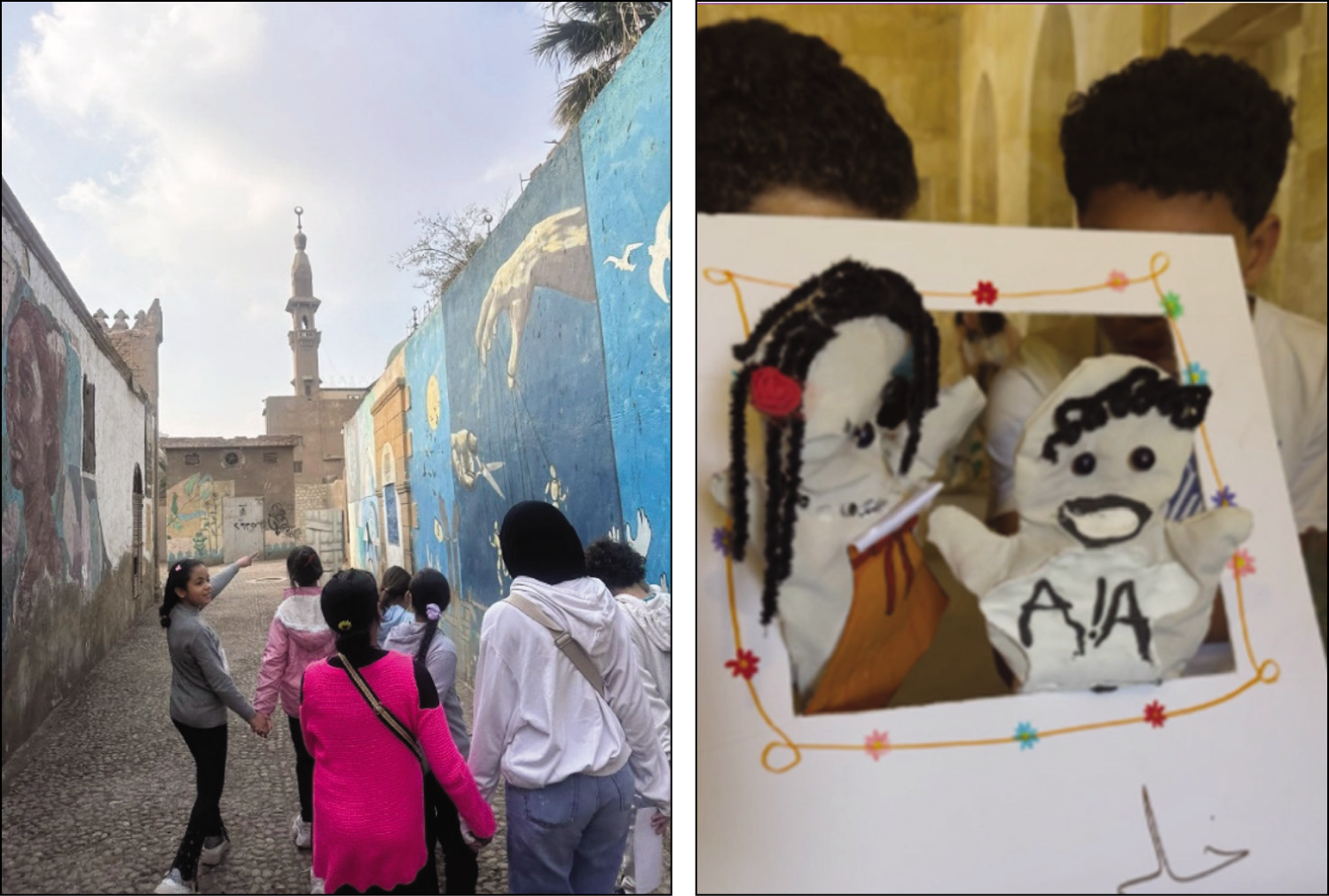
Even though the walking and mapping activities were taught at university with a specific structure, students had the flexibility to make alterations and redesign the activities as needed. Some students deployed puppets (shown in Figure 3) to encourage kids to articulate their feelings about their experiences more freely: ‘We had divided children into groups, where they had to first walk around the location and then return to “act out” their adventure using their puppets’ (Students, group presentation during feedback sessions, 27 May 2025).
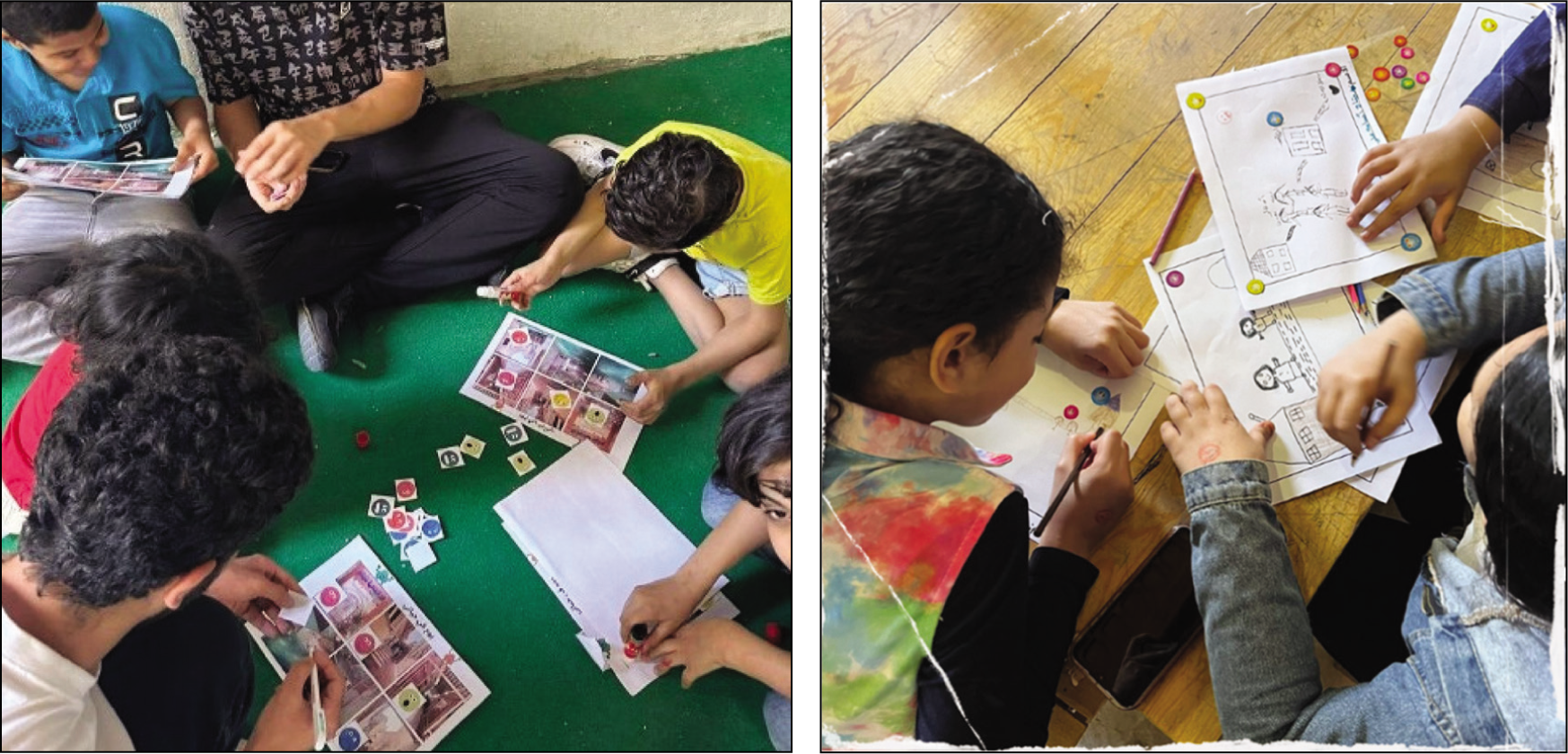
In the mapping activities, due to some children’s limited drawing skills (especially the younger ones) and their inability to be fully expressive in mapping or drawing their experience of the surroundings, students taught them some basic drawing skills or distributed stickers with different emotions for them to paste on printed pictures of the place (see Figure 4). ‘The mapping activity helped us see through the children’s eyes and get a better understanding of how they think about improving their space’ (Students, group presentation during feedback sessions, 12 May 2024).
The scale of the project at MASQ allowed students to divide the area between them and work collectively on the children’s representation and perception of the area surrounding the main square, which was the target of the redesign project. The students focused on the children’s perception of different areas within MASQ: the main community hub, the Qaitbey mosque, crafts in the area such as jewellery making shop (Mishkat) and glass blowing shop (Khaled Glass), and an art gallery (Craftastic). The children’s representation of MASQ demonstrated strong community ties and integration in the conservation and rehabilitation of the area through adaptive reuse practices, such as children’s summer and winter camps, music performances and local craft bazars. The children described the summer camps conducted at MASQ as the highlight of their summer, and demonstrated pride in taking care of the different places in the area that ‘carried meaning beyond their historic value’. This is how they perceived the MASQ main square:
This is where we play after school. We hang out in the street because there’s no park nearby. We play soccer between the cars or ride bikes around the square. Everyone knows everyone here, so it’s kind of like one big family. There’s not much to do, but we make our own fun. (Kids, community workshop, 3 May 2025)
In Dar, the students solely focused on the children’s perception of the orphanage backyard, which was the target of the redesign project. The children’s representations of Dar indicated the importance of the backyard in the orphanage. The boys ate, played, studied and spent most of their waking time in the backyard. However, they expressed feeling shame when they had guests over to visit them, about the messy corners in their backyard, like an area where they hung their washed clothes for drying. The boys felt the murals of colouring crayons that exist did not represent their identities now as ‘older boys’. Now, they talked to the students about football and football players and the desire for some kind of a football field in the new backyard. On the other hand, from the caregivers’ perspectives, playing football inside the backyard was not a good idea, as it will disturb their neighbours at the elderly home.
Imagining and Envisioning Possible Futures Together
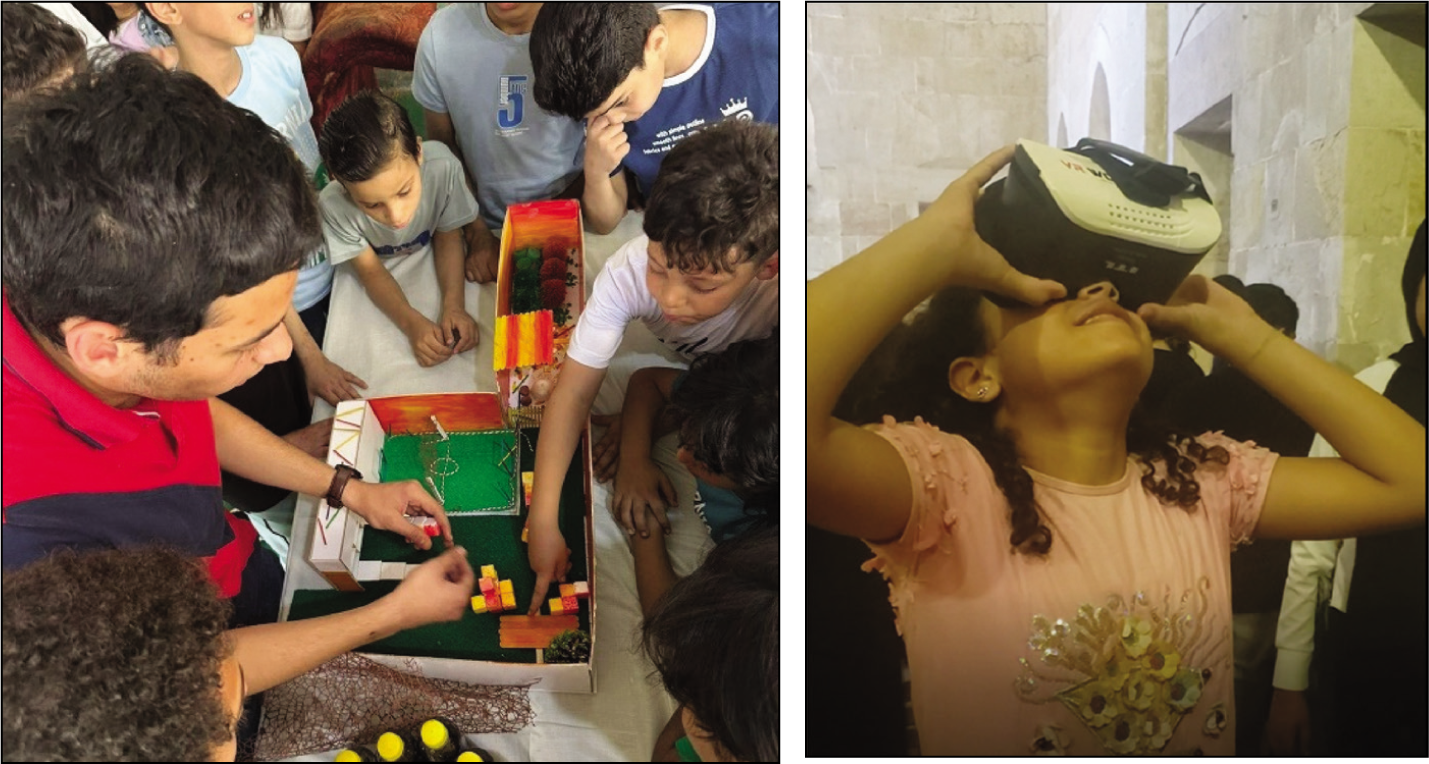
The listening and representation practices set the stage for the imagining and envisioning practices with the community. Students deployed their professional architectural visualisation skills, as demonstrated in Figure 5, and presented several proposals for the community’s visions on a final celebration event. There were seven physical and digital models at Dar in spring 2024, five physical and digital models at MASQ in spring 2025, and two stage settings for a role play at MASQ in winter 2025. Students walked the kids through the ‘potential’ project experience in simple words and an engaging manner using physical models and virtual reality headsets, as shown in Figure 6. The demonstrations showed how the community’s priorities were reflected in the designs. (‘MASQ’ proposals demonstrated below are that of spring 2025.)
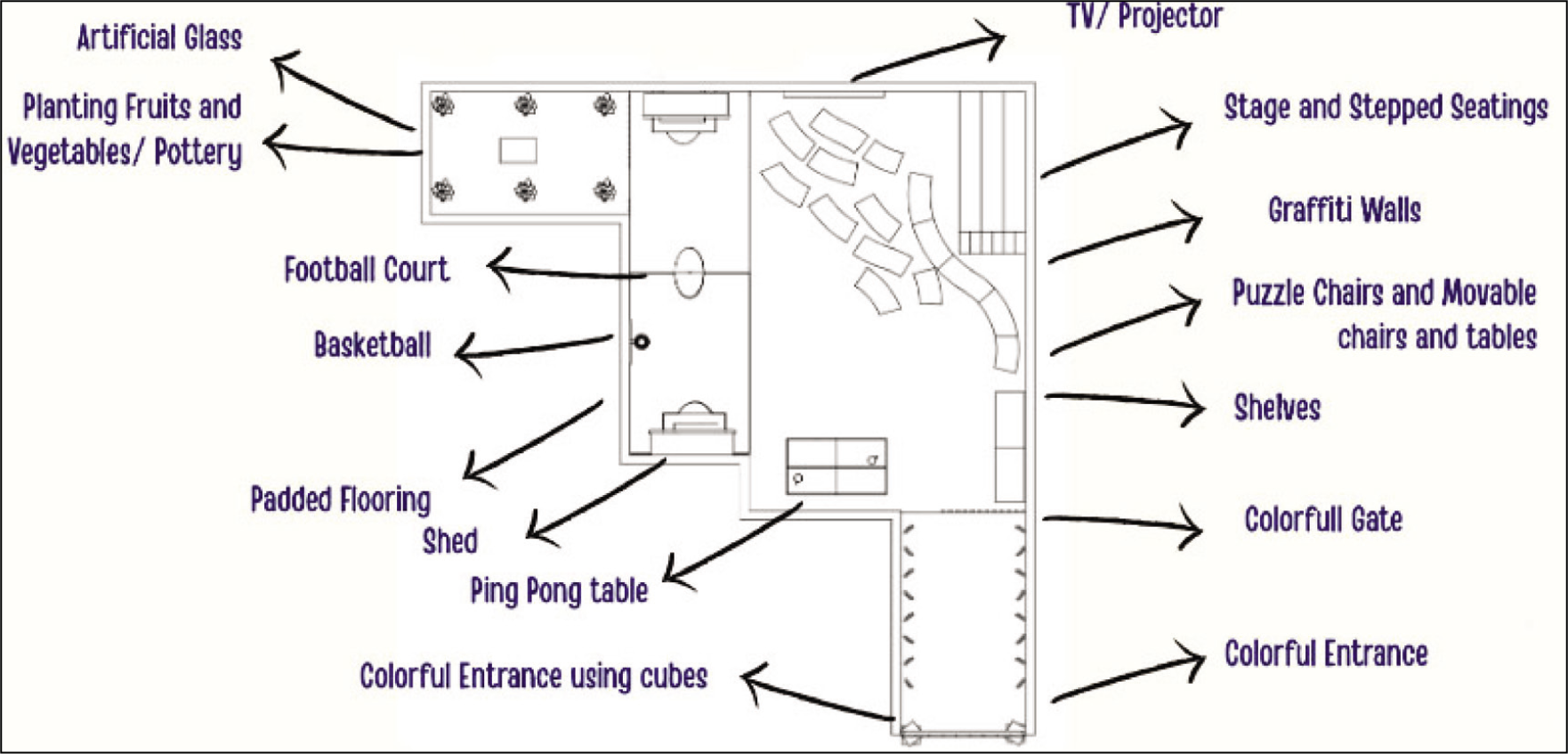
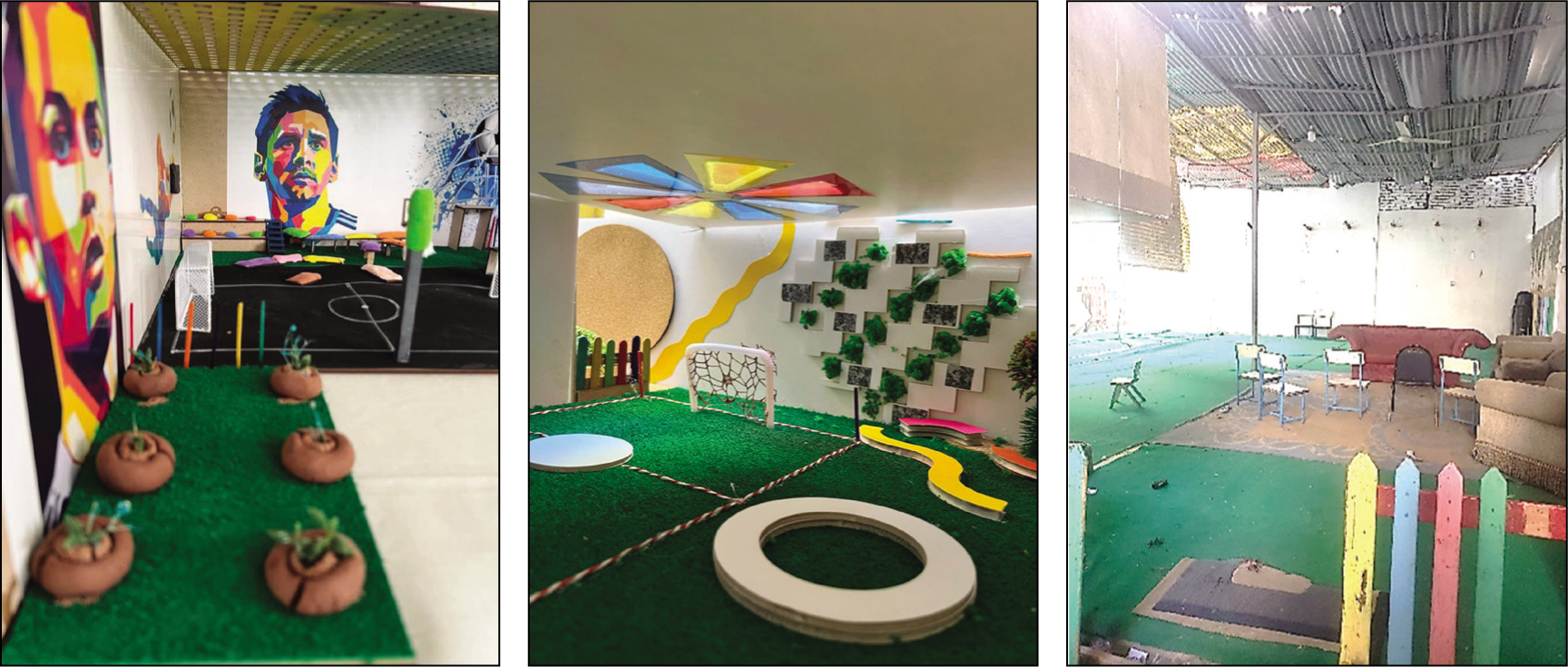
Proposals at Dar focused on reflecting the children’s energetic, playful and developing identities—as most of them were soon to transition into their teenage years. They included various outlets for the children to express their individuality, such as spaces for collaborative artistic murals, musical performances, planting corners and sports obstacle challenges. The first proposal replaced an existing mural of crayons with ones of their favourite football stars, as shown in Figure 7. The second and third proposals created an outdoor stage setting for watching movies, performing and storytelling. The fourth proposal integrated wall climbing as part of the design, and the fifth proposal integrated a ball pit and monkey bars, compatible with the children’s development in skills. The sixth proposal focused on integrating nature in a playful manner, with plants on the walls and tinted glass with different colours as part of the backyard shading. They dedicated a corner to take care of plants to enhance the children’s sense of responsibility and build more structured daily routines.
The seventh proposal capitalised on the children’s creativity with LEGO—like furniture pieces that could be remodelled:
Our design proposal introduces shape-shifting furniture and includes components that can be easily reconfigured, allowing the children to creatively shape the space around them to allow for multiple activities in the small garden area provided. This also gives the children a sense of belonging, where they can shape their garden as they want. (Students, group presentation during feedback sessions, 26 May 2024)
The proposals at MASQ focused on the children’s desire for accessible public space and to have fun. They included a variety of fun activities such as ping-pong and billiard tables, more green spaces, playgrounds and food trucks. The first proposal, shown in Figure 8, integrated decorative night light installations, a water feature and more child-friendly eating places to leverage the existing traditional male-dominated coffee shops that the children felt unwelcomed in. They integrated fixed waste separation bins in their design as well, as they learnt from experts working in area about the many trials of putting waste bins in the area that ended up being stolen. The second proposal included a place for the girls to sell the crafts they learned to make at ‘Mishkat’ (the jewellery workshop) and a small football court for the boys. The third and fourth proposals integrated existing roofs in their design and included as many activities as possible. Finally, the fifth proposal provided flexibility in changing between different activities within the same space using movable outdoor furniture.
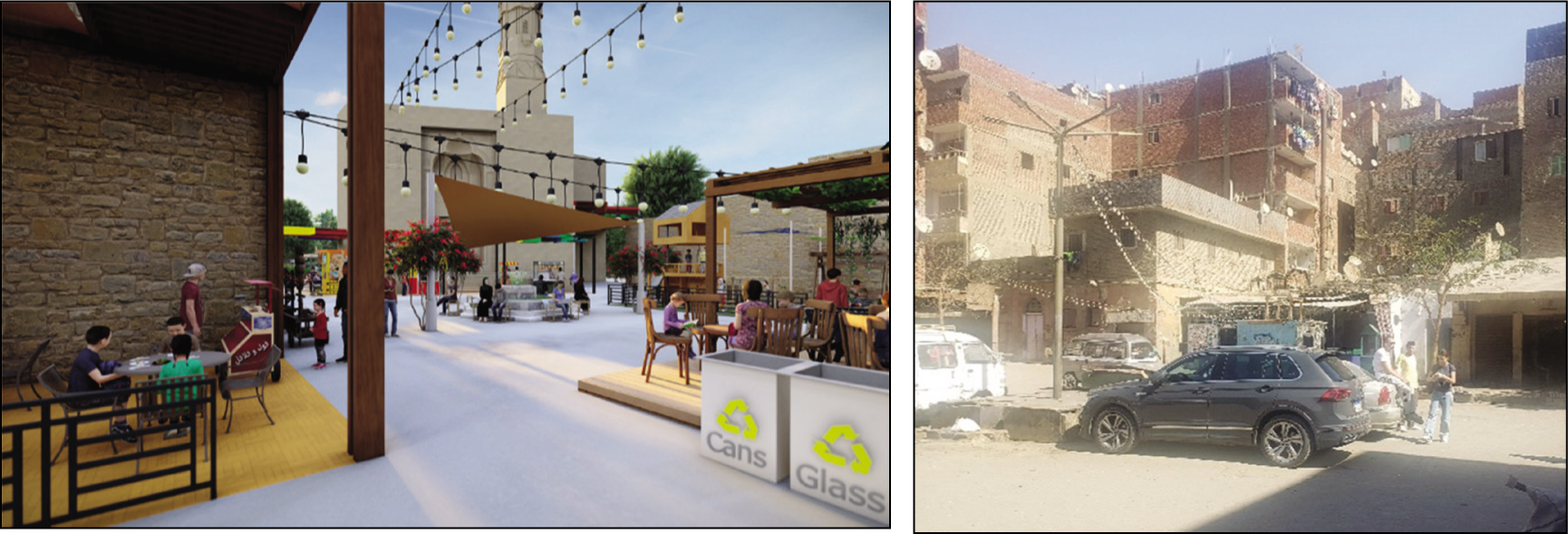
Even though the proposals tended to vary programmatically more than architecturally due to the scope of the participatory practices that is limited to the ideation process and the role of the architect while working in partnership with communities, there were proposals that thought of architecture beyond the built form:
The project is a celebration of youth, voice, and imagination. A vibrant community space shaped by the dreams of the children who live there. It’s not just a renovation. It’s a place where fun meets creativity, where every corner reflects something they love. (Students, group presentation during feedback sessions, 18 May 2025)
Discussion and Conclusion
This article examines how using collaborative design practices in architectural education re-capacitates students of architecture by broadened their understanding of creativity beyond individual innovation to include facilitating, encouraging and making space for the innovation of others. While the three cases at Dar (spring, 2024), MASQ (winter break, 2025) and MASQ (spring, 2025) followed the same collaborative design practices: listening, visual representation and ‘imagining together’, the flexibility of deploying and designing the different audiovisual tools and techniques encouraged the students’ and the kids’ creative expression.
Applying the collaborative design practices in different locations created different collaborative dynamics: At MASQ, students could divide the children’s representation and perception of the area into separate zones, unlike in Dar, where they focused on the Dar backyard. The cases of Dar and MASQ demonstrated the importance of collaborating with NGOs to facilitate hosting different activities with the community and the importance of building trust with community members to sustain their engagement throughout the process. The bigger ratio of students to community members in two of the cases required some organisational measures such as dividing space and time between consecutive teams and workshops.
The collaborative design practices in the two sites provided architectural students at Newgiza University, a private university, a unique opportunity to engage with a diverse community and learn about different lived realities in the city of Cairo. Most of the students have been born and raised in gated compounds and attended private international schools with little or no contact with the people from different backgrounds. The university itself lies within a new property with luxurious facilities and gated compounds.
While the participation level in the design practices did not delve into the actual implementations of the design, it created space for the community to imagine and envision possible futures together. According to Couchez (2023), some of the important outcomes of collaborative design practices lie in translating user needs in the development visions, offering frameworks that divide tasks between the architect and the community and educating inhabitants on the spatial logic of their neighbourhoods and their historical qualities. Collaborative design cases need to be developed further to include other important factors such as funding and develop frameworks for universities to continue community collaborations beyond student projects.
Finally, deploying audiovisual collaborative design practices in different cases in Cairo as a part of a creativity enhancement module in architectural education demonstrates how academic institutions can act as open knowledge and open innovation hubs within cities, as their goal is not just advancing knowledge for its own sake but to serve society.
This experience challenged me to re-evaluate my approach to architecture and emphasised the critical role of empathy and human-centred design. It is not enough to rely only on my knowledge and vision; instead, I must actively seek opportunities to listen, learn, and collaborate with the communities I seek to serve. (Student, reflections submitted at the end of the course, 1 June 2024)
The study encourages the re-evaluation of knowledge co-production in universities to better reflect societal diversity and cultivate approaches that place people at the centre.
Footnotes
Data Availability Statement
The data sets used or analysed during the current study are available from the author on request.
Declaration of Conflicting Interests
The author declared no potential conflicts of interest with respect to the research, authorship and/or publication of this article.
Ethical Approval and Informed Consent Statements
Ethical approval was not required for carrying out the participatory design project. Verbal informed consent was obtained from the Dean of the School of Engineering in Newgiza University, and the orphanage principle of Dar El-Sameya for carrying out the participatory design project. Participant names have been anonymised for publication.
Funding
The author received no financial support for the research, authorship and/or publication of this article.