






Abstract
This study examines the relationship between socio-economic class and participation in urban environmental activism in Bengaluru, India. It explores how different social and economic groups engage with environmental movements, the barriers they face and the extent to which class privilege influences sustainability efforts. The study analyses key drivers and constraints in environmental participation using a mixed-method approach, including interviews and discussions with activists, NGOs and resident welfare associations (RWAs). The findings reveal that middle-class groups play a dominant role in shaping environmental governance, leveraging institutional networks and legal frameworks, while marginalised communities often face barriers to participation despite their direct dependence on urban ecological resources. The study highlights the need for inclusive and equitable approaches to urban sustainability, ensuring broader representation in environmental decision-making. By situating Bengaluru’s urban environmental activism within wider discussions on class and environmental governance in India, this research provides critical insights into the intersection of social stratification, activism and sustainability policies in rapidly urbanising cities.
Keywords
Introduction
Urban parks, open spaces and water bodies are crucial for maintaining the ecological balance as they provide habitats for diverse flora and fauna and possess the ability to regulate local weather conditions. While holding ecological significance, such areas also offer recreational opportunities for citizens, aid in stress reduction and promote overall health and well-being. However, increasing population and urban expansion have created environmental problems in Indian mega cities (Maiti, 2005; Sridhar, 2016), and Bengaluru is one of them. Once known as the ‘Garden City’ and ‘City of Thousand Lakes’, today, Bengaluru faces numerous problems related to waste management, pollution of lakes and environmental degradation. The information and technology sector has led to rapid urbanisation and economic growth in Bengaluru. Many green spaces and over 40 lakes in the city have been converted for various purposes, such as residential layouts, bus stands, playgrounds and the construction of roads, reducing the green space in the city (D’Souza & Nagendra, 2011). As a result, environmental issues have gained attention from citizens and civic groups, who have come together to discuss and combat environmental issues through activism.
The interaction between environmental activism and urbanisation in India presents a complex scenario. The rapid urbanisation of Indian cities has brought about significant changes, giving rise to challenges such as pollution, congestion and resource depletion (Imam, 2016). Scholars have examined environmental politics across Indian cities, including Delhi, Bengaluru and Chennai, as well as smaller locales like Puri and Leh (Follmann, 2016; Hackenbroch & Woiwode, 2016; Hagn, 2016; Lutringer & Randeria, 2017; Muller & Dame, 2016). These case studies highlight the significance of everyday practices and localised dynamics, revealing diversity and commonalities across urban landscapes. Urban activism results from multiple types of involvement: interest groups, politically/culturally oriented groups, apartment federations, neighbourhood development groups and others. It receives significant weightage in the urban governing process as activists and citizen groups engage with urban politics and pressure policymakers to address the problems and develop possible solutions.
The nexus of urban environmental activism and questions of citizenship is thus important, as citizens play a pivotal role in shaping urban policies, demanding accountability and promoting sustainable practices (Johnson et al., 2018). Environmental knowledge catalyses these actions, empowering citizens to participate in meaningful ecological politics (Robbins, 2000). In urban contexts, the literate, politically aware and high-income groups are more concerned about environmental issues than the general population. They are more active in campaigning and awareness, advocacy-related work, capacity-building programmes, network building and participation in governance and policy formations (Jones et al., 1999).
Class Composition of Urban Environmental Movements
Urban environmentalism often mobilises individuals or a group of people from a specific section of society towards fulfilling their demands and interests. It may also receive special identity/recognition based on the education level, political awareness and income of the participants (Wennerhag & Hylmo, 2022). As a result, some groups participate more actively than others. For example, studies have argued that literate and high-income groups are more concerned about environmental issues and challenges (Jones et al., 1999).
Understanding how class structures influence participation in urban environmental activism is essential for analysing how different socio-economic groups engage with sustainability efforts (Zimmer, 2010). In the Indian context, D’Souza and Sethi have used education, income and occupation to determine the social classes in Chandigarh and found four classes, that is, the upper, middle, working and lower classes (D’Souza & Sethi, 1972). Middle-class environmental activism in Bengaluru reflects broader patterns observed in Indian cities, where socio-economic privilege often translates into greater influence over urban environmental governance (Goldman, 2011; Sen & Nagendra, 2020). Mundoli et al. (2017) highlight how middle-class groups shape sustainability discourses through their engagement with green spaces, sometimes marginalising other socio-economic groups. Similarly, Sen et al. (2021) emphasise the role of middle-class activism in framing ecological concerns within governance structures, thereby influencing policy direction.
Wennerhag and Hylmo (2022) have focused on the global North’s class composition and environmental activism based on World Values Survey data. They found that the proportion of educated middle-class participation was more represented and a dominant group than the common population. They also argued this exact representation could be observed in conservation, ecology and climate change movements (Wennerhag & Hylmo, 2022). The main reason is the difference in the nature of work undertaken by middle-class and working-class people (McAdam, 1986). Working-class people have fixed work timings and less flexibility to modify their work schedule as they are unskilled and less educated. Middle-class people enjoy work flexibility and autonomy as they are skilled and well-educated. Jones et al. (1999) have found that middle-class people who are satisfied with their financial condition are more active members than others. Moreover, a higher educational qualification increases job opportunities and enhances employment levels with a better salary, environment and social position (Khamis et al., 2010), resulting in easy access to media and strong connections to social networks.
In these networks, they connect with their families, friends and colleagues through discussion and participation in activism wherever they have issues in common (Schussman & Soule, 2005). In addition, they are well-connected with others when organising and participating in programmes, workshops and campaigns. Urban middle-class citizens are trying to improve essential services through engagement in the urban governing system (Weinstein et al., 2013). Middle-class activism can divert government-allocated funds to improve the basic infrastructure as they are more familiar with using the public debate, media connections and legal knowledge as a means compared to the marginalised classes (Domaradzka, 2018).
This study examines urban environmental activism in Bengaluru, focusing on how socio-economic backgrounds shape participation within environmental movements. By analysing the roles of various stakeholders, including individual activists, resident welfare associations (RWAs), non-governmental organisations (NGOs) and voluntary groups, it explores the broader implications for environmental governance. This research situates Bengaluru’s environmental movements within the larger discourse of urban environmentalism in India, offering a comprehensive understanding of how socio-economic structures shape participation and influence policy in environmental governance in the city.
Data and Methodology
This study is a part of the author’s PhD dissertation, and the research design employed a mixed-methods approach, using primary and secondary data sources. Primary data were gathered from March 2018 to July 2019 through interviews and discussions with active citizen groups and organisations engaged in urban waste management and lake conservation efforts (Mandal, 2023). The study also used information, such as establishment year, objectives and members’ details, from the annual reports published by these organisations. These were collected both during fieldwork and from the respective organisations’ websites and have been used to support and triangulate the qualitative analysis presented in this article. The study specifically targeted organisations whose objectives and activities were related to these areas. The snowball sampling technique was employed to identify citizen groups, RWAs and NGOs, emphasising the most active organisations, resulting in the identification of 55 groups. During the interviews, known key informants were contacted and asked to provide the names and contact details of key informants from other citizen groups or NGOs operating in similar domains. The study collected education and occupation information from 125 individual activists and members of voluntary organisations, RWAs and NGOs to construct their socio-economic profile. Besides these, several voluntary members 1 who participate occasionally were not considered for analysis because organisations/groups do not keep records of voluntary members.
Daniel Oesch’s (2008) eight-class scheme is used to examine the class composition of urban environmentalism in Bengaluru. Oesch used this eight-class scheme to identify the role of social class in preference for political party support (Oesch, 2008). His two-dimensional class scheme consists of a horizontal dimension, which refers to sector-wise differences, and a vertical dimension, which indicates occupational class differences (Table 1).
Oesch’s Eight-class Scheme.
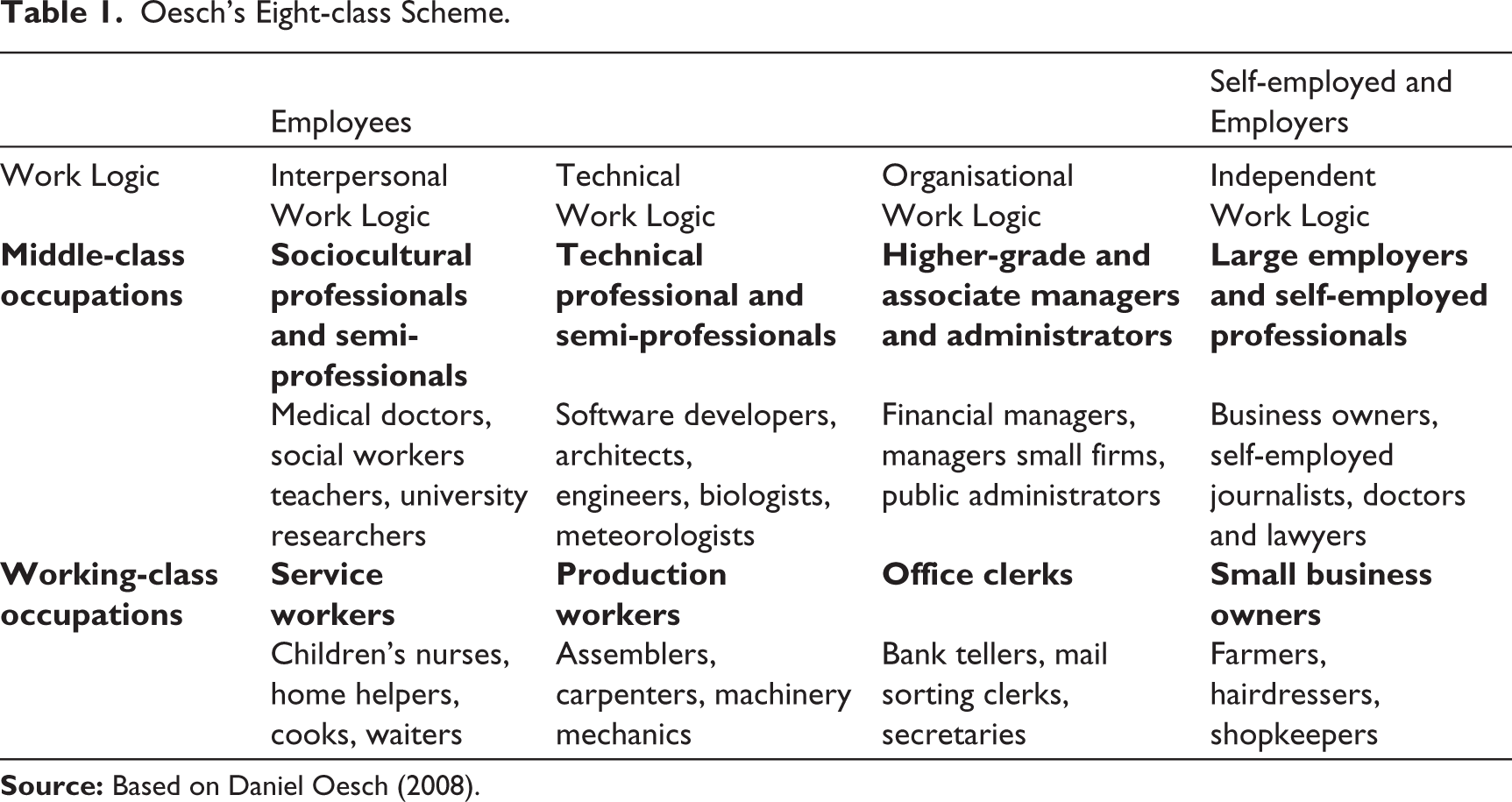
The city has various professional classes, such as sociocultural professionals, technical self-employed and working-class professionals, managers and administrators and service workers. The study has chosen educational qualifications and occupations based on Oesch’s eight-class scheme to identify the socio-economic and class backgrounds of participants involved in urban environmentalism in the city.
Findings
Nature of Participants in Civic Groups in Bengaluru
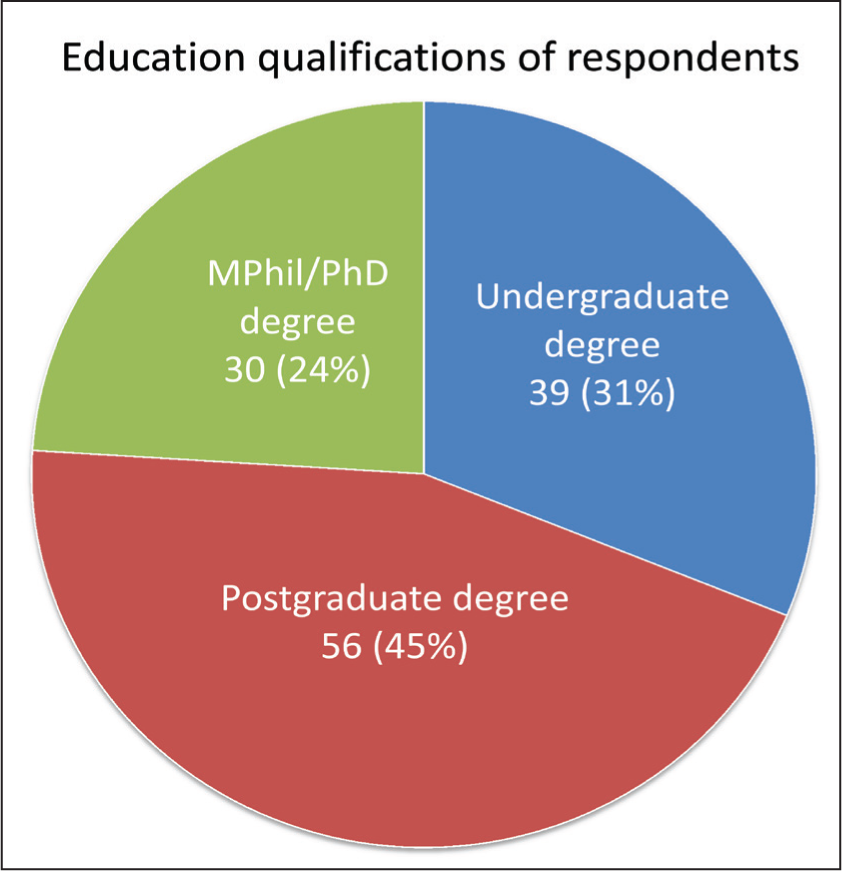
Education is essential in bringing new ideas and technologies to society and adopting new strategies for improving the environment. For instance, the study found that well-educated people warmly welcome eco-friendly Ganesha idols, using composting for roof gardening and green weddings to reduce environmental problems. Out of the 125 respondents, 39 were graduates, 56 were postgraduates and 30 had an MPhil or PhD (Figure 1). The study found that most groups were willing to work and participate in improving the city environment.
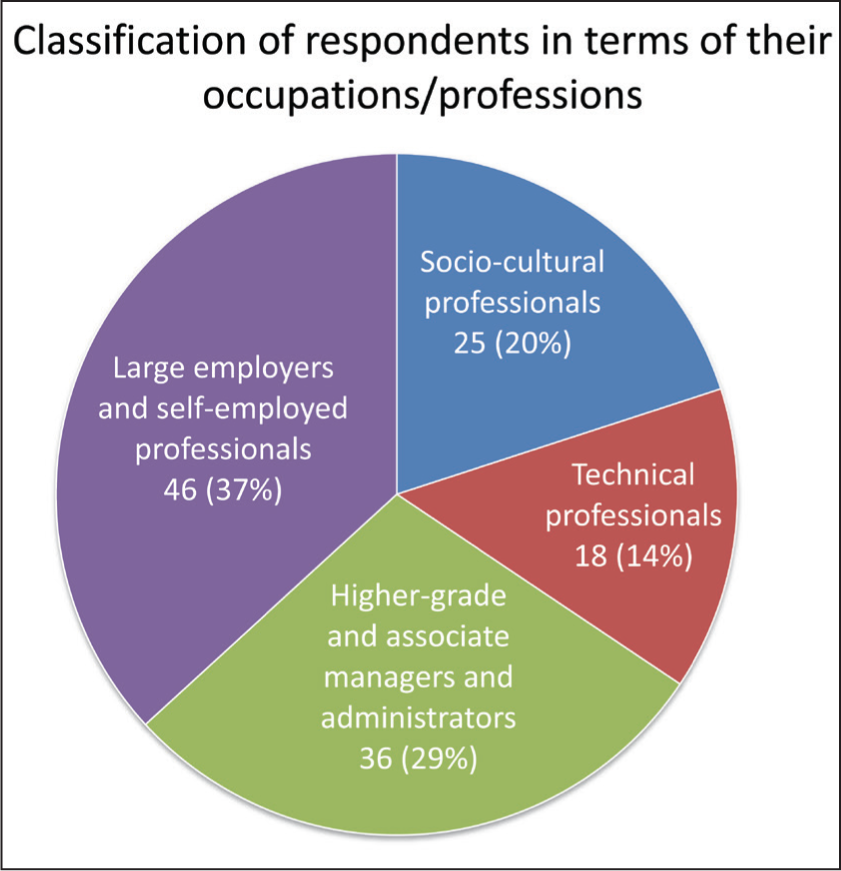
The study also observed that the middle class, mainly IT professionals and civil servants living in gated communities, have given considerable time to influence the urban environmental politics in the city. They have used public debate, media platforms and legal activity to shape public perception precisely. Analysis showed that out of the 125 respondents, 25 were sociocultural professionals, 18 were technical professionals, 36 were higher-grade associates, and 46 were prominent and self-employed professionals (Figure 2). Moreover, 47 (37.60 per cent) of the respondents were women. Furthermore, retired people from various professions were essential in the large employers and self-employed professionals category.
A History of Environmental Movements in Bengaluru
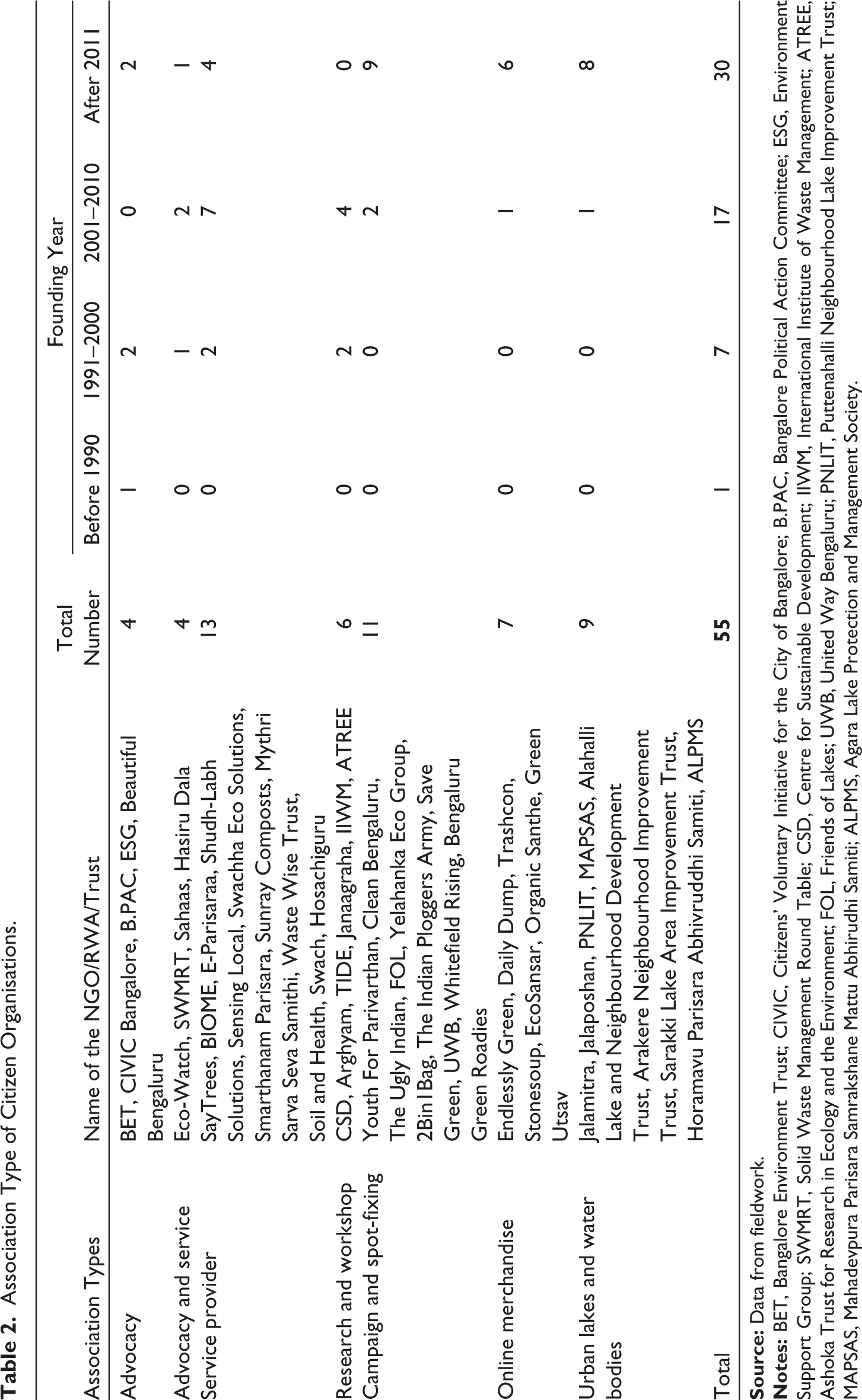
In Bengaluru, several environmental activists, citizen groups, voluntary civic groups and NGOs are active, building links among government agencies, the corporate sector and international organisations. The city has seen initiatives by citizen organisations ranging from advocacy, new ideas, campaigns, stakeholder engagement initiatives and demand for better services and participation in governance led by educated middle-class groups towards improving waste management and conserving lakes. Most citizen organisations were founded after the 1990s, except for Bangalore Environment Trust (BET), founded in April 1987. This may be attributed to the adaptation of economic liberalisation in the 1990s and the 74th Constitutional Amendment Act in 1992 towards democratic decentralisation, which encouraged and provided good governance services and citizen participation (Biswas, 2020).
After 1992, the citizen participation rate increased in areas like transparency and accountability, decentralisation, waste management, protection of open spaces and water bodies and urban governance in the city, resulting in the formation of citizen organisations by the educated middle-class group. Some of the early groups are Technology Informatics Design Endeavour (TIDE), founded in 1993, Citizens’ Voluntary Initiative for the City of Bangalore (CIVIC Bangalore) in 1994 and Eco-Watch and Environment Support Group (ESG) in 1998 (Table 2).
Actively combating environmental problems, waste-related problems and lake frothing and pollution in the early 2000s and later allowed the middle class to respond and form citizen organisations. Various protests and agitations on the lake privatisation issue (D’Souza & Nagendra, 2006), Mandur and Mavallipura landfill, Bellandur–Varthur Lake frothing and pollution have been organised by the educated middle-class across the city. These have helped draw the public’s attention and mobilise people around environmental issues as a focus of common interest. Additionally, many high-profile retired persons, such as those in the Indian Administrative Service and Indian Forest Service, and directors and chairpersons of well-known firms are members of civic organisations. They are well networked with government officials and bureaucrats, which helps them get things done efficiently.
Sometimes, the government also takes initiatives to better engage public–private partnerships in the development of urban areas. For instance, the Bangalore Agenda Task Force (BATF) was established by the then chief minister of the state in 1999. The main aim of BATF was to include the corporate, civic leaders and government administrative agencies in a public–private partnership, designing a development agenda to improve and upgrade the services and infrastructure (Ghosh, 2005).
The BATF was started by identifying the top concerns of citizens and preparing programmes based on feedback from members. Although it ended in 2004, it played an essential role in recognising civic issues, creating awareness, promoting lake improvement programmes and introducing door-to-door waste collection, advocacy and audit-related work to bring in transparency. In addition, it helped strengthen the public–private partnership model where the various stakeholders (individual experts, RWAs and NGOs) were engaged in urban governance to improve the services and infrastructure of the city.
After the 2000s, the functional area of citizen organisations expanded significantly. They improved composting techniques, introduced waste management facilities and consultation, garden and terrace farming, green weddings and festival celebrations in an eco-friendly way and online merchandise for recycled and eco-friendly products. Some civic organisations facilitate waste management services, and Hasiru Dala and Saahas are among them. Daily Dump, Organic Santhe and Sunrays Composts engage in wet waste composting, Hosachiguru in organic gardening, Green Utsav in zero-waste events and cutlery renting, and EcoSansar and Stone Soup in online retail for eco-friendly products. In the city, middle-class people are highly professional and live in a specific stratification of associational life (Nair, 2007), where they are concerned with the urban environment, waste management, open spaces and urban lakes. Therefore, some civic organisations specialising in waste management, such as Saahas, Hasiru Dala and Swachha Eco service for apartments and residential complexes. Additionally, they produce eco-friendly products that are sold to specific communities, such as the OWC Aaga composting kit from Daily Dump and the Shishira Kit from Soil and Health.
Similarly, educated professionals, retired bureaucrats and individuals in higher-level formal jobs living near lakes have built networks, such as Arakere Neighbourhood Improvement Trust and Sarakki Lake Area Improvement Trust, to pursue their shared interests and collectively work with the RWAs and communities to manage and protect the lakes and improve their neighbourhood. Table 2 classifies the organisations based on the association types across time.
Association Type of Citizen Organisations.
Different Approaches to Environmental Activism
The study found that urban environmental activism in Bengaluru consists of two distinct groups with differing approaches. The first group prioritises collaboration with government agencies, focusing on institutional engagement, policy advocacy and infrastructure development. These groups work within existing governance frameworks to influence environmental policies, such as participating in BBMP’s Citizen Participation Programme to improve waste management practices. In contrast, the second group operates at the grassroots level, directly engaging with communities through protests, awareness campaigns and decentralised environmental initiatives (Mandal & Manasi, 2024). This includes mobilising residents against landfill expansions, lake encroachments and pollution-related issues. While the first group seeks systemic change through policy reforms, the second group emphasises immediate action and community-driven solutions. Both approaches contribute to urban environmental governance through different mechanisms, highlighting the diverse ways in which activism shapes sustainability efforts in Bengaluru (Mandal, 2023). In the following section, the study discusses examples from Bengaluru of both types of activism.
The first group, which prioritises collaboration with government agencies, focuses on maintaining a good network and communicating with government agencies and corporations to organise events. With many participants, private players and government institutions engaging together, organisers work on a set plan, agenda and schedule of the events. For instance, the government launched BBMP’s Citizen Participation Programme to achieve a garbage-free city and maintain cleanliness. The programme’s objective is to enable people’s participation in waste segregation, composting and use of eco-friendly products to achieve a garbage-free city. Under this programme, the zonal, constituency and ward-level coordinators work with volunteers and the Solid Waste Management Department’s officials to increase waste collection, segregation and transport. They also organise training programmes, monitor, find the gap and prepare a report card with the help of Shuchi Mithra, 2 supervisor and marshal to improve the waste management practices in the city.
Another example of collaborative activism is the expo ‘Wake Up Clean Up’ and eco-friendly Ganesha-making events. On Ganesh Chaturthi 3 and the city sees various events for making eco-friendly Ganesha from clay and turmeric, spreading environmental awareness to avoid the pollution from the plaster of Paris idols. On 28 August 2022, 5,000 to 6,000 participants joined an event on the National College Ground to make 20,000 clay Ganeshas (Athavale, 2022). Each participant was allotted 3.5 kg of clay mixed with flowers and Tulsi (basil) seeds to shape the idols. For mobilisation and training of the participants, 1,000 pottery trainers and volunteers were engaged in securing the targeted goal. The event organiser also instructed the participants to bring along their own water bottles towards making this a zero-waste event. This event was a collaboration by B.PAC, Vidyaranya Yuvaka Sangha, KSPCB and the Karnataka Horticulture Department to create awareness of eco-friendly ways to celebrate the festival.
In the city, many individuals have made a significant impact in banning plastic in their localities. Civic groups, NGOs, RWAs and student groups organised a campaign with the city government to ban plastic in 2016. The groups discussed and shared knowledge about the harmful impact of plastic on the environment with citizens, retailers and street vendors. Through their active efforts, the Say No to Plastic campaign received massive attention from the people and drastically reduced the use of plastic in the city. Saying no to plastic has reduced the burden of waste management as plastic waste contributes 20 per cent of the total generated waste per day in Bengaluru (Shekhar, 2018).
The first group also builds strong networks among law professionals, bureaucrats and government agencies to undertake advocacy-related work, such as filing public interest litigations (PILs). Advocacy-related work requires the engagement of experts in law, policy and planning. The advocacy-related work by citizen groups ESG and CIVIC Bangalore has contributed to improving the city environment and implementing decentralised waste management practices. ESG has filed numerous PILs concerning lake pollution, reduction of urban forestry and improper management of solid waste, for example, the PILs against lake privatisation in 2005–2006, construction in Challakere Lake’s Amrit Mahal Kaval grasslands and encroachment activity in Cubbon Park. Similarly, CIVIC has filed many PILs to implement and strengthen Ward Committee and Area Sabhas in all 198 (now, 243) wards to decentralise waste management.
The second group, which prioritises direct engagement at the grassroots level, is often headed by an informal group. It is a centralised mode of activism in which people from specific areas or groups participate. The city has seen various agitations organised by people against illegal garbage dumping, BBMP’s waste processing plants and landfills. For example, the residents of Mandur and Mavallipura agitated against the landfill. The resident group often did not allow garbage-loaded trucks to enter the landfill. On many occasions, police have been deployed to run the waste processing plants. Similar activism has been observed in different parts of the city, such as the protests against dumping of garbage in the Kaggadasapura area, Kathriguppe, and garbage burning in Baiyappanahalli, Indira Nagar and Nayandahalli areas.
Such grassroots activism is also evidenced in instances of civic self-organisation, for instance, clean-up drives, plantation drives and spot-fixing drives organised to remove garbage from the roadside and lakes, or a plastic ban campaign where people from different strata of society have participated without mentioning their organisational or group identity.
Middle-class Activism and Marginalised Communities
The city’s environmental activist groups are a complex platform spanning various class groups with different perceptions about environmental conservation. This difference in perception is related to access to urban infrastructure and services. For instance, many middle-class people participated in the plastic ban campaign and its implementation, organising various awareness programmes and discussions to motivate people, as those from working-class occupations, mainly street vendors, shop owners and small traders, were not ready to welcome the decision (Karelia, 2019). Similarly, the middle-class group dominated the other environment-related activities such as plantation and clean-up drives, academic programmes and advocacy-related works.
In the case of Puttenahalli Lake conservation, the managing authority pointed out that sewage runoff and encroachment of the periphery are the two main problems in managing the lake. Furthermore, they said that the city government is ready to relocate the encroachers to a housing facility, but they are not ready to move. However, those living on the lake’s periphery claim that they have been living there for a long time, fishing and using the lake water for their cattle and their daily needs. Since the lake boundary has been fenced, they cannot access it anymore.
In Bengaluru, civic groups such as NGOs, RWAs and individuals have filed many PILs and signed online campaigns against the encroachment of lakes and open spaces and for cleaning and greening cities. For example, to save the Bellandur Lake, social media campaigns have been organised, PILs have been filed in court and pressure has been created on the government by middle-class groups. As a result, the court sent a closure notice to the 97 polluting industries near Bellandur Lake and suggested that the Karnataka Slum Development Board (KSDB) clear the encroachment and rejuvenate the lake (Shankar, 2017). On 8 November 2019, KSDB set a demolition drive to remove the encroachment in the lake buffer zone with the police’s help (Chatterjee, 2019). About 300 families were severely affected due to this demolition drive, who launched a large protest against it. The KSDB disconnected the power supply in the area and forced the residents to move into a new apartment allocated in Marathahalli for 237 families (Chatterjee, 2019). The rest of the families were migrants from neighbouring states and were not allotted apartments. Most residents work as domestic helpers, office assistants and drivers in nearby localities and moving to a new location would result in loss of employment for them.
As informal workers, they are unable to voice their opinions against the government’s decisions due to their poor socio-economic background and limited education, which pushes them to feel that the media and the public leave them out. On the other hand, middle-class urban groups have an advantage in shaping the city’s environmental policies, with the help of community engagement and decentralisation of power (area sabhas and ward committees) and NGOs and civic groups.
However, there is a need for innovative partnerships that integrate livelihood opportunities with environmental sustainability, as seen in successful initiatives like Urban Thottam in Chennai. 4 This initiative promotes urban farming by utilising underutilised spaces for food cultivation, enhancing climate resilience while creating income-generating opportunities for marginalised communities. Adopting similar models in Bengaluru—particularly in the context of waste management and lake conservation—could provide inclusive and community-driven solutions. For instance, decentralised composting programmes linked to urban agriculture could repurpose organic waste and reduce landfill pressure while supporting local livelihoods. Additionally, integrating lake conservation efforts with sustainable livelihood initiatives, such as eco-tourism or community-managed wetland farming, could ensure both environmental and economic benefits, fostering long-term engagement from diverse socio-economic groups.
Conclusion
This study explores urban environmental activism in Bengaluru, focusing on how different socio-economic and class groups contribute to shaping the city environment and efforts towards environmental sustainability. The study found that environmental activism in the city gained attention after the 1990s. However, it gained pace after the 2000s as the city faced various environmental challenges like pollution, a reduced number of water bodies and waste-related problems due to rapid urbanisation and population growth. The findings also highlight that while a diverse range of stakeholders, including individual activists, RWAs, NGOs and voluntary groups, engage in environmental activism, participation remains stratified. The educated middle class, with greater access to resources, institutional networks and legal avenues, exerts significant influence over urban environmental governance. Their efforts have led to policy interventions in waste management, lake conservation and green infrastructure development, contributing to the broader goal of environmental sustainability. However, these movements often fail to fully integrate marginalised communities, whose environmental concerns and everyday struggles remain underrepresented in mainstream activism.
While this study provides a broad overview of stakeholder participation, further analysis is needed to understand the deeper power dynamics that shape environmental activism. The correlation between class privilege and civic engagement is evident, but examining how these factors translate into policy influence and long-term environmental change would offer more critical insights. Additionally, a comparative assessment of activism strategies—such as collaborative governance models versus grassroots-led resistance—could highlight more effective pathways to achieving sustainable urban development.
Future research should adopt a more intersectional and longitudinal approach, utilising diverse sampling methods to minimise bias and gain deeper insights into how factors such as caste, gender and political affiliations interact with class in shaping activism. Moreover, tracking the long-term impact of urban environmental movements on city governance and sustainability policies would help determine whether these efforts create lasting environmental benefits or merely reinforce existing sociopolitical inequalities. By addressing these gaps, future studies can contribute to a more inclusive and transformative understanding of how urban activism and sustainability efforts in Bengaluru and other rapidly growing cities can be equitable and participatory and can foster cleaner, greener and more sustainable cities.
Footnotes
Declaration of Conflicting Interests
The author declared no potential conflicts of interest with respect to the research, authorship and/or publication of this article.
Funding
The author received no financial support for the research, authorship and/or publication of this article.