







Abstract
This study explores the impacts of heatwaves in urban informal settlements in India and examines the resilience strategies adopted to mitigate these effects. Using a systematic review process aligned with PRISMA guidelines, it synthesises evidence from 24 selected peer-reviewed studies published between 2000 and 2024, sourced from Scopus, Web of Science, PubMed and Google Scholar. Studies were screened based on predefined inclusion and exclusion criteria, with quality assessed using the Joanna Briggs Institute (JBI) framework. Key variables, including vulnerability factors, health and livelihood outcomes, and adaptive responses, were extracted and synthesised. The findings indicate that heatwaves increase mortality and morbidity, with the most vulnerable groups, including the elderly, women, children, informal workers and migrants, being disproportionately affected. Common health effects include dehydration, heat stress, cardiovascular problems and mental health disorders. Livelihood disruptions were severe among informal workers, leading to income loss and food and housing insecurity. The review identifies localised resilience strategies such as cool roofs, awareness campaigns and informal social support networks, although their implementation remains inconsistent. The study emphasises the urgent need for inclusive heat action plans, targeted health interventions and participatory governance to strengthen adaptive capacity among at-risk urban populations.
Keywords
Introduction
Heatwaves, as large-scale atmospheric anomalies, significantly affect human health and livelihoods, especially in agriculture and informal labour sectors (Bosello et al., 2006; De Bont et al., 2024; IPCC, 2018; Khambete, 2025; Martens, 1998; Padma, 2025). Heatwaves are more frequent, intense and prolonged across India, as compared to the last 50 years (India Meteorological Department (IMD), 2025; Rohini et al., 2016). Rising exposure to extreme heat, intensified by climate change and the urban heat island effect, threatens India’s rapidly expanding cities (Coffel et al., 2018; Manoli et al., 2019; Oke, 1981). The IMD defines heatwaves using both absolute temperature thresholds (≥40°C in plains, ≥30°C in hills and ≥37°C in coastal stations) and deviations from normal: maximum temperatures 4.5°C to 6.4°C above the normal for at least two consecutive days. Estimates suggest that heatwaves will undermine labour productivity, economic growth and quality of life for 310–480 million people in India (Mani et al., 2018). By 2050, extreme heat may reduce outdoor working capacity by 15 per cent in occupations such as construction (Woetzel et al., 2020). Increased heat could reduce India’s GDP by 2.8 per cent by 2050 and 8.7 per cent by 2100, significantly lowering living standards (Ahmed & Suphachalasai, 2014; Woetzel et al., 2020).
Residents of urban informal settlements are among the most vulnerable to extreme heat events. Informal settlements, commonly referred to as ‘slums’, are densely populated urban neighbourhoods where housing, infrastructure and services are often inadequate, tenure is frequently insecure, and dwellings are predominantly self-constructed, typically without formal technical assistance or regulatory oversight (Asian Development Bank, 2023; UN-Habitat, 2003). These settlements often arise on marginal or low-value land without formal planning approval, leaving residents vulnerable to eviction and environmental risks such as heat exposure, poor sanitation and inadequate healthcare (Harris, 2017; Scovronick et al., 2015). However, slums are also heterogeneous spaces: while marked by deprivation, insecurity and policy neglect, they are also sites of resilience, where residents actively negotiate rights and livelihoods (Bhan & Jana, 2013; Bhide, 2003; Coelho et al., 2012; Nijman, 2009).
Extreme heat is linked to heatstroke, dehydration and cardiorespiratory illnesses, especially among the elderly, children and those with pre-existing conditions. Furthermore, informal workers, lacking secure jobs or health coverage, face heightened occupational risks (WHO, 2024). Understanding the strategies employed by residents of informal settlements to cope with heatwaves is therefore critical for building climate-resilient cities. Resilience, in this context, refers to the ability to anticipate, adapt and recover from heat impacts (IPCC, 2022). Existing studies document a spectrum of local adaptive practices, including behavioural adjustments, using improvised shading and ventilation, organising community-managed cooling spaces and relying on informal networks of care and mutual support (Laue et al., 2022; Shahrujjaman et al., 2025). However, these efforts are frequently constrained by structural inequalities and limited institutional support.
Despite growing research on urban heat resilience, key gaps remain. The experiences of people in informal settlements are often overlooked, with studies focusing more on technical solutions than social factors like class, caste, gender and migration. More localised research is needed to understand how urban planning, land use and community institutions shape heat vulnerability and resilience. This systematic review aims to synthesise research on heatwave impacts and resilience in India’s informal settlements, examining vulnerabilities, adaptive strategies and institutional support. It identifies gaps and offers policy recommendations to promote equitable, climate-resilient urban development.
Methodology
This review followed the Preferred Reporting Items for Systematic Reviews and Meta-Analyses (PRISMA) guidelines (Moher et al., 2009), using clear and systematic methods to identify, select and assess relevant studies, and to gather and analyse data from those included in the review.
Search Strategy
A comprehensive search of major electronic bibliographic databases—Scopus, Web of Science, Google Scholar and PubMed—was undertaken. The search strategy combined free-text keywords with Boolean operators (AND/OR) and truncation (*) to capture spelling variations, plural forms and related concepts. This ensured comprehensive retrieval. Although there are little variations in study search process and filtering criteria across the mentioned databases, the final combinations of search terms included the following terms: (‘heat wave’ OR ‘extreme heat’ OR ‘high temperature’ OR ‘urban heat island’ OR ‘climate change’ OR ‘heat exposure’ OR ‘hot weather’ OR ‘thermal discomfort’ OR ‘ambient temperature’) AND (mortality OR morbidity OR ‘heat stress’ OR ‘heat illness’ OR dehydration OR ‘heat exhaustion’ OR ‘heat stroke’ OR livelihood OR ‘public health’) AND (‘informal settlement’ OR ‘urban population’ OR slum OR ‘low-income community’ OR ‘marginalized community’ OR vulnerable*) AND (India combined with states name). The search was limited to studies published in the English language between 2000 and 2024.
Inclusion Criteria
The literature search was restricted to original research studies that examined heatwaves and their effects on the health, well-being and livelihoods of vulnerable urban low-income populations residing in informal settlements in India. Studies investigating community resilience mechanisms and strategies, such as mitigation, prevention or adaptation to heatwaves, were also included. Studies were excluded if they focused on rural settings, non-Indian contexts or formal housing or were grey literature, non-English publications or published prior to 2000.
The systematic review specifically concentrated on research related to direct exposure to heatwaves or extreme heat, excluding studies that addressed climate change-induced risks or high ambient temperatures not directly associated with heatwaves. Only studies involving human populations, regardless of age and gender, were considered. Research focusing on either entire urban populations or specific subgroups (e.g., the elderly, women or children) within informal settlements in India was included, provided it examined health outcomes associated with periods of elevated temperature or heatwaves. Studies were eligible irrespective of the specific temperature benchmark or heatwave definition used or reported, as long as they explicitly described a threshold or anomaly above locally defined ‘normal’ conditions or designated hot weather months in India.
Data Extraction and Study Selection
Following the retrieval of studies from four electronic databases, a rigorous screening process was conducted based on title, abstract and full-text, adhering to the PRISMA guidelines. The initial database search yielded 837 records, with 46 duplicates removed. The remaining 791 records were screened by title and abstract, and 747 were excluded for not meeting the inclusion criteria. Duplicate records were removed, and the remaining studies were screened.
Two authors screened the titles and abstracts against the inclusion and exclusion criteria. The full texts of the remaining 44 records were assessed for eligibility. Twenty of these were excluded, with the primary reasons being a non-alignment of the study outcome with the review’s objectives and a study setting other than an urban informal settlement or slum. This rigorous selection process resulted in a final sample of 24 records/studies that met all inclusion criteria and were included in the subsequent synthesis and analysis. Following PRISMA guidelines, the study selection process is shown in Figure 1.
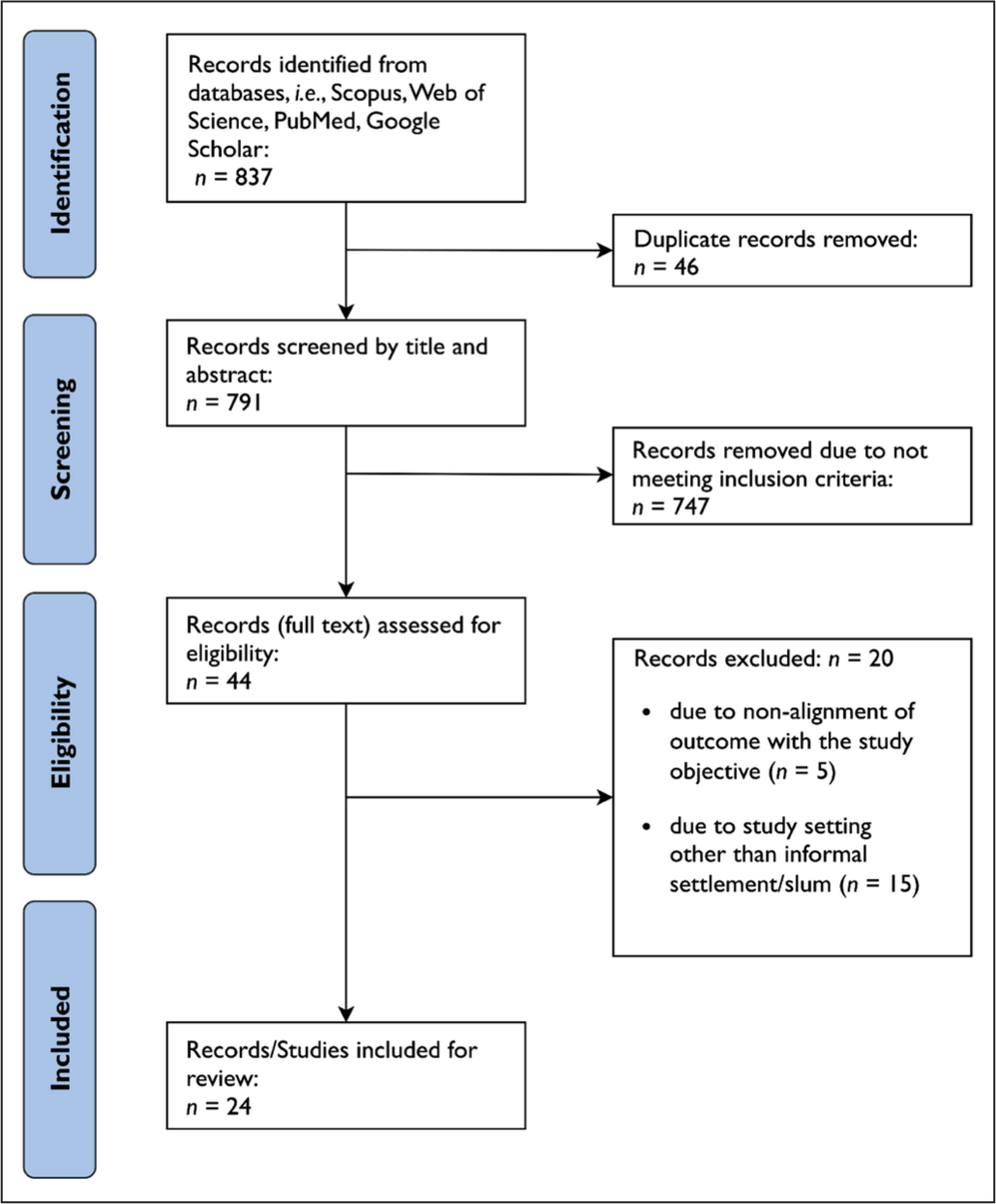
Data were then extracted using a standardised format adapted from Higgins and Green (2011). Key data pertaining to study characteristics, reported outcome variables (specifically focusing on women, children and the elderly), adaptive and resilience strategies, and policy implications relevant to urban informal settlements in India were systematically analysed, extracted and compiled into an Excel spreadsheet. Where necessary, additional information was requested from the corresponding authors of specific publications via e-mail.
Analysis
The synthesis was structured around key research questions. It examined how heatwaves affect health, livelihoods and social dynamics in urban informal settlements, assessing immediate and long-term impacts on residents, especially the most vulnerable. It also explored socio-economic and infrastructural factors like poverty, overcrowding, poor housing, inadequate services and weak urban planning that intensify heatwave effects.
The review was also structured to compile evidence on the strategies and practices adopted by communities and local authorities to cope with heatwaves. It aimed to assess how these resilience mechanisms reduce vulnerability and build adaptive capacity in informal settlements, covering both short-term coping and long-term adaptation. However, there was a lack of studies that directly evaluated the effectiveness of these adaptive interventions.
Further, the review was conceptualised to assess the role of current government programmes and policies in supporting or hindering resilience during heatwaves in urban informal settlements. Finally, the synthesis was guided to highlight the existing gaps in the literature regarding heatwave impacts and resilience mechanisms in urban informal settlements in India.
Quality Assessment
The study quality was assessed using the Joanna Briggs Institute (JBI) framework (Tables S1–S3; available online as a supplementary file), which evaluates risk of bias across different study types (Aromataris et al., 2024). Two authors independently scored the studies, with a third reviewer resolving disagreements.
Results
Characteristics of Included Studies
Table 1 summarises the characteristics of the 24 included studies. The majority of studies were recent, published between 2011 and 2024. The studies encompassed various subject domains, with environmental science/social science being the most common, followed by environmental health or public health and environmental science. Regarding study methods used in the studies, quantitative approaches were predominant. Primary data were utilised in 58.3 per cent of the studies, secondary data in 29 per cent and a combination of both in 12.5 per cent.
Characteristics of the Included Studies.
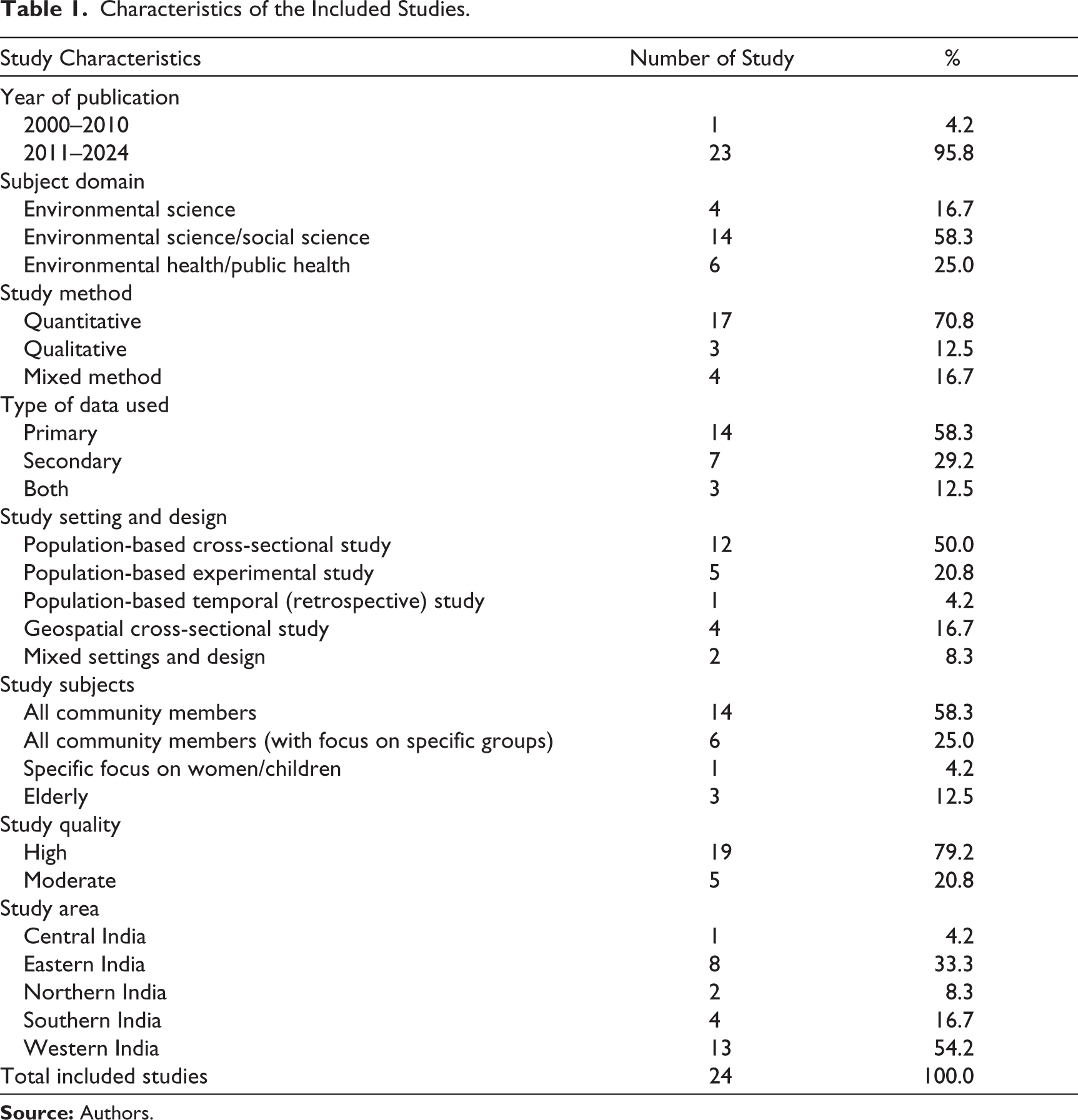
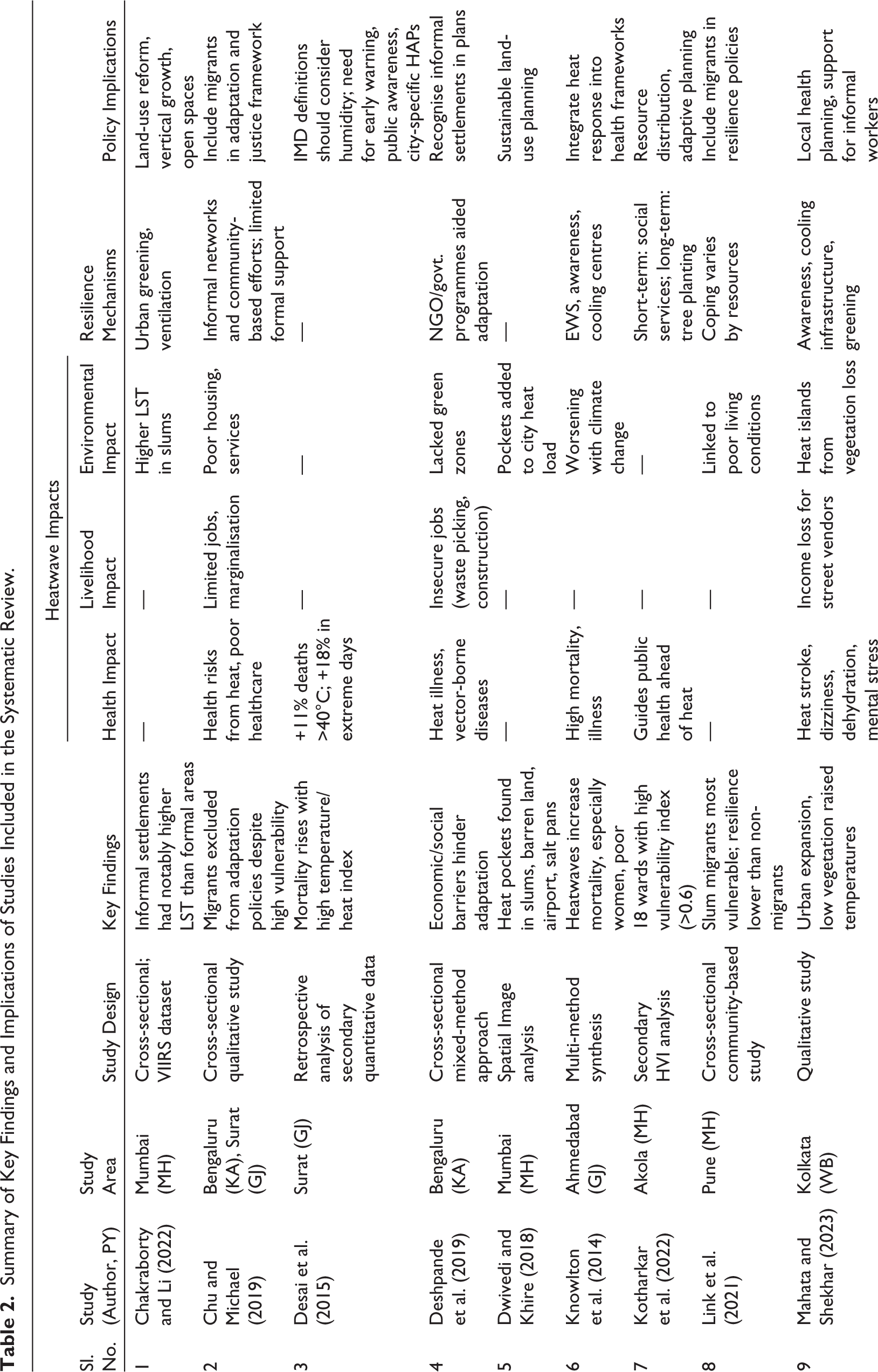
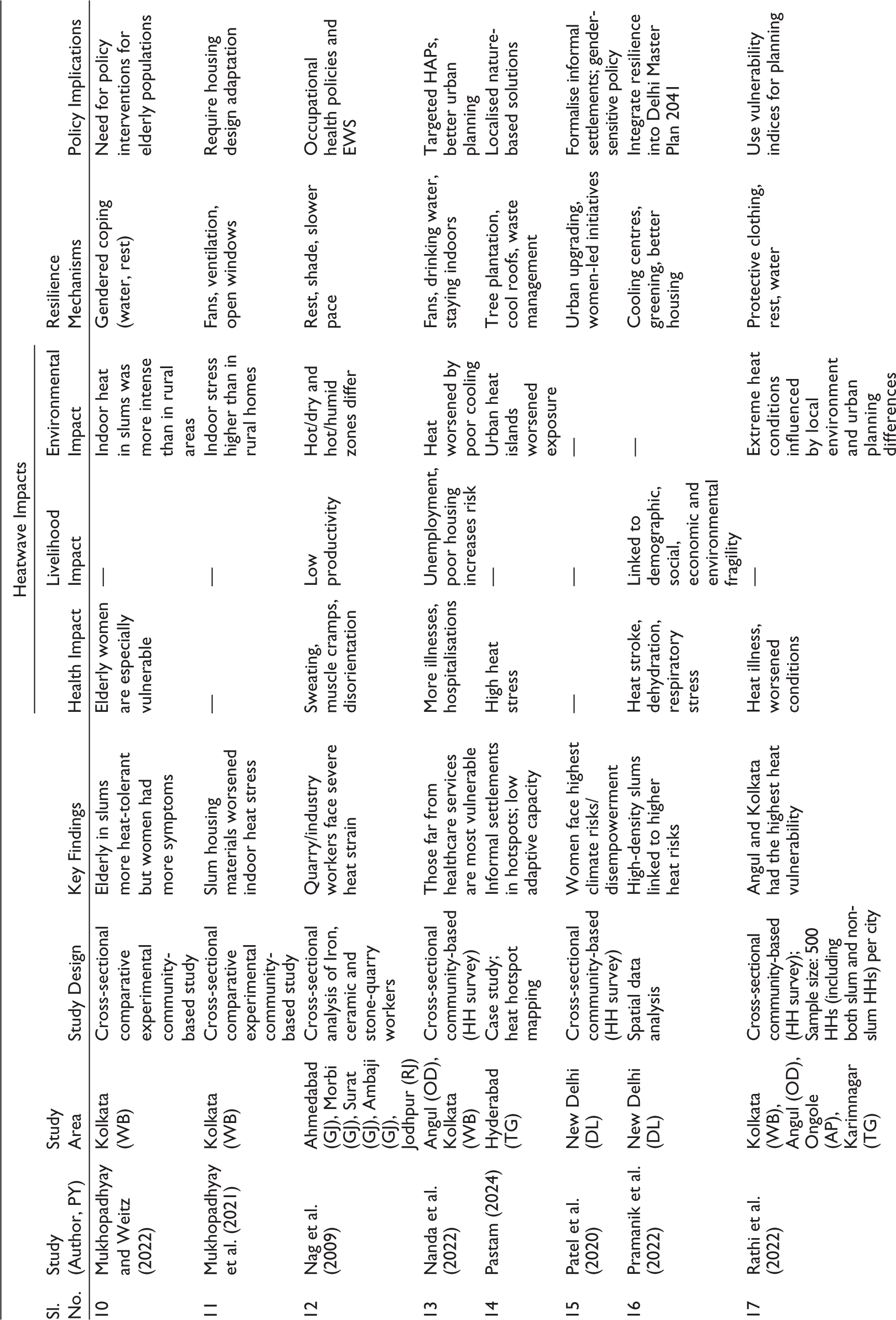
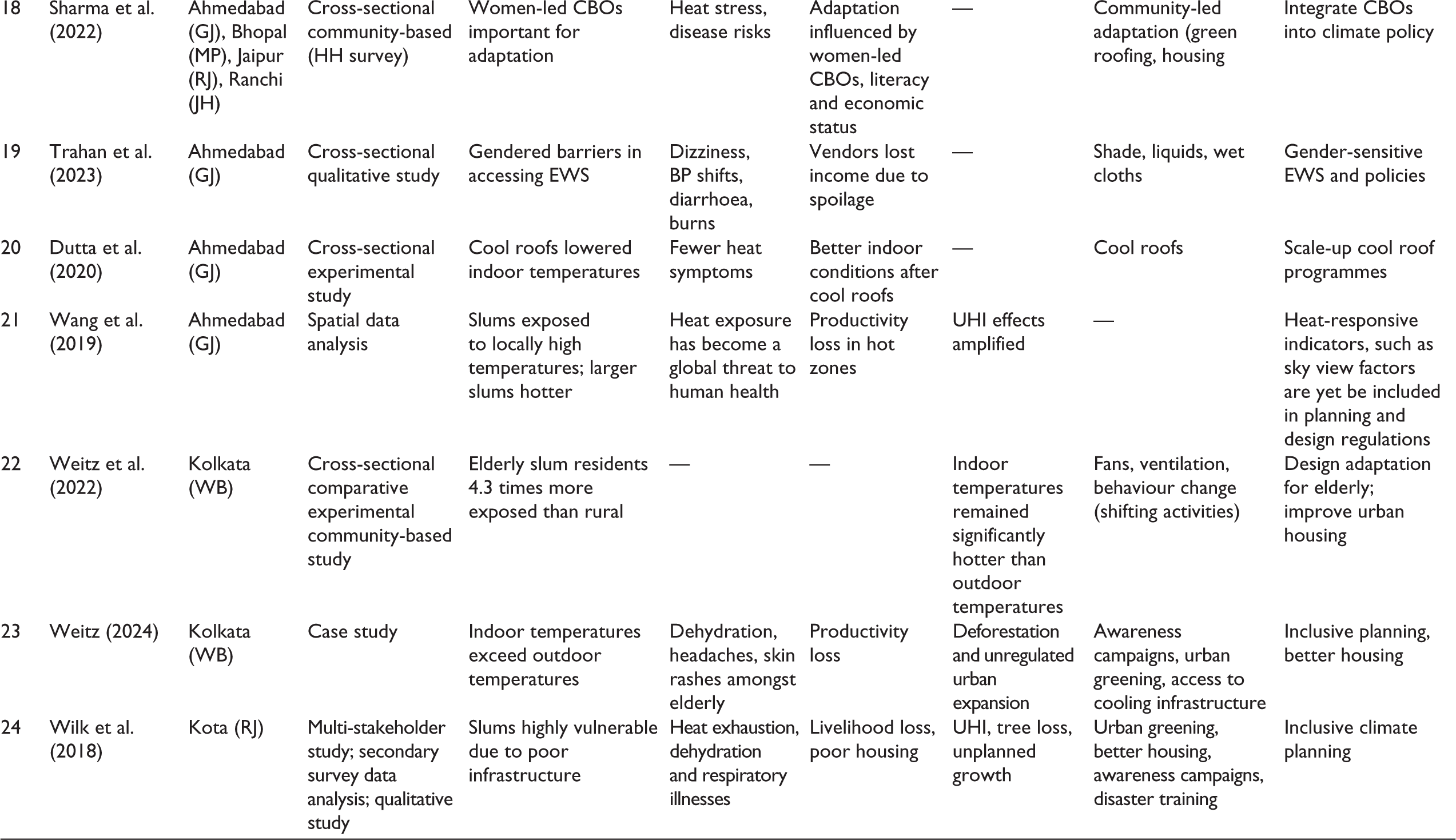
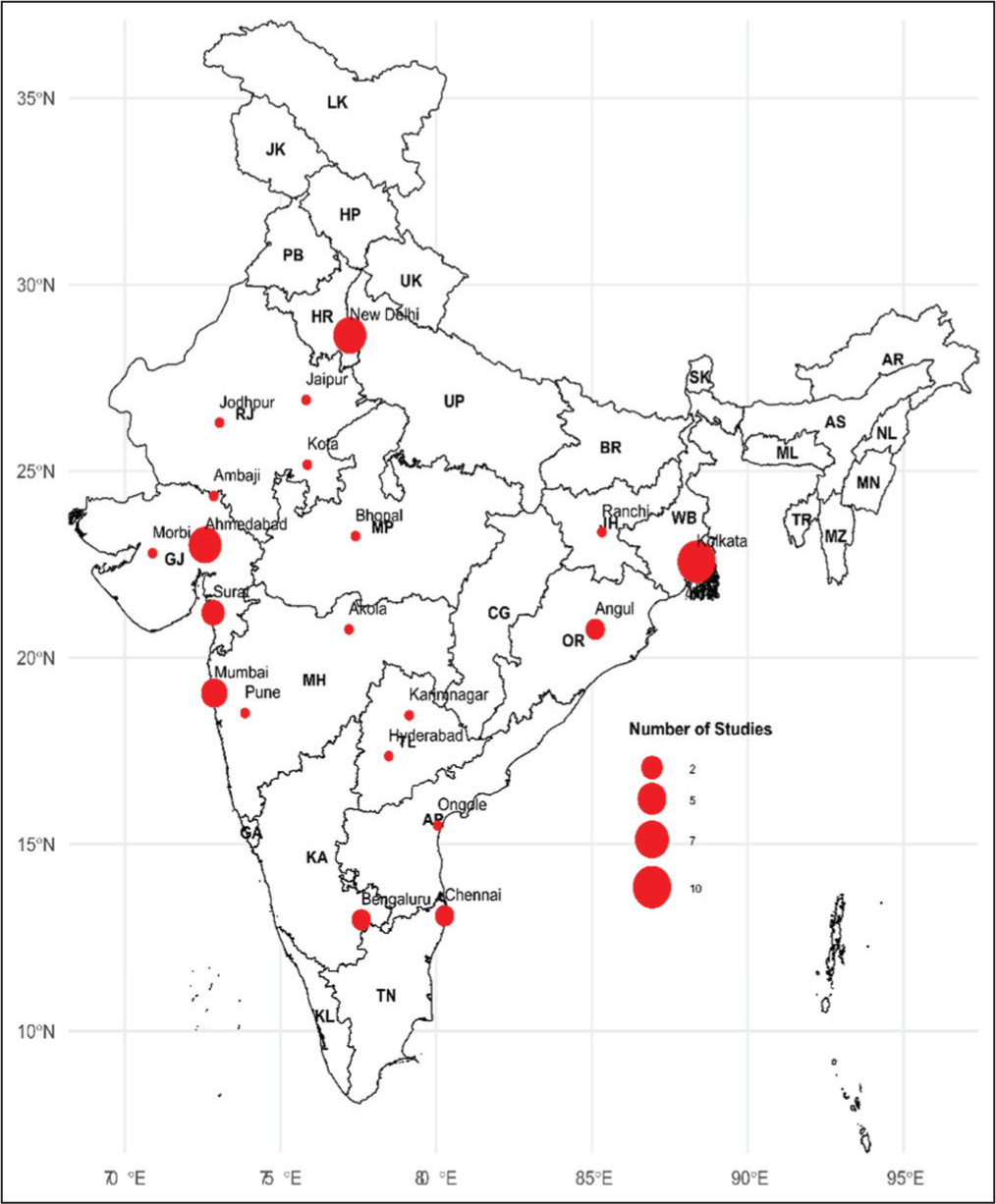
Most studies employed a population-based cross-sectional study design (50%), followed by population-based experimental study design (20.8%) and geospatial cross-sectional study designs (16.7%). Most studies focused on all community members (58.3%) or all community members with a specific focus on certain groups (25%), while some focused on specific populations like elderly (12.5%), and very few studies had specific focus on women or children population. Most studies were of high quality (79.2%) (Tables S1–S3; available online as a supplementary file). Geographically, Western India dominated (54.2%), followed by Eastern (33.3%), Southern (16.7%), Central (4.2%) and Northern (8.3%). Figure 2 presents the distribution of studies across various Indian cities. These records have been listed in Table 2, which provides the summary of key findings and implications.
Summary of Key Findings and Implications of Studies Included in the Systematic Review.
Location of the Included Studies across Various Cities in India.
Heatwave Impacts
The 24 reviewed studies addressed a wide range of health outcomes associated with extreme heat, encompassing both morbidity (e.g., hospitalisations, heat-related symptoms, mental stress) and mortality. Morbidity outcomes were more commonly reported, with heat-related common illness symptoms including dehydration, dizziness, skin rashes and respiratory problems, as documented by Rathi et al. (2022), Sharma et al. (2022) and Mahata and Shekhar (2023). These outcomes were often self-reported by vulnerable population groups, particularly slum dwellers, informal workers, women and the elderly. Although mortality was reported less frequently, few studies observed higher mortality (Knowlton et al., 2014; Nanda et al., 2022), mostly among people with pre-existing conditions, while morbidity indicators offered more insight into heat risks. For example, Mukhopadhyay and Weitz (2022) found that elderly women in urban slums experienced higher rates of disturbed sleep, muscle cramps and heat-induced fatigue compared to men in the same households.
Women’s health was a specific focus in studies by Sharma et al. (2022) and Patel et al. (2021), which highlighted heightened vulnerability due to social restrictions on mobility, household responsibilities and limited access to cooling infrastructure. Similarly, Malcoti et al. (2023) highlighted that children, due to lower adaptive capacity and higher metabolic heat production, were especially susceptible to heat-related symptoms. Poor sanitation, unreliable water supply and vector-borne diseases like dengue and chikungunya further heightened health risks, as noted by Chu and Michael (2019) and Wilk et al. (2018). While mortality data provide key macro-level impact indicators, the collective findings from morbidity studies revealed that non-fatal health effects, both acute and chronic, significantly influence daily lives and long-term well-being of vulnerable urban populations.
Livelihood outcomes of heatwaves were a central theme, particularly in the context of urban informal settlements, where economic precarity and environmental risks converge. Studies by Sharma et al. (2022) and Chu and Michael (2019) noted that extreme heat disproportionately affects the livelihoods of the urban poor, especially those in informal employment such as domestic work, street vending, construction and other daily wage activities, all typically lacking formal protections. Heatwaves lead to loss of workdays, reduced productivity and destruction of income‒generating assets. Mukhopadhyay and Weitz (2022) noted that prolonged heat exposure diminished elderly workers’ ability to perform routine economic activities. Patel et al. (2021) further reported that heat stress and environmental challenges intensified gender disparities in economic participation, particularly in households where women lacked decision-making power or financial independence. Overall, the findings emphasised that the disruption of livelihoods due to heatwaves extends beyond economics, affecting broader social resilience.
Several studies highlighted the impact of climate change by discussing environmental risks in urban informal settlements, suggesting their vulnerability in heatwave conditions. The urban heat island effect is exacerbated by factors such as high built density, limited green spaces and poor ventilation, creating conditions of extreme heat. It was found that people in informal settlements deal with even hotter temperatures, making heat stress even worse. Moreover, lack of access to adequate housing and basic infrastructure also exacerbated the heat stress (Chakraborty & Li, 2022; Wang et al., 2019).
Resilience Mechanisms
Adaptive strategies to extreme heat varied widely across the 24 studies, ranging from individual behavioural responses to systemic interventions at household, community and city levels. At the individual and household level, common measures included increased water intake, making dietary adjustments, resting during peak heat hours and staying indoors (Nanda et al., 2022; Rathi et al., 2022). These actions are low-cost, rapidly deployable and largely within residents’ control, but their effectiveness is constrained by overcrowded housing, limited indoor ventilation and the need to maintain livelihoods during peak heat periods. Although access to fans and other cooling devices can reduce heat stress, such access is often limited or intermittent in poorer households because of unreliable electricity and affordability barriers (Weitz et al., 2022).
Community-led initiatives were central to adaptation. Sharma et al. (2022) highlighted women-led community action groups (CAGs) in cities such as Ahmedabad, Bhopal and Ranchi, advocating for better housing ventilation, green roofing and greater awareness of heat risks. Dutta et al. (2020) found Ahmedabad’s Cool Roof programme effectively lowered indoor temperatures and improved self-reported health and comfort, illustrating the promise of simple, scalable technical measures when supported by city authorities. Mahata and Shekhar (2023) reported awareness drives and affordable cooling initiatives in Kolkata, while Wilk et al. (2018) emphasised the importance of participatory disaster-response training and urban greening in Kota as means to build collective preparedness and reduce ambient temperatures. These interventions highlight strengths such as community ownership, low-cost technologies and the potential for co-benefits (e.g., improved comfort, social cohesion and environmental quality). However, the literature also underscores key limitations: many initiatives are project-based or donor-dependent, with limited long-term financing and weak institutionalisation; their coverage is often patchy, failing to reach the most marginalised groups; and assessments of their sustained impacts on health, livelihoods and structural drivers of vulnerability remain scarce. Chu and Michael (2019), for example, noted that many migrant communities remained excluded from formal adaptation initiatives and instead relied on informal social networks for support, underscoring persistent inequities in access to resilience-building resources.
Discussion
Main Findings
A consistent theme across studies is the heightened vulnerability of residents in the urban informal settlements in India due to a combination of environmental, socio-economic and infrastructural factors. Research consistently indicates that informal settlements experience higher land surface temperatures (LST) compared to formal residential areas, intensifying the urban heat island effect (Chakraborty & Li, 2022; Wang et al., 2019). Poor housing quality, overcrowding, lack of green spaces and limited access to cooling technologies further exacerbate heat exposure in these communities (Mukhopadhyay & Weitz, 2022).
The review highlights how heatwaves harm health and livelihoods, with increased morbidity and mortality among vulnerable groups such as the elderly, women, children and those with pre-existing conditions (Desai et al., 2015; Knowlton et al., 2014). Reported outcomes include heat-related illnesses, dehydration and worsened respiratory or cardiovascular conditions (Mukhopadhyay & Weitz, 2022; Rathi et al., 2022). Heatwaves also disrupt livelihoods, especially for informal workers, causing productivity loss, missed workdays and economic hardship, which in turn deepens food and housing insecurity (Chu & Michael, 2019; Nag, 2009; Sharma et al., 2022).
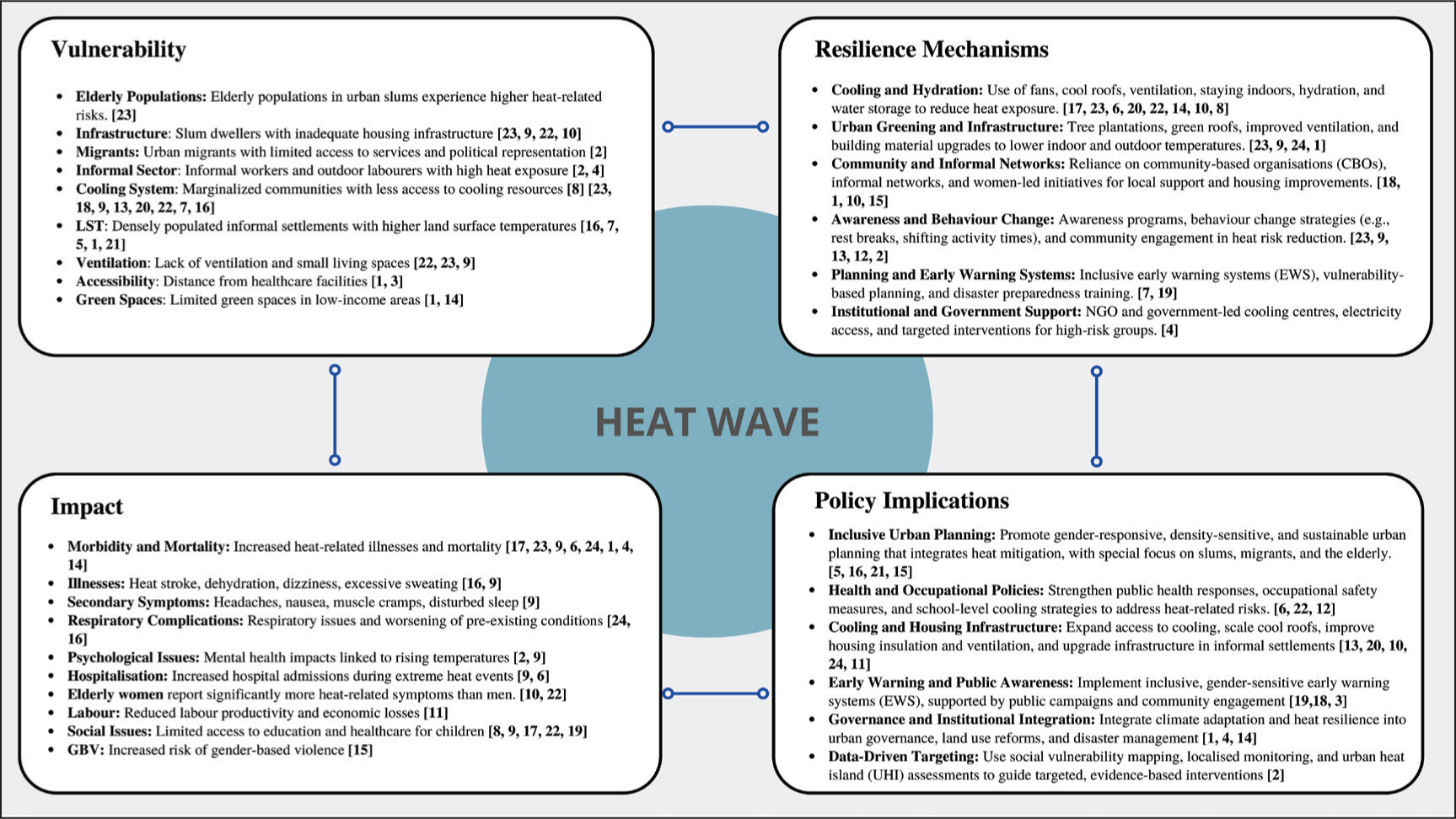
The analysed literature also identifies various resilience mechanisms adopted by communities and local authorities. These range from individual behavioural adaptations, such as increasing water intake and modifying work schedules, to community-led initiatives, such as women-led CAGs promoting green roofing and heat-risk awareness (Sharma et al., 2022). Community-based organisations also play a crucial role in providing support and resources to vulnerable populations (Deshpande et al., 2019). However, access to formal adaptation programmes and infrastructure often remains limited, especially for migrant communities (Chu & Michael, 2019). Finally, a major finding from the reviewed research is the relative lack of evidence on the assessment or evaluation of these resilience measures—not only in terms of their effectiveness in addressing the impacts of heatwaves on health and the socio-economic dimensions of vulnerability, but also regarding their capacity to address the underlying structural drivers of heat risk. Figure 3 summarises the vulnerabilities, impacts, resilience mechanisms and policy implications identified in heatwave-related studies on informal settlements in urban India.
Implications for Policy and Practice
A recurring theme across the synthesised studies is the need for integrating heat adaptation strategies into urban planning frameworks, moving beyond mitigation towards comprehensive risk reduction. Studies highlights the importance of sustainable land use, vertical development and heat-resilient building codes and the inclusion of marginalised communities, especially those in informal settlements, in local health planning (Deshpande et al., 2019; Knowlton et al., 2014; Kotharkar et al., 2022; Wang et al., 2019; Weitz, 2024).
The review underscores the necessity of targeted interventions that address both health and socio-economic vulnerabilities. Several studies emphasise strengthening health systems through inclusive early warnings, awareness campaigns and improved access to care (Desai et al., 2015; Knowlton et al., 2014). Others point to the potential of measures such as urban greening, expanding access to cooling infrastructure, promoting cool roof technologies and improving housing ventilation (Chakraborty & Li, 2022; Nanda et al., 2022; Vellingiri et al., 2020).
Addressing the unique vulnerabilities of subpopulations, such as migrant communities, informal workers, women and older adults, is also critical (Chu & Michael, 2019; Mukhopadhyay & Weitz, 2022; Patel et al., 2021; Trahan et al., 2023). This requires tailoring climate adaptation measures to their needs, including occupational health safeguards, social protection and gender-equitable strategies, while also formalising informal settlements and improving access to water, sanitation, electricity and secure land tenure to strengthen community resilience (Deshpande et al., 2019; Patel et al., 2021).
Policy-oriented solutions for urban heat resilience in informal settlements must move beyond generic climate action plans to explicitly integrate slum rehabilitation and pro-poor urban planning. Urban local bodies should embed heat-risk reduction into master plans and slum rehabilitation schemes by prioritising in-situ upgrading, nature-based solutions (e.g., urban greening, shade corridors), cool roofing, improved ventilation and access to safe water and sanitation, rather than merely relocating residents to poorly serviced peripheries. Institutional responsibilities also need to be clearly defined and coordinated: Building and Other Construction Workers Boards should mandate and enforce heat safety measures for informal and construction workers (e.g., rest–water–shade norms, work-hour adjustments, protective gear); Heat Action Plans (HAPs) led by municipal authorities should include ward-level vulnerability mapping of informal settlements, early warning dissemination through trusted community channels, and triggers for targeted relief (cooling centres, tanker water, mobile health camps). Municipal health departments should systematically monitor heat-related morbidity and mortality, strengthen primary care in high-risk areas and integrate heat alerts into routine surveillance. Climate resilience and city action plans should allocate dedicated resources for community-based adaptation, recognise and partner with local organisations and resident associations, and establish inter-departmental coordination mechanisms to align land use, housing, health and disaster management functions. Importantly, these measures must acknowledge implementation realities—limited municipal capacity, fragmented mandates, competing urban development priorities and the precarious legal status of many settlements—by simplifying procedures, ensuring stable financing and institutionalising participatory planning so that residents of informal settlements co-design and monitor heat resilience interventions.
Study Limitations
This systematic review is subject to limitations stemming from the nature and scope of the included studies. First, the 24 studies showed considerable heterogeneity in design and methodology, limiting comparability and generalisability. Second, many relied on self-reported data for morbidity and adaptive behaviours, introducing potential recall and social desirability biases that may affect accuracy. Third, the geographic coverage of the included studies is not uniform across India. While some cities, such as Ahmedabad and Kolkata, are well-represented, other regions and urban centres with significant informal settlements may be underrepresented, limiting the ability to extrapolate findings to the entire country. Limiting the review to English-language studies may have introduced language bias, excluding relevant research in other languages. Additionally, the review is constrained by the availability and quality of data on specific heatwave impacts, including mortality and livelihood disruptions. While many studies reported on health outcomes, detailed data on chronic illnesses, psychological stress and long-term socio-economic consequences were lacking. Similarly, studies assessing the role of government programmes and policies in supporting resilience during heatwaves were limited, suggesting a need for further research in this area.
Conclusions
The synthesised findings indicate that informal settlements are disproportionately affected by heatwaves due to environmental, socio-economic and infrastructural vulnerabilities. The convergence of higher LST, poor housing conditions, limited access to resources and precarious livelihoods creates a context of heightened risk for residents of these settlements. Heatwaves significantly affect health and livelihoods in informal settlements, with the elderly, women and children most at risk. Disrupted livelihoods, reduced productivity and economic hardship are also common consequences of heatwaves, further exacerbating existing inequalities and vulnerabilities.
The analysed literature identifies a range of adaptive strategies employed by communities and local authorities to cope with heatwave impacts. These include both individual behavioural changes and community-led initiatives aimed at improving housing conditions, increasing awareness and providing support to those in need. However, there is a dearth of studies evaluating the effectiveness of these strategies. The findings reveal that effective governance and the integration of informal settlements into planning processes, particularly through HAPs and revisions of master plans to prioritise context-appropriate nature-based solutions, are critical for building resilience in these communities and for preventing informal areas from becoming or reinforcing urban heat islands. There is also a need for early warning systems, citizen awareness programmes on climate change adaptation and stronger climate action plans that explicitly address public health adaptation and risk communication. Significant gaps remain in the existing literature, particularly with respect to robust assessments of adaptation strategies and clear evidence on the effectiveness of interventions in addressing heatwaves in informal settlements.
Future research should focus on these understudied areas to inform evidence-based policies and practices that can more effectively protect vulnerable urban populations from the growing threat of extreme heat. There is a need for adequate ground-up, hyperlocal studies that foreground the lived experiences of residents in informal settlements, capturing how they perceive, negotiate and respond to heat risk in their everyday lives. Addressing these knowledge gaps will support targeted interventions that enhance the adaptive capacities of informal settlements and promote climate-resilient urban development.
Supplemental Material
Supplemental material for this article is available online.
Footnotes
Declaration of Conflicting Interests
The authors declared no potential conflicts of interest with respect to the research, authorship and/or publication of this article.
Funding
The authors received no financial support for the research, authorship and/or publication of this article.
References
Supplementary Material
Please find the following supplemental material available below.
For Open Access articles published under a Creative Commons License, all supplemental material carries the same license as the article it is associated with.
For non-Open Access articles published, all supplemental material carries a non-exclusive license, and permission requests for re-use of supplemental material or any part of supplemental material shall be sent directly to the copyright owner as specified in the copyright notice associated with the article.
