







Abstract
The Global South faces increasing challenges due to climate change. According to the Periodic Labour Force Survey, 2024, home-based handicraft artisan workers are a part of the 23.5 per cent of self-employed women workers in India. These women artisans face increased climate risks that intersect with social, spatial and economic challenges, impacting their overall well-being. Ahmedabad district, located in Gujarat in western India, home to Abodana Cooperative, is estimated to suffer through a fivefold increase in heat waves in the next five years. Therefore, the study investigates the intersection of gender, informal work and climate risk at Abodana Cooperative to understand the added vulnerabilities of extreme heat. The findings contribute to the much-needed empirical research that brings evidence from the grassroots for urban India. It reveals how the built environment, gendered barriers to mobility and improper urban infrastructure intensify the climate vulnerabilities for the Abodana Cooperative. It lays the groundwork for co-creating climate-resilient strategies catering to the requirements of the Abodana Cooperative and advocates for the inclusion of home-based workers, such as women artisans, in climate action frameworks.
Introduction
According to the Lancet Countdown Report 2025, heat exposure is reducing labour productivity and causing associated potential income losses equivalent to $1.09 trillion in 2024. Informal workers, employed in unstable work conditions that lack social security, are particularly vulnerable to climate-related disruptions. They face compounding impacts: first, due to the informal nature of their work, a loss in working hours is directly related to lost income, and second, because more often than not, they live in informal settlements that are more vulnerable to climate-related risks (Adeola, 2021; Moussavi et al., 2024; Reza et al., 2024; Satterthwaite et al., 2020). Although informal workers are among the lowest contributors to climate change, they are the most vulnerable to its impacts and often lack the resources to cope with climate risks (Leck et al., 2025).
Given that 88 per cent of people’s livelihoods in South Asia and sub-Saharan Africa are informal in nature (Dodman et al., 2023; ILO, 2018; Sepadi, 2025), there is a pressing need to understand the climate-related risks faced by informal workers in these regions. Additionally, UN-Habitat projects that 66 per cent of Asia’s population will live in urban areas by 2050, bringing focus to the urban (Ncube et al., 2023). In India, 73.2 per cent of non-agricultural employment is informal, of which 23.5 per cent are women (PLFS, 2024), including a significant number of home-based workers. However, such vulnerable groups are excluded from climate policy and action, thereby amplifying the adverse effects on their lives and livelihoods (Ngcamu, 2023).
Urban informal women workers face various risks, shaped by the nature of their work, underlying social vulnerabilities and the extent of familial support available to them. These risks intersect in multiple ways through precarious workspaces, unreliable transport access, care burdens, inadequate housing and persistent health issues. Among these factors, the condition of the workspace—especially when homes also serve as workspaces—emerges as a critical yet often overlooked determinant of a worker’s well-being (Chant & Pedwell, 2008).
Despite its significance, the role of the home as a workspace in shaping the lived experiences of informal workers has received limited attention in research, particularly in the context of increasing climate risks in indoor environments. This article seeks to address this gap by unpacking the intersecting vulnerabilities faced by women handicraft artisans in Ahmedabad, Gujarat, at their homes and workspaces. It draws on an exploratory study conducted by the Self-Employed Women’s Association (SEWA) Federation in collaboration with Urban Design Square. Gujarat, located in western India, is a hub of handicrafts and is ranked among the top 50 regions in the world most ‘at risk’ from climate hazards (XDI, 2023). Ahmedabad district in Gujarat is projected to see a fivefold increase in heat waves by the 2030s (CSTEP, 2022). Within this context, the study examines the climate vulnerabilities and adaptation strategies of women artisans at Abodana Mahila Chaapkaam SEWA Sahkari Mandali in Ahmedabad, a handicraft cooperative managed and run by women.
Literature Review
‘Home-based workers’ are those who ‘produce goods or services in or near their homes for local, domestic or global markets’ (WIEGO, n.d.). In 2021, there were 260 million home-based workers in the world, of which a significant 57 per cent were women and 65 per cent were based in Asia and the Pacific (Bonnet et al., 2021). Home-based workers are categorised within informal employment, which encompasses all livelihoods lacking in legal or social protection (2003 ICLS), and face the highest poverty risk with the lowest average earnings (Chen, 2012). In these cases, while the home as a workspace intensifies women’s negotiation between domestic duties and paid work, it also provides a viable source of livelihood—especially for women who have restrained mobility due to household chores and/or societal norms (Chen, 2012).
In India, the handicraft sector has emerged as a space for empowerment of women and minority communities (Deshmukh et al., 2024; Guha et al., 2021). However, it continues to operate informally without regulation or proper written documentation and depends heavily on the interest of younger populations to continue pursuing the trade (Deshmukh et al., 2024). Globalisation has also brought mass-produced alternatives that hinder the commercial viability and cultural significance of many traditional handicrafts (Deshmukh et al., 2024; Shafi et al., 2022), placing the handicraft sector at an increasing risk of extinction. Therefore, the sustainability of the sector has become a global concern, with international and national organisations and individuals demonstrating and implementing various strategies and initiatives (Honnurswamy, 2022).
Informal settlements, which generally lack secure land tenure and access to basic services (Satterthwaite et al., 2020), often intersect with informal employment; many (but not all) residents of informal settlements work in the informal economy. Where they do overlap, precarious living conditions and precarious working conditions can compound the risks faced by individuals and households (Ahmed et al., 2023; Dodman et al., 2023; Loewenson et al., 2023; Pasquini et al., 2020). For instance, informal settlements are typically located in far-off locations, and home-based workers have to regularly travel long distances to pick up and deliver orders (Chen & Sinha, 2016) and have to adapt to the lack of accessible public transport. The rising climate crisis compounds the existing vulnerabilities for both informal settlements and home-based women workers (Dodman et al., 2023; Loewenson et al., 2023; Satterthwaite et al., 2020).
The ‘urban heat island’ (UHI) effect, characterised by higher temperatures in urban areas due to high-density living, diminishing green cover and human activities, has already increased cities’ vulnerabilities to heatwaves (Ebi et al., 2021). Informal settlements, with closely packed built form and minimal open spaces, are under an increased threat of rising heat, both in indoor and outdoor spaces (Coffel et al., 2018; Scott et al., 2017). While climate-related policy has emerged as a growing area of focus, the exclusion and marginalisation of informal workers persists as they continue to receive limited attention within policy discourses (Dodman et al., 2023). Moreover, the impact of UHI on indoor workspace environments, as well as access to workspaces, has not been explored in depth yet.
A series of policy briefs developed under the ‘Urban Policies Program’ (WIEGO & MHT, 2021) highlight the importance of improving the physical environment and promoting energy efficiency and climate resilience by incorporating the needs of home-based workers in city plans and policies. While planning and policy decisions like segregated residential and commercial zoning do not encourage home and work to function together (Lall et al., 2025), individual characteristics like age, gender and pre-existing health status, magnify the vulnerability of home-based workers (Dodman et al., 2023; Loewenson et al., 2023). The impact of the physical built environment on climate vulnerabilities of home-based workers is being increasingly recognised, and solutions are emerging at the intersection of planning, housing policies and architecture (Lall et al., 2025; WIEGO & MHT, 2021). For instance, incremental upgradation of homes and access to alternative energy sources (e.g., solar panels) are recommended under the ‘Urban Policies Program’. These initiatives require significant advocacy to influence policy decisions.
Even when there are supportive policies, in some Indian cities, access to benefits remains minimal, often due to a lack of awareness, reliable information and necessary documents (Agarwal et al., 2023; Dodman et al., 2023). Here, cooperatives can play a role in organising home-based workers, building awareness of their rights and linking them to financial and social support schemes (Federico Parra, 2025). The lack of visibility and participation of home-based women workers in decision-making processes (Skinner & Watson, 2020) requires a body of knowledge on their lived realities to influence policy. At this juncture, ‘activity mapping’—documenting the usage of space over different periods of time—is a key tool for taking up mixed-methods action-research (Gehl, 2011; Whyte, 1980). This evidence base will be instrumental in exploring and developing grassroots strategies for improving the conditions of home-based workers in the face of climate change.
Research Focus
The study aims to understand:
The impact of the workspace built environment on the heat risks faced by home-based women handicraft artisans The adaptation strategies that women adopt to cope with the increased heat risks
About Abodana
The Abodana Mahila Chaapkaam SEWA Sahkari Mandali (henceforth referred to as Abodana Cooperative or Abodana) is a cooperative of women handicraft artisans located in Ahmedabad, Gujarat. SEWA organised these women artisans into a handicrafts cooperative, and it was registered in 1982 with 51 artisans as its shareholders, holding equal ownership of the cooperative. The cooperative was set up to support women artisans in the informal sector, particularly those engaged in block printing, to transition out of informality. It functions as a social enterprise addressing gender vulnerabilities of women workers by facilitating access to social security schemes, including affordable healthcare, childcare, insurance, pensions and other need-based public services and entitlements. The artisans of Abodana specialise in embroidery, stitching, badla work, patchwork, appliqué, jewellery-making, beadwork, crochet and block printing.
Today, the cooperative sells products online and at exhibitions under the SEWA Kalakruti brand. It fulfils third-party orders, handling about 20 orders per month. In 2023–2024, the Abodana Cooperative had a turnover of ₹1,484,397, and linked 428 women artisans with livelihoods. The work at Abodana contributes as a supplementary income to artisans, often seasonal, and they benefit significantly from the linkage to social security schemes. The cooperative is also a member of the SEWA Cooperative Federation (henceforth referred to as the Federation) and has been receiving intensive support to strengthen its business operations.
Abodana’s Workspaces
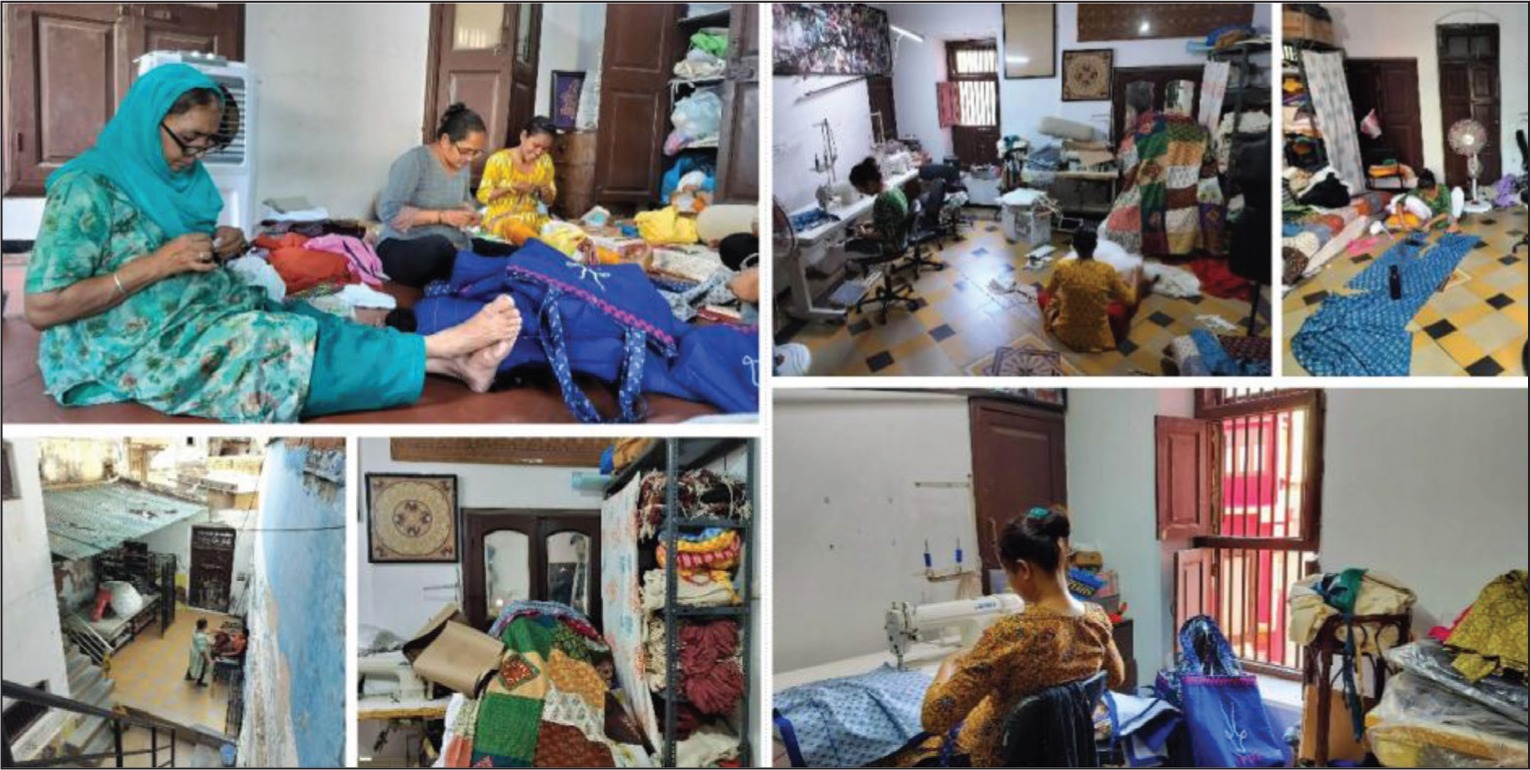
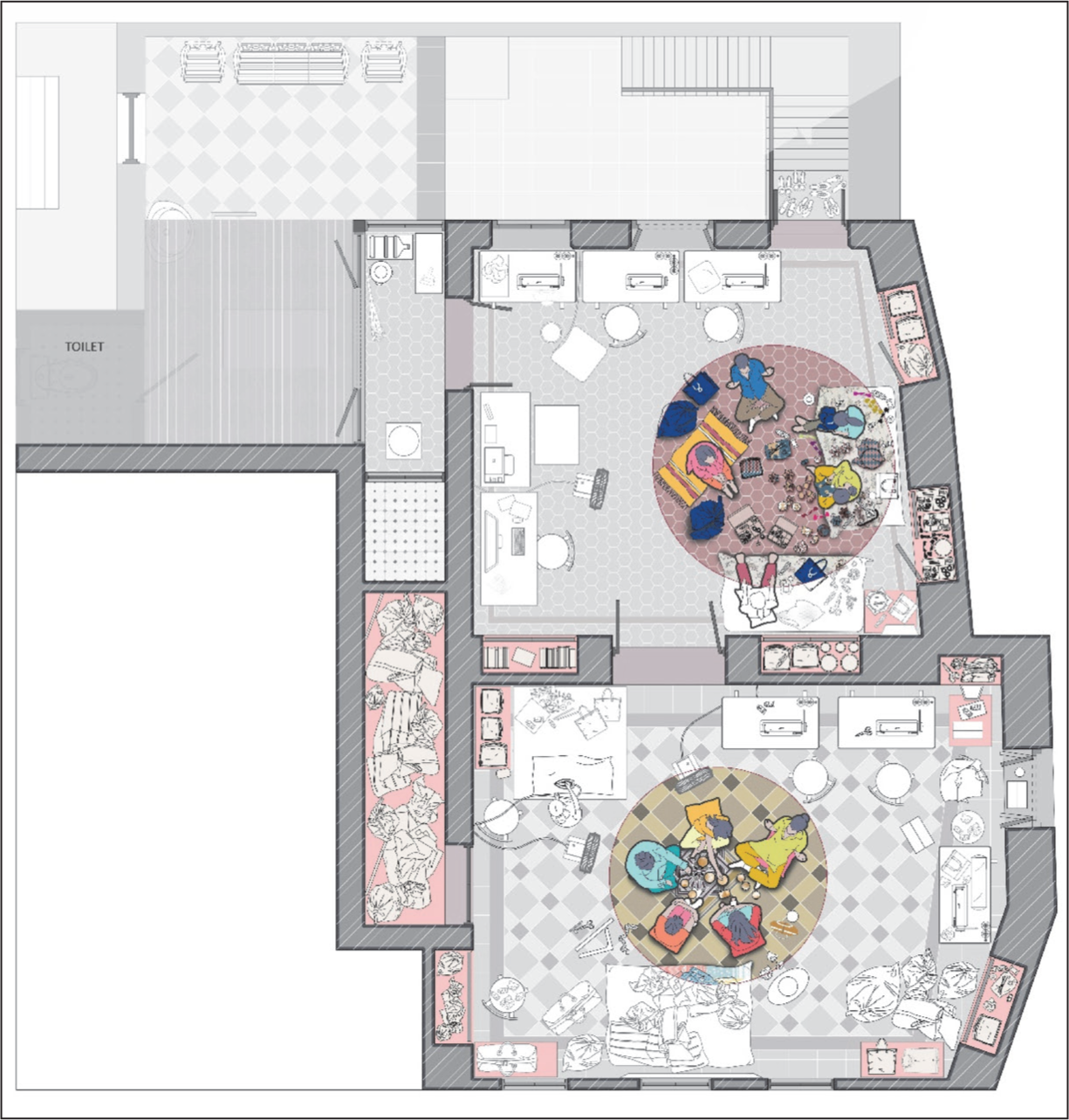
Since 2021, parts of the operations of Abodana, including raw material storage, warehousing, sampling, inventory management and packaging, have been based at ‘SEWA ni Haveli’ (also referred to as Haveli)—a three-storey, Grade III heritage structure in Ahmedabad’s old city at Dhal ni Pol. Two rooms on the first floor of the Haveli are allotted for this purpose. Restored in 2014, the Haveli hosts eight women artisans for sampling and production work (see Figure 1).
The Work Environment Inside SEWA ni Haveli.
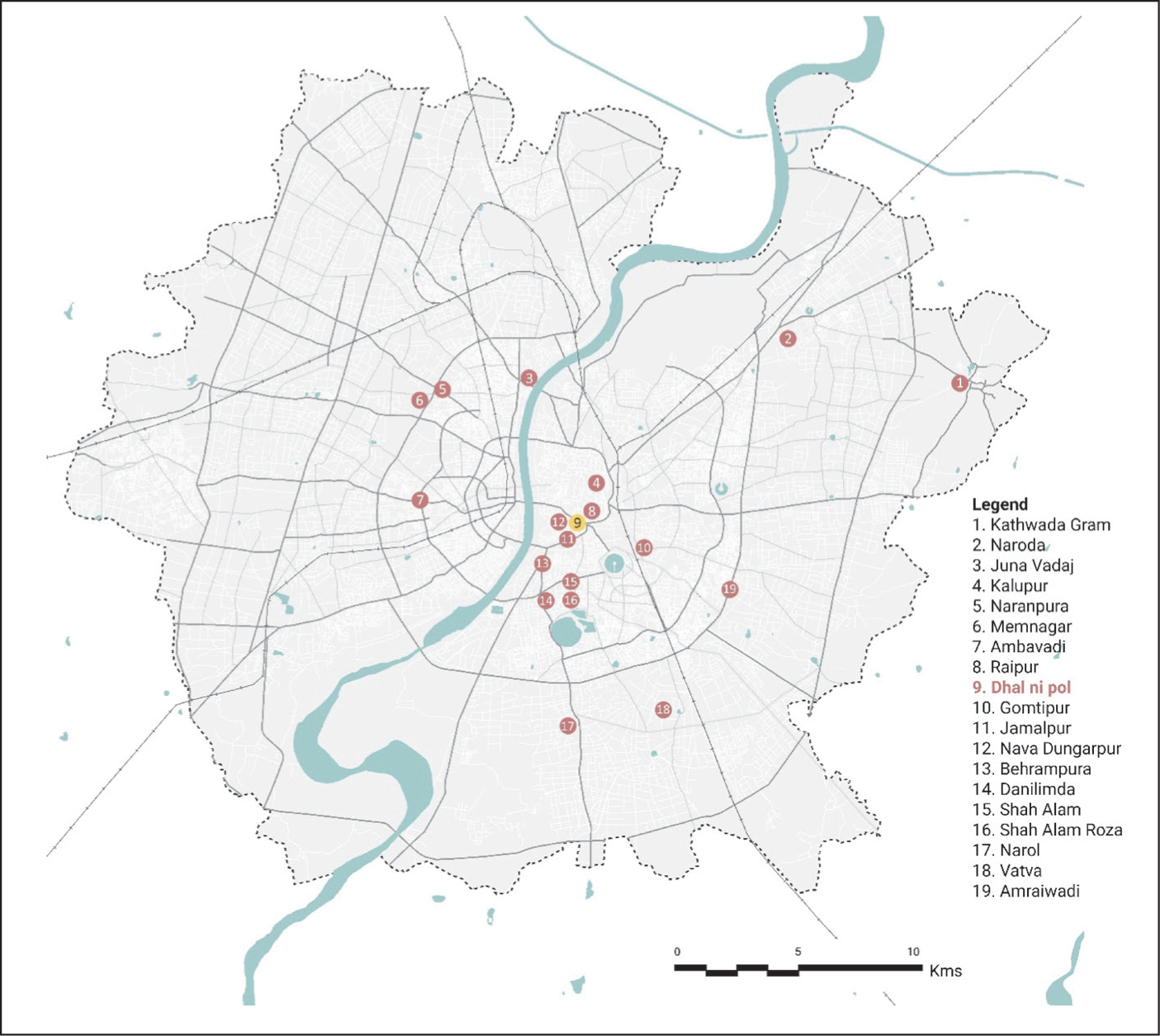
Abodana relies heavily on a network of home-based artisans usually living in informal settlements or low-income communities across Ahmedabad (see Figure 2) and neighbouring district Mehsana in Kadi.
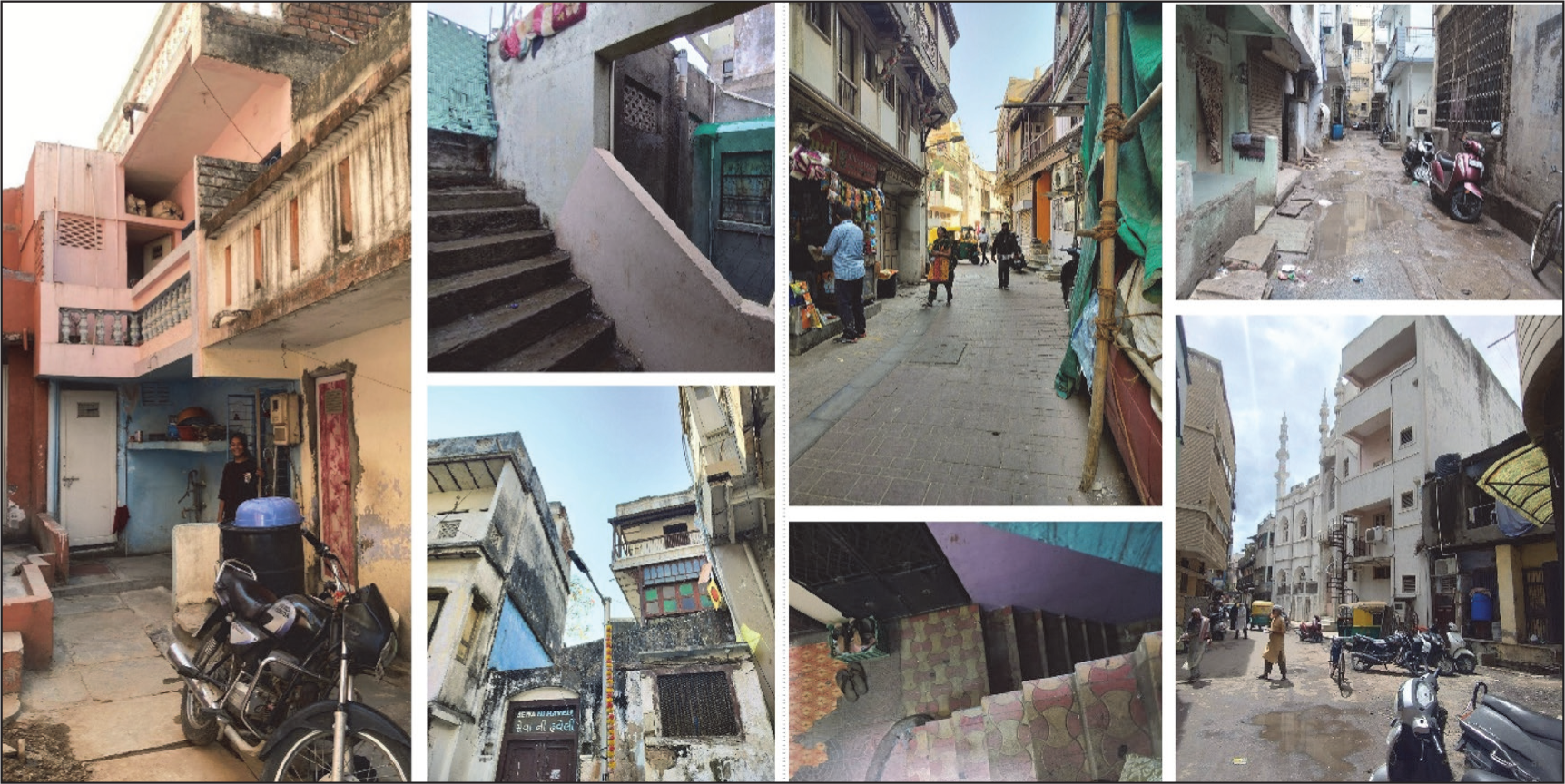
In contrast to SEWA ni Haveli, their homes are typically one- to two-room permanent (pucca) or semi-permanent (kuccha) apartments, in densely populated neighbourhoods, wherein ventilation and natural light are limited because of the close proximity of the homes to one another (see Figure 3). A few of the artisans also live in homes which do not have toilets.
Artisan Homes and SEWA ni Haveli (Yellow).
Photographs Showing the Space Outside and Within the Homes of Artisans.
Artisan members include young unmarried women, women with young and adolescent children, as well as women aged over 50 years. These artisans receive payment based on the number and type of pieces they complete. The cooperative allocates pieces to the artisans based on the quantity of the order and the skill and availability of the artisans.
Methodology
Understanding the limited research available at the intersection of home-based women workers and heat risk, an exploratory study is designed. This provides flexibility to modify research methods and familiarise oneself with the nuances of the research focus (Swaraj, 2019). Understanding the limitations of this approach, in that it does not lead to conclusive findings, a mixed-methods approach is used, combining site observations and activity mapping with structured interviews to gather evidence that may be useful for further research in this area.
The study was initiated with an extensive literature review to develop a set of indicators for mapping and assessing climate risks. Activity mapping, a technique used to map the usage of space, is used to understand the built environment and its implications on the climate vulnerabilities of women artisans. The study examined both of Abodana’s workspaces: SEWA ni Haveli and homes of artisans. While the homes of artisans were not spatially mapped, the work environment was observed, and limited photographs were captured during interviews to gain an understanding of the built environment. Artisans from both workspaces participated in semi-structured interviews.
This study was completed over a consolidated time period of 16 weeks. Gaps between milestones were utilised by the research team members to have regular reflective conversations and multiple reviews with the Federation team members. Data collection was done during the peak summer months of May and June in 2024. It was initiated with measurements of SEWA ni Haveli to understand its spatial layout. After this, the focus shifted to ‘activity mapping’ at different times of the day to understand daily routines as well as activities related to Abodana’s logistics, production and sales. Observations were recorded as field notes, sketches and through photographs.
Semi-structured interviews were conducted with five artisans who were working at SEWA ni Haveli during that time. Seven artisans who work at their homes were also interviewed, chosen based on the level of activity of the artisan in the past year (in terms of the number of orders and their engagement in monthly meetings). Two questionnaires (in Appendix A1 and A2) were developed for conducting interviews in both workspaces. The established relationship between the Federation and Abodana was instrumental in gaining access and having meaningful conversations with the artisans.
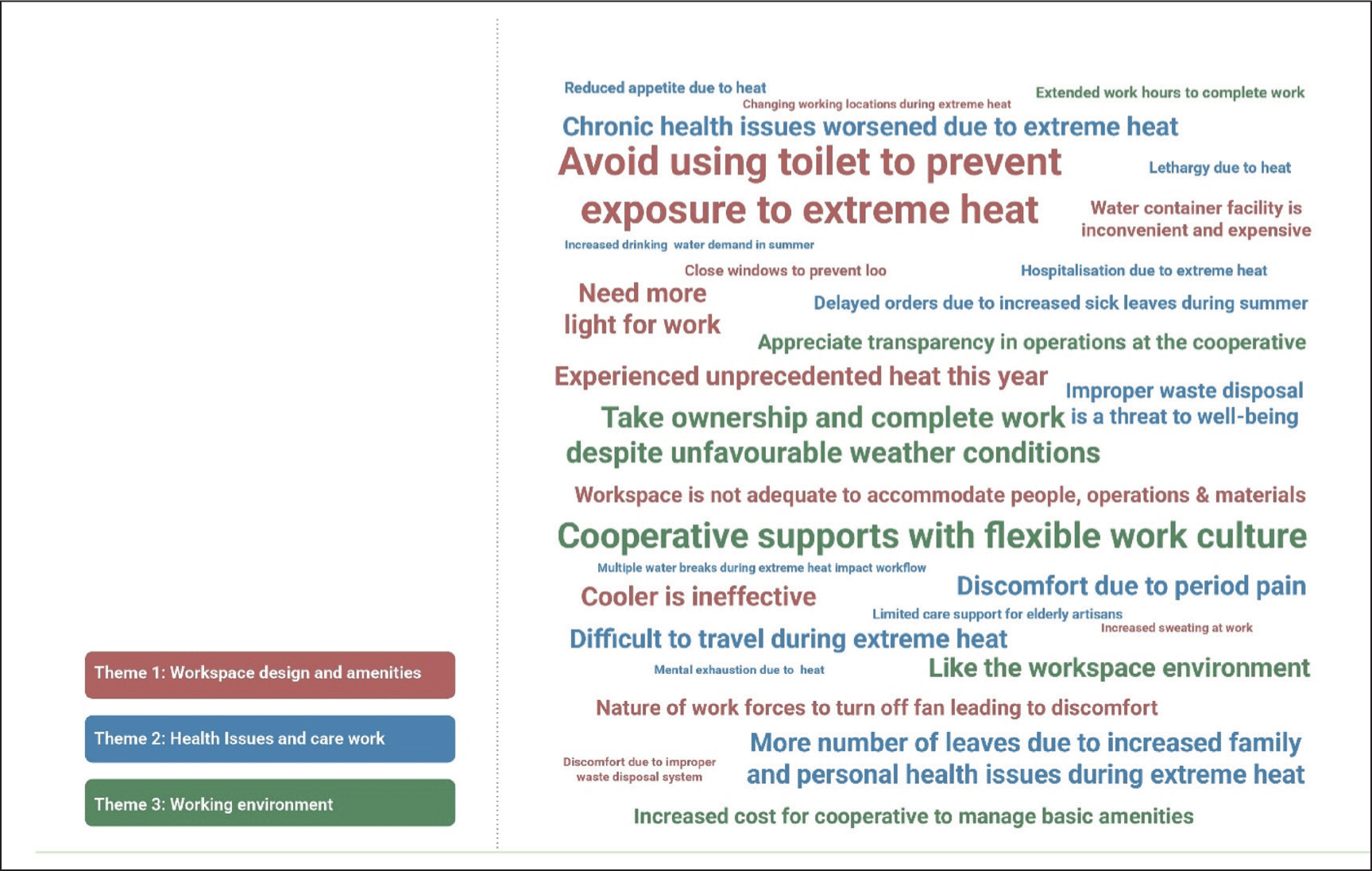
The interviews provided deeper insight into the spatial challenges women artisans face within their workspaces and social challenges beyond (see Figure 4). This helped in triangulating the observations of activity mapping and correlating the spatial and social negotiations. Interview data were analysed and coded thematically using QDA Miner Lite (codebook available in Appendix B).
Interview Excerpts Grouped into Three Themes.
The study indicators evolved through this process and were eventually grouped into four thematic parameters. This developed a systematic basis for analysis, highlighting key insights on the intersecting socio-spatial negotiations and the compounding risks faced by the artisans of Abodana. Each parameter maps the spatial negotiations within the Abodana workspaces and correlates them with the insights gained from interviews.
Drawings were prepared in an easy-to-read format, combining insights from field notes, photographs and transcribed interviews. Minimum one drawing was prepared to categorise and document the insights for each of the thematic parameters, as described below:
Cooling and ventilation
This parameter looks at the location of fans and coolers as well as the size and positioning of windows and doors.
Availability of light
This parameter evaluates the available natural light and its effectiveness for all workstations.
Space availability
This parameter looks at the workspace’s spatial arrangement, including the room sizes, furniture arrangements and amount of space available for activities.
Access to amenities
This parameter evaluates the availability and accessibility of essential amenities such as toilets, drinking water, pantry facilities and transport.
Scope and Limitations
A limitation of the study is that SEWA ni Haveli is a Grade III heritage residential building, making some of the findings less applicable to non-heritage or modern urban built environments. Conducting interviews with home-based artisans was challenging due to their concerns about familial expectations and the limited availability of time for hosting visitors. The data collection was done during May–June; therefore, the analysis of heat stress is limited to this period, characterised by a harsh, hot and dry heat.
Ethics
All participants provided written informed consent for interviews, photography, mapping and observations conducted as part of the study. To minimise disruption, interviews were scheduled outside of the artisans’ working hours, respecting their availability and workload. The research team comprised female researchers, which helped foster a more comfortable and respectful environment for participants.
Findings on Socio-spatial Negotiations
The findings emerge from a combination of spatial analysis and qualitative inquiry, leading to in-depth insights into the everyday negotiations at the intersection of the social and the spatial. This approach reveals how artisans navigate and adapt their work practices within the constraints and possibilities of both their physical environments and social realities.
Cooling and Ventilation
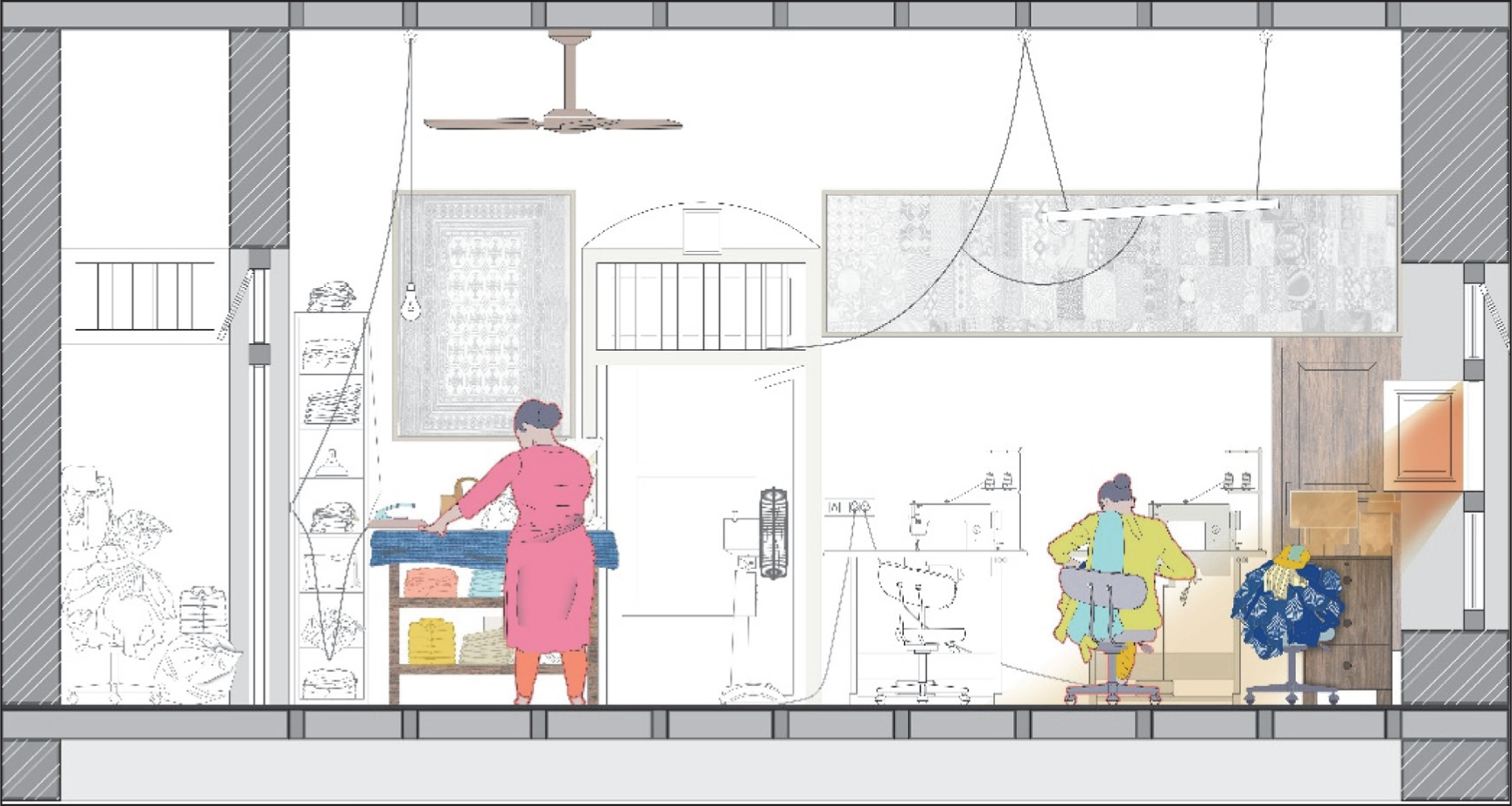
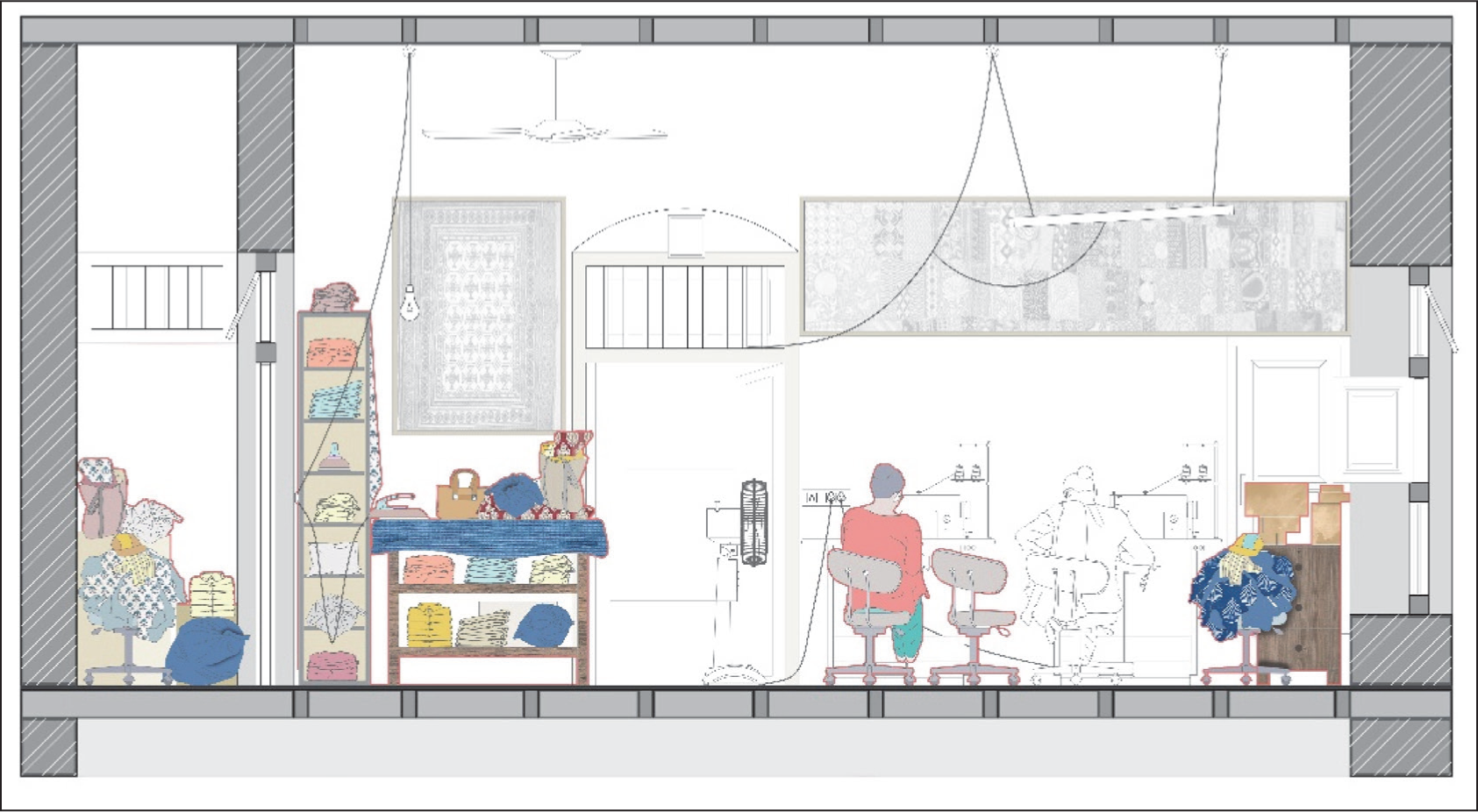
At the Haveli, small door and window sizes provide limited ventilation. The lack of proper door-window overhangs or chajjas (owing to the heritage structure) means increased exposure to direct sunlight (see Figure 5). The placement of fans is also not ideal with respect to the workstations, and there is only one cooler, which is inadequate for the two-room workspace, providing only temporary relief to the users sitting right next to it. Artisans reported the space feeling stuffy on hot days, forcing them to keep the door and windows open, making the cooler doubly ineffective. For activities such as fabric cutting, the fans have to be turned off to keep the fabric in place, causing increased sweating and discomfort.
Increased Exposure to Heat as Artisans Open and Close Windows to Manage Ventilation at the Haveli.
Khidki band kar di toh light bohot kam ho jaayegi aur khidki khol ke bhi cooler chalaayenge toh thanda nahi hota hai…. behene cutting karti hain toh fan bhi band karna padta hai kyuki woh sab kapda udta hai toh zyadatar garmi mein cutting waalo ko dikkat hoti hai.
(When we close the windows, then there isn’t enough light, and if we open the windows, then the cooler doesn’t keep the space cool…. Sisters who do cutting work have to even switch off the fan, otherwise the cut pieces fly off, so they feel very hot.) (Artisan, who works at SEWA Ni Haveli)
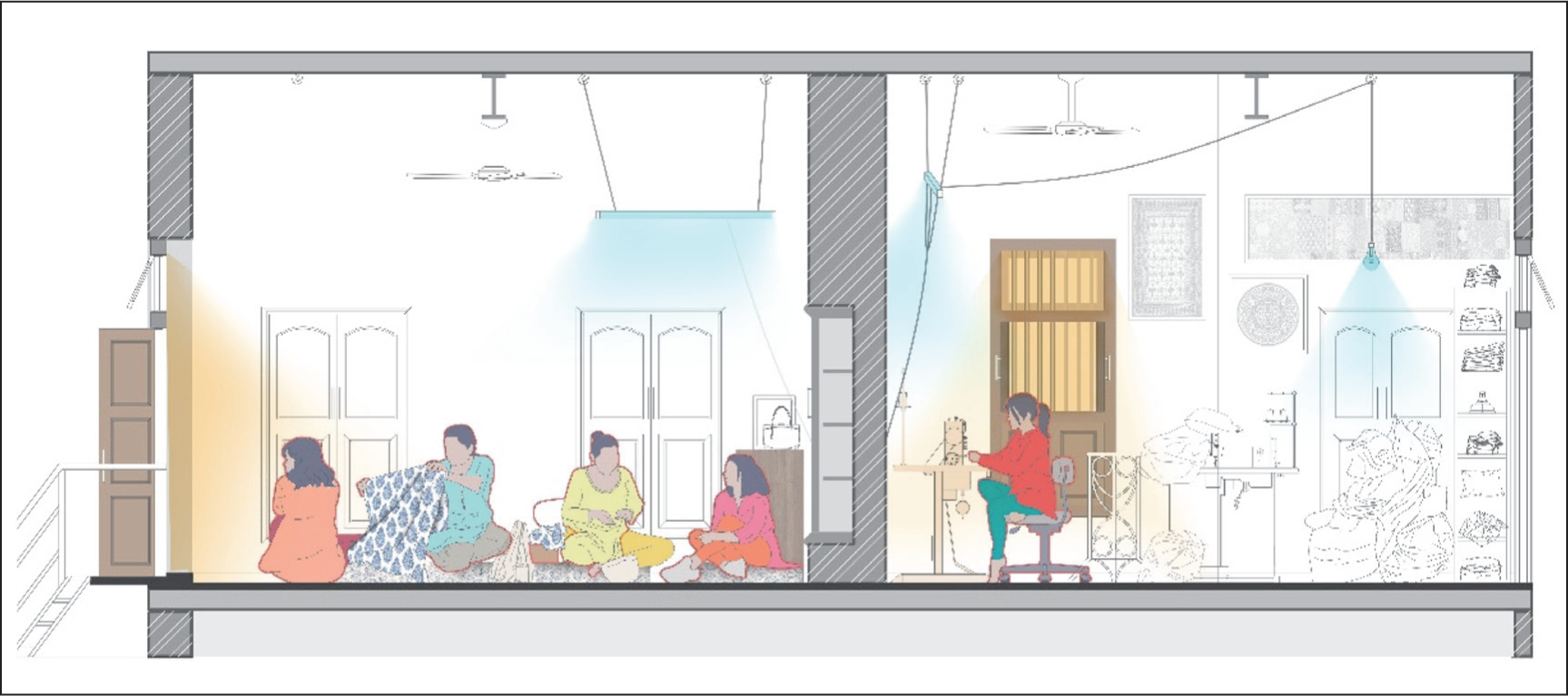
At the Haveli, women adapt by frequently opening and closing the windows, sometimes keeping them partially open to get enough light and ventilation (see Figure 6). This also means that they are at an increased risk of exposure to heat (Berry & Schnitter, 2022), lowering their work productivity (Vellingiri et al., 2020).
Artisans’ Daily Struggle at the Haveli to Balance Cooling and Ventilation by Opening Only One Part of the Window.
Narrow lanes in informal settlements mostly remain shaded; however, the densely packed built form means a lack of proper ventilation and localised heat stress (Coffel et al., 2018; Mahadevia et al., 2020; Scott et al., 2017). Home-based artisans also avoid using cooling devices (air conditioners, coolers) during the day to save on the cost of electricity, compromising their comfort and productivity. They frequently decide to work in the evening or late at night to align with lower temperatures or the usage of cooling equipment by other family members. During this time, artisans struggle to find the mental space necessary for their creative work when all family members are in the same room.
Availability of Light
The intricate nature of handicraft work requires good illumination. At the Haveli, the small door and window sizes provide only limited light. Artisans use artificial light throughout the day (see Figure 7), which incurs additional costs and yet is insufficient for intricate handicraft work. This also renders some workstations unusable.
Women Using Artificial Light During the Day at the Haveli, Clustering Under One Tubelight to Work.
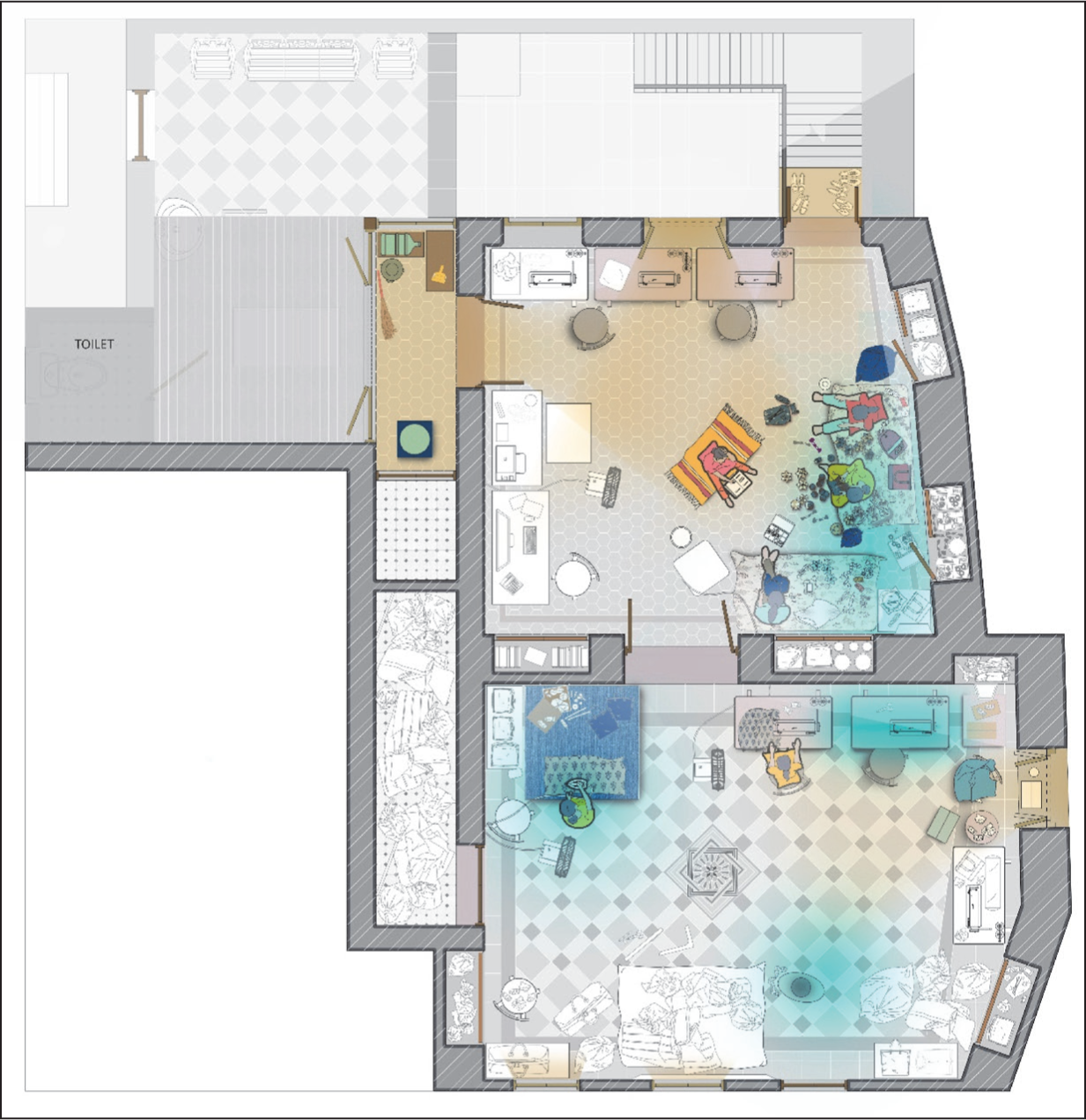
At the Haveli, women adapt by placing their workstations closer to the windows, putting them at a higher risk of heat exposure (see Figure 8). Also, the increased usage of artificial light incurs a higher electricity cost, burdening the finances of the cooperative.
Women Adapting by Sitting Near Doors or Windows, Combining Natural and Artificial Light at the Haveli.
Narrow lanes within informal settlements, often covered with projections (door-window overhangs/chajjas, balconies), allow only a limited availability of natural light in the artisans’ homes. The artisans avoid working indoors to save on the cost of electricity, due to the need for artificial light, and instead work in the entrance doorway during afternoons, in between chores, exposing themselves to harsh heat. While working indoors during late evening hours, artisans end up straining their eyes due to a lack of proper lighting. Additionally, artisans are often exposed to direct sunlight during the daily pickup and delivery of orders.
Space Availability
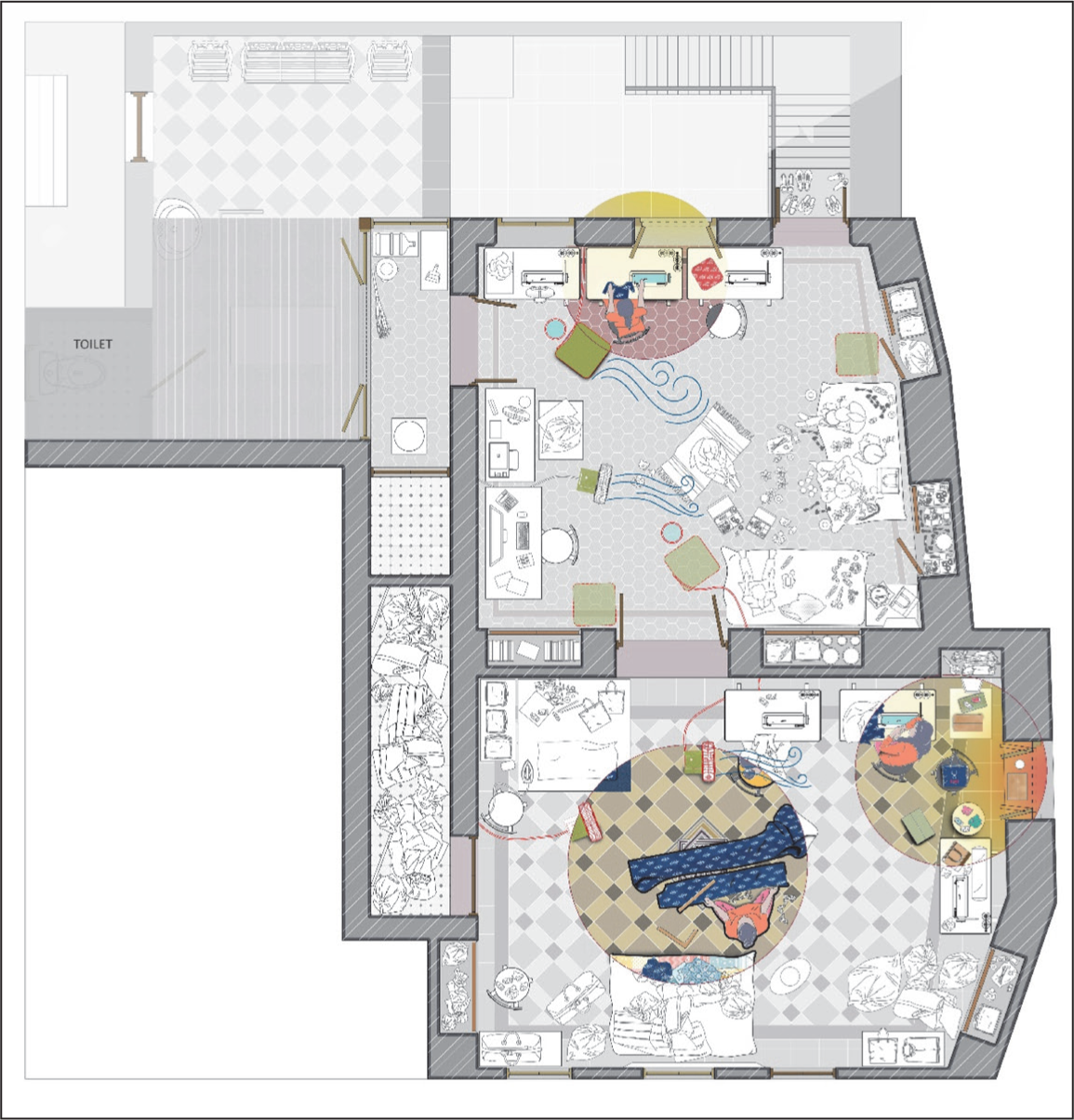
Having a limited two-room space at the Haveli, artisans manage overlapping activities like customer interactions, sorting of products and lunch hours, through close coordination to stagger them (see Figure 9). Also, the Haveli has limited storage space available, mostly in the form of in-built almirahs with narrow depth, coupled with a few free-standing storage shelves. Artisans report an increase in clutter as they use the workstations to store their materials (see Figure 10), often leading to damage of products, incurring additional costs to the cooperative.
Shows Women Sharing Limited Space, Coordinating Lunch Hours to Occupy Minimal Space in One Room and Continue Hosting Visitors in the Other Room at the Haveli.
Shows Women Using Furniture and a Non-functional Washroom for Storage at the Haveli.
At the Haveli, women have adapted a non-functional toilet into a storage space, accommodating their waste cloth materials (see Figure 10). The open shelves within the workspace are covered with cloth to prevent dust.
Often located in low-lying areas and lacking proper elevation (plinths) from the streets, the artisans’ homes are prone to flooding. With unseasonal rains, they have to be careful about storing their materials. Some artisans reported keeping materials on the bed to avoid damage and sleeping on the floor, thereby compromising on their sleep, associated with health risks, especially during months of excess heat (Chevance et al., 2024).
Jab 2–3 piece ka order ata hai, toh jagah nahi ho pati.
(When 2–3 pieces are worked on in parallel for an order, the space is unable to accommodate.) (Artisan, who works at home)
Access to Amenities
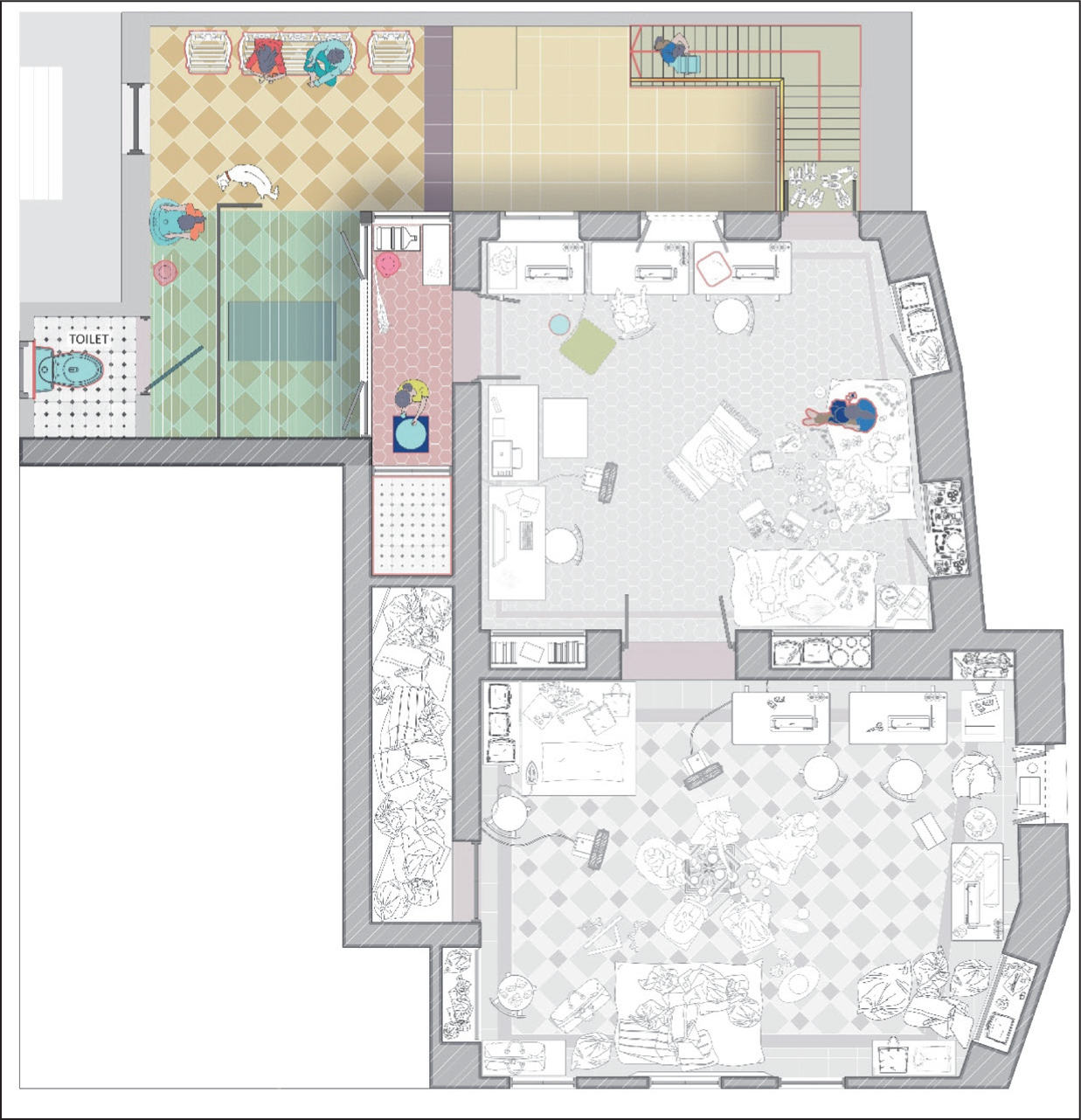
At the Haveli, the toilet is located outside the building on the ground floor (see Figure 11). To avoid having to step outside in the heat, many artisans deliberately reduce their water intake, which poses health risks. Drinking water is also sourced daily in water canisters, and on hot days, timely deliveries are often not made (see Figure 11).
Amenities Outside the Workspace at the Haveli, Accessible Only Through a Metal Staircase.
Paani bhi kam peete hain…darr ke mare…. Periods ke time par toh main bohot kam peeti hoon.
(We drink less water…. Because we feel scared (and want to avoid going outside). I barely drink water during periods.) (Artisan, who works at SEWA ni Haveli)
Access to drinking water was disrupted to different extents for artisans in various neighbourhoods, especially for artisans living in Vadaj, which is one of Ahmedabad’s largest slum settlements. Most artisans had to fill up water from the neighbourhood supply point provided by the municipality. Water supply is disrupted occasionally, and during menstrual periods, this compounds health risks.
Artisans’ Perceptions and Compounding Risks
Artisans recognise rising temperatures and work becoming more challenging and consistently stated that they experienced unprecedented heat in recent years, with longer summers and higher temperatures. While they reported strategies like drinking lemon water and covering themselves with a wet cloth to continue ‘managing’ their work despite the rising heat, most artisans did not recognise heat as a risk.
Humme aadat hai…. Aise ghar mein toh theek hai, mummy ko chakkar wakkar aate rehte hain. Woh normal hai ki iss mausam ke hisaab se thoda bohot toh chalta rehta hai…. Adjust toh karna padta hai.
(We are used to it…. At home my mother feels giddy in the summer. In this weather, it is normal, we have to adjust.) (Artisan, who works at home)
At the same time, all respondents reported experiencing symptoms like fever, dehydration, vomiting, headaches and lethargy, leading to hospitalisations during the summer. Chronic health conditions such as migraine and cardiovascular diseases further put artisans, particularly older artisans, in vulnerable conditions.
Bohot garmi hoti hai … usey leave leni padti hai. Woh apne friend ke ghar jaake so jaati hai … kabhi kabhi dawai khaane ke baad bhi theek nahi hota.
(It is very hot these days … she needs to take leave. She goes to her friend’s house and sleeps…. Sometimes, even taking medicine doesn’t resolve the headache.) (Artisan with chronic migraine who works at SEWA Ni Haveli)
Haan doctor ne aise bola hai ki iss time mein na aap log aaraam karo. Teen din aaram karo. Lekin ghar ki paristhiti aise nahi hai na ki teen din so rahe hain (laughs while saying), toh isliye kaam bhi karna padta hai.
(The doctor says that we need to take rest. Rest for three days … but the (financial) situation at home is such that we can’t afford to sleep for three days, so that is why we work.) (Artisan, who works at SEWA Ni Haveli)
Artisans living at far-off locations and who have to travel daily to work at the Haveli do not have proper access to public transportation and have to depend on their spouses, stating this as the most convenient and affordable means of transportation. However, this requires careful coordination with household responsibilities, as well as their spouse’s schedules. Otherwise, they have to rely on rickshaws or a combination of multiple modes of transport. This pattern of commute puts the artisans at a higher risk of heat exposure as well as higher monetary costs.
Joh door se aatey hai, unko to bahut dikkat hoti hai, loo ke vajey se … loose motions hota hai, bukhaar hota hai garmi se. Unko chutti leni padti hai.
(Those who come from far away—they face the issue of loo (a strong, hot and dry wind from the west, which blows over North India), and suffer from loose motions and fever because of the heat. That’s why they have to take leaves.) (President, Abodana Mandali, who works at SEWA Ni Haveli)
Role of the Cooperative
The artisans interviewed were typically the primary caregivers for children and the elderly in their homes. The Abodana leadership and board of directors, who are also caregivers in their families, have created flexible work schedules to accommodate caregiving responsibilities.
Mujhe training dene ke liye bheja tha, silaai ki training dene ke liye, 15 days ki training thi … ghar se phone aaya ki saas ko aisa ho gaya hai phir maine woh training 10 din ki…. Phir chhutti kari.
(I had to conduct a training which was for 15 days…. I got a call from home that my mother-in-law was unwell, so I had to finish the training in 10 days, then I took leave for the remaining days (and didn’t go to work).) (Mastercraftsperson and Member, Abodana Mandali, who works at SEWA Ni Haveli)
To balance these care burdens, women take orders home or change their work schedules. Because of this flexibility, artisans are able to balance their work and family responsibilities. Certain members regularly work overtime to avoid any delays, compensating for artisans who are ill or unable to work during periods of extreme heat.
A crucial element of Abodana’s operations is the daily delivery and pickup of materials to and from artisans’ homes. The manager and board members either do this themselves or coordinate with artisans and family members. This is one way of keeping operations running while reducing potential heat exposure.
Woh humaara mandli ka hai toh phir woh order agar nahi complete kiya toh aage kuch problem na aaye isliye hum log … behenon ke saath … manage karte hain.
(It is our cooperative (business), so we feel that if we don’t complete the order, it might (ruin our reputation)… so we manage with the sisters (and give flexibility).) (Manager, Abodana Mandali, works at SEWA Ni Haveli)
Respondents also highlighted how the cooperative has helped in accessing social security schemes, such as health insurance, which also covers heat-related illnesses, including heatstroke. This points at the ability of the cooperative to absorb and adapt to climate risks in the short term. Further, while the artisans experience discomfort in many regards due to the workspace conditions and extreme heat, they value having the Haveli as a workspace to focus on their craft and feel a sense of support from a sisterhood of co-workers.
Beheno ko nahi bol sakti ki mujhe call mat karo. Kyuki woh 8 baje–7 baje bhi karte hain—jab bhi woh kaam karne baith gaye—khana wana sab ho gaya kuch time mil gaya toh woh baith gayi. Jab usse kuch pata nahi chale toh woh mujhe call karti hai—mujhe toh answer dena hi padta hai. Main use aise nahi bol sakte ki mera kaam khatam ho gaya main nahi bataungi.
(I can’t say no to the sisters, they call me when they need to.. Because they work at 8 o clock or 7 o clock, after cooking.. If they have some time they sit to work. If they need some input (on the design) then they call. I can’t say my workday is done, I won’t speak to you.) (President, Abodana Mandali, works at SEWA Ni Haveli, and at home)
Discussion and Conclusion
This article contributes to the empirical understanding of the intersection of excess heat, the urban built environment, gender and informal work in India. A look at the case of women artisan members of an Ahmedabad-based handicraft cooperative, Abodana, reveals how various aspects of the built environment, including homes and access to basic services, can intensify their varied vulnerabilities, as well as influence their ability to cope. Our findings highlight how the built environment mediates climate risks—in this case, those caused by excess heat—that are embedded in women’s homes and workspaces.
We find that during periods of extreme heat, women artisans continuously negotiate with limited ventilation and limited access to cooling and natural light at their workspaces, compromising on thermal comfort, productivity and time. Our findings concur with those of another study conducted in Ahmedabad that found that informal housing units experience higher temperatures than formal housing units, putting the residents and workers at higher risk in their places of residence (Mahadevia et al., 2020). These vulnerabilities are further exacerbated by a lack of proper access to amenities amidst the increasing UHI effect in cities. While assessing the specific parameters that create increased heat stress in these settlements was beyond the scope of our study, our findings suggest the need to consider thermal comfort in architecture and urban design. Existing structures can benefit from integrating affordable passive cooling techniques, and urban areas can benefit from strategies; explorations in this direction will be crucial.
We also found that a lack of space and resulting clutter block airflow and add to thermal discomfort during the day. Moreover, a lack of space to store products means that artisans adjust by giving up space for sleeping at night, to avoid damage to products. This spatial trade-off can compound vulnerability to heat stress because of sleep deprivation. Recent evidence has highlighted that adequate sleep impacts physiological thermoregulation and that sleep constitutes an adaptive mechanism during climatic heat acclimatisation (Buguet et al., 2023; Keramidas & Botonis, 2021). The compounded impact of sleep disruption due to heatwaves, as well as a lack of space, will need further exploration.
A lack of a single reliable mode of public transport in the city, coupled with a gendered gap in vehicle ownership, puts women artisans at risk of heat exposure, as affordable means of transport provide minimal protection from heat. We also found that disrupted water supply and maladaptive practices to avoid going out in the sun to use common or public toilets impeded adequate water consumption. These interlinked realities put artisans and their families at risk of heat-related illness. A study that attempted to survey household vulnerability among slum dwellers to extreme heat in Ahmedabad has shown how socio-demographics, occupational heat exposure and limited access to resources increase vulnerability (Tran et al., 2013). Further research into the locational as well as social and behavioural determinants that influence access and use of public amenities can inform adaptation strategies that are suited to informal women artisans.
We find that the Abodana’s cooperative model enhances the adaptive capacities of informal women artisans. As shareholders and decision-makers, artisans attempt to ensure minimal disruption in business through flexible work schedules, material delivery, linkage with social security and a large network of artisans to take up work, enabling artisans to take leave for rest or to manage increased care responsibilities at home, during extreme heat. This reduces the risk of completely losing their source of livelihood, which is otherwise a risk in precarious informal work arrangements. At the same time, while this cooperative model shows potential for women artisans to adapt, in cases where external formal support is lacking, such as that from a federation, it may also place a significant burden on an already vulnerable group of women to look out for each other, especially in the face of increasing climate risk.
For home-based workers like women artisans, climate adaptation is inextricably linked to housing quality and urban infrastructure. The findings of our study have been further used to co-create low-cost and no-cost solutions with the artisans to address the issues faced by them. These solutions primarily focus on preventive care against heat stress from the lens of occupational health. A WhatsApp-based advisory is planned to be shared with the artisans once the temperatures rise above 37°C. Low-cost sensors are planned to be installed in the aggregation centre, where the master craftspersons and the manager sit regularly to alert members when temperature and humidity are on the rise. Additionally, portable solar lights are being explored to enable visibility of work at night when the temperatures are lower, and neck fans are being considered for use during the fabric cutting process when fans have to be switched off.
Beyond these solutions, this research also offers methods to conduct similar studies in other contexts, adding to the literature on the impact of climate change on informal women workers and the potential for them to adapt.
Footnotes
Acknowledgements
This article emerges from an exploratory study undertaken by the authors, part of which is written in a report titled ‘Workspace Mapping’, accessible on the SEWA Federation and Urban Design Square websites. We would like to extend our sincere thanks to Palak Gadhiya for her support in research design and analysis and Aparimita Pramanik for her support in data collection. We are also thankful to Semanti Chakladar for her contribution to the analysis. Special thanks to Mirai Chatterjee and Veena Chandresha for their review and edits, which greatly improved the quality of this work.
Consent to Participate
All participants provided written informed consent for interviews, photography, mapping and observations conducted as part of the study.
Declaration of Conflicting Interests
The authors declared no potential conflicts of interest with respect to the research, authorship and/or publication of this article.
Ethical Approval
To minimise disruption, interviews were scheduled outside of the artisans’ working hours, respecting their availability and workload. The research team comprised female researchers, which helped foster a more comfortable environment for participants.
Funding
The author(s) disclosed receipt of the following financial support for the research, authorship and/ or publication of this article: This work was supported by the International Sustainable Energy Foundation (grant number #ISEF-2022-SEWA-001).