







Abstract
This article analyses local Climate Action Plans (CAPs) in Peru. It identifies the factors that affect their implementation at the city level and highlights the roles of architects and urban planners in their development. It follows capacity-building activities for local governments carried out by a joint initiative by two Peruvian universities—Universidad Nacional Mayor de San Marcos (School of Environmental Engineering) in 2022, and the Universidad Nacional de Ingeniería (Faculty of Architecture, Urbanism, and Arts) in 2023—which engaged around 200 officials from 37 local governments. The Global Covenant of Mayors (GCoM) National Strategy in Peru (2022–2024) had the goal of promoting CAPs through local governments. This goal is analysed by its achievements, limitations and evolution over time. The methodology combined an online survey with three case studies based on structured interviews with local officials. Architects and urban planners are pivotal in putting CAPs into practice, yet their potential is often limited within the context of informal practices, weak institutional capacity and scarce resources. The capacity for effective CAP implementation is stronger where formal processes, financial support and public demand converge, and weaker where dependency on external funding and structural gaps persist. In the most fragile cases, the absence of political, technical and financial support can undermine even the most committed initiatives.
Introduction
Peru is highly centralised, urbanised and informal, as evidenced by the small share of the national budget (12%) allocated to local government, and the historical patterns of urban development, weak city governance and planning, absence of a local civil service cadre and lax enforcement of building codes. The urban areas in Peru hold 80 per cent of its population and 24.8 per cent of the country’s inhabitants classified as monetarily poor (INEI, 2025). Peru has about 350 municipalities with more than 40,000 inhabitants, but only 70 of them have an approved urban development plan. This reveals a critical gap resulting from limited planning capacity and persistent informality (INEI, 2024). These conditions challenge the development and implementation of climate action plans (CAPs).
In recent years, the interaction between intensified atmospheric warming and the Pacific Ocean’s temperature variability has driven climate impacts such as heat waves, extreme rainfall, rising sea levels and accompanying storm surges, droughts, forest fires, frost and cold spells, and hurricane-force winds (Bergmann et al., 2021; Miranda et al., 2024). These phenomena were foreseen by the Intergovernmental Panel on Climate Change (IPCC, 2021) and are increasingly affecting the country, with the impacts being particularly acute in urban areas. These growing risks disproportionately and recurrently affect the poor and vulnerable. Impacts remain underacknowledged despite the moderate El Niño during December 2024–March 2025, which caused 85+ deaths and displaced thousands (COEN, 2025). Peru’s priority is adaptation, as its emissions amount to 0.42% of global emissions (MINAM, 2025).
Local capacity for emissions and risk reduction remains limited, despite being recognised in Peru’s Climate Change Law and Code (2018 and 2019) as a key management tool. This article examines how CAPs are developed and implemented across diverse Peruvian municipalities that work within the context of informal planning and limited planning capacities and budgets and assesses the role of architects and urban planners in addressing these challenges.
Peru’s CAP Process
The Global Covenant of Mayors (GCoM), in coordination with the Cities for Life Foro (Foro), carried out strategic work in Peru during 2022–2024, working together with the National Association of Municipalities of Peru (AMPE) to support signatory municipalities seeking to fulfil their climate commitments. 1 With the financial support of the European Union, the GCoM mobilises and enhances the efforts of multiple actors to support the transition towards low-emission, climate-resilient cities. The methodology was based on the premise that CAPs could be developed easily by municipal teams, using their own knowledge, in collaboration with local actors through the municipal environmental commissions, their technical groups, secondary information and data, and existing development and risk planning instruments. Apart from greenhouse gas (GHG) inventories, which can be prepared by the municipal teams—but may require support from local external consultants—the entire process was supported by five technical guides 2 developed by Foro (Miranda et al., 2024).
Foro designed and later—in collaboration with its partners, two universities (Universidad Nacional Mayor de San Marcos [UNMSM] and Universidad Nacional de Ingeniería [UNI]) and GCoM— developed and rolled out two free three-month online postgraduate specialisation courses (120 hours each) in 2022 and 2023. From 64 municipalities, 451 municipal officials and local authorities registered, while 197 from 45 municipalities completed the courses; however, only 37 municipalities completed their local Climate Action Plans. The courses combined virtual training, targeted advisory support and field visits. Virtual technical assistance was also provided to 15 municipal teams as a follow-up, and additional in-person conferences and workshops were conducted in municipalities outside Lima. Top participants from seven municipalities per course were selected for internships in Chile and Argentina.
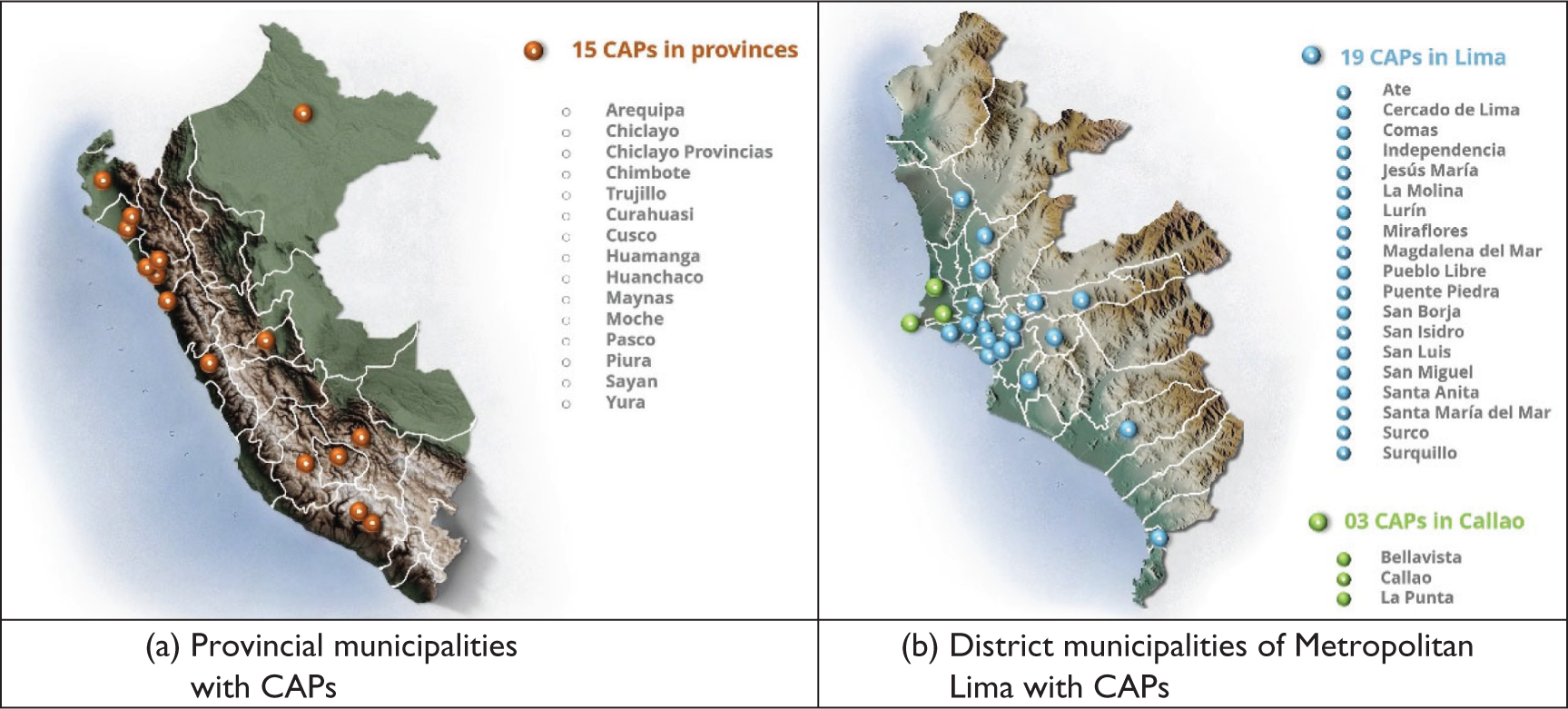
Of the 37 CAPs completed, 15 are from provincial municipalities and 22 from district municipalities in Metropolitan Lima, a success owed to the alliance with AMPE (see Figure 1).
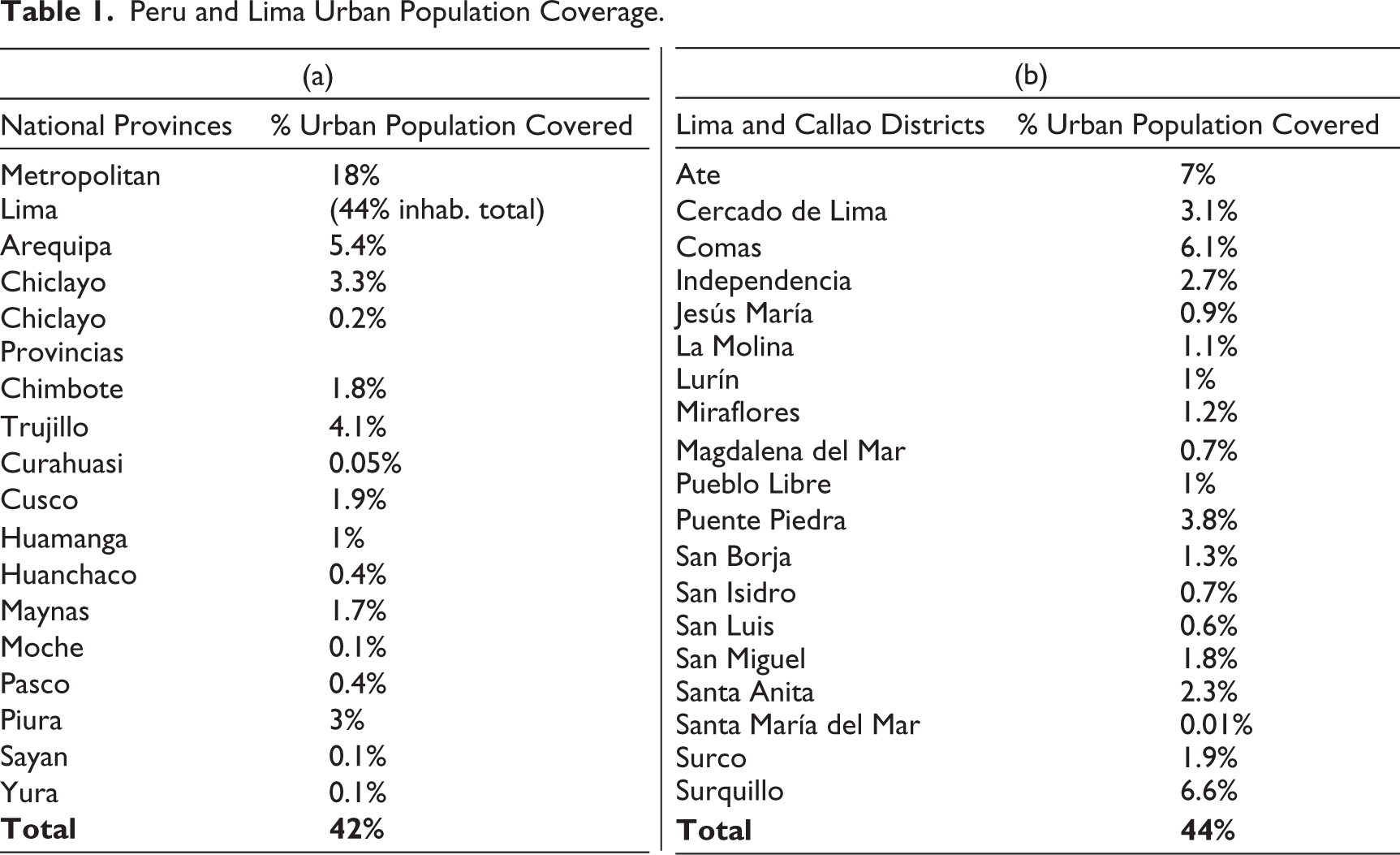
Figure 1 and Table 1 show that GCoM signatory municipalities that had succeeded in developing their CAPs represent 42 per cent of Peru’s urban population and 44 per cent of Metropolitan Lima. The CDP–ICLEI Track, a global platform where cities report climate adaptation and mitigation targets, received reports (2019–2023) 3 from 37 Peruvian signatory municipalities of the GCoM by September 2024.
Peru and Lima Urban Population Coverage.
This implementation period (2022–2024) saw Peru’s political landscape change, including mayoral elections, and political instability, uncertainty and crisis at the national level and the impact of multiple climate disasters, such as the 2023 Coastal El Niño event.
City Climate Action: An Urgent Challenge with Uneven Impacts
Local governments play a critical role in ensuring that national and regional policies are implemented in cities. Local governments have the ability to convene relevant actors, such as local authorities, communities, the private sector and academia, combined with a participatory and concertation-based multi-actor governance planning approach (Miranda & Baud, 2021). Such an approach can achieve context-sensitive and diverse strategies for climate action (Carrion & Rebotier, 2025).
The rate at which the impacts of climate change are taking effect is outstripping the time it takes for policies to be studied, accepted and implemented (Short & Farmer, 2021). Although significant knowledge exists about climate change implications for cities in the global North, evidence remains limited for Latin American cities (Blackman et al., 2025). Action research and qualitative research can become the basis for climate action (Miranda & Baud, 2021); however, significant knowledge, capacities and tools are still needed to deal with climate impacts.
Numerous studies highlight CAPs as crucial tools for local climate governance. Their development empowers communities to lead their own climate strategies, fosters innovation and strengthens adaptive capacities, positioning cities to thrive amid changing environmental conditions (Carrion & Rebotier, 2025). This underscores how CAPs engage with real-world social and urban contexts of each community. Yet, their implementation demands an openness to innovation and fresh ideas, particularly in integrating adaptation, mitigation and inclusive multilevel governance approaches. A significant disconnect persists between global knowledge and local realities on adaptation and resilience. Existing research does not necessarily reflect the adaptation priorities of the regions under consideration (Aboagye & Sharifi, 2023).
Towards improving governance, CAPs can foster collaboration among governments, businesses and individuals (Filho et al., 2023), integrate sustainability into institutional frameworks and demonstrate financial viability (Walters & LeBoyer, 2010). These alignments show how climate action can be incorporated into broader sustainability plans, addressing interconnected issues such as health, water and biodiversity. In this way, a holistic approach to sustainable development can be promoted (Colocci et al., 2023).
Higher education institutions also play a key role in supporting state climate action planning and engagement with governments (Spaulding et al., 2023). Further research should examine effectiveness, trade-offs and feasibility to balance strategic guidance with adaptive flexibility. Nonetheless, direct capacity building for local officials and authorities remains underexplored (UN-Habitat, 2020), especially in developing countries where ongoing training and assistance are crucial.
The Role of Architects as Urban Planners
In Peru, it is the architecture departments that traditionally teach urban planning. Architects lead CAP development and urban planning teams, reflecting another form of professional informality. Dedicated education on urban planning is limited to postgraduate programmes, but these are uncommon due to low demand. Urban planning pre-graduate education has been shaped by local precariousness and a historical lack of institutional interest (Valdivia Loro, 2023). Unlike Latin American countries, Peru’s focus on ‘housing and construction’ rather than cities or urban planning (Castillo-García, 2021) has contributed to architects dominating the field, prioritising physical design over territorial strategy. Attempts to open urbanism departments have floundered: one has closed, such as the one from National University Federico Villarreal, and the other has not yet produced graduates, such as the one from the National University of Engineering (its School of Urbanism was established in 2023), and even their professional affiliation remains unclear due to a lack of legislation. Consequently, a critical shortage of urbanists leaves complex city management almost exclusively to architects.
Centralisation, limited budgets and widespread urban informality further discourage urban planning professionals. Municipalities need greater powers, such as housing and utilities mandates, and funding to ensure access to hazard-free, safe land, or to be able to control speculation to promote climate-resilient urban development. As a result, many formally approved urban plans remain unimplemented. Several recent plans were prepared by foreign consultancy firms hired by the Authority for Reconstruction with Changes, created after the 2017 El Niño Coastal event. Around 70 per cent of municipalities report that they lack budget and technical capacity for implementation, further contributing to urban and institutional informality (Soto-Velazquez et al., 2023). Despite this, some architects continue to defend the city against the urban commercialisation that has characterised the past three decades (Calderón, 2019, 2025; Escalante & Miranda, 2020).
Urban planners and architects, by engaging and working together with communities, can foster public participation, inform on climate change risks, contribute to plans and build resilient cities (Anderson, 2019). Working within Peru’s social and institutional informality, it is architects—as professionals capable of effecting change in the built environment—who hold the potential to implement mitigation and adaptation solutions through their work (Hurlimann et al., 2021). Unfortunately, architectural education in Peru is not only lagging behind the international trend to centre climate change action in practice (Schiano-Phan & Soares Gonçalves, 2022) but also seeing its influence to lead and enable action to diminish in relation to other professions. These issues are causing architects to miss opportunities to enact change with an integrated urban and environmental approach and avoid the technocratic discourses that perpetuate climate risks and inertia (Miranda et al., 2015).
Studies show how architectural and urban innovations can respond to environmental challenges (Bocock & Collison, 2022). However, this potential is limited by various factors: a lack of awareness of climate challenges within the profession, resistance from clients and partners, low availability of supporting evidence and insufficient governmental support (Warren-Myers et al., 2024). In the face of these challenges, urban planners and architects can improve their ability to integrate resilient urbanism into their practice by engaging communities through co-designing, participatory and inclusive strategies (Santos et al., 2021). Furthermore, they can take advantage of the growing interest in past and present sustainability models, and the medium- and long-term economic benefits these offer (Miranda et al., 2015).
Methodology
This analysis combines qualitative and quantitative methods for an integrated understanding of Peru’s CAPs, assessing their progress and the challenges they faced in implementation. The analysis covers participants from capacity-building activities in 2022–2024 across 37 municipalities, based on an online survey of 150 local officials who completed both the CAPs and training. It was a detailed questionnaire administered to key municipal officials and local authorities who were, after the support given, directly involved in the formulation, formal approval and implementation of their respective CAPs. The purpose of the survey was to collect participants’ self-assessment of knowledge before and after the training, satisfaction levels and their perceptions of key challenges. The responses informed the study’s descriptive statistical analysis and were also used as the basis for the design of in-depth structured interviews with three municipal teams, representatives from three diverse Peruvian municipalities.
This is not a comparative study, but adopts a qualitative analytical approach based on common dimensions to examine CAP formulation and implementation across different municipal contexts, such as (a) types and synergies of adaptation and mitigation measures, (b) alignment with municipal mandates, (c) level of implementation and monitoring and (d) institutional and technical capacities and mandates. These dimensions are used to guide both the analysis of CAP measures and the interpretation of results.
Analysis of Survey and CAP Measures
Among the capacity-building participants, one-third were architects, and their roles were distributed as follows: 40 per cent were environmental officers, 30 per cent were planning directors, 20 per cent were mayors and 10 per cent were technical staff. While 50 per cent represented small municipalities (fewer than 50,000 inhabitants), 30 per cent represented medium-sized (50,000–200,000), and 20 per cent represented large municipalities (more than 200,000 inhabitants). The architect participants were concentrated mainly in larger municipalities. A paired test comparing self-assessed knowledge before and after the training revealed a statistically significant improvement (M_pre = 2.8, M_post = 4.2, p < .001), confirming the effectiveness of the capacity-building sessions. Satisfaction levels were also high, with 85 per cent of participants rating the training content as ‘very useful’, 90 per cent providing positive feedback on the facilitators and 75 per cent considering the materials to be adequate.
The survey revealed that structural barriers persist, with 72.5 per cent of the respondents facing job instability, undermining continuity in implementation. A significant majority (90%) perceived institutional support from MINAM 4 to be weak, and only 25 per cent had received technical and personnel assistance. No support from non-governmental organisations (NGOs) or international cooperation was reported.
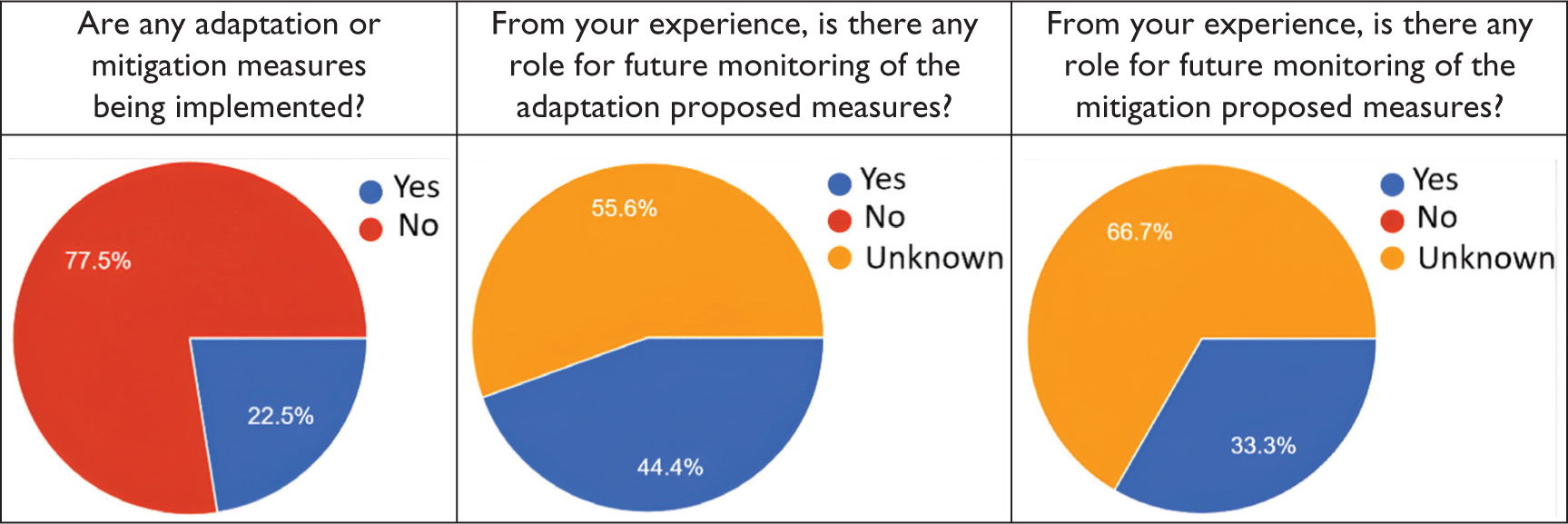
By October 2025, only 15 per cent of the CAPs are formally approved, while 22.5 per cent are still pending approval; however, CAP implementation, at 22.5 per cent, is high considering the share of approved CAPs. A substantial lack of information regarding future monitoring was reported— 55.6 per cent for adaptation and 66.7 per cent for mitigation measures—which means there will be no record of progress or assessment about the effectiveness of the measures in the future (Figure 2).
Adaptation and Mitigation Measures Under Implementation and Monitoring.
The following results are organised according to the analytical dimensions described (implementation and monitoring measures). Analysis of CAP measures shows that adaptation focuses on flash floods, droughts and heatwaves, connecting planning to risk exposure, and mainly strengthening infrastructure, early warning systems, resilient ecosystems and water savings and management. Mitigation actions are centred on solid waste (recycling, recovery and improved disposal) and, to a lesser extent, on land use change—where municipalities have clear mandates—and also transportation and energy, despite limited authority and capacity for intervention and investment, following the shared technical guides developed by Foro (Miranda et al., 2024). Overall, measures target short-term hazards, and mitigation strategies are less diverse and often lack clear emission targets due to gaps in GHG inventories. Together with weak adaptation–mitigation synergies, these issues underscore the need to strengthen the Foro guides.
Selected Case Studies
Three municipalities from those actively participating in GCoM-led activities and signatories of the GCoM Peru were selected for in-depth interviews, not for comparison, but to illuminate heterogeneous climate action planning in Peru, with the exemption of the Amazon municipalities. The in-depth interviews focused on implementation strategies, barriers, opportunities and the roles of architects and urban planners.
The municipalities were chosen for their diverse conditions, institutional and budget arrangements, capacities and approaches, offering valuable insights for scaling up climate action in other cities. The Municipality of Chiclayo, a city on Peru’s northern coast, is supported by the World Bank and a specialised team; the District Municipality of Surco is located in southern Lima and is one of the wealthiest areas of the capital; and the Municipality of Huamanga, whose capital city is Ayacucho, in the southern Andes region, is a historically a very poor area.
Chiclayo, Coastal North of Peru
In 2019, the Municipality of Chiclayo became a signatory to the GCoM’s strategy. As part of the CAP, the city received technical assistance from 2022 onwards, as well as World Bank Climate Investment Funds. Chiclayo is highly informalised, which increases inhabitants’ climate vulnerability; about 30 per cent of the city lies in flood-prone areas repeatedly affected by El Niño. Old and poor water and sanitation infrastructure, and lack of drainage systems and green areas, increase exposure to heavy rains and floods, heatwaves and extreme winds, while limiting coordinated climate action.
The Local Climate Action Plan of Chiclayo (CAP-CH), approved for the 2024–2050 period (Municipalidad Provincial de Chiclayo, 2025), guides the city through 37 defined measures. The mayor, together with their council and municipal team—largely composed of architects—leads, promotes and provides political and strategic backing for the development, formulation and upcoming approval of the CAP-CH. The political changes in the mayor’s office during the plan’s development did not affect its continuity.
Under the municipal leadership, an institutional space for validation, consultation and technical advice was created. The District Climate Change Technical Group (DCCTG) was formed to enable coordination among key actors and to prepare for a future Municipal Environmental Commission. It gathered municipal authorities, experts and community representatives to build a shared understanding of risks and identify opportunities for emissions reduction. The process involved national and regional governments, academia, the private sector, international agencies, NGOs, professional associations (of architects and engineers), vulnerable groups and informal settlements (through neighbourhood associations, and women-led, youth-led and faith-based organisations), and high-emission sectors (transport, waste, energy and agriculture).
The team of experts, composed mainly of architects and urban planners, supported this work by connecting different actors with supporting scientific literature, such as the IPCC (2021, 2022). These findings were shared and discussed. In addition, indirect information was drawn from existing management instruments at the national, regional and provincial levels.
The CAP-CH development was grounded in a series of consultations and validation processes led by the DCCTG, ensuring the inclusion of local actors and the engagement of municipal officials and councillors. In 2022, climate hazards were identified through interviews and surveys with key actors and academics. This formed the basis for a vulnerability assessment and the prioritisation of adaptation actions in workshops that the DCCTG held with key actors. To guide mitigation priorities, the GHG inventory was updated with emission scenarios projected for 2026, 2035 and 2050. Additionally, consultations with local actors, municipal officials and academic experts deepened the team’s understanding of Chiclayo’s vulnerability, particularly for its larger informal areas. However, a clear dissonance emerged between perceptions of the district’s overall vulnerability and the understanding of specific climate hazard impacts and risks.
The 37 proposed measures were designed and validated through a participatory process, which included the DCCTG and took place via a series of collective and one-on-one working sessions.
The measures selected are aligned with the municipality’s institutional planning and include cost estimates for 2026, with projections up to 2035 and striving for carbon neutrality by 2050. The CAP-CH also maps each measure to the existing municipal planning instruments, the Provincial Development Plan (PDC), the Strategic Institutional Plan (PEI), and the Institutional Operational Plan (POI). This alignment integrates the CAP-CH into the multi-year public investment programme and therefore facilitates its implementation, maximising mitigation and adaptation potential in the short (2026), medium (2035) and long term (2050).
The incorporation of sustainable and landscape criteria—public realm quality and green space provision—into urban planning and building permits through requirements for building height, site permeability and minimum open-space allocation is underway. Due to limited funding, only selected CAP measures are being implemented: maintenance and expansion of green areas and reforestation (via municipal funds); sustainable urban drainage projects, the Sustainable Mobility Municipal Plan, including new cycle lanes, and the city’s first formal landfill (via national funds); and the removal of obsolete telecommunications cables by operating companies. The municipal architects’ team contributes to the design and coordinates implementation.
Surco, a Well-resourced Municipal District in Lima
The Santiago de Surco district stands out in Lima for its relatively formal nature of urban development. However, the informal occupation of public land in the district came into public attention when tenant evictions were carried out to claim those same areas for urban parks. A lesser-known problem the district has is with informally rented housing, which came to light in the gap left by the evident non-payment of the expected tax revenue from this activity (Saravia Montoya & Villano Perez, 2023). Surco’s Climate Action Plan (CAP-S), approved in 2025 (Municipalidad de Santiago de Surco, 2025), was formally launched with the signing of a letter of commitment in December 2016. The project was formally supported by GCoM, which contributed to sustained progress in the plan’s development and implementation. In July 2023, the district ratified its participation in the GCoM. The preparation of the GHG Inventory was set to begin in January 2021; however, it remains incomplete.
The CAP-S was approved for the 2024–2030 period and aligns with Peru’s National Climate Change Strategy and GCoM objectives. The approval was fast-tracked following a request from an external audit institution, which called for support of climate actions. The CAP-S was developed during the 2022 and 2023 capacity-building programmes by GCoM, with one of the officials involved participating in an internship in Argentina.
The CAP’s analysis identified heatwaves, droughts and heavy rain as the main hazards faced by Surco, prompting the inclusion of initiatives like tree planting in CAP-S, albeit with modifications, given the currently limited space in parks to plant more trees. Climate change education was proposed to raise awareness, despite robust existing knowledge of the issue. In line with the plan and considering the financial resources this municipality has, the district has expanded its green areas and bike lane network, which contribute to improving living conditions and addressing local inequalities. A new municipal building has been constructed with eco-efficient measures. A Surco Barrio (neighbourhood) together with a superblocks programme (Municipalidad de Santiago de Surco, 2023) is undergoing a redesigning of some urban areas to reduce traffic, prioritise pedestrians and cyclists, and expand public and green spaces. A pre-existing waste collection programme along the River Surco continues and has begun to incorporate composting processes. Household recycling and waste segregation remain priorities, while a new construction waste collection system is being implemented, reusing materials to build Techo Propio Surcano (incremental houses) with interventions that improve living conditions and address inequalities, targeting lower-income areas. Surco has larger architect and urban planning teams.
Ayacucho, a City in the Southern Peruvian Andes
In 2024, the Provincial Municipality of Huamanga (MPH), seat of Ayacucho city, became a signatory to the GCoM. The capacity building and technical support provided by Foro contributed to their CAP’s formulation, enabling one of its officials to participate in an internship in Chile. The city suffers from river overflows, landslides and frequent hail damage to homes and infrastructure. Frosts and heavy rain also harm agriculture and livestock (key economies for the city). The city is disadvantaged by limited financial capacity due to a high proportion of its inhabitants living in poverty, as well as a recent financial decline. Ayacucho is historically significant as the birthplace of ‘Shining Path’ or ‘Sendero Luminoso’, a political organisation that led an internal armed conflict during the 1980s and the 1990s (Starn & La Serna, 2019). This violence deepened structural poverty and displacement, driving today’s high levels of poverty and informality.
The Local Climate Action Plan of Ayacucho (CAP-A) aims to guide the city towards a low-carbon and climate-resilient development pathway through the implementation of 13 defined measures. The plan addresses the urgent need to reduce GHG with a target of carbon neutrality by 2050, while also strengthening adaptive capacity and generating broader environmental, social and economic benefits for the population.
With support from the Foro technical team, scientific findings (including IPCC, 2021, 2022) and information from existing national, regional and provincial instruments were reviewed and discussed. The CAP-A was developed through consultations and validation processes engaging municipal staff and councillors. Climate hazards were identified from data and literature, followed by a vulnerability assessment and the prioritisation of adaptation actions in municipal workshops. As Huamanga’s GHG inventory has not been updated since 2013, that GHG version was used to inform mitigation measures, which were designed and validated through consultations across municipal departments. All proposed actions remain aligned with the city’s urban development and institutional plans as the CAP-A nears formal approval.
Only measures related to adaptation are being implemented, which only constitute a few of the CAP’s prioritised measures. However, there has been progress on a nationally supported managed landfill, and, in the future, it will be managed by the MPH. Due to financial resource limitations, involvement of professional support from specialists, such as architects, was not implemented.
Discussion
In Peru, CAPs are beginning to address informality, a phenomenon which can be understood—contextually, physically and institutionally—as a dominating urban condition posing challenges to climate justice. In addition, Peru’s high degree of cultural and geographic diversity makes the integration of local knowledge into CAPs an essential consideration. However, this requirement is not yet being met.
Strengthening local capacities to reduce emissions, manage risks and adapt cities to a changing climate—particularly in vulnerable informal settlements—remains weakly implemented and underprioritised across Peru’s national, regional and local governments. The Peru NDCs (Nationally Determined Contributions Towards the UNFCCC) are primarily sectoral and do not include clear integrated urban development actions. While recent updates include territorial and multilevel governance, explicit urban development strategies remain absent, although they are present in the Peru Climate Change Law (Ley N° 30754, 2018) and its Code (Decreto Supremo N° 013-2019-MINAM, 2019).
High staff turnover among municipal officials is a defining feature in Peru’s public administration. There is no civil service career path, especially at the municipal level, resulting in very few tenured positions. Staff appointed under one administration are often sidelined or replaced by the next. This situation is compounded by the prohibition of mayoral re-election. Because of this, local governance is characterised by highly pragmatic and short-term projects, exacerbating its informal character.
Institutional fragility undermines CAP continuity. Decisions often have a short window of opportunity, leading municipalities to prioritise easier, faster investments. Short-termism tends to prevail. However, in some cases—due to external pressure or support—this same urgency can accelerate the approval and initial CAP implementation, although such cases remain the exception rather than the norm.
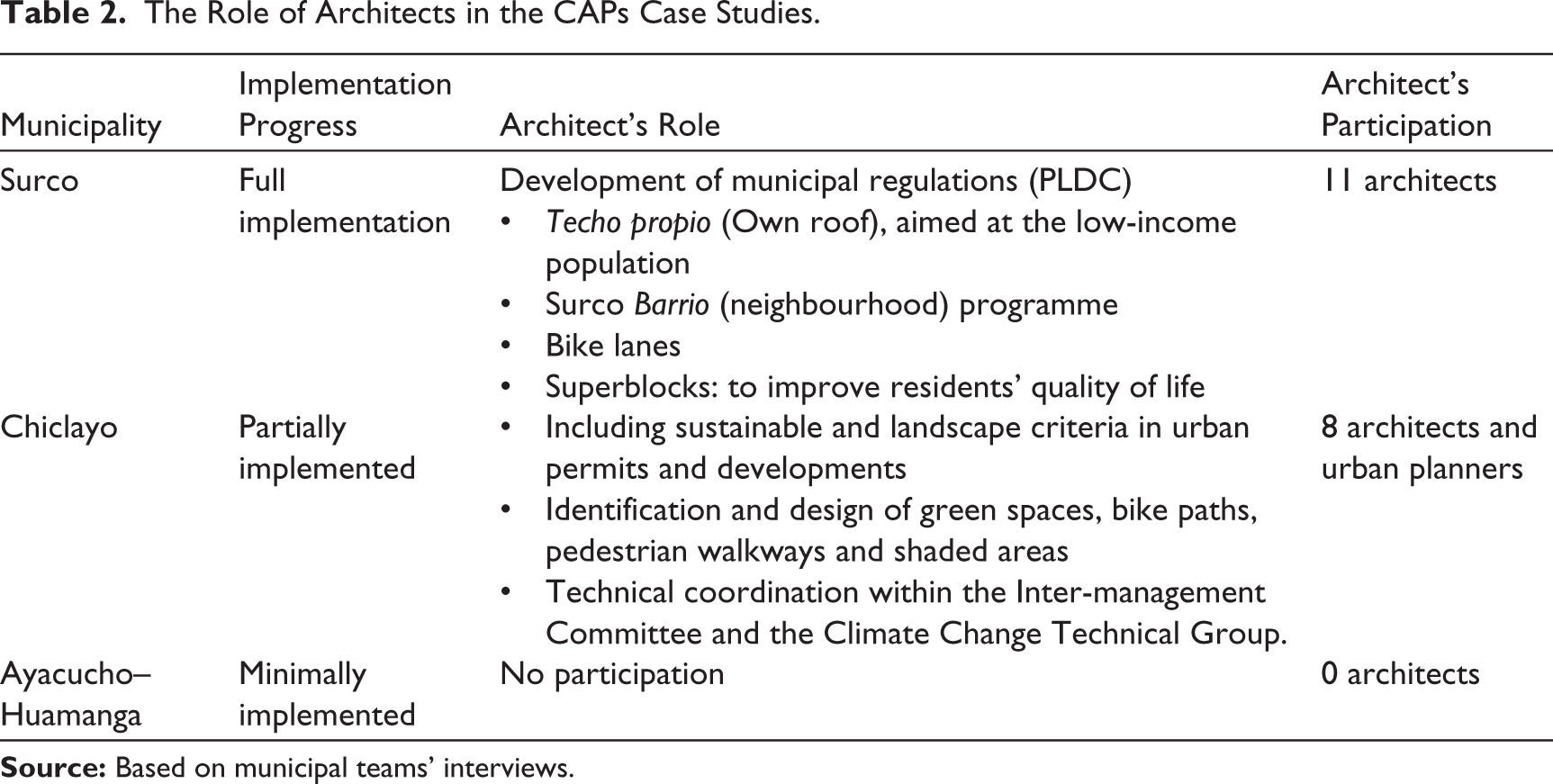
Interviews show architects’ cross-cutting role in CAPs, bridging planning, design and coordination through anticipatory, corrective and voluntary retrofitting functions, integrating resilience and sustainability (Table 2).
The Role of Architects in the CAPs Case Studies.
The case studies reveal contrasting trajectories in their CAP implementation, shaped by the institutional capacity, financial resources and technical expertise available. In Chiclayo, following the CAP’s successful development and approval, implementation has been constrained by municipal financial restrictions, previous debts and political conflicts.
The municipality’s ability to mobilise resources from national and private companies enables the development of some measures without fully offsetting the limitations they face, despite the strong team of architects and urban planners from the past two administrations.
In Surco, informal processes in some public areas could limit and reduce CAP implementation. However, the need to expand housing in existing residential structures represents an opportunity to implement adaptation and mitigation actions on private buildings. The current level of implementation reflects their persistent work, supported not only by political will but also by citizen engagement, which showcases the leadership of recent district administrations. The availability of financial resources for most implementation measures, fiscal discipline and budget compliance of the CAP benefits from a well-established and experienced administrative and technical team, with a strong presence of architects. Surco benefits from favourable financial and technical capacity, as it is one of Lima’s middle- to upper-middle-class districts, with relatively higher resources.
By contrast, Ayacucho, a city of historic and strategic importance, demonstrates the critical importance of providing municipalities with financial support and targeted technical assistance. This approach is essential to ensure not only the feasibility of their climate actions but also the integration of inclusive, integrated, context-specific and technically sound strategies. This case also illustrates the limitations imposed by the absence of a multidisciplinary team during the CAP development, lacking participation of architecture and urban planning professionals.
Conclusions
The capacity-building efforts are effective, showing high satisfaction levels, except for GHG inventories, which need stronger technical support. Survey respondents are experienced, hold higher education qualifications and were able to strengthen their capacities rapidly. Budget constraints and job instability limit CAP implementation and continuity. CAP implementation varies; some are implemented even before formal approval, while others show limited progress despite being approved. Overall, implementation remains constrained by budget and knowledge gaps, as well as limited monitoring.
There is a critical paradox: technical capacity and initial policy design have improved, but institutional fragility, insufficient budget and support, and low formal adoption rates hinder the translation of plans into sustainable, measurable and inclusive climate action. Without addressing those gaps, the long-term viability of local climate strategies in Peru remains at risk, particularly for vulnerable populations and informal settlements facing uneven impacts.
CAP compliance is highest where formality, financial support and community demand for quality of life coincide, but remains low where dependence on external funding and structural shortcomings prevail. In the most fragile cases, the absence of political, technical and financial support undermines even well-intentioned efforts.
Footnotes
Acknowledgements
We thank all survey respondents and interviewees for their time and consent to participate. We also acknowledge the GCoM, the universities supporting our courses, the Architects Association of Peru and the municipalities that took part in our surveys and interviews.
Data Availability Statement
The datasets generated during and/or analysed in the current study contain information that could compromise the privacy of participants and are therefore not publicly available. An anonymised version of the dataset is available from the corresponding author on reasonable request.
Declaration of Conflicting Interests
The authors declared no potential conflicts of interest with respect to the research, authorship and/or publication of this article.
Ethical Approval and Informed Consent
Participation was voluntary, and all responses were anonymised to protect confidentiality.
Funding
The authors disclosed receipt of the following financial support for the research, authorship and/or publication of this article: The authors received financial support from the Architects Association of Peru for the research and authorship of this article.