






Abstract
This article describes an Indian experience in building rural, community-based enterprises that respond to heritage marketing challenges and opportunities in a huge creative economy. In an era often dominated by market-driven approaches, the NGO ‘banglanatak dot com’ has innovated its art for life (AFL) approach, offering a robust model for empowering rural communities through entrepreneurship and community-led micro-enterprises. Sensitive to issues of cultural integrity and ownership, the AFL model includes a strong rights-based commitment along with continuous innovation, branding and the use of marketing tools. These include building digital capacities, use of social media and partnership with the tourism industry. The banglanatak experience responds to the fast-changing consumer trends of a globalized and digital world, thus often characterized by a lack of connect between traditional artists and evolving markets, inadequate market awareness on the intrinsic and outstanding value of a particular craft or art form, lack of cultural sensitivity among stakeholders working with traditional artists and frequent violation of the creative rights of makers. This article shares learning from interventions in West Bengal, in eastern India, which aim at empowering tradition bearers as key protagonists of heritage businesses. Their experience, severely tested through the global pandemic, offers hope and direction.
Introduction
Craft economy, festivals, cultural events and cultural tourism support millions of cultural professionals and enterprises earning their livelihood from heritage based products and services. These traditional economic activities are historically embedded in a structure of skilled and primarily home-based production and trade, or performances in traditional rituals and festivals. Heritage-based businesses, as a sector, lacks formalized and organized enterprises. Craft production takes place in village households which are conventionally not part of the so-called organized sector. Yet the handicraft and handloom sectors constitute Indias second largest employment source after agriculture, even as accurate data is missing on the size and scale of this gigantic sector. There is no enumeration of folk artists in the performing arts sector, which has suffered even greater devaluation and lack of recognition. There is lack of systemic understanding that can analyse and build upon the contribution of diverse grassroots heritage-based businesses to the Indian economy. The growth potential of this sector remains underutilized despite decades of work by various governmental and non-governmental initiatives for more support, recognition and investments towards India’s unique and rich craft sector. The growth of an independent and healthy creative economy based on traditional arts and crafts is hindered by complexities of market outreach, promotion and branding of makers and their art–all essential to ensure direct benefits to artists and makers as well as acceleration of grassroots creative entrepreneurship.
This article presents learning from the initiatives of banglanatak dot com, a social enterprise headquartered at Kolkata and working over the last two decades on developing grassroots creative entrepreneurship based on intangible cultural heritage (ICH). It outlines issues, strategies and approaches for creating and strengthening heritage businesses. The underlying principle is empowerment of local communities to control the commercialization process by protecting and communicating the underlying heritage values.
Issues and Challenges in Marketing ICH
The relationship between tradition bearers and market stakeholders are often strained because the latter may not be aware of social and cultural aspects or able to accord proper value and respect. Market expectations today are seldom aligned to core values and contexts of traditions. There is a lack of proper communication of these unique dimensions of ICH. Another area of concern is the increasing trend towards homogenizing of product lines to achieve a global standardization of quality and design vocabularies. In reality, artists remain delinked from changing design and market trends, from information on buyers, markets and consumer choices, and thus lack negotiation power for fair business terms. The sector as a whole, therefore, needs to be culturally sensitive and appropriate to help ensure the creative rights of makers. Due to the isolation of the producers from end-markets, buyers also find little innovation that recognizes current trends. This situation is largely the result of low incomes, and the disinterest of younger generations to pursue and sustain traditions of arts and crafts. The result is a diminishing of the heritage skills repertoire. Other challenges are lack of an enabling eco-system, a fragmented value chain, the lack of access to capital, technology and diverse markets, as well as a lack of recognition in a highly skilled and professional sector. Adding to these challenges are the plights of severe marginalization, social exclusion, and lack of literacy and education. There is also widespread challenges of intellectual property protection, leading to exploitation of artists’ rights and creativity as well as the complexity of acknowledging ICH as living and changing. ‘Authenticity’ is not considered appropriate for discourses on ICH. However studies point out incorrect portrayal or staged or invented traditions (Hobsbawm & Ranger, 1983), which may intentionally or otherwise mislead the public (Kirshenblatt-Gimblett, 1998; 2004; 2006; Lowenthal, 1985; 1998; MacCannell, 1973).
It is thus fundamental for actual maker-communities to have greater control over the commercialization of their heritage in order to achieve fair and ethical businesses which contribute to safeguarding both current and ongoing viability. The Ethical Principles for Safeguarding ICH (UNESCO, 2015) provide a set of overarching aspirational principles that can be a basis for developing codes of ethics and good practices for governments, organizations and individuals working with ICH. Key points articulated include the primary role of tradition bearers in safeguarding their ICH, their rights to access the instruments needed for practice, ensuring benefit from protection of moral and material interests resulting from such heritage, mutual respect and transparency in collaboration, as well as the dynamic nature of living heritage. The Operational Directives (UNESCO, 2015, paras 104 and 173) mention using intellectual property (IP) rights as a useful tool to ensure the sustainable development of ICH, in helping and protecting communities against over-commercialization and misappropriation. Conventional IP rights, such as copyright, patents and design protection, offer limited protection. These cannot be used easily to protect cultural expressions whose authors are unknown, and which have been passed down through the generations, changing and adapting to new contexts. The situation calls for academic research or practical guidance on how communities can plan for commercialization and mitigate risks of over commercialization (Bhattacharya et al., 2021).
Living Heritage and Innovation
The art for life (AFL) programme in India, created by banglanatak dot com, works towards identifying, building and strengthening local traditional cultural skills, knowledge and capacities, as resources for sustainable income-generation, poverty alleviation and creation of a more inclusive economy (Figure 1). With the realization that poverty, rooted in lack of employable skills and loss of cultural heritage, leads to a sense of alienation with low morale, self-respect and dignity of life, the organization started work in 2004 for revitalization of traditional skills as sustainable livelihoods. The abundance of cultural and creative skills and resources in India informs the creation of a model that challenges the conventional view of urban conurbations as the major drivers of a nation’s economy, with the rural heartland relegated as a dependent supplier of labour and primary products for the realization of urban economic opportunities. Rather, AFL offers the prospect of exclusive cultural resources of rural India generating considerable economic potential in its own right, facilitating an organic, entrepreneurial sector based on these cultural and human assets. This initiative started on an experimental basis with six folk art forms in six districts of West Bengal covering 3,200 folk artists. Over an exciting and challenging 15-year journey, AFL has taken the shape of a robust and proven model establishing how culture-based approaches can be effectively used for economic, social and cultural empowerment of communities with traditional skills geared towards economic self- sufficiency, social inclusion, women’s empowerment, village development through development of rural micro-enterprises and building capacities of cultural professionals. Between 2005 and 2020, the AFL programme has worked with some 30,000 rural artists across 25 districts in three states of India, namely, West Bengal, Bihar and Rajasthan. The traditions include folk painting, embroidery, wood craft, metal craft, natural fibre, basketry and weaving, as well as performing arts such as folk music, dance and theatre.
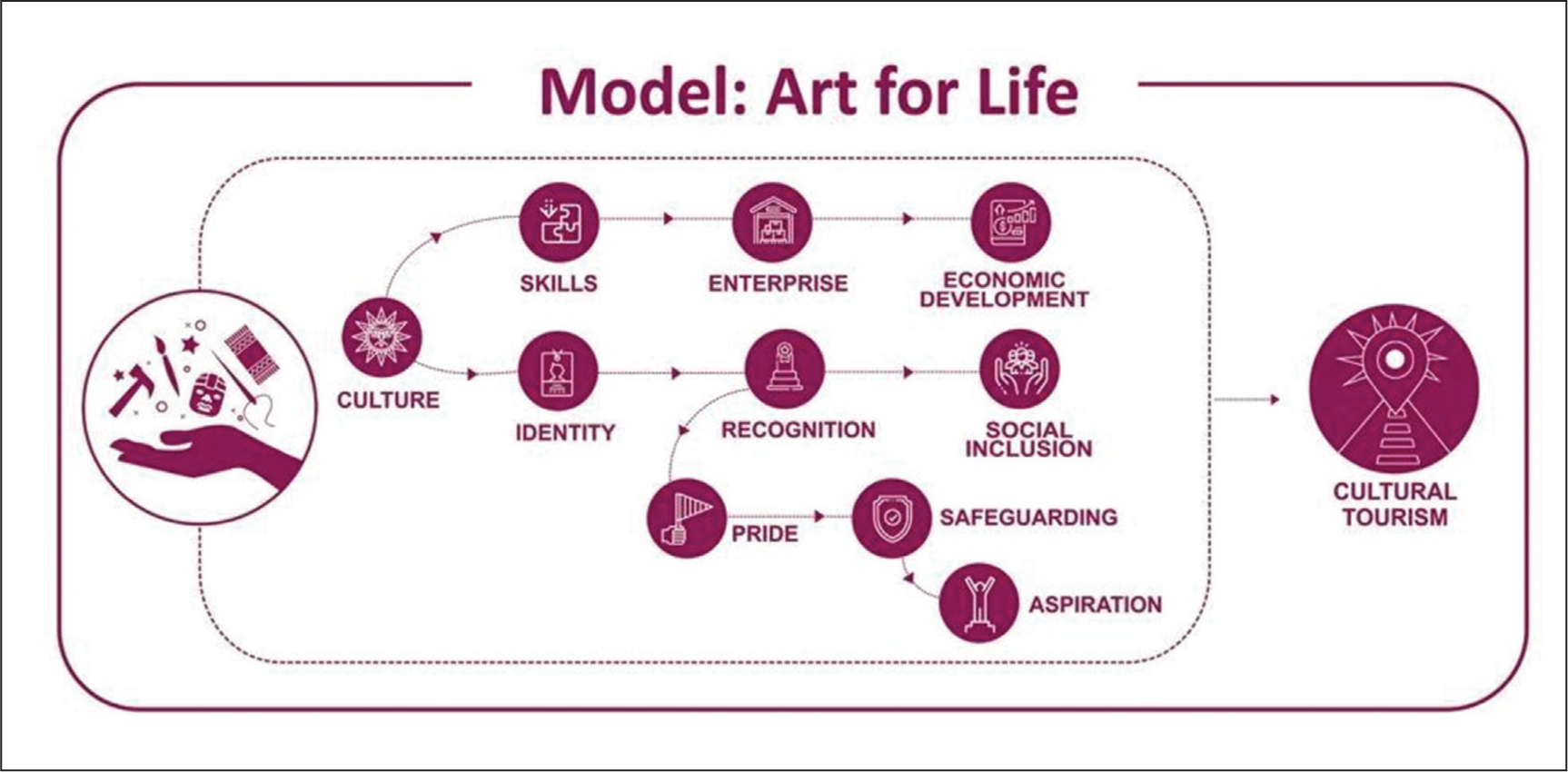
The programme focuses on building a strong cultural identity and recognition of the creative communities through awareness generation about the different art forms, international and national exchange and collaboration for supporting innovation and creation of new audiences. Through the process, these communities also innovated attractive cultural offerings that visitors want to experience. Products such as village festivals and cultural art residencies (both local and international), built into the programme strategy primarily for creating exposure and awareness, have led to unique experiences of heritage tourism and education. Underserved villages have started becoming destinations, in turn strengthening local creative enterprises and bolstering local infrastructure. Tourism, thus, becomes a platform for integrating different cultural products and experiences, through promotion of an art–artist–village based model of value creation.
Overall experiences and field learning show that key factors impacting positive growth included a need for integrated development strategies, the importance of skill transmission to younger generations, collaboration and partnerships, sustained community capacity-building in entrepreneurial and business development know-how, responsible promotion and protection of creative offerings, as well as building community ownership and respect for the traditional–contemporary continuum in a sensitive way. The most important approach has been involving, engaging and making local communities the key stakeholders in this process of development of creative and cultural economies.
Measuring Impact of AFL
The impact of the community empowerment and ICH marketing initiatives has been systematically tracked through field data collation. Findings and evaluation studies show that the interventions have led to meaningful employment, dignity of work and creation of a collective community identity based on traditional cultural forms, and a sense of pride in unique skills threatened by loss. Community ownership and the community-led model contributed to sustenance and growth with leadership from within. Local economies were strengthened and village vitality increased, leading to reversing the ‘village to city’ movement. The positivity in collective collaboration was reflected in overall village-level development and greater social inclusion. Between 2005 and 2019, the number of practicing artists across Bengal doubled within these communities, while their average income grew three times. The process empowered marginalized communities to participate fully in social and cultural life that fostered inclusive development. Younger generations became involved in art forms, six of which now have geographical indication (GI) registration. Today there are 15 active rural cultural village hubs, with AFL contributing to several sustainable development goals (SDG): SDG 1 (no poverty), SDG 5 (gender equality), SDG 8 (decent work and economic growth), SDG 11 (sustainable cities and communities), SDG 12 (responsible consumption and production) and SDG 4 (education). AFL is thus at the cutting edge of contemporary development practice with its focus on local wellbeing as the key to a sustainable planet.
The case study of Bengal Patachitra (scroll painting and story-telling) in the Naya village cluster is a specific example. Patachitra is a tradition of storytelling where Patuas (makers and singers) paint stories in frames on long scrolls, singing out the stories as scrolls are unfurled. In 2005, banglanatak dot com started its AFL intervention to revive Patachitra and turn the art into a sustainable and dignified source of income. Since then, new capacities, new markets, meaningful promotion, art appreciation, consumer education, revival of traditional colours and ways of painting, and the organization of the community into a collective artist enterprise named ‘Chitrataru’, has led to the empowerment of the community and the emergence of a sustainable creative village industry. Today, the Patuas of Naya constitute a distinguished artist community who earn a decent income from their art form and enjoy a sustainable livelihood in their village itself. They work from their homes, and often travel the world to collaborate, work, perform and exhibit. There is global recognition of their art form, bringing pride and dignity to the artists themselves as well as to their communities, encouraging a living heritage. Youth have found a dignified and viable source of income through Patachitra, and migration to cities has been reversed–a major achievement in the context of migration tragedies experienced during the COVID pandemic. These rural artists have overcome marginalization and are now respected for their creative skills. From 20 in 2005, today there are over 250 practicing artists in the village hailing from over 80 families. Leadership of women Patuas has contributed to overall wellbeing as well as to improved education of children, better sanitation and improved status and mobility of village women. At a national conference in 2019 in Kolkata, the leading women artists of Naya spoke about their journey:
We did not think our traditional art form could bring us any income as nobody respected our work and with changing times our tradition declined. We had almost given up on Patachitra painting and were poverty-stricken. Today we are proud artists who are respected and recognized all over the world. Such appreciation along with the income opportunities through Patachitra really makes us happy, and our village has completely transformed into a cultural hub.
Marketing Initiatives and Experiences
Development of effective marketing strategies has been a process through collective learning and action. AFL’s approach has been to understand the requirements of markets/buyers through outreach, exhibitions and collaborations as well as by establishing direct linkages between artists and craftspeople with craft technology and performing arts sectors nationally and internationally. This has helped expand business opportunities through partnerships that strengthen marketing capacities and artist enterprises. Hand-holding support has been provided throughout the process by the banglanatak dot com team, nurturing partnerships in a way that communities are independently able to carry forward these new relationships and their business networks.
Creating New Products and Offerings of ICH
New and diverse market development has been a focus area, reflecting the fundamental need of the heritage sector for its continuous innovation of cultural products and offerings. Exclusive branding has helped demonstrate how folk art is cardinal to the indigenous communities’ way of life. Multiple sectors have been linked to create a wide consumer base, including design, lifestyle, crafts, tourism, music, festivals, heritage education and the promotion of cultural exchanges.
Development of Villages as Cultural Hubs
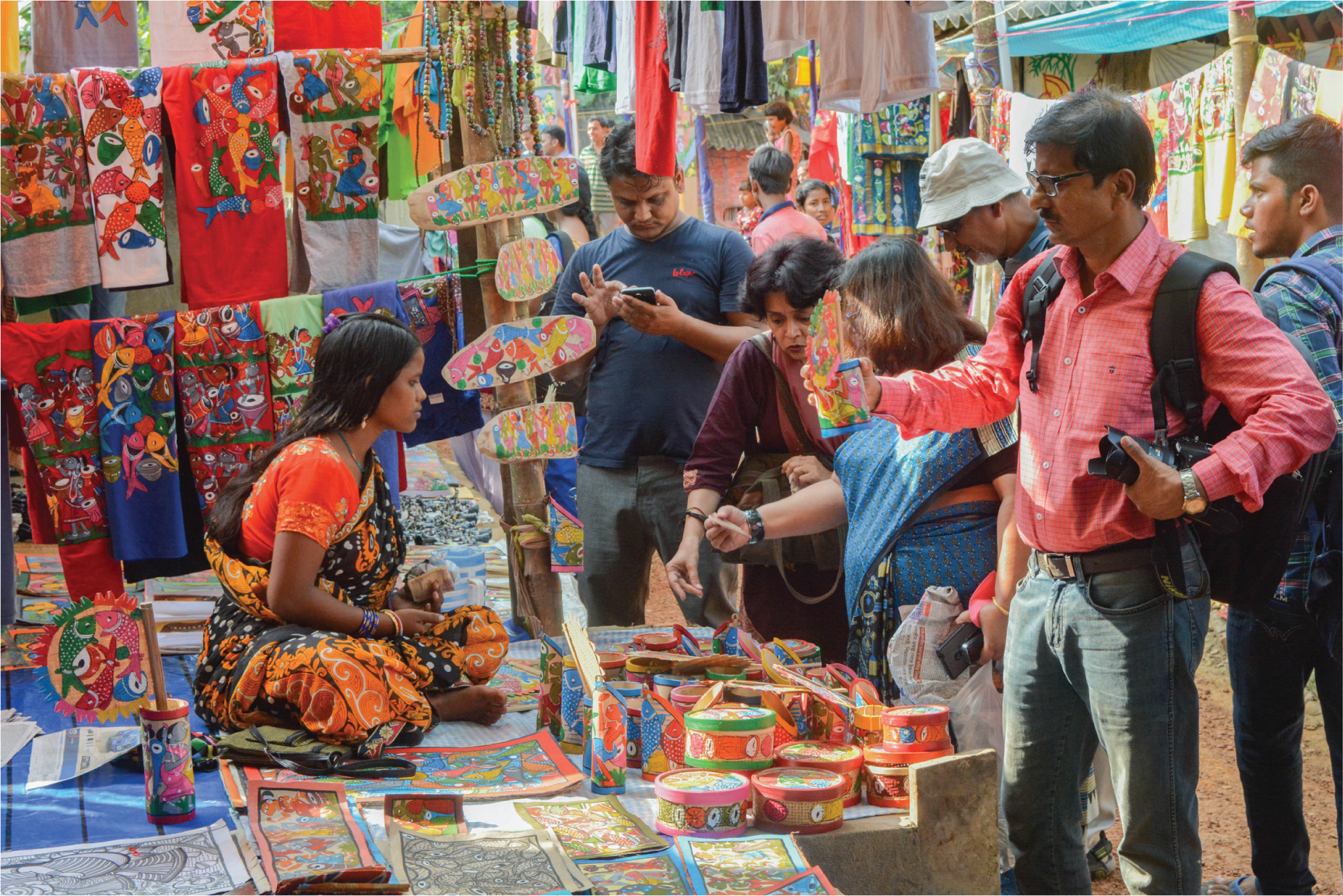
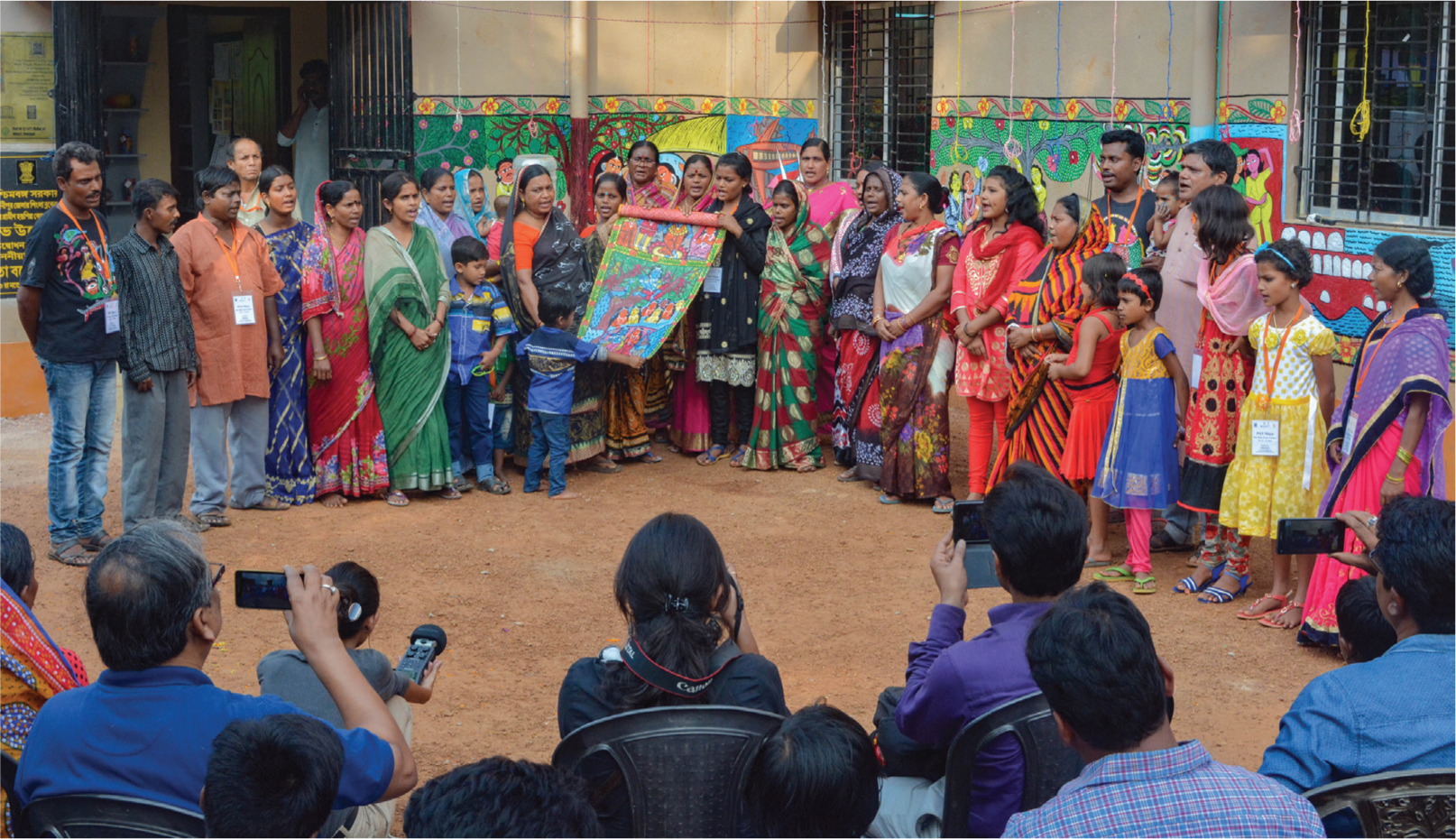
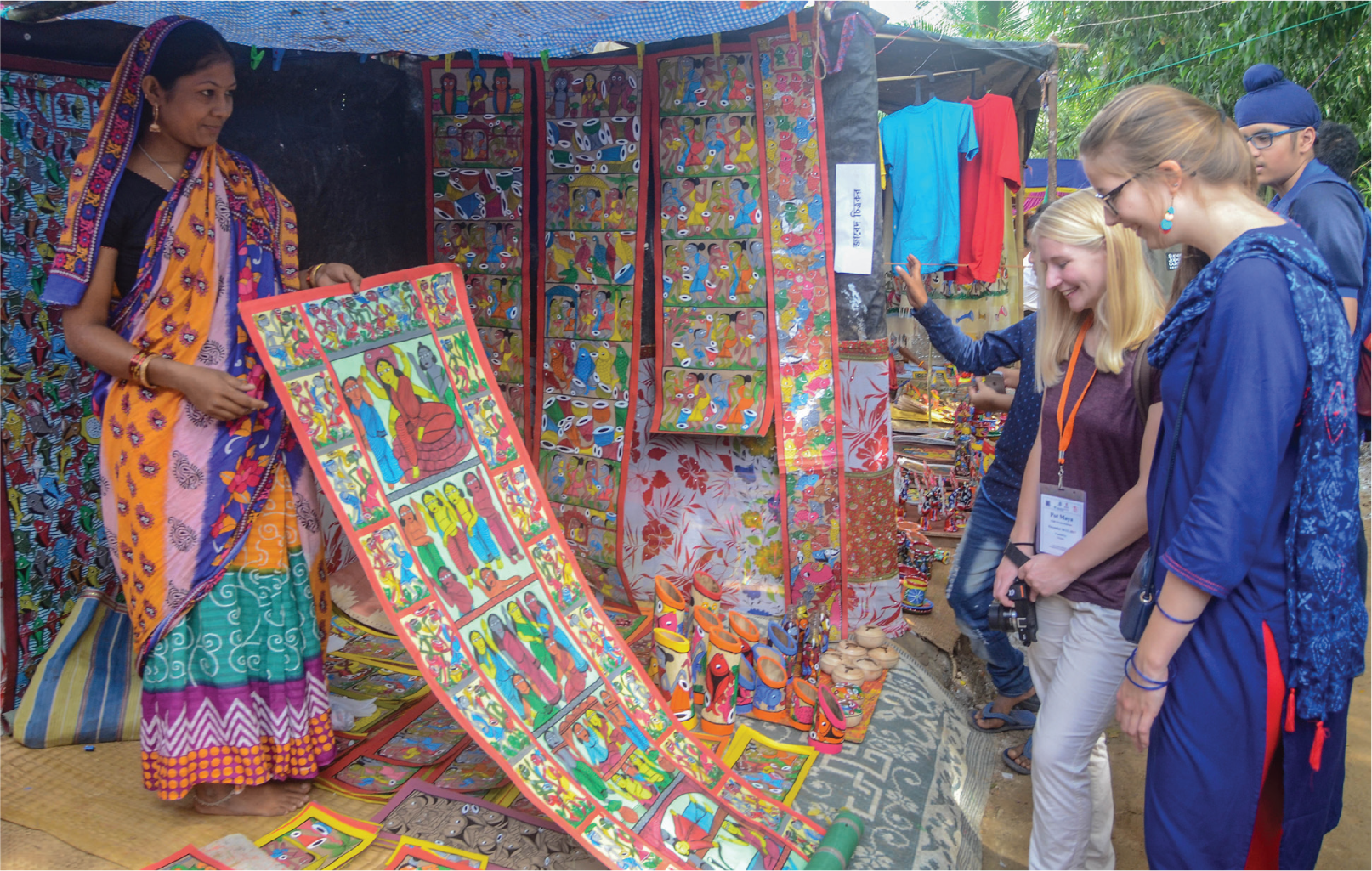
The AFL approach consists of building a strong cultural identity and recognizing creative communes as vibrant cultural hubs. Annual village festivals were initiated to create new contexts for showcasing talent and raising public awareness (see Figures 2–4). Apart from Naya, popular destinations include Charida (a village of the Chau acrobatic masked dance and mask makers), Bikna (Dokra makers using age-old tradition of metal casting), communities of Baul and Fakiri wandering bards, and Natungram (a village of wooden doll makers). Village festivals of 3-day duration are organized over weekends, attracting many visitors. The artists’ collectives take active part in all arrangements including setting up of stalls, guest accommodation, workshops for visitors and cultural programmes. School and college students learn about the rich heritage of art and of craft-making processes. Interaction with the creators is a major opportunity for heritage education. Photographers, writers and urban artists regularly visit these hubs for inspiration, stories and co-creation of artworks. Each festival has its unique characteristics to attract tourists from near and far. People from local rural areas as well as cities enjoy the ambience and interact with the artists. They also enjoy collecting cultural products and handicrafts. These festivals provide platforms for networking and business transactions with visiting craft retailers and event organizers. These annual village festivals have thus become important cultural tourism assets, owned by local artist communities. A specific example since 2010 is the Patachitra artist collective, Chitrataru. It has been organizing an annual 3-day festival called Pot Maya in Naya village to celebrate the success of local artists in reviving their heritage art form, attracting local and global attention.
Village Resource Centres as Shared Heritage Spaces
Resource centres have been set up in several villages to create spaces for practice, learning and demonstration. The resource centres showcase art works and share information on the processes of making, and are owned and managed by the local community. Designed with community participation, museum sections at the centres help in setting the context of folk traditions in terms of history, social significance and cultural evolution. This has proved vital to the process of conservation and dissemination of people’s cultural history. There are such eco-museums or community-owned/managed museums in the villages of Patachitra artists (Naya), Chau dancers (Balarampur and Maldi), Chau mask makers (Charida), Dokra makers (Bikna and Dariyapur) and Baul singers (Gorbhanga, Jalangi and Hariharpara) among others. The centres have space for exhibitions and basic accommodation for visitors. The museums are freely accessible, and during village festivals tourists from all over the world enjoy these spaces for information, research, exchange, workshops and collaboration. The museums are today the pride of local communities, reflecting the importance of indigenous cultures. Equipped with computer facilities, these are also being used for online interactions, critical in a post-pandemic situation. Many of the artists are earning from online heritage education programmes which they offer to audiences, including to children at schools overseas.
Rural Cultural Tourism
Building upon the local cultural tourism was also informed by a critical development at the global United Nations World Tourism Organization (UNWTO)/UNESCO World Conferences on Tourism and Culture, and three Declarations focusing on building new partnerships in 2015, fostering sustainable development through tourism in 2017 and generating benefits for all in 2018. The most recent recommendations on sustainable indigenous tourism include guidelines for equitable partnerships, community as driver of cultural tourism and ethical aspects of cultural consumption. The Patachitra hub of Naya is a unique cultural tourism destination and has been documented as ‘best practice’ by the UNWTO. Based on banglanatak’s case study of AFL programme, UNWTO entered into a global partnership with banglanatak dot com in 2018 for promoting community-led responsible cultural tourism.
Developing Fair and Conscious Markets
A two-pronged strategy has been used to develop market linkages and promotions: bringing audiences to villages, and sending rural artists to attend fairs, exhibitions and festivals at local, national and international venues. Village festivals have created new contexts for practice and performance and participation of international artists through exchange and collaboration (RCCH, 2016–2019). Indigenous handicrafts have also evolved through co-creation, collaboration, and direct market exposure and linkages. Cultural products for tourism/lifestyle/fashion industries have always been considered a niche sector. AFL innovated ways through freely accessible short films, multi-stakeholder partnerships, publications, online assets, and social media pages for cultural hubs and artist collectives. These educate audiences, promote the artists themselves, and create new and diversified consumers, emphasizing the need for being sensitive and respectful to local communities and traditions. Collaborations, partnerships with the actual practitioners in the forefront, as well as advocacy and promotion through articles, blogs, and websites have significantly added to value creation, and market expansion.
Empowering Artist Communities on Intellectual Property (IP) Rights
Between 2018 and 2021, banglanatak dot com partnered with Coventry University in a British Academy-supported research initiative to explore heritage sensitive IP and marketing strategies (HIPAMS) to empower rural artist communities to better negotiate business ethics with stakeholders and use marketing strategies to strengthen collective as well as individual competitiveness. Three artist communities (Chau dancers and mask makers, Patachitra artists and Baul and Fakiri singers) participated in co-creating marketing strategies and frameworks for negotiating their creative and community rights with stakeholders in commercialization (Waelde et al., 2021).
The producers and performers engaged in discussions on attributes of their heritage, which aspects are most important, which ones are threatened or languishing and what aspects can be changed. Communities felt that this was a new experience as they were brought together in a discourse on common skills and values, and for actively developing strategies for safeguarding, skill-upgrading and innovation. They felt that if makers are clear on how underlying values and skills are reflected in marketing messages and products, the risks of de-contextualization can be minimized.
The growing commercialization of traditional arts and crafts often ignores critical considerations of identity creation and of the uniqueness and authentic values of cultural products as well as the importance of recognizing the actual producers. Consultations with the artists revealed unfair practices like copying of art work without permission/attribution, selling products under the name of the art form even though not produced by the artists and the use of photographs and recordings without permission and attribution (HIPAMS, 2021). Baul singers pointed to the poor quality of unauthorized recordings that are shared on social media, marring their reputation. Chau dancers pointed out the lack of proper stage arrangements and films where their performance is not acknowledged in the film credits. All artists mentioned cancellation of events without compensation as a key concern. There were other examples of lack of attribution in printed and audio-visual publications like films and television serials. Protection of the rights of traditional art forms that are community-owned and practised through generations is difficult through existing legal instruments. Owing to marginalization of the rural artists and their lack of direct access to markets, they face exploitation of their rights and creativity by market actors including designers and retailers. Using legal tools is often not practicable for communities in remote rural areas. Through these interactions, art codes or codes of ethics were developed by the Chau dancers and mask makers, Bauls and Patachitra artists for fair engagement with market stakeholders, based on the UNESCO Intangible Heritage Convention’s Ethical Principles 2015. The art codes were then shared with craft retailers, galleries, cultural event organizers, publishers, film makers, media professionals and cultural brokers. These codes aim at making stakeholders in commercialization aware of the concerns, expectations and rights of the traditional practitioners, urging the need to understand the meaning of the art and craft forms, respect the heritage and its bearers, provide fair remuneration and support sustainability, attribute and acknowledge contributions and ensure artists have a fair share in the benefits from the use of their work. The Chau dancers for example mentioned that by engaging traditional singers and musicians instead of recorded music, sustainability of allied art forms can be supported. Patachitra artists requested attribution to painters and avoiding copying without permission. These artists are now signing their work to enforce copyright. Interestingly, the artists used their art forms to communicate these values. Patachitra songs and scrolls were developed by Patuas to explain artist rights while Chau dancers developed a production that demanded recognition of the artist behind the mask.
Digital Tools for Building Exclusive Identity
Creating awareness of what makes art forms and craft practices unique is thus critical for developing sensitive and respectful markets. Internet and social media are powerful tools for promoting art and craft forms (Rinallo, 2020), relatively less expensive as well as powerful means of promotion and marketing. Tradition bearers have been trained in digital storytelling, recognized as essential to creating experiential narratives for audiences and consumers. Today, these village communities are increasingly using social media channels (Facebook, YouTube and Instagram) to share their art. They have been oriented on the needs for both collective promotion of their heritage as well as promotion of their individual work, building collective as well as personal identities in a complementary and synergistic manner. Websites for collective promotion (
Content developed covers history and origin, process of making, significance and variety, interviews of living masters, new innovations, awards and accolades, lifestyle and habitats. Preliminary research on social media analytics showed low availability of content as well as search. Strategies like use of hashtags in artist as well as user-generated content and engagement of social media influencers have worked well. The communities identified promotional messages and with the help of professionals, developed short films telling the story of their art forms, festivals, underlying philosophies and transmission of skills to new generations and even stories of empowerment of women artists. Use of digital tools has enriched communication by connecting performing arts with associated crafts. For example, Patachitra artists were concerned that the scrolls or painted products are not linked to the songs which they value as the core of their tradition. They now use QR codes to link the paintings and products to their related songs. Buyers have greatly appreciated this enriching experience and there has been an increased demand for recorded Pater Gaan (songs related to Patachitra). Chau mask makers use QR codes on packaging connecting the masks to recordings of performance.
Artists and makers have been trained on legal aspects of copyright regimes, including those concerning digital contents. They are using Creative Commons license on websites to convey photos and videos that can be used commercially and with proper attribution. Notice boards in villages also convey information on ethical approaches for photography and recording. While promoting heritage business, the importance of synergizing individual and collective promotion as mutual reinforcement has emerged (Rinallo, 2020).
GI for Territorial Branding
GI has emerged as another important tool for strengthening heritage-based craft economies. Bengal Patachitra, Madur (mats made with reeds called Madurkathi), Dokra of Bengal, Wooden Mask of Kushmandi, Chau Mask of Purulia, and Terracotta of Panchmura are among the craft traditions now accredited with GI status that enables creation of an exclusive identity for tradition-bearing communities by linking products with places where makers reside. In 2018 when Bengal Patachitra was accredited with GI status, the community started distinguishing their products and offerings based on specific geographical and associated qualities. Such GI identity has also been successfully used to mark the habitat of the artist communities, for example, in branding villages as cultural destinations. In addition to tagging products with GI during exhibitions and sale, GI use for establishing collective identity through village festivals, tourism promotion and mainstreaming these places with official ‘Incredible India’ campaigns have benefitted communities in a significant way. They not only benefit economically from the renown of their GI products but are also able to enjoy recognition and value of their traditional art forms and the traditional spaces where these are created. GI is today a powerful tool for collective brand development and for strengthening competitiveness. More than three hundred artists have secured userGI registration, and have been trained to use GI logo on packaging and product tags.
Resilience of ICH-based Businesses
Interestingly these strategies have together strengthened the resilience of creative communities, tested by 2 years of COVID-related disruption. The impact of the pandemic has been severe, with cancellation of fairs and festivals, bans on travel and uncertainty about the future. Additionally, digital inequity in rural communities compared to urban areas has pushed them to a periphery without effective access to the virtual world.
In order to boost confidence and hope, banglanatak dot com started training village youth remotely on the use of social media and digital facilities to reach out to buyers, audiences and the world at large. Since March 2020, the artists have been supported through online programmes, exhibitions and sales. This engagement helped build confidence and arrested growing despair due to COVID uncertainties, through opportunities beautifully utilized by artist communities to reach out with showcasing their art online, selling on digital platforms, performing on live Facebook events and effectively using digital media to generate livelihood opportunities online. Artists organized online exhibitions collectively, shared contacts with audience and forged new partnerships. Digital storytelling training opened up a virtual world of interested participants who connected with the artists, paying online for demonstrations and classes. The online connect has also made it easier to process orders and sales. Even without assurance of future business, artists have remained motivated through a new ability to stay connected with the outside world.
With restrictions on long distance travel, rural tourism has gained popularity. Official tourism authorities, the British Council and others have supported promotion of heritage villages as weekend getaways. Visitor footfall has provided much needed opportunities of sales. In the process, these rural creative industries have revealed interesting aspects of their survival, resilience and a positive collective response to the crisis. Factors supporting such resilience include the use of local and exclusive traditional skills and capacities, local resources and raw materials, low energy requirements for production and performance, and sustenance of traditional collective structures of work and living that can lead to social cohesion and a strong sense of self-reliance. These are lessons with significance in the global quest for sustainable futures.
It is also interesting that being a visual artist community, many of the Patuas have depicted the pandemic and its impact through scroll paintings, narrating the difficult times as experienced and imagined by them. Such expressions of resilience not only revealed their creative ability but also attracted attention from media, art lovers and buyers who have reached out to collect these unique scrolls. One of the leading Patachitra painters, Swarna Chitrakar, painted a scroll depicting the pandemic impact, then recorded and posted her song on social media. The video went viral with more than a million viewers, then inspiring others while Swarna was commissioned to illustrate a publication on the pandemic. Some younger artists have conducted online classes and workshops on Bengal Patachitra, on demand from audiences in New York, London, Paris, Hong Kong and Sweden. Through such tumultuous times, ICH-based enterprises have proved adaptable, flexible and responsive through innovative marketing strategies, developing their capacities for managing heritage businesses.
Policy and Eco-system Need
Partnerships and networks supporting heritage businesses are today driven largely by private individuals and organizations working in the cultural sector across India. Yet to succeed, the private sector needs effective official policies that can create an enabling environment, overcoming operational silos and integrating cross-cutting sectors. These sectors include tourism, education, digital technology, intellectual property rights, sustainable production systems and green economy technologies. All are needed for building a sustainable national eco-system that can encourage and sustain heritage businesses. The potential of ICH-based cultural tourism remains underutilized and demands new awareness and understanding in both public and private sectors. Tourism is a prime example. India has unique habitats of artist clusters with communities that live together and specialize in music, dance, art and craft. Current tourism policies are based on consumer-oriented strategies. While official tourism policy promotes rural tourism, it needs to address capacity-building by non-government activists of local artists, musicians and dancers to communicate the quality and value of their tourism offerings that can lead to destination attractiveness (HIPAMS, 2021). Capacity-building for effective policy implementation needs prioritization and integrated approach. The National IPR policy (CIPAM, 2016) by the Ministry of Commerce and Industries highlights objectives like providing necessary support and incentives to traditional knowledge holders for furthering the knowledge systems and using commercial opportunities through e-commerce. The policy champions the cause of ‘Creative India, Innovative India’. All this demands regular training by grassroots activists on managing intellectual property rights and the relationship between individual and collective interests among ICH communities and relevant stakeholders. Artist communities need access to guidance on licensing copyright and on performance and design rights that concern films, publications and custom-made products. An eco-system for establishing and regulating ethical practices is needed to protect the rights of the traditional practitioners. While GI is a powerful tool for marketing and branding, there is lack of local mechanisms for ensuring the quality and integrity that GI demands. Heritage businesses will also benefit from umbrella branding strategies, developed locally. In a world coping with climate change, there can be new opportunities for these inherently green sectors through promotion of sustainable production and consumption. Highlighting tangible and intangible heritages with UNESCO and other international recognitions, traditional knowledge and cultural expressions with registrations like GI needs to be part of promotional strategies for cultural and tourism sectors, built from the ground up. A national digital economy policy needs to support grassroots heritage businesses to reach global markets through effective policies, legislations and infrastructure and capacity development. Public–private partnerships and collaborations are critical for co-creating innovative cultural products and targeting new audiences and approaches in a dynamic and competitive market.
Entrepreneurship is a dynamic process that essentially requires innovation, risk-taking abilities, professionalization, business understanding and management, value creation, collective growth, finance management and regulatory compliances. Customized and effective capacity-building programmes are needed which are specific to the ways of working of local practitioner communities and for addressing their challenges such as the lack of formal education. Participation of communities in policy-making and programming is finally most essential to addressing present lacuna in need-based policy and regulatory frameworks. As this article demonstrates, the potential in India is enormous. It awaits understanding and action to take to scale, both in India and across the globe, what has been powerfully demonstrated through the ‘trial by fire’ of a pandemic.
Footnotes
Declaration of Conflicting Interests
The authors declared no potential conflicts of interest with respect to the research, authorship and/or publication of this article.
Funding
The authors received no financial support for the research, authorship and/or publication of this article.