







Abstract
Over the 10 years, the annualLahoreLiteraryFestival (LLF)has focused on highlighting the symbiotic relationship betweenLahoreand literature.Lahore’s complex past seen today in its architectural heritage, the storied buildings and the intangible traditions has inspired prose and poetry and, indeed, dissent and civic liberties too. It is this aspect of the physical and literary heritage that unifies the past and present, and becomes a leitmotif for the LLF, to give the city its distinct historic and literary aura. By working to mobilize students, volunteers and citizens from across the city, the LLF aims not just to harness a love for reading, writing and thinking but also for the city’s multicultural physical heritage.
Keywords
Background to Recent Heritage Preservation Which Provides Inspiration for Writers and Poets
Lahoreis home to key Mughal historic sites across its Walled City, along the Grand Trunk Road, and in Shahdara on the banks of the Ravi River (home to the tombs of Mughal emperor Jahangir and Mughal empress Nur Jahan) yet many of these, owing to gross neglect, are a shadow of their former selves. A case in point are theShalimar Gardens, which are on the UNESCO list of endangered heritage.
Reversing the tide of decrepitude ailing the city’s heritage is key to nurturing the city’s intangible heritage. TheLLFaims to do that by inspiring writers, poets and artists to stimulate our minds by creating a community for cross-pollination of ideas and sensitization around the built and intangible heritage of the city. Fortuitously, thepast decade has been especially uplifting forLahore’s heritage as the city’s dwellers and visitors, after the restorationsof theShahi Hamam, a seventeenth-century bathhouse built during the Governorship of Asif Khan, and the Wazir Khan Mosque, (Figure 2 and 3) take pride in ambling through the rejuvenated yet still narrow lanes of the walled city.
Dyal Singh Mansion, The Mall, Lahore.
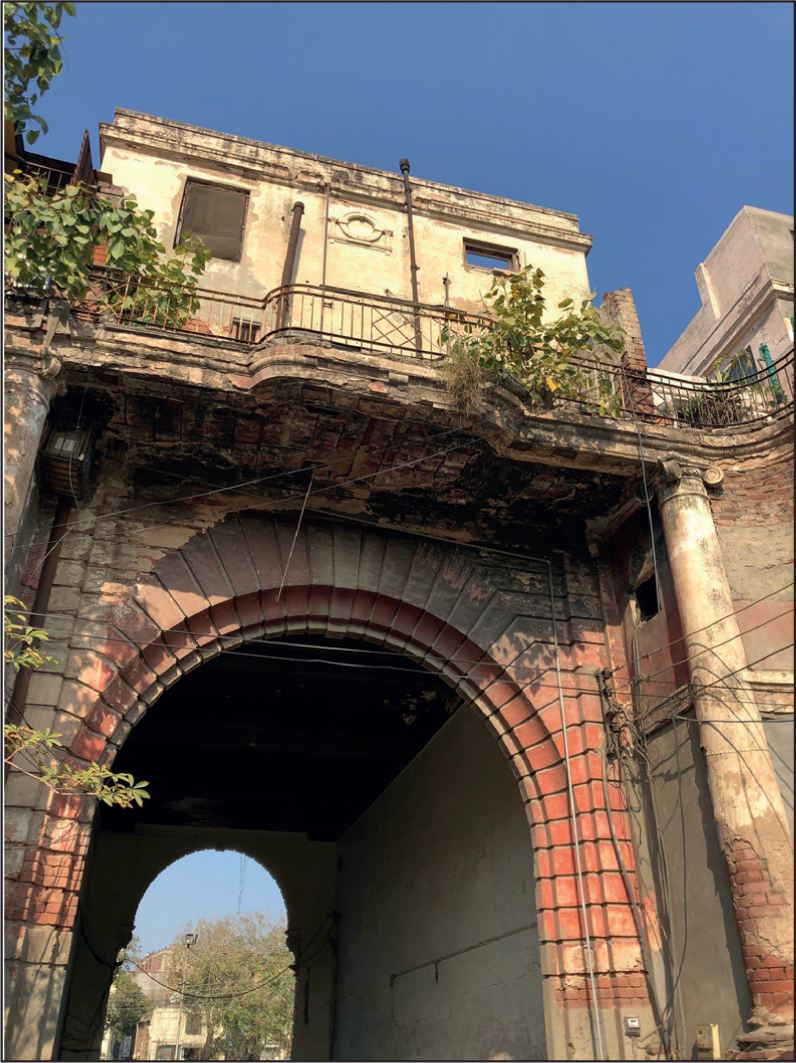
Lahore.
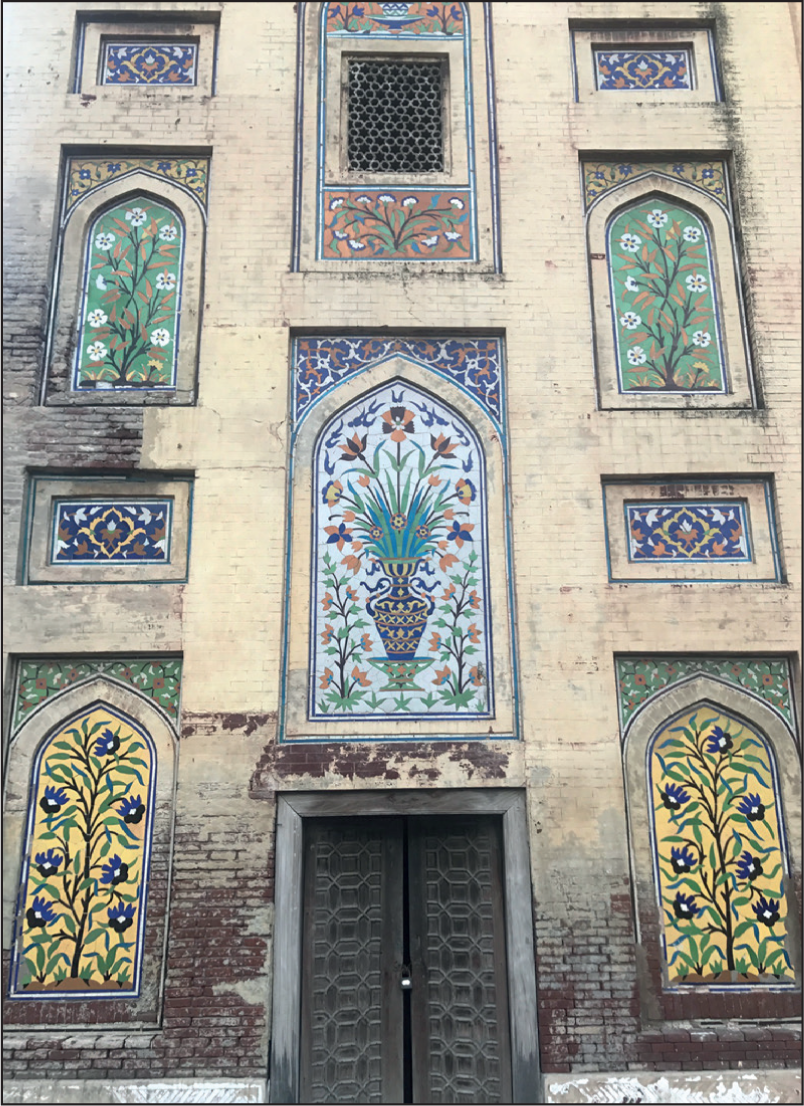
Wazir Khan Mosque.
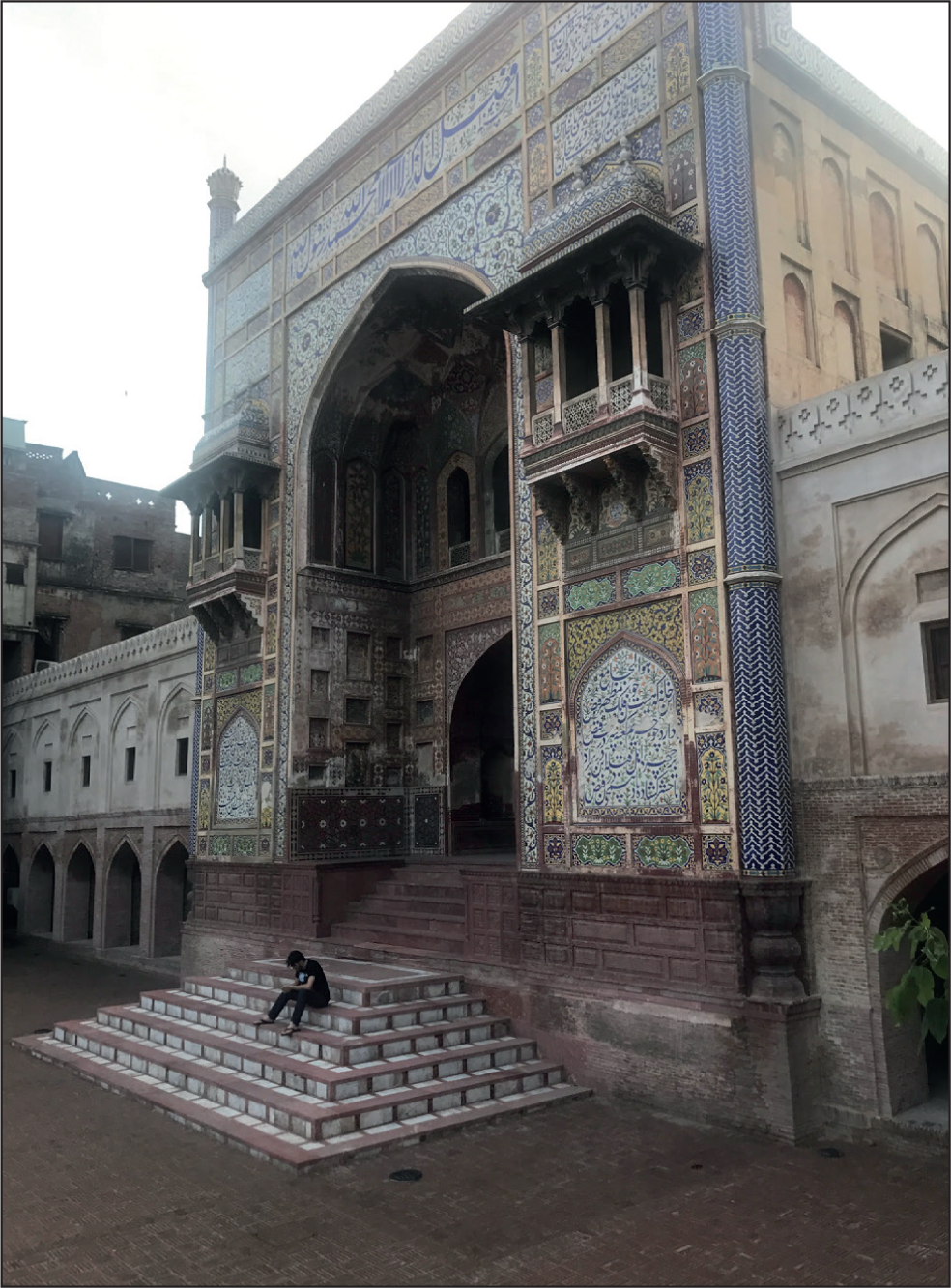
In the precincts of the Mosque and Hamam,endangered structures have been buttressed, wooden jarokhas (traditional open bay windows) repaired, drainage pipelines added and firefighting introduced in and around the Shahi Guzargah (royal passageway). Through these interventions, the Walled City AuthorityLahoreand Aga Khan Development Network have blueprinted a sustainable plan for heritage preservation and urban renewal. This is the part of the city whose urban planning historically was undertaken by, amongst others, Dara Shukoh (Gandhi, 2020) and holds significance for the literary community as it has been widely referenced in canonized literary texts.
At the heart of the conservation and heritage management of the Shahi Guzargah is the community. Community empowerment workshops, Qawali recitals, and art and photography shows now are frequently held there. Those are inspiringLahore’s writers and artists to see the city as having a ‘living heritage’ beyond mere postcard images. The late Sara Suleri wrote of the walled city streets that ‘wind absentmindedly between centuries, slapping an edifice of crude modernity against a medieval gate, forgetting and remembering beauty, in pockets of merciful respite’ (Suleri, 2013). Suleri will have been thrilled to see her city serving as a better keeper of its heritage and especially of its interface between the medieval and modern gates and walls of theandroon(inner) city.
LLF, Writers,Lahoreand Heritage
The past decade has also produced literature, visual language and music fromLahorethat has not just resonated locally but internationally too. After a particularly bleak patch for Pakistan when (suicide) bombings were rampant, and when more or less all publicfestivalshad discontinued, LLF took a plunge into the unknown with its first edition in 2013. The crawling queues up to the auditoriums of the Alhamra Arts Centre and the youthful buzz around the event were affirming for the institutionalizing of LLF.
LLF keeps annuallyrekindling the city’s pluralistic past through literature, and its built heritage, to stimulate young minds on establishing a firmer sense of place, which gives us all a measure of the history that the city is steeped in. In addition, that is something which the LLF has since 2016 also spotlighted in its foreign editions in New York and London to showcaseLahore’s traditions and culture to the South Asian communities in the two Western metropolises.
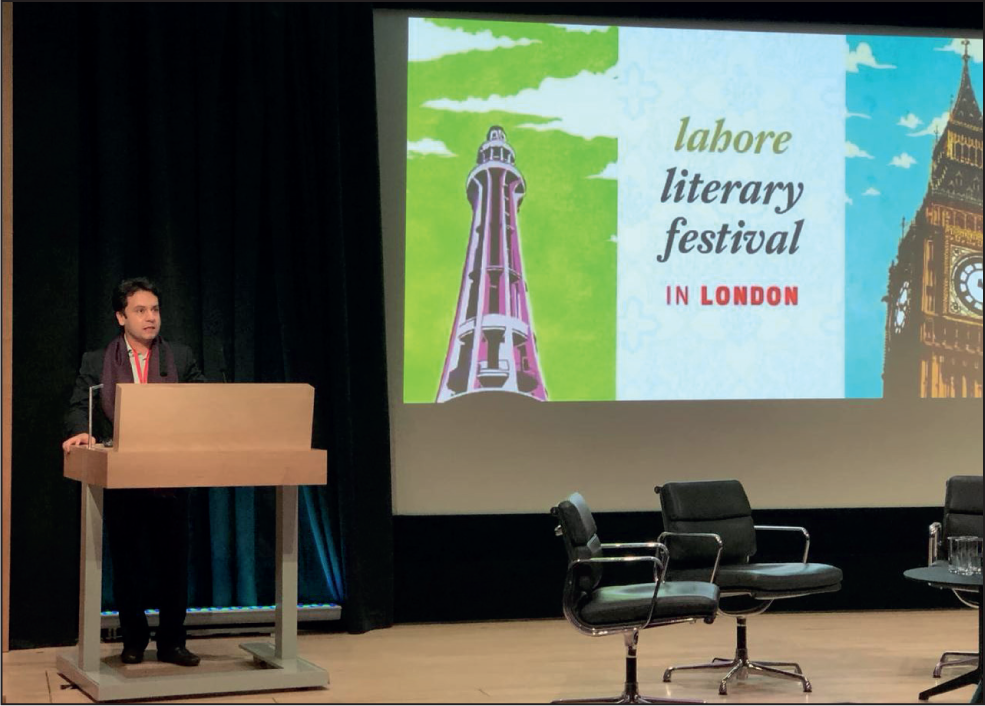
Initiatives at heritage preservation in the walled city are a stepping stone forLahoreto replenish its place as a tourist mecca. Yet at the same time, an effort at ameliorating perceptions of the country is critical and that comes through the ‘soft power’ of our indigenous traditions and cultural expressions. Through community support, and by fosteringfestivals, book readings and performances, the historic sites inLahorecan become cherished by all and not just limited to a few. Additionally, the 10 editions of the LLF inLahore, and four each in New York and London, (Figure 4) aid in enhancing the outreach of the city and its historic and contemporary role in sparking a literary imagination.
Lahore Literary Festival at the British Library London 2018.
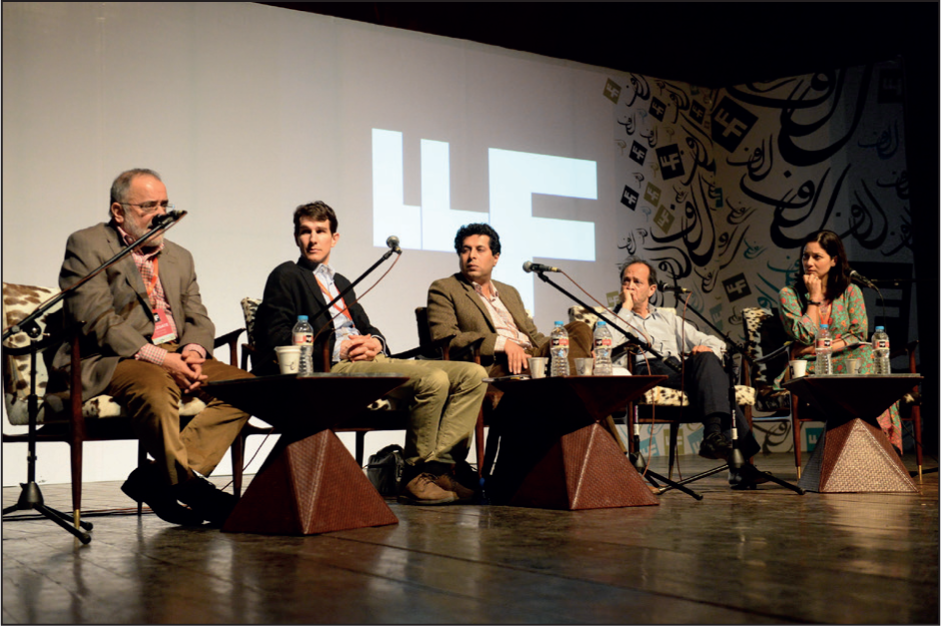
Prominent Mughal and South Asian historians have been invited over the years to give talks at the LLF on a host of topics including the history of the Kohinoor diamond (which was taken by the British colonial administrators from the Sikh court inLahore), on the Pahari paintings of theLahoreMuseum and alongside an exhibition was organized showcasingworks from the museum vault, as well as on the patronage of crafts and institution-building (LahoreMuseum and the Mayo school of arts) under John Lockwood Kipling. These talks (Figure 5) have underlined the importance of history and physical heritage in literature and the arts.
LLF 2014 Session in Lahore Titled War on Culture with L-R Ahmed Rashid, Hugh Eakin, Naman Ahuja and Vikram Seth. Moderated by Mishal Hussain.
LLF has explored the writings of Bapsi Sidhwa, Intizar Hussain, Pran Nevile, Suleri and Ved Mehta, amongst others, to celebrate literary craft, storytelling and also the role a city’s heritage plays in inspiring lives. By preserving the sites, streets and bungalows that are referenced in literary works, we can possibly ensure a sense of continuity and preserve some of the best indigenous architectural features, like the aesthetics of high ceilings, verandahs and ventilation windows found in the earlier architecture of the city, that will help mitigate the effects of climate change and also strengthen the city’s identity as a historic city to bolster tourism and yield environmentally sustainable income-generation for the city. An example of that could be a turnaround of a street off ofLahore’s Mall, behind the Ganga Ram Trust Building, where once in the extant row of townhouses the painter Amrita Sher-Gil and the novelist-and-reporter Khushwant Singh lived, and also the historic Rattigan road, home to the freedom fighter and reformer Ruchi Ram Sahni.
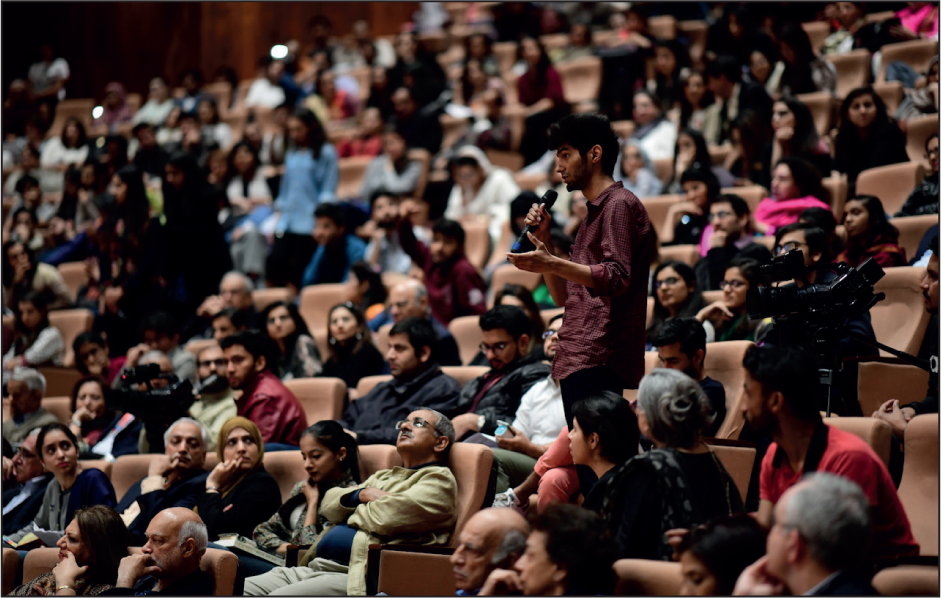
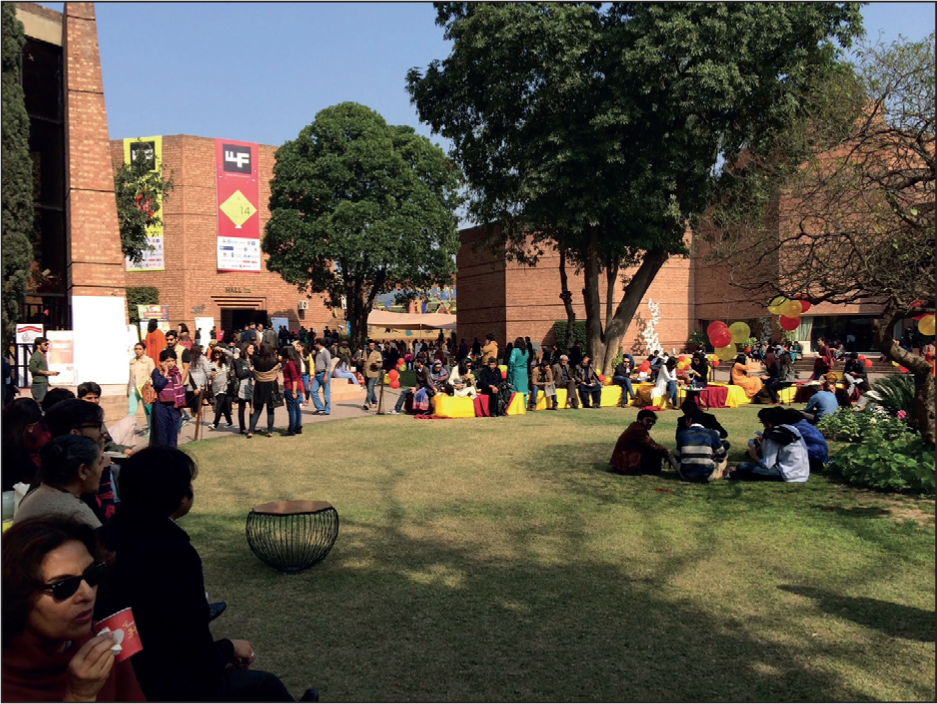
Places and initiatives such as thePak-Tea House, Faiz Mela, the AlhamraLahoreArts Council, (Figure 7) the National College of Arts and Nairang Gallery have over the decades provided a refuge for artists, poets and writers to find an esprit de corps especially when the means of inquiry and knowledge are limited like it was the case under the dictatorship of the 1980s. LLF draws strength from the city’s diverse and scattered historic andliterary sources.Whether it is the salon-like past of the Pak-Tea House or more recently that of Nairang, including the rich institutional histories of NCA and Government College (alma mater to Dev Anand, Muhammad Iqbal and Faiz Ahmed Faiz), heritage matters and plays a role in shaping a suitable environment (Figure 6) for honing minds and practising radical, innovative ideas for writing and the arts. It is indeed for this wide mix of literary work from those of Iqbal, Azad, Hali, Manto, Faiz, Sidhwa and many others, and the profile that the LLF generated internationally by being the first-ever literaryfestivalin the city, that the city in 2019 earned the UNESCO ‘city of literature’ designation.
A Wider Framework for the Built Heritage Is Still Missing
Rekindling an awareness of heritage and its cultural and literary importance for a city is a constant struggle. Therazing of the privately owned Sagar Theatre in 2020 during the covid-19 months was a reminder of that.Built in1933, on Queen’s Road, the theatre was home to an exhibition, in conjunction with the LLF, in February 2020, showcasing contemporary art and film from Pakistan. Attended by many luminaries, including the Nobel prize-winning author for literature Orhan Pamuk, that star-studded event still could not save this historically significant theatre.
That the destruction of heritage can go unnoticed and not be penalized is indicative of perhaps a broader failure at galvanizing a wider community and stakeholders since it is after all an uphill task seeking physical and intangible heritage preservation in a country embattling high population growth rate and an acutely deteriorating environmental ecology. since it is after all an uphill task seeking physical and intangible heritage preservation in a country embattling high population growth rate and an acutely deteriorating environmental ecology.
With the shutdown of leisurely and literary outposts on the mall like the Ferozesons bookstore at the Ghulam Rasul building, the Shezan Restaurant at the old Dyal Singh Mansion, (Figure 1) and the other iconic establishments that have over the decades characterizedLahore’s metropolitan character, a wholesale cultural erasure seems to be underway. In addition, the deteriorating security over the decade had not helped either. Views fromthe mall of the Indo-SaracenicLahoreHigh Court and the National College of Arts, designed by Bhai Ram Singh, are obstructed by the high walls topped with concertina wires. Recent interventions through theLahoreBiennale and Office for Conservation and Cultural Outreach, an independent cultural and urban studies unit, have shown the possibility of a community-shaped turnaround of the pre-partition structures and keeping culture and the wheels of commerce turning as opposed to one over the other.
The city’s literary and artistic heritages are etched on and along the mall. The same effort that is underway in the Walled City for the restoration of theLahoreFort’s Picture Wall will be worth making a rallying point around for the mall and its contiguous streets. LLF is held in close proximity to some of the pre-partition buildings of the mall with their grand facades where once lived many brilliant minds like Manto, the acclaimed Urdu short story writer, who lived in the Lakshmi Mansions. By celebrating the works and lives of those authors and artists who have had such connections withLahore, the LLF annually brings out through the stories, and the locations, the texture of the city for the youth to be stimulated and intrigued by especially from that of its multiculturalism and the way it was up to the late 1970s till the country became fully in the throes of the martial law of the 1980s and the political cycles that continued since.
Unspooling the still under-tapped potential where more physical heritage awareness will lead to more interest in reading and writing books is something that the LLF will keep investigating.
Footnotes
Declaration of Conflicting Interests
The author declared no potential conflicts of interest with respect to the research, authorship and/or publication of this article.
Funding
The author received no financial support for the research, authorship and/or publication of this article.