







Abstract
This study examines the influence of Kwagh-hir cultural heritage on intra-ethnic conflict resolution within Tiv of Central Nigeria. The Tiv people are known for their rich cultural heritage, and one of the most prestigious cultural heritages in Tiv land is the Kwagh-hir (a traditional theatre), used for entertainment, enlightenment and re-orientation of the people. This study used qualitative research methods such as in-depth interviews, participant observation and archival research in examining how Kwagh-hir functions within Tiv communities as a means of resolving disputes. Results of the study show that the Kwagh-hir is a mechanism of conflict resolution among the Tiv. It enables community members to air their grievances, exchange ideas and foster social cohesion. The Kwagh-hir uses performances to confront issues within the culture, such as land disputes, marital problems and leadership challenges. By doing this, it opens up opportunities for conversation and healing. Moreover, the Kwagh-hir ensures the constant preservation and protection of the Tiv culture, values and belief systems, highlighting the paramount importance of community togetherness. Kwagh-hir is, therefore, a cultural mechanism for the promotion of peace, unity and stability in Tiv society, as it brings together community members to interact, exchange ideas, sympathize and appreciate one another. This becomes the essential core of safeguarding and promoting the Kwagh-hir as a traditional tool for conflict resolution and peacebuilding. This article ends with a set of recommendations, employing heritage experts, custodians and community leaders, among others, to utilize best practices in cultural heritage management for sustainable peace and development in Tiv society.
Introduction
The Tiv people of Central Nigeria are well known for their interesting wealth of cultural heritage, including many traditional customs, belief systems and art forms, among many others. The Kwagh-hir theatre is one of the most adorned traditional performances of the Tiv people. The Kwagh-hir theatrical performance is a composite art form comprising a spectacle that is both visually stimulating and culturally edifying (UNESCO ICH, 2018). It was inscribed on the Representative List of the Intangible Cultural Heritage of Humanity (ICH Representative List) in 2019. Kwagh-hir is an ancient composite art that is both artistically attractive and morally stimulating. It is a public performance that recounts moral stories about past and present events and knowledge using puppetry, masquerading, poetry, music, dance and narrative to convey moral stories. This performance helps in the promotion of cultural values and norms while also conveying supernatural stories meant to educate, socialize and deliver social amusement to a diverse population, especially the younger generations, thereby contributing to addressing societal challenges (Nomishan & Sani, 2023).
According to Nomishan and Sani (2023), the Kwagh-hir traditional performance originated from the ancient Tiv custom of Kwagh-alom. This is an old storytelling ceremony performed at the completion of a hard day’s labour in the fields (Nomishan & Sani, 2023). As time went on, these tales developed into traditional performances, which cumulatively transformed into what is known today as the Kwagh-hir theatre of the Tiv people. Kwagh-hir utilizes craft, music and performance to depict the experiences, aspirations, triumphs and disappointments among varying neighbourhoods in Tivland (see Figures 1 and 2).
This revered cultural heritage is owned by the people and transferred from one generation to another through apprenticeships, through thorough training, which instils respect for instructions and mentorship. Once all the skills are acquired by the aspiring performers, they are accepted as being part of a given Kwagh-hir group. For Hagher (2013) and UNESCO ICH (2018) to guarantee the survival and sustainability of the Kwagh-hir cultural heritage, the Tiv society must endeavour to promote it by sponsoring its performance frequently. This point is critical to the fact that the Tiv people take great delight in the Kwagh-hir theatrical performance. This is because it has become a very strategic component of Tiv culture as it draws diverse audiences across all ages.
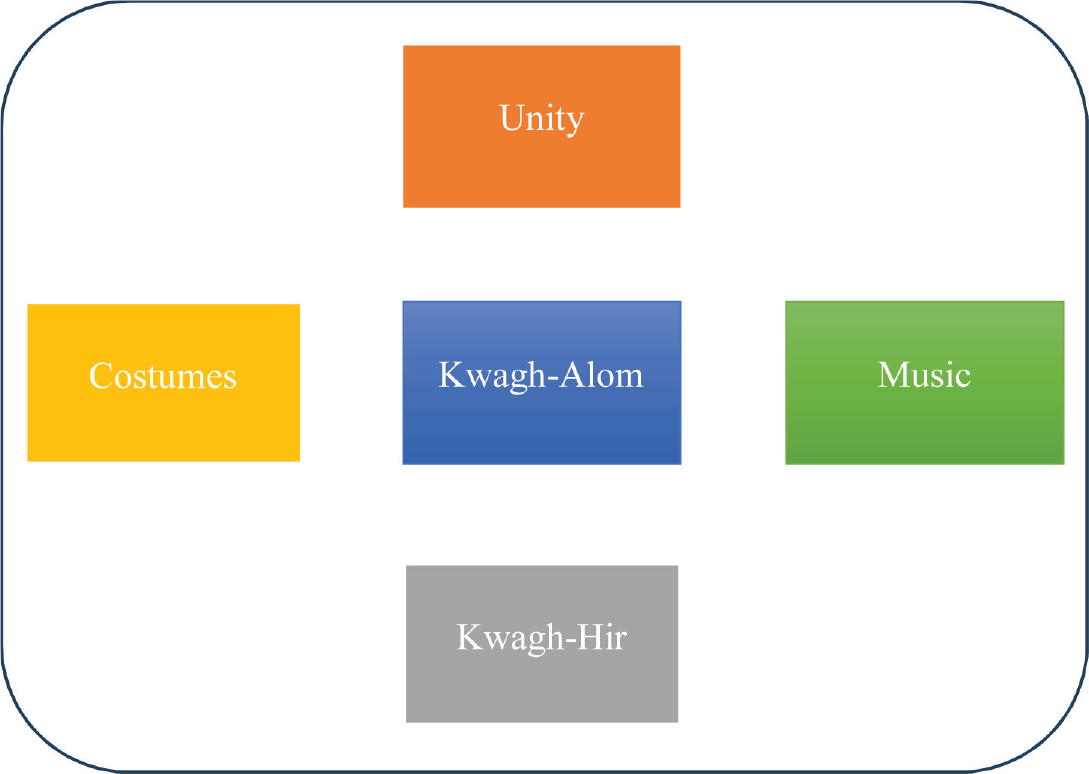
Avenues Created by the Kwagh-hir.
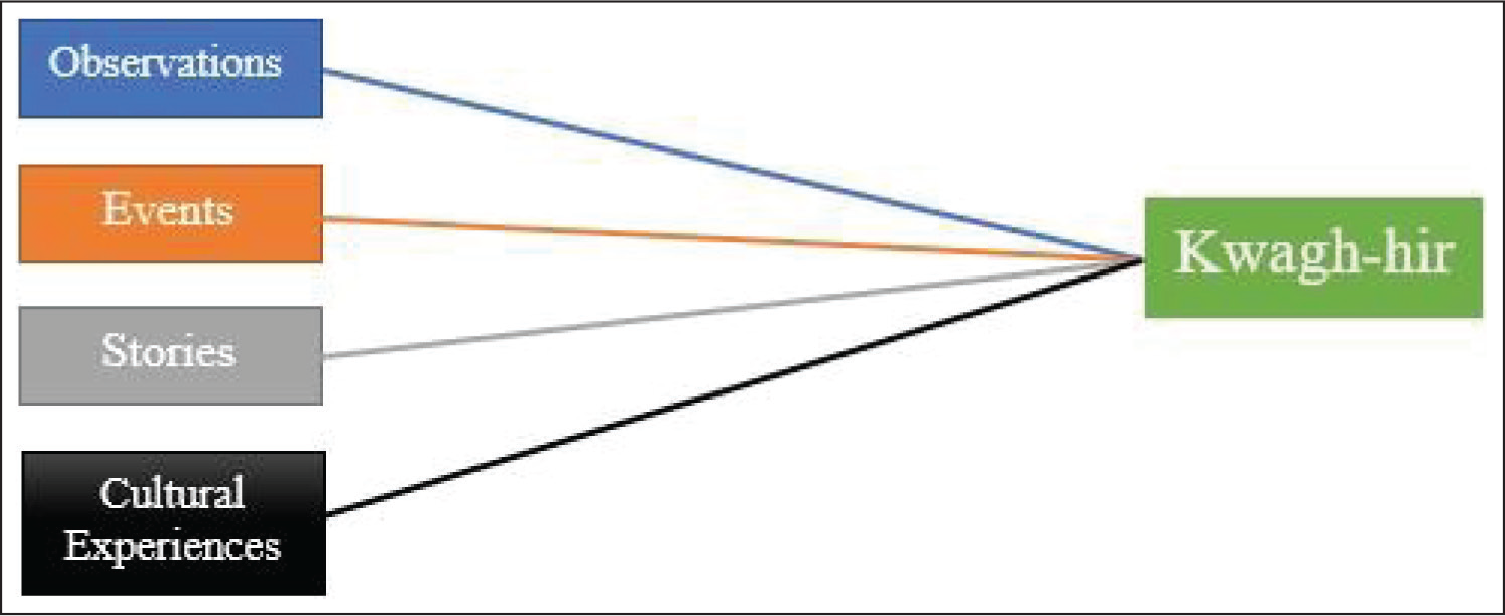
Kwagh-hir is often interpreted and aligns with the biblical Book of Revelation. However, these unique revelations of the Tiv people differ considerably from the biblical text, for they express their observations, events, stories and cultural experiences through dynamic and living performances. Through these performances, audiences gain insights into their rich heritage, unravelling some complicated notions of their communal identity.
Kwagh-hir is typically held in the early hours of the night, where performers are accompanied by drums and music while wearing extravagant masks cum costumes. This traditional performance reflects the creative ability of the Tiv people. It largely acts as a cultural avenue for reawakening the culture of Aya-tutu-ka-uno (Nomishan, 2021) through resilience, solidarity and identity, reinforcing traditional norms and values of the Tiv society (Ayakoroma, 2016). Therefore, via the examination of the effects of Kwagh-hir on social ties and community dynamics, this study reinforces the unique traditional and cultural practices of the Tiv that have immense potential for the promotion of unity, cooperation, peacebuilding and social cohesion not only in Tivland but Africa in general.
This research, therefore, seeks opportunities around the utilization of the Kwagh-hir cultural heritage in promoting intra-ethnic conflict resolution among the Tiv people of Central Nigeria. This is because data collected by the researcher for other research endeavours in the past suggests that Kwagh-hir was a revered traditional practice of the Tiv people, which served as an emblem of cultural norms, values and beliefs and a promoter of Aya-tutu-ka-uno (a concept used by the Tiv to strengthen unity), highlighting the significance of the Kwagh-hir to peace and social cohesion. However, this great tradition was negatively impacted through the introduction of Christianity and Western Eurocentrism.
The spread of missionaries within and around Tivland from 1911 to date has had a tremendous impact on the indigenous cultural practices of the Tiv people, especially Kwagh-hir. Many Indigenous people started giving up on some Tiv cultural customs, particularly those who were adopting Christian beliefs. This resulted in the collapse of Kwagh-hir among many Tiv villages. The Benue State government responded to this by promoting Tiv culture through the organization of the annual Kwagh-hir festival. Through this effort, the cultural legacy of Kwagh-hir was preserved and showcased, allowing the Tiv people to rekindle their interest in it and pass it on to future generations.
Unfortunately, this once-revered tradition has suffered a gradual decline in recent times. This is because the Benue State government, which was a major partner in the organization of the Kwagh-hir festival, recently discontinued the sponsorship. This stoppage has resulted in a number of detrimental effects. First, it has impacted negatively on the knowledgeability of young Tiv people about their cultural heritage, customs, values and norms, which puts at risk the continuation and transfer of these cultural practices to future generations. Second, chances to advance harmony, truth, peace and reconciliation among Tiv communities have also been affected as a result of the downturn in Kwagh-hir practice. This is largely true following the fact that Kwagh-hir has historically provided a platform for the discussion of social issues, settling disputes and promoting social harmony among individuals and communities in Tiv society. There are now fewer opportunities in Tiv society to advance these crucial ideals and beliefs as a result of its collapse.
Therefore, the central argument of this article is that the revival and promotion of the Kwagh-hir festival in Tiv society is crucial in managing the various disputes taking place in Tiv society today. This claim is predicated on the conviction that Kwagh-hir is a useful tool for dispute settlement among the Tiv people. Reviving the Kwagh-hir festival can present a platform for various conflicting parties to air grievances, share knowledge and foster social cohesiveness.
The understanding that traditional cultural practices, like Kwagh-hir, provide important insights and approaches for conflict resolution, which is deeply woven into the cultural fabric of the Tiv people, forms the foundation of the call for the revitalization of Kwagh-hir festival. Thus, findings from this research indicate that the revitalization of Kwagh-hir can be a significant contribution to the efforts being made to address the various disputes happening in Tivland today. Moreover, this rebirth will not just be a sentimental gesture but a calculated and useful response to the problems of the modern world.
Research Methodology
Examining the Kwagh-hir cultural legacy of the Tiv people provides an essential perspective for maintaining and advancing cultural practices. It becomes critical to examine the role these cultural practices play in conflict resolution among individuals and communities in Tiv society, while it is changing drastically as a result of religion, Westernization and globalization. Within Tiv villages, the Kwagh-hir was very vital in resolving misunderstandings, making it a conflict resolution mechanism. It has continued to serve as a means of settling disagreements such as political disputes, land disputes and marital disagreements.
As discussed above, this study examines the opportunities available via the Kwagh-hir cultural heritage for dispute resolution, while offering important insights that policymakers and practitioners of conflict resolution can use to their advantage. The results of this study have implications for peacebuilding initiatives in other heterogeneous societies by proposing culturally grounded approaches to peacebuilding, which go beyond the Tiv community. Moreover, the Kwagh-hir, in addition to many other cultural heritage practices of the Tiv, has great potential for community unity, encouraging empathy, mutual respect, and understanding, all of which contribute to the social and economic growth of any given community.
From an academic standpoint, this research advances our understanding of peacebuilding, conflict resolution and cultural studies. It can be used as a case study to investigate how cultural legacy affects conflict resolution in different communities. Policymakers, cultural practitioners and community leaders can be guided by the recommendations in this research when creating policies and initiatives that use cultural heritage to promote sustainable peace and development.
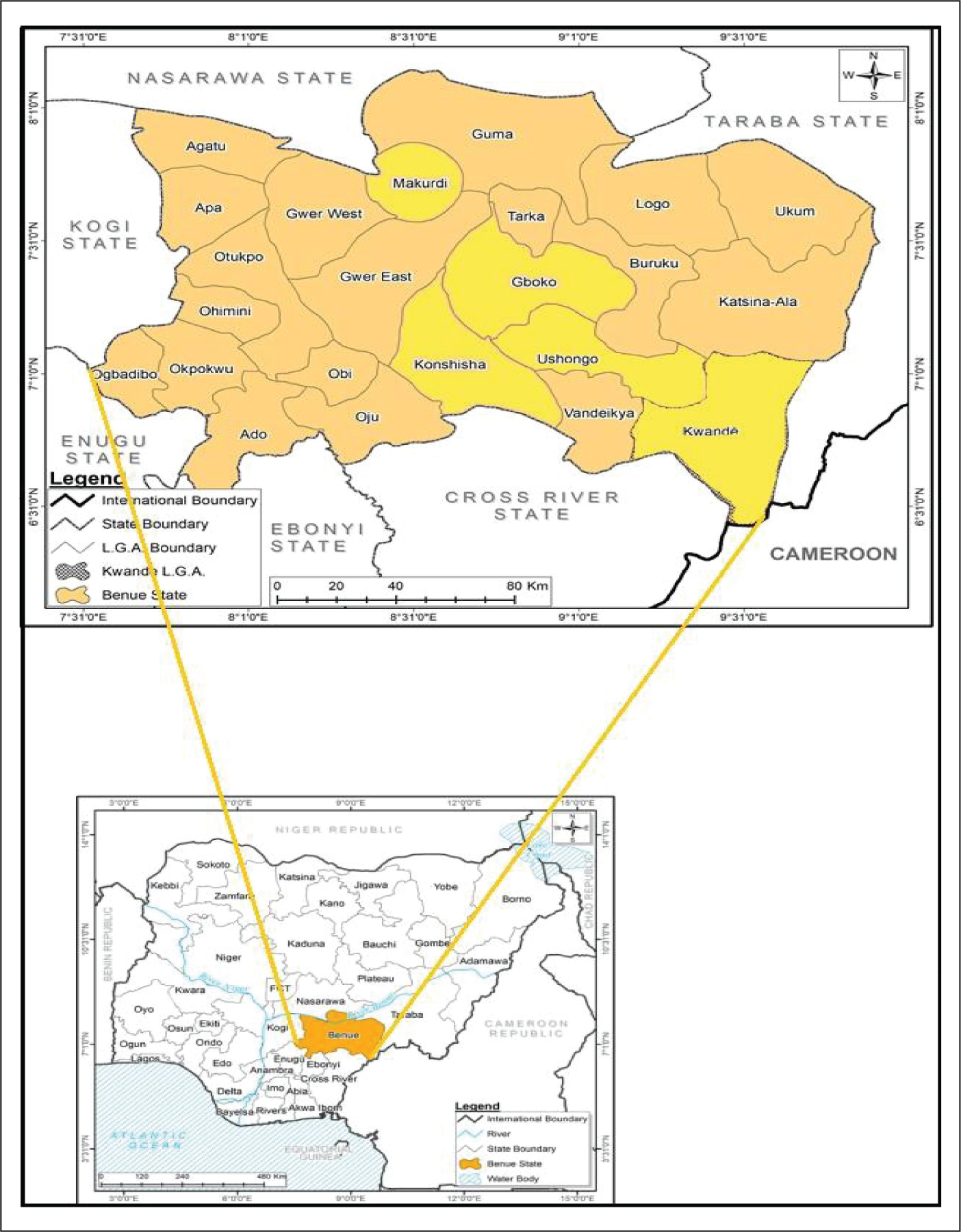
Both exploratory and descriptive research designs are employed in this study. This approach is essential because there are relatively no prior studies on the contributions of the Kwagh-hir or other heritage resources to conflict resolution in Tiv society. The study areas in this study include Gboko, Konshisha, Kwande, Makurdi and Ushongo local government areas (see Figure 3). These locations were picked because they either have groups of Kwagh-hir performers, hosts and Kwagh-hir performances or have a history of recurring confrontations.
Map of the Study Areas.
The elderly men and women, traditional leaders, community leaders and members, Kwagh-hir directors, drummers, musicians and performers from the chosen communities make up the study population. These individuals are knowledgeable about the subject matter and are acquainted with intra-ethnic disputes both within and outside these areas. The study used a non-probability (purposive) sampling strategy to choose participants, which is appropriate for investigating a phenomenon that occurs in real life (Taherdoost, 2016). This technique aided the enlistment of a significant number of informants who provided important details about intra-ethnic conflicts and Kwagh-hir cultural heritage in Tiv society.
Thus, this study was anchored on a qualitative method of data gathering, drawing on ethnographic studies, interviews, participatory approaches and archival research to provide detailed information about and insights into the intricate dynamics of Kwagh-hir cultural heritage and conflicts in Tiv society.
Literature Review
Nyager (2011), in her publication The Sculptural Elements in Kwagh-hir Popular Theatre: The Interface Between the Local and the Global, states:
Kwagh-hir is a total kind of theatre that involves various components, including dance, mime, storytelling, songs, pantomime and drama. Comprising also of masquerades, its full staging can be viewed as a veritable festival of arts. It is hallmarked by much spectacle and the sheer volume of costumes and props underscores this spectacle often ensuring grand performances. There are two known genres of ‘Kwagh-hir’—the pantomimic narrative (Nyager, 1989) and the much-acclaimed ‘puppet’ theatre. (p. 182)
Furthermore, Nyager posits that Kwagh-hir as a theatre has evolved from its humble origins in everyday folklore to a complex form of ‘theatrical movement’. Hagher (2003) has linked the performance framework of Kwagh-hir to Brechtian ‘epic’ theatre.
The Origin and Development of Kwagh-hir Theatre
The oral traditions of the Tiv people suggest that Adikpo Songo, ‘a man from Akpagher, Mbatyav in present-day Gboko Local Government Area of Benue State, was the pioneer of Kwagh-hir’ (Jiki, personal communication, 2020). Adikpo Songo himself, in an interview conducted by this author in 2021, affirmed this suggestion. Hagher (2013) recounts that Songu, a strong supporter of the United Middle Belt Congress (UMBC), disclosed that during the political crisis in Tivland known as Nande-Nande (the burning circle) in December 1960, members of the UMBC revolted against the ruling Northern People’s Congress (NPC) by burning their properties, including those of government workers and chiefs. During this tumultuous period, Songu was forced to seek refuge at Mkar Christian Hospital near Gboko for medical attention, possibly to evade arrest by the police.
According to Hagher, on his way back from Mkar Christian Hospital, Songu, after travelling about 12 miles, reached the Orkoor River when he suddenly heard enchanting music. As he approached hiding behind bamboo reeds, he witnessed a gathering of two groups, positioned according to the Mbayion and Mbatyav clans. A white flag was raised between the two groups, accompanied by drummers, dancing girls and puppets on a platform called Dagbera. He realized that the performers were not human but adzov (spirits). The two groups appeared to be in a competition resembling the Tiv storytelling tradition known as kwagh-alom but with a twist (Doki, 2006).
In the scenario above, instead of a storyteller, a man would step into the centre of the arena and loudly announce to the audience what they were about to witness. The performers would then enter the area, as dancing animals or adzov, showcasing their characters through performances. Adikpo Songu, as recounted by Hagher, fell asleep while observing the spectacle. Upon awakening the next morning, he found no evidence in the surroundings to indicate that such an event had occurred there. He concluded that adzov must have intentionally chosen him to introduce Kwagh-hir to the Tiv people and humanity in the style he had witnessed.
However, from oral information collected by the present researcher, the Kwagh-hir theatre, contrary to the above, originates from the storytelling tradition of the Tiv people, where storytelling sessions were occasioned for dramatic presentations (Nomishan & Sani, 2023). Music and dance were integral to these performances, as most Tiv folk tales included songs. This may partly explain why Leo Frobenius reportedly considered the Tiv to be the best storyteller he had encountered anywhere in Africa (Keil, 1979). Keil opines further that European visitors to Tivland unanimously agreed that storytelling is a highly impressive dramatic event and a focal point of Tiv culture. Frobenius was particularly impressed during his 1912 visit, which made him proclaim that the Tiv were the best storytellers he had encountered in Africa (Keil, 1979).
Bohannan vividly describes a storytelling session in Tivland in her anthropological novel written under the pen name Elenore Smith Bowen. This is reported by Nyager (2011, p. 183) as follows:
We sat under the cold moon of the harmattan in a circle at Kako’s homestead yard. Gradually, the people gathered from the neighbouring homesteads. They brought wood for fires and stools to sit on. The homestead was full of preparatory bustle as people borrowed coals to start their fires and jostled each other for a place close to the front. Then, in places stacked with fire and stool, people circulated to greet each other, as in a theatre lobby. The air was filled with the happy hum of an audience sure of good entertainment. (Bowen, 1964, p. 285)
Nyager continued that storytelling performances among the Tiv incorporated theatrical elements such as gestures, songs, rudimentary masks, props, mime and improvisational techniques. These performances were communal in nature, with active audience participation through songs, interjections, praises and reprimands. The goal was to provide moral and ethical education, much like Boal’s concept of ‘theatre of the oppressed’, which he developed for Latin American peasant communities (Boal, 1979). Boal envisioned theatre as a celebration where everyone could freely participate, similar to the dynamic and communal nature of the Tiv storytelling performances. Nomishan and Sani (2023), in their publication Intangible Cultural Heritage Protection and Nigeria’s Heritage Legislation, explained that Tiv storytelling performances are considered one of the earliest forms of performance among the Tiv, which later evolved into the Kwagh-hir masquerade and puppet theatre.
Kwagh-hir Puppet Theatre
Nyager (2011, pp. 183, 184) submits thus:
Puppet theatre comprises performances that use puppets for dramatic enactments in place of human characters. The puppets are manipulated manually or otherwise to dramatise events and evolve the plot. In the puppet theatre of the Tiv, the miniature puppets are mounted upon a platform known as dagbera, which is usually draped with cloth and under which the puppet manipulators hide during the performance. The human-sized puppets, however, make their entries ‘on their feet’ through the performance space. These puppet performances are only a unit part of the various arts that come together to make up the Kwagh-hir theatre.
Scholars such as Hagher (2003, 2013), Nyager (2011) and Nomishan and Sani (2023) argue that, while the Kwagh-hir puppet theatre and the Kwagh-hir storytelling performances share similarities, such as being indigenous theatres of the Tiv with communal bases and similar performance formats, they also exhibit distinct differences. In the storytelling performances, a single actor serves as the narrator, whereas in the puppet theatre, this role is taken over by a narrator, and a chorus is retained. Although the storytelling technique remains, the puppet theatre enhances the visual representation by using refined masks and raffia costumes to give the animals in the stories more defined shapes. This is due to the fact that the puppet theatre is more regulated, directing animals on stage, entrances and exits. As a result, the puppet theatre, which mixes puppets with masquerades, is considered an improvement above storytelling performances.
Today, Kwagh-hir’s basic framework, which began with storytelling before developing into puppet and masquerade theatre, is still in place. While its folklore roots persist, Kwagh-hir has also embraced modernity and global influences. The puppets, now human-sized, portray contemporary characters, addressing issues such as conflict, disagreements, moral decadence, global pandemics and marriage infidelity. A Kwagh-hir performance witnessed by the writer on 25 December 2020 at JS Tarka Stadium in Gboko, during the Kyegh Sha Shwa Cultural Festival celebration, is presented immediately after the theoretical framework.
Theoretical Framework
According to Abend (2008), a theoretical framework is a conceptual structure that offers a prism to the researcher to see, evaluate and comprehend a problem of study. It comprises related definitions, hypotheses, concepts and propositions that direct an investigation and aid in making sense of the information or data acquired (Muleka, 2014). Theories are formulated to explain, predict and understand phenomena and, in many cases, to challenge and extend existing knowledge within the limits of critical bounded assumptions or predictions of behaviour. Theoretical frameworks help researchers situate their study within existing knowledge and provide a foundation for developing hypotheses or research questions (Kivunja, 2018). This study adopts Performance-centric Theory as a framework for the research.
Performance-centric Theory
The performance-centric theory was proposed by Joseph Muleka, along with his companions, as a critical framework for the analysis of oral narratives, such as the Kwagh-hir theatrical performance of the Tiv people, in the African context. They argue that the oral analyst is constrained by the performer, who owns the living story, making it difficult to pre-select a definite analytical framework (Muleka, 2014). This is because oral performers largely improvise their words, often changing the form and content used to react to contemporary concerns and specific audiences. This makes their performances entirely unpredictable. This theory, also referred to as ‘narrator-centric theory’, emphasizes the important role of performer, composition, transmission, audience and context in understanding the African oral narrative.
In investigating the performance-oriented paradigm, Masinjila (1992) raises the issue of developing a table for analysis. He raises concern about the imposition of authoritarian ideas based on European contexts and the prospects for Eurocentric metrics to inform African oral literature. There are theoretical and methodological problems given that the perspectives towards oral literature generally diverge between African civilizations and Western cultures.
According to Muleka (2014),
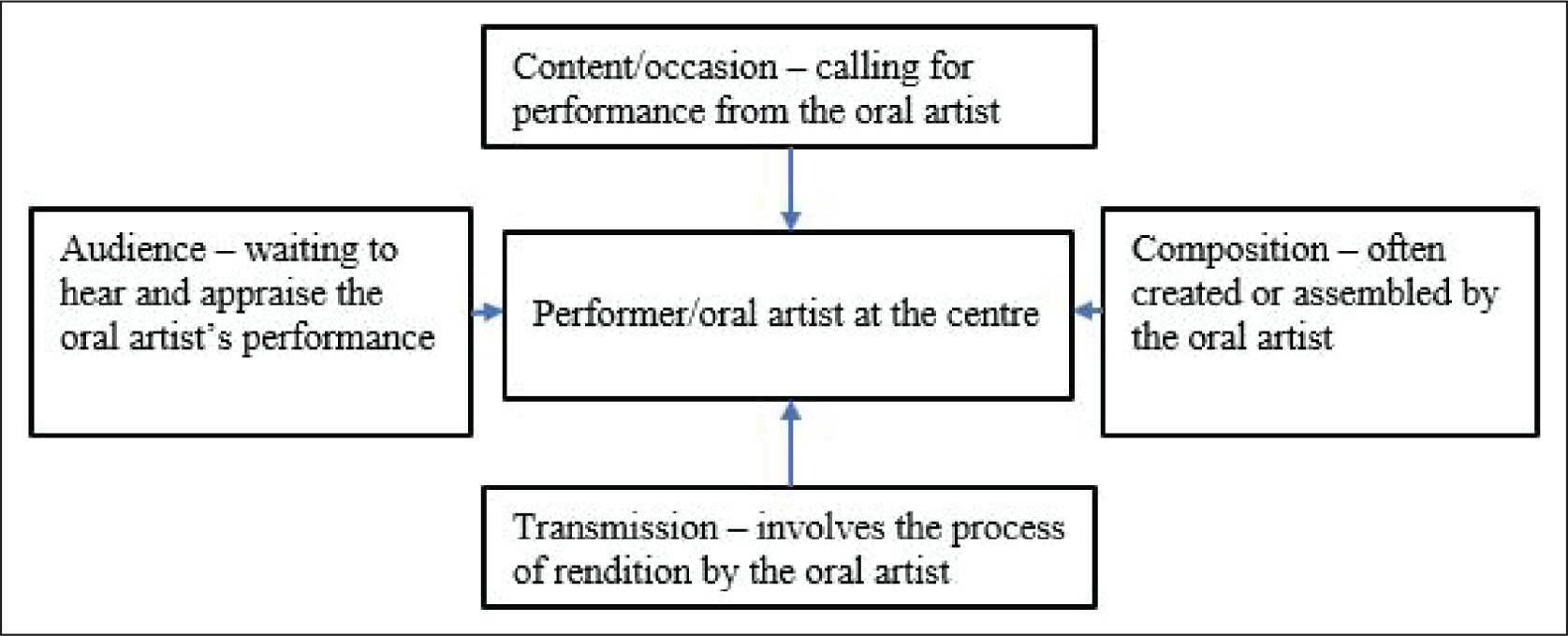
performance is the medium that interprets and explains the actual occasion (context). However, performance depends on the oral artist/performer as the agent of interpretation. The performer interprets the context or actual occasion through three arms: composition is the content; transmission reflects the method of explaining the occasion and the audience completes the occasion through appreciation, appraisal, valuation and feedback. Through the audience, the meaning of the occasion is made relevant. To avoid repetition, we would say that context/occasion addresses the when/where/why of a performance; composition, the what; audience, for whom; and transmission, the how. But it is crucial to know who will actualise these, thus, the performer. (p. 89)
This relationship can be represented by two different trees that show the relationship and processes (see Figures 4 and 5) as follows:
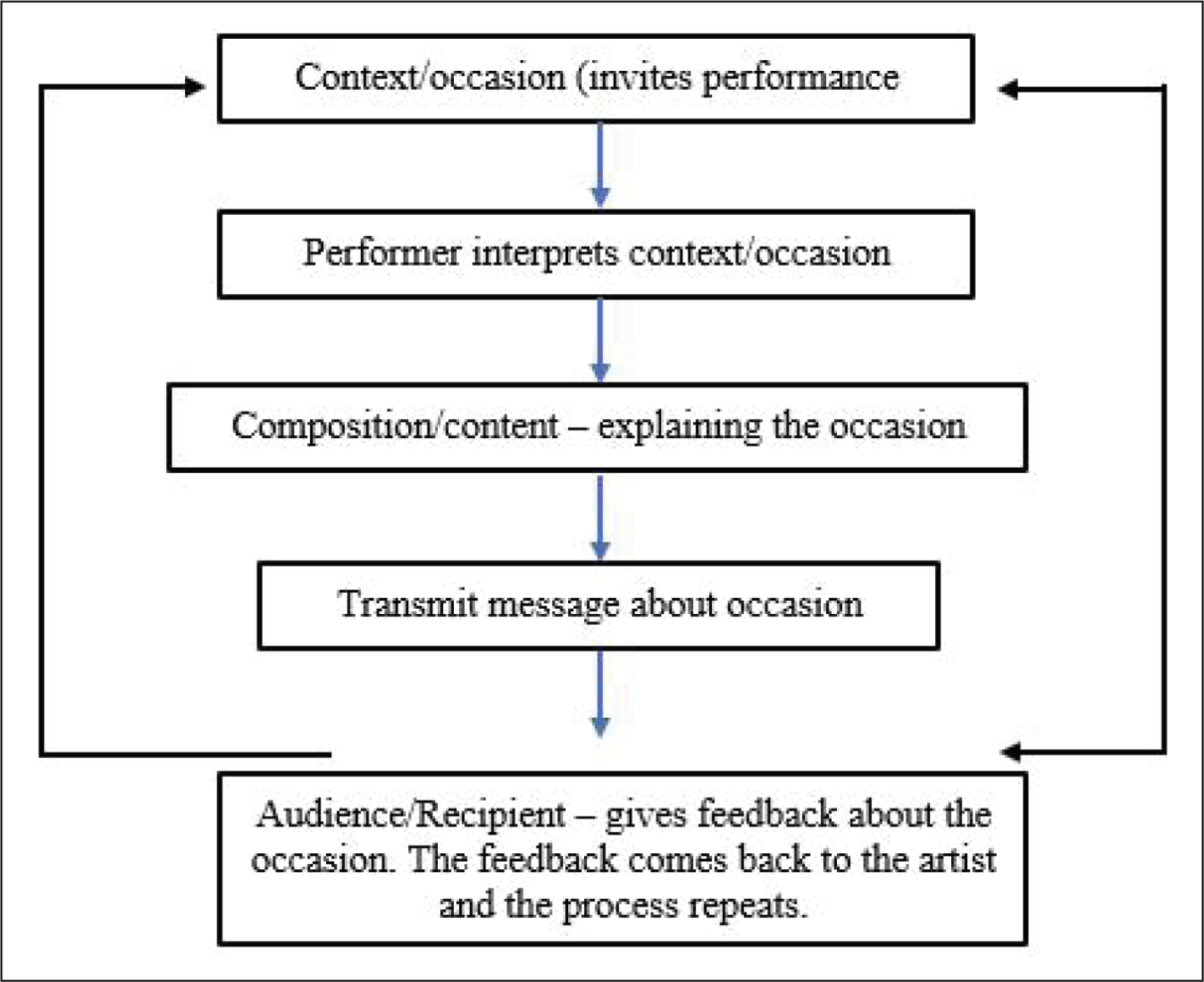
In oral performance, the performer—individually or in a group—is crucial. It is considered pointless to comprehend oral literature without this aspect. Performers bring diverse components to their performances, such as their worldview, expertise, psyche, societal status, historical background and ideas regarding the occasion and audience. This theory raises challenges regarding the treatment of oral literature and its many functions, such as social integration, amusement and the expression of political, social and psychological concerns.
The understanding that oral literature captures both the past and the present of a community is fundamental to this notion. Understanding the connection between the performative act and the underlying ritual buried in the performance is essential, as it functions as a vehicle for communicating society’s values and ideas (Muleka, 2014).
Furthermore, as seen via customs like Kwagh-hir among the Tiv people of Central Nigeria, the artist plays a major role in African oral performances, highlighting their status as the producers and originators of these performances. The narrator’s historical background, psychological make-up, social standing, area of expertise, worldview and assessment of the audience and the situation all play a role in what motivates these performances. Together, these elements support the artist’s thorough comprehension and performance preparation.
As a result, the performance-centric theory is very helpful in this study since it examines the importance of performance in forming social relationships, cultural identity and power dynamics—all of which are closely related to Kwagh-hir theatre. It offers a useful framework for comprehending Kwagh-hir theatre as a mechanism for conflict resolution in Tiv society. The Tiv people of Nigeria use this traditional puppetry to represent a variety of characters and stories, which serve as a potent tool for negotiation, expression and communication in conflict resolution, embodying many of the main ideas of performance-centric philosophy.
First of all, performance-centric theory examines the function of performance as a medium for communication and cultural expression. The Kwagh-hir theatre provides a means for the Tiv people to communicate their traditional values, customs and beliefs through its intricate storytelling and symbolic portrayals. Complex social concerns and conflicts are examined and addressed in a way that is relatable to the audience through the performance.
Second, the transforming power of performance is emphasized by performance-centric theory. Kwagh-hir theatre has the power to unite audiences through shared experiences that promote a sense of belonging. These shared experiences are powerful tools for resolving conflicts since they unite people and encourage communication. The performer’s agency in directing the performance is also emphasized by the theory. The puppeteers have a great deal of artistic freedom in Kwagh-hir performance, which enables them to manipulate the play to convey particular messages that point to dispute or problem-solving in Tiv society. Therefore, the Kwagh-hir theatre is an exciting and useful tool for resolving conflicts because of its flexibility and capacity to adjust to changing social demands.
Data Presentation and Results
In the course of the fieldwork for data gathering during this study, the researcher identified many groups of Kwagh-hir theatre performances in Tivland. Each of these groups is known to possess unique characteristics that contribute to the cultural landscape of the Tiv people. Some of the groups identified by the researcher include:
Kende Kaase Kwagh-hir group Adikpo Songo Kwagh-hir group Mhiive Aie Kwagh-hir group Tor Daagba Tor Kwagh-hir group Adasu Jirgba Kwagh-hir group Anande Chieshe Kwagh-hir group Apev Akaa Kwagh-hir group Ayange Gwer Kwagh-hir group Chia Gbagir Kwagh-hir group Hyembe Adagi Kwagh-hir group Ayegh Gugu Kwagh-hir group
Apart from the above, several other Kwagh-hir groups, numbering over 70, actively participate in Kwagh-hir competitions around Tivland (Tor, personal communication, 2022). These competitions are mostly localized but have since been expanded to the state and national levels, drawing large crowds of spectators who are captivated by the performances. Each group showcases its unique cultural heritage through music, dance and storytelling, creating a vibrant and colourful display of Tiv cultural identity. The atmosphere is usually filled with excitement and anticipation as these groups compete, showcasing their talent, creativity and cultural pride.
This study gathered that a typical Kwagh-hir group comprises drummers, dancers, musicians, manipulators and performers, who, in combination, narrate a story through the Dagbera (puppet on the platform), Adzov (spirits), Anyam (animals), Eev (magical display of miniatures: buildings, vehicles and other artefacts), the ever ubiquitous light carriers who direct the performers as they move around the arena, and the narrator who introduces animals or masquerades among others as they take the stage.
Much of this data was gathered during the Kwagh-hir performance in 2020, at the JS Tarka Stadium in Gboko as part of the Kyegh Sha Shwa Cultural Festival, and in 2022, organized by Tor Daagba Tor in Ushongo. The various masquerades presented depict characters of humans, Dagbera (puppet on the platform), Adzov (spirits) Anyam (animals), and Eev (magical display of miniatures), which are highlighted as follows:
Nom man Kwase Na (husband and wife): In the Kwagh-hir drama of the Tiv people, the character of Nom man Kwase Na (husband and wife), which is among the human characters, holds significant cultural and symbolic importance. It reflects the cultural values, norms, customs and traditions of the Tiv people, helping to instil acceptable morals in young generations. Nom, representing the male figure, symbolizing authority and reverence, is the main custodian of Tiv culture and traditions in the family. His role extends beyond mere authority; he is responsible for ensuring the well-being and safety of all members of his family and guests in his household (see Figure 6). In the context of the Kwagh-hir drama, Nom is depicted as the protector against any form of attack or harassment, including those believed to be perpetrated by the Mbatsav (a court of witches and wizards) in the Tiv belief system (Nomishan, 2023).
Nom man Kwase Na.
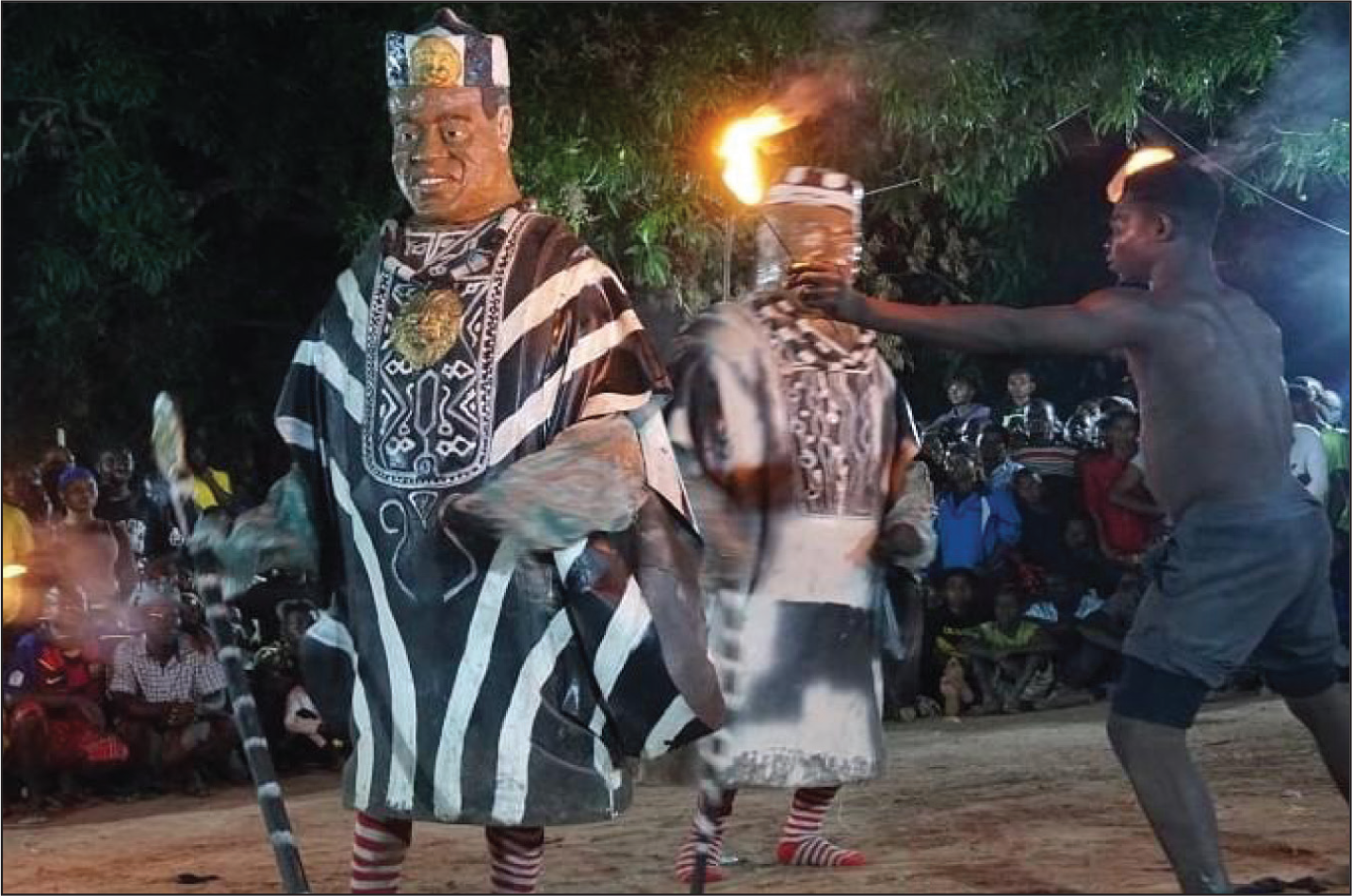
On the other hand, Kwase, the wife, controls all aspects of interactions involving women, nurturing and supporting them within the household and community. She is responsible for attending to the concerns of women in the family, providing care and ensuring the smooth running of the household. Kwase is not merely a supporting character but a crucial figure who complements the husband’s role, ensuring peace and harmony within the family.
Ipoko Adamu (personal communication, 2021) put it thus:
The portrayal of Nom man Kwase Na in Kwagh-hir drama reinforces the cultural values of respect for elders, gender roles, and the importance of family harmony in Tivland. Through these characters, the Kwagh-hir drama not only entertains but also educates and preserves the cultural heritage of the Tiv people for future generations.
Orya Tema Ken Ate: In Tivland, the term Orya connotes the head of the family, a position that carries significant responsibilities akin to those of the Nom or the head of a household. However, the role of the Orya holds a slightly higher status, as they are responsible for making decisions that affect the entire extended family, even in cases where there are multiple Noms within the family. For instance, in an extended family comprising about 10 households, each with its own Nom, the Orya is considered the main symbol of authority; therefore, all the Noms automatically and collectively submit to the authority of their Orya.
The Orya possess the authority to convene meetings with all heads of households within the family whenever necessary, and he represents the entire family at the meeting of community elders. This is where concerns about the community’s well-being and disputes relating to farmlands, marriages and other disagreements are resolved (Doki, 2006). This role underscores the importance of elders in Tivland and highlights the revered authority they hold within the community. In the context of the Kwagh-hir drama, the character of the Orya is often featured to symbolize this authority and respect for elders in Tiv society. The Orya sits in the Ate (reception hut), where they receive all visitors to the household. It is the duty of all heads of households within the family to lead their visitors to the Orya for greetings and homage, emphasizing the hierarchical structure and respect for elders within Tiv society.
Unongo (personal communication, 2019) narrated:
The Orya holds the highest position of authority within the entire extended family, overseeing all matters concerning its members while ensuring the preservation of Tiv traditional and cultural values. One of the key responsibilities of the Orya is allocating land for farming among family members. Moreover, the Orya plays a central role in marriage proceedings within the family, attending all meetings related to marriages involving any family member and ultimately receiving the new wife on behalf of the groom or handing over daughters in marriage to other families. Thus, featuring the Orya figure in Kwagh-hir drama symbolises the deep respect and reference accorded to elders in Tiv society.
Taku-taku-Dzov (spirit masquerade): This masquerade forms an important component of the Kwagh-hir performance, adding much to the overall aesthetic. It consists of long wooden poles which support the performer well above the ground level, wherein he can view the whole arena. However, these platform poles meet more than functional needs; they symbolize and mystically conceal meaning. The poles are used by the performer alongside many other masks for ornamental purposes and to showcase spiritual attachment to Adzov. Because of the complex nature of the Taku-taku-Dzov, its performers undergo rigorous spiritual training and enlightenment, which guide their performance to deliver fascinating skills (Chia Gbagir, personal communication, 2020).
Mato u Gomna (the governor’s vehicle): The contemporary and emerging developments in Nigeria’s political system have profoundly impinged the decentralized leadership system associated with the pre-colonial Tiv people. This has largely impacted the ancient leadership style within the Tiv nation. The strength of this shift, albeit tortuous, is marked by the emphasis on modernity and dynamics within the socio-political landscape of the Tiv people. Most of the Kwagh-hir leaders and participants believe that the contemporary leadership style in Tiv society has created a chasm between the masses and those who lead them, starkly contrasting with the older traditional leadership system (see Figure 7).
Mato u Gomna.
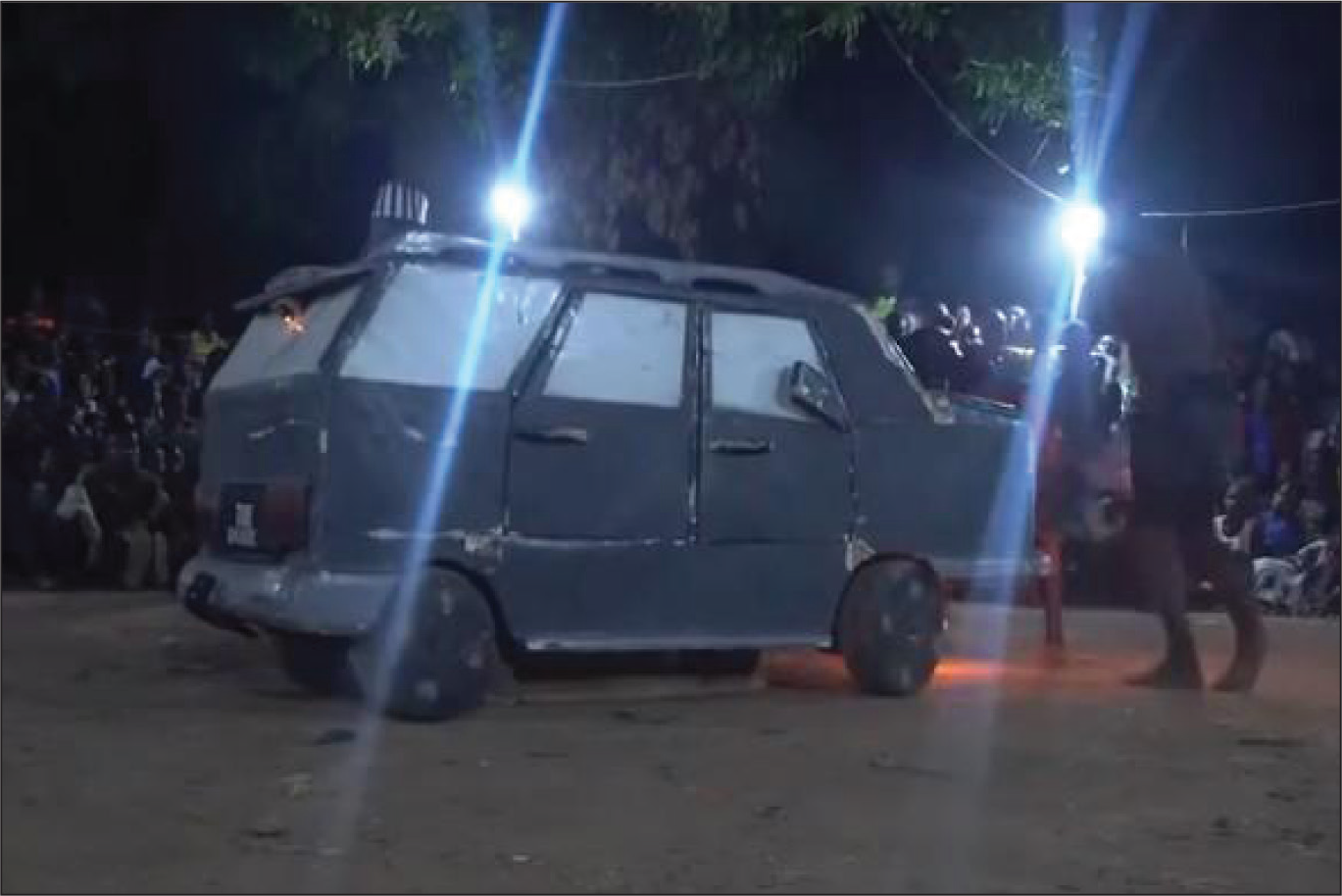
Torkegh Ahula (personal communication, 2022) informed the researcher:
We try to explain to the present generation that leadership in Tivland was not exactly what exists today. We educate them to understand that, in the past, leaders were very close to people in Tiv society. Anyone could take their issues before them in those days, and action would be taken immediately, unlike today where leaders move about with heavily armed security men, making it impossible for ordinary people to approach a leader.
The explanation above demonstrates the impact of modernization and changes in political structure on the traditional leadership styles and community dynamics associated with the pre-colonial Tiv society.
Dagbera: According to Tor (personal communication, 2022), Dagbera is an extremely significant masquerade within the Kwagh-hir cultural heritage. The costume worn by the performer of Dagbera is well fashwioned using the fronds of areca palm, enhancing the richness of the performance to entertain and arouse the curiosity of the audience. The Dagbera costume is intricately designed with embedded lines to ensure a snug fit around the wearer, allowing for freer movement during the performance.
There are a number of Dagbera, each to fulfil a different purpose: Single Dagbera are worn by only one performer, while the Double Dagbera is worn by two performers acting in unison, rehearsing and performing synchronously. The most complex form is Dagbera Pue-kar-uhar (12 Dagberas), in which 12 Dagbera performers are involved in the same act, indicating an expression of power and coordination beyond physical prowess.
Iyo: This performance is structured to resemble a python and a Boa. During the performance, the Boa ‘eats’ the python, with two lines connecting the crafts representing the two animals. An actor or actors typically pull the line to allow the Boa to consume the python, thereby adding a touch of elegance to the performance.
Obedience-related characters: Wan Kwase, a dramatized conception symbolizing respect for elders and obedience, is one of the most significant performances in the Kwagh-hir theatre embodying sound moral education. According to Mhiive (personal communication, 2023), Wan Kwase, it is said, would go about working very hard to support her parents in any role. Showing a wonderful example of sound morals and how children should behave. This performance is an embodiment of both obedience and humility among children in Tiv culture.
Another popular character in the Kwagh-hir is Anakande, which embodies the dangers of HIV/AIDS in Tivland. Anakande signifies punishments for disobedience. It is mostly related to youth who migrate from their villages to towns with no significant education and without parental permission. Most of these youths, especially girls, return to their villages with HIV/AIDS, which causes them to die, especially when they refuse to accept their condition. An informant noted that ‘Anakande has therefore come out within the Kwagh-hir context as a kind of role model, seeking to sensitise youths, especially young women, as to the perils of disobedience, and educating them about the value of culture and respect for parental authority’ (Mhiive Aie, personal communication, 2023).
Through these character displays, the Kwagh-hir serves exciting entertainment to the audience, delivering both moral education and social commentary that drive home sound cultural values for the maintenance of peace and stability in Tivland (see Figures 8 and 9).
Wan Kwase.
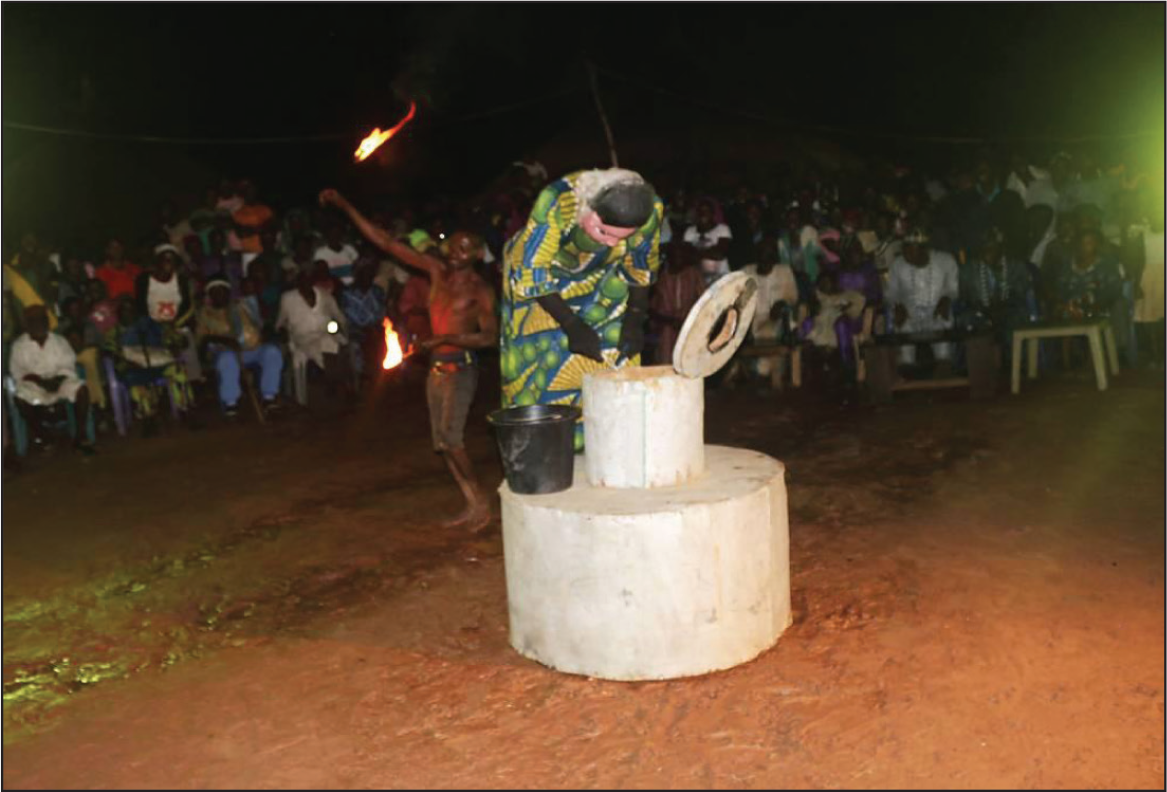
Anakande.
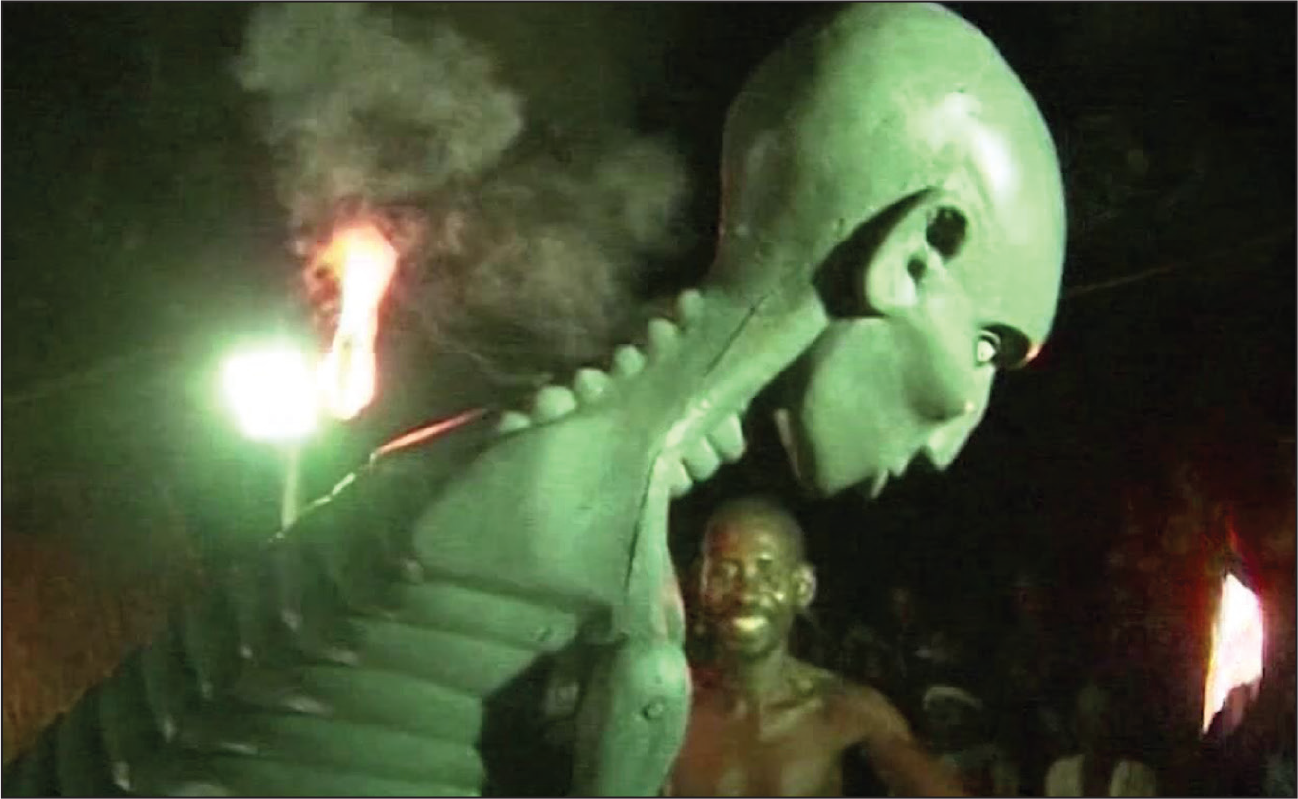
Jogobi: The Jogobi masquerade represents a regal queen dance, crafted in the form of a gracefully aged female figure with prominent buttocks, and intricately carved to showcase its aesthetic beauty.
An informant gave a summary of the Kwagh-hir as follows:
Kwagh-hir is a flamboyant display of masquerades personifying humans, spirits, and animals, all of which charm and captivate the audience. Each masquerade, mask, and sculptural object in Kwagh-hir carries a specific meaning, amplifying the depth of the act. For example, the masks are not just decorative objects, but they also represent intricate descriptions of different characters within the variations of storytelling. The designs depict either the character’s personality or role in the tale. The masquerades impart an aura of mystery and wonder in the theatre through the merging of movement and dance which flows regally and supernaturally. The sculptural elements of Kwagh-hir are also very much essential, bringing in the dynamics of representation and mediality in the theatre. Whether they are big, elaborately built forms, or small size-headpieces: these sculptures contribute to the overall quality and profile of the performance. Together these make the rich cultural heritage of storytelling and expressions unique to the Tiv people. (Iwuese Ajo, personal communication, 2020)
Paul Unongo (personal communication, 2019) revealed that this dramatization also serves as an interactive representation of traditional conflict resolution mechanisms. Taking children as an example, he narrated:
In one of the dramas, two children are seen fighting and a third child goes to the elder, who is typically a father figure and makes a report for an intervention. Then the elder comes, separates them, and mediates. Through conversations, the elder finds an understanding of why the fight started and the causes of the misunderstanding, thereby bridging the gap between the children and bringing the fight to an end.
Certainly, the above drama is, basically, a didacticism; it calls on the younger generation to understand the true essence of elders and their privileged position in the maintenance of law and order, peace and social cohesion within the community. Second, it aims to instil respect for elders, as it encourages the practice of appealing to the elders to mediate conflicts, thus reinforcing traditional values of community harmony and social connectedness among the Tiv people.
Discussion
This research has revealed many groups of Kwagh-hir, each contributing uniquely to the cultural landscape of the Tiv society. According to Ipoko Adamu (personal communication, 2022), there are over 70 Kwagh-hir groups in Tivland, all with their fascinating characteristics and contributions to the Tiv cultural identity. This includes Kende Kaase, Adikpo Songo, Tor Daagba Tor, Mhiive Aie, Adasu Jirgba, Anande Chieshe, Apev Akaa, Ayange Gwer, Chia Gbagir and Ayegh Gugu, among many others. These Kwagh-hir groups actively contribute to the sustainability of the theatre through the organization of competitions at the local and state levels. These competitions attract large audiences and spectators who anxiously get entertained by this vibrant cultural heritage of the Tiv people.
A typical Kwagh-hir group consists of performers who include drummers, dancers, musicians, manipulators and narrators, who collectively deliver their stories through puppetry, masquerades and diverse objects, among others. As presented above, their performances usually include characters such as Nom man Kwase Na (husband and wife), Orya Tema Ken Ate (family head in the reception hut), Mato-u-Gomna (the governor’s vehicle), spirit and animal masquerades, among many others, illustrating several aspects of Tiv culture, traditions, customs, belief, norms, values and their worldview, among others.
The character of Nom man Kwase Na portrays the respect for elders, gender roles and family unity in Tiv society. Orya Tema Ken Ate is illustrative of the authority and respect that the elders have within the extended family, showing how hierarchical Tiv society has been from time immemorial. The character of Mato-u-Gomna teaches about the good and bad of modernization, explaining ancient leadership styles, where leaders were very close to their people and attended efficiently to problems confronting their subjects. This character also elaborates on the current leadership problem where leaders are so distanced from their subjects and, in addition, go about with security men to prevent their subjects from having contact with them.
Kwagh-hir also comprises other characters such as Wan Kwase and Anakande, representing the virtues of obedience/respect for parental guidance and the dangers of disobedience. Through these characters, Kwagh-hir conveys moral education and social commentary by addressing contemporary issues while preserving and transferring Tiv cultural values and traditions to younger generations.
Furthermore, through the use of human puppets, Kwagh-hir has proven to be a special cultural feature in depicting disagreements, disputes and conflicts among the Tiv. Social commentary is also rendered through this performance, illustrating the experience of the Tiv people and shedding light on their traditional conflict resolution techniques. An important aspect of the Kwagh-hir performance which researchers should lay emphasis on is the central role of elders in resolving disputes. The elder is often conceived in Tivland as a figure of authority whose position is directly involved in the negotiation and assisting disputants to broker peace. The presence of an elder is largely considered highly experienced in issues related to disputes in Tiv society. This is because most disputes in Tivland, especially those related to land, are connected to the history of the people. Therefore, it is most appropriate to allow elders who are more knowledgeable of the history to handle it.
Moreover, the mediating process displayed in the Kwagh-hir performance sends a direct message to the audience about conflict and dispute management. This is achieved through dialogue, negotiation and compromise, which lead to a smooth reconciliation between the parties involved (see Figure 10). This goes a long way in reflecting the Tiv process of conflict resolution that seeks the restoration of peace and the sound order of an average Tiv community.
Impact of Kwagh-hir on the Tiv society.
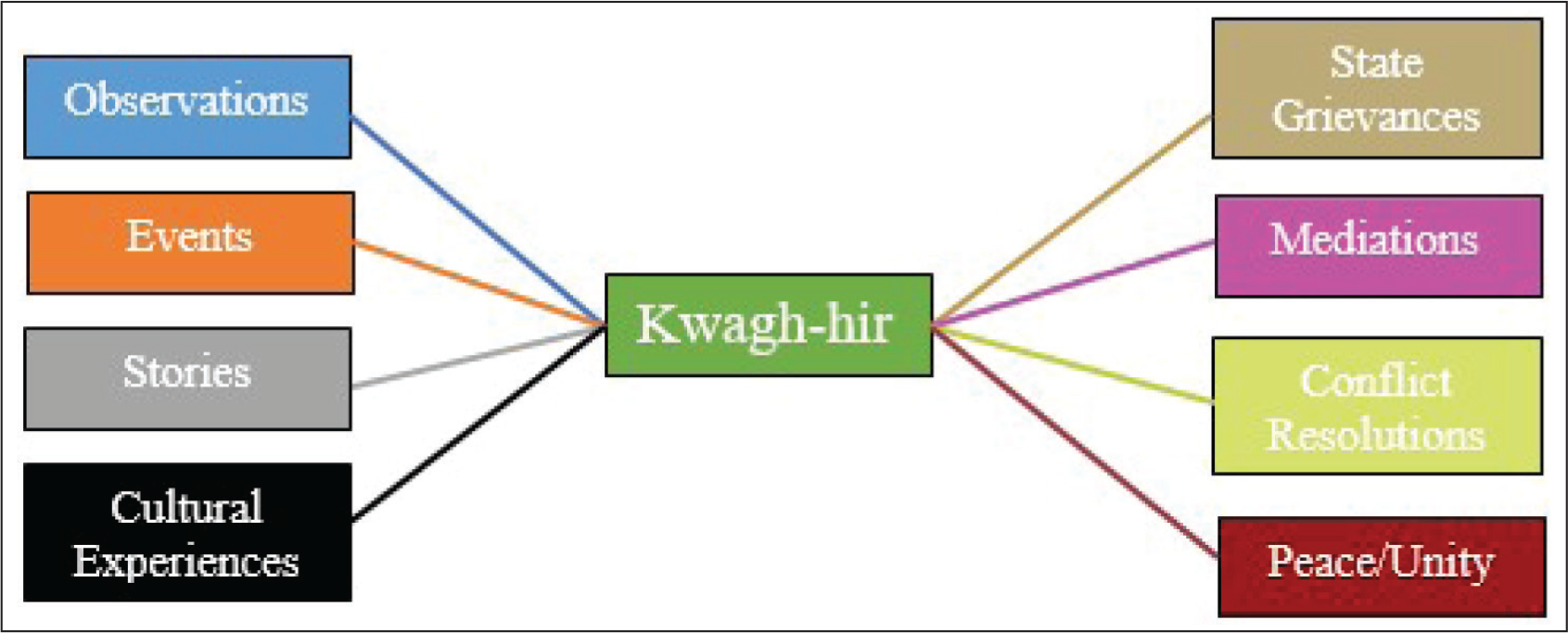
In addition to the above, the use of animated puppets in Kwagh-hir teaches contemporary Tiv people about the hunting prowess of their ancestors. This serves as a cultural and historical reminder of the values and skills crucial for survival in traditional Tiv society. This features an ancient communal way of life involving hunting, where disputes concerning the sharing pattern of the game killed were resolved amicably. This illustrates that life was full of compromises, fairness and cooperation, eliminating avenues for escalated disagreement that could result in confrontations.
Thus, the Kwagh-hir cultural heritage provides a lens into the ancient conflict resolution mechanisms of the Tiv people. The context of these practices exemplifies how cultural practices such as storytelling and dramatic representation can educate, inform and promote social harmony and stability among people. Moreover, showcasing the Kwagh-hir enables the preservation and promotion of Tiv culture, values and practices.
Conclusion
This study offers insights into the Kwagh-hir cultural heritage with respect to how it provides the context for conflict resolution among the Tiv people of Central Nigeria. It utilizes a qualitative research approach, applying in-depth interviews, participant observations and archival research to elicit data. The research reveals that Kwagh-hir is an important vehicle for resolving issues within the Tiv society, providing a platform for conflicting parties to express their grievances, disseminate information and promote social cohesion.
This investigation also reveals that the Kwagh-hir holds an essential place in the promotion of peace and stability among the various Tiv communities. It is crucial in promoting understanding, empathy and mutual respect among members of a particular community. More so, organizing Kwagh-hir competitions continuously around Tivland and beyond can help in the preservation and promotion of different aspects of the cultural heritage of the Tiv people.
Therefore, this research recommends that policymakers, cultural practitioners and community leaders harness the potential of Kwagh-hir and other cultural heritage tools for the sustainability of peace and unity in Central Nigeria. The federal, state and local governments and traditional institutions in Tivland should strive to establish a comprehensive repository for documentation and digitization of every facet of Kwagh-hir performances, including its music, dance, storytelling and sculptural elements. This will ensure the conservation and access to the cultural heritage for generations yet unborn and enable the promotion of Tiv culture and identity on the world stage.
Apart from the above, the government and educational institutions in Benue State should introduce topics covering Kwagh-hir and other aspects of Tiv heritage into their curricula to enlighten students on various cultural values that promote conflict resolution mechanisms associated with Tiv culture and the other moral lessons contained in these performances. This can also create a way of instilling cultural pride among younger generations.
Also, Kwagh-hir theatre leaders should strive to collaborate with cultural organizations in promoting it at national and international cultural festivals. This will help showcase the Tiv cultural heritage to an even more extensive audience while creating avenues for cultural exchange and tourism development in Tivland. Further, Kwagh-hir groups should seek committed support from cultural organizations, government agencies, NGOs and private sponsors, for sustainable funding through collaborations. This will help provide grants for training, acquisition of materials and establishment of centres to promote the activities of the performance.
Academics and other researchers in heritage studies should be encouraged to study the socio-cultural relevance of Kwagh-hir theatre. Besides this, the organization of workshops for the training of performers should be prioritized. This will help to hone their various ranges of artistic skills while applying innovations via traditional modalities so as to maintain the dynamic character and relevance of the theatre to modern times.
However, other complementary approaches are still needed. This is because the campaign to revitalize the Kwagh-hir cultural heritage is likely not enough to serve the purpose of resolving all conflicts in Tiv society.
Footnotes
Declaration of Conflicting Interests
The authors declared no potential conflicts of interest with respect to the research, authorship and/or publication of this article.
Funding
The authors received no financial support for the research, authorship and/or publication of this article.