






Abstract
The phenomenon of using architectural heritage sites as filming locations results in multi-faceted effects. Its overall study, particularly in the underexplored context of India, is the authors’ broader ongoing research. This article, as a part of this study, using heritage impact assessment methods, identifies and measures the phenomenon’s beneficial and detrimental impacts through the case study of Amber Palace, Rajasthan. Along with its known historical and architectural importance, the site also has a history of structural damage and human injuries from the past filming of Veer (2009–2010). Despite court orders, no significant efforts were taken for the necessary upgradation of guidelines, and later in 2013, the site received the World Heritage status, making it an intriguing case for this study. The impacts are assessed across three temporalities—pre-filming, while filming and post-filming—through the qualitative study of the experiences shared by the site’s stakeholders. The findings are represented through a matrix showing the severity of impact of each action, and the revelation is that the negative impacts are higher in every phase and require urgent scholarly attention and mitigation measures. While creating policy and making recommendations are not in the scope of this study, this would provide a starting point for decision-making in holistic management and conservation of architectural heritage sites as filming locations.
Introduction
The International Context
The phenomenon of using architectural heritage sites for ‘Location Filming’ is a ‘century old’ practice that concurrently evolved with heritage conservation and filmmaking techniques (Lamster, 2000; Reynolds, 2016). This activity attracts a particular tourism type called ‘film-induced tourism’ (FIT), which is ‘motivated for visitation’ because of the site’s ‘screen-image’ and ‘film’s popularity’ (Bąkiewicz et al., 2017b; Beeton, 2005; Busby & Klug, 2001; Connell, 2012). The phenomenon is, therefore, complex and not completely new, but its recognition in scholarship is ‘recent, nascent’ and minimal (Bąkiewicz et al., 2022; Flynn, 2016). The following themes, individually and transversely, are discussed in the academia of the heritage conservation, film-induced tourism, and film and architecture: ‘monetary gains’ through ‘location fees’ and tourism ‘revenue’; increase in ‘financial sustenance’ of heritage; encouragement to authorities’ for heritage protection’; rise in ‘local employment’; value to ‘contemporary culture’ and subsequent ‘heritage survival’. These are considered as ‘positive impacts’ of filming and associated activities on ‘heritage locations’ (Alpler et al., 2020; Flynn, 2016; Jones, 2022; Masterman, 1995; Pan & Ryan, 2013; Shimko, 2019) . The ‘negative impacts’ include ‘dependency on the sporadic nature of location fees’ due to the ‘essential demand of originality in film plots’ (Reynolds, 2016, p. 50), ‘Location Burn Out’ of heritage sites (Masterman, 1995, p. 39); the revenue collection on account of FIT leads to ‘commodification of the site while satisfying the film-induced expectations of tourists’ (Bąkiewicz et al., 2017b, p. 7); ‘ignorance by authorities to the site’s capacity to take pressure of the unexpected footfall following any blockbuster screen appearance’, can pose structural threats to the heritage (Ghisoiu et al., 2017, p. 2131); ‘demeaning of the authentic identity and historic significance of the site due to the influence of “filmy” narrative built upon by not only films but subsequent media coverage’ (Pan & Ryan, 2013, p. 130). Moreover, within these commentaries, while very few studies claim to have considered the distinctness of heritage-tourist sites, they gravitate towards proposing ‘destination-marketing strategies’ because of the dominant tourism-centric view (Bąkiewicz et al., 2022).
Such positive as well as detrimental impacts are the results of the ‘case-specific studies’, most of which are from the United States, the United Kingdom and Europe (Andreula et al., 2021; Cui & Song, 2024; Han et al., 2024). Although the overall research on this phenomenon is evolving, scholars assert the need for ‘more context-specific’ research in this regard to enable a ‘holistic understanding’ of this phenomenon (Reynolds, 2016). However, there are negligible studies made in the ‘Asian context’ in general, and in the Indian context in particular (Panda, 2020; Rittichainuwat & Rattanaphinanchai, 2015). The next section, therefore, establishes the relevance of our study as a response to these scholarly assertions and justifies the identification of the case of Amber Palace, Rajasthan, for this study.
The Indian Context
The ‘intensity’ of the above-mentioned ‘impacts’ is controlled by the ‘filming guidelines’, which may vary with the ‘heritage context’ of different countries (Flynn, 2016). In India, this governance is under the ‘Ancient Monuments and Archaeological Sites and Remains Act, 1958’, which experienced its violation immediately in its initial years of inception, as seen through a humorous narration of the event by Bollywood’s veteran and former actor Shashi Kapoor in an interview. ‘An adventurous experience of shooting a sequel for The Householder (1963) inside Jantar Mantar, Delhi, without obtaining government permission, was managed flawlessly by our producer’ (Kapoor, 2017). The subsequent years have seen many reported unfortunate accidents: During the filming of Rowdy Rathore (2012) at the World Heritage Complex of Hampi, ‘the crew held up hundreds of visitors … brought 20 SUVs and noisy generators inside the pedestrian premises … posed a threat to the delicate monuments’ (Bangalore Mirror, 2012, p. 2). The allegations further included that the ‘undertaking forms signed by crew did not give any hint about the vulgarity of song lyrics and the provocative dance steps’ (Gowda, 2014, p. 1). Similarly, the first information report (registered police complaints) statements of a ‘group of residents of Dhal ni Pol, Ahmedabad, accused film crew of ruining the sanctity of the historic place through open-drunk acts’ (Trivedi, 2022, p. 1). Recently, other film productions were held responsible for ‘causing vandalism to a heritage tree as well as the walls’ of a historic mansion in Mysuru (The Hindu Bureau, 2023, p. 1). Despite the prevalence of such curious, mixed and unique evocations around this impactful phenomenon, reflective attention by the governing bodies conspicuously remains absent in India. The guidelines are never upgraded and are very broad and loose by nature (ASI, 1959). Additionally, scholarly reflections upon the ebb and flow of the said phenomenon in the Indian context are negligible. The accessible content pertains to FIT discourse, which only addresses ‘tourist marketing’ and ‘destination promotion’, while seldom engaging with ‘heritage distinctiveness’ and ‘conservation issues’ (Bandyopadhyay, 2008; Chawda, 2015; Mittal & Swamy, 2013; Mohanty et al., 2020; N. & D., 2019; Nair & Suri, 2017; Nanjangud & Reijnders, 2021) . Therefore, this article attempts to address such literature and practice gaps in the Indian context with the case study of Amber Palace, Rajasthan, from a heritage perspective.
Relevance of the Case of Amber Palace
Amber Palace is located on the Aravalli hill ranges on the outskirts of Jaipur city. Built by Raja Man Singh in the early seventeenth century, it is considered to be a fine ‘example’ of ‘Rajput–Mughal architecture’ (Borie et al., 2020; Sachdev & Tillotson, 2002). The site is currently managed by the Department of Archaeology and Museums, Rajasthan, and is intermediately supervised by the Amer Development and Management Authority (ADMA, 2024). In addition to its known historical and architectural importance, the site has a history of damage during the filming of Veer (2010), as covered widely by news media. ‘The unit of Veer (2010) ran amok historic palace first by raising a wall inside the fort complex and then setting up a stage on the historic canopy, leading to the demolition of the roof of Chandmahal and a few human injuries’ (The Times of India, 2009, p. 1). The court verdict called for ‘the immediate police inspection of the existing rules, blamed for the blind nature of authorities that fell for the glitter of money, and ordered the appointment of heritage experts’ team for future protection’ (The Indian Express, 2009, p. 2). Despite the court orders, no upgradation was made for the filming and site-management guidelines, nor any heritage conservation expertise was sought, yet the site was nominated and subsequently received the status of World Heritage Site as part of the ‘Hill Forts of Rajasthan series’ in 2013, making it a compelling case study (UNESCO, 2013).
The above discussion shows that the recognition of the said phenomenon has always been after the event, even in established studies from the global West, as mentioned in the previous section. Therefore, this article aims to document these effects systematically against the management and protection of heritage with the help of a methodological approach of heritage impact assessment (HIA) across three temporalities: pre-filming, while-filming and post-filming phases. Second, it sharply focuses on the usage of HIA for assessing the impacts of past accidents and estimating the future impacts on the site.
Heritage Impact Assessment
In pursuit of these aims, the article bases its analysis and argument on extensive findings from the field work of the author’s ongoing broad study in Rajasthan, in general, and Amber Palace, in particular. HIA has been increasingly used in project works since the International Council on Monuments and Sites (ICOMOS) has developed guidelines with the aim of maintaining a balance between World Heritage protection and the needs of development towards sustainability (ICOMOS, 2011). As seen previously, the heritage sites as filming and FIT locations are subject to financial and associational sustainability and are prone to irreversible damage if not managed professionally. This indicates the need to apply HIA to ‘identify’ and ‘evaluate’ the ‘positive and negative impacts’ on the heritage site (Ashrafi et al., 2022). Current studies in HIA discourse debate the ‘ambiguity’ in its steps of ‘assessment’ (Chaturvedi, 2025; ICOMOS, 2025a). Other studies, while striving for a better and more coherent structure of HIA, admit the further need to incorporate ‘site-specific variations’ and ‘characteristics’ (Chakraborty & Ji, 2023; Rogers, 2017).
This article, while recognizing methodological and practical needs, tries to develop a framework for the assessment of the impacts generated in the past on this site. The methodology is derived by implementing standard steps of HIA and introducing necessary modifications as per the requirements of the aims of this study and is explained next.
Methodology
Owing to the insufficient knowledge about the said phenomenon within the Indian context, the authors conducted a study ‘involving stakeholders’ who have ‘witnessed the incidents in the past’ and continue to do so in the present (Zhanga & Smith, 2019) (see Figure 1). While the ‘focus group discussions’ were conducted with tour guides and local residents, the ‘personal interviews’ proved to be crucial for site staff and tourists (Ghisoiu et al., 2017). Additionally, video conference calls with two different filming agency managers were conducted to understand their ‘experiences’ of pre-filming, while-filming, and post-filming stages (Bąkiewicz et al., 2022). The ‘semi-structured questionnaire’ allowed the ‘solidarity’ and ‘dissonance’ during discussions. The interview transcripts, the simultaneously read related film clips, and content analysis of policies files were ‘analysed in NVivo software’ which generated ‘interpretative themes’: structural protection, site management and heritage interpretation (Lakras, 2025; Christou, 2023; Dalkin et al., 2020) . The key insights from the authors’ previous studies guided the fulfilment of HIA’s requirement, including the ‘public involvement’ and tracing the ‘positive’ and ‘negative’ impacts of different ‘elements of action’ under phases of filming on site (Bengtsson, 2016; Chaturvedi, 2025; Rogers, 2017; Zhanga & Smith, 2019). The representative narratives of stakeholders from these themes helped in detailing the ‘description of potential impacts’. The statements under ‘Description of impact’ are based on the experiential insights of stakeholders from past shooting activities. Many instances hold multiple narratives for a single situation. Therefore, they are unconfirmed, but most likely to be true.
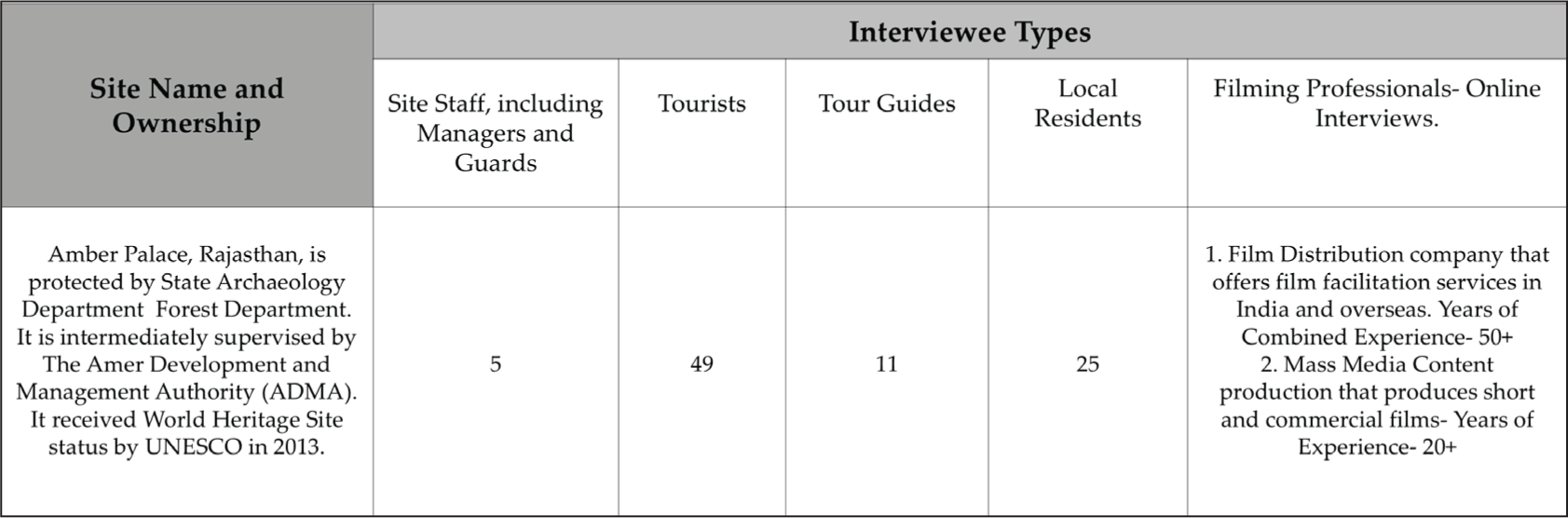
The Chart Showing the Details of Site Ownership and Interviewee Types Prepared by the Authors.
The above discussion shows the modifications as well as the alignment of this methodology to the major heads of the standard HIA system adopted by ICOMOS (2025b), that is, screening, scoping, identification of issues and impact assessment (see Figure 2). The description of the ‘screening’ and ‘scoping’ is covered in the above sections. The next two steps and the procedure adopted for HIA at the selected case site are thoroughly described in the following. It is crucial to note that the last step (as per standard HIA guidelines) of developing suggestions, mitigating techniques and alternative solutions is outside the purview of this study.
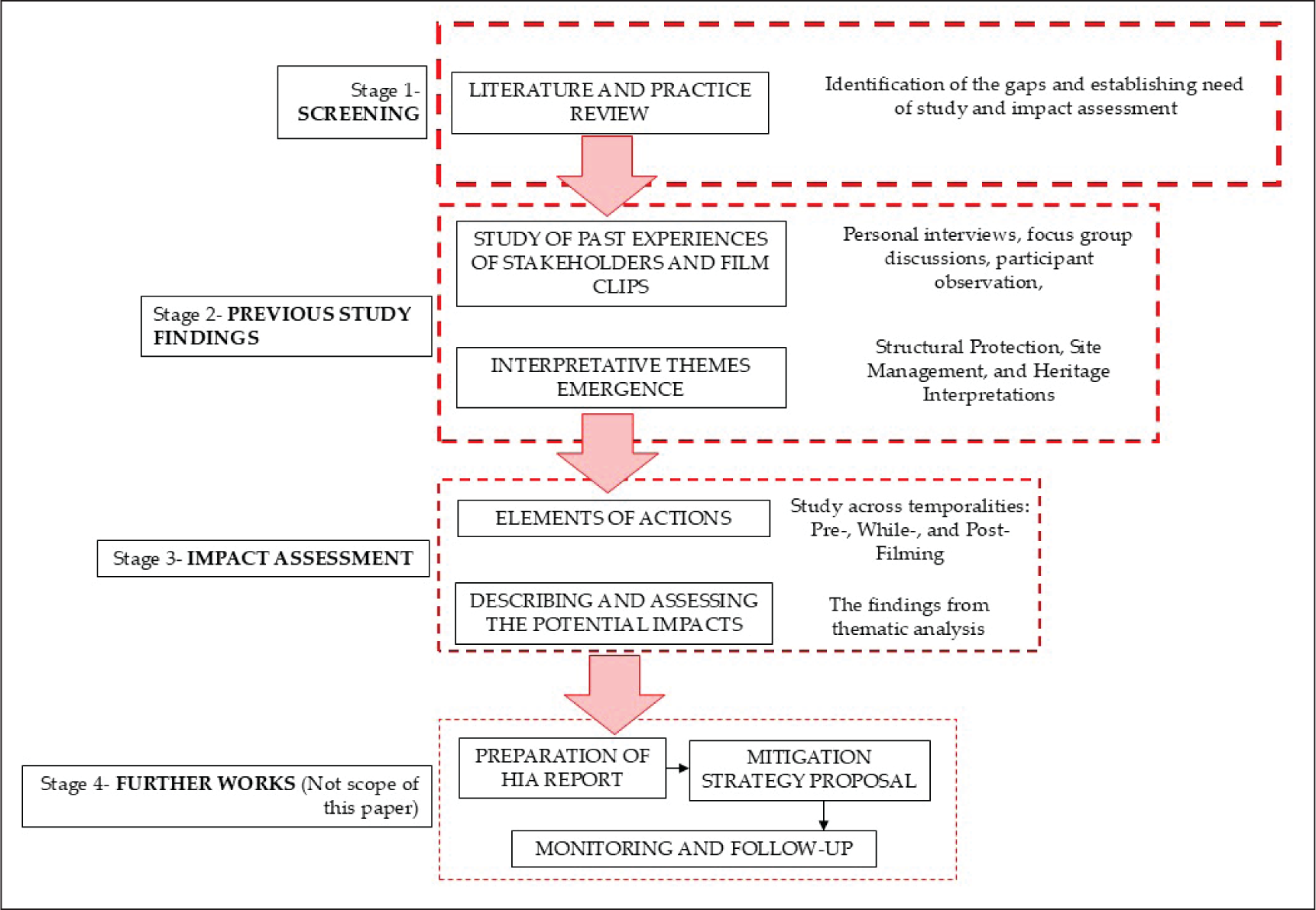
Methodology Chart Prepared by the Authors Based on ICOMOS Guidelines (2011), Modifications Proposed by Scholars (; Ashrafi et al., 2022; Chakraborty & Ji, 2023), and Modifications Proposed in This Article as per the Requirements of the Filming Phenomenon at Architectural Heritage Site, Here Amber Palace, Rajasthan.
Discussions
The impacts were identified across the ‘frequency’, ‘durability’ and ‘reversibility’ of each ‘specified action’ under each phase of filming, as shown in Figure 3 by taking references from Chakraborty and Ji (2023), ICOMOS–Asia-Pacific HIA series (2025a, 2025b) and authors’ previous study findings (Lakras, 2025b). The impact evaluation follows the ICOMOS’s format of colour gradation and proposes phenomenon-specific modification (see Figure 4). The central argument regarding all the impacts is framed under the phases of filming.
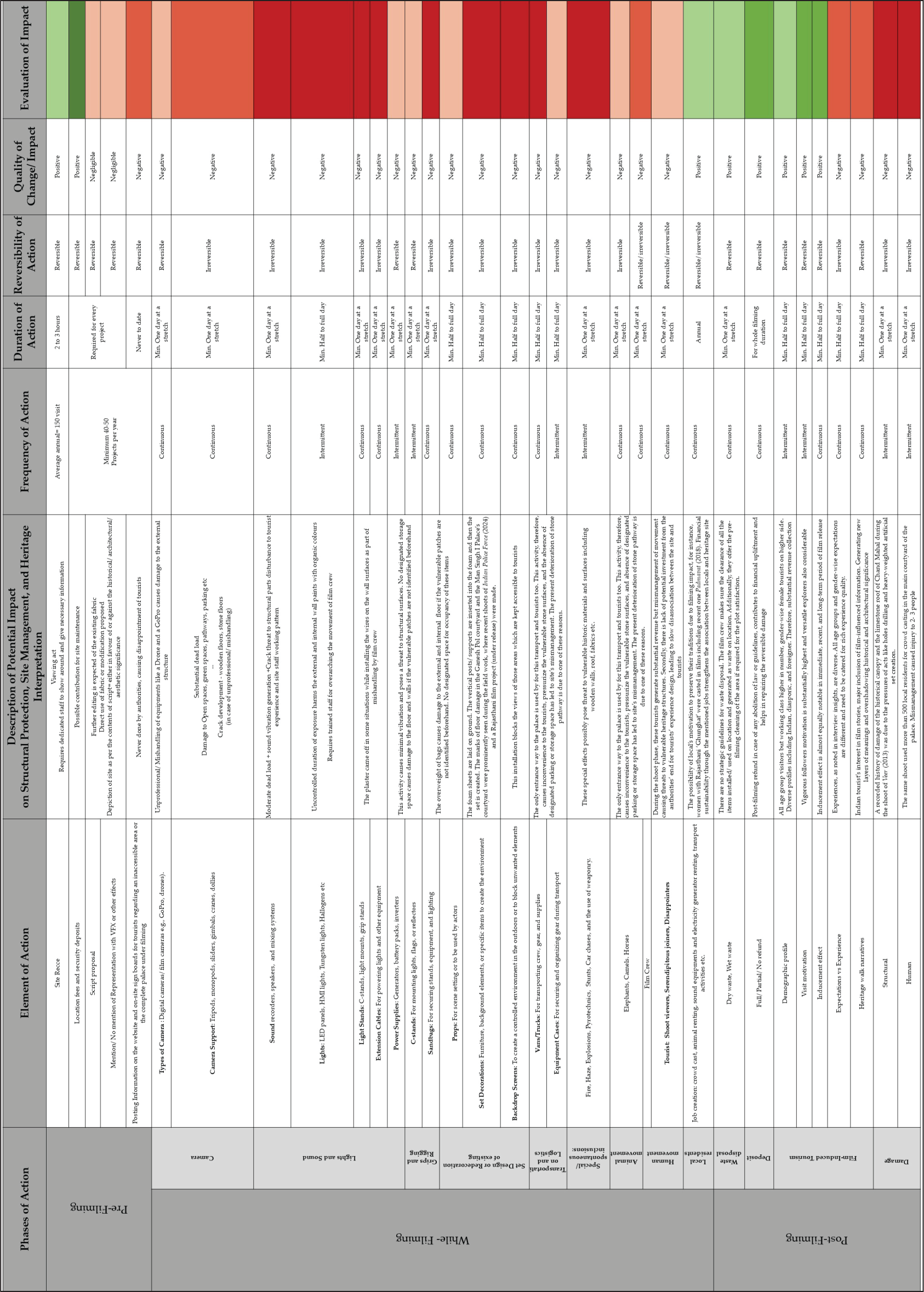
The Heritage Impact Assessment for Amber Palace Prepared by the Authors by Taking References from (a) Chakraborty and Ji (2023), (b) ICOMOS–Asia-Pacific HIA series (2025a, 2025b), (c) Authors’ Previous Study Findings (2024–2025). The Statements Under ‘Description of Impact’ Are Based on the Experiential Insights of Stakeholders from Past Shooting Activities. Many Instances Hold Multiple Narratives for a Single Situation. Therefore, They Are Unconfirmed, but Most Likely to Be True.
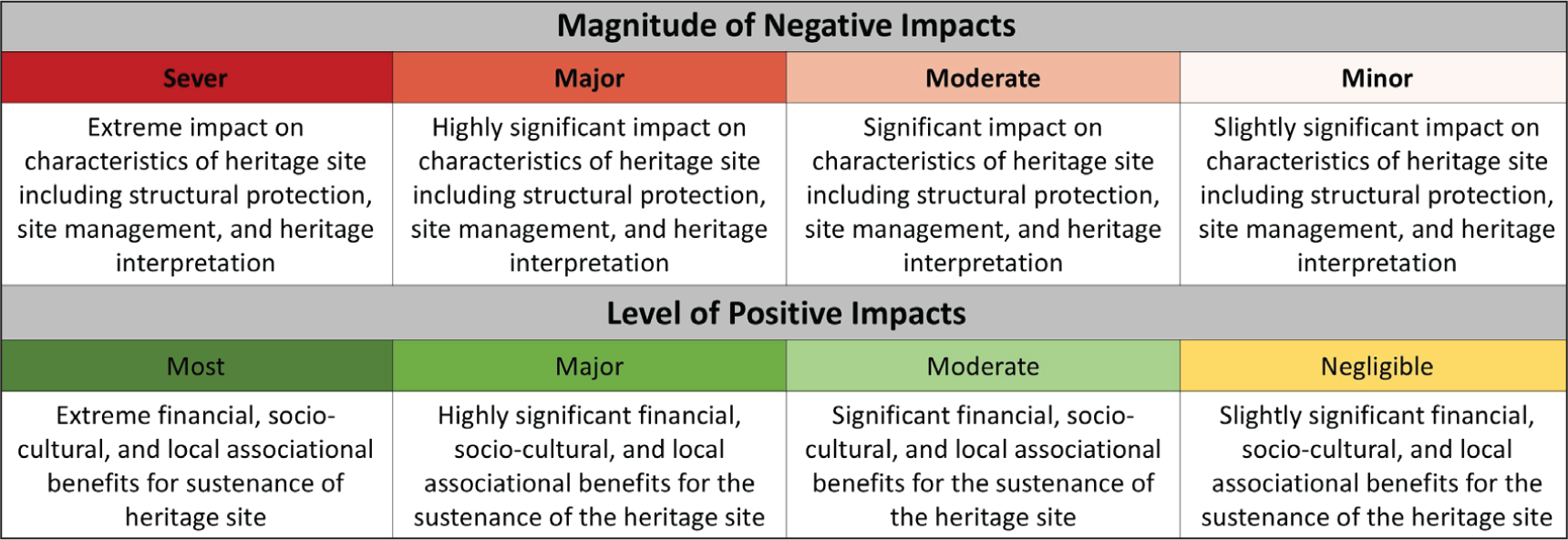
The Chart Showing Evaluation of the Adversity of Negative and Positive Impacts Adapted from ICOMOS–Asia-Pacific HIA Series (2025a, 2025b) and Modified by the Authors.
Pre-filming Phase
The identified actions under this phase, as per Figure 3, are: site recce by film crew, signing agreement between film production and site authorities, which includes location fees, ‘security deposits’, and ‘script proposal’ and lastly the scrutiny of inclusion of ‘Visual Effects’ effects on screen (Department of Archaeology and Museums, 2024). The film crew, wanting to check the suitability of the site as per the plot requirement, is attended by the site staff. No separate staff is designated for attending/supervising any filming activities, but the ‘admin clerks and the guards are experienced enough to guide the film crew. The project is received, only if, the crew feels satisfied during the recce, therefore, we give our best’, as confirmed by the site authorities. Next step of agreement charges ‘Rs. 2 lakhs per day which increase by Rs. 1 lakh if a shoot near “Sheesh Mahal” is demanded and additional 20% charges of the entire fee are applied if shoot requests after sunset or before sunrise are made’ (Department of Archaeology and Museums, Rajasthan, Jaipur, 2023, p. 2). Moreover, the fee ‘variation’ is applied as per the ‘production scale of cinema’: regional, Indian, and international (Department of Archaeology and Museums, Rajasthan, Jaipur, 2023). These actions indicate the increase in financial benefits that can subsequently help in the maintenance and conservation of the heritage site. Therefore, as prior scholarships agree and this discussion also shows, these actions create ‘positive impacts’ on site (Bąkiewicz et al., 2017b; Fry et al., 2022; Masterman, 1995). The next step, however, the script scrutiny and the acceptance of VFX on-screen, can cause negative change as seen through the following tour guide’s observations. ‘The unrealistic representation of the palace in Veer (2010) and Bajirao Mastani (2015) had attracted huge tourism to the site only to experience its “sad” reality’. This provides the following cues: Even though the site authorities follow the script-scrutiny guidelines before giving permissions, the film crew tend to manipulate the actual script on screen, as confirmed in staff interviews. Such script discrepancies are also seen in the case of the Hampi site, as mentioned in the Introduction, which threatens the ‘historicity’ and ‘sanctity’ of a site (Semley & Busby, 2014). Therefore, although minor, this is noted as a negative impact in Figure 3.
While-filming Phase
The actions in this phase are listed under the use of camera, light and sound accessories, artificial set design and transportation and logistics. Besides these, the discussion also highlights the experiences of the three distinct types of tourists that are specific to the while-filming phase in Indian context, as found in author’s previous study, namely (a) ‘Shoot Viewers’: visitors who buy the tickets only to attend the filming on heritage sites; (b) ‘Serendipitous Joiners’: visitors who arrive for the site visit only after getting to know about the shoot through different sources like local newspapers, their acquaintances, etc.; (c) ‘Disappointed tourists’: visitors who have to wait for very long or leave the premises if the whole or part of heritage site is reserved for filming (Lakras, 2025). In addition to this, the section discusses the impacts of the said phenomenon on the local resident and eventually their association with the palace site.
‘Unprofessional handling’ of cameras, including Drone and GoPro, carries the possibility of ‘damaging external fabric’ of structures as seen in social media video (Kumar, 2023; YouTube, 2022). Second, the camera supports ‘create substantial dead load on the historical floors and can lead to damage/cracks in open space surfaces’ as per the observations of filming managers (see Figure 5). Therefore, these actions bring negative change to the structure/site. In the similar vein, types of equipment required for setting up light and sound in the indoors and outdoors both create ‘uncontrolled exposure’ to the vulnerable surfaces including ‘wall paintings’ and ‘vulnerable’ structural ‘materials’ respectively, resulting in their ‘long-term defacement’(Flynn, 2016; Fry et al., 2022). Such ‘long exposure’ is noted by site guards and confirmed by tour guides in their interviews. The chances of more severe damage occur during the ‘installation of overweighted artificial sets’ along with the placement of ‘heavy supporting materials’ like sandbags on floors, roofs, etc., as seen clearly in a social media video of ‘behind the scenes’ of Veer (2010) and verified in the interviews of local residents who were present on site as crowd cast (YouTube, 2017). As mentioned previously, the court case against the damage of the historic wall and roof and a couple of human injuries was the most unfortunate accident that brought irreversible changes to the site (The Indian Express, 2009). As confirmed in staff interviews, ‘the guidelines are still not updated and do not compel the heritage expert’s supervision to prevent threats’, leading to the continuation of such non–heritage-friendly practices to date. This artificial set installation additionally blocks the views of those areas which are kept accessible to tourists, consequently leaving them in disappointment, as observed by tour guides in the past. Similarly, the only entrance way to the palace is used by both film transport and tourists. Such constraints during the shoot of Jodha Akbar (2008), for instance, caused inconvenience to the tourists and pressured the vulnerable stone surfaces, as told by local vendors and verified on site by authors (see Figure 6). The present deterioration of the stone pathway is due to these reasons.
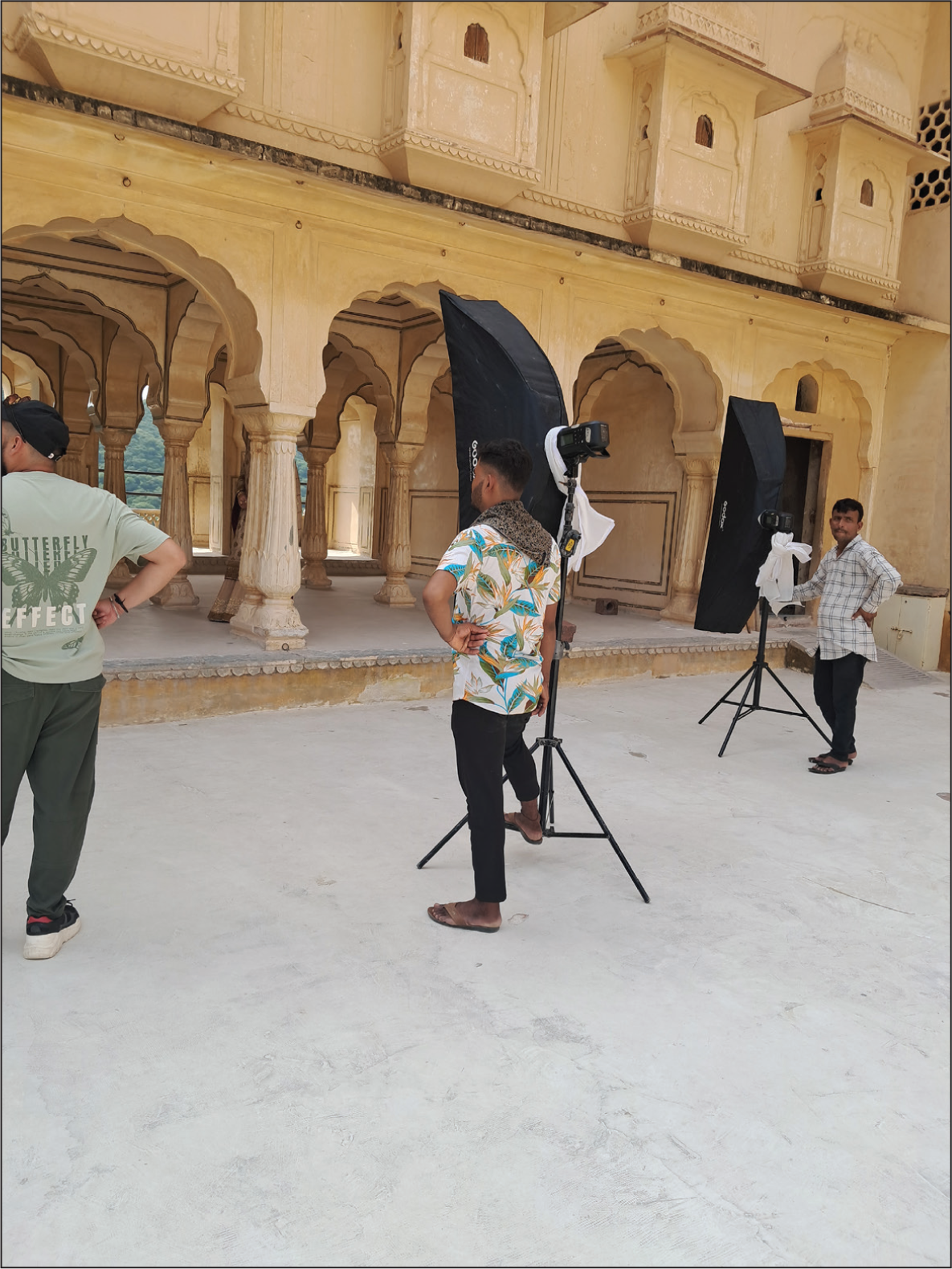
The Photo Showing Use of Camera and Other Related Equipments on the Vulnerable Surfaces of Open Courtyard of the Site.
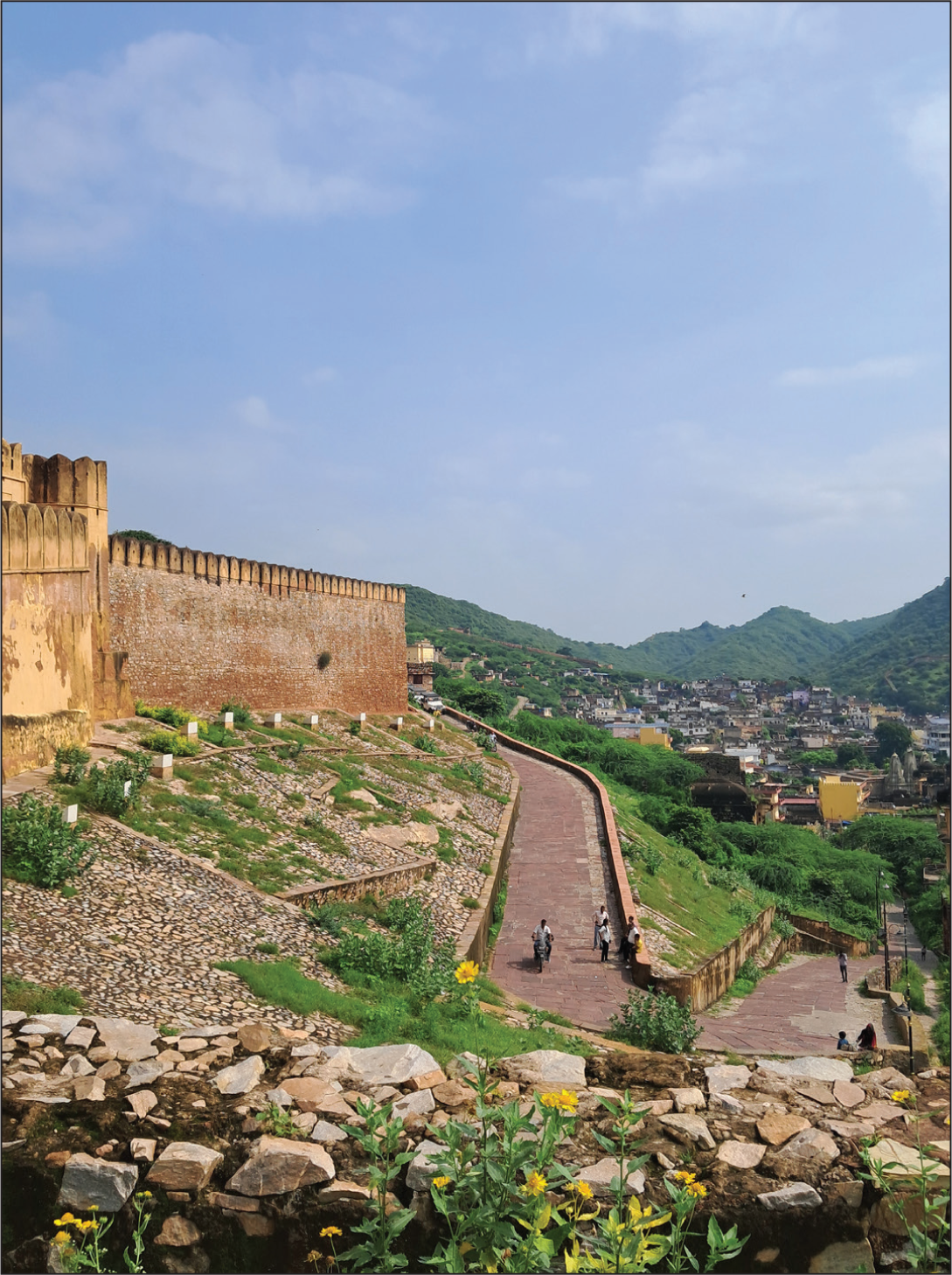
The Photo Showing the Stone Path That Is Used by Visitors and Put to Use for Movement of Film Crew and Transport During Filming.
The newly found tourists taxonomy specific to this phase, as mentioned above, although, contributes positively to the revenue generation of site, creates substantial pressure on susceptible areas of palace, including the ‘upper floor balconies overlooking the courtyards of Suraj Pol and Man Singh Palace’, as noted by locals and tour guides, when the whole Amer, gathered to watch Salman Khan riding the horse in 2009 and Deepika Padukone in 2014 (from Veer, 2010 and Bajirao Mastani, 2015) respectively (Lakras, 2025). Secondly, a few areas, including ‘Kesar Kyari garden’, where ‘one would love to pose and get clicked like Aishwarya Rai’ (from Jodha Akbar (2009), ‘are kept inaccessible’ to the tourists, leading to ‘our sheer disappointment’, as expressed by domestic as well as foreign tourists. The accessibility differences are adopted by the site authority because, as they responded in their interviews, ‘tourists’ movement is random and involves huge risk of control, so requires extra staff, as contrary to the professional filming activities’. This again reveals the loose and ambiguous nature of guidelines and further endorses the necessity of an expert’s supervision for tourism and heritage management in all the stages of filming, as asserted in prior literature too (Reynolds, 2016; Spencer & Fry Ltd., 2024). Additionally, it shows that there is a definite lack of potential investment and management efforts, particularly, for ‘tourist’s experience design’ which is leading to the ‘slow disassociation’ between the ‘site and tourists’, as noted in previous research and clearly felt in the following anecdote from a field tourist interview: ‘there is nothing like world heritage or a popular film location experience here … we are ready to spend here but other than elephant ride and entry ticket there is nothing much offered’ (Araújo-Vila et al., 2024; Ghisoiu et al., 2017). Therefore, these situations create a negative impact as seen in Figure 3. On the other hand, the local interviews reveal that the ‘filming activities are boosting’ their ‘relationship with heritage’, for instance, the local women ‘love to continue the “Ghunghat” tradition after being cast in more than 5 films as Rajasthani “Lugayi” at this site’. In a similar vein, the film productions contribute to the financial sustainability of locals, as seen in the following anecdote: ‘Our businesses of renting out camels, elephants, sound systems and electric generators flourish well during the filming projects and subsequent tourism footfall’. This strengthens their association with the heritage site, which is otherwise ‘very rare’ and ‘difficult’ to ‘achieve’ in the ‘Indian context’ (Chalana & Krishna, 2021). Such situations, while reminding us about the important scholarly assertions regarding the ‘interdependency’ of the ‘local associations’ and the ‘heritage sustainability’, show the positive impact of the said phenomenon (Chakraborty & Ji, 2023; Smith, 2020). However, the efforts from the authority’s end to recognize these potential positive impacts are negligible, as the holistic understanding of the said phenomenon is absent in the India-specific literature and practical approaches.
Post-filming Phase
The absolute absence of post-filming guidelines can threaten the site management, structural protection, as well as generate different layers of meanings of the site, as proven in prior research (Bąkiewicz et al., 2017b; Cui & Song, 2024). Here in this case, the norm of ‘asking for necessary reimbursement charges, in case of any damage’, as shared by site staff, can be considered positive as long as the damage is not irreversible. But this is ‘not the everytime case’, for example, the past damage to the historical canopy and the limestone roof of Chand Mahal during the shoot of Veer (2010) was due to ‘the pressures of acts like holes drilling and heavy-weighted artificial set creation’, as explained by site staff, ‘that brought irreversible changes to the site’. Therefore, the incident shows the negative impact of a lack of necessary post-filming guidelines from a heritage perspective. This is true in the matter of heritage interpretation as well, as seen clearly through the mystery of, the Kadhai [wok] (see Figure 7). ‘It is a product left by Jodha Akbar’s (2009) film crew after the shoot’, in the opinion of tour guides. The site authorities claim that to be ‘the artefact brought’ by them ‘from some other fort and kept here’. Contrarily, the local residents believe it to be their ‘Queen’s traditional cooking vessel’. ‘Multiple narratives’ for the same situation indicate the ‘loose authoritative control’ over the ‘dissemination of correct “information”’ (Lakras 2025; Zhanga & Smith, 2019). Similar misinterpretation of heritage is seen through the following tour guides’ interview insights: ‘The majority of Indian tourists are interested in film stories, so we have to unwillingly include film-related information and sometimes the guided walks end with marginal mention of historical information’. Such situations ‘overshadow’ the historical and architectural ‘significance’ and, therefore, create a negative impact on heritage (Winter, 2010). This needs authoritative attention, not only to responsibly convey all types of information to tourists, tour guides, locals and site staff but also to enhance ‘controllably’ the ‘filmic image’ of the site through ‘engaging and cohesive activities’ (Ghisoiu et al., 2017; Pan & Ryan, 2013) . This is important, especially in the cases like Amber Palace, as they receive diverse age and nationality profiles of the FIT, as seen in author’s previous studies, which consist of substantially highest, therefore carrying varied ‘film-motivated expectations’ at the site, post every film shoot and its release, as confirmed in site staff discussions (Lakras, 2025; Bąkiewicz et al., 2022; Fry et al., 2022).
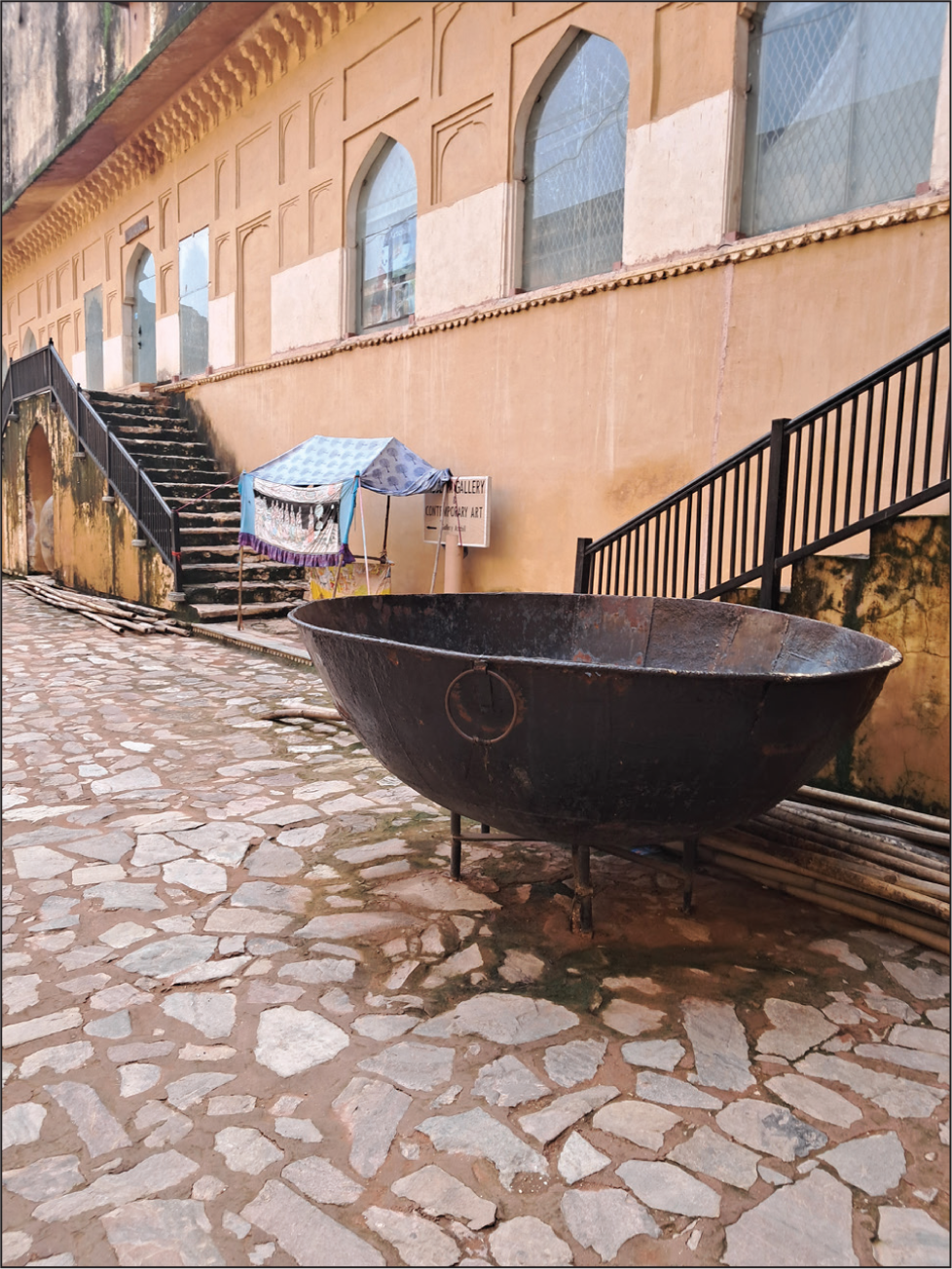
The Photo of ‘Kadhai’ [wok], Which Possesses Multiple Narratives for Its Existence, Causing Impact to the Heritage Interpretation of the Site.
Severity of Impact
The detailed understanding of the repetition, duration and severity of the above-discussed positive and negative impacts is presented in this section. The magnitude of effects is graded along a five-point scale, spanning significant through no change (see Figure 7). The first few actions under the pre-filming phase, as discussed previously, generate positive effects for the heritage site. Similarly, the constraints in the script proposal, if scrutinized in favour of heritage sanctity, create a negligible to minorly negative impact on the site. However, the inevitable negative impact is brought to the site by the disappointment of tourists, as mentioned in the above section, if there is no beforehand display of information by authorities about the blockage of portions/whole site under filming on the website/on-site.
The impacts noticed under the while-filming phase are comparatively more critical, as Figure 3 shows that the column of impacts is majorly covered with shades of red, that is, negative impacts, while the number of green boxes, that is, positive impacts, is minimal. This is because the frequency of actions is mostly continuous, the duration is high and, most importantly, they are generating irreversible changes to the structure and open spaces too, as discussed previously at length. Moreover, the negative impacts on heritage interpretation, through ways including unsupervised dissemination of information and tourists’ dissatisfaction, although reversible, are moderately severe. However, the impacts on local residents’ association with the heritage and its sustainability are positive and require proactive efforts from the authorities for their enhancement, as shown in the previous section. In a similar vein, during the post-filming phase, although the detailed guidelines are absent, the film crew makes sure the clearance of all the items installed/used on location and generated as waste on location. Additionally, they offer the pre-filming cleaning of the area if required for script satisfaction. This aids in the maintenance objectives of the site and therefore generates positive change. They are also achieved through the deposit money submitted by the film crew, in case of any damage. However, as discussed through instances, the irreversible damage cannot be repaired with any reimbursed amount, therefore bringing the major negative impacts. Similarly, although the film-inducement and therefore the FIT footfall effect, as part of the post-filming phase, is high and contributes considerably to the monetary gains for the site, the negative level of tourists’ experience is moderate to major and requires urgent mitigation strategies.
Lastly, it is important to note here that the brackets of minor negative impacts and the most positive impacts are completely absent in Figure 3. Furthermore, Figure 8 shows the matrix that illustrates the comprehensive understanding of these impacts segregated across three major themes: structural protection, site management and heritage interpretation. This indicates that, overall, the severity of all negative impacts is significant and calls for holistic and inclusive conservation and management measures. It also conveys the urgent need for scholarly attention to study this phenomenon, particularly for improving the Indian practice of heritage management.
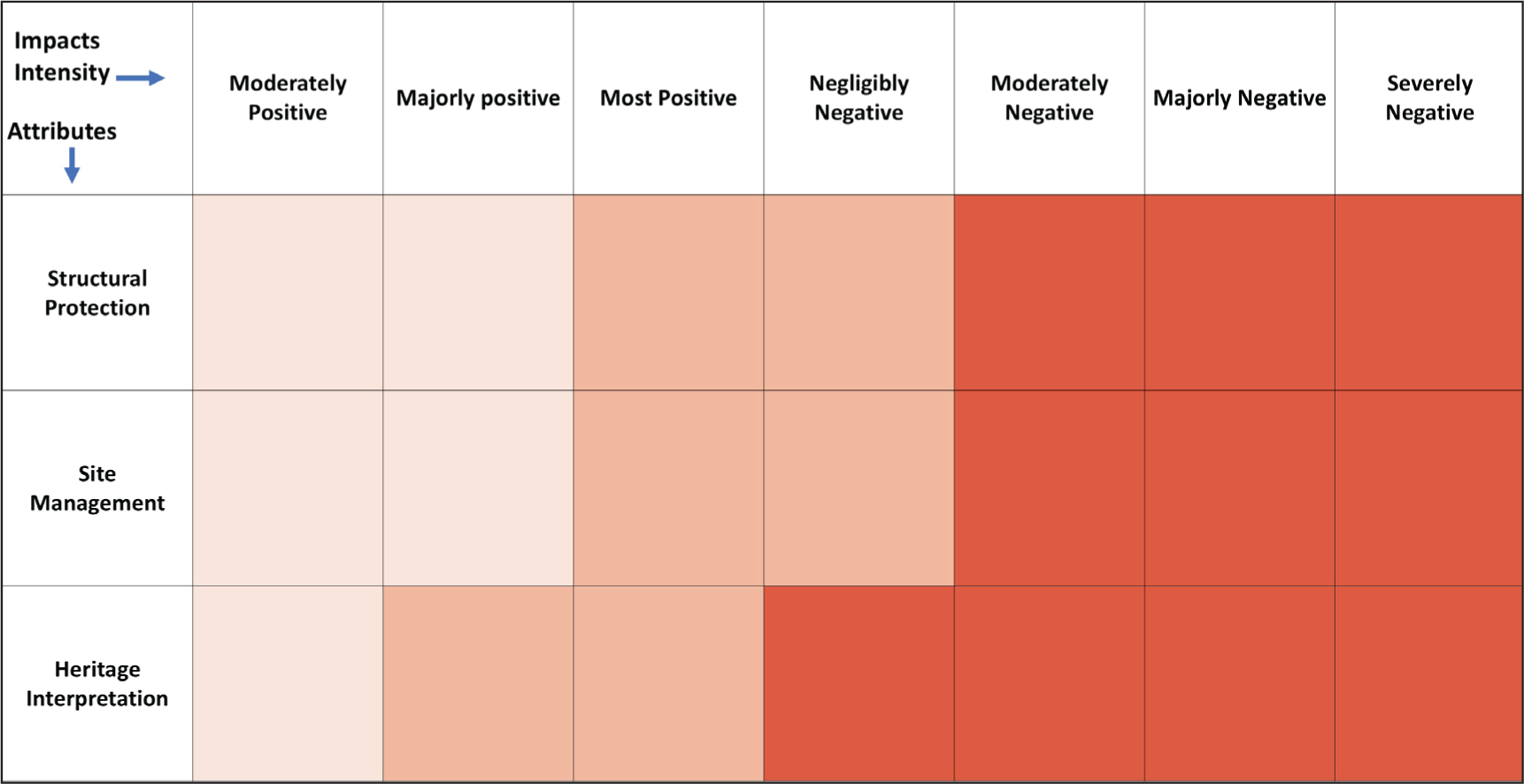
The Matrix Illustrating the Comprehensive Understanding of These Impacts Segregated Across Three Major Themes.
Conclusions
At the outset, it might appear that the central argument of this article is underpinned by the negative impacts of the said phenomenon on the selected case site. While detrimental effects are the vividly highest in all three phases of actions, the impact of positive factors is indeed equally significant and is considerably discussed. Therefore, the study’s foremost conclusion is to encourage the continuation of the use of architectural heritage as a filming location, but by figuring out and implementing the relevant mitigation strategies, design measures for enhancing the experience of regular tourists and FIT on site, and necessary modifications and additions to existing guidelines. Second, although the HIA techniques have always been used only to estimate the future project impacts, this research shows the success of their potential use to understand the past actions’ impact and to decipher the impact severity through an integrated and multi-method approach. The proposal for mitigation strategies, that is, the last step in the HIA procedure, was, however, out of the scope of this study. Third, the article shows consistency with key scholarly assertions: the film crew, the heritage authorities, the tourists, and the locals share ‘mutual reciprocity’ for ‘individual and collective benefits’ (Reynolds, 2016; Shimko, 2019); the impacts of each action can be ‘site-wise different’ and therefore require ‘specific study and practical attention’ (Alpler et al., 2020). Fourth, the article reveals the Indian context-specific conclusions: the ‘influence of films’ and celebrities on ‘Indian audiences’, here the site’s stakeholders, is high, as recognized in Indian film studies, and therefore, leads them to ‘prioritise the film script’ requirements over heritage protection as shown through various instances in this article (Desai, 2018; Roberge, 2010); such ‘film-inducement’ effect is the reason for the emergence of India-specific tourism taxonomy as discussed in the ‘while-filming’ section that requires separate scholarly attention and management practice approach; similarly, the ‘motivation’, for instance, to continue ‘Ghunghat tradition’, as confirmed by women stakeholders, because of filming activities, is unique to Indian context and is indirectly essential for the continuation of ‘emotional’ and ‘physical’ support of locals for ‘heritage sustenance’ (Dominique, 2018; Hooja, 2024; Smith, 2020; Zhanga & Smith, 2019).
Further Study Scope
The methodological framework proposed in this article need not be used for general application but can be replicable for the analysis of world heritage sites as well as other architectural heritage sites as filming locations by considering their site-specific characteristics, continuous changes in filming requirements and thereby including the necessary modifications. The critical analysis of the context-specific strengths and weaknesses of the said phenomenon provided in this article from the perspective of heritage conservation, tourism management and filming procedures creates a potential foundation for the holistic preparation of required conservation and management strategies for such sites in India. Therefore, more such analytical studies and the development of a comprehensive and all-encompassing study of guidelines are encouraged.
Footnotes
Acknowledgements
The authors wish to express heartfelt thanks to all the interviewees, including filming agency managers, the site managing staff, tourists, local residents and heritage walk narrators from Amber Palace, whose active and enthusiastic participation in this study gave crucial inputs. The authors are thankful to the entire teaching staff of the Department of Humanities and Social Sciences, Indian Institute of Science, Education and Research, Pune, for their valuable suggestions. Additionally, the infrastructural setting provided by the institute acted as a great support for the research.
Data availability statements
The data collected for this research are safely deposited at the Department of Humanities and Social Sciences, Indian Institute of Science, Education and Research, Pune, and are not supposed to be shared on any other platform in order to protect the confidentiality of the human resources as per the ethics protocols.
Declaration of conflicting interests
The authors declare no potential conflicts of interest with respect to the research, authorship and/or publication of this article.
Ethics approval and informed consent statements
The authors obtained necessary ethics approvals from the Humanities and Social Sciences Departmental Ethics Review Committee HSS-DERC with an approval number-2023/2/1. Sample informed consent forms were prepared beforehand under the guidance of supervising professors. They were signed by human subjects before participating in any discussions. Audio/video recordings or hand-written notes of conversations were made as per the approval given by and comfortability shown by participants.
Funding
The authors disclosed receipt of the following financial support for the research, authorship and/or publication of this article: This work was funded by the Indian Institute of Science, Education and Research, Pune, Maharashtra, India.