Abstract
Research Type:
Level 3 - Retrospective cohort study, Case-control study, Meta-analysis of Level 3 studies
Introduction/Purpose:
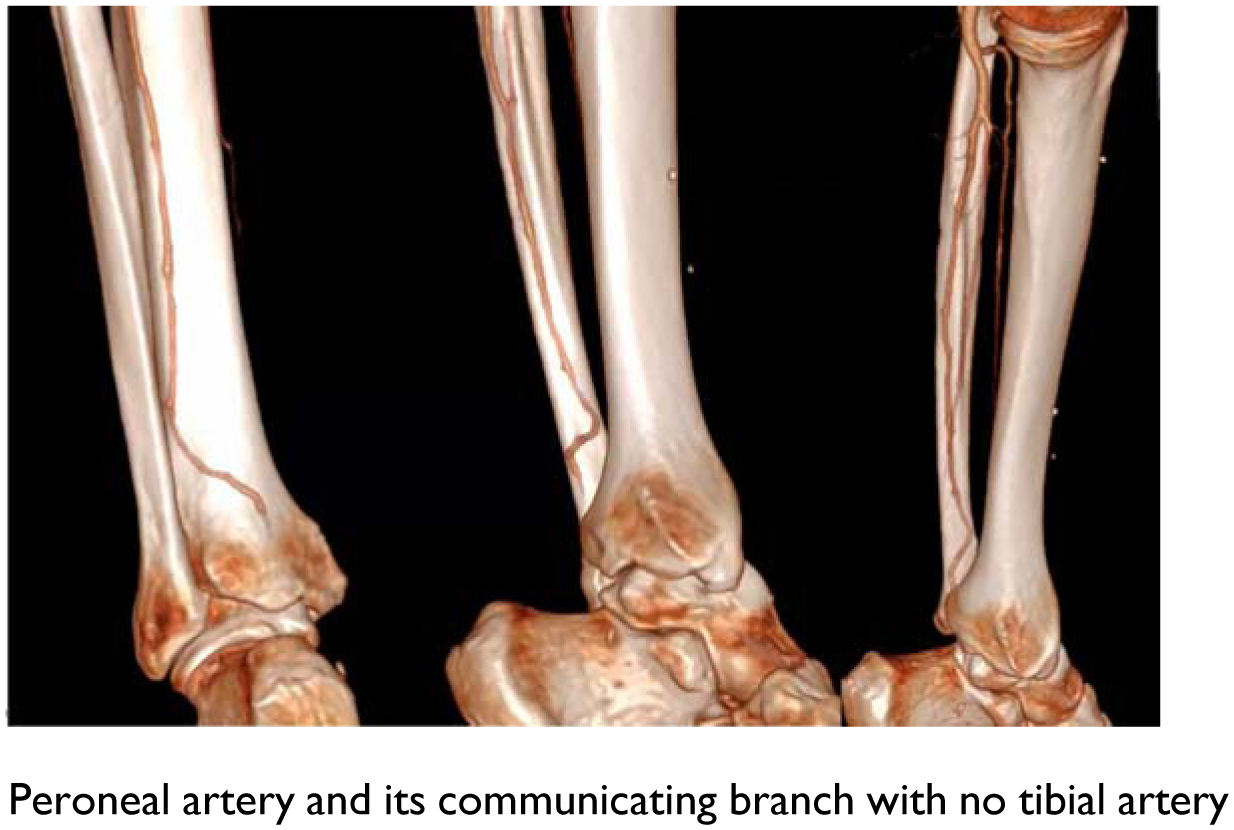
The risk of vascular injury is a significant concern in posterior malleolus surgery, especially with the commonly used posterolateral approach. Anatomical variations of the peroneal artery, such as the presence of a communicating branch to the posterior tibial artery, may heighten this risk. This study investigates the prevalence of this communicating branch and its implications for surgical decision-making, advocating for the medial-posteromedial approach as a safer alternative.
Methods:
To identify the presence of a communicating branch between the peroneal and posterior tibial arteries, a retrospective analysis of 916 lower limb computed tomography angiographies (CTA) was performed. Patient data were stratified based on clinical indication for imaging, laterality, and the presence or absence of the communicating branch.
Results:
A communicating branch was identified in 289 (31.6%) of the cases. The prevalence was significantly higher in patients with PVD (n = 227) compared to those imaged for trauma (n = 18), free fibula graft assessment (n = 16), or other vascular concerns (n = 28). Notably, in cases where the communicating artery was present, 40% had an atretic proximal posterior tibial artery, making the peroneal artery, with its communicating branch, the primary blood supply to the medial plantar arch of the foot. This anatomical variation poses a substantial risk of arterial compromise if the posterolateral approach is used, as it necessitates ligation of these branches.
Conclusion:
Our findings reinforce the existing anatomical literature regarding the variability of peroneal artery branching and underscore the potential hazards of a posterolateral approach to the posterior malleolus. Inadvertent ligation of the communicating branch may lead to ischemic complications, such as flexor hallucis longus contracture. Given the high prevalence of this variation, particularly in patients with PVD, the posterolateral approach should be approached with caution. The medial-posteromedial approach provides a safer alternative, preserving vascular integrity while ensuring more than adequate surgical exposure for posterior malleolus fracture fixation.