







Abstract
Introduction
Diabetic retinopathy (DR) currently affects more than 100 million people worldwide, with previous research suggesting that global morbidity is expected to increase over the next several decades.1,2 It is imperative that researchers continue to investigate the most effective ways to screen, diagnose, and treat this disease. Over the past 10 years, there have been major breakthroughs related to screening protocols, diagnostic imaging modalities, and the development of drugs that aim to preserve and protect the vision of patients with DR.3,4 Furthermore, applications of artificial intelligence (AI) in diabetic eye disease have revealed new opportunities for improved DR screening, diagnosis, and treatment.5–7
Given the considerable amount of research published on diabetic eye disease, recognizing which articles are being shared and discussed among both the scientific community and the general public is important. For ophthalmologists and other scientists, research trends shed light on the future of the field and can inform both diagnostic and treatment decisions that may enhance patient outcomes.8–10 For the public, a basic understanding of diabetic eye disease can promote behaviors that mitigate risk factors, increase screening rates, and ultimately save vision.11–13 The bibliographic and altmetric evaluations of research articles can help to quantify both the scientific and social impact of published research. Although bibliographic evaluation focuses primarily on citation count and is valued by the scientific community, an altmetric evaluation is designed to more comprehensively monitor and measure the social impact of research online.
Separate bibliographic and altmetric analyses of various ophthalmology research topics, including macular edema, retinal detachment, uveitis, retinopathy of prematurity, and others, have revealed patterns of global research relating to various ophthalmologic conditions.14–19 However, little has been published in ophthalmology that examines bibliographic and altmetric trends on a research topic concurrently, allowing for a direct comparison of the research articles with the most scientific and social impact and with implications for both academic and patient education outreach. Furthermore, to our knowledge, there have not been any altmetric analyses related to DR research published since the Altmetric Attention score was developed in 2011, suggesting an opportunity to better understand the social discourse surrounding DR.
The objective of our study was twofold. First, we aimed to identify trends in the research types, topics, authors, and journals that comprise the 100 most-mentioned and 100 most-cited articles on DR over the past 10 years. Second, we aimed to provide insight into the articles that appear on both lists, highlighting emerging trends in DR research and showcasing how studies with both scientific and societal impact can inform patient education outreach efforts.
Methods
The 100 Most-Mentioned Diabetic Retinopathy Articles
Altmetric Explorer is a web-based application that offers a nontraditional metric to monitor a publication’s online mentions, social media discussion, and general online interaction. The Altmetric Attention score is weighted and takes into consideration the number of mentions, as well as the sources and authors of the mentions pertaining to a specific article. 20 Weighting reflects the relative reach of each type of source and includes news (8), blogs (5), policy documents (3), patients (3), Wikipedia (3), peer review on Publons or Pubpeer (1), Weibo (1), Google+ (1), F1000 (1), syllabi on Open Syllabus (1), LinkedIn (0.5), Twitter tweets and retweets (0.25), Facebook public pages (0.25), Reddit (0.25), Pinterest (0.25), and YouTube (0.25). Several ophthalmologic research studies have used the Altmetric Attention score as a barometer of public interest in a given publication or research topic.18,19,21
For the current study, the Altmetric Explorer database was used to identify the 100 most-mentioned articles pertaining to DR by searching the keyword, “diabetic retinopathy”, in the Altmetric Advanced Search interface. For the type of output, “all outputs” was selected. Publication dates ranged from January 2014 to December 2023. After performing the search, research outputs were sorted from highest to lowest Altmetric Attention score, and the 100 articles with the highest scores were noted and further analyzed. For each article, data included journal name, publication date, open access status, first author’s name and sex, year of publication, country of origin, total number of citations for the article, overall citation rate (total citations/article age), research topic (epidemiology vs screening vs treatment vs pathophysiology vs other), and type of research (original clinical research vs systematic review/meta-analysis vs review article vs basic science vs other). The sex of the first author was inferred from the author’s name. If an author’s name was ambiguous, sex was inferred based on the author’s profile and publicly available biography, consistent with several previous studies.22–24 Additionally, the individual components comprising the Altmetric Attention score (ie, news coverage, blogs, Twitter tweets) that contributed to the composite score were recorded for each article. Previous studies have demonstrated that for recently published research, a select number of Altmetric Attention score components account for >98% of the composite score, therefore accounting for most of the social discourse surrounding a given article.18–21,25 As a result, for the current study, the analyzed components of the Altmetric Attention score included news outlets, blogs, policy sources, X (formerly Twitter), patents, and Facebook.
The 100 Most-Cited Diabetic Retinopathy Articles
We used Clarivate’s Web of Science database for the systematic analysis of publication data from the past 10 years. The keywords used for this search were “diabetic retinopathy” as the topic, a range of publication from January 2014 to December 2023, and the document type (eg, “article”, “review article”, “meeting abstract”, “editorial material”, “letters”, and “book chapters”). The results were organized from most-cited to least-cited publications. Each search result was reviewed to ensure its relation to DR. If there were identical numbers of total citations, more recently published articles were ranked higher.
The 100 articles with the highest total number of citations were then further analyzed according to several criteria. For each article, data gathered included journal name, publication date, open access status, first author’s name and sex, year of publication, country of origin, total number of citations for the article, overall citation rate (total citations/article age), research topic (epidemiology vs screening vs treatment vs pathophysiology vs other), and type of research (original clinical research vs systematic review/meta-analysis vs review article vs basic science vs other). Each of the 100 articles with the highest total number of citations was entered into the Altmetric Explorer database, and an Altmetric Attention score (as well as its individual components) was calculated.
Statistical Analysis
Categorical variables were described using percentages, and continuous variables were defined using median and interquartile range (IQR). The Spearman rank correlation coefficient was used to assess the correlation between the Altmetric Attention score and citation number. The 100 most-mentioned and the 100 most-cited articles were compared with χ2 tests, t tests, and z tests, as appropriate. P < .05 was considered statistically significant.
Results
The 100 Most-Mentioned Diabetic Retinopathy Articles
The Altmetric Explorer database provided 14 321 research outputs that met our specified search inclusion parameters. Appendix 1 in the Supplemental Material displays the article title, year of publication, journal of publication, and Altmetric Attention score for the 100 articles with the top composite Altmetric Attention score. The 100 articles with the highest Altmetric Attention scores had a median score of 161 (range, 1062, IQR, 146.5). The publication dates for the 100 most-mentioned articles ranged from 2014 to 2023 (Figure 1). Of the 100 articles, 60% were published by first authors based in the United States, while first authors in China (8%), England (7%), India (4%), and Australia (4%) accounted for the majority of the remaining most-mentioned articles. Articles were published in 46 different academic journals, with the largest number appearing in JAMA Ophthalmology (17%), Diabetes Care (10%), Ophthalmology (8%), JAMA (7%), and British Journal of Ophthalmology (4%).
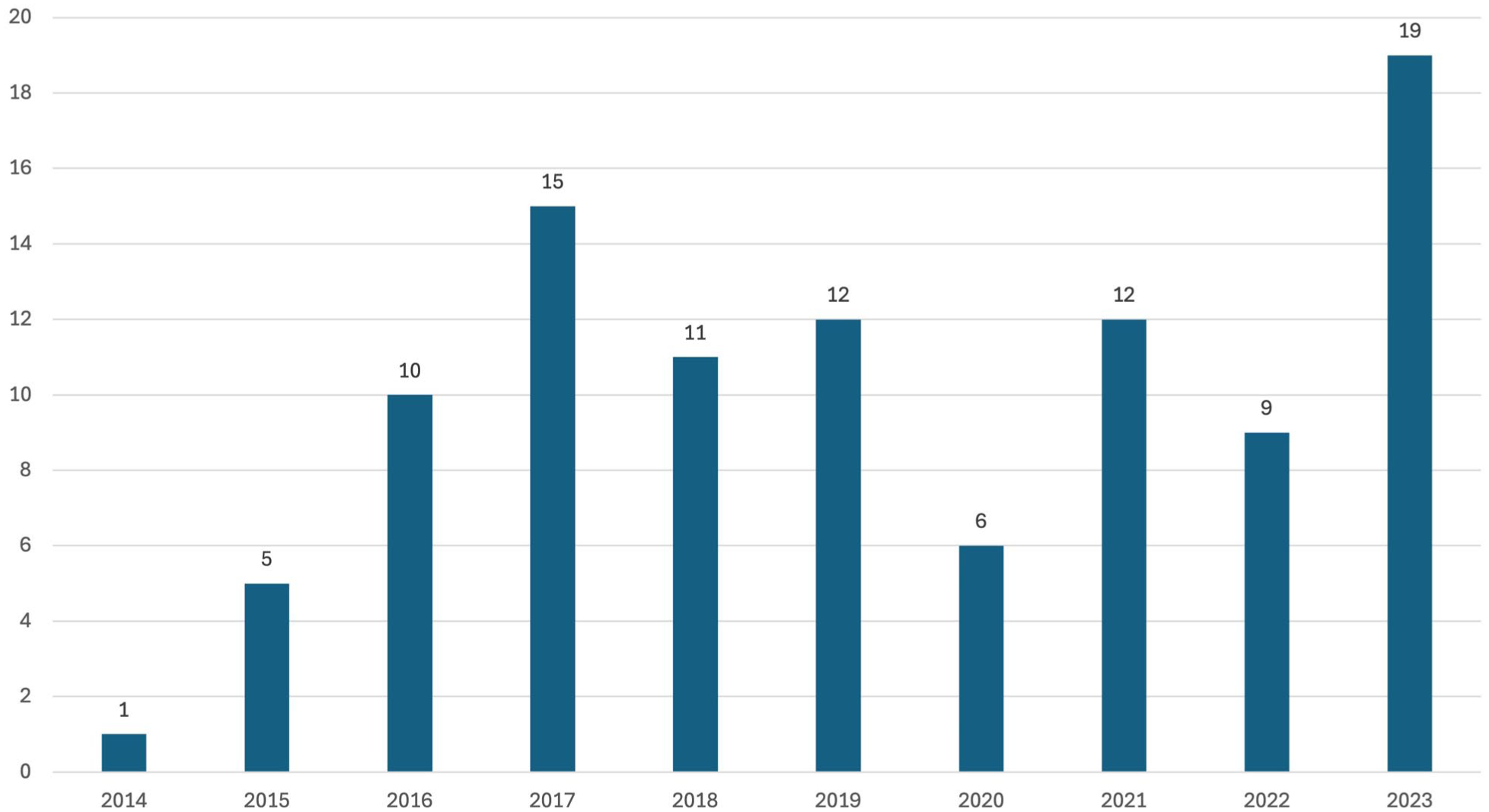
The 100 most-mentioned publication dates.
Table 1 describes the types of studies comprising the 100 most-mentioned articles. Of the 54% of articles classified as original clinical research, 35 were cohort studies, 14 randomized clinical trials, 4 cross-sectional, and 1 case-control. The topic of the 100 most-mentioned articles was, most frequently, epidemiology (42%), followed by screening (33%), treatment (12%), and pathophysiology (13%). Twenty-three percent of articles were identified as being related to AI or deep learning. Of the 100 articles, 60% were published by male first authors and 40% by female first authors. Open access articles comprised 72% of the 100 most-mentioned articles, with 28% limited to paid subscribers of academic journals. The median number of citations for the 100 most-mentioned articles was 49 (range, 8420, IQR, 13.5). A strong positive correlation was found between the Altmetric Attention score and number of citations (r = 0.420, P < .001). The average number of citations per year for the 100 most-mentioned articles was 43.2 (SD, 101.5). Figure 2 shows the breakdown of Altmetric Attention score components for the 100 most-mentioned articles, of which X and news mentions accounted for the large majority.
Types of Studies That Comprise the Most-Mentioned and Most-Cited Research.

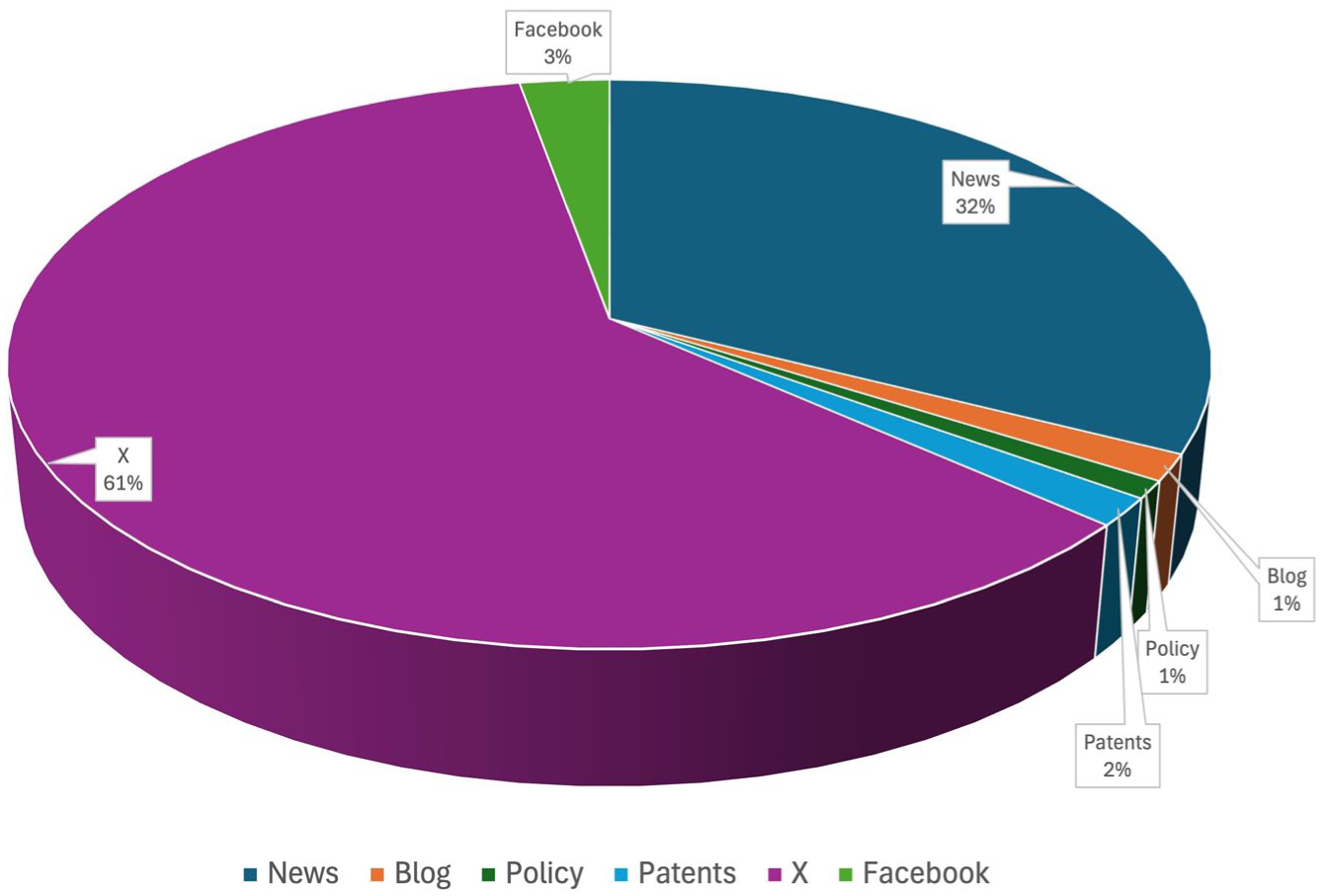
Breakdown of the most-mentioned Almetric Attention Score components.
The 100 Most-Cited Diabetic Retinopathy Articles
The Scopus Web of Science Core Collection provided 24 402 research outputs that met our specified search inclusion parameters. Appendix 2 in the Supplemental Material displays the article title, year of publication, journal of publication, and citation count for the 100 articles with the highest total citations since publication. The median number of citations of the 100 most-cited articles was 312 (range, 8261, IQR, 300.5). The average number of citations per year for the 100 most-cited articles was 94.2 (SD, 131.8). Figure 3 shows the publication dates for the 100 most-cited articles, with most published during the first half of the 10-year study period. Of the articles, 53% were published by first authors based in the US, while first authors in England (9%), China (8%), India (4%), and Australia (3%) accounted for the majority of the remaining most-cited articles. The 100 most-cited articles were published in 45 different academic journals. The journals Ophthalmology (15%) and JAMA Ophthalmology (12%) most frequently published the top 100 most-cited articles, with Diabetes Care (9%), Eye (4%), and JAMA (4%) also frequently contributing to the most-cited ophthalmologic research.
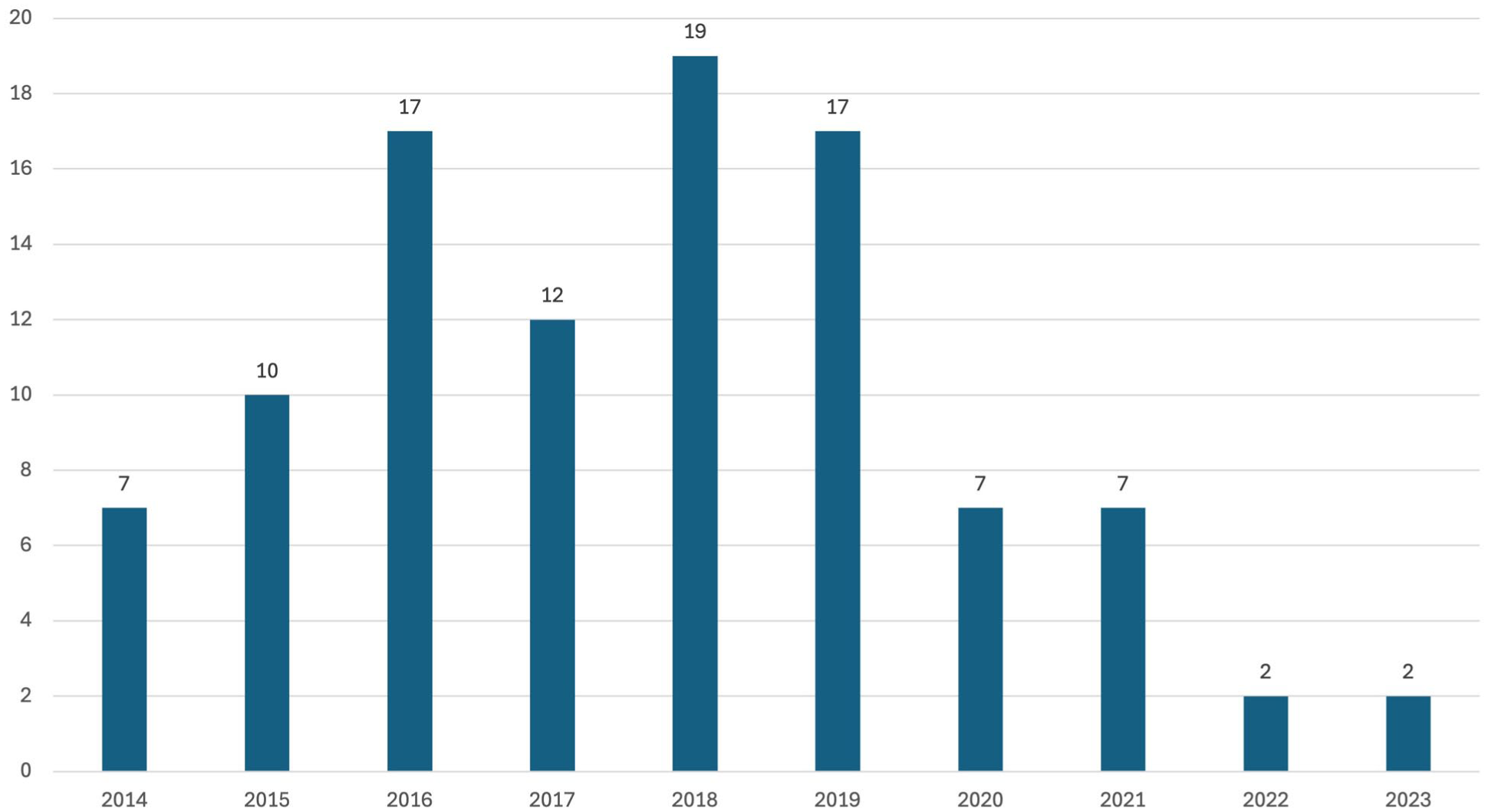
The 100 most-cited publication dates.
Table 1 shows the types of studies that comprise the 100 most-cited articles. Of the 57% of articles classified as original clinical research, 32 were cohort studies, 12 were cross-sectional, and 13 were randomized clinical trials. The topic of the 100 most-cited articles was most frequently screening (40%), followed by epidemiology (25%), treatment (19%), and pathophysiology (16%). Twenty-seven percent of articles were identified as being related to AI or deep learning. Of the 100 articles published, 69% were published by male first authors and 31% by female first authors. Open access articles comprised 78% of the 100 most-mentioned articles, with 22% limited to paid subscribers of academic journals. The 100 most-cited articles had a median Altmetric Attention score of 35.5 (range, 1123, IQR, 80.5). Figure 4 shows the breakdown of Altmetric Attention score components for the 100 most-cited articles. There was a strong positive correlation between the Altmetric Attention score and number of citations (r = 0.599, P < .001).
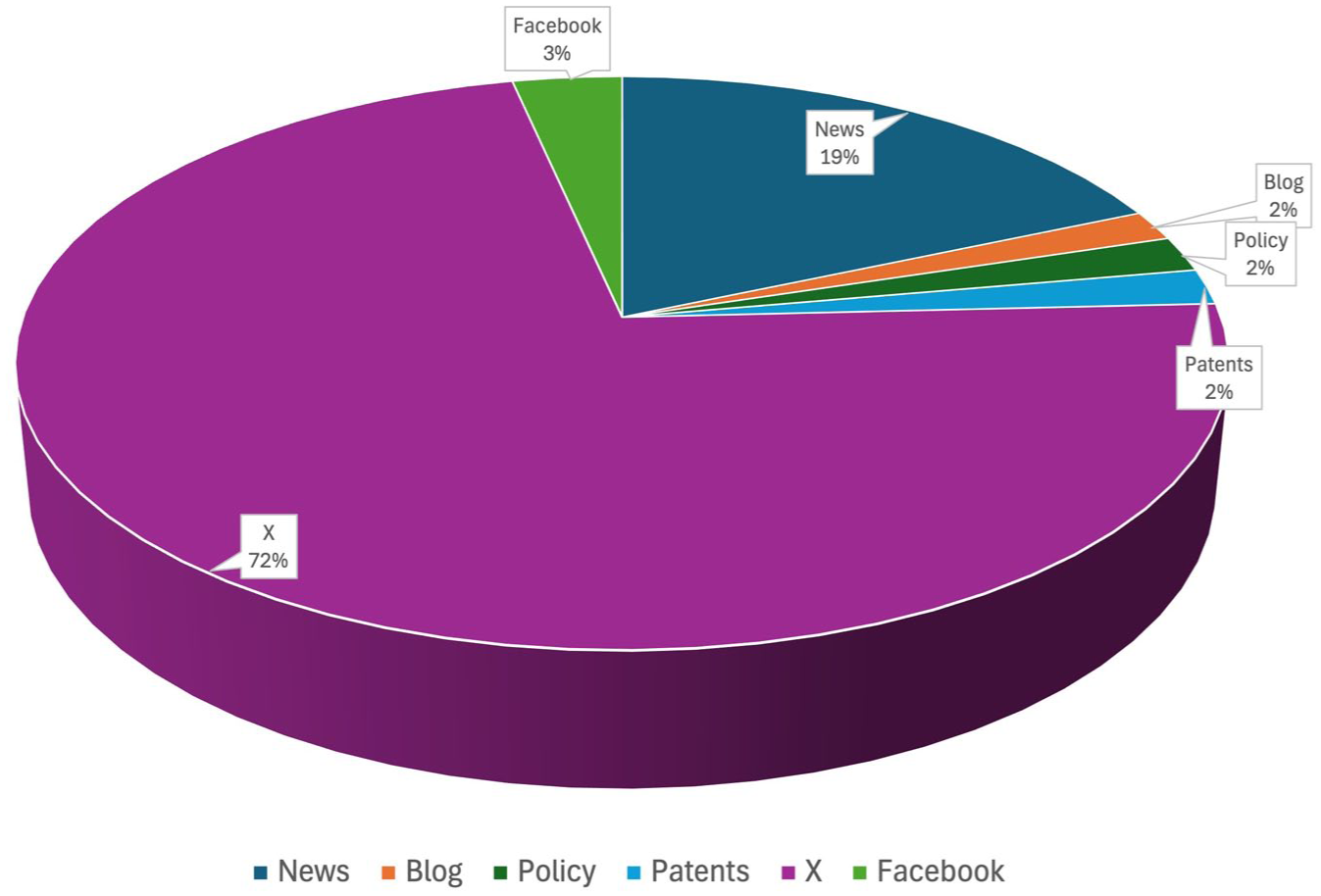
Breakdown of the most-cited Altmetric Attention Score components.
Comparison of the 100 Most-Mentioned and 100 Most-Cited Articles
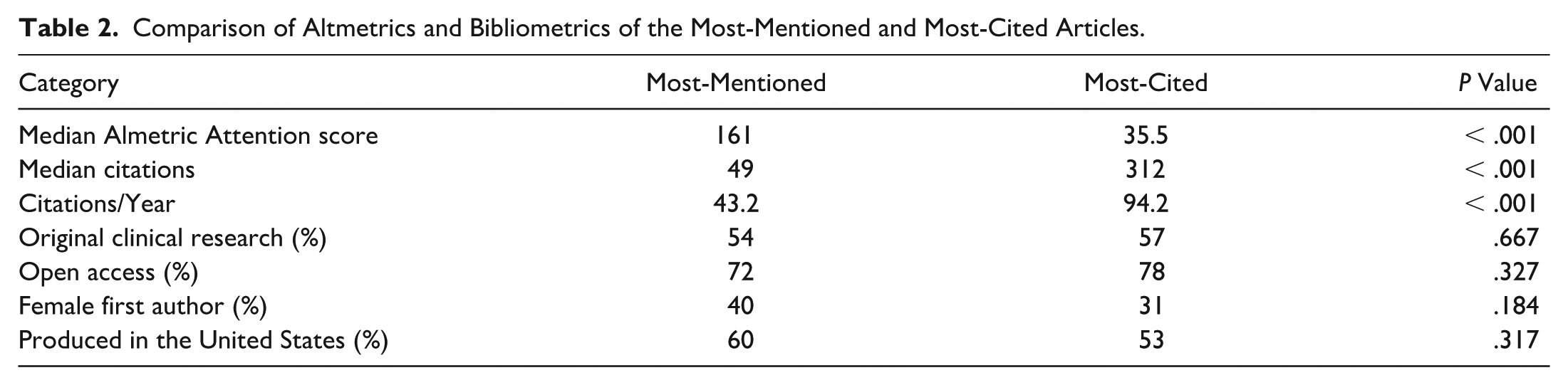
Table 2 compares the most-mentioned and most-cited articles on several previously described altmetric and bibliometric metrics. As expected, most-mentioned articles had significantly greater Altmetric Attention scores than most-cited articles, and most-cited articles had significantly greater total citations and citations/year than most-mentioned articles (P < .001). There were no statistically significant differences in the type of research article, sex of the first author, or country of origin when comparing most-mentioned and most-cited articles.
Comparison of Altmetrics and Bibliometrics of the Most-Mentioned and Most-Cited Articles.
Articles on Both the 100 Most-Mentioned and 100 Most-Cited Lists
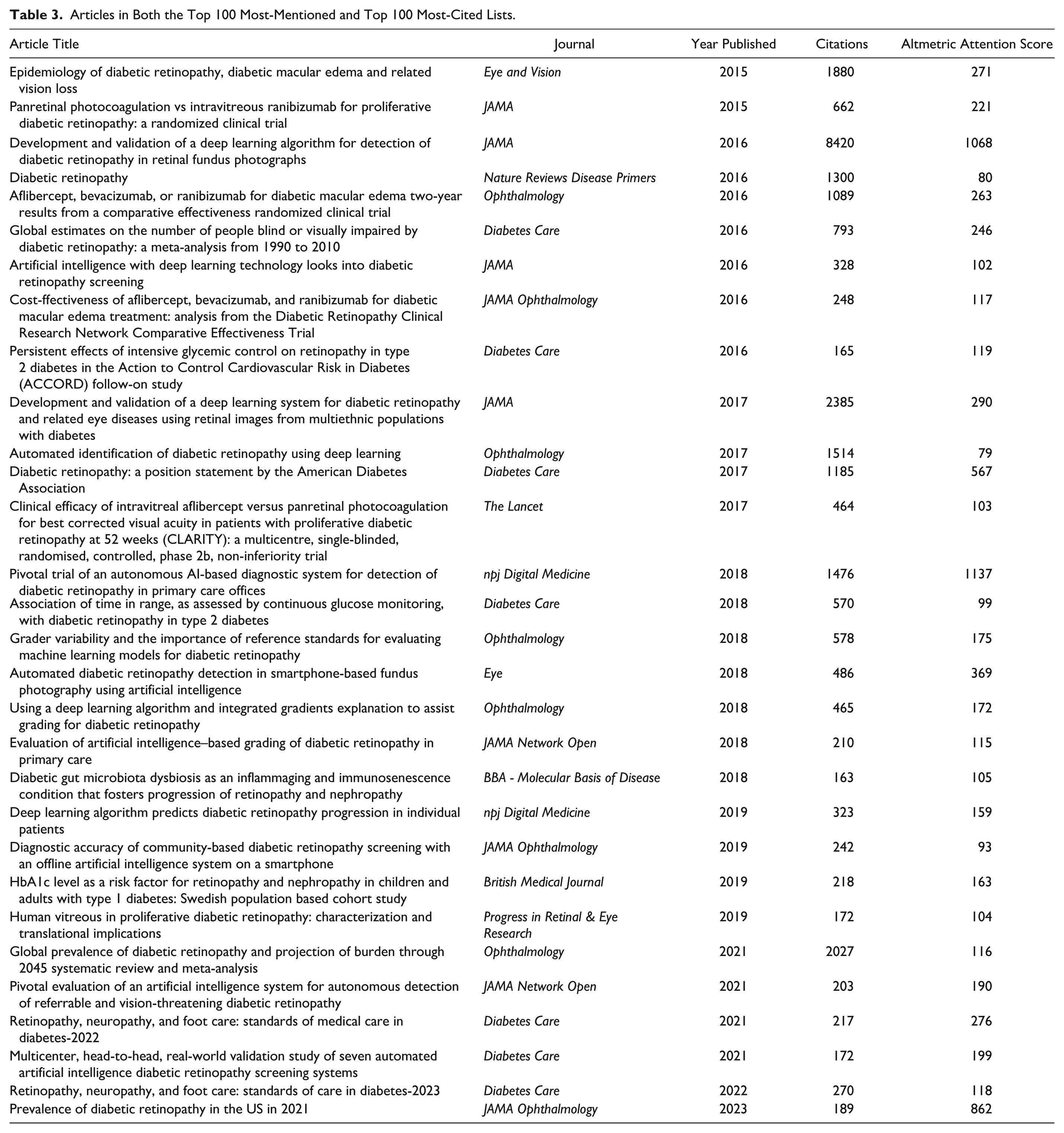
Thirty published articles were ranked among the 100 most-mentioned and most-cited (Table 3). The median Altmetric Attention score was 167.5 (range, 1058, IQR, 161.5). The median number of citations was 464.5 (range, 8257, IQR, 943.75). Articles were published in 13 different journals, with Diabetes Care (7), Ophthalmology (5), JAMA (4), and JAMA Ophthalmology (3) most frequently producing articles with both high altmetric scores and citation counts. Of the 30 articles, 13 (43%) were related to screening, 9 (30%) were epidemiologic in nature, 6 (20%) were treatment-related, and 2 (7%) were pathophysiologic in nature. Forty percent (12/30) of the articles featured on both lists were related to AI or deep learning.
Articles in Both the Top 100 Most-Mentioned and Top 100 Most-Cited Lists.
Conclusions
DR is a leading cause of preventable blindness, affecting more than 100 million people worldwide. 1 Our study sought to examine recent research trends on the topic using 2 different barometers of social and scientific impact, the Altmetric Attention score and citation number. Authors from more than 20 countries contributed to the 170 unique articles examined in this study, which were published in more than 50 academic journals. We found that when comparing the 100 most-mentioned articles with the 100 most-cited articles related to DR over the past decade, articles most frequently cited were primarily written in the first half of the study period, while articles that were most frequently shared online were primarily written in the second half. This finding is consistent with previous expectations, given that citations are cumulative, and there has been an uptick in digital platforms in more recent years for mentioning new articles (contributing to higher Altmetric Attention scores). Both most-mentioned and most-cited articles were most frequently categorized as original clinical research; however, review articles comprised a much greater proportion of articles on the most-cited list (27%) compared with the most-mentioned list (12%). Furthermore, for both most-mentioned and most-cited articles, there was a strong positive association between citation count and Altmetric Attention score, suggesting possible overlap between papers with both social and traditional scientific impact. Critical analysis of both the scientific and public discourse surrounding DR can identify emerging research trends and may provide insight into methods that foster public engagement, which can inform future patient education outreach efforts.
A strong, positive correlation between altmetric score and citation number was found in the 170 total publications reviewed in our study, adding to the mix of existing literature regarding the relationship between media attention and citation count.18,26,27 Our findings support the claim that the Altmetric Attention score represents an important metric that can be used to supplement traditional bibliometrics when evaluating the societal impact of a research publication. This is primarily because the Altmetric Attention score provides insight into what is being discussed about a topic in the public discourse and the settings in which this public discourse is taking place, which has immense patient education implications. Previous research suggests that media attention to a particular healthcare-related topic can drive internet search traffic surrounding the topic and ultimately influence health behaviors.28–32 This is particularly important for a condition such as DR, where modifiable risk factors and early screening can influence disease progression. As such, the Altmetric Attention score can be used to track media mentions of recently published DR literature and help ensure that accurate, understandable information is being provided to the public. The strong positive association between citation count and Altmetric Attention score for the research articles about DR examined in this study suggests that articles with greater academic impact are also more likely to generate engagement beyond traditional scholarly circles. The information in these articles can be amplified by ensuring it is presented in a manner that is easy to comprehend, resulting in research findings being translated into policy and practice.
In the current study, news outlets and X comprised the largest contributions to total Altmetric Attention score for the 100 most-mentioned articles. These results align with previous studies suggesting that X may help to improve the dissemination of ophthalmologic publications.33,34 The dramatic increase in daily X users over the past decade as a means for sharing medical information also helps to explain why articles with the highest Altmetric Attention scores were more likely to be published from 2020 to 2023. 35 One reason why X has been embraced by physicians and patients alike is the provision of a communicative and collaborative atmosphere where patients, physicians, and researchers can interact.36–38 Furthermore, in contrast to traditional news outlets, X is interactive and dynamic. Online journal clubs hosted on X offer the opportunity for physicians and researchers to directly answer patient questions regarding recently published articles.39,40 The relative weight of X mentions on the composite Altmetric Attention score for the 100 most-mentioned articles published on DR in the past decade suggests that significant discussion on the topic is occurring. It would benefit future screening and patient education campaigns to gain traction on the platform to expand their reach and boost their efficacy.
Although the X platform was overrepresented in the Altmetric Attention composite score, another social media platform, Facebook, accounted for a very small percentage of the composite score. Previous research has demonstrated that eye health organizations (organizations defined by the American Academy of Ophthalmology as being “concerned with preventing eye disease, finding treatments, or supporting people with vision impairment”) often have the largest followings on Facebook compared with other social media platforms. 40 A concerted effort to partner with such eye health organizations may help reach a wider array of patients, especially considering the demographic differences between users of X (on average, younger) and Facebook (on average, older). 41 Partnerships with eye health organizations can help to ensure that literature on DR is widely conveyed to those most vulnerable patient populations in easy-to-understand and actionable terms.
A closer examination of the articles that were included on both the most-mentioned and most-cited lists provides insight into DR research, which is highly valued by both the scientific community and widely discussed in the general public. Interestingly, of the 30 articles on both lists, 40% had a component of AI/deep learning, a disproportionate amount compared with the percentage of most-mentioned (23%) and most-cited (27%) articles related to AI. There has been a rapid increase in the popularity of AI in many different domains over the past few years, and medical research is no exception. From a bibliographic perspective, the highly cited AI publications on DR in our study reflect the embrace of technology as it relates to disease screening, with several publications describing how to successfully initiate a screening program with even the most primitive technology in resource-limited settings.42–45 These studies can serve as a framework for more affordable and accessible DR screening.
From an altmetric perspective, articles related to AI are gaining traction online and in the media at a rate that outpaces other studies. The dissemination of these articles represents an opportunity for researchers, physicians, and the public to have a broader conversation about DR, including how to mitigate risk factors and the importance of screening. For example, the most-mentioned article in our study was highlighted by more than 150 different news outlets, ranging from small local newspapers to national publications. Given that media coverage has been shown to influence health behaviors and the success of past DR outreach campaigns, education efforts that coincide with high-quality, novel studies that generate media attention may prove to be more successful at reaching patients.28–32 In the future, increasing the overlap between most-mentioned and most-cited publications would imply that higher-quality information is being provided to the public and successfully informing patients’ decision-making.
There are limitations to our study. First, the inclusion of articles in our study is based on the Web of Science and Altmetric Explorer online databases, which may omit highly mentioned and highly cited articles from other databases and journals. However, these databases have been used previously in several ophthalmologic bibliometric and altmetric analyses.14,16,17,21 Next, the keyword “diabetic retinopathy,” used in both the Altmetric Explorer database and the Scopus Web of Science Core Collection, may not have captured all articles on the topic published within the past decade. Our goal was to provide an overview of articles related to DR epidemiology, screening, and treatment, which is why a broad search term was used in both databases rather than focusing specifically on a subtopic of the disease. Additionally, the most-cited papers are not necessarily the most scientifically important or clinically relevant. A future analysis of the journals that most frequently cite our study’s “most cited” articles is needed. Furthermore, as with other altmetric studies, most-mentioned papers may not necessarily be the most scientifically accurate or clinically meaningful. Despite these limitations, the 170 published papers included in our study are among the most influential among both academic ophthalmologists (bibliometric) and the general public (altmetric) and offer insight into both the current state and future directions of DR research.
In conclusion, the current study attempted to provide an overview of both widely mentioned and highly cited publications related to DR over the past decade, offering a blueprint to disseminate high-impact academic work (as indicated by bibliometrics) to the public through accessible platforms that maximize patient outreach. The altmetric and bibliometric components of our study can inform future research strategies and enhance patient education outreach efforts. Furthermore, we have shown how altmetrics can be used to identify trends in public discourse, to address gaps in public understanding, and to identify strategies to ensure patients have access to high-quality information about DR online.
Supplemental Material
sj-docx-1-vrd-10.1177_24741264261423315 – Supplemental material for An Altmetric and Bibliometric Comparative Analysis from 2014 to 2023 of the 100 Most-Mentioned and 100 Most-Cited Articles About Diabetic Retinopathy
Supplemental material, sj-docx-1-vrd-10.1177_24741264261423315 for An Altmetric and Bibliometric Comparative Analysis from 2014 to 2023 of the 100 Most-Mentioned and 100 Most-Cited Articles About Diabetic Retinopathy by Samuel A. Cohen, Pradeep S. Prasad and Jayanth Sridhar in Journal of VitreoRetinal Diseases
Footnotes
Ethical Approval
This original research was conducted in accordance with the Declaration of Helsinki. The collection and evaluation of all protected patient health information was done in a Health Insurance Portability and Accountability Act–compliant manner.
Statement of Informed Consent
No informed consent was needed for this study as all data were publicly available.
Declaration of Conflicting Interests
The authors declared no potential conflicts of interest with respect to the research, authorship, and/or publication of this article.
Funding
The authors received no financial support for the research, authorship, and/or publication of this article.

Supplemental Material
Supplemental material is available online with this article.
References
Supplementary Material
Please find the following supplemental material available below.
For Open Access articles published under a Creative Commons License, all supplemental material carries the same license as the article it is associated with.
For non-Open Access articles published, all supplemental material carries a non-exclusive license, and permission requests for re-use of supplemental material or any part of supplemental material shall be sent directly to the copyright owner as specified in the copyright notice associated with the article.
