







Abstract
The present study investigated the use of the local Chinese character textbook Learn Chinese Characters Easily by Chinese language (second language) learners at the Confucius classroom of Federal Polytechnic Oko, Nigeria. A sample of 50 students out of the 65 selected from the Confucius classroom were randomly investigated for their opinions on their use of the local Chinese character textbook. The findings indicated that the use of the local Chinese character textbook has aroused students’ interest in Chinese characters through their learning experiences; that the organization and content of the textbook were found to be moderately satisfactory; and that the students admitted that the textbook has helped them improve their Chinese proficiency. Overall, the local textbook is essential for the users but needs improvement in the few areas indicated by the research. Finally, the study offered some innovative suggestions for optimizing the textbook and improving learners’ experiences and learning outcomes.
Keywords
Introduction
Educational institutions around the world that are offering the Chinese language are seeking ways of improving learners’ experiences and learning outcomes for their various students. In Nigeria, Chinese studies are carried out largely by the Confucius institutes and various Confucius classrooms affiliated to the institutes (Edeh and Xu, 2019; Odinye, 2015a), which offer a variety of programs, such as spoken Chinese (oral communication and daily life language), systematic pronunciation, writing, listening/phonetics, reading comprehension, Chinese movies, Chinese economy, songs and dance, Chinese literature, Chinese culture, calligraphy, and Chinese characters (Madukasi, 2016; Odinye, 2015b; Okafor, 2020; Umeojiege, 2018). Chinese characters are a unique aspect of Chinese cultural heritage, which has its own unique configuration methods, cognitive methods, and word formation methods (Wheatley, 2011; Xuan, 2018). Such characteristics have made the learning of Chinese characters a crucial part of Chinese language education. In the case of foreign language (second language, L2) learners of the Chinese language, the focus on Chinese characters has increased demand for Chinese character teaching materials that suit L2 learners’ environments (Jiang, 2007; Yi, 2007). Teaching materials such as textbooks are important components of teaching activities that are relied upon by both teachers and students in the teaching process (Liu, 2002; Lu, 2001). Parallel to this, the joint collaboration of the Nnamdi Azikiwe Confucius Institute and the Confucius classroom at Federal Polytechnic Oko took the step to produce a local Chinese character textbook for L2 learners in Nigeria. The local textbook was based on the concept of experiential learning, focusing on learners as the target, and strives to mobilize learners’ initiative and enthusiasm to fully develop learners’ potential in Chinese character learning (Agu, 2020).
Accordingly, the Confucius institutes and classrooms in Nigeria all have different textbooks they use depending on their adaptability to the students’ needs. Some of the Chinese textbooks used in Nigerian Confucius institutes and classrooms are “Developing Chinese,” “Great Wall Chinese,” “New Practical Chinese,” “HSK Vocabulary Syllabus,” “Boya Chinese,” and “HSK Standard Course” (Agu, 2020; Ogochukwu, 2021; Okafor, 2020), all of which are produced and introduced by affiliate Confucius institutes in mainland Chinese universities. As part of the efforts to improve Chinese character learning among L2 students in Nigeria, the idea of producing a local Chinese character textbook was encouraged. It followed the concept of domestication of the Chinese language in Nigeria, that is, adapting students’ learning materials to their learning environment to improve learning outcomes. The local textbook, Learn Chinese Characters Easily, is an independent basic Chinese character textbook, published in 2015, with the aim of capturing Nigerian L2 beginner students’ interest in Chinese characters. The textbook was written in cognizance of the Chinese teaching experiences and the cognitive characteristics of the L2 learners (Agu, 2020). It employs simplified analysis of the structures of Chinese characters that allows easier comprehension for students. Nevertheless, studies have shown that Chinese character textbooks often have limitations that affect students’ learning outcomes (Xuan, 2018; Zhang and Hu, 2020), such that Chinese character textbooks with little explanation about the source of Chinese characters and unclear explanation of rules for Chinese character strokes and graphical representation can have a minimal effect on stimulating learners’ interest in Chinese characters (Xuan, 2018). As a result, the present study seeks to investigate students’ learning experiences, perceptions, and performances with the identified textbook. It employed the following research questions for its investigation. What are the students’ learning experiences and perceptions on the use of the local textbook Learn Chinese Characters Easily in teaching Chinese characters? In what ways can the textbook be improved to enhance students’ learning experiences and outcomes?
Since inception, teaching materials for use in the Confucius institutes and the various Confucius classrooms in Nigeria have always been approved and brought from affiliate university Confucius institutes in China. Following the concept of domestication, local teaching materials such as the local Chinese character textbook titled Learn Chinese Characters Easily have been introduced and are currently being used in federal polytechnic Oko Confucius classrooms for the teaching of Chinese characters. Chinese language textbooks are designed to assist students to master, for example, Chinese attributives, Chinese idioms, Chinese phonetic alphabets, tones, punctuation, and stroke order for writing Chinese characters, with the aim of improving students’ performances in areas such as Chinese proficiency (HSK) exams, Chinese language writing, reading, and speaking skills (Ogochukwu, 2021). Such is the case of the local Chinese character textbook, whose analysis from a student perspective is the main focus of the research.
Since its publication in 2015, very few comments have been gathered on the textbook, despite its usage. The study by Agu (2020) was found to be the only empirical and scientific study conducted on the textbook, which focused on the evaluation of the textbook from the principles of Chinese character textbook compilation for use in teaching Chinese characters to L2 learners in Nigeria. Nevertheless, the present study explores learners’ perspectives on the use of the textbook through in-depth analysis of learners’ opinions and hence puts forward innovative suggestions for improving the textbook, learners’ experiences, and expected learning outcomes. In this way, the study aims to contribute to the existing literature on the use of the identified textbook.
Review of the literature
The reading process in the Chinese language tends to gravitate around two phases: recognition of Chinese characters and reading for comprehension (Wheatley, 2011). Thus, learning the Chinese language often involves the separation of Chinese characters from the comprehensive classes that include other aspects of Chinese language learning (Wang, 2012; Xuan, 2018). Although character recognition tends to be difficult, before characters can be read, they need to be recognized. In terms of Chinese character recognition, key components such as information about the number of strokes, pronunciation, general meaning (actual history), and form that accord characters some individuality and provide traction for the reading process need to be memorized (Wheatley, 2011). Unlike English, which requires memorizing the different pronunciations of individual words, in Chinese, memorizing the combinations of different characters is crucial to its reading, speaking, and writing aspects (Sun, 2015). Learning Chinese characters requires mastering the rules of writing strokes and improving on correct stroke order (Wang, 2012). The stroke is the basic infrastructure of a character that makes up its composition (Sun, 2015). The mastering of strokes and stroke order may be confusing to foreign students, especially those who are still in their early stages of learning Chinese characters (Zhang and Hu, 2020). Compared to Chinese student (first language, L1) learners, L2 learners often lack the sensibility of Chinese characters, which makes it difficult for them to learn the characters (Xuan, 2018). For this reason, different methods of teaching Chinese characters and textbooks have been introduced to suit L2 learners of Chinese characters. Zhao and Yue (2012) proposed single and mixed methods, which were summarized into four teaching methods, such as the “stroke teaching method” and “ancient character pattern teaching method,” and the latter teaching method was divided into “component teaching methods.” In addition, Wang (2012) named six teaching methods for teaching Chinese characters as a foreign language, such as “charades” and “Chinese character induction,” in non-Chinese cultural environments.
On the use of textbooks
Over the past decades, there have been significant efforts to make learners the center of language instruction by incorporating their needs, and textbooks have been the best resource for achieving this aim (Mohammadi and Abdi, 2014). In spite of the numerous language teaching materials, textbooks are the most widely used language teaching materials as they are considered crucial to students (Cortazzi and Jin, 1999). Textbooks are considered vital to students as a teacher, a map, a resource, a trainer, an authority, and an ideology by many scholars (Clarke and Clarke, 1990; Cunningsworth, 1995; Haycroft, 1978; Phillipson, 1992; Sheldon, 1988; Wei, 2009). Consequently, there have been efforts to properly evaluate language textbooks based on relevance and appropriate contextual criteria for use in classrooms (Mohammadi and Abdi, 2014). According to Cunningsworth (1995), there is a need to ensure careful selection of materials, and the selected materials should firmly reflect the learners’ needs through the aims, methods, and values of the teaching program (p. 7). Accordingly, Cunningsworth (1995) and Harmer (1988) postulated that evaluation checklists of textbooks should have some criteria, such as physical characteristics of the textbooks (layout, organizational, and logistical characteristics); clear analysis of specific language, functions, grammar, and skills in their content; and cultural and gender components, in addition to topics that meet students’ personalities, backgrounds, needs, and interests, including those of the teacher and/or institution. The above criteria are crucial to investigating students’ needs analysis and adjusting teaching materials such as textbooks to meet learners’ needs (Obinna, 2017; Wei, 2009). Correspondingly, Chinese character textbooks are organized primarily to develop writing and reading skills with information on the general structure of characters and their meaning to facilitate memorization and reproduction (Sun, 2015; Wheatley, 2011). For learners in non-Chinese cultural environments, the textbooks should be tailored to capture relevant linguistic items within their prevailing socio-cultural environment (Cunningsworth, 1995). Consequently, there has been encouragement to produce Chinese character textbooks that meet the local needs of L2 learners (Xuan, 2018; Zhang and Hu, 2020), such as the local Chinese character textbook, Learn Chinese Characters Easily.
The local Chinese character textbook Learn Chinese Characters Easily
The local textbook Learn Chinese Characters Easily is enriched with interesting stories to capture the learners’ interest and uses pictorial presentations to simplify Chinese characters to enhance the students’ cognitive processing of characters. The textbook mainly includes 413 Chinese characters involved in HSK Levels 1 and 2 and secondary vocabulary. It was also designed to suit L2 learners’ HSK transition to the third-level learning stage, focusing on practicality and improving the students’ Chinese character acquisition (Jiang and Zheng, 2015).
Characteristics of the textbook
The biggest features of the textbook are its simplicity and explanatory designs, which assist beginners to have a firm grasp of most Chinese characters. Owing to the simplified words and often intuitive graphical representation of words employed in the textbook, learners can master the 413 Chinese characters within a short period of time. The textbook emphasizes the overall reading of the Chinese characters and writing. Its characteristics of replacing the traditional writing style of strokes with more pictorial representations and story binding allow students to quickly recognize, read, and write Chinese characters with much-needed ease. The textbook captures six basic types of strokes, namely horizontal strokes, vertical strokes, left-falling strokes, right-falling strokes, dots, and rising strokes, from which other derivatives consisting of 27 strokes emanate. Although the textbook is not organized into clearly marked units and chapters, its pattern of arrangement and explanation captures students’ interest. For example, beginning with the simplest to the most complicated characters, each new character introduced is arranged in accordance with Chinese characters’ stroke order: from basic strokes, such as horizontal, vertical, skew, nip, dots, to slightly more complicated strokes, such as horizontal folding hooks. The textbook repeats drills for students by combining the already learned words with new ones when making sentences in paragraphs and chapters of the textbook. Such a method of arrangement helps the students retain the learned words and at the same time master the application of those words in sentence construction. Further observations show that the textbook pays little attention to character source analysis but rather is focused on the structural analysis, which was designed to help beginners quickly master the correct form of Chinese characters. In this way, students are able to master the writing so fast that their confidence in writing Chinese characters dwarfs their fears. Thus, it facilitates the target of improving the students’ Chinese character learning abilities and performance in Chinese proficiency tests. Cover page of the local textbook Learn Chinese Characters Easily. 
Usage of the local textbook
The local textbook Learn Chinese Characters Easily has very rich Chinese character explanatory models to ensure that the right knowledge of Chinese characters is obtained with fewer difficulties (see Figure 1). By employing rich content on characters, such as the use of pictorial representation, a clear explanation of the etymology of Chinese characters, etc., students are provided with the meaning (cultural background) of Chinese characters that helps in the retention, recognition, reading, and writing of Chinese characters. In addition to the basic structures and learning guides captured in the textbook, students are equipped with knowledge of the monosyllabic and disyllabic forms of Chinese characters that are ideal for beginners learning Chinese characters. This method is in line with the target of raising L2 learners’ interest in Chinese characters and Chinese proficiency test scores, as much emphasis is placed on students’ recognition and writing of Chinese characters. From our observations, there are no separate classes for Chinese character lessons, but they form part of the comprehensive lessons instead. More so, the local textbook Learn Chinese Characters Easily serves as a complement to other Chinese character textbooks that are used for preparing students for their Chinese proficiency exams. Often, it serves as a take-home kind of textbook for students to study on their own and to consult with the teacher in case of any difficulty. Notwithstanding, it is noteworthy that Chinese characters form a complex, organic whole between pronunciation, vocabulary, and grammar, which embodies Chinese cognitive thinking (Xuan, 2018). As a result, L2 learners would require special attention in order to develop their interest and enthusiasm.
Methodology
Research site
The Confucius classroom at the Federal Polytechnic Oko is a subsidiary of the Confucius Institute at Nnamdi Azikiwe University. It was established in 2011 and became the first Confucius classroom in Nigeria (Edeh and Xu, 2019). The Confucius classroom at the Federal Polytechnic Oko holds about 732 Chinese language students at various levels (HSK Levels 1–5) of Chinese proficiency tests. The number of staff includes three volunteer Chinese teachers and one Chinese director (from China), two administrative staff, and two student assistants (all local staff). Teaching of the Chinese language is carried out by volunteer teachers only. At the time of investigation by the present study, only one of the volunteer teachers was available but could not participate in the study. As a result, the study focused more on the students’ than the teachers’ perspectives on the use of the local Chinese character textbook. This method of investigation is in line with Wei’s (2009) assertion on the use and evaluation of foreign language textbooks, that in-depth analysis should be carried out from the perspective of the learners so that the textbook can be better used for teaching.
Research design
In the selection design, the following elements were taken into account: the nature and purpose of the research questions; the amount of control on the part of the researcher; the desired end product; the unit of the study; and the uniqueness of the situation. Following Flowerdew and Peacock’s (2001) assertion that foreign language needs analysis can be carried out in many ways, such as pre-document analysis, observation, case study, questionnaire, and interview, the choice of a qualitative research approach was deemed appropriate for the study’s investigation. In accordance with Creswell’s (2007) notion that an important aspect of case studies is the possibility of data collection from multiple data sources, a comprehensive method of documentary reviews, observations, designed survey questions, and statistical analysis was employed by the study.
Study group
The study conducted a questionnaire investigation into the use of local Chinese character textbooks for teaching Chinese characters to L2 learners at the Confucius classroom of Federal Polytechnic Oko. A sample of 50 students out of the 65 selected at the Confucius classroom were randomly investigated for their opinions on their use of the local Chinese character textbook Learn Chinese Characters Easily, with the hope of capturing their learning experiences, perceptions, and possible learning outcomes. The study group comprised both male and female students at the various Chinese proficiency levels, that is, from Level 1 to Level 5 Chinese proficiency levels. Level 1 students ≤3, Level 2 students ≥15, Level 3 students ≥15, Level 4 students ≧15, and Level 5 students ≤10.
Design of the questionnaire
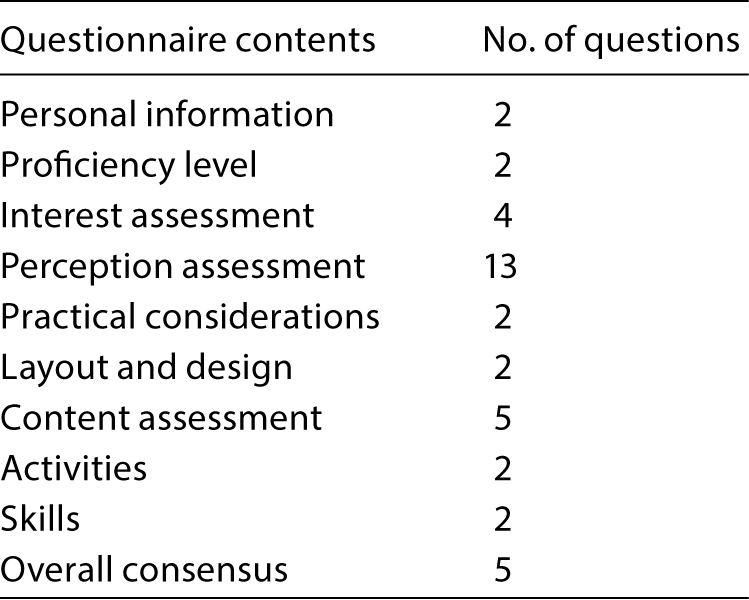
Content of the questionnaire survey.
Results
Personal information
Most of the students that participated in this questionnaire survey were between the ages of 18 and 25 years old, with more females (53.06%) than males (46.94%).
Proficiency levels
The majority of respondents had studied Chinese within a period of 2 years (38.78%), while sixty-one percent (61.22%) of the respondents had passed basic HSK levels (see Figure 2).
Interest assessment
The respondents’ interest in learning Chinese was found to be for scholarship opportunities (52.55%), employment opportunities (25.0%), business purposes (16.33%), and to become a local Chinese teacher (6.12%). The respondents were then asked to select their different areas of interest in the Chinese language from the following options: Chinese characters, vocabulary, grammar, and pronunciation. The majority of the respondents selected pronunciation (34.69%), while grammar (16.33%) was the least selected area of interest in learning Chinese (see Figure 3). Proficiency levels. Points of interest in Chinese learning.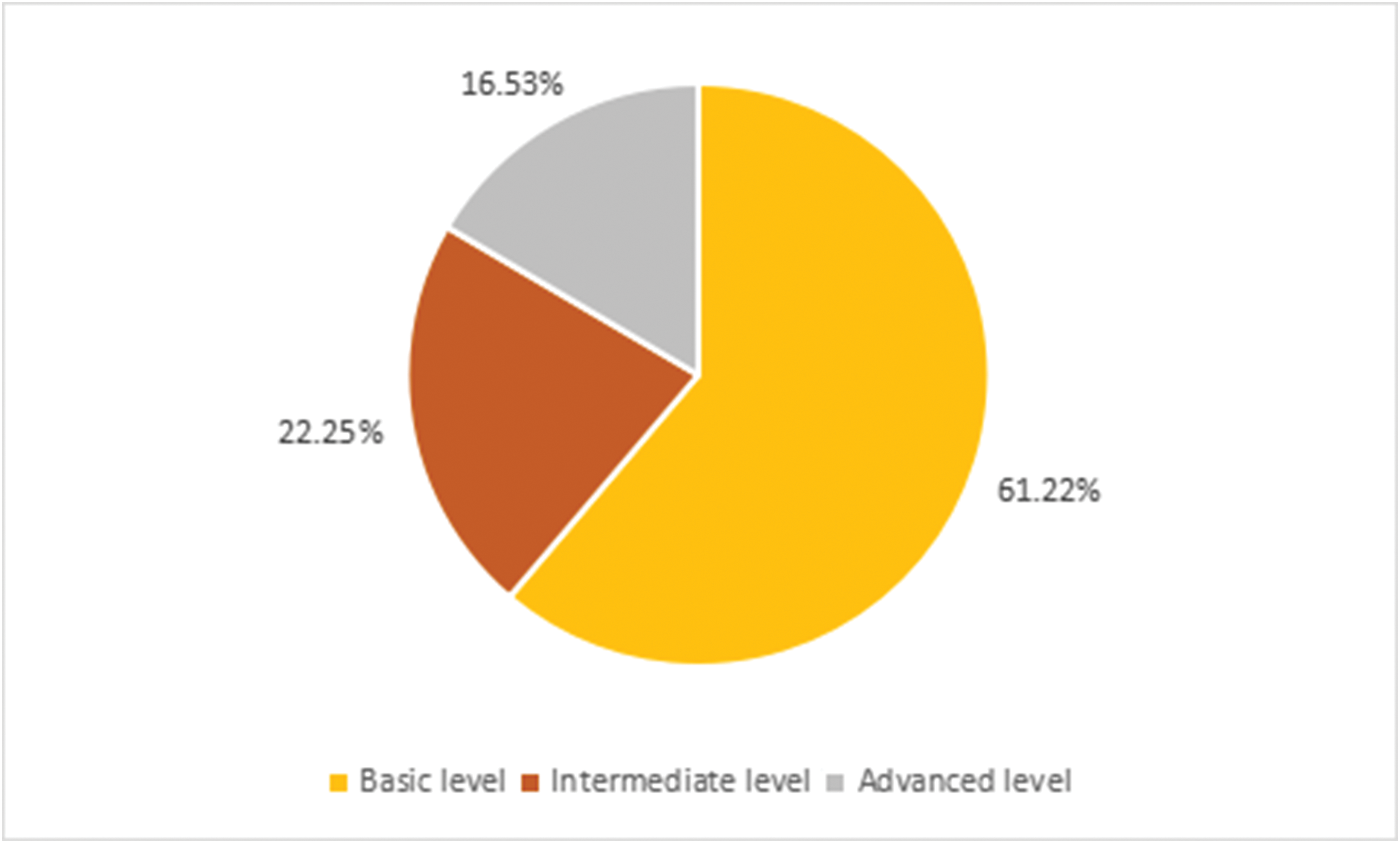

All the respondents indicated an interest in learning Chinese characters, with a majority (55.1%) of the respondents indicating a strong interest in Chinese characters. However, the vast majority of the respondents find learning Chinese characters to be difficult (see Figure 4).
Difficulty in learning Chinese characters.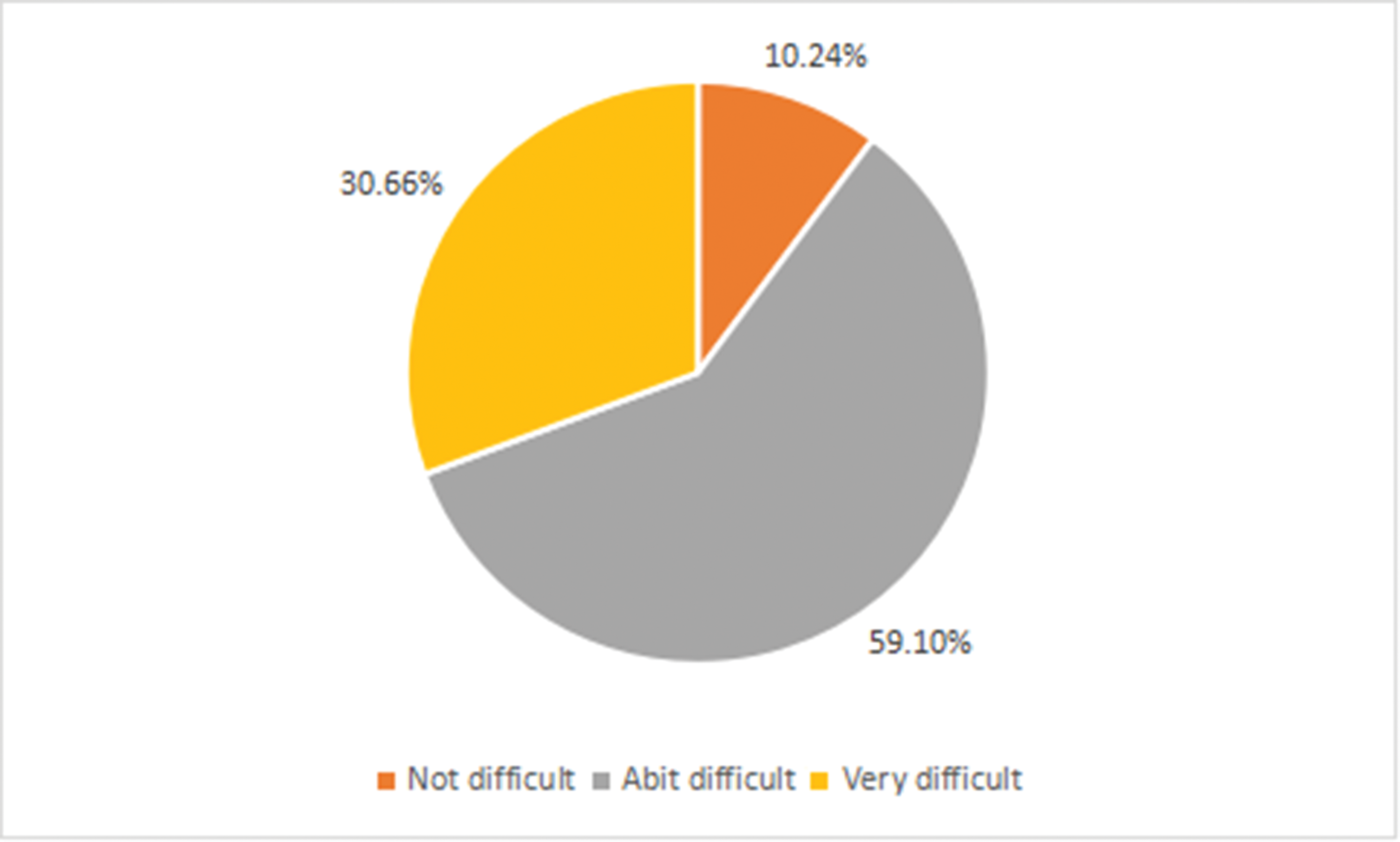
Perception assessment
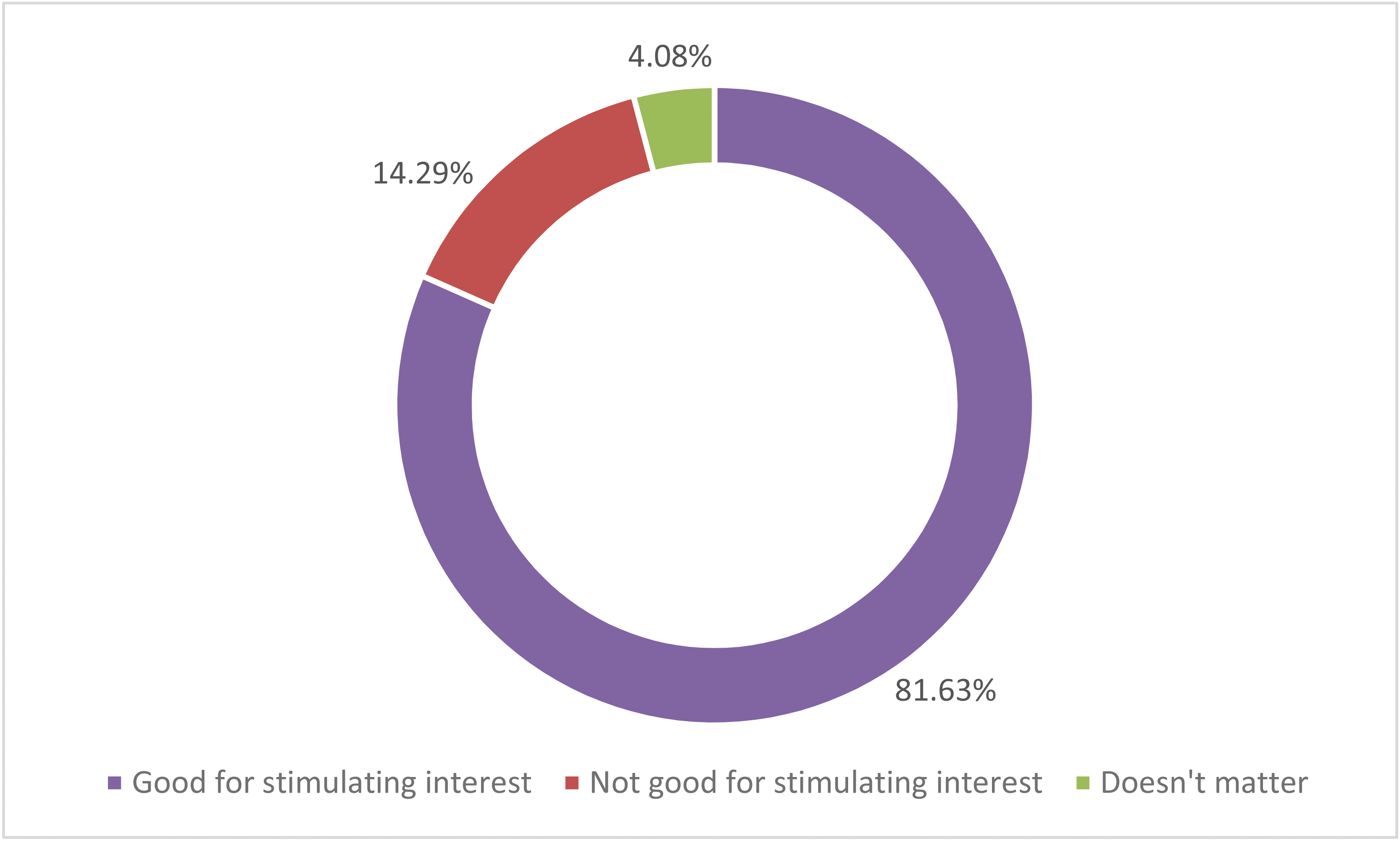
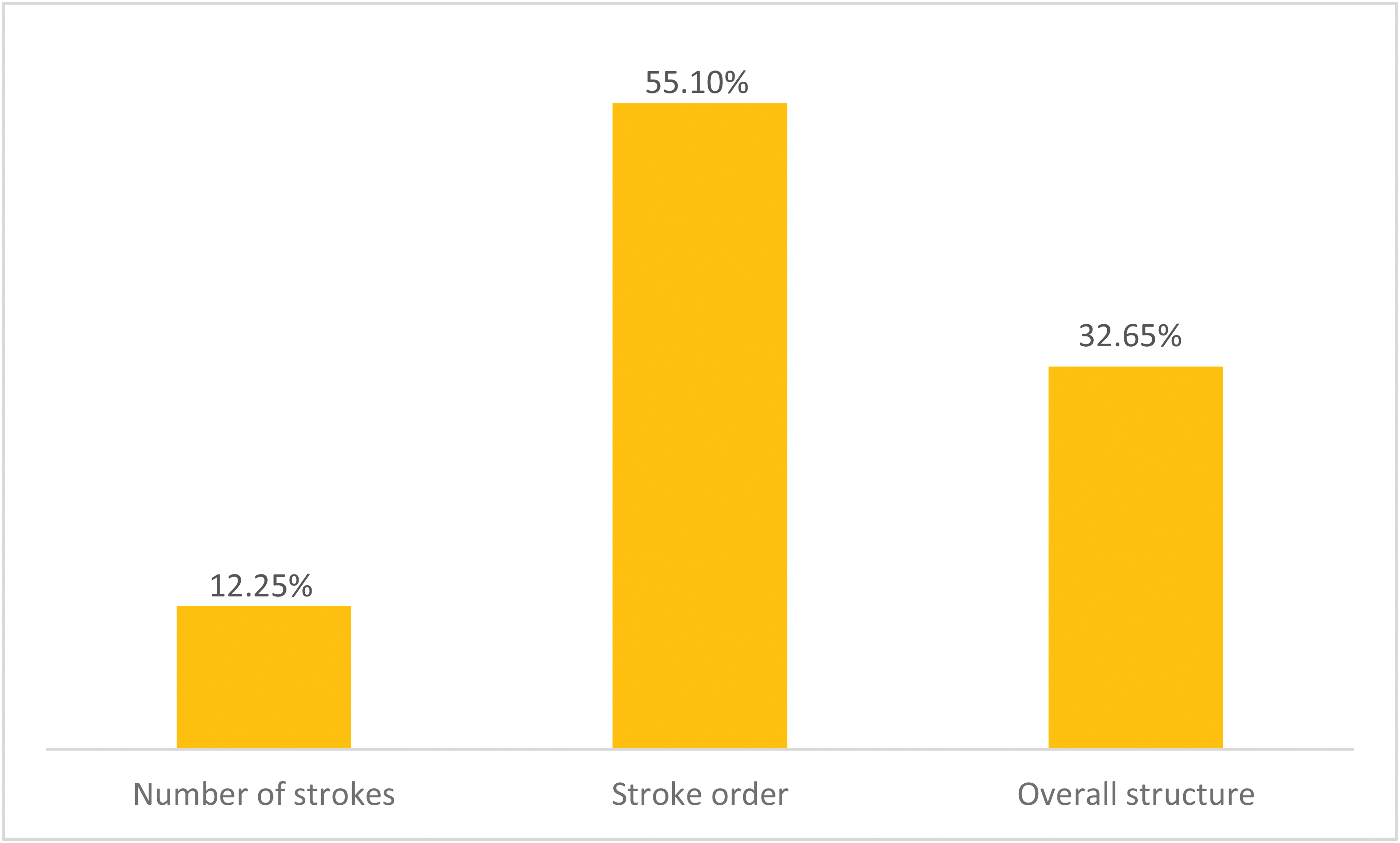
When asked to choose from specific Chinese character learning content, the respondents indicated that writing (59.18%) was the most difficult, followed by reading (30.61%), while the meaning of the character (10.2%) was the least difficult. The respondents were further asked to state the most important aspect of learning Chinese characters. The majority selected the sound of the character (55.1%), followed by the shape of the character (28.57%) and the meaning of the character (16.33%). In terms of preference between a separate Chinese character class and a comprehensive class, the majority (57.14%) of the respondents chose a separate Chinese character class over a comprehensive class (see Figure 5). When asked the question “Do you think it is important to learn Chinese characters according to the number of strokes?”, a larger proportion of respondents (59.18%) chose “very important,” more than 30% (38.78%) chose “a bit important,” and a small proportion (2.04%) chose “not important.” In terms of learning stroke order, more than 60% (62.5%) of the respondents thought it is “very important” and about 31% (31.78%) of the respondents selected “a bit important,” while only about 5% (5.72%) of the respondents selected “not important.” The respondents were further asked to indicate whether using pictorial drawings has advantages or disadvantages for students’ learning of Chinese characters. More than 60% (63.27%) believed that using pictorial drawings to teach Chinese characters has advantages, while 36.73% of respondents selected that it has no advantages. On the other hand, more than 80% (81.63%) of the respondents believed that teachers’ explanations through cultural background stories are helpful to stimulate learners’ interest (see Figure 6). When it comes to the writing of Chinese characters, the majority of the respondents (55.1%) regarded following the stroke order as the most difficult (see Figure 7). When asked the most difficult stroke order, a greater percentage of the respondents (44.8%) selected “Left-falling stroke and dot stroke,” while others selected “Rising stroke and right-falling stroke” (36.73%) and “Horizontal and vertical” (18.37%), respectively. Whether to offer a separate Chinese character class. On the use of cultural background stories to teach Chinese character class. Most difficulty in writing Chinese characters.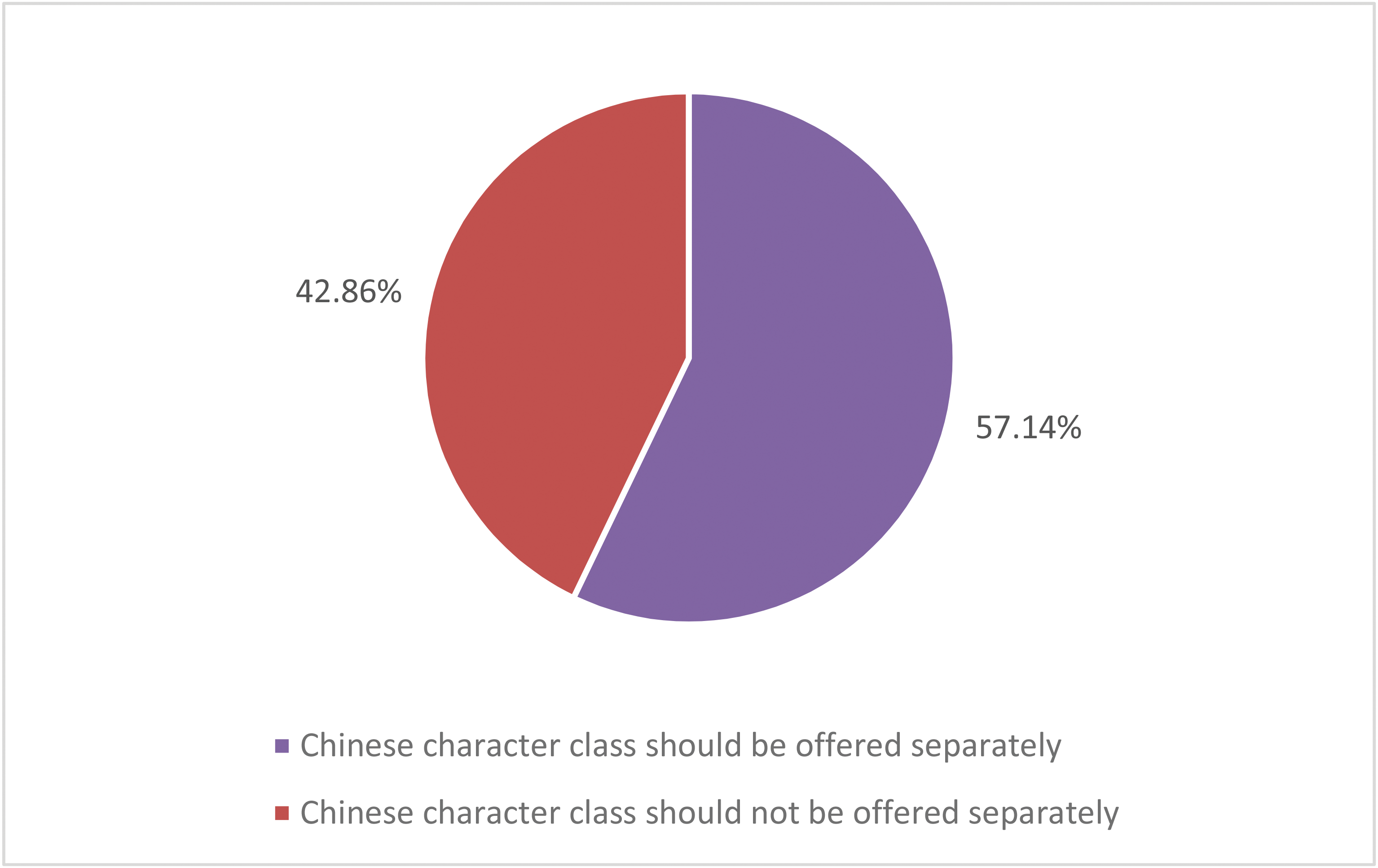
Furthermore, regarding the question of whether Chinese characters with the same stroke should be practiced together, more than half of the respondents (65.31%) agreed that Chinese characters with the same stroke should be practiced and written together for better mastery, while 34% (34.68%) of the respondents disagreed. The respondents were then asked to indicate whether it is necessary to supplement the source of characters when learning Chinese characters. The majority of the respondents (55.1%) thought it is “necessary,” more than 30% (36.73%) selected “a bit necessary,” and about 8% (8.16%) selected “not necessary.” On the question “Do you think textbooks are important for learning Chinese?”, a greater percentage of the respondents (61.2%) thought it is “important,” more than 30% (32.08%) selected “a bit important,” and about 8% (6.72%) selected “not important.” In addition, the respondents were asked to indicate how relevant it is to produce a textbook such as the local textbook Learn Chinese Characters Easily, for Nigerian learners of the Chinese language. About 60% (60.18%) of the respondents thought the local textbook is “relevant” and over 30% (35.74%) selected “a bit relevant,” while only 4% (4.08%) of the respondents thought the textbook is “not relevant.”
Practical considerations
On the affordability of the textbook, the majority of the respondents indicated that the price of the textbook is “very affordable” (79.78%), while the rest indicated a “fairly affordable” (20.22%) price for students. In terms of access for purchase and use, the respondents indicated “highly accessible” (32.20%), followed by “fairly accessible” (30.3%), while the majority (37.5%) indicated “not accessible.”
Design and layout
Regarding the design and layout of the textbook, more than 30% (32.73%) think it is “clear and appropriate,” the majority of the respondents (39.1%) selected “fairly,” and about 8% (28.16%) selected “not clear and appropriate.” A subsequent question regarding the organization of the textbook for easy comprehension was asked. The following responses were recorded from the respondents: “effectively organized” (35.73%), ”fairly organized” (35.25%), and “not effectively organized” (24.02%).
Content assessment
The majority of the respondents found the difficulty level of the local textbook Learn Chinese Characters Easily to be in accordance with their Chinese proficiency level (see Figure 8). Most of the respondents (62.50%) found the textbook “helpful” towards improving their Chinese proficiency, followed by “moderately helpful” (18.20%), while about 19% (19.20%) selected “not helpful.” On whether the content of the textbook is interesting, challenging, and motivating, only 8% (8.16%) of the respondents selected “not interesting,” while the remainder was shared between “moderately” (42.86%) and “very interesting” (48.98%). In terms of an adequate explanation of the number of strokes and the stroke order of Chinese characters, more than 40% (44.9%) of the respondents thought the explanation of the number of strokes and stroke order in the textbook is “moderately adequate,” about 36% (36.74%) think the explanation is “very adequate,” 14% (14.29%) think it is “fairly,” and only 4% (4.08%) think it is “not adequate.”
Whether the level of difficulty meets your Chinese proficiency.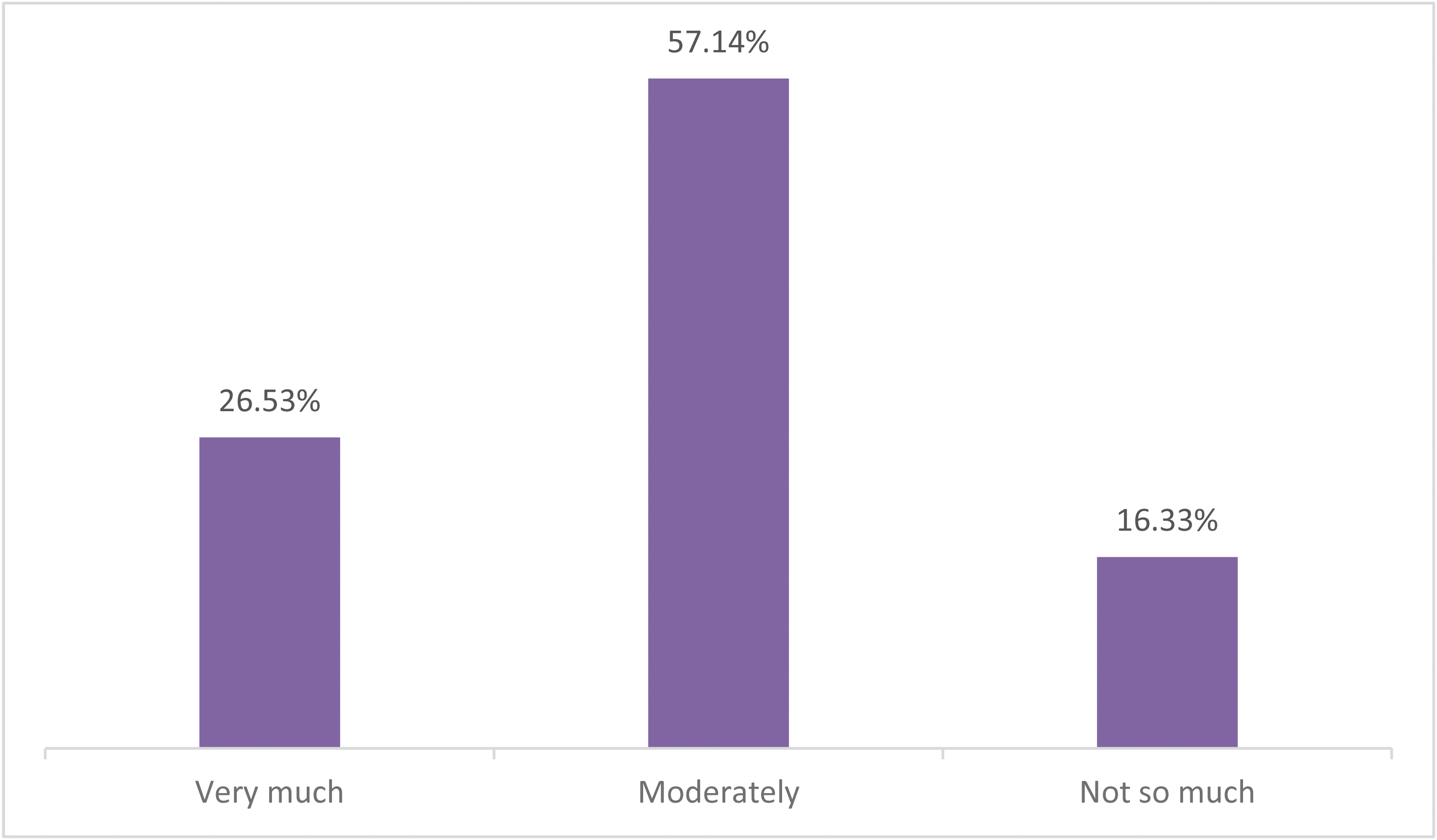
In addition, about 20% (20.41%) selected that the cultural background of Chinese characters is lacking in the local textbook (see Figure 9). Cultural background of Chinese characters in the local textbook.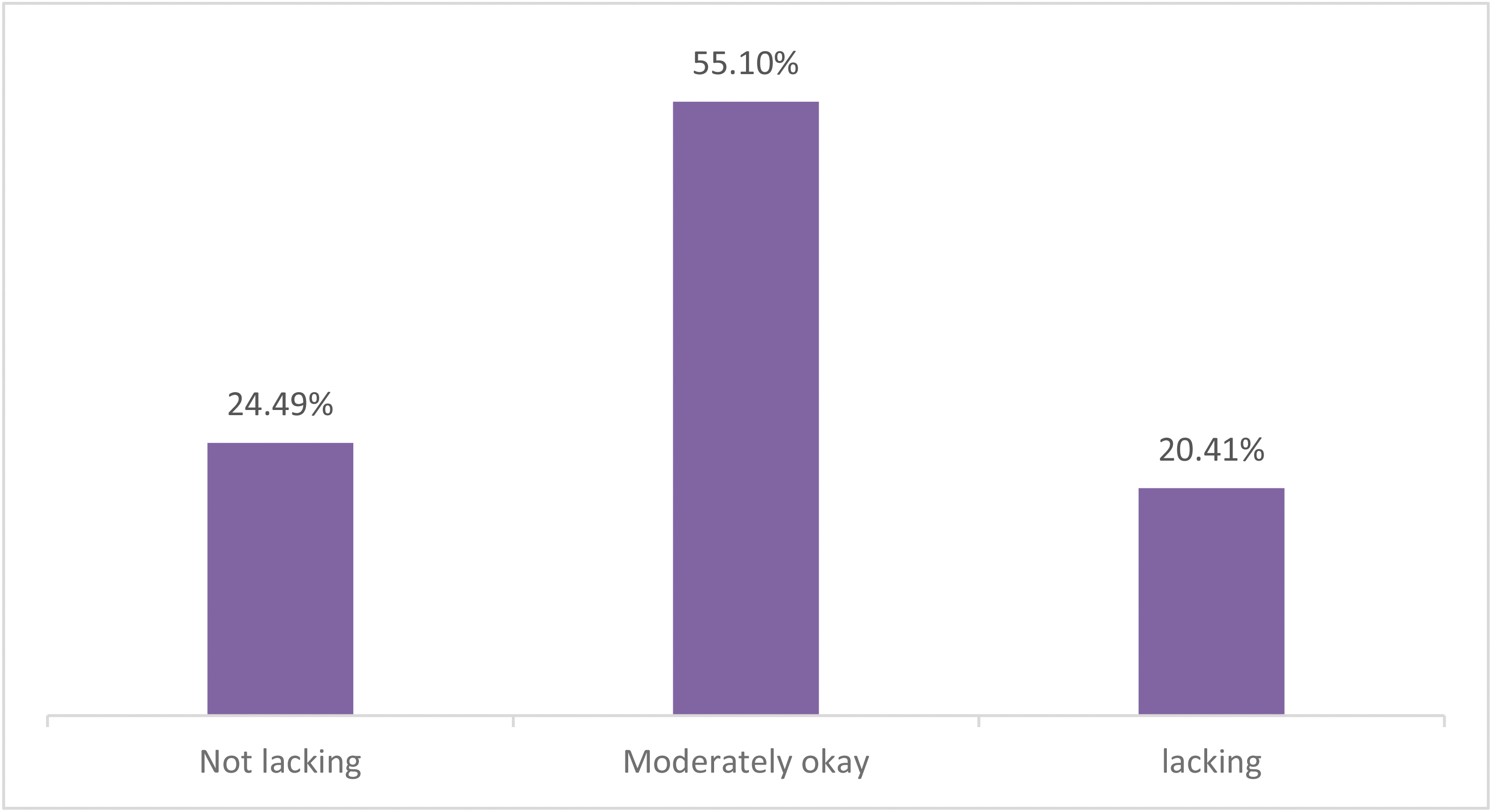
Activities
The majority of the respondents said their interests in learning Chinese characters were further inspired by the activities within the local textbook (see Figure 10). They also responded to the question on the incorporation of individual, pair, and group work activities into the textbook as follows: “yes, there is” (49.44%), “fairly” (40.82%), and “no, there is not” (9.74%). Interest aroused in learning Chinese characters.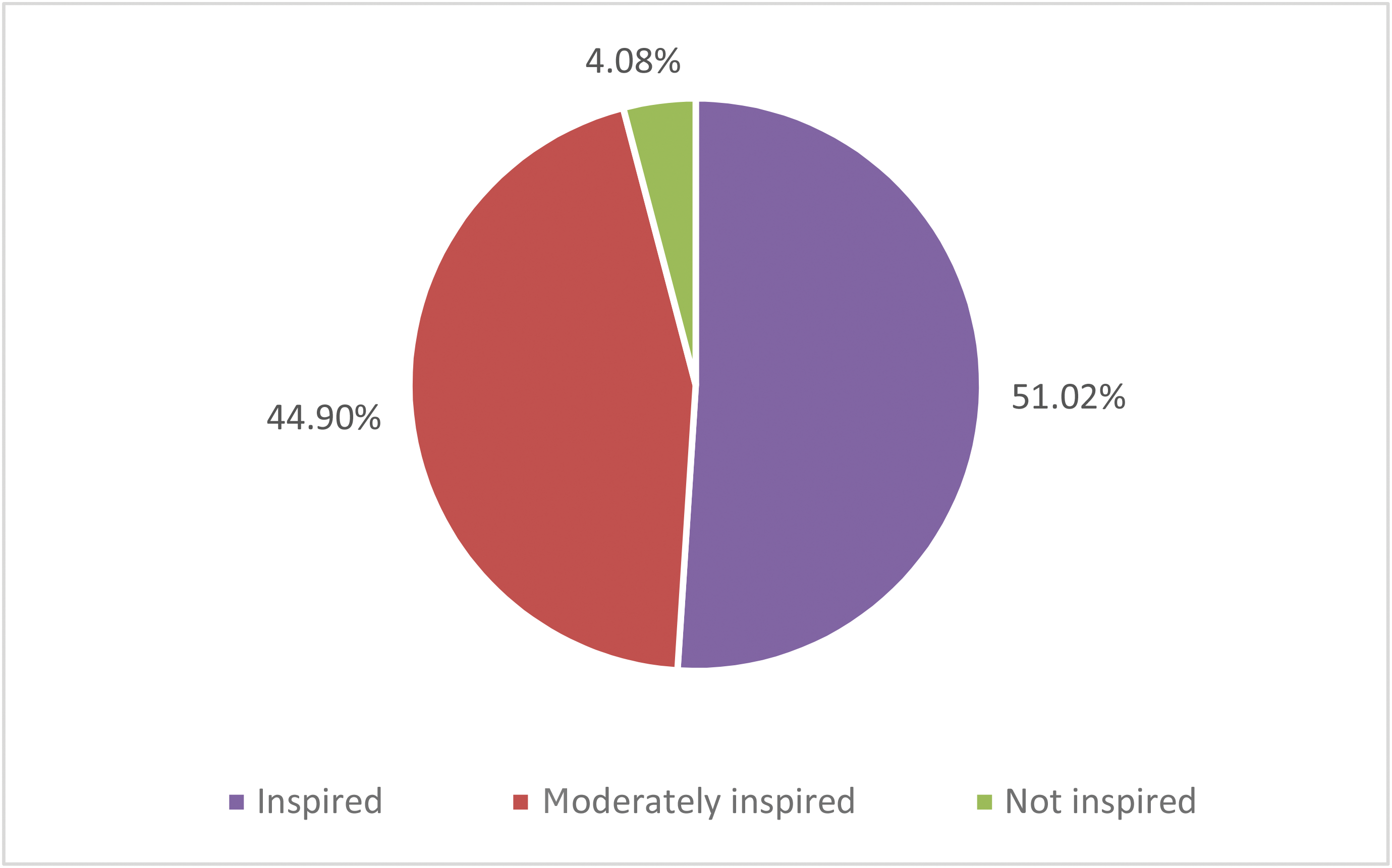
Skills
In terms of mastering the structures and writing of Chinese characters, the respondents (51.02%) think the textbook is “very effective” for mastering Chinese characters, about 42% (42.86%) view the textbook as “moderately effective,” and 4% (4.08%) selected “fairly,” while only 2% (2.04%) think it is not effective. On the question regarding the inclusion and focusing on the skills that the students need to practice, the following responses were received: “yes, it does” (65.10%), “fairly” (28.578%), and “no, it does not” (6.12%).
Overall consensus
The respondents’ overall consensus on the use of the local textbook Learn Chinese Characters Easily was gathered through non-optional questions and is summarized below as follows: “Do you like to use the local textbook Learn Chinese Characters Easily? The majority of the respondents indicated that they like to use the textbook, especially those transiting from Level 2 to Level 3 Chinese proficiency test levels and those preparing for Level 3 exams, as the textbook assists them to acquaint themselves with basic knowledge of character writing and character recognition. “Why do (don’t) you like the textbook Learn Chinese Characters Easily? The main reasons why they like the textbook include that it is straightforward and simple, uses stories to explain the source of Chinese characters, and improves students’ Chinese cultural understanding. On the other hand, the reasons for disliking the textbook were that some parts were not clearly marked and it used too many abstract stories that are difficult to comprehend. “While using the textbook, how long did it take for you to completely master all the characters in the textbook?” The responses gathered varied. Depending on their learning abilities and Chinese proficiency, some respondents completed the textbook in weeks (3–4 weeks), others in months (3–6 months), and still others in a year. “How many Chinese characters have you mastered by using the textbook Learn Chinese Characters Easily? In this case, again, varied responses were gathered. The results showed that, depending on the student’s learning ability and proficiency skills, between 350 and more than 1,200 Chinese characters were indicated. “Apart from the local textbook Learn Chinese Characters Easily, which other Chinese character textbooks have you used?” According to the general responses, the respondents also use textbooks such as “Modern Chinese Characters,” “Chinese Proficiency Course,” “HSK Standard Course,” “Boya Chinese,” and “Bridge Chinese” to supplement the local textbook, Learning Chinese Characters Easily. “What do you think are the advantages and disadvantages of the local textbook Learn Chinese Characters Easily? Accordingly, the respondents stated that the textbook is simple and detailed, and helps beginners become acquainted with writing, pronunciation, cultural meaning, and pictographic representation of the words as part of the advantages of the textbook. On the other hand, they observed that the textbook mostly contains elementary Chinese characters, some pronunciation errors, and lacks an audio record of the textbook.
Discussion
Interest in the Chinese language
The present study is interested in investigating L2 students’ use of a local Chinese character textbook (Learn Chinese Characters Easily) at the Confucius classroom of Federal Polytechnic Oko, Nigeria. The targeted participants were students only, the majority of whom were between 18 and 25 years old, and there were more female than male participants. The majority of the participants have studied Chinese for 2 years and passed the basic Chinese proficiency (HSK) levels. In line with factors affecting language learning (Sharp, 2004), the study captured students’ motivation for learning the Chinese language to correspond with Edeh et al. (2019), Ogochukwu (2021), and Okafor (2020). However, in the present study, the majority of the students selected the scholarship option for further studies abroad as their major motivating factor. From our study, L2 learners showed more interest in pronunciation (see Figure 4) than in other aspects, such as vocabulary, grammar, and characters. Thus, it indicates that L2 students tend to be more interested in the oral aspect of the Chinese language and can more easily perform well in the oral aspect than in the writing aspect. Nonetheless, these assertions can only be proved through empirical studies on the linguistic similarities between the Chinese language and Nigerian native languages—Igbo, Yoruba, and Hausa—as some of them are as tonal as the Chinese language, and the authors concur with Zhang and Hu (2020) that languages may share phonetic characteristics but differ in arrangements.
Learners’ attitudes towards Chinese characters
The study also revealed a strong indication of interest in learning Chinese characters by the students, despite the perceived difficulties. Students’ attitudes towards learning Chinese characters were reflected in their perceptions of the various aspects of learning Chinese characters. Most of the participants (59.18%) indicated writing as the most difficult, while they attached more importance to the sound of the character (55.1%) than other aspects of learning Chinese characters. Writing was found to be the most difficult among other essential language skills—listening, speaking, and reading—and was considered to be difficult even for L1 learners (Wheatley, 2011). According to Wheatley (2011), writing lacks some sort of feedback loop that guides face-to-face interaction and helps monitor communicative events. In terms of teaching Chinese characters, the students showed a strong preference for a separate Chinese character class other than the comprehensive class in accordance with Li and Ye (2013), and they preferred learning characters according to strokes, such as the number of strokes and the stroke order of writing Chinese characters. Issues such as adhering to the correct order of writing strokes; difficulty with following some strokes (left-falling stroke and dot stroke); handling characters with similar strokes and sounds; and insufficient cultural background of Chinese characters were also captured, as these affect students’ writing and recognition of characters. The above difficulties exist due to the nature of Chinese characters. According to the participants, Chinese character writing is like drawing, and they tend to forget the stroke order. These findings tallied with Zhang and Hu’s (2020) assertion on the nature of Chinese characters that create difficulties for L2 learners, especially those whose native languages are phonetic alphabets with linear arrangements. For Chinese characters with similar strokes, the participants prefer such characters to be taught simultaneously to enable easy mastery and avoid confusion; for instance, characters with identical radicals (radicals of water 水: 海 ocean, 江 river, 油 oil, 湖 lake, etc.) and the existence of homophony-different characters with identical pronunciation, such as 施 氏 食 狮 史 Shī shì shí shī shıˇ, as shown in the “The Tale of How Shī of the Shì Clan Ate the Lion” by Chinese linguist Yuen Ren Chao (Wheatley, 2011). More so, the characteristics of Chinese characters, such as using pictogram-pictorial presentation and ideogram-graphical presentation, often lined with cultural stories, to supplement the source of characters, were found to be helpful as students showed preference for both methods. This was also found to be helpful in assisting Thai students’ Chinese character learning (Zhang and Hu, 2020). Nevertheless, Wheatley (2011) argued that this method does not necessarily give meaning to Chinese characters, especially when linked with abstract stories that are difficult to understand. The local textbook, which focused mainly on the six basic strokes and their derivatives (consisting of 27 strokes), employed both pictograms and ideograms for its explanations. Nonetheless, there were indications of insufficient cultural background stories as well as the presence of abstract stories.
On the use of the local textbook
Students’ learning experiences on the use of the textbook were captured by their opinions and perceptions of the contents and the organization of the textbook. Although the local textbook is considered affordable, it is not readily accessible as it can only be printed on demand. It was done this way as a result of its purpose being specifically targeted for students transiting to Level 3 Chinese proficiency, to aid their Chinese character acquisition. Students’ views on the content of the local textbook were quite satisfactory: the textbook has inspired their interest in learning Chinese characters (see Figure 10), and has been beneficial to their mastering of structures, writing of Chinese characters, and some other basic skills that have helped them improve their Chinese character vocabulary. The drills follow a continuous design of introducing already learned characters in the sentence construction of new ones, which is beneficial for retention. This method, among others, rounds up the organization and the teaching content employed in the design of the textbook. However, their dissatisfaction showed a slight increase regarding the layout and design (28.16%) selected as “not clear and appropriate” and the content organization (24.02%) “not effectively organized” for readers’ convenience. They also indicated the need to do more group work and to increase the amount of vocabulary (19.20%) they would like to acquire in the local textbook. Overall, participants viewed the local textbook as relevant and that it met in part their various Chinese proficiency needs, while they also supplemented it with other textbooks.
Optimizing the local textbook
The idea of a local Chinese character textbook geared towards supporting students to improve their Chinese proficiency level was a welcomed development, as the majority of the students (60.18%) found it relevant. Although some students made a few remarks regarding the textbook, such as its being overly simplified for their current levels and some cases of pronunciation errors, the local textbook’s advantage lies in its beginner-friendliness, which allows a learning process of step-by-step mastery of Chinese characters from simple to slightly advanced words, which is vital for improving students’ mastery of Chinese characters. In the same vein, the textbook adopted straightforward explanations that allow learners to study Chinese characters thoughtfully, as was well indicated in the preface of the textbook: “We don’t emphasize where the character comes from and how it changes; we value how we write and use it today” (Jiang and Zheng, 2015). This method was viewed positively by Wu (2016) as it saves L2 students from becoming overburdened by overly detailed information about the origins and evolution of characters. Nevertheless, some of the characters introduced in the textbook contained radicals, while the students lacked knowledge of radicals, leading to difficulties with characters that have similar structures, as discussed above. Sun (2015) found that the knowledge of radicals, which are not included in the local textbook “Learning Chinese Character Easily,” enhances the cognitive processing of Chinese characters. According to Sun (2015), radicals are key to learning Chinese characters quickly, as they are vital anchors of the characters and can denote the meaning of the characters. This therefore helps L2 learners of Chinese accumulate vocabulary that could enhance their reading performance. As a result, it would be beneficial to include radicals and a tool for categorizing similar radical characters in the next edition of the textbook. In addition, there is a need for other pedagogical materials, such as audio tapes of the textbook, including sound recordings of conversation, vocabulary items, pronunciation exercises, listening activities, and reading passages; a student workbook of the textbook; and digitally supported learning tools, such as Chinese character apps, online supported interfaces for L2 learners of Chinese characters, etc., that provide students with multiple access points to learning characters, better experiences, and more positive learning outcomes.
Conclusion
Learning Chinese characters is one of the most important aspects of Chinese language education because it involves the practical application of the step-by-step basic principles of writing strokes and stroke orders. It also involves taking into account the cognitive perspective and practical needs of learners, such as through the use of quality teaching materials, such as textbooks. Textbooks are vital for language learning. For L2 learners, the right textbooks require a systematic arrangement of various components that are capable of capturing and stimulating learners’ interest in the language. The local Chinese character textbook Learn Chinese Characters Easily was produced to boost Nigerian L2 learners’ interest in Chinese characters, taking into account the everyday lives of learners and learning experiences within their environment.
The findings of the study indicated that students’ learning experiences with the local Chinese character textbook stem from their aroused interests in the Chinese characters through the usage of the textbook. The participants admitted that the textbook had helped to improve their Chinese proficiency. The study found the satisfaction levels of the organization and content of the textbook to be moderate. The usage of the textbook was found in part to be mainly for the purpose of passing Chinese proficiency exams. Some of the limitations of the textbook captured by the research were based on participant remarks; for instance, the usage of too many abstract Chinese cultural stories for explanation, some pronunciation errors, not being clearly marked, lack of audio tape, etc. These areas are indicative that further improvement and optimization of the local textbook would be necessary to boost learners’ experiences and expected outcomes. From the above findings, it is evident that the textbook is essential and moderately satisfactory, but needs improvement in a few areas, as indicated by the research.
Limitations of the study
The limitation of the present study is mainly the absence of the teachers’ perspective of the local textbook. Although this aspect is deemed important to further enrich the study, the research was structured to make up for this area and employed informal observations to capture some vital information that is useful for the study.
Footnotes
Declaration of conflicting interests
The authors declared no potential conflicts of interest with respect to the research, authorship, and/or publication of this article.
Authors’ Contributions
Emmanuel Chidiebere Edeh, conception, design and analysis; Somtochukwu Daniel Okoye and Yincang Zhang, contributed in various degrees to resources, drafting, critical revision, supervision, and final approval of the version to be published.