






Abstract
This article provides a comparative study of the newly discovered Epitaph of Ritual Commissioner Yelü Jiulin in Khitan small script (《耶律乣邻礼宾使墓志铭》) with the Epitaph of Prince Xu of Liao (《辽国许王墓志》) and the relevant data from the History of Liao (《辽史》). It examines the family lineage, life, career, and other biographical details concerning Yelü Jiulin during the reign of Emperor Daozong (道宗) of the Liao dynasty.
Introduction
In December 2022, Inner Mongolia University commissioned the Inner Mongolia Museum to acquire a Khitan small script inscription from a private collection. Based on the content of the Khitan inscription, it can be entitled Epitaph of Ritual Commissioner Yelü Jiulin in Khitan small script (Jiu). Preliminary research showed that the tomb occupant was the second son of Yelü Wotela (耶律斡特剌), the subject of the Epitaph of Prince Xu of Liao (Xu), which was discovered in 1975 in Fuxin (阜新), Liaoning Province. Currently, the Jiu is still housed in the Inner Mongolia Museum, and its contents have not yet been published or interpreted. This article presents a comparative study of Jiu and Xu, focusing on text collation, interpretation of Khitan small script, and the organization of related historical events, aiming to advance academic research on this epitaph and the Khitan small script in general.
About the Epitaph of Ritual Commissioner Yelü Jiulin in Khitan small script
The Jiu survives as a damaged base stone; its cover has been lost. The square stone measures 73 cm per side and 4 cm in thickness, with damage sustained to the lower-left corner. Despite this, the majority of the glyphs remain discernible. The epitaph comprises 27 lines of Khitan small inscription, totaling approximately 580 glyphs, with only four words being slightly blurred. The glyph count per line varies, ranging from two1 to 35. Based on the extant layout, the original text is estimated to have contained roughly 750 glyphs. The exact provenance, archaeological context, and associated funerary objects of the epitaph require further examination.
Yelü Jiulin, the tomb occupant of this study, is not attested in surviving historical texts. According to the Xu, he was the second son of Yelü Wotela and belonged to the Hengzhang Jifu branch (横帐季父房). He was a seventh-generation descendant of Axin Yindishi (阿辛•寅底石), the fourth son of Dezu. Further details regarding his life will be elucidated through the subsequent interpretation of the text.
The inscription reveals that Jiu was engraved on the twenty-first day of the ninth month in the fifth year of the Shouchang era (1099 AD), identifying it as the epitaph of a Liao nobleman. The tomb occupant Yelü Jiulin was born in the ninth year of the Qingning era (1063 AD) and passed away in the fifth year of Shouchang (1099 AD), at the age of 37. The epitaph opens with the title “Epitaph and Preface of the Ritual Commissioner of the Former Great Central Khitan State, Yelü Jiulin (故大中央国契丹国之礼宾使耶律乣邻墓志并序),” followed by the author's official title and name inscribed below. There are no historical records mentioning Yelü Jiulin (also known as Changshou (长寿)), and his life was previously obscure. It is only through this epitaph that we can begin to see the outline of his career.
Collation of the Epitaph of Ritual Commissioner Yelü Jiulin in Khitan small script and the Epitaph of Prince Xu of Liao
The Xu inscription has sustained extensive damage due to its friable material and repeated looting of the tomb, rendering portions of the text difficult to decipher. The digital transcription of the Epitaph of Prince Xu of Liao published in Further Research on Khitan Small Script (《契丹小字再研究》) (Zai) is also marked by several inaccuracies. Drawing upon the newly discovered Jiu epitaph, this section corrects textual omissions and misreadings while establishing cross-references between the two texts. The following collation was completed after comparing Jiu with the rubbings of relevant small script documents known to date. Line 1 of the Jiu: A total of 31 Khitan words, comprising 79 glyphs, with one damaged word (the second word Line 2 of the Jiu: A total of 32 Khitan words, comprising 78 glyphs, with three damaged words (the seventh Line 3 of the Jiu: A total of 35 Khitan words, comprising 58 glyphs, with three damaged words (the first Line 4 of the Jiu: A total of 32 Khitan words, comprising 72 glyphs, with two damaged words (the first Line 5 of the Jiu: A total of 33 Khitan words, comprising 87 glyphs, with one damaged word (the first Line 6 of the Jiu: A total of 26 Khitan words, comprising 67 glyphs, with one damaged word (the first Line 7 of the Jiu: A total of 29 Khitan words, comprising 72 glyphs, with about three eroded words. Line 8 of the Jiu: A total of 25 Khitan words, comprising 70 glyphs, with about four eroded words. The glyph Line 9 of the Jiu: A total of 24 Khitan words, comprising 67 glyphs, with about five eroded words. Line 10 of the Jiu: A total of 24 Khitan words, comprising 70 glyphs, with about six eroded words. Line 11 of the Jiu: A total of 25 Khitan words, comprising 66 glyphs, with one illegible glyph (the seventh Line 12 of the Jiu: A total of 25 Khitan words, comprising 59 glyphs, with about eight eroded words. Line 13 of the Jiu: A total of 20 Khitan words, comprising 55 glyphs, with about nine eroded words. Line 14 of the Jiu: A total of 21 Khitan words, comprising 57 glyphs, with one damaged word (the second Line 15 of the Jiu: A total of 21 Khitan words, comprising 58 glyphs, with about 12 eroded words. Line 16 of the Jiu: A total of 21 Khitan words, comprising 55 glyphs, with one illegible glyph (the 20th Line 17 of the Jiu: A total of 25 Khitan words, comprising 58 glyphs, with about 14 eroded words. In Line 48 of the Xu epitaph, Line 18 of the Jiu: A total of 18 Khitan words, comprising 55 glyphs, with about 15 eroded words. 1. Upon checking, the word previously transcribed as Line 19 of the Jiu: A total of 20 Khitan words, comprising 51 glyphs, with one illegible glyph (the 20th Line 20 of the Jiu: A total of 16 Khitan words, comprising 48 glyphs, with about 17 eroded words. Line 21 of the Jiu: A total of 16 Khitan words, comprising 53 glyphs, with about 18 eroded words. Line 22 of the Jiu: A total of two Khitan words, comprising five glyphs. Line 23 of the Jiu: A total of 13 Khitan words, comprising 38 glyphs, with one illegible glyph (the 14th Line 24 of the Jiu: A total of 13 Khitan words, comprising 36 glyphs, with one damaged word (the 13th Line 25 of the Jiu: A total of 11 Khitan words, comprising 32 glyphs, with about four eroded words. Line 26 of the Jiu: A total of 12 Khitan words, comprising 34 glyphs, with about four eroded words. Line 27 of the Jiu: A total of 6 Khitan words, comprising 7 glyphs, with about two eroded words.
 <t-2iau-dû>3). The second word
  <t-iau-dû> is emended according to the same term in Line 1 of the Jue.
 <h-dú-ir2>; the 18th
  <p-û-ud2-ñ>; the 21st
  <TU-ung>). 1. Although the seventh Khitan word is eroded, it can be emended as
  <h-dú-ir2> according to the same term in Line 4. 2. The second glyph of the 18th word is missing from the stone and illegible. It appears to be
  <û>, emended according to the same term in Line 61 of the Yu and Line 4 of the Di. 3. The second glyph of the 21st Khitan word is eroded. It is inferred to be
  <ung> based on common collocations. The form
  <du tu-ung> in Line 24 of the Xu may serve as a corroboration. 4. The third glyph of the 22nd Khitan word
  <ri5> should be
  <ém>, and the whole word seems to be
  <g-ie-ém>, emended according to the same term in Lines 6 and 16 of the Xu.
 <HEAVEN>; the second
  <as-ar>; the third
  <is>).
 <qa-ha-an>; the 19th
  <mu-l-g-en>). 1. The glyph
  <qa> is unclear; emended according to the same term in Line 2. 2. The glyphs
  <mu-l> are unclear; emended according to the same term in Line 8 of the Nan.
 <tau-su-ó-ui>) and about one eroded word. The glyph
  <ó> is unclear; identified according to the same term in Line 6 and Line 49 of the Xu.
 <ai>) and about two eroded words. The glyph
  <ai> is emended based on its context.
 <hul> bears graphic affinity to the Chinese character 牛. Its form and reading are hereby collated and verified by the parallel variant in Line 10 of the present epitaph and Line 20 of the Cha.
 4
4 <□-úr>) and about seven eroded words.
 <g-úr-de>) and about 11 eroded words. The glyph
  <de> is unclear; identified according to the same term in Lines 8 and 9.
 <□-en>) and about 13 eroded words.
 <pu> is written as
  <s>; emended according to the same term in Line 17 of the Jiu.
 <is-o> in Line 48 of the Xu is likely erroneous due to damage in the middle of the stone. It is here emended to
  <is-g-ir2> based on the corresponding form in Line 18 of the Jiu. 2. In the digital transcription of the Zai, the glyph
  <jur°> in Line 48 of the Xu was transcribed as
  <jur>. Due to erosion and illegibility on the original stone tablet, it is now emended according to Line 18 of the Jiu.
 <t-abu-□-□>), one damaged glyph (the first
 <jur2>), and about 16 eroded words. The section containing
  <t-abu-□-□> is missing from the stone. Thus the glyphs constituting this Khitan word cannot be identified.
 <□-□>) and about three eroded words. The 14th word lies exactly at the crack of the stone. It is almost completely destroyed and illegible.
 <ñ-ar-□>) and about three eroded words. From residual strokes at the position of the 13th word, its glyph is identified as
  <en>.
<en>.
Newly deciphered items
The Khitan word 帖木真泥 也孙纳速秃 不恢-突児5 (Hereinafter referred to as “The Secret History (秘史).” Kuribayashi and Choijinjab, 2001: 47) Temüǰin-niyisun nasutubü=küi-tür Temüjinnine years oldwhen 名行九岁 有时
e ku-û-un s-en t-ud-er a-ai n-as-y-én bai-oi2-de h-ui-dz2 nem jau6 this person'slifespanonce reached ageup toone hundred years 该 人之寿曾在至一 百 Jiu157 <n-as-y-én> appears only in the Jiu. It is known that the glyphs
  <én> and
  <én₂> are graphic variants. Therefore,
  <n-as-y-én> and
  <n-as-y-én₂> are variant forms with identical pronunciation and meaning. To further verify its meaning, the following analysis combining documentary records and the context in which the glyph appears is provided.

Based on the above examples, a preliminary judgement is that the Khitan word  <n-as-y-én> carries the meaning of “year, age.”
In addition, from an etymological perspective, this Khitan small script word is cognate with the Mongolic word ᠨᠠᠰᠤ <nɑsu> (Nei, 1999: 349)8 meaning “year, age, lifespan.” In Todo Mongolian, “year, age” is written as ᠨᠠᠰᡇ <nɑsu> (Erdeni and Gerilema, 1990: 65)9; in Mongghul “age” is recorded as <nasi> (Li, 1988: 46)10; in the Dongxiang language, “year, age” is <nasun> (Ma and Chen, 2012: 312); and in Bao'an (Chen et al., 1985: 26), Dagur (Enhe Batu, 1984: 53), and Eastern Yugur (Bao, 1985: 97), “age” is all <nasun>.
In summary, the Khitan small script word In the Jiu, the new Khitan Small Script word The word The Khitan word Liu (2014) interprets the preceding Khitan word History of Liao records that “Yindishi was posthumously enfeoffed as Prince of the State of Xu during the Chongxi period (寅底石重熙间追封许国王),” which is consistent with the content of the epitaph. The Khitan small script word In Todo Mongolian, “to enfeoff” is written as ᡈᠷᡎᡉᡏᡓᡅᠯᡄᡍᡉ [ɵrgɵmzlɵh] (Erdeni and Gerilema, 1990: 32). Parallel examples are also frequently found in official histories: The History of Song (《宋史》) (Tuotuo et al., 1937: 7–11) records: “He was posthumously granted the title of Grand Preceptor (尚书令), enfeoffed as the Prince of Chu, and honored with the posthumous name Gongxiao. Additionally, he was bestowed one thousand bolts of cloth and silk for his funeral, with expenses provided by the state. (赐尚书令, 追封楚王, 谥恭孝, 赙布帛千匹, 葬事官给).” The History of Liao (Tuotuo et al., 1931: 1–2) records: “The late Prince of Fuchun (富春), Yelü Yixian (耶律义先), was posthumously enfeoffed as the Prince of Xu. (追封故富春郡王耶律义先为许王).” Furthermore, the History of Jin (金史) (Tuotuo et al., 1986: 2) records: “In the first year of Tianjuan era, he was posthumously enfeoffed as the Prince of Yue (天眷元年,追封越王).” <n-as-y-én> is deciphered as “lifespan, year, age (寿、岁).”
 <bai-oi₂-de> means “high.” The Khitan large script corresponding to
  <bai> is
  <bai>11, that corresponding to
  <oi₂> is
  <oi2>, and that corresponding to
  <de> is
  <de>. In Huayi Yiyu (《华夷译语》) (Huo, 1983: 26), “high” is transcribed as wen-tu-er (温突児). In addition, in Middle Mongolian, “high position” is recorded as wen-tu-er sa-wu-er-lin (温突児 撒兀舌鄰).
 <326-én> in the Jiu inscription is interpreted as “speech, word” (言). Its reconstructed pronunciation is [ŋǐan] in Old Chinese (上古音) and [ŋǐɐn] in Middle Chinese (中古音), evolving to [iɛn] in Late Medieval Chinese (近代音) (Li and Zhou, 1999: 197). The glyph
  <326> is tentatively reconstructed as [j]. This interpretation is based on the line from Admonition on Prudent Speech (谨言箴): Recite the teachings of prudent speech, practice the ways of prudent speech (诵谨言之训,习谨言之事).
 <u-úr-l-ge₂-y> appears three times in extant documents, respectively in the Xuan and the Jiu. It occurs twice in the Xuan and has been interpreted as “to marry.” However, based on the Jiu, this word means “to enfeoff.” The evidence is as follows:
 <tau-su-ó-ui> as “to pursue (追).”
 <u-úr-l-ge₂-y> is cognate with Mongolian ᠡᠷᠭᠦᠮᠵᠢᠯᠡᠬᠦ[ergümǰilexü] (Nei, 1999: 156).
In summary, the Khitan word According to the content of the epitaph, the son of Helü Saogu, Minister Duke (曷鲁扫古相公) was Eduwo Attendant (讹都斡侍中) (translation of official position, see Hucker, 2008), and the son of Eduwo Attendant was Yixinyin, Grand Councilor (乙辛隐宰相). The Jiu inscription records the following: hor-us-au-qus-iangg-ungs-iangg-ung HelüSaoguMinisterDukeMinisterDuke 曷鲁扫古相公相公 b-qou-úr-û-ershïju-ung sonEduwoAttendant 子讹都斡侍中 em ku s-hu-aju g-ui pu-is-ñ b-hu-án jur ai wife Madam Sa’gezhi of the State children two males 妻 撒葛只 国 夫人 孩子 二 男 s-en-ñja-ri-qó YixinyinGrand Councilor 乙辛隐宰相 <u-úr-l-ge₂-y> can be deciphered as “to enfeoff (封).”
 (about one Khitan word eroded) Jiu 5
 Jiu 6
Jiu 6 (about two Khitan words eroded12) Jiu 6
 Jiu 7
Jiu 7
It should be noted here that Madam Sa’gezhi of the State (撒葛只国夫人) was the wife of Eduwo (讹都斡), and the couple had two children. As can be seen from Line 8 of the Xu, their elder daughter was Madam Chang’an (长安夫人), and their younger son was Chancellor Yelü Wotela Yixinyin, Grand Councilor mentioned in the Jiu.
In addition, the Xu records the following:
 (middle part damaged)
  Xu 6
Xu 6
Mr ku-suai hor-u s-au-qó s-iáng g-ün
officialFatherHelüSaoguGeneral
官父曷鲁扫古将 军
Based on the above, it can be concluded that Helü Saogu was precisely the grandfather of Yixinyin. Therefore, the newly discovered epitaph can supplement the damaged content in Line 6 of the Xu, specifically the missing part containing the Khitan word before father (父) “ The Jiu inscription contains the following record: <ai>,” which should be restored as grandfather (祖) “
  <abu>.”
 Jiu18
Jiu18
b-hu-án jur° m-as-qó s-in-ge-l-ge-er ci-ud2-er t-em2-l-ge-er
sonstwothe elderthe younger
子二长次
From the context, the small script forms 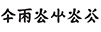 <s-in-ge-l-ge-er> and
  <t-em2-l-ge-er> are both personal names.
The Xu inscription records:
 Xu 48
Xu 48
b-hu-án jur m-as-qó s-in-ge-l-ge-er uni-qó d-em2-l-ge-er
sonstwothe elder
子二长
Additionally, when specifying the number of male children, the Khitan small script Regarding the name of the eldest son of Yanning (延宁), there is no relevant record in the Jiu inscription. However, Line 46 of the Xu inscription provides crucial information: <jur°> is used. Therefore, based on Line 18 of the Jiu inscription, the tomb occupant Yelü Jiulin had two sons. It can thus be inferred that the entry in Line 48 of the Xu inscription contains an error and should correctly use the dotted form
  <jur°>. Furthermore, since
  <uni-qó> and
  <ci-ud2-er> appear in similar positions within the sentence,
  <uni-qó> is interpreted as “second” or “younger.” From the interpretation,
  <d-em2-l-ge-er> in the Xu inscription and
  <t-em2-l-ge-er> seen in the Jiu inscription are variant writings of the same personal name, meaning it should be understood as a personal name rather than the verb “to confer (封)” as recorded in the Zai transcription.
 Xu 46
Xu 46
û-n hu-ud2-er n-on-en ia ai m-or-qó s-iáng g-ün-de
Yuyue'sthe third-generationuncleGeneral
于越之第三代伯 父将 军
From this, it is known that the “third-generation paternal uncle (第三代伯父)” of Chancellor Yixinyin was named “General Morqó (morqó 将军).” This individual was older than Taoning (陶宁) and should be the son of Yanning, representing the third-generation ancestor of the Yelü Jiulin family. Based on previous interpretations, Yanning's two sons were as follows: Elder son: General Morqó Younger son: Taoning.
This record precisely supplements the missing information about Yanning's elder son in the Jiu inscription, further clarifying the lineage of Yelü Jiulin. However, the specific Chinese characters corresponding to the name “Morqó” remain to be verified.
Historical events
The lineage of the subject of this epitaph, Yelü Jiulin, is clearly documented. Based on records from the Epitaph of Yelü Shuji (《耶律庶几墓志》), the Epitaph of Yelü, Great Consort of Qin (《秦国太妃耶律氏墓志》), and various historical sources including Xu, Jiu, and the History of Liao, his genealogy and significant historical events are summarized as follows.
Deeds of Yindishi
The founding ancestor of the family was Yindishi, the full younger brother of Yelü Abaoji. He has no independent biography in the History of Liao, and his deeds are recorded in the “Annals of Taizu” (《太祖纪》), “Table of Imperial Princes” (《皇子表》), and “Table of the Imperial Clan” (《皇族表》). He repeatedly participated in rebellions led by Lage (剌葛). For instance, the Annals of Taizu (Tuotuo et al., 1974: 5) records: “The imperial brothers Lage, Diela (迭剌), Yindishi, and Anduan (安端) plotted rebellion.” After the rebellion was suppressed, Abaoji took no punitive measures against them. Before long, however, Lage and his followers seized Pingzhou and rose in revolt again. Fearing Taizu's retaliation, they “each sent men to apologize for their crimes (各遣人谢罪)” (Tuotuo et al., 1974: 6). They rebelled once more the following year, and Yindishi “led his troops directly to the imperial camp, burned its supplies and tents, and ordered his soldiers to slaughter widely” (Tuotuo et al., 1974: 6–7). After his defeat, Yindishi attempted suicide but “survived his self-inflicted wound (自刭不殊)” (Tuotuo et al., 1974: 7). In this final uprising, Abaoji only flogged the chief culprits Diela and Lage, while Yindishi and Anduan, “being inherently weak and manipulated by Lage, were both pardoned” (Tuotuo et al., 1974: 9). Later, Diela plotted another rebellion. When the plot was uncovered, various nobles pleaded for leniency. Abaoji, who “had long detested Nieligun (涅里衮), the wife of his brother Yindishi, declared: ‘If Nieligun can die in his stead, I shall agree’” (Tuotuo et al., 1974: 12). He then had Yindishi's wife executed. This account appears contradictory: why was Yindishi's wife put to death for Diela's treason?
Judging from the context, this inconsistency may have arisen when Yuan-dynasty historians compiled the records by conflating the Veritable Records (《实录》) and Chen Daren's History of Liao. In reality, Yindishi most likely also participated in the conspiracy, and Nieligun died in her husband's place. Overall, Yindishi was described as “obscure and weak–willed (暗懦),” lacking independent judgment, and was repeatedly drawn passively into rebellions. He was probably instigated behind the scenes by Nieligun or manipulated by Lage and his followers, reflecting his weak, conformist, and easily swayed nature in political struggles.
Regarding the fate of Yindishi, the History of Liao records that before his death, Emperor Taizu (Abaoji) appointed him Acting Grand Preceptor (守太师) and Chancellor of the Secretariat (政事令) of the Dongdan Kingdom, entrusted with assisting Yelü Bei (耶律倍), Prince of the Dongdan (东丹王). However, while en route to take up his post, he was intercepted and killed by Huasha, a Minister of Education (司徒) dispatched by Shulü Ping.
The deeds of the sons of Yindishi
The second-generation ancestor was Liuge (Yanning), who served as General-in-Chief of the Left Leather-house Army (左皮室大将军). Confirming his identity requires a critical examination combining official histories and epitaphs.
According to the History of Liao: Genealogical Table of the Imperial Clan, Yindishi had four sons: the eldest, Yelü Liuge (styled Mingyin); the second, Pendu (盆都) (also referred to as Penge); the third, Huageli (化葛里); and the youngest, Xijian (奚蹇). However, the recently unearthed epitaph Jiu records: “The son of the Prince of the State of Xu, the General of Yanning, named Ming.” Epitaph Qin provides crucial information: “The younger full brother of Emperor Taizu Sheng Yuan (太祖圣元), Acting Grand Preceptor, concurrently Secretariat Director (中书令), posthumously honored as Prince of the State of Xu, named Yasi (亚思) (i.e. Yindishi), and his wife, Madame Xiao of Lanling (兰陵), are the great-grandparents. The Grand Clansman (大内惕隐), named Minyin (明隐), and his wife, Lady Xiao of Lanling, are the grandparents. The posthumously honored Secretariat Director, named Taoning, and his wife, Lady Xiao of Lanling, are the esteemed father and mother” (Zhou, 2022: 257). Here, Yasi is an alternative transcription of Yindishi's style name AXin and Minyin corresponds to Liuge's style name Mingyin. From this, it can be inferred that the Minyin in the Jiu epitaph and the Yanning in the Qin epitaph refer to the same person, namely Liuge. The named Ming in the Jiu epitaph likely resulted from the omission of the word yin (隐) in his style name Mingyin. Therefore, Yanning should be regarded as an alternate name for Liuge.
In the History of Liao, all four sons of Yindishi are included in the Biography of Disloyal Ministers (《逆臣传》). Among them, the deeds of Liuge are recorded in the greatest detail, while only a few brief remarks are devoted to the other three. It is worth noting that the historical accounts adopt a deliberately defamatory tone in describing Liuge, Pendu, and others. For instance, Liuge is described as “arrogant and cruel in youth, fond of humiliating others, and even more ferocious and cunning in adulthood” (Tuotuo et al., 1974: 1507); Pendu is depicted as “cruel and willful, with skin like that of a snake” (Tuotuo et al., 1974: 1508). Liuge's life is marked by two major deeds: first, supporting Yelü Ruan, Emperor Shizong of Liao, in ascending the throne; second, plotting and carrying out a rebellion against Emperor Shizong.
Pendu was appointed Pishi General (皮室详稳) in the first year of the Tianlu era (947 AD). Later, for participating in Liuge's conspiracy, he was sentenced to exile among the Qirghiz, disguised as a diplomatic mission. After completing his term and being released, he became involved in the Chage Rebellion as a diplomatic mission. After being released at the end of his term, he joined the Chage Rebellion and was finally executed by lingchi (slow slicing). His half–brothers Huageli and Xijian received official positions through hereditary privilege early in life, but in the third year of the Yingli era (953 AD), they were implicated in the rebellion of Prince Wei and imprisoned. The year after their release, they rebelled again and were executed. The repeated involvement of family members in rebellions severely damaged the clan's reputation.
Records concerning Yelü Alie and his descendants
The third-generation ancestors of the Yelü Jiulin family consist of two individuals: Taoning (Yelü Alie) and his elder brother,  <m-or-qó>.
Regarding these two individuals, only the Table of Princes and Table of the Imperial Clan in the History of Liao mention Alie (阿烈) in surviving documents, with extremely brief records. Fortunately, the excavated epitaphs provide crucial clues: The Shu Epitaph (5th year of Qingning, 1059 AD) records: “The father of the Great Consort of Qi was the late Yelü Alie.” The Qin Epitaph (14th year of Chongxi, 1045 AD) records her father as Taoning, and completely preserves the lineage from Yindishi to Taoning. The Great Consort of Qi (齐国太妃) and Great Consort of Qin mentioned in the two epitaphs refer to the same person: the wife of Xiaohe (萧和). Therefore, it can be concluded that Alie and Taoning are the same individual, namely the son of Liuge Yanning. In addition, Line 46 of the Xu Epitaph records: 
 <û-n hu-ud2-er n-on-en ia ai m-or-qó s-iáng g-ün-de>, the third-generation paternal uncle of the Counselor (于越), the General
  <m-or-qó> (于越之第三代伯父
  <m-or-qó> 将军). This shows that besides Alie, Liuge had another son
  <m-or-qó>, who was older than Alie. Thus, there were actually two members in the third generation of Yindishi's lineage: General
  <m-or-qó> and Yelü Alie (Taoning). The Table of the Imperial Clan in the History of Liao omitted
  <m-or-qó>.
Although both were members of the imperial clan, their official careers are not documented: the Khitan small script Jiu clearly records in line 5 that “Taoning was not granted an official position.” Following his name, only the title “Government Student (生员)  <MR-an>” is appended, indicating that he had entered the official academy but never held a substantive post. His title of “Secretariat Director” was, in fact, a posthumous honor. Similarly, the title of “general” attributed to
  <m-or-qó> appears only in the Xu epitaph and should likewise be understood as a posthumous bestowal. This unusual situation of “having titles without actual duties” was likely linked to the fact that their father, Liuge, and uncle, Pendu, were repeatedly involved in rebellions and listed in the Biography of Disloyal Ministers, a political stain on the family that led to such treatment.
Additionally, regarding the generational descent of Alie's lineage, the History of Liao contains internal contradictions. The Biography of Yelü Wotela records Wotela as the sixth-generation descendant of Yindishi, which aligns with the genealogy in the Jiu epitaph. However, the Table of the Imperial Clan lists him as an eighth-generation descendant, with four generations in between left unrecorded. The account of “sixth-generation descendant” as documented in the excavated epitaphs and biographies should be considered accurate, while the entry in the Table of the Imperial Clan is likely an error.
The fourth-generation ancestor was Helü Saogu, who was posthumously conferred the titles of “Military Commissioner of the Anguo Army, Concurrent Attendant (安国军节度使兼侍中).” In the epitaphs, he is addressed as “General” in Xu or “Minister Duke” in Jiu. Based on his filiation with the Great Consort of Qi it can be inferred that they were siblings, though their relative seniority remains undetermined. According to line 6 of the Jiu epitaph, Helü Saogu married Madame Zhilugun, and they had a son named Eduwo. The references to “General” and “Minister Duke” in the epitaphs should be understood as posthumous honors, as Helü Saogu himself never held an active commission during his lifetime.
The fifth-generation ancestor was Eduwo, whose wife was Madam Sa’gezhi of the State. They had one son, Yelü Wotela (Prince Xu), and one daughter, Madame Chang'an. Following his demise, Eduwo was posthumously granted the titles of “Military Commissioner of the Zhaoyi Army, Concurrent Attendant,” which accounts for the honorific “Attendant” in his epitaph. Similar to his father, there are no records of Eduwo having actually served in any official capacity. These titles were likely granted posthumously in recognition of his son Yelü Wotela's meritorious service to the court. Such practices, where ancestors were ennobled due to the distinction of their descendants, were a well-established convention in ancient political institutions to highlight merit and demonstrate imperial favor.
A study on the deeds of Wotela and his descendants
The sixth-generation ancestor, Yelü Wotela, courtesy name Yixinyin, was born in the fourth year of the Chongxi era (1035 AD) and passed away in the fifth year of the Qiantong era (1105 AD) at the age of 70. According to the History of Liao, Biographies 27, he began his official career as a Duty Group Commander (本班郎君) in his clan's cohort at the age of 41, in the first year of the Dakang era (1075 AD). Throughout his service, Wotela conducted himself with caution and gradually advanced through the ranks. In the first year of the Da'an era (1085 AD), he was promoted to Preceptor of the Yanwang and transferred to Left Tribal Judge (夷离毕). In the fourth year of the Da'an era (1088 AD), he was appointed Vice Commissioner of the Bureau of Military Affairs in the Northern Establishment (北院枢密副使). In the eighth year of the Da'an era (1092 AD), he served as Commander-in-Chief (都统), entrusted with leading the campaign against Mogusi. In the first year of the Shouchang era (1095 AD), he was appointed Pacification Commissioner of the Northwest Circuit (西北路招讨使), enfeoffed as Commandery Prince of Qishui (漆水郡王). In the third year of the Shouchang era (1097 AD), he became Grand Councilor of the Southern Chancellery (南府宰相). In the fourth year of the Shouchang era (1098 AD), he served concurrently as Grand Councilor of the Southern Chancellery and Chief Administrator of the Khitan Auxiliary Palace (契丹行宫都部署). In the fifth year of the Shouchang era (1099 AD), he was reappointed Pacification Commissioner of the Northwest Circuit. Entering the Tianzuo reign, in the first year of the Qiantong era (1101 AD), he was relieved of his post as Pacification Commissioner and concurrently reappointed Commissioner of the Bureau of Military Affairs in the Southern Establishment (南院枢密使). In the second year of the Qiantong era (1102 AD), he was transferred to Commissioner of the Bureau of Military Affairs in the Northern Establishment, granted the title of Acting Grand Preceptor, and bestowed the honorary title of “Meritorious Minister” with the laudatory epithet “Assistant in Governance.” In the third year of the Qiantong era (1103 AD), he served as Regent of Luojing (洛京留守), Royal Father, and Associate Commandery Prince (混同郡王).
He served under both Emperor Daozong and Emperor Tianzuo, establishing himself as a venerable senior statesman. After his passing, he was posthumously granted the title Jingsu (敬肃), which completely restored the family's prestige. Wotela had four wives: his principal wife, Lady Hudugu, was the daughter of Aixin Taishi, from the Nieli branch of the State Uncle's minor lineage. His second wife, a lady of the Chenjianü, was enfeoffed as Grand Lady of Qishui County. Her father was Commander  <dur-bir-or > (突吕不?)13, and she was posthumously granted the title of Commandery Grand Mistress of the State of Jin. His third wife, Lady Yang Jie, had no recorded children. His fourth wife, Lady
 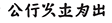 <n-mú-s2-ha-a-án>14 Assistant Scribe (别胥), was the daughter of General Konguli (控骨里详稳), from the lineage of the Khan of the Six Tribes, Bolu’en (六部勃鲁恩).She bore one son, Xingshou (兴寿). According to the Xu, at the burial of Prince Xu, Wotela, on the 21st day of the second lunar month in the fifth year of the Qiantong era (1105 AD), only the name of his fourth wife was mentioned, indicating that the other three wives had predeceased him.
The seventh generation is represented by the tomb occupant, Yelü Changshou, courtesy name Jiulin, a seventh-generation descendant of Yindishi and the second son of Wotela. He began his official career at the age of 24, serving in various positions such as Tribal Judge and Duty Group Commander of the Left Tribunal (左院夷离毕郎君), Duty Group Commander of the Seal and Badge Office (印牌司郎君), and Ritual Commissioner, and was involved in managing the affairs of the Guest Rituals Department. Changshou's wife was Wulilan, who came from the family of General Sabali of the Yishiyi Jifu lineage. They had two sons. In the fifth year of the Shouchang era (1099 AD), Changshou fell ill and passed away while on his way to the Na Bo (捺钵), at the age of 37. He was returned and buried in the family cemetery. Changshou had six brothers15: his elder brother, possibly Pengshou (彭寿), did not enter official service, and his spouse was  <dor-ud2-ha-án>. His third younger brother, Fushou, served as General and Duty Group Commander of the Right Tribunal (右院郎君详稳). The fourth younger brother, Deshou (德寿), rose to the position of Defender–in–chief (太尉). He married a lady of the Oukun clan, who came from the family of the Surveillance Commissioner of the Chancellor's lineage, and they had one son. The fifth younger brother was Rongshou, and the sixth younger brother was Xingshou. He had three sisters: Lady Wangjianü (王家女娘子), Fude (福德), and Fusheng. The family maintained its significant status as a branch of the imperial clan until the end of the Liao Dynasty.
The eighth-generation members are recorded in the Jiu and Xu. They include  <au-ul-ha-a-ar>, the son of Pengshou;
 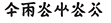 <s-in-ge-l-ge-er>, the eldest son of Changshou;
  <t-em2-l-ge-er>, the second son of Changshou; and the unnamed son of Deshou.
Conclusion
Through meticulous textual collation and interpretation, this study has corrected 15 textual errors and deciphered seven previously unread Khitan words. By cross-referencing multiple funerary inscriptions, the research has obtained several significant results: resolving identity ambiguities of key figures (e.g. establishing that Liuge is Yanning and Alie is Taoning); systematically reconstructing the career trajectories and bureaucratic titles of Yelü Wotela; and detailing the posthumous honors granted to his grandfather, Helü Saogu, and his father, Eduwo. Furthermore, this study addresses critical genealogical lacunae in the History of Liao, such as recovering the record of the third-generation ancestor  <m-or-qó>, whose identity was previously unknown.
Footnotes
Author note
This article only provides a brief overview; the complete study will be elaborated on systematically in my doctoral dissertation.
Abbreviations
Abbreviations and Full Names of Khitan Small Script Materials16 Cha: Epitaph of Xiao Chala Xianggong 萧查剌相公墓志铭 Di: Epitaph of Yelü (Han) Dilie Taibao 耶律(韩)迪烈太保墓志铭 Jiu: Epitaph of Ritual Commissioner Yelü Jiulin 耶律乣邻礼宾使墓志铭 Jue: Epitaph of Yelü Jue Changwen 耶律玦敞稳墓志铭 Nan: Epitaph of Liao Prince Dilie of Great Liao of in Jambudvῑpa 南瞻部洲大辽国故迪烈王墓志文 Xu: Epitaph of Prince Xu of Liao 辽国许王墓志 Xuan: Eulogy for Xuanyi Empress Xuanyi 宣懿皇后哀册文 Yu: Epitaph of Prince Song Shangfu Yuyue of Great Liao 大辽国尚父于越宋王墓志铭 Abbreviations and Full Names of Chinese Epigraphic Materials Qin: Epitaph of Yelü, Great Consort of Qin 秦国太妃耶律氏墓志 Shu: Epitaph of Yelü Shuji 耶律庶几墓志

Funding
The author disclosed receipt of the following financial support for the research, authorship, and/or publication of this article: This work was supported by Key Project of the National Social Science Fund of China: “Interpretation of Newly Discovered Epigraphic Documents of the Liao Dynasty Royal Consort Clan and Study on the Phonetic System of Khitan Small Script” (21AYY023).
Declaration of conflicting interests
The author declared no potential conflicts of interest with respect to the research, authorship, and/or publication of this article.