







Abstract
Following the institutionalist framework, this paper analyses the way institutional changes affect the representations and strategies of the actors involved in biodiversity conservation. We conducted a survey within the network of the French Conservatoires d'Espaces Naturels after the adoption of the French Biodiversity Law in 2016. The latter introduced several critical changes in the legal framework, especially the enforcement of Avoid–Reduce–Offset principles and the potential development of an offset supply. Our survey shows that these changes in the institutional framework both reduce and increase uncertainties, and raise debates and controversies concerning the way such changes may be interpreted as steps towards a neoliberalization of biodiversity's conservation in France. These results contribute to the debates concerning the processes of environmental policies changes and their consequences.
Keywords
Introduction
In 2016, the French parliament voted to adopt the Law for Biodiversity, Nature and Landscapes (Law no. 2016-1087). This Biodiversity Law was designed to:
formalize the principle of the ‘Avoid–Reduce–Offset sequence’ for any private or public land planning project; introduce the notion of ‘reserves of natural assets’ into French Law, similar to the concept of mitigation banking that has been applied in several industrial countries.
The offsetting principle was first introduced in France in 1976 with the Law for Nature Protection. Consequently, any public or private planning projects were required to conduct an impact study to evaluate the offsetting mechanisms for any damage that may occur (Law no. 76-629 art. 1 and 2). In 2012, the Grenelle Environmental Forum introduced the concept of No Net Loss. The Biodiversity Law imposed the ‘mitigation hierarchy’ established in 1972 based on the sequence: (1) Avoid, (2) Reduce, (3) Offset or Repair potential damage (Quétier et al., 2014).
The Biodiversity Law provides a more ‘consistent’ framework for the Avoid–Reduce–Offset (ARO) sequence (CDC, 2016). It also introduces tools to biodiversity management that numerous researchers have identified as market or market-like tools, such as an offset supply and mitigation banking (Dauguet, 2015; IEEP et al., 2010; Sullivan, 2018). These tools and their role in the neoliberalization of nature continue to stimulate debate among researchers and actors in the field (civil society, environmental associations, public services, etc.), who are directly affected by the transformation of environmental policies. Neoliberalization processes are highly complex, ambiguous and often incomplete (Bakker, 2009, 2010; Castree, 2008; Vatn, 2015, 2018). Many authors have suggested that this is due to the fact that ‘market-based tools (or attempts at neoliberal governance, as it is often termed) may hybridize with, or be complicated by geopolitical context and existing systems of governance’ (Hackett, 2015). According to Hackett (2015), these new market tools (or neoliberalization) no longer fit into neat categories and typologies.
Our paper pursues these questions by examining how the conservation of natural spaces in France is affected by the changing rules that govern sustainable territorial development and planning through the Biodiversity Law. We attempt to show how the recent legal, institutional and discursive changes generate uncertainty and how they affect the ‘conservationist culture’ and practices (Holmes et al., 2016; Sandbrook et al., 2010) of actors involved in the ARO sequence. We therefore highlight the practical, ethical and cultural dimensions of the shift in biodiversity conservation governance towards a form of neoliberalization.
This approach is consistent with the literature inasmuch as it considers that the historical and political context (Bakker, 2009, 2010; McElwee, 2012; McElwee et al., 2014; Pirard, 2012; Roth and Dressler, 2012) and actors' values (Sullivan and Hannis, 2015) are determining factors when it comes to the interpretation, reception and implementation of legal, institutional and procedural changes. Our approach is also compatible with the institutionalist framework (North, 2005), in which institutions legitimate and define a structure of opportunities and risks. Institutions establish formal and informal rules to determine the mental structures and the representations that influence how actors design intentional (not rational) actions. The latter are conducted using various individual and collective strategies designed to address risks or to benefit from opportunities determined by institutional arrangements. Thus, the institutionalist framework integrates therefore the legal, economic, political and cultural dimensions of neoliberalization processes. This makes it possible to analyse the complexity and diversity of the evolutionary pathways, which are described as neoliberal in the literature.
We focus here on how the actors involved in the so-called neoliberal transformations interpret and adapt to the changes in their institutional environment according to their values and practices. These actors are the managers of the Conservatoires d' Espaces Naturels (Conservatories of Natural Spaces, CEN), who have been directly affected by the recent trends in French environmental, institutional and legal arrangements concerning the ARO sequence. The CEN are non-profit associations that have been involved in land management since the late 1970s. They joined forces to form a federation in 1988. Originally inspired by the British National Trust, CEN have developed several land management mechanisms to preserve ‘ordinary’ natural spaces outside protected areas, such as Natural Parks and Nature Reserves. ‘Ordinary’ natural spaces are affected by large-scale national projects, such as highway networks, as well as smaller scale projects, which have an impact on demographic and urban pressure. The CEN land management practices include land stewardship schemes, in which individual and communal owners agree to apply preservation mechanisms that entail contractual changes in terms of their use/possession rights in favour of biodiversity preservation. The CEN are involved in the ARO sequence at different scales, which means they have to address the issue of the expansion of an offset supply. This can potentially affect the organizational and institutional arrangements developed with private and public owners over periods of up to 30 years.
Therefore, according to the institutionalist framework, it is worth assessing the possible contradictory effects of institutional changes, which reduce uncertainty for some actors, while increasing it for others. It is also useful to consider how these effects determine the diverse pathways that emerge in the processes of neoliberal change. These pathways result from the strategies adopted by stakeholders, which depend on whether they accept, resist or adapt to their new institutional environment.
The paper is organized as follows. First, we present several theoretical arguments and describe the institutional context and the changes in French Law. We also describe the role of the Caisse des Dépôts et Consignations in the reconfiguration of the ARO sequence and the development of an offset supply. Second, we detail the methodology we used to design and conduct the survey. Third, we present the results of our empirical survey and discuss how the institutional changes have affected the CEN values and practices. In conclusion, we focus on alternative approaches to conservation and biodiversity governance.
The French context: Legal changes and a neoliberal narrative
Literature abounds on institutional insights into the processes of neoliberalization (Boisvert, 2015; Hayes et al., 2015; Howarth, 2006; Polski, 2005; Vatn, 2009, 2010). Our study relies on the main arguments of D. North's (2005) institutionalist theory of economic and social change (Wallis, 2014; Zouboulakis, 2005). 1
As uncertainty is the rule (not the exception) in a ‘non-ergodic’ world (North, 2005: 19–22), individuals cannot access and use all the information they need. They ‘construct systems of classifications to interpret the external environment’ (33), by devising complex belief systems that determine their intentional (not rational) choices. Institutions are not just ‘rules of the game’: they constitute a complex matrix that ‘imposes severe constraints on the choice set’ adopted by the agents: ‘By channeling choices into a smaller set of actions, institutions can improve the ability of the agent to control the environment (although there is no implication that the agent's perceptions are correct)’ (14). The ‘mental constructs’ that individuals ‘derive from experiences’ (vii) are the result of the institutional matrix, which defines both the opportunities and risks that they encounter. This matrix reflects the dominant beliefs ‘of political and economic entrepreneurs in a position to make policies’ (2). North (2005) then emphasizes that ideology, beliefs and representations are the main determinants of action: humans do construct elaborate beliefs about the nature of that reality: beliefs that are both a positive model of the way the system works and a normative model of how it should work. The belief system may be broadly held within the society, reflecting a consensus of beliefs; or widely disparate beliefs may be held, reflecting fundamental divisions in perceptions about the society. (2)
The ARO sequence
One noticeable effect of the Biodiversity Law is that the necessary institutional conditions have been established to develop an offset supply, with the creation of ‘natural compensation sites’ and ‘actual environmental obligations’.
The Biodiversity Law defined biodiversity as ‘the common heritage of the nation’, which ‘generates ecosystem services and use values’ (Code de l’environnement modified by the Law No. 2016-1087 art. L110-1). It enshrines the principle of preventive action and correction at the source of environmental damage as a matter of priority, using the best available techniques at an economically acceptable cost. It defends the principle of preventive action and correction [which] entails avoiding damage to biodiversity and the services it provides; failing that, to reduce its scope; and, lastly, to compensate for the unavoidable or reduced impacts, taking into account the species, natural habitats and ecological functions affected. (Code de l'environnement modified by the Law No. 2016-1087 art. L110-1)
The offsetting mechanisms already in use in France involve developers acquiring land on which they initiate offsetting actions, either directly or by contracting with ‘compensation operators’ (like the CEN). The Biodiversity Law introduced the ‘acquisition of compensation units within the framework of a natural compensation site’. The principle of mitigation banking is institutionalized under the concept of ‘nature compensation sites’. This involves the acquisition of land by a compensation operator, who implements compensation operations in anticipation of a demand for offsetting due to greater planning pressure. The development of mitigation banks is completed by the creation of the ‘actual environmental obligations’: Owners of immovable property may enter into a contract with a public authority, a public institution or a private legal entity acting for the protection of the environment with a view to generating, at their own expense, of the property, the actual obligations that they see fit, provided that such obligations are for the maintenance, conservation, management or restoration of elements of biodiversity or ecological functions. Actual environmental obligations may be used for offsetting purposes. (Code de l'environnement modified by the Law No. 2016-1087 art.L132-3)
By reinforcing the ARO sequence, the Biodiversity Law reduces several uncertainties facing the different actors. However, many grey areas remain regarding the ARO sequence itself and the offset supply.
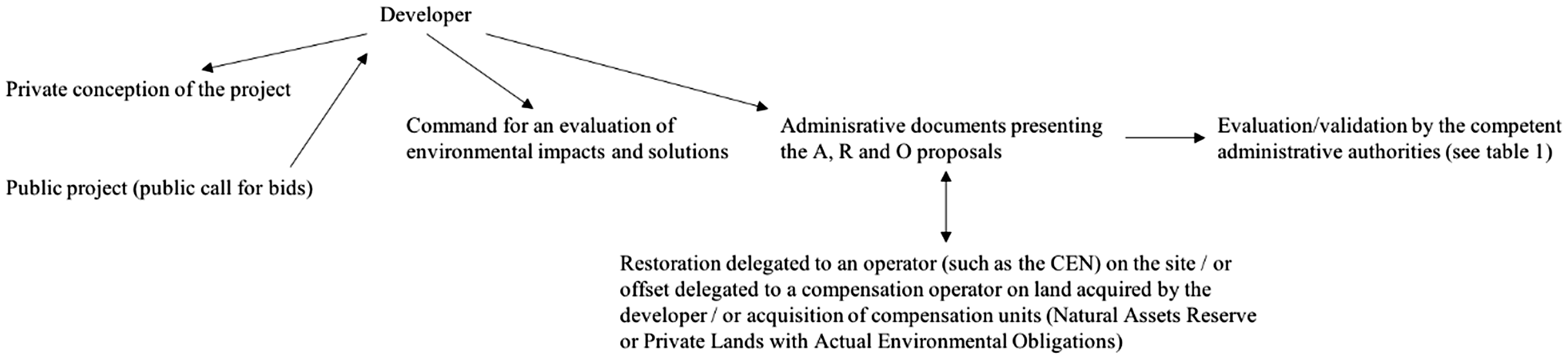
The different steps in the sequence are complex and insufficiently regulated by precise principles and procedures. The complexity is due to the scale of the development projects, which often cover various types of natural spaces and, therefore, fall within different legal and administrative regulatory frameworks. The actual nature of a project may vary depending on whether or not it comes under the principles of public utility. As a result, the initial project may be split into several projects, which are subject to different constraints and ARO processes. This segmentation complicates the assessment of the global effects and the quality of offsetting (see Figure 1 – see also Figure 4 for further details).
The administrative perception of the ARO sequence.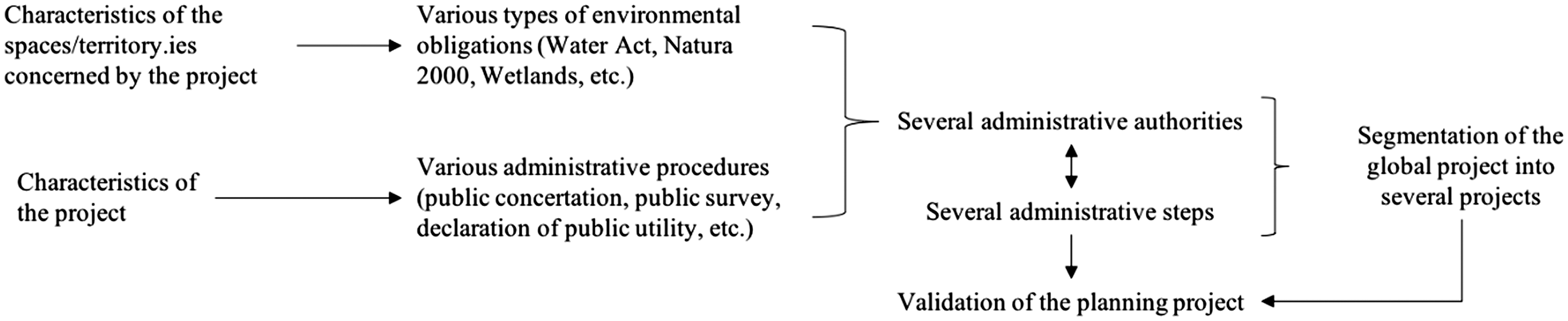
Given the lack of a nationally homogenized set of rules for defining the principles of Avoidance and Reduction, there is some confusion between the two. A recent survey covering 358 case studies in France demonstrates that Reduction prevails. It reveals that 90% of the Avoidance measures are in fact Reduction measures (Bigard et al., 2018).
The potential development of a supply of offset provisions depends on several conditions, including: the regulations that drive the development and the potential operators (private or profit-making firms, semi-public organizations, e.g. CDC, or social and solidarity-based economic actors, e.g. CEN). In addition, there are still uncertainties about a number of critical ecological issues, such as damage assessment (lack of a unified methodology and little knowledge of ecosystem services or of territory as a complex ecosystem); and prerequisites, such as geographical proximity (which is not provided through mitigation banking) or the duration of the offsetting measures. A senatorial commission highlighted these shortfalls (Dantec, 2017). There are major grey areas, which means the potential risk of neoliberalizing biodiversity policies is genuine, particularly as more and more incentives target innovative financial mechanisms that could be applied to biodiversity conservation. As discussed in ‘Empirical material and methodology’ section, the survey we conducted highlights all these issues. However, our results should be interpreted in the context of the CDC's role. CDC launched the first offset banking experiment in France and became an influential actor in terms of institutional and policy changes, promoting a neoliberal-type discourse through its publications.
The Caisse des Dépôts et Consignations and the neoliberalization of biodiversity conservation
CDC (2017) is a ‘public group made up of a public institution and subsidiaries’ promoting ‘the public interest’ as ‘a long term investor’ for ‘innovation and sustainable growth’. It carries out missions of public interest in support of the public policies implemented by the state and local government bodies. It is also involved in competitive activities. Through its subsidiary, CDC Biodiversity (CDCB), it created the first National Assets Reserve in 2008 (the Cossure experience), 2 one of the first nature compensation sites endorsed by the Biodiversity Law, and played a significant role in disseminating market-oriented solutions for environmental issues in France.
In 2006, the CDC launched a working group on the issue of ‘innovative financing levers for biodiversity action’ (CDC, 2014b), which was followed by the creation of a subsidiary specifically dedicated to the development of these levers (CDCB). In 2012, the Biodiversity Economics Mission was set up ‘for researching and devising innovative solutions that strike a balance between economic development and the preservation of biodiversity’. 3 We analysed 4 several documents provided by the CDCB and the Biodiversity Economics Mission (especially the Biodiv’2050 series) that concern ‘innovative financial mechanisms’.
Overall, these mechanisms are neither original nor innovative, except in terms of their impact on the French context. The CDCB and the Biodiversity Economics Mission are well aware that the promotion of private investment and market-based tools is likely to be met with criticism in France (CDC, 2015a, 2015b). The insistence on mitigating the ‘supposed’ risks of the commodification of biodiversity (CDC, 2015b) is recurrent in most of the texts we analysed. For example, the term commodification (of ‘nature’, ‘biodiversity, ‘living’, associated with ‘privatization’ and ‘biodiversity financing’) is most often associated with the terms ‘risk’, ‘perceived risk’, ‘denounced’, ‘fear of’, etc. On the whole, the CDCB and the Biodiversity Economics Mission deliver a ‘reassuring’ discourse based on: (1) the fact that the wide diversity of economic tools associated with the preservation and enhancement of biodiversity demonstrates that market tools actually remain marginal; (2) the idea that basic economic tools are powerful drivers of individual behaviour, either through fiscal or legal sanctions, such as the polluter-pays principle, through the introduction of ‘green’ or ‘ecological’ taxation (‘reforms of harmful subsidies for biodiversity’ and incentives to invest in targeted sectors), through binding mechanisms (offsetting biodiversity damages) or by opening new (green) markets.
The CDC also devoted several documents to the private sector (two issues of the Biodiv’2050 series, in particular – CDC, 2015a, 2015b). They describe how the financial sector acts for biodiversity through the development of ‘private investment with a compensatory impact’ (a subcategory of impact investments), a tool that is also highly recommended by organizations, such as the International Union for Conservation of Nature, 5 with an extension to lucrative investment in conservation areas. Several documents advocate the beneficiary-pays principle. This principle is particularly associated with the development of Payment for Ecosystem Services (PES) in order ‘to give free rein to voluntary negotiations between agents for internalizing the benefits (or costs) of ES, without going through the prism of regulation’ (CDC, 2014b: 11). ES plays a central role in promoting a positive approach to preserving biodiversity based on the economic valuation of the services that it can render. This involves voluntary transactions to encourage investment in the preservation (or even the improvement) of biodiversity, as well as the definition of ecological compensation criteria.
Most of the arguments put forward by CDCB and the Biodiversity Economics Mission are similar to the arguments (identified by several authors) used to justify various market-oriented instruments (Pagiola and Platais, 2002; Vatn, 2015). These instruments, especially those relating to ecosystem services and biodiversity banking (Dempsey and Robertson, 2012; Lapeyre et al., 2015; Robertson, 2004) may be combined with existing regulatory mechanisms (hybridization).
CDCB promoted a fairly balanced narrative, combining the defence of market-like tools, private incentives, initiatives and financing in relation to France's specific political context. In France, these innovative instruments may be interpreted as a neoliberal inflexion of the institutional and policy framework. Nevertheless, the CDC has somewhat changed its stance regarding the implementation of offsetting arrangements.
A few years ago, a special issue of the Cahiers Biodiv’2050 gave an update on the risks of commodification in the light of theoretical (rather than empirical) opposition (CDC, 2014a). This document presented the cautious and balanced arguments developed by H. Levrel (see Levrel and Couvet, 2016). However, the CDCB’s concern about the potential criticisms of the privatization or commodification of nature has gradually diminished: from 2016, the terms mentioned above disappeared from the official documents dealing with compensation and offsetting. Following the adoption of the Biodiversity Law, the CDC fully assumed its role in the constitution and development of mitigation banking. Supposedly pragmatic arguments are then cited in response to critics of the ARO sequence, in particular those relating to the extension of a ‘right to destroy’ biodiversity through the use of offsets: For its opponents, ecological compensation would even be a right to destroy, encouraging the proliferation of land-use planning projects. However, in spite of forty years of non-implementation of the compensation, it is unfortunately not possible to observe that this has had the effect of stopping the destruction of natural environments. Beyond the ideological currents, it is therefore a net loss for nature correlated with the impact of a ‘forgotten’ repair. (CDC, 2016: 22)
Empirical material and methodology
As mentioned, the main problems with the Biodiversity Law stem from a lack of clarity with regard to some crucial issues, rather than actual and effective changes. Only four offset supply experiments have been conducted in France since the 2010s. Following the classification of biodiversity banks proposed by Froger et al. (2015), these trials are extremely varied in terms of their objectives and the status of the operators involved (private society, non-governmental organizations and regional public authorities). The offset supply in France is in its infancy and it is likely to evolve towards different hybrid forms that combine public and private, as well as market or non-market logic.
The context described above raises several questions for the CEN, as we first observed empirically at the CEN 2016 Annual Seminar. We were invited to participate in discussions on the commons and CEN practices. We noticed recurring references to the neoliberalization of nature, the growing financial constraints associated with the reduction of public resources and the ambiguous changes in the offsetting devices. Many participants were worried that their values would be undermined given the changing environment. Some expressed concern about the risks of accepting and interiorizing neoliberal practices in response to external constraints, in reference to the progress of ‘neoliberal governmentality’ (Dardot and Laval, 2014) within environmental governance (Sullivan, 2018). Consequently, we decided to conduct a survey for an in-depth analysis of these concerns. In the following section, we present the CEN and describe the method we used (‘Methodology’ section).
The CEN 6
The CEN are involved in several practices concerning biodiversity conservation, ranging from land management to offsetting. They are non-profit regional and departmental organizations that formed a national federation in 1988. The 29 CEN cover most of the French territory, including two overseas territories (but not Brittany and the Ile de France region). They conduct a wide range of projects associated with the conservation of natural sites, landscapes and ecosystems. The first CEN was created in 1976 in Alsace. In the same year, the French parliament adopted the first law for the protection of nature, which introduced the principle of compensation for land planning projects. Since the outset, the CEN have worked for the preservation of ‘ordinary’ natural spaces (i.e. natural spaces not encompassed by institutionally protected areas, such as national parks or natural reserves). They employ land management practices inspired by the British National Trust to manage ‘spaces for species’ and to conserve historical and landscape heritage. The CEN carry out conservation practices on their own property (8%), as well as on property belonging to private or public landowners (92%) involved in environmental issues. Therefore, most CEN activities rely on conventional agreements with public and private landowners.
At present, the CEN manage over 3000 sites covering more than 154,000 hectares. These sites now include more than ‘ordinary natural spaces’, since the CEN have taken on the management of nature reserves (105 sites) and sensitive natural areas (751 sites). They also manage 69 offsetting activities over 40,000 hectares. CEN expertise in the field of biodiversity conservation was acknowledged during the national consultative process of the Grenelle Environmental Forum in 2007, which led to a legal acknowledgment in 2010 in Article 129 of the French Law on the National Commitment for the Environment (Law no. 2010-788 of 12th July 2010). It grants CEN with a specific status as contributors to the preservation of natural and semi-natural sites and the habitats of species, through projects involving expertise, management, outreach, education, offsetting and agro-environmental and climate-related activities at the regional level. The CEN have developed a complex system of land management practices based on naturalist and ecological skills. Outreach and educational skills have gradually been added to their portfolio through territorial projects involving private and public landowners and the development of collective practices favourable to sustainable development. Territorial development is at the heart of the CEN's strategy to reconcile biodiversity conservation with a comprehensive socio-economic framework (Rivaud and Prévost, 2018).
CEN directors are privileged observers of the evolution and current changes affecting different fields at different levels (from local to national). In terms of education, most had a Master's degree from a French university in ecological and natural sciences or economics, law and management. The directors are, therefore, familiar with research literature and the numerous publications that circulate within the network disseminating scientific and political news related to the CEN's objectives. The federation organizes an annual three-day seminar and invites researchers involved in environmental sciences. One such guest speaker was B. Chevassus-au-Louis, who was behind the spread of the economic evaluation of ecosystem services within the French Ministry of the Environment and the Commissariat Général au Développement Durable, the Sustainable Development Division (Chevassus-au-Louis et al., 2009). All the individuals we interviewed were aware of the scientific and political issues related to their fields of expertise, especially regarding recent trends towards the economic valuation of biodiversity, through offsetting and ecosystem services. Given the CEN's commitment to the different arenas of debate that preceded the drafting of the Biodiversity Law, the directors were aware of and directly involved in the new legal arrangements that could alter the institutional aspects of their management practices, especially when conventional agreements involve private and public landowners.
Methodology
We aimed to study the subjective attitudes of CEN directors towards several topics associated with the neoliberalization of biodiversity management, especially offsetting and ES. We submitted statements and questions to the directors to elicit their responses using a numeric rating scale that ranged from −4 (totally disagree) to + 4 (totally agree). Our survey was designed in accordance with similar surveys (Hermelingmeier and Nicholas, 2017, Holmes et al., 2016; Sandbrook et al., 2010). However, we did not use the Q methodology. We conducted the survey and recorded the CEN directors' comments to explain the reasoning behind their ratings. We collected both quantitative and qualitative data. Each interview lasted 90 minutes on average.
The questionnaires were carefully constructed. To formulate the statements submitted to individuals, we first identified the main characteristics of neoliberalization that would be most likely to affect how the CEN function and how directors deal with emerging challenges. As mentioned in the ‘Introduction’ section, there is an overabundance of literature on the subject. Therefore, we had to make some tough decisions to limit the number of questions and focus on particular issues. We chose to present some general assertions, which are commonly the subject of debate among researchers, depending on how they are identified and formulated in the literature (i.e. Castree, 2010) or in empirical surveys (i.e. Hermelingmeier and Nicholas, 2017). For example, the purely anthropocentric and utilitarian approach of biodiversity, associated with the ecosystem services concept; or the growing influence of economic arguments and incentives in biodiversity conservation. We tried to cover several crucial dimensions of neoliberalization and the development of a neoliberal conservation paradigm (Igoe and Brockington, 2007), such as economization (Boisvert, 2015) and commodification (Dauguet, 2015). Given the CEN's commitment to conservation policies, our goal was to suggest generalizations and statements that would enable us to assess normative reactions and define a type of cultural identity among CEN directors. For example, statements such as ‘Nature has an intrinsic value’ or ‘Preserving biodiversity mainly relies on the preservation of the services it provides for human societies’ generated rich debates, where normative principles were pitted against pragmatic strategies, as detailed in ‘Results’ section. Similarly, we also drew on specific literature that focuses on the French situation (Levrel and Couvet, 2016; Levrel et al., 2017; Quétier et al., 2014; Thompson et al., 2011).
We consulted both international and French literature to formulate the survey's statements. We tested the statements using two exploratory questionnaires and interviews with two directors. We were then able to fine-tune and improve several statements relating to how the CEN might be affected by recent trends. Lastly, the survey consisted of 50 statements and questions about four different fields: (1) The growing influence of economic arguments to justify environmental policies at different scales (from national to local), (2) ARO sequence and offset supply, (3) ES and PES and (4) individual expectations concerning the CEN and the role they should have in sustainable development dynamics.
We presented our research findings at the 2017 National Seminar and recorded the reactions and comments.
Results
Panel overview: Facing changes in conservationist culture and practices
We conducted the study from April to June of 2017 and recorded 25 answers (response rate: 96%), which covered all the metropolitan regions where the CEN operate.
Eighty per cent of the panel had over 15 years' experience in the environmental field and 52% had been working for at least 11 years in their CEN (80% for at least 6 years). Forty per cent are aged between 36 and 45, 48% between 46 and 55 and 12% are over 56 years old. As mentioned above, the educational level of respondents corresponded to at least a one-year degree, followed by postgraduate studies. We interviewed 19 men and 6 women.
The first statistical analysis was carried out to identify general trends within the panel that demonstrated strong homogeneity concerning many normative statements, such as ‘Biodiversity is the common heritage of humanity’ (84% totally agree) or ‘Nature has an intrinsic value’ (96% totally agree). This homogeneity may be associated with a kind of internal ‘culture’ in the organization, based on the principles formulated in the CEN charters. This conservationist culture was manifest in reactions to statements, such as ‘Biodiversity should be conserved for its own intrinsic value, regardless of the services it provides to human societies’, which appeared in the first part of the survey. It was also revealed by the directors’ normative prescriptions concerning CEN practices, in the fourth part of the survey, with the use of terms, such as: ‘The CEN have to promote…’, ‘…the emergence of environmental commons’, ‘…biodiversity conservation as the basis of territorial development’, ‘…the adoption of innovative local practices for managing common natural spaces’ and ‘…a collective awareness of common natural resources’.
However, this conservationist culture is faced with the emergence of instrumental or utilitarian arguments associated with the concept of ES (Millenium Ecosystems Assessment, 2005; TEEB, 2010). We formulated these arguments through diverse statements: both indirectly, as in the first part of the survey (‘Preserving biodiversity mainly relies on the preservation of the services it provides for human societies’); and directly, as in the third part of the survey (‘Valuing and preserving biodiversity depends on the economic valuation of the services it renders’ or ‘The development of PES mechanisms is a pragmatic answer to the imperatives of preserving biodiversity’). Such an instrumental perspective on biodiversity was also evoked in several statements concerning, for example, the growing influence of economic arguments to justify the financial involvement of the CEN's different funders and partners (from European to local level, public and private).
The tensions that emerged from the confrontation between a conservationist culture and instrumental or pragmatic arguments partly determined the individuals’ different positions. An overview, presented in Figures 2 and 3, clearly shows that the majority of the panel regard the heritage dimension of biodiversity as important and consider that it should be preserved, regardless of the services it may provide to human societies. However, it also revealed is a noticeable divergence regarding the issue of the instrumental reasons for preserving biodiversity. These results are commensurate with those observed in other contexts and may reflect the shift from a ‘traditional’ to a ‘new conservation’ paradigm, which tends to promulgate instrumental and economic arguments (Holmes et al., 2016; Sandbrook et al., 2010).
Conservationist culture. Conservation and services. The developer in the ARO sequence. CEN: Conservatoires des Espaces Naturels (Conservatories of Natural Spaces).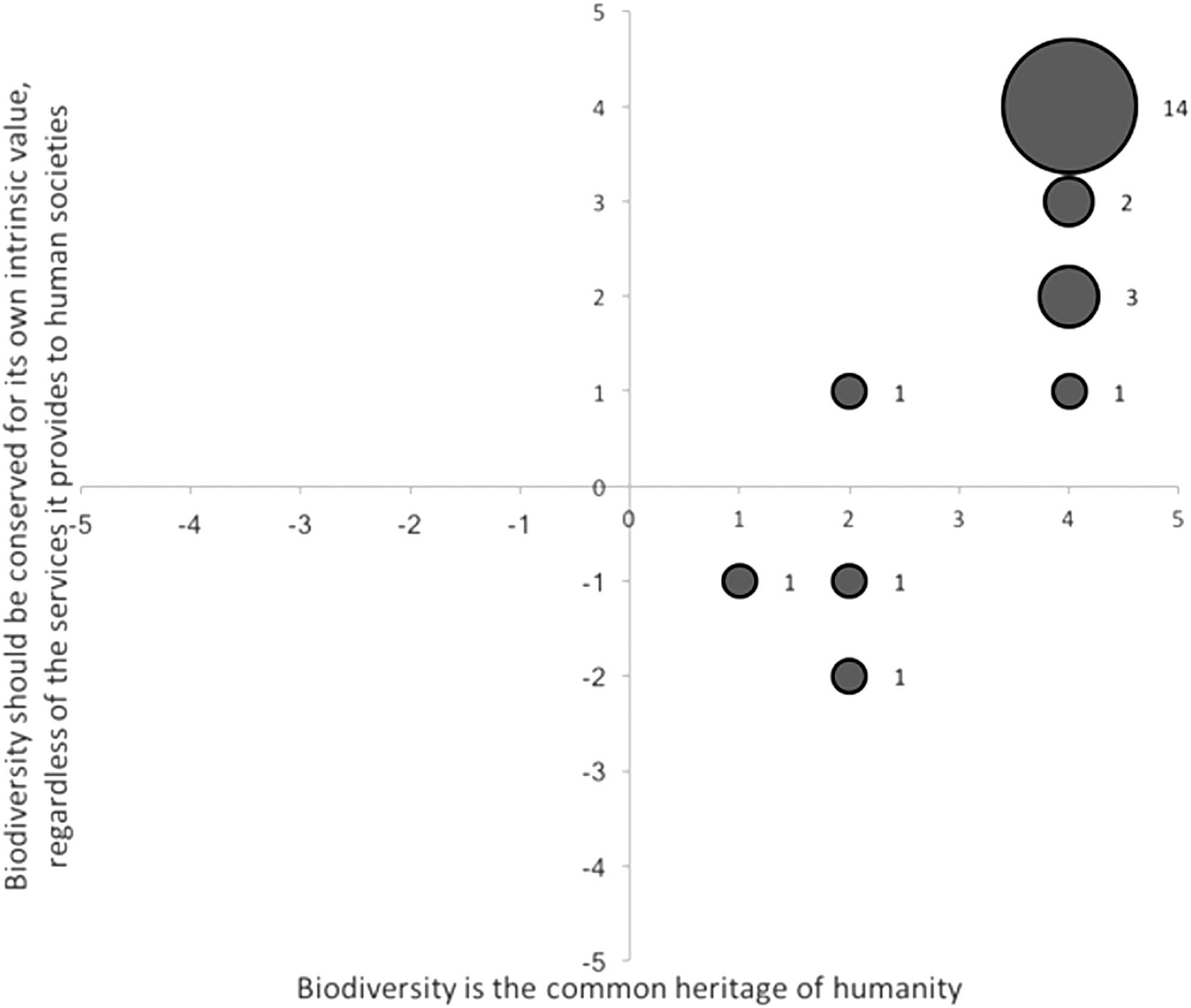
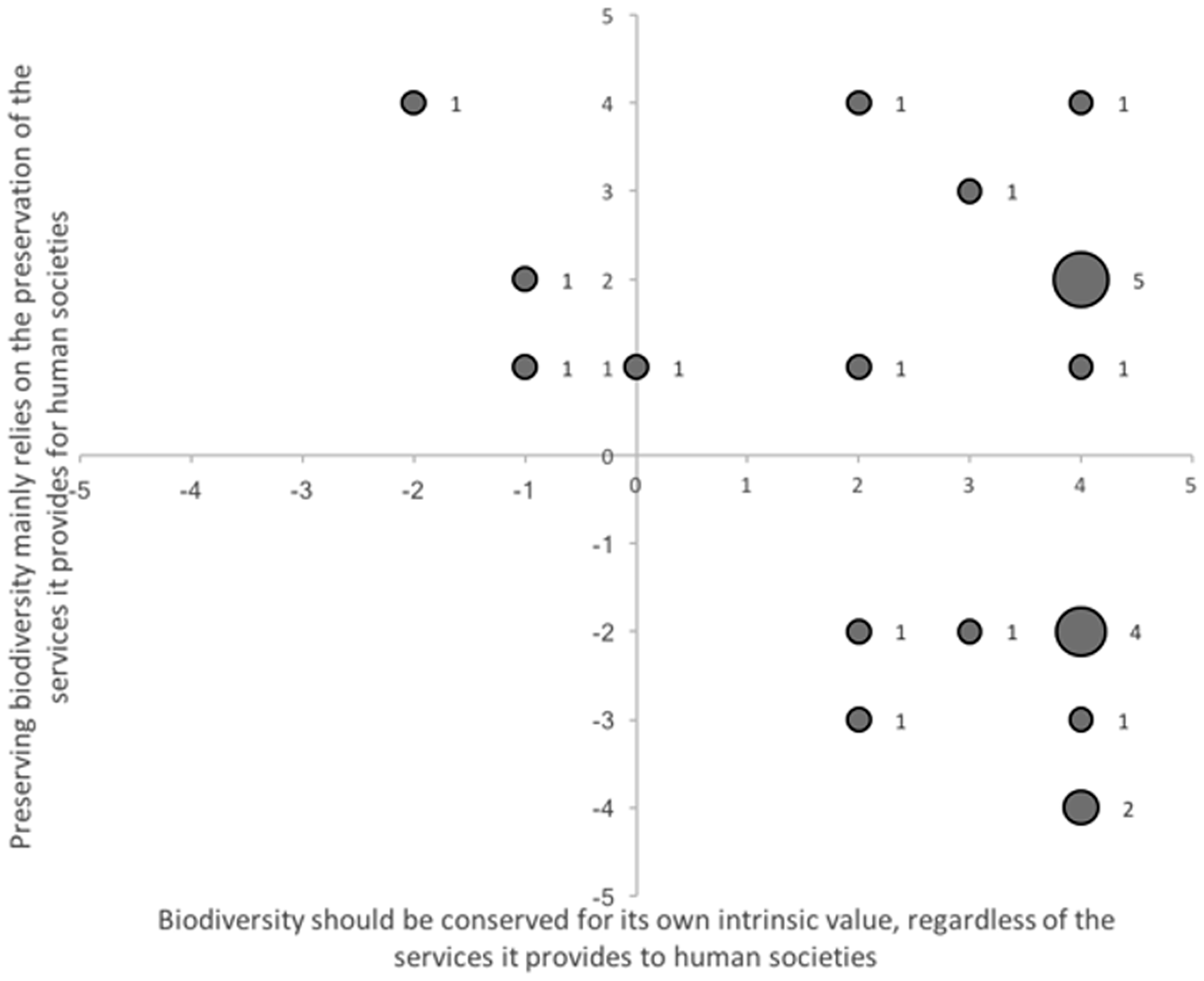
Most discriminative statements.
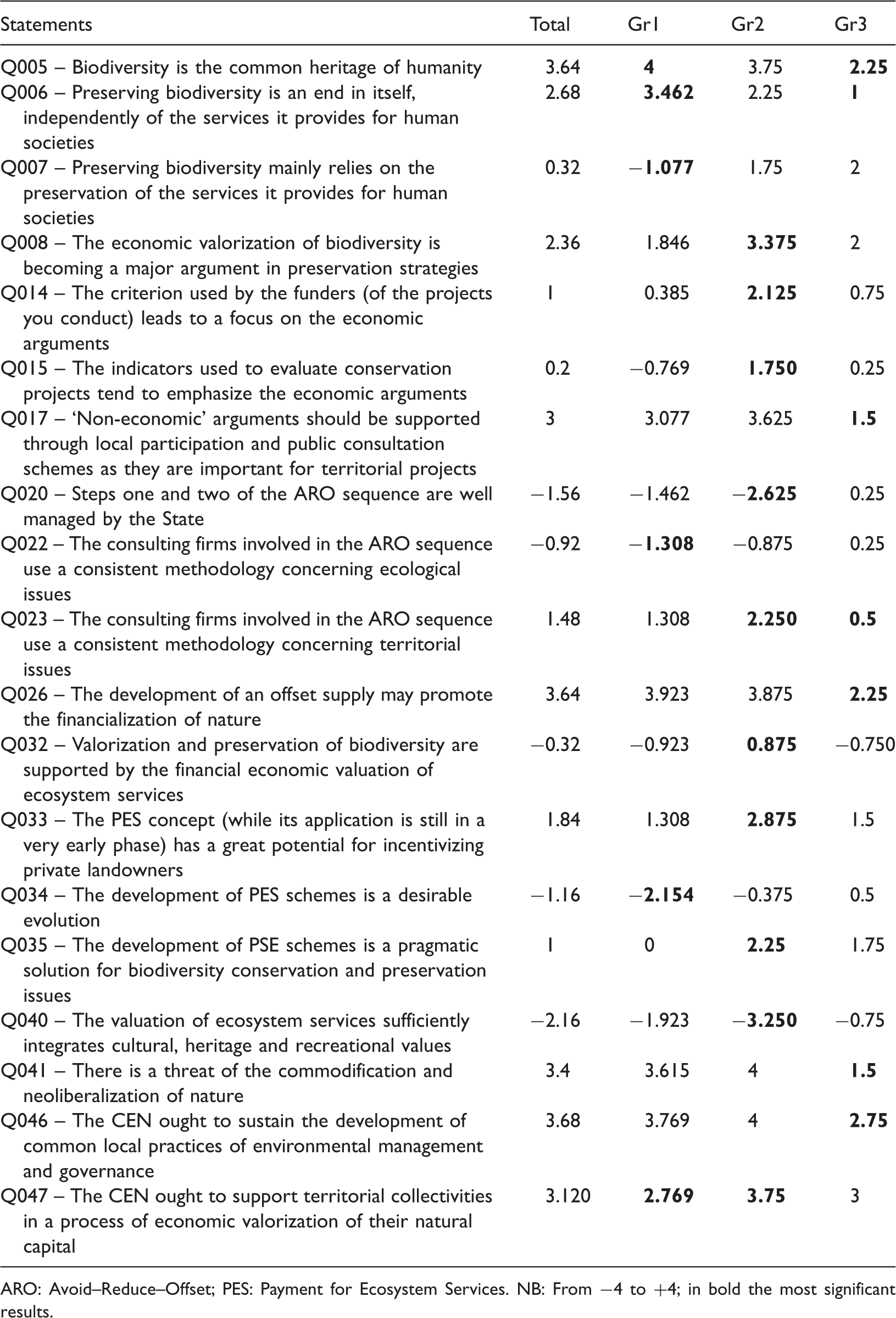
ARO: Avoid–Reduce–Offset; PES: Payment for Ecosystem Services. NB: From −4 to +4; in bold the most significant results.
The first group (G1 – 13 individuals) demonstrates a stronger attachment to the core values of the CEN (the conservationist culture). This group is more resistant to the extension of the instrumental and economic arguments for biodiversity conservation strategies. It does not consider PES schemes as either desirable or pragmatic solutions. We called G1 the ‘cautious group’.
The second group (G2 – eight individuals) is less resistant to instrumental and economic arguments and to the use of PES schemes. It has a more pragmatic approach to biodiversity conservation strategies. It demonstrates both: (1) confidence in the CEN's participative practices and public consultations at the local level to encourage the development of sustainable strategies and (2) a cautious awareness of the growing influence of economic arguments, as well as the risk that such arguments could prevail (to the detriment of non-economic arguments and values). We termed G2 as the ‘precautionary pragmatists’.
Responses regarding the ARO sequence and the offset supply.
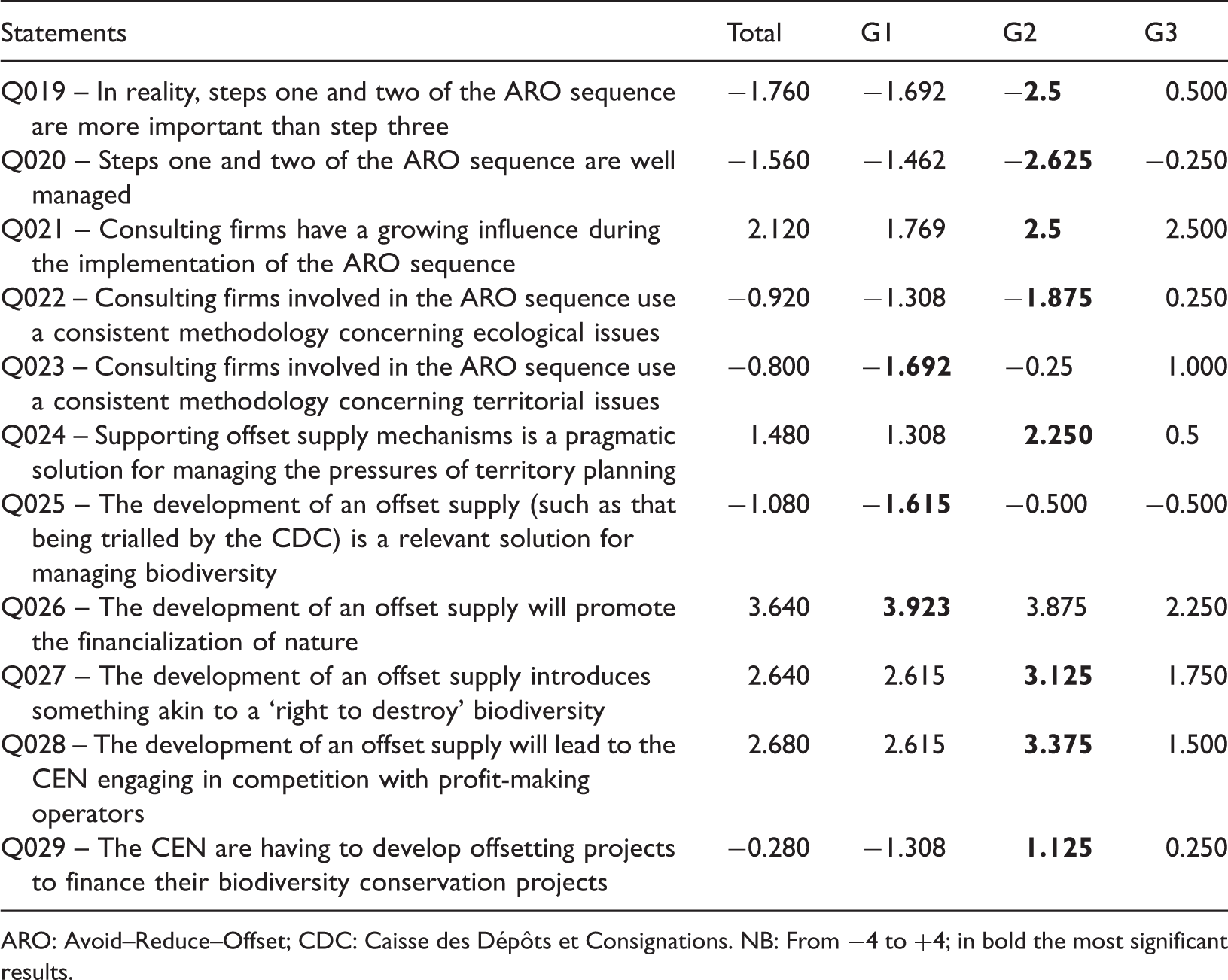
ARO: Avoid–Reduce–Offset; CDC: Caisse des Dépôts et Consignations. NB: From −4 to +4; in bold the most significant results.
The next section describes the different groups' responses to statements regarding the ARO sequence and the offset supply.
The ARO sequence
As discussed above, G1 and G2 are more resistant to the implementation of the ARO sequence (see Table 2). G3 individuals demonstrate greater confidence, although the majority conceded that they had little involvement in the implementation of offsetting processes (individuals from the other groups had more experience in the field). We focus here on the arguments developed by G1 and G2 individuals. Their concerns do not relate to the ARO principle itself, but to the numerous failures they identified in terms of how it functions, such as: (1) The first step of the ARO sequence is not actually prioritized (Q19–20); (2) the methodologies applied by consulting firms do not provide a satisfactory evaluation of the ecological damage and the feasibility and cost of possible solutions to avoid, reduce or offset damages (Q21–22–23); (3) the risk that the financialization of nature (Q26) and offsetting is equivalent to a right to destroy nature (Q27); and (4) the CEN's involvement in the offset supply (Q28–29).
Several failures were highlighted regarding the implementation of the ARO sequence. The general sentiment was that the ‘avoiding step’ is too often neglected (G1.3, 7 G1.5, G1.7, G2.2, G2.3, G2.4, G2.5). However, the level of neglect depends on the kind of project (G1.1, G1.4, G1.6, G1.10). We can distinguish between different kinds of failures.
First, some failures are due to inherent weaknesses in the ARO's institutional rules, inasmuch as they remain vague and crucial elements are ill-defined. In particular, those who finance the impact studies are the same as those who propose the planning projects (see Figure 4), which may be interpreted as a conflict of interest (G1.1). This can apply to the state itself, which is often ‘both the operator and the planner’ (id.). Therefore, ‘regarding the priority given to planning arguments over environmental ones, destruction associated with neglecting the avoiding step is too common, and often justified by offsetting possibilities’ (G2.4). Placing planning and environmental services in the same public office (Department of Housing, Regional Planning and the Environment) causes confusion and exacerbates the contradictions surrounding the ARO sequence in the case of public planning projects (‘the state is schizophrenic (…) and the same director makes decisions on both the planning and environmental aspects’ – G2.3).
The same situation occurs with private projects: the consulting firms that evaluate the environmental impacts and the avoiding, reducing or offsetting possibilities are ‘subservient to the private planners’ (G1.3, G1.4, G1.6, G2.1). Private planners can employ any consulting firm (CF) they choose, while CFs depend on their clients to maintain their profitability (‘CFs try not to displease their clients’ – G2.3). The rules are such that ‘private planners can independently decide on the financial amount and time to be invested in the impact studies’ (G1.9), in other words ‘those who pay are those who decide’ (G1.5).
Second, the directors commented on the problem of regulatory failings, which are primarily due to the lack of (competent) human resources dedicated to the impact studies and the inadequate methodology used to evaluate the relevance of the different solutions proposed during the ARO sequence.
Many individuals noted that the state's role often depends on the nature of the project (the degree of support shown by national and elected representatives) and on the local public officers. The main weakness highlighted in the survey was the state's failure to provide sufficient human resources to the ARO sequence, despite the growing need. This is due to increasing planning pressure and changes in the law (G1.1, G1.3, G1.5, G1.6, G1.8, G2.1). It may also explain why several individuals noted that not enough time was allocated to comply with the ARO sequence: planning projects are often too advanced by the time the A step is considered. More often than not, this implies that an offsetting process has to be established systematically. This is one of the main ‘pragmatic’ arguments proposed in the Biodiversity Law to justify the development of an offset supply. Many individuals also saw the lack of competent staff as an issue for private CFs: given the pressure from planners and the CF's economic dependence on planners, CFs are restricted in their actions and have to opt for solutions that involve the lowest costs and the shortest timeframes.
Following our preliminary survey and interviews, we focused on the methodology used by CFs for evaluating environmental impacts and solutions, as well as the associated regional issues. Their objectives directly interact with those of the CEN, i.e. their ambition to reconcile environmental preservation and enhancement with regional development, through participatory processes. Most individuals on the panel criticized the fact that there is no nationally unified methodology. Establishing a methodology could help avoid situations that depend on both the CFs and pressure from developers.
Some consultancies are local and some are national. Local firms often demonstrate more relevant expertise and interest regarding the regional dimension of compensatory solutions. On the contrary, national consultancies ‘don't have [broad] enough vision of the territory as a whole, which is a determinant of the ability to perceive the sequence as a whole’ (G1.2). For example, ‘they don't take into account the land resources that are actually available’ (G1.3). The regional context and project implications may then be overlooked when project impacts and pertinent solutions for offsetting are examined.
On the other hand, the time and financial resources that operators allocate to studying impacts and solutions depend on their own strategies: ‘many impact studies demonstrate a strong intention to implement the correct methodologies, but operator pressure (in terms of time and money) means that they cannot apply these methodologies’ (G1.4). These problems are exacerbated by political pressure, as illustrated by several critical projects, such as the Notre Dame des Landes Airport (G1.4).
The actors seem to be aware of the ecological and environmental methodologies that are recommended. However, insufficient knowledge of the territories concerned remains a major issue. This is particularly the case for G1, which firmly defended the CEN's original values. Indeed, each G1 member cited territorial issues. In contrast, G2 were pragmatic about the quality of the consultancies' ecological expertise.
Causes of weaknesses in the ARO sequence.
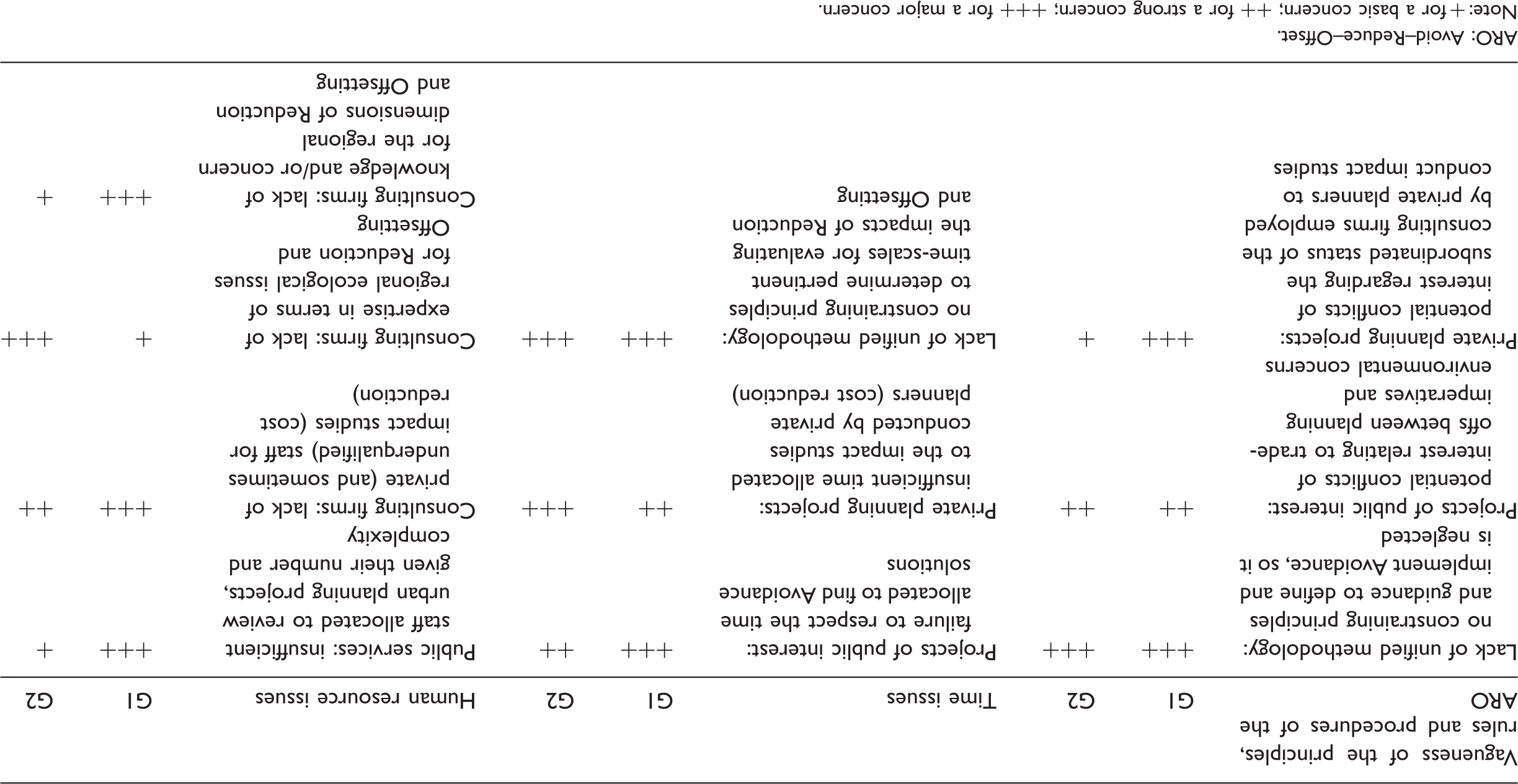
ARO: Avoid–Reduce–Offset.
Note: + for a basic concern; ++ for a strong concern; +++ for a major concern.
The offset supply: Resistance or acceptance?
The resistance to the development of an offset supply concerns environmental issues and institutional uncertainties, much like the resistance to the ARO sequence. However, developing an offset supply may also directly affect the CEN's practices on an ethical/cultural level and on a pragmatic level.
Several directors mentioned the environmental relevance of the Reserves of Natural Assets launched by the CDC, especially in terms of ‘ecological engineering’. This experiment could provide an important basis for finding solutions to some methodological problems. However, from an ecological perspective, the main issue is the fact that the spaces impacted by planning are disconnected from the areas where compensation measures are implemented. Only the most pragmatic directors mention this issue (G2). The disconnection between the land impacted by planning and the area targeted for compensation measures undermines the principles of ecological solidarity. It may be interpreted as contradictory in terms of the objectives of the Biodiversity Law. The law defends both ecological solidarity and the expansion of reserves of natural assets. Conservation measures in area B will not avoid destruction in area A and may involve a net loss (G1.3, G2.2, G2.3, G2.4, G2.5). It also raises the issue of the substitutability and continuity of ecosystem services from one place to another (ibid.). Some of these issues were also raised in other countries. For example, in the UK (Hannis and Sullivan, 2012) ‘ordinary’ spaces are in danger of being neglected as developers focus on protected areas.
The development of the Cossure's offset supply has often been associated with a general concern about the legal framework of the ecological agreements, which could also be developed through ‘actual environmental obligations’. Notably, the duration of the obligations has yet to be defined and landowners may abandon the scheme after the initial phase (G1.4, G2.2., G2.3, G2.4, G2.5). Some interviewees consider that easements would stabilize the system (G1.3). The absence of clear regulations is also a concern for potential providers of natural assets. Some interviewees are worried about the risks of encouraging the financialization of biodiversity management through speculative investments from private and profit-making organizations (Q26 and Q28): ‘the idea of an offset supply is an interesting one but it depends on “who” does it’ (G1.4). As formulated by G1.1, ‘formerly I was defending a monetary evaluation for valuing the preservation of ES; but with the development of an OS, there is an exacerbated risk of financial downward side’.
In addition, developing an offset supply directly challenges the CEN's values and practices. Many doubts were raised, for example, about the actual benefit of linking advances in ecological engineering and the development of an offset supply, which may directly impact the CEN's activities. While the rating for the ‘pragmatic arguments’ (Q24) is quite positive, some directors’ comments expressed strong resistance, such as: ‘if one admits a need for more planning, yes, but is that need genuine? It is pragmatic because we don't have any other tools for dealing with planning pressure’ (G1.1). Although the directors were aware of the benefit of an offset supply for cases where avoiding and reducing impacts are no longer feasible, they highlighted the adverse effects of facilitating offsetting. Instead they are calling for more rigorous rules to ensure effective compliance with the obligations to avoid and reduce damage. For example, ‘the best solution is for the law to be respected’ (G1.5) and ‘an offset supply could be of interest if it complemented regulatory policies’ (G2.4). Compensation in the form of the preventive constitution of natural asset reserves is a ‘default solution’ (G2.1) used when measures to avoid and reduce impact have been neglected (G1.5, G1.6, G1.7, G2.1). Members of G2, as ‘precautionary pragmatists’, more readily accept that the CEN have to go along with compensation given the failure to ensure compliance with steps 1 and 2 of the ARO sequence (G2.1, G2.2, G2.4, G2.5, G2.7, G2.8). They also accept that developing an offset supply is a coherent compensation strategy, for various reasons.
This view is strategic for ethical reasons to the extent that the CEN could develop and offset supply in order to defend their collective values in accordance with the non-profit principles upheld by a social and solidarity-based economy. CEN's commitment could prevent ‘anyone’ (G2.3) from speculating and making a profit in a situation where the offset supply is a poorly regulated.
The CEN defend values and practices in their field of expertise. They have developed a proven set of naturalist, ecological and land management skills. Their expertise could be applied to offset supply schemes and would be the guarantee of genuine quality and effectiveness (G1.2-4, G2.2, G2.5). In addition, their ethical and technical legitimacy could make offset supply schemes more appealing. This is important because the potential increasing competition with profit-oriented organizations is likely to damage the CEN's economic and financial stability. This raises a further strategic issue, namely the CEN's involvement in developing offsetting activities. For example, CEN led 39 offsetting actions in 2013 and 200 in 2018. Offsetting represents an increasingly important share of their financial resources, rising from 3.2 to 6.97%. Simultaneously, the state's contribution to CEN fell from 18.8 to 13.4%. By developing an offset supply, CEN could finance their biodiversity conservation projects (Q29). However, G1 members do not support this type of development, as it is likely to deflect the CEN from their original goals and practices (G1.1 G1.4, G1.6). Moreover, the expansion of a profitable market could encourage the state or local authorities to withdraw funding from not-for-profit operations on the basis that if the CEN provide an offset supply, they could finance their conservation activities (G1.1, G1.11, G1.13, G2.2, G2.6, G3.1). However, the attitudes towards these financial risks clearly depend on the regional context. Some regional authorities still fund the CEN's core conservation and restoration activities, while others have reduced their subsidies.
Lastly, the CEN directors are also fully aware of the risks associated with the development of economic and financial incentives (potential compensation banking and ‘actual environmental obligations’). This could raise land prices and make it harder for the CEN to access land for their own conservation schemes (G1.6, G1.7). This issue is the focus of recent debates within the CEN network. It concerns the creation of a foundation to raise funds, which could be a way to overcome certain legal and administrative constraints, and would enable CEN to gain direct access to land.
If a commitment to restore and preserve biodiversity becomes a source of potential revenue for landowners, they may be reluctant to grant possession or use of their properties to the CEN. Landowners involved in CEN's land stewardship schemes could switch from being value-rational voluntary participants and become instrumentally rational entrepreneurs of compensation (G1.1, G1.3, G1.6, G1.7, G2.6, G3.4). This can be seen as a ‘perverse effect’ of attributing an economic value to ecosystem services and to developing an economy around biodiversity conservation (G1.7).
Causes of the weaknesses of the ARO sequence.
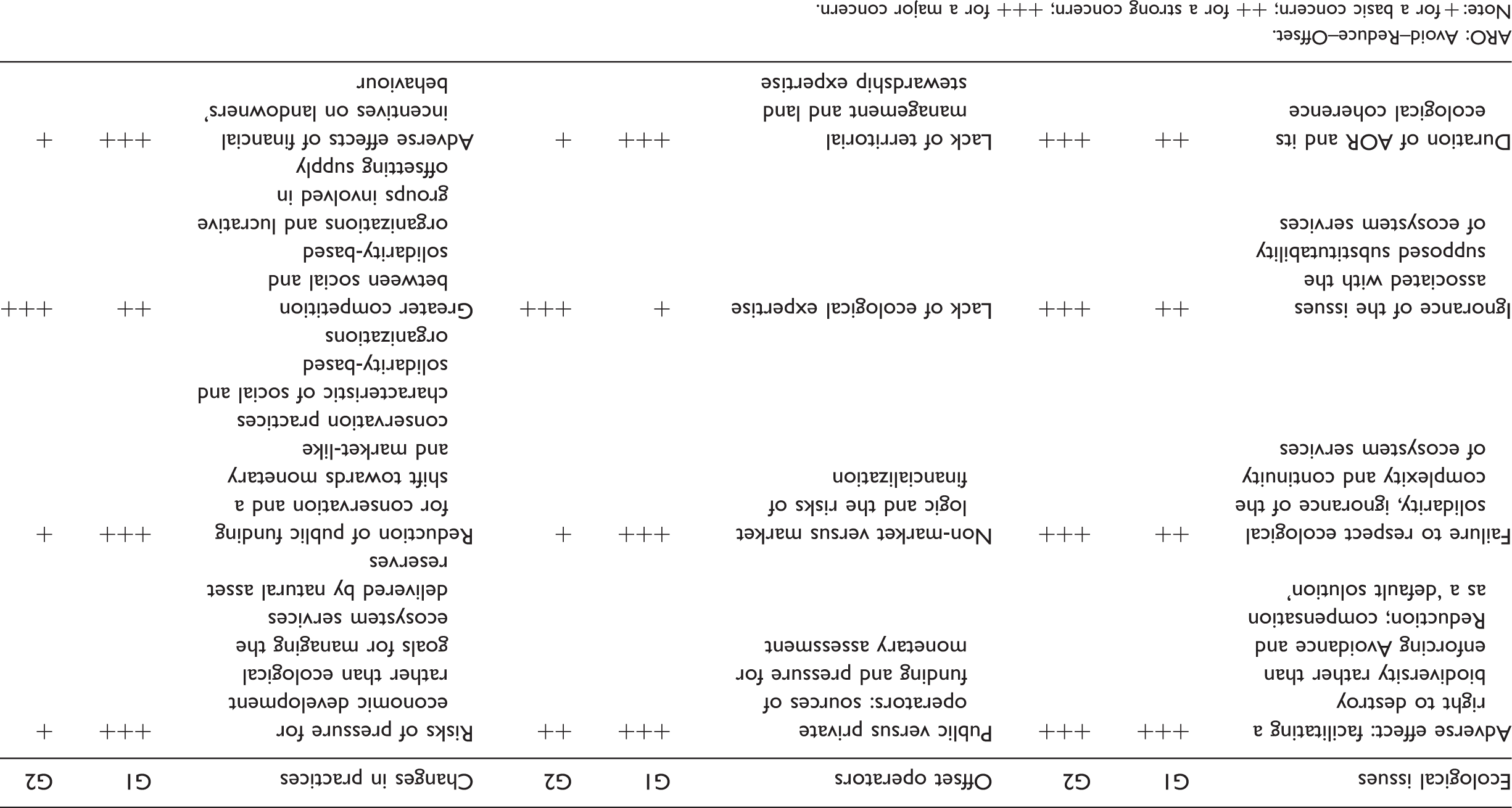
ARO: Avoid–Reduce–Offset.
Note: + for a basic concern; ++ for a strong concern; +++ for a major concern.
The CEN directors proposed mainly institutional solutions, which involved tightening regulations for biodiversity conservation and management, based on rigorous ecological principles that are consistent with sustainable regional development goals. Stricter rules could legitimate the CEN's practices and values, as well as facilitate the emergence of an innovative conservationist culture capable of addressing the new issues of biodiversity management.
Conclusion
The neoliberalization process is neither unique nor unequivocal. It cannot simply be characterized or identified in terms of the use of market or market-like instruments, such as payments for ecosystem services. It is a slow process, involving gradual changes to mindsets and practices in response to the emergence of new sets of risks and opportunities resulting from incremental changes in institutional and legal arrangements. These changes are often presented as being innovative and better able to address the problems faced by biodiversity managers.
Therefore, neoliberalization pathways affect the conservationist culture through complex processes, which can lead to the development of hybrid biodiversity governance schemes. These schemes are the result of trade-offs between the maintenance of a traditional conservationist culture and the adjustment to financial and economic rationale.
As we demonstrated, the neoliberalization of nature is gaining ground in France. The advent of the Biodiversity Law has raised a number of concerns for CEN directors, especially the potential development of an offset supply and its perverse effects. Other countries are experiencing similar institutional change, such as the UK (Hannis and Sullivan, 2012). The case of the UK also demonstrates that ‘struggles over offsetting involve irresolvable value struggles’ (Sullivan and Hannis, 2015). The same struggles are apparent in France. The development of an offset supply in France provides an interesting illustration of the diversity and complexity of neoliberalization processes.
As offset banking in France is a fairly new phenomenon, there is not yet any evidence of a commodification process. Proving that commodification exists is complex. Several institutionalist studies provide nuanced judgments about the market nature of the offset supply (Boisvert, 2015).
Nevertheless, the potential development of an offset supply would affect the decisions made by the actors involved in the biodiversity governance systems. A major actor, the CEN, which has a wealth of experience in restoration, enhancement and compensation, is no exception. The new sets of risks and opportunities associated with the neoliberalization process influence the strategies adopted by CEN directors. For example, although they criticize the development of an offset supply, they are actually exploring fundraising opportunities and ways to access land through a foundation in order to develop just that: a potential offset supply. This shows how institutional change and increasing economic pressure can lead to a clash between values and pragmatic arguments. The CEN face a dilemma. On the one hand, by playing a supporting role in anticipation of the changes, the CEN reinforce changes that harm their founding values and weaken their practices. On the other hand, the CEN could limit the potentially perverse effects of the Biodiversity Law, which they have identified. With their experience and territorial commitment, the CEN could implement innovative governance practices that federate actors involved in biodiversity management and planning on a territorial scale. The CEN initiated land stewardship in parallel to the development of offset supply and practices. Therefore, the CEN's perception of the situation could shed light on the hybridization processes that characterize the progress and transformation of neoliberalism in the biodiversity conservation field. The CEN's defence of a social and solidarity-based economy could offer an alternative response to counter the market-like tools encouraged by neoliberal discourses, which are enhanced by the legal grey areas. In many respects, the CEN could be the harbingers of a ‘new conservation’ paradigm that promotes conservation ‘to benefit people but opposed to links with capitalism and corporations’ (Holmes et al., 2016: 353).
In other words, the CEN would then be faced with ambiguous paths of sustainable development. It will inevitably be caught between the forces of financialization and the institutional opportunities for implementing effective territorial projects. According to North's theoretical framework, the path chosen depends on the stakeholders' relative political weight. The CEN must defend its values to ensure that the Biodiversity Law reflects environmental and territorial issues and effectively endorses a new conservation paradigm, rather than private and profit-making interests.
Highlights
We examine how the conservation of natural spaces in France is affected by institutional change through the Biodiversity Law. Consequently to institutional change, a new structure of risks and opportunities influences the strategies adopted by stakeholders. Neoliberalization pathways depend on whether the stakeholders accept, resist or adapt to their new institutional environment. We focus on the CEN. CEN strategies are trade-offs between the maintenance of a traditional conservationist culture and the adjustment to financial and economic rationale.
Footnotes
Declaration of conflicting interests
The author(s) declared no potential conflicts of interest with respect to the research, authorship, and/or publication of this article.
Funding
The author(s) received no financial support for the research, authorship, and/or publication of this article.