







Abstract
The literature on public sex environments spans a number of disciplines, including public health, queer geography, and urban planning. Ethnographic, spatial, and epidemiological approaches have predominated but heretofore few researchers have dedicated much attention to the actual plants that provide cover for sex as well as other non-conformist activity in urban green spaces. We draw on recent work in environmental history and political ecology which include non-human organisms as crucial and possibly agentic members of dynamic assemblages. We examine the flora of three urban green spaces—and their landscape—and argue that botanical control of public sex environments has long been and still is largely an attempt to control supposedly deviant sexualities.
Keywords
Introduction
As part of a project to reduce injuries from street-level trains and to improve traffic in lower Manhattan, an elevated rail line was constructed as part of the West Side Improvement Project in 1933. As train traffic slowed in the post-World War II era, what had become known as the High Line carried fewer and fewer trains. The tracks were disconnected from the rest of the city’s rail network in 1980 and were essentially abandoned by their owner, Conrail. In this time of abandonment, birds and high winds began to disperse seeds which grew into a weedy, unintended ecosystem, where nearly 75 species of plants ultimately inhabited the tracks (Patrick, 2017: 141). In his book The World Without Us, Alan Weisman used the ecological development of the High Line as an example of the natural regeneration of human-constructed spaces if humans were suddenly no longer there. His book referred explicitly to the High Line: Since trains stopped running there in 1980, the inevitable ailanthus trees have been joined by a thickening ground cover of onion grass and fuzzy lamb’s ear, accented by strands of goldenrod. In some places, the track emerges from the second stories of warehouses it once serviced into lanes of wild crocuses, irises, evening primrose, asters, and Queen Anne’s lace. So many New Yorkers, glancing down from windows in Chelsea’s art district, were moved by the sight of this untended, flowering green ribbon, prophetically and swiftly laying claim to a dead slice of their city, that it was dubbed the High Line and officially designated a park (Weisman, 2007: 27).
Indeed, despite threats of demolition in the 1980s and most of the 1990s, the Friends of the High Line, a non-profit, were able to mobilize the community and save the High Line. With this new re-development, the detritus and spontaneous vegetation were removed, and the disused rail bed was reborn as a chic urban destination. The High Line is a public landmark in New York City which attracts nearly 8 million visitors per year. Comprised of a 1.45-mile-long promenade, family-friendly picnic lawns, and a range of ecological and civic spaces, the project’s success has made the High Line a model for public–private partnerships in neoliberal urban development. This phenomenon, often dubbed the “High Line Effect” is occurring in cities across the globe, where cities have begun to see “yuppie” parks as economic drivers of luxury real estate development and rapid gentrification (Betsky, 2016: 76–79). Although rainbow signs on the High Line attempt to proclaim its history as a queer space, this “new homonormativity” has “domesticated” a part of the queer culture by trading the space’s historical unruliness—both radical action and overgrown ecologies—for accumulation and consumption (Brown, 2012; Duggan, 2002).
Complicating this story of construction, abandonment, and renovation is the fact that the High Line was never completely abandoned. A chaste Wikipedia entry mentions only “urban explorers” making use of the rail bed during its period of abandonment by Conrail (“High Line” 2019). This lengthy entry—as well as most histories of the reborn urban park—erases the history of a now-vanished queer place (James Corner Field Operations, 2015; Sternfeld, 2009). Decades before its development by Friends of the High Line, the High Line was an interstitial, “loose space” characterized by ill-defined ownership and a range of uses by artists, queers, sex workers, and non-conformists (Doron, 2012: 215). These emergent ecologies of tree-of-heaven (Ailanthus altissima), sumac, lamb’s ears, and other species were unbeknownst to most New Yorkers, yet familiar to people who frequented the space at night, cruising for sexual partners after being at any of the Meatpacking District’s gay bars and leather clubs located just below the tracks. The “inside story” of the High Line—written by the two co-founders of the Friends—admits that “[gay] people would pretend that they discovered the High Line when they were going to art galleries, but it was really when they were going to gay dance parties at Twilo, the Tunnel, or the Roxy” (David and Hammond, 2011: 35–36). There is no mention, however, of how the foliage concealed sex on the rail bed after the parties at Twilo during the 1980s and 1990s (David and Hammond, 2011: x–xi).
In this paper, we first review the literature on plants as agents—or at least central pieces of assemblages. We then suggest that attention to what we call “botanical politics”—the use of plants as an excuse for further marginalization of the already marginalized, though with plants playing an active role in “resistance”—provides an analytical framework that centers plants as powerful symbols and actors. Drawing on what scholars across disciplines have long suggested about the potential agency—or at least importance—of the natural world in human affairs, we then present three examples of how control of rampant foliage may be a green screen for control of non-conformist sexualities. We argue that plant management in urban green spaces is often a strategy to disrupt public sex environments (PSEs), but that the plants themselves tend to foil these plans. Although certain things change in space and time such as the specific plants removed, and the justification for removal, the consistent attempt to straighten “rambunctious gardens” 1 fails, and deviant sexualities alongside undesired plant communities strongly persist.
Our conception of botanical politics, while still inchoate, is coherent enough to lead to a series of questions to pose to alteration of green spaces: why is a certain plant being added—or, more often—removed? Who has made that decision? What were the justifications and if they are ecological, do they fall in Douglas’s category of “matter out of space”? If ecological or biogeographical reasons are adduced for modifying the floral composition of an urban greenspace, are there other possible reasons which might be the underlying goal of the plant addition or removal? Does this landscaping preserve access to all while removing use to some? Cui bono—whom does this benefit, in a botanical sense? And finally: do the plants accede? To what extent do they resist human projects? Are they inadvertent allies to the marginalized?
These questions are important in an era of climate-induced weather events and the galvanizing of a government response to the threats of future ecological disasters. Social scientists need to be prepared with critical questions to put to ecological interventions proposed by scientists. To give one example relevant for this article: despite massive spending at all levels of government in the United States to remove the reed known now as Phragmites australis, there has been almost no assessment of the effectiveness of those interventions, not to mention for the possible social reasons beyond this reed removal (Martin and Blossey, 2013). Changing the greenscapes of cities will require the same careful assessment for social costs now required for all other infrastructural interventions.
Plants, people, and agency
In this paper, we have attempted to give more attention to the second part of the phrase “queer ecology,” a term defined by Matthew Gandy as the intersection between queer theory and urban ecology (Gandy, 2012: 727). Rather than examine some of the more traditional loci of queer life—tearooms, bathhouses, queer bars, and even (more recently) queer dating apps—queer ecologists turn their attention to urban green spaces. The resulting literature, despite describing places such as urban parks, has largely centered on human actors. In this article, we unite the smaller scale of queer ecologies with the work done by environmental historians in the last few decades. This vibrant literature asks what the post-structural world means for narratives about human agency, drawing on actor-network theory to see the natural world (and in particular plants) as sharing agentic power in history (Cronon, 1992; Stroud, 2003; Nash, 2005). This new conceptual frame has had immediate results, with scholars describing trees’ resistance—rather than passive accession—to state-building projects (Appuhn, 2009), as well as the difficulties that plants themselves present to categorization (Mukharji, 2014). This approach is productive, yet limited, as narratives tend to focus on national, imperial, and global looms, rather than pursuing case studies on a local level. More attention to particular cases has allowed the authors of this article to show the similarity in botanical politics across countries and green spaces.
Our research also extends upon recent work in urban political ecology. The goal of political ecology was to remedy “human and cultural ecology’s lack of attention to power and political economy’s undeveloped conceptualizations of nature” (Blaser and Escobar, 2016: 164). Classic early works approached the problem of “ecology without politics” by connecting small-scale ecological issues to global dynamics (Blaikie, 1985; Hecht and Cockburn, 1989; Nietschmann, 1973; Watts, 1983). In the last decade, a third wave of political ecologists have explored these environments using a variety of concepts, among them actor-network theory, hybridity, and “relational ontologies”; the data is not just biophysical processes but also environmental imaginaries (Paulson et al., 2003; Blaser and Escobar, 2016). Although we argue that plants are in effect resisting human attempts to discipline them, we also acknowledge the importance of plants-as-imaginaries: in our cases, as riotous swamps of iniquity, dark forests of decay, or threatening parklands that must be trimmed back to civilized right angles and open vistas.
In his 1999 essay, Langdon Winner posed the question of whether things have politics, which he defined as “arrangements of power and authority in human associations as well as the activities that take place within those arrangements” (Winner, 1999: 28). Winner described two ways in which human-made objects do indeed have politics inherent in them. Firstly, if the design of the object or system “becomes a way of settling an issue” and secondly if there are “man-made systems that appear to require, or to be strongly compatible with, particular kinds of political relationships” (Winner, 1999: 27, 28). Matthew Gandy has noted that the “development of theoretical connections between ecology and queer theory” has been limited (Gandy, 2012: 735). With that in mind, we propose the term “botanical politics” to describe the “political” aims (broadly construed, following Winner’s definition above) that are inherent in the management of certain human-created landscape spaces, particularly urban parks. Although this “politics” has previously concerned the history of botanic gardens are sites for imperial world building (Brockway, 1979: 461), we argue that this politics can be extended to queer environmental histories as well, where what is passed off as management of “unruly” plants within public parks echoes a colonialist narrative while also becoming a strategy to remove deviant sexualities in place. The resistance that we chronicle below is both by both humans and plants: marginalized people make use of the plants as safe havens while the plants themselves simply resist attempts to keep them from regrowing and growing tall and lush.
These new conceptual frameworks for non-productive places are appropriate for the landscapes we examine in this article—a park that emerged from a hygienic project, a cemetery-cruising ground threatened by gentrification, and a former bastion-turned-greenspace where cruising thickets are the center of debate between queer activists and park management authorities. Using historical and ethnographic methods, we present these three queer spaces as local case studies which offer different insights and notions of botanical politics through their relevant non-human and human actors.
Our three landscapes are both urban green spaces and PSEs 2
Urban sociologists have approached PSEs from a spatial perspective, analyzing why certain places at the margins of cities are appropriated for public sex and other non-conformist uses (Davis, 2009). Historians and scholars of literature have contributed to these discussions, highlighting how these places emerge and what they mean for the communities who, at least for part of the day, use them (Chauncey, 1994; Berlant and Warner, 1998; Brown, 2004). Geographers have brought to bear tools of spatial analysis on PSEs, revealing how the location of PSEs shape sexual behavior in them (Flowers, Marriott, and Hart, 2000), how PSEs undermine the dominant notion of citizenship (Hubbard, 2001), and how control of PSEs from the state excludes individuals from both the city and larger national projects of public memory (Catungal and McCann, 2010), PSEs in parks were included in one of the earliest literature reviews of sexual geography (Binnie and Valentine, 1999) and have been a rich empirical location for scholars interested in non-heterosexual sexualities. Many of the spaces examined in the literature on park PSEs resemble the early history of what became the High Line: they are forgotten corners of parks or other green urban spaces that are overgrown with spontaneous vegetation. Although the authors of individual case studies in Washington, DC (Davis, 2009), Toronto (Sarsh, 2005), Copenhagen (Kryger, 2014), London (Gandy, 2012), and New York (Patrick, 2017) describe how “marginalized populations have appropriated portions of…preeminent planned urban spaces for purposes that co-opt or subvert the designers’ original intentions” (Davis, 2009: 339), in many cases, there is little mention of the flora that constructs the space and makes this activity possible. These authors have occasionally mentioned plants in their accounts—mainly as to what provides cover for the sex or illicit behavior—but heretofore plants have not been at the center of analysis.
We extend the contributions of queer theorists—especially those attentive to architecture and ecology (Hobbs and Sandilands, 2013; Betsky, 1995)—and reveal that PSEs are often places inhabited by queer men as well as by a range of marginalized actors, including species of plants that have been historically demonized, often classified as “weeds,” and discarded for more “desirable” species of flora. Sexual geographers have long echoed the Lefebvrian observation that space is not a passive backdrop but an active constituent of place (Houlbrook, 2001). In urban green spaces, plant life performs crucial work, allowing (and sometimes resisting) human projects of place-making. Although queer cruisers, artists, and “squatters” have taken advantage of the overgrown spatial materiality of planted form, usually its height and density—to get by in an increasingly hostile meteorological and politico-economic climate, the mere existence of these weedy, emergent plant species has sparked tensions between urban ecologists and landscape preservationists alike (Patrick, 2017: 146). Although some proponents highlight the potential of species such as the tree-of-heaven (A. altissima), reeds (P. australis), or the white mulberry (Morus alba) to thrive in disturbed sites, sequester carbon, and provide ecological and human services such as canopy cover in underserved neighborhoods (Del Tredici, 2010; Seiter and Studio, 2016: 38), others have demonized these plants as invasive, “non-native” species, and seek to terminate their existence entirely in the name of proper ecological management (Elton, 1958; Wilson, 1992; Simberloff, 2013).
Archival silences and plant-aware ethnography
In this paper, we use a combination of historical and ethnographic methods to evaluate evidence which we have collected in the archives and as part of fieldwork. Below we lay out three specific cases—the Back Bay Fens in Boston, Abney Park in London, and Ørstedsparken in Copenhagen. We chose these sites in part because they were in cities that we spent time in but in addition to that, each case offers different insights and notions of botanical politics through their relevant human and non-human actors. Whereas in the Back Bay Fens, specific plant species are co-opted as a means to exclude and govern the use of space, in Abney Park and Ørstedsparken, overgrown and spontaneous plant communities are caught amid an oppositional politics between parks management authorities, preservation groups, queer activists, and urban ecologists. In all cases, the plants vehemently persist despite consistent attempts to restrict their growth and “unruly” behavior.
To reconstruct the history of the Back Bay Fens, we have relied mainly on records from the Frederick Law Olmsted archives, the archives of the Fenway Garden Society (FGS), and the records of the Army Corps of Engineers. Describing the deeper history of the park now known as the Back Bay Fens served several purposes. First, it showed that rather than being a fragment of an imagined pre-colonial nature or even a more recent historical project of Frederick Law Olmsted, it has long been a space with exclusion built into its botanical landscape. Tracing this history also allows us to show the persistence over time of the reeds despite human efforts to remove them. The archives also reveal the continuity of human attempts to remove these reeds as well as the changing justifications (homophobia, later rhetoric about so-called “invasive” species). All of the specific archives used to abound with references to plants and often the strong opposition concerning plants. These are the archives of the dominant, but counter-hegemonic voices can be heard too, if the records are read against the grain—and even the murmur of the wind in the reeds, bushes, and trees, if one listens attentively.
Given that the position in the records is predominantly that of the powerful, we recognized that there were problems with using only the archives to tell a queer history. Since the archival turn began with Michel-Rolph Trouillot (1995) and Jacques Derrida’s pioneering work (1996), scholars across disciplines have recognized the power that “archives wield power over the shape and direction of historical scholarship, collective memory, and national identity, over how we know ourselves as individuals, groups, and societies” (Schwartz and Cook, 2002: 2). 3 Archival silences abound for subalterns; reading against or along the archival grain does not always yield results (Burns, 2010; Stoler, 2009). Queer voices are especially hard to hear in the archive as, like other institutions of memory, it is “a straight ghetto,” a museum to “erotically decorated straight separatism” (Panayotov, 2016: 122; see also Cvetkovich, 2003; Pavlounis, 2016).
Although there have been recent attempts to recover queer histories from the archives in both the global North and the global South (Migraine-George and Currier, 2016; Boone, 2017; Squires, 2017), we chose to use ethnographic research to complement what we gleaned from the archives. Ethnography allowed us to compare current strategies of plant removal intended to prevent deviant sexual behavior, to past attempts across geographic space. This mixed methodology also allowed us to put questions generated, say, from historical records—for example, what have been the justifications for removing plants that hide what otherwise would be very public sex—to present-day people in these green spaces, both managers and users. We do however recognize the limits of the ethnographic evidence both in quantity as well as in its limited scope; among others Brown (2008b; 2012) has several times noted the concentration of research on “urban gay space” in a few large cities of the Global North. We hope this study will lead to more research in the urban environments of the global South, as well as more queer oral histories and (auto)ethnographic work on queer spaces, on the model of Manalansan (2005), Brown (2008a), McGlotten (2014), and Anderson (2018).
Whether we were looking through historical records or observing and talking to people in these spaces, we also took the time to take the plants in our areas of study seriously. Although we are agnostic on the possibility of plant consciousness, recent work on actor-network theory and non-human agency inspires this work. Much of that work focuses on the large or the quick: instantly visible electromagnetic forces or powerful geophysical realities (Bennett, 2005; Mitchell, 1991; Donahue, 1997), or on animals who move fast enough for humans to notice their intentions (Callon, 1984; Law and Mol, 2008a, 2008b). Here we follow the lead of Brown (2008a) in examining “how public homosex is enacted and performed in relation to both human and non-human bodies, objects and the environment in which it takes place” (p. 915). The chronological and geographic breadth this article covers let us slow down to botanical time: by being able to watch plants return after their near-deracination, we could see their plans: growing up, spreading out, and asserting their right to sunlight. As we will show below, reeds, trees-of-heaven, and heart trees are not simply part of the urban backdrop, but rather crucial components of an assemblage. Their emergence turns an otherwise heteronormative space of leisure into a queerscape, and their intentional removal—often unsuccessful, because the plants are tenacious—is often an attempt to disrupt that queerness.
Our comparative study also allowed us to trace the implications of botanical politics from different viewpoints. Although we were struck with the similarities between the Fens and Abney Park’s semi-hidden “green floral sex rooms,” we were able in the latter case to speak with the current queer users of those rooms. The Fens case allowed us to compare historical justifications for reed removal with the present-day reasons given for cutting back dense foliage in Abney Park and Ørstedsparken. Finally, Ørstedsparken gave us an example of resistance to the dominant botanical politics by queer activists and park-goers. Their means of defending their uses of the park took the form of “seed bombs,” a weapon of the week that has escaped even James Scott’s notice as a counter-hegemonic tactic (Scott, 1987).
Sex in the reeds: Boston’s Back Bay Fens
Just west of Boston, the Muddy River winds through what is now a park called the Back Bay Fens. Frederick Law Olmsted created the Fens as one of the first parts of the Emerald Necklace, a chain of parks and green spaces that encircle Boston in a rough semi-circle on its southern side. The Fens were part of a series of late 19th century land reclamation projects in Boston (see Seasholes, 2003; Rosen and Fitzgerald, 2009). The small bay that became the Fens had been dammed like the more famous Back Bay. When closed off from the tides in the mid-19th century, both bays became polluted cesspools, prone to flooding during storms. Unable to annex nearby towns and worried about the outflow of wealthy taxpayers, Boston’s municipal government had to create solid, safe new land on its flood-prone margins. Filling its coves and bays killed two birds with one stone: it eliminated the shanties and poor residents along the stinking mudflats and created middle-class housing on stable ground. The later Victory Gardens were and are an example of urban agriculture as part of the settler colonial project (McClintock, 2018). The Back Bay Fens then provide dual examples of botanical politics: first, elites used certain plants to exclude working-class recreation from the Fens; when a radical transformation of the Fens changed its ecology, elites then tried to eliminate certain flora to curb cruising among the reeds.
Unlike Boston’s other major land-making project, the Back Bay (which was simply filled to create land for new houses), the area that became the Fens had to function as a catch basin for flood control of the Muddy River. Olmsted dredged at some points and filled at others, to create an artificial catch basin with three distinct levels of land (Zaitzevsky, 1982: 51–58). Rather than build a park for active recreation, Olmsted’s mandate had been to create a “sanitary project,” an urban wilderness to contain floodwaters that would not become a site of active recreation or (worse) a place of refuge for marginalized people.
Olmsted was clear from the outset that the Fens were not to be like New York’s Central Park, with space for active recreation. Indeed, he rejected the Commission’s name, “Back Bay Park,” and instead titled his design “Proposed Improvement of Back Bay” (Olmsted, 1879). The editor of Olmsted’s papers asserted that Olmsted saw “the problem as one of sanitary engineering and consistently refused to employ the term ‘park’ in connection with the project” (Olmsted, 2013: VIII: 187–88). In an 1883 letter to the chairman of the park commission, he made explicit that the Back Bay should not be considered a park: “With a view to a public opinion sustaining true economy and suitable design in park work proper, nothing could be more unfortunate than that the work in the Back Bay should be regarded as park work” (Olmsted, 2013 [1883]: 186). In another letter to the Parks Commissioner (in 1887), Olmsted proposed the name “Back Bay Fens.” The landscape architect had not visited England’s Fens on his 1850 walking tour, but he surely knew about the famous drainage project. The watery Fens had long been a hide-out for those wishing to escape state power and taxation. In the English case, draining the swamp had strengthened the ability of the state to control its subjects.
Olmsted instead wanted to recreate the Fens but keep the public out. In his 1887 letter he said that the proper name for the bottom of the basin is “a name significant of its landscape character…[rather than] one provoking comparisons with grounds prepared with exclusive to their use as pleasure-resorts” (Olmsted, 2013: VIII: 487). Olmsted’s mention here of what he calls “pleasure-resorts” is telling. One park historian has noted that the well-manicured British landscape initially took a decidedly commercial turn when imported to the United States, where “commercial pleasure gardens preceded public parks in New York as popular settings for outdoor leisure” (Schenker, 2009: 23). It was in reaction to spaces like this that the great public parks of the 19th century were created, such as Olmsted’s Central Park in Manhattan. Both commercial gardens and the later, more formal public parks “were clever stage sets representing certain ideas about nature, the country, and the city” (Schenker, 2009: 8). When he began the Fens project, he already had several decades of experience using plants to shape human behavior in space.
The problem for Olmsted was how to create a large green space that would not be seen as a park—and he surely realized that simply changing the name from “Back Bay Park” to the “Back Bay Fens” would not be enough. His answer was to choose plantings that would enforce his botanical politics. His descriptions of the Fens focus on the relationship between the zones of the project, their flora, and the appropriate uses of the space. He then asks a question as to why the slopes “[are] crowded with common wild bushes instead of being organized in a lawn-like way, with detached groups of trees, shrubs, foliage-plants, and flowers?” (Olmsted, 2013: VIII: 188). Speaking of his work in Central Park in 1871, Olmsted had underlined the fundamental role of mowed grass in a park. Restoring the weary urbanite was botanically the job not only of trees and small bodies of water, but also tranquil, meadow-like grassy areas (Cranz, 1982: 40). Yet this was clearly not his intention with the Fens, about which he said that “the public cannot be prudently admitted to any part of the basin except the slopes of its rim” (Olmsted, 2013: VIII: 187–88). Botanical selection ensured spatial exclusion. In his mind’s eye, he saw the area a few years into the future “mantled with sedges, rushes, and cordgrass, with slashes of such golden-rods and asters as are now found in profusion on the tidal banks of the Charles and the salt-marshes at the head of the bay” (Department of Parks, 1880: 11).
On the high grounds near the paths that wound around the Fens, Olmsted envisaged white and red pines, white spruce, barberry, and privet. From that rim down to the basin, he asked for bayberry, Oregon grape, raspberries, blackberries, dwarf grey willow, clematis, and Japanese honeysuckle. On the margins of the water Olmsted wanted goldenrod, various asters, and beach peas, as well as sea buckthorn, five-stamen tamarisk, and beach plums (Hilderbrand and Zaitzevsky, 1986: C2–C12). Olmsted was catholic in terms of plants’ provenance; with his knowledge of botany, however, he surely would have imagined how this floral combination would feel. Stiff-needled tamarisks, thorny barberry, sea buckthorn, and beach plums, all had long spikes, brambles tore at clothing and skin, and a variety of flowers ensured that pollen filled the air of the basin from early spring to late fall. The dense thicket would have made the Fens a painful and undesirable place for humans to walk or play as this photograph from 1896 indicates (Figure 1). Exclusion through planting seems to have worked for several decades as there are no pictures of any sort of active recreation in the Fens before the 19 teens.
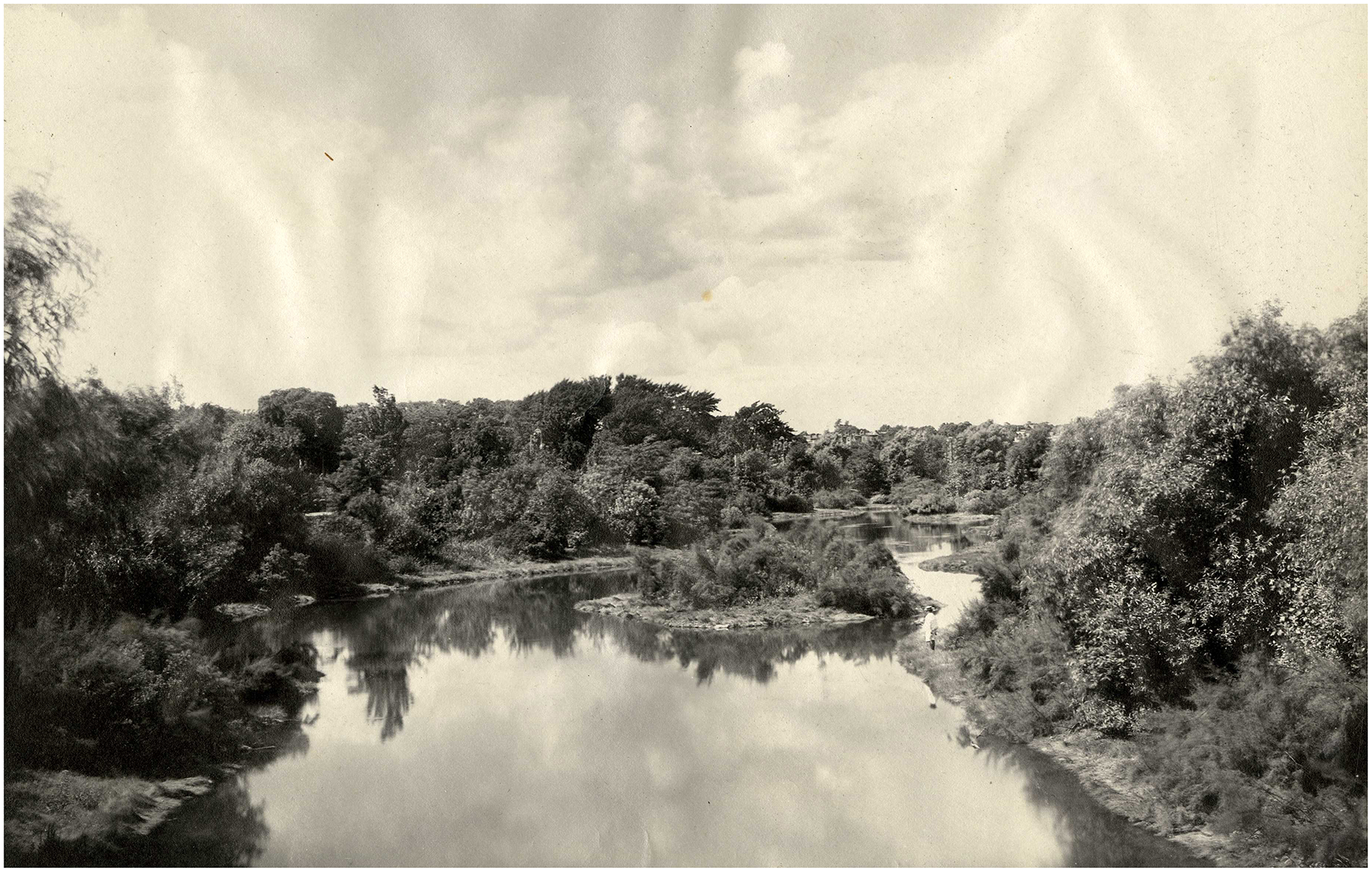
Nothing in this photograph of the fens, taken around the turn of the century, invites the public into a “park.” Source: Used with permission from the National Park Service. Frederick Law Olmsted National Historic Site Archives, Olmsted Photograph Album Collection, Job #916 Back Bay Fens Boston, MA, Photo #00916-01-ph25, undated.
A desire for more recreational space radically reshaped the Fens. The plants that had excluded people (by blocking their way, scratching them, or making them sneeze) were cut back, covered, and replaced by wide lawns and more canopy trees. The back-filling of the Fens also provided a place for one of Boston’s many World War II era Victory Gardens, a series of individual garden plots created to reduce pressure on the nation’s food supply during times of war (Schons, 2011). As Amy Bentley shows, this necessitated not only a hurried conversion of formerly unproductive spaces into vegetable gardens, but also a shift in thinking about gardening’s function. Bentley points out that with the beginning of the industrialization of the food supply, gardening in the US functioned “less as a source of vital foodstuffs and more as a form of recreation” (Bentley, 1998: 116). The demands of the wartime economy meant the encouragement of gardening for “playing a much more basic economic function”: in other words, providing needed food for people. (Bentley, 1998: 116). The FGS was able to maintain control over the garden after World War II, officially receiving the sanction from the City of Boston to maintain the seven and a half acres of Victory Gardens. Although the Gardens occupied only a small part of the Fens, the FGS asserted informal control over the area between the Gardens and the Muddy River, where tall reeds had grown up along the bank.
These reeds had grown up after the damming of the Charles River in 1910, where much of Olmsted’s original landscape had become obliterated through increased excavation and filling. The change in the river’s morphology and the filling of the Fens with poor-quality soils created what zoologist Peter Del Tredici has called “brave new ecologies” (Del Tredici, 2010: 16). The tall wetland reed, P. australis, apparently colonized the area sometime between 1917 and 1934 (Jones, 1917). Rather than being a survivor of the Olmstedian plan, these reeds were pioneers, colonizing the disturbed soil of an anthropogenic landscape. These reeds became the object of much ire for the FGS’s Board, which repeatedly asked the Parks Department to remove the reeds. As early as 1960—and likely even earlier—the Parks Commissioner promised to raze the reed bed. He wrote to the FGS’s Board that “in the fall the reeds will be burned down” and that they would “no longer be plagued by this problem” (Fenway Garden Society (FGS) 1960). Ten years later the reeds were again a problem: a representative of the City of Boston had pledged that part of a federal grant would be used to tear out the reeds, but the grant had not come through and as a result, the reeds were not torn out (FGS, 1970a: 1).
It is difficult at first to understand the gardeners’ decades-long hostility toward the reeds. The reason for their ire is to be found not in the plants themselves, but rather in the perceived need of protecting the area from the “undesirables who infest it,” as one FGS board member put it (FGS, 1970b). At some point between the founding of the Victory Gardens (in 1943) and the late 1950s, the tall reeds became a cruising location for queer men. This is partially the result of the Fens nearness to Boston’s gay bars in the Fenway neighborhood. Matthew Gandy has noted that the development of a public sex environment (PSE) requires ensuring that “any sex play takes place out of the public view under cover of darkness or foliage” (Gandy, 2012: 99). The reeds provided cover for park users that the Victory Gardeners did not want as neighbors. Marginalia in a 1971 FGS report shows theft of vegetables from plots, homosexual acts, and drug use. Next to another passage on improved lighting and reed removal, someone wrote the word “dope,” then below it “homosex” (FGS, 1971a).
In a letter the following year, the FGS president asked the Parks Commissioner to install lights along the river path, as “the section between the gardens and the river is infested with drug pushers and users, and, as you know, other highly undesirable groups” (FGS, 1971b). The gardeners sometimes used the threat of violence in attempts to exclude the so-called “reed trysters.” The minutes of a 1973 Board meeting depicts a telephone call between one of the board members and a representative of the Homophile Union of Boston. Mrs. Patricia Burns reported that a member of the Union had called her at work to discuss two points of concern. He first informed her that “increasing personal violence—some of a very serious kind—has been perpetrated on their members while they are rendezvousing in the rushes” and then asked that Mrs. Burns “assure FGS members that Homophile members are in no way responsible for garden vandalism.” In what sounded like a veiled threat, Ms. Burns said that she had “strongly advised the Homophile representative to advise his members to stay out of the garden areas because it is definitely a high crime area” (FGS, 1973: 2).
The reed trysters who so bothered the gardeners were making use of the Fens’ new ecology: the stands of P. australis were quite tall (the reeds grow thickly and to heights of over 20 feet) and quite deep. In some places, the stands are 60 feet from the edge of the Muddy River to the lawn that surrounds the Victory Gardens. The trysters have for decades trampled paths back into the stands and created “rooms” where very private activities can occur. These rooms are clearly visible on satellite photos of the area as well as also ground-level observation of the stands (Figure 2). Gardeners observed men going into the reeds and attributed late-night vandalism to these trysters. Soon, the gardeners’ irritation shifted to open hostility. By frequenting the secluded area between the Gardens and the river, trysters contested the heteronormative geography of the Victory Gardeners, inverting “the bourgeois public/private division on which the sexual regulation of the city was predicated” (Gunn, 2001: 7–8).
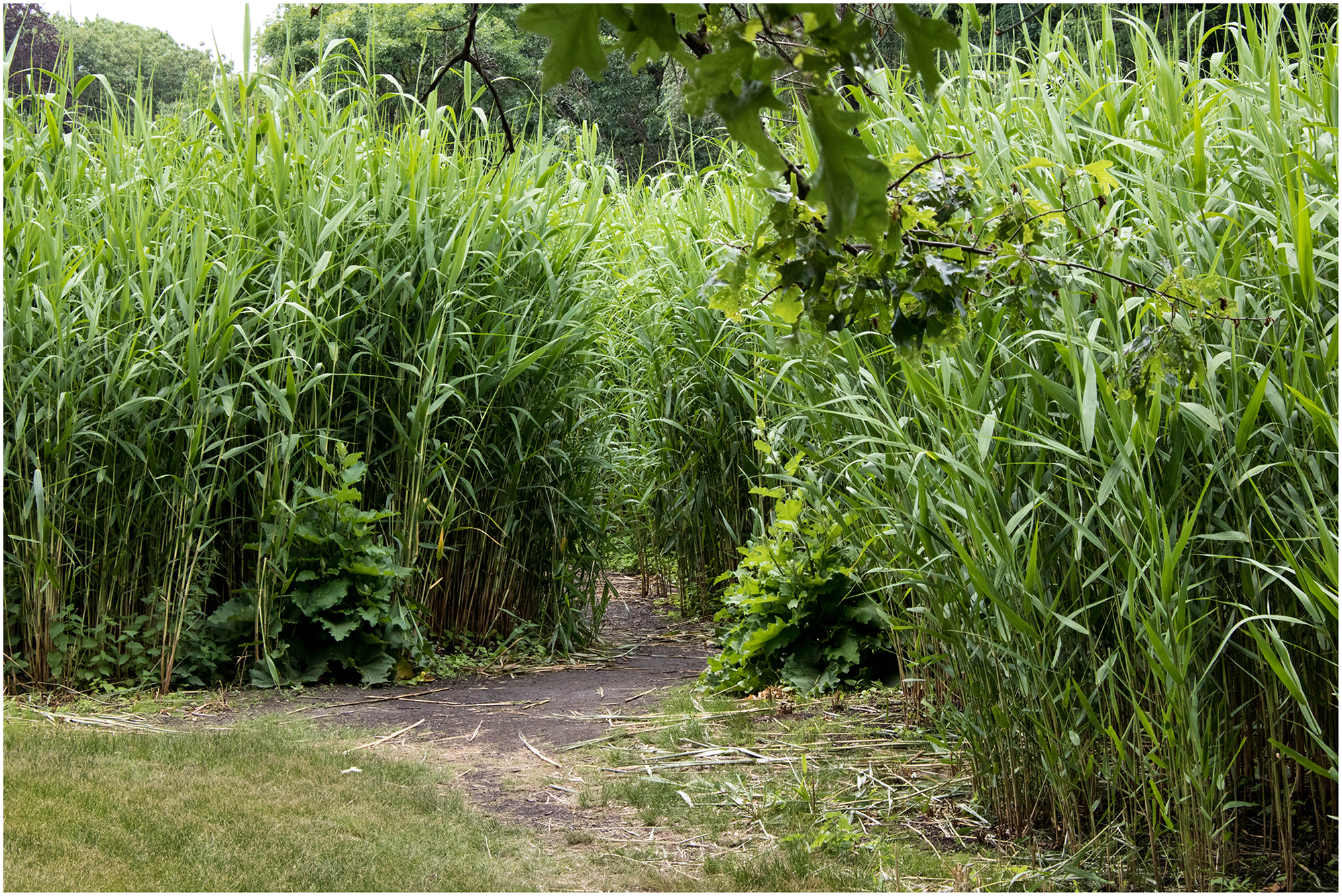
The Phragmites australis reed stands in Boston’s Back Bay Fens park. Source: Author photo.
In 1974, after repeated requests for action from the FGS, the Parks Department sprayed the reeds with two defoliants (FGS, 1974). The clouds of chemicals drifted away from the reeds and settled on a large swath of the Gardens. A few days later the Parks Commissioner apologized for the accident. Calling the reeds “Phragmites weeds” Commissioner Forgione explained that the parks department had sprayed “to kill the weeds and thereby make the area around the Victory Gardens safer.” Although taking pains to reassure the gardeners that the herbicides, Amitrol T and delapon, would not contaminate the soil, he urged them not to eat any vegetables for the rest of the season that had been growing the day the area was sprayed (FGS, 1974). Like foliage elsewhere in the world, the reeds recovered, persisted, and—now othered with the Greek name of their genus—continued to obscure the undesirable Other.
The most recent attempt to remove the reeds—and with it to remove the cruising space—uses the cover of ecological and cultural restoration. In 2003, the United States Army Corps of Engineers (USACE) submitted a plan entitled “Muddy River Flood Control and Ecosystem Restoration.” In this document, the Corps outlined the major features of its plan, which included improvements to protect against flooding, restoration of the historic park shoreline in the Fens, and environmental restoration through the eradication of phragmites (Army Corps of Engineers—New England District, 2003: ES-3). Although the goal seems to be the same as in the 1970s—the total removal of the reeds—the justification can no longer be so openly homophobic and instead becomes an aggressive eco-diatribe.
In the USACE’s planning document, phragmites are “nuisance vegetation” and “an invasive plant” (Army Corps of Engineers — New England District, 2003: 1). “Growth of Phragmites has an adverse visual impact on the Back Bay Fens” as the reeds “block many views” and “have eliminated scenic vistas envisioned by Olmsted and strongly detract from the aesthetics of the area” (Army Corps of Engineers — New England District, 2003: 23, 19). The invocation of a lost Olmstedian landscape as a justification for the reeds’ removal is ironic, given the dense, tangled place Olmsted had actually intended to create. This mirrors other “historical restorations” of heritage spaces, the goals of which are to introduce “a more ordered landscape in line with the surveillance-friendly ideals of urban space” (Andersson, 2012: 1082). Their “encroachment” means “wetlands dominated by Phragmites” and thus justifies a plan of “eradication” (Army Corps of Engineers — New England District, 2003: ES-3). But park personnel will have to “guard against reinfestation” in order “to prevent colonization by emergent vegetation.” Unless extensive dredging and spot treatment with herbicides are undertaken, “aesthetics will remain degraded by exotics such as Phragmites” (Army Corps of Engineers — New England District, 2003: 42, 43, 26). Since 1971, the species has been endowed with fearful characteristics: foreign, aggressive, dangerous, tenacious, and an agent of degradation and infestation.
We are not the first to suggest a connection between the parallel fears of supposedly “alien” biota and “alien” people—whether the latter are immigrants from other countries or “internal aliens” such as queer people and people of color in relation to an imagined, heterosexual, white nation. Tim Cresswell examined the use of weeds as a metaphor for racial discrimination (Cresswell, 1997), while Nancy Tomes found a correlation between fear of germs in twentieth-century America and “reflected anxieties about societal incorporation, associated with expanding markets, transportation networks, and mass immigration” (2000: 191). Anthropologists have also made historical arguments about the rhetoric of alien invaders: in her 2001 article, Banu Subramaniam discussed the reoccurring images of the oversexed female alien and the irony of white settler Americans’ fear of “foreign” organisms (2001). Peter Coates’ 2007 on “national nature” showed that xenophobia was closely linked to the opprobrium Americans reserved for certain “foreign” species between only until the 1950s. What lustily growing reeds and queer people of color share is ultimately their undesirable reproductive futurity; they are matter out of place that threatens the homogeneous (and homonormative) future state (Douglas, 2002). 4
The Fens is a palimpsest of attempts to shape urban nature, mapping onto the spectrum Gandy describes from “the spontaneous appropriation of marginal sites to the controlling and historicist discourses of heritage preservation” (2012: 730). The park’s appearance is a result of different actors’ botanical politics, and their ability to enact these politics, have changed the Fens. Olmsted used dense plantings of tall vegetation to exclude recreational activity and emphasize the protective, “hygienic” function of the Fens. The Victory Gardeners sought to redefine the Fens as a place where private production of food could take place, but sex could not—yet the “reed trysters” contested (and continue to contest) that assertion. Those assertions claim a right to public space for queer and countercultural use, in an era where a private entity seeks to eliminate transgressive (or at least non-homonormative) sexual behavior through a façade of eco-diatribes and concerns for public safety. Ironically, and to the delight of some, the reeds persist. Despite damming, poor soil, human hostility, chemical defoliants, and occasional fires, the reeds return, challenging mainstream perceptions of the Fens as a 150-year-old green splotch on Boston’s map.
Sex in a park-cemetery
Debates over green space in urbanized areas have involved various types of public and private actors who have argued what type of “green” is desirable for the public realm. Swiss landscape architect Dieter Kienast believed that rapidly growing, wild natures could provide humans liberation from the formality of urban life, where spontaneous plants offered opportunities for an organic nature characterized by minimal maintenance (Freytag, 2014: 93). Alternatively, others saw urban green space as an opportunity for social control, where formal parks highlighted white European masculinities and the importance of maintaining the pastoral tradition in rapidly changing urban areas (D’Emilio, 1983).
In the late 19th century, medical thinkers in the United States and Britain believed that homosexuality was a direct cause of increasing urbanization and that large urban centers and the fast-paced nature of urban life cultivated immoral practices (Weeks, 1977: 23). As a reaction to this perceived immorality of the city, picturesque vistas and open promenades emerged as new typologies, where these spaces in public parks emphasized the culture of seeing and being seen, effectively suppressed public sexual contact, and produced a stage for the performance of heteronormative practices (Sandilands and Erickson, 2010: 12). Parks and green spaces became instruments of social control, where pastoral green space became a spatial endorsement of traditional values, capable of building “character,” and uplifting the ideals of the moral middle-class family (Taylor, 1999). Despite this vision, these park spaces were not without class tensions, as the envisioned uses of the park by middle-class elites came in direct conflict with uses by working-class activists. Thus, the evolution of “green space” in urban areas has never been politically neutral. Rather, we see the production of normalizing planting and urban design strategies which seek to homogenize and control access to public space for certain marginalized populations, especially queer people of color, the working class, and immigrant communities.
This history of coded sexuality within the landscape is relevant to contemporary issues affecting the regulation of public parks today. For decades in London, Abney Park has existed as an urban sanctuary that has a unique ecological and non-conformist history within the area of Stoke-Newington, a borough of Hackney. Built in 1840 as one of the “Magnificent Seven” cemeteries of London, the park cemetery was intended to improve overcrowding in existing burial grounds in London (Zushi, 2013). Abney Park’s non-conformist history starts with its establishment as the first nondenominational cemetery in Europe. Reflecting the radical political tradition of the area at that time, the cemetery was the main burial ground for Dissenters who were members of non-established churches and was open to all regardless of any religious affiliation. Additionally, while the majority of London cemeteries appealed to wealthy buyers, Abney Park aimed to make burial affordable for London’s poorest laboring populations, offering gravesites for as little as one pound (Scholz, 2017).
Abney also stands out as a unique park-cemetery as it was originally laid out as an arboretum and contained more than 2500 varieties of plants (Miller, 2008). Although some of the original trees were lost to make space for burials, some of the original veteran trees of the park still exist today and are the site of rare species and saproxylic rotten wood ecologies that are not typically found in urban settings (Gandy, 2019: 1). These ecologies were able to thrive and develop when the park fell into disrepair in the 1970s, leading to an overgrown vegetative character, where vines of English ivy and Japanese Knotweed enveloped previously visible paths. Whereas in many parks, management practices would swiftly remove fallen trees for public safety, at Abney Park these trees were allowed to remain, rot, and decay, producing the nearly 280 species of fungi that have been recorded at Abney Park to date (Miller, 2008). These rare species that emerge indicate the complex interactions within an assemblage of urban ecologies, and allow us to consider plant agency in a local site through a larger post human geopolitics that as Jason Dittmar notes, “[incorporates animals, ‘nature’, and other objects into our understandings of the geopolitical” (2013: 386). Like the Fens, Abney Park represents not a static greenspace maintained exactly as it had been created in the late 19th century: rather, it is the result of both human intentions which have varied over time as well as the organic will of non-human agents such as trees and fungi.
During site research, conversations with park-goers, urban ecologists, and local park authorities gave us crucial information regarding the park’s history as a countercultural social space in the late 1970s. One individual discussed in great detail their own experience exploring the park: There was a time when the park was always open, and we would have bonfires, go on these crazy benders till the early hours of the morning. It all happened right here, at the Chapel! It was a wonderful time, nobody bothered us. Even the police left us alone, the paths were barely visible, just totally overgrown; it was a wild place. Now it’s different, the park closes at night, it’s highly managed; but you know that still doesn’t stop some people, they just jump the fence if they want to.
Another individual also spoke to the park’s history of ill-defined ownership. We walked along some of the more overgrown paths, and they pointed out areas where other marginalized groups, such as many unhoused individuals, lived and sought refuge in Abney Park: I had a friend who lived over here for weeks, set up shelter under that collapsed tree. He would come and go as he pleased. Nobody lives over there now, but you can see condoms and trash littered everywhere behind the graves, sometimes you encounter people wandering out from the smaller paths, even during the day.
Exploring this area on our own, it was incredible to traverse these smaller, winding paths. With every few minutes of walking, one could discover new, hidden spaces that were invisible to the untrained observer—again, much like the semi-hidden green-queer sexscapes in the Fens’ reed banks. Unlike the Fens, however, we were able to hear the voices of current queer users rather than access only the archival grumblings of the people who wanted to erase them. Walking for some time, one would begin to think they were headed in the wrong direction, and then a small clearing would open, revealing litter from sexual encounters hidden behind layers of dense planting (Figure 3). These spatial environments provided evidence of the social realities of public parks, and the multiplicity of uses that can be reflected in varying degrees of urban wilderness. Whereas the use of Abney for dog walkers, runners, and those wanting to take a stroll is available on the larger, more open paths, the labyrinthine paths allowed for a different kind of social occupation, where weedy, overgrown ecosystems provided space for non-conformist activity.
This controversial social history exists in tension with English heritage groups and local politicians who have vastly different cultural understandings of London parks such as Abney, along with clear ideas of what parks should be. Activist groups such as Transgressive Architecture have addressed this conflict over the role of public space through protests and controversial installations, such as one titled “The Bad Sheets” at Russell Square Park in North London, where activists placed a set of dirty sheets directly in the bright lighting of the park to capture the public’s attention (G. M. Doron, 2001). Russell Square has remained a popular night-cruising spot for decades, despite the local city council’s campaign to “clean up” the park through increased lighting and cutback of vegetation. Unsurprisingly, these maintenance regimes set clear definitions of what populations politicians believed were allowed in the park, how people should use it, and what kind of “green space” or urban nature is desirable.

Condom wrappers and litter strewn about hidden “room” behind gravestones at Abney Park. Source: Author photo.
These ideas have and continue to exclude certain ethnic groups who use the space in ways counter to the goals of heritage or political groups. Based on conversations with Matthew Gandy, an urban ecologist and active member of the Hackney Biodiversity Partnership, Abney Park exists as an urban refuge for individuals who have been excluded from the public or digital dating scene in London, such as Turkish and Kurdish men who have sought out Abney Park as the only space to express their sexuality. This relationship between certain ethnic groups and public sex recalls Lauren Berlant’s discussion of the relationship between sex, race, and citizenship, and how when coupled with multi-cultural identity, sex oftentimes becomes coerced to fit an idealized national model of “proper citizenship,” and anyone deviating from these dominant norms exemplifies a citizenship that is “dangerous and irresponsible”(Berlant, 1997: 80). This sexual racism is oftentimes coupled with what author Jasbir K. Puar terms “homonationalism,” where a withstanding national desirability of whiteness privileges and reinforces norms of homosexuality and queerness (Puar, 2017: 2) and fails to accept intersectional identities that deviate too far from the norm. Thus, this relationship between varied assemblages of racial queer identity could explain why despite a widespread prevalence of online dating apps and digital hookups, overgrown spaces such as Abney Park still remain hidden refuges for racial sexual minorities.
During fieldwork at Abney Park, it was clear that Abney Park’s significance as a cruising space has been in conflict with the interests of heritage groups and local politicians who have been allowing urban developers access to the site within a context of increasing rates of gentrification in the North London area. This type of development has been encroaching on the edges of Abney Park, thinning out dense thickets, and transforming spaces that were previously enclosed by vegetation into areas that directly face high-rise condos on the adjacent lot (Figure 4). Although this encroaching development exposes previously enclosed PSEs, it also makes a significant impact on the urban ecology of the area, where adjacent built structures divide ecological edges crucial to the formation of species habitats (Forman and Godron, 1981; Nichols-Russell, 2016: 1). Currently, in Abney Park, several rare species grow that have not appeared in Europe for decades, and it is these ecological edges that allow for that biodiversity. Similar to the situation at Russell Square, developers have also started to install increased lighting at these edges, creating an impact on the urban bat and night-flying insect populations, as well as sending a clear message to cruisers about increased surveillance and visibility (Gandy, 2012: 731).

View of new development encroaching on edges of Abney Park. Source: Author photo.
This surveillance points to an underlying plan for park “maintenance” that actively seeks to regulate the lives of queer people of color through pruning back of shrubbery, increased policing, and the creation of manicured green spaces. In Timothy Davis’s article on Rock Creek Park in Washington, D.C., he notes that the park service has removed all tree limbs up to a height of 6 or 8 feet. Davis reports that in his conversations with park personnel, they would have preferred to take an even more aggressive approach, and it was noted that vigilantes in Queens illegally cut down trees in a park to eliminate a cruising environment, all with the tacit approval of the police. Rock Creek Park Superintendent Adrianne Coleman stated that “law enforcement would like to cut down all the trees in Rock Creek Park, replace everything with cement, and paint it green” (Davis, 2009: 349–350). We see this relationship between park maintenance, police surveillance, and structural violence in other urban sites such as the Christopher Street Piers, previously an important social space for Latinx and African American queer youth. Where the site was previously widely known for cruising and informal drag shows, now the area is highly policed and new development aims to “[fence] off unwanted colored bodies” that threatens the ethos of homonormative neoliberalism throughout the West Village (Manalansan, 2005: 151).
Sex behind heart trees
These tensions from municipal groups and public authorities are not isolated to the London area and have been a significant part of the activist discourse in Central Copenhagen as well. Ørstedsparken is a public park located south of Tørvehallerne Market, originally laid out on the grounds of the old fortification ring of the city. The site plan recalls the park’s history as a middle-class park known as a strolling ground for the royal elite; as with our other two case studies, these 19th century creations relied on plants to remake their purpose. Despite this bourgeois history, Ørstedsparken is unique for its significance as a countercultural social space and haven for the queer community. Based on the park’s proximity to gay bars and queer nightlife in Copenhagen located a five-minute walk south, Ørstedsparken exists as a well-known erotic oasis, serving as a key space for cruising and public sex (Rundager, 2013). Aspects of this queer cultural landscape are evident during the day but become remarkably clear at night when artists and cruisers begin to occupy the park searching for sexual partners by navigating its many shrubby thickets or pausing to wait on either side of the park’s central wrought-iron bridge.
Public sex in Ørstedsparken is generally accepted by the public as a cultural norm, and in the past, one could even find signs around the park that openly discussed its occurrence. One read: “Sex is allowed in the park. But be careful! Many children’s institutions use the park. Do not allow sex on the playground or visible places in the period 9:00–16:00. Remember to remove used condoms from benches after the act and dispose of used condoms and napkins in the garbage cans. The municipality of Copenhagen encourages safe sex!” However, this began to change in 2001, when family members of municipal authorities started to complain about cruising and the visibility of trash in certain areas of the park (Frank, 2001). Whereas a rational public health response would mandate increased trash receptacles, the park’s management team initiated an immediate response by removing shrubs and bushes where these private activities of public sex commonly occurred. Because of this precedent, public sex in Ørstedsparken has been under attack by municipal powers for decades. Dense planting and shrubby thickets have been removed in direct political response to the act of cruising that occurs in the park, with park management authorities thinning shrubby undergrowth in a widespread pruning effort to make the park appear “safer” and more “family-friendly” (Figure 5).
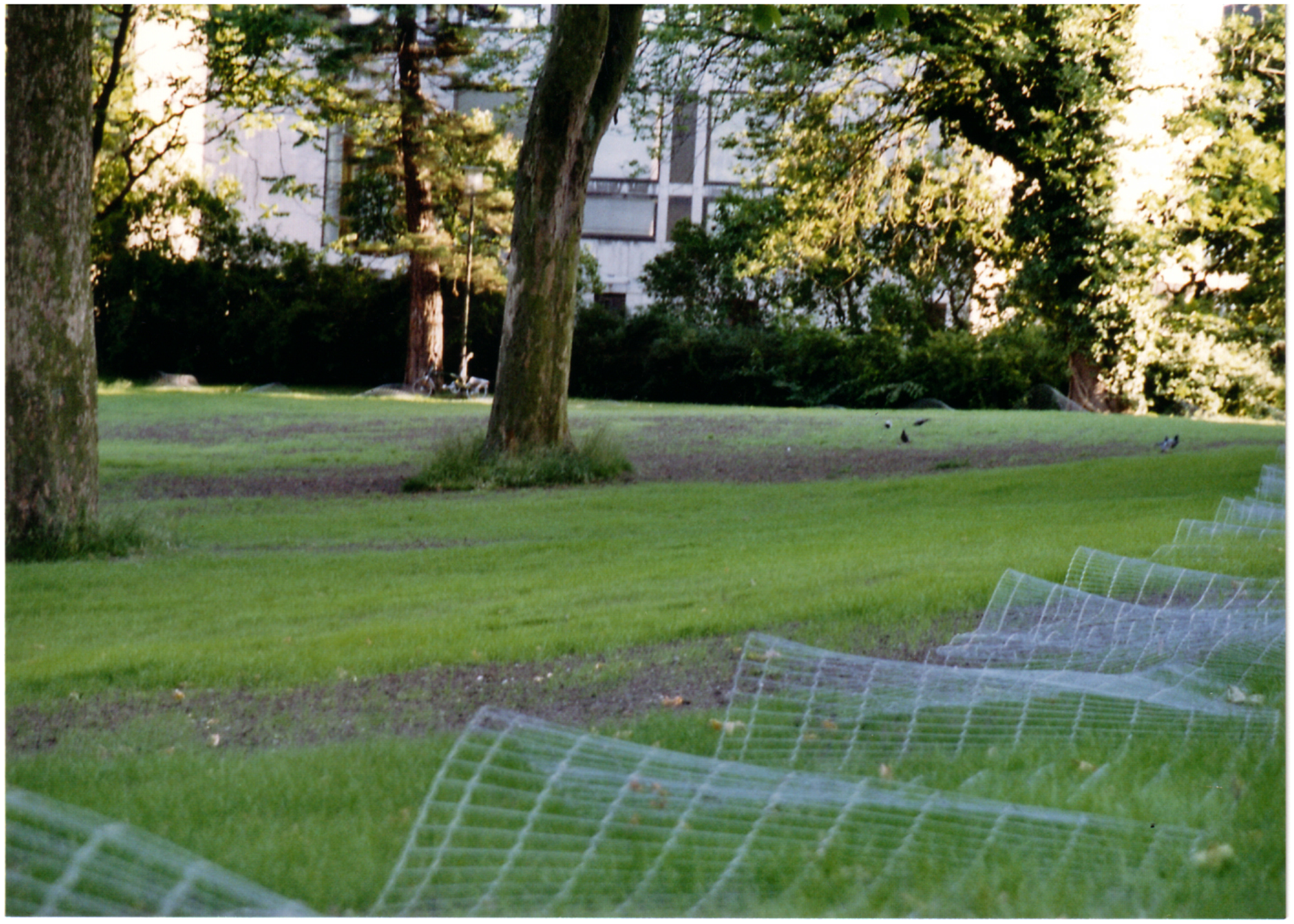
Photograph showing dense vegetation from cruising areas removed by authorities, summer 2001. Source: Used with permission from Lasse Lau.
This occurrence suggests a more targeted political response than a mere campaign to remove trash and make the park appear cleaner. On behalf of the park authorities, their actions to remove spatial environments where public sex occurred, revealed a larger end goal to restrict activities of marginalized communities within public space and dictate what types of public behaviors were acceptable. What results are a normalization of queer space in the park where shrubby and overgrown vegetation are replaced by open areas, pristine flower beds, and highly managed lawns.
Unlike in our other two case studies, queer users of the park were able to use plants to reclaim the park for their uses. Danish filmmaker, artist, and activist Lasse Lau has been at the forefront of this fight. In response to the initial removal of shrubs in 2001, he put on an exhibition titled “Park-Privacy Could Only Be Had in Public” in an underground bunker in the park, where he placed artificial bushes, dense plantings, and a disco ball, along with images of what the park looked like before all the plantings had been cut (Kryger, 2014: 160). Making the underground shelter a reclamation of queer space within Ørstedsparken, he kept it open to the gay community until the early hours of the morning. Upon engaging others in this project, Lau and other queer activists began to plant bushes in the park at night against the orders of park authorities. Additionally, they would disperse seed packets of fast-growing plants such as Cercidiphyllum japonicum (known as “heart trees” in Copenhagen) with instructions to engage cruisers in rebellious acts of “seed-bombing” in areas where authorities have removed shrubby undergrowth.
Projects such as this have given political agency to both the human and non-human subjects of Ørstedsparken, and the fight continues. Although exploring Ørstedsparken, conversations with a park-goer who regularly performed drag in a gay bar down the street, detailed how they are still actively fighting to preserve the park as the queer space and cultural refuge it has always been: The park has changed dramatically over the past few decades, it used to be totally overgrown. Everyone would make their way here to cruise after going to the clubs. You’d see several people meeting up on this bridge, and then emerging from under the bushes along the water. They took out half the bushes that used to be here, and we’ve been fighting these maintenance regimes for decades; we still continue to fight. They don’t want us here, but we aren’t going away anytime soon, that’s all I know.
Conversations such as this bring attention to how cruisers and queer populations have been victims of homophobia and anti-sex regulation for decades, historically excluded from the commercial entertainment and public dating scene in urban life (Gandy, 2012: 732). In New York City, this homophobia was reinforced by stigmas surrounding AIDS and contributed to the banning of public sex, resulting in the closure of various gay venues and businesses (Delaney, 1999: 91). Cruising in public parks such as Ørstedsparken acts in direct opposition to these institutional decisions, where the repurposing of an overgrown habitat for public sex represents a reclamation of space for populations left out of spatial planning decisions.
Conclusion
In this paper, we have used a combination of historical and ethnographic methods to analyze three cases that offer different narratives about botanical politics and the agency of human and non-human actors in public parks. The dominant view of botanical politics uses plant removal to further oppress supposedly deviant sexualities in urban space, as in the case of the Fens and Abney Park. In the case of Ørstedsparken, however, a door is opened to further consider that botanical politics is not simply a tool used against the marginalized, but by them as an act of liberation. In this space, we can see plants as floral allies that play an active role in resistance, where “seed-bombing” and spontaneous growth allow undesired plant communities and their queer human counterparts to strongly persist. Further empirical work using our conceptual framework could reveal the extent to which marginalized actors not only use existing plants but actively promote them to advocate for certain social uses within parks. Historically, these uses have existed in tension with the controlling moral discourses that have characterized the design of public parks and urban spaces throughout the 19th and 20th centuries. In the case of Abney Park, the first nondenominational cemetery in London evolved into a space where artists and cruisers have for decades reveled in the decayed environment. Over time, complex ecological assemblages have emerged, bringing into question the agency of spontaneous plant species, as well as a range of human and non-human actors. Ørstedsparken remains a site of political contestation, where botanical politics illustrate an environmental history marked by tensions between municipal groups, park maintenance authorities, and queer activist groups.
To this end, each of these sites highlights the impact which homonormative neoliberal development has had in domesticating overgrown and emergent queer spaces, suppressing radical action and deviant sexualities, and reinforcing homonationalist tendencies with regard to sexual racism. We see the still-accepted queerness of supposedly ontologically different “exotic” or “invasive” as an excuse to pursue eradicating non-hetero sex or at least homonormalizing it away to the expensive lofts that replace pre-1980s spaces of urban decay, once rich in species and sexual possibilities. The High Line’s screening flora have been removed, and contrary to the assertion that the park “transformed century-old, elevated train tracks into a haven for trees and indigenous plant life (Bruinius, 2019: 21, emphasis ours), this is actually the opposite of what happened. The urban green—and the controversial sexual geographies those emergent species cultivated—contributed to a queer urban ecology and specific environmental history decades in the making long before the park was created. Rather than being in some way indigenous, the flora that was added to the High Line after re-development was all artificially external. The Ailanthus and Queen Anne’s Lace that are clearly visible in photographer Joel Sternfeld’s images of the High Line might be “from somewhere else” in a vague evolutionary sense. But, as Sternfeld notes, the High Line used to have an “elevated ecosystem essentially unmanaged and uncontrived” (Sternfeld, 2009: 44). These plants only became, to use Mary Douglas’s classic formulation, “matter out of place” when the actions taking place there were no longer welcome (Douglas, 2002).
In looking to the future of botanical politics, we look to the Fens as the case where both the reeds and queerness of the site persists, constantly in tension with the controlling moral discourses that have echoed in the archives. But for how long?
Footnotes
Acknowledgements
The authors would like to thank the Harvard University Center for the Environment and the Massachusetts Historical Society’s Environmental History Seminar for the opportunity to workshop early versions of this article. Many people, including several anonymous reviewers, have read versions of this article and have provided invaluable feedback. Among them are Joyce Chaplin, Bonnie Karl, Graeme Wynne, Neil Maher, Cindy Ott, John Bell, Whitney Robles, Jill Desimini, Aylin Yildirim Tschoepe, Lasse Lau, Matthew Gandy, Danielle Choi, and Estello Raganit. The authors would also like to thank Abby Spinak for her input and encouragement.
Declaration of conflicting interests
The authors declared no potential conflicts of interest with respect to the research, authorship, and/or publication of this article.
Funding
The authors disclosed receipt of the following financial support for the research, authorship, and/or publication of this article: This research was funded in part by the Penny White Project Fund (Harvard University Graduate School of Design) and the Harvard Gender + Sexuality Caucus Open Gate Foundation.
