







Abstract
The history of hydraulic infrastructures is plagued with failures often with catastrophic consequences. Although the agency of water in disasters has been widely documented less well known are the substances in water such as salt that may cause infrastructural collapse and harm humans, flora and fauna. In the Llobregat River Basin (Barcelona), a 120-km long pipe transports salt-saturated wastewaters produced in the potash mines of central Catalonia to the Mediterranean Sea. Conceived as a technological fix to reduce river water salinization, the brine collector started operating in 1989 and succeeded to cut by half the concentration of salts in river waters. However, as the extraction of potash salts increased the brine collector soon reached its full capacity and became prone to leaks and ruptures that poured salt-saturated flows into the rivers and adjacent lands. Moreover, the reduction in salinity achieved was not enough to prevent the need of salt-removing technology for the drinking water plants supplying Barcelona. The brine collector understood as a sociotechnical system assembling material, discursive, organizational, and institutional components proved the fragility of rules and regulations addressed to manage salt pollution in the basin. More fundamentally, the assemblage constituted by the collector showed how the interplay between private (the mining company) and public (the regional water agency) organizations has resulted in the successful shifting of impacts created by salt from the private to the public sphere in economic, health, and environmental terms.
Introduction
On 29 June 2019, Iberpotash, the company exploiting the potash mines of central Catalonia, in the Llobregat River Basin, invited the media and the regional and municipal authorities to an institutional event entitled ‘One more step towards sustainable mining’. From the top of the massive mine tailing of El Cogulló, formed by 48 million tonnes of salt waste generated after decades of potash extraction, the company's delegate announced ceremoniously the end of salt waste discharges on that site. The closing of the mine tailing was, in fact, the result of a court order that mandated Iberpotash to end dumping on El Cogulló and required the restoration of the site. A key part of the restoration plan announced by the company involved an ambitious engineering project: to dilute the salt in the mine tailings and pump the resulting brine to the Mediterranean Sea through a new, 120-kilometer-long collector that would replace the previously existing one, in operation since 1989 (Nació Manresa, 2019) (see Figure 1).
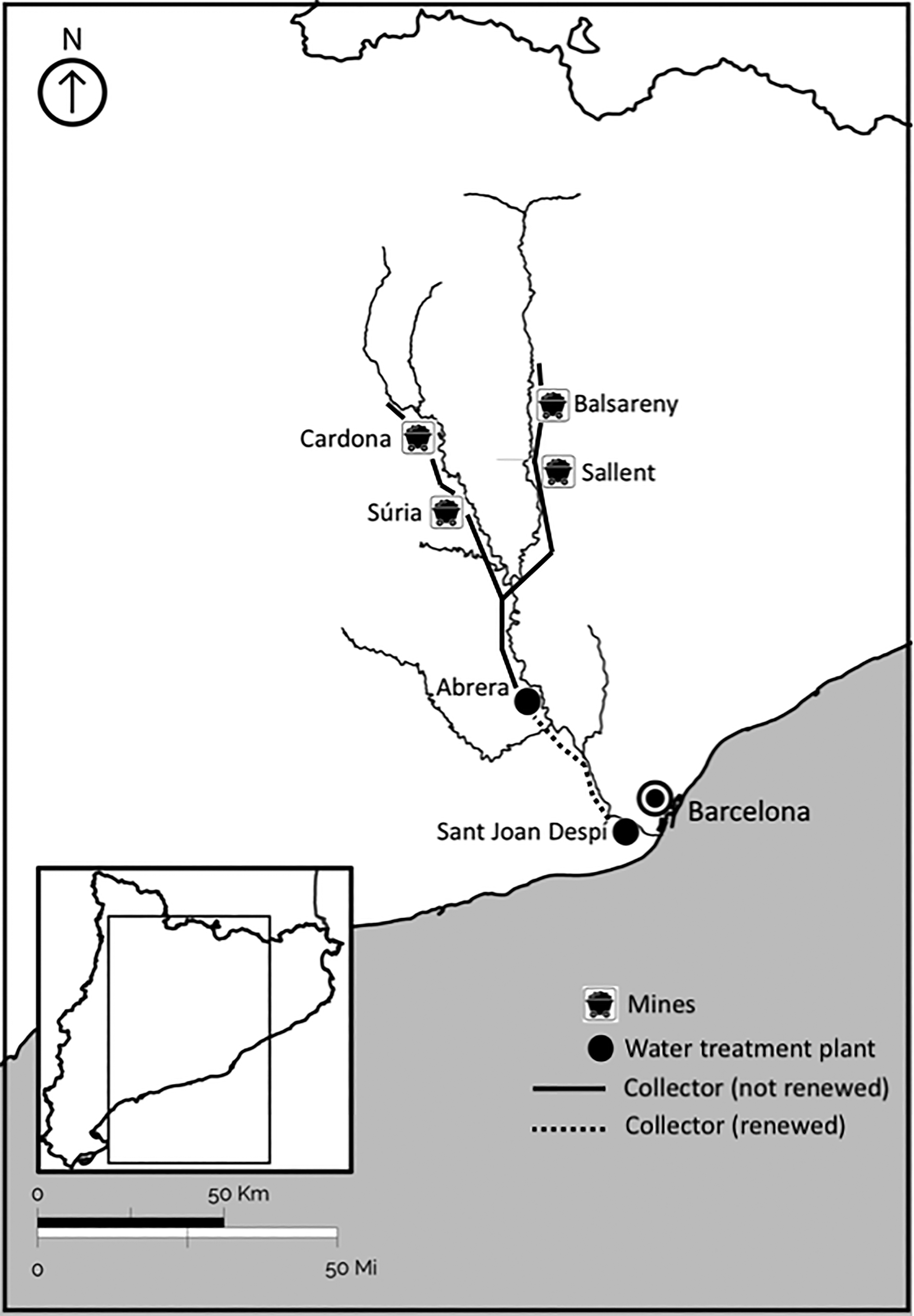
The Llobregat River Basin and the brine collector. Source: Authors.
Since the 1920s, when the extraction and processing of potash began, salt wastes have been an issue of preoccupation in the Llobregat River Basin. The mining of potash produces both brine – a highly salinized and strongly corrosive effluent that may also carry heavy metals – and solid waste (Katal et al., 2020; Lottermoser, 2010). In this area, for each kilogram of potash obtained, approximately three kilograms of salt are generated (Lloret, 2004). Although brine produced at the processing plants was initially poured directly into the rivers, solid salt waste accumulated for decades first in abandoned mine galleries and later in mine tailings, while runoff after rainfall episodes further salinized aquifers and streams (Figure 2). In potash mining, the greatest concern for managers is to avoid the seepage of brine into adjacent soil and water bodies. The most common practice is to build barriers against seepage, but these are not always effective with failures attributed to poor design and construction (Tallin et al., 2011). The release of brine into freshwaters and ocean waters may jeopardize plant and animal life (Cañedo-Argüelles et al., 2017; Ibrahim and Eltahir, 2019). In addition, river salinization may render water unfit for irrigation, while the corrosive agency of highly saline waters deteriorates industrial equipment. In the long term, human consumption of salinized waters can cause several negative effects on human health. Moreover, some ions can be precursors of dangerous pollutants (Chakraborty et al., 2019; Gorostiza and Sauri, 2017; Khan et al., 2014). To overcome all these problems, a brine collector, first proposed in the early 1930s and finally built during the 1980s, was to transport liquid wastes from potash mining sites directly into the sea, thus avoiding contact with rivers and aquifers of the basin.
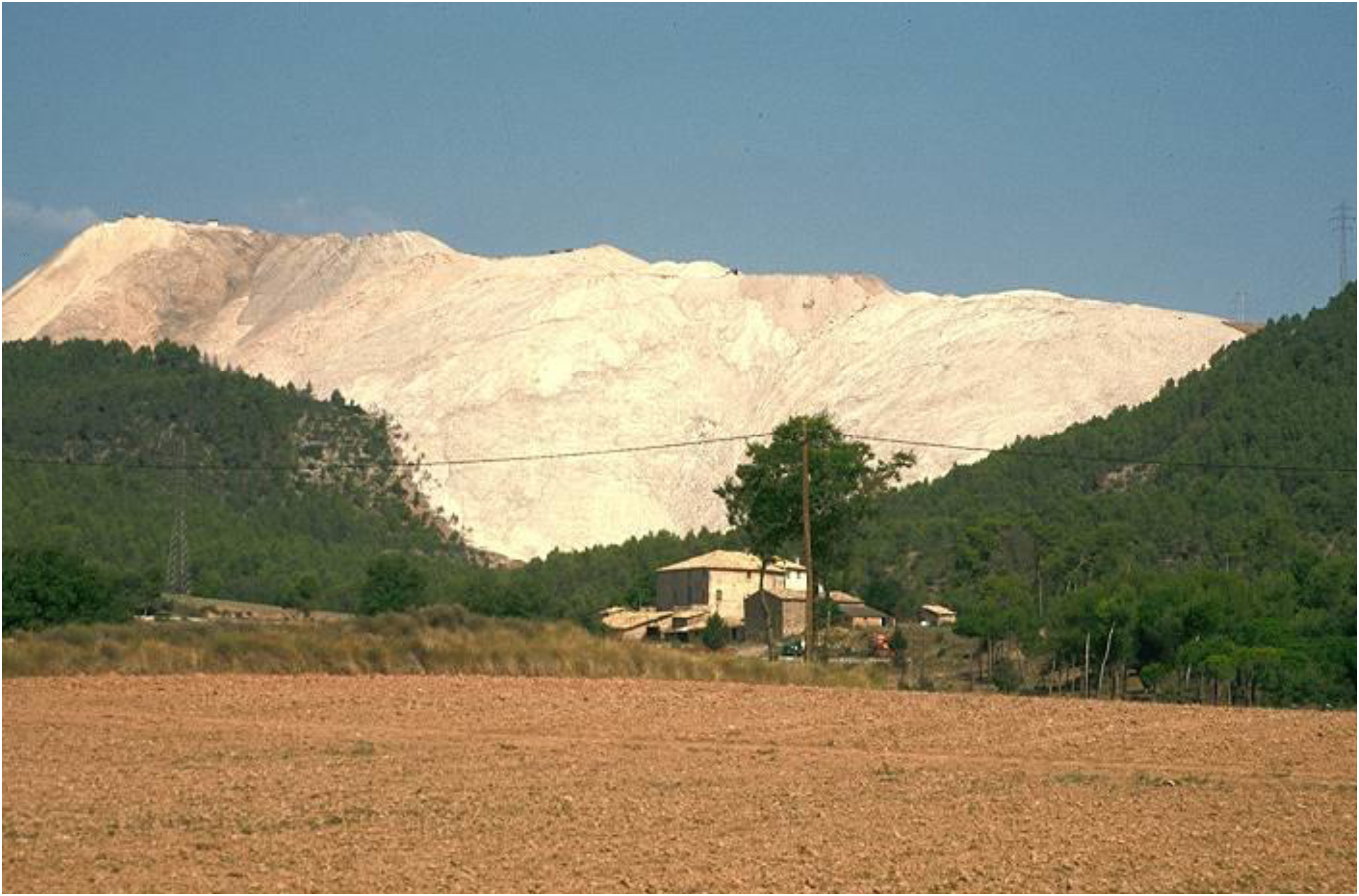
El Cogulló mine tailing in 1999. Reproduced with permission. Source: Montsalat, https://montsalat.cat/Galeria/Sallent/foto5.htm
Infrastructures such as the brine collector are not simply technical devices (Moss, 2020). They also include human and social components that relate to the material parts in heterogeneous and changing ways (Graham and Marvin, 2001). The brine collector interacts with humans that consume water from the river; non-human actors (the river biota, salts; sediment, etc.); private, public, and non-governmental organizations (mining companies, water regulators, environmental advocacy groups); institutional rules such as plans, mining permits, and impact assessments; and ideological values governing the tension between the thousands of jobs guaranteed by potash mining and health and environmental hazards created by it.
Infrastructures that manage ‘undesired’ environmental flows are considered to be socially useful because they supposedly absorb impacts and conflicts in a neutral manner to the benefit of all concerned. As consensual solutions to environmental problems, these infrastructures can be thought of as part of the postpolitical turn in environmental and resource management (Swyngedouw and Kaika, 2014). According to Swyngedouw (2009), the postpolitical turn implies the removal of dissent and debate on any (controversial or not) socioenvironmental issue and its replacement by consensual agreements often orbiting around technological solutions. The Llobregat brine collector was praised by republicans and anarchists in the 1930s, by Francoist officials during the dictatorship, and finally approved and built during the 1980s by the autonomous Catalan government. During the 1980s, the social agreement on the importance of building this infrastructure was so widespread that it suffocated other alternatives, above all a more rigorous process of on-site waste management in the mining areas or the restoration of mine tailings.
Once in operation, the brine collector managed to halve the extreme salinity of the river waters (Martín-Alonso, 1994) but did not challenge the logic of extraction; on the contrary, by providing a conduit to dispose of liquid salt wastes produced in potash mining to the sea, it perpetuated this logic. Following the pace of potash extraction, mine tailings kept growing since the 1980s, and so did the controversy around salinization in the river basin. Little regulated mining activities and their impacts resulted in the emergence of social upheaval, which eventually reached both Spanish and European courts of justice (Gorostiza and Sauri, 2017, 2019). However, protests have focused on the growth of mine tailings and their impact, while the brine collector has been conceived as the main solution to make compatible the expansion of potash mining with river water quality. Nonetheless, the collector has experienced hundreds of breaks since it started operating, requiring continuous monitoring and maintenance tasks. More importantly, when EU legislation was put in place, the reduction of salinity obtained by the brine collector failed to bring river water up to the quality standards of drinking water plants supplying Barcelona which necessitated additional (and expensive) salt removal technologies. Against all odds, however, the centrality of the brine collector in potash mining extraction and urban water supply has only been reinforced.
In this paper, and through a historical perspective, we explore how the brine collector has found difficult to fulfil promises of substantial salt removal in the river because of its precarious materiality, the fragile (and faulty) political and social arrangements sustaining the system, and brine's (corrosive) agency. After this introduction, we first conceptualize the brine collector as an assemblage combining material, social, political, and ideological components emphasizing the neglected historical dimension in this approach. Next, we examine the unsuccessful attempts to build the brine collector since the 1930s, attending to the interaction of technical, socioenvironmental, and political factors. To do so, we review several discarded projects of the brine collector and the related reports and claims by several actors, stored at the Arxiu Nacional de Catalunya (National Archive of Catalonia) (Sant Cugat, Barcelona) and the Archivo General de la Administración (Spanish State Archives) (Alcalá de Henares, Madrid). We especially pay attention to the period starting in the 1980s, when the brine collector was built and became fully operational. Using reports and internal data provided by the water regulator, we quantify the flows of brine piped from the mines to the sea in the period 1990–2012, as well as the collector's breakdowns and its causes. We triangulate our data with interviews to an environmental activist, a former official of the Catalan Water Agency (the water regulator) and a member of the personnel supervising the brine collector (interviews 1, 2 and 3, respectively). Finally, we examine the maintenance efforts of the brine collector and its reconfiguration during the late 2000s to adjust to the water quality improvements required by European directives, finishing our narrative in 2012. In the discussion and conclusions, we attempt to show how assemblage thinking as developed in this case, may contribute to a better understanding of the failed promises of technological solutions to socioenvironmental challenges.
The brine collector as an assemblage
Explanatory frameworks relating the material with the social and the political are necessary to fully grasp the nature of infrastructures such as the brine collector and their social and political agendas. In this paper, we use assemblage thinking (Briassoulis, 2017; De Landa, 2006; Muller, 2015) to describe, understand and assess the socioenvironmental performance of the Llobregat brine collector in its role of reducing the impact of hypersaline effluents on river ecosystems and socioeconomic activities in the basin. Brine becomes the key element in the assemblage creating hazardous and unpredictable flows that, however, only acquire significance when mobilized by the mining operations responsible for its production. Brine is an uncooperative fluid, to use a variant of Bakker's expression (Bakker, 2003), but its capacity of producing harm is contingent upon potash salts extraction scarcely attentive to finding safe destinations for unwanted solid and liquid wastes.
Assemblages could be considered as associations of components forming sociospatial or socioenvironmental entities (Anderson and MacFarlane, 2011; Farias, 2011; McFarlane, 2011). Definitions of assemblages reinforce the dimensions of heterogeneity, non-linearity, ephemerality, and materiality of sociotechnical systems (Muller, 2015). An assemblage puts together components (in our case the brine itself or the pipe carrying the effluent) that may be highly heterogeneous (from a molecule of salt to a legally binding environmental impact assessment); non-linear (concentrations of brine effluent in river water able to produce unexpected and irreversible harm on aquatic life); and ephemeral (the business plan of the mining company for a particular site). Following this logic, the brine collector can be conceived as an assemblage that would include, among other components, the collector as a material device; design flows; construction materials; the characteristics of the physical terrain upon which it is built; the brine effluent, and also all the myriad of economic, social, legal, administrative, political, and ideological elements in the form of documents, reports, technical plans, maps, etc. that make possible the operation of the infrastructure. This seemingly disparate array of components, however, only acquires a capacity to act when components of the assemblage relate to each other (Angell, 2014). Therefore, material elements such as the brine and their agency or capacity to produce harm become a social and political matter when they are inscribed, for example, within the specific approach to nature and nature exploitation represented by potash mining and the uneven social and environmental costs and benefits of this activity (Gorostiza and Sauri, 2017).
Assemblages can also break up and collapse as often reflected in the history of infrastructures (Henke and Sims, 2020). The agency of the brine, highly corrosive and damaging for living and non-living matter, threatens the stability of the collector assemblage in material terms, requiring continuous monitoring and maintenance to repair leaks and ruptures. Moreover, failure also menaces, and perhaps in more important ways, the non-material parts of the assemblage in the sense that infrastructures are intimately interwoven with regulations and remediation policies supposed to act against unequally distributed socioenvironmental impacts. In the Llobregat River Basin, tailings of solid salt waste produced by mining companies have accumulated for decades, challenging environmental regulations and court rulings. Runoff after rainfall events has continued salinizing aquifers and streams, beyond the reach of the brine collector, and compromising water quality downstream.
Assemblage thinking can also be useful in addressing the causes of environmental risks and disasters (Angell, 2014; Neisser, 2014). In the Llobregat River Basin, salt in freshwater systems has been historically constructed as a ‘natural pollutant’ mainly by mining companies willing to downplay the impacts of potash extraction (Gorostiza and Sauri, 2019). Pointing at the geologically saline region of central Catalonia, companies have argued that the brine collector is needed to manage an environmental risk created by nature, not by human activity. This narrative loses its power when pollution is seen as being formed by multiple, interrelated natural and social components although not in linear ways (Donovan, 2017; Gorostiza and Sauri, 2019).
Although the material, spatial, and environmental aspects of assemblage thinking have been widely explored (see e.g. Anderson and McFarlane, 2011; Bakker and Bridge, 2006, 2021; Braun, 2006; Palmer and Owens, 2015; Siakwah, 2018, and Soulier et al., 2012), the historical dimension remains mostly neglected. In his comprehensive study of Berlin's infrastructures, Moss (2020) argues that lacking a historical perspective, assemblage theory tends to miss the swings between moments of continuity and moments of change in which infrastructures may be assembled, disassembled, and reassembled. In his view, adding a historical perspective allows for a richer assessment of infrastructural assemblages revealing the arrangements of both past and present components as they form palimpsests or combinations of old and new elements (Moss, 2020, 23; see also Gorostiza and Sauri, 2017). It is only through historical analysis that these combinations can be exposed, and the dynamics of assemblages fully comprehended.
By focusing on constellations of material and discursive elements and analysing them from a historical perspective, assemblage thinking may also help to assess critically the idea that for every problem, social, environmental, or else, there is a technological solution. Under this view, technology is neutral and value-free and therefore remains insulated from criticism. Since socioenvironmental crises caused by capitalist growth are reduced to technical and managerial problems that can be solved through technological and managerial ingenuity and innovation, there is no need to alter the socioeconomic system that created the crisis in the first place. For example, proposals to mitigate climate change through technologies, such as carbon sequestration or economic instruments and carbon taxes, can be understood as technological /managerial fixes (Clark and York, 2012; Mann, 2021) expected to address climate change without compromising the current model of growth.
In his discussion of spatial and temporal fixes as means to overcome capitalist crises, Harvey argues that public infrastructures are also fixes in the sense that they become geographically immobile assets (Harvey, 2016: 248). The brine collector represents an example of a technological fix (Johnston, 2018) used to lift environmental barriers to capital accumulation (Harvey, 2010, chapter 9). Assemblage thinking, however, appears to be oblivious of the political economy in which assemblages form and operate (Brenner et al., 2011). In the case of the brine collector, the political economy and the political ecology of mining, the unequal distribution of costs and benefits of potash extraction and its impacts, or the social and public contestation regarding the injustice towards human and non-human beings need to be teased out since they constitute the conditions for the material and non-material components of assemblages to mobilize their respective agencies. In seeking bridges between assemblage thinking and critical theory, some authors argue that the former is also appropriate to imagine and create alternatives precisely because of the ephemeral nature of assemblages. Specifically, the emphasis on the sociomaterial may be more useful for political action than just considering the social and the material apart from each other (Anderson and McFarlane, 2011).
Critical geographers close to historical materialism have used forms of assemblages to unravel the intrinsically social and political nature of the hydrological cycle (Linton and Budds, 2014; Swyngedouw, 2004). Dams and interbasin transfers represent classical examples of technological fixes addressed to harness natural and social obstacles to water-based growth. When socioenvironmental contradictions caused by these infrastructures arise and threaten their viability, other technologies take over and new fixes for the continuity of capital accumulation appear. Desalination in Spain can be a case in point (March et al., 2014). After the strong opposition raised by the Ebro River water transfer in the early 2000s, the construction of desalination plants along the Mediterranean coast was proposed with the aim of removing the social and political controversies caused by the transfer and regaining the national consensus that dams had achieved decades before (Swyngedouw and Williams, 2016). Likewise, studies by McEvoy (2014), Fragkou and McEvoy (2016), and Williams (2018) for Baja California, Chile, and the Colorado River basin, respectively, illustrate how desalination is becoming the new technological fix in water supply, producing specific assemblages of material, discursive and political components. This sustains the notion of a technology able to solve water supply problems in areas of need and yet oblivious to the potentially important social and environmental contradictions looming on the horizon of water desalting.
Assemblage thinking as applied to environmental disasters in particular illuminates how debates about responsibility reveal conflicting understandings of nature and society and their relationships (Donovan, 2017). The material and discursive foundations of hydraulic assemblages are especially prone to instability and failure. Walls and dikes are overtopped by floods, dams collapse, and discourses on ‘zero risk’ voiced after the inauguration of new flood control devices fall prey to the next flood event. The vulnerability of hydraulic assemblages both in material and discursive terms was captured by Gilbert White under the expression of the ‘levee effect’ (White, 1945). When examining American flood policy, White was especially interested in promoting management alternatives not solely depending on hydraulic technology but also on growth control in floodplains. By the ‘levee effect’, he characterized discourses emphasizing the robustness of hydraulic technology in containing floods. Under the perceived absolute protection provided by hydraulic assemblages, growth in floodplains was encouraged so that when a flood event with a magnitude above the ‘design flood’ used to calculate heights or storage capacities occurred, the amount of damage escalated reflecting the overdevelopment of floodplains justified by this (false) sensation of security (Tobin, 1995). Reassembling the hydraulic apparatus by building even larger artifacts to protect the intensive occupation of floodplains proved many times ineffective. Hence, the paradox of mounting flood losses in American floodplains between the 1930s and late 1950s despite enormous investment in flood control works (White et al., 1958).
The ‘levee effect’ resonates with force in our case study. The brine collector may have reinforced the intensification of mining and the consequent increase in brine flows that contributed to leaks and breakdowns and ultimately made the infrastructure insufficient to control salinization. As in many hydraulic works, once rendered insufficient, the existing brine collector would be eventually reassembled into a higher capacity system, making further expansion of mining possible. Alternative assemblages, for instance, involving the reduction of liquid and solid wastes at its origin with a fairer distribution of costs and benefits, or downscaling of extraction, are not considered.
Assembling the brine collector. A historical account
The idea that a human-made conduit carrying salinized waters and running parallel to the river until the sea could make compatible potash mining with the rest of the economic activities in the Llobregat River Basin is almost as old as potash mining in the region. After potash extraction started in 1923, it took less than a decade for this engineering solution to raise voices in favour. Mining companies extracting and processing potash salts poured salinized waters directly into rivers in the basin, and as soon as 1926, an increase in salinity was felt by downstream water users, when owners of textile mills noticed the corrosion of the turbines producing energy in their factories and filed complaints (Gorostiza et al., 2015). Four years later, water salinization had reached aquifers in the Llobregat valley tapped by the Barcelona water company to supply the city. Warnings from the water company, together with the unrest from agricultural associations, led to the establishment of a commission of experts to study the salinization of river flows. Their report came out in 1932 and proposed a solution that would remain mostly unchanged during the following decades: to build a channel running parallel to the Llobregat River to transport the salinized waters from the potash mining sites to the sea. This ambitious public endeavour had to be combined with the building of reservoirs that would guarantee regular water flows to compensate for salinity peaks, particularly during dry periods (Gorostiza et al., 2015). 1 By establishing an assemblage that separated unwanted flows from the river, the brine collector was conceived as a solution that in theory could make mining activities and their expected growth compatible with urban, agricultural, and industrial water uses.
As a classic technological fix, the brine collector became a widely accepted solution across the political spectrum during the 1930s. A Salinity Act proposed by the Catalan government was approved unanimously by the regional Parliament. Despite the reluctance from mining companies, which argued that salinized waters were naturally occurring in the geologically saline region of Central Catalonia, regional authorities established a commission charged with monitoring river salinity to ensure that concentrations above certain thresholds would not be surpassed. In the turbulent years of the Republican regime (1931–1936), the salinity of Barcelona water remained high and negotiations started between municipal, regional, and state administrations to fund the required project. The revolution at the beginning of the war in Catalonia in July 1936 did not halt this process. After seizing the private water company supplying the city (Gorostiza et al., 2013) and the potash mines in central Catalonia, anarcho-syndicalist workers funded the proposal for the brine collector. Presented in 1937, the project conceived the collector as an open channel that would also collect wastewaters of the towns located near the rivers, ensuring both the quality of the river waters and the absorption of the impacts of anticipated increase in potash extraction and processing. The project authors addressed the corrosive properties of brines by proposing to use Portland cement for the channel, adding a double layer of asphalt painting to prevent leaks. As for the parts of the brine collector where high salt concentrations were expected, several materials were tested and calcium-aluminate cement was chosen due to its resistance to corrosion (Gorostiza et al., 2015). 2
Because of the war, the brine collector did not progress beyond the project stage. But after the victory of General Franco in 1939, discussions about the problem of salinization continued. The war years only confirmed the anthropic origin of salinization, after the monitoring system had recorded a significant decrease in the salinity of Barcelona water during the conflict which could be easily connected to the lack of activity in the potash mining areas. The project of brine collector approved during the war, however, was dismissed by the Francoist authorities. The new engineers in charge claimed both technical and political reasons – the single fact it has been approved under the ‘red’ period was pointed out as a reason to set it aside. A new project was written as soon as 1939 under the auspices of the new political regime and included in the National Plan of Public Works (Ministerio de Obras Públicas, 1940). 3 Meanwhile, as potash mining expanded, the salinization of rivers and Barcelona waters increased again (Gorostiza et al., 2015; Gorostiza and Sauri, 2019).
Transporting a highly corrosive substance for nearly 120 kilometres without leaks and other disruptions was the main technical challenge faced by engineers. The diverse options considered were discussed in several projects produced during the 1940s. First, the solution of an open channel was considered problematic for hygienic but also for practical reasons, as landslides or similar events could easily obstruct flows in the channel. Although the option of building a pipe instead of a channel soon gained acceptance, it nevertheless implied higher costs and other challenges related to maintenance. Second, mixing general wastewater with brines was discarded, since it would facilitate sedimentation contributing to block the collector. Engineers pointed out that even if only brines were evacuated their sedimentation may rapidly obstruct the pipe. Finally, a 120-kilometer-long pipe incorporated thousands of junctions exposed to the corrosive agency of brines. For these reasons, the resulting infrastructure would be extremely vulnerable to rupture, the maintenance costs would be enormous and, additionally, it was highly likely that it would become necessary to release salinized waters into the river quite often. The materiality of brine thus challenged the ingenuity of state engineers, who pondered over the component that would better resist corrosion (iron, vitrified clay, or even wood) as well as over the substances that could be used to maintain the brine collector and prevent leaks (Gorostiza et al., 2015). 4
However, state engineers were also aware that the challenges of assembling an infrastructure capable of disposing of the brines produced by potash mining were far more complex than dealing with its corrosive agency, since massive funding and political initiative were also essential. According to one of the state engineers in the 1940s, the mining companies were trying to force the state to pay for the brine collector, while alternative solutions to get rid of the salts in its origin (by reinjecting onsite brine flows into the ground or building robust seepage barriers, for instance) received much less attention. 5 In other words, private mining companies advocated for a particular form of assemblage that displaced unwanted flows and pushed the state to take care of them. The slow economic recovery of Spain during the 1940s and the state support to potash mining in the region, a source of much-needed foreign currency, made restrictions to potash extraction unthinkable.
Instead of restricting the activity of potash mines, state authorities modified water quality thresholds to accommodate mounting levels of salinization. The legal regulation that established a maximum concentration of 250 mg Cl−/l in drinking waters was ignored; and during the 1950s, this limit was increased to 350 mg Cl−/l (Gorostiza et al., 2015). Despite a new brine collector project was announced when General Franco visited Barcelona in 1955 (La Vanguardia Española, 1955), the technical challenges and the increasing costs it involved, as well as the small assurances of success given by engineers, made this project unappealing. When the first reservoir built in the Llobregat River Basin started operating in 1957, it granted the possibility to regulate river water flows and therefore to manage the dilution of salinized waters. But as potash extraction and processing continued expanding, salt concentrations in the river basin increased thus reinforcing the faith in the brine collector as the infrastructure required to fix the problem of salinization ‘once and for all’, as often stated in the reports and projects of the time (Gorostiza et al., 2015).
During the 1960s and 1970s, salinization of Llobregat waters reached a new peak. An assessment of the water resources of Catalonia written in 1969 pointed out that the Llobregat river could register monthly concentration averages of one gram of salt per litre during dry periods, making waters inadequate for industrial and domestic uses (Milagro, 1988). When looking for additional water flows for the expanding urban development of the Barcelona region, water transfers from other river basins, such as the Ter river in the 1960s, had to be brought in (March, 2015; Sauri et al., 2014). In 1973, the concentration of chlorine in the Llobregat was, on average, above 500 mg Cl−/l (Gorostiza and Sauri, 2019). Aware of the effects of salinization in water organoleptic characteristics and fearing that the deterioration of Llobregat waters could eventually threaten critically water supply for Barcelona, the water supply company (Sociedad General de Aguas de Barcelona, SGAB) proposed its own project of brine collector, combining ductile pipes with polyvinyl chloride (PVC) (Latorre i Piedrafita, 1995). In the meantime, the alternative of reinjecting brines into the mines (‘backfilling’) was briefly studied in 1971, but the three explorations carried out at different depths yielded negative results (Godé, 2003). The SGAB presented the brine collector project to the Ministry of Public Works in 1970, and, after several modifications, it was approved in 1976. The funding scheme proposed, however, was dismissed by the Ministry, so the project was shelved once again (Gorostiza et al., 2015). For the brine collector to be assembled and put to work, it would take the reappearance of an administrative actor that had been abolished in 1939: the regional government of Catalonia.
The brine collector at work (1989–2011)
Construction and reduction of river salinity
The Catalan regional government (Generalitat de Catalunya) was restored in 1977, almost 40 years after its removal by the Francoist regime. With executive powers on public works and the environment, the reappearance of this actor opened the possibility to finally assemble the brine collector. The Generalitat established the Junta de Sanejament (Sanitation Board) in 1981 and put it in charge of monitoring river and water quality. Funded with new taxes on wastewater and an additional charge on household water bills, the brine collector was included in the Sanitation Plan of 1982. Under this new scenario, the private water company of Barcelona (SGAB) offered the project of the brine collector to the Generalitat and both actors agreed on its construction. The infrastructure was to be built by a temporal consortium of companies led by SGAB and fully funded by the Generalitat (Godé, 2003; Vilaró, 2009).
At the time, the laboratory personnel at SGAB were becoming aware that salinization may also involve health hazards. High concentrations of bromide ions in the Llobregat waters – related to potash mining – contributed to the formation of Trihalomethanes (THMs) during water treatment for human consumption. During the late 1970s, several epidemiological studies showed a strong correlation between THM in drinking water and cancer diseases (Bätjer et al., 1980). In several academic articles published during the 1980s, members of the SGAB laboratory pointed to the high levels of THMs in the Llobregat waters and claimed that the construction of the brine collector would radically reduce their concentration (Gorostiza and Sauri, 2017; Ventura and Rivera, 1985). The works to build the brine collector started in 1983, half a century after the approval of the Salinity Act but under a consensual atmosphere similar to that of the 1930s. The brine collector was portrayed as the solution for an ‘urgency neglected for 60 years’ (Milagro, 1988). Its construction, however, encountered significant challenges and took twice the time predicted, finishing in 1989. The technical solution adopted for the regular pipes was fibre cement resistant to sulphates, while the larger pipes were made with fiberglass reinforced polyester. Hydraulic pressure to pump the brines throughout the pipeline was regulated through 21 devices for breaking down fluid pressure distributed throughout the pipeline. To collect and direct brine into the collector, several pools were built at the potash processing plants and at a natural saline upwelling. The regular capacity of the brine collector was 150 litres per second (Escriu i Paradell, 1985; Martín-Alonso, 1994; Oficina d’Estudis i Control de Producció de la SGAB, 1986; Societat General d’Aigües de Barcelona, 1996).
In late 1989, the brine collector finally started operating. Running parallel to the two main rivers of the basin (Llobregat and Cardener), sometimes underground, the pipes started pumping brines 24 hours per day, 365 days per year, invisible to the eyes of the uninitiated. The brine collector was funded and owned by the Catalan government but each of the mining companies and industries using it had to pay an annual fee. As for its management, it was handed over to the private water company SGAB for a period of seven years, funded equally by the water regulator and the brine collector users (Oficina d’Estudis i Control de Producció de la SGAB, 1986; Milagro, 1988; interview #2). 6 From late 1989 onwards, the concentration of chloride and other ions such as bromide, sodium, or potassium in the Llobregat river and in groundwater decreased significantly. Complaints about water quality in Barcelona also diminished. By the mid-1990s, the chloride concentrations recorded in the Llobregat were half of what could have been expected if the brine collector had not been built (Martín-Alonso, 1994; Societat General d’Aigües de Barcelona, 1996).
Operation and brine spills
From the very beginning, however, the brine collector came accompanied with a string of leaks and malfunctions, sometimes involving spills into adjacent land or even into the river, with potentially severe impacts on agriculture and riparian vegetation (see Figure 3).
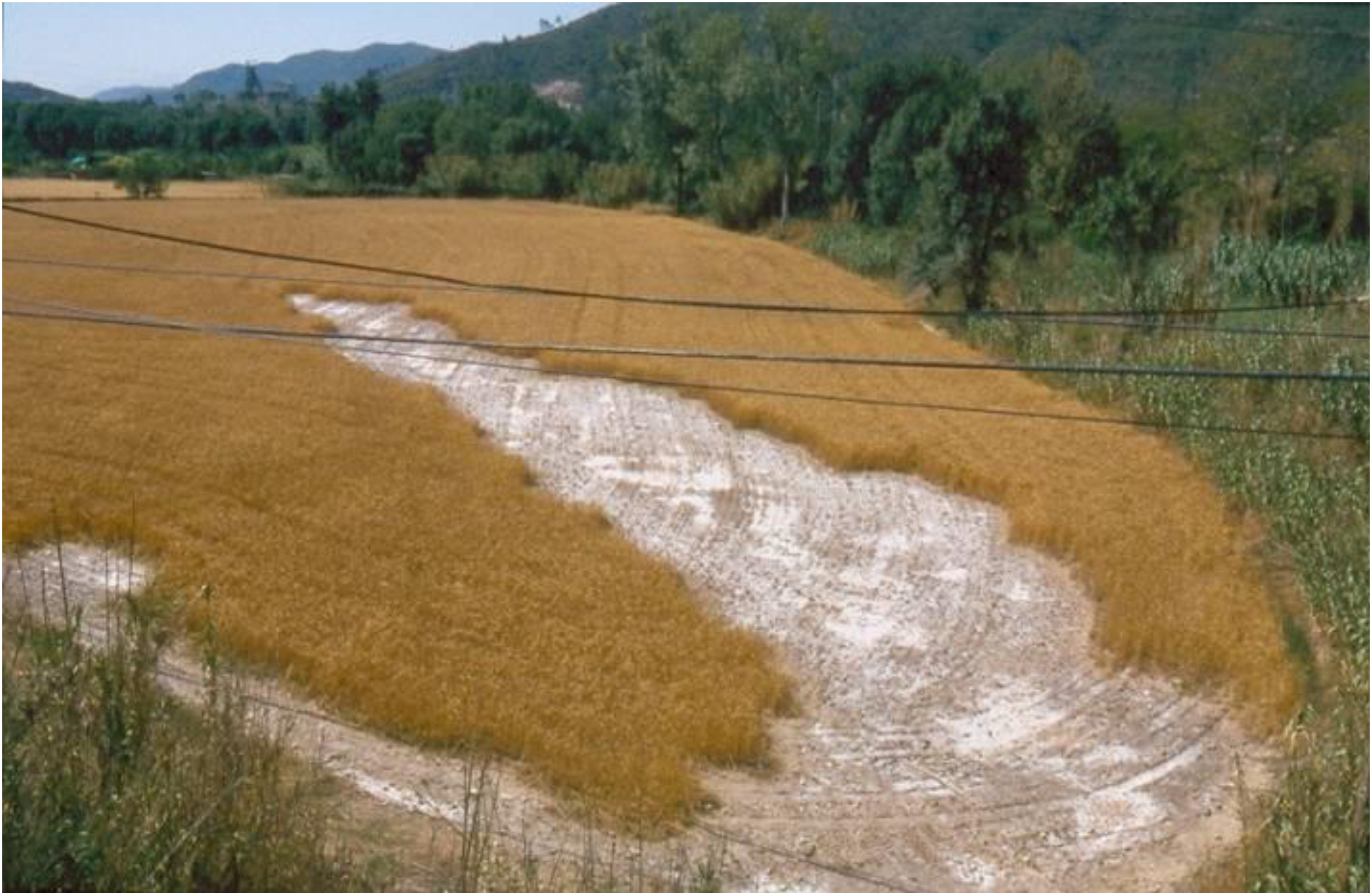
Brine spill in a cereal field after a rupture of the collector, near Súria, July 1999. Reproduced with permission. Source: Montsalat, https://montsalat.cat/Galeria/Suria/foto88.htm
During its first year of operation, the brine collector experienced nine ruptures, and these events became a part of everyday management tasks. The private company managing the brine collector under the supervision of the Catalan Water Agency classified ruptures in two categories: ‘provoked’ and ‘natural’. The category ‘provoked’ included external causes such as agricultural or construction works that unintentionally damaged the underground collector and that usually occurred due to ignorance about the presence of an underground pipe. The category ‘natural’ involved breaks related to the agency of brines (corrosion) or to the ageing of infrastructure. Figure 4 shows the number of collector ruptures between 1990 and 2012, while Figure 5 indicates the volume of brine flows transported during the same period.
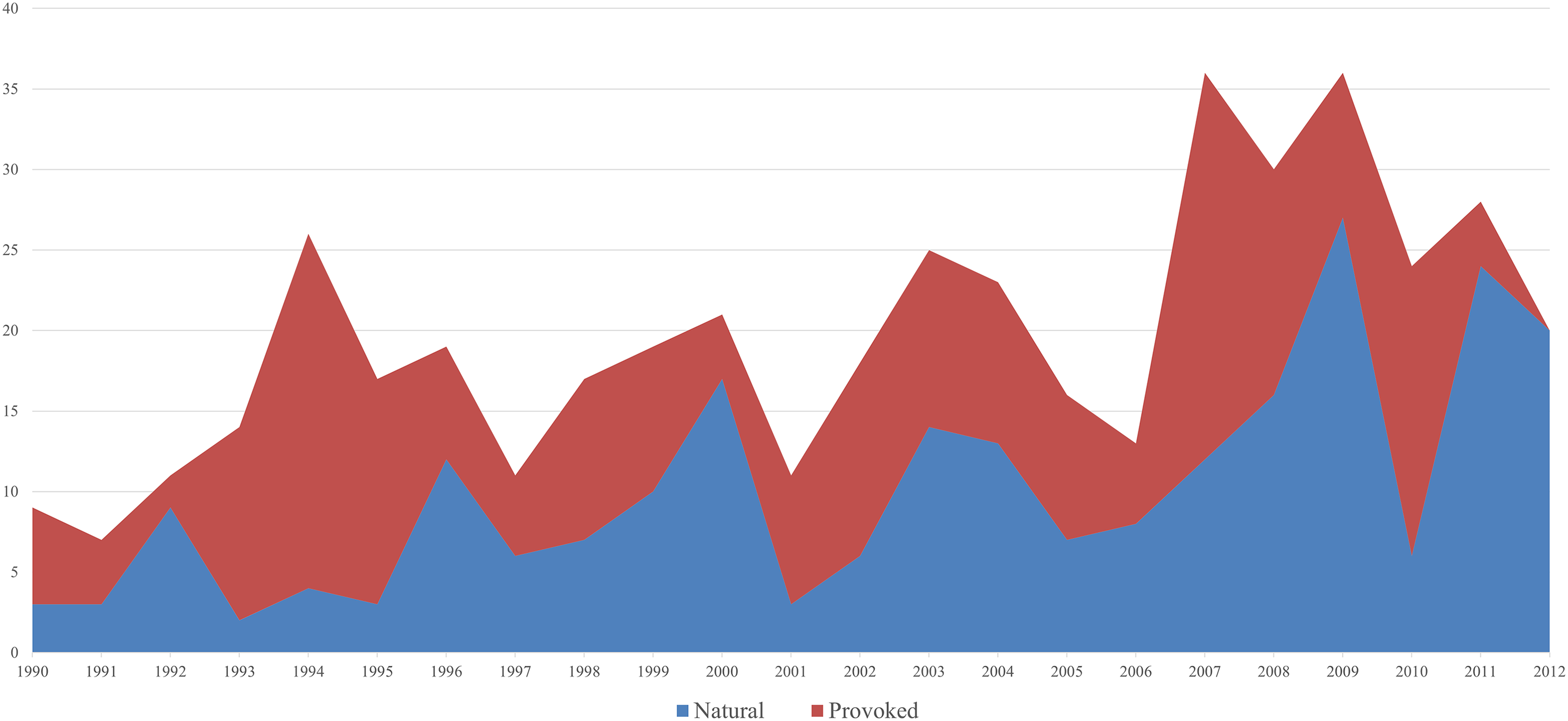
Brine collector ruptures (1990–2012) classified by cause. Source: Authors, based on data provided by the Agència Catalana de l’Aigua.
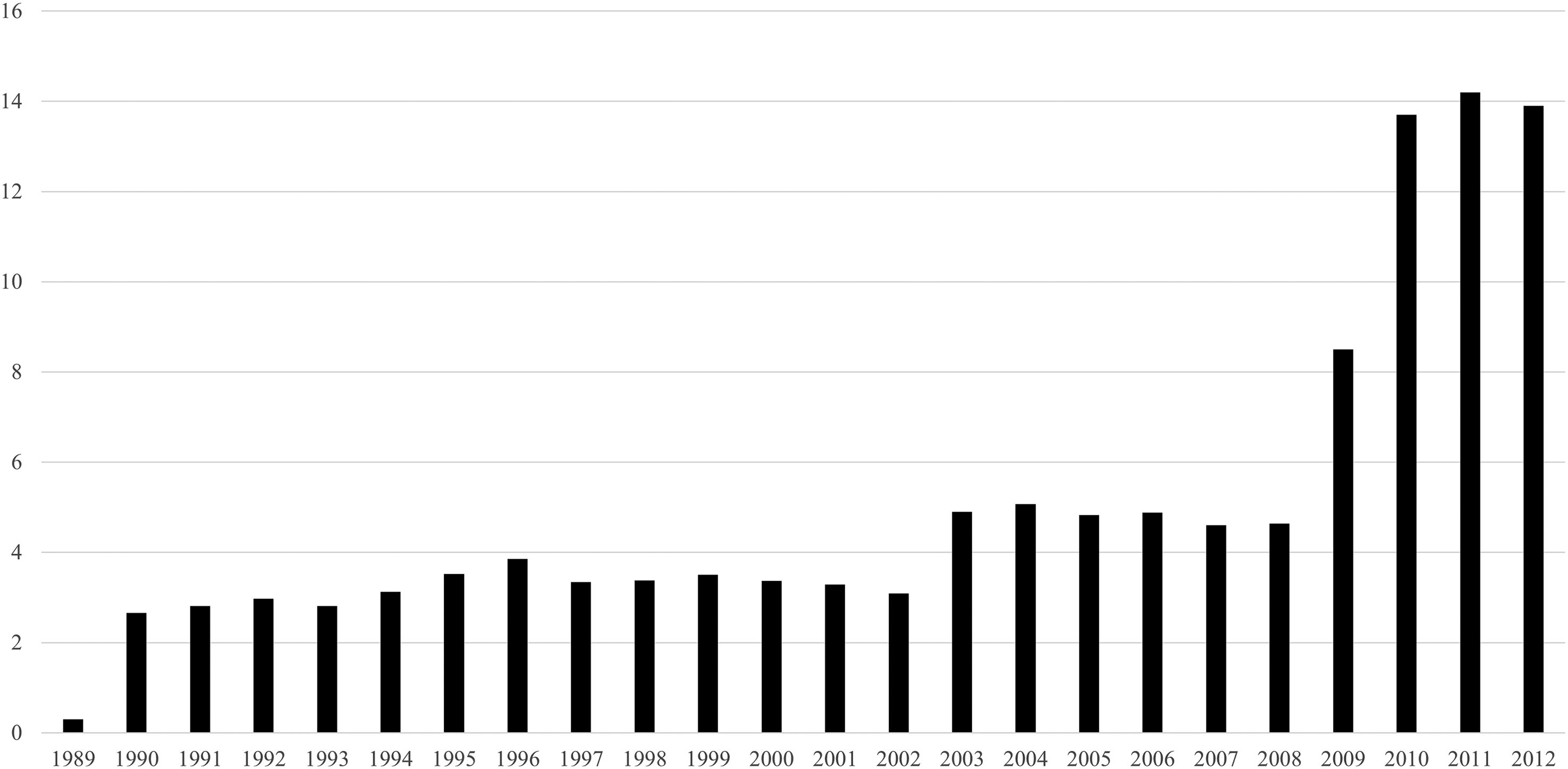
Flows transported by the brine collector (cubic hectometres/year), 1989–2012. Source: Authors, combining data from Godé (2003) with data provided by the Agència Catalana de l’Aigua.
Despite being portrayed as the definitive solution to make potash salts mining compatible with water quality, the brine collector aged rapidly and lost effectiveness. During the early years, most ruptures were provoked by the so-called ‘external events’. As the population around the brine collector became familiar with the underground infrastructure, the number of external events decreased. However, barely one decade after the beginning of operations, ruptures caused by internal reasons (classified as ‘natural’) started increasing and became predominant during the 2000s. Far from being natural, these ruptures were the direct result of an infrastructure rapidly deteriorating after the corrosive agency of mounting brine flows (Badia, 2008; interview #1).
The problematic distinction between ‘natural’ and ‘provoked’ ruptures encapsulates the sociotechnical limitations of the brine collector and the challenges to control the highly damaging brine for living and non-living matter. As put by an interviewee involved in the collector maintenance, ‘brine never stops surprising you (…) it is a fluid with an amazing capacity of destruction’ (interview #2). If there is a weak point in an infrastructure or a facility, brine ‘will end up provoking a much faster degradation. A repair that you expected to last for ten years will last three’ (interview #2). Rupture events disrupt the logic of the infrastructure: to organize a safe, invisible, and continuous flow of brine from the mines to the sea and therefore to allow continuous extraction of mineral while disposing of liquid wastes. Ruptures are detected by an overall decrease of pressure in the system, which triggers a race against the clock to locate and fix the break. The pumping of brine must continue until the location of the break is found (otherwise the spill may go unnoticed) but the operation of the brine collector must stop while repairing tasks take place. The longer it takes to fix the rupture, the larger the stress introduced in a system designed for the continuous extraction of potash and the circulation of brine. Therefore, when a break is detected, the mining company urges the regulator to resume the functioning of the collector as soon as possible, so that they can continue pumping brine (Interview #2). Regarding the impacts of brine spills, the management of the brine collector included an insurance scheme to compensate economically for the impacts of ruptures. Settlement agreements were not public, and compensations varied among the different cases (interview #2). Some of the collector's ruptures caused considerable damage to the surrounding environment, including agricultural and natural areas (Badia, 2008; interview #1).
Beyond the technical limitations of the collector to transport brines to the sea, the material assemblage for capturing saline flows from the river was far from perfect. In 1994, members of the water resources control unit of the water company SGAB acknowledged brine spilled to the river, ‘due to technical and economic problems’ (Martín-Alonso, 1994: 222). Part of saline flows remained outside the reach of the brine collector, thus keeping the salinity of the river above legal standards (Badia, 2001). These circumstances did not go unnoticed by environmental groups and grassroots organizations. Formed in 1997, the environmental collective Montsalat pointed to the impact of mine tailings and reported the growing salinization to the public prosecutor's office, filing a complaint which eventually led to the prosecution of several company managers (interview #1). 7 Despite successive court rulings, the disposal of waste in mine tailings continued proving the resilience of potash extraction in legal and political terms.
Rather than questioning the role of the brine collector, the persistence of salinized flows related to the mine tailings prompted discussions about how to pipe them into the system, therefore reducing the sources of salinity in the river basin. The operation of the brine collector had reduced the concentration of salts in river waters, but throughout the 1990s, the total amount of salt transported by the brine collector and the river together almost doubled with respect to a decade earlier. By the turn of the century, the infrastructure was working at full capacity (Badia, 2001, 2008; Lloret, 2004).
Reassembling the brine collector. Desalination of river water as the new and definitive solution
Despite experiencing ruptures regularly, the brine collector had succeeded in reducing the salinization of Llobregat river waters significantly. Court rulings and municipal regulations, however, were completely ineffective for controlling the mine tailings resulting from the accumulation of solid waste generated by the extraction of potash. As a result, these large accumulations of salt waste grew unchecked and uncovered, contributing to maintaining relatively high levels of salinization in the river basin due to rainfall dissolving the salts and runoff entering aquifers and streams. By the late 1990s, new studies pointed to problems in Barcelona water quality that were related to the salinization of the river caused by potash mining and connected to human health issues. The concentrations of bromide ions in the Llobregat waters remained high enough to contribute to the formation of Trihalomethanes (THMs) during water treatments for human consumption (Cancho et al., 1999; Paune et al., 1998). In the 2000s, the first studies relating the presence of THMs in drinking waters with bladder cancer in the region raised concern in the public opinion (La Vanguardia, 2001, 2007; Villanueva et al., 2001, 2007). Moreover, both Spanish and European regulations mandated to maintain THMs in drinking waters below 100 µg/l to comply with the European Water Framework Directive (Gorostiza and Sauri, 2017).
The brine collector had reduced the salinization of river waters, but less than twenty years after it started operating, it came short to comply with EU-legislation, a new component in the collector assemblage (La Vanguardia, 2005, 2006, 2008). Moreover, from 2005 onwards, a significant increase in ruptures was recorded, caused by the deterioration of the infrastructure working at full capacity and put under enormous stress by corrosion (see Figure 4). Former officials of the Catalan Water Agency acknowledge that salinization had become a health issue that had to be addressed seriously (#interview 3). In order to ensure that THMs remained under the legal concentrations, regional and municipal authorities adopted end-of-pipe technology able to maintain the concentrations of pollutants in drinking waters within legal limits. In 2009, both the Abrera and Sant Joan Despí drinking water treatment plants supplying Barcelona started using Electrodialysis Reversal (EDR) and Reverse Osmosis (RO) technology, respectively. By desalting river waters, these technological choices involved highly intensive energy use as well as a costly public investment (122.7 million euros) (Agència Catalana de l’Aigua, 2011). A new technological fix was therefore added to the existing but increasingly unsuccessful fix. This technological choice was also justified by the lack of political will to act in the mining sites upstream (interview #3).
In turn, these technologies required the reassemblage of the brine collector. The original infrastructure ran along with the Llobregat River, not far from both water treatment stations. The brines now produced through EDR and RO processes had to be disposed of, and the brine collector was a solution at hand to pump them to the sea. Such reconfiguration, however, demanded further investments to increase the capacity for brine transport in its last stage, from the Barcelona drinking water treatment stations to the sea. Since continuous brine circulation had to be guaranteed to allow for the potash mines to keep functioning, the existing pipe could not simply be expanded, but a completely new section of the brine collector running from the drinking water treatment plants to the sea needed to be built while the old one kept working. This new section of the brine collector, built in parallel to the existing one, was approved by the Catalan government as an urgent infrastructure and came at the cost of an additional 62 million euros paid by the Catalan Water Agency (Agència Catalana de l’Aigua, 2011; La Vanguardia, 2008). It was completed in 2008 and once the EDR and RO processes at water treatment stations started operating in 2009, the volume of brines circulating in the infrastructure more than tripled (see Figure 5). The restructured assemblage thus became not only indispensable for the operation of the potash mines, but for the very operation of the water treatment stations ensuring the water supply of the Barcelona metropolitan area.
Discussion and conclusions
Following Moss (2020), a historical perspective on assemblage theory illuminates moments of change and continuity in infrastructures. In the case of the brine collector, public funding and political support appears as the key to put this infrastructure up and running during the 1980s. After 50 years of projects, the funding of the Catalan regional administration and the sense of urgency provided by the extreme salinity of the river waters supplying the city of Barcelona and its possible health impacts were fundamental to build and start operating the collector. The involvement of the private water company, interested in maintaining the quality of one of their main sources of revenue – Llobregat River waters – was also paramount. Once the infrastructure was in place, assembled as an underground, invisible, and continuously running pipe that made possible the circulation of undesired flows from the mines to the sea, the collector stimulated in turn the expansion of extractive activities. Hence, the brine collector can be understood as both a technological and a spatial fix (Harvey, 2010; Johnston, 2018), contributing to ensure the continuity of potash extraction by limiting environmental ills that could have threatened capital accumulation in the central Catalonia mining sector.
The uncooperative nature (Bakker, 2003) of brines forced the reassemblage of the collector after years of increased spills, failures, and worries about water quality, representing a second key moment in its trajectory. Similarly to the 1980s, this reconfiguration was possible thanks to the massive public investments carried out by the Catalan Water Agency and a sense of alarm instigated by the unfulfillment of EU water quality regulations. The renovation of the brine collector shows that assemblages can be flexible (De Landa, 2006) but also that their reconfigurations may mean reinforcing rather than altering or changing substantially existing components and interrelationships (Anderson and MacFarlane, 2011). Between 2008 and 2011, the ailing collector was repaired and expanded with a higher capacity system, while other alternatives involving the limitation of potash salts extraction or the end of solid waste disposal in mine tailings were not considered. Sociotechnical alternatives with a potentially fairer distribution of costs and benefits, such as the restoration of mine tailings or the treatment of salt wastes on-site remained little explored. Key to the reassemblage of the brine collector was the introduction of EDR and RO desalination technologies as the needed complement to satisfy drinking water quality standards. The use of these technologies could be interpreted as the certification that the brine collector alone had failed in its mission to reduce sufficiently river salinization and make potash mining compatible with human uses. But in fact, by incorporating desalination technology, the collector became the guarantee of both continuous potash extraction and continuous treatment of river waters. Made possible again by public funding and a sense of urgency related to water quality standards that suffocated other alternatives, the reassemblage of the faulty brine collector only reinforced its dominant position. Neither potash mining nor drinking water treatment can be carried out now without it.
The reconfiguration of the brine collector understood as a sociotechnical system assembling material, discursive, organizational, and institutional components evidenced the fragility of rules and regulations addressed to manage salinization in the river basin between the 1980s and the 2000s. Instead of acting decisively on the impacts of potash mining and enforcing environmental control upstream, policy efforts have focused on piping the brine to the sea, under the well-known philosophy of ‘out of sight out of mind’. When, despite the substantial lowering of salt concentrations, high levels persisted in the river waters, salt-removing technologies had to be added to the drinking water purification plants downstream to comply with EU regulations. This involved growing energy and economic costs that were passed on to urban consumers. In terms of assemblage thinking, the brine collector could be therefore defined as a faulty sociotechnical assemblage prone to risks (Barry, 2013). The corrosive agency of brine flows contributed to a quick deterioration of the infrastructure, which experienced multiple breaks that resulted in growing brine spills. The brine collector may have absorbed salinized flows produced at the potash processing facilities. However, the aquifer and stream salinization caused by the massive mine tailings remained mostly outside its reach, contributing to the persistent salinization of the river basin. These problems were addressed by the integration of desalination technologies as final solutions for water quality as part of a major reassembling of the infrastructure. EDR and RO technologies came as a fix to what the brine collector had finally not been able to fix.
By enrolling desalination technology in the reassemblage of the brine collector to ensure water quality, the volume of circulating brines more than tripled. As a result, the first ruptures of the newly built collector threatened to pour thousands of cubic metres of brine onto adjacent land. This is a familiar argument with water-related works, especially those related to flood control. Larger and larger flood control assemblages containing also strong discourses on the domination of nature are built to protect overdevelopment in floodplains which in turn is itself stimulated by the flood control works themselves (Collenteur et al., 2015; Tobin, 1995; White 1945). Likewise, desalination plants feed the Promethean dream of endless water only possible by a parallel and much more problematic endless supply of cheap energy (Swyngedouw, 2013). Altogether, the history of the brine collector illustrates well the uncertain role of technology as an overall solution for socioenvironmental problems. Initially conceived to take the salinized waters from the potash mines to the sea, today the collector also carries the brine produced at the water treatment plants using EDR and RO technology, required to purify the highly salinized river waters and make them fit for human consumption. At the cost of high public investments as well as increasing energy costs and emissions, the desalination of river waters has become the ultimate solution to guarantee the delivery of drinking water to households while ensuring the continuity of potash mining.
Long before it was built, the brine collector was portrayed as the ‘definitive’ technological fix to water pollution, depicting a future where potash extraction and river life would be compatible. After less than 20 years of operation, the brine collector assemblage had to be reconfigured due to its inability to decrease salinization enough and the growing ruptures and leaks that became an integral part of its daily functioning. The materiality of the brine, especially its high corrosion power, exerted tremendous pressures on the technical components of the assemblage. Brine is therefore essential in illuminating the problematic interrelations between technical components, facilitating breakdowns and accelerating ageing. It also shows the limits of the non-material, discursive components of assemblages in that they stubbornly refuse to accommodate the consensual notion of the ‘technological fix’ so common in environmental problems. Moreover, brine problematizes the dualist categories used by the Catalan Water Agency to classify rupture events between ‘natural’ and ‘provoked’. The ‘natural’ ruptures caused by brine are better understood as internal, sociotechnological failures.
However, perhaps more important than ruptures and leaks, what makes the brine collector a faulty assemblage to ensure water quality throughout the river basin are the lack of political will and the ineffective court rulings and policy regulations that have permitted the growth of mine tailings and the continuous expansion of salinization. More fundamentally, the assemblage constituted by the collector shows how the interplay between private (mining companies) and public (the regional water agency) organizations resulted in the successful shifting of impacts created by the extraction and processing of potash salts from the private to the public sphere. Technological assemblages aiming to smooth uninterrupted economic growth and capital accumulation while precluding a serious public debate on other alternatives only postpone socioenvironmental problems which return aggravated in more or less distant futures (or geographies), as reminded by the massive mine tailings dotting the landscape of central Catalonia. Still, the agency of brine may only fulfil its potential under the larger context provided by mining activities that for over 100 years have taken prevalence over the social and environmental landscapes of the region.
Highlights
Environmental infrastructures such as the brine collector are best thought of as technological fixes that tend to ignore social and political dimensions associated with environmental problems.
The brine collector understood as a sociotechnical assemblage allows for a better understanding of the management of salt in the Llobregat River Basin and its shortcomings.
Reinforcing existing assemblages in the form of costly infrastructures is given priority by authorities over more just and sustainable assemblages based on more strict mining controls.
The brine collector is an example of a successful shifting of environmental externalities from the private to the public sphere.
Footnotes
Declaration of conflicting interests
The author(s) declared no potential conflicts of interest with respect to the research, authorship, and/or publication of this article.
Funding
The author(s) disclosed receipt of the following financial support for the research, authorship, and/or publication of this article: Marta Conde acknowledges support from Recercaixa 2017 («Activism Mobilising Science»), Obra Social de la Caixa/ACUP.
