







Abstract
In this article, we use a political economic analysis in arguing that climate change risks and vulnerabilities are often produced and sustained through inappropriate, loosely designed and socially contested institutional mechanisms. Using ethnography, we contribute to the existing social science scholarship on climate vulnerability and risk by focusing on a political economic analysis of how risks are framed and responded at local institutional levels in the Indian Sundarbans. Our paper offers place-based nuances of climate politics to show how local institutions are characterised by power relations, economic incentives and political influences while facilitating and deploying climate risk management strategies. Empirical findings from our study highlight that neoliberal approaches to climate risk management facilitated by local institutions reveal predominant market mechanisms, patron–clientele relations and technologically engineered solutions to create local climate economies. From our findings, we conclude that political economy of climate change can explain why and how adaptation policies become ineffective in everyday experiences of precarious living.
Keywords
Introduction
In an era of climate change, management of risks and effective implementation of adaptation measures have become a pressing need. Local institutions and associated political groups, in this context, play a significant role in facilitating vulnerability reduction and effective adaptation to climate change, as they govern communities closely and shape individual and collective responses to climate action (Agrawal, 2008). In South Asia, many such local institutions, as pointed out by Barnett (2020: 1179), are themselves challenged of their capacities to deal with continued climate change-led hazards and are thus led to adapt mere fiscal and physical solutions to climate risks. A political economic analysis is offered in this paper, that would largely focus on local institutions and social structures through which policies of climate risk management are developed and deployed. The analysis would also highlight ‘power relations, economic incentives and the influences within formal and informal processes’ (Wilkinson, 2012: 2) of risk mitigation, whereby locally powerful institutional bodies play a central role during extreme climatic events. An interplay of the ‘political’ and the ‘economic’ within perceived vulnerabilities in the Sundarbans, we argue, can be witnessed from the multiple social uncertainties, severe shocks and stressors – the ‘more-than-economic’ forms of distress emerging from climate change (Dewan, 2023; Eriksen et al., 2015; O’Brien et al., 2004). In South Asia, social science, policy and development discourses do not sufficiently engage with the ‘everyday experiences of local people’ (Srivastava et al., 2022b: 93) with climate change – doing so can make visible the ‘conditions of political economy that impact patterns of resource use, social norms and cultural codes as well as the global flow of capital and labour’ (Srivastava et al., 2022b: 93). Disaster recovery experiences of people reported from the site of our study indicate routine prioritisation of institutional elites on physical and quantifiable assets as risk management strategies, with lesser or no strategies to address long-standing livelihood challenges, psychological shocks and larger social fissures within the communities. The local forces which culpably produce vulnerability and sustain the capitalist institutionalist complex of technical–physical fixes to climate change are rarely challenged (Paavola and Adger, 2002; Taylor and Bhasme, 2021). Technical fixes and climate management projects in India are often witnessed to create resource capture by local elites, considering that Indian villages are characterised by social hierarchies of assets, networks and cultural capital (Taylor and Bhasme, 2021: 432). If addressed using a framework of political economy, the social dynamics of resource distribution as well as its use and allocation during disaster events can be understood within a context of larger negotiations between political actors, state and relevant stakeholders, with varying positionalities and power with respect to climate action.
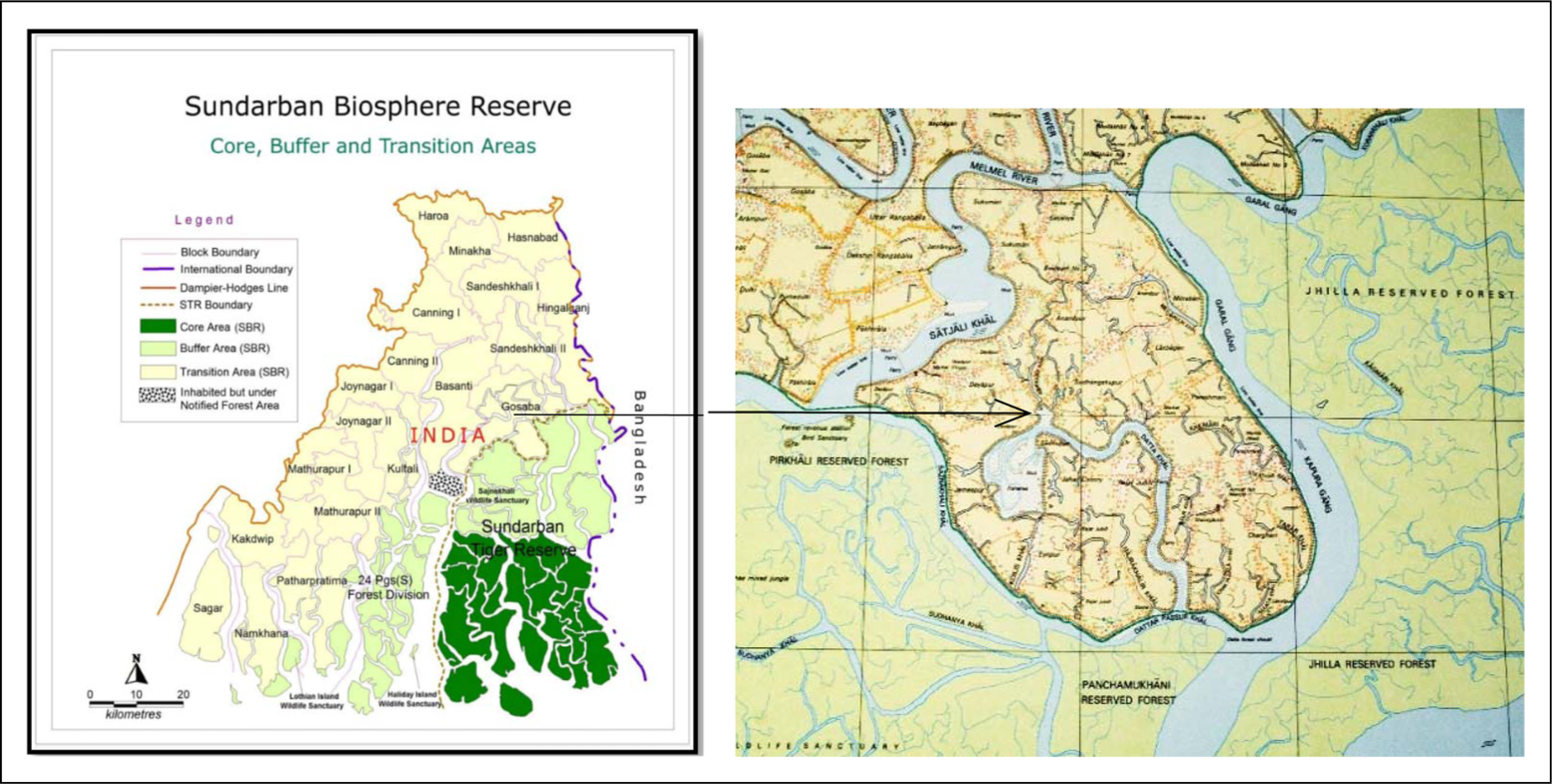
(L): Map depicting Indian Sundarbans which is demarcated by the Dampier-Hodges Line on the north; location of Gosaba block within the Transition Area highlighting its close proximity with the core and buffer area of the forests. (R): Map depicting Satjelia island within Gosaba block.
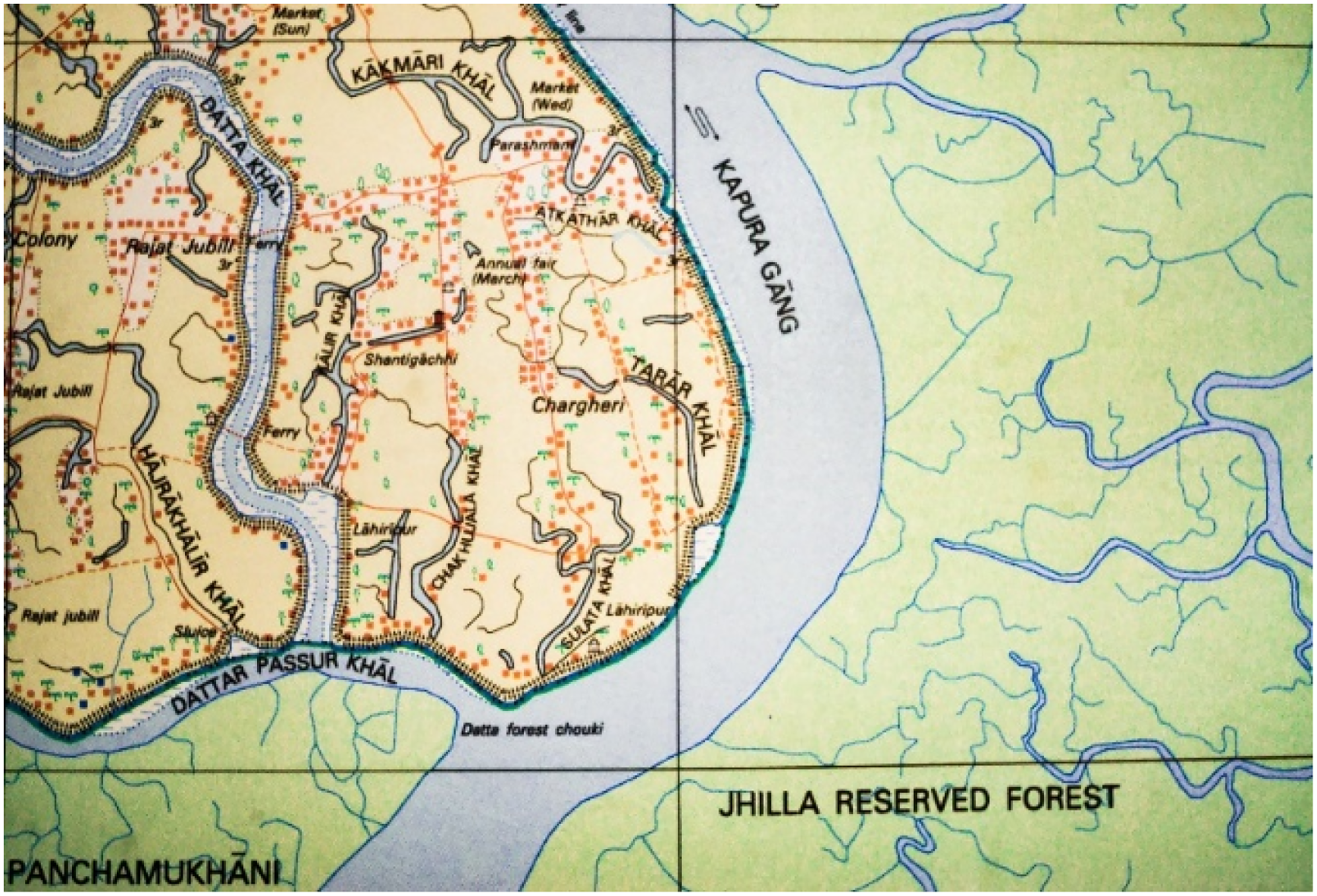
Map depicting Chargheri village in the fringes of Jhilla Reserved Forest.
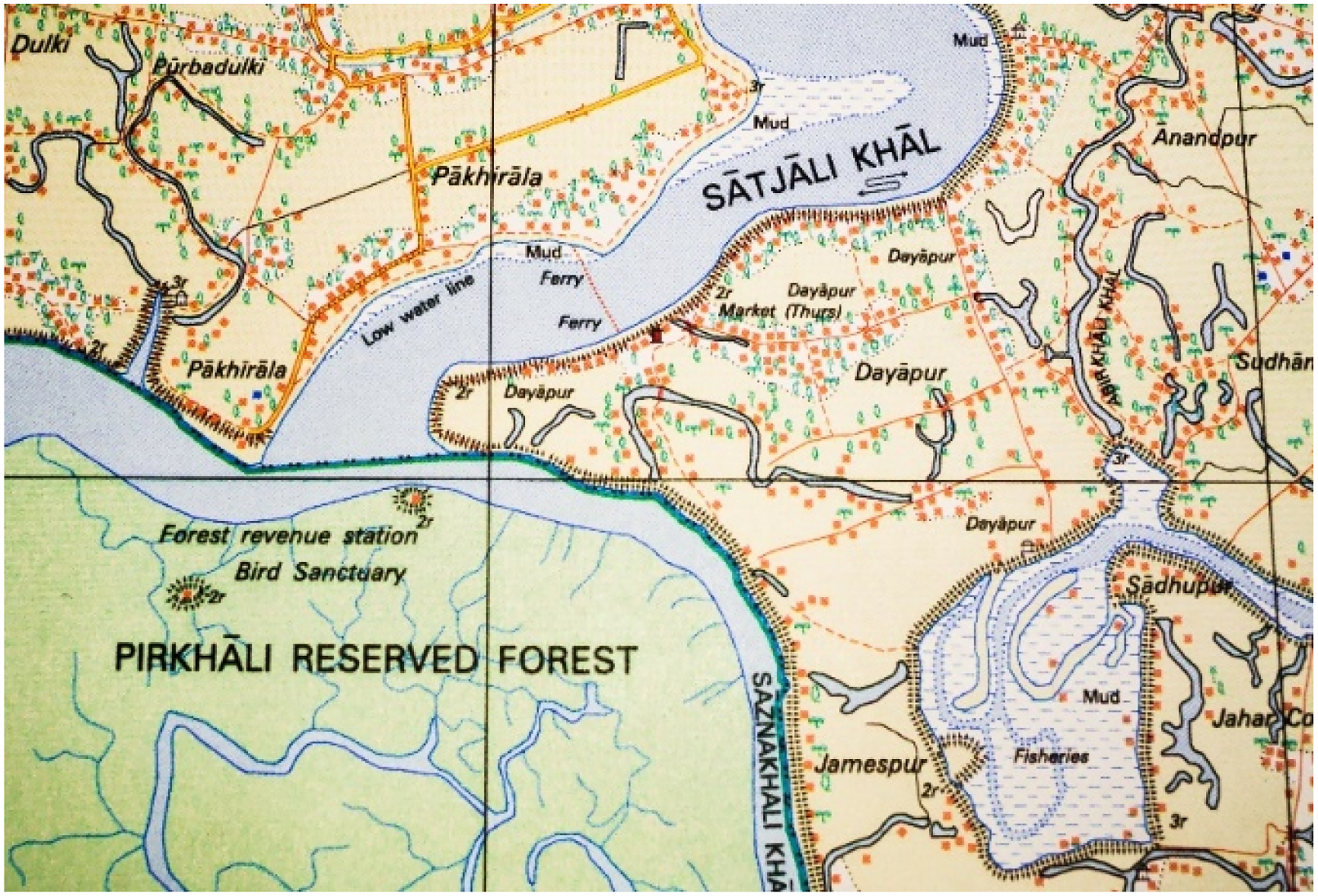
Map depicting Dayapur village in the fringes of Pirkhali Reserved Forest.
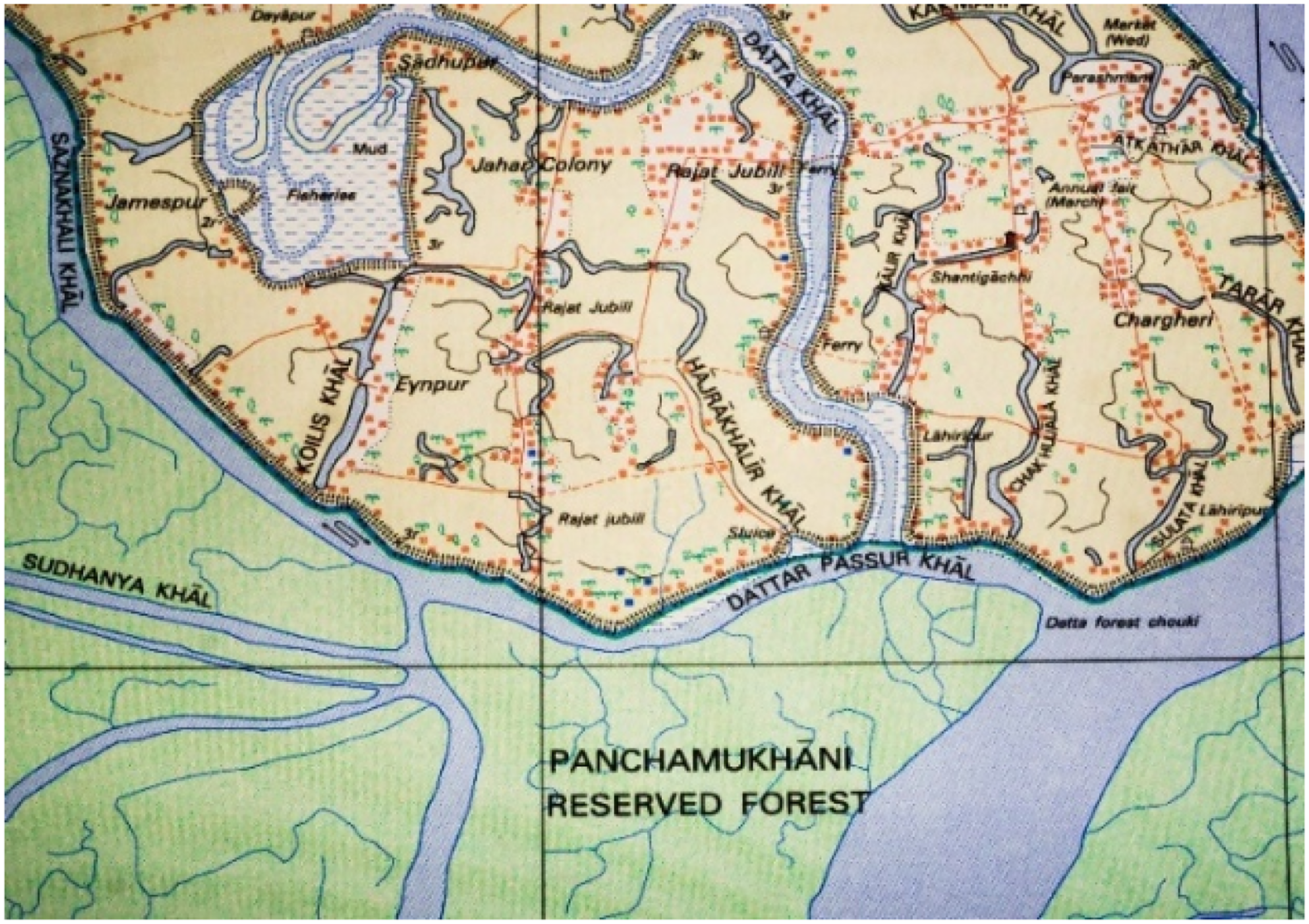
Map depicting Rajat Jubilee village in the fringes of Panchamukhani Reserved Forest.

A tribal fishing household located right next to the intertidal mudflats where tidal surges often inundate the compound of the homestead.
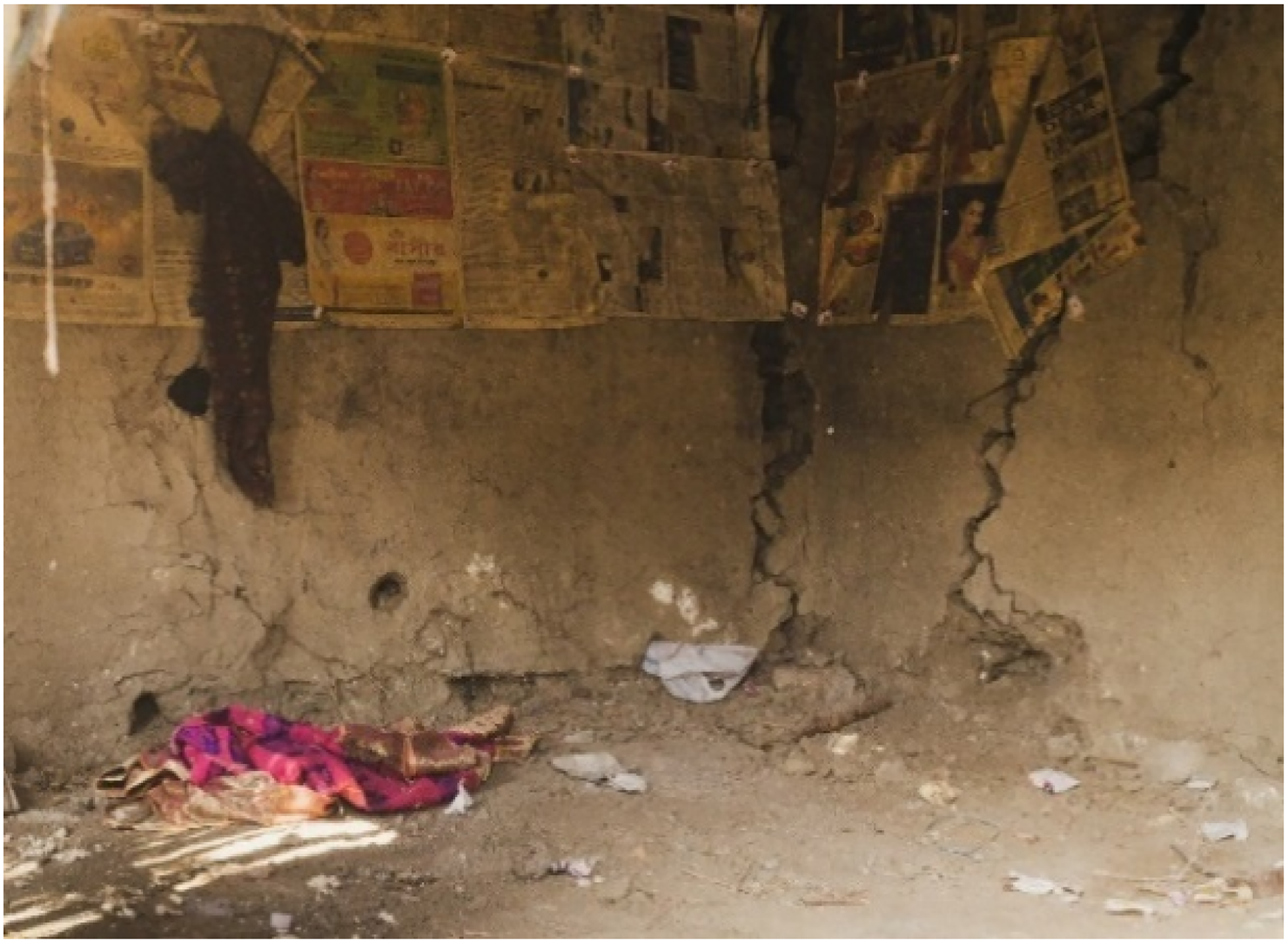
Deep cracks on the walls of an abandoned room formed as a result of salinization from previous storm surges.
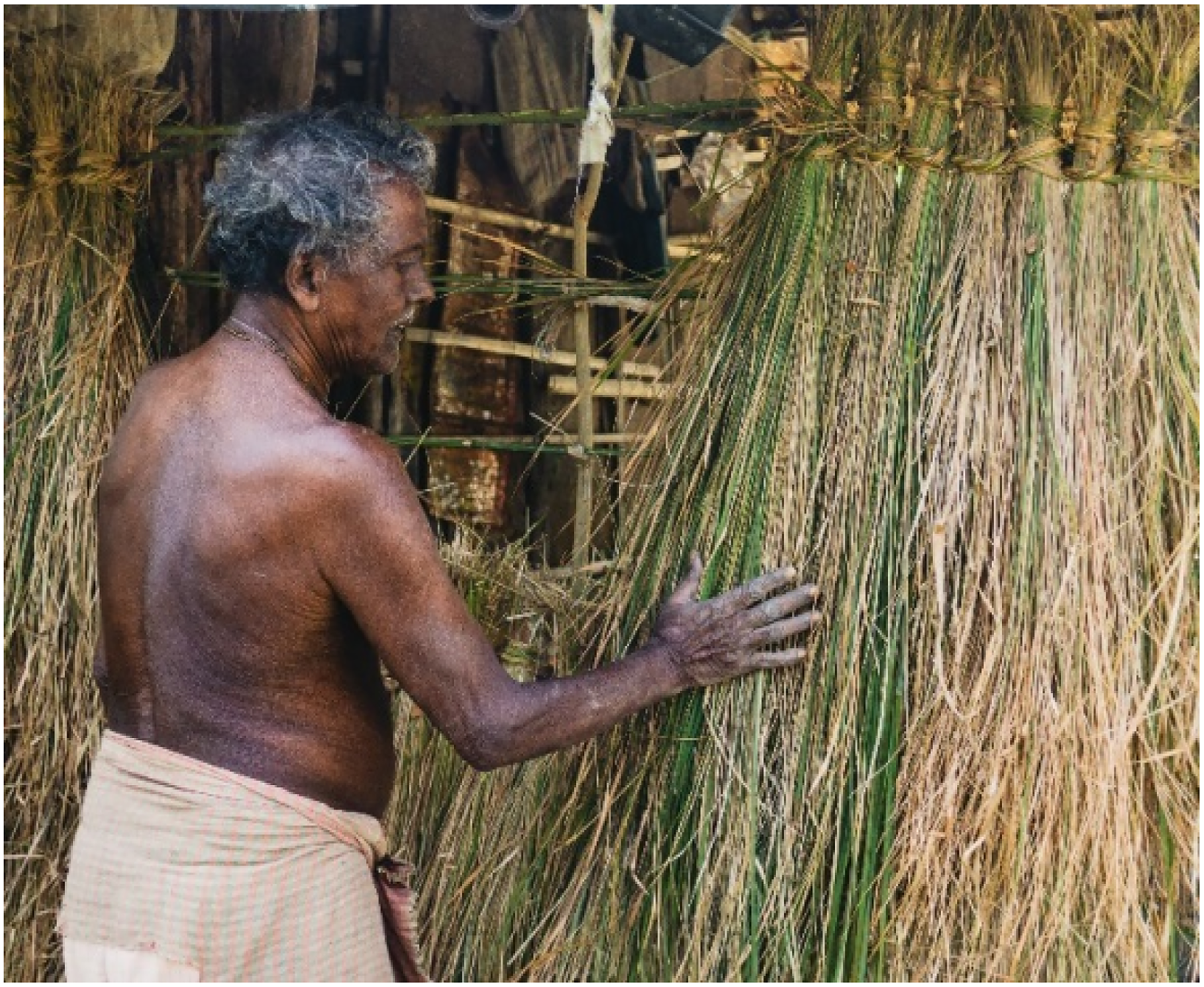
A retired fisher applying bundles of cotton grass, locally called ‘ulo’ on the boundary of his mud-structured house to protect it from strong winds during cyclonic events. However, restrictions imposed by the Forest Department prohibit fishers from accessing any such natural resource from the mangrove forest.
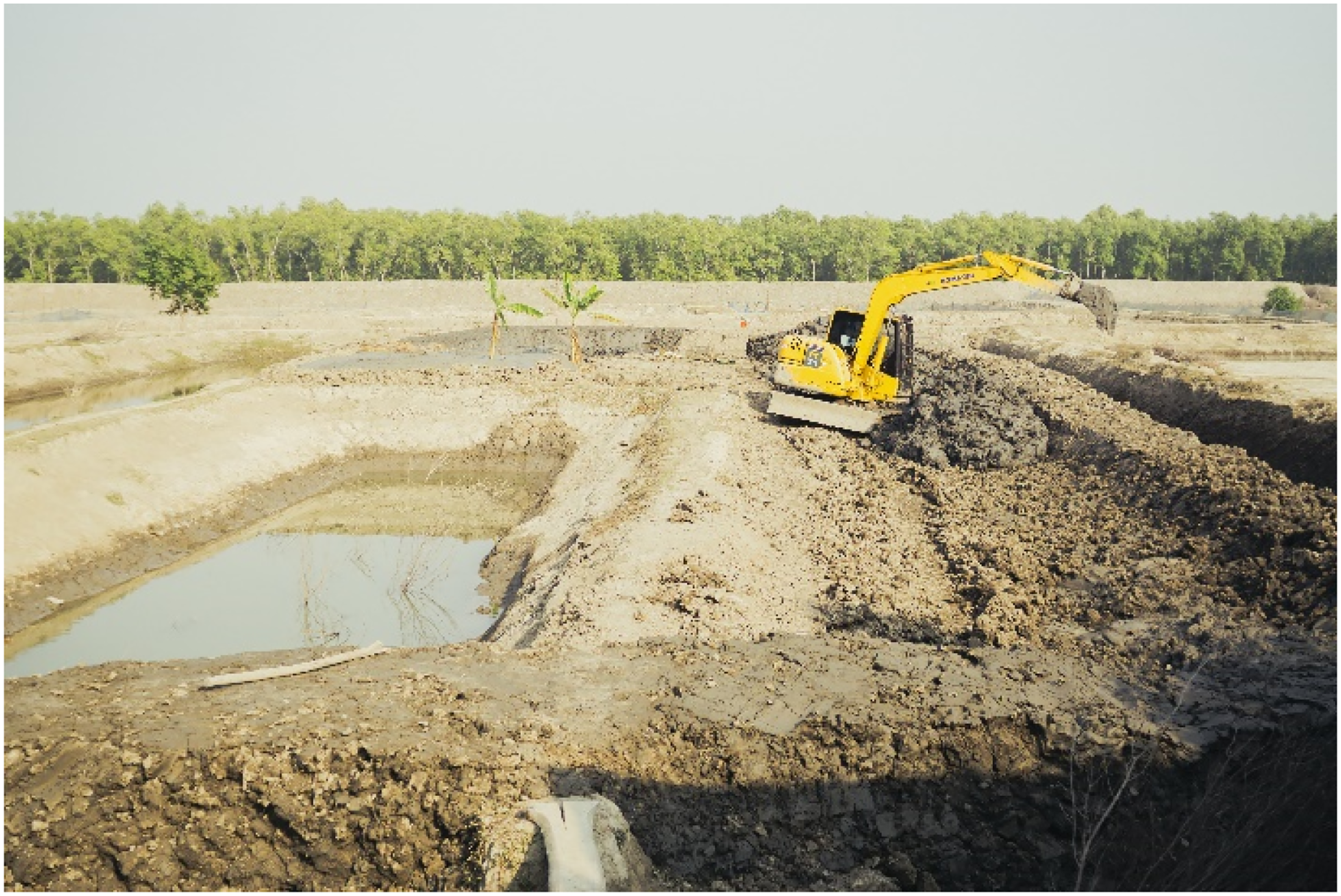
A crane clears land for the development of a shrimp farm in Chargheri.
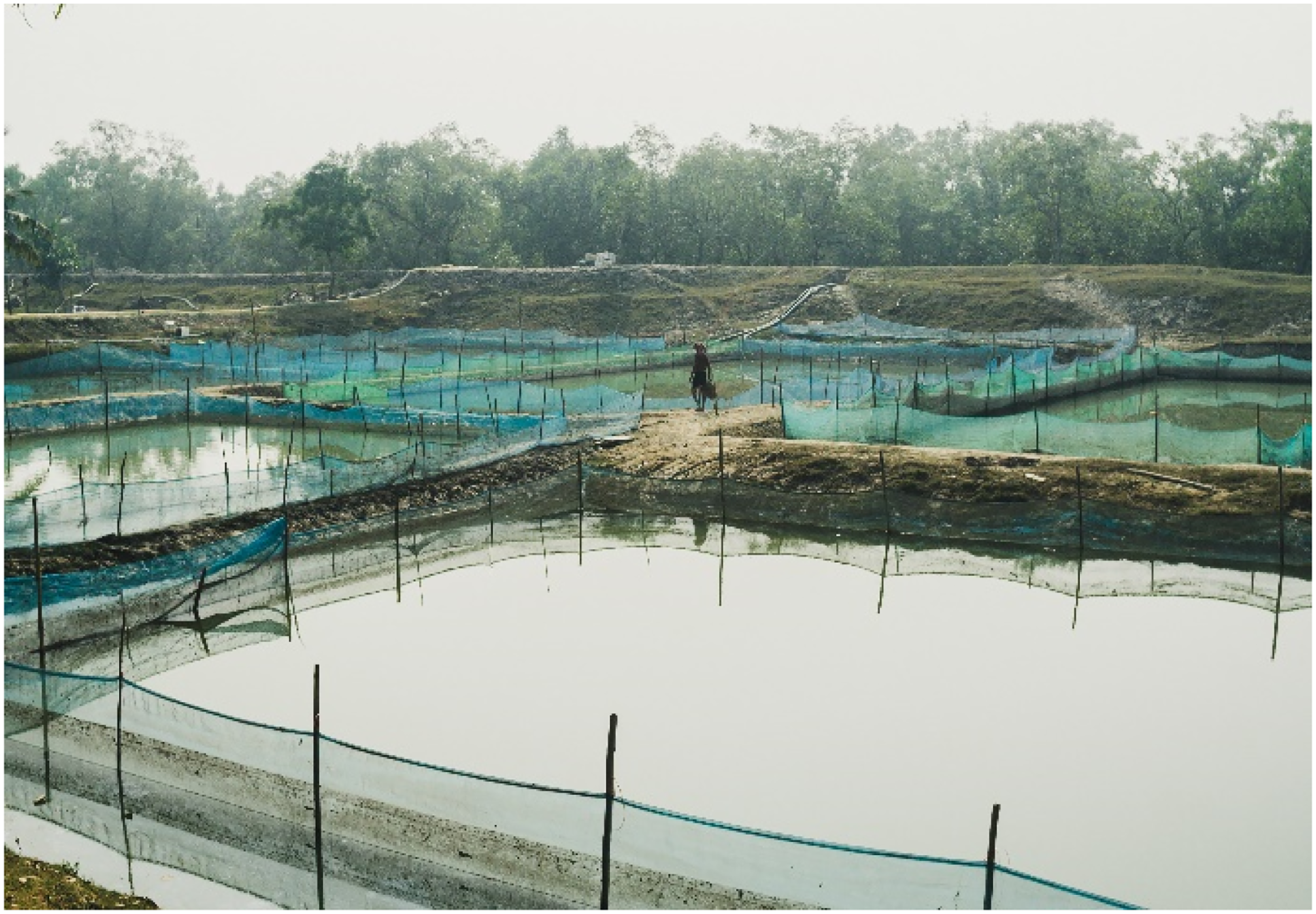
Shrimp and crab farms in Dayapur.
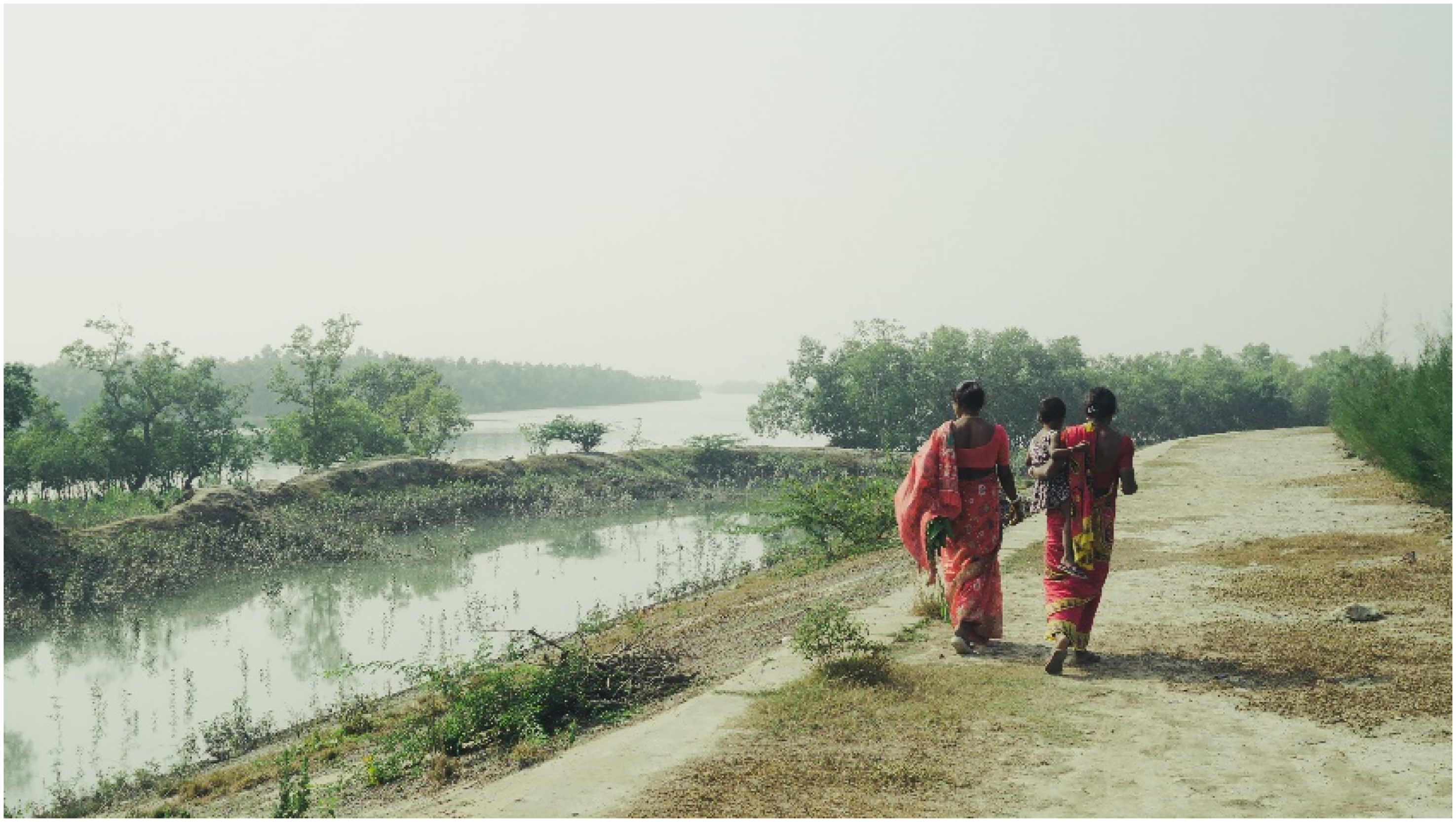
Women walk on the newly built concrete embankment in Chargheri in front of which mangrove saplings have been planted by joint efforts of local institutions on the eroded land.
We argue that control and appropriation of resources allocated for disaster recovery are not only a micro-political condition but a newly created domain of local climate economy, that capitalises on funded infrastructures and larger climate adaptation projects (Dewan, 2020). Understanding climate adaptation is thus a part of the multi-scalar political economic position (Birkenholtz, 2012: 295; Biswas and Sen, 2024) which can be revealed through long term ethnographies of climate risks experienced by communities exposed to life hazards. Researchers as a part of such methodological learning can provide situational knowledge at greater depths, on the political economy of climate risk management and vulnerability to catastrophic events, through long term participatory research, as compared to other research, which are less locally sustained and more comparative in approach (Dietrich, 2021). An ethnographic analysis of the political–economic nuances of climate change allows making sense of local perspectives to risks and uncertainty from ‘below’ and how they are mediated by local institutions and knowledge brokers in the ‘middle’ – compared to technical assessments of risk and uncertainty within climate science and policy from ‘above’ (Srivastava et al., 2022a: 2).
The Sundarbans delta, which spans over the coasts of Bangladesh and India, have been experiencing severe weather events since the last decade, triggering uncertainties and risks within the marginal communities. Sundarbans is susceptible to environmental risks such as rising sea levels, deteriorating mangrove cover, soil erosion, disappearing islands, along with climatic stressors like extreme weather events, cyclones and storm surges and increasing salinity of soil and water (Ghimire and Vikas, 2012); all of which threaten the survival of the local communities. While such risks are inherently associated with their bio-physical nature, the responses to such risks are produced and informed socially by interplay of power and politics (Forsyth, 2003: 1). Indian Sundarbans, along with its mangrove ecosystem, is a habitation of nearly 4.5 million people living in the 19 community development blocks in the state of West Bengal. Hence, it is not surprising that the utilisation and management of resources are subject to contestation between multiple claimants, which arises from regular negotiations between actors representing environmental conservation, economy and policy. Several studies have used political economic explanations to focus on how institutions interact with political networks to address emergent climate risks (Chu, 2018; Eriksen and Lind, 2009; Madhanagopal, 2023; Paprocki, 2018; Ribot, 2010; Smucker et al., 2015; Taylor, 2015; Warner et al., 2018), which often produce uneven outcomes. In this paper, we offer a more nuanced political economic analysis on climate risk management by focusing on framings of climate risks and on the role of local institutional politics in governance of resources to facilitate climate adaptation. By doing so, we aim to capture the accounts of those who are on the frontline of climate risks and those who mediate and facilitate adaptive measures to minimise such risks. Past scholarship on resource governance, social vulnerability and politics of risk management (Adger, 2003, 2006; Barnett, 2020; Birkenholtz, 2012; Blaikie et al., 1994; Eriksen et al., 2015; Hedlund, 2023; O’Brien et al., 2007; Ribot, 1995, 2010, 2011, 2014; Ribot and Peluso, 2003; Sen, 1981; Turner et al., 2003; Watts and Bohle, 1993) have been central in framing our study on the political economy of climate crisis.
Based on the conceptual framing of vulnerability and risk assessment, the three broad questions which have driven the study are: how do people from different occupational backgrounds perceive and respond to climate-induced risks? How do local political institutions mediate between the community and the state to extend adaptive measures in response to climate risks? How are resources distributed and utilised to address risks in the context of climate change? The article, which seeks to address these questions, is divided into eight sections. Following the introduction, we review the existing social science-based frameworks of vulnerability, risk assessment and adaptation. In the ‘Role of local institutions in response to climate change risks’. Then, we discuss the role of local institutions in response to climate change risks. ‘Field site: The Indian Sundarbans’ section describes the study area and its importance for this particular study. In ‘Methodology’ section, we elaborate on the methodology applied in the study. ‘Findings’ section consists of the empirical observations from the fieldwork, where we elaborate on the risk perceptions, experiences and responses of the community to past disaster events and future climate risks, followed by a description of the institutional processes of risk management. In the discussions and conclusion sections, we focus on the lessons from the findings of the study and the need on recasting attention to ethnographic accounts on the political economy of climate change.
Understanding the political economy of climate vulnerability, risk and adaptation
The term vulnerability has been conceptualised by scholars and policy experts in different ways across disciplines and knowledge domains (Adger, 2006; Füssel, 2007; Füssel and Klein, 2006; Smit and Wandel, 2006). Moving away from ‘impact’ models of vulnerability which focused mainly on biophysical aspects of risk, political economic approaches draw from early hazards research, which centrally focus on social systems responsible for expanding vulnerabilities in the aftermath of a hazard (Adger and Kelly, 1999; Blaikie et al., 1994; Forsyth, 2003; Ribot, 1995; Watts, 1983; Watts and Bohle, 1993). Prior works (Watts, 1983) on similar approaches focused on power and knowledge hegemonies associated to the construction of ‘hazards’ and specific epistemologies of human–nature relations that shapes environmental challenges. More direct connections between the social processes and unequal access to climate adaptation resources could be traced in later works on the political economy of climate change (Adger and Kelly, 1999; Blaikie et al., 1994), where intersectional analysis on institutions and economy were discussed. Central to such analysis are works by Dreze and Sen (1989) and Sen (1981) on human capabilities, livelihood and entitlements approach, that locates the causes of vulnerability to lack of entitlements, which mostly happen in the absence of robust and democratic state and institutional systems. These works have also been influential in climate vulnerability research from a social science perspective (Crabtree, 2018; Roy and Venema, 2002). Recent analysis of climate change politics also focuses on questioning the role of ‘adaptation’ as a ‘normative goal’- they indicate how adaptation is implicated within a biopolitical process of governance planning that can divert pressing questions on power, elite capture and sustainability. (Taylor, 2015: 2). A political economic approach on vulnerability and risk assessment would thus broadly focus on social relations and institutional structures which explain workings of power in response to the risks arising from climate change (Barnett, 2020).
While studies on political economy in the field of social science have distinct approaches to answer complex social problems, central to its theme is focusing on the role of institutions, interests and ideas in the process of distribution of resources, rights and opportunities to explain the effects of social change on different social groups (Banerjee et al., 2012). A situational analysis of such place-based social nuances may prompt how adaptation policies will be framed and facilitated (Kelly and Adger, 2000; Madhanagopal, 2023; O’Brien et al., 2007). However, within the existing literature on climate vulnerability, risk and adaptation, very little empirical research has been undertaken in rural contexts of the developing world, to understand how a political economy of climate change manifests from framings of climate risks and strategies deployed by local institutions to respond to such risks. In this paper, we aim to address this gap within existing literature on the social and policy discourses, by saying that unequal distribution of resources and weak implementation of climate action plans do not sufficiently convey how political economy of climate change manifests. More studies, specifically in the context of the global South, are required to understand regional nuances that are sustained by the power of local institutions- micro-social transformations, severe structural inequalities and other human challenges, which are always disproportionately revealed within the ‘new climate reductionism’ discourse in social sciences (Hulme, 2011: 245). Such studies can reveal how and in what ways policies fail to acknowledge social inequalities and workings of power within institutional structures that facilitate adaptation strategies, resulting in reinforcement of existing vulnerabilities and weakening of adaptive capacity of certain social groups (Adger et al., 2001). Hence it becomes imperative for social science research on vulnerability and risk assessment, to delve deeper into political considerations of how climate change problems are framed and how knowledge of climate risks is produced by mediating institutions and political interests.
Role of local institutions in response to climate change risks
Reflecting on recent sociological analysis that defines institutions as a form of cultural construction implicit within the current neoliberal models (Jepperson and Meyer, 2021; Lounsbury, 2022), we see them playing an instrumental role in facilitating implementation of adaptation policies and enhancing adaptive capacities of communities to respond to climate change risks. Adaptive capacity, which is the potential or ability of the social system to adapt to the effects of external perturbations (Smit and Pilifosova, 2003), is determined by availability of resources to cope with potential stress and institutional functioning that mediate distribution of resources (Adger, 2003). In rural areas, local institutions like political party organisations, panchayats, civic groups and local administrative units are critical in shaping the ability of households to respond to climate change risks (Agrawal, 2008). The success of adaptation depends on local institutions which facilitate implementation of adaptation strategies by regulating access to resources and structuring interactions between households and external actors (Agrawal, 2008: 18). Analyses of institutions can show how different actors mediate vulnerabilities, how they themselves change over time and how a political economy of their evolution is produced (Banerjee et al., 2012: 1446). Yet, relatively little has been focused on the roles and functioning processes of local institutional politics in the context of adaptation and climate risk management in developing countries. A political economic approach, critical of existing social processes, established knowledge and power structures that influence institutional functioning, can help to uncover social production of vulnerability. In the context of Indian Sundarbans, a vast network of actors and local institutions such as the Panchayati Raj Institutions (PRI) or the local level administrative units administered by the elected political party, community development blocks, concerned government authorities such as the Forest Department (FD), Department of Fisheries, Irrigation and Waterways Department and participatory institutions such as the Joint Forest Management Committee (JFMC) govern the utilisation and distribution of natural and infrastructural resources. The relations and intersections between these networks and actors in the context of climate hazard-related adaptation can be positioned on a multi-scalar political economic matrix, which can then explain the processes involved in framing of climate risks and the nature of response to climate change crisis within the context of our study.
We use this political economic framework to understand what kind of institutional responses reproduce vulnerability and how. Hence, vulnerability analysis within a political context is not only representative of different policy approaches, but of production of different forms of knowledge and institutional responses to climate change (Forsyth, 2003; O’Brien et al., 2007). In this regard, how problems are framed and whose knowledge is prioritised in planning and management of disaster events pose critical points of enquiry into aspects of political economy linked with resource access, distribution, use and management; in our case, within power laden villages of the Indian Sundarbans.
Field site: The Indian Sundarbans
The study was conducted in three villages – Chargheri, Dayapur and Rajat Jubilee falling under Lahiripur Gram Panchayat (GP) 1 in the island of Satjelia. The island of Satjelia is a southern island located within Gosaba block, which is one of the 19 community blocks of the Indian Sundarbans falling under the district of South 24 Parganas in the state of West Bengal. The residents of Satjelia island have a fairly disadvantaged position because of the island's close proximity to the dense mangrove forests, limited resources and livelihood opportunities and remoteness from the urban mainland. However, with majority of the population belonging to discriminated castes, social position and power to influence decision making in the villages is based on occupational and financial conditions, and established political networks with local institutions and urban mainlanders (Jalais, 2010; Sen, 2022).
Forest workers and small-scale fishers who draw their livelihood from the forests of Sundarbans by catching fish, prawns and crabs and collecting honey are situated at the bottom of the social hierarchy with marginal assets and security. Living closer to the river embankments, they are further discriminated for pursuing ‘forest work’ in a conservation landscape where regressive forest management laws from the colonial period portray the fishers and forest workers as ‘encroachers’ in the forest (Jalais, 2010). On the other hand, the landed rural elites who deploy labour to pursue rain-fed paddy cultivation and aquaculture in shrimp and crab farms are fairly well positioned socially in terms of their entitlements and political networks. Their homesteads are located at a fair distance away from the river embankments inside the village. Other wage workers and small business owners can be considered as positioned somewhere between the above-mentioned social categories.
In a conservation landscape with limited resources and livelihood opportunities, a heterogeneous social structure with diverse worldviews, place-based cultural values and socio-economic aspirations make the island of Satjelia a hotspot of competing ideas and political interests. In such a context, a political economic analysis of local institutional responses to climate change risks in the island allows us to find out whose ideas are translated into action, whose interests are prioritised and how discourses of climate change are produced and sustained.
Methodology
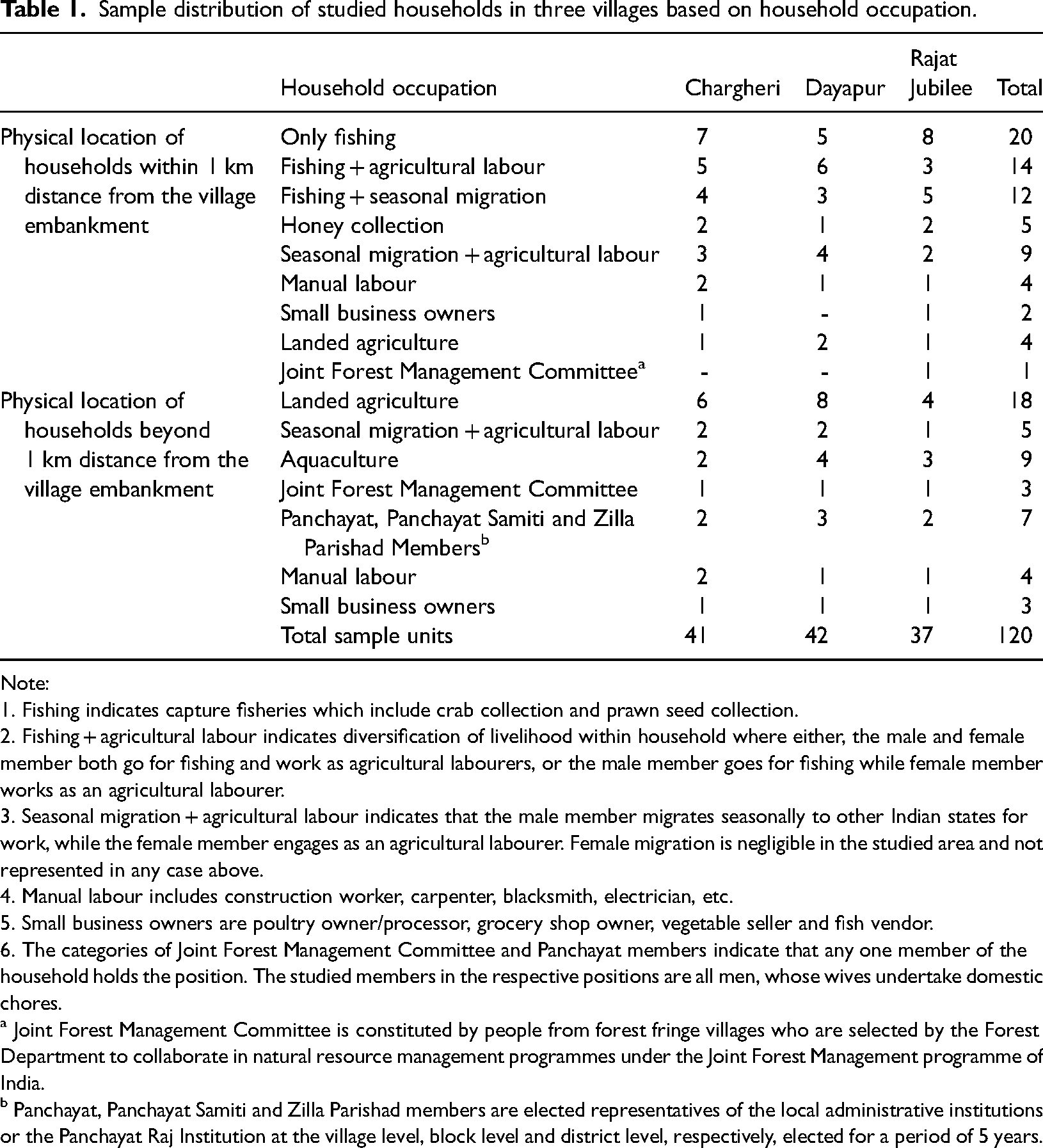
Ethnography provided the appropriate means to answer the research questions posed in the paper. Ethnographies of local experiences applied across diverse and multifaceted empirical spatialities (Bhattacharya et al., 2024) can demonstrate experiences of past disaster events and place-based adaptive strategies adopted by household units to minimise risks. The ethnography was guided by semi-structured interviews of 120 households conducted over a period of 6 months from November 2022 to April 2023 in three forest fringe villages of Chargheri, Dayapur and Rajat Jubilee. All the authors of the paper have prior established contacts with the villages owing to long drawn conversations with them during the execution of different funded projects. In this particular case, thus, the research positionality had played a crucial role in a deeper assessment of the political economy of climate change, also because of the mix disciplinary backgrounds comprising of sociology, political ecology, geography and cultural studies, which largely shaped the study context. The study has considered each household as a specific unit of analysis to reflect on how risk is perceived and responded differentially based on the occupational backgrounds of the household members and their ability to negotiate with local institutions to minimise the risk. Intersectional community differences are more relevant in this study than focusing on individual differences since social positions in the studied villages are based on occupational status of the members of the household as well as the physical location of the homestead in the village, both of which are critical factors in terms of climate change risk borne by each household. The sample distribution of households based on occupation and their physical location in the villages is illustrated in Table 1. Occupational diversity within each household is represented by separate rows within the table. In all cases, both the adult male and female members from a household participated in the discussion. Perspectives and experiences of the interviewed households from a diverse range of occupational backgrounds have enabled us to reflect on multiple realities of perceiving, experiencing and responding to risk from climate change in the Indian Sundarbans. The interview responses combined with participant observation of the interviewees and transect walks in the studied villages have helped us to broadly understand how local institutions frame climate risks and facilitate the distribution and utilisation of resources to respond to climate change risks. A synthesis of the three methods within the ethnography – interviews, participant observation and transect walks allow us to argue on the importance of studying the political economy of local institutional strategies and responses to climate change risks.
Sample distribution of studied households in three villages based on household occupation.
Note:
1. Fishing indicates capture fisheries which include crab collection and prawn seed collection.
2. Fishing + agricultural labour indicates diversification of livelihood within household where either, the male and female member both go for fishing and work as agricultural labourers, or the male member goes for fishing while female member works as an agricultural labourer.
3. Seasonal migration + agricultural labour indicates that the male member migrates seasonally to other Indian states for work, while the female member engages as an agricultural labourer. Female migration is negligible in the studied area and not represented in any case above.
4. Manual labour includes construction worker, carpenter, blacksmith, electrician, etc.
5. Small business owners are poultry owner/processor, grocery shop owner, vegetable seller and fish vendor.
6. The categories of Joint Forest Management Committee and Panchayat members indicate that any one member of the household holds the position. The studied members in the respective positions are all men, whose wives undertake domestic chores.
a Joint Forest Management Committee is constituted by people from forest fringe villages who are selected by the Forest Department to collaborate in natural resource management programmes under the Joint Forest Management programme of India.
b Panchayat, Panchayat Samiti and Zilla Parishad members are elected representatives of the local administrative institutions or the Panchayat Raj Institution at the village level, block level and district level, respectively, elected for a period of 5 years.
Findings
Community perceptions of risks and responses to disaster events
In this section, we explain how the sampled households from different occupational backgrounds perceive risks differentially, experience loss from the same disaster events unequally and respond in order to minimise their risks with disparate adaptive capabilities. Cyclonic events such as an unnamed cyclone in 1988 (locally referred to as araisho kilometre beg-er jhor, or 250 km/hr storm), cyclone Aila in 2009, cyclone Fani in 2019, cyclone Amphan in 2020 and cyclone Yaas in 2021 were listed as major hazard events by the respondents which resulted in severe damage to property and caused post-disaster trauma. Ingress of saline water from embankment breaches caused by storm surges is considered as one of the major threats to the islanders affecting the availability of freshwater for domestic use, sustenance of agricultural practices and physical well-being.
However, ingress of saline water in the village affects households differentially. The fishing households who usually inhabit mud structures close to the rivers, immediately next to the embankments or in some cases on the land–water interface of the mangrove forest are the first to get affected by ingression of saline water. They respond to these risks by employing their local ecological knowledge to navigate the inundated areas on their boats and sustain their livelihood from fishing. For example, in the village of Dayapur, a tribal fisher household living on the edge of the river is habituated with living on their boat for days during floods and post-cyclones. After the water recedes, they apply fresh mud and use residues of forest produce from varieties of mangrove species to reconstruct their mud houses.
The risk of missing out on livelihood opportunities is seen as far more critical than flooding and destruction to their homestead by the fishers. The risk perception of the fishing households is centred around damages to their boats and fishing gear which hinder their livelihood and capabilities to recover from disaster events. Threats to their fishing-based livelihoods are also posed by depletion of fish stock from loss of mangrove cover, water pollution from tourism and industrial activities and hauling of juvenile fish by trawler fleets at the mouth of the delta. On top of that, an exclusionary model of fortress conservation imposed by the State Forest Department to protect the charismatic Royal Bengal Tiger and biodiversity of the mangrove forests results in penalisation of the fishers by imposing hefty fines and subjecting them to harassment (Chacraverti, 2014). The women from the fishing households engage in prawn seed collection on the rivers to supply the seeds to the aquaculture farms for breeding. With increasing salinity in the southern islands of the delta (Roy et al., 2024), the women suffer from skin diseases from sustained exposure to the saline water and these are often left untreated due to inadequate access to health services. Alternatively, these women work as agricultural labourers or aquaculture labourers in the paddy fields and shrimp farms of the landowners in return of low wages. Instances of non-payment of wages for months of work were also reported by the women from fishing households when the landowners faced losses from paddy or shrimp and crab production.
Such aggregated challenges to pursue a secure livelihood while residing close to the embankments have direct bearings on the capability of the fishing households to develop their adaptive capacities and minimise future risks. Under such conditions, the fishing households respond by seasonally migrating to the southern states of India where they work as wage labourers in construction, manufacturing and agricultural industries. While seasonal migration offers an alternative income for the fishing households, they suffer from disaffection from within their families and the village community, while working under hostile conditions in the wage labour industries. In absence of secured livelihood opportunities and state support, the vulnerability of the fishing households is reproduced and sustained by the local institutions which align with the administration in supporting conservation induced livelihood loss.
The landed agriculturalists who retain a higher social position owing to their perceived status as landowners live away from the embankments, in areas where the potential risk of flooding and salinity ingress is comparatively less. Although socio-economic positions of the landowners differ depending on the extent of landholding, most of them have managed to build pucca houses or permanent housings made of bricks and cement which significantly reduce impacts from hazards. The responses of the landed agriculturalists show that loss of property from past cyclonic events was minimal owing to the safety of their permanent housing structures. The major risk borne by the agriculturalists is intrusion of saline water in their paddy fields which make the land unfit for paddy cultivation by increasing the high saline content of the soil. Respondents from agricultural households reported decline in agricultural productivity due to increased salinity from cyclonic events in the past. Other risks borne by agricultural households are loss of cattle and intrusion of saline water in freshwater ponds which are the only source of irrigation during non-monsoon months.
To respond to these risks, the agricultural households deploy labourers to cover their agricultural fields with long sheets of tarpaulin. Upon receiving the news of an incoming cyclone, they move the stored grain into their houses and try to relocate the cattle to a safe place in their homesteads. They usually hoard food grains as provisions in case of shortages during hazard events. However, impacts from disasters are differentially experienced even between agricultural households based on their physical location. For example, an agricultural household located within 1 km from the embankment suffered a significant decline in agricultural productivity after cyclone Fani. Whereas, another agricultural household living approximately 3 km away from the embankment did not suffer losses from agricultural production since the ingress of saline water was restricted within 1 km radius inside the village. However, irrespective of physical location of the homesteads, agricultural households push forward their interest to the local administrative institutions to uplift and build ‘concrete embankments’ to resist ingress of saline water. Similar to agricultural households, shop owners, wage labourers, members of local administrative units and JFMC members own parcels of land, reside in pucca houses and share a common claim for concretisation of the embankments to minimise their risks arising from physical losses to their assets and property during disaster events. The perceived status of the landed agriculturalists and the above-mentioned household categories as ‘landowners’ confer them with the privilege to freely network with each other, form political alliances and exercise power to influence village level decision making in the context of climate risk management and adaptation.
The owners of aquaculture farms also reside in permanent housings away from the embankments. However, since the shrimp and crab farms of the owners are located close to the embankments, their risk perception is informed by potential losses suffered from decline in shrimp and crab production due to increase in salinity levels. To recoup their losses, the aquaculture farm owners liaise and patronise with representatives of the local political leaders to lease out plots of land for establishing new aquaculture farms. The process of leasing out land for aquaculture involves felling of mangrove forests close to the village embankments. Since production of shrimp and crab from aquaculture yield high economic returns from marine exports, numerous shrimp and crab farms get permits from local institutions at the block and village level, despite the harmful impacts of intensive aquaculture on the mangrove ecosystem. The lucrative economic opportunities presented by aquaculture have prompted representatives of the ruling political party, members of the GPs, members of JFMC and fish traders to invest on new shrimp and crab farms. Such political control to influence environmental planning and resource utilisation is sustained by a patron–clientelism across a strong political economic nexus. As noted by Mukhopadhyay (2016), shrimp farming in the lower inhabited islands of the Indian Sundarbans involves violent processes of forceful possession of land, deployment of regulatory powers and frequent exploitation of local people. Such incidents are common in the daily lives of the islanders, where people with lack of agencies are subjected to political injustice and brutality, even during times when incidences of natural disasters are not manifest.
The above cases demonstrate the place-based nuances of climate politics at the local level, in demonstrating that vulnerability to climate risks are not only differential, but are propelled by existing entrenched social inequalities, power imbalances and political under-representation (Ribot, 2010). The adaptive capacity of different households to respond to the risks is linked to their positionalities in the capitalist economy of production and on the extent to which such occupations are sustained by the local factions of the state. Subsistence based livelihood occupations pursued by small-scale fishing communities are not much of interest to local institutions since they do not generate any revenue for the administrative units in power. Rather, they are penalised for fishing in the interspersed tidal streams within the mangrove forests. Hence, the livelihood occupation of small-scale fishers is considered as being disruptive. Whereas, extensive paddy cultivation by landed elites and businesses of aquaculture farm owners on leased out land is prioritised because of their contributions to revenue earning of the local institutions. Markets are therefore central institutions that determine implementation of climate adaptation plans and influence how environmental resources and space must be utilised with projected outcomes of increased economic production. Overriding the markets of shrimp, crabs and paddy, powerful social groups are able to consolidate power within a local political nexus in the villages that can influence institutions based on their ideas and interests of accruing capital for the global economy.
Local institutional responses to risks and disaster events
This section explains how responses deployed by local institutions to pre-disaster and post-disaster risk reproduce vulnerability among the sampled households, through unequal distribution of resources and entitlements.
Pre-disaster preparedness
Access to permanent housing structures significantly reduce the risk from disaster events. Providing access to permanent housing is a national commitment of India to ensure Right to Shelter for all Indian citizens. However, as a result of manipulation of the list of beneficiaries at the panchayats, many households from the southern islands of Sundarbans remain outside the purview of the national housing scheme – Pradhan Mantri Awas Yojana. In most cases, those are households of fishers and forest workers who continue to live in mud structures. Whereas, every interviewed agricultural household, owners of aquaculture farms and representatives of local institutions live in permanent housing structures away from the embankments. Observations made by respondents suggest that the distribution of the housing scheme is based on patron–clientele relations where the eligibility of the households to receive funds for building a permanent housing structure depends on their allegiance to the ruling political party.
Another form of pre-disaster preparedness undertaken by the panchayats is to move people to the cyclone shelters. Before disaster events, the panchayat organises awareness campaigns in the villages through announcements and encourages people living in mud structures to move into cyclone shelters to avoid casualties. Such efforts are considered to be of little use by some of the respondents since services like availability of drinking water, functioning toilets and hygiene standards are inadequate in the cyclone shelters. On the other hand, no efforts are made by the panchayats to provide long-term economic and livelihood support to the vulnerable households in the form of insurances, loans and livelihood assistance to recover from post-disaster distress. Hence, moving to the houses of kin in other islands and taking loans from relatives and neighbours becomes a common practice among families residing in mud structures. Social cohesion in the form of kinship and neighbourhood relations emerge as critical strategies for the most marginalised people to get through disaster events in absence of adequate state support.
In terms of long-term pre-disaster preparedness, large scale investments are made to build ‘concrete embankments’ which are promoted by the nexus of local administration, village level governance bodies and landowning households engaged in agriculture and aquaculture. However, construction of concrete embankments is undertaken at the cost of clearing existing stretches of mangrove forests and dispossession of households of fishers and forest workers without payment of adequate compensation and resettlement. In many cases, as Mukhopadhyay (2009: 137) shows, ‘land acquisition constitutes an integral aspect of embankment construction and maintenance’, where engineers and contractors ‘make money’ out of the pretext of building ring bunds, rendering several people homeless (139–140). During our fieldwork, it was learnt that a recent World Bank project to construct concrete embankments has led to the displacement of approximately 70 households of fishers and forest workers in the studied village of Chargheri. The affected households have been informally given 0.3 acres of land on the on the outer side of the embankment facing the rivers without a land title and any kind of rehabilitation support. Earlier the villages had mud embankments which used to get breached during storm surges. Now, the concrete embankments, built by our current government will withstand intrusion of saline water during storm surges. This is a welcome development. Agricultural production will be benefitted along with increase in production of shrimps and crabs, said a panchayat member from Chargheri.
On the other hand, to compensate for the loss of existing mangrove cover, the State Forest Department in collaboration with members of the JFMCs and the Panchayat members plant mangrove saplings in front of the new concrete embankments to withstand erosion. However, there is a sharp distinction between traditional ecological knowledge possessed by the fishers and forest workers and technical knowledge applied by the state and local institutions in mangrove plantation. According to the fishers and forest workers, plantation of mangrove species requires careful assessment of the parcel of land on the intertidal zone, accurate timing during ebb tide and the saplings need to be protected by halo tolerant grasses. Mangrove saplings planted by the FD and JFMC on the erosion prone land in front of the cemented embankments have not been able to withstand the tidal surges during high tides, resulting in their short span of survival. During interviews with the JFMC and the Panchayat members, efforts of the state in large scale mangrove plantation were applauded on moral grounds of environmental protection while such afforestation programmes also generated employment for functionaries in local institutions.
The above cases demonstrate the political economy of resource use and management facilitated by local institutions to minimise risks arising from climate change. Transformation of land use concerning construction of concrete embankments to enhance productivity of paddy, shrimps and crabs is driven by powerful economic interest which lead to the displacement of vulnerable households. On the other hand, compensatory afforestation of mangroves, irrespective of their survival rates, provides economic opportunities to members of local institutions while their actual utilisation is not realised in ensuring the long-term sustainability of the region. Here, framing of risks based on potential biophysical harm to productive assets determines their responses followed by a set of technical solutions. Imparting technical solutions in the form of new infrastructure like concrete embankments and plantation drives to supposedly reduce risk from hazards results in creation of local climate economies within emerging global adaptation markets. Such processes of framing and responding to risks based on technical solutions rooted in market-based policies undermine the scope of co-production of knowledge towards socially just development pathways.
Post-disaster recovery
Post-disaster recovery is addressed by the local institutions through distribution of aid such as rice grains, puffed rice, oil, jaggery, tarpaulin sheets and sometimes cooking vessels, soap, etc. Similar to accessing funds for permanent housing, distribution of post-disaster recovery aid is also corrupted by a patron–clientele relation where the beneficiaries are selected by the local institutions on the basis of their allegiance to the ruling political party. When we went to the panchayat office for help after our house got destroyed during Amphaņ the office bearers taunted us by saying that we should have thought twice about ‘aid’ before voting for the opposition party during panchayat elections, said a resident of Rajat Jubilee village.
The women fishers and agricultural labourers mentioned instances where the panchayat members from the ruling party visited their house before panchayat elections and provided them with saris and a bucket of rice as a token to get their votes, but turned a deaf ear to their demands on providing loans and alternative livelihood opportunities in the aftermath of cyclones. On the other hand, livelihood opportunities and resources accruing to fishers and forest workers from the JFM programme were directed to households who have never engaged in forest-based livelihoods and maintained a closely knitted relationship with the representatives of local institutions (Sen and Pattanaik, 2019). Interview responses of the JFMC members demonstrated that such choices of favouring non-forest workers over forest workers and fishers were in accordance to the state efforts of biodiversity conservation. The fishers are greedy! They continue to fish in the forest waters and cause harm to our mangroves. Why would we support them with anything? Villagers who do not go to the forest and respect the rules of the tiger project (rules of Sundarban Tiger Reserve) must be rewarded. If the fishers continue to venture into the forest there will be more tiger attacks and the Forest Department will be blamed for that, said a JFMC member of Dayapur.
In the name of participatory conservation, flow of funds through international markets help in reinstating the grand discourse of forest conservation through agents and representatives of the local political nexus. Whereas, the same political nexus is given environmental clearance to pursue unsustainable practices like intensive aquaculture and promotion of concrete embankments which bear significant social-ecological impacts such as loss of mangrove cover in the villages, pollution in the rivers and dispossession of fishing households. Although prawn farms cause significant distress to the neighbourhood and the land, as pointed out by several people across the villages, they do not rise to the level of a backlash or collective dissent, since people fear the power of politics and past incidences of brutality around such conflicts.
Discussions
A number of important lessons emerge from the above findings of the study. Firstly, a political economic analysis is necessary in climate risk, vulnerability and adaptation research to critically assess existing social structures, established forms of knowledge, workings of power and political interests that influence local institutional responses to climate change risks. A methodological framework driven by ethnographic inquiry of political economic processes allows us to understand the ways in which social groups struggle for power in the society, attainment of which, in turn, determines their ability to access resources and influence institutional decision making (Ribot and Peluso, 2003). By critically assessing social productions of vulnerability, a political economy approach avoids the costly mistake of considering rural communities as homogenous and community-based resource management and adaptation are bound to be successful.
Secondly, political considerations in framing of climate risks are necessary to understand how knowledge to respond to those risks become relevant at local institutional level. A political economic analysis helps in considering the divergent ways by which actors advance adaptation claims based on their risk perceptions and aim to reduce those risks by networking with local institutions. Framing of climate risks based on potential losses to businesses and productive resources prompts technical fixes and market based adaptive responses. As observed, utilisation of natural resources in climate-vulnerable landscapes is facilitated by local institutions based on market mechanisms to enhance economic productivity of individual households. Examples of global flow of capital from international markets towards technical fixes such as building of concrete embankments that would protect revenue generating enterprises of shrimp, crab and paddy production emphasise how local adaptation claims are substantiated by global markets. Similarly, exclusionary models of forest conservation and compensatory afforestation programmes funded by international donors point towards prioritisation of market-based conservation programmes over local knowledge to conserve natural resources. Such political framings and responses to climate risks result in enhanced adaptive capacities of some households at the expense of increased vulnerability of others (Taylor, 2015). On the other hand, the political economy of resource distribution before and after disaster events reveals the negotiations between representatives of political parties and the local people based on a patron–clientele relationship which enables consolidation of power within local institutions. From our observations, we infer that market-based responses to climate risks at local institutional levels leads to the creation of local climate economies.
Thirdly, a political economic analysis applied in the study explains the process of individualisation of responses to risks. Our study shows that local institutions play a pivotal role in reinforcing global capital towards large-scale productive sources while facilitating and deploying climate risk management strategies in the Indian Sundarbans. In the process, while the adaptation claims of the rural elite are accomplished, marginalised groups such as the fishing households are alienated from their traditional livelihood practices and disenfranchised by the local institutions at the same time. Such multi-scalar political economic processes reinforce the vulnerability and reduce the adaptive capacities of marginalised groups. Under such circumstances, those marginalised groups are governed by powerful institutions which come up with solutions that sustain the capitalist neoliberalist agenda of adaptation (Davoudi, 2017; Faulkner et al., 2020; Saja et al., 2019) and reinforce dominant narratives of environmental planning (Joseph, 2013) – evident from the Delta Vision 2050 which would seemingly facilitate a ‘managed retreat’ (Danda et al., 2019) from the islands without addressing the existing vulnerabilities and social inequalities that put certain people more at risk than others (Nightingale et al., 2019). This results in individualisation of the responses to risks where the marginalised are left to devise their own adaptive capacities. Therefore, a political economic analysis in climate vulnerability, risk and adaptation research provides key methodologies that can inform policy makers, civil society, activists and practitioners to facilitate adaptation strategies based on principles of equity and justice by revealing who is most vulnerable to future climate risks and how.
Conclusions
In this article, we have argued why mapping and understanding place-based political economic nuances of local institutional responses to climate change risk is necessary in social-science based climate vulnerability and risk research. While research has addressed climate induced vulnerabilities and their potential fixes, we contribute to this literature by presenting a political economic analysis of place-based nuances at the intersections of environment, economy and local climate politics in the Indian Sundarbans. Our analysis shows that the existing structural inequalities and power asymmetries at local institutional levels can lead to the framing of climate risks and responses, based on private interests of safeguarding productive assets rather than addressing the existing vulnerabilities in a socially viable way. Responses to climate risks facilitated by local institutions as observed in our study show that they can be biased towards market-based mechanisms over protection of local livelihoods. Key lessons from our analysis show that a neoliberal approach to responding to risks through technical fixes, which target only biophysical changes, can result in insurmountable losses and put certain sections of the community further at risk. Future social science-based vulnerability and risk research must look beyond the physical threat impacts binary, to come up with climate change responses. Such research should focus more on local political economic factors which produce and sustain the existing vulnerabilities, to make more accurate assessments of disrupted lived experiences and ways in which transformational development pathways can be formulated.
Highlights
Analysis of climate risk management using a political economy framework is a much-needed line of inquiry within community inhabited climate-vulnerable landscapes in coastal areas. Climate crisis in the Indian Sundarbans is a complex discursive phenomenon, shaped by micro and macro institutional and political forces, producing drastic transitions in living. Local institutions play an instrumental role in facilitating climate risk management through market mechanisms, patron–clientele relations and technologically engineered solutions.
Footnotes
Acknowledgements
We thank every respondent for being very generous with their time. All the authors gratefully acknowledge funding received from the Indian Council of Social Science Research (ICSSR) for a Major Project entitled ‘An innovative adaptation and social resilience framework: using a multi-sectoral approach to address climate vulnerability issues in the Indian Sundarbans’. Amrita Sen acknowledges funding received from Indian Institute of Technology Kharagpur under its 'Institute Scheme for Innovation Research and Development' (ISIRD), two Social Sciences and Humanities Research Council (SSHRC) Canada funded projects- 'Dried Fish Matters: Mapping the Social Economy of Dried Fish in South and South East Asia for Enhanced Wellbeing and Nutrition' and 'Vulnerability to Viability (V2V): Global Partnership for Building Strong Small-Scale Fisheries Communities' as well as a Junior Core Fellowship (2024/25) awarded by the Institute for Advanced Study, Central European University, Budapest.
Disclosure statement
No potential conflict of interest was reported by the author.
Funding
The authors disclosed receipt of the following financial support for the research, authorship and/or publication of this article: ICSSR, SSHRC, IIT Kharagpur and Institute for Advanced Study, Central European University.
