







Abstract
The resettlement of plants during the famine period significantly shaped the conditions of early colonialism in India. These botanical efforts were grounded in the perception of the tropics and its agriculture as poor, leading to projects of colonial “improvement.” This paper examines how colonial famine interventions led to a project of transforming the tropics through Botanical Gardens. The study uses imperial and local archives to analyze the early material and cultural spaces produced and circulated by the British Botanical Gardens to argue that the Botanical Gardens emerged as two types of infrastructures. As physical infrastructures, the Botanical Gardens transformed the environment through plant resettlements, violently forcing new relationships into the environment at the micro-climatic level. As micro-climatic knowledge infrastructures, the gardens revealed gaps in micro-climatic knowledge and later filled the early knowledge gap through failed plantation trials. The spatial mobilities of plants these gardens set in motion constructed “micro-climatic” infrastructure for altering the landscape of subsistence with cash crops exacerbating famines in the long term.
Introduction
In the 1790s, Bengal, in India, faced devastating famines in various districts under British colonial rule. Responding to this crisis, the Board of Revenue implemented an infrastructural solution known as the “Public Granaries” from 1795 to 1802. The primary purpose of these public granaries, established in all famine-affected districts in Bengal, was to procure, store, and distribute grain to the public at reasonable prices during times of scarcity. 1 However, seven years after introducing public granaries in at least 11 districts, the institution was considered a failure. This was attributed to multiple factors, including frequent fires, mismanagement, challenges in acquiring and transporting grain, uneven distribution, and the high expenses of maintaining the granaries. 2 Consequently, the institution of the public granaries was abolished, leaving the granaries as empty monuments bearing a plaque that stated, “for the Perpetual Prevention of Famines in India” (Ghosh, 1944). Rebecca Brown has argued that the architecture of the granary at Patna was less about its function to control the famine and more about legitimizing the British presence in India in the 18th century. Brown has shown how later in the 19th century, the granary became an embodiment of “a gap in early colonial knowledge about the sub-continent and what kind of responses to famines actually work.” During these early failures of famine interventions, there were differences of opinion within the administration regarding the cause of the famines and their relationship to drought (Brown, 2005). Botanists and naturalists attributed the cause of the famine to environmental conditions like drought prompting them to explore solutions through botanical experiments (Arnold, 1988). This paper focuses on one such intervention involving the establishment and expansion of the Botanical Gardens.
William Roxburgh was among the British East India Company botanists who proposed an alternative botanical intervention. He suggested that the “best substitute” for the failing granaries was “the culture of every article of food congenial to the climate and prejudices of the people.” 3 Roxburgh argued that Bengal's climate was conducive to the introduction of various plants to replace the water-intensive rice crop. According to him, resolving the discrepancy between the harsh climatic conditions of the region and the crops that grew there could solve the issue of famine. He thus compiled a list of plants as “suggestions on the introduction of such useful trees, shrubs, and other plants deemed most likely to yield sustenance to the poorer classes of Natives of these Provinces during times of scarcity.” 4 On a broader level, this list reflected the belief of Bengal as a part of the Tropical world. The plants in the list were sourced from different parts of South Asia and the globe, primarily from regions known as the Tropical Zone, i.e., regions that were geographically located between the Tropic of Cancer and Capricorn. According to this conception of the Indian environment, climate was a determining and static factor that dictated what plants grew where. This implied that introducing suitable plants and establishing an agricultural environment tailored to the tropical climate could prevent famines.
Scholar of Geography, Mike Hulme has defined climate as “an idea which mediates between the human experience of ephemeral weather and the cultural ways of living which are animated by this experience.” He has argued that our understanding of climates has been shaped by a variety of “imaginative and material evidence.” These constructed climates are then used to influence and guide behavior on multiple levels—personal, social, and political (Hulme, 2017). In the colonial imagination of the tropical climate, the tropics were both a physical space with the potential to be constructed and an imagined space centered around cultural assumptions and colonial desires of the ideal colony. These were embodied in concepts of a pan-tropicality—the idea that regions between the latitudes of the tropic of Cancer and Capricorn shared uniform physical, social, and cultural aspects. One of these aspects was the notion that the tropics had not yet reached their potential due to the societies inhabiting these places, but this potential could be unlocked with the right interventions (Arnold, 1998, 2005, 2006). These assumptions portrayed the tropics as being conducive to transformation and as areas that could be controlled, meaning they were considered amenable. Such notions of amenable tropics emerged as a countermeasure to famine during this period in the world of the East India Company naturalists and botanists. They saw great promise in the endeavor of planting and transplanting tropical species from different geographies to address the deficiencies in the climatic potential of each region. These conceptions of the tropics and its agriculture as poor underpinned the project of colonial ‘improvement’ and created the opportunistic conditions for the British administration to devise instruments and categories for the expansion of colonialism (Arnold, 2005; Drayton, 2000; Ross, 2017). Scholarship on colonial India has established how colonial policies of extractivism and the commercialization of agriculture were primarily responsible for the induced scarcity in British India (Sen, 1981). Yet, during the period, famine responses were oriented towards externalizing these disasters to the climate and the environment (Davis, 2001; Forth, 2017). These interventions not only encompassed scientific improvement but also a moral improvement project that fashioned colonial interventions as a practice of “care” in a presumed “careless” tropics (Rudge, 2022).
Botanical Gardens were devised as instruments to serve as ideal climatic spaces of the tropics where suitable plants could be coupled with the climate to realize the potential of the tropics. In the colonial imagination, the micro-climate in a small area defined by the Botanical Garden, the local climate in the expanse of the city, the regional climate, and the tropical climate had a linear and incremental relationship that assumed the gardens to be a suitable infrastructure for transformation. Botanical Gardens were envisioned to be infrastructures of climate that could bridge the different scales of climate to transform it through the resettlement of plants. This study uses imperial and local archives to analyze the early material and cultural spaces produced and circulated by the British Botanical Gardens. It argues that Botanical Gardens, by introducing plants, revealed discrepancies between the knowledge and practice of tropical regions. This outcome was contrary to the expectation that these gardens would verify assumptions about the tropical climate. Botanical experiments of resettling plants revealed that soil, water, animals, and socio-cultural aspects of the land, collectively termed “micro-climate” in this paper, were important variables that complicated the understanding of the tropics. Engaging with the micro-climate had two consequences. On the one hand, mobilizing plants forced new relationships and rearrangements into the environment at the micro-climatic level to expand the range of crops able to be grown in a region, disrupting socio-environmental relationships. On the other, it resulted in new knowledge about contradictions and misalignments between the realities of transforming micro-climates in practice and the tropical imagination. Analyzing Botanical Gardens as micro-climatic infrastructures highlights both the scaled interventions and the changes in micro-climates, also highlighting that these colonial infrastructures were not seamless and faced challenges. In the long term, the relationships engineered by Botanical Gardens as micro-climatic infrastructures exacerbated famines on a macro-climatic scale, affecting large areas and enduring over extended periods in the environments they tried to control.
The research for this paper is drawn from the colonial archives at two scales—the imperial scale and the local district/garden scale. The imperial archives, located at institutions such as the British Library India Office Records, and the Kew Gardens Library and Archives, document the expansion of the empire through Botanical Gardens and the accumulation of botanical knowledge, leading to the development of botany. These archives consist of correspondence letters, reports, and proceedings submitted to higher-level administration, showcasing uniform bureaucracy, intentional results, and precise operations. In contrast, the local district/garden archives of the Botanical Gardens in West Bengal, Ooty, and Bangalore reveal contextual nuances, often conflicting with the imperial goals and the nature of operation stated in the imperial archives. These local archives include correspondence between individuals, anecdotes, and the day-to-day challenges of garden operations, providing a more grounded perspective. They expose how colonial narratives about plants and their environments involved attributing imperial ideas and desires to plants, effectively ventriloquizing them to align with colonial goals and ideologies. This process often marginalized the voices, knowledge, and experiences of local people and the natural world. The secondary literature frames this research with theoretical underpinnings from imperial histories of Botanical Gardens, colonial botany, and plant science in the context of South Asia. This literature helps contextualize the findings from the archives within broader historical and scientific discourses.
The theoretical discussion positions the paper within the broader scholarship on the tropics, Botanical Gardens, and anti-famine infrastructure. The section that follows is a discussion of failures in the Botanical Gardens to outline how they began to reveal the misalignment of theory and practice of the tropical climate, emerging as infrastructures of micro-climate. The next section is on how the Botanical Gardens performed as micro-climatic infrastructures by expanding across the sub-continent and integrating with the Agri-horticultural Society of India (AHSI). The AHSI branches complement the Botanical Gardens’ efforts of introducing plants with the difference of integrating local participation and knowledge. The final section is on the material circulation of the knowledge that is produced from the integration of the local knowledge and colonial knowledge bridging the gap in micro-climatic knowledge, showing the Botanical Gardens as infrastructures of micro-climatic knowledge. It concludes by showing how the gardens as physical infrastructure and knowledge infrastructure of micro-climate accompanied the shift to commercial agriculture and in the long-term produced a macro-climate of famine.
Theoretical discussion
Arnold has shown how India came to be considered a part of the tropics despite its diverse climatic regions because of the “intra-tropical” exchange in the 19th century. There was a significant element of construction involved in how the tropics were represented and “the tropics were being as much created as discovered.” As environmental determinism grew over the 19th century, the tropics in India became understood as a place of “nature's tyranny over man” (Arnold, 1998). At the same time, British colonialism framed its imperial endeavors as an “improvement” project (Arnold, 2005; Philip, 2004). Portrayed as impoverished and in need of management, the tropics became a site of experimentation for improvement. Fueled by the commercialization and utilitarianism of improvement ideology, colonialism in the tropics depicted these regions as blank canvases for “idealized landscapes,” one of which was the Botanical Gardens, seen as “imaginative projections of Eden” (Grove, 1995). Stemming from Enlightenment ideas, these concepts of improvement justified colonialism as necessary viewing the tropics as interchangeable, scalable, and spatially reproducible structures. In examining the environmental aspects, scholars have investigated the colonization of the environment, particularly through plants, using frameworks such as “plant colonialism” (Sangwan, 1983), “ecological imperialism” (Crosby, 2004), “green imperialism,” (Grove, 1995), “colonial bioprospecting” in “biocontact zones” (Schiebinger, 2004), conceptualization of the tropics as “a scientific object” (Bonneuil, 1997) and the global consolidation of the regions as “tropicalization” (Arnold, 2005). Botanical Gardens and plantations had a multifaceted relationship, and chief among them were introducing, acclimatizing economically profitable crops, and mobilizing labor to scale them up into plantations (Bennett, 2014; Kumar, 2012; Sharma, 2011). These have treated the environmental transformations underpinning plantation colonialism as structures advanced by utilizing the knowledge produced by the Botanical Gardens.
In the South Asian context, scholars have studied the geographical construction of the tropics through historical tools and knowledge, including census (Cohn, 1996), environmental change (Drayton, 2000), and survey techniques (Edney, 2009). This ideology was the foundation to intervene during the famines with restructuring of policies and enabled externalizing the scarcity as climatic disasters. The three major famine periods during this early colonial period under the East India Company rule—the Great Bengal famine (1770), the Chalisa famine (1783), and the Doji Bara famine (1791)—in the Company-controlled territories of Bengal and Madras have been attributed to these attempts of transforming production through land revenue policies and the shift to commodity agriculture. There were significant changes in the organization of pre-colonial industries and a shift toward increased commercial agriculture during the late 19th century. This period is debated among scholars as one of “early de-industrialization” with a decline in traditional industries and “commercialization” of agriculture where an increasing emphasis was placed on producing crops for sale rather than subsistence (Ludden, 1994; Roy, 2000). This literature argues that climate was not the direct cause of famines but was used as an “instrument” by the colonial administration to justify or explain these famines. While climate conditions might have played a role, the way they were managed or used by the colonial government was more critical (Arnold, 1988). The paper situates the resettlement or redistribution of plants within the broader context of how the climate was used as an instrument. It suggests that the climate was both constructed and “instrumentalized” by the Botanical Gardens through plant resettlements to support the shift towards commercial agriculture.
Recent works on the Botanical Gardens have emphasized the role of the British Botanical Gardens in scientific plant study, agricultural transformation, and the reconstruction of the Indian environment through plant transfers (Axelby, 2008; Baber, 2016; Brockway, 1979; Herbert, 2012; McCracken, 1997; Thomas, 2006). Botanical gardens have been extensively discussed for their role in scientific knowledge production in constructing the tropical imagination on an imperial scale (Grove, 1995). Plant mobility initiated by the gardens has been mostly studied in the context of producing this knowledge. Meanwhile, constructing the tropics as a practice has been examined dominantly through colonial projects of land and water infrastructure projects. These studies examine technological improvements, employing legal and scientific tools (Bhattacharyya, 2018; D'Souza, 2016; Kenny, 1995; Whitehead, 2010). Brett Bennet has argued that the attempts to replicate the successes of two timber plantations at Ootacamund and Nilambur failed because the climatic conditions and the “idiosyncratic methods developed locally in order to cultivate specific plantations could not be easily translated to other sites.” The partial successes of plantations in peninsular South Asia in the late 19th century resulted not from an import of European methods but from an “experimental tradition that linked together Botanical Gardens with experiments in the field” (Bennett, 2014). This article builds on this literature to take a new direction in analyzing the small-scale practices of the Botanical Gardens in translating successes from the micro-climate of a garden to different sites in the early 19th century. It investigates the conflicting relationship between the assumptions and the realities on the ground about the relationship between plants, climate, and the environment. The initial conflict between knowledge and practice, evident through botanical experimentation, laid the groundwork for the expansion of Botanical Gardens and the development of micro-climatic knowledge.
The terms “anti-famine works” and “public works” have been used in the literature to describe the infrastructural projects of the late 19th century, like irrigation canals, the telegraph, and the railways constructed by the populations of the colonial famine relief camps. Mike Davis has described these projects of the railroads and telegraph as “anomalies” that were “lauded as institutional safeguards against the famine,” but instead exacerbated famine conditions. Railways facilitated the hoarding of grain from drought-stricken areas, and the telegraphs were used to coordinate price hikes, both of which worsened the famine. These infrastructure projects, under the guise of improving food access and distribution, ultimately became instruments of what Davis terms, “Late Victorian Holocausts,” embodying slow violence through their embedded famines (Davis, 2001). Similarly, the Botanical Gardens, while initially aimed at fostering agricultural transformation in the tropics, also contributed to worsening famine conditions. The gardens not only proliferated and expanded but also diversified, branching into different segments to cater to various interests of the empire. However, unlike other antifamine infrastructures, the Botanical Gardens worked as a long-term infrastructure to exacerbate the famine in two ways. As physical infrastructures, the Botanical Gardens transformed the environment through plant resettlements, violently forcing new relationships into the environment at the micro-climatic level. As micro-climatic knowledge infrastructures, the gardens utilized local knowledge through the Agri-horticultural Society of India (AHSI) in bridging the early knowledge gap and disseminated this knowledge of growing resettled crops to the local populations through gardening manuals in local languages, thus changing perceptions of the tropical environment.
From climatic infrastructures to micro-climatic infrastructures
In the growing interest for botanical exploration, in 1787, Robert Kyd, a British Army officer of the East India Company, proposed establishing a Botanical Garden in response to the famine. Kyd, like Roxburgh, emphasized the need for a full-scale garden capable of importing and growing “every foreign article which may be attempted in the view of relieving them from the scourge of famine.” 5 He chose a site along the Hooghly River for the Calcutta garden, described by Kyd as “a wasteland with a thicket of Palmyra trees and other unprofitable articles” that must be transformed for the “productive cultivation of useful plants” during times of scarcity (Figure 1). 6 The proposal underscored the promise of the Botanical Garden to transform the unproductive lands of the Bengal tropics where the distinction between useful plants and plants that occupied wastelands was delineated. The focus was on establishing the garden and bringing in the plants that would suit Bengal's climate. Cassava, for example, was introduced into the Company territories in 1791 and experimented in different places in the Bengal presidency like Dinajpur and Murshidabad. 7
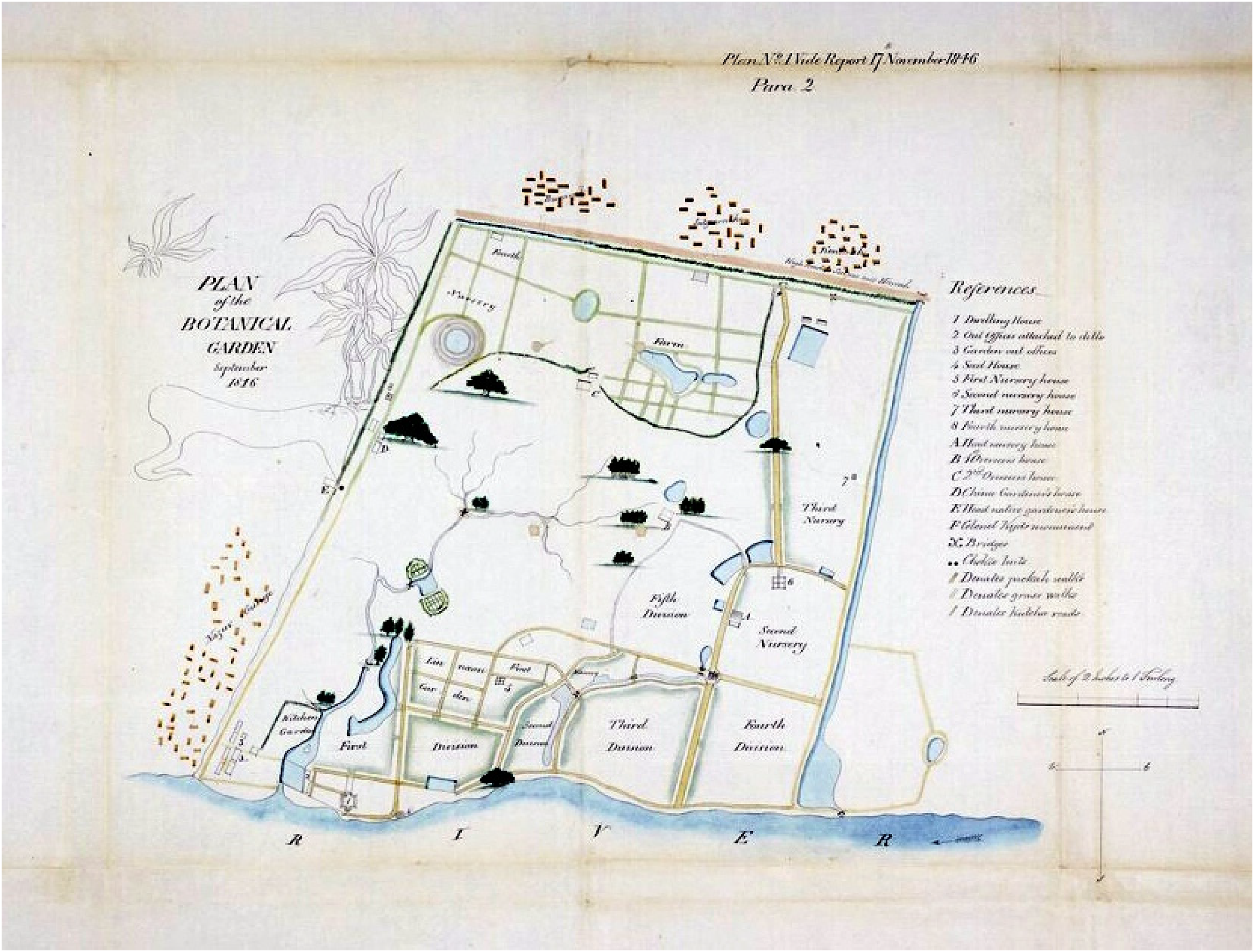
The map of the Botanical Garden (1816).
William Roxburgh, the proponent of plants as a substitute for the granaries, later became the first superintendent of the Botanical Garden in 1793. The plants he had proposed became part of the garden's inventory. Mangosteen, sago palm, cherimolia, cassava from South America, and breadfruit were among the ‘useful plants’ that were proposed and attempted as famine crops. Other crops included the channa gram, “better than any collected in Hindustan,” wheat, “finest in the world” and potatoes “far superior to the common kinds here” from the Cape. 8 Along with the introduction of these plants in the garden, there were also attempts to distribute them free of charge accompanied by instructions for their cultivation. In 1839, a memorandum on the cultivation of tapioca plants and tapioca flour was published in local Indian languages and distributed with the cuttings of the plant. However, in the initial years, many of these experiments proved to be a failure. The mangosteen, bread-fruit tree, and the cherimolia grew but never blossomed in the garden. 9 They were described as “impatient of the arid heat and foggy cold of Bengal and can never be expected to become objects of cultivation, except on a very limited and expensive scale, as objects of curiosity.” A report of the Calcutta Botanical Garden summed up these learnings from these failures retrospectively: “It was soon apparent that the climate of Northern India was not favorable for these “equatorial species” or all “tropical species.” 10 These revealed the limitations of ventriloquizing plants—where assumptions about which plants would thrive or be readily accepted into the local culture were increasingly contested. Thus, experiments conducted at the Calcutta Botanical Garden began to challenge the assumptions of pan-tropicality, highlighting instead the distinct regional climate of Bengal.
In 1803 a teak plantation was established in 100 acres of land extending the garden along the river. Twenty-two years later, the plantation trial was concluded to be a failure. The report submitted to the government attributed the failure of the plantation to the land's history of occupation by brickmakers and their kilns which had degraded the soil. The report reasoned that land had been excavated for the earth and to establish a Teak plantation the land had to be leveled, drained, excavations covered and an embankment built along the river to prevent inundation. 11 The failure of the plantation was analyzed along a gradient - highest towards the easternmost part, where trees failed to grow to a desirable height while towards the western side of the ground, trees grew significantly well and up to a good height. However after 22 years, the base of these trees was found to be hollow, and timber of the standard length could not be obtained, thereby making it unfit for ship-building that required standard measurements of timber. 12 Most of the failures were attributed to the challenging conditions of the garden - sitting on the banks of the river which frequently flooded, degraded soil, the organization of the garden, lack of gardeners with expertise on the plants introduced, lack of local Bengali boys who could be trained as gardeners among others. 13 The teak plant in the garden failed to replicate its success when trialed as a larger plantation adjacent to the garden owing to differences in the micro-climate.
Similar experiments with plants in other Botanical Gardens were also met with failures. Potatoes, initially introduced as a famine crop in 1791 at the Samalcotta Botanical Garden in the Northern Circars before the Calcutta Garden, faced failure. Subsequently, in 1793, they were introduced into the Calcutta Botanical Garden, and later, between 1803 and 1806, into the Lalbagh Botanical Garden in Bangalore. 14 This, in turn, prompted the realization that transforming a climate of famine necessitated the establishment of multiple gardens to comprehensively understand and modify the subcontinent with its diverse not only regional but also micro-climates. In 1817 the Saharanpur Botanic Garden was established, at a latitude above the Calcutta Botanical Garden to grow those plants that could not be grown in the Calcutta Botanical Garden. 15 Located just above the Tropic of Cancer, the Botanical Garden at Saharanpur challenged the conventional understanding of the spatial limits of tropical conditions.
Consequently, several other Botanical Gardens were established in the next five decades in strategic locations across the company territories to introduce famine crops among others, and relocate plants that were not successful from one garden to another. These gardens included the Madras Botanic Garden (1783), Bangalore (1800) Saharanpur (1817), Dapuri (1828), Ootacamund (1848), Lloyd Botanic Garden Darjeeling (1850), and Empress Botanical Gardens Pune (1838). In the process of establishing these various Botanical Gardens, some were eventually discontinued. When the early Botanical Garden at Samalcotta and the Nopalry at Marmalor were met with many failures and proved to be expensive, many plants were relocated to different parts of the country. Plants that originated from Malacca, Sumatra, and the Eastern islands required a warm and humid atmosphere and were relocated to the company's hill plantations in Tinnevelly and the Malabar coast. Meanwhile, plants that thrived in higher latitudes were relocated to the Bangalore Botanical Garden like “the vegetable productions of the south of Europe, of Syria, of Arabia, Hindustan proper, China and Jamaica.” 16 The garden at Samalcotta, Dapuri, and Madras were also discontinued owing to the failures and the establishment of other gardens in different and more suitable regional climates. In this manner, the relationship between regional climates and the micro-climates of the garden became complex. Micro-climate and regional climate were often used interchangeably, with efforts made to establish uniformity by transplanting plants between regions and the micro-climates of the gardens. As a result, during this period, these gardens operated as a fluid and ephemeral network, appearing and disappearing across the Indian landscape in the pursuit of a uniform tropical that did not exist.
The Botanical Gardens in various parts of the sub-continent attempted to mimic the specific regional climatic conditions of different tropical regions. By selecting and cultivating plants from various tropical regions of the world, the gardens aimed to reproduce specific desirable traits of plants that were found in those original environments. However, this process revealed that not only were the regional climates diverse, but the micro-climates within the gardens also varied due to physical factors such as soil, water, and the presence of complex socio-cultural relationships. The micro-climates of the different gardens proved to be an important factor in determining what plants grew well in the Botanical Gardens. In doing so, the Botanical Gardens evolved to be micro-climatic infrastructures that both resisted the notion of a pan-tropical climate but at the same time produced knowledge about micro-climates and their relationship with the environment.
The AHSI and its branches
The Agri Horticultural Society of India (AHSI) was a collaborative society involving Bengali landowners and Company members affiliated with the Botanical Garden. It was established to advance the science of two distinct “improvement” projects: agriculture for export and profit, and horticulture for cultivating crops to address subsistence needs during times of famine (Tavolacci, 2019). While the Botanical Gardens were established for the “improvement” of the environment by focusing on broadly climatically suitable plants for the tropics, the AHSI was created to address a different kind of improvement. The society was driven by the perceived poor quality of economic products such as cereals, vegetables, and fruits. Its primary focus was on importing seeds from various parts of the world and distributing them for free in India, thus utilizing local farming knowledge for the experiments. The Botanical Gardens played a role in the formation of and collaborated with the AHSI and its various branches. One of the earliest catalogs of the Calcutta Botanical Garden, Hortus Bengalensis (1814), with an introduction written by William Carey, the founder of the AHSI, concluded that many plants that were indigenous to the north of India did not grow if immediately removed to Bengal. When most plants arrived at the Botanical Garden, they were either dead or incapable of thriving. If they did manage to survive, they were often stunted in growth or hardly flowered. Carey suggested that establishing small intermediate gardens or nurseries under private individuals in locations such as Hurdwar, South Delhi, Sylhet, or Dhaka—areas with climates intermediate to that of Bengal and in the vicinity of Calcutta—could significantly improve the chances of successful acclimatization for these plants in the garden.
17
Sugarcane from Mauritius, cotton seeds from South America, the West coasts of Africa, China, and Manila, among others, were imported. Vegetable crops that were imported often became integrated and ingrained into the environment through the efforts of the society, becoming closely associated with specific regions. For instance, the society introduced the Patna Cauliflower, developed from seeds from the Cape of Good Hope, along with potatoes in Naini Tal and Shillong, which were cultivated from seeds brought from England. Annual competitions and prizes were presented to encourage the introduction and improvement of these crops.
18
Like the Botanical Gardens, the AHSI too began expanding with branches in different parts of India like Madras, Bangalore, Bombay, Ootacamund, etc. In 1834 there was a proposal to establish branch societies of the AHSI in several parts of India, specifically to introduce and experiment with useful crops. The proposal highlighted the availability of land with different soils and climates, the necessity to obtain the most favorable results in introducing good varieties of crops, and establishing branches of the society to try these plants in different parts of the country: We have an unbounded extent of country, differing in essential points, such as soil, climate, etc. That every plant will grow equally well in every place, would be an absurdity to expect. But as yet, we do not know what those peculiarities of soil, heat, moisture, elevation, or lowness of site and those other unexplainable modifications of soil and climate to be found in our Bengal districts, which are most favorable to the production of the commonest articles of native cultivation even; much less to the growth of those improved varieties of staple products, which it is the great object of the Society to introduce.
19
Unlike the Botanical Garden which resettled plants between gardens, the AHSI focused on introducing crops among the landowners and farmers to grow them on a large scale. This meant that local knowledge and practices, which accounted for micro-climates, were better integrated into the AHSI branches’ efforts to scale plant introductions than in the Botanical Gardens.
The Botanical Garden, on the other hand, was scaled up in different ways. Efforts to implement large-scale experiments for cultivating resettled plants as plantations faced difficulties in translating theory into practice, leading to contested sites. A hand-drawn sketch of a plantation trial ground from a correspondence letter in 1824 to the superintendent of the Calcutta Botanical Garden exemplified the conflict between cash crops and subsistence crops and knowledge to practice. 20 About 130 acres of land amid rice paddy fields referred to as the Deahpore plantation ground in the Hooghly district of Bengal became the trial ground for growing coffee along with other commercial crops like teak for timber and mulberry for sericulture. The ground was situated on the bank of a water channel known as the Chultan bund, described as large enough to provide sufficient water for the entire plantation ground. This channel also served as the water source for the surrounding rice paddy fields, which were cultivated by waterlogging the land. According to the archives, despite the water channel and the land being part of the lease for the plantation, the farmers or the ryots resisted the takeover of the water channel and the land (Figure 3). To suppress this resistance, the Zamindars or the landowners blocked the culvert to halt the water flow to the paddy fields. They exerted pressure on the ryots to cease their “interfering,” hoping that the lack of water would “destroy a greater quantity of paddy on the lack of the bank.” 21 The translation of the micro-climatic knowledge from the Botanical Gardens to field practice revealed socio-political factors that had not been anticipated in the experiments. These deviations were often addressed in several ways ranging from legal actions to informal agreements.
Another section of the plantation ground designated as plot no. 7 on the sketch, was embroiled in an ongoing land dispute. The land, a mango garden owned by another landowner, was required for the cultivation of coffee under the shade of trees. The correspondence letter reports that representatives of the colonial administration were sent to the Hooghly court to settle the dispute and acquire the land. Additionally, plot no. 8, was a Saul Forest not included in the original lease agreement but was described as the land that “can be obtained as per the lease whenever requisite.” 22 A water tank adjacent to the ground was also outside the original lease, but the letter noted that the Zamindar, to whom it belonged, had informally handed over its possession for the plantation. Land ownership for conducting up-scaling experiments to replace subsistence crops with cash crops was dynamic, characterized by resistance, violent strategies, legal disputes, and informal contracts. Despite empirical evidence that the plants grew well, the plantation ground was deemed a failure in letters received two years later. 23 It is reasonable to conclude that this failure stemmed from a knowledge and infrastructure approach that overlooked the social relationships integral to the micro-climate of the area.
Despite differing aims and strategies, the Botanical Gardens, and the AHSI branch gardens shared significant operational overlaps. Spatial overlaps also occurred between the AHSI branches and Botanical Gardens. For example, in Calcutta, the society came to occupy the grounds of the Botanical Garden for 40 years. In Ootacamund (Ooty), Tamil Nadu, the Botanical Garden was developed from an existing AHSI garden. 24 Conversely, at the Lalbagh Botanical Garden in Bangalore, the entire garden was converted into an AHSI garden for a period between 1836 and 1840. 25 In this way, more aspects of micro-climatic knowledge came to be integrated with the practices of the Botanical garden. Thus, both the Botanical Gardens and the AHSI branches became infrastructures, where each branch extended the knowledge and the practice of the micro-climate in different ways. This nuanced understanding articulated a new relationship with the global tropics as a patchwork of physical variables that, while complex, could be deciphered.
Material circulation of micro-climatic knowledge and the macro-climate of famine
On the one hand, the knowledge this infrastructure produced about micro-climates inflected notions about the interchangeability and the reproducibility of a universal tropics. On the other hand, it produced new knowledge and ideas for addressing the discrepancies. Based on the learnings from the Calcutta and Saharanpur Botanical Gardens, Forbes Royle, the superintendent of the Saharanpur Botanical Garden, wrote An Essay on the Productive Resources of India, which outlined principles for the improvement of agriculture in India in 1840. It stated that there were discrepancies between India's natural riches and the quality of its productions, yet these were only a matter of physical factors like climate, soil, and processes of cultivation. He tabulated a prescription of tropical plants that could be grown in the different regional climates of India. It organized the countries of the Tropical belt within the provinces of the subcontinent as “the Countries of which the plants may be grown in different parts of India.” (Figure 2). 26 Experiments of plant transfers between Botanical Gardens necessitated a new understanding of diverse climates of India and its distribution in the tropics. This called for a new articulation of the tropical world of South Asia and the relationships within it.
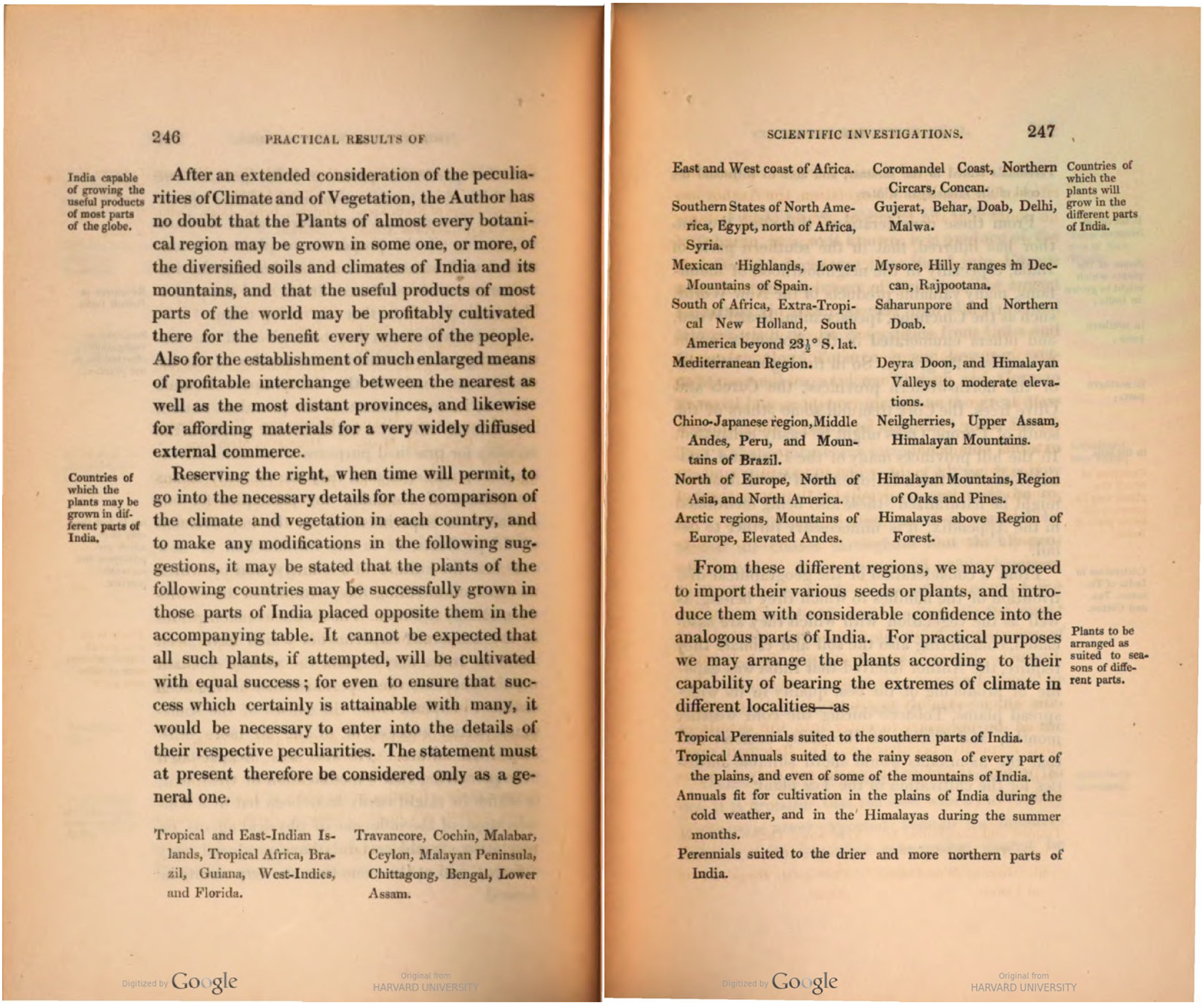
Countries of which the plants will grow in different parts of India” and “Plants to be arranged as suited to seasons of different parts.
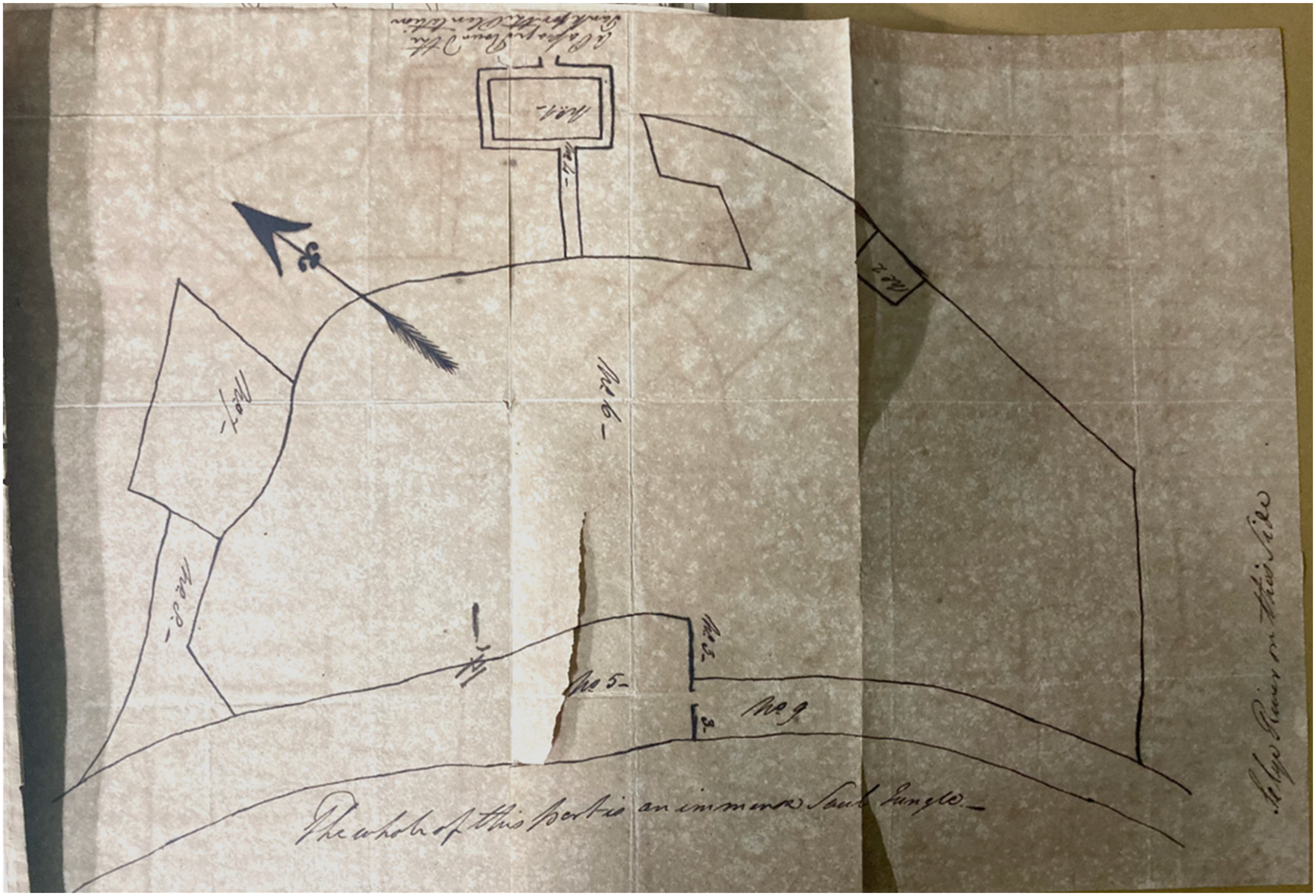
Sketch of the plantation ground at Deahpore, Bengal Province dated 1824. No. 4: Tank that was not part of the original contract; No. 5 and No. 9: Water channel Chultan Bund; No. 6: Plantation ground; No. 7: Mango garden; No. 8: Saul forest.
As the Botanical Gardens and the AHSI produced knowledge about the influence of micro-climates on plants and plotted its expansion across the sub-continent, there also emerged new knowledge about the influence of plants on the micro-climate. The influence of plants on the climate was highlighted in another essay from 1849, when Edward Balfour, the surgeon-general of the Madras Presidency wrote, On the influence exercised by Trees on the Climate of a Country, which ascribed most of the droughts and subsequent famines in India to the lack of vegetation. Other than a few exceptions, he wrote, most of the regions in South India were devoid of trees and whether they never existed or “have disappeared under the hands of man” was uncertain. The essay assured that even if planting trees ever became excessive or had a negative effect on the climate, which he did not believe to be the case, the consequences would never exceed the devastation of the famines. 27 Essays like these, while correctly highlighting an environmental intervention of increasing water through tree-planting, the schemes when executed were focused more on resourceful trees rather than those with the ability to trap water. Some tree planting projects using species from Australia and New Zealand, such as Eucalyptus, Acacia, and Cawdie, were trialed and made plantations by the Ootacamund Botanical Garden. The Australian Eucalyptus plantation by the Ootacamund Botanical Garden, however, failed to be replicated in other parts of the country owing to the Nilgiri's climatic conditions (Bennett, 2014). When general studies on the influence of plants on climate were circulating, Botanical Gardens demonstrated the challenges of replicating their carefully managed microclimates on a larger scale.
The AHSI launched an annual journal that ran between 1821 and 1920 that published articles on the results of experiments introducing crops in different regions in India, some of which also analyzed the failure of these experiments. 28 Manuals and handbooks, written mostly for European horticulturalists, were also part of these material circulations of knowledge. A Manual of Gardening for Bengal and Upper India by Thomas Firminger in 1863 drew upon the knowledge of the Botanical Gardens as well as the AHSI gardens and had sections devoted to “culinary vegetables,” “dessert fruits,” “ornamental plants” and “edible nuts.” 29 While these manuals and handbooks sometimes had an index of local names of the plants introduced, these written instructions were mostly produced for the people who knew English rather than the Indian farmers or the ryots who directly engaged with agricultural work. It was not until 1883 that the Manual of Agriculture for India prefaced this problem by acknowledging that there were millions of landowners/zamindars, and the peasantry/ryots who could not “read or write their own mother tongue and were too old to learn” and that a Hindi manual with translations may be published for the future generations. 30 Thus, the emerging expertise in resettled plants was initially frequently shared within scientific circles rather than among the local populations, neglecting local knowledge. However, in the long-term, this knowledge was disseminated to the local populations, which changed the local perceptions and the practices of the tropics.
These increases in climatic knowledge and experimentation were part of the broader reorganization of the pre-colonial industries to increase commercial agriculture. The 19th century was marked by the commercialization of agriculture in India, with a significant rise in cash crop production and a drastic decline in subsistence crop cultivation (Roy, 2000). A map of British India published in 1910 illustrated areas historically dominant in rice, wheat, and cotton with tracts of land cultivated by resettled cash crops like sugarcane, tea and tobacco (Figure 4). 31 This shift engineered by the Botanical Gardens as a part of the micro-climatic infrastructure, increased revenue for the colonial administration and perpetuated the conditions of scarcity and recurring famines. On the sub-continental scale, while colonial policies created a climate of scarcity, famine alleviation through the Botanical Gardens reinforced the conception of the poor tropics improvable and amenable. The map of famines in India between 1802 and 1878 reveals how the famines continued for the succeeding twenty-two years (Figure 5). Within this framework, the Botanical Gardens and their branches, intended to alleviate famine, ultimately became part of the very infrastructure of extractivism and famine in the years that followed.

Map of British Plantations (1911) Large tracts of India historically dominant in rice, wheat and cotton had the permit to grow only targeted cash crops like sugar, tea, indigo and jute.

Map of India showing famines between 1800–1878 titled “A map of India showing at one view the area of each of the famines since the beginning of the present century and distinguishing the parts slightly, severely, or intensely affected.”
Conclusion
By analyzing Botanical Gardens along with AHSI branches and the knowledge they generated as a part of the micro-climatic infrastructures, we gain critical insights into how plant resettlements shaped early colonial conditions and the moments of contention within these practices. These efforts were grounded in the perception of the tropics and its agriculture as lacking, leading to colonial “improvement” projects. The spatial mobility of plants, facilitated by Botanical Gardens and their expansion through AHSI branches, environments both revealed the early gaps in environmental knowledge but also produced place-specific knowledge. This knowledge, which focused on understanding soil, temperature, land, and socio-cultural conditions that this paper termed “micro-climate,” was crucial in promoting the cultivation of cash crops over subsistence crops. These played a role in shaping a broader context that contributed to widespread famines in the later years of the colonial period.
Botanical Gardens envisioned as transformative infrastructures, aimed to convert what was perceived as unproductive land into economically viable plantations. This process was marked by a clear distinction between plants deemed useful and those considered suitable only for “wastelands.” Experiments conducted at the Calcutta Botanical Garden challenged the prevailing assumptions associated with pan-tropicality such as reproducibility, interchangeability, and scalability in the initial years. This led to the realization that addressing a climate of famine required the establishment of multiple gardens to comprehensively understand and modify the subcontinent, considering its diverse regional climates. This realization disrupted, in some ways, the presumed uniformity of tropical conditions in space, influencing the spatial distribution of the gardens across the subcontinent. Consequently, a wealth of scientific knowledge emerged regarding the suitability of different plants to specific geographical locations, reinforcing the idea of the tropics’ amenability.
In this context, the Botanical Gardens and their branches, while initially intended to alleviate famine and enhance agricultural productivity, became part of a broader infrastructure that exacerbated famines. The infrastructure of these gardens, which sought to improve agricultural conditions, ultimately contributed to ongoing famines and scarcity. This analysis highlights how early translations of tropical assumptions into field practices overlooked micro-climates, coinciding with the emergence of Botanical Gardens as infrastructures for micro-climatic practices and knowledge. It also highlights the contingent nature of early colonial interventions and their long-term impacts on shaping climate futures.
Highlights
The resettlement of tropical plants through the Botanical Gardens shaped the conditions of early colonialism in India. Colonial famine interventions led to a project of transforming the tropics through the Botanical Gardens. As physical infrastructures, the Botanical Gardens transformed the environment through plant resettlements at the micro-climatic level. As knowledge infrastructures, the Botanical Gardens revealed gaps in micro-climatic knowledge and addressed the gaps. The soil, temperature, land, and socio-cultural conditions that this paper terms “micro-climate” were crucial in promoting the cultivation of cash crops over subsistence crops. The Botanical Gardens and their branches ultimately became part of the very infrastructure of extractivism and famine in the years that followed.
Footnotes
Acknowledgments
The author would like to thank the staff and the Director, Botanical Survey of India (BSI), Howrah, the Directorate of State Archives, Kolkata, West Bengal, Government Botanical Garden Udhagamandalam, Lalbagh Botanical Garden, Bangalore, the Agri-Horticultural Society of India (AHSI) Kolkata, Royal Botanic Gardens Kew Library and Archives Collection, Kew, and the British Library, London whose expertise and assistance greatly facilitated my research. The author also extends his/her gratitude to the reviewers whose feedback was invaluable and improved the paper.
Funding
The research for this paper was supported by the Paul Mellon Centre for Studies in British Art, London Junior Fellowship Spring 2022, and the Rackham International Research Award 2022 by the University of Michigan Ann Arbor.