







Abstract
Mainstream conservation practices are commonly rooted in capitalist logics of valuing nature for human use or enjoyment. Often facilitated by “big international non-governmental organizations” (BINGOs), environmental governance of land in conservation frequently drives adverse impacts on local communities in and around protected areas. The World Heritage Convention as a department of UNESCO, for example, uses technical and scientific justifications to conserve land for the “world” to enjoy, while neglecting and avoiding Indigenous participation. Using the example of Gunung Mulu National Park in Malaysia, this article shows how the site selection and evaluation process divorces the natural from the cultural and the global from the local in conservation. In so doing World Heritage uses anti-political strategies to neutralize opposition to land grabs, normalize “global” values in place, and displaces Indigenous residents and their values from the land.
Keywords
Introduction
“The park is the people and vice versa,” said the manager of Gunung Mulu National Park (Mulu Park) during an interview with one of the authors. Between local participation in park management and the showcasing of Indigenous culture, he affirms that the park's management style is inclusive, and the land and its people entwined. However, our research shows that this is not the case. Mulu Park, a UNESCO World Heritage Site in Sarawak, Malaysia, is the most studied karst landscape in the world, renowned for its abundant biodiversity and extensive cave systems. While the park is safeguarded by the Sarawak Forestry Corporation and the World Heritage Convention for the protection of the planet's biodiversity and geological history for visitors to admire, the park's establishment and management reflect patterns of exclusion and dispossession of Indigenous Penan and Berawan people and culture that are commonly experienced in conservation projects worldwide. The Sarawak government has a well-documented reputation for neglecting the land rights of Indigenous populations and prioritizing the interests of extractive industries like timber and oil palm. We argue, based on archival and ethnographic research at Mulu Park, that conservation governance in Sarawak is motivated by neocolonial extraction in the name of universal values identified by global institutions. Specifically, the claiming of land for and the management of Mulu Park to conserve natural resources perpetuates the dispossession and alienation of Penan people from their narratives and livelihoods. Our research shows that management of the park prioritizes World Heritage values over local Indigenous values, resulting in the protection and celebration of certain aspects of the park while excluding others.
Big international non-governmental organizations (BINGOs) promote global approaches to environmental governance that often drive adverse impacts on local communities in and around protected areas (Corson, 2011; Ojeda, 2012). World Heritage plays an integral role at Mulu Park because as an overarching structure shaping a broad range of environmental conservation and cultural preservation globally, it universalizes hegemonic concepts of heritage and nature (Haraway, 1988; Harrison, 2013), reflects neoliberal approaches to mainstream conservation (Buscher and Fletcher, 2020; Salemink, 2016), and utilizes anti-political development schemes that maintain unequal neocolonial-capitalist power dynamics (Ferguson, 1994; Youdelis, 2016). The core attributes of the World Heritage Convention work to perpetuate colonial processes of Indigenous dispossession, and their manipulation of the value ontologies of nature is employed to justify the acquisition of natural spaces for conservation projects. The operation of universalizing conservation values and practices, and promoting their application in situated sites, inform the conservation policies in Sarawak that marginalize Penan and Berawan communities in close proximity to Mulu Park.
This research explores how differences in land narratives between Penan and park management result in the dispossession of local Penan people from their narratives, land, and livelihoods, and how World Heritage plays a critical role. Our guiding questions are, what narratives do Penan community members, park management, and UNESCO World Heritage tell about the land in Mulu Park? What are Mulu Park and UNESCO's roles in creating representations of nature and indigeneity that result in the dispossession of Penan narratives and livelihoods? How does the World Heritage program contribute to a neocolonial framework for environmental governance at Mulu Park?
Review of literature
Mulu park
Gunung Mulu National Park (Mulu Park) is located in northern Sarawak, an eastern Malaysian state on the island of Borneo. The park lies between the Tutoh and Medalam rivers (tributaries of the Baram and Limbang rivers), and shares its northernmost border with the country of Brunei (Anderson et al., 1982). The park is 130,630 acres, and consists predominantly of primary old-growth rainforest (5). In 1961, the Forest Department of Sarawak conducted a botanical expedition, which prompted the recommendation to commission the area as a national park (1). At the establishment of Gunung Mulu National Park in 1974, the management plans included arrangements for the gradual removal of nomadic Penan from the park and their rehabilitation into settlements. Approximately 270 Penan were evicted from the Park upon its establishment, and approximately 400 nomadic Penan still remained inside the park as of the early 2000s (Salleh and Bettinger, 2007). The evicted now live in two communities outside the boundary where part of this research took place: Batu Bungan and Long Iman.
The Gunung Mulu National Park: A Management and Development Plan (Anderson et al., 1982) explains the long-term conservation objectives of the management of the park, including to conserve biodiversity, populations of flora and fauna, and geological integrity. The document also articulates the project goals for the rehabilitation of nomadic Penan, and the terms of their hunting and foraging privileges within the park boundary. By the time the management plan was finalized in 1982, approximately 140 Penan people from communities surrounding the Melinau River made “full use of the park” (Anderson et al., 1982: 117). The Sarawak government intended to facilitate the transition of the whole Penan population into a “settled mode of existence,” and the government ethnologist provided recommendations for the gradual relocation of nomadic Penan inside Mulu Park (167). The plan advised that Penan “should be given agricultural training” (301), “develop their skills in their traditional handicrafts so as to enable them to earn ready cash,” and to “teach them basic house-keeping and hygiene” (302).
The management plan stresses that “the protection of the park itself, and the fauna and flora therein, must be the primary consideration,” and declares that “the most difficult problem concerning the management of the Park is the regulation, or overseeing, of the privileges of the local people.” In addition, the “gazetted” hunting and foraging privileges of locals “must be respected,” and at the same time they must find ways “through consultation, education” to help them abide by the hunting/foraging terms and “appreciate the park, not only as a conservation area, but as something of direct value to themselves” (162). Furthermore, the plan states that as Penan become more sedentary and rely less on the park as a source of subsistence livelihood, it is recommended that the reduction of the privileges of the Penan might be gradually implemented as follows: Closure of part or parts of the Park, particularly in lowland areas traversed by visitors, to the hunting of the more threatened species, notably monkeys and gibbons; Extension of the areas closed to the hunting of specified mammals and birds, and the number of protected species to be increased. (168)
The Royal Geographical Society (RGS) led the Mulu Expedition from 1977–1978, in which European scientists explored rainforest and caves over a 10 month period, putting Mulu on the map as an area “full of superlatives,” and launched opportunities for scientific discovery for researchers worldwide (Hanbury-Tenison, 2017: 231). Mulu Park is especially notable for the diversity of bats, and plants relying on them for pollination, in its many caves. The Mulu Expedition discoveries “led directly to the designation of this unique habitat and ecosystem as a protected reserve and World Heritage Site” (xviii).
The Sarawak Forestry Corporation manages the Wilderness Zone (90% of the park), while Borsarmulu Park Management is responsible for the Tourism Zone (Gunung Mulu National Park, n.d.). In 1991, the governor of Sarawak privatized the state-owned Mulu Park by handing ownership to Borsarmulu Bhd., where he holds significant shares through an investment company. Borsarmulu is a management agency owned by the sister and brother-in-law of the governor. According to the Sarawak Report, the governor approved an order to reclassify the region as state land, “which he could therefore personally confiscate and hand to his own family” (2010). The decree granted Borsarmulu and other connected shareholders the ability to build on Native Customary Rights (NCR) land and develop environmentally destructive projects in and around the park, including destroying part of a sacred mountain to construct an airport. The governor's family built the Royal Mulu Resort (now Marriott Mulu Resort) on stolen Berawan land, with protests from the Berawan people being violently suppressed in the 1990s (Sarawak Report, 2010). The Sarawak Report frequently refers to the resort as the governor's “jungle playground” (2014a, 2017). His brother-in-law, while attending his birthday party at the Mulu Marriott Resort in 2014, boasted about the “world-class” rainforest experience he created.
The governor and his family have been accused of illegal land grabs surrounding Mulu Park since the 1980s (Raj, 2013). They sponsored logging and palm oil developments that stripped much of the forest surrounding Mulu Park. He continues to pass laws that weaken NCR and take forest away from Indigenous land owners (Sarawak Report, 2019b). “He authorized the logging of thousands of square miles of virgin rainforest surrounding the tiny Mulu National Park, eradicating most of the wild-life of the region, including inside the Park itself” (Sarawak Report, 2010). In 2008, he “secretly” gifted his son's oil palm company, Radiant Lagoon, over 11,000 acres of Berawan and Penan NCR forest bordering Mulu Park (Sarawak Report, 2019c, 2019d). The governor never informed, consulted, negotiated, or compensated residents for the land he took, and timber and oil palm projects began in 2018 (May 2019b).
In May 2018, Radiant Lagoon sent an announcement of their intended development to headmen of Berawan communities (who were bribed into supporting the project), but never consulted Penan communities, even though Batu Bungan is one of the largest stakeholders (Sarawak Report, 2019c). By summer 2019, Radiant Lagoon destroyed over ten thousand acres of forest since beginning work at the beginning of the year (Star, 2019). The former head of the Sarawak Forestry Department warned that Indigenous people would be “‘digging their own graves’ if they resisted oil palm,” claiming that it's a “lifeline for natives” (Sarawak Report, 2019d).
Native communities in the region, including Penan and Berawan, have been resisting deforestation and the confiscation of their lands for decades (Brosius, 1997; Bulan, 2006). In 2001, local communities challenged Sarawak's proposal to expand Mulu Park into Gunung Buda National Park, demanding a say in managing their land. They filed a land claim, but the government dismissed it, citing the lack of officially surveyed boundaries. In 2019, Indigenous environmental defenders submitted petitions and took legal action against Radiant Lagoon's illegal conversion of rainforest into oil palm monoculture, and erected blockades across logging roads, causing a standstill in the project in May of that year (Sarawak Report, 2019d). In what is considered a rare victory, the Sarawak government revoked the palm oil concession in 2022 (Bruno Manser Fund, 2022). In spite of this, Indigenous land rights remain under threat in the region, including and especially from global conservation institutions.
World heritage
The United Nations Educational, Scientific, and Cultural Organization was founded shortly after World War II in a pursuit to unite all nations for “a genuine culture of peace” (Di Giovine, 2009: 72). UNESCO was created with ideals of globalization in mind: “globalization allows geographic constraints on socio-cultural relationships to recede in the minds of individuals. By eliminating traditional boundaries and reordering time and space, this phenomenon can alter individual identities to include conceptions of a more global self” (72). Harrison (2013) explains that the World Heritage paradigm, a product of UNESCO, is a global process that was “informed by the relationship between modernity and time, the idea of ‘risk’ or threat, and the role of ordering, classifying and categorising in modernity” (13). Put differently, World Heritage is a response to the industrial revolution, an insistence that globalization and progress are inevitable, combined with the uncertainty and discomfort of losing what once was.
The World Heritage Convention was adopted in 1972 (World Heritage, n.d.), and became one of the most well-known departments of UNESCO. “Charged with identifying and protecting sites deemed to be of importance to the history and culture of the human race,” World Heritage is meant to create a new kind of “placemaking … one based on mutual ownership and communal celebration of those tangible places regarded as integral to the identities of individuals and societies throughout the world” (Di Giovine, 2009: 76). The World Heritage mission includes but is not limited to, encouraging States Parties “to nominate sites within their national territory for inclusion on the World Heritage List,” encouraging States Parties “to establish management plans and set up reporting systems” for their World Heritage Sites, providing “technical assistance and professional training,” and encouraging states to consider “participation of the local population” (World Heritage, n.d.).
The World Heritage List showcases the world's most outstanding places, categorized under “Cultural,” “Natural,” and “Mixed” World Heritage Sites (World Heritage List, n.d.). State governments are able to complete an application process to nominate places of importance to the List. “To be included on the World Heritage List, sites must be of outstanding universal value and meet at least one out of ten selection criteria.” The selection criteria are made up of six “cultural” and four “natural” criteria, and sites may be nominated based on one or any combination of Outstanding Universal Values (OUV) (The Criteria for Selection, n.d.). Sites that have been submitted for nomination are evaluated independently by one or two of the World Heritage advisory bodies assigned by the World Heritage Convention. The International Council on Monuments and Sites (ICOMOS) evaluates and approves sites that are nominated based on cultural OUV (to be inscribed as a Cultural Heritage Site), and the International Union of the Conservation of Nature (IUCN) evaluates and approves sites nominated for natural OUV (to be inscribed as a Natural Heritage Site). If a site is nominated based on a combination of cultural and natural OUV, it is evaluated by both ICOMOS and IUCN, and is potentially inscribed as a “Mixed” World Heritage Site. After a site is nominated and evaluated by the advisory bodies, the World Heritage Committee reviews the application and evaluations to make the final decision on the site's inscription to the World Heritage List (World Heritage List Nominations, n.d.). Gunung Mulu National Park was nominated and inscribed to the World Heritage List in 2000 because it met all four natural OUV criteria for selection: exceptional natural beauty, significant geomorphology, ecosystem rarity, and biodiversity.
Conservation and capitalism
Mainstream Western conservation practices are steeped in colonial ideologies, whether due to its historical roots in the “fortress model” (e.g protected areas, national parks) (Gomez-Pompa and Kaus, 1992), or through the newer application of capitalist logics of valuing nature for human use or enjoyment (e.g., ecotourism, ecosystem services) (Carpenter et al. 2006; McAfee, 1999). These initiatives harness the economic value of nature in order to incentivise preservation (McAfee, 1999). Buscher and Fletcher (2020) argue that mainstream conservation “is fundamentally capitalist and steeped in nature-people dichotomies, especially through its foundational emphasis on protected areas and continued infatuation with (images of) wilderness and ‘pristine’ natures.” In other words, “mainstream conservation does not fundamentally challenge the hegemonic, global capitalist order” (8).
Coulthard defines colonialism as a “form of structured dispossession” (2014: 7), and Simpson describes it as “an ongoing structure of dispossession that targets Indigenous peoples for elimination” (2014: 74). In this sense, according to Robert Nichols, “dispossession is thought of as a broad macrohistorical process related to the specific territorial acquisition logic of settler colonialism” ( 2020: 5). As a result, land essential to Indigenous livelihoods and spiritual practices crumbles (Verschuuren, 2016: 9). In discussing colonial ecological care, Nichols points out that the establishment of protected areas could potentially reify the environment “as a static object that can be protected and preserved rather than a dynamic set of living relations that exceed any particular legal codification, or as a ‘subject’ who must prove its worth through the moral evaluation of personhood” (2020: 157). Other vehicles of dispossession common in Southeast Asia include “the seizure of land by the state, or state-supported corporations” and “the closing of the forest frontier for conservation” (Li, 2009: 71–72). The onset of protected areas “was appealing because it easily could be used to justify and push through territorial claims and control over resources and local people” (Buergin, 2001: 4).
The relationship between (post-)colonial natural resource management and Indigenous land loss in Southeast Asia and specifically Sarawak, Malaysia is well documented by political ecologists (Brosius, 1999; Peluso and Vandergeest, 2001). Indigenous resistance to logging and palm oil and the challenges of the codification of Native Customary Rights (NCR) are widely known (Brosius, 1999; Nelson et al., 2016), as well as conservation initiatives locally and internationally in response to logging of NCR land in Sarawak (Bending, 2001; Brosius, 1997; Horowitz, 1998). When it comes to environmental protection in Malaysia, “indigenous people are shunted aside by state and national planners” (Salleh and Bettinger, 2007). Most relationships between parks and Indigenous communities in Malaysia are often contentious, with little consultation with Indigenous groups in park management and their knowledge and skills underrepresented. Most agreements are informal and arranged at the local level, offering no lasting protection of their rights (Colchester, 1993, 1997).
While scholars like Bulan (2006) describe how the state of Sarawak consolidates and manipulates environmental policy to fit the state's self-interested agendas at the expense of Indigenous Peoples, scholars also employ this argument to international environmental institutions, or the big international NGOs (BINGOs). As Borras and Franco (2010) explain, international organizations tend to assume that Indigenous integration into the market economy is inevitable, and therefore the displacement and exclusion problem in protected areas is considered a “side effect” of development, rather than a problem to tackle directly. Scholars critique BINGOs as “bureaucratized and capitalized organizations” (Larsen, 2016: 24), and “the roles of NGOs, corporations, and the state are increasingly indistinguishable” (Holmes, 2011: 1).
Many of the leading environmental BINGOs, including the International Union for the Conservation of Nature (IUCN), have a reputation for prioritizing business interests (Brockington et al. 2008) and embrace the neoliberal project for conservation (MacDonald, 2018). These BINGOs partner with “intergovernmental financial institutions like the World Bank” and notable corporations, most of which are “the most environmentally destructive capitalist corporations in the world” (Buscher and Fletcher, 2020: 21). Instead of offering other options, the “‘conservation mode of production’ produces images, enclosures and commodities ready for capitalist up-take. Conservation is no longer the bulwark against neoliberalism and the penetration of market ideology, but intimately tied to it” (Larsen, 2016: 25). In the cases of places with extraordinary natural value, the global player of UNESCO, through the mechanism of World Heritage, is used to claim land for conservation.
Conservation and world heritage
The World Heritage program for Natural Heritage Sites, run by UNESCO and IUCN, reflects the ideals of mainstream conservation and generates the same environmental and social consequences in favor of capitalist outcomes. It goes about this in a variety of specific ways. First, World Heritage, like mainstream conservation, draws on “existing conceptions of nature conservation” in its “efforts to protect ‘nature’ from human impacts” (Buergin, 2001: 4), and is “practised and promoted especially by large, powerful international conservation organizations and agencies” (Buscher and Fletcher, 2020: 18). Many scholars (Harrison, 2013; Pocock and Lilley, 2018; Taylor, 2009) recognize that World Heritage values, produced by Western international agencies, risks hegemonizing the ontologies for thinking about the human experience, what deserves protection, and why. Buergin describes World Heritage as part of the globalization process driven by a dominant ideology that seeks to apply an economic logic to all of existence. By defining its frameworks as “global or universal,” World Heritage forces diverse local populations to conform into “the emerging global community” (2001: 3).
Some critical heritage scholars argue that UNESCO should not be viewed as a neocolonial superstructure, as state parties retain significant authority over interpreting and applying OUV through “one's own culture and frame of reference” (Labadi, 2013: 19). Labadi calls this “reiterative universalism,” or the incorporation of OUV with the relative values of state parties (18). As a result, “World Heritage […] is above all the result of the visions and agendas of the States parties, and not of a monolithic or overbearing international structure” (Labadi, 2013: 20). However, World Heritage's operation at the state level poses challenges regarding who has the right to manage and steward the site. World Heritage exists “under international regimes in which states continue to be the dominant agents tasked with responsibilities,” which engenders conflict at the local level (Coombe, 2012: 376), as reflected in the state of Sarawak's continuous violations of NCR via palm oil concessions. This is also reflected in UNESCO and IUCN's recognition of Indigenous Peoples as “stakeholders opposed to self-determining nations with rights and responsibilities regarding their knowledge systems and lands” (Latulippe and Klenk, 2020: 7).
Second, World Heritage, including its codified values, are rooted in the ontological distinction between nature and culture/people, in the same way that mainstream conservation maintains separations between them in protected area management. World Heritage is a system that seeks to oversee “resources or values within [a] sphere of human dominance” (Buergin, 2001: 4). One of the most widely discussed issues of World Heritage in critical heritage scholarship is the separation of nature and culture embedded in the Outstanding Universal Values (OUV) criteria, which excludes ontologies where there is no distinction between nature and culture (Harrison, 2013; Taylor, 2009). In many World Heritage properties worldwide, the local community connections with Natural World Heritage sites “were omitted, or worse, even obliterated” (Taylor, 2009: 15). Scholars have criticized that World Heritage values center aspects of a particular Western idea of heritage that excludes diversity in perspectives, experiences, and values in the context of specific spaces.
World Heritage views conservation as an opportunity for local community development and includes the promotion of ecotourism and other forms of capitalist development, essentially “selling nature to save it” (McAfee, 1999: 133). Furthermore, World Heritage facilitates a link between local residents and central authorities in a process of “resourcing” local culture and nature for state-led and market-driven agendas. This process enables what Salemink (2016) calls “authorized heritage discourse,” where the state's official version of culture and nature narratives becomes the truth (Salemink, 2016: 339). Through this discourse, UNESCO and the state work to appropriate Indigenous people's land and identity through a neocolonial mission of economic development and resource control.
Lastly, World Heritage perpetuates Indigenous dispossession through neoliberal processes of assigning economic value to cultural heritage. We can see this through a heightened focus on “investments in cultural resources and human capital,” in hopes of “yielding economic returns” or “adding value to them as to encourage tourism,” which generates increased pressure for states to decentralize and privatize World Heritage Sites in a way that further isolates local leadership (Coombe, 2012: 378). Salemink calls this process “heritagization,” and specifically describes “heritagization as disconnection” (2016). The commodification of nature and culture causes Indigenous dispossession both because people are forced into exploitative colonial relationships with land that erases their own, and because capitalism dispossesses them, as producers, from their subsistence or cultural product. Salemink interprets Ritzer (2007) theories of accumulation by dispossession into the idea that heritagization fits into a “neoliberalising world that attributes financial value … [to] everything” (2016: 339).
The process of heritagization transfers ownership of the interpretation of the past to the most powerful for purposes of capitalist consumption. The interpretation of the past--with heritage as the product--is the result of the “dominant system of [knowledge] production” (Debord, 2024: 14). World Heritage is a result of commoditized culture in which those who practice culture become spectacles (Salemink, 2016).
Put another way, the celebration of diversity has become the “commodification of difference” (Perreault and Martin, 2005: 193). Coombe explains that UNESCO manufactures “cultural diversity and its manifestations in […] heritage resources as a form of currency subject to international surveillance and scientific control.” Rather than protecting the intrinsic value of a site, the system encourages states and communities to redefine them in marketable ways (Coombe, 2012: 381). Local narratives of interest to World Heritage are exploited as commodities and spectacles rather than active participants in the formation of the landscape and its meaning. The neoliberalization of culture and the domination of knowledge systems contributes to World Heritage's neocolonial character, as international agencies and state parties harness control over the value and interpretation of culture.
While UNESCO implements the United Nations Declaration of the Rights of Indigenous People (UNDRIP) into their structures and practices (UNESCO, 2023), the World Heritage paradigm contradicts Indigenous understandings of place, in for example what Coulthard and Simpson call “grounded normativity”. “Grounded normativity houses and reproduces the practices and procedures, based on deep reciprocity, that are inherently informed by an intimate relationship to place.” World Heritage is the antithesis of what grounded normativity represents, which is to be “in relation to other people and nonhuman life forms in a profoundly nonauthoritarian, nondominating, nonexploitive manner” (Coulthard and Simpson, 2016: 254).
International conservation and anti-politics
International agreements, such as the Earth Summit of 1992, stress the importance of the support and recognition of Indigenous peoples as distinct groups, and to recognize the value of local knowledge in sustainable resource management (Colchester, 2003). Initiatives that involve local/Indigenous “inclusion,” “recognition,” “consultation,” and “co-management” are commonly implemented into protected area management plans to meet the social needs of a development or conservation project (Arney et al. 2023; Coulthard, 2014; Youdelis, 2016).
However, the employment of these mechanisms is often minimally accommodated and serves to maintain current power structures. These processes of institutionalization of environmental governance “inscribe and naturalize certain discourses” and disregard others, and “often obstruct meaningful change through endless negotiation, legalistic evasion, [and] compromise” (Brosius, 1999: 38). As a result, the state is able to maintain the unequal colonial-capitalist relations between the state and Indigenous people, in what scholars call “anti-politics.” Anti-politics in development understands problem-solving through technocratic means that separate political domains from organizational work.
Ferguson in The Anti-Politics Machine (1994) argues that development interventions expand state and coercive power by depoliticizing social movements and demands for rights. He claims that capitalist development projects amplify the power of the state and render socio-economic problems, such as poverty, into technical problems to be solved by “development” that are disconnected from politics. By universalizing and mainstreaming development models, projects “can end up performing extremely sensitive political operations involving the entrenchment and expansion of institutional state power almost invisibly, under cover of a neutral, technical mission to which no one can object” (256).
In the context of conservation, Escobar argues that anti-political conservation regimes shape and define what is considered legitimate knowledge, invisibilizing local knowledge, and reinforcing the systemic domination of the West (1995). Conservation organizations separate its work from localized political, economic, and social contexts, promoting a standardized model of protected area management globally (Myers et al. 2018). This mechanism in conservation often appears in the form of development, in which national parks or organizations establish social departments or initiatives that encourage local community involvement (Phoek et al. 2021; Masuku Van Damme and Meskell, 2009). Forms of involvement frequently fall under the language of “participation,” “recognition,” and “consultation” (McCreary and Milligan, 2021; Merino, 2018).
The language of inclusion allows environmental organizations to mitigate social issues involved in a project. They are able to “conceal ideological differences,” while propelling their conservation agendas forward in a way that displaces political ties to the work that they do, and legitimizes their own knowledge and authority over those of the Indigenous people who live on the land (Myers et al., 2018: 315–316). They avoid the moral/political aspects of environmental governance, potentially to “an extent that it is regarded as disruptive or irrelevant, or can no longer be heard at all” (Brosius, 1999: 51). Li, in her study on conservation in Indonesia, discusses what she calls “rendering technical,” in which experts must be able to “diagnose problems in ways that match the kinds of solutions that fall within their repertoire” (Li, 2007: 7). Anti-political guidelines for local participation allow conservation projects to retain legitimacy even when organizational intentions for local inclusion fail (Youdelis, 2016).
Methods
Winchester and Rofe (2016) identify qualitative research in human geography as a methodological tradition “concerned with elucidating human environments and human experiences within a variety of conceptual frameworks,” and aims to answer essential questions that address “social structures or … individual experiences” (5). “Studying-up” within the qualitative tradition overturns the questions researchers often ask about marginalized groups and shifts the research focus to those subjects who wield power in society. Laura Nader (1972) proposes that we study “the culture of power”–in this case, UNESCO and the State–instead of those impacted by the decisions of dominant institutions, like the Penan (5).
Studying-up is often used to examine organizations, corporations, governments, and socioeconomic groups, their relationship to power, and to determine how policy is mobilized. To ask questions only about the Penan would produce wildly incomplete presumptions about mechanisms of society, and often serve to exploit instead of assist groups impacted by systems of oppression (11). We also use Donna Haraway's notion that power-laden systems claim to see “everything from nowhere” via the “god trick” (1988: 581), in which science is seen as objective and validates the authority of environmental agendas.
However, understanding the influence of global institutions on lived experiences at a local scale is complex. Studying-up alone is not enough to observe the movement of environmental ideals and conservation policy globally. Furthermore, some critical heritage scholars assert that to peg UNESCO as a hierarchical structure above the state members of the World Heritage Convention would be a simplification and misrepresentation of the institution (Di Giovine, 2009; Labadi, 2013). Studying UNESCO as an overarching global regime would disregard the authoritative roles of state parties in nature-culture knowledge production, translation, and policy implementation. Therefore, in addition to studying up, we engaged in “studying-through,” which entails “tracing ways in which power creates webs and relations between actors, institutions and discourses across time and space and following the source of a policy—its discourses, prescriptions, and programs—through to those affected by the policy” (Wedel et al., 2005; page 40 in McCann and Ward, 2012).
To that end, we conducted archival analysis of UNESCO's World Heritage nomination criteria, Outstanding Universal Values, World Heritage Operational Guidelines, IUCN's Outlook Assessments of Mulu Park, Outlook Assessment Guidelines, Sarawak Forestry's conservation policies, and Mulu Park's application and management plan for World Heritage nomination. We followed Stoler's approach to archival analysis, “archiving-as-process rather than archives-as-things,” to understand the kind of work UNESCO does through “the principles and practices of governance lodged in particular archival forms” (Stoler, 2009: 20). We looked at UNESCO documents through Stoler's lens of colonial archives as a tool and product of “epistemological and political anxieties” (20) that reflect and illuminate colonial attempts to control.
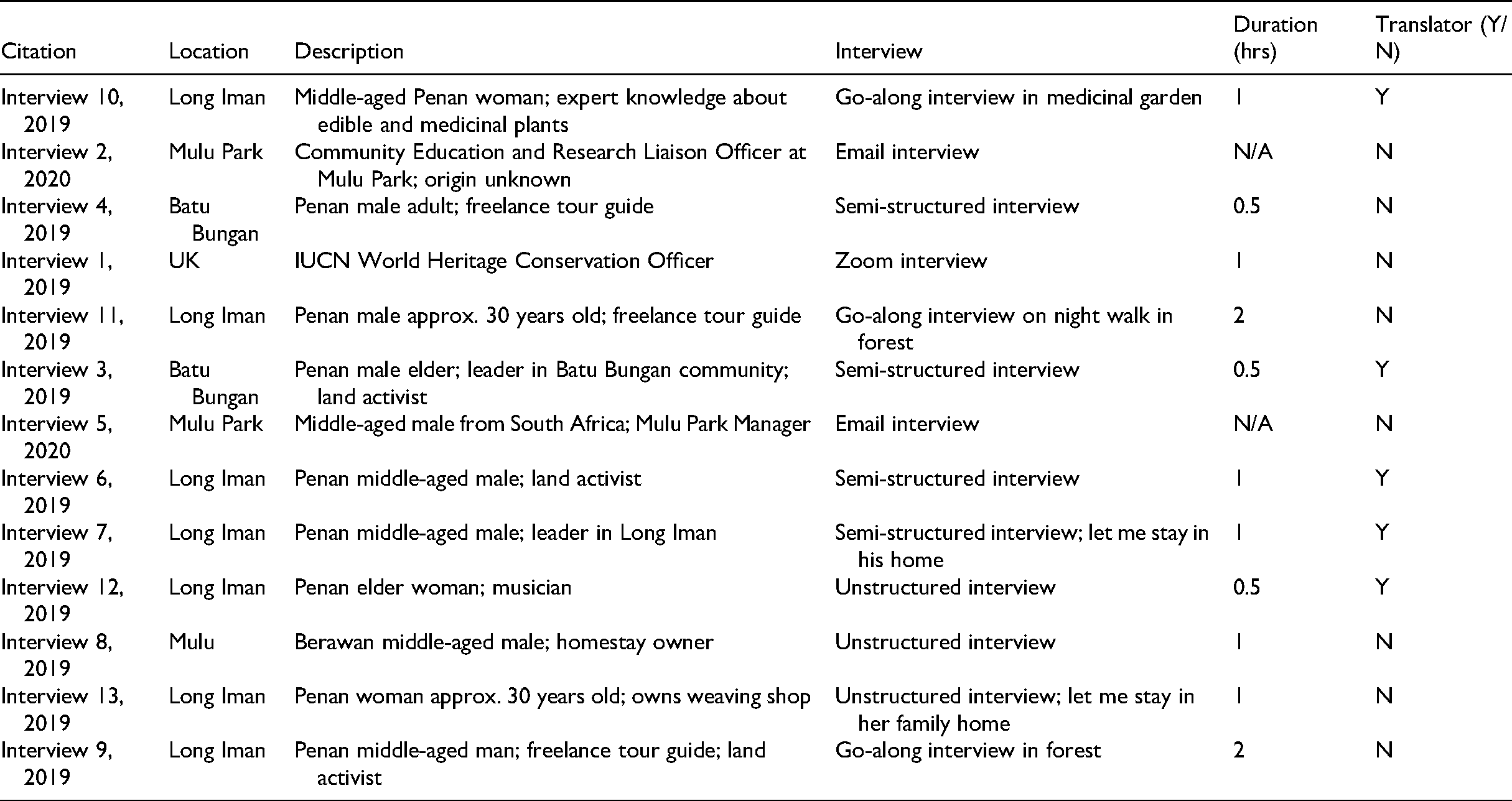
In addition to examining archival sources, one member of the research team conducted fieldwork at Gunung Mulu National Park and interviews from May through June 2019, and in June 2020. Sources included residents and leaders of communities in the Mulu area, Mulu Park administrative staff and tour guides, guesthouse owners, and an IUCN conservation officer, totaling 13 informants. The field research involved triangulating go-along interviews on park tours and with Penan and Berawan residents in their communities. Go-alongs researchers are able to navigate “dynamic nature-based settings by bringing into play residents’ [and] tourists’ […] lived experiences, value-systems and life-worlds” (Duedahl and Stilling Blichfeldt, 2020: 455–456). Research also included participant observation of visitor experiences, and unstructured interviews with Penan community members at Long Iman and Batu Bungan about land features of importance and memory inside the park border. Narrative data analysis was conducted on transcribed field notes and interviews and combined with archival sources to reach the conclusions of this article.
The primary mode of data analysis is a form of inductive content analysis (LeCompte and Schensul, 2013) of transcribed field notes produced through participant observation; in-depth semi-structured interviews, which were audio recorded, translated and transcribed; and secondary data collected via archives. One key interview question to Penan community members was, “Can you describe the land within Mulu Park, areas and aspects of the land that are important, and why they are important?” We kept our positionality in mind, and kept questions open-ended, avoiding common Western terms like “conservation” to evade lip service to what they think Western researchers want to hear. When interviewing the IUCN Conservation Officer, we crafted questions like, “How does IUCN coordinate with state parties?” and “How does IUCN define the term natural?” The sample was small (but close to typical for qualitative methods), and did not include deep ethnographic work with Berawan communities, thus limiting the study to some extent. The small size of the sample and thus the reliability of results is bolstered by the triangulation of methods (interviews, ethnography, archival) that produced saturation in the central findings.
Results
According to an IUCN World Heritage Conservation Officer (CO), the responsibility of World Heritage Site conservation always lies with the state party. “The World Heritage Committee and IUCN are only technical and international support,” she said (Interview 1, 2020, personal communication). Although UNESCO and IUCN claim only a small role in the management of World Heritage Sites (WHS), as we explain in what follows, Mulu Park's management and conservation priorities align much more with natural and cultural World Heritage ideologies than with state or local values. Our research demonstrates that Penan values reflect livelihoods and places of memory within the park, while park narratives reflect the Outstanding Universal Values (OUV) for which the site earned its World Heritage status. The park's tourism and education highlight its geological and ecological importance to the world, including some of the largest and most biodiverse caves in the world and notable bat populations. There is, however, very little focus on cultural values, except for passing remarks on tours and the objectification of Penan culture via a handicraft market. Stated values regarding Mulu Park align with UNESCO OUV, reflecting a technical approach to conservation strategy and unsatisfactory participation from Indigenous people displaced from the park.
UNESCO and IUCN concretize the World Heritage program's framework through two formal processes. First, through their OUV criteria for nomination to the World Heritage List. Second, through their periodic monitoring and evaluation procedures: UNESCO's State of Conservation reports and IUCN's Outlook Assessments. UNESCO's State of Conservation reports are the result of in-depth evaluations of sites. Because there are thousands of WHS, however, the World Heritage Center (WHC) cannot monitor them all every year. While UNESCO does require Periodic Reporting from States Parties every six years via confidential self-reporting (UNESCO, 2024), the WHC monitors and evaluates sites only when issues are brought to their attention that would require a State of Conservation review (Interview 1, 2020, personal communication; UNESCO, 2024).
The IUCN Outlook Assessments are completed for all natural and mixed sites every three years (Interview 1, 2020, personal communication). The Assessment is meant to recognize well-managed sites, and help identify the most pressing conservation issues on or near the property. It involves assessing the current state and trends, threats, and effectiveness of protection and management of the site's OUV (IUCN, n.d.c). The Assessment undergoes a review process by expert reviewers, knowledge-holder consultation groups (including researchers, site managers, NGOs, relevant national management authorities, and community groups), States Parties, IUCN regional office, before review and approval by the IUCN World Heritage panel (IUCN, n.d.b; IUCN, n.d.c; Interview 1, 2020, personal communication).
Within the Assessment, threats to sites are divided into “current” or “potential” threats, and are assessed and rated as “Very Low Threat,” “Low Threat,” “High Threat,” “Very High Threat,” and “Data Deficient” (IUCN, n.d.c). The site management effectiveness is then rated on a scale from “Good” to “Critical.” The CO explained that they try to make sure that the ratings are fair, since not all state parties have the same resources (Interview 1, 2020, personal communication). The Assessment thus keeps track of the state of conservation of natural WHS so that they can provide technical assistance to sites that need it (IUCN, n.d.b). In what follows, we provide evidence of how the World Heritage program, management guidelines, and evaluations prioritize “natural” values and perpetuate displacement of Indigenous values and perspectives.
Prioritizing “natural” values
DeLoach stayed with a family in Long Iman for two weeks, a very small community on the bank of the Tutoh River, accessible by boat about forty minutes outside of Mulu Park. It consists of a longhouse (housing close to fifty families) and a dozen independent homes, a volleyball court, some herb and vegetable gardens, rice paddy, and a small canteen of mostly shelf-stable goods. Many residents work in the Mulu area or the city of Miri and spend long periods of time away because boat gas is expensive to return home.
During go-along interviews with community members and a freelance tour guide from Long Iman, it was evident that their narratives of the land reflected ways of life that were important to them, both individually and as a collective Penan heritage, in the past and present. They described the forest's importance both in terms of their livelihood and as a vital component of their identity and memory, detailing historical events, trading points, burial grounds of loved ones, places of discovery, and legends (Interviews 3,4, 6–13, 2019, personal communication).
DeLoach sat down with a man in the longhouse one afternoon, who recited place names and described collective memory and identity associated with the forest. He explained that Penan often name places, especially rivers, Ba, based on resources found there, such as Ba Rupa, meaning “River of Fruit,” or Ba Paku, meaning “River of Ferns.” He told the story of how different Penan lineages were formed: “this land is important to us because we’ve been here forever. We originally began right here on the Tutoh River, and divided and spread out looking for rhino” (Interview 6, 2019, personal communication). DeLoach met an elder with a talent for the keringot, or nose flute, who told stories of her four week trips to the kubu, or trading post up the Tutoh River, when asked about places of meaning (Interview 12, 2019, personal communication). The woman DeLoach stayed with reminisced about her childhood when her grandparents would take her on multi-week trips into the forest to collect fruit and sago. They would build huts and sleep on the hard raised floor made of sticks. She laughed about how uncomfortable the sleeping arrangements were, but was nostalgic for the adventures with her grandparents (Interview 13, 2019, personal communication).
DeLoach went for a hike from Long Iman through the forest to a waterfall with a community member eager to posture his plant knowledge. Along the way, he pointed out umbrella leaves for roofs, vegetables, edible flowers, cassava, medicinal plants, and expressed concern about the probability of the land being taken by palm oil companies within the next few years (Interview 9, 2019, personal communication). She also attended another go-along interview with an elder with medicinal plant knowledge, who led her through the forest and her garden, identifying over twenty species of plants used to treat various ailments (Interview 10, 2019, personal communication). All of the interviews and tours at Long Iman reflected the land's purpose and meaning within their lives.
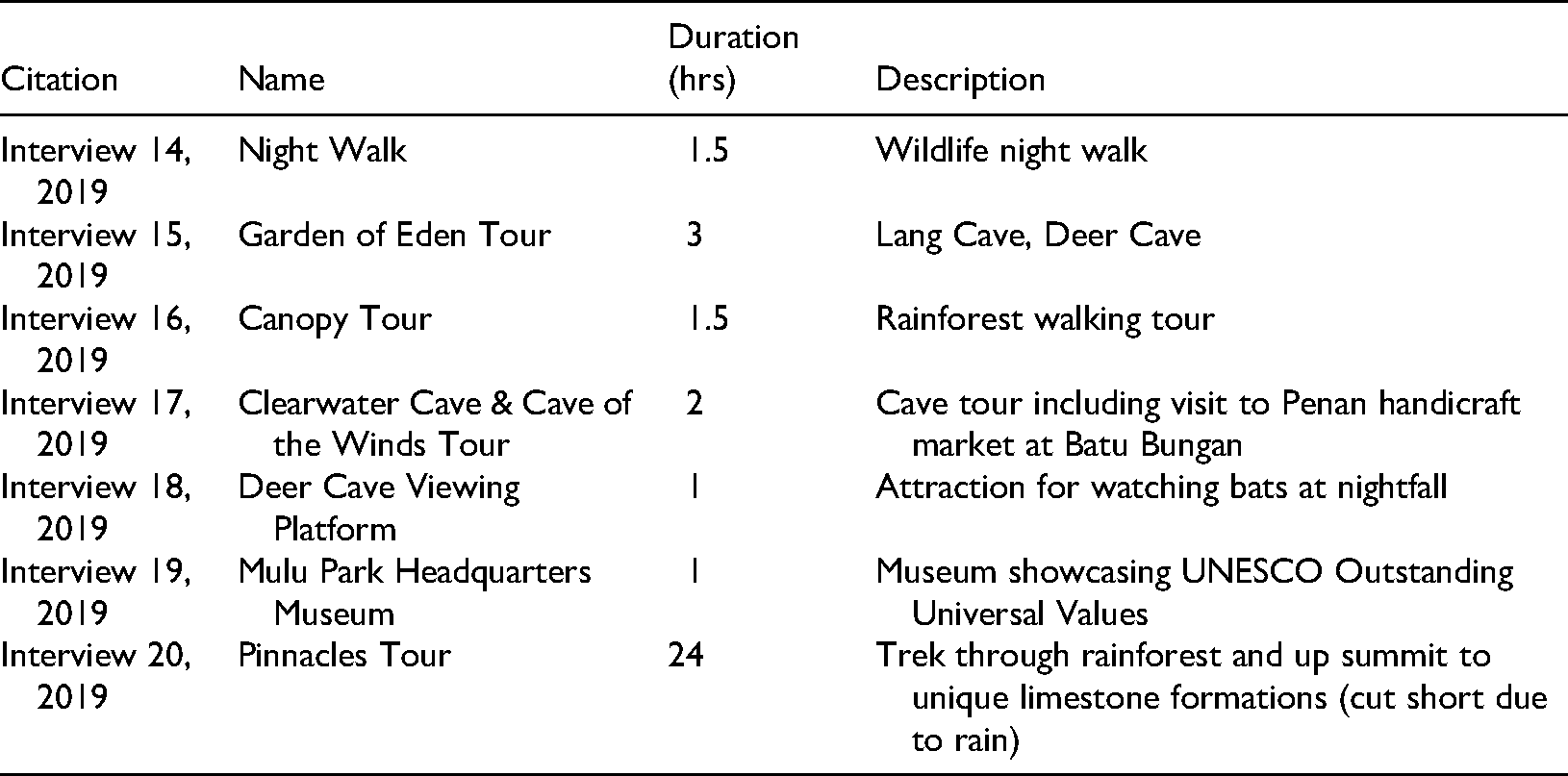
After spending time at Long Iman, DeLoach conducted participant observation on several Mulu Park tours, all of which focused on scientific significance and spectacles for tourist entertainment, in contrast to her experience with Penan community members. Mulu Park's tourism, from guided treks to brochures to the on-site museum, all showcase the property's OUV, and offer perfunctory information about the people who live there (Interview 14–20, 2019). For example, while crossing a bridge over Ba Paku on a walking tour, there was no mention of the river's significance to Penan (Interview 15, 2019). Opportunities for cultural education were not officially advertised, with minimal mention of Indigenous values on tours or educational materials. The Penan handicraft market at Batu Bungan is part of the itinerary for the Clearwater and Cave of the Winds Tour, where women sell traditional baskets, woodworking, and mini blowpipes, which reduces their culture to a commodity (Interview 17, 2019, personal communication).
When interviewed for this research, the IUCN CO defined “nature” according to the 4 natural OUV criteria used to determine natural World Heritage nominations: natural beauty (vii), significant geological processes (viii), outstanding ecosystems (ix), and biodiversity (x). While Labadi suggests that there is flexibility in the interpretation of OUV to accommodate state priorities (2013), the CO was resolute that World Heritage definitions of natural values are “set in stone,” meaning they can only be interpreted within the bounds of the OUV descriptions (Interview 1, 2020, personal communication). The rigid definitions of natural values allow no room for aspects of a site that fall outside of the OUV criteria. The CO also informed me, “Effective site management is determined by how well a site conserves their Outstanding Universal Values” (Interview 1, 2020, personal communication). The “natural” OUV criteria for nomination to the World Heritage List reinforces these conservation priorities. For example, to qualify for criteria (x) the site must have the following: (x) to contain the most important and significant natural habitats for in-situ conservation of biological diversity, including those containing threatened species of outstanding universal value from the point of view of science and conservation. (UNESCO, n.d.c)
The phrase, “from the point of view of science and conservation” in criteria (x) suggests that science and conservation have a point of view. In this way, UNESCO uses the “god trick” (Haraway, 1988) by claiming objective judgment via science and conservation. The reification of OUV mirrors Haraway's argument that power-laden systems work by claiming to see “everything from nowhere” (1988: 581). UNESCO's strategy works to validate and naturalize an exclusive conservation agenda focused only on a narrow set of rigid criteria. As a result, OUV takes priority over other values, including local values present at a site. The prioritizing of science and biodiversity conservation contributes to the exclusion of narratives about people and culture in the park.
The CO explained that threats to any OUV of a site are considered an issue of global concern because sites are of global importance. “If a site loses its status, it is sad, not only for the site or the nation, but for the world” (Interview 1, 2020, personal communication). While claiming global responsibility for WHS may seem appropriate, it elicits conflicts of heritage ownership, sacrificing situated knowledges and values for the sake of a “greater cause.” Sachs (2019) explains that in this way humanity is burdened with an expectation that everyone must protect the earth in the same Eurocentric way. UNESCO adopts a universalizing approach to a list of hegemonic values towards heritage, which adversely work to romanticize and protect certain ‘universal’ natural phenomena while ignoring others (Labadi, 2013). At Mulu Park, the caves and bats are showcased and protected for all the world, while Penan and Berawan livelihoods and values are not. The reliance on OUV excludes the interests of Indigenous people and their land by claiming global ownership of particular resources of value within the property.
Not only can OUV exclude local values, but we also found that World Heritage monitoring and evaluation processes can work in opposition to local values and priorities. For example, the 2017 IUCN Outlook Assessment for Mulu Park identifies traditional hunting and gathering as a “moderate” threat to the OUV of the park due to potential overexploitation, and the 2020 Outlook Assessment pins hunting as a “low threat” due to increased farming that could have reduced illegal hunting and gathering of endangered wildlife (IUCN, 2017, 2020). IUCN requests updates on the monitoring and management of traditional hunting privileges for local communities.
In the 2020 report, illegal hunting, logging, and wood production are “current threats,” which groups local livelihoods in the same category as illegal corporate logging, and pits Indigenous lifeways against OUV. The 2020 report also outlined the effectiveness of park management as having “some concern,” indicating that “current management faces challenges in terms of protection of the Outstanding Universal Value of the park due to hunting pressure and lack of enforcement of the regulations” (IUCN, 2020: 4), and concludes that the forest is overexploited due to traditional hunting practices (IUCN, 2020: 10). DeLoach interviewed two Penan leaders at Batu Bungan, who informed her that instead of telling tourists about locals’ hunting privileges, tour guides must lie and tell visitors that people only carry weapons for protection. “I wish people knew more about our way of life. The park could do better with that” (Interviews 3, 4, 6, 2019, personal communication). World Heritage supports and promotes the pristine narrative, similar to the fortress model, that Mulu Park management presents to the world and serves to hide Penan narratives, needs, and livelihoods.
Exclusion of indigenous people
UNESCO's State of Conservation reports and IUCN Outlook Assessments chronicle issues at Mulu Park that were brought to UNESCO and IUCN officers’ attention, including land disputes, complaints of lack of local participation, and opposition to park expansion plans. The 2009 State of Conservation report describes the conflict between Mulu Park and Berawan communities as due to “lack of compensation for traditional land rights obtained for construction and expansion of hotel development e.g., the Royal Mulu Resort, on land which has traditionally belonged to the Berawan people” (UNESCO, 2009). Additionally, the report mentions complaints that Indigenous people in the Mulu region do not benefit from park tourism, and suggests that the park management hire more locals as guides.
The WHC claims, “this lack of engagement of local communities could threaten the effectiveness of management and impact the integrity of the property” (UNESCO, 2009). The report frames the park's evaluation based on how the park is affected, indicating that the integrity of the property takes precedence. The WHC provided a list of requests of the Sarawak government and Mulu Park management to remedy the above issues, including to collaborate with community leaders to address issues regarding land rights and benefits from involvement at the park. The World Heritage Committee “recommended that the State Party give due consideration to the involvement of Indigenous peoples and other local communities in planning and implementing decisions … and to seek their full co-operation in its management” (UNESCO, 2009). Cooperation does not equate to consensual or equal participation in park decisions, and implies that park goals should move forward regardless.
In 2010, the Sarawak government submitted a new report to the WHC explaining the conflicts at hand and their resolutions. The report detailed the insignificance of land disputes in relation to the park, the percentage of local hires, and other benefits that local communities reap from the park economy. The State of Conservation report says: The State Party acknowledges that there have been land-claims by a group of local people, but notes that the land under dispute is outside the boundary of the property, and is owned by a private company. The State Party's report gives an explanation of the legal basis for land claims and compensation and considers that the claims are tenuous. It notes that the impact of these disputes on the management of the property is not significant (UNESCO, 2010).
Regarding community involvement at the park, UNESCO acknowledges the subsistence and social value of land to Indigenous people, and includes participation of local people in conservation projects as an important component of World Heritage. Paragraph 14 of the Operational Guidelines for the Implementation of the World Heritage Convention states, “Participation of local people in the nomination process is essential to make them feel a shared responsibility with the State Party in the maintenance of the site” (Colchester, 2003: 40). However, after reviewing UNESCO's 2010 State of Conservation report and IUCN's 2020 Outlook Assessment, their prioritization of local community inclusion is not convincing.
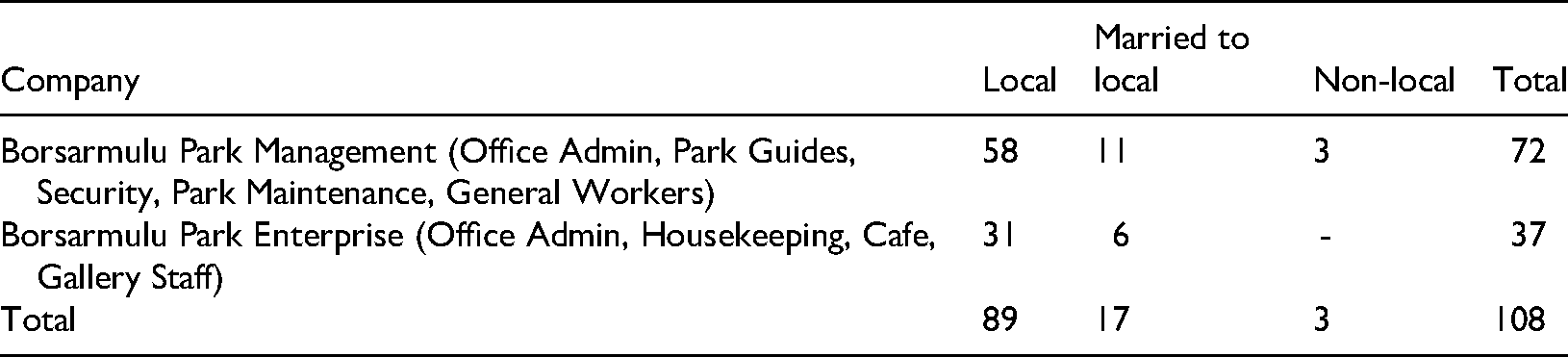
The WHC and IUCN stated that the government provided direct evidence of local community inclusion. The 2010 State of Conservation report claimed that 84% of the 94 employees of Mulu Park were from local communities, mostly Berawan and Penan, and 72% of guides came from these communities (UNESCO, 2010). By 2020, the most recent IUCN Outlook Assessment (as well as the Mulu Park website) reports that 97% of staff are locals (Gunung Mulu National Park, n.d.; IUCN, 2020: 5). These reports also mentioned that Mulu's Special Park Committee includes local community leaders, which gives them decision-making influence at the park (IUCN, 2020; UNESCO, 2010). Furthermore, the Sarawak government included other benefits to local communities, “including the contributions of tourism income to local people, such as through service provision and handicraft products” (UNESCO, 2010).
The Director of Mulu Park mirrored this sentiment, stating that Mulu is relatively successful in the way of “fully fledged local participation” (Interview 5, 2020, personal communication). The park's Community Education and Research Liaison Officer corroborated the information about the Special Park Committee, and also reassured that visitors can learn about cultural knowledge through local guides and the Penan handicraft market. In fact, the park had recently implemented culture and history as part of guides’ formal training, and that management hires locals to facilitate the training (Interview 2, 2020, personal communication).
This enthusiasm wasn't always shared by residents. In interviews with Penan leaders and community members, they were displeased with their low level of involvement and decision-making power (Interviews 3, 4, 6, 9, 2019, personal communication). One Penan headman voiced that the park only consults with him when the decision involves the community in some way, mostly if it is regarding hunting inside the park (Interview 3, 2019, personal communication). Another Penan leader expressed that in 2010 he attempted to schedule a meeting with the park director to request a small percentage of park profits to benefit the community. The director never responded to this request (Interview 6, 2019, personal communication). Overall, the WHC and IUCN perceived that Mulu Park had sufficient procedures in place for conflict resolution and cooperation between park management and local communities, which contradicts the ongoing concerns of local leadership and residents (UNESCO, 2010; Interviews 3, 4, 6, 9, 2019, personal communication).
Furthermore, UNESCO and IUCN have different standards of what counts as local inclusion compared to Penan ideas of inclusion. For UNESCO and IUCN, income from selling handicrafts was a satisfactory way for local people to be included in the park economy. This standard is contrary to Penan, who expressed concerns about lack of community funding or compensation from the park, and the meager income earned from the handicraft market. Regarding local employment, while UNESCO, IUCN, and park management applauded the 97% local employment rate at the park, local informants found these numbers to be controversial, including a Berawan activist and guesthouse owner: “Kelabit is not local! Kayan is not local! Not all Penan are local! They might be local to Sarawak, but not many who work at the park are local here” (Interview 8, 2019, personal communication).
IUCN stresses that “consultation is indispensable” to the Outlook assessment process (IUCN, n.d.b.). The CO said IUCN requires that site managers practice “proper stakeholder consultation,” encouraging sites to make sure that there is discussion among park managers and local stakeholders to prevent conflict, and ensure that “everyone is on the same page” (Interview 1, 2020, personal communication). The Operational Guidelines for the Implementation of the World Heritage Convention explains, “States Parties to the Convention are encouraged to adopt a human-rights based approach, and ensure gender-balanced participation of a wide variety of stakeholders and rights-holders, including […] local communities, indigenous peoples, […] in the identification, nomination, management and protection processes of World Heritage properties” (UNESCO, 2024: 12).
The CO stressed that Free Prior Informed Consent (FPIC) is an important component of the Outlook Assessment process. Site managers must comply with FPIC by safeguarding local stakeholders’ decision-making abilities. She also emphasized that IUCN and the WHC serve only as technical support of WHS, exemplifying a strategy that Büscher (2010) says denies responsibility for decisions that are inherently political. Because development agencies are tasked with implementing specialized support rather than weighing in on disputes in politics, they present their goals as apolitical to validate their involvement and sideline localized political solutions.
We found that these assessments do not adequately address issues of consultation. In 2001, Sarawak proposed expanding Mulu Park to include Gunung Buda National Park, but Indigenous communities opposed the plan as they were excluded from decision-making and denied land rights by the government. While UNESCO acknowledged concerns about local participation, its 2002 report ultimately prioritized the park's expansion and only recommended that Indigenous involvement be considered in the future, without granting them decision-making power. The matter was deemed resolved when the expansion did not proceed, reinforcing the state's authority while reducing Indigenous land rights to a procedural formality rather than a political issue.
While UNESCO and IUCN publish guidelines for local consultation and inclusion, and involve local stakeholders in their monitoring and evaluation procedures, there is no formal protocol surrounding consultation and inclusion of local and/or Indigenous people in national parks. The guidelines neutralize Indigenous challenges while simultaneously maintaining pre-existing power structures and authority in the park. While UNESCO and IUCN guidelines recognize local communities as partners in the protection of World Heritage, both the CO and the Operational Guidelines provided very little direction regarding what consultation and participation should entail. At Mulu Park, the consultations that UNESCO and IUCN conducted for their evaluations have not relieved any local grievances. Overall, UNESCO and IUCN claim to prioritize local inclusion in natural WHS, yet if local communities voice complaints, all they require is an explanation from the state party, in this case, the state of Sarawak.
In this way, the State of Conservation reports and Outlook Assessments show favor to the state parties and their agendas for conservation, reducing Indigenous communities to stakeholders rather than sovereign peoples, as Latulippe and Klenk (2020) claim. By sidestepping local interests, UNESCO and IUCN use lip service to “local inclusion/participation,” “consultation,” “technical support,” and “Free Prior Informed Consent,” that amounts to a superficial inclusion of local people into site initiatives. From the perspective of Penan informants, relations between their communities and Mulu Park management are less than satisfactory, and their inclusion in the park decisions and economy are not currently at an acceptable level. This anti-political tool maintains legitimacy of the conservation project when faced with conflicts, including dismissing proximal harms like the 11,000 acre land gift to Radiant Lagoon, while contributing to the “sale of nature” to outsiders.
Despite the experiences of local informants, the IUCN Conservation Outlook Assessment at the time of this research states, “GMNP [Mulu] is an outstanding protected area in an excellent condition and with an effective professional management regime” (2017). Because UNESCO and IUCN measure the site's management based on the effective conservation of the narrow list of OUV and performative local consultation guidelines, Mulu Park is considered a successful World Heritage Site. The praise of the park as a model WHS endorses neocolonial environmental management structures and ignores the interests, values, and struggles of Penan people in their traditional territories.
Discussion: World heritage as neocolonial and anti-political environmental governance
There are two ways in which World Heritage contributes to a neocolonial and anti-political framework for environmental management at Mulu Park. First, World Heritage universalizes natural values in a way that includes some aspects of the land and excludes others, mirroring the way colonization dispossesses and redefines Indigenous land relations. Second, when addressing “human” aspects of a natural site, UNESCO categorizes and prioritizes the natural features to normalize international decision-making about traditional Indigenous territory.
The UNESCO WHC and IUCN structure their World Heritage nomination criteria, management guidelines, and site evaluations in ways that give precedence to certain (global) conservation values and ideals over others. For natural World Heritage Sites like Mulu Park, UNESCO and IUCN target the property's biodiversity and geological OUV as the central emphasis for conservation, tourism, and scientific inquiry. UNESCO World Heritage employs OUV to highlight the world's similarities as “a reminder of all that unites humanity” (Labadi, 2013). However, they use this narrow list of values that reflects a specific conservation agenda, and legitimize their influence in the name of science and for the benefit of the world. The application of OUV serves to exclude situated values, like Penan narratives, and justify displacement of residents from the land where they have built their lives for many generations.
UNESCO and IUCN use technical and scientific language in their Operational Guidelines, State of Conservation reports, and Outlook Assessment methods and reports. According to Youdelis (2016), this anti-political protocol for encouraging cooperation among parks and people is a “tool that helps evade present-day Indigenous politics” (1377), and serves to “naturalize the park's ultimate decision-making authority” (1374). Conservation and development efforts frequently depend on “mobilizing metaphors”—like participation, capacity building, and good governance—to gain support and justify the resources they receive (Mosse, 2004). These “mobilizing metaphors” are easily recognizable at Mulu Park and in UNESCO and IUCN's language around the involvement of local people in World Heritage Sites, while Indigenous residents report a profound lack of engagement with their interests and needs.
Although UNESCO and IUCN claim to play a minor role in the management of WHS, a culmination of evidence suggests that UNESCO and IUCN prioritize OUV over local values through their monitoring and evaluation approaches to local inclusion, and Mulu Park management aligns much more with UNESCO World Heritage conservation ideals and guidelines than local values. This is important because while state parties are responsible for the management of World Heritage Sites, the World Heritage program shapes discourse around conservation while exonerating themselves of responsibility. They use anti-political tools to maintain their status as a technocratic support system, as the CO claimed, while endorsing and aiding state parties in neoliberal agendas for environmental governance and tourism.
Conclusion
In this way, World Heritage works to naturalize neocolonial structures at the expense of local knowledges and livelihoods. As a result, Indigenous groups like the Penan, with their own sets of values and livelihoods, are dispossessed from the land because UNESCO and IUCN defer conservation policy and management to the state parties and themselves, rather than helping to enable land sovereignty at the local level. Remedies for the situation, based on our research, would be to return much of the decision-making about the park to the Indigenous people who live and work in or near it, or to at least balance much of the global thinking and values with those from the local stewards. The research showed that the Indigenous groups who are concerned with the park have clearly articulated requests and they should be considered more seriously.
Management and conservation of Mulu Park prioritizes World Heritage values over local Indigenous knowledge and values, resulting in exclusion and dispossession at the park. UNESCO and IUCN use scientific discourse and Outstanding Universal Values to justify land management decisions while masking political impacts on Indigenous communities. Conservation at Mulu Park reflects anti-political development schemes that use terms like “participation” to conceal Indigenous exclusion and justify the park management's ultimate decision-making authority. World Heritage facilitates neocolonial environmental governance by supporting state agendas and sidelining Indigenous land sovereignty.
Supplemental Material
sj-docx-1-ene-10.1177_25148486261444551 - Supplemental material for “The park is the people”: World heritage as antipolitical and neocolonial environmental governance in mulu park, Malaysia
Supplemental material, sj-docx-1-ene-10.1177_25148486261444551 for “The park is the people”: World heritage as antipolitical and neocolonial environmental governance in mulu park, Malaysia by Haley DeLoach and Amy Trauger in Environment and Planning E: Nature and Space
Footnotes
Acknowledgements
The authors wish to thank the University of Georgia's office of Global Engagement for financial support.

Funding
The authors received financial support from the University of Georgia's Office of Global Engagement for the research of this article.
Supplemental material
Supplemental material for this article is available online.
Appendix A. Mulu Park Employees (2020)
| Company | Local | Married to local | Non-local | Total |
|---|---|---|---|---|
| Borsarmulu Park Management (Office Admin, Park Guides, Security, Park Maintenance, General Workers) | 58 | 11 | 3 | 72 |
| Borsarmulu Park Enterprise (Office Admin, Housekeeping, Cafe, Gallery Staff) | 31 | 6 | - | 37 |
| Total | 89 | 17 | 3 | 108 |
Appendix B. List of Interviewees
| Citation | Location | Description | Interview | Duration (hrs) | Translator (Y/N) |
|---|---|---|---|---|---|
| Interview 10, 2019 | Long Iman | Middle-aged Penan woman; expert knowledge about edible and medicinal plants | Go-along interview in medicinal garden | 1 | Y |
| Interview 2, 2020 | Mulu Park | Community Education and Research Liaison Officer at Mulu Park; origin unknown | Email interview | N/A | N |
| Interview 4, 2019 | Batu Bungan | Penan male adult; freelance tour guide | Semi-structured interview | 0.5 | N |
| Interview 1, 2019 | UK | IUCN World Heritage Conservation Officer | Zoom interview | 1 | N |
| Interview 11, 2019 | Long Iman | Penan male approx. 30 years old; freelance tour guide | Go-along interview on night walk in forest | 2 | N |
| Interview 3, 2019 | Batu Bungan | Penan male elder; leader in Batu Bungan community; land activist | Semi-structured interview | 0.5 | Y |
| Interview 5, 2020 | Mulu Park | Middle-aged male from South Africa; Mulu Park Manager | Email interview | N/A | N |
| Interview 6, 2019 | Long Iman | Penan middle-aged male; land activist | Semi-structured interview | 1 | Y |
| Interview 7, 2019 | Long Iman | Penan middle-aged male; leader in Long Iman | Semi-structured interview; let me stay in his home | 1 | Y |
| Interview 12, 2019 | Long Iman | Penan elder woman; musician | Unstructured interview | 0.5 | Y |
| Interview 8, 2019 | Mulu | Berawan middle-aged male; homestay owner | Unstructured interview | 1 | N |
| Interview 13, 2019 | Long Iman | Penan woman approx. 30 years old; owns weaving shop | Unstructured interview; let me stay in her family home | 1 | N |
| Interview 9, 2019 | Long Iman | Penan middle-aged man; freelance tour guide; land activist | Go-along interview in forest | 2 | N |
Appendix C. Mulu Park Tours
| Citation | Name | Duration (hrs) | Description |
|---|---|---|---|
| Interview 14, 2019 | Night Walk | 1.5 | Wildlife night walk |
| Interview 15, 2019 | Garden of Eden Tour | 3 | Lang Cave, Deer Cave |
| Interview 16, 2019 | Canopy Tour | 1.5 | Rainforest walking tour |
| Interview 17, 2019 | Clearwater Cave & Cave of the Winds Tour | 2 | Cave tour including visit to Penan handicraft market at Batu Bungan |
| Interview 18, 2019 | Deer Cave Viewing Platform | 1 | Attraction for watching bats at nightfall |
| Interview 19, 2019 | Mulu Park Headquarters Museum | 1 | Museum showcasing UNESCO Outstanding Universal Values |
| Interview 20, 2019 | Pinnacles Tour | 24 | Trek through rainforest and up summit to unique limestone formations (cut short due to rain) |
References
Supplementary Material
Please find the following supplemental material available below.
For Open Access articles published under a Creative Commons License, all supplemental material carries the same license as the article it is associated with.
For non-Open Access articles published, all supplemental material carries a non-exclusive license, and permission requests for re-use of supplemental material or any part of supplemental material shall be sent directly to the copyright owner as specified in the copyright notice associated with the article.
