






Abstract
Urban sustainability in the Global South substantially depends on informal labor regimes that remain socially marginalized and politically invisible. In Bangladesh, approximately 400,000 grassroots waste workers, disproportionately from Dalit communities, recycle significant amounts of municipal solid waste, yet face systemic exclusion rooted in caste-based stigma, class-based poverty, and gender oppression. This study investigates how intersectional vulnerabilities produce certain bodies as “environmental outcasts” and how environmental justice principles can guide more equitable urban governance. Drawing on qualitative interviews with 35 women waste workers, six policy officials, and three academics and utilizing Crenshaw's intersectionality and Schlosberg's multidimensional environmental justice frameworks, the analysis reveals three interconnected mechanisms of exclusion: (1) spatial abjection, where caste-based stigma produces interactional segregation from public spaces; (2) embodied precarity, where gendered oppression and economic survival constrain health, mobility, and agency; and (3) recognition injustice, where institutional neglect naturalizes workers’ invisibility in policy discourse. The paper extends the concept of environmental casteism to Bangladesh's Muslim-majority context, demonstrating how purity-pollution logics transcend religious boundaries to sustain occupational segregation. It distinguishes environmental casteism from environmental racism by foregrounding embodied, mobile stigma over residential geography. Thereby, this research contributes to critical waste studies and anti-caste environmental scholarship, offering a framework for reimagining urban sustainability in the Global South. The study concludes with concrete policy recommendations, that prioritize justice-centered governance over technocratic formalization, both for the short term (provide minimum wage, protective equipment, identity cards) and the long term (organize women-led cooperatives, educational scholarships, vocational training).
Keywords
Introduction
Urban sustainability in the Global South substantially relies on informal labor regimes that operate outside formal regulatory frameworks. In many low and middle-income countries, grassroots waste workers perform essential ecological services, yet they remain socially marginalized and politically invisible in policy discourse (United Nations Environment Programme, 2022). This contradiction creates a paradox where the urban environment is sanitized through the labor of those who are themselves treated as disposable, a dynamic Wittmer (2023) terms the “clean city paradox”. In Bangladesh, this dynamic is particularly acute, where rapid urbanization and increasing waste generation collide with deep-seated social hierarchies and inadequate governance structures. While the economic and environmental contributions of this sector are documented (Waste Concern, 2021), the social mechanisms that render workers vulnerable remain under-explored within the specific socio-religious context of the region.
Globally, the informal waste sector is recognized as a critical component of circular economies and environmental resilience, particularly where formal infrastructure is limited (United Nations Environment Programme, 2022; World Bank, 2022). In Bangladesh, the scale of this reliance is stark. While formal waste management infrastructure remains severely limited (Image 1), the vast majority of municipal solid waste is managed through informal channels (Bangladesh Bureau of Statistics, 2023). A large workforce of informal grassroots workers, numbering in the hundreds of thousands, plays a decisive role in recovering recyclable materials, diverting substantial volumes from landfills and waterways (Waste Concern, 2021). Recent scholarship highlights the economic value of this labor, estimating annual savings of USD 15.29 1 million in disposal costs (Sultana, 2023). However, despite these contributions, workers face systemic exclusion rooted in caste-based stigma, class-based poverty, and gender oppression, rendering them invisible in urban governance and policy frameworks (Kabeer, 2012; Lata et al., 2021).
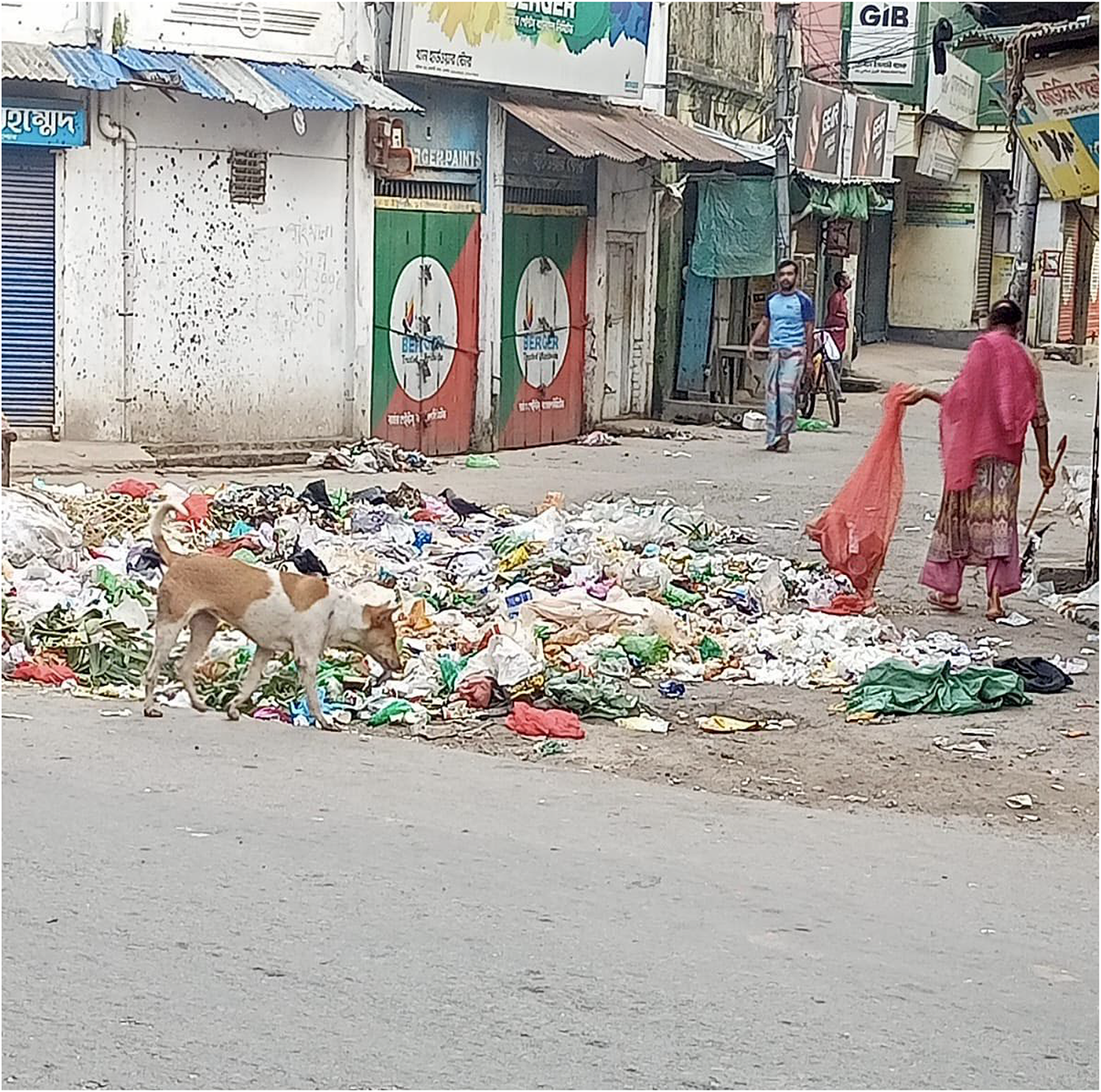
Uncollected waste accumulating in a residential area of Jashore city. Source: Authors’ own collection.
The background of this exclusion is rooted in historical and social ties that predate modern waste governance. In Bangladesh, waste labor is disproportionately performed by communities historically subjected to caste-based discrimination, primarily identified as Dalit 2 communities. Although Bangladesh is a Muslim-majority nation where caste is officially unrecognized, occupational hierarchies rooted in notions of purity and pollution persist across religious lines (International Dalit Solidarity Network, 2021; Sultana et al., 2018). Workers from these communities face stigma that transcends their work; they are often barred from public spaces and subjected to social ostracization based on inherited identity. This marginalization is compounded by gender dynamics, as women within these communities face dual burdens of occupational stigma and patriarchal restriction (Humayra et al., 2024). Despite constitutional guarantees of equality, national policies such as the Solid Waste Management Rules 2021 have largely failed to integrate informal workers, prioritizing technocratic formalization over social inclusion (Jerin et al., 2022). Current research on Bangladesh's waste sector has made significant progress in mapping institutional changes and quantifying economic impacts. Significant gaps persist, however, in understanding how overlapping identities shape workers’ lived experiences. Furthermore, environmental justice frameworks remain underutilized in analyzing the specific socio-religious dynamics of the Bangladeshi context. This lack of nuanced understanding limits the development of policies that address not only waste efficiency but also human dignity.
This study investigates how intersectional vulnerabilities, shaped by the overlapping axes of caste, class, and gender, produce compounded marginalization that renders certain bodies as environmental outcasts, and how principles of environmental justice can guide a reimagining of urban governance. The research is guided by three primary objectives: first, to examine the systemic exclusion embedded within the informal waste sector through the lived experiences of workers; second, to evaluate the environmental contributions of these workers against the social costs they bear; and third, to propose policy reforms aligned with Sustainable Development Goals (SDGs) 8 and 11 that prioritize recognition and equity. This analysis centers environmental casteism as the primary theoretical lens utilizing Crenshaw's (1989) intersectionality (a framework that examines how overlapping systems of power and discrimination such as caste, class, and gender, converge to produce unique, compounded forms of marginalization) and Schlosberg's (2007) environmental justice frameworks in tandem: intersectionality reveals how caste, class, and gender co-constitute workers’ marginalization, while Schlosberg's multidimensional justice provides the analytical structure to assess how these overlapping identities produce distinct forms of distributive, procedural, recognitional, and capability-based injustice. This combined approach is essential because caste-based oppression in Bangladesh operates simultaneously through material deprivation, political exclusion, symbolic devaluation, and constrained agency, dimensions that neither framework could fully capture alone. Using this integrated lens, this study utilizes qualitative interviews with grassroots waste workers and key stakeholders. Rather than framing workers as passive victims of informality, this research positions them as agents of urban sustainability whose labor sustains ecological functions while being systematically erased from governance. It calls for a shift beyond technocratic formalization toward justice-centered (prioritizing rights and visibility over efficiency and control), one that affirms the dignity and agency of those who keep cities clean.
Literature review
Scholarly engagement with urban waste management has undergone a critical turn in recent years, moving beyond technical assessments of infrastructure to examine the labor regimes that sustain them. This shift has foregrounded the precarious position of grassroots workers who, despite providing essential ecological services, are often rendered socially disposable. Global research has extensively interrogated this nexus of waste, labor, and disposability, revealing how urban hygiene is frequently maintained through the exploitation of vulnerable populations (Doherty, 2021; Fredericks, 2018; Labra et al., 2025; Resnick, 2020). Within South Asia, this critique has been deepened by scholars examining waste work as a site for negotiating citizenship and belonging (Anantharaman, 2024; Butt, 2020; Gidwani and Reddy, 2011; Sen, 2019; Sharma, 2012, 2022b, 2024). While these studies provide a robust theoretical foundation, they predominantly focus on the Indian and Pakistani contexts and on social and political dimensions. This paper addresses the situation in Bangladesh, a country whose population is majority Muslim but profoundly influenced by Indian culture. It also adds to the understanding of mechanisms of exclusion in the region by engaging with emerging frameworks that specifically link social hierarchy to environmental outcomes.
In the process, the paper makes use of the concept of “environmental casteism”, a framework that has gained prominence in recent scholarship examining the nexus between caste, nature, and the unequal distribution of environmental burdens (Aiyadurai and Ingole, 2021; Ranganathan, 2022; Sharma, 2012, 2022b). The concept particularly relies on the research of several South Asian scholars: Mukul Sharma's foundational work defines environmental casteism (or “eco-casteism”) as a process through which “the caste system is rationalized through nature”, arguing that traditional caste-based occupations in polluting industries are naturalized as part of a divine or ecological order (Sharma, 2012, 2022a). Sharma (2022b) further elaborates that environmental casteism operates by making caste the “decisive factor in enabling and shaping environmental injustices”, wherein Dalit communities experience distinct forms of ecological marginalization rooted in enduring notions of purity and pollution. Building on Sharma's work, Malini Ranganathan (2022) introduces the complementary concept of “environmental unfreedoms” to analyze how caste and racialization intersect to produce differentiated access to urban environmental goods in Indian cities, arguing that caste remains a critically under-recognized marker of environmental inequality. Similarly, Ambika Aiyadurai and Prashant Ingole (2021) critique the “invisibility of caste in environmental studies”, calling for anti-caste frameworks to be centered in analyses of human-environment relations. Crowley (2023) advances this discourse by drawing on anti-caste philosophies to propose alternative ontologies of nature that challenge hierarchical productions of space, while Guru and Sarukkai (2019) demonstrate how caste naturalizes social hierarchy through metaphors of nature and embodied practices of touch/untouchability. Expanding this framework, Sharma's (2024) monograph “Dalit Ecologies” systematically centers Dalit literary, cultural, and embodied experiences to argue that environmental justice in South Asia cannot be achieved without confronting caste as an ecological category, while also forging transnational solidarities with Black ecological struggles. Similarly, the concept of “contested commons” versus “ornamental ecologies” helps illuminate how caste-marked communities navigate increasingly polluted and privatized environmental resources, while dominant groups cultivate the idea of an aestheticized nature that excludes marginalized labor (Vidyapogu and Jonnalagadda, 2025).
While scholarly dialogues often draw parallels between caste and race, particularly within Dalit-Black solidarity movements (Pandey, 2013; Wilkerson, 2020), this paper argues that environmental casteism constitutes a distinct modality of structural violence with unique spatial and social implications. Environmental racism, as conceptualized in the Global North and parts of the Global South, typically manifests through the siting of hazardous infrastructure in racially segregated neighborhoods, creating “sacrifice zones” based on residential geography (Bullard, 1990; Pulido, 2017). The violence is often spatially fixed: one suffers because of where one lives. In contrast, environmental casteism in Bangladesh operates through a logic of bodily pollution and occupational heredity that transcends residential geography. The violence is embodied and mobile: one suffers because of who one is and what work one performs. As Sultana and Subedi (2016) note, Dalit workers in Bangladesh face exclusion from public spaces; markets, mosques, tea stalls regardless of their neighborhood, due to the stigma of “untouchability” attached to their bodies and labor. This produces distinct spatial formations where segregation is not merely residential but interactional. Waste workers are physically present in the city yet socially barred from accessing its communal resources. Furthermore, while environmental racism often triggers resistance based on civil rights and health impacts, environmental casteism is reinforced by religious and cultural notions of purity that naturalize waste work as a “divine duty” or inherent trait of specific communities (Guru and Sarukkai, 2019; Sharma, 2012). However, it is critical to recognize that these religious and cultural notions are not isolated from economic structures. Rather, caste and racialization are deeply intertwined and co-constitutive, serving as mechanisms for the mobilization of difference to facilitate capitalist extraction and accumulation (Pulido, 2017; Ranganathan, 2022; The Mooknayak, 2024). This distinction has critical implications for policy: addressing environmental racism requires zoning and land-use reform, whereas addressing environmental casteism requires dismantling occupational stigma and ensuring social dignity alongside environmental protection. Moreover, as The Mooknayak (2024) argues, imagining Dalit ecologies within contemporary South Asia necessitates confronting the entanglement of culturally embedded caste hierarchy with capitalist extraction, wherein environmental governance often privileges profit over the dignity of marginalized labor.
To address these multidimensional injustices, the field of environmental justice (EJ) offers diverse theoretical orientations addressing distributive, procedural, recognitional, and capability dimensions of injustice. Critical environmental justice scholars have pushed the field further. Laura Pulido (2017) centers racial capitalism and state violence, arguing that environmental inequality cannot be understood apart from historical processes of dispossession. David Pellow (2025) proposes a “critical environmental justice” framework that emphasizes intersectionality, multi-scalar analysis, and the need to challenge the systems that produce inequality rather than merely redistributing risks. Julie Sze (2006) demonstrates how technocratic and scientific discourses often obscure the racialized and classed politics of infrastructure planning. This study engages with this broader EJ literature while primarily operationalizing David Schlosberg's (2007; 2013) multi-dimensional framework for analytical coherence and policy relevance. Schlosberg's framework is particularly salient for the Bangladesh waste sector context due to its capacity to capture the multidimensional nature of caste-based oppression. Caste-based oppression operates fundamentally through social misrecognition; stigma, invisibility, and the denial of dignity (Guru and Sarukkai, 2019; Sharma, 2022a), and Schlosberg's explicit theorization of recognition as a core dimension of justice allows this study to analyze how Dalit and Horijon workers are not only materially deprived but symbolically devalued, a dimension less developed in purely distributive EJ frameworks. However, integrating insights from Dalit ecological scholarship urges an expansion of recognition justice to include what Sharma (2024) terms “epistemic recognition”, validating Dalit and Horijon communities’ ecological knowledge, cultural practices, and testimonies as legitimate, indeed often crucial contributions to the local sustainability discourse. This aligns with calls to move beyond distributive frameworks toward what The Mooknayak (2024) describes as “Dalit ecologies within capitalist critique”, which demands dismantling both caste hierarchy and profit-driven environmental governance that treats marginalized labor as disposable.
Furthermore, by incorporating Sen and Nussbaum's capabilities approach (Nussbaum, 2000; Sen, 1999), Schlosberg enables assessment of what waste workers are actually able to be and do beyond income or risk exposure. This is critical for analyzing how caste, gender, and spatial exclusion constrain workers’ capabilities for health, mobility, political voice, and social participation. While critical EJ scholars rightly emphasize structural transformation, Schlosberg's framework provides a structured yet adaptable tool for generating concrete policy recommendations, a practical necessity for research aimed at informing Bangladesh's waste governance reforms. Importantly, this study does not treat Schlosberg's framework as exhaustive; rather, it uses his dimensions as entry points to engage the structural critiques of Pellow, Pulido, and Sze, ensuring that demands for recognition and capability are understood as inherently political and tied to broader struggles against caste, class, and gender oppression.
Within this context, Informal grassroots waste workers’ vulnerabilities are intersectional, shaped by the compounding effects of caste, class, and gender. Applying an intersectional lens reveal how overlapping identities produce layered forms of marginalization, particularly for women waste workers who face not only caste-based stigma but also patriarchal control over mobility, income, and bodily autonomy. Consistent with the Introduction, this study positions these women not as passive victims, but as agents of urban sustainability whose labor sustains the city while being systematically erased from its governance. Like the women in the Wittmer (2023) study, our participants express a desire for dignity and inclusion- they want to live in a ‘clean city’ too, but one that recognizes their role in creating it. Evidence shows that caste-like stigma marginalizes Dalit communities, predominant in roles like sweeping and waste picking, resulting in exclusion from public spaces (International Dalit Solidarity Network, 2013; Sharma, 2022b). Scholarly narratives often reinforce this marginalization, depicting informal waste workers as emblematic of urban poverty and deprivation. For instance, Beall (1997) describes waste pickers as “ultimate symbols of urban poverty, rummaging through bins and garbage dumps”, while Banks (2008) labels them “the most vulnerable”, emphasizing their association with risk, unhygienic environments, and socio-economic exclusion (Sembiring and Nitivattananon, 2010).
Such representations, rooted in caste and class hierarchies, risk oversimplifying the agency and diversity of grassroots workers, reducing them to passive victims of poverty and pollution. This echoes Sarah White's (1992) critique of development discourse, which warns against the depoliticization of marginalized groups through narratives that emphasize vulnerability over resistance. To avoid reproducing this erasure, our analysis employs an intersectional lens that centers workers’ voices, demands, and resilience not just their precarity. Moreover, women waste workers face patriarchal constraints, navigating restricted mobility and earning lower incomes, while rural-urban migrants endure exclusion from healthcare and sanitation due to lack of urban citizenship (Banks, 2008; Uddin et al., 2020). Daily exposure to hazardous materials leads to respiratory and musculoskeletal ailments, shaping their precarious lives (Hossain et al., 2025). This marginalization is not merely economic but caste-based, rooted in enduring notions of purity and pollution. This persistence of caste-like stigma among Muslim communities is critical to understanding why Dalit women in the waste sector face exclusion precisely because their inherited identity and their assigned labor are fundamentally co-constitutive and inextricably linked, rather than distinct categories.
Building upon these conceptual foundations, this paper addresses a critical gap: the application of environmental casteism frameworks to Bangladesh's Muslim-majority context. Scholarship on Bangladesh's informal waste sector highlights its environmental and social significance while revealing gaps in addressing intersectional vulnerabilities. Grassroots waste workers, including sweepers, transporters, recyclers, sorters, and waste pickers significantly contribute to solid waste management (SWM) by diverting substantial waste volumes from landfills, fostering a circular economy. Studies demonstrate that informal grassroots workers in Dhaka recycle materials like plastics and metals, reducing landfill pressure and environmental degradation (Uddin et al., 2020; Yasmin and Rahman, 2017). Comparable contributions are documented globally, with studies in Southeast Asia and Africa illustrating waste pickers’ roles in enhancing urban resilience through waste diversion (Gutberlet et al., 2020; Sembiring and Nitivattananon, 2010; Solaja et al., 2024). Research quantifies the economic impact, estimating that Bangladesh's informal sector saves municipalities significant expenses in disposal costs (Sultana, 2023; World Bank, 2020). These findings position informal workers as indispensable to sustainable SWM, challenging narratives privileging formalized systems. Yet, as recent analyses of informal labor regimes in the Global South emphasize, such economic contributions remain epistemically marginalized within urban sustainability discourse, which continues to privilege technocratic formalization over the lived expertise of grassroots ecological actors (Sahana, 2025).
National policies often fail to integrate informal workers, echoing historical patterns of marginalization in environmental governance. Laws such as the 1995 Bangladesh Environment Conservation Act prioritized institutional frameworks over grassroots stakeholders. Dalit and Horijon workers, despite constitutional guarantees of equality (Bangladesh, 1972: sections 27–29), face barriers to social safety nets, education, and land ownership, limiting their economic and social capital (Bangladesh Dalit and Excluded Rights Movement, 2012; Sultana et al., 2018; WaterAid, 2021). For example, only 44.4% of Dalit women surveyed by Rowshan et al. (2016) attended school, and none completed higher secondary education, a trend that extends to many grassroots workers, constraining their access to alternative livelihoods. Caste-based and patriarchal norms further restrict mobility and agency, particularly for women, who often require male permission to move within their localities. These systemic barriers reflect global challenges where marginalized waste workers are excluded from policy frameworks, necessitating inclusive approaches to achieve equitable and sustainable waste management (Ferronato and Torretta, 2019; ILO, 2023).
Despite scholarly advances, significant research gaps persist. Current research on Bangladesh's grassroots waste sector lacks a comprehensive intersectional lens that examines how the convergence of caste, class, and gender shapes women workers’ vulnerabilities and agency. Few studies employ an intersectional lens to examine how these factors collectively shape grassroots workers’ experiences, with works like Humayra et al. (2024) focusing predominantly on gender without integrating caste or marginalization status. Even recent studies on Dhaka's waste governance, while valuable in mapping institutional change (Akther et al., 2025), largely overlook the intersectional vulnerabilities of workers, particularly how caste and gender shape access to recognition, safety, and dignity. Similarly, Schlosberg's (2007) environmental justice framework remains underutilized, with research often prioritizing technical or economic dimensions (Hassan et al., 2024). This gap is emblematic of a broader global research deficit, where the intersectional experiences of grassroots waste workers, notably women, are rarely studied, limiting the development of inclusive waste management policies. Consequently, this study's focus offers insights for other nations with significant grassroots waste sectors, particularly in the Global South, where similar socio-economic and environmental challenges persist (ILO, 2023; World Bank, 2020).
Methodology
This study adopts a qualitative research design to explore how environmental casteism shapes women waste workers’ exclusion in Bangladesh, using intersectional and environmental justice frameworks as analytical tools.
Data collection
The research was conducted between September 2024 and April 2025 to capture both regular operations and seasonal variations. The study involved 44 participants: 35 grassroots women waste workers, six high-level officials, and three academics. Of the 35 women, 18 identified as Hindu and 17 as Muslim, with the majority belonging to Dalit communities and a few self-identifying as Horijon. 3 Their engagement in waste work is shaped by both economic necessity and intergenerational occupational assignment linked to caste status.
Grassroots workers were recruited from Jashore, a mid-sized city in southwestern Bangladesh. Jashore was selected because it features a significant concentration of Dalit waste workers, it represents typical secondary-city dynamics with limited formal infrastructure, and reflects transnational caste dynamics near the Indian border (Figure 1). All grassroots participants had at least five years of experience in waste work. Their employment structures varied, ranging from municipal-controlled roles (e.g., sweepers, door-to-door collectors) to entirely informal occupations (e.g., transitory waste pickers, junk shop owners).
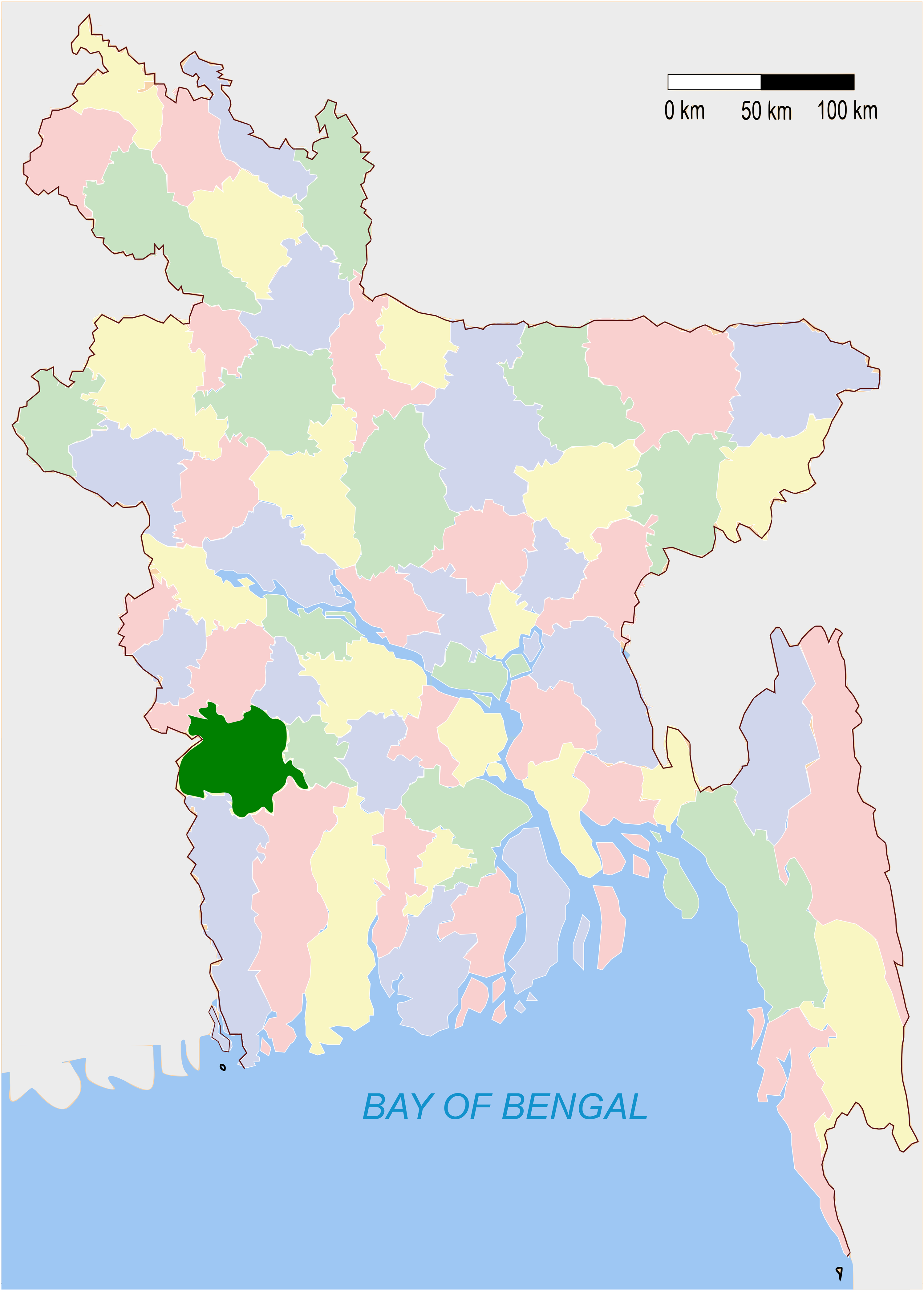
Location of Jashore within Bangladesh. Source: Wikimedia Commons, public domain.
High-level officials were selected based on their direct involvement in waste governance and policy implementation, and included: one senior policy officer from the Ministry of Environment, Forest and Climate Change with 12 years of experience in environmental policy, one program director from a local NGO working with sanitation workers for over 20 years, one operations manager from a private waste management firm with 10 years in the sector, one community leader from a waste worker cooperative, and two regional coordinators from an intergovernmental organization specializing in urban sustainability. All officials had a minimum of 10 years of professional experience in their respective fields. The three academics included: a professor of sociology from Jahangirnagar University with 18 years of research experience on caste and labor, an associate professor of environmental engineering from Khulna University of Engineering & Technology specializing in waste management systems for 14 years, and a senior lecturer in urban planning from a public university with 11 years of work on informal settlements and urban equity. These academics were selected for their extensive research on waste management or social equity and their roles in advising policymakers and NGOs. Their perspectives help contextualize grassroots experiences within broader structural and policy debates.
To ensure representativeness, purposive and snowball sampling were employed. Inclusion criteria for workers required self-identification as Dalit, urban residence in high-concentration areas, and a minimum of five years of experience. Snowball sampling was particularly vital for accessing this stigmatized population through trusted community networks (Biernacki and Waldorf, 1981). The final sample size of 44 was determined by the need to achieve theoretical saturation while capturing intersectional vulnerabilities across diverse roles and backgrounds (Guest et al., 2006).
Data were gathered through narrative interviews and dialogic engagements using open-ended questions. Interviews were conducted in Bengali, lasting 30 to 120 min. To minimize power imbalances, most grassroots interviews were conducted in-person at community spaces or workplaces by the principal researcher, with a trained research assistant facilitating a small number of sessions. Group interviews were held with waste sorters and community members to capture collective social dynamics. Official and academic interviews were conducted in-person or via Zoom, utilizing tailored guides to explore occupational hazards, social exclusion, and governance barriers.
Data analysis
Thematic analysis followed Braun and Clarke's (2006) six-phase approach, with coding and theme development informed by the intersectionality and environmental justice frameworks described above. The analysis included; (1) data familiarization, (2) initial coding, (3) theme generation, (4) theme review, (5) theme definition, and (6) report writing. The process was not merely inductive or deductive, but reflexive and dialogic, aiming to center the voices of marginalized women while critically examining how caste, gender, and class converge in their narratives. Participants’ affiliations with organizations were noted to contextualize their perspectives, acknowledging variations in organizational focus. Codes were grouped into themes (e.g., intersectional exclusion, environmental contributions, governance barriers) informed by the study's frameworks. Themes were refined iteratively, with illustrative quotes selected to center participants’ voices. Triangulation across grassroots, official, and academic perspectives enhanced validity.
To ensure trustworthiness and ethical rigor, this study employed data triangulation across diverse stakeholder groups and prolonged field engagement. Crucially, given the focus on caste, class, and gender, we engaged in deep reflexivity regarding the positionality of all authors. The primary researcher, who conducted the fieldwork, is a woman from an urban, middle-class, and non-Dalit background in Bangladesh. This positionality conferred significant caste and class privileges, creating an inherent power asymmetry between the researcher and the predominantly Dalit (both Hindu and Muslim) women waste workers. To mitigate extractive research practices, she relied on trusted local NGOs to mediate access and maintained a reflexive journal throughout fieldwork to continuously interrogate how her social location might unconsciously shape the framing of the participants’ narratives.
The co-author brings a distinct positionality to the research. Coming from a European background, she was not involved in the fieldwork or interviews. Instead, she approached the topic and the subsequent analysis drawing upon her experience researching social and environmental history. Being physically and geographically distant from the immediate field site, her academic positioning required a conscious, collaborative effort to avoid imposing external historical or theoretical frameworks that might overwrite the localized, embodied realities of the workers. Collectively, the authorship team engaged in continuous peer debriefing to ensure that the final manuscript authentically reflects the structural violence of environmental casteism while centering the epistemic voices of the women studied (Rose, 1997; Wittmer, 2023).
Ethical considerations
Ethical considerations were central to this research. Verbal informed consent was obtained, and pseudonyms were used to protect the identities of vulnerable participants. The study adhered to international ethical guidelines (e.g., the Belmont Report, CIOMS) and institutional standards. Interviews were conducted in safe settings to minimize stigma. Limitations of this study include its urban focus on Jashore, which may not fully represent rural contexts, and potential biases inherent in snowball sampling. However, these were mitigated through purposive selection criteria and multi-stakeholder triangulation, ensuring a robust foundation for the subsequent analysis.
Results & discussions
The findings reveal that women waste workers in Bangladesh experience profound vulnerabilities shaped by caste perspectives in a Muslim-majority society, compounded by gender and class marginalization. These structural inequalities, reinforced by institutional neglect, create environmental injustices, yet workers’ contributions to SWM highlight their agency and resilience. This study uncovers how systemic exclusion is perpetuated through social stigma, economic precarity, gendered oppression, and policy marginalization. These dynamics are central to understanding environmental casteism, an emerging framework where caste-based discrimination intersects with ecological burdens and gendered exclusion in Bangladesh's informal waste sector, offering a distinctive contribution to global environmental justice discourse. However, the analysis reveals that standard environmental justice frameworks alone are insufficient to capture the ontological violence of caste. While Schlosberg's dimensions provide analytical structure, environmental casteism provides the critical explanatory power for why these injustices persist.
To enhance organizational clarity and analytical depth, the findings are structured around three interconnected themes that emerged from the data (1) spatial abjection, (2) embodied precarity, and (3) recognition injustice. This thematic division allows for a detailed examination of how socio-religious hierarchies, patriarchal control, and institutional neglect converge to produce distinct forms of exclusion.
Spatial abjection: Caste-based exclusion from urban life
The most pervasive theme to emerge was caste-based spatial abjection, where women's labor with waste renders them socially and physically excluded from urban life. This spatial abjection is a core mechanism of environmental casteism, distinguishing it from class-based exclusion. Despite constitutional guarantees of equality, women waste workers are overwhelmingly concentrated in hazardous roles like street sweeping, landfill sorting, and waste picking due to entrenched caste hierarchies rooted in notions of “untouchability” that persist locally. Participants’ narratives highlight a critical distinction between this form of exclusion and environmental racism, as established in the Literature Review.
As one female sweeper (Ayesha) shared: “They call me “methor”
4
in markets and step away as if I’m diseased. Even in a Muslim society, they treat us as impure because of our work and caste. It's not just the garbage; it's our Dalit identity. I feel like a ghost, working for their clean streets but shunned by their eyes.”
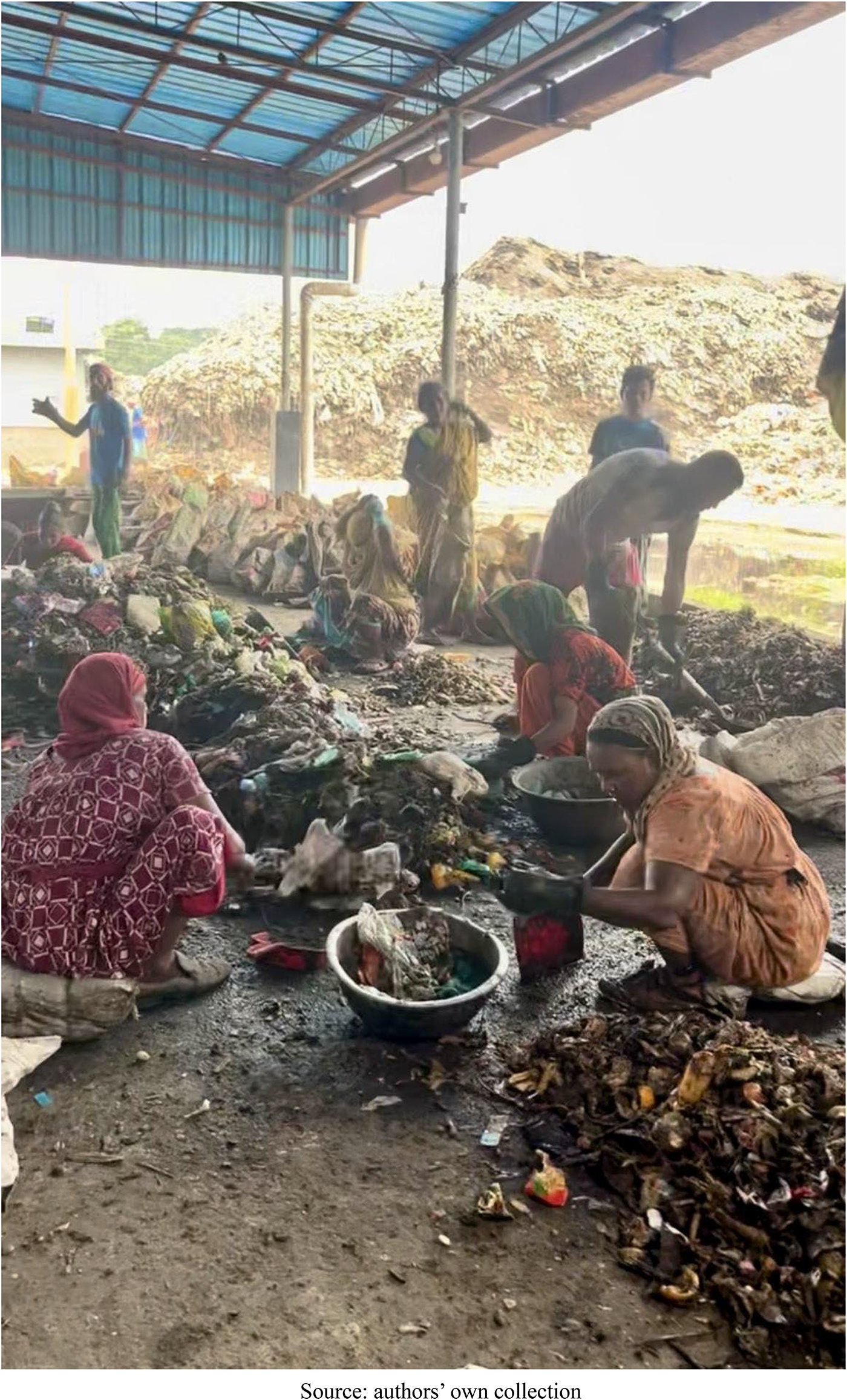
Women waste workers sorting recyclables in Jashore. Source: authors' own collection.
Ayesha's account illustrates the mobile nature of this stigma (Image 2). This finding advances environmental casteism theory by demonstrating that segregation in South Asia is not merely residential but interactional, requiring justice frameworks to account for mobile stigma. This distinction emerged consistently across interviews: workers described being barred from communal spaces; markets, mosques, tea stalls regardless of their neighborhood. This produces what can be termed “interactional segregation”, where the violence is not where one lives, but who one is (Sultana and Subedi, 2016).
This narrative of ghost labor being essential yet invisible was echoed across interviews, illustrating how environmental casteism produces a spatial and social double bind: workers are required to clean the city but barred from belonging to it. This reflects a unique adaptation of caste norms, restricting social capital and inflicting psychological distress. The stigmatization aligns with Schlosberg's (2007) environmental injustice, where marginalized groups bear disproportionate burdens (Mosse, 2018; Sultana et al., 2018). However, framing this solely through environmental justice obscures the caste-specific nature of the burden. Bangladesh's environmental casteism highlights socio-religious dynamics amplifying exclusion. This caste-based ostracism not only erodes dignity but also limits access to public spaces and economic opportunities, perpetuating a cycle of marginalization that demands policy interventions addressing caste as a structural barrier. These findings echo Wittmer's (2023) concept of the “clean city paradox” in Ahmedabad, India: the city becomes cleaner because of women's labor, yet they are excluded from its benefits and imagined as “dirty”. In Dhaka, this paradox is intensified by religious hybridity where caste-like hierarchies persist in a Muslim-majority society. Workers are not just economically marginalized, they are socially abjected.
Rahima, a community elder, explained: “Our caste marks us as ‘unclean’ from birth. No matter how hard we work, society sees us as less than human. This isn’t just about waste-it's about who we are, rooted in old Hindu beliefs lingering in Muslim Bangladesh.”
Rahima's account underscores the intergenerational nature of caste stigma, rooted in notions of purity but adapted into Bangladesh's Muslim context. Her testimony reinforces the finding that caste identity dictates proximity to waste and denial of access to public goods, regardless of residential location. This positions Bangladesh as a critical case where socio-religious dynamics create unique exclusionary practices. Policies must recognize caste-based discrimination as a core dimension of environmental injustice, integrating community-led initiatives to challenge societal attitudes and foster inclusion. This intergenerational stigma reflects what Mosse (2018) calls the “social afterlife” of caste, where ritual status continues to shape access to public space and dignity, even after religious conversion.
A sociology professor elaborated: “Hindu caste ideas, like purity and pollution, have seeped into Bangladesh's social fabric, shaping attitudes toward Dalit women in waste work. This environmental casteism where caste stigma merges with ecological burdens is distinct in Bangladesh's Muslim-majority society”.
The professor's insight frames environmental casteism as a structural violence embedded in daily interactions, distinguishing Bangladesh from class-based exclusion elsewhere. This distinction is important; while class-based marginalization often stems from economic deprivation and can be mitigated through income or education, caste-based exclusion is deeply rooted in inherited identity, ritual status, and socio-religious norms that persist regardless of material conditions. In Bangladesh, caste hierarchies, often linked to concepts of “untouchability”, determine access to public spaces, employment opportunities, and even basic dignity, creating barriers that are not easily overcome by upward mobility or formal policy interventions. This makes caste-based exclusion particularly insidious and structurally entrenched, unlike class-based disparities which may be addressed through redistributive mechanisms.
This form of spatial abjection, where caste identity dictates one's proximity to waste, sanitation, and stigmatized labor, reflects a unique form of environmental injustice where social hierarchy determines exposure to ecological risks and denial of recognition. Unlike environmental racism, which is often visible in racialized geographies of pollution and waste exposure, environmental casteism in Bangladesh manifests in the spatial and occupational segregation of Dalit communities, who are relegated to the dirtiest, most hazardous jobs with minimal protections or rights. Their exclusion is not just economic but symbolic, tied to cultural notions of purity and pollution that transcend religious boundaries, even in a Muslim-majority context. This finding enriches the global justice discourse, highlighting the need for culturally sensitive policies that address socio-religious biases and promote recognition justice (Schlosberg, 2007).
The Government official also acknowledged this reality: “Cultural biases against “low” occupations hinder policy implementation. Despite equality laws, societal attitudes rooted in caste-like hierarchies make it hard to elevate these women's status or integrate them into formal systems perpetuating their marginalization”.
The official's admission reveals a gap between constitutional equality and lived realities, as Mosse (2018) notes in South Asian caste hierarchies. However, framing this solely as a “cultural bias” risks obscuring how these socio-religious hierarchies are functionally intertwined with economic exploitation. Such cultural biases are not merely traditional remnants; they are actively mobilized to sustain profit-driven environmental governance and capital accumulation, making caste hierarchy and economic exploitation co-constitutive rather than separate spheres (Pulido, 2017; The Mooknayak, 2024). This institutional failure perpetuates marginalization, necessitating reforms that bridge policy and societal attitudes to integrate women waste workers into formal systems.
Embodied precarity: Gendered oppression and economic survival
Women waste workers face compounded challenges stemming from both patriarchal norms and their precarious occupational status. Many female participants reported restricted mobility and heightened vulnerability to harassment and domestic violence. This embodied precarity reflects the ontological pollution central to environmental casteism, where the worker's body is stigmatized regardless of hygiene. This ontological pollution (Guru and Sarukkai, 2019; Sharma, 2024) means that Dalit women face health risks not only from waste exposure but from the social stress of constant stigma, which manifests as psychosomatic ailments and restricted healthcare access due to fear of discrimination.
A female sorter at resource recovery centre (Rina) recounted: “My husband controls where I can go. Even if I earn money, he decides how it is spent. He says it is shameful for a woman to work outside, but we need the income. I want to earn more, but his control and society's judgment keep me trapped, like I’m chained both at home and work”.
Rina's experience illustrates how patriarchal control intersects with caste and class, limiting agency (Chen, 2016; Humayra et al., 2024). This gendered oppression creates a cycle of exclusion, demanding gender-sensitive policies like women-led cooperatives to enhance autonomy and safety, aligning with SDG 5 (Gender Equality).
On the other hand, Fatima, a waste picker shared: “My husband forbids late shifts, saying it's not safe and shameful for a woman to be out after dusk. I want to earn more for our children, but his rules trap me, and arguing risks his anger and the fear of violence makes every day a struggle. But he is correct in the matter of safety. We’re caught between danger outside and oppression inside, with no escape”.
Fatima's account highlights the intersection of gender-based violence and occupational precarity, exacerbating economic constraints. Critically, this dynamic positions husbands as both oppressed and oppressors. While they endure similar caste-based stigma and economic marginalization, patriarchal norms often compel them to assert control over women's mobility as a means of preserving familial honor within a hostile social environment. This emphasizes the need for safe working conditions and public campaigns to combat harassment, ensuring women's right to safe urban spaces while acknowledging the complex structural pressures shaping gender relations within marginalized communities.
A recycler (Salma), shared: “I sort waste along with my husband, but especially I need to hide it from my relatives because according to them it dishonors the family. Sometimes my kids and I face taunts at the community and tension among extended family”.
Salma's narrative underscores the dual pressures of familial and societal judgment, reinforcing patriarchal norms that devalue women's labor. This intersectional oppression requires interventions like childcare support and economic empowerment programs to alleviate domestic burdens and enhance agency, as Chen (2016) suggests. Moreover, women's dual burden of domestic responsibilities and informal labor limits their ability to seek alternative livelihoods.
A door to door collector, mother of three (Shila) described her routine: “I collect waste all day, my back aching from bending, then rush home to cook and care for my kids. There's no time to think about anything else. My body is breaking, but I can’t stop- if I do, my children and husband go hungry”.
Shila's dual burden reflects gendered labor divisions, limiting opportunities for rest or advancement, as Crenshaw (1989) notes. This systemic overload necessitates policies providing social protections like healthcare and childcare, addressing distributive injustice (Schlosberg, 2007) to support women's well-being and economic stability.
Economic precarity is also pervasive among informal waste workers, many of whom live below the poverty line and lack access to formal employment, stable income, or basic labor rights. Over 80% of interviewed workers reported earning less than BDT 5000 per month (approximately USD 50), with no job security or benefits.
One female waste sorter (Nargis) described her daily struggle: “I collect plastic and paper every day from garbage bins. If I miss a day, I have nothing to eat. There is no leave, no holidays, no savings. We live hand to mouth. We live day to day, hoping there's enough waste to collect and sort. This isn’t living- it's surviving, and every day feels like a battle against hunger and shame”.
Nargis's precarity aligns with data showing half of Dalit women are unemployed, earning less (Alam, 2022; Rowshan et al., 2016). This distributive injustice (Schlosberg, 2007) traps workers in poverty, exacerbated by urban economic shifts (International Labour Organization, 2023). Workers emphasized the need for contracts and minimum wages to ensure economic security, breaking intergenerational poverty cycles.
Another collector (Anwara), added: “we compete for scraps. If I don’t find enough, my kids sleep hungry. There's no safety net in a city that depends on us”.
Anwara's struggle highlights “unemployment” as insufficient waste, a unique precarity. This aligns with ILO (2023), underscoring the need for formal job integration and social safety nets to stabilize incomes and address distributive inequities, ensuring equitable resource access.
The government official from the Ministry of Environment, Forest and Climate Change offered a sobering perspective: “The formal sector has limited capacity to absorb these workers. The challenge is structural, our systems are not designed to integrate informal labor into formal protection mechanisms”.
The official's remark reveals structural barriers and bureaucratic resistance to labor integration, reflecting a failure of distributive justice (Schlosberg, 2007). This necessitates systemic reforms, including training programs and formal contracts, to bridge the gap between informal and formal sectors, aligning with SDG 8 (Decent Work).
Recognition injustice: Institutional neglect and policy exclusion
The marginalization of grassroots waste workers is reinforced by institutional neglect and the failure of national policies to recognize their role in sustainable waste management. This institutional neglect is rooted in the cultural logic of environmental casteism, which naturalizes their exclusion. Workers expressed frustration over being excluded from policy formulation and implementation processes. Here, the distinction outlined in the Literature Review becomes politically crucial: exclusion is naturalized through cultural notions of “divine duty” or inherent trait (Sharma, 2012). This means Dalit workers are not just ignored; their labor is expected as a caste obligation, making their demand for rights appear as a violation of social order. The implication is that policy must not only include voices but actively dismantle the cultural logic that renders their labor “invisible” yet “expected”.
A community leader from a waste worker cooperative stated: “Policies are made without consulting us. We are the ones who understand the ground realities. Still, we are left out of meetings, ignored in reports”.
The leader's frustration highlights a systemic failure of participatory justice (Schlosberg, 2007). This is not an isolated grievance, but a pattern: recent national policies were formulated without input from informal workers, despite their significant role in waste recycling (Waste Concern, 2021). The NGO representative emphasized the importance of visibility and recognition: “If you don’t count these women waste workers in official data, they don’t exist in policy planning. Their exclusion is systemic, rooted in a failure to value their expertise and contributions. They know waste systems better than any planner, yet they’re left out of decisions that affect their lives, perpetuating their invisibility and vulnerability”.
The NGO's call for recognition, highlighting systemic erasure as a form of participatory injustice (Schlosberg, 2007). This exclusion undermines the recycling rate's potential, as women's knowledge could optimize SWM if included. Data inclusion and policy consultation are critical to make women's contributions visible, fostering sustainable SWM. Community-led data collection and women's representation in municipal councils could bridge this gap addressing Bangladesh's unique institutional erasure, as the expert suggested.
A professor added: “Authorities view informal women waste workers as problems to be managed, not partners in sustainability, yet they depend on their labor to keep cities functional. This ambivalence is Bangladesh's paradox, rooted in a failure to reconcile the reliance on informal labor with the push for formalized waste management systems. Without these women, urban waste systems would collapse, yet they remain invisible in policy frameworks”.
The professor's analysis frames Bangladesh's policy contradictions as a unique paradox, distinguishing it from global SWM models where informal labor is often more explicitly integrated, as Jerin et al. (2022) note. This ambivalence reflects a broader socio-cultural tension where women waste workers are essential yet stigmatized, perpetuating environmental casteism. Addressing this aspect requires participatory governance models that include women's voices in policy design, ensuring their expertise shapes sustainable waste systems. Such reforms align with Schlosberg's (2007) participatory justice, fostering inclusive SWM that recognizes informal workers’ contributions and supports Sustainable Cities. Public awareness campaigns could further challenge societal biases, reframing these women as environmental stewards rather than “problems”.
A private waste management executive at resource recovery centre noted: “Municipalities resist integrating informal workers, specifically women waste workers, due to bureaucratic inertia and cost concerns, yet their work saves millions annually in waste management costs. Without these women sorting and recycling in slums and peripheral areas, landfills would overflow, and disposal costs would cripple city budgets. Their exclusion is not just unjust- it's economically shortsighted, ignoring their efficiency”.
The executive's insight underscores the economic value of women's informal labor, contributing to the recycling rate (Waste Concern, 2021), yet institutional inertia perpetuates exclusion, reflecting Bangladesh's policy ambivalence. This economic oversight aligns with Schlosberg's (2007) distributive injustice, where resources and recognition are inequitably allocated. Public-private partnerships could formalize roles, providing equipment, training, and fair market access to enhance efficiency and economic stability. Such initiatives would leverage women's expertise, reducing landfill pressure and fostering sustainable urban economies, while addressing the expert's call for Bangladesh-specific policy contradictions.
A collector (Moushumi) said: “I’m looked down upon not only because I pick garbage, but also because I’m a woman doing it. People cross the street to avoid me, as if my touch is poison. My caste and gender mark me as “dirty”, and it hurts my heart, but I keep working as I don’t have any other way”.
Moushumi's experience reflects double discrimination, as Crenshaw's (1989) intersectionality articulates, where caste and gender amplify environmental casteism, impacting health and dignity. This socio-religious stigma, rooted in “untouchability” in a Muslim context, distinguishes Bangladesh, per the expert's focus. Public campaigns to reframe waste work as vital could foster recognition justice (Schlosberg, 2007), challenging caste and gender biases. Community-driven initiatives, like women-led cooperatives, could empower workers to advocate for respect, aligning with global environmental justice principles and supporting SDG 5 (Gender Equality).
A sweeper (Lata) elaborated: “At cultural or religious events, people avoid touching me, make me feel without saying- we are “dirty” because of our caste. Being a woman makes it worse when they judge me twice over. I want respect, not pity, for keeping their streets clean, but I'm barred from their celebrations”.
Lata's account reinforces layered oppressions, where caste and gender intersect to exclude women from social spaces, perpetuating environmental casteism (Mosse, 2018). This socio-cultural exclusion, unique to Bangladesh's Hindu-Muslim dynamics, demands community-driven initiatives to challenge stigma, such as public festivals celebrating waste workers’ contributions. Such efforts align with Schlosberg's (2007) recognition justice, fostering social inclusion and addressing the perspectives of academic and NGO interlocutors who emphasize the need for context-specific reforms.
Despite barriers, women show resilience. A dealer (Taslima) declared: “I want tools and licenses to grow my scrap business, not charity. I, along with my husband, have built this sorting waste at dawn while others sleep. If they give us equipment and fair markets, we can thrive and prove we are more than “moylawala”. I dream of a shop, a future for my family”.
Taslima's demand for formal recognition not charity aligns with calls for recognition justice, where marginalized groups are seen not as “problems” but as agents of urban sustainability. These demands for formal recognition and economic empowerment are not just practical, they are acts of resistance that reveal the power structures shaping their exclusion, echoing Sultana and Subedi (2016) finding that resistance among Dalit sweepers is a “diagnostic of power” (Abu-Lughod, 1990). Her resilience highlights untapped agency, as Waste Concern (2021) notes, contributing to sustain urban ecological functions. Economic empowerment programs, like microfinance and market access, could unlock potential, breaking exclusion cycles, as ILO (2023) suggests. This addresses distributive injustice by providing resources to enhance economic stability. Such initiatives would leverage women's entrepreneurial spirit, offering a model for Global South cities, per the expert's focus on innovation.
An academic remarked: “These women are sustainability's backbone, but society treats them as disposable. Their resilience in facing caste, gender, and economic exclusion is extraordinary, yet it's a tragedy they must fight so hard for dignity. Their contributions to Bangladesh's circular economy demand recognition, not wipeout”.
The academic's observation encapsulates the paradox of essential contributions and societal devaluation, reflecting Bangladesh's unique socio-religious and policy contradictions. This situation calls for comprehensive policy reforms integrating recognition, distributive, and participatory justice (Schlosberg, 2007), such as formal contracts, safety gear, and policy inclusion. These reforms would offer lessons for Global South cities navigating informal labor.
Ultimately, the narratives of women waste workers in Bangladesh reveal a vicious cycle of exclusion driven by caste stigma, patriarchal oppression, economic precarity, and institutional neglect, despite their critical role in recycling municipal solid waste. This environmental casteism, unique to Bangladesh's Muslim-majority context, underscores a paradox of reliance and erasure, demanding urgent policy reform. Addressing these systemic inequities requires not just policy reform, but a radical reimagining of urban governance- one that centers the dignity, knowledge, and agency of women waste workers as indispensable stewards of urban sustainability. Crucially, the findings suggest that addressing environmental casteism requires dismantling occupational stigma and ensuring social dignity alongside environmental protection, distinct from the zoning and land-use reforms typically used to address environmental racism.
Conclusion and recommendations
This study synthesizes the systemic exclusion of women waste workers in Bangladesh, revealing how intersecting oppressions create barriers to their recognition as vital contributors to urban sustainability. It introduces environmental casteism as a critical lens for understanding how socio-religious norms and institutional neglect marginalize these women, despite their essential role in sustainable waste management. Bangladesh's unique context offers a critical case for addressing informal labor inequities, providing actionable insights for equitable urban governance in the Global South. However, achieving justice requires more than integrating workers into existing systems; it demands that the state actively dismantle the caste-based stigma that renders their labor invisible.
Theoretically, this study advances critical environmental justice and anti-caste scholarship by demonstrating that caste is not merely a cultural residue, but a co-constitutive mechanism of capitalist extraction and environmental governance in the waste sector. By centering the Bangladeshi context, this framing expands existing debates in two crucial ways. First, it shifts the analytical focus of environmental injustice away from the Global North's paradigm of residential “sacrifice zones” (environmental racism) toward the Global South's reality of mobile, embodied, and interactional segregation (environmental casteism). Second, it challenges the secular-religious binary by illustrating how purity-pollution logics are actively mobilized to sustain occupational hierarchies even within a Muslim-majority society. Moving forward, this research lays out new directions for scholarship: future studies must increasingly examine the transnational solidarities between caste-based and racialized ecological struggles (e.g., Dalit-Black ecologies), investigate the specific gendered dimensions of caste-based environmental labor, and center the epistemic knowledge of informal workers to redefine “urban sustainability” beyond technocratic, efficiency-driven metrics.
Addressing these injustices requires a fundamental shift in state action beyond mere service delivery. Currently, policy discussions on waste management prioritize technocratic efficiency over social justice, leaving the structural roots of environmental casteism untouched. The state must recognize that achieving justice for women sanitation workers is not solely about waste collection efficiency but about dismantling the caste-based stigma that renders their labor invisible. This requires the state to actively intervene in socio-religious dynamics, ensuring that policies do not merely formalize labor but also restore social dignity. Municipalities and national bodies must move from viewing these women as beneficiaries of welfare to recognizing them as rights-holders entitled to recognition, redistribution, and representation. Without this explicit commitment to justice, formalization efforts risk reinforcing the very hierarchies they aim to resolve.
It is critical to distinguish the proposed recommendations from standard state-driven formalization. Conventional formalization often prioritizes waste diversion efficiency and labor control, requiring workers to assimilate and erase their caste identity to gain legitimacy. In contrast, the justice-centered governance model advocated here utilizes formalization tools such as contracts and identity cards not as mechanisms of surveillance, but as instruments to guarantee rights and visibility. For instance, identity cards are proposed not merely to track labor, but to explicitly recognize Dalit workers as rights-holders entitled to social protection, thereby countering the caste-based invisibility that technocratic models often reinforce. This distinction ensures that formalization serves social justice rather than merely operational efficiency.
To translate these demands into actionable policy, this study proposes concrete recommendations categorized into short-term relief and long-term structural transformation. In the short term, municipalities should establish a fund dedicated to informal worker integration, allocating resources to provide formal employment contracts that guarantee dignity and social protection rather than merely enforcing labor discipline, with a minimum wage of BDT 12,000 and pension benefits to ensure economic security. Women waste workers also demand official identity cards issued as instruments of rights rather than labor surveillance tied to housing subsidies, healthcare access, and regulated market opportunities, emphasizing their need for visibility in municipal systems; local governments should partner with NGOs to issue cards through community registration drives, ensuring accessibility for Dalit women. Safety is a priority, with women urging the provision of protective equipment, including gloves, masks, and boots, alongside mobile health clinics at waste sorting and landfill sites; municipalities should implement safety programs, distributing gear through cooperatives and funding clinics via public-private partnerships. These initiatives would ensure safer working conditions, supporting SDG 11's safe urban environments. Social inclusion is a core demand, with women calling for public campaigns to reframe their work as essential, eliminating derogatory labels like “methor” and “dom” and fostering respect; municipalities and NGOs should launch multimedia campaigns, including street theater and radio programs, to celebrate women's contributions. Community festivals inviting waste workers as honored guests would promote inclusion, supporting SDG 11's cohesive communities.
For long-term structural transformation, women insist on women-led cooperatives with integrated childcare facilities and equal pay structures to enhance their agency and economic independence; local governments should establish regional cooperative networks, with 50% women representation in municipal SWM committees, to ensure policy inclusion. This cooperative model would optimize women's expertise, enhancing urban sustainability. Education access is critical, with women demanding free schools and scholarships for their children to break intergenerational poverty; municipal education departments should collaborate with NGOs to establish community schools with targeted scholarships for Dalit girls, aligning with SDG 4 (Quality Education). This would enhance social mobility, addressing distributive injustice and offering a long-term solution to systemic exclusion. Women also seek economic empowerment through subsidized electric carts, vocational training in waste processing, and business licenses to expand their recycling enterprises; local governments should create microfinance programs and training centers, partnering with private recyclers to ensure market access. Officials and academics underscore the need for systemic reform, demanding policies that integrate recognition, distributive, and participatory justice to affirm women's role as sustainability stewards; they call for a national SWM framework that prioritizes informal workers, countering institutional biases.
By implementing these demands, policymakers can move beyond technocratic formalization toward a justice-centered governance model, one that affirms the dignity, agency, and expertise of women waste workers. This requires the state to acknowledge that environmental justice in Bangladesh cannot be achieved without confronting environmental casteism. Ultimately, achieving justice requires governance models that prioritize social dignity alongside economic security, dismantling the purity-pollution logics that have long naturalized this segregation. This research advances environmental justice by redefining these women not as victims of informality, but as agents of urban sustainability whose labor, resilience, and vision are indispensable to a just and green future. In doing so, it advances critical waste studies and anti-caste environmental scholarship, offering a framework for reimagining urban governance in the Global South.
Highlights
Environmental casteism shapes the social exclusion of women waste workers in Bangladesh's Muslim-majority context.
Intersectional vulnerabilities produce spatial abjection, embodied precarity, and recognition injustice for workers.
Caste-based stigma creates mobile interactional segregation distinct from residential environmental racism.
Footnotes
Acknowledgements
We thank all the interviewees and acknowledge the trust given by them to participate and share their life stories and experiences.

Funding
The authors received no financial support for the research, authorship, and/or publication of this article.
Declaration of conflicting interests
The authors declared no potential conflicts of interest with respect to the research, authorship, and/or publication of this article.
Declaration of generative AI and AI-assisted technologies in the writing process
During the preparation of this work, the authors used Grok, created by xAI, to assist with minor revision to enhance readability, revise sentence structure, and correct grammatical errors in specific sections. After using this tool, the authors reviewed and edited the content as needed and take full responsibility for the content of the published article.