







Abstract
The study aims to develop a robust scale for assessing farmers’ satisfaction levels, emphasizing personal, quality, and cost parameters within India’s agricultural sector. Comprehensive data is gathered from agricultural workers across diverse districts in Andhra Pradesh, India, through surveys and interviews. The research unfolds in two phases: an initial qualitative exploration is done to identify factors that drive motivation and engagement in farming, followed by a questionnaire distributed to 431 respondents in the subsequent phase. The investigation underscores the pivotal role of personal factors and the quality and pricing of production factors in ensuring the sustainability of agriculture. The strategic insights derived from this study hold immense value for agricultural managers and leaders, providing an understanding of motivation and engagement dynamics among farmers. These findings bear significant implications for policymaking at both country and state levels, facilitating the formulation of innovative agricultural policies and programs. Specifically, this research offers guidance for designing supportive financial strategies, such as support prices and input assistance measures, aimed at boosting farmers’ morale and participation.
Keywords
Introduction
The agriculture sector plays a vital role in India’s economy. It fulfills the food demand of the country’s growing population and also provides raw materials to agro-based industries. Indian agriculture has also significantly contributed to the global food grain supply, thanks to favorable production conditions, conducive meteorological factors, and abundant land resources. Agriculture in India is responsible for 17% of the country’s Gross Domestic Product and employs at least 50% of the country’s labor force (Economic Survey, 2020). The sustainability of the agriculture sector and the allied business and continuation of the farmers in the profession needs assessment of the factors contributing to the farmer’s decision to continue the profession. A farmer’s motivation is affected by several factors, namely, financial assistance, the policies of the government, access to markets, the availability of resources like land, water, and labor, and even the perception of the social prestige that is associated with farming (Staboulis et al., 2022). Existing research has established that happiness has a positive relationship with professional motivation (Othman et al., 2022). Assessing the factors contributing to professional happiness among farmers is a good indicator of motivation. Personal, quality, and financial factors are motivational factors for agriculturists (McGuire et al., 2013).
Farmers’ perspectives toward farming, perceptions of the social standing associated with agriculture, and sense of fulfillment are personal considerations. The quality of the crops or livestock gathered and the quality of the soil, water, seeds, and other inputs utilized in agricultural production are all quality variables. The costs of inputs like seed, fertilizer, and labor, as well as expenses incurred for reaching the market for selling the produce, are essential for sustaining. Personal production factors include farmers’ knowledge, skills, and attitudes toward farming. For example, a farmer with a deep passion for agriculture will likely be motivated to continue farming despite facing challenges such as low profitability and high input costs. Other personal factors influencing farmers’ motivation include social status, the importance of community and belongingness, and the level of personal fulfillment that encourages the farmers to continue in the profession (Othman et al., 2022).
A favorable climate, an experienced workforce and water resources support the growth of agriculture and allied businesses in India. The Indian economy is expanding, demonstrating a shift in the sectoral contribution to GDP. Agriculture contributed 51% of the GDP in 1951, dropping to 17% by 2001. The widespread use of fertilizers and pesticides to enhance average productivity has increased production costs and resulted in low profitability. Farmers are discontinuing the profession because this industry has become unrewarding due to its low profitability and high input costs. The number of cultivators in India is showing a declining trend. In 1951, 50% of the workforce was in agriculture, which reduced to 24% in 2011, indicating a 50% reduction in farmers (Kumar et al., 2019).
Even today, farmers in India use the traditional method of production. The poor economic condition minimizes the use of technology in the sector and leads to low output. Agriculture in India is a highly labor-intensive industry with low production levels. Training for effective use of resources can improve the profitability and sustainability of this sector (Altieri & Nicholls, 2017). Low education levels create difficulties in communicating with government and external authorities, resulting in a lack of relevant information to improve production methods. Low literacy levels contribute to the use of old and outdated farm equipment. Finance is a vital factor in production costs (Khurana et al., 2021). Financial institutions and banks require a lot of documentation, and an uneducated farmer finds it too cumbersome to process. Sometimes, financial institutions impose excessive administration charges that small farmers cannot afford.
The existing agriculture advisory may not address unique former information needs. Better information systems must be built to meet rural families’ information requirements, projected at 1.45 billion by 2025. Improved information systems will resolve the insufficiency of information for the farmers about their land, animals, and crops. Better information systems can enhance agricultural output, efficiency, and the quality of extension and consulting services offered to farmers. According to Jarial (2022), IoT may turn problems into possibilities. India’s agriculture industry faces hurdles in personal, quality, and pricing considerations, which might demotivate farmers. Education, experience, and skill level can affect a farmer’s production and profitability. Crop yields and quality depend on production factors like seeds, fertilizers, and machinery. High input costs and low returns might hurt farming profitability.
Based on the preceding backdrop, the study’s objective is to develop and validate a scale to examine the motivation and engagement of farmers in India. This research identifies factors affecting farmers’ decision to stay in agriculture and develops an agroeconomic scale. We propose that by measuring the motivation and engagement of farmers, the stakeholders can take affirmative actions on different parameters for their betterment.
Literature Review and Theoretical Framework
Indian agriculture continuously faces a decline in the workforce, especially the educated workforce. Knowing what motivates an individual to continue and choose to work will help policymakers address the issue of the shift of the agriculture workforce into other sectors. There are several theories of motivation in psychology regarding the essential elements which drive people to work. The theories differ in describing motivation factors concerning the fulfillment of various needs to achieve a quality of life, physical well-being and satisfaction concerning work. Human relations theory, developed in 1924–1932 in the United States through Hawthorne studies, presented the need for recognition, security, and the feeling of belonging to a group to contribute toward morale and productivity (Hartman & Harris, 1992). Theories of motivation, like Maslow’s theory (Maslow, 1958), have classified human needs in a hierarchical structure (Sadeghi et al., 2020). Other motivation theories, like ERG theory (Arnolds & Boshoff, 2002) and Hertzberg (Bassett-Jones & Lloyd, 2005), provide insight into carrier opportunity preferences. The social cognitive career theory (SCCT) is closely linked to the Kruboltz learning theory of career development and also complements trait and factor theory and developmental theories (Hackett & Betz, 1995; Lent et al., 1994). SCCT aims to trace the link between individuals and career preferences and to consider the environment in which career-related decisions are made (Lent et al., 1994, 2002). This theory also traces the connections between cognitive processes and interpersonal factors. This theory states that individuals are the products of their surroundings that is the external environment, and their surroundings are the products of their interactions. The different elements within an individual’s context influence each other bi-directionally. Quality and cost of the factors of production are the components of the external environment, and personal factors contribute to cognitive processes. Motivation may lead to continuation in career preferences. Sustainable agriculture is the outcome of a farmer’s motivation in the profession, and motivation is the outcome of various factors that contribute to satisfaction.
Extant research has made less contribution to examining the relationship between the job satisfaction of workers in the agriculture sector and the absence of attention paid to workers working in agriculture (Markovits et al., 2007). This article applies SCCT to explore the factors motivating farmers in the context of India’s shifting agricultural landscape. As the agricultural demography in India undergoes significant changes, with a noticeable decline in youth participation and an aging farming population, understanding the motivations behind these shifts becomes crucial. SCCT provides a robust framework for examining how factors such as agricultural knowledge, land availability, interest in farming, fertile soil, a favorable environment, and robust connectivity influence the career choices of rural youth. By applying SCCT, this study aims to understand better the declining engagement in agriculture-based livelihoods and the potential pathways to encourage sustained participation in farming amidst these demographic and economic shifts.
Due to illiteracy, farmers lack market information and institutional credit, forcing them to rely on money lenders who charge high interest rates (Raza et al., 2023). The new generation rules out agriculture as a viable career option, causing degradation of community life, tensions between enterprising farmers and smallholders, and growing distrust as social effects of the de-agrarian nation. Younger generations are withdrawing from agriculture due to higher occupational mobility and are more susceptible to income differentials between farm and non-farm employment opportunities (Consentino et al., 2023).
Based on the theoretical support of SCCT, the present study proposed a conceptual framework in the diagram shown in Figure 1.
Factors Influencing Farmers’ Motivations.

Farmer’s Motivational Factors
Personal Factors Lead to Farmer Satisfaction
Few studies investigated the factors contributing to farmers’ happiness. Happier farmers were shown to have high levels of openness to experience, flexibility, and emotional stability.
Happiness: Happiness motivates. Job satisfaction motivates. Farmers’ job satisfaction affects their career choices. Professional motivation may encourage loving and staying in agriculture. Professional success and pleasure may also inspire future farmers (Tang et al., 2020).
Personal investment in farming boosts job satisfaction: Passion for farming or community food production. Farmers can feel proud and accomplished by growing a crop or extending their land. Financial stress can affect a farmer’s mental health and job satisfaction (Schulze et al., 2022). If a farmer can support himself and their family, they will be happier. A farmer’s interest in their profession depends on several factors, including personal circumstances and priorities. Literature highlights a few individual elements (Hu et al., 2023).
Income and debt levels, and other financial factors, can significantly impact a farmer’s happiness. Farmers are more likely to take pride in their profession if they can make a living wage for themselves and their families.
Maintaining a healthy work-life balance is crucial to a happy and successful farming career. Farmers who have a healthy work-life balance report higher levels of job satisfaction.
Values alignment: Farmers whose personal values, such as a dedication to sustainable agricultural practices, are consistent with their profession are more likely to report high levels of job satisfaction.
Finally, farmer happiness depends on individual characteristics. Optimistic farmers who are motivated to pursue personal goals, financially secure, have a healthy work-life balance, and can connect their work to their beliefs are more likely to be satisfied farmers.
Quality of Factors of Production to Farmer Satisfaction
A farmer’s level of satisfaction in their work often depends on the standard of the producing resources at their disposal (Simões et al., 2020). Production factors include land, labor, capital, and individual initiative. Several factors beyond the control of the farmer might affect their level of satisfaction, including the quality of fertilizers and manures, the condition of the soil, and the accessibility of banking and credit facilities (Herrera et al., 2022; Simões et al., 2020; Truong, 2022).
Quality of fertilizers and manures: The quality of fertilizers and manures utilized in the soil can affect crop yields and farmer contentment. Soil fertility can be increased by using high-quality fertilizers and manures, boosting plant development and growing harvest yields. Better crop yields and increased job satisfaction are possible for farmers with access to high-quality fertilizers and manures.
Quality of soil: A farmer’s soil condition can also affect a farmer’s happiness. Productivity and crop yields both increase with the use of high-quality soil that is nutrient-rich and drains well. The happiness of farmers increases when they have access to good soil.
Availability of banking services: Farmer–supplier–customer financial transactions are made more accessible by banking services. Banks help farmers and intermediaries transact, indirectly boosting earnings. Banking Services streamline payments and receipts. Buyers can pay farmers on schedule, allowing them to buy fertilizers and pesticides when needed. Thus, financial services boost farm profitability, sustainability, and farmer happiness.
Availability of credit facilities: Loans and rapid credits assist cover working expenditures and indirectly boost productivity. Farmers’ credit access can also affect their contentment. Farmers with loans and lines of credit may be able to expand agricultural productivity through capital investments. Working capital support from loans and credit boosts farmers’ profitability and financial security. Farmers are protected against moneylenders by bank credit. Money lenders offer high interest rates, which raises production costs and lowers profit margins, making agriculture unprofitable.
Banking service quality: Banking quality may also affect farmers’ contentment. Personal attention, convenient locations, and competitive interest rates make farmers happier with their banks. Quality banking services can encourage farmers to use banks for all their agricultural needs, improving financial stability and happiness.
Cost of Factors of Production to Farmer Satisfaction
Factors of production are the direct contributors to revenue. The increased cost of the factors of production affects profitability and impacts farmers’ satisfaction and happiness in the profession. The cost of inputs like land, labor, capital, and entrepreneurial spirit can significantly affect a farmer’s capacity to earn revenue and job satisfaction. Farmers who cannot make a profit may be dissuaded from investing in agricultural advances that would otherwise increase output and happiness. Low profitability due to high input and production expenses reduces a farmer’s ability to invest in their business. Reasonable cost of the factors of production increases the margin for the farmers, and farmers may be able to reinvest in their operations, boosting productivity and happiness. Enhanced farm revenue and increased investment benefit farmer morale, as are decreased production costs and secure land ownership (Foundjem et al., 2011). Weather, agricultural production, market demand, and government policies also affect farmers’ happiness. However, the cost of production variables directly affects a farmer’s profitability and ability to invest in their farm, making it a significant component in farmer satisfaction (Ritter et al., 2019). This study indicated that farmer satisfaction is affected by the price of raw materials, capital, labor, and initiatives because they decrease profit margins or perhaps the opportunity to reinvest in the farm.
Research Methodology
This investigation is focused on the sustainable issues of agriculture and the factors that may motivate farmers to continue in the profession. This research employs a mixed-methods approach, including surveys and interviews, to gather data from agricultural workers across various districts in Andhra Pradesh (Visakhapatnam, Vizianagaram, and Srikakulam), India.
Sampling Technique
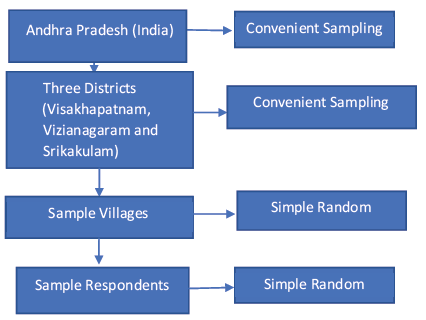
The sample frame consisted of farmers with a history of working as agriculturists for generations and continuing in the profession (refer Figure 2). The investigations are carried out in three districts in Andhra Pradesh (Visakhapatnam, Vizianagaram, and Srikakulam) between February and August 2022. The select districts are considered agriculture-rich districts in the state. The above picture details the sampling technique at various data collection stages. Sample villages and sample respondents are selected using Convenient sampling.
Flowchart of Sampling Technique.
Research Design
The study is divided into two parts. The first part consisted of the pilot study, which collected the statements through interviews in the local language. The statements are translated into English and cleaned for duplications and repetitions at this stage. The authors visited 57 farmer’s residences to collect qualitative information to develop the questionnaire; about ten farmers were not at home during the visit, which confined the sample size to 47 for the pilot study. The sample consisted of 10 female and 37 male farmers. The qualitative data collection provided 42 statements processed for scale development and validation using confirmatory factor analysis (CFA) and exploratory factor analysis (EFA).
The second part of the study comprised data collected from 431 farmers for scale development and validation in a structured questionnaire. A five-point Likert scale (strongly agree as five to disagree as five strongly) for statistical validation of the scale.
Data in the second stage is collected using a structured questionnaire. A trained enumerator proficient in the local language personally visited the farmers at their residences and collected the data.
Thus, the study consisted of two main stages:
Stage 1: A pilot study and component identification. Stage 2: Factor identification and validation
1. Exploratory analysis to identify the prominent factors. 2. Conduct Cronbach Alpha of the dimensions, identify the items with low correlation and drop them to improve the Cronbach. 3. CFA using AMOS.
Results and Discussion
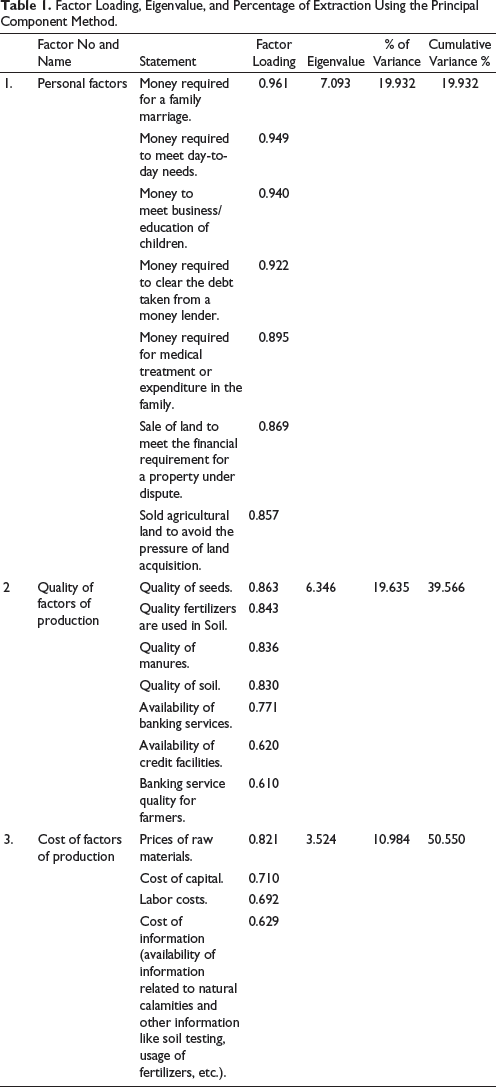
This study is a mixed-method study. In stage 1 of the study, an exploratory approach has been adopted to identify the relevant items to measure farmers’ motivation and engagement. In stage 2 of the study, a scale has been developed based on the quantitative approach. Herein, EFA is used to group the identified items into relevant factors or latent variables (Table 1). Further CFA is done to validate the exploratory component model by assessing the congruence between the hypothesized structure and the data (Binswanger & Rosenzweig, 1986; Ghouse et al., 2019).
Factor Loading, Eigenvalue, and Percentage of Extraction Using the Principal Component Method.
Thus, the steps involved in the scale validation are presented below in two stages.
Forty-seven farmers participated in the focus group discussions, and 42 relevant items were identified as impacting the farmers’ interest in continuing in the agriculture sector. A manual review of the items and removal of duplicates provided a total number of 27 statements.
Table 2 presents the demographic information of the farmers sampled for the study.
Demographic Information of the Farmers Who Participated in the Phase of the Survey.
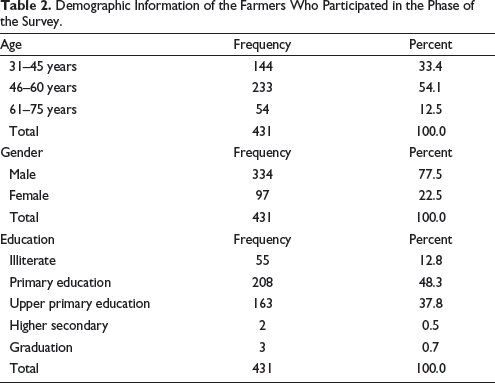
The demographic information of the farmers is presented in Table 2 that supports the trend of the younger generation moving away from agriculture. Most farmers are between 46 and 60 years, and only 33% are below 45. The younger generation is not continuing in agriculture and is shifting to other options available. Most of the farmers are male, and women have negligible agricultural participation. The education level of farmers in India is also deficient; about 80% have only completed primary education.
Low levels of education lead to the usage of old and outdated technology. Farmers are not trained and are not aware of technological developments. Ancient methods used in agriculture show low productivity and high cost of production, which erodes the profit and makes the sector less viable and profitable.
Scale Development Through EFA
Exploratory factor analysis provided a list of 18 items. A factor loading above 0.50 is considered, and items with low factor loading are dropped from the list. Nine items from the list are dropped due to low factor loading (< 0.50). The factor-wise items are listed in Table 1.
The three factors identified create a 50.550% variance in farmers’ interest in continuing and sustaining the sector. The scale can be further replicated in other unorganized sectors. Cost and quality of factors of production will affect productivity, and productivity directly affects profitability. The critical factors identified in the study show the factors that can motivate farmers to continue in agriculture as a profession and inspire the next generation.
Scale Validation
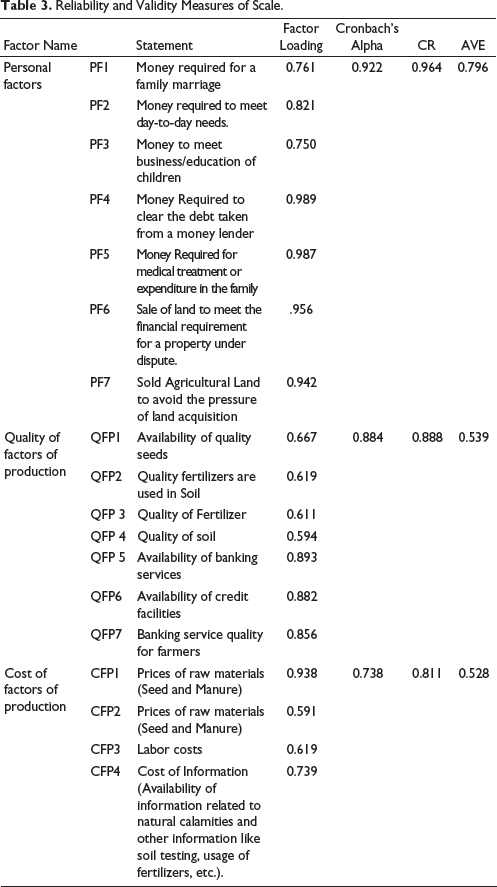
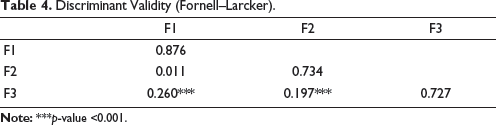
Exploratory factor analysis provided three prominent factors and 18 statements. The 18 statements are subject to CFA for scale validation. The reliability of the scale is established by Cronbach’s alpha and composite reliability measure. All three factors have a Cronbach Alpha >0.70 and composite reliability higher than 0.70 (Table 3). The validity of the scale is measured by convergent validity and discriminant validity. The Average variance extract is considered for convergent validity, and all constructs are found to have more than 0.50 AVE (Table 3). The discriminant validity is established using the Fornell–Larcker criterion (Table 4).
Reliability and Validity Measures of Scale.
Discriminant Validity (Fornell–Larcker).
Measurement Model (CFA)
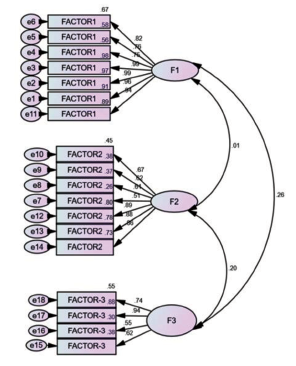
The measurement model is a statistical framework for analyzing the links between observable data and underlying constructs. It enables researchers to test theories regarding the structure of these components and evaluate the amount and direction of their interactions. The accuracy of the measurement tool can be assessed by the measurement model with the help of a measurement model. Researchers can evaluate the validity and reliability of the observed variables as measures of the latent constructs by calculating and analyzing factor loadings, Cronbach’s alpha, composite reliability, and average variance extracted. The findings from this investigation can be put to use in the future to validate different measurements better (Hair Jr. et al., 2017; Santos, 1999). The threshold limits of factor loadings should be above 0.50, Cronbach’s alpha and CR should be above 0.7, and AVE should be above 0.5, which are acceptable levels of reliability and validity for a measurement model. According to this criteria study, factor loading ranges from 0.591 to 0.989, whereas Cronbach’s alpha 0.738–0.988 are above the threshold limit of 0.70; also, CR of the constructs ranges from 0.811 to 0.964, which also fulfills acceptable criteria 0.70. The study also checks convergent validity issues of the constructs through AVE, ranging from 0.528 to 0.796 (refer Table 1), shows that the study has no problems with internal consistency and convergent validity (Mishra et al., 2023) (refer Table 3 and Figure 3).
Measurement Model for Scale Validity.
The statistical analysis should satisfy the abovementioned criteria and determine discriminant validity issues with the measuring model. The Fornell–Larcker criteria measure discriminant validity by comparing each construct’s AVE (average variance extracted) to the square of their correlations. To demonstrate discriminant validity, each construct’s AVE must exceed its squared correlations with other model constructs. Table 3 represents three constructs AVE exceed the square root correlation (Henseler et al., 2015; Mishra et al., 2022). Hence, the model confirms there are no issues in convergent validity.
Comparison with Existing Literature
The essential component of this research is to identify factors contributing to farmers’ happiness with the profession and make agriculture the preferred industry in rural areas. This sector can provide employment opportunities to the rural population and contribute to the self-sufficiency of food grains. Agriculture also contributes to agro-based allied industries by providing them with raw materials. If farmers shift from agriculture to another profession, it will affect the food grain production in the country for the growing population and adversely affect the allied industry. Three critical factors, that is, personal factors, quality factors, and cost factors, contribute to farmers’ professional happiness because they impact sustenance. Past literature has also highlighted the impact of personal factors on enhancing the efficiency of farmers (Akhtar et al., 2023). Herrera et al. (2022) highlighted the importance of farm-level factors on the satisfaction of the farmers, aligned to Factor 2. Herein, the quality of services and their positive impact on farmers’ satisfaction have also been investigated and established in past literature (Kassem et al., 2021).
Though past literature has investigated the impact of personal and economic factors on farmers’ motivation and engagement, no study has developed a scale to measure and take specific actions on it. This study bridges this gap in existing literature.
Implications of the Study
Managerial Implications
Managers in the agricultural sector can utilize the developed scale to assess workforce motivation and engagement levels, enabling them to implement targeted interventions that boost productivity. By understanding the personal and economic factors that drive employee satisfaction, managers can design customized incentive programs that address workers’ specific needs and concerns. The scale also helps identify areas where additional training or resources might be needed to enhance job satisfaction. Furthermore, it can guide managers in fostering a more supportive work environment, which could reduce turnover and encourage long-term commitment among employees. Ultimately, this tool provides a structured approach to enhancing overall workplace morale and productivity in the agricultural sector.
Policy Implications
The scale developed in this study offers valuable insights for policymakers aiming to improve the sustainability of the Indian agriculture sector. By highlighting the critical personal and economic factors that influence workplace motivation, policymakers can design more effective agricultural policies that enhance farmer satisfaction and retention. This tool can guide the development of support systems, such as financial assistance programs or subsidies, tailored to address the specific needs of the agricultural workforce. Additionally, the scale can help monitor the effectiveness of existing policies and make necessary adjustments to ensure they are meeting the intended goals. Overall, this research supports the formulation of data-driven policies that can strengthen the agricultural sector’s workforce and ensure its long-term viability.
Conclusion
Urbanization is leading to fewer agriculturists and less land under cultivation, which may result in food grain scarcity as the population continues to grow. This study highlights the urgent need to retain farmers in agriculture and sustain the industry, emphasizing that enhancing profitability could inspire the next generation to continue farming. To address this, the research identifies three essential elements contributing to farmers’ satisfaction and happiness in the profession: personal factors, quality of inputs, and Input costs. Many farmers report that financial struggles related to personal and family needs significantly impact their professional satisfaction, with low agricultural revenue leading to personal issues that demotivate them and push them to consider leaving the profession.
The development of a robust scale to measure these satisfaction factors will provide a valuable tool for policymakers and agricultural managers to assess and address the specific challenges faced by farmers systematically. This scale will enable the identification of critical areas where interventions are needed to improve financial stability, reduce input costs, and enhance the overall quality of farming inputs. By applying this scale, strategies can be tailored to boost farmer morale, thereby helping to sustain agriculture and ensure that the next generation remains engaged in the sector. Moreover, the scale’s insights can guide the design of targeted support systems and resources in rural areas, aiming to reverse the trend of youth migration to urban centers.
Based on the findings, the study suggests the following recommendations:
To protect the quality of agricultural raw materials, including seeds, insecticides, and manures, the government should mark them. A home-grown organic manure support system will cut production costs and boost profits. Distribution channels and logistics support from the government to reach the cities will help the farmers bridge the gap between cities and farm produce and increase the farmers’ earnings. Loans and credits at low interest rates can help farmers reduce their product Costs and protect them from greedy money lenders who charge high interest rates. The availability of quality inputs at a lower cost will help the farmers reduce the Cost of production and increase the margin. The profitability of this sector will automatically reduce personal problems and increase satisfaction and happiness. Increased profitability will also motivate the new generation to take agriculture as a career opportunity.
Limitation and Future Research Direction
It is also important to acknowledge the limitations of the study. The study is focused on the Andhra Pradesh region and thus needs further research in other states/regions to confirm the generalizability of the scale. Also, it focuses only on personal and economic factors. Further research could explore the impact of emerging technologies and innovations in agriculture on farmers’ satisfaction and sustainability. Longitudinal studies could be conducted to track changes in satisfaction levels over time, considering evolving agricultural practices and policies. Future research work can focus on this aspect.
Footnotes
Declaration of Conflicting Interests
The authors declared no potential conflicts of interest with respect to the research, authorship, and/or publication of this article.
Funding
The authors received no financial support for the research, authorship, and/or publication of this article.
