






Abstract
This study presents a comprehensive bibliometric analysis of scholarly literature at the intersection of artificial intelligence (AI), resource optimization, and supply chain management (SCM). Employing the PRISMA protocol for systematic data selection, the research investigates the intellectual structure, thematic evolution, and collaborative networks within this interdisciplinary domain over the period 2021–2025. A curated dataset of peer-reviewed publications was retrieved from established academic databases and analyzed using advanced bibliometric techniques. The majority of the analysis—including publication trends, author productivity, citation networks, and collaboration patterns—was conducted using R Studio, while VOSviewer was specifically employed for keyword co-occurrence analysis. Key findings reveal a notable increase in research output, reflecting the growing integration of AI technologies—such as machine learning, deep learning, and big data analytics—into SCM for improved operational efficiency and sustainability. Temporal keyword analysis uncovers emerging research themes such as blockchain, generative AI, and Industry 4.0. The study further identifies leading authors, highly cited works, and prominent journals shaping the field. Geographical analysis indicates that technologically advanced nations are at the forefront of research, often engaging in international collaborations. Visualizations of author and country networks highlight the global and interdisciplinary nature of the research landscape. This bibliometric review offers critical insights into the evolution and trajectory of AI-enabled resource optimization in supply chains. It serves as a valuable reference for academics, industry practitioners, and policymakers aiming to understand current research trends and identify strategic directions for future innovations in smart and sustainable SCM.
Keywords
Introduction
The global economy is increasingly driven by the intelligent integration of digital technologies, with artificial intelligence (AI) emerging as a transformative catalyst in supply chain management (SCM). In an era characterized by market volatility, resource scarcity, and sustainability pressures, industries are leveraging AI to enhance efficiency, agility, and decision-making precision across interconnected supply networks. According to recent industry reports, over 70% of multinational corporations have accelerated AI adoption within their operational and logistics systems to respond to real-time disruptions and optimize resource allocation. This growth reflects AI’s strategic role in enabling Supply Chain Management 4.0, where data-driven systems, autonomous analytics, and machine learning models redefine the scope of operational intelligence.
Underlying these advancements, a significant body of research demonstrates how AI aligns with and extends the resource-based view (RBV) and dynamic capabilities theory. In this framework, AI functions as a strategic, inimitable resource that enhances organizational resilience and adaptability. Digital technologies—including machine learning and big data analytics—enable firms to sense emerging supply chain challenges, seize new opportunities, and reconfigure resources for enhanced performance and sustainability (Ghanbari et al., 2025). Further, the growing adoption of generative AI and blockchain reflects the evolution of technology empowerment theory, positing that intelligent digital tools are radically reshaping operational processes, collaborative structures, and decision-making mechanisms. The literature now highlights the transition from static, transactional supply chains to dynamic, real-time “living supply chains,” demanding new theoretical perspectives such as hybrid intelligence and socio-technical systems to capture the interplay between human expertise and machine learning models (Ghouati et al., 2025).
AI applications in SCM span diverse areas such as demand forecasting, network design, inventory management, sustainable production, and supplier collaboration. For instance, Dza (2024) highlighted that innovation capacity and business process agility significantly enhance agribusiness supply chain performance, emphasizing AI’s facilitation of collaborative intelligence and adaptability. Similarly, Khan et al. (2024) underscored that AI-enabled timely information sharing and supply chain finance mechanisms mitigate uncertainty, boosting financial performance in technologically advanced environments. These insights align with Modgil’s (2024) emphasis on the living supply chain paradigm, where real-time data integration transforms static operations into dynamic ecosystems responsive to global demand fluctuations.
Beyond traditional logistics, AI’s integration extends into smart agriculture, sustainable materials, and green manufacturing. Wang, Jia, et al. (2024) demonstrated how AI-driven systems improve the preservation of agricultural produce through intelligent monitoring, directly impacting food security and supply sustainability. Likewise, Verma et al. (2022) presented AI and blockchain-facilitated recycling frameworks for polymer materials, showcasing circular economy applications that align with environmental and economic objectives. Collectively, these innovations illustrate AI’s multifaceted impact on both industrial performance and sustainability outcomes.
From an academic perspective, bibliometric and scientometric studies have mapped AI’s growing footprint within SCM literature. Sharma et al. (2022) identified emergent research clusters such as supply chain network optimization, predictive analytics for inventory control, and AI’s role in sustainable logistics, reflecting a dynamic shift from descriptive to prescriptive analytics paradigms. Building upon these insights, this study conducts a comprehensive bibliometric analysis of 535 scholarly articles published between 2021 and 2025. It aims to unravel the intellectual structure, key research themes, and knowledge evolution shaping AI-driven resource optimization in global supply chains.
To achieve this, the research systematically analyzes citation networks, co-authorship patterns, and keyword co-occurrences, bridging empirical findings with industry advancements. By integrating both academic and applied perspectives, the study not only captures the trajectory of AI adoption but also proposes a future research framework addressing challenges in sustainability, ethical decision-making, and operational resilience. Ultimately, it seeks to guide scholars and practitioners in navigating the intersection of technological innovation and strategic resource optimization within the evolving domain of AI-enhanced SCM.
Material and Methods
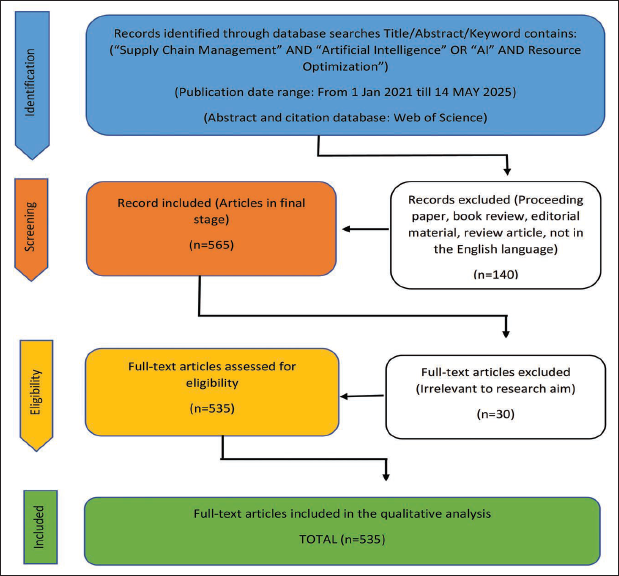
This study adopted a bibliometric approach guided by the Preferred Reporting Items for Systematic Reviews and Meta-Analyses (PRISMA) framework (Alshahrani, 2023) to ensure systematic, transparent, and replicable research processes (Figure 1). The central aim was to examine the intersection of AI, SCM, and resource optimization, thereby identifying key research trends, conceptual developments, and emerging gaps within this evolving field. The methodological framework followed the general objectives of systematic literature reviews (SLRs): to determine the current state of existing research, highlight research gaps and possible directions for future inquiry, and develop a conceptual foundation that may inform empirically testable propositions in subsequent studies.
The Web of Science (WoS) Core Collection served as the sole data source due to its rigorous indexing standards, extensive coverage of high-quality peer-reviewed publications, and compatibility with bibliometric analysis tools. The search was carried out on May 14, 2025, targeting research published between January 1, 2021, and May 14, 2025. The selection of this 5-year period was deliberate, as it represents a phase of unprecedented transformation in global supply chains influenced by the post-pandemic digital transition and the adoption of Industry 4.0 and 5.0 technologies. Limiting the analysis to the most recent 5 years ensured the inclusion of current trends and minimized the dilution of findings by outdated perspectives, thereby reflecting the contemporary evolution of AI-driven supply chain optimization (Ikram et al., 2024).
To retrieve relevant publications, a structured search query was applied to the Title, Abstract, and Keyword fields using Boolean logic as follows: “Supply Chain Management” AND (“Artificial Intelligence” OR “AI”) AND “Resource Optimization.” This initial search yielded 705 records. The search process was iterative, ensuring the inclusion of both conceptual and applied research relevant to the study’s objectives.
Following retrieval, the records underwent a three-stage PRISMA screening process, consisting of identification, screening, and eligibility evaluation. In the identification phase, all 705 publications were extracted from the WoS database and imported into Bibliometrix (R-package) and VOSviewer software for reference management and analysis. During the screening phase, publications were filtered based on type and language. Documents such as editorials, book reviews, conference proceedings, and non-English papers were removed. This filtering resulted in the exclusion of 140 records, leaving 565 potentially relevant articles.
In the eligibility stage, a full-text review of these remaining papers was carried out to determine their alignment with the study’s scope. Articles that did not substantively address AI applications in SCM for resource optimization were excluded, resulting in the removal of an additional 30 papers. Consequently, 535 full-text articles were deemed eligible and included in the final dataset for bibliometric analysis.
To maintain high methodological quality and scholarly relevance, an 11-point quality filtration criterion was employed. Each article was assessed according to parameters including peer-review status, indexing in WoS Core Collection, English language, explicit discussion of AI in SCM, inclusion of resource optimization aspects, methodological clarity, defined research objectives, measurable outcomes, practical or managerial relevance, publication within the defined time frame, and full-text accessibility. Only papers meeting at least eight of these criteria were retained for analysis. This rigorous selection process ensured the inclusion of credible, impactful, and thematically aligned research.
The final dataset comprising 535 articles formed the analytical core of this study. Both quantitative and qualitative bibliometric techniques were employed to explore the intellectual structure of the field. Quantitative techniques included co-authorship, citation, and keyword co-occurrence analyses performed using VOSviewer and Bibliometrix. These analyses enabled the identification of influential authors, collaborative patterns, and thematic research clusters. Complementing these findings, qualitative interpretation provided deeper insights into the conceptual evolution and emerging research directions related to AI-driven resource optimization in SCM.
By combining the systematic PRISMA framework with bibliometric mapping, this study ensured transparency, analytical accuracy, and academic rigor. The resulting dataset and analysis framework not only provided a comprehensive understanding of current knowledge structures but also laid the groundwork for developing a conceptual model that may be further tested in empirical research exploring AI-enhanced supply chain resource management.
Results and Discussion
Country Scientific Production of Articles
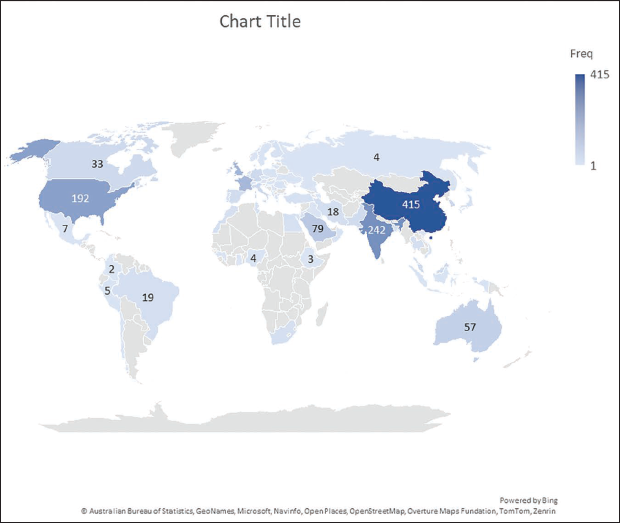
The world map visualization (Figure 2) provides a comprehensive overview of the global distribution of scholarly output in the intersecting fields of SCM, AI, and Resource Optimization. This choropleth map, based on bibliometric data, highlights the countries that are most actively contributing to research in this domain, using frequency data extracted from author affiliations.
One of the most prominent observations is the significant contribution from China, which accounts for 415 publications, making it the highest contributor in this field. This reflects China’s strategic focus on smart manufacturing, digital transformation, and AI integration in supply chain systems. According to Wang, Zhang et al. (2024), Chinese researchers have increasingly emphasized the use of AI and big data analytics to improve decision-making, efficiency, and sustainability in dynamic supply chains. The country’s robust industrial base and heavy investment in AI research further explain this academic leadership.
India ranks second with 242 publications, underscoring the country’s growing academic and industrial interest in sustainable and optimized supply chains. Indian researchers, such as Verma et al. (2022), have focused on identifying trends and challenges in applying AI to improve operational performance in sectors like pharmaceuticals, manufacturing, and logistics. This rise also correlates with India’s increasing digitization and policy support for smart supply chain development.
The USA, with 192 publications, remains a key player, traditionally leading in AI research and supply chain innovations. Its contributions reflect a balance between theoretical advancements and real-world applications of AI for resource optimization and resilience in supply networks. The evolution of information systems and the integration of real-time monitoring tools have been central to improving supply chain visibility and performance in the US context.
Other noteworthy contributors include Saudi Arabia (79 publications), Australia (57), Taiwan (73), and several European countries such as France (125) and England (112). These nations show a rising trajectory in research related to digital supply networks, circular economy models, and sustainable logistics. Their participation indicates a growing recognition of the importance of AI-driven solutions for addressing environmental and operational challenges in SCM.
In contrast, regions such as Africa and parts of Latin America appear underrepresented, with fewer publications coming from countries like South Africa, Brazil, and Mexico. This disparity may point to the need for increased research funding, international collaboration, and infrastructural support in these areas to bridge the global research gap.
In summary, the map not only reveals the geographical spread of academic contributions but also reflects the global prioritization of AI and sustainability in supply chains. The data suggest that while some countries are at the forefront of innovation, others have significant potential for future growth in this vital area of research.
Source: Authors’ own elaboration using R software.
Main Information of Data
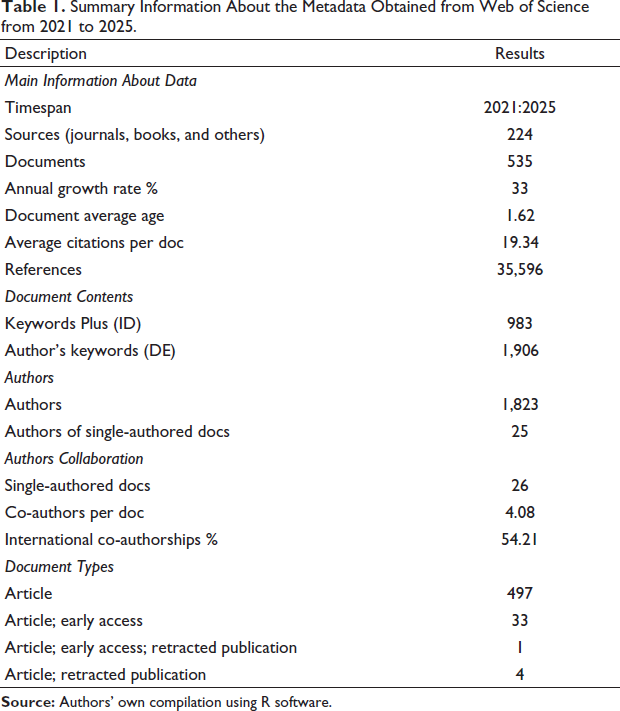
The bibliometric analysis was conducted on a dataset comprising 535 scholarly documents published between 2021 and 2025 (Table 1). These documents were sourced from 224 distinct publication outlets, including journals, books, and other academic platforms. The data reveal a significant annual growth rate of 33%, indicating a rising trend in academic interest in the intersection of SCM, AI, and resource optimization. The average age of documents in the dataset is 1.62 years, reflecting a relatively recent and up-to-date body of literature. The total number of citations across all documents stands at 19.34 per document on average, showing strong scholarly impact. The dataset includes a total of 35,596 references, underlining the extensive background research supporting these publications.
Regarding document contents, the dataset includes 983 “Keywords Plus,” which are terms generated by citation analysis to reflect the core topics of the documents, and 1,906 author-supplied keywords, which provide additional insight into the thematic focus areas of the publications. This diversity in keywords suggests a wide range of topics within the broader research scope, including themes like supply chain optimization, AI applications, sustainability, and digital transformation.
The authorship analysis reveals contributions from 1,823 unique authors, with 25 authors having published single-authored papers. Only 26 documents were single-authored, while the majority involved collaboration, leading to an average of 4.08 co-authors per document. This points to a highly collaborative research environment. Notably, the international co-authorship rate is 54.21%, indicating that more than half of the publications involved authors from multiple countries. This high level of international collaboration reflects the global relevance and interdisciplinary nature of the research field.
In terms of document types, the majority of the records are standard research articles (497), with 33 articles classified as early access, which are typically pre-publication versions made available online. Additionally, there is 1 retracted early access article and 4 fully retracted publications, suggesting a very small margin of research integrity issues in the dataset. Overall, the dataset is robust, current, and characterized by high collaboration and citation impact, making it a strong foundation for bibliometric insights into AI-enhanced resource optimization in SCM.
Summary Information About the Metadata Obtained from Web of Science from 2021 to 2025.
Annual Number of Research Articles
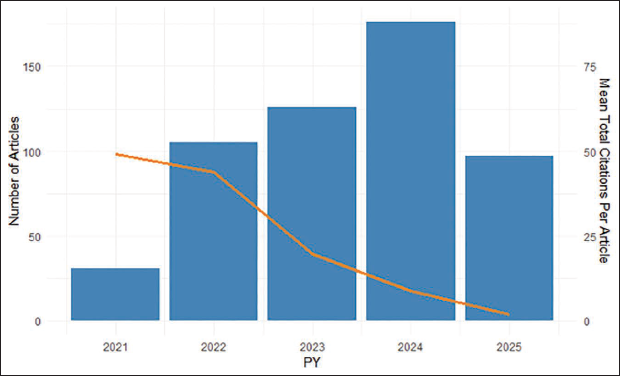
This graph (Figure 3) provides valuable insights into the publication and citation trends within a specific academic domain, likely related to the bibliometric study of supply chain, AI, and resource optimization, over a 5-year period from 2021 to 2025. By analyzing both the volume of articles published and their average citation impact, we can discern key developments in this interdisciplinary field.
The blue bars, corresponding to the left Y-axis labeled “Number of Articles,” illustrate the yearly publication output. The field experienced a significant growth trajectory in article production during this period. Beginning in 2021 with a relatively small output of approximately 30–35 articles, the volume surged considerably in 2022, reaching just over 100 articles. This upward trend continued into 2023, with around 120 articles published, and peaked dramatically in 2024, exceeding 150 articles. This strong growth suggests a burgeoning interest and research activity in the intersection of supply chain, AI, and resource optimization, indicating that these areas are becoming increasingly prominent within academic discourse. However, there is a noticeable dip in 2025, with the number of articles falling back to just under 100, which could signify a slight cooling off after the intense growth, or perhaps a natural fluctuation as the field matures or shifts focus.
In stark contrast to the rising publication volume, the orange line, linked to the right Y-axis representing “Mean Total Citations Per Article,” depicts a consistent and significant decline in the average citation impact of these articles. In 2021, articles in this domain enjoyed a relatively high average citation count, nearing 50. This figure, however, steadily decreased over the subsequent years. By 2022, the average citations dropped to approximately 40–45, and continued its descent to about 25 in 2023. The most dramatic fall occurred by 2024, where the mean citations per article were reduced to a mere single-digit range, between 5 and 10. This downward trend culminates in 2025, with average citations per article approaching zero. This inverse relationship between increasing publication volume and decreasing average citation impact is a critical finding for the bibliometric study of this field. It suggests that while more research is being conducted and published, the individual articles, on average, are having less influence or are being cited less frequently. This could be attributed to several factors: the sheer volume of new publications might be leading to citation dilution, where the increased supply of articles makes it harder for any single article to gain widespread attention. Alternatively, articles published in later years (like 2024 and 2025) have had less time to accrue citations compared to older publications. It might also point to a potential shift in the quality or perceived novelty of recent research, or evolving citation behaviors within the rapidly expanding and interdisciplinary domain of supply chain, AI, and resource optimization.
Most Productive Authors
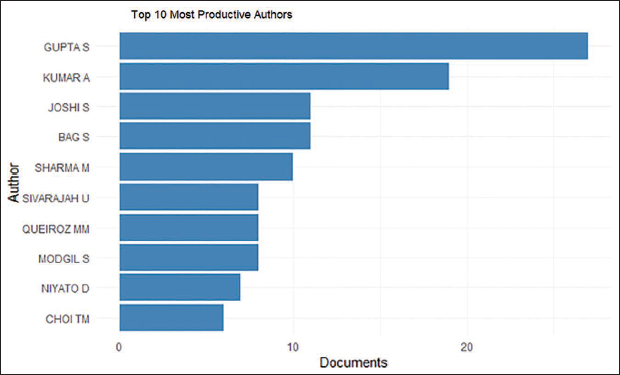
This horizontal bar chart (Figure 4), aptly titled “Top 10 Most Productive Authors,” provides a clear and concise visual representation of the publication output of the leading contributors within a specific academic or research domain. It effectively ranks authors based on the sheer volume of documents they have published, offering insights into individual productivity levels.
The chart’s structure is straightforward: the names of the authors are listed on the vertical Y-axis, ordered from the highest to the lowest number of publications, while the horizontal X-axis quantifies the “Documents” or publications attributed to each author. A quick glance immediately reveals the dominant contributors. Gupta S stands out as the most prolific author, having published a remarkable number of documents, exceeding 25. This individual’s output significantly surpasses that of all other authors on the list, suggesting a highly concentrated contribution to the field.
Following Gupta S, Kumar A emerges as the second most productive author, with a substantial contribution of approximately 19–20 documents. The productivity then begins to tier down. Joshi S and Bag S form the next tier of contributors, each having published around 11–12 documents. Sharma M follows closely with approximately 10 documents. The remaining authors in the top 10—Sivarajah U, Queiroz MM, and Modgil S—show similar levels of productivity, each contributing about 8–9 documents. Niyato D is next with roughly 7 documents, and finally, Choi TM rounds out the top 10 with approximately 6 documents. This chart is a valuable tool for identifying key individuals driving research output in the subject area, highlighting both the most prolific researchers and the varying degrees of contribution within the top echelon of authors.
Number of Articles Published by Sources and Influential Publication
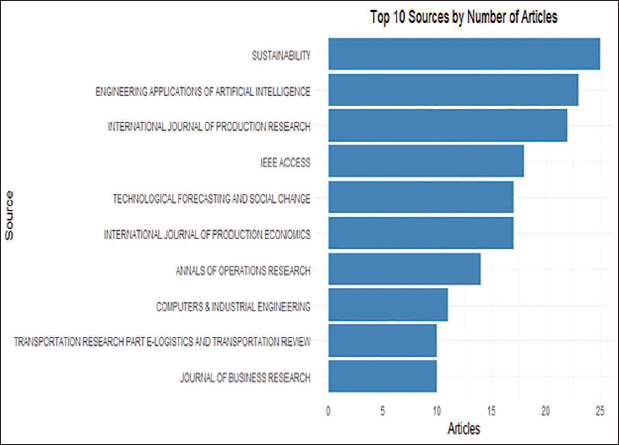
This horizontal bar chart (Figure 5), titled “Top 10 Sources by Number of Articles,” effectively visualizes the most prolific publication outlets within a specific academic field, indicating which journals or platforms have contributed the highest volume of articles to the dataset being analyzed. It provides a clear ranking of sources based on their output.
The chart’s structure is straightforward: the vertical Y-axis lists the names of the “Source” journals or platforms, while the horizontal X-axis quantifies the “Articles” published by each source. The sources are ordered from the highest number of articles at the top to the tenth highest at the bottom. “SUSTAINABILITY” stands out as the leading source, having published the highest number of articles, specifically over 24. This suggests that “Sustainability” is a primary venue for research in the domain under study.
Following closely, “ENGINEERING APPLICATIONS OF ARTIFICIAL INTELLIGENCE” is the second most productive source, with over 23 articles, indicating its significant role in disseminating research, particularly at the intersection of engineering and AI. “INTERNATIONAL JOURNAL OF PRODUCTION RESEARCH” secures the third spot, contributing more than 21 articles, underscoring its importance in production-related studies. Other prominent sources include “IEEE ACCESS” and “TECHNOLOGICAL FORECASTING AND SOCIAL CHANGE,” both contributing around 17 articles, and “INTERNATIONAL JOURNAL OF PRODUCTION ECONOMICS,” with a similar output. Further down the list, “ANNALS OF OPERATIONS RESEARCH” has published around 14 articles, while “COMPUTERS & INDUSTRIAL ENGINEERING” and “TRANSPORTATION RESEARCH PART E-LOGISTICS AND TRANSPORTATION REVIEW” each contributed approximately 10–11 articles. Finally, “JOURNAL OF BUSINESS RESEARCH” rounds out the top 10 with a similar number of articles. This chart is crucial for identifying key publication channels and understanding the landscape of knowledge dissemination within the relevant academic field.
Source: Authors’ own elaboration using R software.
Top 10 Influential Papers
Table 2 presents the top 10 influential research papers in the domain of AI-enhanced Resource Optimization in Supply Chain Management, ranked according to their citation performance and adjusted impact indicators. These papers represent core contributions shaping theoretical, methodological, and technological developments in this field. The “Paper” column lists each leading study by first author, publication year, and abbreviated journal title. The “DOI” ensures traceability, linking to the full online version. The citation-based performance is evaluated through three complementary metrics: Total Citations, TC per Year, and Normalized TC, which together provide a well-rounded measure of both volume and quality of scholarly influence.
Top 10 Influential Papers for Artificial Intelligence (AI)-enhanced Resource Optimization in Supply Chain Management.
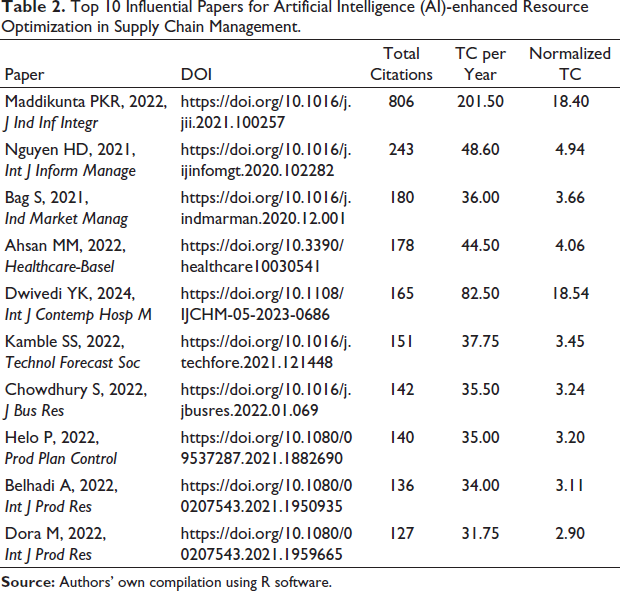
The analysis reveals Maddikunta et al. (2022, Journal of Industrial Information Integration) as the most impactful paper, with 806 total citations and the highest annual citation rate (201.50). Its exceptionally high normalized citation count (18.40) reflects dominant influence and rapid knowledge dissemination, signifying that this work has become a cornerstone for subsequent studies focusing on AI-driven industrial integration and smart manufacturing systems. Following this, Nguyen et al. (2021, International Journal of Information Management) hold 243 citations, emphasizing the ongoing relevance of information management frameworks for AI adoption in supply chains. However, its lower TC per Year (48.60) suggests a steady but less accelerated growth rate compared to Maddikunta’s work, possibly because it covers broader managerial perspectives rather than technical AI optimization methods. Interestingly, Dwivedi et al. (2024, International Journal of Contemporary Hospitality Management), despite a more recent publication date, achieve a remarkably high normalized citation score (18.54). This indicates its emerging status as a seminal work within the AI-enabled service and hospitality operations segment—a field currently experiencing rapid digital transformation.
Other notable contributors include Bag et al. (2021) and Kamble et al. (2022), whose studies underscore the role of Industry 4.0 technologies, digital supply chain frameworks, and resilience strategies. Ahsan et al. (2022) and Chowdhury et al. (2022) bridge the intersection of AI, healthcare, and business management, reflecting an interdisciplinary diffusion of supply chain optimization concepts. Overall, the top 10 papers demonstrate that the research focus has progressively shifted from foundational digital transformation frameworks (Nguyen et al., Bag et al.) toward advanced AI applications integrating predictive analytics, machine learning, and sustainable optimization models (Maddikunta et al., Dwivedi et al.). The strong normalized citation rates of recent papers highlight a rapidly evolving field with increasing academic and industrial engagement.
This trend suggests that AI-enhanced supply chain optimization has moved from conceptual modeling to practical implementation, influencing cross-sectoral innovation and setting future research directions in adaptive, intelligent, and sustainable operations.
Global Research Distribution and Collaboration
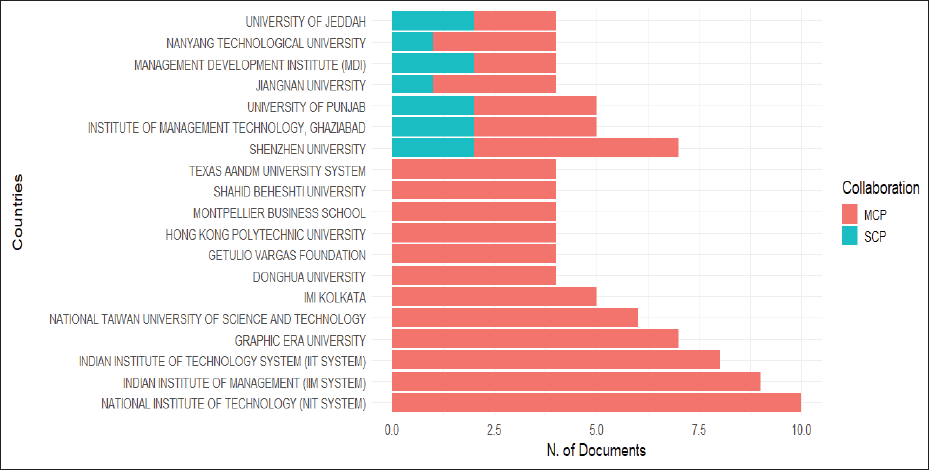
This stacked horizontal bar chart (Figure 6) illustrates the collaboration patterns of various institutions, categorized by their contribution to “n. of documents” (number of documents). The chart distinguishes between two types of collaboration: MCP (multi-country publication), represented by the red segments, and SCP (single-country publication), represented by the turquoise segments. The institutions are listed on the Y-axis under “countries,” although it seems to be listing specific universities or institutes.
The chart provides a detailed view of the collaborative landscape of different institutions. For instance, “University of Jeddah” shows a significant number of documents, with a substantial portion coming from MCP, suggesting strong international collaboration, alongside a smaller segment from SCP. Similarly, “Nanyang Technological University” and “Management Development Institute (MDI)” also exhibit a mix of both MCP and SCP, indicating their engagement in both local and international research partnerships. “Jiangnan University” and “University of Punjab” also follow this pattern, showcasing a balance in their collaborative endeavors.
A distinct pattern emerges for several institutions, such as “Texas A&M University System,” “Shahid Beheshti University,” “Montpellier Business School,” “Hong Kong Polytechnic University,” “Getulio Vargas Foundation,” and “Donghua University.” These institutions primarily contribute documents through MCP, with very little or no SCP. This strongly suggests that their research output is predominantly a result of collaborations with partners from other countries, indicating a highly international research focus.
Conversely, a different trend is observed among institutions like “National Taiwan University of Science and Technology,” “Graphic Era University,” “Indian Institute of Technology System (IIT System),” “Indian Institute of Management (IIM System),” and “National Institute of Technology (NIT System).” These institutions show a very strong emphasis on SCP, with almost all their documents resulting from collaborations within a single country, or perhaps non-collaborative works. While some of them, like “National Institute of Technology (NIT System),” have a very high total number of documents (close to 10), almost all of it is from SCP. This indicates a focus on domestic collaborations or individual research efforts. Overall, the graph effectively categorizes institutions based on their propensity for single-country versus multi-country research collaborations, highlighting diverse strategies in academic partnerships.
Evolution and Future Themes
This keyword co-occurrence map (Figure 7), generated using VOSviewer, visually represents the major themes and research trends in the field of supply chain, AI, and resource optimization through a bibliometric analysis. Each node in the map signifies a keyword that has appeared in scholarly articles, with the size of the node indicating its frequency. The lines or links between nodes show how often two keywords co-occur in the same publications, revealing thematic linkages. The network is grouped into different colored clusters that represent distinct but interconnected research areas.
At the center of the map are the most prominent keywords “Artificial Intelligence,” “Supply Chain Management,” “Management,” “Performance,” and “Resource Optimization.” Their central position and large size reflect their high frequency and importance in the research literature. This highlights that the integration of AI technologies into supply chain processes, along with a focus on optimizing resources and improving performance, forms the core of academic interest in this domain.
The map can be broken down into several color-coded clusters, each denoting a thematic concentration. The red cluster includes keywords like performance, logistics, competitive advantage, and dynamic capabilities, which emphasize the impact of technological advancements on firm performance and operations strategy. This cluster points to research focusing on how AI and other digital tools contribute to enhanced efficiency, adaptability, and strategic gains in supply chains.
The blue cluster features terms such as decision-making, trust, behavior, and acceptance. This indicates a research strand that addresses the behavioral and adoption aspects of AI in supply chain settings. It shows how scholars are examining the human and organizational factors—like technology acceptance, trust, and decision-support systems—that influence the successful implementation of AI and optimization tools.
The green cluster revolves around technological innovation and smart supply chains, including keywords like Internet of Things (IoT), cloud computing, security, production, and digital twin. These terms reflect an emphasis on Industry 4.0 technologies and their role in creating intelligent, connected supply chain systems capable of real-time monitoring and optimization.
The yellow cluster is characterized by technical and analytical approaches, with keywords like machine learning, deep learning, neural networks, algorithms, and prediction. This group represents studies focusing on the computational backbone of AI—how machine learning models are being applied for forecasting, automation, and decision-making in supply chain and resource management.
Finally, the purple cluster emphasizes blockchain technology and digital transformation featuring keywords like blockchain, resilience, Industry 4.0, and technologies. This shows a growing research focus on building resilient and transparent supply chains through decentralized and tamper-proof digital systems, and the broader move toward end-to-end digitalization.
In summary, this bibliometric visualization demonstrates the evolving and interconnected nature of research in SCM, AI, and resource optimization. The clustering of keywords into behavioral, technical, strategic, and technological themes highlights how the field is expanding across multiple dimensions, aiming to improve supply chain resilience, performance, and efficiency through advanced AI-driven solutions and optimization techniques.
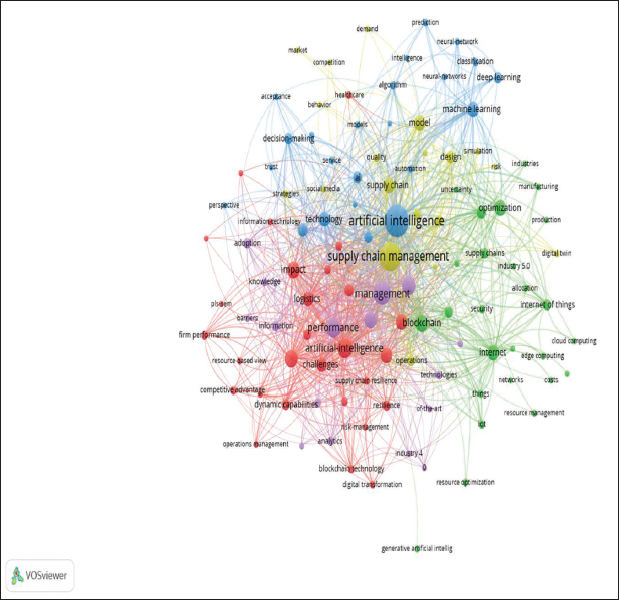
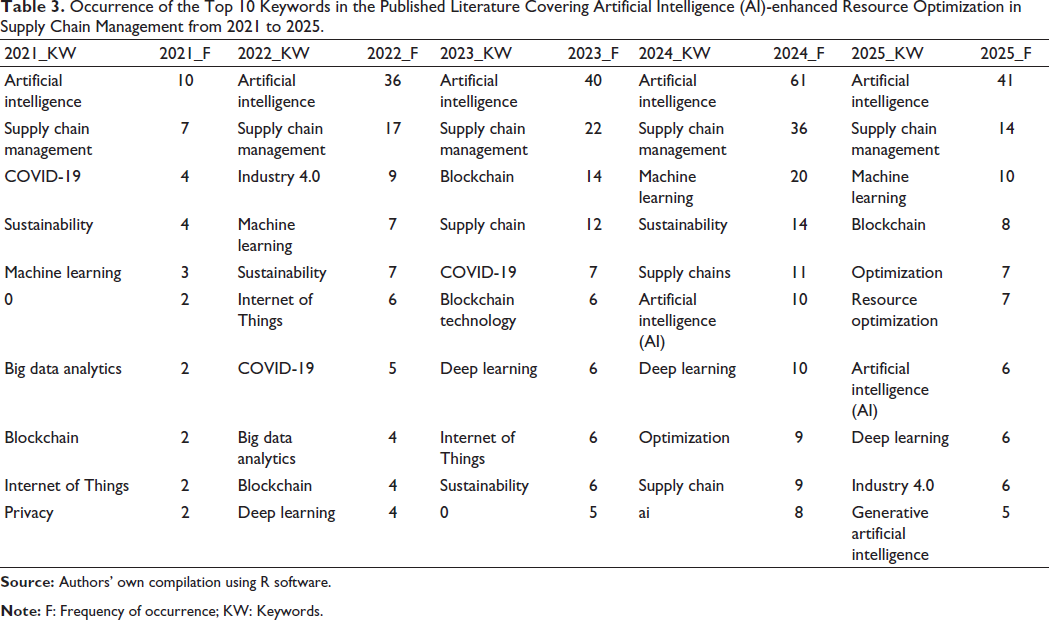
Table 3 “Top 10 Keywords per Year (2021–2025)” illustrates the evolution of key research trends over 5 years, particularly in areas related to technology, sustainability, and logistics. Throughout this period, AI consistently remained the most frequently used keyword, starting with 10 mentions in 2021 and peaking at 61 mentions in 2024. This trend reflects a growing global emphasis on AI as a transformative tool across industries, especially in developing economies aiming to modernize and automate their systems. Simultaneously, keywords like machine learning, deep learning, and big data analytics began appearing more frequently, indicating a rising interest in data-driven technologies to support intelligent decision-making.
In addition to AI-focused terms, SCM maintained strong relevance throughout the 5 years, with frequency increasing from 7 mentions in 2021 to a high of 36 in 2024, before dropping to 14 in 2025. This trend suggests heightened attention to supply chain resilience and efficiency, particularly in the wake of disruptions like COVID-19. Keywords such as blockchain, optimization, and Internet of Things also gained traction, signaling the integration of smart technologies into supply chain operations. Meanwhile, sustainability maintained a steady presence, indicating a parallel concern for environmentally responsible practices alongside technological advancement.
By 2025, newer themes such as generative AI and resource optimization emerged, showing a shift toward more advanced, creative, and ecologically sensitive applications of technology. The decline in COVID-19 mentions over time points to a transition from immediate crisis response to long-term strategic planning. Overall, the data reflects a broader movement from traditional efficiency-focused models toward frameworks that balance technological innovation with ecological sustainability—an approach that aligns well with the objectives of rethinking logistics and business practices for a greener, decolonized future.
Occurrence of the Top 10 Keywords in the Published Literature Covering Artificial Intelligence (AI)-enhanced Resource Optimization in Supply Chain Management from 2021 to 2025.
Thematic Review of a Bibliometric Study on Artificial Intelligence-enhanced Resource Optimization in Supply Chain Management
The bibliometric analysis of 535 scholarly articles published between 2021 and 2025 provides a comprehensive overview of emerging research at the nexus of SCM, AI, and resource optimization. The growing complexity of global supply networks and the demand for sustainable, resilient, and data-driven operations have intensified the focus on AI-enabled optimization strategies. Five prominent research themes have emerged from the dataset.
Artificial Intelligence-driven Optimization of Supply Chain Resources
One of the most recurrent themes is the application of AI in optimizing supply chain resources. Advanced AI models are being employed to enhance production scheduling, demand forecasting, warehouse management, and distribution logistics. Deep learning and reinforcement learning techniques have proven especially effective in minimizing waste and improving resource utilization across various SCM processes (Sharma et al., 2022; Wang, Zhang, et al., 2024). For example, predictive models based on real-time data can dynamically allocate production resources, reducing bottlenecks and idle time (Na et al., 2023).
Optimization in multi-echelon inventory systems, often hampered by uncertainty and delays, has significantly improved through the integration of AI-based algorithms (Mariani et al., 2023). Studies also show increased use of hybrid models combining neural networks and evolutionary algorithms to streamline complex supply networks (Sood et al., 2022; Verma et al., 2022).
Integration of Big Data Analytics and Artificial Intelligence for Intelligent Supply Chains
The intersection of big data and AI plays a pivotal role in enhancing supply chain visibility and intelligence. Researchers emphasize the importance of AI in harnessing unstructured data from sensors, social media, and market platforms to inform strategic decision-making (Banerjee & David, 2025; Halba et al., 2023; Wang, Zhang, et al., 2024). These systems enable predictive maintenance, adaptive routing, and demand sensing, contributing to more accurate and flexible operations.
AI-powered analytics improve customer service by forecasting trends and personalizing delivery schedules (Gupta et al., 2022). Moreover, by integrating AI with Internet of Things (IoT) data, firms can optimize last-mile delivery and manage disruptions proactively (Mi et al., 2024; Pahari et al., 2024).
Sustainability and Resilience Enabled by Artificial Intelligence-based Optimization
The growing emphasis on sustainability and resilience within supply chains has been amplified by escalating environmental concerns and recent global disruptions such as the COVID-19 pandemic. AI plays a pivotal role in enabling green and adaptive operations by enhancing efficiency and reducing environmental impact. Through AI-based optimization, organizations can minimize fuel consumption, control emissions, and reduce waste generation across logistics and production systems (Li et al., 2024; Sharma et al., 2022). For instance, AI-powered route optimization algorithms enable transport networks to lower greenhouse gas emissions while improving delivery precision and load utilization. Similarly, predictive maintenance systems supported by machine learning reduce energy usage and prevent resource-intensive breakdowns.
In terms of resilience, AI facilitates proactive risk management through simulation and scenario-based modeling. AI-driven resilience strategies employ real-time data analytics to anticipate supply disruptions and identify vulnerabilities across the supply network (Bhattacharya & Chatterjee, 2022). Such intelligent systems support dynamic decision-making by suggesting alternate sourcing routes, optimizing inventory levels, and ensuring production continuity during crises. Moreover, organizations are increasingly leveraging AI for strategic redesign of supply chains—building redundancy, diversification, and flexible reconfiguration mechanisms (Rajput & Singh, 2019). Consequently, AI-based optimization not only strengthens operational performance but also integrates environmental responsibility with long-term adaptability.
Barriers and Enablers of Artificial Intelligence and Optimization Technology Adoption
Although the potential of AI-driven optimization is well-recognized, several challenges continue to impede widespread adoption. High implementation costs, inadequate data infrastructure, lack of interoperability between legacy systems, and organizational resistance constitute major barriers (Kar et al., 2023). Data-related constraints—such as poor data quality, fragmentation, and privacy concerns—limit the accuracy and reliability of AI models. Furthermore, human capital limitations, including scarcity of skilled data scientists and insufficient technical training, particularly among small and medium-sized enterprises (SMEs), significantly hinder progress. Cultural resistance to automation and fear of technological disruption further delay transformation initiatives.
Conversely, certain enabling factors have been shown to accelerate successful AI integration. Strong top management commitment, investment in employee digital literacy, and a clear strategic vision are essential prerequisites (Siqueira et al., 2024). Industry collaboration and public–private partnerships can also provide the necessary technological support and knowledge-sharing platforms. Organizations that adopt a phased or modular AI deployment approach—starting with pilot projects before pursuing enterprise-wide integration—tend to achieve better outcomes (Kaur & Badola, 2026). In addition, fostering a culture of experimentation, establishing robust data governance frameworks, and aligning AI initiatives with sustainability goals can enhance both acceptance and impact. Together, these enablers create a supportive ecosystem that facilitates the transition toward intelligent, optimized, and sustainable supply chains.
Ethical, Managerial, and Governance Challenges in Artificial Intelligence-based Optimization
As AI becomes more embedded in supply chain decisions, concerns around ethics, accountability, and governance have come to the forefront. The lack of transparency in AI models can lead to bias in supplier selection, pricing strategies, and workforce scheduling (Raut et al., 2020). Furthermore, the use of sensitive data for optimization raises questions about data privacy and security.
To address these concerns, researchers recommend the adoption of explainable AI (XAI), ethical auditing frameworks, and inclusive algorithm design (Bhattacharya & Chatterjee, 2022). Regulatory compliance and stakeholder communication are also key in ensuring ethical implementation of optimization technologies.
The bibliometric evidence illustrates the growing influence of AI and optimization techniques in transforming supply chain practices. The reviewed literature reflects an interdisciplinary approach, incorporating operations research, data science, sustainability, and business ethics. Future research should focus on developing inclusive, scalable, and ethically sound AI systems that support strategic decision-making and long-term resilience in global supply chains.
Theoretical Implications
This study makes several theoretical contributions to the intersection of AI, resource optimization, and SCM. It enriches the RBV and dynamic capabilities theory by illustrating how AI technologies function as strategic, inimitable resources that enhance organizational adaptability and resilience in dynamic environments. The integration of AI-driven analytics, machine learning, and deep learning supports the argument that digital technologies act as enablers of dynamic capabilities, empowering firms to sense, seize, and reconfigure supply chain resources for improved performance and sustainability (Goswami et al., 2025).
Additionally, this bibliometric review advances the technology empowerment theory by demonstrating how AI fosters transformative changes in supply chain processes, structures, and decision-making mechanisms. AI applications not only optimize operational efficiency but also reshape organizational learning dynamics by embedding intelligence into planning, forecasting, and logistics operations. The findings highlight that theoretically, the evolution from Industry 4.0 to 6.0 requires extending current supply chain frameworks to incorporate human–AI collaboration and socio-technical system perspectives, emphasizing the role of hybrid intelligence in achieving sustainable competitiveness (Ghouati et al., 2025).
Finally, by mapping the intellectual structure and thematic evolution of the field, this study contributes methodologically to bibliometric theory development in operations management research, offering empirical evidence on the convergence of digitalization, AI, and sustainability themes (Ghanbari et al., 2025).
Managerial Implications
From a managerial standpoint, the findings underscore the strategic importance of AI adoption in achieving data-driven and sustainable supply chain transformation. Managers should recognize AI as a foundational element for improving demand forecasting, inventory management, and predictive maintenance, leading to cost efficiency and operational resilience. The growing integration of generative AI and blockchain also suggests new avenues for traceability, transparency, and circular supply chain design, enabling decision-makers to meet regulatory and environmental standards more effectively (Ghouati et al., 2025).
However, the study also emphasizes critical considerations for successful implementation. Managers must address data governance, algorithmic bias, and ethical AI deployment to foster stakeholder trust and ensure compliance with sustainability norms. Investing in workforce upskilling to enhance AI literacy and human–machine collaboration will be pivotal for achieving balanced automation rather than replacement of human expertise. Moreover, aligning AI initiatives with organizational objectives and integrating cross-functional collaboration structures can reinforce strategic agility and responsiveness in global supply networks (Guo et al., 2025).
Limitations and Scope for Future Research
This study offers a comprehensive bibliometric overview of research at the intersection of AI, resource optimization, and SCM; however, certain limitations must be acknowledged. The analysis was restricted to publications indexed in selected academic databases, which may exclude relevant regional or non-indexed works. The study period (2021–2025) captures only recent developments, limiting insights into the historical evolution of the field. Bibliometric methods primarily emphasize quantitative indicators and therefore do not account for the methodological quality or practical impact of individual studies. Additionally, the focus on English-language publications may introduce language bias. The use of algorithm-based visualization tools like R Studio and VOSviewer, while effective for mapping trends, may simplify complex thematic connections.
Despite these constraints, the findings point to various opportunities for future research. Extending the time horizon and incorporating additional data sources, such as grey literature, conference papers, and patents, could provide a more holistic understanding of the domain. Comparative studies across regions or industries may reveal contextual factors shaping AI adoption in supply chains. Combining bibliometric approaches with qualitative or systematic analysis could deepen theoretical and practical insights. Future work might also explore emerging technologies—such as digital twins, quantum computing, and generative AI—for their transformative potential in sustainable and intelligent supply chains. Finally, developing predictive frameworks based on bibliometric trends could help anticipate future research directions and guide innovation and policymaking within the AI–SCM domain.
Conclusion
This bibliometric analysis presents a structured overview of global research output between 2021 and 2025 at the intersection of AI, resource optimization, and SCM. By employing the PRISMA protocol for systematic data selection, the study ensured methodological transparency, relevance, and replicability. A total of 535 scholarly documents were examined, reflecting an impressive annual growth rate of 33% in this domain, which highlights the increasing academic and practical significance of integrating AI into SCM frameworks.
Key trends identified include a significant rise in the number of publications, particularly between 2021 and 2024, accompanied by a corresponding increase in author participation and source diversity. Despite a downward trend in average citations per article—largely due to the recency of many publications—the field remains highly impactful, with an average of 19.34 citations per document. The dominance of keywords such as “artificial intelligence,” “supply chain management,” “machine learning,” “blockchain,” and “sustainability” across the years underscores the thematic evolution and technological focus of the literature. Furthermore, strong international collaborations and the prominence of influential authors and journals reflect the global and interdisciplinary nature of research in this field.
In addition to highlighting current trends, this study identifies emerging future directions. One major research avenue is the integration of generative AI and deep learning models into real-time supply chain decision-making, which holds the potential to revolutionize demand forecasting, dynamic pricing, and risk assessment. Another key direction is the increasing focus on sustainable and green supply chains, particularly through AI-enhanced monitoring and carbon footprint optimization. Further studies may also explore the intersection of blockchain technology and AI to enhance transparency, traceability, and security across complex supply networks. As global supply chains face unprecedented disruptions—from pandemics to climate change and geopolitical shifts—research must increasingly focus on resilience, adaptability, and the responsible integration of AI. Cross-sectoral collaboration, development of standardized datasets, and stronger integration of real-world case studies will be critical to translating theoretical models into scalable, industry-ready solutions. In conclusion, this study not only maps the intellectual structure and evolution of AI-enhanced SCM research but also provides actionable insights and a roadmap for scholars and practitioners to pursue innovative, resilient, and sustainable supply chain systems.
Footnotes
Declaration of Conflicting Interests
The authors declared no potential conflicts of interest with respect to the research, authorship, and/or publication of this article.
Declaration of Generative AI and AI-assisted Technologies in the Writing Process
During the preparation of this work, the authors used ChatGPT in order to write. After using this tool/service, the authors reviewed and edited the content as needed and take full responsibility for the content of the publication.
Funding
The authors received no financial support for the research, authorship, and/or publication of this article.
