







Abstract
The social and economic empowerment of women using digital technology is critical to global development. This article presents an expanded theory of change to explain how digital technology could augment pathways to women’s empowerment in self-help groups (SHGs), developed through an application of social capital theories to two existing theories of change. Drawing on the analysis of secondary data, it discusses SHGs in India, the determinants of mobile phone use among women in India, particularly patriarchal gender norms, and select theories of change for women’s empowerment in SHGs. The proposed enhanced theory of change has the potential to assist implementers, policymakers, researchers and SHGs themselves to more effectively leverage the empowering potential of digital technology to improve the economic and social opportunities for women in the context of global development strategies.
Introduction
The social and economic empowerment of women has been recognised as a critical strategy in achieving social gains not only for women themselves but also for communities and societies as a whole. Self-help groups (SHGs) in India and elsewhere in the world have shown promising outcomes for the empowerment of their members (Barooah et al., 2019; Biscaye et al., 2014; Brody et al., 2016; Kabeer, 2005; Kumar et al., 2018; Priya et al., 2017). SHGs are voluntary, self-governing mutual assistance organisations through which individuals undertake collective action in order to improve their own lives (Brody et al., 2016; Jayachandran et al., 2019). In India, where over 11 million SHGs are estimated to exist, providing services to more than 138 million households, the scale of the opportunity is significant (National Bank for Agricultural and Rural Development, 2021). SHGs show great promise for empowering women and furthering economic development, but, as Kabeer has put it, they are not a ‘magic bullet’ (Kabeer, 2005).
The potential to leverage the exponential growth of mobile phone use in developing countries to augment and accelerate the impact of SHG strategies is promising (Bill and Melinda Gates Foundation, 2018). Digital tools, including mobile phones, have enabled women in emerging economies such as India to gain employment and increase their income (Hilbert, 2011), obtain cost-effective health services and education (Hilbert, 2011), access information and expand their social networks (Ahmed et al., 2006; Ajjan et al., 2014; Wamala, 2012; Wheeler, 2007). Women’s use of digital tools has further been associated with increased self-worth and agency, and augmented social and political awareness, all important dimensions of women’s empowerment (Ahmed et al., 2006; Ajjan et al., 2014; Wamala, 2012; Wheeler, 2007). Further potential exists for mobile and internet connectivity to help bridge gender inequities not only through access to products and services in various sectors such as agriculture, education and healthcare but also by enabling women to exercise their social rights (United States Agency for International Development, 2018). However, despite its potential, inequities in mobile phone access and use persist (GSM Association, 2021; Mohan et al., 2020; Scott et al., 2021), and evidence on the impact of digital access and use in SHGs remains limited.
As developed in detail later in this article, the new model proposed here engages heavily with ideas drawn from social capital (Ellison et al., 2007; Poortinga, 2012; Putnam, 2000) and social norms (Campbell, 1975; Sherif, 1936) theory in our augmentation of two existing theories of change (e.g., Barooah et al., 2019; Brody et al., 2016) which have been used to discuss women’s empowerment in SHGs. Social capital and social norms theories allow for an expansion of these models to include an understanding of the social context of digital use and access and how it may impact opportunities for empowerment both at the individual and systems levels in the context of SHGs. Social capital and social norms theories provide a compelling lens through which to view digital technologies and networks, particularly with respect to understanding the networks of women in SHGs and the gendered norms in which these networks exist. What separates the conceptual model proposed here from the theories of change that are used as a starting point (e.g., Barooah et al., 2019; Brody et al., 2016) is that rather than seeing social capital as something accumulated by individuals or groups which can be measured at the level of individual persons, the new theory of change (TOC) conceptualises social capital as mechanistic and a property of relationships, best conceptualised, measured and analysed in the context of social network theory and analysis.
Thus, the overarching goal of this article is to augment existing theories of change for women’s social and economic empowerment in the context of SHGs in India that could be augmented by digital technology. A TOC can be a useful tool in understanding the causal pathways and intermediate outcomes needed to analyse the effectiveness of the ultimate intended outcomes (i.e., empowerment in this context) (Rogers, 2014). First, the article provides a context for SHGs in India. This is followed by a review of literature on women’s digital access and use in India. Then, two related theories of change for women’s empowerment in the context of collectives are introduced (Barooah et al., 2019; Brody et al., 2016). These theories of change are used as the basis of the augmented proposed TOC developed in this article. Finally, drawing on the analysis of secondary data, a new, more comprehensive TOC is proposed, situated in the context of social capital and digital technologies, expanding the extant models’ operationalisation of social capital to include bonding capital, bridging capital and linking capital. Moreover, social norms theory impacts these mechanisms, and the article provides examples from secondary sources of how digital technology has been used to support these mechanisms. The article ends with a discussion of possible directions for new digital interventions to augment the empowerment of women in the context of SHGs. We believe that this augmentation of the existing theories of change is needed to develop effective interventions that use digital technology to augment pathways to women’s empowerment in SHGs and act upon the network-level processes such technology can facilitate.
SHGs in India
The key characteristics of SHGs have been identified as (i) voluntary membership; (ii) self-governance and member participation in decision-making; (iii) member contributions of time, labour, money or other assets; (iv) regular face-to-face interactions among members; and (v) aims to improve individual member welfare (Biscaye et al., 2014). In the Indian context, National Bank for Agriculture and Rural Development (NABARD) (1995) and Dwaraki et al. (1996) have highlighted savings and loans as the primary goals of SHGs. However, more recent literature has broadened the understanding and definitions of SHGs in the context of women’s empowerment to include groups of 10–20 people in a locality formed for any social or economic purpose, who exist as group members with or without registration; however, they are recognised by the governments and banks and can open bank accounts in the name of the SHG (Biscaye et al., 2014; Jayachandran et al., 2019; Thorp et al., 2005).
The SHG programme in India began as a women’s empowerment initiative in the 1980s. It added a financial component in 1992, when a NABARD initiative linked a small number of SHGs with banks (Tankha, 2012). Most Indian SHGs are formed with the assistance of a promoting institution—a ‘Self-Help Promoting Agencies or Institutions’ (SHPAs; SHPIs). NABARD’s SHG Bank Linkage Programme now covers 138 million families through 11 million SHGs (National Bank for Agricultural and Rural Development, 2021).
SHGs in India and elsewhere in the world have shown promising outcomes for the empowerment of their members (Barooah et al., 2019; Biscaye et al., 2014; Brody et al., 2016; Kumar et al., 2018; Priya et al., 2017). Empowerment can be usefully defined as:
The expansion in people’s ability to make strategic life choices in a context where this ability was previously denied to them; a process that entails thinking outside the system and challenging the status quo, where people can make choices from the vantage point of real alternatives without punishingly high costs. (Kabeer, 1999, p. 14)
In the realm of SHGs, worldwide and in India, four intertwined empowerment forms stand out: economic (acquiring, controlling resources), political (active decision-making for access and rights), social (influencing household choices) and psychological (independent decision-making and action) empowerment (De Hoop et al., 2019). Positive impacts of SHG membership have been identified on a range of individual and household outcomes, including investment in income-generating activities, food insecurity, resilience, community-building with group members, self-confidence, social, economic and political empowerment (Barooah et al., 2019; Brody et al., 2016; Gash et al., 2017). However, the evidence of effects along other dimensions, such as women’s decision-making power, social capital, poverty and psychological empowerment outcomes is less strong (Brody et al., 2016; Gash et al., 2017). The potential of women’s collectives in India to be a force of transformative change is often constrained by several factors including: (i) limited channels for grassroots members to request and receive targeted information, resources and services (Reddy, 2019); (ii) limited channels for grassroots members to elevate their concerns in the wider federated structure (Jakimow & Kilby, 2006); (iii) homogenous membership, which tends to exclude younger women and mixed caste formations and has under-representation of women with low mobility (Poduval, 2001); (iv) older members who tend to be less educated and less comfortable with technology (Microsave, 2020); (v) dependence on regular face-to-face meetings, which limit opportunities to engage, and act as a constraint for coordination with members dispersed across distances (Nichols, 2021); (vi) a lack of access to high-quality standardised, flexible learning opportunities (Reddy, 2019); (vii) isolated groups, which have limited opportunities to build networks and organise (Reddy, 2019); (viii) deep but repetitive networks that have few opportunities to access new ideas and exchanging best practices or critical information with women beyond their immediate circle (Reddy, 2019); (ix) limited opportunities for decision-making processes that involve members in lower strata and failures of leadership to be transparent (Jakimow & Kilby, 2006).
SHG programmes have also proved challenging to sustain at scale because they place a large financial burden on the supporting agency to maintain adequate support and monitoring of groups (Paul et al., 2019). One approach to reducing programme costs has been the formation of SHG federations, which aim to sustain and support SHGs while serving as a linking agency between members, external bodies and negotiators on the women’s behalf (Paul et al., 2019, Reddy, 2019). However, there is limited evidence on the financial sustainability of federations and their ability to facilitate market linkages (Paul et al., 2019).
The Digital Opportunity, Limitations and Risks
Given the constraints faced by SHGs, and the challenges in making SHG federations more sustainable and scalable, the potential to leverage the exponential growth of mobile phone use in developing countries to augment and accelerate the impact of SHG strategies is promising (Bill & Melinda Gates Foundation, 2017). Mobile phone access and other communication technologies can empower these groups to transform their approaches and endeavours, including generating fresh employment and self-employment avenues for members, enhancing access to both formal and informal education, as well as improving information and services related to health and gender (Ajjan et al., 2014).
However, the gender digital gap in India is one of the largest in the world. Although India is predicted to overtake the United States as a ‘smartphone superpower’ by 2025 (GSMA, 2019), as of 2020, only 25% of adult women in India owned a smartphone, as opposed to 41% of men (GSMA, 2021). The gender gap extends online, with 30% of women using the mobile internet in 2021 as opposed to 45% of men (GSMA, 2021), and many more men than women use social media in India. In 2019, only 9% of women between the ages of 15–65 used social media in India, as compared to 22% of men (LIRNEasia, 2019), and in January 2021, only 8% of Twitter users and 24% of Facebook users in India were women (Kemp, 2021).
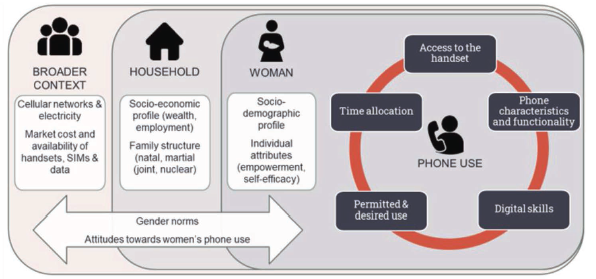
Figure 1 identifies the determinants of mobile phone use among women in India (Scott et al., 2021), moving from the broad context of market cost and availability of electricity, handsets, SIM cards and data on the left to the socio-demographic profile of the woman and her individual attributes on the right. As described in Figure 1, wealth and education are the strongest determinants of access (Mohan et al., 2020), but gender norms also play a significant role in preventing women from accessing technology (Barboni et al., 2018; GSMA, 2017a; Gurumurthy & Chami, 2018; Scott et al., 2021). Household-level monitoring and surveillance of women’s use of digital technologies (particularly young women’s use) have been observed by multiple studies, which attribute this condition to male anxieties about ‘their women exercising agency, especially sexual agency’ (Gurumurthy et al., 2019). Young women’s participation online treads the boundary of being perceived as ‘immodest’, or as an invitation for reprisals for sexual agency (Gurumurthy et al., 2019). Women’s self-reliant and active utilisation of mobile phones and the internet is seen as a threat to established gender norms, especially those related to sexuality, which can result in households and society imposing controls on women’s mobile phone usage (Kovacs, 2017, cited in Gurumurthy & Chami, 2018). There is a risk that digital solutions may exacerbate gender conflict. For example, a randomised control trial in Bangladesh found IVR messaging about contraception led to an increase in domestic violence (Reiss et al., 2019).
The Determinants of Mobile Phone Use Among Women in India.
Additionally, there is concern in India that the patriarchal societal norms are being not just perpetuated but accentuated on social media platforms. In a 2016 survey by FeminisminIndia.org, which involved 500 social media users, findings indicated that women were disproportionately targeted by online abuse, harassment and gender-based violence (Pasricha, 2016, cited in Gurumurthy & Chami, 2018). Women who courageously voice their opinions in public frequently face threats of rape and murder (Kovacs et al., 2013, cited in Gurumurthy & Chami, 2018). Particularly susceptible to such attacks are Dalit women, non-cisgender individuals, women journalists and rights activists. These assaults often involve coordinated efforts by abusers known as a ‘troll army’ (Dutt, 2017; Jena, 2017cited in Gurumurthy & Chami, 2018). If not equipped with the knowledge and skills to protect themselves on social media platforms, digital technologies could also be used to intimidate, sexually harass and exploit SHGs and their individual members.
In the context of SHGs, there is the additional risk that digital technology could affect members’ ability to develop the cohesion and trust required to build bonding social capital within the group. Zandt (2015) highlights the differences in how individuals process face-to-face versus digital communication, cautioning against the replacement of in-person relationships with digital relationships. Zandt argues that
our brain responds differently to disembodied messages and to in-person communication… Studies have shown that voice and body language [afforded in-person] move messages up to higher emotional processing cortices in our brains, while text-only communication goes straight to our amygdalae. The amygdala is our fight-or-flight centre, so, if some tweet somewhere doesn’t sit well with us, our brains think we’re being chased by cheetahs and respond accordingly. (Patterson & Zandt, 2015)
Digital connectivity has also been noted to have the potential to threaten institutional processes and provoke fresh divisions among members of a community of interest, which could weaken SHG federations (Ruthven, 2018). Lastly, the increased adoption of digital technologies within SHG federations may result in a higher barrier to entry for the digitally unconnected—affecting SHG federations ability to mobilise new groups and grow (Schradie, 2018).
Although little data are available on digital access and use among women in SHGs in India, the Institute for Financial Management and Research in India identified low digital literacy among SHG members as a critical ‘pain point’ for digital interventions for SHGs (Singh et al., 2019). According to a phone survey conducted by BBC Media Action with SHG federations in Bihar during the COVID-19 pandemic in 2020–2021, 22% of all respondents could not dial a mobile number without assistance (BBC Media Action, 2021), and 69% could not read or write an SMS or WhatsApp message without assistance, which is perhaps because 63% of the sample reported that they were illiterate. Most female respondents reported only using their phones to receive (93%) and make (79%) calls; only 15% reported using the internet and 14% reported using WhatsApp.
However, as noted above, even with the digital divide and other constraints, access to mobile phones and other communicative technologies has been beneficial to women, especially in emerging economies such as India. For example, extant studies have found that access to communicative technologies has helped women improve their access to information and human capital opportunities, has led to the expansion of their social networks, has resulted in a greater sense of self-worth and agency and also enhanced their level of social and political awareness, all important dimensions of women’s empowerment (Ahmed et al., 2006; Ajjan et al., 2014; Wamala, 2012; Wheeler, 2007). While the empirical evidence regarding the importance of digital technologies in women’s empowerment is growing, the theoretical pathways or processes through which these changes occur are less well developed and need to be better explicated.
Extant Theories of Change for Women’s Empowerment in SHGs
As mentioned at the outset of this article, a TOC can be a useful conceptual model for understanding the causal pathways and intermediate outcomes needed to analyse the effectiveness of the ultimate intended outcomes of SHGs (Rogers, 2014). There are many theories of change relating to the potential impact of SHGs on women’s empowerment, but two, Barooah et al. (2019) and Brody et al. (2016), are especially relevant for designing digital strategies for accelerating empowerment in SHGs in India.
Barooah et al.’s model (2019) posits that SHGs influence empowerment outcomes by providing, increasing and bolstering people’s access to and use of financial capital, human capital and social capital. This model is particularly useful as it helps us clearly and concisely capture and conceptualise the core constructs or pathways that drive outcomes in the context of SHGs in Africa, Asia and South Asia. They define access to and use of financial capital as any steps that are taken to link group members to financial institutions, products and training. Access to and use of human capital is defined as any assistance that groups receive to improve their skills or diversify their sources of livelihood. Access to and use of social capital is defined as an attempt to provide links to other groups or the wider community (such as governmental and non-governmental organisations). Barooah et al.’s model (2019) further contends that access to these new sources of financial, human and social capital allows group members to diversify their livelihood sources, increase their participation in economic activities, become more financially literate and gain access to credit and training as intermediate outcomes, which lead to more long-term outcomes.
However, one of the limitations of the Barooah et al. (2019) model is that it is primarily focused on economic outcomes. The model includes psychosocial indicators such as ‘social cohesion’ and ‘group functioning’ as intermediate outcomes, but they are not well defined nor are they gender-specific. However, this limitation is a function of their review being focused specifically on ‘livelihood interventions’, rather than on gender empowerment. They make it clear that the objective of their systematic review was not to undertake any detailed analysis of gender roles. Therefore, it is not surprising that they do not focus on gender-specific social, psychological and political outcomes in their conceptual model, which are critical to our conceptualisation and in guiding digital SHG strategies in India. Consequently, this necessitates that one look to another TOC, which could help us explicate additional pathways to women’s empowerment in the context of SHGs, facilitated by digital opportunities.
Brody’s TOC (2016) suggests that SHGs have positive effects on several dimensions of women’s empowerment. Brody’s model (2016) provides a more holistic conceptualisation of SHGs and empowerment, especially as it relates to the ways in which SHGs can impact women’s empowerment through a range of immediate and intermediate outcomes. They acknowledge the accumulation of social capital and networking and community development as key immediate outcomes. They locate social capital and social networks in their model as conceptually concurrent with access to resources, access to training, exposure to the handling of money, exposure to group support and encouragement to develop a public voice.
As detailed in the next section, while Brody’s model (2016) sees social networks and social capital as immediate outcomes, networks are more than merely ‘immediate outcomes’; they are key drivers of change that can facilitate other immediate outcomes, subsequent intermediate empowerment outcomes and eventually long-term empowerment outcomes. We do not think Brody et al. (2016) would disagree with this statement, but they do not focus explicitly on network dynamics. Beyond enriching the conceptualisation of social capital to include social network resources, the TOC proposed here expands upon their description of social capital to articulate a more comprehensive theory of action about the process of social capital, rather than simply treating social capital as one of many immediate outcomes. The new TOC also explicitly links various types of social capital (e.g., bonding, bridging and linking social capital) to new opportunities for empowerment provided by the proliferation of digital access in India.
In comparison to Barooah’s model (2019), Brody’s model (2016) helps us take a gendered lens in understanding empowerment outcomes. Because economic outcomes are not always the sole focus of these groups, Brody’s model (2016) highlights social and psychological processes and outcomes that are gender-specific and can be attributed to women’s participation in SHGs. For instance, Brody’s model (2016) contends that women are able to increase their sense of agency and self-efficacy because of their participation in SHGs. Like Barooah’s model (2019), what is missing in the model, however, are the hypothesised pathways through which this is accomplished, which can partly be addressed by social cognitive theory (Bandura, 1994) and social norms theory (Campbell, 1975; Sherif, 1936) in the new expanded conceptual framework.
More notably, both models fail to consider the role of digital access and engagement as a pathway for women’s empowerment in the context of development efforts, especially SHGs. As noted above, information and communication technologies, particularly mobile connectivity and smartphones, have dramatically changed the landscape of communication and information flows, especially in resource-poor settings, and have the potential to bridge many gaps in socio-economic development, including the many dimensions of women’s empowerment (Ajjan et al., 2014). The role of digital access and meaningful use in the empowerment of women has, however, been a little-explored phenomenon and can also be contextualised and examined through the lens of social capital and social networks, as outlined in our expanded conceptual framework. These hypotheses are based in part on the authors’ field observation that there is a relationship between increased digital access and use and women’s expanding social networks and increasing empowerment in SHG federations (Rice & Chamberlain, 2021). We expand on some of these examples later in our discussion of the expanded TOC.
The Augmented Theory of Change
Figure 2 depicts three things: (i) It carries forward the determinants of mobile phone use from Figure 1 (Scott et al., 2021), with expanded definitions of the broader context (to include socio-political and economic factors), and women’s characteristics (to include age and education). (ii) It introduces the SHG supporting institution, SHG federation and SHG itself as determinants of women’s empowerment. (iii) It situates our augmented TOC at the centre of these determinants, where women in SHGs with access to functional mobile devices and connectivity, who have the approval, time inclination and skill to use them, could be supported by the SHG federation to accelerate empowering processes.
An Enhanced Theory of Change for Women’s Empowerment.
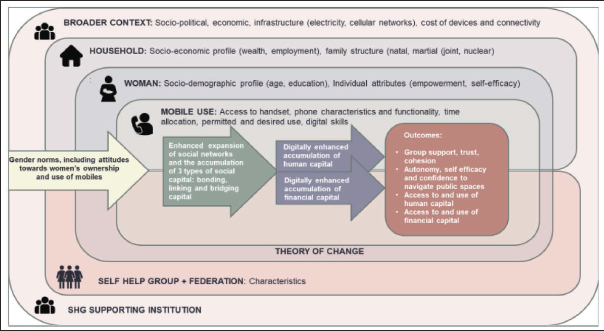
Figure 1 illustrates the determinants of women’s mobile phone use which is expanded in Figure 2 into the context of SHGs.
Participation in SHGs
The formation of SHGs is the critical initial step in the process which can lead to women’s empowerment. Bandura’s social cognitive theory (1994) can help us unpack some of the psychosocial processes that result in greater psychological empowerment, such as autonomy and self-efficacy among SHG participants. Self-efficacy and agency refer to a person’s ability to believe that they can accomplish a task and persist in that action despite obstacles or challenges. Bandura’s social cognitive theory (1994) is rooted in an agentic perspective and suggests that people are more likely to pick up and master new behaviours in the context of a shared peer group environment, where there is social support and role-modelling. Therefore, operating from this framework, self-efficacy develops in SHGs because of the interactions that group members have with each other in their small groups, as well as with SHG federation staff (Reddy, 2019). Interactions with federation staff, such as Community Resource People, enable women to learn and practice new skills in the trusted environment of the group, which may help them feel more equipped to adopt and implement new behaviours.
Participating in SHGs can encourage mobile device use and accessibility. An example is the Smart Snehidi project in Tamil Nadu, India, which employed women’s savings and loans groups to facilitate handset and data purchases, boosting data usage. This partnership led Vodafone to subsidise costs, creating a strong case for collaboration (GSMA, 2017b). Smart Snehidi and Vodafone worked to mitigate tariff and data cost concerns, offering tailored bundles including free talk time (valued at INR 50, less than one US dollar), monthly data quotas and reduced-cost data for pre-installed apps (GSMA, 2017b). There are also efforts to digitize groups’ existing savings and loans processes, which could enable more rapid, cost-effective access to credit (Singh et al., 2019).
Gender Norms
Norms surrounding gender are critical not just to women’s access to and use of mobile phones, but to any TOC for women’s empowerment. While the Brody model sees gender norms as a barrier to group participation (Brody et al., 2016), it does not elucidate how gender norms might change or be reinforced as a function of women’s access to SHGs. For our conceptualisation, we use the term ‘gender norms’ to refer to informal rules and shared social expectations that distinguish expected behaviour based on gender. Social norms theory (Campbell, 1975; Sherif, 1936) helps us explicate how gender norms might function in these SHGs. Norms usually include societal expectations of our behaviour (Blake & Davis, 1964; Pepitone, 1976), the expectations of significant others (Fishbein & Ajzen, 1975), people’s own expectations of their behaviour (Schwartz, 1977) and standards that develop out of observing other people’s behaviour (Bandura, 1977). Norms are regarded as functional and develop in order for people to adapt to a shared social environment (Campbell, 1975; Sherif, 1936).
In the context of SHGs and gender empowerment, any attempt at changing norms might mean causing a change to the social order, which in this context is patriarchy. Therefore, this might cause SHGs to be perceived as a threat to the patriarchal social order, just as mobile phones in the hands of women may be regarded as a threat (Gurumurthy et al., 2019). Also, there are often social sanctions associated with deviation from social norms and evidence suggests that there is a risk that SHGs may exacerbate gender conflict (Brody et al., 2016). Additionally, De Hoop et al. found that while Indian savings group participation is associated with higher feelings of autonomy, there is a negative effect on subjective well-being in communities with more conservative gender norms. One must be aware of the gender norms within which the SHGs are operating, the perils that participants must navigate and external factors which may limit their ability to institutionalise the knowledge and skills provided through the SHGs. As mentioned above, digital empowerment can potentially invoke patriarchal backlash (Pasricha, 2016, cited in Gurumurthy & Chami, 2018; Kovacs et al., 2013, cited in Gurumurthy & Chami, 2018), and creators of digital interventions for women’s collectives must adopt gender intentional design methodologies to avoid triggering or worsening gender-based violence, and have processes in place to respond to backlash online (BBC Media Action, 2022). However, as the programmes described in the next sections, there are many emerging examples of how digital programmes in the context of SHGs show promise for empowering women in India.
The Characteristics of SHGs
The characteristics of SHGs have been identified as a key determinant of empowerment outcomes. The Barooah TOC assumes that (i) groups are inclusive, and poor and marginalised households are effectively organised into groups; (ii) enabling institutional arrangements are in place for groups to function; and (iii) there is sustained institutional strengthening through training and building of the groups’ organisational capacity to make them self-sufficient. Building on this analysis, the Gates Foundation’s Gender Equity Team has identified five critical elements in ‘strong’ SHGs: (i) pooling savings and sharing risks; (ii) group solidarity and networks; (iii) participatory learning and life skills; (iv) critical consciousness of gender; and (v) access to markets d services (Gates Foundation, 2018). The functioning of SHGs and the capacity-building organisations that support them could be greatly augmented by digital technologies, as is evidenced in the examples discussed below.
The revised TOC is situated at the centre of Figure 2, where one can see the expansion of social networks and the accumulation of social capital as key drivers of other empowerment mechanisms—i.e., the accumulation of human capital and financial capital, which could all be enhanced and accelerated by digital technology. Social capital theory posits that social capital is a feature of relationships and represents an investment in network connections between individuals that have expected returns (Lin, 1999; Putnam, 2000). Three types of social capital are useful when thinking about women’s empowerment in the context of SHGs: (i) bonding social capital (Putnam, 2000), (ii) bridging social capital (Putnam, 2000) and (iii) linking social capital (Poortinga, 2012).
Bonding Social Capital
When a woman joins an SHG, she forms relationships beyond marital family connections to include other women in the SHG (usually other local women, living nearby). This then leads to the expansion of bonding social capital. Bonding social capital exists within a homogenous group of people (often a specific geographic community) and increases through processes of network closure (Putnam, 2000). Bonding social capital often plays a dual role; while it strengthens solidarity among members of a particular group, it can occasionally come at the cost of distancing members of that group from persons in other groups, limiting one’s access to alternative and less socially similar, sources of information and support (Warschauer, 2004). For women in SHGs in rural areas, the bonding social capital generated by the group fosters trust, social support and cohesion. However, these homogenous groups often have limited opportunities to build networks and organise, and their limited networks with strong and repetitive ties provide few opportunities to access new ideas and exchange best practices or critical information with women beyond their immediate circle. There is not much evidence of digital technology being used to augment the accumulation of bonding social capital in SHGs, primarily because women in the same group usually live in close proximity to one another (on the same street or in the same village) and see each other regularly. However, programmes that expand access to personal mobile devices for women could augment local digital communications between women living in close geographic proximity. The aforementioned Smart Snehidi programme in Tamil Nadu, which leveraged SHGs and assisted in the purchase of handsets and data, could boost bonding capital (GSMA, 2017b).
Linking Social Capital
The subsequent accumulation of linking social capital may be the major driving force for change in SHGs. Linking social capital involves the transmission of social resources across explicit, formal or institutionalised power or authority gradients in society (Poortinga, 2012). Linking capital is largely situated in the connections between local women (SHG members), the wider SHG federation and the staff of SHG supporting organisations, who often come from more advantaged socio-economic backgrounds. The accumulation of linking social capital in SHGs could be accelerated by women’s use of mobile phones, which could improve access to information and services, training, more consultative planning and coordination of collective action across federated structures. For example, it has been observed in SHG supporting organisations that women who were cluster-level organisers (CLOs) were using WhatsApp on smartphones to disseminate information more rapidly to SHG group leaders (Rice & Chamberlain, 2021). The CLOs were described as being on their phones ‘all day’, constantly fielding calls from group leaders, and acting as the conduit for information between group leaders and federation leadership at higher levels in the wider structure. Those leaders in the wider SHG supporting organisations above the CLO were typically women from higher socio-economic strata, who were supporting and empowering local women who were CLOs.
As can be seen in Figure 2, linking social capital is a key driver of the accumulation of human capital, as supporting organisations and SHG federations provide training and capacity building to women in SHGs. Digital technology is already being used to augment these processes. It can be challenging and expensive to provide high-quality, standardised face-to-face learning at scale, which also rarely provides the flexibility that time-poor rural women need. Impactful, cost-effective mobile-based training has been successfully delivered to rural, low-income women at scale by BBC Media Action in India for almost a decade (Scott et al., 2022; Bashingwa et al., 2021), and a recent BBC Media Action proof of concept with the SHG supporting organisation, PRADAN, delivered mobile-based agricultural training to marginalised women farmers in SHG federations in Bihar during the COVID-19 pandemic (BBC Media Action, 2022). Best practices from these interventions could be applied to deliver cost-effective digital training for women in SHGs on everything from livelihoods to critical gender consciousness sustainably at scale. Chaitanya WISE, another SHG supporting organisation, provides training to SHGs in the states of Madhya Pradesh and Chhattisgarh on how to access and use digital financial products and tools, such as digital payment solutions and micro-insurance products (Chaitanya WISE, n.d.).
As can be seen in Figure 2, linking social capital is also a pathway to the accumulation of financial capital, which could be digitally enhanced. There are several initiatives by supporting organisations and SHG federations in India to digitally accelerate SHG members’ access to government entitlements. For example, Haqdarshak (2022) equips women who already own smartphones in SHGs with a software application to help other members (who do not own smartphones) to identify which government entitlement schemes they are eligible for and to claim these benefits (Mandle, 2020). To date, these women (known as ‘Haqdarshikas’) have helped 600,000 people claim entitlements in 22 Indian states (Haqdarshak, 2022). Likewise, Soochnapreneur, an entrepreneurship programme by the Digital Empowerment Foundation, has trained 25,000 rural women from SHGs on how to use digital tools to further empower more than five million rural women in India, connecting them to information, rights, government entitlements and other necessary digital services (World Bank, 2021). In these examples, linking capital, the connections among women from different social strata, facilitated the acquisition of financial capital in the context of digital initiatives.
Bridging Social Capital
SHG federations could use the internet to accelerate the accumulation of bridging social capital. This is social capital shared amongst heterogeneous groups of people, which increases through brokerage as individuals establish or maintain links to people from other network spaces (Putnam, 2000). In other words, bridging social capital is created in SHGs when women’s social networks expand beyond the group or federation to provide access to new opportunities, and new ideas and ways of doing this. For example, it has been observed that slightly better educated, wealthier women in urban SHGs in Madhya Pradesh were using the internet to identify new markets for their products and services, particularly online markets, or to identify new, less expensive suppliers of raw materials (Rice & Chamberlain, 2021). Women in SHGs were also using the internet, particularly YouTube, to learn new skills, such as how to stitch new styles of clothing, weave new sari designs, make new styles of handbags, jewellery, crafts and more (Rice & Chamberlain, 2021). Digital technology could enable this learning to be shared more widely with the SHG federation, across SHGs in different villages. Rice and Chamberlain (2021) documented a case of one local woman, who set up 30 women’s SHGs and then coordinated their activities. She owned her smartphone, which she used every day to manage her groups and to communicate with other women from other SHGs in nearby communities mainly via WhatsApp. The opportunity to connect women from different networks but from similar social strata (bridging capital) is great in such contexts.
Bridging social capital connects women of similar social origins across disparate network spaces. Consider Mobile Vaani, an IVR social media platform for rural Indian communities created by Gram Vaani. It offers extra channels for grassroots members to seek tailored information, resources and services, as well as to voice their opinions within the broader federated structure. The initiative allows women in SHGs to dial a number for recording audio messages about their community or listening to messages from others. With over 100,000 distinct users each month, the platform is actively utilised in Bihar and Jharkhand states. It facilitates information sharing and discussions on diverse subjects, including COVID-19 health updates (Gram Vaani, 2022). Here, as with linking capital, the action of bridging capital is facilitated by technology and leads to the accumulation of human capital and financial capital.
Conclusion
In the prior section, we explored several programmes and technologies that demonstrate how social capital operates within SHGs and how digital technologies come into play. An obvious next step of this work is to test the model and the different pathways that have been proposed through an empirical study. Even without such an empirical study, we believe that this expanded TOC helps to clarify how SHG federations could leverage digital technology to augment women’s pathways to empowerment. Expanding the conceptualisation of social networks and social capital in SHGs could aid in the design of digital interventions that accelerate the expansion of women’s social networks beyond their small groups in SHG federations, resulting in the accumulation of linking and bridging social capital. This could help SHGs overcome many of the weaknesses identified in Part I of this article. For example, digital communication could provide additional opportunities for engagement with federation staff, such as Community Resource People, and with group leaders in other geographies. Digital communication could also provide isolated groups, which have limited opportunities to build networks and organise beyond the women in their immediate circle, with access to new opportunities, ideas and ways of doing this. This accumulation of linking and bridging social capital could subsequently help women in SHGs to access flexible learning opportunities, and to increase their access to government entitlements, loans, micro-insurance schemes, less expensive inputs for their businesses and new markets. However, if digital solutions for SHGs are created without using a pro-poor gender lens, there is a risk that existing inequalities could be exacerbated, and bonding social capital eroded by creating divisions between the digital haves and have-nots in SHGs. Concerted efforts must be made to increase women’s ownership of mobile phones, and their ability to use them for purposes that they consider meaningful in their lives and society to ensure that the benefits of digital technology are more equitably shared.
Footnotes
Declaration of Conflicting Interests
The authors declared no potential conflicts of interest with respect to the research, authorship and/or publication of this article.
Funding
The authors received no financial support for the research, authorship and/or publication of this article.
