







Abstract
This article aims to discuss empowerment carried out by the Kampung Sablon Association (KSA) to reduce post-disaster poverty. The study was located in Pandes Village, Central Java, Indonesia. Following a qualitative approach, data were collected through document study, in-depth interviews and observations. Fifteen community members participated in the study. The analysis shows that local community initiative/organisation or internal community work provided employment opportunities, which empowered people and helped reduce poverty. Highlighting the significance of cooperation and network, it adds a fourth stage of empowerment towards realising a sustainable economy. It argues that while most studies show the external agents’ essential role in the post-disaster recovery context, it is critical to focus on the internal community organisation and practices, such as gotong royong, the Indonesian local wisdom, which was used by KSA to creating jobs and producing new confection entrepreneurs. The research implication is that the community should also be trained in the spirit and skills of entrepreneurship. It is a key to success in running a business and reducing poverty.
Introduction
This article is based on a study that examines how efforts made by the Kampung Sablon Association (KSA; sablon means screen printing) help overcome poverty in the village following a disaster caused by an earthquake. The article argues that local community initiatives or internal community work can provide employment opportunities, which can empower and help reduce poverty. Briefly, empowerment means providing people with the resources, opportunities, knowledge and skills to enhance their capacity (Ife & Tesoreiro, 2013). The study uses a qualitative approach and aims to describe the empowerment of the Pandes Village community carried out by KSA to help reduce post-disaster poverty.
Indonesia, being located in the Ring of Fire area, has had many natural disasters. One of these is the tectonic earthquake that rocked Central Java. Earthquakes occur frequently; even Yogyakarta (in the Central Java area) has been shaken by hundreds of thousands of earthquakes from 2008 to 2023, both small and large-scale disasters (Mustaqim, 2023). The affected areas, apart from Yogyakarta, are Sleman, Boyolali, Klaten, Magelang, Solo, Semarang, Purworejo and Pacitan. The impact on the community generally includes damage to physical buildings and public facilities as well as causing injuries/death (Regional Disaster Management Agency, 2015).
Pandes Village area is 1.42 km2, which is the most affected hamlet rocked by an earthquake. The earthquake impacts the economic, social and educational sectors. Most people in Pandes Village are farmers, breeders and small entrepreneurs. Small industries, such as confection, stand out in the village. Confection is mass-made clothing that is sold ready-to-wear. In this study, confection includes screen printing on clothing, cloth bags and so on. The confection industry is usually a small-scale industry, and many businesses were affected due to the destruction of business capital and assets. This motivated confection entrepreneurs to establish KSA, a local institution that emerged from a community initiative.
What follows is a brief literature review, the objectives of the study, the research methods employed, the results and discussion and the conclusion of the study. It brings out the importance of the use of local knowledge by local community people for local employment creation, and thereby, poverty reduction. It also emphasises training in the skills of entrepreneurship.
Literature Review
Disasters and Poverty
Several studies have examined the link between disaster and poverty. Putra’s research (2017) investigates the impact of natural disasters on poverty in Indonesia. Further, based on research conducted in Nepal, Awasthi (2019) maintains that a disaster impacts lives and livelihoods and contributes to poverty. There is a significant relationship between disaster risk and poverty. The study conducted by Gong and Zhang (2007) shows that the impact of natural disasters in undeveloped areas is worse and even causes poverty because of the low capacity to cope with the disasters. In a study, Sabates-Wheeler et al. (2008) determined that ‘the impacts of a hazard on poorer people and households are more likely to experience negative and more severe impacts compared to a hazard among better-off groups’. Low income increases fragility to disasters because people with low incomes have a weaker capacity to deal with the hazardous effects and socioeconomic resilience. Research conducted by Hallegatte et al. (2020) explores the linkage between disaster and poverty into three aspects: the role of hazards, vulnerability and socioeconomic resilience. The authors discover that people with low incomes tend to be affected by disasters. When impacted, low-income people tend to lose their wealth and have a lower capacity to cope with the negative impact of disaster. Chin and Chor (2019) establish a bidirectionally causal linkage between poverty, economic growth, financial development and natural disasters in the Philippines. Evidently, the effects on economic growth and financial development occur because, as stated by Pawar (2023), ‘every disaster increases expenditure incurred by the government, besides lost lives and human misery’. Further, Sawada and Takasaki (2017) reveal a relationship between disaster and poverty at the macro and micro levels. The authors suggest ‘the critical importance of complementarity among markets, governments, and communities for successful pro-poor disaster policies’. Moreover, they explain a vicious circle between disaster losses and poverty: Poverty is a primary push factor of people’s vulnerability to natural disasters, significantly raising the same (poverty).
Community Empowerment and Post-disaster Poverty
Bahransyaf’s research (2009) discovers the urgency of empowerment after a disaster to restore the socioeconomic conditions of the community. Political parties outside the community are empowered through social institutions/local institutions to carry out economic activities. Moreover, another research on empowerment conducted by Ginting and Dewi (2020) emphasises increasing the capabilities of village communities, coordinating with various parties across agencies and sectors, and establishing communication with local leaders. Another study finds that the community empowerment implemented in Padang, Indonesia, is ineffective, because of the community’s dependence on external parties and the vagueness of duties among various implementors in carrying out community empowerment (Anggun et al., 2020). Further studies related to community participation and empowerment in disaster management and post-disaster recovery efforts (Amalia & Sari, 2018; Muis & Anwar, 2018).
Research conducted by Prasetya (2014) finds that the mitigation system, which does not include the community as one of the stakeholder pillars, influences the system’s effectiveness. Based on the study conducted in Africa by Tabe-Ojong et al. (2020), social safety net programmes could perform better without emphasis on cash benefits. It is recommended that the efforts should incorporate long-term interventions, such as community-driven development (CDD) programmes, including behavioural changes.
Based on various studies on disaster, poverty and community empowerment explored above, several essential points are observed: The empowerment must be carried out so that communities can be independent after a disaster; disasters cause poverty; and the existing poverty can make the capacity of people further weak in coping with disasters. Consequently, the socioeconomic conditions become worse. Previous studies (Anggun et al., 2020; Bahransyaf, 2009; Ginting & Dewi, 2020; Nidhal & Suryawati, 2020; Nugroho et al., 2017; Prasetya, 2014; Tan, 2019; Widhagdha et al., 2022) show that external parties generally play an important role in community empowerment. This external role is common in empowerment programmes, especially in the context of disasters. However, the present research explores the role of internal community initiatives in the empowerment process and poverty alleviation.
Empowerment: A Conceptual Framework
The concept of empowerment originates from the fight against poverty and serves as a route to reducing poverty (Hennink et al., 2012; Shera & Wells, 1999). According to Adams (2003), empowerment is ‘how individuals, groups, and communities can take control of their circumstances and achieve their own goals, thereby working towards helping themselves and others maximise the quality of their lives’. The goals of empowerment include positive discrimination and increasing liberty and equality within non-exploitative relationships. Empowerment relates to an individual, group or community’s ability to control their lives and strive to achieve a better future (Adi, 2013).
According to Wrihatnolo and Dwidjowijoto (2007), community empowerment is crucial in reducing poverty, especially in disaster areas. It is based on several arguments, including the following: First, through empowerment, the most significant opportunity is provided to the lowest layer of the community; second, strengthening the role of local community organisations because they best understand the character of the lowest strata of the community; third, the empowerment process creates an independent community culture and harmonious relations; and fourth, empowerment accelerates the goal of poverty alleviation. Hennink et al. (2012) put forward a conceptual framework of empowerment comprising six mechanisms with interrelated elements. The authors identify an empowerment mechanism consisting of knowledge, institutions, opportunities, capacity-building, resources and sustainability.
According to Sulistyani (Ginting & Dewi, 2020), there are three stages of empowerment:
The stage of awareness and behaviour formation. This stage forms awareness and caring behaviour so that the poor feel the need to increase self-capacity. At this stage, those who are the beneficiaries of empowerment must be made aware of the need for behavioural changes to achieve a better and prosperous life. The stage of knowledge and skills transformation. There are requirements to learn so that the empowerment beneficiaries can have knowledge, abilities and skills which add value to their potential so that empowerment can achieve the expected goals, namely improving economic conditions. The stage of increasing intellectual abilities and skill proficiency.
At this stage, the empowerment beneficiaries are directed at further developing the capabilities that lead to independence.
Research on post-disaster empowerment conducted by Asy’ari (2018) describes the empowerment efforts carried out through the following three stages of empowerment:
The stage of providing temporary assistance, such as food and shelter. The stage of introducing an entrepreneurial economy to disaster victims. The stage of realising a sustainable-based economy and introducing entrepreneurship to cover economic burdens and loss of livelihood. At this stage, it is necessary to assist with the sustainability of the community’s economy, such as providing capital assistance and access to marketing.
Comparing the two models of empowerment stages, a significant difference is identified in stage one. The first model emphasises raising awareness; the other provides temporary assistance for survival, such as food. Principally, the present research combines both models; however, stage one tends to use Sulistyani’s stage of empowerment (Ginting & Dewi, 2020), which is more suitable to our research context. In Mikkelsen’s view (Adi, 2013; Ross, 1967), the empowerment stages/process is a process that enables local people to analyse their problems, think about how to solve them, gain confidence to solve problems and make their own decisions about which alternative problem-solving to choose.
Objectives
The main objective of the study is to discuss the empowerment process carried out by the KSA to reduce post-disaster poverty. It explores the role of internal community initiatives in the empowerment process and poverty alleviation and economic development of disaster-affected communities.
Research Method
This research used a qualitative approach. The reasons for choosing Pandes Village as a research site were that it experienced the worst impact of the earthquake and that a self-initiative from the local community was discovered. The study was initially conducted in 2017–2018. However, because earthquakes continued to occur, especially around Yogyakarta, we continued to observe/monitor KSA’s development until the beginning of 2023. KSA still exists, but is less active as an organisation, as it has been successful in empowering its members, allowing their business to be more developed. As a result, they focus on their own businesses; they follow fashion and use environment-friendly screen-printing materials. There has been a role shift for KSA as an organisation; lately, it has played a more important role in maintaining harmony among its beneficiaries and with village residents.
Purposively selected 15 research participants of the study, including three KSA board members, five active members who helped the organisation, five village residents/community members, one village head, and one officer from the Regional Disaster Management Agency. The five community member participants were those who had experienced the empowerment process by KSA. They consisted of two elderly participants, two participants were men aged 25–35 years old, and one woman aged 18–25 years old. The criteria of selection were as follows: Those who were aware of the existence of KSA; those who had played a role in the formation of KSA; those who had experience in the empowerment process conducted by KSA; those who had benefitted from KSA’s work; and those who had faced disaster and worked on issues of disaster management in the community before, during and after the earthquake.
Pandes Village was visited eight times for data collection, excluding five times for preparation, and researchers stayed for a few days during each visit. The data collection techniques included document search (secondary data), in-depth interviews, and observations (on conditions of residents’ houses, confection businesses, the surrounding environment, and the socioeconomic conditions of local residents). Researchers prepared logbooks, semi-structured interviews and observation guides. The interview procedure was as follows: The research objectives were explained to each participant. Then, the idea of voluntary participation, no-risk involvement and the principle of confidentiality was explained. Following the participants’ oral consent for participation, each participant was asked the questions. A recorder and logbook were used to record and document all the data, which were managed and stored securely. Thematic analysis of the data was undertaken through data classification and coding. The data were then analysed and interpreted with relevant theories/concepts and other studies pertaining to poverty and empowerment.
Results and Discussion
Post-disaster and Poverty: Economic Impact
According to Sagan (Head of Disaster Rehabilitation Division/Regional Disaster Management Agency [Badan Penanggulangan Bencana Daerah or BPBD]), after every disaster, there is usually a new problem regarding poverty. Prior to the disaster, although the community could generally be categorised as poor, however, people had a peaceful life, houses, rice fields, businesses and jobs. After the disaster, everything is destroyed. Healthy people are rendered sick or disabled. One participant, Adjo, describes that after the disaster, all livelihoods are lost automatically. The confection entrepreneurs ran out of capital, and all equipment was destroyed. Fields and crops were damaged, and traders lost their capital. Working people, such as teachers and employees, were also not able to work because the disaster had affected their workplaces.
People have no money to sustain. According to Budi, many houses were damaged, including neighbours’ houses, which collapsed. His house was partly collapsed; in fact, it housed a screen-printing workshop. Therefore, for more than a month, he could not work. There was no income, and he completely relied on food aid.
According to Minah, the capital for her catering business was destroyed in a house collapse. She and her family slept in tents and ate from the food aid. The family has been unable to do any business for almost a year.
The effect of earthquakes is tremendous on people’s lives, as their economic lives plummet instantly. When a disaster occurs, the atmosphere is chaotic and stressful, as described by the following research informants/participants:
After the earthquake, we immediately put the tent up here. It rains very heavily. I have a five-day-old baby. We sleep in a tent only. Rice boxes poison the residents. Because there is no food, I have to eat the packaged rice, I do not know that the food inside is no longer in good condition; in the end, it becomes mass poisoning [sic]. Then, the ambulance comes repeatedly; the sirens do not stop because they transport the poisoned people [sic] and the dead bodies. Oh my God ... it is heavily raining, the ambulance sirens keep wailing. It is very stressful. (Tri) The conditions are terrible. Everyone is traumatised. The sound of ambulance being scared; our trauma lasts about two or three years. We are trying hard to eliminate the trauma, otherwise, we cannot focus on home industry (Wahyu). We experience trauma because our house is damaged, families and friends have died. When the house collapses, things are broken and there is no money left. Because of trauma, we cannot work normally. I continue to renovate the house for eleven months due to lack of money. (Minah)
The interviews demonstrated that the disaster caused massive physical damage, hence people were rendered without work (economic effects). At the same time, the disaster also caused trauma (psychological effects), and because of the trauma, people were unable to work and have income. Although poverty had existed in the village, the after-effects of the disaster were severe, causing much more poverty due to damage to the environment, businesses and the loss of people’s livelihood. The findings are consistent with other research conducted by Putera (2017) in Indonesia and by Awasthi (2019) in Nepal, which discovered that disaster has a devastating impact on people’s lives and has resulted in extreme poverty. However, due to the initiatives of KSA—a local community initiative/institution to empower the Pandes community and its surroundings—the people of Pandes Village have been able to escape prolonged severe poverty.
So, KSA helps people to have a better life.
Post-disaster poverty reduction efforts in Pandes Village can be regarded as short- and long-term poverty reduction initiatives. According to Ala (1996), poverty alleviation includes short-term strategies, namely, transferring resources in sufficient quantities to people experiencing poverty, such as creating job and income-earning opportunities. Through the KSA initiative, the local people obtain jobs and income-earning opportunities. Additionally, it includes a long-term strategy of adopting local self-help (self-reliance). The growth of community self-help leads to the fulfilment of a dignified individual and social life. This research shows that through the empowerment process carried out by KSA, community members are able to have jobs, open new businesses, create new jobs for others and have a dignified and prosperous life. This complies with Narayan’s views (2002), which emphasise the enhancement of the poor’s self-confidence, their belief in themselves and respect for their dignity.
How does KSA conduct the empowerment process to alleviate poverty? The following sections present the efforts initiated by KSA.
Empowerment Initiated by KSA
KSA’s Awareness and Objectives
As a non-partisan, independent and non-profit organisation, KSA originates from the spirit of cooperation and mutual assistance among confection entrepreneurs in Pandes Village affected by the earthquake. KSA was established and activated at a meeting of five home industry confection owners.
The remarks of the participants show that government assistance is mainly in the form of groceries, which are meant only for survival. It is provided when a disaster has just occurred, where villagers are not able to do anything about it. However, after this period, no help is provided. Similarly, other research conducted by Darab et al. (2021) discovers that the community is more pleased with the initiatives of the local community, compared to the involvement of centralised authorities during and after the disaster.
According to Faki, one of the participants, the initial goal of establishing KSA was to bring together confection entrepreneurs who still had remaining business capital. In a gathering, they identified the remaining capital and material, supporting one another in the process. Therefore, after the disaster, people are not let down because they perceive that they have friends in the same boat. During these gatherings, they raise self-awareness and optimism to form and join an institution to use the remaining capital to revive businesses. The KSA members strengthened one another, marking a good start.
Active Involvement of KSA in the Community’s Social Activities
Apart from being active in economic activities, KSA members are also actively involved as volunteers in organisations, such as the Spinal Cord Injury Association, Omah Hijau organisation (environmental issues), Semut Geni (assisting in dealing with disasters), flood prevention activities, and the preparation for parliamentary elections. They also sponsor some activities, for example, Independence Day celebrations. Since the establishment of KSA, its members have been committed to being active in village activities, establishing stronger solidarity and brotherhood with other villagers. Interestingly, by being actively involved in social activities in the community, it has become easier for them to invite community members to participate in KSA’s economic activities. They have become blended. They share an ultimate social goal: Advancing Pandes Village through a community empowerment process, where asset-owning entrepreneurs empower workers to increase their capacity. Although the workers help revive the owner’s business, the owners’ empowering capacity is much greater than that of the labourers.
This finding confirms Soetomo’s statement (2014) that the community’s commitment becomes more substantial if the institution is rooted in the community—not in external agents—and the community perceives benefits from the institution’s existence. KSA’s active involvement in social activities stimulates the community members to join its economic empowerment efforts; they trust KSA and are willing to follow the empowerment process. According to Homan (2004), to develop an organisation, one has to gather some of the following elements: People, information, other resources, issues and time. These elements must then be combined to produce the desired result—benefit for the community. As an organisation, KSA was solid because it accommodated and coordinated these elements.
The Stages of Empowerment
There are several aspects involved in the empowerment initiated by KSA, namely: Information about KSA, and that community members can improve their economic conditions together with KSA, KSA as an implementor institution, community members can have jobs and open new businesses, the transformation of knowledge and skills, the availability of remaining capital, the strong motivation of both KSA and community members, and assistance for business startup. These findings comply with the thoughts of Hennink et al. (2012), who identify an empowerment mechanism consisting of knowledge, institution, opportunities, capacity-building, resources and sustainability. The information about KSA, and that community members can improve their economic conditions together with KSA are the knowledge; KSA as an implementor institution is the institution element; the community members can have jobs and open new businesses are regarded as opportunities; transformation of knowledge and skills are capacity-building; the availability of remaining capital, and the strong motivation of KSA and community members are regarded as resources; and the assistance to business startup is to ensure sustainability.
KSA does two main things: (a) To invite young people who have just graduated from school to work in businesses owned by KSA members. (b) To encourage workers who work in member-owned businesses to build their own businesses. Related to these aspects, KSA carries out the stages of empowerment.
The stages of empowerment in the present study consisted of the following four stages:
1. The stage of awareness and behaviour formation
In the case of KSA, this awareness-raising stage starts with the confection entrepreneurs assembling after the disaster. This assembly results in awareness to form an association. Establishing an association is intended to use the remaining capital to revive their businesses. The members strengthen KSA as an implementor of community empowerment. This finding complies with Adams (2013), claiming that people must ‘empower themselves if they are to empower others’.
Next, the KSA members work together to find orders. They do promotions all over the place. They also created websites and social media to expand their network and promotions so that more orders come up. As a result, their marketing strategy combines both online and offline methods. They are pleased because they have obtained many orders. Whenever an order comes in, the members divide the work so that every person has a role and benefit. For example, research participant Banu makes T-shirts, Budi handles screen printing, Yudi performs promotions and Alsi oversees product packaging and other activities. The division of labour is arranged because each member’s remaining capital and assets are limited and different; therefore, the division of labour is adjusted according to the available capital and business assets owned by everyone. The following statements describe the collaboration among KSA members:
If one person gets the most orders, for example, brother Budi; later he will ask brother Adi to cut and sew, and other friends will assist him. It is not selfish, not individual. That is because we are all friends, wanting to help each other. So, everyone gets money, not just one person, even if this person gets the order. We are like a team. (Nardi)
Later, KSA members also raise awareness and motivate community members and youth, so they understand that the deteriorating conditions caused by the disaster could be improved with strong will and increased skills. The number of residents and youth joining KSA is increasing as they realise that joining it could improve their economic conditions. This stage forms consciousness and caring behaviour. Hence, the community perceives the need to increase self-capacity to attain a better life (Sulistyani in Ginting & Dewi, 2020).
2. The stage of knowledge and skills transformation
This stage introduces disaster victims to the entrepreneurial economic sector. KSA management and members recruit youth and unemployed individuals in the village to do internships and help with confection/screen-printing activities at KSA.
The confection entrepreneurs who are KSA members transfer knowledge and skills related to confection, such as sewing T-shirts, jackets and screen-printing business, as well as the marketing strategies, such as conventional and online marketing done by KSA. One of the research participants states the following:
School students like to take part in screen printing; they initially help, then become skilled; after that, they can open their businesses. Thank God, there are more and more businesses here creating jobs. Those who do not have a job can come to Kampung Sablon, so they can have experiences and learn skills. We assist people in improving their economic conditions. (Tri)
They are also taught how to make products that are trending in society.
3. The stage of developing new business, cooperation and network
The present research finds another stage which expands the existing empowerment stages, which consist of three stages. With this one-stage enrichment in the present study (stage three), the empowerment stage grows into four stages. The new confection business grows at stage 3. Ultimately, the people who were initially apprentices established their businesses in collaboration with KSA. Developing cooperation and networks is very crucial, especially for new entrepreneurs. These new entrepreneurs cooperate with KSA members and other parties from Pandes and other villages.
At this stage, the empowerment step is directed at developing the business to become more developed and independent, as well as establishing a startup. The present study shows that KSA members often share orders with other confection entrepreneurs both inside and outside Pandes Village, especially when they receive too many orders that cannot be handled by KSA members. By affording orders, KSA members also set a quality standard so that people can learn how to produce high-quality products. This demonstrates that KSA members attempt to empower other confection entrepreneurs by sharing orders. As a result, other confection entrepreneurs get a positive impact from KSA’s presence. It demonstrates the cooperation and network (Ife, 2013), which are critical to ensuring sustainability.
Based on the interviews and observations, several forms of cooperation and networking were identified. First, finding orders: Some persons find/accept orders despite needing a sewing machine and screen-printing tools, so the work is distributed. Another situation is where a person receives orders without a downpayment, and a friend who has leftover material lends it to them. Second, mutually sharing orders with other confection entrepreneurs both outside KSA and outside Pandes Village. Third, sharing of resources/information; for example, if someone has information that a store sells material at a lower price, the information is shared with fellow members. Finally, borrowing money as capital when obtaining orders.
One participant described the following:
We will sew it to a friend who has sewing machine and ask another friend to do screen printing as he has its tools. If the customer pays it off, then we will pay them. At other places, once the job is finished, the customers have to pay it immediately; we cannot do that. A good relationship with customers is well maintained. (Faki)
Ife (2013) explains that networking involves forming relationships with different people and using these to bring about change—network development both within and outside the community. Developing a network requires communication skills. Additionally, it is important to have a sense of solidarity and brotherhood to achieve the same goal, that is, better lives. Data show that they possess these attitudes.
4. The stage of realising a sustainable-based economy
At this stage, knowledge, ability and skill lead to independence; therefore, increasing capacity is crucial. KSA’s endeavours with the community have a positive impact, namely expanding employment opportunities and developing new confection businesses pioneered by people who were originally apprentices with KSA members. The presence of new confection businesses means opening new jobs in Pandes Village. As a result, more people affected by the disaster, who were initially unemployed, are now employed, become self-reliant and have restored the community’s economic conditions. The empowerment aimed at enhancing capabilities at this stage leads to a sustainable economy.
Asy’ari (2018) claims that providing capital assistance and marketing access is essential to support sustainability. However, based on a study conducted by Tabe-Ojong et al. (2020), if the support is only in the form of fund assistance, it causes dependency within the community. In the present study, KSA helps provide marketing access to business startups to realise a sustainable economy. Nevertheless, it does not directly provide capital assistance, although limitations in capital are an obstacle encountered by business startups. The assistance provided, for example, includes acquiring orders and lending material. After receiving payment, the borrowed materials are returned; this could be in cash or as the same material. Other aspects required to cater to sustainability include pricing, quality control and online and offline marketing.
In the field of marketing, KSA applies conventional marketing techniques (opening some shops and waiting for customers to come). Many customers prefer to visit shops because they can see and choose their preferred products directly. However, KSA also implements digital marketing by promoting its services and products online. With online marketing, more and more subscribers register, as they can reach markets outside their area using the internet and social media. KSA maintains two modes of marketing because of their benefits. This study is consistent with a previous study conducted by Sorasit and Charpavang (2022), which found that both conventional and online marketing have a significant favourable influence on the success of marketing. Producers are getting closer to their markets through massive digitalisation. It is direct, easy and cheap, without going through distributors. The internet and social media have become a new way of life for today’s society. They are used to improve online marketing, branding and spending functions (Haqqi & Wijayati, 2019). Businesses can no longer expect customers to come because they are used to the speed of interaction on social media (Savitri, 2019; Schwab, 2019). The use of Information and Communication Technology (ICT) is also found in a study on partnerships between farmers and companies (Kusnadi & Adi, 2021).
Looking at the empowerment efforts carried out by KSA, Ife’s (2013) views are relevant. The author introduces the concepts of internal and external community work. The empowerment initiated by KSA as a local community-based institution represents the ideas of internal community work; external parties are not involved in the empowerment process. This differs from other studies on community work and empowerment, which find that external community work is more common in practice, with external agents playing an essential role (Anggun et al., 2020; Bahransyaf, 2009; Ginting & Dewi, 2020; Nidhal & Suryawati, 2020; Nugroho et al., 2017; Prasetya, 2014; Tan, 2019; Widhagdha et al., 2022). However, in Ife’s (2013) view, the role of the external agent challenges the ideals of empowerment, local initiative and self-reliance; it creates the community’s dependence on external resources. He prefers the internal approach because external community work is seen as problematic; the external agent needs to learn about the community in a better manner, including its social, economic and cultural aspects. According to Wrihatnolo and Dwidjowijoto (2007), local community institutions play a central role in reducing community poverty because ‘they best understand the character of the lowest strata of the community’. This research discovers that the efforts of a local community institution, rooted in the community, accomplish community empowerment to overcome the problem of livelihood loss after the earthquake. These efforts are seen and termed as empowering processes because, through the stages of empowerment, people develop the awareness and motivation that they can improve their income, enhance their knowledge and skills, have jobs, develop networks and open new businesses, and attain a sustainable-based economy.
Furthermore, in the process, mutual help, brotherhood, social interaction and social solidarity are practised. The local wisdom called gotong royong emerges during interviews. The value of gotong royong is togetherness and cohesiveness among community members to help one another achieve harmony, happiness and better lives in the community (Amalia et al., 2021; Kurniawan & Tinus, 2019). These principles become positive motivating factors in the empowerment process. According to participants, ‘gotong royong spreads, we apply it in KSA activities. It is not only at KSA, but also among community members’. Thus, KSA action is influenced by the value of gotong royong, a local wisdom of the Indonesian people, primarily in the villages of Java.
The present research results show positive implications of local wisdom on the empowerment process. These positive implications align with research on soyo practice, where the revitalisation of local wisdom values is found in the community empowerment of the modern management era (Munir et al., 2021). However, there is also other research which finds local wisdom can be an obstacle because it has implications for weak human resources, low entrepreneurial spirit and less responsiveness (Hasyem & Ferizaldi, 2022).
Economic Conditions After the Empowerment of KSA
This article argues that post-disaster, the Pandes Village community experienced more severe poverty, but KSA empowered the people and provided employment opportunities, which helped reduce poverty. Based on the interviews, before the earthquake occurred and damaged the village, community members’ income was low, namely around IDR 750,000–1,000,000 per month. When the earthquake occurred, their income was much lower; they had no income and received only the government’s social assistance for daily life. However, after joining KSA, their income was between IDR 1,500,000 and 3,000,000. According to the head of the disaster rehabilitation division, KSA is an excellent effort, not just depending on any external assistance. If we depend on it (external input), our creativity and imagination will not develop, and there will be no increase in our economic level. So, I want to say that with the KSA model… I want it to grow and develop. Some were used to following other people’s business, now they have their own. Those who previously had a hard time living can say they are happy and have their own home. I acknowledge and praise the existence of KSA for empowering the community’s economy, which has been quite good at increasing the people’s standard of living in Pandes Village. (Sagan)
A youth participant perceived that he was fortunate to learn a great deal by doing an internship at KSA. He started his business with KSA’s support. Now he is happy because he can support his parents in renovating their house. A community member (Warto) conveys that he and his family can live decently after joining KSA. Youth are recruited as part of the regeneration plan. Yudi, a participant, informs that besides helping create jobs, KSA also regenerates so that it continues to exist. Residents, especially young people, feel positively about the presence of KSA in Pandes Village. The research participants (community members and youth) acknowledge that a significant change is visible in the habits of village youth, especially those who have graduated from school because, in the past, unemployed youth used to hang out, but now they have jobs. Further, the other participants stated the following:
KSA brings a lot of benefits. At present, there are no unemployed young people. Young people can take part in KSA’s training, or some directly practise screen printing. KSA opens up employment opportunities; or they can then have capital and set up their own business. So, the impact is great. After the KSA is established, the business increased. The results can be seen from the construction of permanent houses, being able to open a business outside KSA, and having transportation facilities. (Tri, Nardi, Alsi, and Wahyu).
Banu, one of the KSA members, often collaborates with small tailors in Pandes and other villages to sew clothes ordered by his business partners at a cost higher than the regular market price, but he stresses quality. By slightly increasing the payment for small tailors in the village, Banu anticipates not having cheap orders, so they can meet their daily needs. KSA members want the tailors and other screen-printing confection entrepreneurs who have just started their businesses to receive fair and reasonable prices in order to improve their economic conditions.
In this research, employment provision is considered an important approach in the post-disaster recovery process. According to participants, ‘The benefit of the KSA’s existence is obvious that the economic level is better. In our opinion, now we are not poor; we have job and income, our experiences have also increased. KSA has helped people come out of poverty’.
This research’s results indicate that economic empowerment initiated by KSA has improved the community’s economic conditions. As described previously, KSA creates employment and produces entrepreneurs. The presence of new entrepreneurs and confection businesses means opening new jobs in Pandes. As a result, many disaster victims, initially unemployed, are now employed, self-reliant and gradually restoring the community’s economic conditions. According to Agustina (2019), an entrepreneur needs the following skills: Information, media and technology skills; innovation skills (such as risk-taking and creativity); skills in life and learning (e.g., leadership, ethical values, productivity and accountability); and practical communication skills (such as being able to work in teams and collaborations). Moreover, developing an entrepreneurial mentality in KSA internship and training programmes is crucial because people joining KSA have no entrepreneurial experience. The mentality of being a farmer—mainly practised by members of the Pandes community—is very different from that of an entrepreneur, as their work ethics differ.
To be an entrepreneur, one must have ‘an entrepreneurial mindset, entrepreneurial culture, entrepreneurial leadership as well as strategic management of resources and applying creativity and developing innovation’ (Hitt et al., 2001). It is desired that self-sufficiency and a sustainable economy develop after the disaster. This is the core of the post-disaster redevelopment phase.
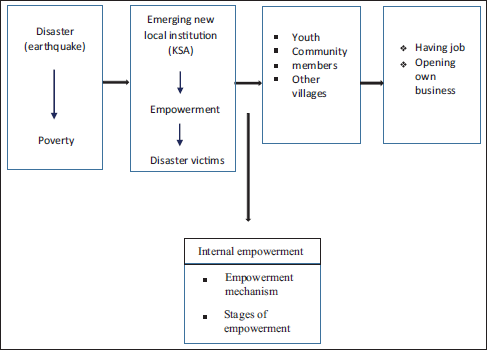
Figure 1 presents mapping of this study.
The Summary of Research Findings.
Conclusions and Suggestions
Empowerment carried out by KSA members through four stages is able to improve the community’s welfare and address post-disaster poverty. KSA, as a newly emerging local community organisation, is close to the village community and can identify problems and find solutions with the Pandes community. It appears that KSA’s movement trusts gotong royong, an Indonesian local wisdom emphasising mutual help, solidarity and cohesiveness.
KSA not only plays a crucial role in economic empowerment but is also actively involved in the community’s social activities, ensuring its presence has a positive impact on the community. KSA’s initiative and active involvement in these activities have resulted in a close relationship between KSA and community members. This encourages increasing numbers of community members to participate in KSA’s economic empowerment initiatives, particularly in the confection and screen-printing businesses. KSA does not only create jobs but also produces entrepreneurs. In turn, these new entrepreneurs create jobs, enabling people who join KSA to become independent and achieve dignified living. This is the core of the post-disaster redevelopment phase.
This research contributes to the field of empowerment arena. Previous studies identified three stages of empowerment, but this study highlights four stages: One more stage is that of cooperation and network. This stage is critical to ensure sustainability. Second, while previous studies established the important role of external agents (external community work) in community empowerment, this research identifies the practice of internal community work perspective in the context of an earthquake, carried out by a newly emerging local institution (KSA) established post-disaster. Finally, based on this study, community members and youth should be provided not only knowledge and skills in confection but also with an entrepreneurial mentality and spirit, as some of them are headed to be entrepreneurs. An entrepreneurial mindset is key to successfully running a business that can contribute to poverty reduction. Although it is a small qualitative study with inherent limitations and was conducted in one community, three suggestions may be considered. (a) As KSA created new entrepreneurs, the mindset and mentality/spirit of entrepreneurship must be directed to the community members and youth, apart from the knowledge and skills related to the screen-printing confection. (b) KSA needs to be updated with the latest developments in screen-printing designs. (c) Future research and practice should focus on internal community work and its application to other issues.
Footnotes
Acknowledgement
Constructive feedback obtained from the editor has helped improve the article’s quality. The authors gratefully acknowledge the suggestions provided by the anonymous reviewers.
Declaration of Conflicting Interests
The authors declared no potential conflicts of interest with respect to the research, authorship and/or publication of this article.
Funding
The authors disclosed receipt of the following financial support for the research, authorship, and/or publication of this article: The authors received financial support from Universitas Indonesia for conducting field research in another province.
