







Abstract
Rapid urbanization and economic growth have transformed metropolitan cities of India into major centres of development, modernization and social mobility. However, the extent to which such development has ensured safety and protection for women as victims of crime remains a matter of serious concern. The present study examines the spatial pattern and magnitude of women’s victimization in the metropolitan cities of India and explores the contradiction between urban development and women’s security. The study is based on secondary data obtained from the National Crime Records Bureau, Crime in India report (2022). Nineteen metropolitan cities, each having a population of more than two million, have been selected for analysis. Six major categories of crimes in which women emerge as victims—rape, dowry deaths, assault on women with intent to outrage modesty, insult to the modesty of women, cruelty by husband or relatives and kidnapping or abduction to compel marriage—have been examined. A composite index of criminality has been computed to measure the degree of women’s victimization and inter-city variations. The findings reveal significant regional disparities in the victimization of women across metropolitan India. Jaipur emerged as the most hostile metropolitan city for women victims, whereas Coimbatore recorded the lowest criminality index, indicating the safest urban environment. The study further reveals that metropolitan cities, despite accounting for less than one-tenth of the national population, contribute disproportionately to several crimes against women. The study concludes that economic development and urban expansion alone do not protect women from victimization, highlighting the need for victim-centred urban governance, gender-sensitive institutions and socially inclusive development for ensuring women’s safety and dignity.
Introduction
Crime is an action or a range of behaviour that deviates from the established legal norms of a society. It is, thus, an aberration and a deviation against the established norms, beliefs, culture and binding laws (Yigzaw et al., 2023). Crime is an intentionally committed act or omission in violation of the established criminal laws (Khasnobis & Dinda, 2020). However, the occurrence of crime is an interplay of various social, economic, demographic, local and institutional factors, and its gravity varies across different kinds of offences. Offences against women are particularly considered most serious in Indian society, specifically when reported from the metropolitan cities which are known for being the centres of socio-economic growth and development. Newspaper reporting on crime against women shows that they are victims of heinous crimes irrespective of their age, education, social and economic status. Therefore, in the introductory part of this study, content analysis of reports on crime against women in the Chandigarh edition of The Indian Express, a national daily, has been conducted to understand the nature of crime against women occurring in India. The time range of these reports has been taken from 20 October 2024 to 15 January 2025.
These newspaper reports show the prevalence of the dowry system, which emerges as one of the most harmful acts against women. The dowry system in India refers to the durable goods, cash and real or movable property that the bride’s family gives to the groom’s family during marriage. Dissatisfaction on account of the quantity and quality of dowry given, young brides are often subjected to verbal as well as physical torture at times leading to death by suicide or murder (ENS, 2024, 2024a). Not only dowry, but other customs and festivals where the bride’s family has to give money, gifts, clothes, etc., to the family of the groom make gift giving a lifelong process, pushing women towards mental stress and vulnerability. Thousands of married women commit suicide or are killed by their in-laws and sometimes by their husband due to their greed for more dowry (Saha & Saha, 2017). The legal protective measure of Section 498A of the Indian Penal Code (IPC) was established to protect women against this vitimization. Contrarily, numerous instances of its misuse in recent times have been highlighted by various Indian courts, including the Supreme Court of India. The Supreme Court of India, in one of its judgements in this matter, has observed that ‘there is a growing tendency to misuse provisions such as Section 498A of the IPC intended to protect married women as a tool for unleashing personal vendetta against the husband and his family by a wife’ (Ananthakrishnan, 2024). Similarly, while quashing another first information report (FIR), the Punjab and Haryana High Court has found a disturbing trend of ‘proxy litigation’ in India for matrimonial disputes already settled abroad. The High Court has observed that ‘all allegations of dowry harassment against the petitioners appear to be omnibus and coloured by malicious intent’ (Sandhu, 2024). Similarly, a woman in a live-in relationship with a man implicated him in a false case of rape and threats with the support of a police officer after developing relations with him (Brar, 2024). Thus, the tendency of falsely implicating men by women is also reported to be increasing.
Sexual assault against women is another widespread reported abuse. Rape or gang rape is the worst form of it, even when a woman is accompanied by her male relative (ENS, 2024b, 2024c, 2024d). Blackmailing by video graphing intimate actions of women with their male partners is another form of abuse women are subjected to. A college student was sexually abused by a person and his friends several times by blackmailing her using the intimate videos of her with her boyfriend, which were recorded when she went to a café to celebrate her birthday (Bisoyi, 2024). Similarly, eight persons were held for gang-raping a woman after a video of the incident made by them went viral (Baruah, 2024). Likewise, an 18-year-old athlete from a scheduled caste community alleged that as many as 62 people sexually abused her. She was facing sexual abuse from the age of 13 years and was even exploited by some persons by recording the incident (Philip, 2025).
Women are subject to sexual assault even if they are mentally disturbed. A mentally disturbed college student was sexually assaulted by two students in Tamil Nadu. Her vulnerability was exploited by a fellow female student studying with her and several male acquaintances as well (Janardhanan, 2024a).
Women are subject to discrimination even by their parents, who do not send them to school or marry them at an early age. Complaints of torture by husband or in-laws also go unheard at times by the parents. It was reported that in one such case, a woman compelled by such circumstances was forced to leave her husband and indulge in criminal activities for survival. She was being used as bait to lure other men to secluded places where her accomplice would either snatch their vehicles or valuables. Such was the fate of a girl who started her life as a victim and ended up as an accused (Deep, 2024). Patriarchal power relations shape gender differences in crime, pushing women into crime through victimization, role entrapment, economic marginality and survival needs (Steffensmeier & Allan, 1996).
Honour killing is another area where women are victimized to the extent that they are killed by their own family or community members in the name of honour. In India, where the tradition of arranged marriages is prevalent, a young woman’s own choice of life partner without the consent of the family is considered an attack on the honour of the family, and the father or brother of the girl would not hesitate to kill her to save their honour. Hence, not only after marriage, girls are subjected to killing even for love affairs (ENS, 2024e). The prevalence of the caste system in India is another impediment for young boys and girls to get married. Inter-caste love marriages are invariably not tolerated. The honour of the family is more at stake when a scheduled caste boy from a poor family marries a girl of a rich and higher class or caste family against the wishes of her parents. The higher class or caste family considers it a challenge to their honour, and to avenge, they do not even hesitate to kill the boy (Philip, 2024a). Sometimes, the women have to bear the consequences for not responding to a proposal for marriage from a person. A 26-year-old schoolteacher was stabbed to death on the school campus by a man from her village who had proposed marriage to her. He got agitated after she rejected his proposal, citing her family’s disapproval (ENS, 2024f, 2024g, 2024h). A man who got married few days ago murdered his wife, in retaliation for being slapped by his wife, after he slapped her during a quarrel between them (ENS, 2024i). A man considers himself superior to his wife, and his honour is at stake if his wife disobeys him. Married women are also subject to being killed by their husbands under the suspicion of having an affair with another man (Pragynesh, 2025).
Girls are not safe even in educational institutions. The worst part of it is when they are subject to sexual assault by their own teachers (ENS, 2024j), and still worse is when they have to bear such agony even at a young age of three years (ENS, 2024k). Still unfortunate is when a minor girl was gang-raped by the headmaster and two teachers from another school. The accused came in contact with her on the pretext of guiding her in her studies. A person from another department was also involved in this crime (Naidu, 2024). Similarly, the police apprehended a sports teacher of a private school for allegedly showing obscene videos to girl students on his mobile phone by taking three to four girls to the basement in the school (ENS, 2024l). Likewise, a student from the Indian Institute of Technology Kanpur claimed that a Provincial Police Service officer sexually exploited her under false pretences of marrying her after divorcing his wife. He also threatened her with serious consequences and made objectionable posts with the intent to defame her by levelling fake charges. The officer was enrolled for PhD in the institute, where he developed his relationship with the student (PTI, 2024). Similarly, an engineering student at Anna University was sexually assaulted, which led to political protests (Janardhanan, 2024b). Likewise, a professor from Delhi University was suspended on account of sexual harassment of a female student (Mathew, 2024).
Seeking a job is another area where females could be blackmailed for sexual favours. An army Subedar was found guilty for allegedly demanding sexual favours from a woman who was a former employee of the Canteen Stores Department and was seeking reappointment (Chhina, 2024). In another case, some high-profile persons were involved in sexual abuse where the complainant has alleged that the men sexually assaulted her under the pretext of helping her to secure a government job. They also recorded inappropriate videos of her and threatened to eliminate her if she did not adhere to their demands (Bhatia & Parashar, 2025).
The places of work are another area where women become victims of sexual assault. A woman actor had raised allegations of rape against a prominent actor and legislator of a well-known political party. She could not pursue her legal battle because of political pressures and no support from the state government (Philip, 2024b). Similarly, Jammu and Kashmir High Court refused to quash FIR against a senior defence officer who was accused of sexually assaulting a woman colleague during a New Year’s party (Masood, 2024). There appears to be a clear indication of a correlation between the incidence of rape, molestation and sexual harassment with female work participation, implying that women are more vulnerable to violence when they go out for work (Mukherjee et al., 2001).
Women become victims of sexual abuse irrespective of their age. A 41-year-old manager of a diamond factory in Gujarat died at a Mumbai hotel where he took a sexual enhancement supplement while allegedly sexually assaulting a minor girl. He allegedly blackmailed her by threatening to cut off financial aid he was giving to her family, which included her mother, bedridden father and unemployed brother (Rajput, 2024). A 20-year-old man forced a minor girl into sexual relations and threatened to kill her if she disclosed it to anyone. He forcibly kept assaulting her in the absence of her family members at her own house (ENS, 2024m). Minors are not only sexually assaulted but also get murdered by the accused to escape revealing their identity and becoming a witness in the court of law (ENS, 2024n, 2024o). A 10-year-old tribal girl was abducted and raped. The parents did not report to the police to save the honour of the family. The accused again abducted her and not only sexually but also physically assaulted her to the extent that she died after 10 days of the incident (Raja, 2024). After the incidence of rape and murder of a junior doctor in a hospital in Kolkata, West Bengal, on 9 August 2024, the courts have become strict while pronouncing the punishment in such cases. While pronouncing the punishment in a case of rape and murder of a minor girl, a court in Jangipur in Murshidabad district of West Bengal granted a death sentence to a 35-year-old man and life imprisonment to his 23-year-old accomplice (ENS, 2024p).
Women also struggle for their safety, even in their own homes, from their family members. A man was held for raping his six-year-old daughter multiple times (ENS, 2024q). Still more unfortunate incident is when a grandfather, father and uncle of a teenage girl were held for allegedly sexually assaulting her over the past few months, resulting in a pregnancy. Due to frequent harassment, the girl and her mother left the house (ENS, 2024r). Females often experience various forms of violence by close and extended family members, neighbours and acquaintances and by men in positions of power and authority (Saha & Saha, 2017).
However, it must be mentioned that most of the crimes against women go under-reported for obvious reasons, such as social stigma, distrust in legal mechanisms and fear of retaliation. Institutional indifference further makes matters worse. It is extremely difficult to file a complaint against men serving in power positions such as police, armed forces or government functionaries (Mukherjee et al., 2001). However, they have further observed that the extent of under-reporting is expected to vary across space and time as well as by type of crime. For example, rape is grossly under-reported, but dowry deaths rarely go unreported. In this contest, this study explores the magnitude of crime against women in the metropolitan cities of India.
Objectives of the Study
Major objectives of the study are:
to study the status of cases of dowry deaths, rape, assault on women with intent to outrage her modesty, insult to the modesty of women, cruelty by husband or his relatives and kidnapping and abduction of women to compel for marriage and to find out the levels of criminality against women in metropolitan cities of India.
Database and Methodology
Metropolitan city-wise data pertaining to crime against women for the year 2022 were collected from the report on crime in India: 2022 by the National Crime Records Bureau (NCRB), Ministry of Home Affairs, New Delhi. The study is based on crimes recorded under IPC. There is no special category of crime against women in the NCRB report; therefore, the information regarding the indicators taken up in this study has been taken from the category of ‘offences against human body’. In this study, crimes such as dowry deaths, rape, assault on women with intent to outrage her modesty, insult to the modesty of women, cruelty by husband or his relatives and kidnapping and abduction of women to compel her for marriage are considered to find out the levels of crime against women. To bring different types of offences on the same scale, weightage scores such as 12, 10, 8, 6, 4 and 2 have been respectively allotted to the crimes such as dowry deaths, rape, assault on women with intent to outrage her modesty, insult to the modesty of women, cruelty by husband or his relatives and kidnapping and abduction of women to compel her for marriage. City-wise data about population has also been taken from the NCRB report, where it is provided for 2011, as it is the latest census data available in India.
Tabulation of data has been presented as (a) the city-wise rate of crime (incidence of crime per 0.1 million of population) has been calculated for each crime; (b) the rate of each crime was multiplied with the scores allotted to that crime and the results for each crime were summed up as total scores; (c) the total scores were divided by the number of crimes taken into account to arrive at the average score per crime; (d) to calculate the index of criminality against women, city-wise average scores were divided by the national average following the index devised by Kundu (1992), and the results were rounded up. Thus, simple statistical techniques of division and indices have been applied for the tabulation of data. Tables are prepared to interpret the results.
Results
Metropolitan Cities by Size of Population
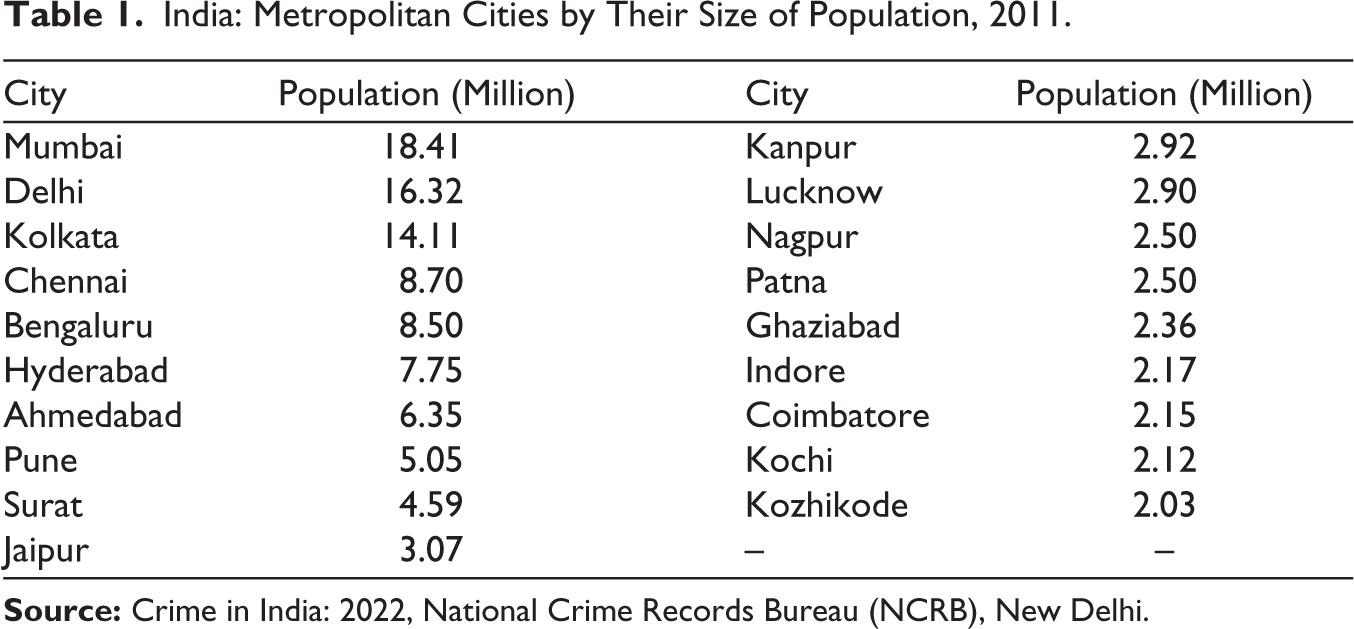
The cities having a population of more than two million are designated as metropolitan cities by the Census of India. Thus, in 2011, there were 19 cities in India known as metropolitan cities. Among these, Mumbai, Delhi and Kolkata are extra-large cities with more than 10 million populations (Table 1). Similarly, Chennai and Bengaluru are very large metropolitan cities with populations ranging between 8 and10 million. Hyderabad and Ahmedabad are large metropolitan cities by virtue of their population, ranging between 6 and 8 million, whereas Pune and Surat cities are moderate in size, and Jaipur city is small in size on account of its size of population.
While Kanpur, Lucknow, Nagpur, Patna, Ghaziabad, Indore, Coimbatore, Kochi and Kozhikode, with less than three million populations, are very small metropolitan cities (Table 1). Thus, about 50% of metropolitan cities are very small in size. The study reveals that, on account of the population, there are very large variations among metropolitan cities, as the top three cities account for more population than the combined population of the bottom 14 metropolitan cities, which account for 74% of total metropolitan cities. Thus, the study reveals that there is polarization of the population in extra-large metropolitan cities of India.
India: Metropolitan Cities by Their Size of Population, 2011.
State-wise Distribution of Metropolitan Cities
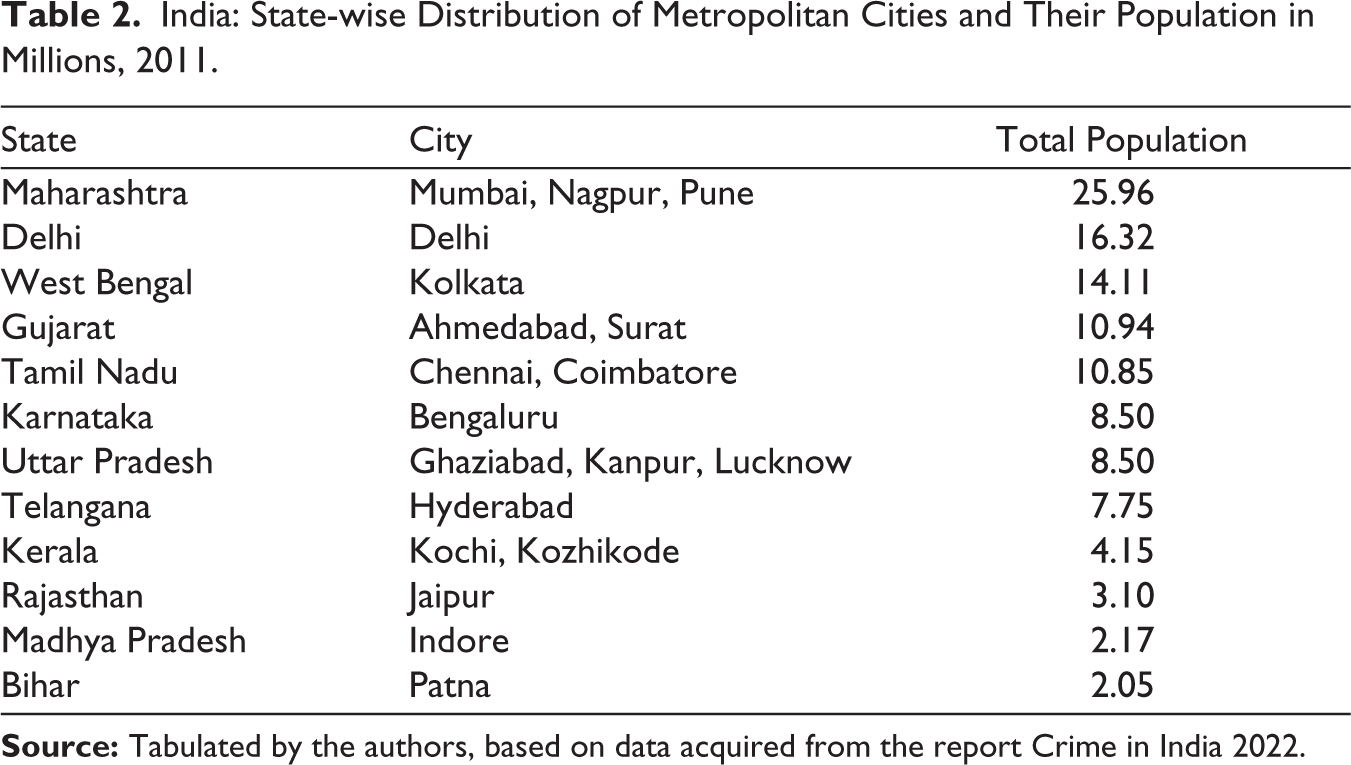
All the metropolitan cities are distributed across 12 states of India. There are states such as Maharashtra and Uttar Pradesh where three metropolitan cities each are located. Similarly, the states of Gujarat, Tamil Nadu and Kerala have two metropolitan cities each. All other states such as Delhi, West Bengal, Karnataka, Telangana, Rajasthan, Madhya Pradesh and Bihar have one metropolitan city each (Table 2).
Taking into account the population residing in metropolitan cities, it has been found that Maharashtra, with three metropolitan cities, holds more population than the combined population of three cities of Uttar Pradesh, two cities of Kerala and one city of Madhya Pradesh. Similarly, Delhi has more population than the combined population of two cities of Kerala and one city each from the states of Rajasthan, Madhya Pradesh and Bihar. It has been observed that three states of Maharashtra, Delhi and West Bengal have more population, living in metropolitan cities, than the combined populations of metropolitan cities falling in all other states except Bihar. Thus, the study reveals that the population residing in metropolitan cities is confined to a few selected pockets of India.
Extent of Crime Against Women
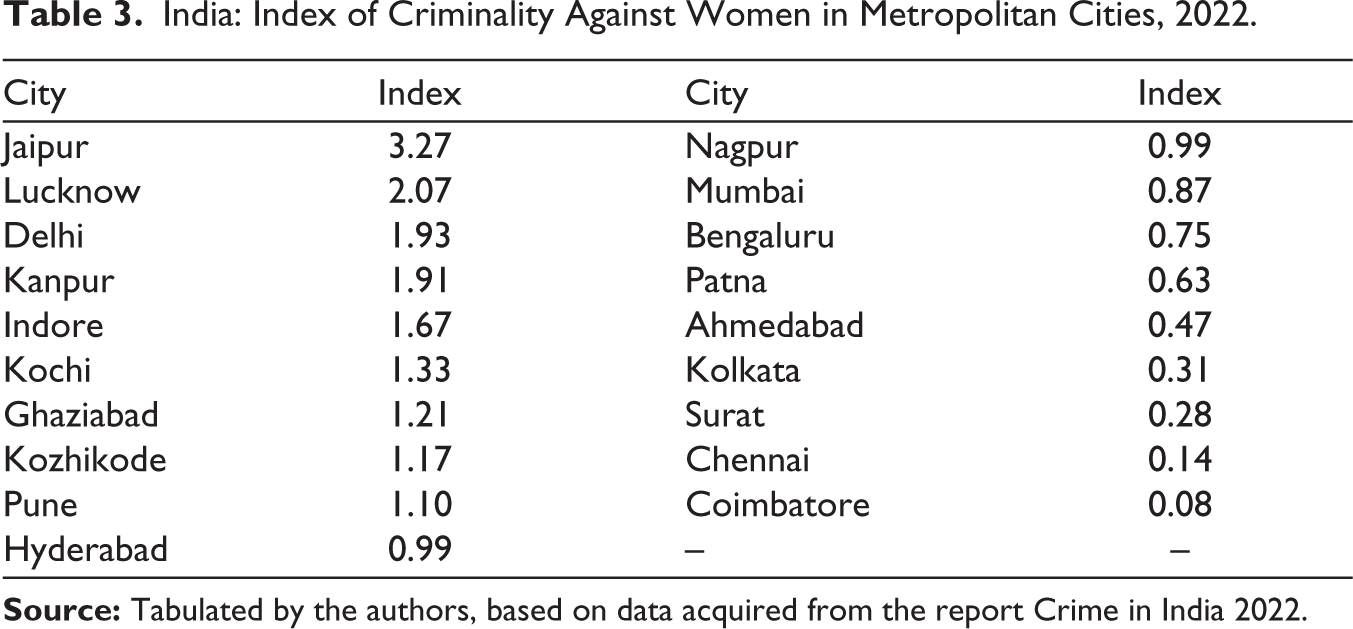
Taking into account six types of crime against women, a city-wise index of criminality has been calculated, and the results are presented in Table 3. By recording 3.27 index of criminality, Jaipur, the only metropolitan city of Rajasthan, has emerged as the most crime-prone city for women in India. On the other hand, Coimbatore city in Tamil Nadu has recorded the lowest index of criminality (0.08) against women, suggesting a most sustainable and favourable metropolitan city for women. Thus, Jaipur is 41 times more hostile for women than Coimbatore. On account of the magnitude of criminality against women, Jaipur is closely followed by Lucknow, the capital city of Uttar Pradesh, Delhi, the capital of the country, and Kanpur city, the largest urban centre of Uttar Pradesh (Table 3). However, 50% of the metropolitan cities witnessed very low (less than 1.00) index of criminality, suggesting very sustainable and safe areas for women to live in.
India: State-wise Distribution of Metropolitan Cities and Their Population in Millions, 2011.
India: Index of Criminality Against Women in Metropolitan Cities, 2022.
Levels of Crime Against Women
Cities with Very High Level of Crime Against Women
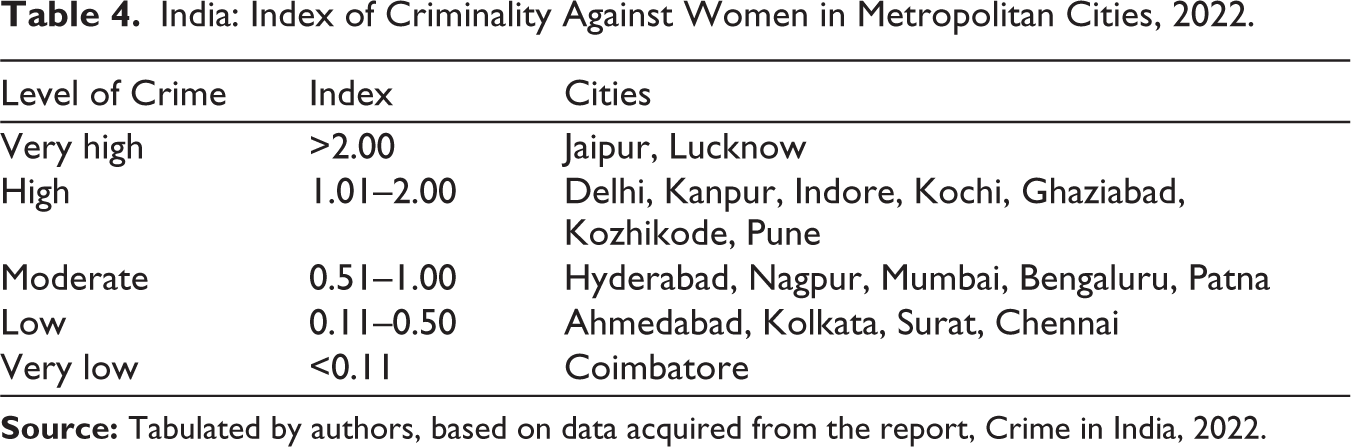
Two metropolitan cities, namely Jaipur, the capital and most important tourist city of Rajasthan, and Lucknow, the capital of Uttar Pradesh, have registered a very high index of criminality against women (Table 4). Both cities are the capital cities of their states, where law and order are expected to be of the highest order. On account of recording a very high rate of the incidences of rape, assault on women with intent to outrage her modesty, cruelty by husband or his relatives and a high rate of dowry deaths, Jaipur city has emerged as the most crime-prone city for women. Apart from these, the city has witnessed a low rate of insult to the modesty of women and kidnapping and abduction of women to compel them for marriage (Annexures I–VI). Similarly, Lucknow has also been included in this category by recording very high rate of incidences of cruelty by husband or his relatives and kidnapping and abduction of women to compel her for marriage and a high rate of dowry deaths and assault on women with intent to outrage her modesty. However, the city has recorded a moderate rate of rape and did not witness any case of insult to the modesty of women (Annexures I–VI). Thus, by registering very high to high rates in various crimes against women, these cities have emerged as the most hostile metropolitan cities for women in the country.
Cities with High Levels of Crime Against Women
The study further reveals that seven cities, namely Delhi, the national capital of India, Kanpur and Ghaziabad from Uttar Pradesh, Indore, the only metropolitan city of Madhya Pradesh, Kochi and Kozhikode, the metropolitan cities of Kerala, and Pune from Maharashtra, have registered a high level of criminality against women (Table 4). Comprising 37% of total metropolitan cities, this group of cities, recording a high level of criminality against women, is the largest among all the categories of cities taken up in this study.
India: Index of Criminality Against Women in Metropolitan Cities, 2022.
Delhi, the national capital of India, is at the top in this category of cities, having witnessed a high level of crime against women. Delhi has registered a high rate of incidences of rape, assault on women with intent to outrage her modesty, insult to the modesty of women and cruelty by husband or his relatives. Delhi has also witnessed a moderate rate of dowry deaths and a very low rate of kidnapping and abduction of women to compel them for marriage (Annexures I–VI).
After Delhi, Kanpur and Ghaziabad cities of Uttar Pradesh have also witnessed a high rate of criminality against women. Kanpur has registered a very high rate of cruelty by husband or his relatives, kidnapping and abduction of women to compel her for marriage and high rate of dowry deaths and assault on women with intent to outrage her modesty. Similarly, Ghaziabad has also witnessed a high rate of dowry deaths and cruelty by husband or his relatives and a moderate rate of assault on women with intent to outrage her modesty and kidnapping and abduction of women to compel her for marriage. Among these two cities of Uttar Pradesh, Ghaziabad is less crime-prone than Kanpur, the largest city of Uttar Pradesh.
Kochi and Kozhikode cities of Kerala also registered a high level of criminality against women. Kochi has witnessed a very high rate of assault on women with the intent to outrage her modesty and insult the modesty of women. City has recorded a moderate rate of incidences of rape and a very low rate of dowry deaths and cruelty by husband or his relatives. Similarly, Kozhikode has recorded a high rate of assault on women with intent to outrage her modesty and a moderate rate of cruelty by husband or his relatives and insult to the modesty of women. However, no case of dowry death, kidnapping and abduction of women to compel her for marriage has been reported in the city. Among these two cities of Kerala, Kozhikode is less crime-prone than Kochi.
Indore, the only metropolitan city of Madhya Pradesh, and Pune, from the state of Maharashtra, have also registered a high level of crime against women. Indore city has witnessed a high rate of incidences of rape, assault on women with intent to outrage her modesty and cruelty by husband or his relatives and a moderate rate in dowry deaths. In other indicators, the city has recorded low rates of crime. Pune lies at the bottom of the list of metropolitan cities, recording a high level of crime against women. Leaving aside the high and moderate rates of incidence of rape and assault on women with intent to outrage her modesty, in all other categories of crimes, it has witnessed a low rate of crime (Annexures I–VI). In fact, Pune is very close to the cities recording a moderate level of crime against women as it has crossed the limit just by 0.10 index of criminality to enter this category. Thus, there is a wide range of variations within this category of cities on account of the degree of criminality against women recorded by them.
Cities with Moderate Levels of Crime Against Women
The metropolitan cities such as Hyderabad, Nagpur, Mumbai, Bengaluru and Patna have witnessed a moderate level of criminality against women (Table 4). Among these, Hyderabad, the capital city of Telangana, lies at the top by recording a high rate of incidents of insult to the modesty of women and a moderate rate of assault on women with intent to outrage her modesty and cruelty by husband or his relatives. In all other types of crimes taken up in this study, the city has registered a low rate of occurrences. Nagpur and Mumbai of Maharashtra also fall in this category. Mumbai has witnessed a very high and high rate of insult to the modesty of women and assault on women with the intent to outrage their modesty. In all other indicators, it has registered a very low rate of crime. Similarly, Nagpur city has recorded a moderate rate of rape and assault on women with intent to outrage her modesty and a low rate in all other categories of crime against women taken up in this study (Annexures I–VI).
Bengaluru, the capital city of Karnataka state, and Patna, the capital city of Bihar, have also registered a moderate rate of crime against women. Except for moderate rates of assault on women with intent to outrage her modesty, in all other indicators of criminality, Bengaluru has registered a low to very low rate of crime against women. Similarly, Patna city has recorded a very high rate of kidnapping and abduction of women to compel them for marriage and a high rate of dowry deaths. The city has witnessed a low rate of rape and assault on women with intent to outrage her modesty, while not a single case was reported about insult to the modesty of women (Annexures I–VI). Thus, 26% of the metropolitan cities of India have reported a moderate level of crime against women by recording crime rates varying between very high and very low of different types of crimes taken up in this study.
Cities with a Low Level of Crime Against Women
A low level of crime against women has been reported from four cities, namely Ahmedabad and Surat from the state of Gujarat, Kolkata from West Bengal and Chennai from Tamil Nadu (Table 4). Ahmedabad has witnessed a low rate of crime in the incidences of rape, assault on women with intent to outrage her modesty, cruelty by husband or his relatives and kidnapping and abduction of women to compel her for marriage. The city has recorded a very low rate of crimes of dowry death and insult to the modesty of women. Kolkata has witnessed a moderate rate of crime associated with the insult to the modesty of women and a low rate of assault on women with the intent to outrage her modesty. In all other crimes taken up in this study, the city had witnessed a very low rate of crime. Similarly, Chennai has registered a low level of crime rates in assault on women with intent to outrage her modesty and insult to the modesty of women, while in all other crimes, it has recorded a very low rate of crime (Annexures I–VI). Thus, all the cities falling in this category of a low level of crime against women have witnessed a low to very low rate of crimes taken up in this study. Only Kolkata city has registered a moderate rate of crime in only one indicator, insult to the modesty of women.
Cities with a Very Low Level of Crime Against Women
Coimbatore, Tamil Nadu, is the only metropolitan city that has witnessed a very low level of crime against women (Table 4). The city has registered a very low rate of the incidences of rape, assault on women with the intent to outrage her modesty and cruelty by the husband or his relatives. However, no case has been reported in other crimes such as dowry deaths, insult to the modesty of women and kidnapping and abduction of women to compel her for marriage (Annexures I–VI). On account of such low rates of crime, the city has registered the lowest index (0.08) of criminality against women (Table 3). Thus, the city is the safest place for women to live in.
Position of Metropolitan Cities in Crime Against Women at the National Level
The study reveals that metropolitan cities recorded more than twice the share of the crime of insult to the modesty of women with respect to 9.42% of their share in the total population of the country (Table 5). Similarly, their share in the total crimes of rape (11.53%), cruelty by husband or his relatives (11.34%) and assault on women with intent to outrage her modesty (10.84%) is also more than their share in the total population of the country.
Metropolitan Cities: Percentage Share of Population and Incidences of Crime Against Women Recorded at the National Level, 2022.
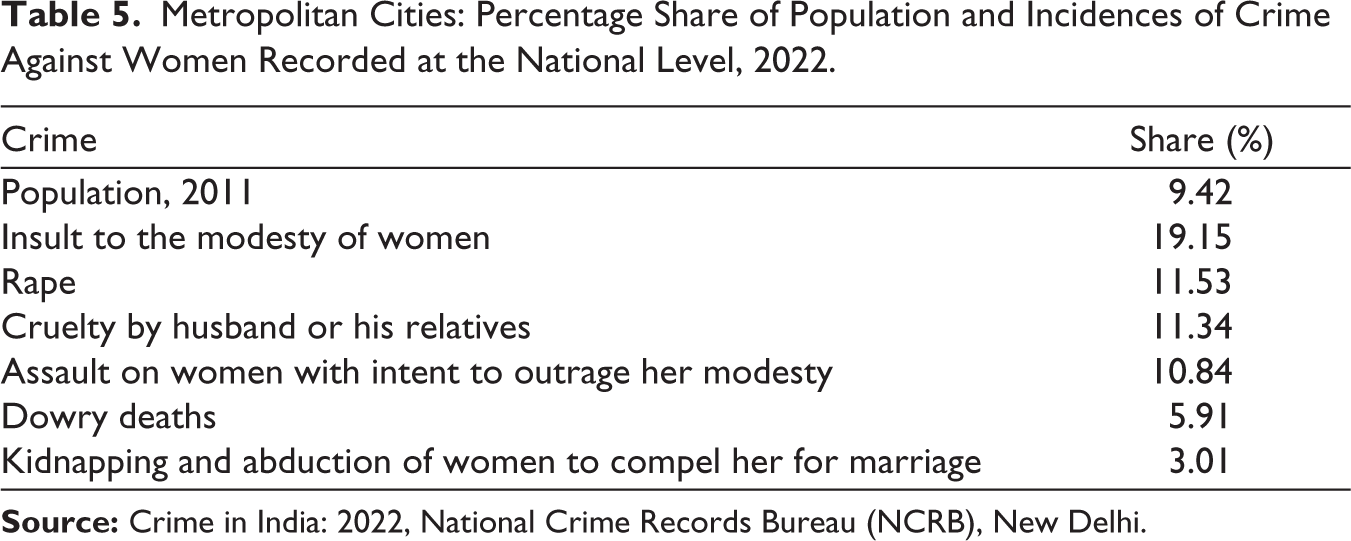
On the other hand, in cases of dowry deaths, kidnapping and abduction of women to compel her for marriage, the share of metropolitan cities is much less than their share in the total population of the country. Thus, the study exhibits that the crimes, such as rape, insult to the modesty of women, cruelty by husband and his relatives and assault on women with intent to outrage her modesty, are more confined to the urban areas of larger size, such as metropolitan cities.
Discussion
The present study highlights a disturbing paradox of contemporary urban India, where metropolitan cities, widely recognized as symbols of economic growth, modernization, educational advancement and social mobility, continue to expose women to significant levels of victimization. The findings clearly demonstrate that urban development does not necessarily translate into personal safety, dignity or freedom from violence for women. Rather, the process of urbanization appears to create complex social environments where women, despite greater participation in education, employment and public life, continue to emerge as victims of physical, sexual, psychological and domestic violence. This observation supports the capability approach advanced by Nussbaum (2002), who argued that genuine development must be measured not only in economic terms but also in the ability of individuals, particularly women, to live with security, dignity and bodily integrity.
One of the most significant findings of the study is the substantial spatial variation in women’s victimization across metropolitan cities. The emergence of Jaipur as the most hostile metropolitan city for women, in contrast to Coimbatore as the safest urban centre, indicates that women’s victimization is not determined solely by city size, population concentration or economic prosperity. Rather, local sociocultural norms, institutional responsiveness, law enforcement efficiency, community support structures and social attitudes towards women appear to shape the extent of victimization. Similar regional disparities in gender-based violence have been highlighted in studies of Indian urban crime, which suggest that the vulnerability of women is deeply embedded in local patriarchal structures and differential reporting practices (Khasnobis & Dinda, 2020).
The high levels of victimization recorded in state capitals such as Jaipur, Lucknow and Delhi are particularly striking. These cities possess better administrative infrastructure, stronger police establishments and greater judicial accessibility compared to smaller urban centres. Yet, women in these cities continue to emerge as victims of rape, assault, cruelty and other forms of gender-based violence. This suggests that the mere presence of institutions does not guarantee protection unless women can effectively access justice and receive timely institutional support. Sen (2000) has similarly emphasized that social justice and human security often remain unevenly distributed despite economic advancement.
The high incidence of rape, assault on women with intent to outrage modesty and insult to modesty in cities such as Delhi demonstrates how women’s increasing participation in public spaces may simultaneously create opportunities for empowerment as well as exposure to victimization. Metropolitan life is characterized by mobility, anonymity, weak informal social control and intense interaction among strangers, conditions that may increase the vulnerability of women in public spaces. Earlier work by Mukherjee et al. (2001) found a positive association between women’s workforce participation and exposure to sexual harassment and violence, particularly in urban environments where gender norms fail to evolve alongside economic change.
The findings from cities of Uttar Pradesh, especially Kanpur and Ghaziabad, reveal particularly high levels of women’s victimization in the form of cruelty by husband or relatives, dowry deaths and kidnapping or abduction to compel marriage. These findings demonstrate that women continue to experience severe victimization within family and marital institutions even in urbanized settings. The persistence of such crimes reflects the continued influence of patriarchal family structures, economic dependency and social control over women’s choices. This observation strongly supports the feminist criminological framework developed by Steffensmeier and Allan (1996), who argued that women’s victimization is closely linked to gendered power inequalities embedded within social institutions.
An equally important pattern emerges from metropolitan cities of Kerala, such as Kochi and Kozhikode. Although these cities recorded low or negligible levels of dowry deaths and kidnapping, women continued to emerge as victims of assault and public harassment. This suggests that social development, literacy and health achievements may reduce certain traditional forms of victimization but may not necessarily eliminate sexual harassment and violence in public spaces.
The relatively lower levels of women’s victimization in Ahmedabad, Surat, Chennai and particularly Coimbatore may indicate stronger social cohesion, better urban governance, more responsive policing or community-level preventive mechanisms. However, lower recorded crime rates should not automatically be interpreted as the absence of victimization. Underreporting remains one of the most serious challenges in understanding crimes against women. Studies by the NCRB have consistently acknowledged that crimes such as rape, domestic violence and sexual harassment often remain unreported due to social stigma, fear of retaliation, family pressure and lack of trust in legal institutions.
At the same time, the relatively lower concentration of dowry deaths and kidnapping for marriage in metropolitan cities suggests that certain forms of women’s victimization remain more deeply rooted in semi-urban and rural sociocultural settings. This reflects the coexistence of traditional and modern forms of gender violence across different spatial contexts in India.
Overall, the findings of the present study establish that women’s victimization remains a critical challenge in metropolitan India. Economic growth, urban expansion and demographic concentration cannot be considered indicators of genuine development if women continue to face violence in homes, workplaces, educational institutions and public spaces.
Conclusion
The present study highlights the persistent victimization of women in metropolitan India and exposes a serious contradiction between urban development and women’s safety. The analysis of 19 metropolitan cities reveals substantial spatial variations in the victimization of women, indicating that urban growth and modernization alone do not guarantee a secure social environment for women. The study identifies cities such as Jaipur, Lucknow and Delhi as major urban centres where women face higher levels of victimization in the form of rape, assault, cruelty by husband or relatives, dowry-related deaths, kidnapping and other forms of gender-based violence. In contrast, cities like Coimbatore and Chennai provide relatively safer urban environments, demonstrating that women’s victimization is influenced not merely by population size or economic development but also by social attitudes, institutional responsiveness, law enforcement and community support systems.
The findings further reveal that metropolitan cities, despite accommodating less than one-tenth of the country’s population, account for a disproportionately higher share of several crimes in which women are victims, particularly rape, assault on women, insult to modesty and cruelty by husband or relatives. This suggests that increasing urbanization, mobility, social anonymity and changing gender roles may create new spaces of opportunity for women, while simultaneously exposing them to greater risks of victimization.
The study concludes that true urban development cannot be achieved when women continue to live under the threat of victimization in their homes, workplaces, educational institutions and public spaces. Sustainable and inclusive urban development, therefore, requires a victim-centric approach that prioritizes women’s safety, dignity, justice and freedom. Strengthening gender-sensitive policing, ensuring swift judicial redressal, creating safer public infrastructure, promoting community accountability and transforming patriarchal social norms are essential steps towards building metropolitan cities where women are not victims of violence, but equal and secure participants in the process of development.
Footnotes
Declaration of Conflicting Interests
The authors declared no potential conflicts of interest with respect to the research, authorship and/or publication of this article.
Funding
The authors received no financial support for the research, authorship and/or publication of this article.
Annexure I.
India: Rate of Dowry Deaths in Metropolitan Cities, 2022.
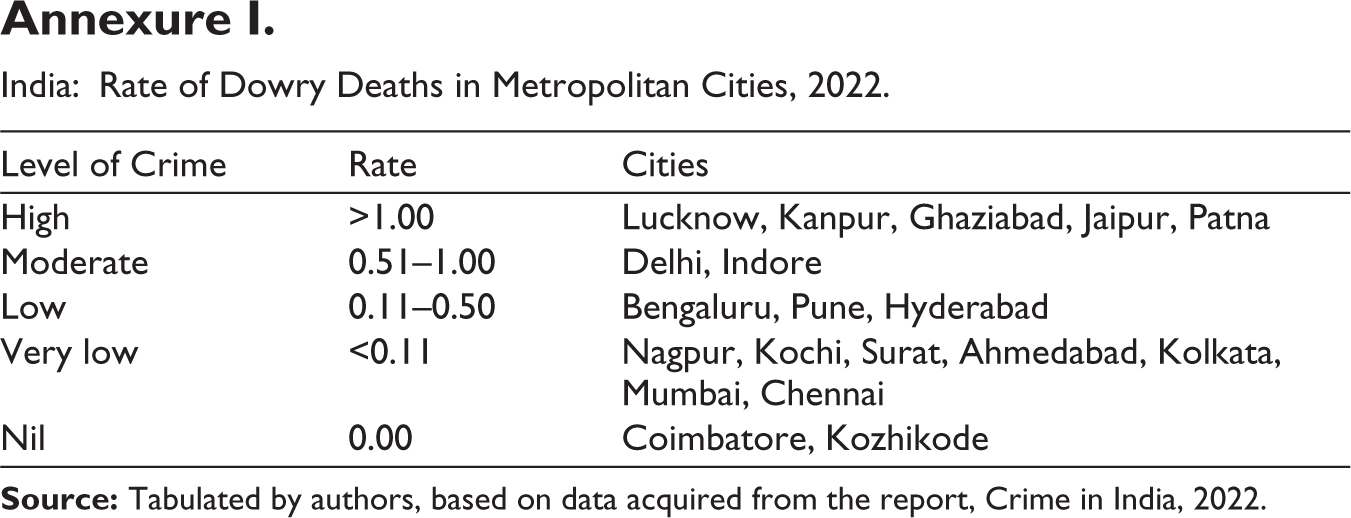
| Level of Crime | Rate | Cities |
| High | >1.00 | Lucknow, Kanpur, Ghaziabad, Jaipur, Patna |
| Moderate | 0.51–1.00 | Delhi, Indore |
| Low | 0.11–0.50 | Bengaluru, Pune, Hyderabad |
| Very low | <0.11 | Nagpur, Kochi, Surat, Ahmedabad, Kolkata, Mumbai, Chennai |
| Nil | 0.00 | Coimbatore, Kozhikode |
Annexure II.
India: Rate of Rapes in Metropolitan Cities, 2022.
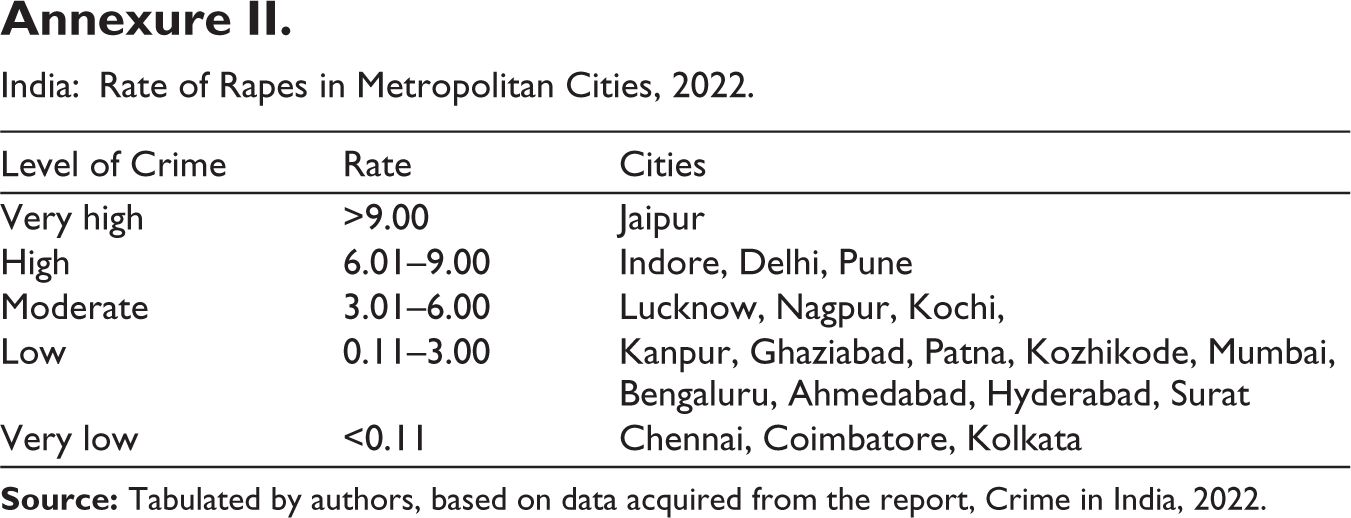
| Level of Crime | Rate | Cities |
| Very high | >9.00 | Jaipur |
| High | 6.01–9.00 | Indore, Delhi, Pune |
| Moderate | 3.01–6.00 | Lucknow, Nagpur, Kochi, |
| Low | 0.11–3.00 | Kanpur, Ghaziabad, Patna, Kozhikode, Mumbai, Bengaluru, Ahmedabad, Hyderabad, Surat |
| Very low | <0.11 | Chennai, Coimbatore, Kolkata |
Annexure III.
India: Rate of Assault on Women with Intent to Outrage Her Modesty in Metropolitan Cities, 2022.
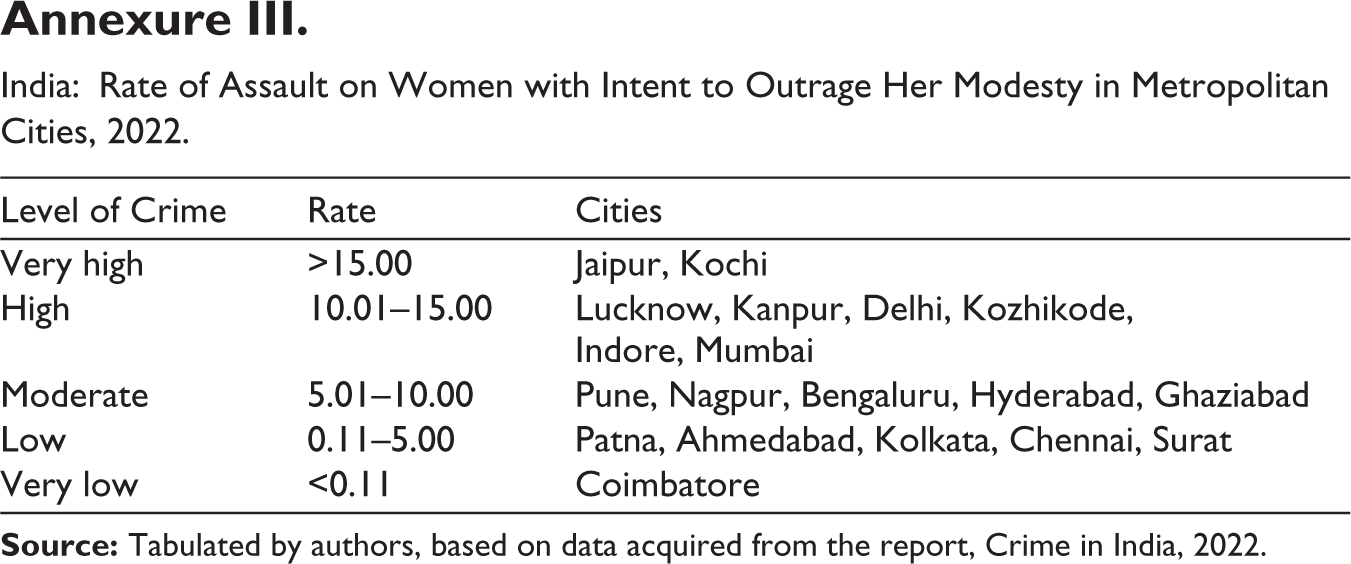
| Level of Crime | Rate | Cities |
| Very high | >15.00 | Jaipur, Kochi |
| High | 10.01–15.00 | Lucknow, Kanpur, Delhi, Kozhikode, Indore, Mumbai |
| Moderate | 5.01–10.00 | Pune, Nagpur, Bengaluru, Hyderabad, Ghaziabad |
| Low | 0.11–5.00 | Patna, Ahmedabad, Kolkata, Chennai, Surat |
| Very low | <0.11 | Coimbatore |
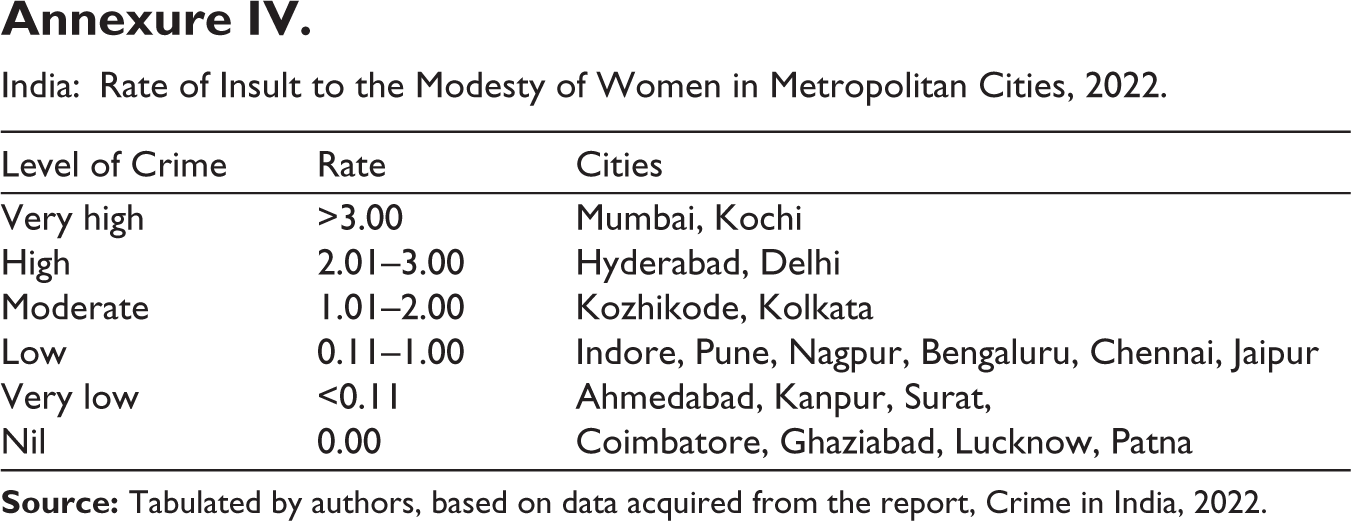
Annexure IV.
India: Rate of Insult to the Modesty of Women in Metropolitan Cities, 2022.
| Level of Crime | Rate | Cities |
| Very high | >3.00 | Mumbai, Kochi |
| High | 2.01–3.00 | Hyderabad, Delhi |
| Moderate | 1.01–2.00 | Kozhikode, Kolkata |
| Low | 0.11–1.00 | Indore, Pune, Nagpur, Bengaluru, Chennai, Jaipur |
| Very low | <0.11 | Ahmedabad, Kanpur, Surat, |
| Nil | 0.00 | Coimbatore, Ghaziabad, Lucknow, Patna |
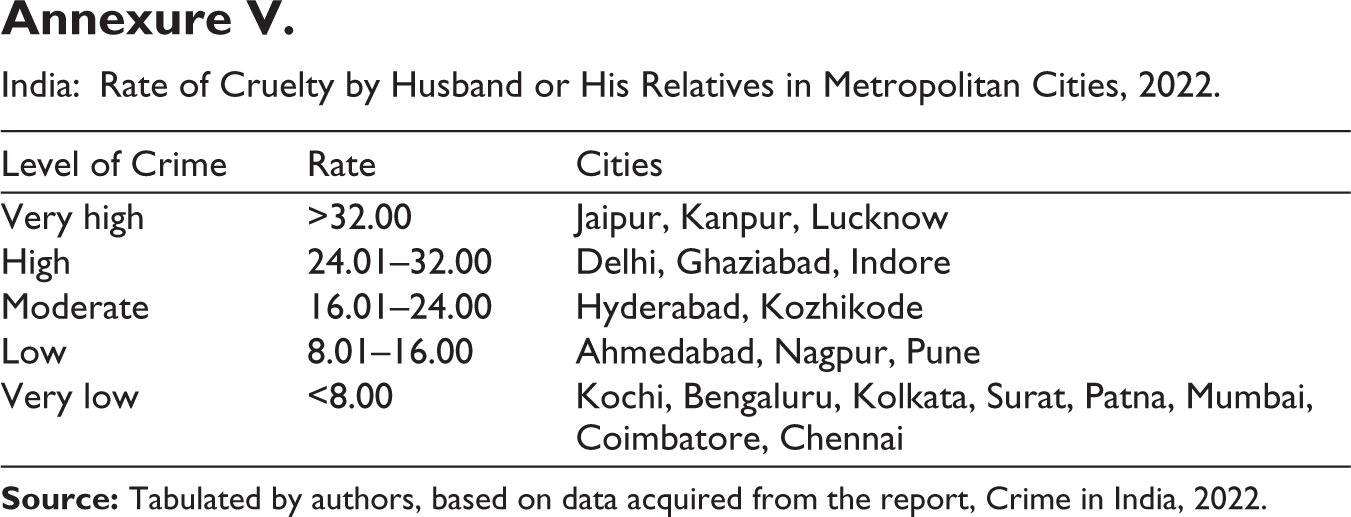
Annexure V.
India: Rate of Cruelty by Husband or His Relatives in Metropolitan Cities, 2022.
| Level of Crime | Rate | Cities |
| Very high | >32.00 | Jaipur, Kanpur, Lucknow |
| High | 24.01–32.00 | Delhi, Ghaziabad, Indore |
| Moderate | 16.01–24.00 | Hyderabad, Kozhikode |
| Low | 8.01–16.00 | Ahmedabad, Nagpur, Pune |
| Very low | <8.00 | Kochi, Bengaluru, Kolkata, Surat, Patna, Mumbai, Coimbatore, Chennai |
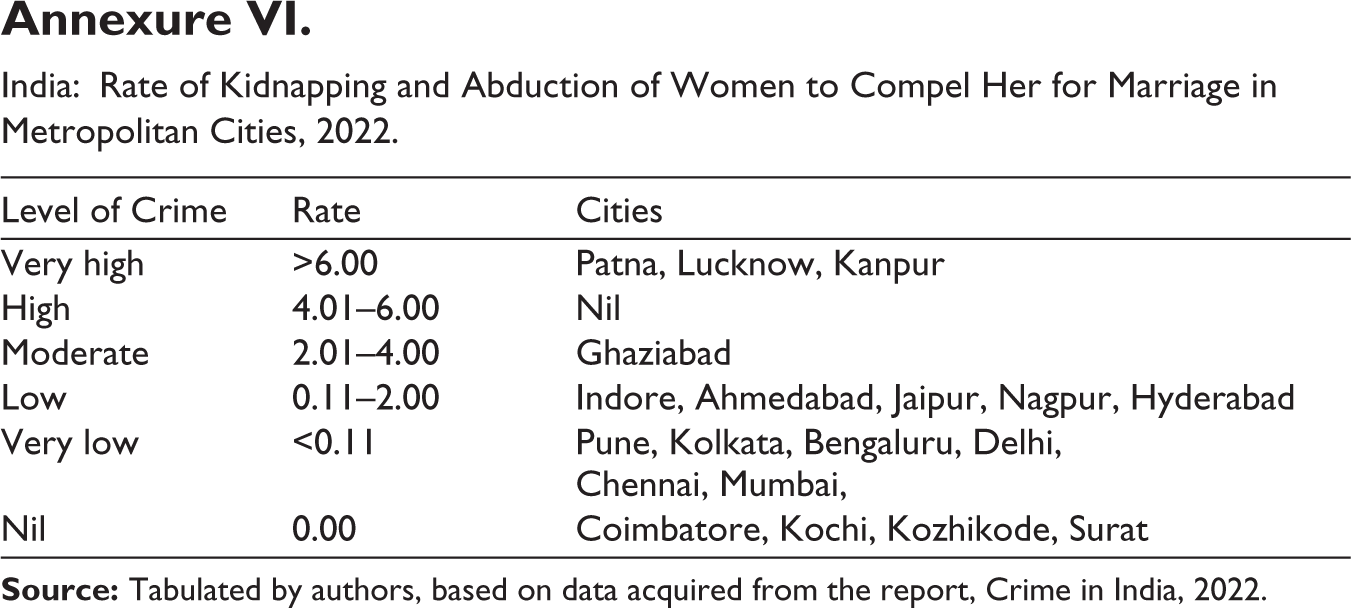
Annexure VI.
India: Rate of Kidnapping and Abduction of Women to Compel Her for Marriage in Metropolitan Cities, 2022.
| Level of Crime | Rate | Cities |
| Very high | >6.00 | Patna, Lucknow, Kanpur |
| High | 4.01–6.00 | Nil |
| Moderate | 2.01–4.00 | Ghaziabad |
| Low | 0.11–2.00 | Indore, Ahmedabad, Jaipur, Nagpur, Hyderabad |
| Very low | <0.11 | Pune, Kolkata, Bengaluru, Delhi, Chennai, Mumbai, |
| Nil | 0.00 | Coimbatore, Kochi, Kozhikode, Surat |