







Abstract
Purpose:
Crime reporting is shifting towards technological platforms, such as email and online forms. While this transition promises efficiency and cost-effectiveness, the literature suggests this transition also leads to adverse effects, such as reduced victim satisfaction. Given that reporting a crime is often a victim’s primary contact with the police, Procedural Justice (PJ), the quality of this interaction strongly shapes satisfaction and trust. To address this concern, some police departments have initiated communication strategies.
Methods:
Contemporary review to examine how police communication strategies can improve satisfaction among victims who report crimes online and later learn their cases were discontinued. A systematic search (2014–2024) identified four trials that met the inclusion criteria: interventions involving communication strategies for discontinued cases, evaluated using rigorous experimental designs. These studies tested follow-up phone calls (‘reassurance callbacks’), personalized letters and specialized victim support programmes.
Findings:
Proactive communication, particularly follow-up calls, significantly enhances victim satisfaction and perceptions of procedural justice, even when no further action is taken. Victims who received personal contact felt more supported than those who received impersonal or no communication at all. However, adding a second follow-up call did not increase benefits, and short-term trust in the police remained essentially unchanged.
Conclusions:
Overall, communication interventions appear to be effective in improving victims’ experiences. Simple, low-cost practices such as timely calls can convey care, offer explanations and enhance perceptions of fairness. The police should integrate such strategies into standard procedures for discontinued cases; however, more rigorous research is called for.
Keywords
Introduction
Police Contact and Victim Satisfaction
Research shows that the quality of police–citizen interactions—especially adherence to principles of procedural justice—can strongly influence public satisfaction, trust and perceptions of legitimacy, even beyond the effect of case outcomes (Bradford & Myhill, 2015; FitzGerald et al., 2002; Jackson & Bradford, 2009; Jonathan-Zamir & Harpaz, 2014; Lind & Tyler, 1988; Tyler, 1988; Weisburd et al., 2019). Procedural justice theory suggests that victim satisfaction, an enduring challenge for law enforcement, is fundamentally shaped by how victims feel they are treated by police officers during the process, rather than by whether the crime is solved (Bolger et al., 2021; Bradford & Myhill, 2015; FitzGerald et al, 2002; Jackson & Bradford, 2009; Tyler, 1988). Giving citizens a voice, demonstrating neutrality, treating people with respect, and fostering trustworthiness can improve public perceptions of law enforcement (e.g., Gau et al., 2012; Kochel et al., 2013; Reisig et al., 2007; Stoutland, 2001; Tyler et al., 2010; Tyler & Fagan, 2008; Tyler & Huo, 2002; Tyler & Wakslak, 2004; as cited in Weisburd et al., 2024, pp. 2–3). This idea is supported by studies and reviews demonstrating that fair and respectful treatment correlates with higher satisfaction and legitimacy (Donner et al., 2015; Mazerolle et al., 2013). Even short-term interventions to improve perceived fairness can significantly improve public attitudes (Weisburd et al., 2024). Other studies similarly find that procedurally just police encounters promote trust and legitimacy among the public (Schulhofer et al., 2011; Sunshine & Tyler, 2003; Tyler, 2004, 2009), and recent field experiments continue to reinforce these conclusions (Buchnik et al., 2024).
Before proceeding, several key terms warrant definition. ‘Procedural justice’ refers to the perceived fairness of the processes and procedures used by authorities in decision-making, encompassing four pillars: voice, neutrality, respect and trustworthy motives (Sunshine & Tyler, 2003; Tyler, 1988). ‘Reassurance callbacks’ (or ‘follow-up calls’) denote proactive telephone contact initiated by police to victims after a crime report, typically to explain case outcomes, offer empathy and provide crime-prevention advice. ‘Discontinued cases’ (or ‘no further action’ cases) are reports in which the police determine that an investigation will not proceed, often because of insufficient evidence or low solvability; in such cases, the victim’s primary interaction with the justice system may be the reporting process itself (Clark et al., 2022).
Victims of crime, in particular, want to be involved and informed throughout the criminal justice process. They seek information, recognition, advice and reassurance from law enforcement. Yet many victims report not receiving these elements, leading them to feel like ‘forgotten’ participants whose role was limited to reporting the offence (Kelly, 1996; Skogan & Wycoff, 1987; Wemmers, 1996). Studies consistently emphasize the importance of providing victims with regular updates on the progress of police investigations and of managing their expectations (Coupe & Griffiths, 1999; Elliott et al., 2011; Robinson & Stroshine, 2005). When police fail to keep victims informed, victims often experience dissatisfaction and alienation (Skogan & Wycoff, 1987; Wemmers, 1996). Conversely, providing information and explanations can improve victims’ evaluations of the justice process (Laxminarayan & Pemberton, 2014; Robinson & Stroshine, 2005). For instance, domestic violence victims have higher satisfaction when officers are perceived as sympathetic and informative, discussing available options and involving the victim in decision-making (Johnson, 2007). Victims place great value on being informed about what will happen after their report, and they appreciate it when the police provide this information (Goodier & Lum, 2023). This underscores that, from a victim’s perspective, procedural justice elements like voice, neutrality and respect are not abstract ideals but concrete needs in their interactions with police.
The initial interaction between a victim and the police—often the moment of reporting a crime—is pivotal in shaping the victim’s overall satisfaction (Jackson et al., 2012). This first contact occurs when victims may feel fearful and vulnerable, giving officers a unique opportunity to set the tone for victims’ trust in the justice system (Goodier & Lum, 2023; Tyler, 1988). A positive initial experience can encourage cooperation and confidence, whereas a negative encounter can deter victims from seeking further help (Johnson, 2007). This possible effect of the positive police–public contact is especially pronounced when the reported case does not result in an arrest or further action, since in such situations, the contact process itself is the main thing the victim has to evaluate (Clark et al., 2022; Jackson et al., 2012; Johnson, 2007).
The Changing Faces of ‘Contact’
At the same time, the nature of crime reporting is changing in the modern era: many initial contacts now occur via technology rather than in person. Increasingly, police–public interactions take place via telephone calls, emails, online forms and other electronic means rather than through the traditional face-to-face, pen-and-paper reporting process. This shift towards technology-mediated policing aims to increase efficiency and convenience (Chicu et al., 2020). For example, some agencies have piloted virtual hologram officers to handle queries, illustrating the drive to leverage advanced technology for operational efficiency (Grossini, 2023).
While such innovations may streamline reporting and save resources, these technology-based reporting platforms raise concerns about how the lack of human interaction might affect victims’ perceptions—particularly when their cases are closed without further investigation. Victim advocates worry that without the empathy and personal engagement of an in-person interaction, victims might feel that their experiences are minimized or that the police do not care (Buchnik et al., 2024; MOPAC, 2021; Pemberton, 2016).
There is sustained theoretical, practical and policy interest in this point of contact between police and public, because efficiency improvements are thought to enhance public trust, legitimacy and confidence in the police (cf. Bradford, 2010; Kyprianides et al., 2024; Saulnier & Sivasubramaniam, 2021).
Thus, the ‘human dimension’ remains crucial for victim satisfaction: victims consistently say they want to be treated with respect, receive clear explanations and feel empathy from police, even if their case cannot be thoroughly investigated—but it is not clear how a non-human response can generate these emotive and dialogic states (Pemberton, 2016).
What Can Be Done to Improve Victim Satisfaction?
Focused follow-up communication and personal outreach have been shown to mitigate some of the adverse effects of victimization, improving victim satisfaction and emotional recovery (Chenery et al., 1997; Cross et al., 2016; Forrester et al., 1988; Green et al., 2020; Shapland & Hall, 2007; Shepherd & Lisles, 1998; Van de Weijer et al., 2020). For example, when police officers provide reassurance callbacks or follow-up calls to victims, it can reduce victims’ anxiety and increase their sense that the police care about their case (Clark et al., 2022, p. 360; Jones et al., 1997; Skogan & Wycoff, 1987). Although the transition to online reporting has improved accessibility and speed, it has not eliminated the need for compassion and personal engagement. Proactive communications such as explaining decisions, updating victims on progress and thanking them for reporting can significantly boost victims’ satisfaction and trust, even when the outcome is unfavourable (Hibberd, 2021; Nelson et al., 1991; Skogan, 2006). In short, technological advances in reporting must be paired with strategies to humanize the process.
However, there is a notable gap in the literature: to date, no comprehensive review of best practices in police communication strategies for victims who report crimes via technology and whose cases are subsequently discontinued (i.e., closed with no further action). This review thus seeks to address that gap by reviewing current knowledge and identifying key considerations for improving victim satisfaction in the digital reporting era. I examine which communication strategies seem most effective at enhancing victim satisfaction, trust and perceptions of procedural justice among victims who report crime through technological means and then learn that their case will not proceed. By synthesizing findings from recent studies and related research, I aim to provide law enforcement with evidence-based recommendations for maintaining the human element in an increasingly digital landscape of interactions. Ultimately, improving communication with victims in these contexts is critical to ensuring victims feel respected, heard and supported, even when their cases do not result in further police action.
Literature Review
Communication Strategies
A communication strategy is a structured plan that organizes and develops communication activities to promote specific organizational goals. Once an organization defines its objectives, it establishes a communication strategy to achieve them (Liliweri, 2011, as cited in Ginting et al., 2023, pp. 108–109). In general, communication strategies encompass comprehensive plans aimed at achieving communication goals such as influencing attitudes, opinions and behaviours. To meet these objectives, the strategy must include practical tactics to ensure the message is delivered and elicits the desired response (Fauzi et al., 2020, p. 140; Genç, 2017). After defining its communication targets, an organization chooses suitable communication methods (or a combination of methods) based on its goals, the message content and the techniques to be employed (Fauzi et al., 2020, p. 141). According to Siahaan and Lubis (2020, p. 656), a communication strategy integrates careful planning and management of messaging in order to achieve specific outcomes. Assifi and French’s communication planning model (1982, as cited in Siahaan & Lubis, 2020) outlines the following key stages: analysing the problem and the audience, formulating goals, selecting appropriate channels and planning message delivery. In essence, any communication plan should address five fundamental questions (Siahaan & Lubis, 2020, p. 657):
Who are the communicators? What message is being conveyed? Through which channel? To whom is the message addressed? With what effect?
Police Communication Strategies with Victims and Complainants
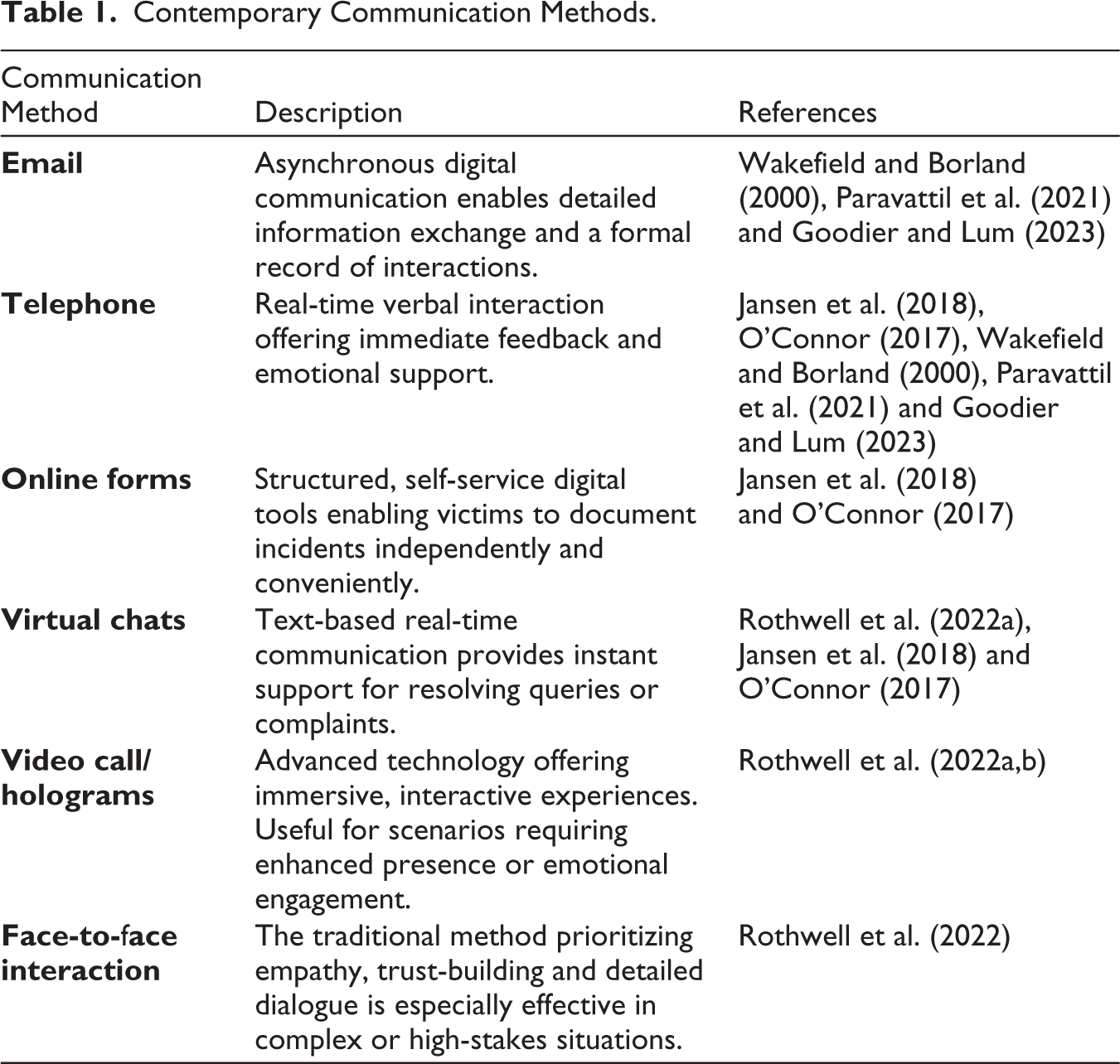
The abovementioned considerations highlight that choosing the appropriate communication channel is crucial—it depends on the organization’s needs, the nature of the message and cost or resource constraints. Modern policing offers a range of communication channels for interacting with victims, each with different advantages (Table 1). For example, asynchronous digital communication, such as email, allows detailed information exchange and creates a written record of interactions (Goodier & Lum, 2023; Paravattil et al., 2021; Wakefield & Borland, 2000). Telephone communication enables real-time verbal interaction, immediate feedback and emotional support, which can be reassuring to victims (Jansen et al., 2018; O’Connor, 2017). Online forms provide structured, self-service tools that let victims report incidents independently and conveniently at any time (Jansen et al., 2018; O’Connor, 2017). Live virtual chat interfaces (e.g., web chats or text messaging services) provide instant, text-based support to answer victims’ questions or guide them through the reporting process (Rothwell et al., 2022b). Emerging technologies such as video calls and even law-enforcement holograms offer more immersive and interactive experiences, which could be helpful in scenarios that require a greater sense of presence or empathy despite physical distance (Grossini, 2023; Rothwell et al., 2022a). Finally, traditional face-to-face interaction remains a vital method, especially for complex or high-stakes situations, as it prioritizes empathy, rapport and detailed dialogue that can be harder to achieve via digital channels. In practice, an effective communication strategy may blend several of these channels to balance efficiency with personalization, ensuring that victims receive information in a manner that is both convenient and compassionate.
Contemporary Communication Methods.
Communication Strategy and Procedural Justice
Police agencies today face persistent challenges in maintaining legitimacy, public trust and victim satisfaction with police services. In recent years, efforts to improve police-community relationships have become increasingly urgent (Weisburd et al., 2024). However, a large body of research shows that relatively simple actions informed by procedural justice theory can significantly improve public perceptions of law enforcement in both the short- and long-term (Sunshine & Tyler, 2003; Tyler, 2004; Tyler & Huo, 2002). For example, one-off interventions that give community members a voice, demonstrate neutrality, treat individuals with respect and convey trustworthy motives have been shown to enhance citizens’ satisfaction and perceptions of police legitimacy (Gau et al., 2012; Kochel et al., 2013; Reisig et al., 2007; Stoutland, 2001; Tyler et al., 2010; Tyler & Fagan, 2008; Tyler & Wakslak, 2004). These principles have been validated in diverse contexts—from routine traffic stops to counterterrorism policing— indicating a broad applicability of procedural justice strategies (Schulhofer et al., 2011; Sunshine & Tyler, 2003; Tyler, 2009; see also Mazerolle et al., 2013).
Crucially, these insights apply with equal (if not greater) force to victims of crime. Studies focusing on victims’ experiences consistently indicate that victims who feel they were treated in a procedurally fair and considerate manner by the police are far more likely to express satisfaction with the police response and to view the police and the justice system as legitimate (Bradford, 2011; Braithwaite & Yeboah, 2004; Elliott et al., 2011; Koster et al., 2016; Laxminarayan & Pemberton, 2014; Myhill & Bradford, 2012; Wemmers, 1996). Victims’ judgements about legitimacy often hinge on process: Were they listened to? Were they treated with respect? Was the process transparent and unbiased? If the answer is yes, victims tend to be more satisfied even if the case outcome is unfavourable (Tyler, 1988; Wemmers, 1996).
Thus, there is a clear link between victims’ perceptions of fair treatment by police and their overall confidence in legal authorities (Koster et al., 2016, p. 32). Beyond influencing attitudes, police treatment can also shape victims’ behaviour—particularly their willingness to cooperate with law enforcement in the future. Research suggests that police may be able to increase victims’ intentions to report crimes again or assist investigations by employing key elements of procedural justice during their interactions (Braithwaite & Yeboah, 2004; Conaway & Lohr, 1994; Elliott et al., 2011; Johnson, 2007; Koster et al., 2016, p. 39; Laxminarayan & Pemberton, 2014; Xie et al., 2006). In essence, when victims feel the police treated them fairly and did ‘right by them’, they are more likely to view the police as legitimate and to cooperate in the future (Murphy & Cherney, 2011; Tankebe, 2009; Tyler & Jackson, 2013).
Specific procedural justice practices in interactions with victims can be outlined as follows. Koster et al. (2016) note that police can improve victims’ satisfaction and perceptions of legitimacy by (among other things):
Giving victims a voice: Encouraging victims to express their side of the story and their views about the incident and the investigation process. Demonstrating neutrality: Showing victims that decisions (e.g., to discontinue a case) are based on facts and applied consistently, not on biases or personal factors. Showing respect and dignity: Treating victims politely, addressing their concerns seriously and acknowledging their rights and feelings. Conveying trustworthy motives: Making clear to victims that the police genuinely care and are doing everything possible to help, even if the case cannot be fully solved. Explaining efforts and decisions: Keeping victims informed about what steps were taken to investigate the crime and clearly explaining the reasons if a case must be closed (so victims understand it is not due to lack of effort).
Strategies like those listed above—often encapsulated in reassurance or follow-up programmes—serve to ‘recalibrate’ the police towards a victim-centred approach, improving perceptions of fairness and closing the satisfaction gap (Lay et al., 2023). In practical terms, implementing these practices is believed to improve victims’ experiences. Research shows that satisfaction with police ‘performance’ (i.e., the overall encounter) is mainly process-driven and can be improved through better application of procedural justice (Bolger et al., 2021; Jonathan-Zamir & Harpaz, 2014; Langley et al., 2021). Even when the tangible outcome (such as arresting a suspect) is not achieved, a victim who feels respected, heard and informed may still come away with a favourable view of the police. This means that police departments can directly influence victim satisfaction, regardless of investigative success, by focusing on the quality of their communication and treatment of victims (Murphy & Cherney, 2011; Myhill & Bradford, 2012). This evidence underlines why communication strategy and procedural justice are so intertwined: a well-crafted communication strategy for victims is essentially a procedural justice strategy.
Procedurally Just Communication Strategies in the Modern Era
In contemporary policing, the majority of police–public encounters that shape attitudes occur when individuals report crimes or otherwise seek police assistance as victims. Increasingly, these encounters take place through ‘technology-mediated service’ platforms rather than in person (Chicu et al., 2020). Tools such as emails, online reporting forms and virtual chat interfaces have begun to replace some traditional face-to-face interactions in the reporting process (Goodier & Lum, 2023; Rothwell et al., 2022b).
While these technologies can improve efficiency and accessibility for the public, they often lack personal engagement—the human touch—that might be critical to victim satisfaction and trust, especially in cases closed without further investigation (Buchnik et al., 2024; MOPAC, 2021; Pemberton, 2016).
Research on victims of cybercrime, for example, finds that many choose online reporting for convenience but still desire empathy and feedback, which the online format struggles to provide (Van de Weijer et al., 2020). Similarly, Saulnier and Sivasubramaniam (2021) note that when legal authorities interact with the public through technology (such as automated systems or impersonal channels), people’s concerns about procedural justice—being heard and treated fairly—can be magnified. If a victim files a report online and then hears nothing or receives a form-letter response, the lack of personal communication can leave them doubting the legitimacy of the process (Pemberton, 2016).
Thus, policing is challenged to integrate procedural justice principles into new, digital modes of operation (Bradford et al., 2022; Wells et al., 2023). Ensuring that technology-mediated interactions still convey respect, neutrality and concern seems essential. However, despite the growing use of online reporting systems, research on the most effective communication strategies in these contexts remains limited. I lack clear evidence on questions such as: What follow-up, if any, should police provide to a victim who reports a crime online and then sees the case closed? How can officers convey empathy through an email or a chatbot after an online report? Are certain digital communication practices counterproductive? These questions remain unanswered.
The Current Review
This review makes a distinct contribution to the literature. To date, no systematic appraisal has synthesized the causal evidence on police communication strategies aimed specifically at victims who report crime via technology and whose cases are subsequently discontinued. The purpose of this contemporary review is therefore fourfold. First, it delineates and synthesizes the best available causal evidence on police communication strategies intended to improve victim satisfaction and perceptions of procedural justice, specifically in cases reported via technology that are later discontinued. In doing so, the review focuses on interventions that are within police control (e.g., follow-up telephone calls, personalized explanations, structured updates, specialist victim-care workflows) and that have been evaluated using randomized or rigorous quasi-experimental designs, so that any observed differences can credibly be attributed to the communication strategy rather than to case mix or context. Secondly, the review translates this evidence into practice-relevant guidance for police organizations undergoing ‘channel shift’ to digital reporting (Lum et al., 2017; Wells et al., 2023), by identifying which forms, timing and intensity of contact are most likely to improve victims’ experiences when an investigation will not proceed.
Thirdly, the review clarifies why communication matters in this setting, positioning the findings within the procedural justice framework—voice, neutrality, respect and trustworthy motives—as the mechanisms through which communication shapes satisfaction and, potentially, longer-term cooperation (Bolger et al., 2021; Koster et al., 2016; Myhill & Bradford, 2012; Sunshine & Tyler, 2003; Tyler & Fagan, 2008). This conceptual anchoring is essential because many victims who report online have no prior face-to-face contact; for them, how they are informed about a no-further-action decision may be the only basis on which they judge procedural fairness (Goodier & Lum, 2023; Wells et al., 2023).
Finally, the review specifies boundaries for inference—what the interventions have been found to achieve—by distinguishing near-term, case-specific perceptions (e.g., satisfaction with handling, feeling informed) from more stable attitudes (e.g., generalized trust/legitimacy), which may require repeated positive contacts or broader organizational reforms to shift (Murphy & Cherney, 2011; Tyler, 2004, 2009).
Methodology
Search Strategy
To identify relevant studies for this review, I formulated a straightforward research question using the PICO framework (Population, Intervention, Comparison, Outcome). The focus was on victims of crime who reported incidents via technology-based methods (i.e., not face-to-face or by telephone) and whose cases were subsequently discontinued without further investigation. The intervention was any communication strategy implemented by police (e.g., follow-up calls) aimed at reassuring and supporting the victim after case closure. The comparison condition was the absence of such intervention or ‘business-as-usual’ communication (e.g., only a standard letter or no follow-up). The key outcomes of interest were victim satisfaction with police, perceptions of procedural justice, trust in police and related attitudes.
Studies were included if they met four criteria simultaneously: (a) the population comprised victims or complainants who had reported a crime, with at least some reports made via technology-mediated channels (online forms, email or telephone); (b) the intervention was a police-initiated communication strategy delivered after the initial report (e.g., follow-up telephone calls, personalized letters or structured victim-care workflows); (c) a comparison or control condition was present (e.g., business-as-usual notification or no additional contact); and (d) at least one outcome measure captured victim satisfaction, perceptions of procedural justice, or trust in police. Studies were excluded if the primary outcome was solely re-victimization, case attrition or clinical well-being without any satisfaction or fairness measure, or if the intervention was delivered by non-police agencies (e.g., victim-support charities or health services). Only randomized controlled trials and rigorous quasi-experimental designs were retained, ensuring that observed effects could be attributed to the communication strategy rather than to selection bias or confounding.
Selection and Screening Process
I conducted a comprehensive search in 13 abstract databases (Academic Video Online, British Periodicals, Coronavirus Research Database, Digital National Security Archive, Early Modern Books, Ebook Central, ERIC, International Bibliography of Art (IBA), Linguistics and Language Behavior Abstracts (LLBA), Patrologia Latina, ProQuest Central, ProQuest Dissertations & Theses Global, Sociological Abstracts). I then searched Google Scholar for relevant evidence. I did not limit the search to peer-reviewed journals and books; I included conference papers, theses and dissertations, preprints, abstracts, technical reports and other scholarly literature.
I focused on studies from the last decade (2014–2024) to capture contemporary practices, and included research conducted in any country. Within this period, search terms combined keywords across several conceptual tiers:
Tier 1 (Police and victim interaction): police, law enforcement, victim, complainant, citizen, procedural justice, legitimacy, trust, satisfaction, communication, information, feedback, follow-up, support. Tier 2 (Reporting and case status): crime reporting, online reporting, telephone reporting, digital reporting, case closure, screened out, no further action, unsolved cases, victim notification. Tier 3 (Intervention types): follow-up call, callback, reassurance, update, notification, victim care, victim support, letter, outreach. Tier 4 (Outcomes): victim satisfaction, procedural justice perceptions, confidence, trust in police, cooperation, safety, well-being, secondary victimization, re-victimization, expectations, perception of fairness, system legitimacy and case attrition. Tier 5 (Evaluation methods): methodological terms to filter for high-quality evidence, e.g., evaluation studies, programme evaluation, impact assessment, outcome evaluation, effectiveness studies, comparison group, control group, experiment, RCT.
Data Extraction and Coding
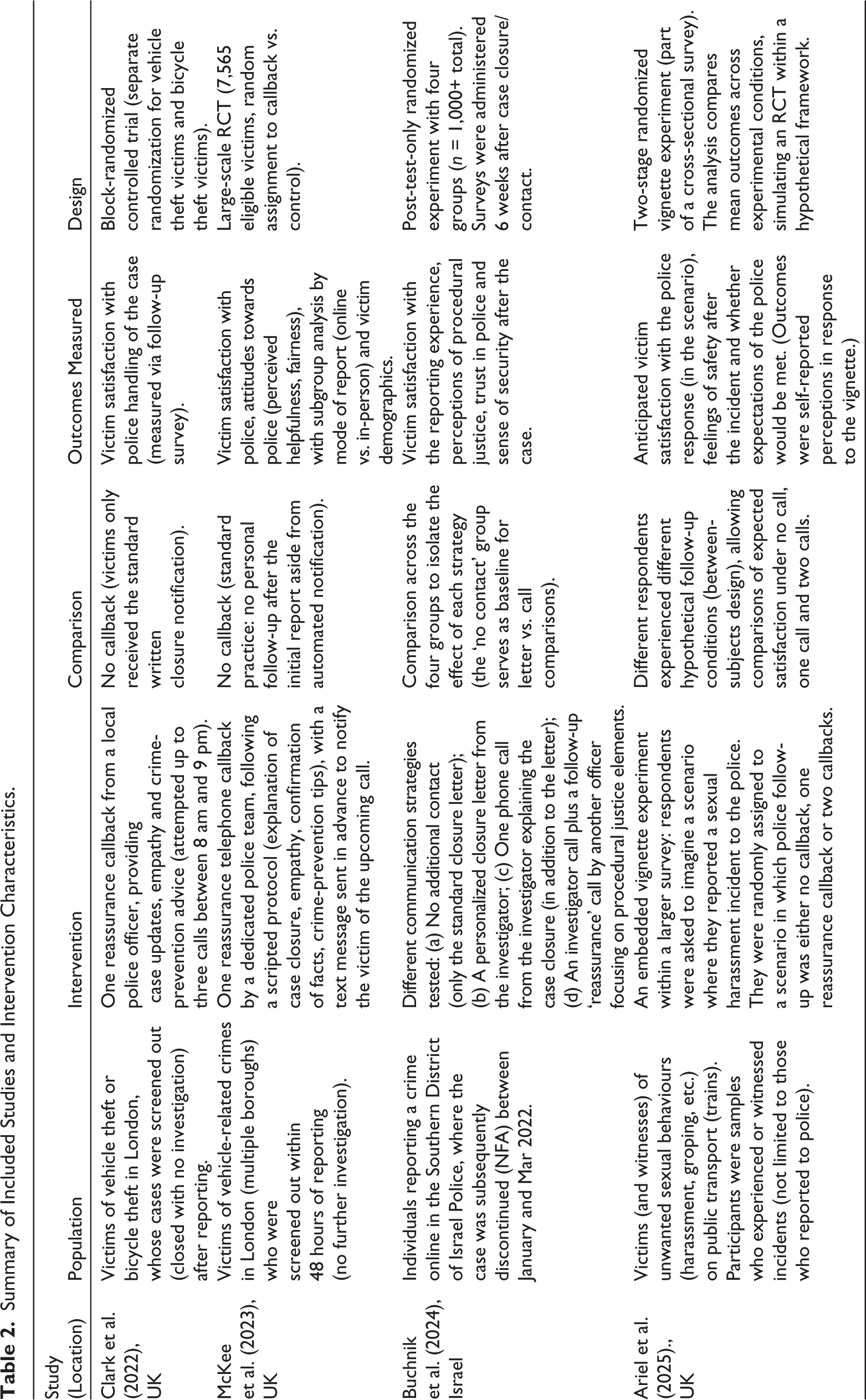
After screening the search results and identifying four eligible studies, details from each study were systematically extracted into an evidence table. The extracted information included: study authors and year, location, population and sample size, the type of police communication intervention tested, the comparison or control condition, the research design (e.g., randomized controlled trial or quasi-experimental) and the primary outcomes related to victim satisfaction, trust or perceptions of procedural justice.
Extraction focused on clearly describing the intervention and its context. The data were recorded in a structured summary (Table 2) to ensure consistency across entries. Coding was descriptive and thematic: each study was categorized by (a) communication mode (e.g., email, telephone), (b) intensity or frequency of contact (single call, multiple follow-ups or ongoing support) and (c) core procedural justice elements emphasized (voice, respect, neutrality, trustworthy motives). This approach allowed the identification of recurring patterns in how communication was operationalized and how victims responded.
Summary of Included Studies and Intervention Characteristics.
Analytical Approach
Given the small number of studies and their heterogeneity in design, measures and settings, results were synthesized narratively and thematically rather than quantitatively. Each study was read in full, and its findings were summarized with particular attention to (a) the form and timing of communication, (b) victim outcomes measured (satisfaction, perceived fairness, trust, sense of safety) and (c) any contextual moderators such as crime type or reporting channel.
This interpretive approach aligns with the purpose of a contemporary review: to map the strongest available evidence, identify consistencies and gaps and provide practice-relevant insights rather than statistical generalizations. Accordingly, the synthesis followed a thematic logic: evidence was grouped under emerging themes, including (a) the effect of proactive communication strategy, (b) the mediating effect of the reporting mode (online versus in-person), (c) differences in intensity or dosage of follow-up and (d) challenges and limitations in sustaining trust after case closure. Patterns of convergence across studies were highlighted to conclude what forms of communication appear most effective and under which conditions.
Results
After applying these criteria, I identified four studies that meet all requirements. Table 2 offers an overview of these studies and their key features. They consist of four randomized controlled trials. All interventions were carried out in real policing settings and involved providing additional communication to victims of cases that did not proceed. Notably, the interventions were delivered relatively soon—within days or weeks—after the victim reported the crime, addressing the critical period when victims learn that their case will not progress.
Narrative Review of the Included Studies
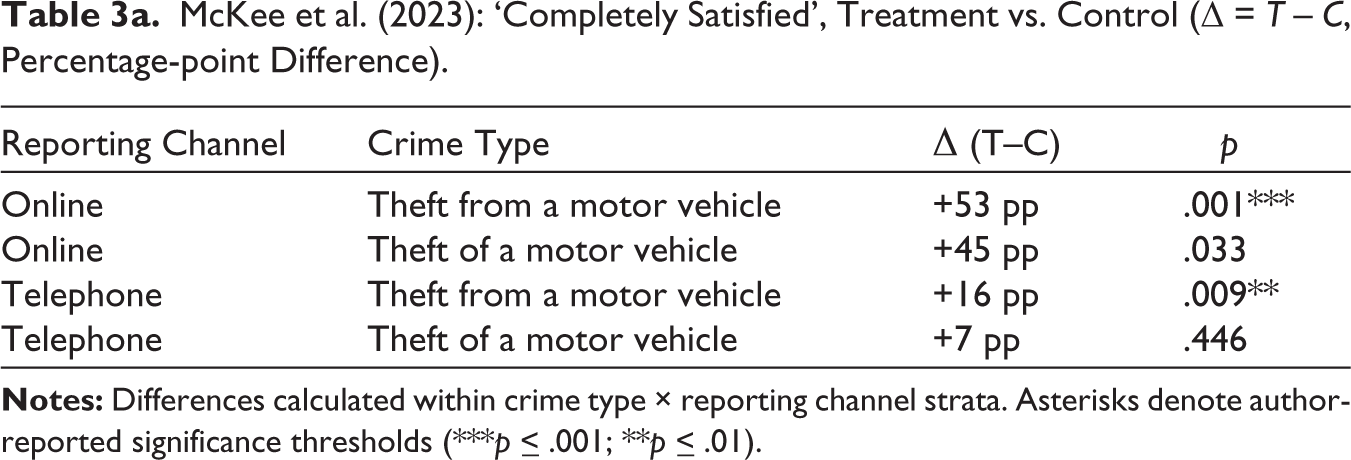
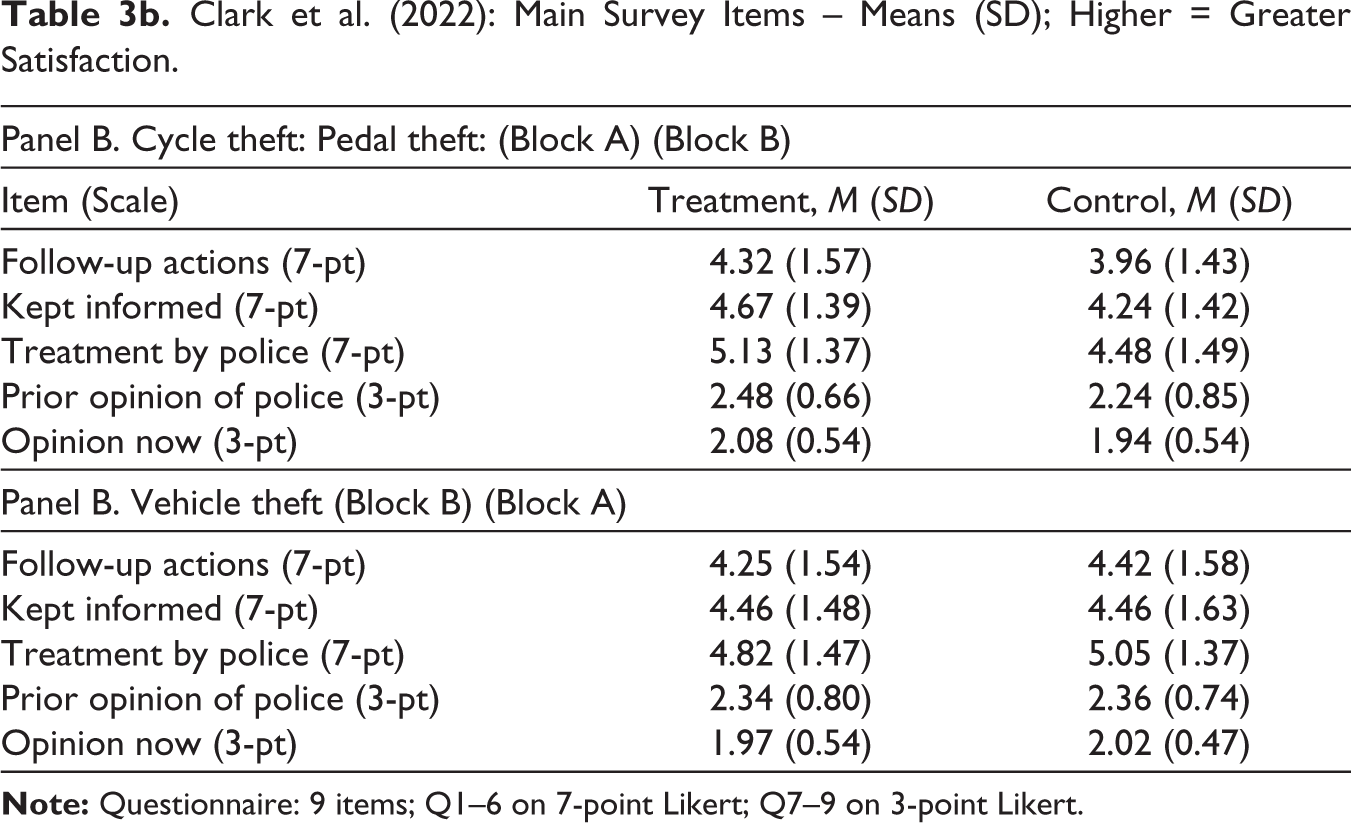
Three field RCTs provide the most substantial causal leverage on satisfaction effects: a block-randomized trial with screened-out vehicle and cycle theft cases in two London boroughs (Clark et al., 2022), a large metropolitan RCT with unsolved vehicle crimes across most of London (McKee et al., 2023) and a multi-arm RCT embedded in an online reporting pipeline in Israel (Buchnik et al., 2024). A survey with an embedded randomized vignette experiment on Great Britain’s rail network complements these field experiments by probing expectations about one versus two reassurance callbacks following unwanted sexual behaviours (Ariel et al., 2025). The studies converge on a clear pattern: planned, compassionate reassurance contact is associated with higher satisfaction and more positive process evaluations when cases do not progress (Tables 3a–3d).
McKee et al. (2023): ‘Completely Satisfied’, Treatment vs. Control (Δ = T – C, Percentage-point Difference).
Clark et al. (2022): Main Survey Items – Means (SD); Higher = Greater Satisfaction.
Abbreviations Used Across Tables
EA: Experimental arm; CA: Control arm; T: Treatment; C: Control; MV: Motor vehicle; OD: Operation Diogel; BCU: Business-as-usual comparison unit; SS: Sum of squares; MS: Mean square.
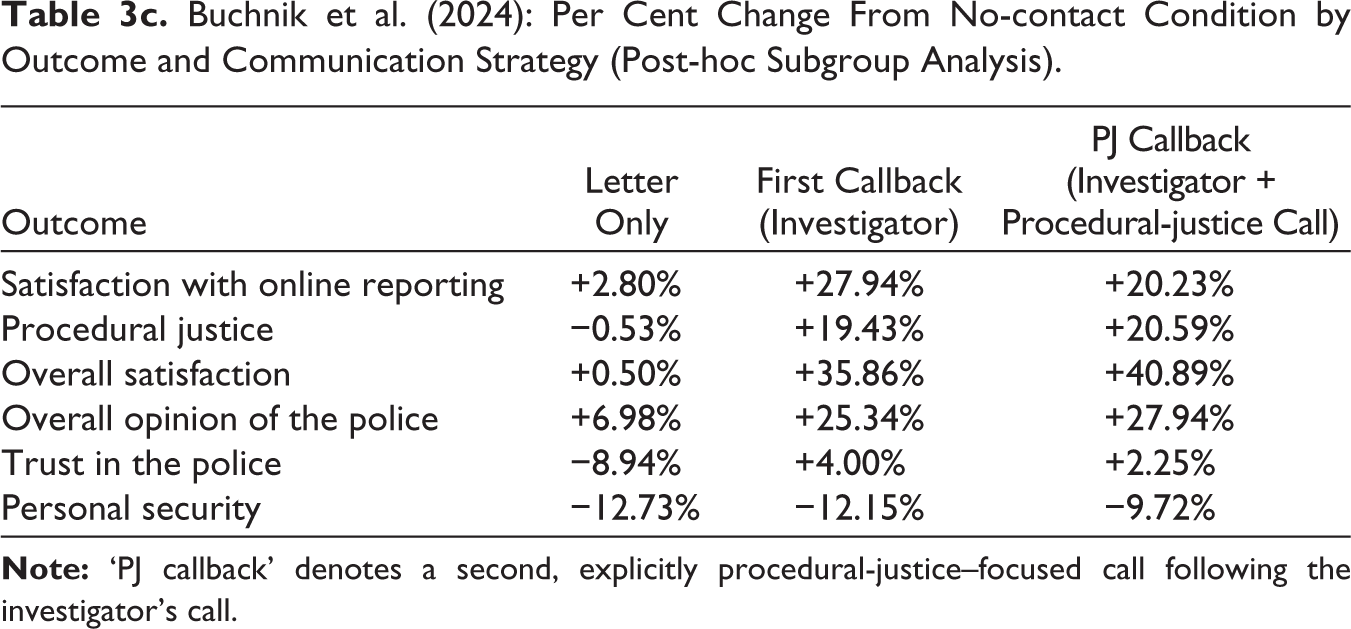
Communication strategies after online reporting (Buchnik et al., 2024; Table 3c)
Situating the intervention directly within an online portal, adult victims receiving a discontinued outcome were assessed across four strategies: no further contact, a supplemental letter, an investigator phone call, or the investigator call plus a procedural-justice-oriented reassurance call. Omnibus ANOVAs indicate significant between-group differences for procedural justice (F(3, 192) = 10.35), satisfaction with online reporting (F(3, 182) = 7.10), and overall satisfaction (F(3, 177) = 9.61), with effects of moderate magnitude (Table 3c). In post hoc contrasts, the investigator’s phone call outperformed no contact or a letter; adding a second reassurance call did not yield further measurable gains, and short-term trust and perceived security remained unchanged (Buchnik et al., 2024; Table 3c).
Buchnik et al. (2024): Per Cent Change From No-contact Condition by Outcome and Communication Strategy (Post-hoc Subgroup Analysis).
Expected value and ‘dose’ of reassurance (Ariel et al., 2025; Table 3d)
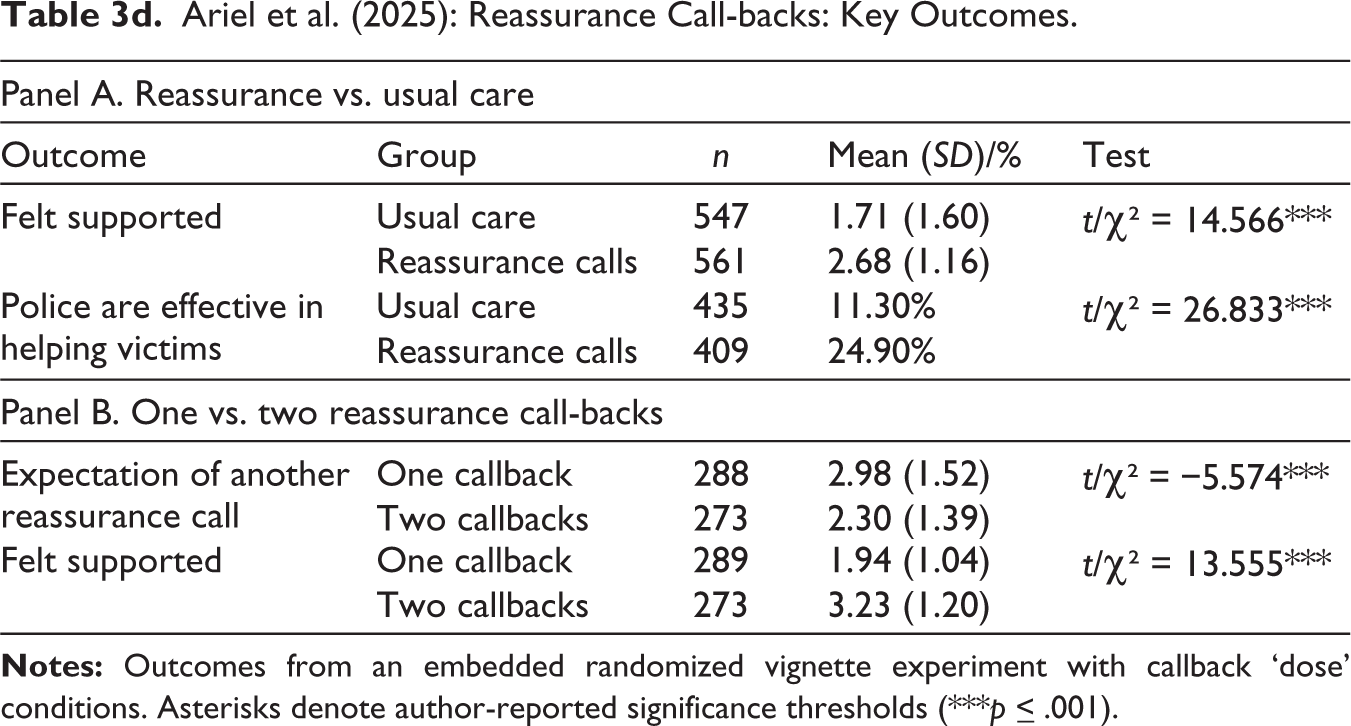
A vignette experiment with rail users who had experienced or witnessed unwanted sexual behaviours compared no call, one reassurance call and two reassurance calls. Relative to usual care, reassurance calls increased felt support (means 1.71 vs. 2.68; t/χ2 = 14.566, ***) and more than doubled agreement that police are effective with victims (11.3% vs. 24.9%; t/χ2 = 26.833***) (Panel A). A two-call ‘dose’ further improved outcomes over one call: expectations of needing another call were lower (2.30 vs. 2.98; t/χ2 = −5.574, ***) and felt support was higher (3.23 vs. 1.94; t/χ2 = 13.555***) (Panel B) (Ariel et al., 2025; Table 3d).
Ariel et al. (2025): Reassurance Call-backs: Key Outcomes.
Cross-study pattern (Tables 3a–3b)
Taken together, the results indicate consistent, directionally positive effects of reassurance contact on victim satisfaction and perceived safety. Effects are often largest where (a) the initial contact was impersonal (online reporting; Table 3b), and (b) case progression is unlikely, and expectations hinge on communication quality. An embedded ‘dose’ test suggests that a second brief touchpoint can further increase perceived support in some contexts, though not all post-report pipelines recorded additional gains beyond an initial high-quality call.
Thematic Analysis of the Included Studies
All four studies converged on a key finding: proactive, personalized communication from police can improve how victims feel about their experience with the justice system, even when their case does not progress. Victims who received additional contact beyond the initial report—through a phone call—generally reported higher satisfaction than those who received no follow-up. This pattern held across different types of crime and in various countries.
Importantly, none of the interventions caused harm or decreased satisfaction; at worst, some extra efforts showed diminishing returns (i.e., doing more did not always produce proportionately more benefit, but it did not make things worse). For instance, Buchnik et al. (2024) found that while a single investigative phone call significantly improved victim satisfaction and perceptions of procedural justice compared to no call, an additional reassurance callback on top of that did not yield further quantitative improvement. In other words, one personal call made a big difference, but a second call added little beyond the first. This, however, was not the case in the Ariel et al. (2025) vignette study: participants appreciated multiple callbacks. They perceived two calls as more supportive, yet in the actual field experiment (Buchnik et al., 2024), the second call had no measurable effect on satisfaction. It may be that once a victim feels the police cared enough to call and explain things once, a follow-up reiterating the same message offers only marginal gains in reassurance.
The studies highlighted the role of victim expectations in shaping satisfaction. As noted, Clark et al. (2022) demonstrated that the impact of a reassurance callback differed by crime type: victims of bicycle theft showed a meaningful boost (5%–15% higher satisfaction in the callback group), whereas victims of motor vehicle theft did not. The authors attributed this to differing expectations—vehicle theft victims typically expected a thorough investigation. They were disappointed regardless of the call, while bicycle theft victims had lower expectations of police follow-up, so a courtesy call pleasantly surprised them. This nuance aligns with broader research that managing expectations is crucial to satisfaction (Robinson & Stroshine, 2005). It also resonates with studies outside the criminal justice system, suggesting that when people anticipate little service (as in minor crimes), any extra attention can elicit a strong positive reaction. In contrast, those who assume a high level of service (as in more serious property crimes) remain dissatisfied if the outcome is unchanged (Wells, 2008).
Another consistent outcome was that trust in police and broader legitimacy perceptions were harder to move than immediate satisfaction. While nearly all interventions led to higher satisfaction ratings, their effects on measures of trust, confidence in police and perceived safety were muted. For example, Buchnik et al. (2024) reported no significant differences between groups in trust in police or in victims’ sense of security. This is not surprising—deep-seated attitudes, such as trust in institutions, are cumulative and influenced by many factors beyond a single encounter (Stoutland, 2001; Tyler, 2009). A single phone call or even a dedicated three-month programme might not be sufficient to shift someone’s overall trust in the police if that trust was low to begin with. However, improving procedural justice and satisfaction remains valuable in its own right and could contribute to trust over the long term or after repeated positive interactions.
The evidence also underlines that ‘something is better than nothing’ when it comes to victim contact. In all studies, the control or comparison condition essentially reflected standard practice: after reporting the crime and receiving an initial acknowledgement (like a written notice), the victim heard nothing further if the case was not investigated. Victims in these control groups consistently reported lower satisfaction. Even a brief additional communication improved their perceptions. For example, in McKee et al. (2023), overall satisfaction was 22 percentage points higher in the callback group (62% satisfied) than in the control group (40% satisfied)—a substantial difference attributable solely to the act of calling back. Such findings dovetail with earlier research in policing and customer service, indicating that proactive outreach can significantly boost client satisfaction (Chicu et al., 2020; Coupe & Griffiths, 1999). None of the studies found that contacting victims made them feel worse; on the contrary, the interventions either helped or had a neutral effect. This should allay concerns some practitioners might have that ‘reminding’ victims about their unresolved case could reopen wounds or prompt complaints—the data suggest that, on average, victims appreciate the effort even if the news (that the case is closed) is not what they hoped for.
Looking across the studies, it is notable that different modes of communication were tested, yet all seemed to ‘work’ to some extent. Traditional telephone calls were used in all the studies and consistently yielded higher satisfaction than no call. A letter alone (tested in Buchnik et al., 2024, as a single condition) had a negligible impact—victims who received only a standard or personalized letter did not report better outcomes than those who received nothing beyond the routine notice. This suggests that letters, while informative, may lack the empathy and interactivity that phone calls provide.
Subgroup analyses in the experiments provided additional insights. McKee et al. (2023) found that the positive effect of callbacks was especially pronounced among minority ethnic victims and those who had reported their crimes online. This is an important finding for modern policing, as online reporting becomes more prevalent. It suggests that individuals who report through remote, impersonal channels might start with lower expectations or less trust and thus have more to gain from a personal follow-up. Minority victims, who in many contexts have historically lower trust in police, also showed larger improvements in satisfaction—implying that outreach might help bridge satisfaction gaps among different demographic groups (Bradford & Myhill, 2015; Murphy & Cherney, 2011). No notable differences were observed by gender or age in these studies.
Studies Not Included in the Review
To ensure transparency, this subsection summarizes rigorous studies located during the supplementary search that were not included in the contemporary review. All are experimental or quasi-experimental examinations of post-report contact with victims. However, they fall outside the review’s inclusion criteria—principally because their primary outcomes are not victim satisfaction with the police, or because the intervention was not a police follow-up communication.
Tests on Process or Safety Outcomes, Not Satisfaction
Whitten and Went (2025) tested police reassurance contact with hate crime victims, randomizing victims to receive additional contact intended to sustain engagement. The primary endpoint is case withdrawal/attrition, i.e., whether victims disengage from the criminal process. While clearly relevant to victim care and case progression, it does not assess satisfaction with police service and is therefore out of scope on grounds of outcome.
Furthermore, two family violence experiments—Davis and Taylor (1997) and Davis et al. (2010)—evaluate second-responder models in which authorities recontact households after an incident to provide information and support. Both use randomized designs and focus on repeat victimization and re-assault (and sometimes service uptake) rather than satisfaction with the police. They demonstrate important crime-control and safeguarding effects, but not the service-quality outcome required by the review.
Finally, the quasi-experimental evaluation by Messing et al. (2015) of the Lethality Assessment Program assesses a police–advocate protocol that emphasizes risk screening, safety planning and immediate referral at the initial response stage. Outcomes include service uptake and re-abuse, not post-report satisfaction with the police. It also primarily concerns what happens during the first police attendance, rather than subsequent recontact.
Excluded Because the Intervention Is Not a Police Follow-up Communication
Two high-quality evaluations involve contact with victims after reports but are not delivered by the police, and their primary outcomes sit outside the review’s focus. The VIP trial by Serfaty et al. (2025) randomized older victims of community crime to a clinical support package (e.g., therapeutic components) aimed at reducing depression and anxiety. This is a health/social-care intervention rather than a police follow-up communication, and the endpoints are clinical, not satisfaction with the police.
In addition, Foureaux Koppensteiner et al. (2024) evaluate improved access to non-police support services for domestic-violence victims using an experimental design. Outcomes include demand for services and indicators linked to case progression (for example, the provision of witness statements), not satisfaction with the police. This places the study in the ‘cases continued into police and prosecution’ domain, which is valuable for understanding attrition and engagement but falls outside the review’s defined outcome.
Discussion
Practical Implications
The collection of studies reviewed provides encouraging evidence that relatively simple changes in police communication strategy can make a measurable difference in how victims feel about their experience with the police. When police take the initiative to contact victims, explain decisions and express empathy, victims are more satisfied despite the disappointment of case closure. The findings align with long-standing theories of procedural justice, underlining that process matters in shaping perceptions of fairness (Sunshine & Tyler, 2003; Tyler, 2004). Even if police cannot deliver the criminal justice system outcome a victim may want (i.e., solving the case), they can still deliver procedural fairness and concern.
All the interventions studied were pilots or limited-term projects. It is one thing to run a pilot with a dedicated team and additional resources, and another to implement such measures force-wide under routine conditions. Will the quality of communication be maintained when officers have competing priorities and higher caseloads? Sustaining the practice might require dedicated victim liaison units or rotating responsibility for callbacks so that it does not fall by the wayside. There may also be training implications: not every officer is naturally adept at providing reassurance and empathy over the phone, so clear guidance and scripts (as used in some trials) can help standardize the quality of communication. Additionally, forces might consider utilizing civilian staff or volunteers for some of these follow-ups, under supervision, to manage workload—as long as they are adequately trained in the messaging and sensitivity required. However, these questions have been addressed in the existing literature and should be the focus of future research in this area.
Another question for scaling up is targeting: Should every ‘NFA’ case get a follow-up call or only certain types? The answer may depend on volume and resource constraints. If, say, hundreds of minor incidents are screened out weekly, a department might initially target those victims who arguably need it most—for example, victims of more serious incidents (even if not solvable) or those who appeared particularly upset at the time of reporting. However, the risk of targeting is that it might exclude people who would benefit from a callback policy, regardless of the harm caused by the incident. Thus, it seems that a universal approach (everyone gets at least a call) is more straightforward. The evidence suggests that no group was harmed by receiving a call; even victims of vehicle crime who were not more satisfied with the callback they received did not react negatively to being called. Thus, a broad policy is defensible, with the only limitation being practical feasibility.
Limitations of Current Evidence
While this review focused on the best available studies, it is worth noting that the evidence base remains relatively small (only four studies met the inclusion criteria) and context-specific. Different legal systems, crime rates or cultural expectations of police could influence how these interventions work elsewhere.
Furthermore, the studies primarily measured short-term outcomes (satisfaction measured within days or weeks of the intervention, up to one year in one case). I do not yet know if a single follow-up contact has any lasting effects beyond that. For instance, would it make a victim more likely to report future victimization or cooperate as a witness years later? There is some evidence that positive prior experiences with police encourage future cooperation (Murphy & Cherney, 2011; Tyler & Fagan, 2008), but this link has not been explicitly tested for victims who receive follow-ups. Longitudinal research could be helpful here.
A further limitation concerns the risk of bias within the included trials. Although all four studies employed randomized designs, none were pre-registered, and blinding of participants to treatment allocation was not feasible given the nature of the interventions (victims necessarily knew whether they had received a callback). Response rates to post-intervention surveys varied, raising the possibility of differential attrition: victims who had a positive experience may have been more willing to complete a survey, potentially inflating treatment effects. The Ariel et al. (2025) study relies on a vignette rather than actual police contact, introducing the gap between stated and revealed preferences (Chatzisymeonidis & Pina, 2024). Future trials would benefit from pre-registration, intention-to-treat analysis with imputed missing data, and independent outcome assessment to strengthen causal inference.
Additionally, qualitative research would complement these findings by telling us why and how these communications make a difference. Victim surveys can capture satisfaction on a Likert scale, but interviews could explore nuances: What exactly did the officer say or do during the call that mattered? Did the victim still have unanswered questions after the call? In Clark et al.’s (2022) study, for example, the call did not improve satisfaction among vehicle theft victims; in-depth interviews revealed that those victims appreciated the gesture but remained upset about the loss and the lack of investigation. Understanding such subtleties could help tailor communication strategies (e.g., by using a different script or providing additional resources for specific crime types).
It is also important to acknowledge a conceptual tension at the heart of these findings. Procedural justice theory was developed in the context of face-to-face encounters, where voice, respect, and neutrality are communicated through verbal and non-verbal cues (Jackson et al., 2025; Tyler, 1988). Whether the same psychological mechanisms operate identically in technology-mediated interactions remains an open question. Automated notifications and chatbot responses may satisfy informational needs but lack the relational warmth that appears central to the satisfaction effects observed in the reviewed trials (Saulnier & Sivasubramaniam, 2021). As policing continues to adopt artificial intelligence and algorithmic decision-making tools, research will need to examine whether procedural justice can be ‘built into’ digital platforms, or whether human contact remains an irreducible component of fair process (Henning et al., 2024; Jansen et al., 2024).
Conclusion
The way police handle cases that cannot be solved is a litmus test of their commitment to public service. Improving victim satisfaction following discontinued cases is an attainable goal. The contemporary review provides overall evidence that police agencies can take concrete steps to ‘let victims down’ without dissatisfying them when no further action is possible. While some of these insights have been identified in prior research, this review brings them together within a coherent framework focused specifically on technology-mediated reporting and discontinued cases.
The core recommendation is simple: communicate. A phone call, a conversation, an explanation, an expression of empathy—these human elements go a long way in making victims feel valued and respected, even as they receive no criminal justice system outcomes. Such practices operationalize the principles of procedural justice in everyday policing and help close the gap between what victims need and what they often receive. They signal to victims that they are not forgotten once they file a report, but rather that the police care about their experience in the justice process and that crime-reporting matters.
Finally, the increasing automation of communication with victims raises important ethical considerations. If police agencies use technology to ‘scale up’ reassurance contact—for example, through automated voice calls or AI-generated personalized letters—the efficiency gains must be weighed against the risk of eroding the authenticity that makes such contact meaningful. Victims may perceive automated outreach as performative rather than caring, potentially undermining the very procedural justice principles the intervention seeks to promote. Moreover, data collected during follow-up calls (e.g., updated victim details, emotional state, willingness to cooperate) must be handled in accordance with data-protection regulations and with sensitivity to the power imbalance inherent in police–citizen interactions. As the evidence base grows, policymakers should develop clear ethical guidelines for technology-assisted communication with victims that safeguard both effectiveness and trust.
Footnotes
Declaration of Conflicting Interests
The author declared no potential conflicts of interest with respect to the research, authorship and/or publication of this article.
Funding
The author received no financial support for the research, authorship and/or publication of this article.