







Abstract
Coal remains a crucial energy source, with European countries reactivating coal-fired stations to prevent winter blackouts, highlighting its energy security importance. This research investigates coal fly ash (CFA) from a power plant in Indonesia, which is rich in rare earth elements (REEs) that are vital for contemporary technologies. The analysis reveals that the CFA is primarily composed of Si, Fe, Al and Ca, and is notably concentrated in REEs such as Ce, Y, La, Nd, Sc and Pr. Employing biohydrometallurgical techniques involving mixotrophic bacteria, this study aims to sustainably extract these REEs. The findings indicate effective recovery, especially of heavy REEs like terbium, achieving a maximum extraction rate of 70%. Six bacterial strains demonstrated enhanced efficacy in extracting heavy rather than light REEs. The research emphasises the potential of CFA as a significant secondary source of critical metals, promoting eco-friendly extraction methods as feasible and sustainable alternatives.
Keywords
Introduction
Rare earth metals, vital for numerous industries including healthcare, renewable energy and cutting-edge technology,1,2 are primarily sourced from rare earth-bearing minerals such as monazite, xenotime and bastnasite. 3 Additionally, secondary sources, such as industrial wastes including fly ash from power plants, also contain these metals.4–6 According to data from Indonesia's Energy and Mineral Resources Research and Development Agency (ESDM), derived from the National Electric Company of Indonesia (PLN), which operates all 47 Coal-Fired Power Plants (PLTUs) in the country, the total coal combustion residuals (CCRs) generated as a waste product in 2023, comprising both fly ash and bottom ash (collectively known as FABA), amounted to 3,052,741 tonnes.
During coal combustion for electricity production, the concentration of rare earth elements (REEs) in the resulting ash surpasses that in the original coal input. 2 Therefore, recycling coal fly ash (CFA) is pivotal within a circular economy framework, transforming them into a secondary resource for critical and strategic metals such as REEs. To devise an effective extraction strategy for these rare earth metals from CFA, understanding their distribution within the ash is essential.
The extraction of REEs from secondary sources, such as CFA, is being advanced through the exploration of bioleaching, a subset of biohydrometallurgical techniques. Bioleaching stands out for its environmentally benign approach, generating organic waste from microbial cells rather than chemical waste, which is less detrimental to the environment and more easily degradable. This feature makes it a more not only manageable option but also cost-effective. Bioleaching relies on microorganisms and operates at room temperature, which significantly reduces energy consumption. This method is effective in extracting trace amounts of valuable metals from secondary sources such as fly ash.5,7 Furthermore, bacterial bioleaching of fly ash presents several benefits over conventional metal extraction methods. It is a straightforward, efficient technology suitable for low-grade ores and waste materials, including CFA. By minimising the environmental footprint associated with fly ash disposal, bioleaching serves as a means of accessing secondary raw materials. It also aids in detoxifying fly ash by lowering the levels of heavy metals, thereby rendering it safer for disposal or further use. 8
The process of extracting rare earth metals fundamentally relies on the metabolic activities of microorganisms to transition these elements from the solid phase into a soluble form within the aqueous phase. The biochemical mechanisms pivotal for the mobilisation of REEs from the solid matrix include redoxolysis, acidolysis and complexolysis.4,5,9 Research conducted by Park and Liang on extracting REEs from fly ash utilised microbial strains such as Candida bombicola, Phanerochaete chrysosporium and Cryptococcus curvatus. They observed that C. bombicola was particularly effective, achieving extractions of 67.7% Yb and 64.6% Er. In another study, 10 utilised Acidithiobacillus ferrooxidans to achieve a 63.4% extraction of Ce from fly ash under conditions of pH 1.75 and a 20-g/L pulp density over an 8-day period. Further, experiments with A. caldus have identified the optimal conditions for REE extraction from fly ash as being at a temperature of 45 °C, pH 2 and a pulp density of 10%. 11 Auerbach et al. 12 demonstrated that employing Leptospirillum ferrooxidans for bioleaching fly ash at 25 °C and pH 2.2 resulted in 100% recovery of Er, along with 54% of La, 95% of Nd and 55% of Ce.
Bioleaching mechanisms primarily rely on two established principles. (a) Predominantly, leaching microorganisms proliferate on the surfaces of minerals, facilitated by extracellular polymeric substances (EPSs) that encapsulate the cells. These EPSs comprise sugars, lipids, proteins, nucleic acids, or their combinations. Microbial attachment or surface contact can significantly enhance EPS production, potentially by up to a hundredfold. (b) Upon adhering to minerals, these cells exude various organic acids, amino acids, peptides, lipids, enzyme complexes and sometimes cyanide ions. Among these, organic acids are especially crucial in bioleaching processes involving fungi and bacteria, with citric, oxalic, tartaric and gluconic acids being the most prevalent. These organic acids facilitate mineral dissolution through several mechanisms: proton donation to proton-promoted dissolution processes, formation of inner-sphere surface complexes displacing structural metals from the mineral surface, and creating aqueous metal–ligand complexes that decrease solution saturation regarding dissolving minerals. 5
Using microorganisms for metal leaching offers a sustainable alternative to conventional industrial chemical leaching for resource recovery and waste recycling. Bioleaching, an established hydrometallurgical method, utilises microorganisms to produce EPSs, sulphuric acid, ferric iron and organic acids, facilitating the solubilisation of metals. This technology is widely used in industry, especially for the processing of pyrite-abundant, low-grade sulphide ores. Chemolithoautotrophic bacteria such as Acidithiobacillus thiooxidans (At. thiooxidans) and Acidithiobacillus ferrooxidans (At. ferrooxidans) are renowned for oxidising reduced sulphur compounds or elemental sulphur into sulphuric acid. Additionally, bacterial species such as Acidithiobacillus ferrooxidans and Leptospirillum ferrooxidans are recognised for their capacity to oxidise iron from its ferrous to ferric state, thereby increasing metal solubility. Consequently, the bioleaching of sulphidic ores is understood to occur through either direct or indirect mechanisms. 13
Given the effectiveness of organic acids, sulphuric acids, biosurfactants (particularly EPS) and ferric iron in enhancing the bioleaching of REEs, developing techniques using mixotrophic bacteria is crucial, as these bacteria can produce substantial amounts of EPSs. These EPSs not only support the bioleaching process but also enhance it through their iron and sulphur oxidising capabilities,14,15 which are key factors in bioleaching efficacy. Consequently, this study focuses on evaluating the potential of bioleaching for extracting rare earth metals from CFA, employing a biohydrometallurgical approach with six mixotrophic bacterial strains: Alicyclobacillus ferrooxydans strain SKC/SAA-2, Bacillus aryabhattai strain SKC-5, Alicyclobacillus sp. strain SKC-23, Citrobacter freundii strain SKC-4, Serratia rubidaea strain SKC-11 and Bacillus nitratireducens strain SKC/L-2. The objectives of this study are to characterise CFA obtained from a power plant in Indonesia and to explore the recovery of REEs using biohydrometallurgical methods involving these six mixotrophic bacteria. This pioneering use of mixotrophic bacteria for REE bioleaching from CFA contributes significantly to the circular economy, particularly in the sustainable recovery of strategic and critical metals such as REEs from coal industry waste, using biohydrometallurgical methods. To our knowledge, this report is the first to describe the use of mixotrophic bacteria for the recovery of REEs from CFA using biohydrometallurgical techniques. This approach contributes significantly to the strategic development of strategic and critical metals such as REEs from waste materials, supporting the zero-waste concept and promoting the circular economy of coal wastes or by-products.
Materials and methods
Preparation and characterisation of coal fly ash samples
The CFA samples for this study were provided by the Suralaya Power Plant in Banten, Indonesia. Prior to the bioleaching experiments, these samples underwent a series of preparatory and characterisation steps, including both sampling and particle size analysis. The coning and quartering method was utilised to secure representative fly ash samples, which were then subjected to sieve analysis to categorise them into four distinct particle size fractions: larger than 88 μm (+88 μm), between 88 μm and 74 μm (−88 + 74 μm), between 74 μm and 37 μm (−74 + 37 μm) and between 37 μm and 25 μm (−37 + 25 μm). Representative samples from each size category were further analysed to characterise the CFA. This characterisation involved X-ray diffraction (XRD) for assessing mineralogical composition, energy dispersive X-ray fluorescence (ED-XRF) and inductively coupled plasma mass spectrometry (ICP-MS) for elemental composition analysis, scanning electron microscopy (SEM) for microstructural examination and Fourier-transform infrared spectroscopy (FTIR) to determine the chemical constituents of the samples.
Bacteria and bacterial growth medium
In this study, six mixotrophic bacterial strains were utilised: A. ferrooxydans strain SKC/SAA-2 (referred to as A), B. aryabhattai strain SKC-5 (labelled B), Alicyclobacillus sp. strain SKC-23 (denoted as Alicyclo), C. freundii strain SKC-4 (coded as BS-5), S. rubidaea strain SKC-11 (named BS-8L) and B. nitratireducens strain SKC/L-2 (denoted as Lusi-2.1). These bacteria were cultured in 300 mL Erlenmeyer flasks filled with a nutrient-rich growth medium composed of 10 g/L glucose, 5 g/L yeast extract, 10 g/L NaCl, 0.5 g/L Na2S2O3·5H2O and 0.25 g/L FeSO4·7H2O. Following the sterilisation process, a 5% v/v inoculum of each bacterium was introduced and incubated at 180 rpm at an ambient temperature of 25 °C for 2 days. The resulting bacterial cultures were subsequently employed in bioleaching experiments (specifically in screening assays to identify the most effective strain for REE bioleaching).
Experimental procedure
The CFA samples outlined in Section ‘Preparation and characterisation of CFA samples’ were utilised for the bioleaching experiments. The batch bioleaching assays for identifying the most efficient bacterial strain for REE bioleaching were conducted in duplicate in 300 mL Erlenmeyer flasks. Each flask contained 150 mL of growth medium composed of the following per litre of distilled water: 4 g/L molasses, 500 mg/L MgSO4·7H2O, 3 g/L (NH4)2SO4, 500 mg/L K2HPO4, 100 mg/L KCl, 5 g/L Na2S2O3·5H2O and 250 mg/L FeSO4·7H2O. This medium was supplemented with a 5% v/v bacterial inoculum of either A. ferrooxydans, B. aryabhattai, Alicyclobacillus sp., C. freundii, S. rubidaea, or B. nitratireducens, along with varying concentrations of CFA (0.5, 1, 2 g/L) with a particle size of −88 + 74 μm. Incubation occurred at 25 °C with agitation at 180 rpm over a duration of 3 days. Following the experiments, a 10-mL slurry sample was taken to analyse the concentration of REEs in the solution. The samples were first centrifuged at 2000 rpm for 5 minutes, enabling separation of the solution from the solid fraction prior to analysis. The supernatant was then collected and subjected to ICP-MS for quantifying dissolved REEs. Throughout the bioleaching stages, parameters such as pH and redox potential were periodically measured using a Lutron PE-03 pH metre and a Lutron ORP-14 ORP electrode with an Ag/AgCl reference, respectively. Furthermore, at the conclusion of the leaching process, the residues were filtered and washed thrice: initially with acidified water (dilute sulphuric acid) and subsequently with distilled water, to eliminate residual ions. These bioleaching residues were then dried and analysed using FTIR spectroscopy (FTIR Prestige 21, Shimadzu) and XRD (XRD Xpert3 Malvern Panalytical).
Results and discussion
Characterisation of the coal fly ash samples
The CFA utilised in this study, as depicted in Figure 1(a), exhibits a mineralogical composition determined through XRD analysis, which includes quartz (SiO2) and mullite (3Al2O3·2SiO2), as shown in Figure 1(b). Quartz is identified as the most predominant mineral. SEM images (Figure 2) illustrate that CFA particles across all size ranges (+88 µm, −88 + 74 µm, −74 + 37 µm, −37 + 25 µm) share consistent morphology and microstructure, characterised by a small spherical form.
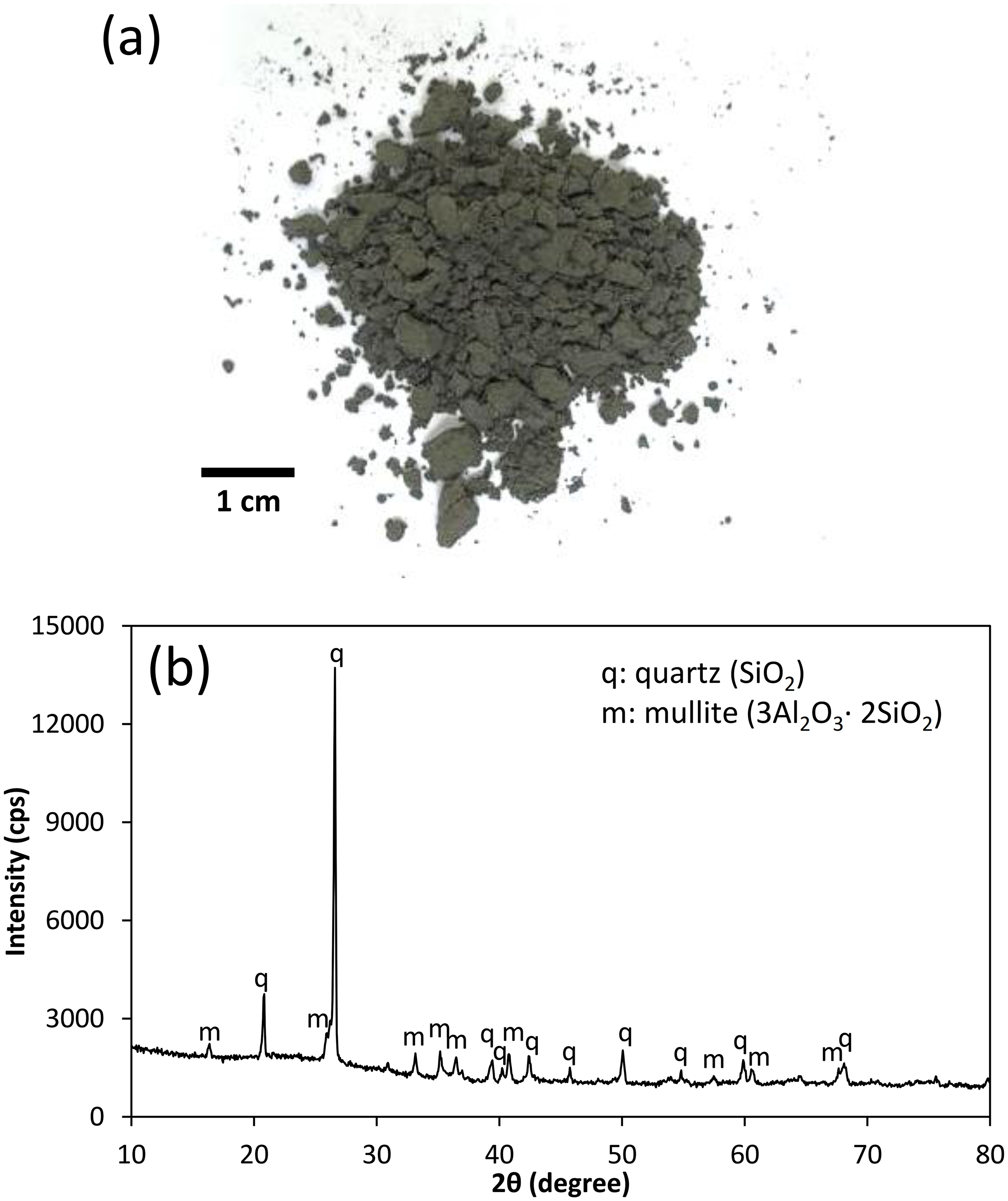
A photograph of the raw coal fly ash (CFA) utilised in this research (a) and the X-ray diffraction (XRD) spectrum of the raw CFA sample, employed in the study (b).
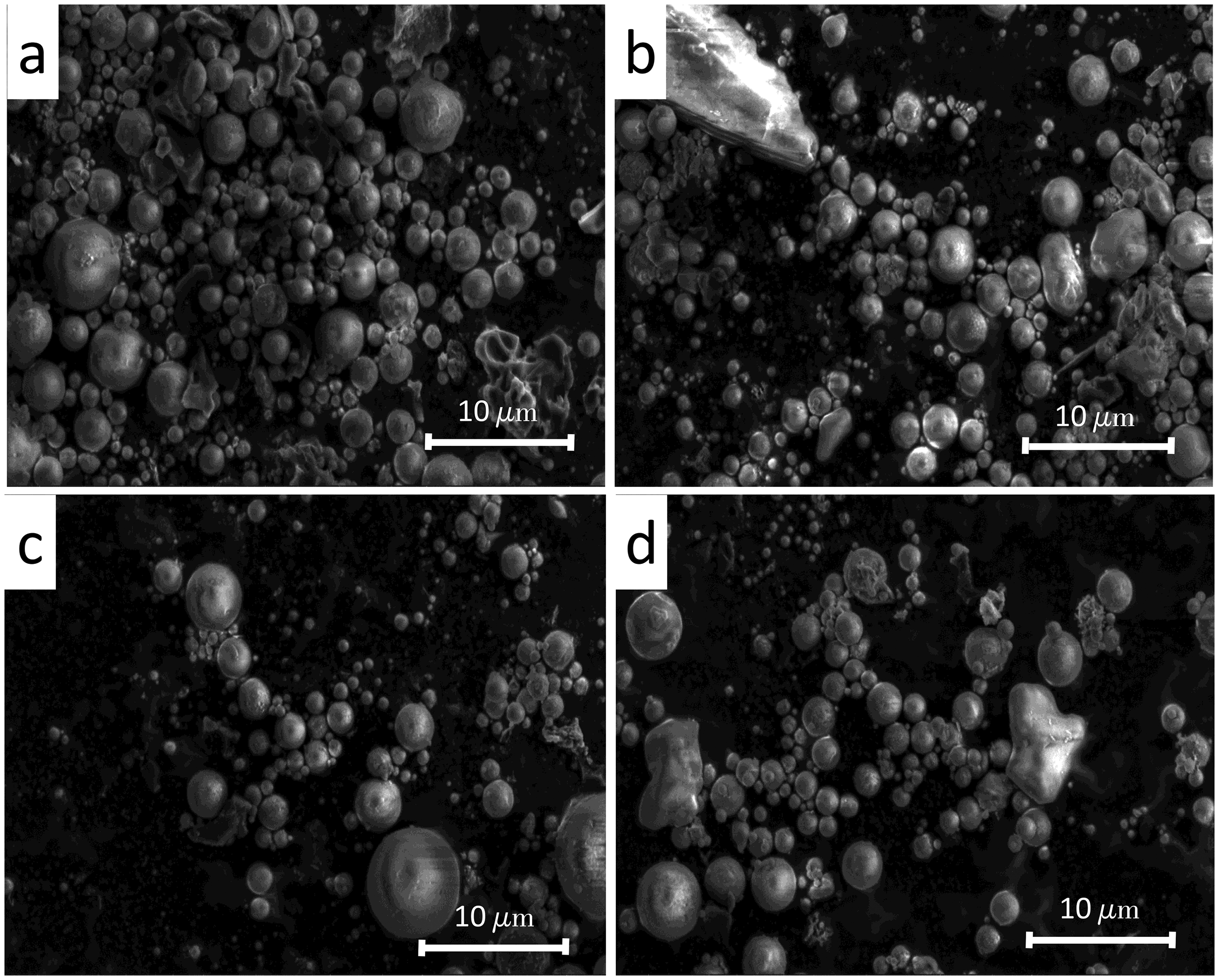
Scanning electron microscopy (SEM) images of the raw coal fly ash (CFA), illustrating various particle sizes: (a) +88 μm (+170 mesh), (b) −88 + 74 μm (−170 + 200 mesh), (c) −74 + 37 μm (−200 + 400 mesh), (d) −37 + 25 μm (−400 + 600 mesh).
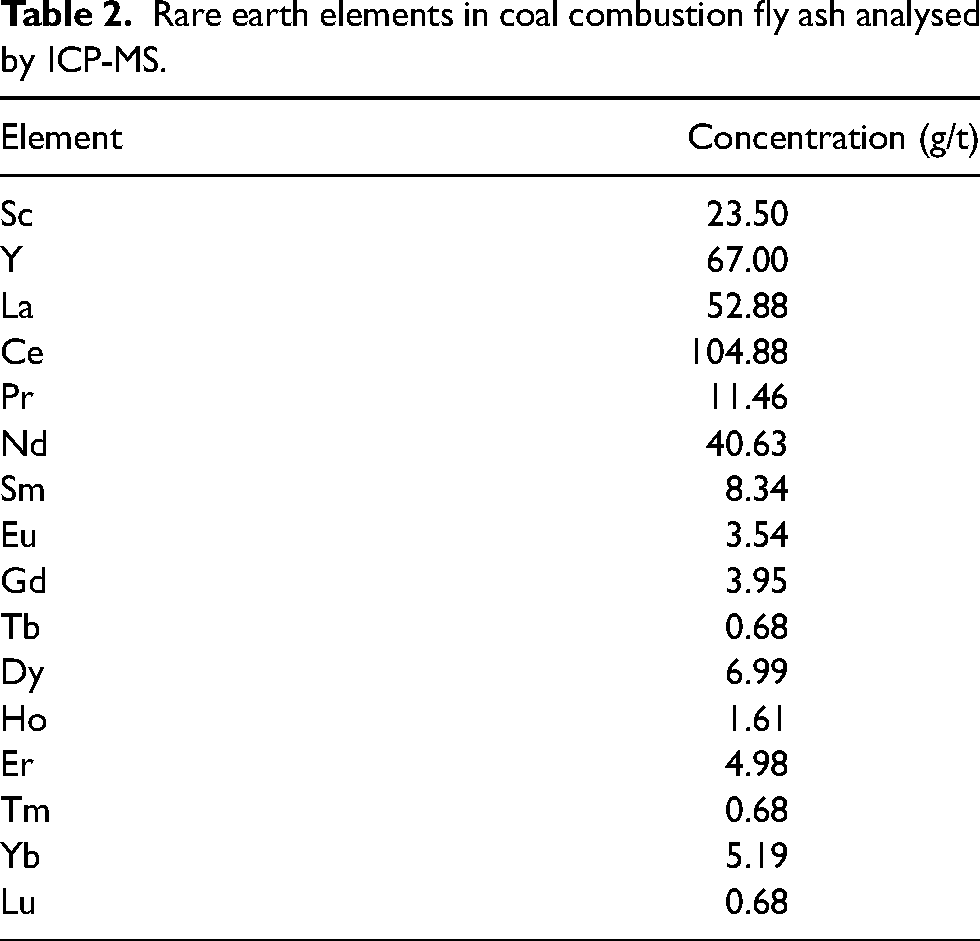
Table 1 presents the elemental composition of the CFA, including REEs. The CFA contains base metals in the following order of abundance: Si > Fe > Al > Ca > K > Ti > S = Mg > P > Sr > Mn > Ba > Zr > Zn, with these metals listed based on concentrations exceeding 0.1 wt-%. The sequence of REEs in the CFA is as follows: Ce > Y > La > Nd > Sc > Pr > Sm > Dy > Yb > Er > Gd > Eu > Ho > Tb = Lu = Tm. The CFA also contains trace metals in the following order of abundance: Sn > V > Pb > Cr = Ni = Rb = Te > Nb = Ga > Br; however, their concentrations are below 0.1 wt-%.
Oxide composition of coal combustion fly ash by XRF.
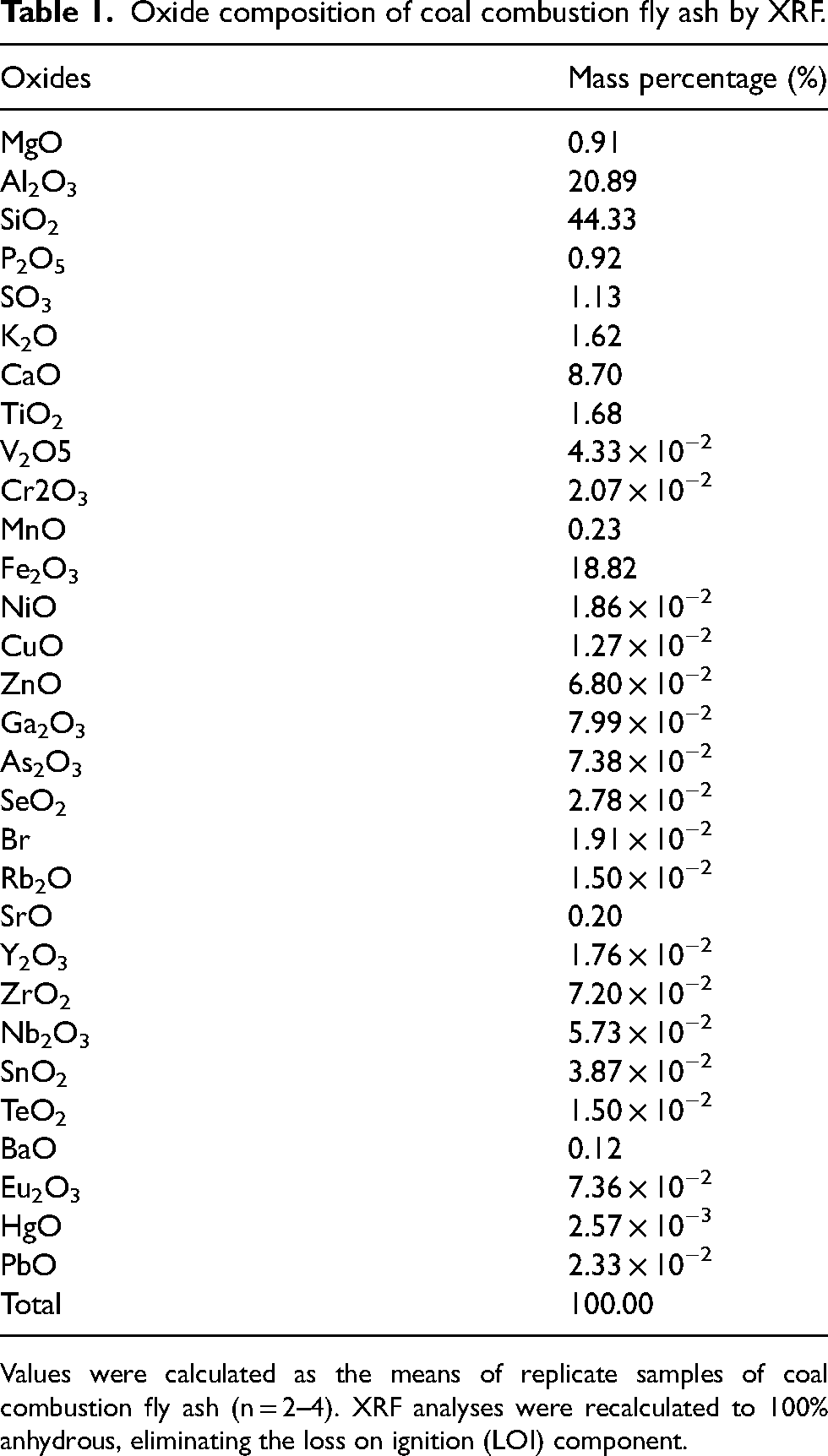
Values were calculated as the means of replicate samples of coal combustion fly ash (n = 2–4). XRF analyses were recalculated to 100% anhydrous, eliminating the loss on ignition (LOI) component.
Bioleaching of rare earth elements using mixotrophic bacteria
Bioleaching of REEs from CFA was conducted using six mixotrophic bacteria – A. ferrooxydans, B. aryabhattai, Alicyclobacillus sp., C. freundii, S. rubidaea and B. nitratireducens – at varying solid contents (0.5, 1, 2 g/L) over 3 days. Throughout the bioleaching experiments, the pH and Eh (oxidation–reduction potential) of the bioleaching suspensions were continuously monitored (Figures 3 and 4). The results indicated that, over the course of the 3-day experiments, the pH of the bioleaching suspensions consistently decreased across all tested solid contents (Figure 3(a)–(c)). This trend demonstrated that all six bacteria effectively adapted to the bioleaching medium containing CFA at different concentrations, corresponding to solid contents of 0.5, 1 and 2 g/L, thereby affirmatively supporting the efficacy of the bioleaching process. The reduction in pH during the bioleaching is primarily attributed to the production of acidic compounds, such as sulphuric acid, and the release of protons through the bacterial oxidation of thiosulphate,14,15 considering the bioleaching medium in this study included 5 g/L Na2S2O3·5H2O. The bacteria utilised belong to a mixotrophic group capable of oxidising both iron and sulphur,14,15 playing a crucial role in the conversion of thiosulphate to sulphate – a process that generates protons (H+) as a by-product, as delineated in equation (1). The production of protons during the oxidation of thiosulphate directly results in a decrease in pH (from approximately 5.7 to 4.8) within the bioleaching suspension, as shown in Figure 3(a) to (c). However, an exception is observed with the bacterium S. rubidaea strain SKC-11 at a pulp density of 2 g/L, where the pH increases after 20 hours of the bioleaching experiments, as shown in Figure 3(c).
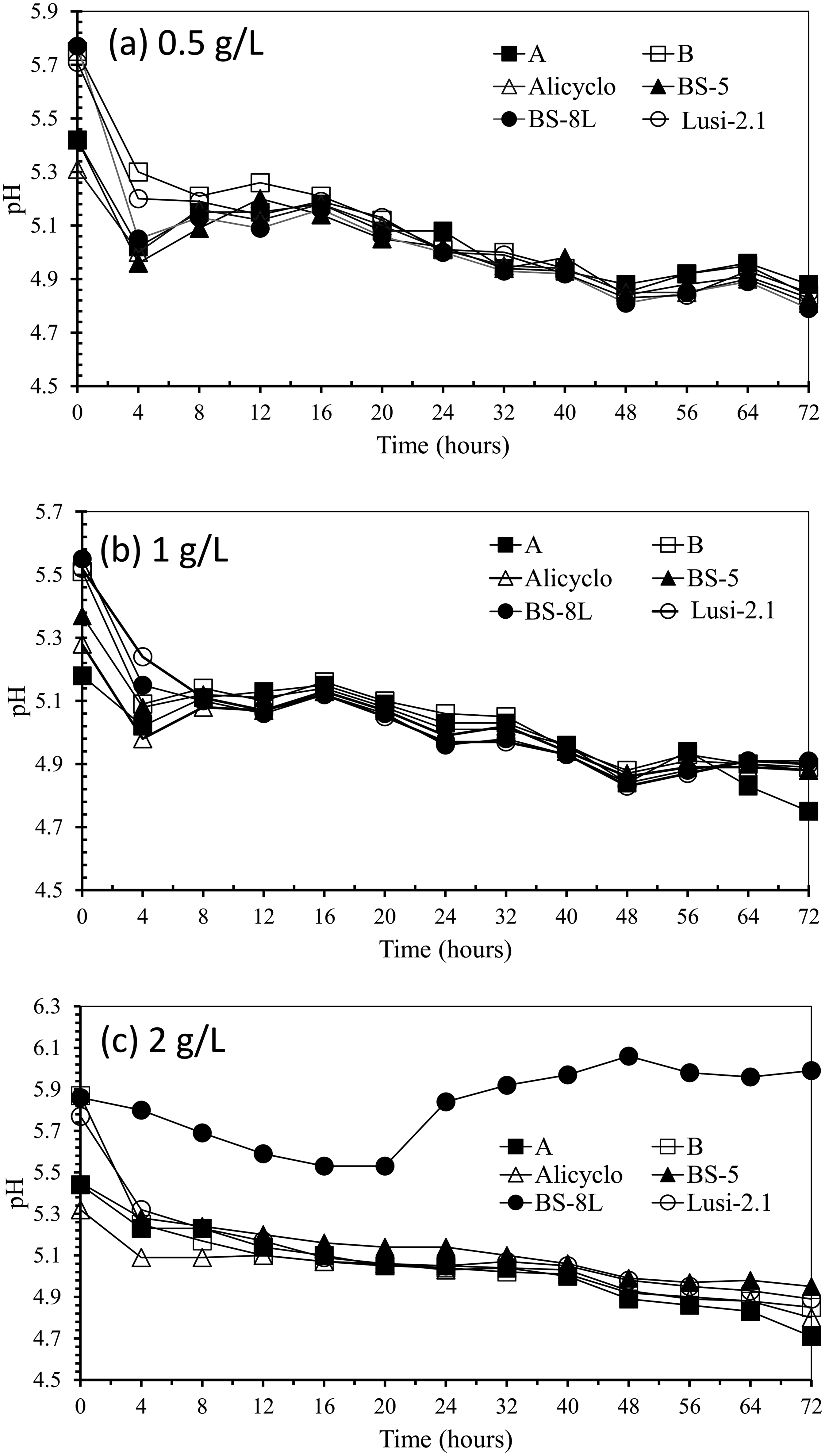
The pH changes in the suspension over 3 days in bioleaching experiments with varying coal fly ash (CFA) concentrations: 0.5 g/L (a), 1 g/L (b) and 2 g/L (c), utilising six mixotrophic bacterial strains. These strains include: Alicyclobacillus ferrooxydans strain SKC/SAA-2 (labelled as A), Bacillus aryabhattai strain SKC-5 (labelled as B), Alicyclobacillus sp. strain SKC-23 (labelled as Alicyclo), Citrobacter freundii strain SKC-4 (labelled as BS-5), Serratia rubidaea strain SKC-11 (labelled as BS-8L) and Bacillus nitratireducens strain SKC/L-2 (labelled as Lusi-2.1).
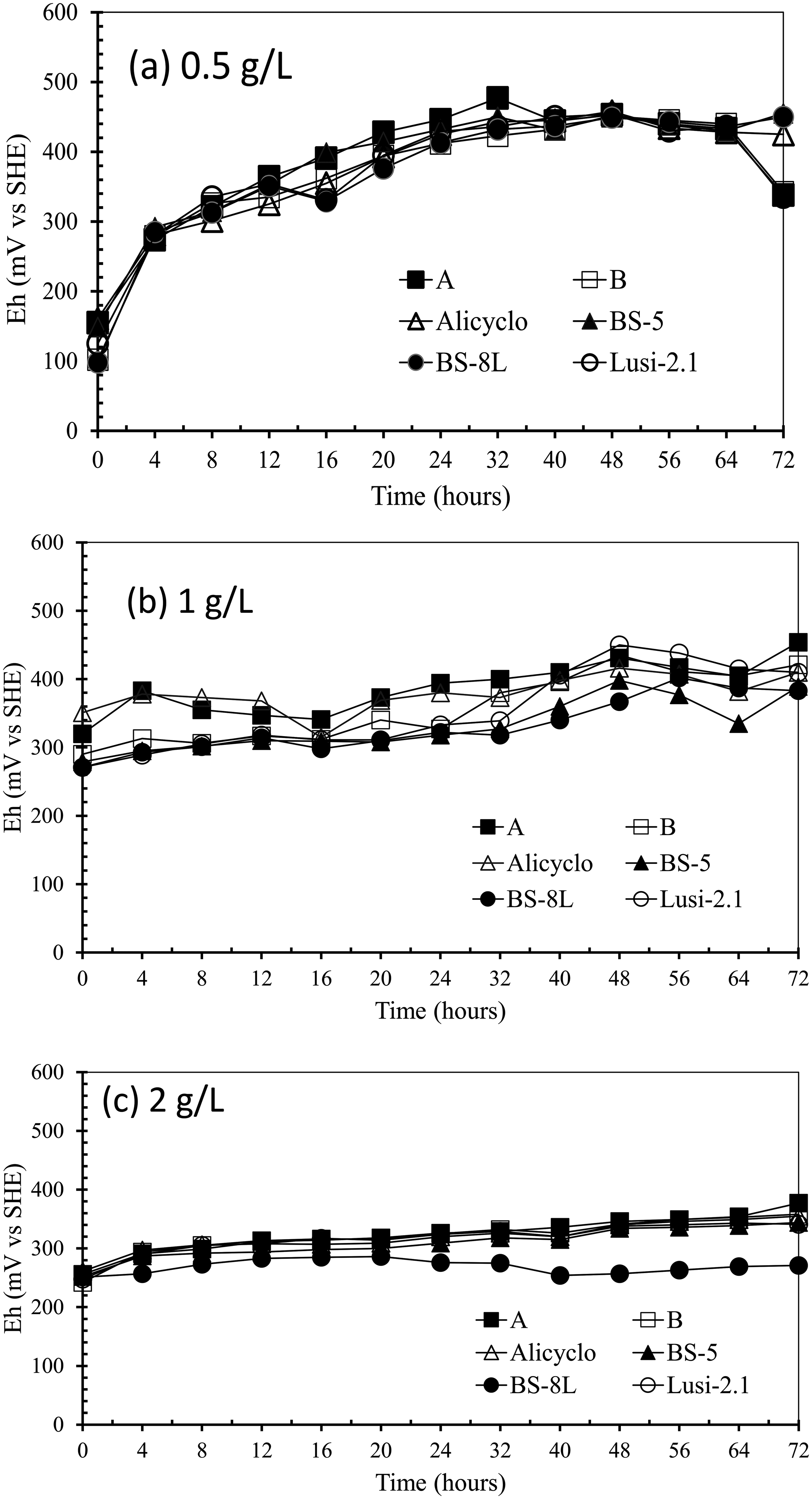
The Eh (redox potential) changes in the suspension over 3 days in bioleaching experiments with varying coal fly ash (CFA) concentrations: 0.5 g/L (a), 1 g/L (b) and 2 g/L (c), utilising six mixotrophic bacterial strains. These strains include: Alicyclobacillus ferrooxydans strain SKC/SAA-2 (labelled as A), Bacillus aryabhattai strain SKC-5 (labelled as B), Alicyclobacillus sp. strain SKC-23 (labelled as Alicyclo), Citrobacter freundii strain SKC-4 (labelled as BS-5), Serratia rubidaea strain SKC-11 (labelled as BS-8L) and Bacillus nitratireducens strain SKC/L-2 (labelled as Lusi-2.1).
Furthermore, since the bioleaching medium contained 3 g/L (NH4)2SO4, it was observed that all bacterial strains aerobically metabolised the (NH4)2SO4 present in the medium. This metabolism involves the oxidation of ammonia to nitrate through nitrification, a process that converts ammonia into nitrite and then into nitrate, releasing protons (H+) and water.16,17 This process also contributes to the decrease in pH of the bioleaching suspension in this study. In a bioleaching suspension containing S. rubidaea strain SKC-11 at a pulp density of 2 g/L of CFA (Figure 3(c)), the pH increase observed after 20 hours of experimentation may be attributed to the favourable environmental conditions for this bacterium. Notably, the genus Serratia, including strain SKC-11, possesses an active Fnr (fumarate and nitrate reduction) regulator, which is typically active under anaerobic conditions but plays a crucial role in adapting bacteria from oxic to anoxic environments.
18
At a solid content of 2 g/L, the bioleaching suspension facilitates heightened activity of the Fnr regulator compared to lower solid contents of 0.5 and 1 g/L, owing to the relatively less aerobic conditions. This indicates that Serratia species may have adaptive mechanisms to modulate their metabolism in response to varying levels of oxygen.
18
When strain SKC-11 metabolises (NH4)2SO4 aerobically, the chemical reaction primarily involves the oxidation of ammonia (NH4+) to nitrate (NO3−).16,17 The nitrate produced is then reduced back to ammonia by the bacterium, leading to an increase in pH as outlined in equation (2). Additionally, the reduction of nitrate (NO3−) to dinitrogen (N2) by specific enzymes, which consume protons (H+) as the electron donor,
19
further contributes to the rise in pH within the bioleaching suspension.
Figures 5 and 6 illustrate the recovery levels of REEs (light REEs [LREEs] and heavy REEs [HREEs], respectively). It is evident that all bacterial strains exhibit a similar pattern or trend in recovering both LREEs and HREEs across all tested solid contents (0.5, 1, 2 g/L). Notably, the recovery levels decrease as the solid content increases for both types of REEs. For LREEs (Figure 5), gadolinium (Gd) was the most effectively recovered REE across all bacterial strains and solid contents, achieving a recovery level of approximately 35% at a solid content of 0.5 g/L. This level of recovery is considered relatively moderate, which is higher than the recoveries at solid contents of 1 g/L (approximately 18%) and 2 g/L (approximately 7%). By summarising previous studies on the extraction of REEs from CFA using both green and conventional methods, extraction levels of REEs can be classified into five categories: high (over 70%), relatively high (60–70%), moderate (40–60%), relatively moderate (30–40%) and low (below 30%). Following Gd, europium (Eu) exhibited the second highest recovery level for LREEs, reaching approximately 10% at 0.5 g/L solid content, about 4% at 1 g/L and 1.5% at 2 g/L (Figure 5(a)–(c)). These levels categorise Eu's extraction as low, falling below 30%. Other LREEs such as neodymium (Nd), lanthanum (La), cerium (Ce), samarium (Sm) and praseodymium (Pr) were recovered but at very low levels (below 2%), rendering them negligible. Conversely, the recovery levels of HREEs were generally higher than those of LREEs. Terbium (Tb) was the most recovered HREE, achieving recovery rates of approximately 70% at 0.5 g/L solid content, about 35% at 1 g/L and 16% at 2 g/L (Figure 6(a)–(c)). The extraction level of Tb is considered high at 0.5 g/L solid content, moderately moderate at 1 g/L and low at 2 g/L. Lutetium (Lu) and holmium (Ho) were the second and third most recovered HREEs, respectively, while other HREEs were recovered at low levels (less than 20% at 0.5 and 1 g/L solid contents and below 7% at 2 g/L solid content) (Table 2).
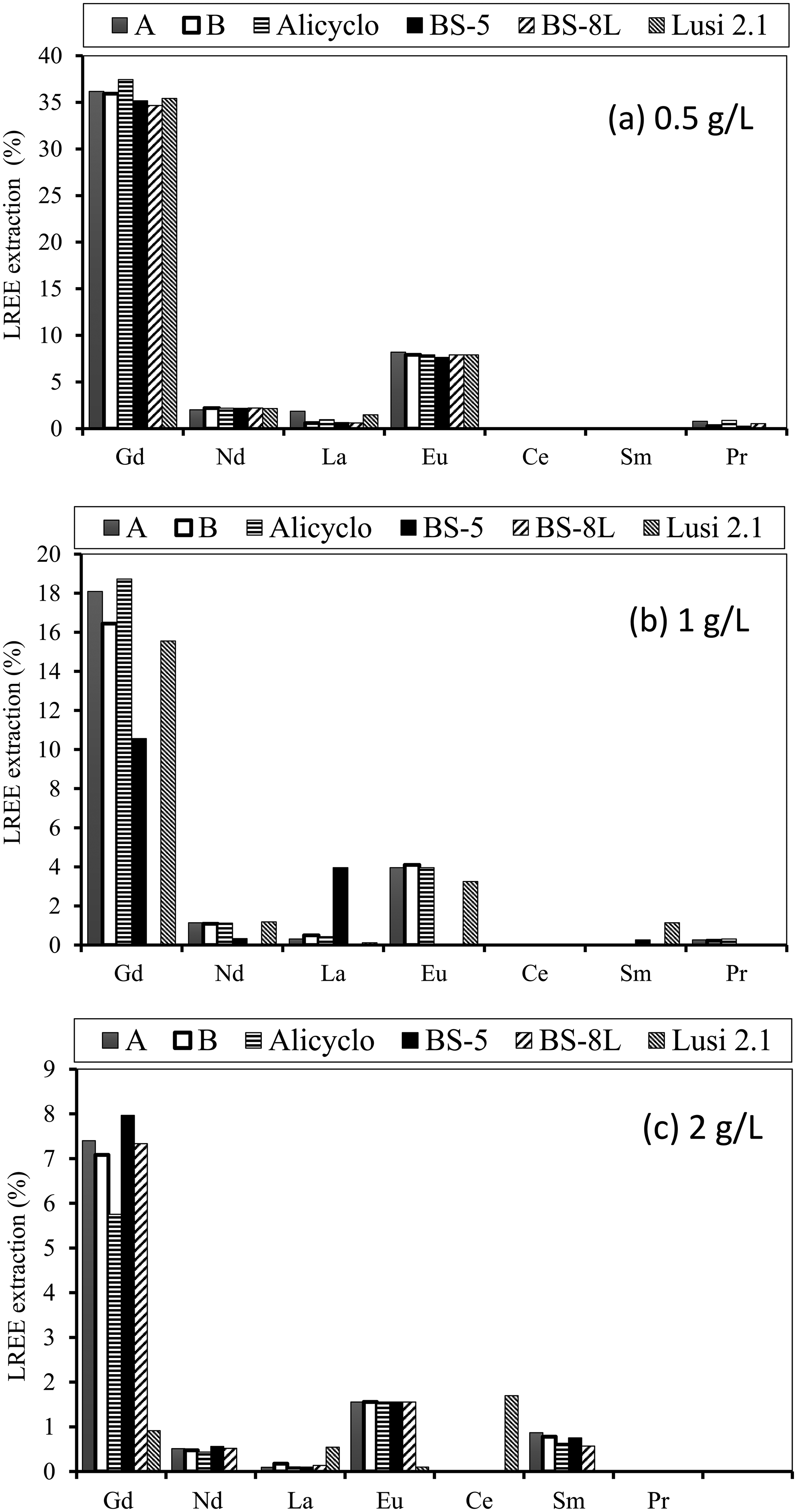
The extraction (%) of light rare earth elements (LREEs) in 3-day bioleaching experiments with different coal fly ash (CFA) concentrations: 0.5 g/L (a), 1 g/L (b) and 2 g/L (c), using six mixotrophic bacterial strains. These strains include: Alicyclobacillus ferrooxydans strain SKC/SAA-2 (labelled as A), Bacillus aryabhattai strain SKC-5 (labelled as B), Alicyclobacillus sp. strain SKC-23 (labelled as Alicyclo), Citrobacter freundii strain SKC-4 (labelled as BS-5), Serratia rubidaea strain SKC-11 (labelled as BS-8L) and Bacillus nitratireducens strain SKC/L-2 (labelled as Lusi-2.1).
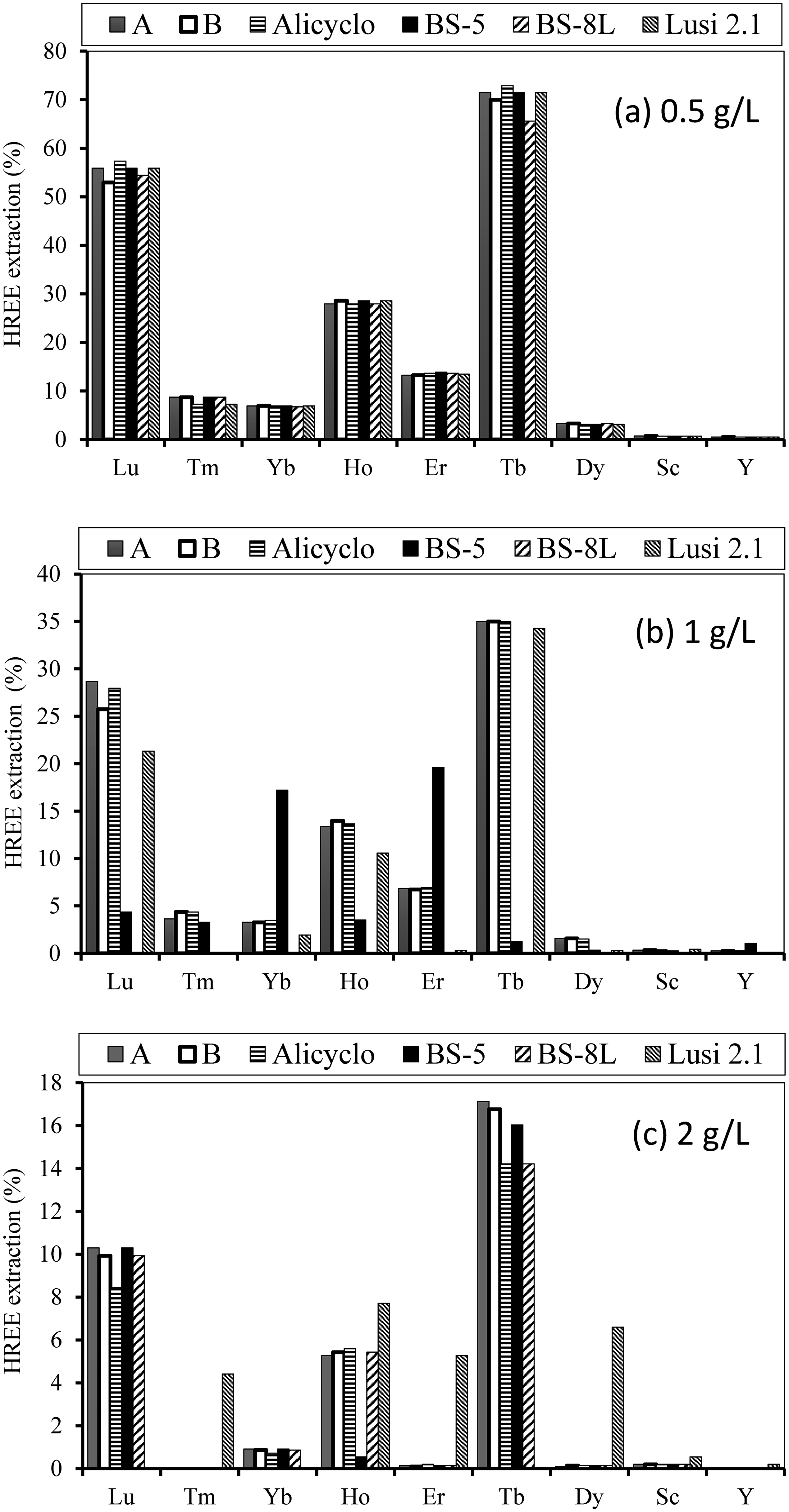
The extraction (%) of heavy rare earth elements (HREE) in 3-day bioleaching experiments with different coal fly ash (CFA) concentrations: 0.5 g/L (a), 1 g/L (b) and 2 g/L (c), using six mixotrophic bacterial strains. These strains include: Alicyclobacillus ferrooxydans strain SKC/SAA-2 (labelled as A), Bacillus aryabhattai strain SKC-5 (labelled as B), Alicyclobacillus sp. strain SKC-23 (labelled as Alicyclo), Citrobacter freundii strain SKC-4 (labelled as BS-5), Serratia rubidaea strain SKC-11 (labelled as BS-8L) and Bacillus nitratireducens strain SKC/L-2 (labelled as Lusi-2.1).
Rare earth elements in coal combustion fly ash analysed by ICP-MS.
Correspondingly, the decrease in recovery levels of both types of REEs as solid content increases can be attributed to a combination of physicochemical and biological factors: (1) Higher solid contents in the bioleaching medium can decrease oxygen transfer rates, which are crucial for the aerobic, sulphur-oxidising bacteria in this study, potentially inhibiting their growth and metabolic activity, and thereby reducing their efficiency in leaching REEs from CFA 24 ; (2) As solid content increases, the slurry becomes more viscous, leading to poorer mixing and reduced mass transfer, which can result in uneven distribution of essential nutrients, ions and leaching agents, thereby diminishing the effectiveness of contact between the bacteria and the REE-containing minerals; (3) At higher solid contents, CFA particles are more closely packed, reducing the surface area exposed to bacteria and bioleaching agents, thereby decreasing the efficiency of the bioleaching process due to fewer accessible particles for reaction. 14
Furthermore, the extraction of HREEs such as Terbium (Tb) and Lutetium (Lu) from CFA using the six mixotrophic bacteria can achieve higher extraction levels than LREEs, as shown in Figures 5 and 6. This may be due to several factors: (1) The physicochemical properties of HREEs, such as Tb and Lu, feature smaller ionic radii than LREEs, potentially enhancing their mobility and bioavailability in the CFA matrix, thus making them more accessible for bacterial action25,26; (2) The bacteria may have evolved mechanisms to bind and mobilise HREEs, such as producing biosurfactants (which they can generate by consuming molasses in this study) that chelate and solubilise REEs, thus increasing their availability for uptake or leaching through complexolysis mechanisms; (3) The specific composition of CFA, including its mineral matrix and the forms of REEs present, can influence extraction efficiency, with HREEs potentially occurring in mineral phases more susceptible to bacterial breakdown or alteration than those hosting LREEs.
25
The extraction efficiency is influenced by the specific mineralogical and chemical composition of the CFA, where ashes rich in alumino-silicate minerals may preferentially bind LREEs, while HREEs are often associated with phases that are more easily leachable.
27
Consequently, the addition of molasses to the bioleaching medium provided the necessary energy for the six mixotrophic bacteria to conduct their metabolic processes using organic compounds (as an organic carbon source) in the presence of oxygen. These bacteria played a crucial role in the complete oxidation of organic compounds (CH2O) to CO2 and H2O, yielding significantly more energy (equation (3)). By utilising the organic carbon, the bacteria were able to produce substantial amounts of biosurfactants (including EPS), which contributed to the increased availability of HREEs for uptake or leaching through complexolysis mechanisms.
15


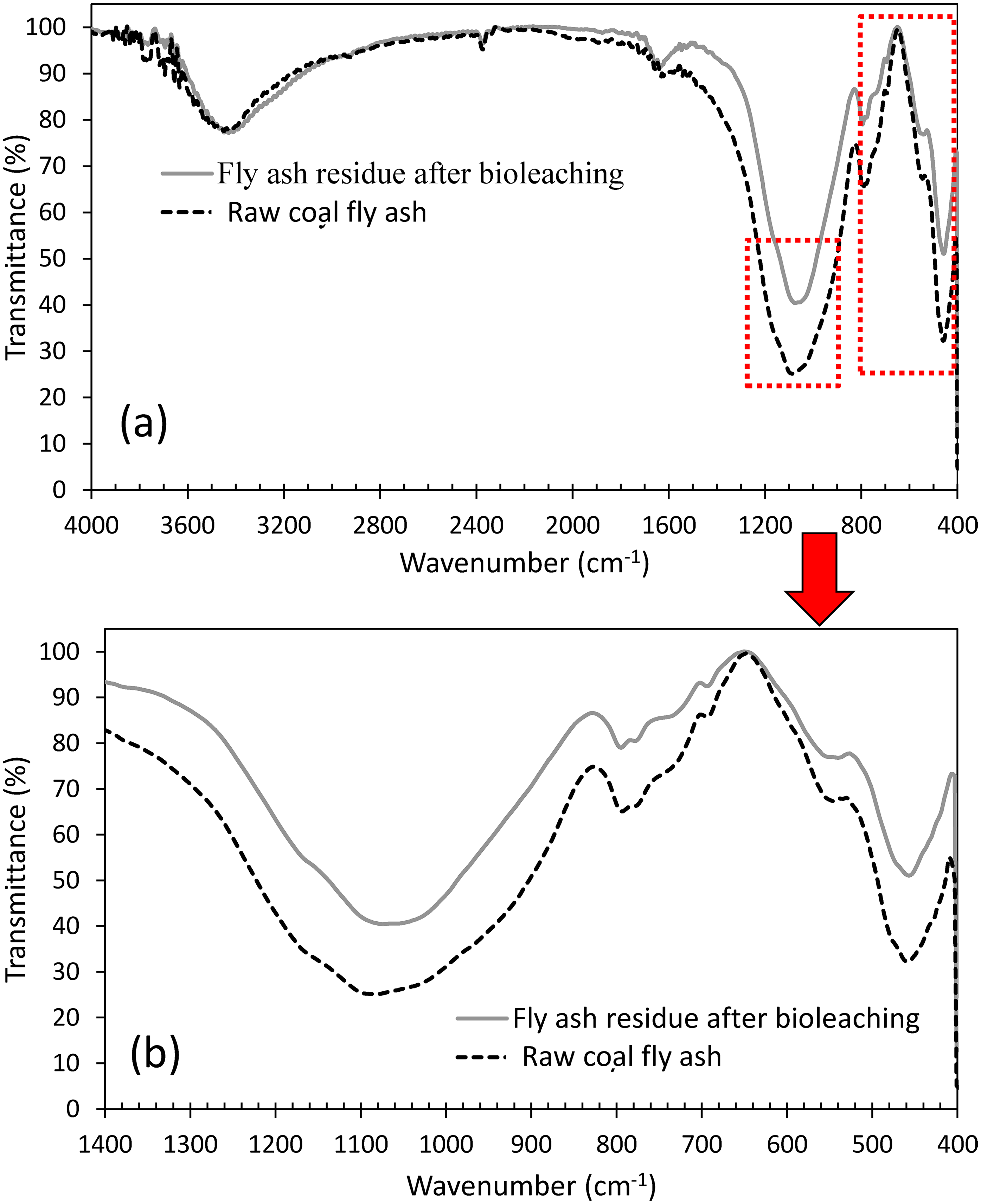
Fourier transform infrared (FTIR) spectrum of fly ash residue after 3 days of a bioleaching experiment using Alicyclobacillus sp. strain SKC-23, alongside the FTIR spectrum of the raw coal fly ash (a). An enlarged view of the spectra is provided in image (b).
Mineralogical analysis via XRD, as depicted in Figure 8, reveals that the raw CFA is primarily composed of 73% quartz (SiO2) and 27% mullite (3Al2O₃·2SiO2). Following bioleaching, the predominant mineral phases in the residues were consistent with those in the raw CFA. However, a significant reduction in XRD peak intensities (in residues at solid contents of 0.5 g/L and 2 g/L) was observed, which can be attributed to: (1) mineral dissolution induced by bioleaching, leading to a decrease in the intensity of their respective XRD peaks, (2) structural modifications in the mineral crystals due to bioleaching, which may reduce crystallinity and result in diminished peak intensities and (3) the presence of organic compounds, such as bacterial cells and metabolic by-products (e.g. extracellular polymeric substances or EPSs), that may adhere to mineral surfaces or interfere with XRD, thereby reducing peak intensities. Moreover, a comparative examination of XRD patterns at different solid contents (0.5 and 2 g/L) indicated that the lower solid content (0.5 g/L) contained a relatively higher proportion of organic compounds in relation to the CFA content. As a result, the mineral peaks in the 0.5 g/L solid content sample showed a more substantial decrease in intensity compared to those in the 2 g/L solid content sample. This observation implies that bacterial activity may play a more pronounced role in REE extraction at a 0.5-g/L solid content, thereby impacting the XRD peak intensities of the residual mineral phases. These findings align with REE extraction levels, indicating that lower solid contents (in this case, 0.5 g/L) correspond to higher REE extraction efficiencies (as shown in Figures 5 and 6).
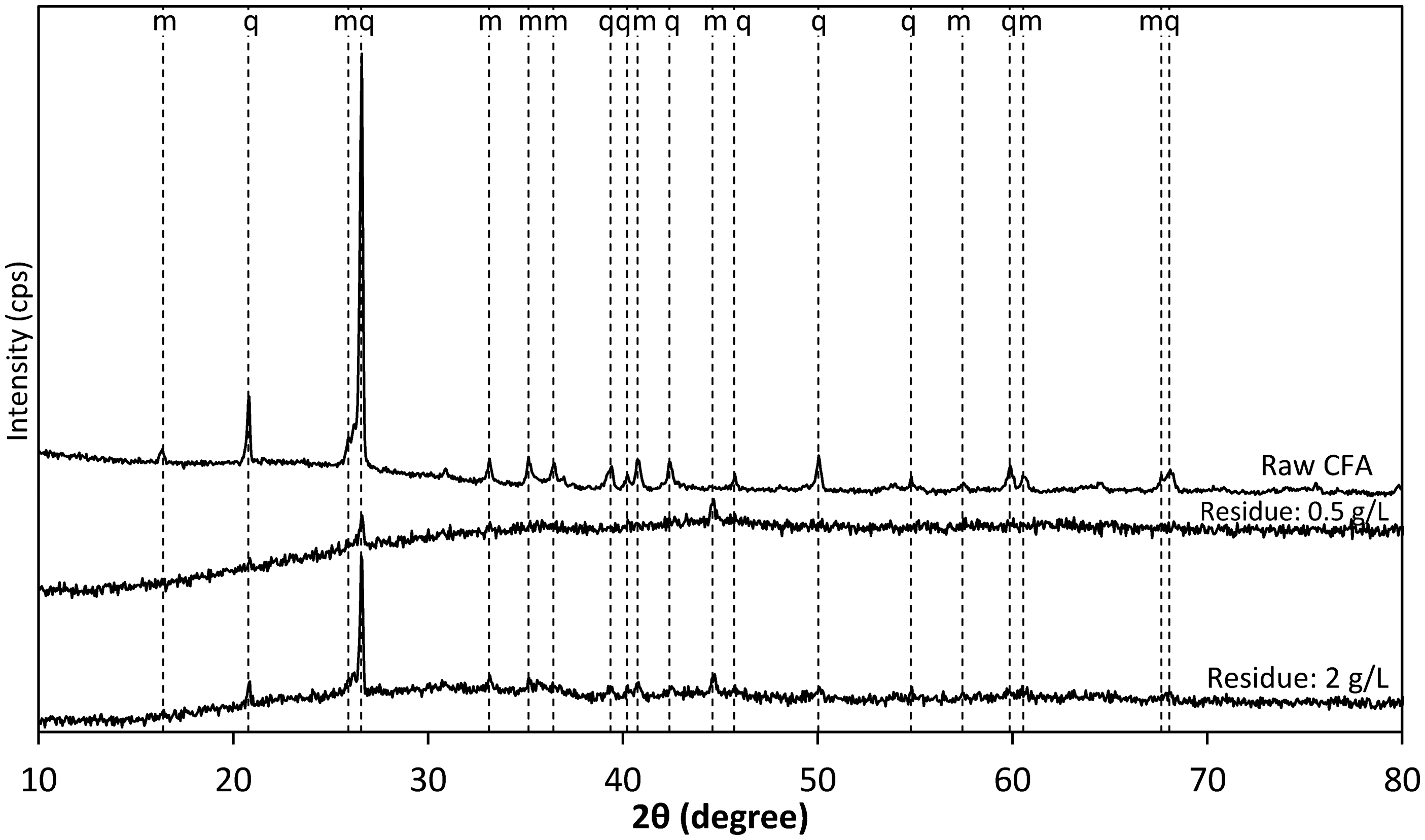
X-ray powder diffraction patterns of raw coal fly ash (CFA), residue of 0.5 g/L solid content and residue of 2 g/L solid content after bioleaching. Note: m = mullite (3Al2O3·2SiO2); q = quartz (SiO2).
In summary, this study's results demonstrate that six mixotrophic bacteria can effectively recover REEs, particularly HREEs, from CFA, offering several advantages including: (a) using these bacteria to extract REEs through biohydrometallurgical methods provides a more environmentally friendly alternative to traditional chemical extraction methods, as it requires less energy and produces fewer harmful byproducts, thereby reducing the environmental impact of REE extraction; (b) biohydrometallurgy is noted for its low cost compared to conventional extraction methods, as it uses bacteria to economically extract valuable metals from waste materials, making REE recovery economically viable; (c) biohydrometallurgy transforms CFA, commonly viewed as waste, into a resource by recovering valuable minerals including REEs, providing economic benefits and contributing to waste minimisation; (4) bacteria can selectively leach metals, enabling targeted recovery of specific REEs from CFA, which enhances the purity of the extracted REEs and reduces the need for further purification; (e) by facilitating the recovery of valuable REEs from CFA, biohydrometallurgy supports circular economy principles, promoting material reuse and reducing the demand for untapped resources, which is essential for sustainable development. Moreover, this study has identified six mixotrophic bacterial strains – A. ferrooxydans, B. aryabhattai, Alicyclobacillus sp., C. freundii, S. rubidaea and B. nitratireducens – with the capability to oxidise iron and sulphur, as well as produce biosurfactants. These bacterial strains represent a novel approach to extracting REEs, particularly HREEs, from CFA, marking a significant advancement over previous studies that employed only fungi, such as C. bombicola, P. chrysosporium, C. curvatus 5 and Aspergillus niger. 28 Additionally, the extraction levels of REEs achieved in this study are promising and show improvements compared to those obtained in prior research. To elucidate the process of REE extraction from CFA, a comprehensive flowsheet detailing the bioleaching process using the bacterial strain A. ferrooxydans was developed (Figure 9). This flowsheet illustrates the bioleaching parameters and the corresponding REE extraction efficiencies achieved under these conditions. The strain A. ferrooxydans demonstrated significant capability in solubilising REEs from CFA under the following bioleaching parameters: CFA particle size of −88 + 74 μm, solid content of 0.5 g/L, bacterial inoculum of 5% v/v, temperature of 25 °C and a bioleaching duration of 3 days.
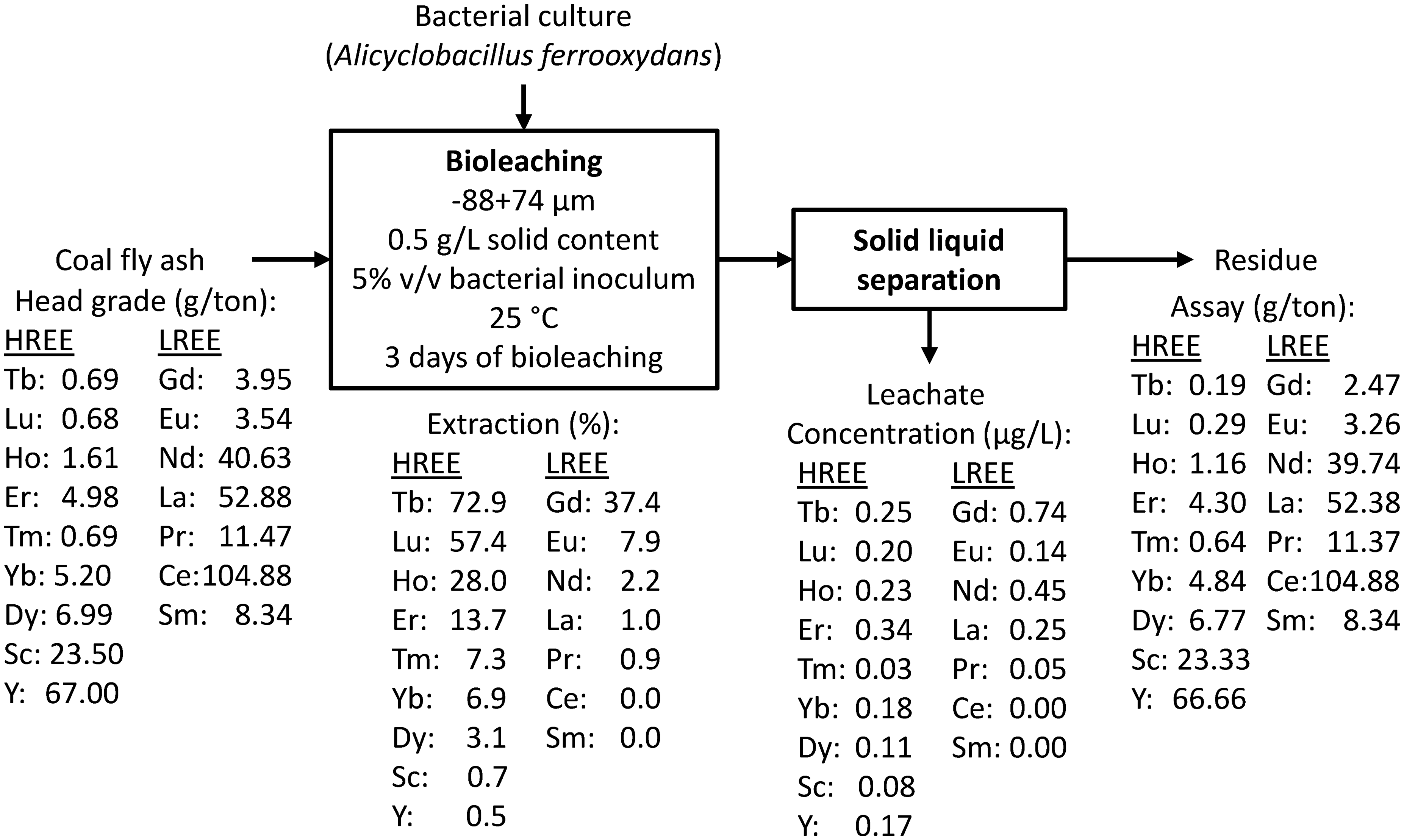
Flowsheet illustrating the optimal bioleaching parameters and the corresponding REE extraction efficiencies achieved.
Additionally, the downstream processing of the pregnant leach solution (PLS) for REE extraction typically involves a sequence of advanced separation and purification steps. These processes are tailored to selectively isolate and concentrate REEs from other components in the solution, resulting in high-purity REE products. One of the most commonly applied methods for separating REEs from PLS is solvent extraction. This approach employs organophosphorus extractants, such as di-(2-ethylhexyl) phosphoric acid (D2EHPA), 2-ethylhexyl phosphonic acid mono-2-ethylhexyl ester (PC88A), or tributyl phosphate (TBP), to selectively transfer REEs from the aqueous phase into an organic phase. 29 The efficiency of solvent extraction can be optimised by modifying parameters such as extractant concentration, organic-to-aqueous phase ratio, diluent type, pH and extraction duration. For instance, D2EHPA in a two-stage extraction process has been proven effective for differentiating LREEs from HREEs. 29 After extraction, the REEs are typically stripped from the organic phase using a suitable stripping agent, usually a strong acid, which regenerates the organic extractant for reuse and produces a more concentrated REE solution. Following solvent extraction, additional purification and separation of individual REEs can be achieved using techniques such as ion exchange or selective precipitation. Ion exchange is particularly useful for separating REEs with similar chemical characteristics, while precipitation methods, such as oxalate precipitation, can selectively recover REEs from solution. For example, the addition of oxalic acid to the PLS can facilitate the selective precipitation of rare earth oxalates, with recovery rates potentially surpassing 90% under optimised conditions. 30 The precipitated rare earth oxalates can then be calcined to produce rare earth oxides. It is important to note that the specific treatment steps and their order may vary depending on the PLS composition, the desired end products and economic considerations of the process.
Conclusion
The findings of this study reveal that the CFA examined is predominantly composed of quartz (SiO2) and mullite (3Al2O3·2SiO2) from a mineralogical standpoint. Elemental analysis shows that the CFA contains base metals in the following order of abundance: Si > Fe > Al > Ca > K > Ti > S = Mg > P > Sr > Mn > Ba > Zr > Zn. These metals were selected and sequenced based on concentrations exceeding 0.1 wt%. Regarding REEs, the sequence in the CFA is as follows: Ce > Y > La > Nd > Sc > Pr > Sm > Dy > Yb > Er > Gd > Eu > Ho > Tb = Lu = Tm. The study also evaluated the extraction levels of REEs using six mixotrophic bacterial strains (A. ferrooxydans strain SKC/SAA-2, B. aryabhattai strain SKC-5, Alicyclobacillus sp. strain SKC-23, C. freundii strain SKC-4, S. rubidaea strain SKC-11 and B. nitratireducens strain SKC/L-2), finding that all strains could recover REEs, particularly HREEs, with the highest extraction level of approximately 70% achieved by Tb (terbium). In conclusion, employing mixotrophic bacteria to extract REEs from CFA represents a promising approach that is both environmentally sustainable and economically viable. This method offers benefits such as efficiency, selectivity and the potential for resource recovery from waste materials, specifically CFA. These advantages align with the objectives of environmental sustainability and the circular economy.
Footnotes
Acknowledgements
The authors acknowledge all members of the Biomining and Biometallurgy Laboratory, Faculty of Mining and Petroleum Engineering (FTTM), Institut Teknologi Bandung, for their cooperation and assistance. The authors also express their gratitude to the Suralaya Power Plant in Cilegon, Banten, for supplying the coal fly ash (CFA) samples used in this study. This research was financially supported by a grant from the RIIM Gelombang III Program Riset dan Inovasi untuk Indonesia Maju Gelombang 3 Tahun 2023, Direktorat Pendanaan Riset dan Inovasi, Badan Riset dan Inovasi Nasional (BRIN), and LPDP, Indonesia, with the contract numbers LPPM.PN-13-10-2023-5/IV/KS/05/2023 and 333/IT1.B07/KS.00/2023.
Author contributions
Sarinah Tiodora Lumbantobing and Aisyah Minzikrina Masbar Rus performed the experiments under the supervision of Siti Khodijah Chaerun, Ronny Winarko, and Raudhatul Islam Chaerun. Elemental analyses were conducted by Fika Rofiek Mufakhir, Muhammad Hafid Masruri, Zela Tanlega Ichlas, Imam Santoso, Wahyudin Prawira Minwal and Widi Astuti. All authors contributed to the drafting and reviewing of the manuscript. All authors read and approved the final manuscript.
Data availability statement
Any data regarding this article is available on request.
Declaration of conflicting interests
The authors declared no potential conflicts of interest with respect to the research, authorship and/or publication of this article.
Funding
The authors disclosed receipt of the following financial support for the research, authorship and/or publication of this article: This research was financially supported by a grant from the RIIM Gelombang III Program Riset dan Inovasi untuk Indonesia Maju Gelombang 3 Tahun 2023, Direktorat Pendanaan Riset dan Inovasi, Badan Riset dan Inovasi Nasional (BRIN) and LPDP, Indonesia, with the contract numbers LPPM.PN-13-10-2023-5/IV/KS/05/2023 and 333/IT1.B07/KS.00/2023.
