






Abstract
The rapid growth of lithium-ion batteries has intensified the demand for high-performance cathode materials with improved stability and capacity retention. LiNi0.8Mn0.1Co0.1O2 (NMC 811) offers high energy density but suffers from irreversible capacity loss, cation mixing and structural instability during cycling. This study applied lanthanum (La) doping to enhance the electrochemical and structural properties of NMC 811 synthesised from recovered metal precursors. Nickel, cobalt, manganese and La were selectively leached and precipitated from spent catalysts and low-grade ores, yielding purities of 98.08% Ni, 83.61% Co, 98.66% La and 89.97% Mn, with recovery efficiencies of 93.36%, 89.28%, 90.65% and 99.53%, respectively, as determined by X-ray fluorescence. The La-doped NMC 811 (2–8 wt% % La) was prepared via a solid-state method with two-step calcination at 500 °C and 800 °C. Structural analysis by X-ray diffraction confirmed stabilisation of the layered R-3 m structure at low La content and partial transformation to rock-salt/perovskite phases at higher doping levels. The Fourier transform infrared spectroscopy verified the presence of oxalate and carbonate groups, while scanning electron microscopy micrographs showed a morphology shift from hexagonal to cubic particles with increasing La. Electrochemical testing at 0.1 C (20 mA g−1) between 2.7 and 4.3 V demonstrated that La-doped NMC 811 delivered a higher discharge capacity of 165 mAh g−1 compared to 149.05 mAh g−1 for commercial NMC 811, with stable capacity retention over 100 cycles. These findings highlight the potential of La-doped NMC 811 as a structurally stable and high-capacity cathode material for next-generation lithium-ion batteries.
Introduction
Energy plays an important role as one of the factors in achieving sustainable development. Around 80% of the world's energy needs are still dominated by fossil fuels. The increasing use of fossil energy will cause a scarcity of fossil fuels due to their non-renewable nature. In addition, excessive use will increase greenhouse gas emissions in the atmosphere and cause an increase in air temperature, so the Earth experiences global warming. The effects of global warming will create extreme anomalies in weather and climate as it exceeds its tolerance threshold, making it difficult to predict accurately. As a result, natural disasters occur everywhere and anytime, tending to be uncontrollable and continuous. Therefore, new renewable energy (EBT) is needed to fulfil future energy needs.1,2
Renewable energy sources come from natural elements abundantly available on earth, such as the sun, wind and water. However, the inconsistent use of renewable energy sources and their indirect use when available make them a major problem. For example, solar energy is only available during the daytime or is constrained due to unpredictable weather. Therefore, flexible and efficient energy storage technology is needed to use energy at any time. Energy storage systems are classified into magnetic systems (superconducting), electrochemical systems (batteries, fuel cells, super-capacitors), hydro systems (water pumps), pneumatic systems (air compressors), mechanical systems (flywheels) and thermal systems (molten salt, water or oil heaters). 3
Currently, batteries as an energy storage device are a key technology in the energy transition. The stationary energy storage system being developed is based on lithium battery technology. Lithium-ion battery (LIB) is an environmentally friendly secondary (rechargeable) battery. In addition, LIB has good energy storage stability, high energy density, no memory effect and relatively lighter weight. 4 Lithium's high electrochemical equivalent (3860 Ah/g) can also provide a much higher specific capacity than zinc (820 Ah/g). 5 Judging from the main components that make up LIBs (anode, cathode, electrolyte and separator), the cathode plays an important role because it is fully responsible for the lithium ion transfer process during the charging process.6,7 Among the various cathode building blocks, NMC (LiNi1−x−yMnxCoyO2) material is a promising candidate for next-generation LIB cathode materials due to its high discharge capacity and low cost. In addition, NMC exhibits relatively high structural and chemical stability at operating voltage (4.3 V vs Li/Li+) compared to commercialised LiCoO2. One of the NMC ratios, 811 (LiNi0.8Mn0.1Co0.1O2), has the advantages of high discharge capacity (∼200 mA/g) at 4.3 V vs Li/Li+, but has significant drawbacks, such as high irreversible capacity loss, short cycle life, low thermal stability and various other safety issues. In addition, there can be changes in structure and chemical composition during charge/discharge cycles related to the migration of transition metal cations into the lithium layer, leading to a gradual transformation from a layered structure to a spinel-like structure. Unwanted side reactions at the interface between the electrode and the electrolyte cause the structural changes. This irregular phase causes the distance between layers to be small and hinders the high activation energy for lithium ion migration, lowering Li diffusivity and electrochemical performance. 8
To overcome these problems, morphology control technology has been invented using doping consisting of metal oxides, fluorides or polymers on the surface of secondary particles. The doped cathode material has different lattice parameters, reduces mixing cation effects and improves electrochemical performance, such as increased lithium ion capacity, stability and/or diffusion coefficient compared to the undoped cathode. A wide variety of different dopants have been used for NMC cathode materials. Doping with electrochemically inactive ions with large radii can form strong bonds with oxygen to improve material stability and ion diffusion. Therefore, rare earth metals (REEs) are an alternative as dopants for coated cathode materials.9,10 According to research, 11 adding lanthanum (La) doping to NMC 811 shows an increase in cycling stability from 74.3% to 95.2%, good reversibility during cycle life and high capacity with La doping (1.0) (Table 1).
Comparison between previous La-doped Ni-rich layered oxide studies and the present work.
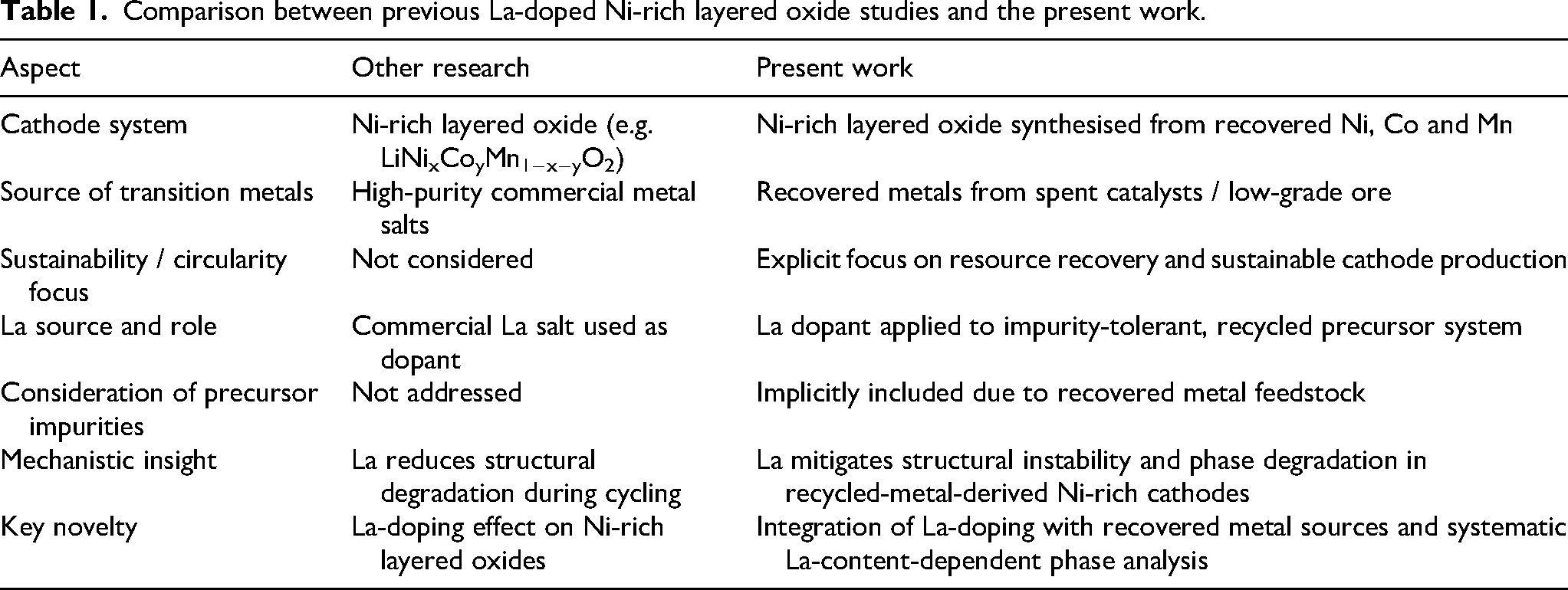
While La-doping of Ni-rich layered oxides has been reported previously, the novelty of this work resides in coupling sustainable precursor sourcing with a systematic evaluation of compositional and phase evolution. Unlike earlier studies that rely on high-purity commercial salts, this study employs Ni, Co and Mn recovered from spent catalysts and low-grade ores, directly addressing impurity tolerance, resource recovery and scalability for circular battery manufacturing. The results show that La incorporation effectively stabilises the layered structure and mitigates degradation even under non-ideal precursor purity, providing mechanistic insight that is directly relevant to recycled-material-derived cathodes rather than idealised laboratory systems. NMC cathode materials and La used in the research are obtained from catalyst waste and low-grade mineral ores. Synthesis of precursors by utilising used catalyst waste can be an alternative, considering the availability of raw materials in nature, which is decreasing due to increased exploitation.
Therefore, spent catalyst waste is one of the potential sources of raw materials because it still contains valuable metals that can be utilised as raw materials for battery manufacturing by the recovery process. Some methods used to synthesise NMC cathode precursors are hydroxide co-precipitation, carbonate co-precipitation, combustion, solid state and spray-drying. Each method has disadvantages and advantages, so the selection of the synthesis method is based on the application and the amount of production. 12 The research to be carried out focuses on synthesising La-doped NMC cathode precursors using the solid state method because it is the simplest method at low cost to produce nanometre-sized NMC cathodes, making it suitable if used on an industrial scale. The solid-state synthesis method uses a solid-phase reaction at a temperature below its melting point (calcination). Calcination can decompose water compounds at 100–300 °C and gases such as H2 and CO2 at 300–400 °C. While crystal formation can occur at 400–800 °C. 13
Methods and materials
The initial steps are Nickel Recovery, Cobalt Recovery, Lantanum Recovery, Manganese Recovery, NMC Precursor Synthesis and Precursor Characterization. After all the processes are complete, material characterisation is carried out.
Materials
The materials used in this study included spent industrial catalysts, low-grade manganese ore, ethanol (C2H6O), sulphuric acid (H2SO4), citric acid (C6H8O7), oxalic acid (C2H2O4), lithium carbonate (Li2CO3), calcium hydroxide (Ca (OH)2) and distilled water. The spent catalysts, serving as the primary sources of Ni, Co and La, were obtained from hydrotreating and hydrocracking units and typically consisted of high concentrations of nickel and cobalt supported on alumina with trace amounts of rare-earth elements. The manganese ore was procured from local mining operations. Prior to leaching, all catalyst samples were ground to a particle size of <200 mesh to increase the surface area and enhance metal dissolution.
Nickel recovery
A 50 grams of spent catalyst were ground to <200 mesh using a ball mill. The sample was leached with 1 L of 1 M H₂SO₄ at 90 °C for 5 h under continuous stirring at 200 rpm to dissolve nickel species. The resulting filtrate was treated with 1 M C2H2O2 (1:1 v/v) at 60 °C for 5 h to precipitate nickel oxalate. The precipitate was filtered, washed with distilled water and dried at 120 °C for 2 h. 14
Cobalt recovery
A 50 grams of spent catalyst were calcined at 750 °C for 4 h to decompose carbonaceous and sulphur-containing species, convert cobalt to oxide phases and enhance porosity. The calcined material was then ground to <200 mesh and leached with 1 L of C6H8O7 (1 M) at 90 °C for 5 h under stirring at 200 rpm. The filtrate was subsequently treated with 1 M C2H2O4 (1:1 v/v) at 60 °C for 5 h to precipitate cobalt oxalate. The precipitate was filtered, washed with distilled water and dried at 120 °C for 2 h. 14
Recovery lantanum
A 50 grams of spent catalyst was ground to <200 mesh and leached with 1 L of 1 M C6H8O7 at 90 °C for 5 h under stirring at 200 rpm. The filtrate was treated with 1 M C2H2O4 (1:1 v/v) at 60 °C for 5 h to precipitate La oxalate. The precipitate was filtered, washed with distilled water and dried at 120 °C for 2 h. 14
Manganese recovery
A 50 grams of manganese ore was ground to <200 mesh and leached with 1 L of 1 M H₂SO₄ containing 30 g of C2H2O4 at 90 °C for 5 h under stirring at 200 rpm. The filtrate was adjusted to pH 5 with 10% Ca (OH)2 to remove co-dissolved impurities, filtered and then treated with 1 M C2H2O4 (1:1 v/v) at 60 °C for 5 h to precipitate manganese oxalate. The precipitate was filtered, washed with distilled water and dried at 120 °C for 2 h. 14
Synthesis of NMC precursors
Nickel, manganese and cobalt (8:1:1). Li-NMC (1.05:1) with 20% excess, and La with variations of 2, 4, 6 and 8 wt% were weighed using an analytical balance, then the precursors were added with a small amount of ethanol. The precursors were dried using an oven at 100 °C for 4 h. Next, they were milled using a ball mill at 120 rpm for 4 h. The precursor was calcined in two stages, at 500 °C for 5 h and 800 °C for 12 h.
Analysis
The synthesised La-doped NMC811 powders were processed into cathode electrodes following standard procedures commonly used for LIB research. Galvanostatic charge-discharge cycling was conducted at parameters between 2.7 and 4.3 V at a moderate current density (e.g. 0.1 C or 20 mA g−1) for 100 cycles using a commercial battery cycler (such as Neware BTS series) in condition 27 °C. Cyclic voltammetry (CV) testing was conducted within a potential window of −0.2 to 1.0 V at a scan rate of 1 mV/s to evaluate the electrochemical behaviour of the electrode material. Electrochemical impedance spectroscopy (EIS) was also performed under standard conditions to probe the redox behaviour and lithium-ion diffusion kinetics.
The elemental composition and purity of Ni, Co, Mn and La oxalates were determined using X-ray fluorescence (XRF), which provides quantitative elemental analysis. Lithium content was inferred from the stoichiometry of Li2CO3 addition. Fourier transform infrared spectroscopy (FTIR) was employed to identify functional groups and to verify the compound phases (oxalate, carbonate, hydroxide). The XRF data were used to calculate recovery percentages and metal purities, whereas FTIR was used qualitatively to confirm the presence of functional groups and compare the obtained spectra with reference standards. 14
Morphology and surface composition were examined by field-emission scanning electron microscopy (FE-SEM) equipped with energy dispersive X-ray spectroscopy (Thermo Fisher). Samples were mounted on aluminium stubs with carbon tape and, where required to prevent charging, sputter-coated with a thin layer (∼5 nm) of gold or platinum. The FE-SEM images were acquired at accelerating voltages of 5–15 kV and working distances of 4–10 mm at magnifications ranging from 500× to 100.000×. Bulk elemental composition was measured by XRF (Bruker). Powdered samples were pressed into pellets (or fused into glass beads) and analyzed under vacuum/He purge using standardless and reference-standard calibrated routines; measurements were averaged from multiple spots to account for heterogeneity. Functional groups were identified by FTIR (Bruker) using ATR mode; spectra were recorded from 4000 to 400 cm−1 with 4 cm−1 resolution and 32 scans, and baseline corrected.
Results and discussion
The purity and phase identity of metals recovered from spent catalysts and low-grade ores were determined by XRF (reported in wt%) and FTIR spectroscopy. The XRF quantified the elemental composition and allowed estimation of impurity levels, while FTIR confirmed the functional groups and crystalline phases of the recovered oxalates. The combination of these two techniques provides a comprehensive assessment of both chemical purity and phase authenticity of the recovered products.
Nickel purity
The recovery of nickel from the spent catalyst yielded nickel oxalate whose elemental composition is listed in Table 2, with the FTIR spectra presented in Figure 1. According to the XRF results, the nickel oxalate contains 98.08 wt% Ni, with only about 1.9 wt% distributed among minor impurities such as Al, Ca, Fe and trace elements. This high purity demonstrates that the leaching-precipitation route employed was highly effective in selectively recovering nickel. The superior recovery can be attributed to the preferential dissolution of nickel in sulphuric acid at elevated temperatures. At the same time, other metals either remain in the solid phase or precipitate preferentially with oxalic acid before nickel does. This mechanism suppresses the co-dissolution of iron and aluminium, resulting in a final nickel oxalate product with very low impurity content.
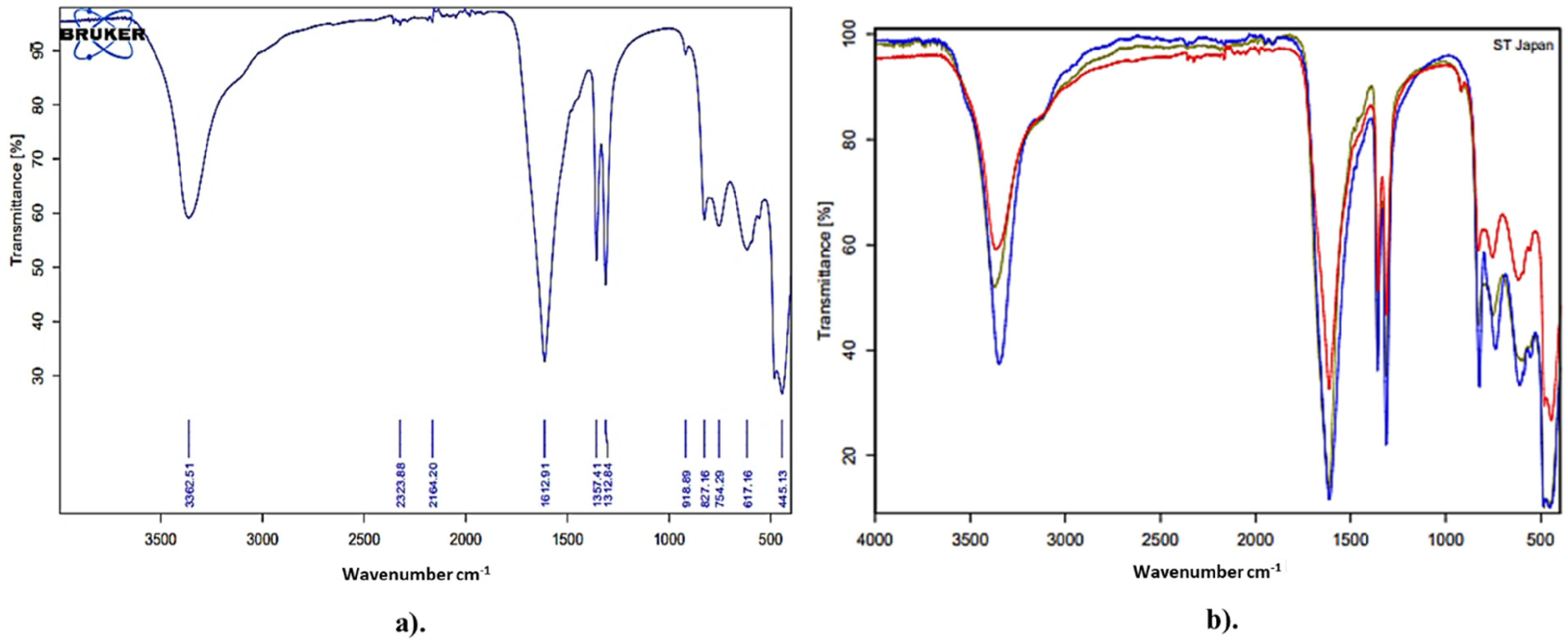
FTIR spectra of (a) nickel oxalate, (b) nickel oxalate database.
Elemental purity of nickel metal recovery results (wt%).

The FTIR analysis further supports the XRF data. The spectrum of the recovered nickel oxalate (Figure 1) displays characteristic vibrational bands associated with the C-O and O-H stretching modes typical of hydrated nickel oxalate, closely matching the reference spectrum in the FTIR database. The combined evidence from XRF and FTIR confirms the recovered nickel oxalate's high chemical purity and correct phase formation, making it suitable as a precursor for NMC cathode synthesis.
Cobalt purity
The elemental composition of the cobalt-rich oxalate precipitate is shown in Table 3, and its FTIR spectrum is presented in Figure 2. The XRF analysis reveals that the material consists of 83.6 wt% Co, with 14.8 wt% co-precipitated Ni and approximately 1.3 wt% of other trace impurities such as Fe, Si, Al and S. This composition reflects the co-recovery of cobalt and nickel from the spent catalyst matrix rather than unintentional contamination, because both Co and Ni exhibit similar solubility behaviour in citric and oxalic acids. The calcination step before leaching, carried out at 750 °C for 4 h, decomposes sulphur-containing species and increases the porosity of the catalyst support, thereby enhancing cobalt release and co-precipitation with nickel.
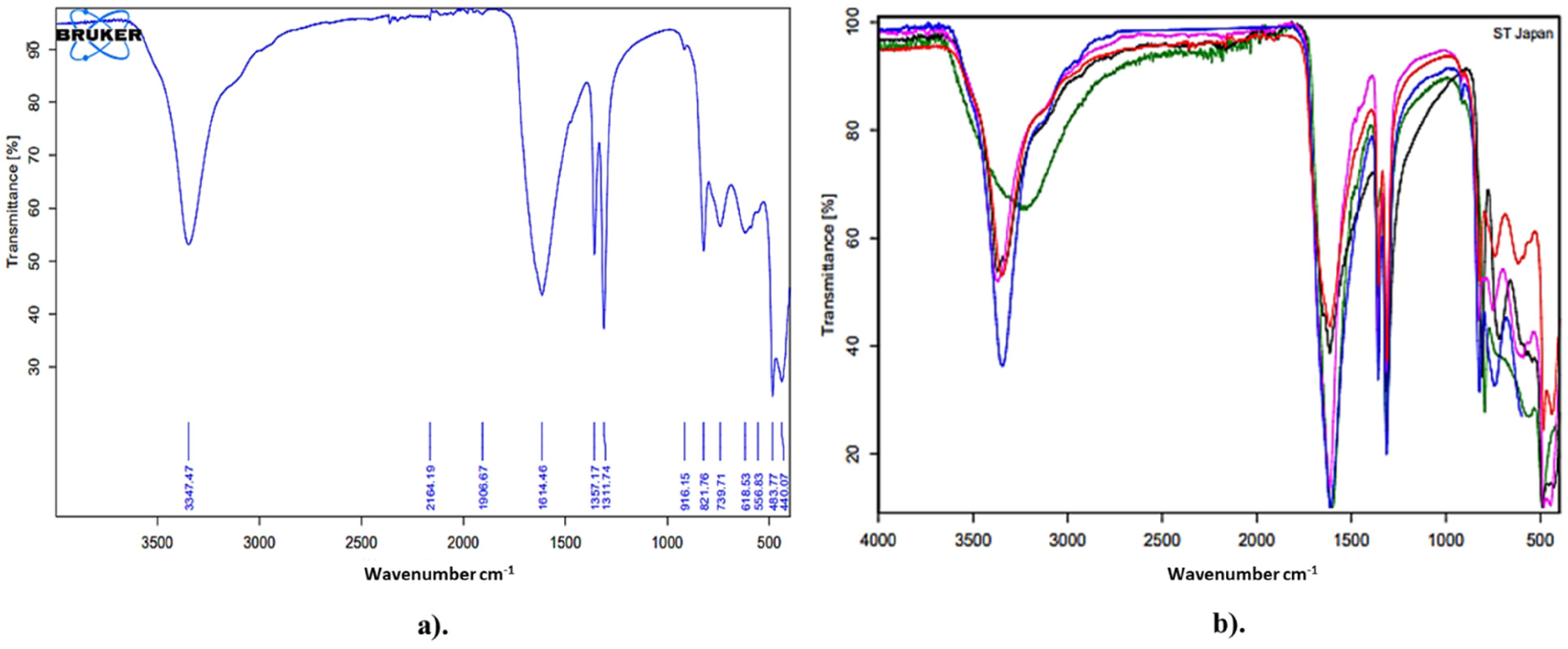
FTIR spectra of (a) cobalt oxalate, (b) cobalt oxalate database.
Elemental purity of cobalt metal recovery results (wt%).

The FTIR spectrum of the recovered cobalt-rich oxalate (Figure 2) shows absorption bands characteristic of cobalt oxalate, including those corresponding to C-O and O-H vibrations, which match the reference spectrum from the FTIR library. The co-presence of Ni in the Co-oxalate precursor was explicitly considered during precursor weighing. The total Ni and Co contents derived from XRF analysis were used to adjust the stoichiometric ratios so that the final cathode composition remained consistent with the targeted NMC811 formula. This approach ensured that the additional Ni present in the Co-oxalate did not alter the intended composition of the La-doped NMC811 cathode material. Although the Co-rich oxalate contains significant nickel, the combined metal content remains highly suitable for the subsequent synthesis of NMC-type cathode materials, in which both metals are essential constituents.
Purity of La
Table 4 presents the elemental composition of La oxalate, and Figure 3 shows the corresponding FTIR spectrum. The XRF analysis indicates a La content of 98.66 wt%, with only about 1.3 wt% of minor impurities (mainly Ni and traces of other elements). The high La purity reflects the strong complexation of La3+ ions with citric acid and their preferential precipitation with oxalic acid under the applied conditions. This behaviour results in an efficient separation of La from other elements in the spent catalyst matrix.
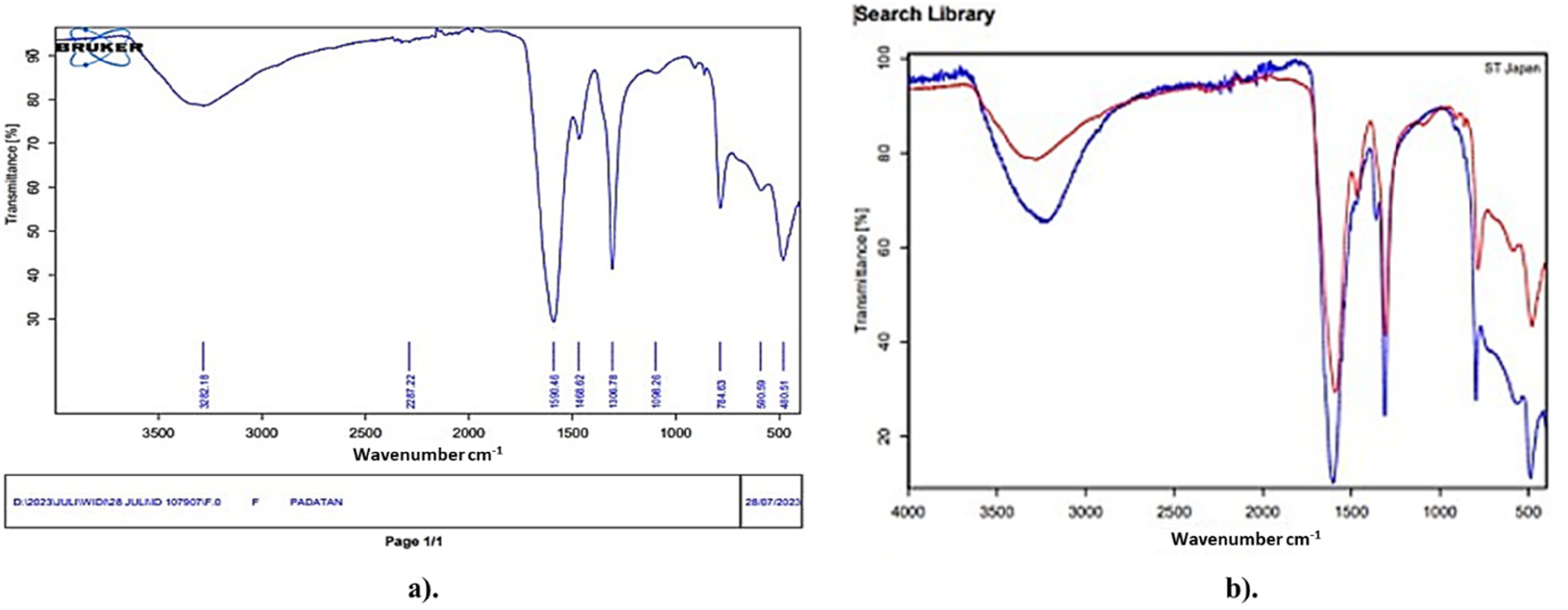
FTIR spectra of (a) lanthanum oxalate, (b) lanthanum oxalate database.
Elemental purity of recovered lanthanum metal (wt%).

The FTIR spectrum of the recovered La oxalate (Figure 3) closely resembles the reference spectrum, exhibiting characteristic bands for the coordinated oxalate groups and lattice water typical of hydrated La oxalate. The low impurity level, combined with clear FTIR confirmation, demonstrates that the recovery process yields high-quality La oxalate, which can be directly incorporated as a dopant in the NMC precursor synthesis.
Manganese purity
The elemental composition of manganese oxalate recovered from low-grade pyrolusite ore is summarised in Table 5, and the FTIR spectrum is presented in Figure 4. The XRF analysis shows that the manganese oxalate contains 89.97 wt% Mn, with approximately 8.8 wt% Ca and minor quantities of other trace elements. The elevated calcium content originates from the precipitation step using calcium hydroxide, during which cation exchange introduces calcium into the filtrate. This calcium subsequently co-precipitates with oxalate and is retained in the final manganese oxalate product.
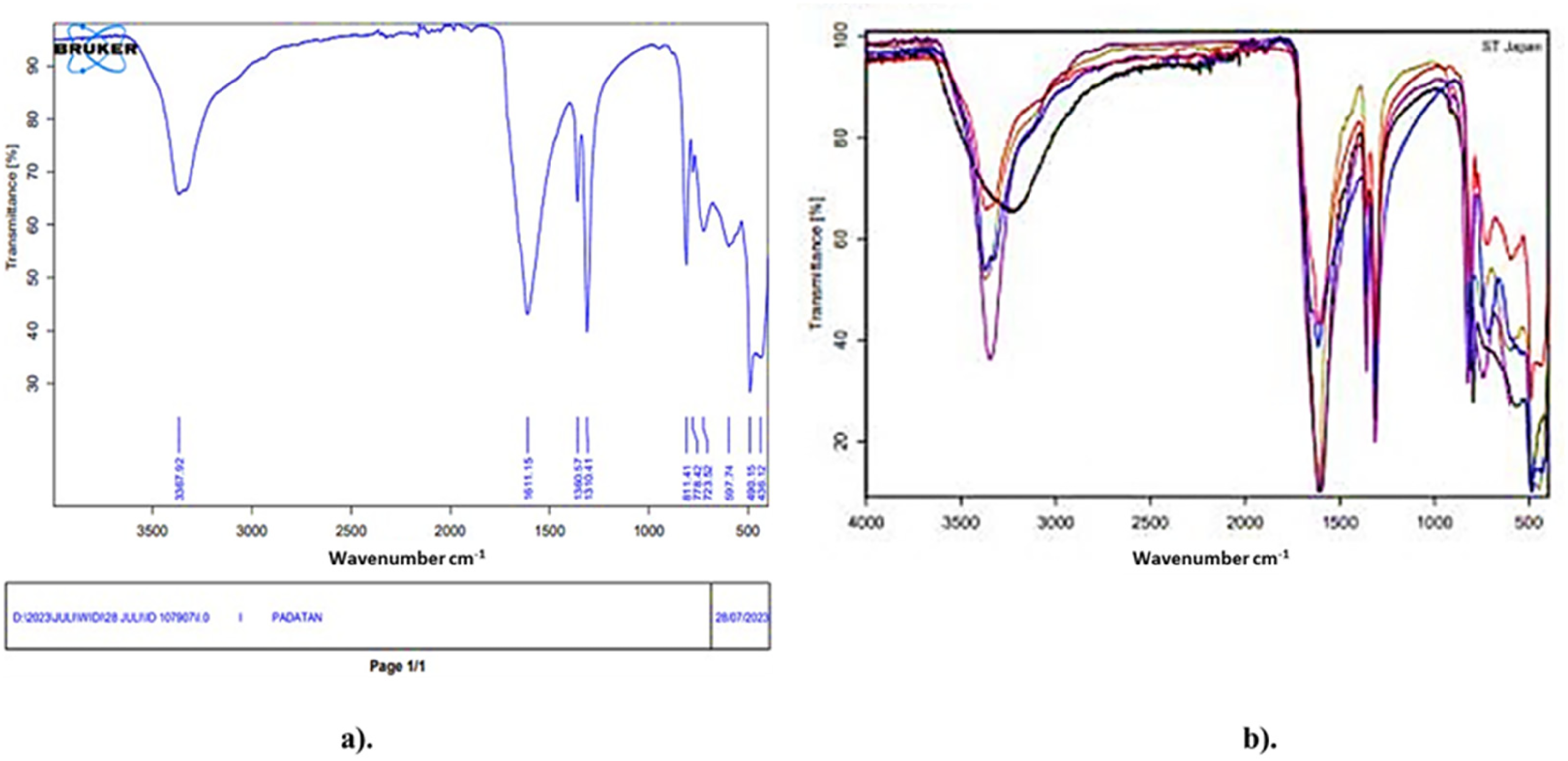
FTIR spectra of (a) manganese oxalate, (b) manganese oxalate database.
Elemental purity of manganese metal recovery (wt%).

The FTIR spectrum of the recovered manganese oxalate (Figure 4) displays vibrational bands characteristic of Mn-oxalate complexes, which correspond to the reference spectrum from the FTIR library and confirm the phase identity. During NMC811 synthesis, the stoichiometry of the manganese precursor was corrected using the Mn content obtained from XRF, ensuring that the Mn proportion in the cathode material precisely matched the intended composition. High-temperature calcination during the synthesis process converts the residual calcium into thermodynamically stable CaO or mixed Ca-containing oxides, which segregate as electrochemically inactive phases and do not participate in lithium-ion intercalation. Studies of molten-salt electrolysis show CaO forms intermediate oxides that do not participate in further electrochemical charge storage beyond acting as inert components in the reduction sequence, like for CaO reacting with TiO2 to form CaTiO3 in CaCl2 molten-salt reduction. 15
Analysis of metal recovery percentage
Tables 2–5 present the XRF elemental composition of the recovered Ni, Co, Mn and La oxalates from spent catalysts and ores. The XRF results show high purities of 98.08% Ni (Table 2), 83.61% Co (Table 3), 98.66% La (Table 4) and 89.97% Mn (Table 5), confirming the effectiveness of the leaching and precipitation processes used in this study.
Based on these XRF results, the percentage recovery values for nickel, cobalt, manganese and La were calculated as 93.36%, 89.28%, 90.65% and 99.53%, respectively. According to, 16 recovery values in the 80–110% range are considered acceptable, indicating that the recovery method applied in this study meets the standard requirements.
The FTIR spectra (Figures 1–4) were then used to verify the functional groups and compound identities by comparing the measured and reference spectra in the FTIR database. The spectra confirm that the recovered solids correspond to nickel oxalate, cobalt oxalate, La oxalate and manganese oxalate. Characteristic peaks in the FTIR spectra, such as C-O stretching at ∼1400–800 cm−1 and O-H stretching at ∼1500 and ∼2300 cm−1, indicate the presence of oxalate and carbonate species. As FTIR is primarily a qualitative technique, it was used to confirm compound identity and functional groups rather than to quantify metal content. Quantitative purities and recovery percentages were derived exclusively from the XRF measurements.
Precursor crystal structure analysis
The crystal structure properties of NMC 811 and La-NMC 811 precursors can be identified using X-ray diffraction (XRD). The XRD results of commercial NMC 811 are shown in Figure 5, while the XRD results in the study are shown in Figure 6.
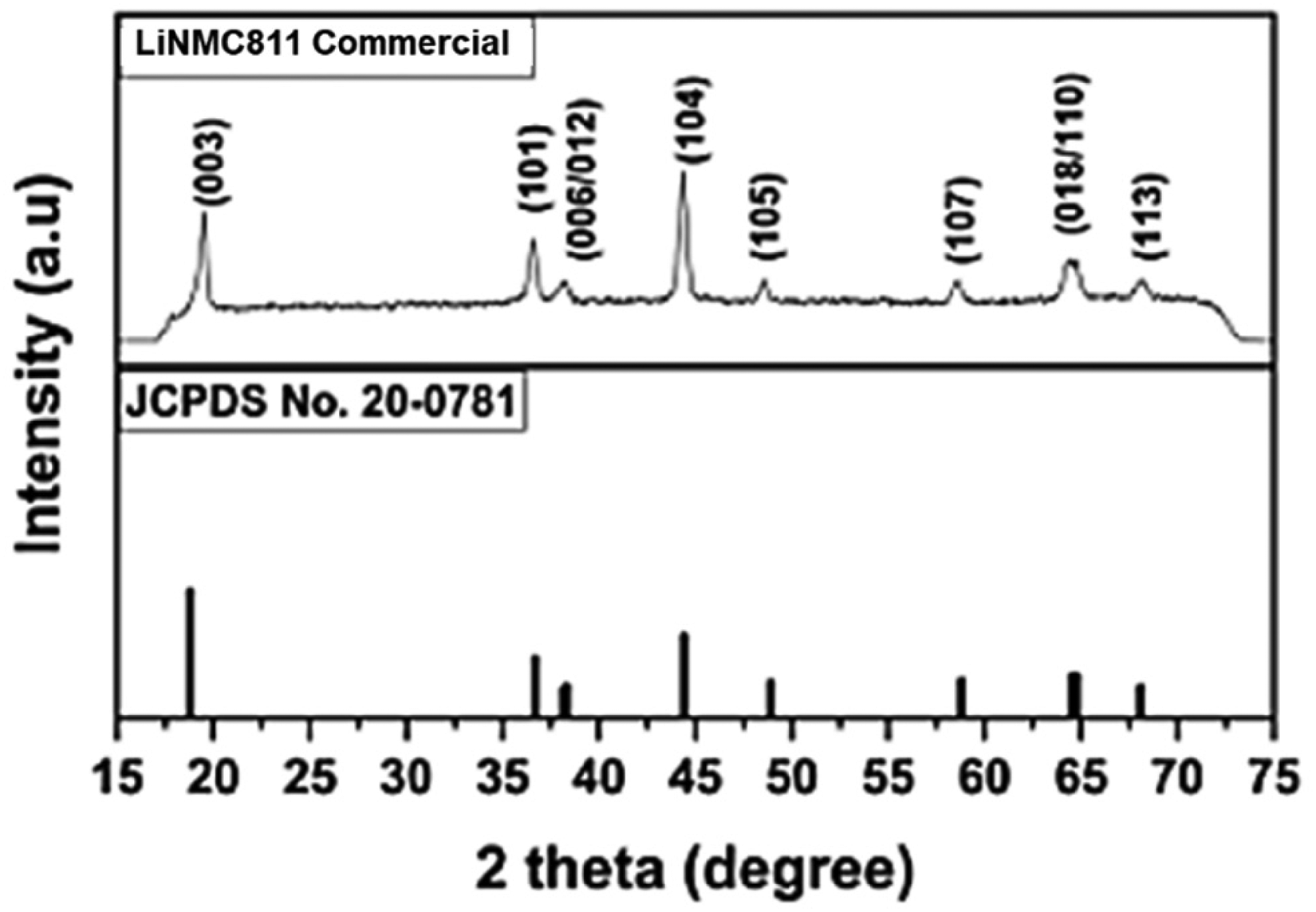
XRD diffractogram of NMC 811 based on literature. 17
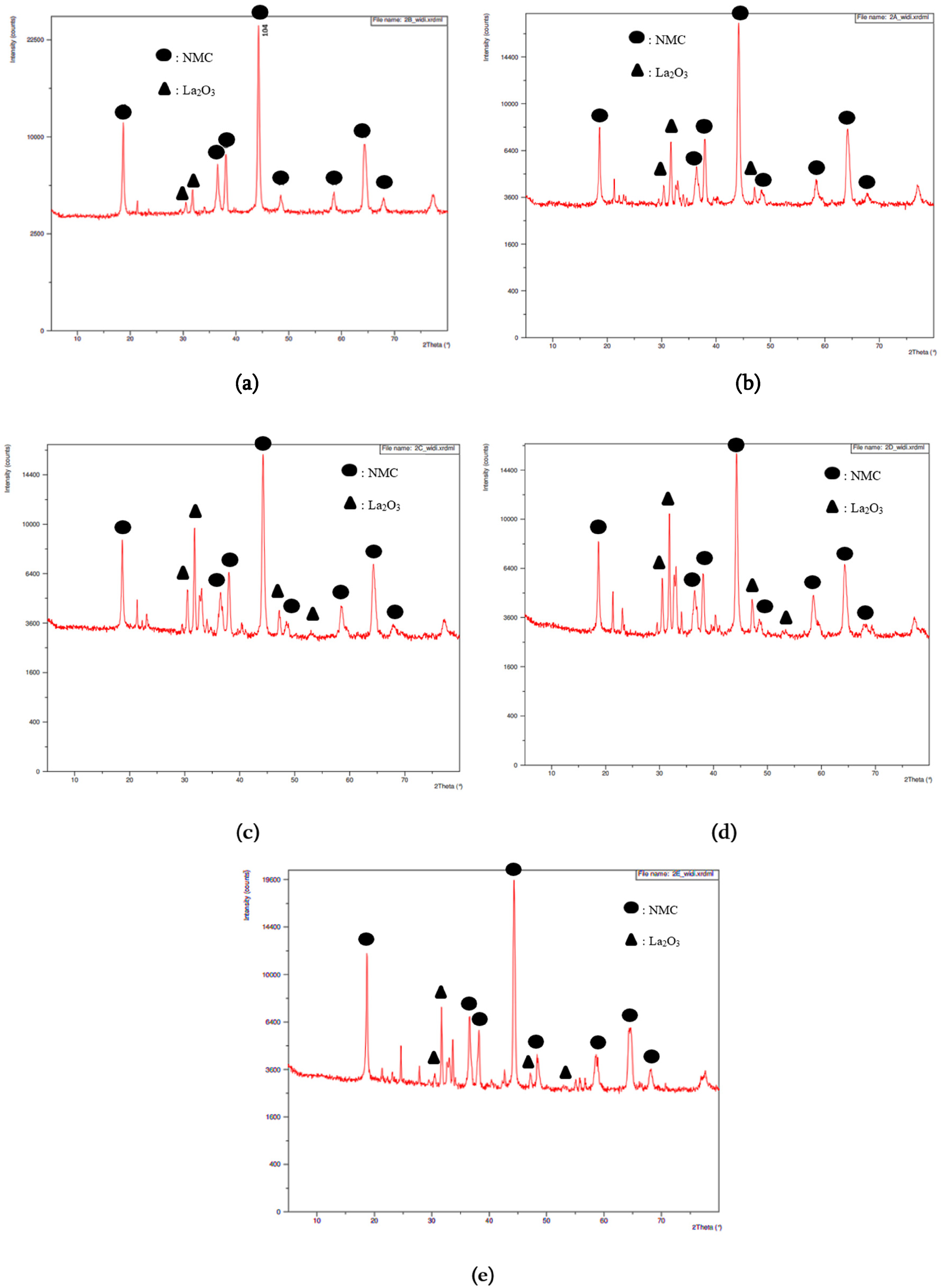
XRD diffractogram of (a) NMC 811, (b) La-NMC 811 2%, (c) La-NMC 811 4%, (d) La-NMC 811 6%, (e) La-NMC 811 8%.
The identification of the crystal structure was carried out by matching the measured diffraction peak position data using the Match software. The data obtained from the analysis is summarised in Table 6.
NMC 811 crystal structure data and La-NMC 811 variation.

The XRD diffractograms of both undoped and La-doped NMC811 display dominant reflections corresponding to the layered hexagonal α-NaFeO2-type structure with space group R-3 m, which is characteristic of NMC cathode materials. Small additional peaks in the diffraction patterns correspond to spinel-like (Fd-3 m) and rock-salt (Fm-3 m) related domains. According to Ref., 18 these phases typically arise from a structural transformation of the layered R-3 m framework into irregular spinel (Fd-3 m) and subsequently into rock-salt (Fm-3 m) due to high-temperature synthesis and partial loss of lithium or oxygen. Migration of transition-metal cations to lithium sites produces local disorder, decreases the energy barrier between Li and TM layers and promotes the formation of spinel or rock-salt subdomains, which are frequently reported in layered NMC cathodes.
At low La doping of 2 wt%, the NMC811 precursor retained the layered hexagonal α-NaFeO2-type structure with space group R-3 m. This indicates that La3+ ions occupy interstitial or vacant sites without altering the fundamental layered ordering of the host lattice. The larger ionic radius of La3+ (1.06 Å) compared to Ni2+, Co3+ and Mn4+ can locally expand the interlayer distance and stabilise Li+ diffusion pathways, but at this concentration, the overall lattice symmetry remains essentially hexagonal. In contrast, at higher La dopant levels (>4 wt%), the XRD patterns revealed additional reflections and peak shifts characteristic of phase segregation and partial transformation towards cubic or perovskite-type phases. These changes are attributed to the formation of La-containing secondary phases such as La2Li0.5Ni0.5O4 (K2NiF4-type) and the increased occupation of transition-metal sites by La3+, which disrupts the long-range layered ordering and drives the evolution of cubic-like domains. The coexistence of these secondary phases with the layered matrix accounts for the apparent cubic or perovskite-like features in the XRD patterns without implying complete conversion of NMC811 to a cubic phase.18,22,23
Although La-doped NMC811 shows expanded interlayer spacing and improved structural stability at low doping levels, the larger ionic radius of La3+ compared to Ni3+ makes direct substitution of La3+ into Ni3+ lattice sites energetically unfavourable. Instead, at low La contents (around 2 wt%), La3+ is likely accommodated in interstitial or defect sites within the layered matrix, which locally expands the lattice and stabilises Li+ diffusion pathways without disrupting the R-3 m symmetry. As the La content increases above 4 wt%, excess La3+ tends to segregate and form secondary phases such as La2Li0.5Ni0.5O4 (K2NiF4-type), which coexist with the R-3 m layered matrix. This behaviour is consistent with previous reports indicating that La3+ modifies the local environment primarily via interstitial incorporation or secondary phase formation rather than by direct substitution for Ni3+.
In the NMC 811 sample that is not doped with La, a structural transformation from layer to spinel occurs. Crystallographically, the transformation from layer to spinel involves the migration of transition metal cations to Li sites. This can occur due to the charge imbalance caused by the partial loss of Li and O during the sintering process. As a result, it will form a vacancy in the structure and reduce the barrier energy between the transition metal site and the Li site, so that the transition metal will migrate to fill the vacancy and eventually encourage the formation of a spinel structure.
The evolution of the crystal structure as a function of La doping was carefully examined by analysing the XRD patterns, which revealed distinct differences between low and high dopant concentrations. The addition of La dopant at 2 wt% was able to maintain the layered structure and did not change the crystal structure significantly. This indicates that La3+ ions successfully occupied interstitial or vacant sites in the NMC811 crystal lattice without disrupting the layered ordering. La3+ has a larger lattice parameter, interplane distance and ionic radius (1.06 Å) compared to Ni2+ (0.69 Å), Co3+ (0.545 Å) and Mn4+ (0.53 Å). The larger interplane spacing indicates a wider Li+ diffusion site compared to cathode materials with smaller interplane spacing. Materials with an expanded Li+ diffusion channel facilitate ion transport during charge-discharge cycling.20–21 Small peaks observed in the 20–25° range indicate the presence of monoclinic Li2MnO3 (space group C2/m), which may arise from short-range Li/Mn or Li/Co superstructures in the transition metal region. 22
At low La doping of 2 wt%, the NMC811 precursor retained the layered hexagonal α-NaFeO2-type structure with space group R-3 m, confirming that La3+ incorporation locally expands the interlayer distance and stabilises Li+ pathways but leaves the overall lattice symmetry essentially hexagonal. In contrast, at higher La dopant levels (>4 wt%), the XRD patterns revealed additional reflections and peak shifts characteristic of phase segregation and partial transformation towards a cubic or perovskite-type phase. This change in symmetry is attributed to the formation of La-containing secondary phases such as La2Li0.5Ni0.5O4 and the increased occupation of transition-metal sites by La3+, which disrupts the long-range layered ordering and drives the evolution of cubic-like domains. These observations explain why only 2 wt% La doping preserves the hexagonal structure, whereas higher La doping progressively promotes the appearance of cubic features (Figure 7).
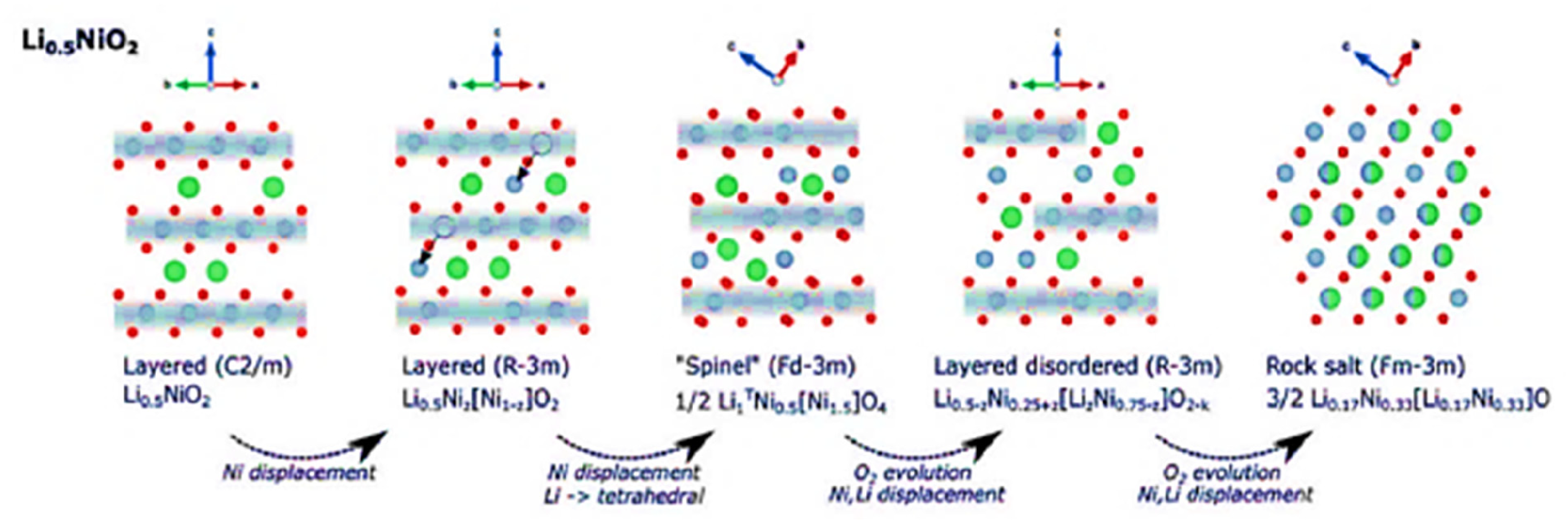
Transformation of layer structure into rock-salt. 19
As the La dopant concentration increases, the diffraction peaks become more complex. The peaks that appear in the 25–35° range indicate A2BO4 perovskite-like crystals having a K2NiF4-type structure (A = alkaline earth metals, REEs, Ti, Bi, Pb; B = Ni, Cu, Rb), characterised by the superposition of rock-salt (AO) and perovskite (ABO3) layers. This phenomenon is consistent with previous studies,23,24 which reported the appearance of La2Li0.5Ni0.5O4 with a new perovskite structure. The similar lattice parameters indicate that the addition of La dopant leads to the formation of La-based compounds rather than full substitution into the layered oxide, which enlarges the lattice parameters. During sintering, La3+ fills vacancies in the crystal lattice and simultaneously forms bonds with Ni3+ to generate La2Li0.5Ni0.5O4. The schematic of La compound formation is shown in Figure 8.
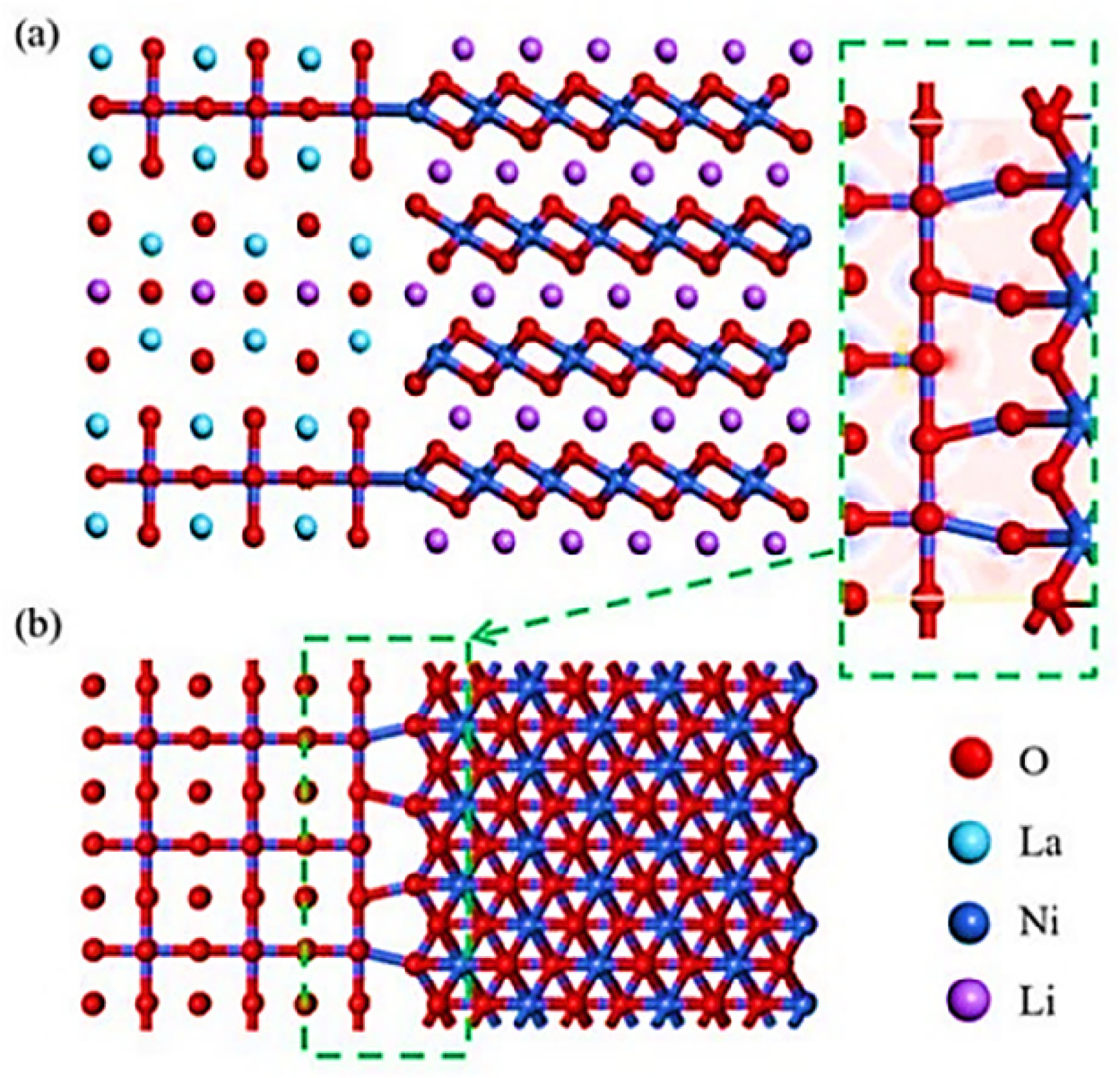
Bonding of La2Li0.5Ni0.5O4 plane and NMC 811 plane (a) front view, (b) top view. 26
The formed La2Li0.5Ni0.5O4 layer greatly strengthens the surface lattice of LiNi0.8Mn0.1Co0.1O2 and inhibits Li+/Ni2+ mixing during the synthesis process. According to Ref., 26 perfect compatibility will be formed from perovskite-like LiNi0.8Mn0.1Co0.1O2 and La2Li0.5Ni0.5O4 layers along the c-axis with optimised bonding sites by Ni-Ni and Ni-O. Moreover, the strong La-O bonding in the subsurface lattice of LiNi0.8Mn0.1Co0.1O2 can effectively maintain the stability of the layer structure during the lithiation/electrolysis process and facilitate to generate an unimpeded Li+ diffusion pathway.
Precursor function group analysis
The compounds and functional groups of NMC 811 and La-NMC 811 precursors can be identified using FTIR. The FTIR results of commercial NMC 811 are shown in Figure 9, while the FTIR results in the study are shown in Figure 10. The FTIR results in the study show the absorbance spectrum of the middle IR region (4000–500/cm).
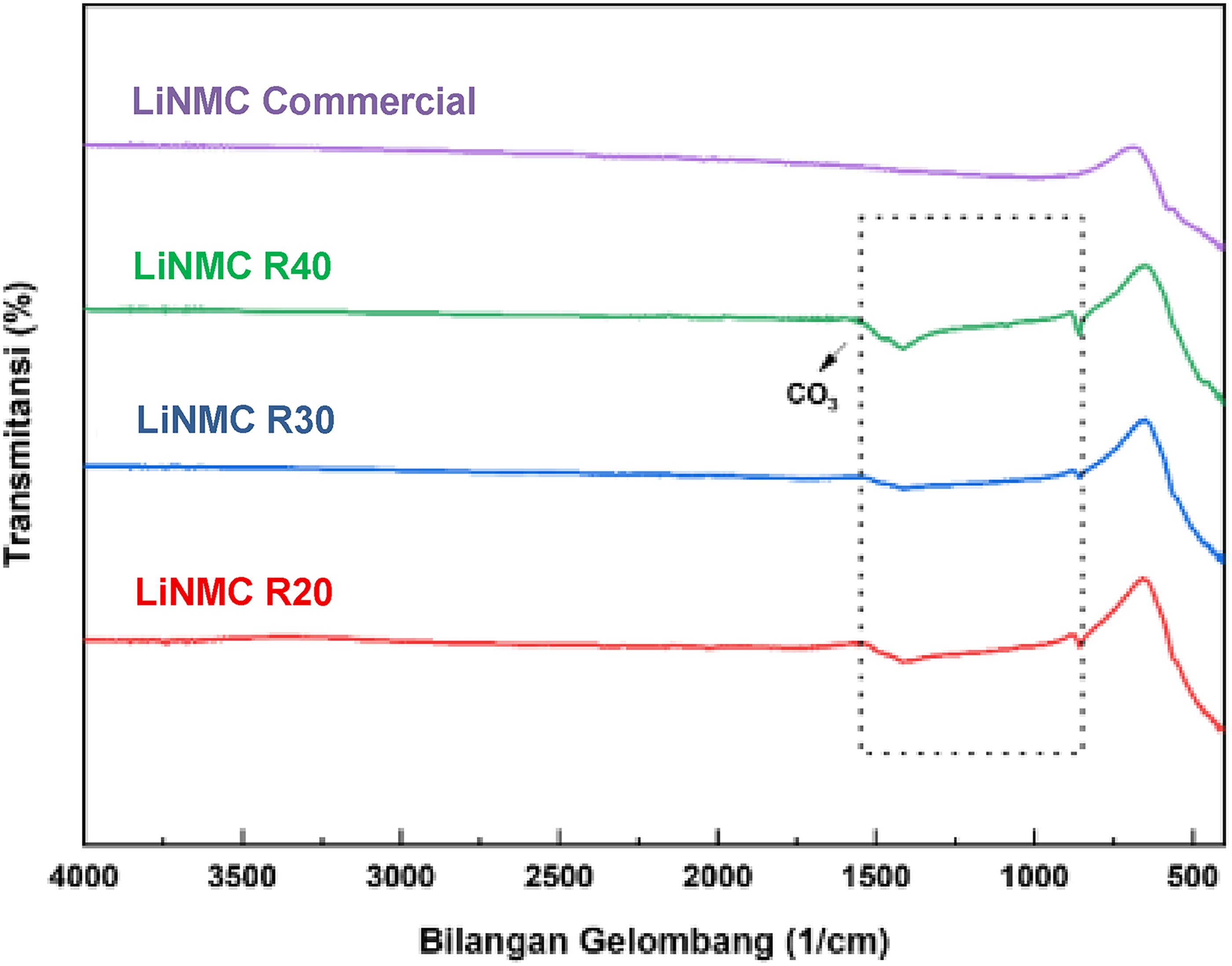
FTIR spectra of NMC 811 based on literature. 17
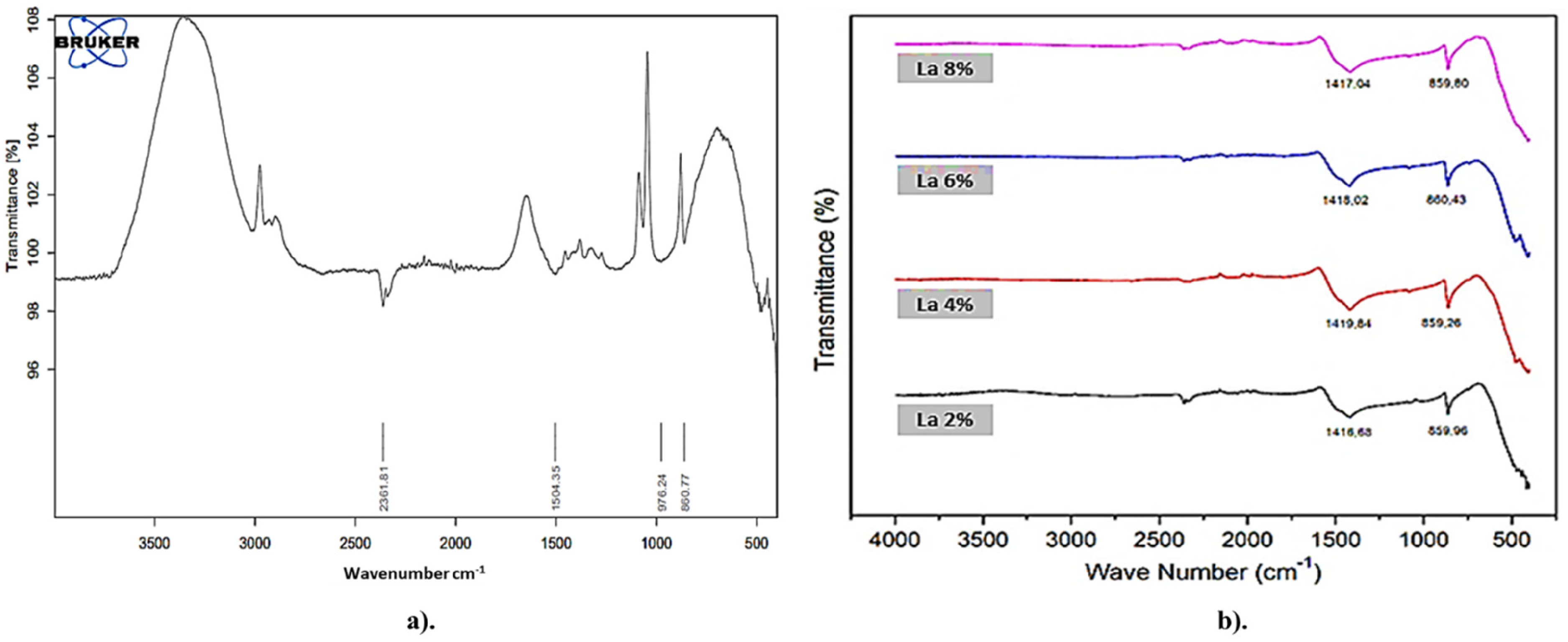
FTIR spectra of (a) NMC 811, (b) NMC 811 on la dopant variation.
The FTIR spectra of La-NMC 811 are similar to those of the commercial NMC 811. However, NMC 811 has different spectra, with peaks of −1500/cm and ∼2300/cm indicating the presence of O-H groups, while peaks of 1400–800/cm indicate the presence of C-O groups. These peaks indicate the presence of anionic impurities on the surface of the cathode sample.
According to Ref., 19 during the synthesis process of NMC 811, excess lithium is added to compensate for the loss of some Li and O during the sintering process and to ensure the formation of a well-ordered layer crystal structure. However, unreacted lithium remains in the surface layer, thus forming Li2O and Li2O2 compounds. These compounds can react with CO2 and H2O to form Li2CO3 and LiOH compounds. Therefore, the NMC 811 sample contains O-H and C-O groups. However, there is no O-H group in the La-NMC 811 variation sample, likely due to excess lithium not forming a compound with H2O, but bonding with La and Ni to form the La2Li0.5Ni0.5O4 compound. Based on Ref., 26 NMC 811 has a spectrum of carbonate compounds that are only detected at peaks of 900/cm and 1400/cm, which are characteristic of the layer structure. Therefore, adding La dopant can maintain the layer phase in NMC 811.
Morphological analysis of precursors
The morphology and particle distribution of NMC811 and La-doped NMC811 precursors were examined using SEM, as shown in Figure 11. All samples display relatively uniform particle sizes with a tendency towards agglomeration, which is attributed to high-temperature calcination in an oxygen atmosphere. The surface reactions during sintering promote particle coalescence and densification, leading to the observed agglomerated microstructures. Despite the variation in La content, no drastic changes in overall particle morphology were observed; however, slight differences in particle compactness and surface texture were evident between low- and high-La-doped samples.

Precursor morphology (a) NMC 811, (b) La-NMC 811 2%, (c) La-NMC 811 4%, (d) La-NMC 811 6%, (e) La-NMC 811 8%.
While SEM provides insight into particle shape and size, it does not directly determine crystal symmetry or space group. Therefore, the reference to ‘hexagonal’ and ‘cubic’ structures is based on complementary XRD analysis (Figure 6), which confirmed that 2 wt% La-doped NMC811 maintains the layered hexagonal α-NaFeO2-type (R-3 m) structure. In contrast, higher La doping introduces secondary phases consistent with rock-salt/perovskite-like domains (Fm-3 m). This correlation between SEM-observed morphology and XRD-verified structure is illustrated in Figure 12, which presents representative TEM images from the literature for R-3 m and Fm-3 m structures 25 (Figure 13).
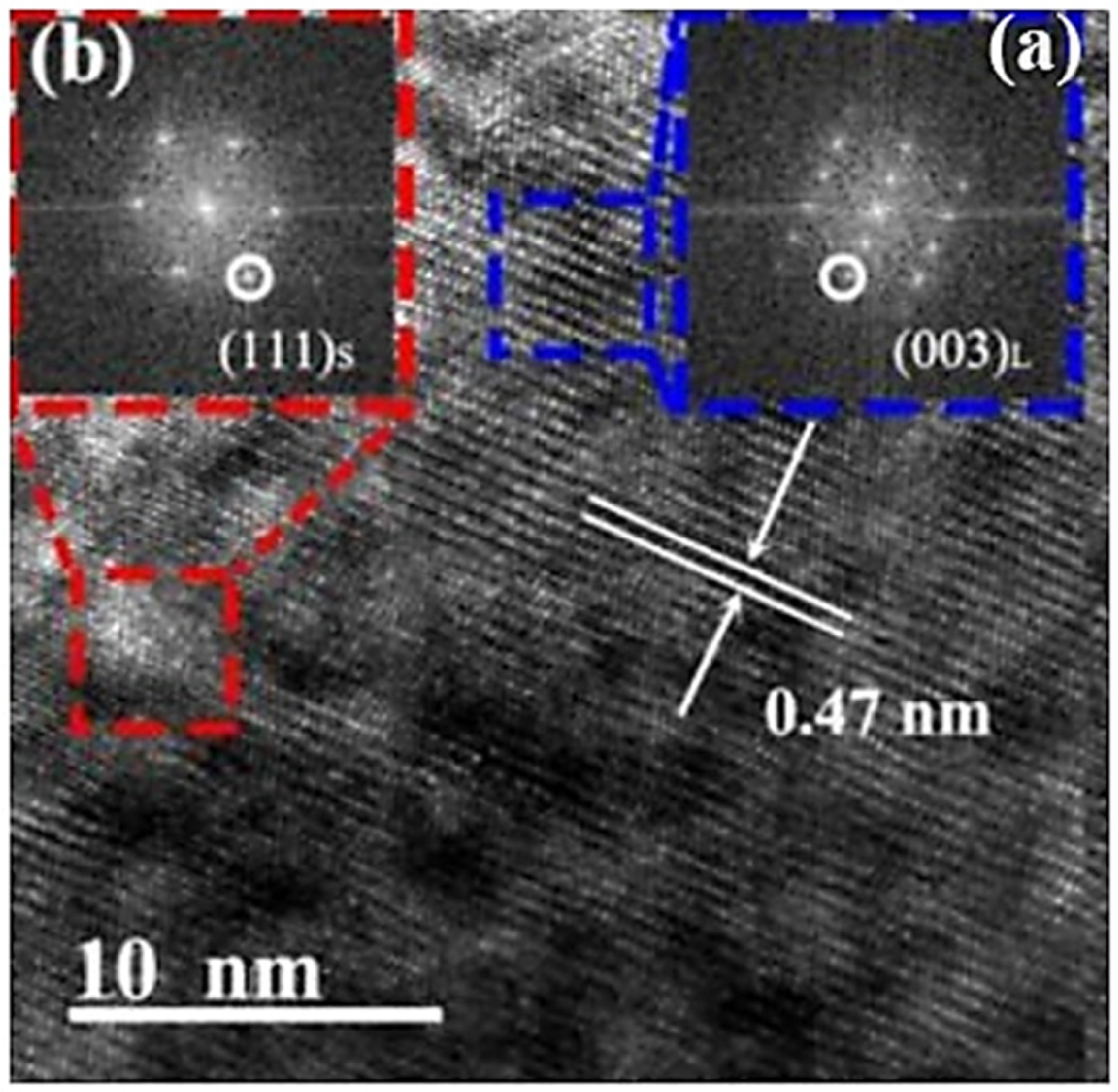
TEM morphology of NMC 811 space group (a) R-3 m, (b) fm-3 m. 25
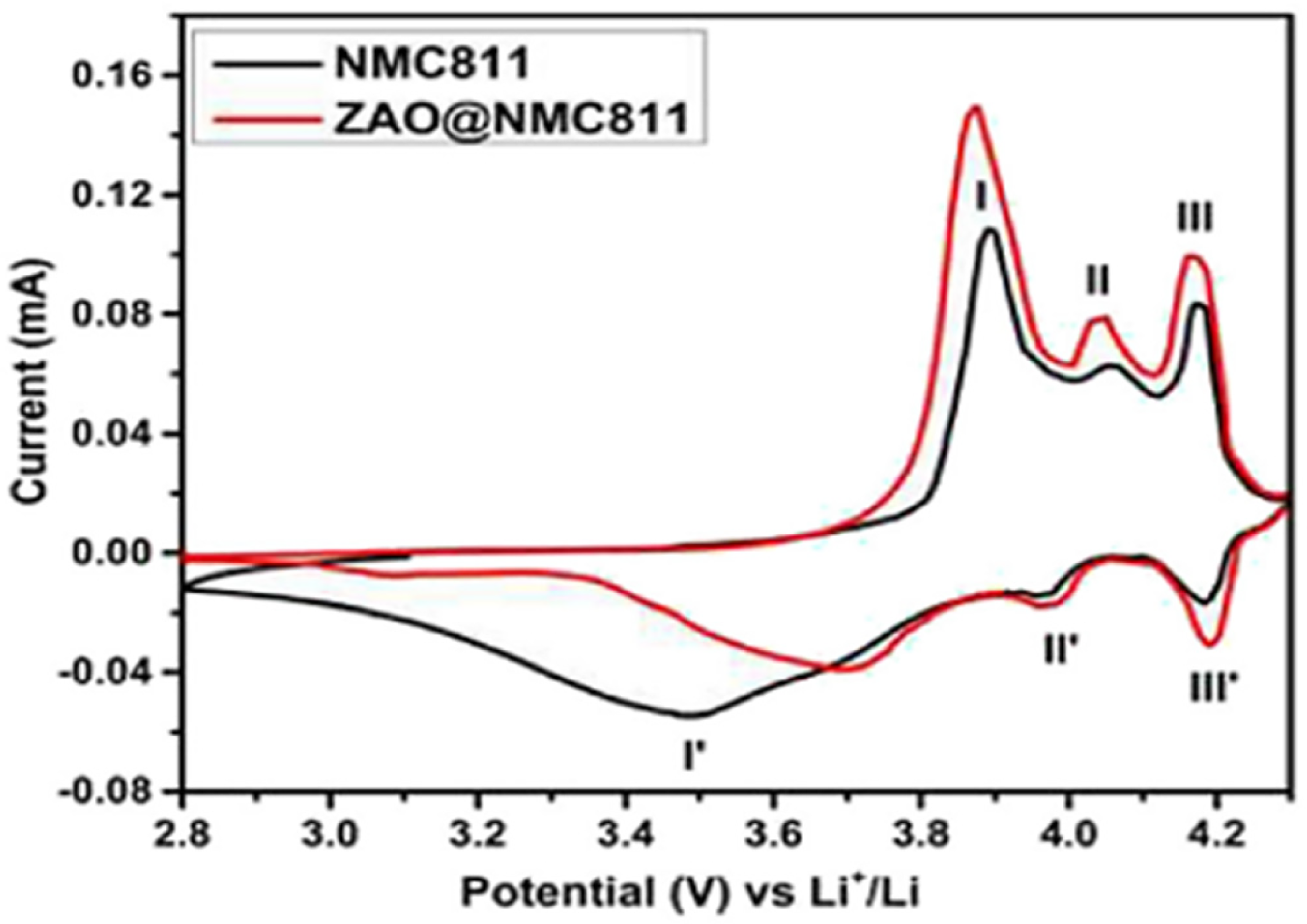
NMC 811 cyclic voltammetry results based on literature. 26
Analysis of CV
Cyclic voltametry testing aims to determine the redox reactions that occur when the battery is in the charge-discharge cycle and the reversibility of the lithium intercalation-deintercalation process. The CV testing in this study was carried out on La-NMC 811 batteries with 2% and 8% dopants that had been carried out charge-discharge process for 100 cycles, as shown in Figure 14. The CV results on commercial NMC 811 are shown in Figure 13. The smaller the reduction-oxidation potential reaction difference (ΔE), the more reversible the reaction tends to be. This is because the distance between the oxidation and reduction peaks is getting closer, so the energy required for the reduction-oxidation reaction cycle is getting smaller.
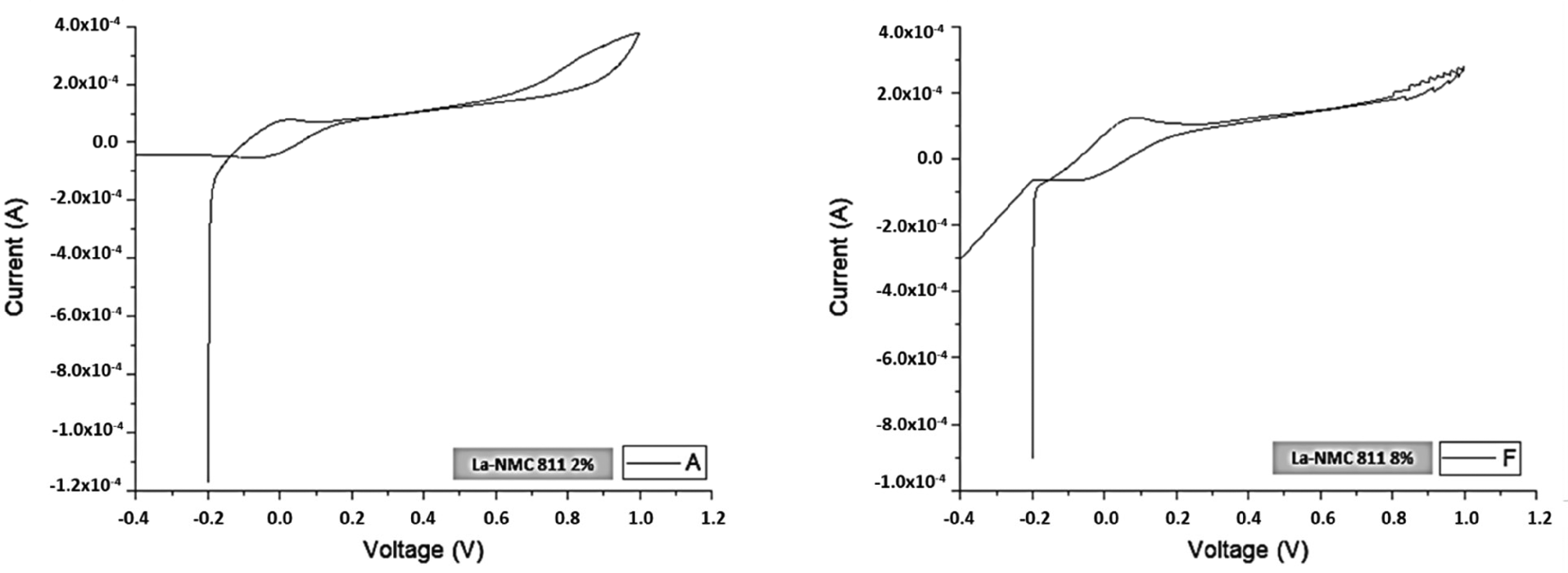
Cyclic voltammetry results on La-NMC 811 2% and 8%.
The CV results of La-NMC 811 2% have a broad peak compared to La-NMC 811 8%, which indicates lithium ions intercalate and deintercalate slowly. The phase formation of La-NMC 811 2% is hexagonal to monoclinic, monoclinic to hexagonal, and hexagonal to hexagonal. While the formation of La-NMC 811 8% phase is cubic to hexagonal, hexagonal to monoclinic, and monoclinic to cubic. The La2Li0.5Ni0.5O4 layer formed in the cubic phase can improve electrochemical performance. This is in accordance with research, 25 which states that the La2Li0.5Ni0.5O4 layer will strengthen the surface lattice, resulting in an unhindered Li+ diffusion pathway.
Electrochemical impedance spectroscopy analysis
Electrochemical impedance spectroscopy testing is used to learn more about the rate of lithium ion transfer in NMC 811 batteries. The EIS testing in this study was carried out on 2% and 8% La-NMC 811 batteries that had been charged-discharged for 100 cycles. The Nyquist curve of commercial NMC 811 is shown in Figure 15, and the test results of La-NMC 811 2% and 8% are shown in Figure 16.
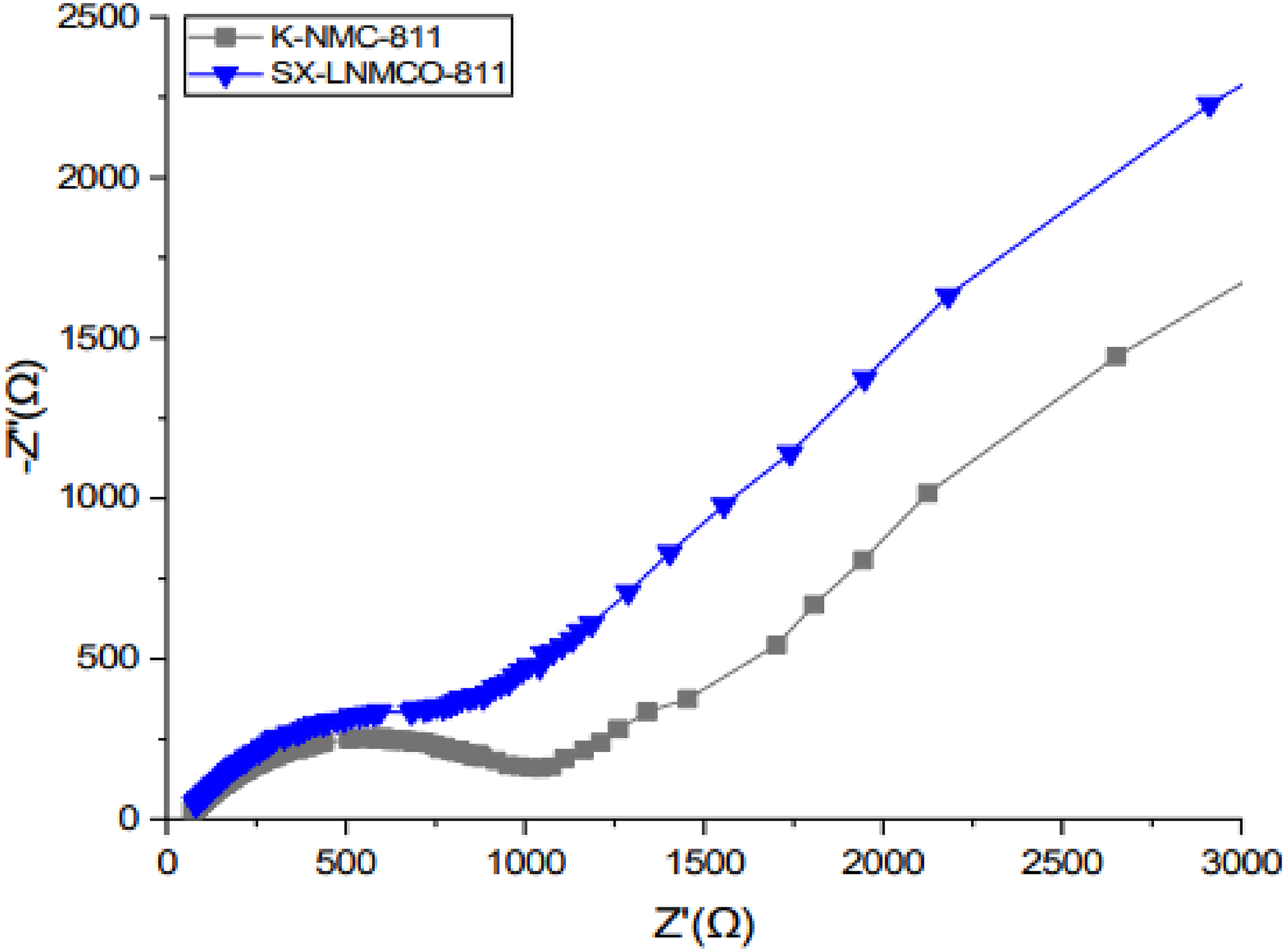
NMC 811 electrochemical impedance spectroscopy results based on literature. 27
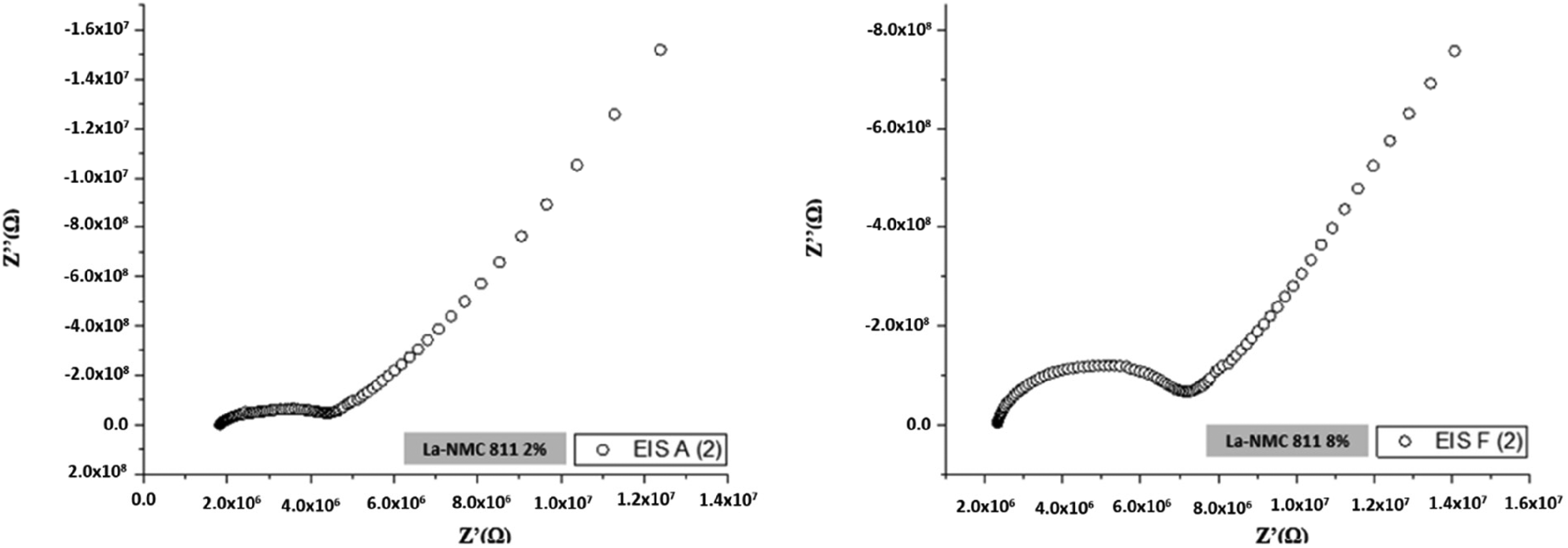
Results of electrochemical impedance spectroscopy of La-NMC 811 2% and 8%.
The Nyquist curve in Figure 16 is seen to form a semi-circular and straight pattern. The semi-circular pattern is attributed to the electrolyte resistance (Rb) under certain conditions between the electrolyte and the active material surface, the charge transfer resistance (Rct) and the double-layer capacity at the electrode–electrolyte interface. Meanwhile, the straight line pattern represents the diffusion process of lithium ions into most electrode materials, which is generally defined as Warburg diffusion (σ). The Rct value is related to the kinetics of the electrochemical reaction, which presents the Faraday charge transfer resistance influenced by the characteristics of the cathode and coating materials.
The EIS results of La-NMC 811 2% have a smaller σ value than La-NMC 811 8%. Based on Ref.,
28
the diffusion value of lithium ions is inversely proportional to σ, so La-NMC 811 8% has a high diffusion value of lithium ions. In the EIS results, the 2% La-NMC sample exhibited a resistance value of −1.6 × 10⁷ Ω, whereas the 8% La-NMC sample showed a lower resistance of −8.108 Ω. This indicates that increasing the La content to 8% significantly reduced the overall resistance of the material. Therefore, based on the EIS analysis, the 8% La-NMC sample demonstrates the best electrochemical performance, as the lower resistance suggests improved charge transfer characteristics compared to the 2% La-NMC sample. This can be caused by the presence of interstitial spaces in the octahedral framework that can facilitate lithium ion diffusion on tetrahedral sites. However, La-NMC 811 8% is in the spinel phase, an anomaly in NMC 811 due to the mixing of cations that should be in the layer phase. Therefore, to further identify the effect of spinel phase formation, discharge charge measurements were carried out at a current density of 0.1C (20 mA⁄g). In Figure 17, the fitting quality was evaluated using the reduced chi-square (χ2) value, calculated as:
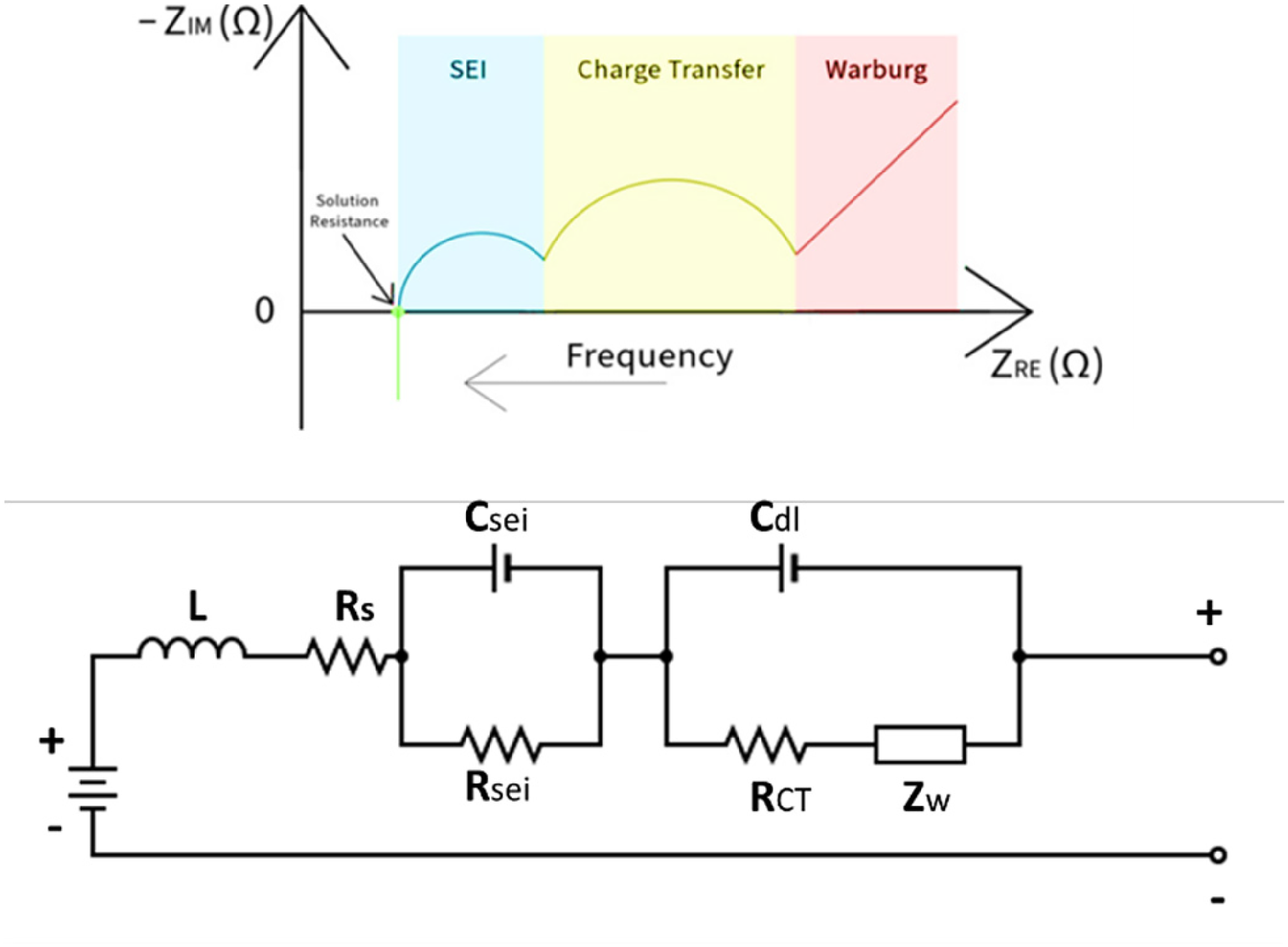
Equivalent circuit of la-NMC 811 2% and 8%.
Here, N represents the total number of experimental impedance data points, p is the number of parameters used in fitting the equivalent circuit model,
Galvanostatic charge/discharge analysis
Galvanostatic charge-discharge tests were performed between 2.7 and 4.3 V at a current rate of 0.1 C (20 mA g−1) to evaluate the charge–discharge capacity and cycling stability for 100 cycles. During the charge–discharge process, electrochemical reactions occur at each electrode, as summarised in equations (2)–(8). Chemical reactions in lithium-ion batteries when charging are shown in equations (3)–(4), while when discharging are shown in equations (5)–(7). The overall electrochemical reaction in lithium-ion batteries is shown in equation (8):
Electrochemical reaction when charging:


Electrochemical reaction during discharging:


Overall chemical reaction:
The charge-discharge measurement results of commercial NMC 811 are shown in Table 7, and the test results of La-NMC 811 2% and 8% are shown in Figure 17.
NMC 811 charge-discharge capacity value. 28

At a current rate of 0.1 C (20 mA g−1), the discharge capacity of La-NMC811 with 2% and 8% La was 165 mAh g−1, which is higher than that of commercial NMC811 (149.05 mAh g−1). Both La-doped samples exhibited stable capacity retention over 100 cycles. This improvement indicates that La doping suppresses Li+/Ni3+ cation mixing and maintains oxygen stability in the NMC structure. In addition, La reduces the formation of the cathode–electrolyte interphase, resulting in more efficient cycling 29 (Figure 18).
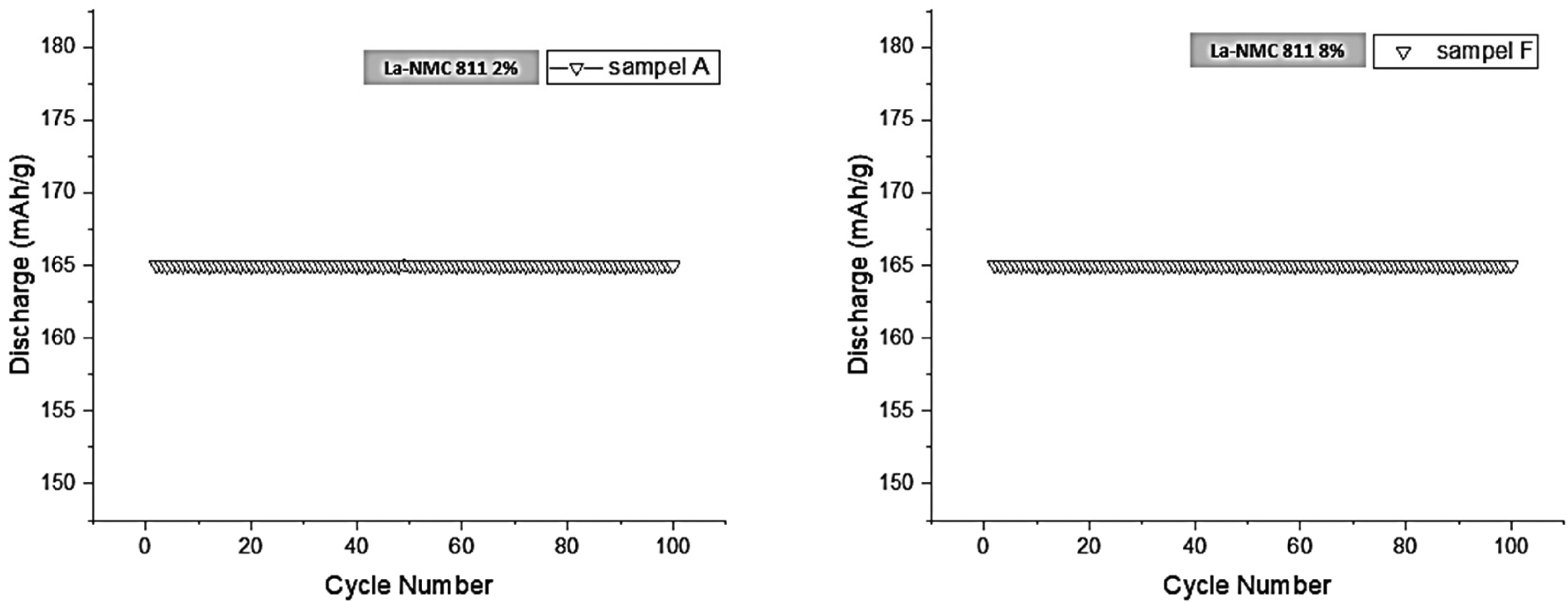
Galvanostatic discharge measurement results of la-NMC 811 2% and 8%.
Conclusion
The recovery method using a certain leaching agent and precipitation agent for each metal element will be effective in obtaining a high percentage recovery value. In this study, the percentage recovery values of nickel, cobalt, manganese and La were 93.36%, 89.28%, 90.65% and 99.53%. The addition of La dopant in NMC 811, which is increasing, makes the crystal structure experience a phase transition from layer to rock-salt, while the functional groups do not experience significant differences. The morphological shape of the layer phase is hexagonal, and the rock-salt phase is cubic. Electrochemical performance with high dopant addition can improve battery performance.
Footnotes
Acknowledgements
This work was supported by the Research Organization for Nanotechnology and Materials - National Research and Innovation Agency (BRIN) in collaboration with the New Energy and Industrial Technology Development Organization (NEDO) under research contract No. 60/II.7/HK/2025.

Authors’ contributions
All authors contributed to the study's conception and design. Material preparation, data collection and analysis. All authors read and approved the final manuscript.
Funding
The authors disclosed receipt of the following financial support for the research, authorship and/or publication of this article: This work was supported by the New Energy and Industrial Technology Development Organization (NEDO) under research contract, (grant number No. 60/II.7/HK/2025).
Declaration of conflicting interests
The authors declared no potential conflicts of interest with respect to the research, authorship and/or publication of this article.