







Abstract
The supply chain plays a critical role in the resource industry due to its strategic position in the upstream sector of various industries. This importance spans resource optimisation, cost reduction, quality assurance, social responsibility and sustainability. The concept of supply chain resilience emerged around two decades ago, prompting extensive research on assessing and enhancing resilience. Evaluating resilience requires specific performance indicators, which in turn depend on identifying the key elements of a resilient supply chain. Despite this, comprehensive studies on determining these elements within natural resource supply chains are limited. This article conducts a state-of-the-art review to examine resilience performance indicators, with particular focus on the mining industry as a representative case of resource supply chains. By delineating the current boundaries of knowledge, the study identifies seven key factors contributing to supply chain resilience and extracts 40 performance indicators from the literature. Foundational concepts, including natural resource supply chain management, resilience and the main influencing factors, are presented in a systematic hierarchical framework, enhancing both clarity and practical relevance. The identified factors and performance indicators provide a structured foundation for future research and offer managers actionable insights to effectively assess and improve resilience in various resource supply chains.
Keywords
Introduction
The supply chain is a set of processes that includes all activities related to the production, trade and distribution of goods. The process includes sourcing raw materials, manufacturing, wholesaling, retailing and delivering products to fulfil the needs of end consumers. Supply chain management designs and maintains operations to meet customer needs and ensure the smooth flow of information, capital and logistics throughout the entire supply chain process. It covers the four main areas of demand, supply, production and procurement (Ayers, 2003; Shi and Yu, 2013). Supply chains are intricate webs of companies that are continually exposed to disruptions. Therefore, they must establish their ability to withstand unforeseen disturbances (Global, 2007).
Various definitions exist to describe supply chain management. In general, supply chain management encompasses the management of all supply chain activities and processes across different sectors. Another commonly used definition focuses on managing the flow of goods as well as the reverse flow of information and finances (Munoz and Dunbar, 2015). Over time, the definitions have evolved from portraying an executive task to presenting an ‘approach’ and, finally, to emphasising the coordination and control of material flows. Early definitions of supply chain management primarily emphasised the coordination of material flows and centralised control of logistics activities. Subsequent perspectives expanded this view by highlighting integration across organisational functions and collaborative relationships with suppliers and downstream partners. More recent definitions conceptualise supply chain management as a holistic, network-oriented approach that simultaneously manages material, information and financial flows to enhance competitiveness and responsiveness. This conceptual evolution reflects the increasing complexity of supply chains and provides a foundation for understanding resilience as an inherent capability of modern supply chain systems (Stadtler and Kilger, 2008; Simchi-Levi et al., 1999; Cooper et al., 1997; Monczka et al., 2009; Stevens, 1989; Jones and Riley, 1985).
Uncertainties in the supply chain lead to numerous disruptions, which in turn affect the operation, stability and ability to meet obligations within the supply chain. According to supply chain managers, risks – that is, the underlying factors and sources that may cause disruptions in the supply chain – constitutes the greatest threat to companies (Global, 2007). Therefore, supply chains must exhibit resilience to overcome vulnerabilities and effectively respond to the negative effects of disruptions (Carvalho et al., 2012b). System resilience denotes the capacity of a system to respond to disruptions caused by an event or a series of events (Vugrin et al., 2010). Supply chain resilience, alternatively, is an operational capability that enables a disrupted or damaged supply chain to restructure itself and emerge more robust than previously (Brusset and Teller, 2017).
The concept of supply chain resilience has been defined from multiple perspectives, reflecting its multidimensional nature. Some studies focus on the ability of supply chains to recover and return to a pre-disruption state, while others emphasise adaptive and transformative capacities that enable supply chains to function under changing conditions. Additionally, certain definitions frame resilience as an operational capability, whereas others adopt a strategic or system-level perspective. This diversity of viewpoints indicates a lack of consensus on the boundaries and measurement of supply chain resilience, thereby highlighting the need for structured analytical frameworks, particularly in industry-specific contexts such as mining supply chains (Annarelli and Nonino, 2016; Christopher and Peck, 2004; Kamalahmadi and Parast, 2016; Mancheri et al., 2018; Ponis and Koronis, 2012; Ponomarov and Holcomb, 2009; Wieland and Durach, 2021). Unlike existing studies that focus on conceptual discussions, this review systematically synthesises resilience factors and performance indicators specific to mining supply chains.
Modern supply chain management faces unprecedented risks, including natural disasters, pandemics like COVID-19, geopolitical tensions and cyber threats, all of which disrupt stability and efficiency. Economic uncertainties, border instabilities, labor shortages, fluctuating demand and financial risks, such as supplier bankruptcies, further complicate operations. Additionally, the complexity of global supply chains heightens food safety and hygiene risks. To mitigate these challenges, advanced technologies like artificial intelligence (AI) and blockchain must be integrated to enhance adaptability and resilience (Abbas, 2021; Duong et al., 2023; Fernando et al., 2024; Grondys and Kot, 2023; Hryhorak and Dimitrova, 2024; Ivanova, 2022; Shi, 2024). However, traditional risk management approaches often fail to address the complexities of modern supply chains due to their reactive nature, organisational focus and lack of real-time monitoring. These methods struggle with processing large datasets, limiting predictive capabilities and adaptability. The need for advanced methodologies leveraging big data analytics and AI has become evident to enhance risk management in supply chains (Al-Refaie and Lepkova, 2025; Bottani et al., 2022; Kamalahmadi and Parast, 2016). In response to these challenges, resilience in supply chain management has gained prominence, emphasising the ability to anticipate, prepare for, respond to and recover from disruptions. Key strategies such as supplier diversification, transparency enhancement and collaborative risk management contribute to operational continuity. Tools such as the Resilience Capability Metric (RCM) and agent-based modelling frameworks help quantify resilience and optimise recovery strategies. However, excessive focus on resilience may lead to increased costs and complexity, posing challenges for supply chain managers seeking to balance efficiency and robustness (Femano and Breitbach, 2025; Kamalahmadi and Parast, 2016; Ma et al., 2024; Sahu et al., 2017).
Recent research highlights the negative impact of supply chain disruptions on performance, profitability, cost structures and customer satisfaction, with studies categorising vulnerabilities in industrial construction supply chains into economic, technological, procedural, organisational and production-based risks (Asgari et al., 2016; Ekanayake et al., 2021; Gulati et al., 2000; Hendricks et al., 2009; Hindle, 2008; Ji and Zhu, 2008; Van Der Vorst and Beulens, 2002).
Various workplace strategies, such as Industrial Parks, Smart Grid Systems and Flexible Manufacturing Systems, bolster resilience through collaboration, sustainability and adaptability. Smart Grid Systems, with their ability to intelligently manage energy distribution and consumption, particularly during crises, play a vital role in enhancing the resilience of supply networks. Industrial parks, for example, integrate AI and Internet of Things to predict hazards, ensuring operational continuity, while distributed energy systems enhance power reliability, achieving 95.85% energy demand satisfaction during crises. Despite these advancements, balancing operational complexity with cost-effectiveness remains a challenge (Agote Garrido et al., 2024; Amico et al., 2023; Lee et al., 2023; Li et al., 2024; Su et al., 2024; Xu et al., 2024). While industrial supply chain resilience has been extensively studied, quantitative research on mining supply chains remains limited, with existing studies primarily focusing on conceptualising resilience drivers rather than providing quantitative analysis (Bhardwaj and Kinra, 2022; Soni et al., 2014). In addition to these scattered studies in this field for assessment, analysis, redesign, sustainability, operations management, etc., the lack of a unified framework for resilience management and the inconsistency of indicators in different supply chains are research gaps in this scientific field that a review article should address (Kang and Bhawna, 2025; Singh et al., 2024; Singh, 2025; Zaman et al., 2024). Through a systematic review of relevant literature, this article identifies and introduces performance indicators designed for mining supply chains, aiming to push the boundaries of current knowledge.
This article contributes to the literature by clarifying the conceptual foundations of supply chain management, supply chain resilience and their extension to mining supply chains. It adopts a conceptual review approach to identify and synthesise the key drivers of resilience in mining supply chains. Subsequently, a structured state-of-the-art review of the published literature is conducted to extract, categorise and present resilience-related performance indicators associated with each identified driver.
In the methodology section, this article outlines the review process and provides a structured overview of the literature on mining supply chain resilience. It presents a conceptual representation of resilience drivers and discusses the characteristics of mineral supply chains, including differences in stability and adaptability perspectives. Based on this review, resilience-related performance indicators are systematically synthesised and categorised to support the analysis of mining supply chain management. The article is structured into four sections: introduction, methodology (including review approach and mining supply chain context), discussion of resilience elements and performance indicators, and conclusion as illustrated in Figure 1.
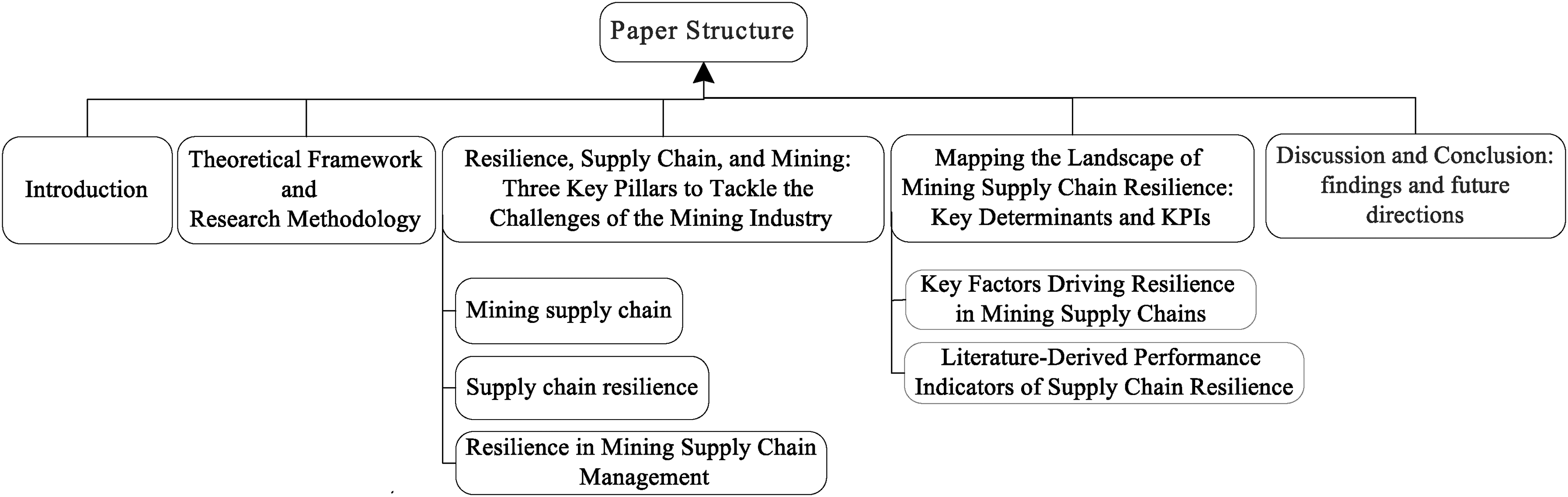
Article structure showing the four key sections covered in the review.
Theoretical framework and research methodology
This section presents the theoretical framework and research methodology of the study. Given that the concepts of supply chain management, resilience and mining supply chains involve multiple interrelated definitions and ambiguities, a clear conceptual foundation is essential. The meaning of ‘resilience’ varies across disciplines, and its integration into supply chain principles remains loosely defined. Moreover, mining supply chains possess distinct structural and operational characteristics that further complicate this integration. To address these challenges, the first part of this section reviews the relevant literature and theoretical perspectives, organising the concepts within a hierarchical structure in which each definition informs and clarifies subsequent ones. The second part outlines the research methodology employed in this study, including the research design, keyword search strategy, selection criteria and analytical procedures used to identify resilience drivers and associated performance indicators.
Based on framework presented in Figure 1, the next part outlines the literature review approach used in the research. Among the many literature review methods that investigate, collect, analyse, describe and integrate a large amount of information; one of them is the state-of-the-art review, which, unlike other methods that combine retrospective and current approaches, focuses on newer concerns and provides fresh insights into a topic and supports finding areas for future research (Badger et al., 2000; Barry et al., 2022; Cooper, 1988; Grant and Booth, 2009; Sutton et al., 2019).
This literature review aims to develop resilience performance indicators for mining supply chains using an advanced approach. Performance indicators are the initial step in identifying key performance indicators (KPIs) for resilience analysis. Both types of indicators are based on elements that affect resilience. To conduct this study, given the novelty of the issue of supply chain resilience in the mining industry, it was first necessary to understand the concept of mineral supply chain resilience and identify the drivers affecting it. Subsequently, a systematic search was conducted to identify these drivers, and studies that relied on assessing drivers or resilience using performance indicators were selected. The research methodology based on the framework presented in Figure 1 is described as follows.
Search methodology
The literature review commenced with an examination of fundamental concepts related to supply chains and supply chain management. To obtain a comprehensive understanding of supply chain resilience, the review focused exclusively on peer-reviewed review articles indexed in the Web of Science (WOS) database. This stage facilitated the identification of key relationships and helped clearly define the conceptual scope of the study. Primary sources cited within these articles were subsequently examined to deepen the analysis and delineate the boundaries of the study. Overall, this process enabled the identification of critical factors influencing supply chains and supported the development of a structured research roadmap.
The WOS database was selected due to its extensive collection of relevant and unique publications. The search was not limited by publication date, reflecting the sustained interest in supply chain resilience over the past two decades. After defining the literature boundary in a systematic search, by analysing titles, keywords, and abstracts for terms including ‘resilience’, ‘indicators’ and ‘performance’ we reached a smaller set of target literature. This approach yielded a comprehensive set of articles, allowing for an in-depth literature analysis. A block diagram illustrating the methodology is presented in Figure 2.
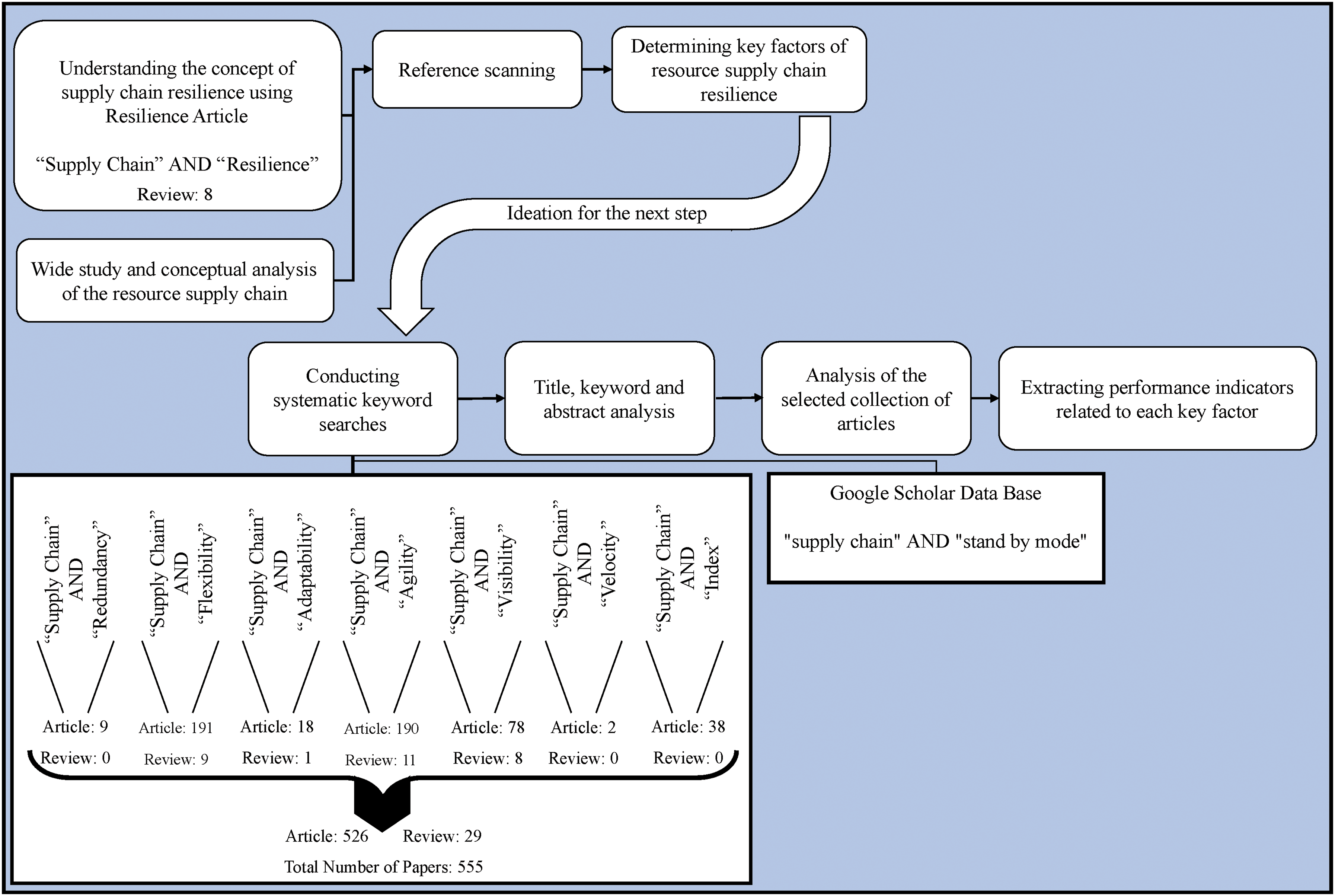
Illustration of the systematic review process and identification of relevant articles.
Methodology implementation
The concept of ‘supply chain resilience’ was initially explored through a review of relevant articles to establish a foundational understanding. Subsequently, a comprehensive literature search was conducted using the Boolean keyword combination: (‘Supply Chain’) AND (‘Redundancy’ OR ‘Flexibility’ OR ‘Adaptability’ OR ‘Agility’ OR ‘Visibility’ OR ‘Velocity’ OR ‘Index’). No articles were found regarding the standby mode factor in the WOS database, and the terms ‘supply chain’ AND ‘stand by mode’ were searched in Google Scholar and related articles were studied.
Reviewing, refining and filtering database
The identified articles were thoroughly reviewed to extract performance indicators associated with each key factor used in the analysis or reported in the review articles. When indicators had similar or slightly different titles, they were treated as the same indicator based on their application and meaning, despite minor variations in wording. Finally, the articles identified through the systematic search are summarised in Table 1.
A review of the literature on key factors and understanding resilience concepts in supply chain.
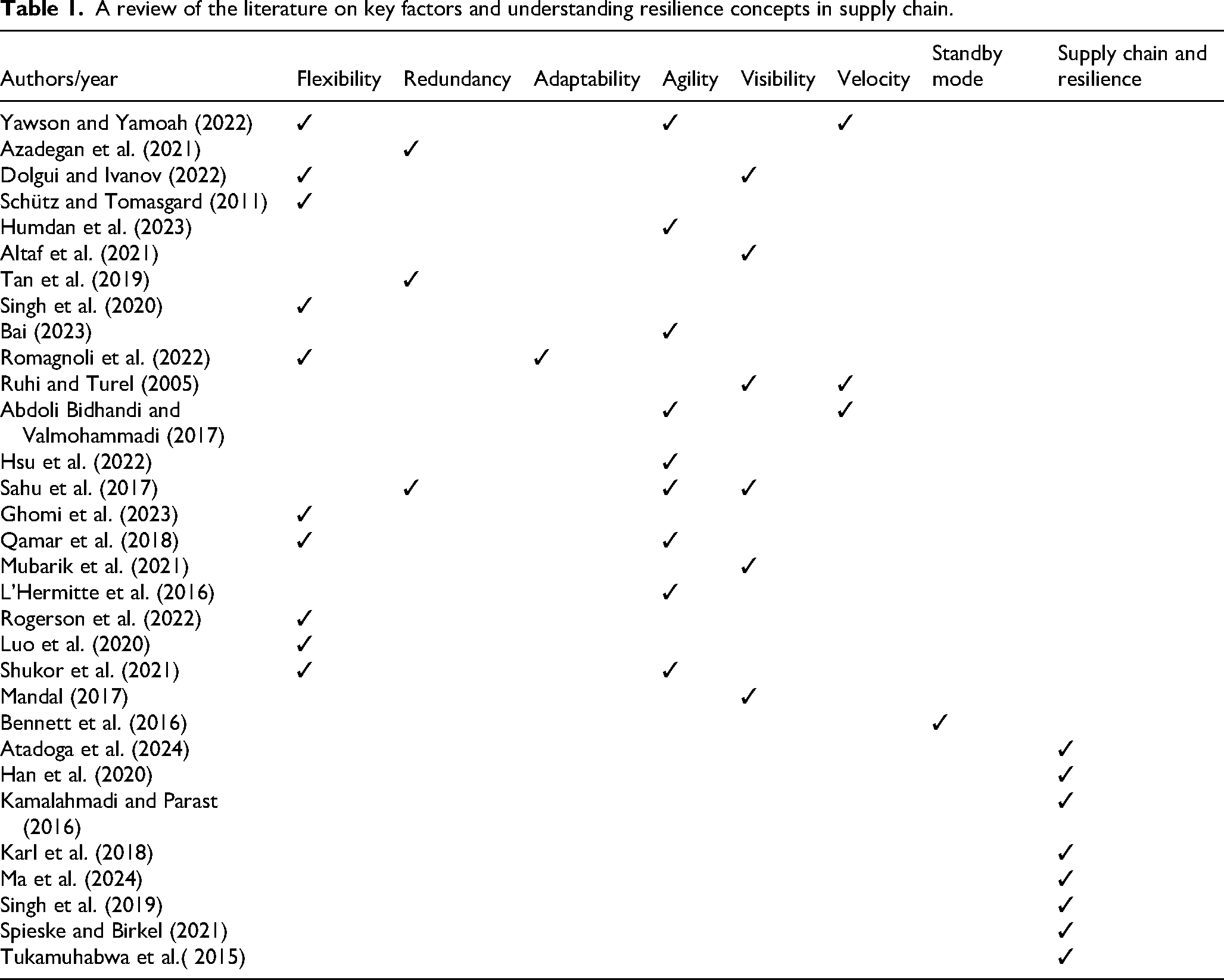
Figure 2 illustrates the process of conducting the systematic review and identifying the set of relevant articles, whereas Figure 3 presents a bibliographic representation of the subject area in order to clarify the contribution of each search term and the volume of related literature within the field. In the centre of the circle, different topics are marked with distinct colours. The publication share of articles for each topic is displayed in the second circle, where ‘Supply Chain AND Agility’ has the highest share at 34.2%, followed closely by ‘Supply Chain AND Flexibility’ at 34%. These topics are among the older subjects in the field of supply chain management, with articles published in the WOS database since 2000 and 2001. In the outer layer of this circle, the diversity of articles for each search phrase and the percentage of article publications in different years are shown. Typically, articles have been continuously published for all search phrases since 2017, with a higher percentage of articles from this year onwards.
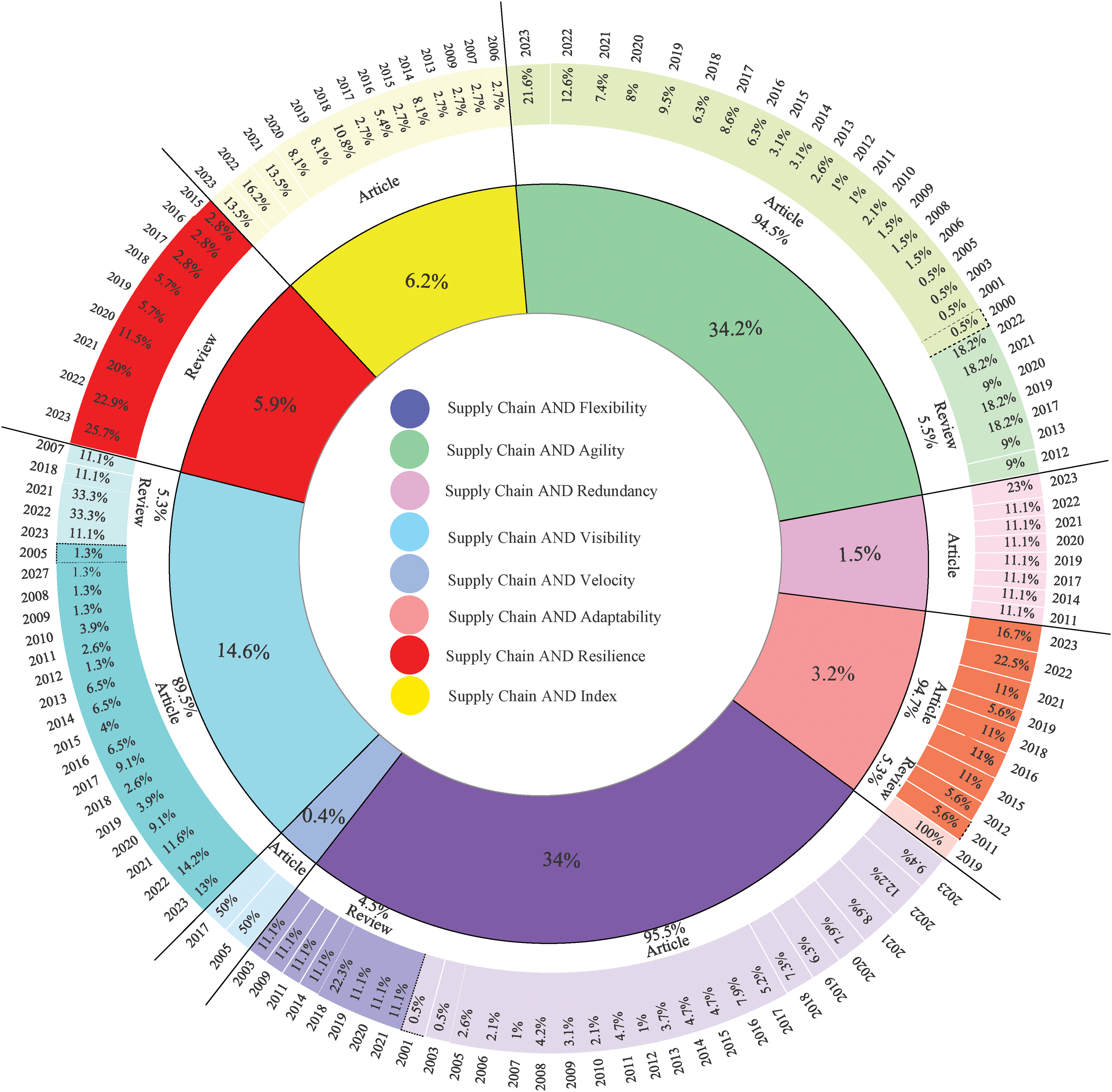
Statistical bibliographic representation of search terms based on the share of each publication type (research or review article) and year of publication.
This topic includes multiple concepts and many grey areas. The definition of the keyword ‘resilience’ is still unclear and varies depending on the application area. Additionally, its integration with the concept of the supply chain has not been clearly defined due to different perspectives. Both engineering and ecological approaches have been used in various studies. The mining supply chain also has differences compared to other supply chains. Integrating it with the two aforementioned concepts presents numerous challenges. Therefore, an attempt has been made to express the relationships between these concepts in a hierarchical structure while providing explanations for each concept. Each definition serves as a step to clarify other definitions and concepts. Consequently, the article's structure has been divided into four sections, as shown in Figure 3. The introduction addresses the concepts and elements related to the supply chain, highlighting the need for resilience in the face of significant uncertainties. The research method section clearly explains the methodology and the process of keyword search for the concepts of mining supply chain resilience. The subsequent section discusses the results and provides a comprehensive analysis. It presents the drivers of mining supply chain resilience and extracts performance indicators for each driver from the literature. Finally, the conclusion of the work is presented in the last section.
Resilience, supply chain and mining: Three key pillars to tackle the challenges of the mining industry
Mining supply chain
The process of extracting raw minerals from the earth is called mining, which requires a high capital cost in addition to its specific complexities. Mining operations have a complete cycle known as the mine life cycle. This cycle consists of exploration, production and eventually mine closure (Attari and Torkayesh, 2018; Kozan and Liu, 2011). Mining is part of the upstream section of the mineral supply chains and is related to all phases for the purpose of selling the extracted minerals or mineral products. It encompasses all stages of primary and final product production, also retailing, consumption, recycling and sale of final products. Figure 4 shows the general model of the mining supply chain and its classification (Sauer and Seuring, 2019). The mining supply chain in the upstream section has developed a model for exploration and extraction, which includes exploration, establishment, operation, extraction and processing, sale, and rehabilitation (Ayers, 2003). Mine Supply Chain Management (MSCM) refers to the estimation, analysis, planning and scheduling of all activities in the entire supply chain process at strategic, tactical and operational levels. These activities include selecting mining sites, mine layout design, surface or underground extraction operations, processing raw materials into high-grade mineral products, inventory management, and their transfer to intermediaries and end-users, as well as waste disposal, sales services, recovery of mineral products, mine closures, environmental impacts and post-closure sustainability. MSCM is dedicated to achieving improved collaboration of the flow of wealth, materials, assertion and personnel for the mutual benefit of all Mine Supply Chain partners (Canales-Bustos et al., 2017; .Zuñiga et al., 2015).
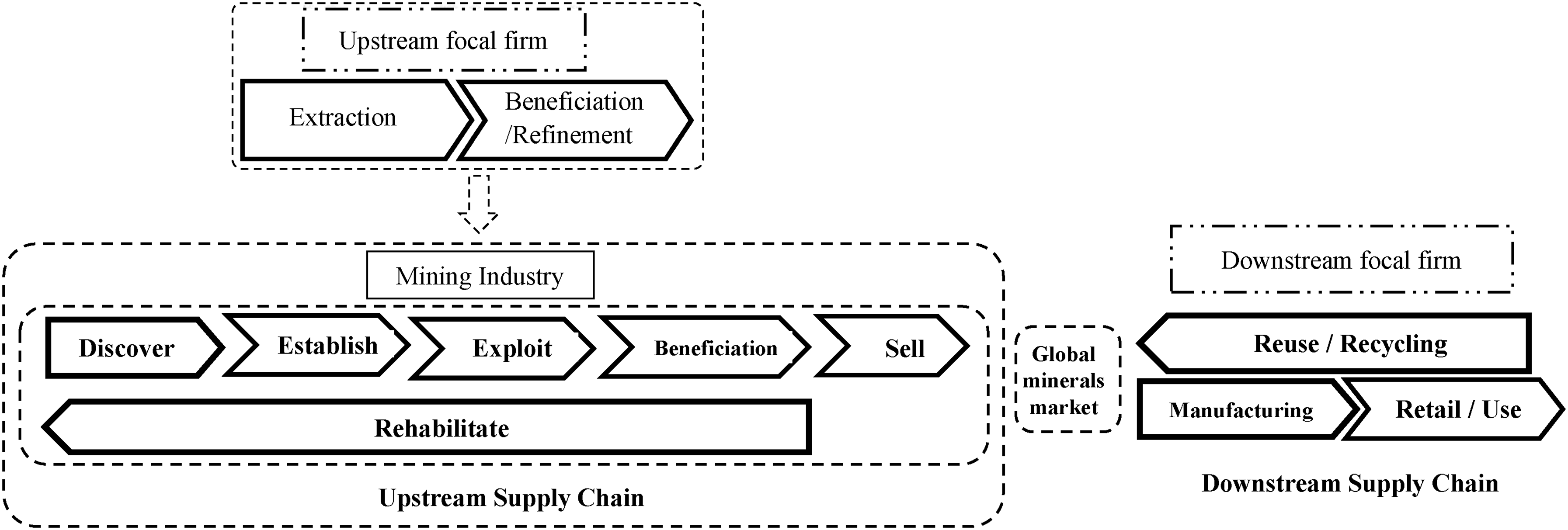
Mining supply chain model.
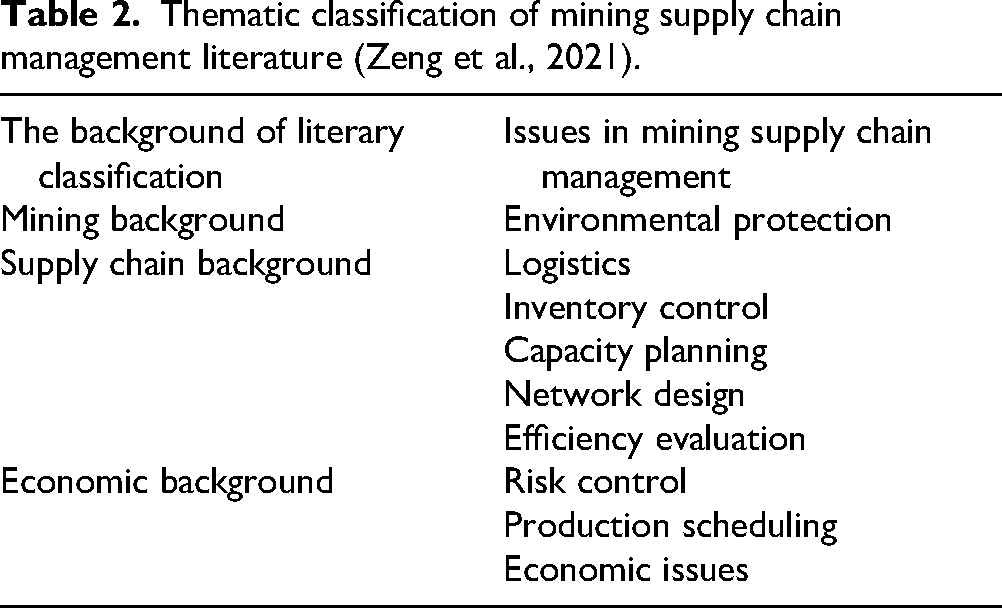
The literature in the field of mining supply chains is classified into nine topics, as shown in Table 2. The mining industry has close connections with environmental protection, society and their issues, which is why studies have been conducted on green, sustainable, social and ecosystemic supply chain management in mining. Logistics, network design and inventory control are important in the context of mining supply chain issues. In economic or financial aspects, pricing strategies, financial risks, business decisions, assessment, and risk reduction are common research topics in the literature of mining supply chain management (Zuñiga et al., 2015).
Thematic classification of mining supply chain management literature (Zeng et al., 2021).
Mining background
Studies categorised under the mining background mainly focus on environmental protection and capacity-related issues within mining supply chains (Aguirre-Villegas and Benson, 2017). The objectives of research in the environmental protection domain primarily aim to reduce the environmental impacts associated with mining and mineral processing activities (Aguirre-Villegas and Benson, 2017; Soleimani, 2021). Several studies seek to minimise greenhouse gas emissions, fossil fuel consumption and water usage across mineral supply chains through approaches such as life-cycle assessment and sustainability-oriented optimisation models. Other works aim to identify and prioritise sustainability drivers within mineral supply chains, enabling decision-makers to better understand the environmental implications of mining operations and develop more sustainable practices (Aguirre-Villegas and Benson, 2017; Azzamouri and Hovelaque, 2024; Soleimani, 2021; Shanker and Barve, 2021; Pan et al., 2012).
Supply chain background
Research associated with the supply chain background primarily addresses operational and structural aspects of mining supply chains, including logistics, inventory control, capacity planning, network design, efficiency evaluation and production scheduling. Studies in the logistics domain aim to improve transportation efficiency and optimise the flow of mineral materials, typically developing optimisation models that reduce transportation-related costs and environmental impacts (Atitebi et al., 2025; Shbool et al., 2025; Belov et al., 2020; Strang, 2012). Research on inventory control focuses on improving coordination between supply chain actors, stabilising supply flows and ensuring raw material availability under uncertain demand conditions (Zhang et al., 2019). In addition, research related to capacity planning aims to evaluate how mineral supply chains perform under different development conditions and operational scenarios, investigating supply–demand dynamics and proposing strategies for addressing resource-related constraints (Fung et al., 2015; Singh et al., 2012; Pimentel et al., 2011; Boland et al., 2015).
Furthermore, studies on network design within the mining context focus on configuring supply chain structures to balance economic efficiency with environmental sustainability and operational resilience (Jiang et al., 2023; Schomberg et al., 2025; Valderrama et al., 2020). Objectives in this area involve integrating carbon emission regulations, optimising facility locations, and maintaining stable operations under disruptions across diverse sectors (Li et al., 2020; Kalinowski et al., 2020). While classical network models emphasise cost minimisation, recent trends highlight the necessity of incorporating uncertain flows to develop robust decision-support systems (Roni et al., 2014; Pimentel et al., 2016). Finally, other groups of studies focus on efficiency evaluation – to assess operational performance and identify productivity improvements – and production scheduling, which ensures efficient resource allocation and the synchronisation of operational activities. Together, these studies highlight the critical importance of operational optimisation and structural coordination in enhancing the overall performance of mining supply chains.
Economic background
The economic, risk and operational dimensions of MSCM are deeply intertwined, driven by the industry's capital-intensive nature and vulnerability to global uncertainties. Economically, recent studies focus on optimising pricing strategies, financial policies and capital investments – often incorporating carbon tax regulations and foreign direct investment (FDI) – to balance corporate profitability with environmental constraints (Zhou et al., 2018a; Sun and Anwar, 2019). Concurrently, risk control mechanisms prioritise mitigating supply disruptions caused by geopolitical shifts, geological instability and price volatility, utilising stochastic modelling and strict due diligence regulations for supply chain transparency (Rimélé et al., 2020; Postma et al., 2021; Xing et al., 2017;). Ultimately, these economic and risk-based constraints are operationalised through Mine Production Scheduling (MPS), which seeks to maximise the Net Present Value of extraction sequences. To handle the computational complexity and stochastic nature of these integrated challenges, modern MPS models have transitioned from exact mathematical formulations to advanced hybrid machine learning algorithms – such as reinforcement learning and artificial neural networks – enabling dynamic, real-time decision-making in highly volatile environments (Espinoza et al., 2013; Lamghari et al., 2021; Li et al., 2023).
Supply chain resilience
In today's increasingly volatile and uncertain world, disruptions in supply chains have emerged as a pressing concern for countries and businesses alike. To prevent negative impacts, the supply chain must operate smoothly even in the face of disruptions. The focus on the resilience of the supply chain has grown in response to the substantial damages caused by disruptions and their rising occurrence rates. Supply chain resilience is crucial for both averting and managing disruptions, as well as maintaining the uninterrupted flow of supply chain activities. Consequently, supply chains must possess resilience to manage the consequences of environmental shifts effectively (Cabrera et al., 2023; Ke et al., 2023). Resilience in supply chains refers to the capacity of companies to recover supply chain operations from unforeseen disruptions (Christopher and Peck, 2004; Sheffi and Rice Jr, 2005). Supply chain resilience is a multidimensional concept referring to the adaptive capability of a supply chain to prepare for unexpected events, respond to disruptions, and recover from them while maintaining continuity and control over operational structures and performance. This capability involves developing appropriate levels of preparedness, response and recovery in order to manage disruption risks and restore the system to its original or even improved state. Given the interconnected nature of supply chains, disruptions may propagate beyond a single tier and affect multiple upstream and downstream layers (Ponomarov and Holcomb, 2009; Hendricks et al., 2009; Chowdhury et al., 2019). Supply chain resilience is an operational capability that enables a disrupted or broken supply chain to reconstruct itself and become stronger than before (Brusset and Teller, 2017). Resilience is a multidimensional performance structure and therefore cannot be precisely measured by a single indicator or metric (Haimes, 2009), due to the inherent multidimensional nature mentioned. Resilience in supply chain management is recognised as a natural strength within an operational setup (Tierney and Bruneau, 2007); Therefore, operational resilience can be defined as the ability to bounce back from interruptions by reinstating and ensuring the smooth flow of operations throughout various supply chain levels that correspond with supply and demand dynamics (Munoz and Dunbar, 2015).
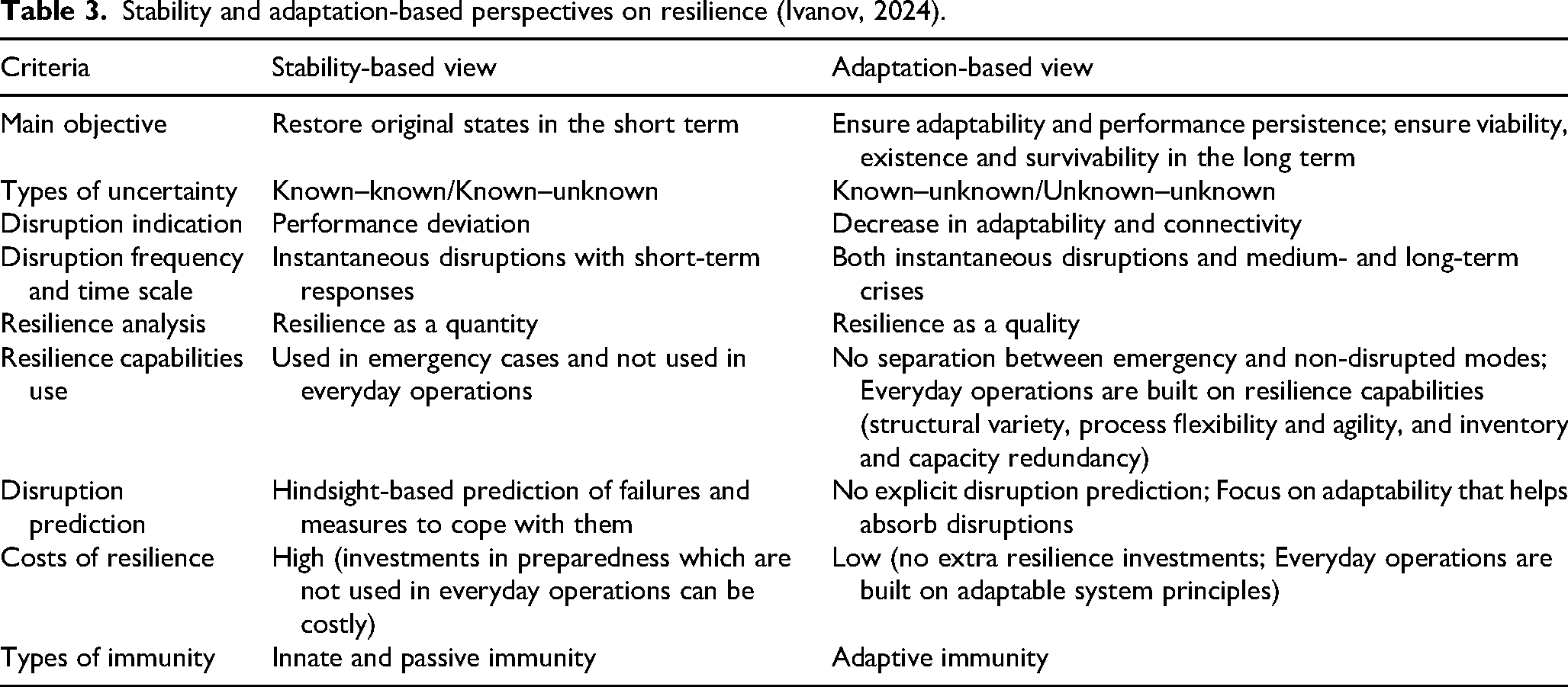
There are two main views on supply chain resilience: (1) stability-based view, which is based on providing a response to reach the initial and stable performance to reduce the deviation from the planned performance. (2) The adaptation-based view emphasises the adaptability of the supply chain to ensure the continuity of performance (ability to survive) when disruption occurs (Ivanov, 2024). The comparison between these views using nine indicators is shown in Table 3.
Stability and adaptation-based perspectives on resilience (Ivanov, 2024).
Previous studies have employed various modelling approaches to examine supply chain resilience. Soni et al. (2014) developed a graph-theoretic model to analyse resilience elements and their interrelationships, offering a quantitative approach that simplifies environmental dynamics to support disruption management. Munoz and Dunbar (2015) introduced an operational resilience metric based on multi-layer transient response indicators, demonstrating that while individual resilience dimensions can partially explain transient behaviour, a multi-layered representation provides a more comprehensive understanding of disruption responses. Building on hierarchical perspectives, Jain et al. (2017) proposed an interpretive structural modelling framework that identifies 13 key resilience elements and clarifies the causal relationships among them, offering a structured view of how these elements collectively shape supply chain resilience.
The key point of the mentioned studies was the existence of drivers to measure the resilience of the supply chain because resilience is a multidimensional characteristic. Karl et al. (2018) conducted a research with the aim of investigating the key indicators of non-financial performance to create the resilience of the supply chain; Finally, the final order and delivery time, on-time delivery, supplier efficiency in delivery and customer satisfaction were KPIs that had a significant impact on resilience elements. Jiang et al. (2023) conducted a study to examine and evaluate the supply chain resilience of China's mining industry, given its critical importance for the country's national economic security. Using supply and demand data from the mining sector, the researchers employed a system dynamics model to simulate the behaviour and resilience of the mining supply chain. The simulation was carried out across three segments: the mining (extraction) sector, the smelting and refining sector and the overall mineral resources industry. Two scenarios were considered: steady economic development and a supply chain crisis. The results indicated that, under both scenarios, the overall mineral resources industry and the smelting and processing sector exhibit greater resilience than the mining sector. This is primarily due to their lower dependence on foreign markets and the availability of sufficient reserves, whereas the mining sector demonstrates higher vulnerability because of its significant reliance on imports. Alkhatib and Momani (2023) conducted a study with the objective of examining the relationship between supply chain resilience (SCR) practices and operational performance. The findings revealed that both the implementation level of SCR practices and operational performance were relatively high. Moreover, supply chain resilience and its dimensions – agility, flexibility and collaboration – were found to have a significant and positive association with operational performance. In addition, the effective utilisation of digital technologies demonstrated a statistically significant moderating effect on the overall relationship between supply chain resilience and operational performance.
Resilience in mining supply chain management
The mining industry provides raw materials and energy security for the global community and its economic growth and development. The uncertainty of the development of the mining industry and the supply of minerals are constantly influenced by complex global factors and conditions. Therefore, improving the resilience of the supply chain and ensuring timely supply of mineral resources is particularly important (Akbari-Kasgari. 2022; He et al., 2020; Lotfi et al., 2021).
Regarding the resilience of the mining supply chain, there are three perspectives of sustainability, critical raw materials and mining life cycle, which are briefly mentioned in Table 4 (Castillo-Villagra and Thoben, 2022). There is no comprehensive definition available for the resilience of the mining supply chain. The role of the upstream part of the supply chain remains generally unclear. However, the resilience of the mining supply chain can be characterised as the capacity of the upstream section to adapt continuously throughout the mine's life cycle. This involves establishing predefined measures to withstand disruptions and recover from them, all with the goal of ensuring uninterrupted operations by delivering an adequate supply of minerals to the downstream part of the chain (Castillo-Villagra and Thoben, 2022; Sprecher et al., 2015).
Different views on the mining supply chain.
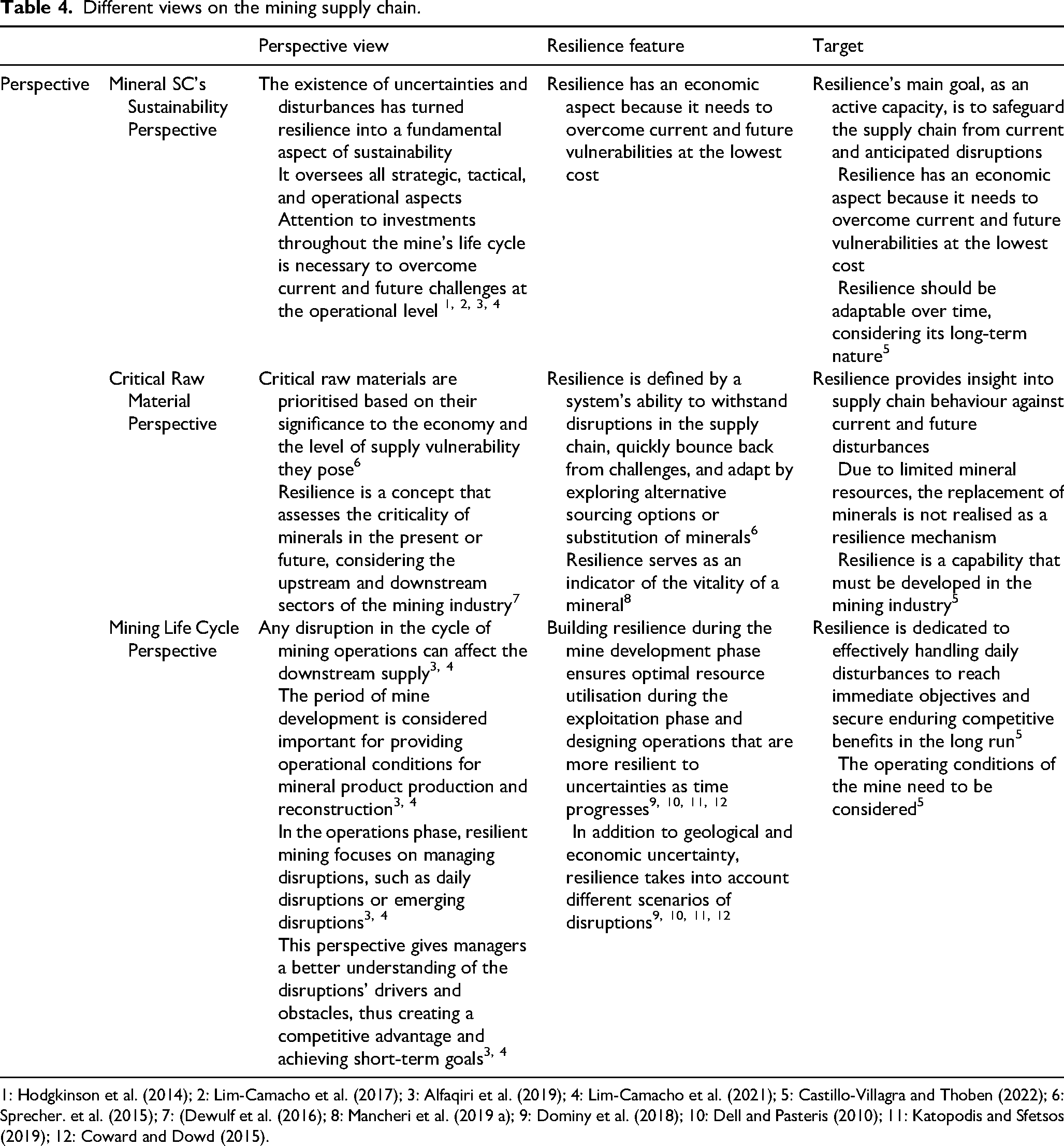
1: Hodgkinson et al. (2014); 2: Lim-Camacho et al. (2017); 3: Alfaqiri et al. (2019); 4: Lim-Camacho et al. (2021); 5: Castillo-Villagra and Thoben (2022); 6: Sprecher. et al. (2015); 7: (Dewulf et al. (2016); 8: Mancheri et al. (2019 a); 9: Dominy et al. (2018); 10: Dell and Pasteris (2010); 11: Katopodis and Sfetsos (2019); 12: Coward and Dowd (2015).
Recent literature underscores that mining supply chains are exposed to a highly multifaceted risk environment (Ryter et al., 2021). This complexity predominantly stems from commodity price volatility, stochastic demand patterns, resource uncertainty and geological instability, which collectively precipitate recurrent supply disruptions and market disequilibrium (Radebe and Chipangamate, 2024; Mancheri et al., 2018; Arabi and Gholamian, 2023). Beyond these chronic uncertainties, critical mineral supply chains are increasingly vulnerable to acute, compounding disaster shocks. Exogenous events – ranging from climate change-induced disasters (e.g. floods and wildfires) to global pandemics and severe geopolitical conflicts (e.g. the Russia–Ukraine war) – can violently disrupt operations. As highlighted in recent studies, networks lacking dynamic risk assessment and management capabilities are susceptible to ‘supply chain disruption’ – a sudden and violent collapse of the supply network when subjected to such compounding shocks. Furthermore, stringent socio-environmental regulations alongside these geopolitical dynamics can induce sudden operational halts, thereby compromising overarching supply chain performance. From an operational standpoint, condensed product life cycles, escalating demand, constrained transportation lead times and the necessity for capital-intensive supply-side monitoring systems further exacerbate the logistical and managerial intricacies inherent to mining supply chains (Radebe and Chipangamate, 2024; Mancheri et al., 2018).
Research on supply chain resilience within the mining sector remains fragmented and underdeveloped. Despite the growing significance of supply chain resilience, a review of the existing literature reveals substantial research gaps specific to the mining sector. Primarily, there is a pronounced scarcity of dedicated SCR models and sector-specific frameworks tailored to the unique complexities of mining operations (Sinaga et al., 2024). Furthermore, current studies frequently lack precise operational definitions for risk and resilience dimensions, which is exacerbated by a limited and fragmented system of resilience indicators (Hilali et al., 2023; Radebe and Chipangamate, 2024). From a methodological and operational standpoint, the literature often fails to adequately incorporate inherent uncertainties and tends to oversimplify complex transportation structures (Wang et al., 2025). There is also an insufficient in-depth exploration of how operational tools and emerging digital technologies can be leveraged to mitigate disruptions (Arabi and Gholamian, 2023). Strategically, the holistic assessment of risks across different echelons of the supply chain remains limited, accompanied by an incomplete integration of stringent environmental policies (Zhang and Wang, 2025). Consequently, the existing literature lacks a comprehensive review that systematically identifies and synthesises the performance indicators used to evaluate resilience in the mining supply chain.
Mapping the landscape of mining supply chain resilience: Key determinants and KPIs
Key factors driving resilience in mining supply chains
Supply chain resilience is crucial for manufacturing systems and distribution centres. The supply chain system is designed to perform acceptable functions during its life cycle (normal or pre-risk period). As soon as a risk occurs that brings the supply chain performance to an unacceptable level (risk period), actions are taken. Recovery is done to restore system performance to the desired level (recovery period) (Cheng et al., 2022). Operational disruptions impact the supply chain's capacity to align supply and demand. To gain the ability to compete, supply chains must be resilient and, therefore, able to recover quickly and effectively from operational disruptions.
Supply chain resilience exhibits inherent multidimensionality due to its multi-layered structure, posing challenges in quantification. Choosing the wrong indicators may lead to a misleading answer. Without a comprehensive tool to assess the operational resilience of the supply chain, managers are not able to evaluate and compare the capabilities of recovery from disruption or suitable alternative structures, and the desire to invest in resilience-increasing plans is reduced (Munoz and Dunbar, 2015; Tang and Tomlin, 2008).
The literature generally recognises the absence of a standardised metric capable of quantifying supply chain resilience across diverse risk types. Therefore, comparing the resilience of different systems represents a fundamental challenge for researchers and practitioners. As shown in Figure 5, resilience is a multidimensional index that is calculated from the sum of various indices. These criteria include recovery time, lost performance, recovery over a while or specific instances, or the probability of performance recovery. In Figure 5, the P(t) axis represents the performance levels P(th), P(tr) and P(td), which respectively indicate the performance level in the steady state of the system, the performance level at the end of the recovery stage at time tr, and the lowest performance level at time td. The novel interval f represents the value of the period of risk, and the time interval g represents the period required to recover the system performance to the th level (Zobel and Khansa, 2012).
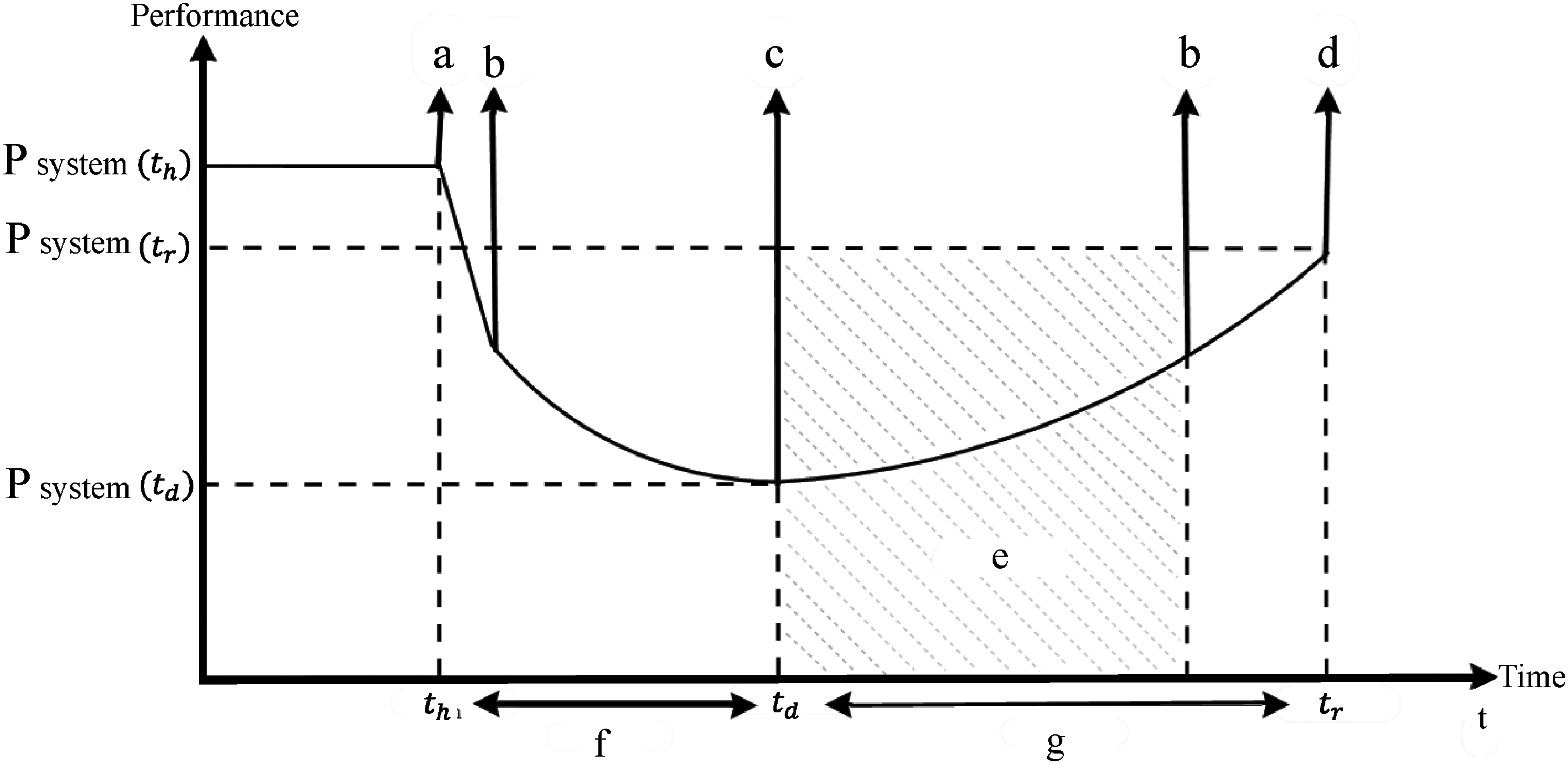
Resilience performance indicators (source: Xu et al., 2024).
Performance metrics are essential for evaluating the success of previous decisions and furnishing managers with necessary insights for their ongoing operational choices (Bititci et al., 1997). Key indicators show the performance of a company's structures and processes, which are very important for planning and control through information support, creating transparency and supporting management decision-makers. KPIs serve as a set of measures that focus on aspects of organisational performance that are critical to organisational success (Badawy et al., 2016; Meier et al., 2013). A logical performance measurement system is essential for continuous improvement of supply chain performance through which KPIs can be realised (Anand and Grover, 2015). To establish an appropriate resilience scale for a specific system, the first crucial task is identifying its KPIs. Take supply chain operations, for instance, where the duration from ordering to delivery holds significant weight for customers aiming to guarantee timely receipt of goods. Therefore, KPIs such as quantity of goods distributed and average delivery distance are selected to measure overall performance (Li et al., 2017). Figure 6 generally illustrates the drivers of supply chain resilience that have been referenced in the scientific literature and in various supply chains. As shown, the drivers are divided into two main categories: Proactive Resilience and Reactive Resilience. The drivers of the two phases, Anticipation and Resistance, fall under the first category, while the phases of Recover and Response are placed in the second category. Identifying the drivers of resilience is the initial step toward attaining the KPIs within the mining supply chain's resilience. In Figure 7, a number of resilience drivers that have been used in the literature for supply chain resilience have been collected. Redundancy, Flexibility, Adaptability, Agility, and Standby mode drivers have been proposed in the literature for the mining supply chain. The Agility stimulus itself is affected by two stimuli: Visibility and Velocity, as shown in Figure 7 (Bhardwaj and Kinra, 2022; Kamalahmadi and Parast, 2016).
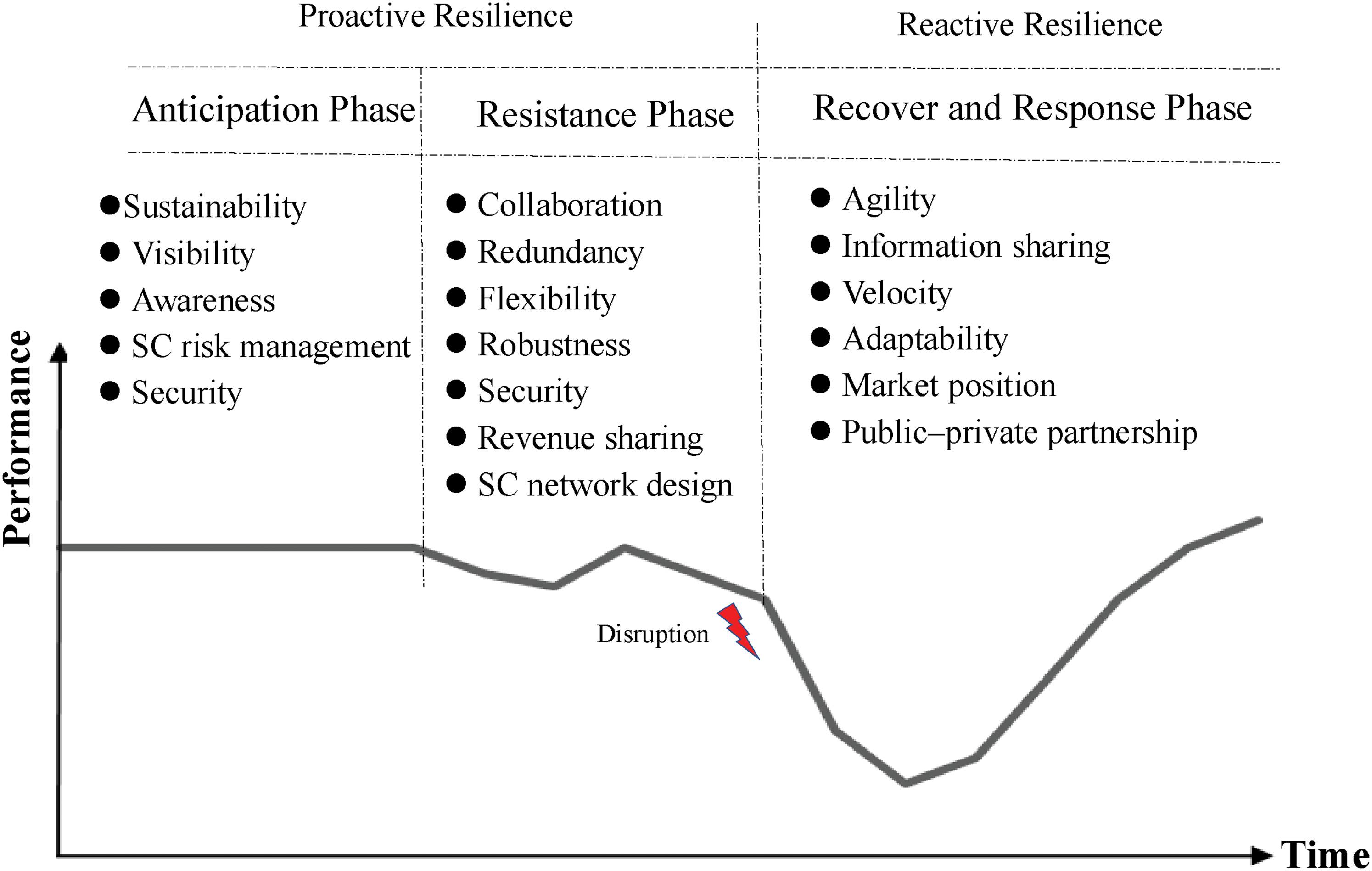
Resilience enablers categorised in different phases of resilience.
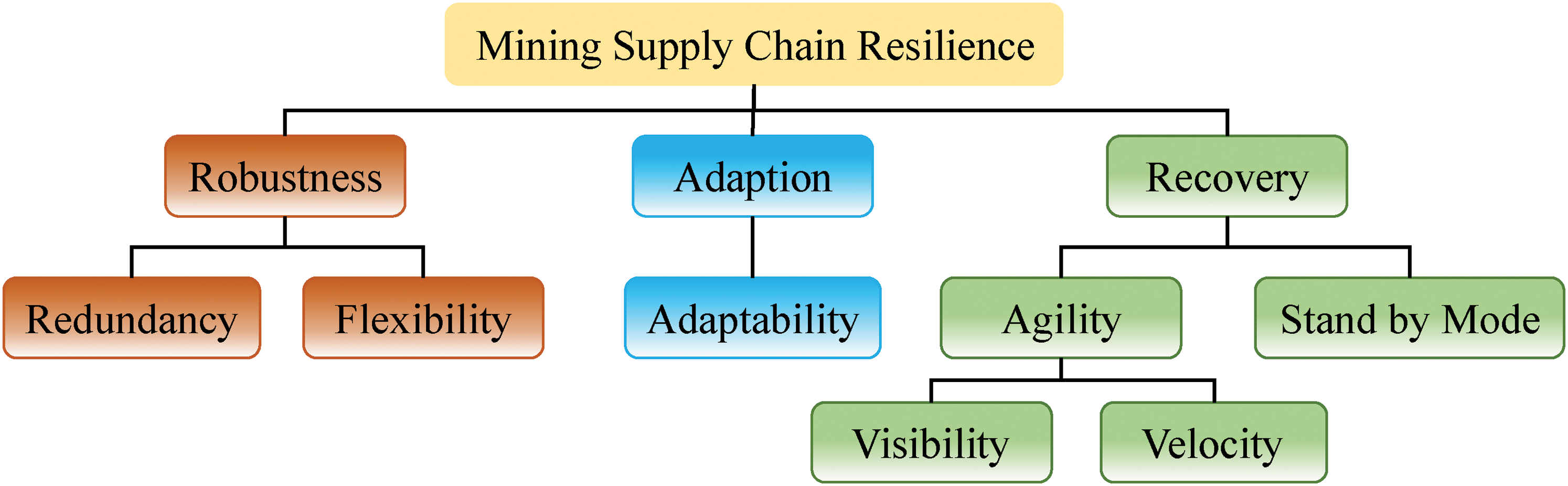
Mining supply chain resilience key factors (source: Kamalahmadi and Parast, 2016; Castillo-Villagra and Thoben, 2022).
Literature-derived performance indicators of supply chain resilience
A performance measurement system (PMS) is defined as a system that allows managers to monitor performance indicators for some time in the supply chain (Piotrowicz and Cuthbertson, 2015). PMS in the supply chain is essential as it simplifies the flow of materials, information and money, facilitates decision-making processes, and eliminates non-value-added activities. Performance appraisal also enables companies to evaluate their results and plan resources effectively. Measuring the performance of business activities and processes involves systematically defining indicators that enable unified monitoring within a forward-looking framework for goal achievement (Azevedo et al., 2011; Gunasekaran et al., 2004). The performance evaluation system includes KPIs established based on strategic objectives (Rosyidah et al., 2022). To determine the level of resilience in a system, identifying its KPIs is a crucial step. In supply chain networks, the ability to deliver to customers is of paramount importance (Li et al., 2017).
Various performance indicators exist for each of the resilience drivers mentioned in Appendix 1. These indicators are presented in the literature to address gaps and drawbacks, and they are categorised based on resilience phases with corresponding definitions. These indicators provide a framework to enhance the resilience of the mining supply chain and can be utilised to analyse its overall robustness.
Robustness phase key factors
Redundancy: Redundancy is the term used for strategically and selectively utilising surplus capacity and stock in times of crisis, like supply shortages or surges in demand (Christopher and Peck, 2004). Redundancy increases the strength and resilience of the supply chain. The effectiveness of supply chain redundancy depends on two factors: scale and design scope during the active phase, and its utilisation during response and recovery after a disruption. If a disruption does not occur or is not properly exploited, the large investment made to create redundancy will remain ineffective (Ivanov and Sokolov, 2013; Sheffi and Rice Jr, 2005).
In general, literature proposes several strategies to enhance redundancy in supply chains. These strategies include creating and maintaining safe and emergency warehouses of materials and finished goods to be used in case of disruption, establishing additional factories to ensure continuous production in the supply chain network when other factories are disrupted, and providing backup facilities in critical centres to maintain the production process (Dada et al., 2007; Sawik, 2013; Sprecher et al., 2015; Tomlin, 2006; Zhang et al., 2023). These measures aim to raise redundancy in supplier operations to ensure uninterrupted production in the event of a disruption.
Undoubtedly, having a certain level of redundancy is important for companies to enhance resilience against disruptions (Radnor and Boaden, 2004). In industries that heavily rely on supply chains, such as manufacturing, mining and transportation, the presence of redundant systems, resources and functions is crucial. This is because an incident, disruption or failure in one part of the supply chain can directly impact other segments and disrupt overall company operations. Moreover, competitive pressures and increased globalisation have prompted companies to increasingly pursue risk minimisation through redundancy strategies (Blackhurst et al., 2011). These strategies may involve having additional stockrooms and storage facilities, researching and developing alternative technologies, establishing non-mechanised production units, implementing crisis management backup sites, and identifying alternative suppliers. Therefore, given the volatile and complex market conditions, companies need to continuously evaluate their processes and functions and make necessary improvements to their supply systems to possess sufficient resilience to confront adverse developments and achieve sustainable performance (Han et al., 2020).
Flexibility: ‘Flexibility’ refers to the capacity to easily adapt or adjust to various situations or circumstances. It refers to the capability of being able to change or modify one's approach, plans or ideas in response to new information or unexpected events. Having flexibility can be beneficial in many areas of life, including work, relationships and personal growth. Flexibility is one of the key features of the supply chain to eliminate uncertainty. Various indicators, such as new product development and the ability to change volume, final delivery time, etc., have been used to analyse flexibility. Greater flexibility refers to the company's rapid and adaptive capabilities in meeting its needs by changing the speed, destinations and volumes of its supply chain (Kumar et al., 2008). There are alternative definitions for supply chain flexibility in the literature. It can be described as the system's capacity to promptly adapt to internal and external changes (Garavelli, 2003), or ensuring customer satisfaction levels are maintained despite supply disruptions and sudden shifts in demand (De Groote, 1994). Flexibility at different levels of supply chain operations is classified as operational flexibility (source level), tactical flexibility (plant level), strategic flexibility (company level) and supply chain flexibility (network level). There are practical aspects for measuring flexibility (Stevenson and Spring, 2007), including:
Flexibility in operations, marketing and logistics; Hierarchical aspects such as flexibility at the store, plant and company levels; Measurement aspects such as global and specific; Time horizon aspects such as long-term and short-term flexibility; and Aspects of change such as flexibility in product, composition and volume.
Supply chain flexibility drivers are classified into three hierarchical levels: performance, operational and strategic. Drivers for the performance level include volume, delivery, cultural and linguistic compatibility, alternative logistics arrangement, and information systems (Alkhatib and Momani, 2023; Stevenson and Spring, 2007). The performance indicators for Robustness during the adaptation phase are shown in Figure 8.
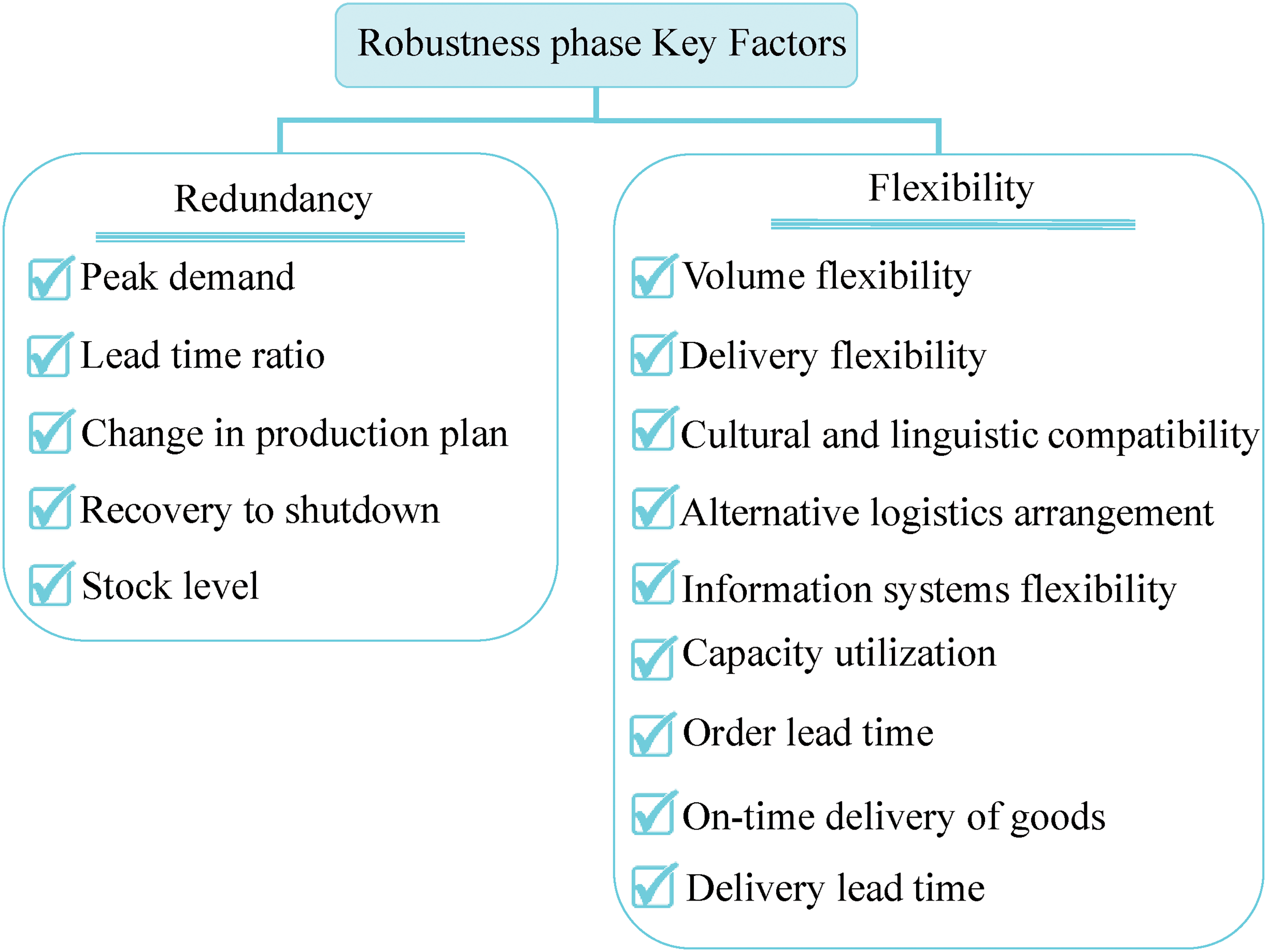
Performance indicators of the robustness phase.
Adaption phase key factors
Adaptability: The adaptability of the supply chain refers to the company's ability to adapt to the market in terms of strategies, products, and technologies when necessary and economically. This capability provides the basis for the development and innovation of products through the dynamics of the system (Lee, 2004; Pavlou and El Sawy, 2011; Swafford et al., 2008). The adaptability of the supply chain allows the members to cope with the dynamics of the supply chain, such as changes in the economy, politics, society and technology. It can gain a competitive advantage by finding a new position (Dubey et al., 2018; Pavlou and El Sawy, 2011; Stevenson and Spring, 2007). The performance indicators for adaptation during the adaptation phase are shown in Figure 9.
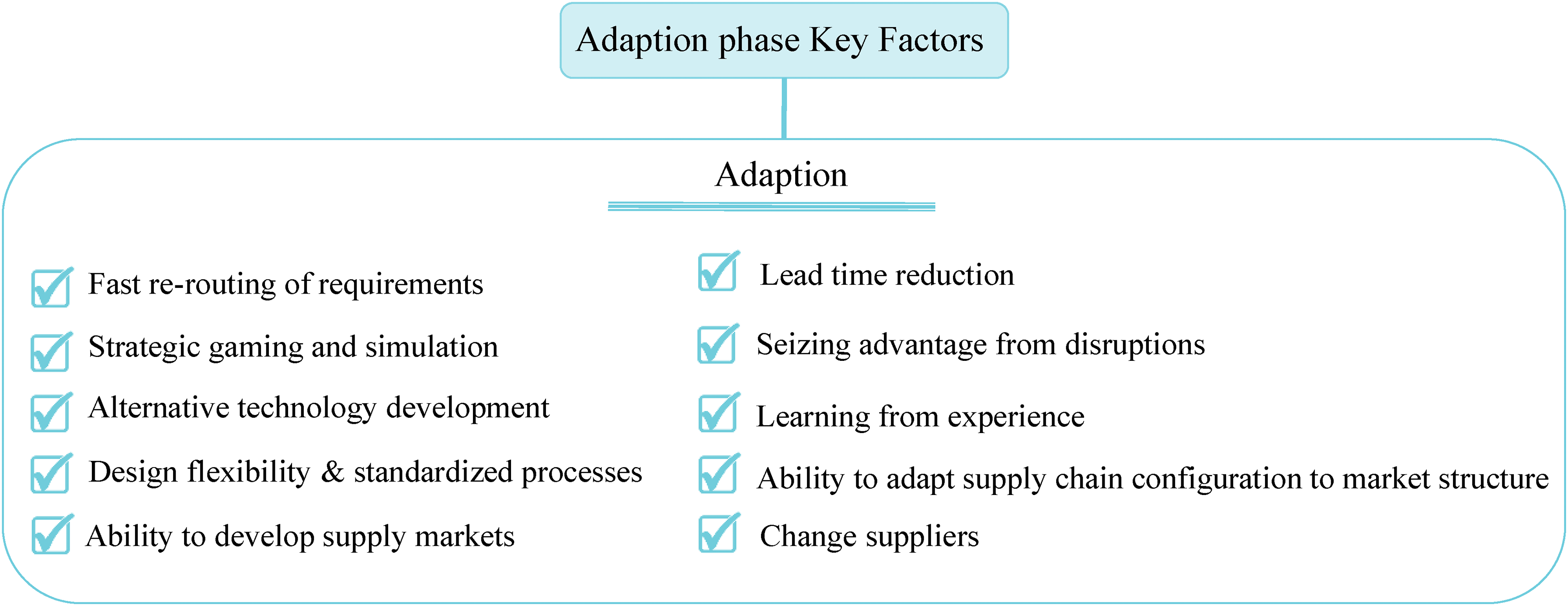
Performance indicators of the adaption phase.
Recovery phase key factors
Agility: Agility is commonly defined as a firm's capability to rapidly and effectively respond to changes and uncertainties in a dynamic environment by minimising response times, while simultaneously adapting or redesigning products and production processes to address evolving customer requirements (Eckstein et al., 2015; Prater et al., 2001; Kumar and Motwani, 1995). In an age of time-driven competition, supply chains need to be responsive to customers’ evolving needs for faster deliveries and effectively manage supply in varying demand periods. To meet market needs, the supply chain must exhibit speed and a high level of manoeuverability, which defines agility (Agarwal et al., 2007). Supply chain agility requires increased cooperation and interdependence among supply chain partners to meet customer needs at acceptable costs and minimise overall response time (Zhou et al., 2018b). Supply chain agility is ‘the ability of the supply chain to quickly adjust its tactics and operations’ to effectively respond to disruptions and unwanted events (Gligor and Holcomb, 2012; Swafford et al., 2006).
Agility is widely recognised as a key strategy for achieving supply chain resilience (Ponomarov and Holcomb, 2009). It refers to an organisation's capability to respond rapidly and effectively to unexpected changes in a competitive and dynamic environment. In contrast, resilience reflects the organisation's capacity to cope with turbulence and significant disruptions in the supply chain and to recover its performance after such events. In other words, while agility enables organisations to quickly adapt to and leverage environmental changes, resilience allows them to restore, adapt or rebuild lost capabilities and performance following disruptive events in the business environment. Accordingly, the emphasis on agility arises from the dynamic and rapidly evolving nature of supply chain environments, whereas resilience becomes critical due to the potential occurrence of unexpected disruptions in the business environment at any time (Carvalho et al., 2012a; Patel and Sambasivan, 2022).
Visibility: Spieske and Birkel (2021) demonstrate that enhancing the sustainable resilience of the supply chain can be influenced by the visibility and collaboration elements within supply chain planning. Visibility plays a significant role as it enables companies to access information regarding the source of materials and components. This improved insight into supply chain partners allows companies to better understand potential risks at the supplier's site, leading to effective risk mitigation strategies (Tang and Tomlin, 2008; Wicaksono and Illés, 2022; Zobel and Khansa, 2012). Visibility refers to inventories’ identification, location and status that evolve throughout the supply chain. The captured data includes timely event notifications, as well as the scheduled and actual timings of these occurrences (Francis, 2008). On the other hand, the visibility of the supply chain is defined as the level of access to information or the sharing of information that is key or useful for the operations of supply chain actors (Barratt and Oke, 2007). There are two perspectives on visibility: visibility as a contributor to supply chain agility and visibility as a contributor to supply chain resilience. Being aware of changes is a prerequisite for responsiveness, and with increasing visibility of communications and operations, both agility and resilience are enhanced (Kamalahmadi and Parast, 2016; Wieland and Wallenburg, 2013). Visibility plays a crucial role in quick and effective decision-making to support normal operations, especially in turbulent times. It can be improved through resilience practices, which help predict, understand, and effectively manage the consequences of supply chain disruptions (Carvalho et al., 2012a; Pettit et al., 2010). Performance indicators of agility and visibility (Sahu et al., 2017) are shown in Figure 10.
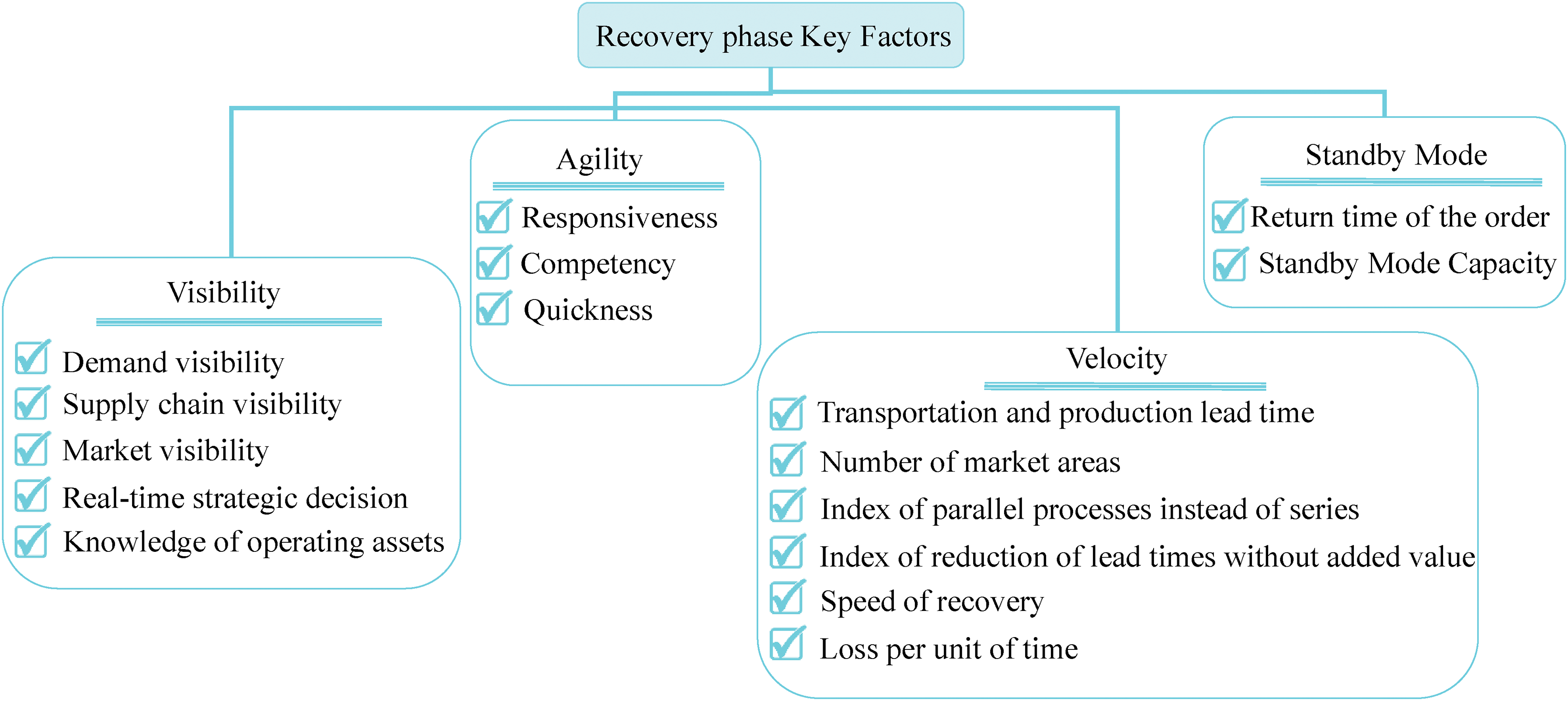
Performance indicators of the recovery phase.
Velocity: Supply chain velocity refers to the ability of a supply chain to respond rapidly to changes and adapt to evolving conditions. This concept is considered a critical component of supply chain agility, highlighting the importance of time in achieving agile responses (Jüttner and Maklan, 2011). In this context, the capability to share information across different entities of the supply chain plays a significant role in enhancing responsiveness to environmental changes (Singh et al., 2019). An essential principle in defining supply chain velocity is the ability to complete operational activities in the shortest possible time. Furthermore, the speed at which a supply chain recovers from a risk event largely depends on its capacity to adapt flexibly and rapidly to new conditions (Carvalho et al., 2012a; Tukamuhabwa et al., 2015).
Standby Mode: Restarting primary production is one of the mechanisms that enhance supply chain resilience, which involves ending the temporary suspension of activities. The mining industry possesses the capacity for temporary activity suspension. Possible causes encompass financial constraints, environmental occurrences, societal events, regulatory shifts or structural deficiencies. During this phase, maintenance is conducted to prepare the site for a return to active production. This factor helps in supply chain management with key benefits such as increased flexibility, increased operational throughput against disruptions, increased collaboration and information sharing conditions (Bhardwaj and Kinra, 2022; Sprecher et al., 2015; Van den Brink et al., 2020).
The standby mode serves as a critical strategy to enhance mining supply chain resilience through three primary mechanisms: proactive risk management, including scenario modelling and supplier relationship optimisation conditions (Van den Brink et al., 2022), technological integration, such as digital forecasting systems and dynamic operational scheduling (Atadoga et al., 2024), and robust operations that employ controlled flexibility. While the third mechanism is traditionally associated with flexible or agile supply chains in the literature, this study highlights its distinct role in post-disruption recovery, justifying its classification as a standalone resilience factor (Nayak and Choudhary, 2022; Roshani et al., 2023).
Standby Mode is a mining capability that enables the initiation of a delayed state to respond to disruptions and maintain initial operating conditions (Bennett et al., 2016; Bhardwaj and Kinra, 2022; Sprecher et al., 2015; Van den Brink et al., 2020). Figure 10 shows the illustration of the indicators.
Findings and future directions
The current research was conducted in the form of a state-of-the-art review in the field of supply chain resilience in mining to achieve resilience performance indicators. For this purpose, various topics necessary for conducting the research were examined and extracted. Furthermore, by focusing on several research gaps, the research directions were clearly articulated. Overall, supply chain resilience in mining is one of the topics in the field of supply chain resilience that has been studied less compared to other supply chains. Timely supply of raw materials under supply chain uncertainties is a strategic issue in the mining industry; which can turn into an interesting topic for researchers.
This study conducted an extensive literature search on resilience using the WOS database. Although all articles were published from 2000 onwards, the publication rate has been higher since 2018. Seven resilience drivers in mining supply chain literature were extracted, with augmentation and flexibility drivers for the resistance phase, adaptive drivers for the adaptation phase, and agility and readiness drivers for the recovery phase; speed and visibility drivers also have a significant impact on agility. Ultimately, 40 performance indicators used in the literature to measure the performance of each resilience driver were extracted. A definition of each performance indicator is provided in the appendix.
In this research, an operational-level model of the mining supply chain was presented, describing the structure of the supply chain through its upstream and downstream components. Mining activities and related processes, which directly contribute to the extraction and production of primary raw materials, are located in the upstream section of the supply chain. In this stage, multiple actors – including clients, consultants, supervisors and contractors – collaborate in the extraction of mineral resources from the ground. Due to their direct involvement in the production process, these upstream activities occupy a critical position in the mining supply chain and play a decisive role in ensuring the availability and continuity of raw material supply. Consequently, enhancing resilience in this section, particularly in the reliable supply of primary materials required for the mining production chain, is of fundamental importance. Furthermore, the concept of supply chain resilience was examined in detail by reviewing and comparing existing perspectives in the literature. In this context, resilience in the mining supply chain was defined and discussed from multiple viewpoints, including sustainability considerations, the role of critical raw materials, and the different stages of the mining life cycle.
In future research, researchers are encouraged clearly state their goals regarding mining supply chain resilience and strive to enhance the resilience of this type of supply chain against various disruptions. Environmental uncertainties, including climate changes, lack of water resources, and pollution; social uncertainties, such as local community tensions and population changes; and governmental uncertainties, including changes in laws and regulations, always affect the mining supply chain.
The necessity of addressing these uncertainties and risks and building resilience against these disruptions can be one of the important topics for future research. Researchers can seek to improve the resilience of the mining supply chain against these disruptions by examining solutions such as increasing diversity in suppliers, enhancing inventory and reserves management, utilising new technologies, and collaborating closely with local communities.
In resilience analysis, one of the critical steps is the identification of KPIs. Given the extensive set of performance indicators extracted in this study, a promising direction for future research lies in developing novel methods to select a concise, essential subset of these indicators for effective resilience assessment. Techniques such as decision-making frameworks, clustering algorithms and factor analysis can be employed for this purpose. Reducing the number of performance indicators to a manageable set enables operational managers to monitor and evaluate supply chain resilience in real-time and on a continuous basis.
Furthermore, exploring the relationship between the performance indicators identified in this article and disruptions specific to the mining industry, along with their classification according to types of mining supply chain disruptions, may facilitate the identification of resilience scenarios. Investigating these scenarios and simulating their impacts on supply chain resilience could open new avenues in the literature. Such simulation studies enhance decision-making capabilities by revealing vulnerabilities and allowing for proactive mitigation strategies.
Footnotes

Funding
The authors received no financial support for the research, authorship, and/or publication of this article.
Declaration of conflicting interests
The authors declared no potential conflicts of interest with respect to the research, authorship, and/or publication of this article.