







Abstract
Occupational safety in open-pit mining requires tools capable of anticipating risk changes before accidents occur. This study developed a predictive framework for safety risk management in an open-pit gold mine in Peru by integrating Bird's pyramid, Bayesian inference and Markov chains using daily reports of substandard acts and conditions. Events were classified by severity, risk probabilities were estimated from cause–consequence relationships, a daily risk index was constructed and temporal transitions were modelled through a first-order Markov chain. The results showed a structure dominated by precursor events, with 15,010 substandard acts and conditions, 42 incidents and 4 minor accidents. Bayesian inference indicated that medium risk was predominant, representing 57.56% of observations, while the combination ‘unauthorised spills + environmental impact’ reached a posterior high-risk probability of 1.000. The Markov matrix showed moderate persistence of the high-risk state, with a transition probability of 0.4144. Short-term forecasting identified the low-risk state as the most likely outcome, although the probability of high risk increased progressively. The proposed framework transforms daily preventive reports into probabilistic information to prioritise controls and strengthen preventive risk management.
Introduction
Occupational safety in mining remains a critical challenge because open-pit operations combine human work, heavy equipment, internal traffic, changing work fronts and operational decisions that can modify exposure levels within a matter of hours. This condition requires preventive management that goes beyond the final accident and makes use of early warning signals, such as substandard acts, unsafe conditions, minor incidents and near misses, which allow failures to be recognised before they escalate into more severe events (Sadeghi et al., 2025). The magnitude of the problem confirms its relevance: the ILO estimates 2.93 million work-related deaths and 395 million non-fatal occupational injuries each year (ILO, 2025), while the ICMM reported 42 mining fatalities in 2024, compared with 36 in 2023 and 33 in 2022 (ICMM, 2025). In mining, moreover, traditional indicators may provide an incomplete interpretation of safety when they are analysed in isolation, particularly if precursor signals of serious events are not incorporated (Rocha et al., 2025).
In this context, Bird's pyramid provides a useful basis for arranging safety events according to their severity, from substandard acts and conditions to incidents and accidents. However, its contribution should not be understood as the mechanical replication of classical ratios, but rather as a way of recognising that severe events are often preceded by a broad base of operational deviations. Low-severity reports gain preventive value when they are systematically recorded, classified and analysed, because they make it possible to identify patterns before injuries or major losses occur (Blanco-Juárez and Buele, 2025; Sadeghi et al., 2025; Woźniak and Hoła, 2024). Nevertheless, the isolated use of the pyramid may lead to a partial perception of risk, especially when it is assumed that reducing minor events necessarily leads to a reduction in serious accidents, without considering that some critical events may depend on different operational conditions (Glevitzky et al., 2025; Rocha et al., 2025). Therefore, the pyramid becomes more robust when it is used as an initial classification structure and complemented with models capable of transforming daily reports into probabilistic information for prevention.
Bayesian inference provides this capability by allowing the risk level to be updated as new operational information becomes available. In mining safety, substandard acts, unsafe conditions, reported causes, observed consequences, and assigned risk levels should not be analysed as independent elements, but rather as interconnected variables within a preventive system. In coal mining, Li et al. (2022) integrated text mining, association rulesand Bayesian networks to identify risk factors from accident reports, while Du and Chen (2025) extended this approach by combining language models, Apriori rules and Bayesian networks to analyse mining accident reports. Other studies have used Bayesian networks to quantify causal relationships, assess risk scenarios, identify sensitive variables and support decision-making under uncertainty in mining, construction, transportation and high-risk facilities (Li et al., 2025; Lin et al., 2024; Mishra et al., 2021; Mohan et al., 2026; Shen et al., 2024). Under this logic, the Bayesian approach makes it possible to estimate the probability of low, medium or high risk based on the reported cause, the type of consequence and their combined effect.
However, estimating risk at a specific point in time is not sufficient when safety behaviour changes from day to day. Markov chains address this temporal component by modelling the probability that the system remains in the same risk state or transitions to another state in the following period. This logic is particularly relevant to occupational safety because an operation may shift from a controlled state to a critical one due to the daily accumulation of deviations, incidents or uncorrected unsafe conditions. In mining, Wu et al. (2023) applied hidden Markov models to predict production safety status, showing that this approach can support preventive decision-making using accident time series. Likewise, Grey–Markov models, Markov chains and other hybrid approaches have been used to evaluate state changes, deterioration processes, road risk, industrial safety and dynamic scenarios under uncertainty (El-Sokkary et al., 2026; Jia et al., 2025; Okoroji et al., 2025; Yang and Li, 2026). Consequently, the Markov approach allows risk to move beyond a static classification and be interpreted as a probabilistic trajectory of change.
Despite these advances, a clear gap remains in the integration of Bird's pyramid, Bayesian inference and Markov chains within a single predictive framework applied to open-pit gold mining. Previous studies have used accident reports to identify risk factors through text mining or Bayesian networks, while others have employed Markov models to describe the temporal evolution of safety; however, these approaches usually focus on accidents that have already occurred or on aggregated time series, without transforming daily reports of substandard acts and conditions (RACS) into updated probabilities of low, medium and high risk (Du and Chen, 2025; He and Li, 2025; Wu et al., 2023). Moreover, although Bird's pyramid makes it possible to arrange events according to severity, it does not by itself explain how risk changes from one day to the next or how preventive signals may anticipate transitions towards critical states (Yapi et al., 2026; Yu et al., 2025). Therefore, a framework is needed that connects preventive event classification, probabilistic risk estimation and temporal transition, modelling based on RACS. In this study, RACS refers to daily reports of substandard acts and conditions used by the mine to record preventive safety events.
In response to this gap, the main objective of this study is to develop a predictive framework for safety risk management in an open-pit gold mine in Peru by integrating Bird's pyramid, Bayesian inference and Markov chains based on RACS. To achieve this objective, three research questions were formulated:
− RQ1: How are safety reports distributed within Bird's pyramid, and which severity level predominates in the operation? − RQ2: What probabilities of low, medium and high risk can be estimated through Bayesian inference based on the causes and consequences of preventive reports? − RQ3: What are the probabilities of persistence and transition among daily occupational risk states using Markov chains, and which future state is most likely in the short term?
The manuscript is organised as follows. First, the methodology is described. Next, the research results are presented. The implications for preventive management in open-pit mining are then discussed. Finally, the conclusions, limitations and potential directions for future research are outlined.
Methodology
Study area and occupational safety database
The study was conducted in an open-pit gold mine located in Huamachuco, Sánchez Carrión Province, La Libertad Region, northern Peru (Figure 1). This area represents a relevant operational setting for predictive occupational risk analysis, as open-pit mining operations involve heavy equipment traffic, dynamic extraction fronts, maintenance activities, exposure to variable environmental conditions and continuous interaction among workers, equipment and operational procedures.
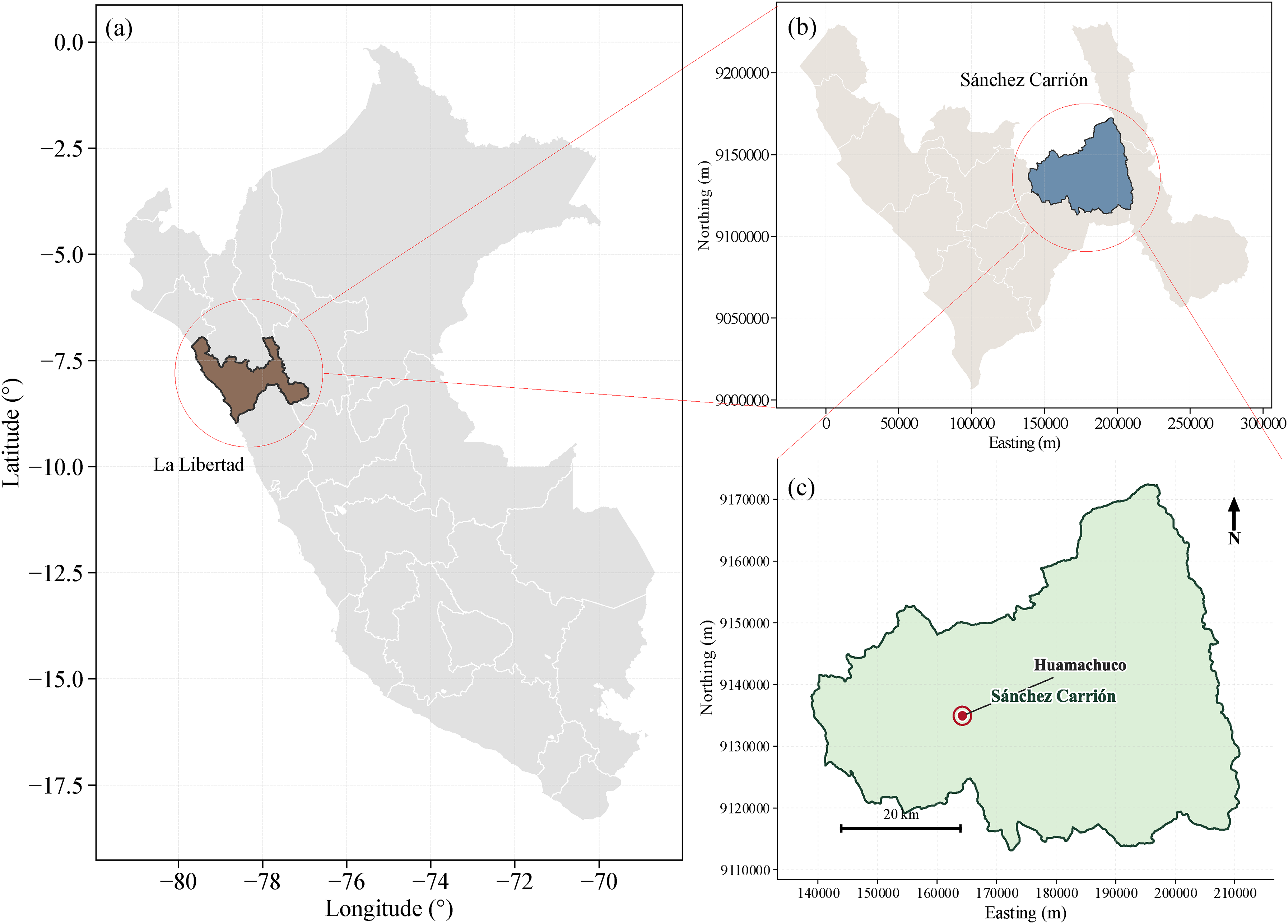
Geographical location of the study area in an open-pit gold mine in northern Peru. (a) Map of Peru. (b) Regional map of La Libertad. (c) Provincial map of Sánchez Carrión, highlighting Huamachuco.
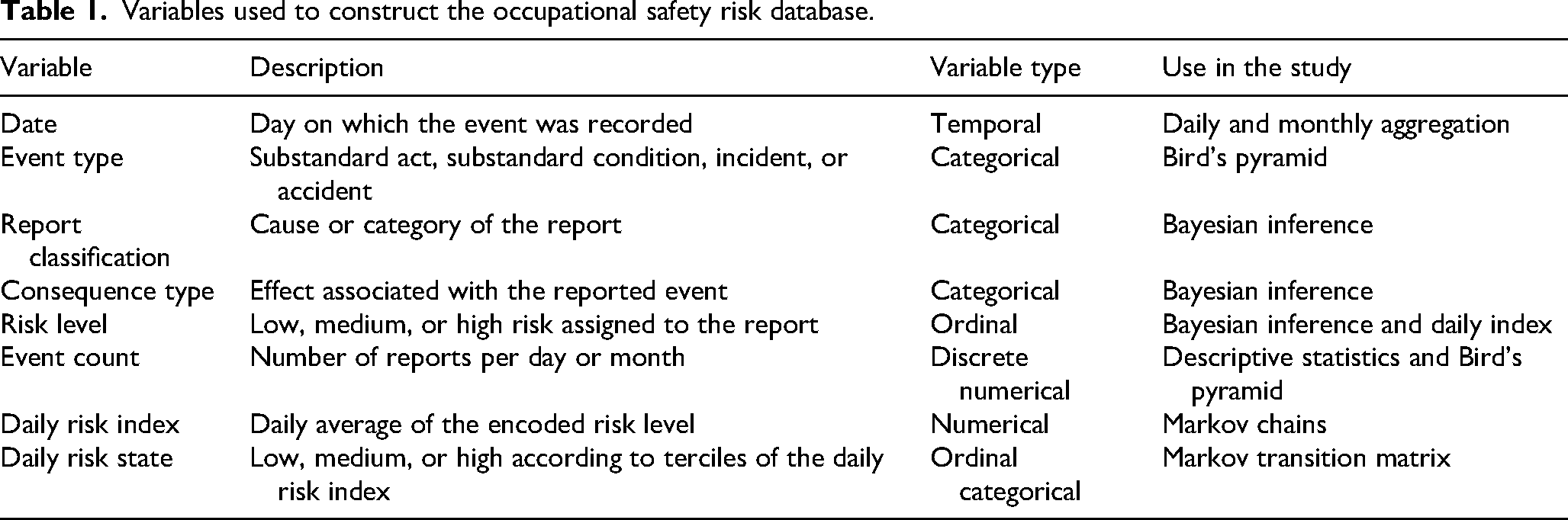
The variables used to transform safety reports into an analytical occupational risk database are presented in Table 1. Temporal variables made it possible to organise events by day and construct a risk time series; categorical variables described the type of event, its causes and its consequences; and the ordinal risk-level variable allowed reports to be differentiated into low, medium and high-severity categories. This organisation was essential because it connected the three components of the proposed framework: Bird's pyramid structured events according to severity, Bayesian inference estimated risk probabilities conditioned on cause and consequence, and Markov chains modelled the daily transition between risk states.
Variables used to construct the occupational safety risk database.
Event classification using Bird's pyramid
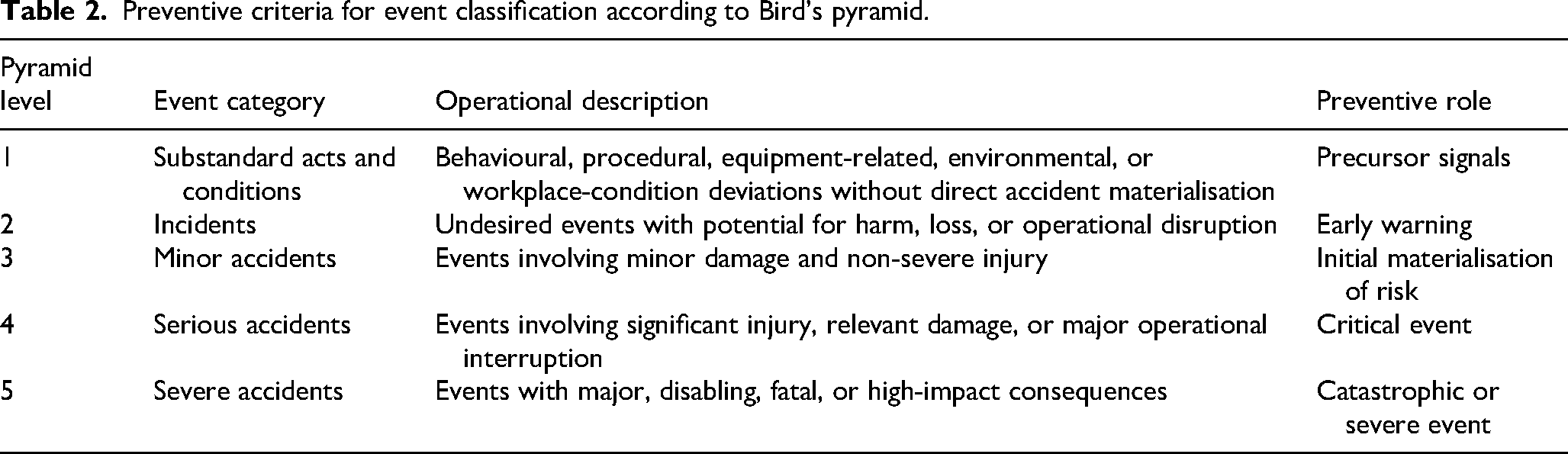
Safety reports were classified using Bird's pyramid to arrange events according to their severity and distinguish preventive signals from events that had already materialised. Substandard acts and conditions were considered precursor events; incidents were interpreted as early warnings; and minor, serious and severe accidents were treated as progressive levels of risk materialisation. This criterion is appropriate because near misses and operational deviations make it possible to recognise failures before they result in harm, provided that they are systematically recorded and analysed (Blanco-Juárez and Buele, 2025; Sadeghi et al., 2025). However, the pyramid was used as a classification structure rather than as a fixed proportional model, because traditional indicators may provide an incomplete interpretation when they are analysed without considering the operational context of the mine (Rocha et al., 2025). Thus, the criteria shown in Table 2 allowed the RACS reports to be organised as the initial input for the subsequent Bayesian and Markovian analyses (Glevitzky et al., 2025).
Preventive criteria for event classification according to Bird's pyramid.
Bayesian estimation of occupational risk level
Bayesian estimation was used to calculate the probability that a report belongs to a low, medium or high risk level based on two operational pieces of evidence: the cause or report classification
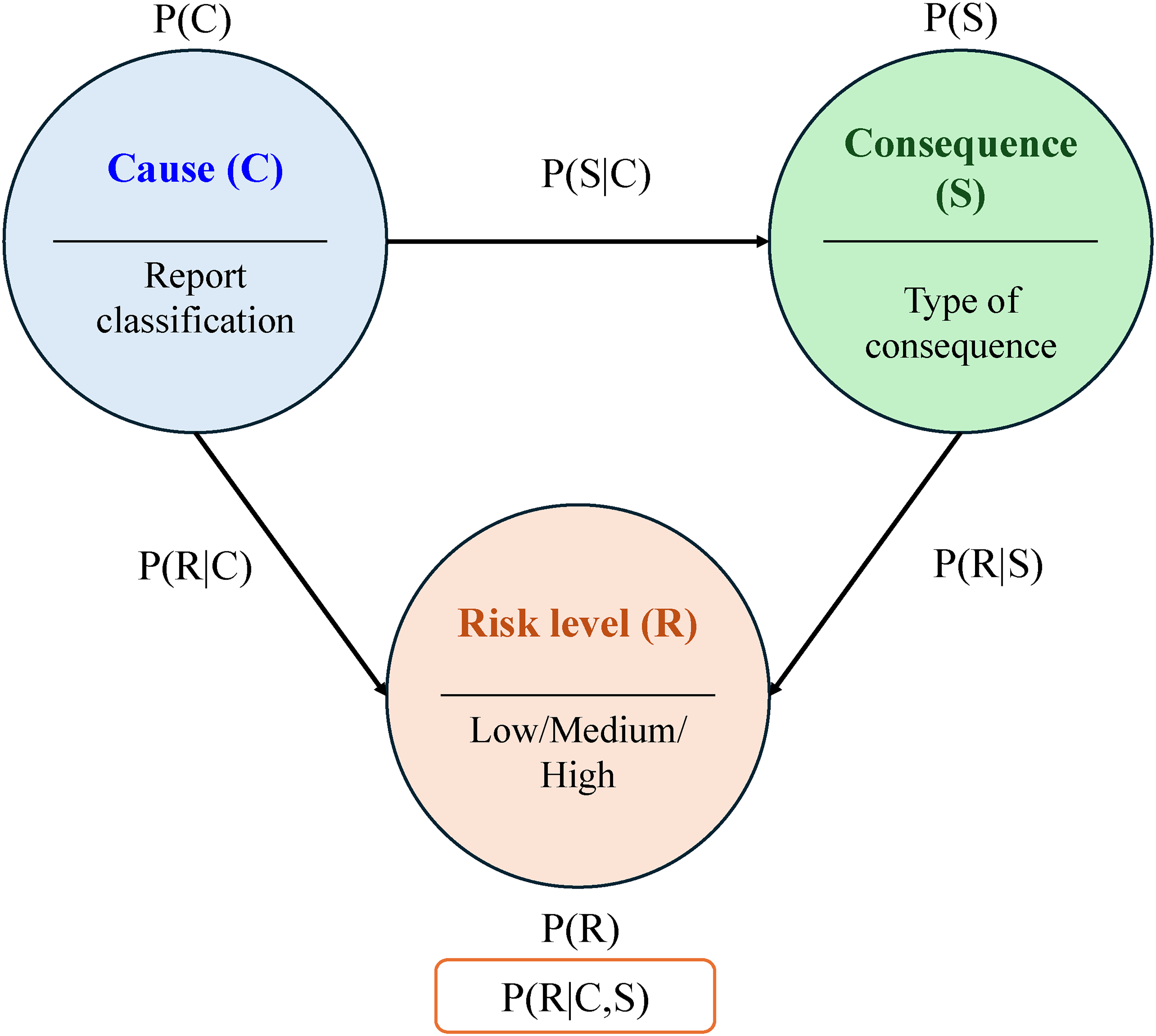
Conceptual Bayesian network for estimating the occupational risk level based on the cause and consequence of the report.
Variables used in the Bayesian estimation of occupational risk level.
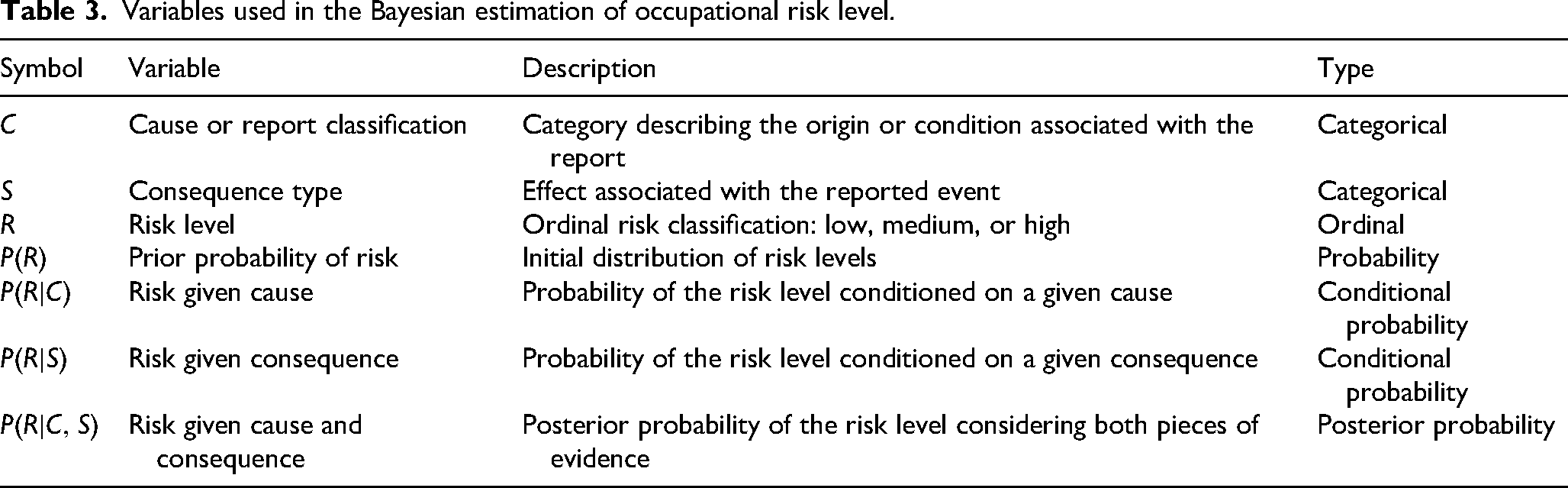
The prior probabilities were calculated as:


The conditional probabilities were estimated using relative frequencies:


The posterior probability of the risk level considering both cause and consequence was defined as:
In its empirical form, it was estimated as:
Under the Bayesian formulation, it was expressed as:
Construction of the daily risk index and definition of Markovian states
To model the temporal evolution of risk, the risk level assigned to each report was encoded as an ordinal variable according to its severity: low = 1, medium = 2 and high = 3. This encoding made it possible to integrate all reports recorded on the same date and obtain a daily indicator that was comparable throughout the analysis period. The use of an ordinal scale is appropriate because it preserves the natural hierarchy of risk and facilitates its subsequent transformation into discrete states, a common practice when modelling transitions between condition or risk levels using Markov chains (Wu et al., 2023). The daily risk index (

Transition modelling using Markov chains
Once the daily sequence of risk states had been constructed, a first-order Markov chain was applied to represent the temporal dynamics of the system and estimate the probability of persistence or transition among the low (L), medium (M) and high (H) states. This approach is appropriate when the objective is not limited to describing the current risk state, but also includes analysing its day-to-day evolution from a discrete time series. For this reason, it has been used in mining safety and dynamic risk assessment studies to support preventive decision-making based on transition probabilities (Wu et al., 2023). Under the first-order Markov assumption, the probability of the future state depends only on the state observed at the current time, according to the following equation:


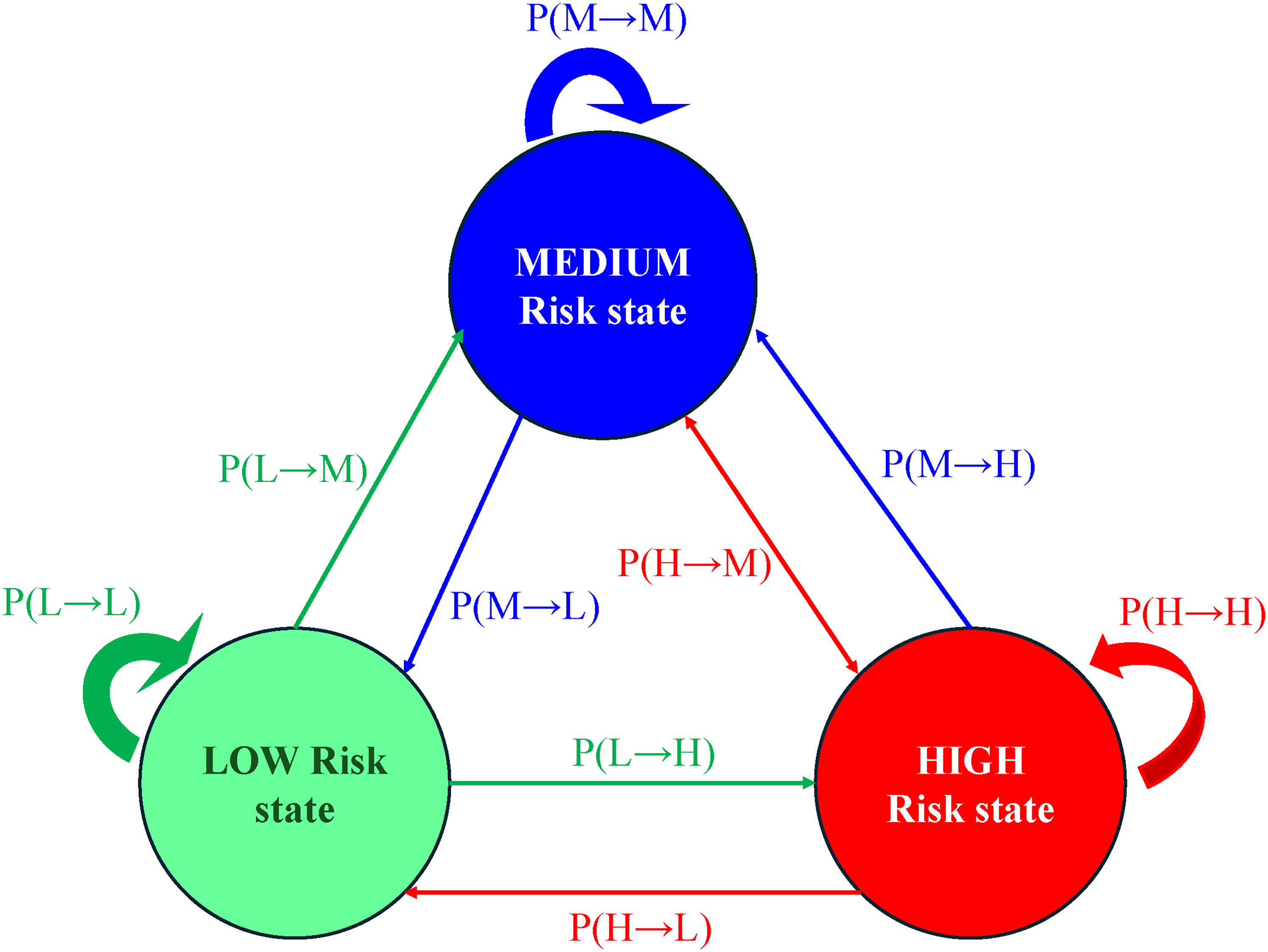
Conceptual scheme of the three-state Markov chain applied to occupational risk.
Probabilistic forecasting and preventive integration of the model
Once the Markov transition matrix had been estimated, future occupational risk states were projected from the last observed state in the daily series. For this purpose, an initial vector 

Results
Characterisation of reports and empirical risk structure according to Bird's pyramid
Reports remained relatively stable throughout the study period, with monthly totals ranging from 1269 to 1490 events. In all months, substandard conditions substantially exceeded substandard acts, suggesting a greater recurrence of deviations associated with the work environment, equipment or workplace conditions. The highest monthly total was recorded in June (1490), whereas April showed the lowest value (1269). Incidents were scarce compared with the substandard-event subtotal, and accidents were recorded only in January, July, October and November, with one case in each month (see Table 4).
Monthly summary of substandard acts, substandard conditions, incidents and occupational accidents in the mine, January–November 2025.
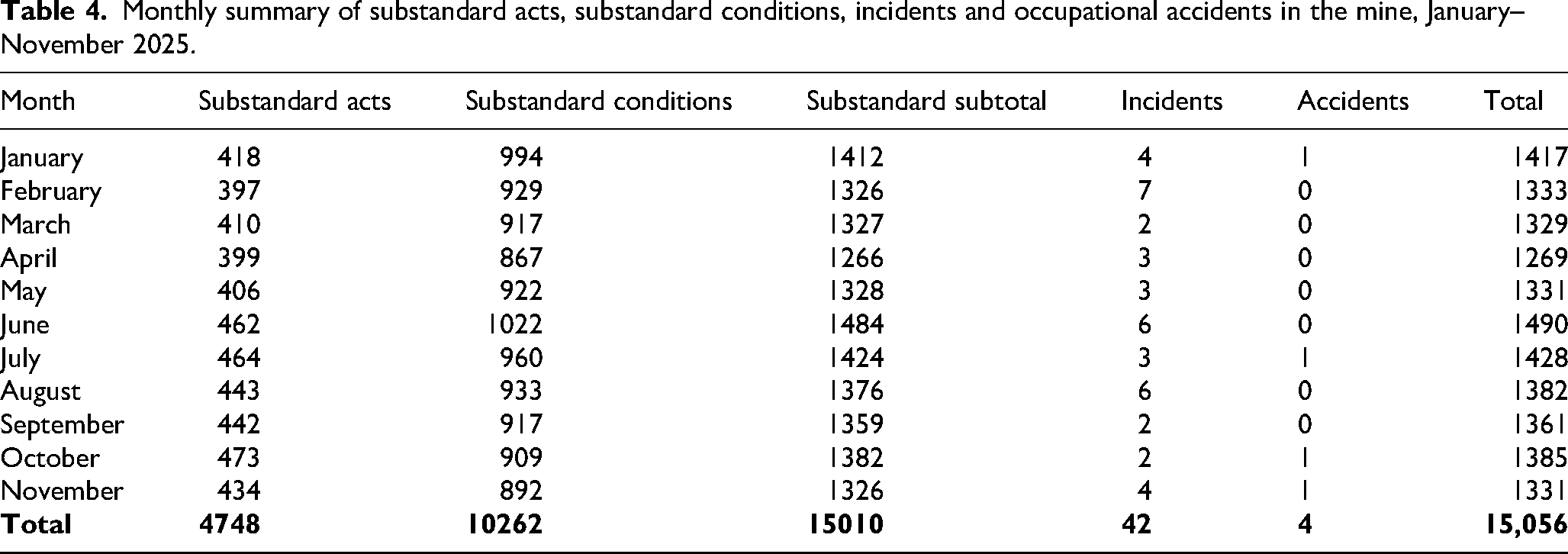
Figure 4 shows that the most frequent consequences were equipment damage (4103 reports; 27.3%), environmental impact (3664; 24.3%), and process loss (2890; 19.2%). Together, these three categories accounted for 70.8% of the cumulative total, indicating that most reports were associated with operational and environmental impacts rather than personal harm. The no-consequence category represented 14.1%, while personal injury accounted for 11.6% and property damage only 3.6%. This pattern suggests that, within the reporting system analysed, events related to operational continuity, equipment integrity and environmental control dominated the report distribution.
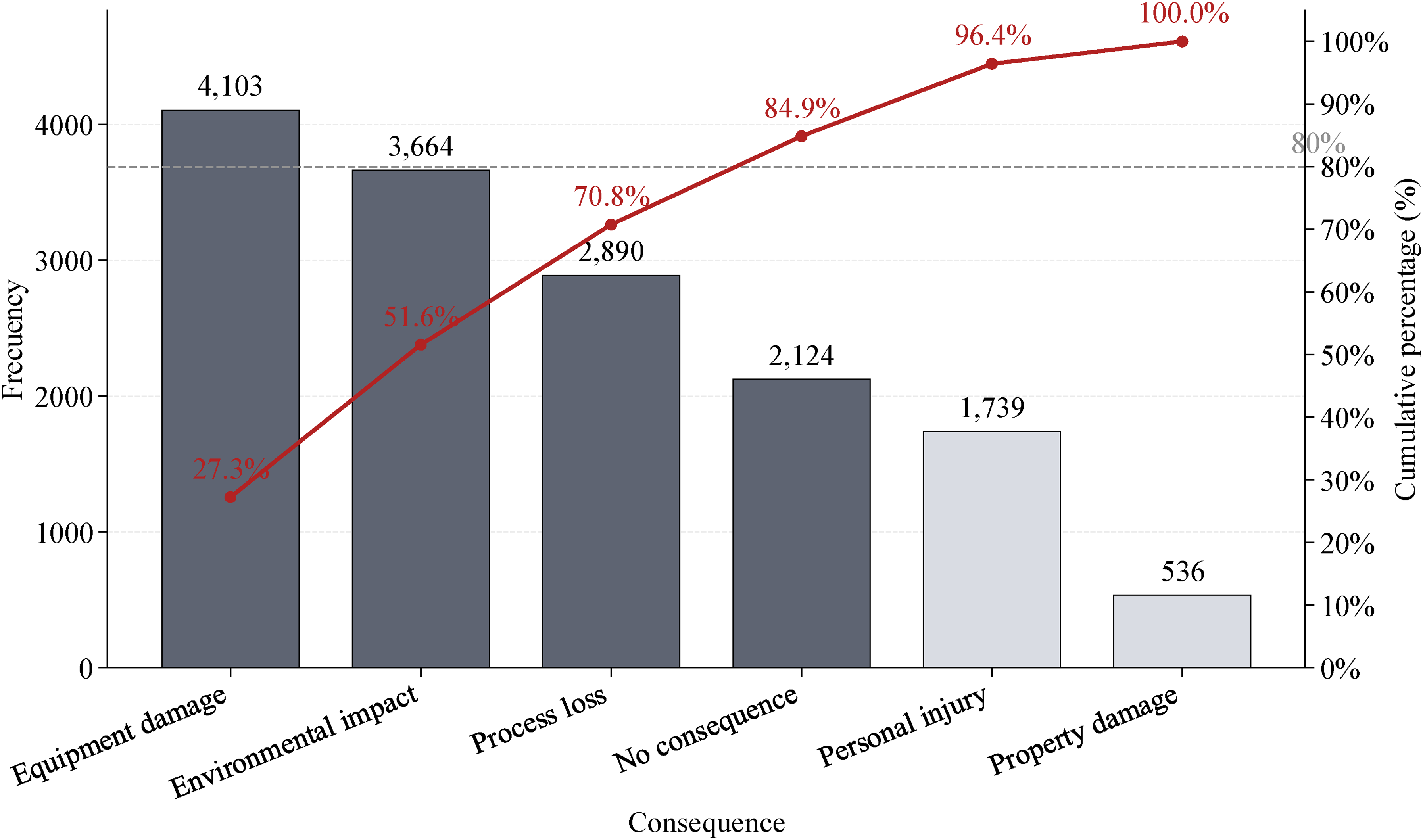
Cumulative distribution of consequence types in occupational safety reports.
Figure 5 reveals a pyramid with a markedly broad base, comprising 15,010 substandard acts and conditions, compared with 42 incidents and 4 minor accidents, with no serious or severe accidents recorded during the evaluation period. The observed ratio of 15,010:42:4:0:0 indicates that the empirical risk structure was dominated by precursor events, reinforcing the preventive value of substandard reports as the primary source of information. Operationally, this result suggests that the mine recorded a large number of deviations before harm materialised.
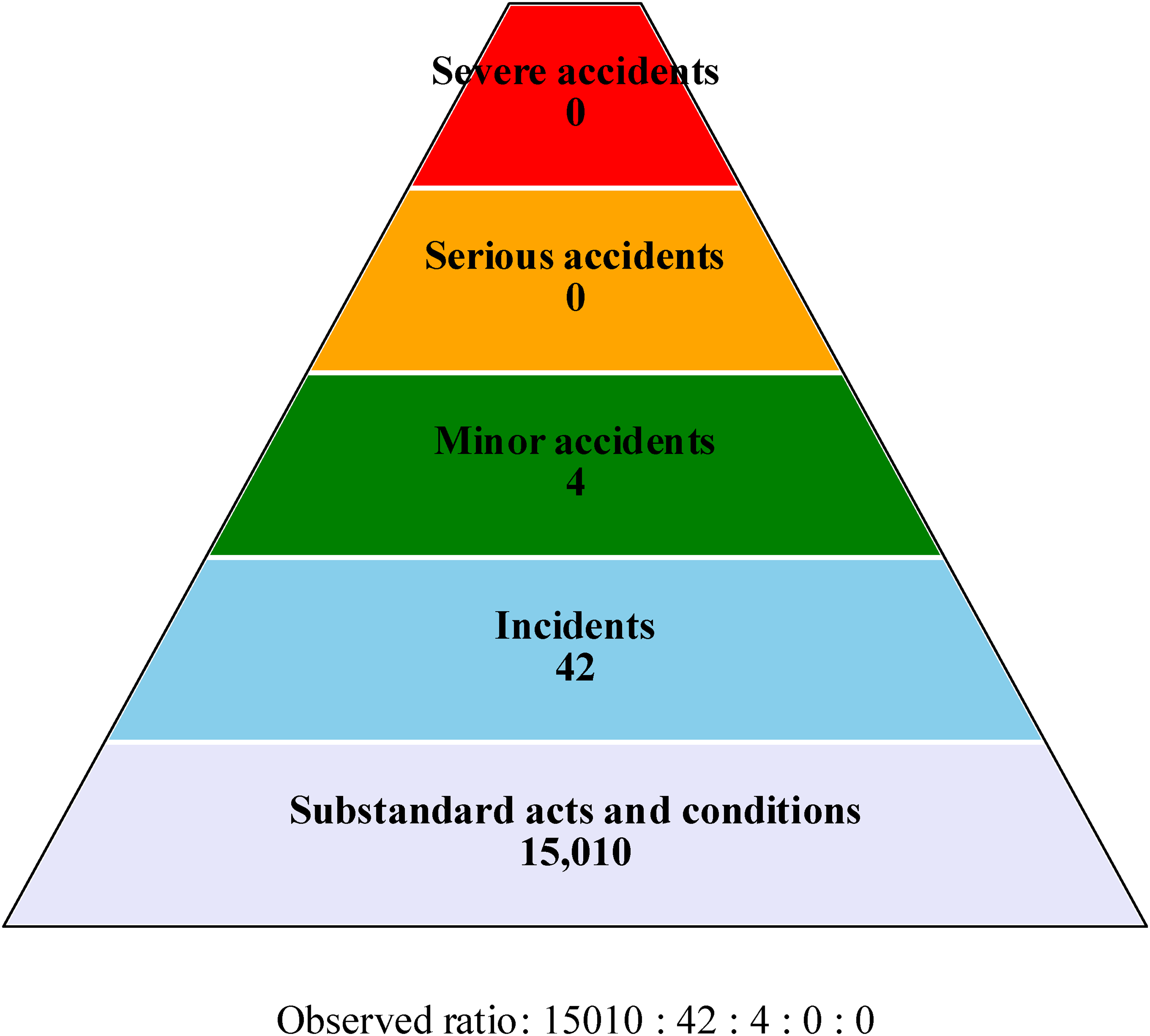
Bird's pyramid of occupational safety reports in the mine, January–November 2025.
Bayesian estimation of risk level based on causes and consequences
The Bayesian analysis made it possible to identify which causes, consequences and cause–consequence combinations were associated with higher probabilities of low, medium and high risk levels. This approach allowed the analysis to move beyond a descriptive reading of the reports towards a probabilistic interpretation of occupational risk, showing not only which events were more frequent, but also which ones tended to be concentrated in higher-criticality states.
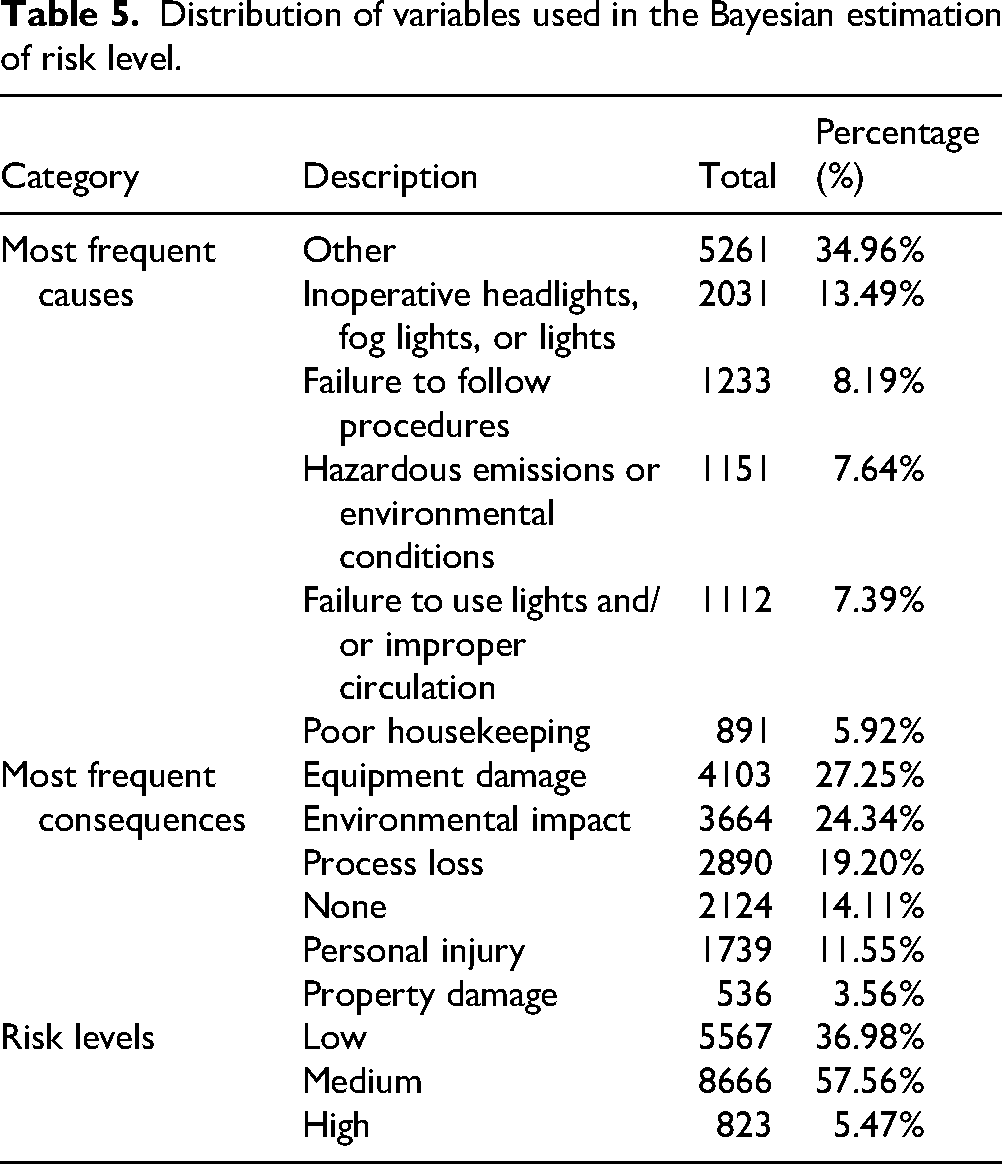
The overall distribution showed a strong concentration in a limited set of categories. Among the causes, the ‘other’ category predominated, accounting for 34.96%, followed by inoperative headlights, fog lights or lights (13.49%) and failure to follow procedures (8.19%), suggesting that a substantial portion of the reports was associated with recurrent operational failures and compliance deviations. Regarding consequences, equipment damage (27.25%), environmental impact (24.34%) and process loss (19.20%) accounted for 70.79% of the total, evidencing the predominance of operational and environmental impacts. At the risk level, the medium-risk state was clearly dominant, with 57.56%, followed by the low-risk level with 36.98%, whereas high risk represented only 5.47%. This indicates an operation characterised by a substantial frequency of reports with intermediate criticality (see Table 5).
Distribution of variables used in the Bayesian estimation of risk level.
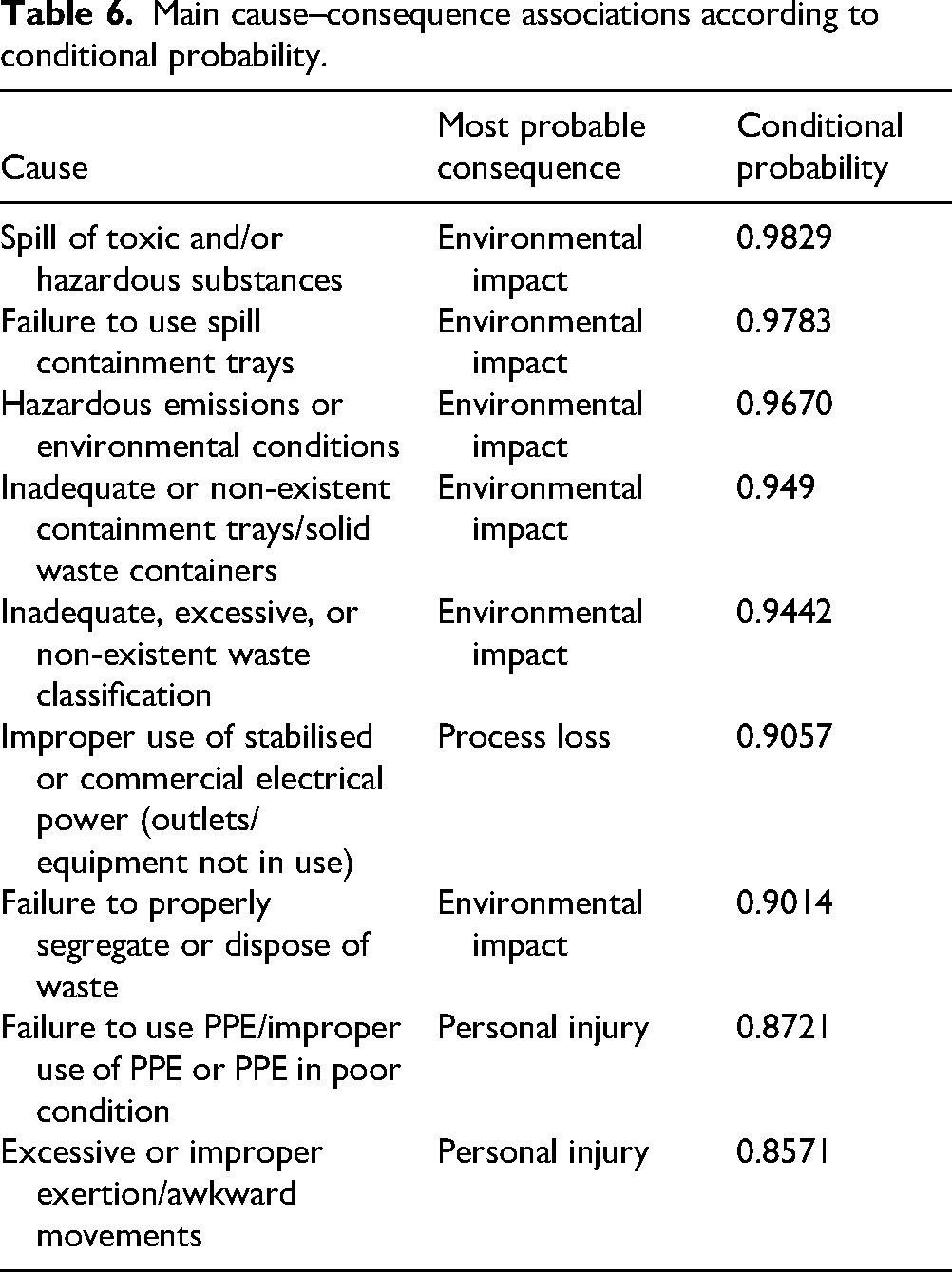
The cause–consequence associations showed highly consistent patterns. The highest probabilities were linked to events involving environmental impact, particularly for causes related to spills, inadequate waste handling and the absence of containment measures, with values ranging from 0.9014 to 0.9829. A strong relationship was also observed between improper use of electrical power and process loss (0.9057), as well as between improper use of PPE or excessive exertion and personal injury, with probabilities of 0.8721 and 0.8571, respectively (see Table 6).
Main cause–consequence associations according to conditional probability.
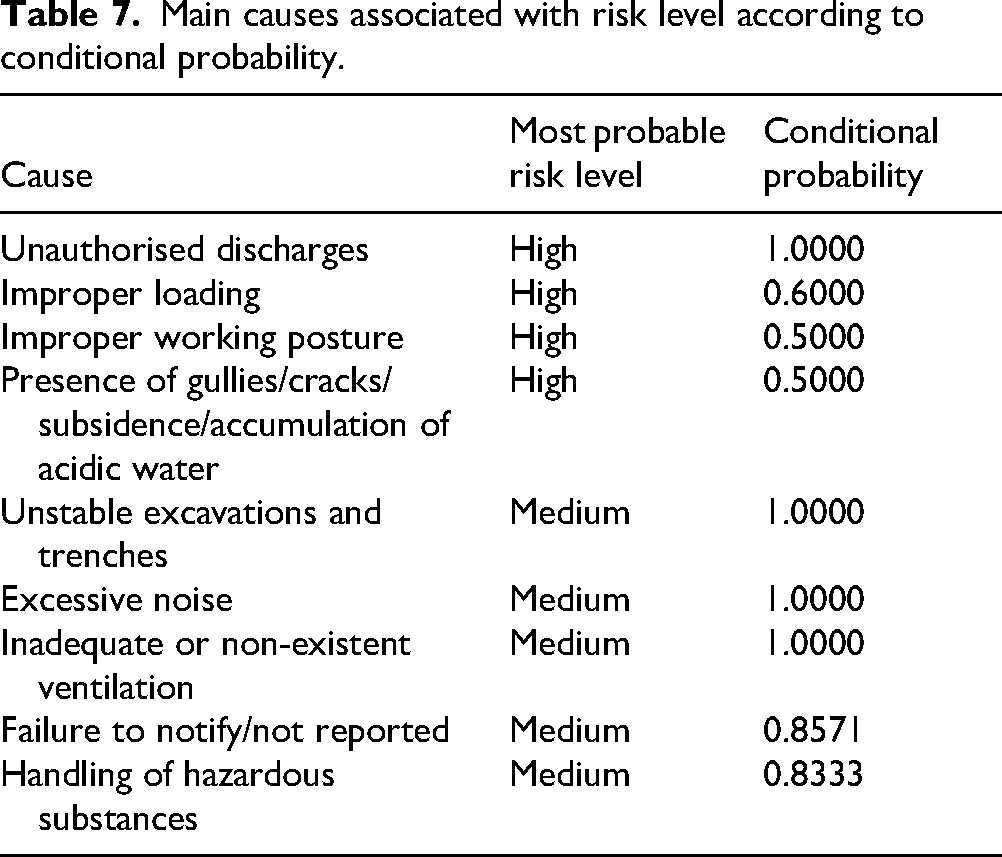
When causes were analysed directly against risk level, some categories showed a clear ability to discriminate criticality. The most extreme case was unauthorised discharges, which were fully associated with high risk (1.0000), whereas improper loading, improper working posture and the presence of gullies, cracks or subsidence also showed a marked tendency towards this level. By contrast, other causes were more consistently associated with medium risk, such as unstable excavations and trenches, excessive noise and inadequate or non-existent ventilation, all with a probability of 1.0000. This suggests that, although high risk was less frequent in the overall dataset, it could be specifically identified from certain critical causes (see Table 7).
Main causes associated with risk level according to conditional probability.
The probabilistic distribution by consequence showed that medium risk predominated across almost all categories. The highest probabilities were observed for equipment damage (0.6473), environmental impact (0.6190), personal injury (0.6026) and process loss (0.5730), confirming that most reports associated with these consequences tended to fall within an intermediate level of criticality. In contrast, the no-consequence category showed the highest probability of low risk (0.5895), as would be expected from an operational perspective. Although high risk remained low across all consequence categories, its highest value appeared in personal injury (0.1478), followed by no consequence (0.0636) and property damage (0.0597). Towards the end of the analysis, the heat map clearly showed that the human-related component increased the relative probability of high risk more than strictly operational or material consequences (see Figure 6).
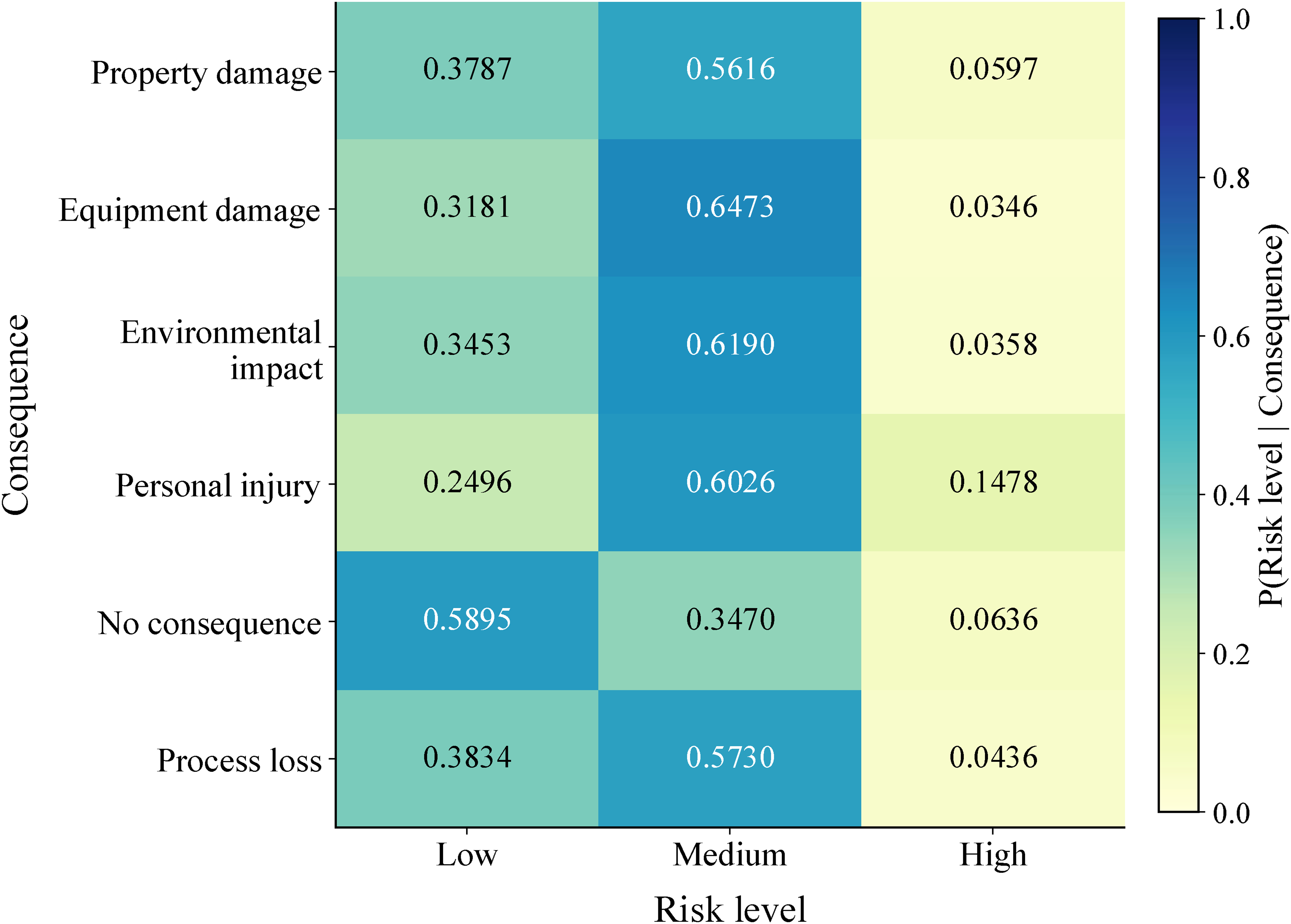
Heat map of the probability of risk level according to consequence type.
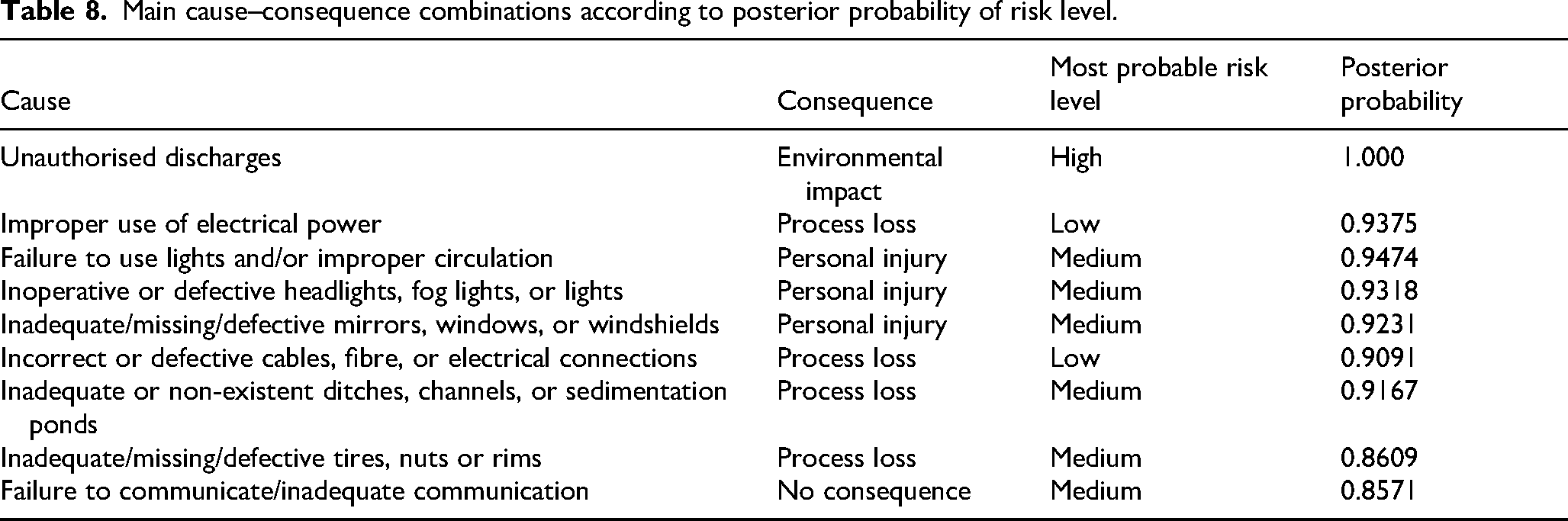
The posterior probability analysis made it possible to identify specific combinations with greater explanatory power for risk. The combination unauthorised discharges + environmental impact was fully associated with high risk (1.0000), constituting the most critical pattern in the dataset analysed. At a different level, improper use of electrical power + process loss and incorrect or damaged cables, fibre or electrical connections + process loss were mainly associated with low risk, with probabilities of 0.9375 and 0.9091, respectively. In turn, several combinations related to visibility and vehicle components such as failure to use lights, inoperative headlights or defective mirrors and windshields, each combined with personal injury, showed high probabilities of medium risk, ranging from 0.9231 to 0.9474. These results indicate that the joint incorporation of cause and consequence improves risk discrimination and makes it possible to prioritise specific scenarios for preventive intervention (see Table 8).
Main cause–consequence combinations according to posterior probability of risk level.
Temporal dynamics of risk through Markov chains
The daily risk index series made it possible to analyse not only the frequency of the low-, medium- and high-risk states but also their temporal behaviour. Unlike the previous descriptive analysis, this stage focused on identifying how stable each state was and how likely it was to transition to another risk level on the following day.
The distribution of daily states was relatively balanced throughout the study period. The low-risk state accounted for 116 cases (34.74%), the high-risk state for 111 cases (33.23%) and the medium-risk state for 107 cases (32.04%), out of a total of 334 days. This close similarity in frequencies indicates that occupational risk was not concentrated in a single dominant level but rather fluctuated among the three states in comparable proportions. From an analytical perspective, this pattern is important because it reveals a sufficiently variable series for the application of the Markovian approach, avoiding a sequence biased towards a single state and allowing a more robust evaluation of the transition dynamics among risk levels (see Figure 7).
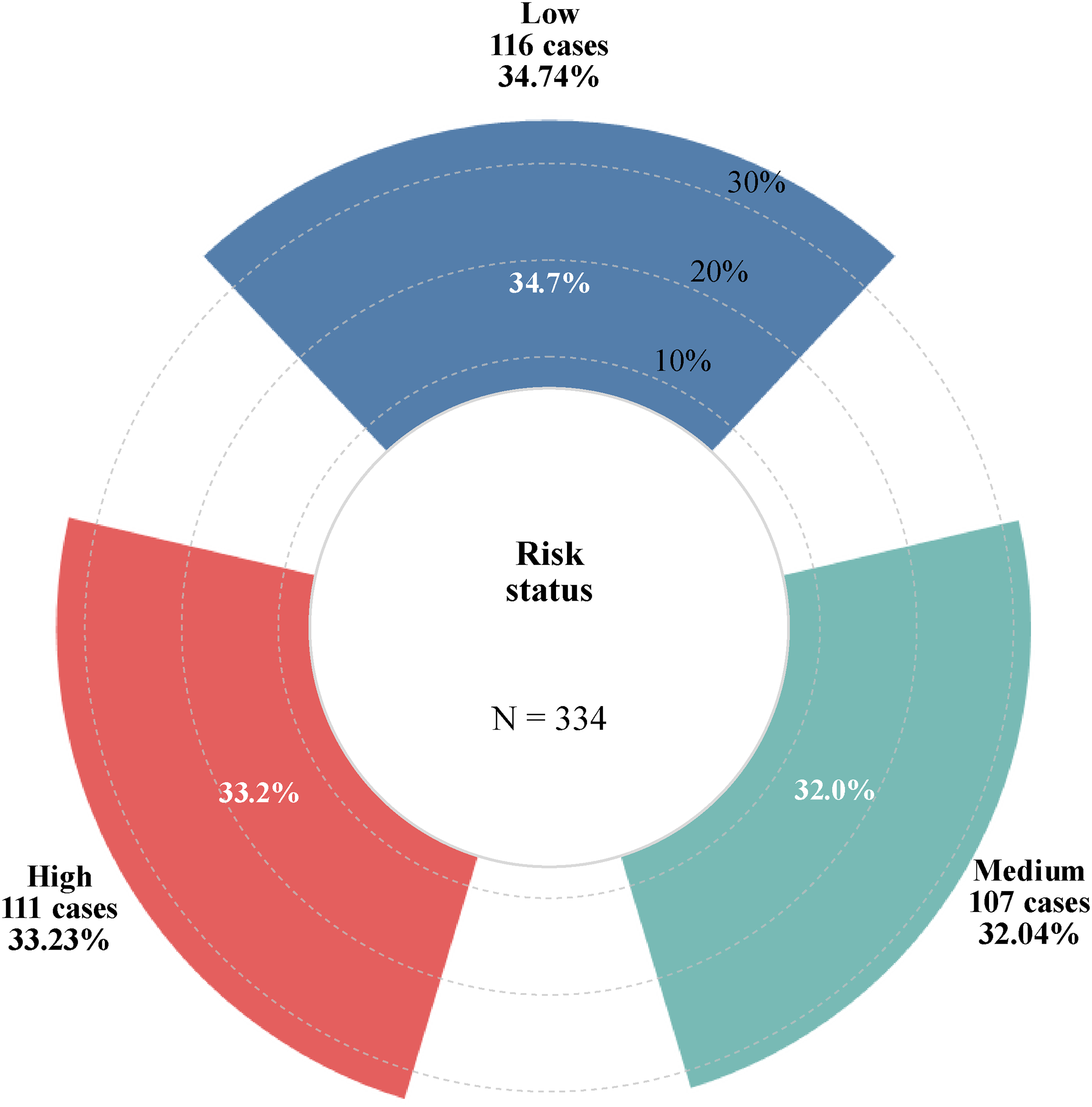
Frequency distribution of the daily states of the risk index in the open-pit mine.
The transition matrix showed that all three states exhibited moderate persistence, although with differentiated behaviour. The high-risk state had the greatest probability of remaining unchanged, at 0.4144, followed by the low-risk state at 0.3879 and the medium-risk state at 0.3396. However, none of these values was high enough to suggest strong stability, confirming instead a substantial degree of system mobility. From the medium-risk state, the most likely transition was towards the low-risk state (0.3962), exceeding both the probability of remaining in the medium state and that of moving to the high-risk state, which suggests a relatively favourable tendency towards risk reduction from that level. By contrast, from the low-risk state there was still an appreciable probability of shifting to the high-risk state (0.3103) or to the medium-risk state (0.3017), while from the high-risk state the probability of declining to the medium-risk state (0.3243) was higher than that of moving directly to the low-risk state (0.2613). Taken together, these results indicate that occupational risk displayed a fluctuating dynamic, with frequent transitions among states and no rigid stability, thereby reinforcing the need for continuous preventive monitoring (see Figure 8).
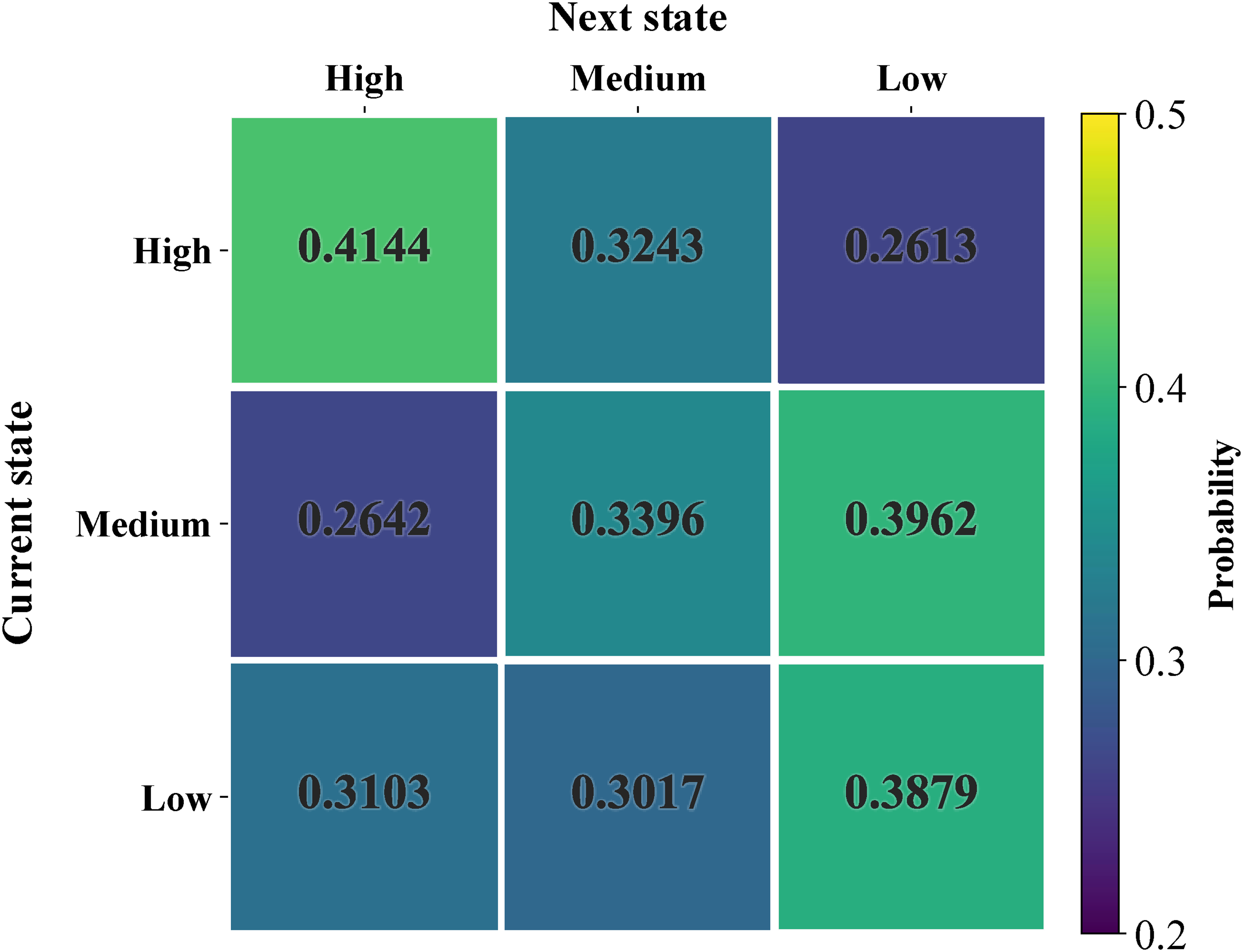
Heat map of the transition matrix of daily occupational risk states in the open-pit mine.
Probabilistic forecasting and implications for preventive management
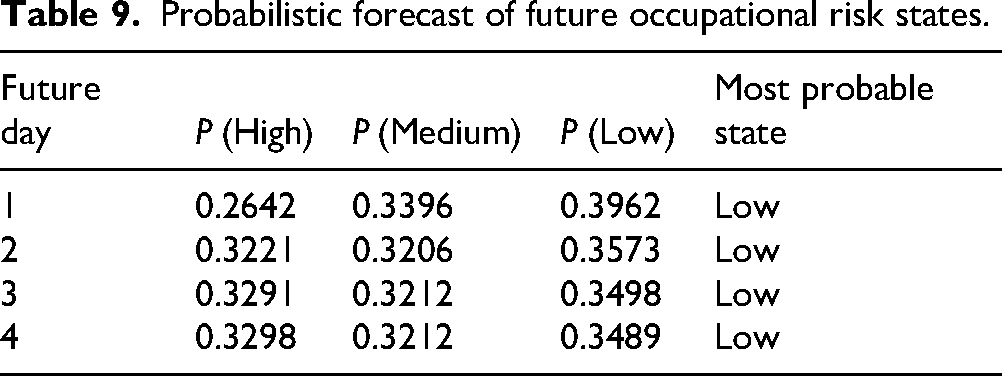
Based on the Markov transition matrix, future probabilities of occupational risk states were estimated by taking the last observed state in the daily series as the initial condition. In this case, the system was in the medium-risk state, and therefore the initial vector [0,1,0] was used. Under this condition, the probabilities of occurrence of the low-, medium- and high-risk states were projected for the following four days in order to identify the most likely short-term scenario and assess its usefulness for preventive management.
The forecast showed that the low-risk state was the most likely scenario over all four projected days. However, this predominance tended to weaken as the forecasting horizon increased: its probability decreased from 0.3962 on day 1 to 0.3489 on day 4. In contrast, the probability of the high-risk state increased from 0.2642 to 0.3298, while the medium-risk state remained relatively stable at around 0.32. This behaviour indicates that, although the system starts from a relatively favourable condition, the differences among states progressively narrow, reflecting gradual convergence and increasing uncertainty in the short term. From an operational perspective, this result suggests that the lower-risk condition should not be interpreted as guaranteed stability, but rather as a brief window of opportunity to reinforce controls and prevent shifts towards more critical scenarios (see Table 9).
Probabilistic forecast of future occupational risk states.
The trajectory of the projected probabilities visually confirms this convergence among states. The low-risk curve shows a slight downward trend, the high-risk curve exhibits a progressive increase and the medium-risk curve remains nearly flat. By the fourth day, the three probabilities become closer to one another, without a wide separation between scenarios, indicating that the system tends to lose certainty as the prediction horizon expands. From a preventive standpoint, this interpretation can help guide daily management: although the most likely scenario remains low risk, the increasing proximity of the high-risk state justifies continuous monitoring of recurrent causes, persistent substandard conditions and operational control measures before the system transitions to less favourable states (see Figure 9).
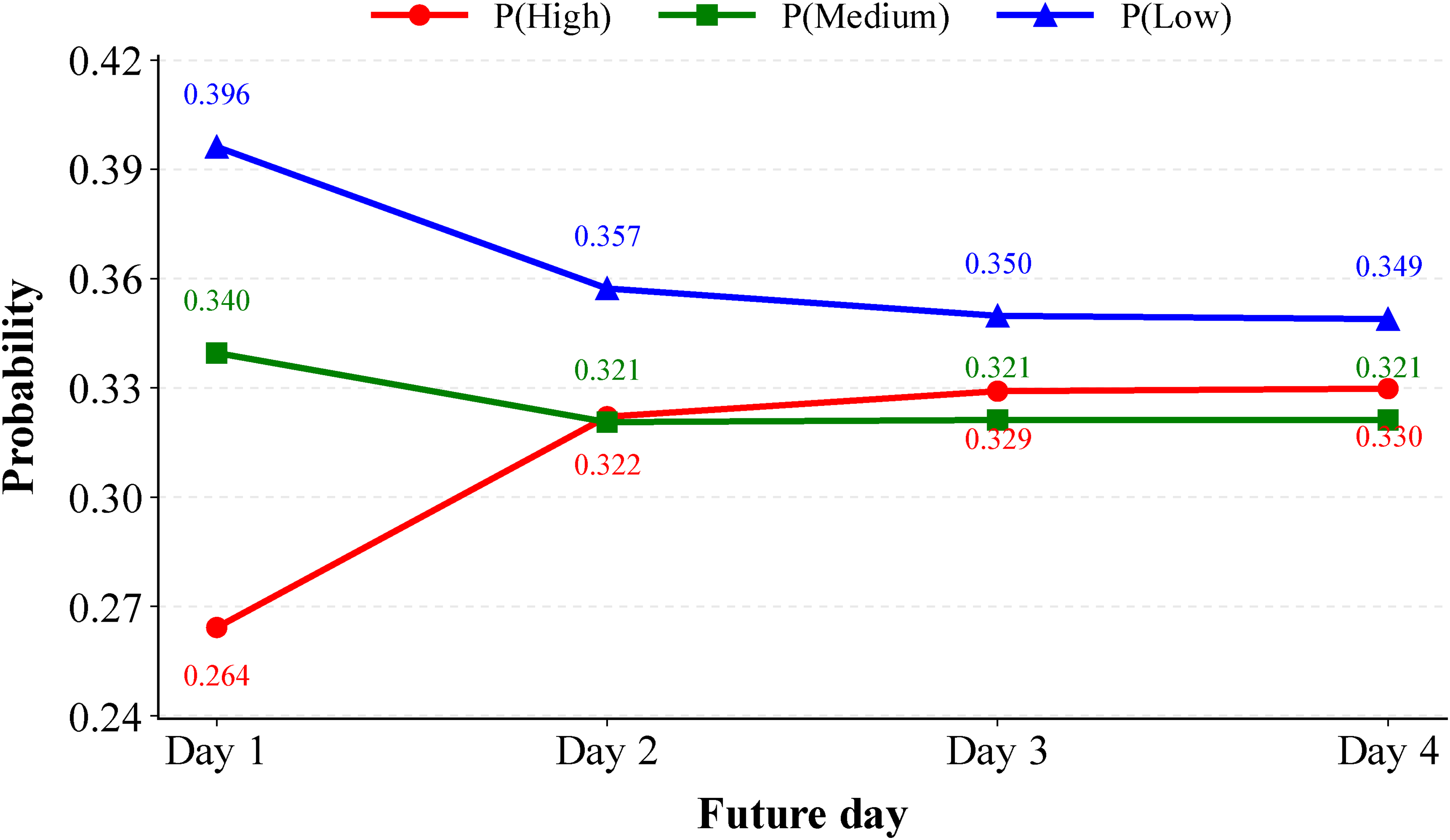
Evolution of the future probabilities of occupational risk states.
Discussion
The results show that occupational safety in the analysed mine was supported by a broad base of preventive reports: 15,010 substandard acts and conditions, compared with 42 incidents and only 4 minor accidents. This structure confirms that the reporting system mainly captured early risk signals before they materialised into events of greater severity. This finding is consistent with the leading-indicator approach, which argues that preventive reports, field observations, operational deviations and near misses are valuable when they enable action before an accident occurs, rather than after it (Sadeghi et al., 2025). However, the absence of serious or severe accidents should not be interpreted as the absence of hazards, because in mining, traditional indicators can create an incomplete perception of safety when analysed in isolation. Rocha et al. (2025) precisely warn that conventional metrics may conceal critical conditions when they are not connected to real operational activity and damage precursors. In this sense, the observed pyramid does not merely describe an event distribution; rather, it reveals a preventive opportunity: using the large volume of substandard reports as input to anticipate deviations and prioritise controls before risk escalates.
The Bayesian component made it possible to move beyond a purely descriptive interpretation of the reports by identifying which causes, consequences and cause–consequence combinations concentrated higher probabilities of risk. Although high risk represented only 5.47% of the reports, some specific conditions showed high criticality, such as unauthorised discharges + environmental impact, a combination associated with high risk with a posterior probability of 1.000. This demonstrates that less frequent events may be strategically relevant when they reveal conditions with high severity potential. This result is consistent with Li et al. (2022), who integrated text mining, association rules and Bayesian networks to identify risk factors in coal mine accidents, showing that relationships among factors are more informative than isolated frequencies. Similarly, Du and Chen (2025) analysed 700 mining accident reports using language models, association rules and Bayesian networks, highlighting the usefulness of these approaches for revealing links among operational causes, organisational factors and safety outcomes. In this study, the specific contribution lies in applying this logic to daily RACS reports, rather than only to accidents that have already occurred, making it possible to transform causes and consequences into probabilities of low, medium and high risk with direct usefulness for preventive management.
The Markovian analysis showed that occupational risk behaved as a dynamic process rather than as a fixed condition. The daily states were relatively balanced: 34.74% low, 32.04% medium and 33.23% high, indicating an operation with frequent oscillations among risk levels. The transition matrix confirmed this mobility: the high-risk state showed the highest persistence probability (0.4144), but from the medium-risk state, the most likely transition was towards the low-risk state (0.3962), while from the low-risk state there was still a relevant probability of shifting to high risk (0.3103). This interpretation is important because it shows that an apparently favourable daily condition does not guarantee operational stability. Wu et al. (2023) also emphasise the usefulness of Markov models in non-coal mining by showing that safety-status prediction can provide criteria for preventive decisions, policies and plans. Therefore, the contribution of the Markovian model is not limited to estimating transitions; it also makes visible the inertia and fragility of each state: low risk may deteriorate, high risk may persist, and medium risk may become an opportunity zone for intervention before the system moves towards critical scenarios.
The probabilistic forecast integrates the three components of the study and demonstrates their operational value. Although the low-risk state was the most likely outcome over the four projected days, its probability decreased from 0.3962 to 0.3489, while the high-risk state increased from 0.2642 to 0.3298. This convergence among states indicates that forecast certainty declines rapidly and that the system may approach critical scenarios even when the initial state is medium and the most likely outcome is low. From a preventive management perspective, this result is consistent with the idea that high-risk organisations should move towards strategies that integrate preventive culture, operational data, early identification of deviations and continuous decision-making, as noted by Blanco-Juárez and Buele (2025) in their review of the zero-accident vision in high-risk sectors. Likewise, recent occupational risk management approaches recommend integrating weighted indicators and composite metrics to support more consistent decisions under variable conditions (Glevitzky et al., 2025). Overall, the findings support the idea that integrating Bird's pyramid, Bayesian inference and Markov chains enables a shift from management based on historical counts to a predictive scheme capable of classifying preventive signals, estimating criticality and identifying probable transitions in occupational risk in an open-pit gold mine.
Conclusions
This study developed a predictive framework for safety risk management in an open-pit gold mine in Peru by integrating Bird's pyramid, Bayesian inference and Markov chains based on daily RACS reports. The safety reports were clearly concentrated at the base of Bird's pyramid, with 15,010 substandard acts and conditions, 42 incidents, 4 minor accidents and no serious or severe accidents; therefore, the predominant severity level corresponded to precursor events. Bayesian inference showed that medium risk was the most frequent level (57.56%), followed by low risk (36.98%) and high risk (5.47%). In addition, some cause–consequence combinations made it possible to identify specific critical scenarios, particularly unauthorised discharges + environmental impact, which was associated with high risk with a posterior probability of 1.000. Finally, the Markov chain revealed a fluctuating dynamic among states: the highest persistence was observed in the high-risk state (0.4144), followed by the low-risk state (0.3879) and the medium-risk state (0.3396). From the medium-risk state, the most likely transition was towards low risk (0.3962), whereas from the low-risk state there was a relevant probability of shifting to high risk (0.3103). In the short-term forecast, the low-risk state was the most likely outcome during the four projected days, although its probability decreased from 0.3962 to 0.3489, while high risk increased from 0.2642 to 0.3298, indicating gradual convergence among states and a progressive loss of certainty.
From an applied perspective, the proposed framework transforms daily preventive reports into probabilistic information that can support the prioritisation of inspections, operational controls, monitoring of critical causes and corrective actions before accidents materialise. However, this study has some limitations: it was applied to a single open-pit gold mine, used internal records from a specific period and depended on the quality, consistency and classification criteria of the RACS reports. In addition, the Markovian states were defined using terciles of the daily risk index; therefore, the thresholds represent the relative behaviour of this specific operation and should not be assumed as universal values. Future work should validate the approach in other mining units, incorporate additional operational variables such as work area, shift, task type, weather conditions, supervision and exposure to mobile equipment, compare higher-order Markov chains or hidden Markov models, and integrate explainable machine learning techniques to strengthen the prediction, interpretation and transferability of the model towards real-time preventive management systems.
Footnotes

Author contributions
Marco A. Cotrina-Teatino: supervision, conceptualisation, methodology and project administration. Jairo J. Marquina-Araujo: methodology, validation, formal analysis, visualisation, writing – review & editing. Deily O. Ramos-Corales: conceptualisation, data curation, investigation and methodology.
Funding
The authors received no financial support for the research, authorship, and/or publication of this article.
Declaration of conflicting interests
The authors declared no potential conflicts of interest with respect to the research, authorship, and/or publication of this article.
Data availability
The data that support the findings of this study are available from the corresponding author upon reasonable request.