






Abstract
High in-situ stress is a primary driver of coalburst-related engineering failures in deep coal mining, and borehole destressing is widely applied as a practical mitigation measure. Coalbursts represent a stress-driven engineering failure caused by excessive accumulation of elastic strain energy in coal seams. However, many existing studies describe stress relief qualitatively or rely on geometric indicators that do not explicitly characterise failure initiation, failure-zone evolution, or failure-suppression capacity under varying geological and stress conditions. This study develops a two-dimensional plane-strain numerical modelling framework to quantitatively investigate borehole-induced stress redistribution, failure development, and destress radius in high-stress coal seams. The model is verified against published field observations by comparing the destress radius across multiple borehole diameters, showing good agreement within acceptable engineering error limits. A systematic parametric analysis is conducted to evaluate the influence of borehole diameter, coal seam strength, burial depth, horizontal-to-vertical stress ratio, and seam dip angle on stress redistribution and the evolution of the failure zone. Results demonstrate that borehole diameter exerts the strongest control on vertical stress unloading, failure initiation and outward propagation of the failure zone, whereas horizontal stress response is comparatively less sensitive. Higher stress magnitude and lower coal strength accelerate failure development and enlarge the stress-relief zone, whereas increasing stress ratio and seam dip create asymmetric failure methods that reduce effective relief in fundamental directions. From an energy-based perspective, the observed reduction in stress concentration corresponds to a decrease in stored strain energy surrounding the borehole, indicating suppression of coalburst-related failure mechanisms. The findings provide design-relevant guidance for borehole destressing as a failure-mitigation strategy in high-stress coal mine layouts, where control of failure extent and burst potential is a primary engineering objective.
Keywords
Introduction
Ground stress represents an inherent stress state within the rock crust in the natural environment and is also known as rock initial stress or original rock stress (Sazid et al., 2023). It governs deformation and instabilities caused by changes in total stress (e.g. excavations or load changes) and pore pressure effects. Because stress at a subsurface point results from the weight of everything above it, including soil, water and surface loads, ground stress increases with depth and unit weight (Chen et al., 2025b; Shi et al., 2025).
In underground excavations, roof failure is most likely a progressive failure that starts at the weakest part of the rock mass where the stress concentrations are higher than that of the roof rock strength and then propagates in the least-resistant path within the rock mass (Ma et al., 2025). In coal mining, excavation stability is particularly sensitive to horizontal stress, which can significantly increase the risk of roof instability and rockfall hazards (Dou et al., 2025).
The stress field in coal is significantly different from that in the rock, with the major principal stress being approximately vertical, with the horizontal stresses related to the Poisson's ratio effect (Song and Zhang, 2021). As a coal seam is destressed by the drainage of water ahead of mining, the coal compresses in response to the increase in effective stress. As it compresses, it decouples from the overlying rock, and any ‘tectonic stress’ is redirected into the rock. As the area of coal compression extends outward, the overlying rock sags and reloads the coal (Guo et al., 2020). Horizontal stresses are induced under this lithostatic loading condition, with their magnitude related to Poisson's ratio of the coal (Shen et al., 2020). As a result, the horizontal stresses in coal can be as low as 20% of the vertical stress (Li et al., 2025a).
The vertical stresses may also increase with time, depending on the rate of drainage and mining advance – there is evidence that at the face in a virgin coal seam the vertical stress maybe about 50% of that related to simple overburden loading and that it increases to the expected level with a few hundred meters outbye of the face (Zou et al., 2023). Possible destress of the mined seam by adjacent workings in the same seam or seams above and below needs to be considered. The retreat of the longwall will increase the vertical stresses near the face (Song et al., 2025).
Under high in-situ stress conditions, the accumulation of elastic strain energy in coal seams can lead to coalbursts, a stress-controlled, dynamic failure phenomenon that poses significant risks to mining safety (Shu et al., 2022; Soleimani et al., 2023b). To mitigate these risks, destressing techniques, including borehole drilling, have been applied for almost a century to redistribute stresses from the coal seam.
Rockbursts are explosive failures of rock that occur when very high-stress concentrations are induced around underground openings. This natural stress, which was formed over long geologic periods, is the fundamental stress that causes deformation and destruction in the underground structure. Also, the ground stress controls the permeability of the coal seam, so it determines the difficulty of coal seam gas drainage (Shen et al., 2020).
Coal mine workings continue to face challenges of coal bumps, floor heave, roof failure, cutter failure and coalbursts/rockbursts caused by ground stresses (especially tectonic stresses) due to high overburden pressures associated with the extraction of brittle, low-strength coal seams (Dou et al., 2015; He et al., 2018). To control these challenges destress application has been applied for almost a century to remove stresses from the coal seam. The relationship between stress redistribution, failure initiation, failure-zone evolution and failure-suppression capacity remains at a low level of maturity, with quantitative understanding under varying geological and in-situ stress conditions still limited.
Despite extensive application of borehole destressing in coal mining, including hydraulic fracturing, blasting and borehole drilling, most existing studies describe stress relief using qualitative contour interpretation or geometric indicators, without explicitly quantifying failure initiation, failure-zone evolution or failure-suppression capacity (Rui et al., 2022). From an engineering failure perspective, coalbursts represent a stress-controlled failure phenomenon driven by excessive accumulation of elastic strain energy in coal seams (He et al., 2018). Borehole destressing is consequently not only a stress-adjustment method but a failure-mitigation strategy designed to suppress unstable fracture initiation and outward propagation (He et al., 2025). However, the numerical relationship between borehole geometry, geological conditions, and failure-controlled destress radius remains inadequately understood (Yin et al., 2024a). To address this gap, this study develops a validated numerical framework to quantify stress redistribution, failure development and failure-suppression effectiveness of borehole destressing under high in-situ stress conditions.
In coal and other geomaterials, failure normally develops through progressive damage and yielding rather than through the formation of a single macroscopic crack (Amitrano, 2006). In the present study, failure initiation and subsequent development are defined by the expansion of damaged zones and the associated redistribution of stress and dissipation of stored strain energy. Borehole drilling interrupts the original stress equilibrium of the coal seam and promotes local yielding and damage, which enhances the evolution of the failure-affected region surrounding the borehole. Therefore, this study quantitatively examines failure development and energy dissipation induced by borehole destressing under high in-situ stress conditions using a numerical modelling method.
Although there is extensive research on borehole destressing and stress relief around excavations, most current studies focus on qualitative stress distribution patterns or application-specific optimisation rather than explicit, generalisable quantitative characterisation of stress reduction and failure-zone evolution under changing geological conditions. For instance, recent drilling parameter studies examine stress relief performance during mining operations but do not provide a systematic, validated, quantitative model relating borehole geometry, seam properties and stress redistribution results across a broad parametric space (Kan et al., 2022; Li et al., 2024; Yin et al., 2024a).
The present study presents a research gap by developing a validated two-dimensional (2D) plane-strain numerical framework, which is quite accurate in quantifying failure-zone advancements and redistribution of stress. This happens because of borehole destressing in high-stress coal seams. The current model is first calibrated by utilising field distress measurements and is further used for a performing parametric investigation of burial depth, stress ratio, borehole diameter, seam dip and strength of coal seam. The results give distinct quantitative information, which is important in developing efficient borehole destress designs. This work provides practical and evidence-based engineering insights in contrast to the previously available literature.
This article tests the hypothesis that the destressing effectiveness caused by boreholes, calculated as a ratio of vertical stress reduction and destress radius, depends primarily upon borehole diameter and secondarily upon coal seam strength, burial depth, stress ratio and dip angle. The article is arranged in the following manner to test this hypothesis. The geological and geomechanical condition is described in the ‘Geological and geomechanical setting’ section. The ‘Numerical methodology’ section contains the definition and development of the numerical model, which includes the governing equations, constitutive assumptions, and geometry, boundary conditions and mesh sensitivity. The model calibration against field measurements is defined in the ‘Model validation and reliability assessment’ section. The mechanism of destressing is made clear in the ‘Destressing mechanism of borehole drilling’ section. The ‘Parametric analysis of borehole-induced coal seam destressing’ section presents a parametric sensitivity analysis that is systematic and evaluates the impact of borehole diameter, coal seam strength, burial depth, stress ratio and seam dip. In the ‘Discussion’ and the ‘Implications for coal mine safety and stress control’ sections, applications of the design of borehole destressing in deep coal mining are discussed. The main conclusions are narrowed down in the ‘Conclusions’ section.
Geological and geomechanical setting
Coal seam characteristics
The mechanical strength of the coal and surrounding rock mass, normally characterised by uniaxial and triaxial compressive strength, is a key parameter governing the stability of underground openings (He et al., 2021). Variations in coal seam strength arising from depositional environments, lithological heterogeneity and the occurrence of finely laminated strata can significantly affect the mechanical response of the rock mass (Ma et al., 2021). Mining-induced stress changes and subsequent rock mass relaxation may consequently lead to progressive instability around underground excavations (Yun et al., 2024). In coal measure rocks, anisotropic horizontal stresses that surpass the strength of bedding planes can support time-dependent delamination and contribute to roadway deformation and roof instability (Cui et al., 2025).
In-situ stress conditions
In-situ stresses in underground coal mines contain both the natural stress field and stresses induced by mining activities, containing coal extraction, roadway excavation and time-dependent stress redistribution (Guo et al., 2020). The magnitude and orientation of mining-induced stresses are highly site-specific and are strongly influenced by burial depth, geological structure and the mechanical properties of the overlying strata (Zou et al., 2023). Excavation of an underground opening interrupts the pre-existing stress equilibrium, resulting in stress redistribution in the surrounding rock mass (Shen et al., 2020).
The stability of deep underground openings is therefore controlled by the interaction between in-situ stress conditions and the strength of the surrounding coal and rock mass (Dou et al., 2025). Due to the complex geological history of coal-bearing formations, theoretical estimation of in-situ stress magnitudes is often unreliable, highlighting the importance of measured stress data for excavation design. During coal extraction, the load previously carried by the coal seam is transferred to the surrounding roof, pillars and gate roads, leading to elevated stress concentrations in these areas (Lu et al., 2025b).
Stress-permeability and fracture behaviour
Stress conditions exert a strong control on coal seam permeability and fracture behaviour. An increase in effective stress generally leads to a decrease in permeability due to fracture closure, while stress relief or changes in pore pressure can enhance fracture opening and permeability (Soleimani et al., 2023a). In fractured coal reservoirs, permeability is mainly sensitive to variations in the magnitude and orientation of the tectonic stress field (Guo et al., 2020). When stress levels exceed the strength of the coal, new fractures may be generated; however, excessive stress may also result in fracture compaction, ultimately reducing permeability. This stress–permeability coupling plays a critical role in gas migration, drainage efficiency, and the mechanical stability of coal seams (Soleimani et al., 2023b).
Geological factors considered in numerical modelling
The mechanical behaviour of coal seams under stress is governed by a combination of geological and geomechanical factors (Wei et al., 2022). Coal seam strength directly influences deformation and failure characteristics, while increasing burial depth results in higher in-situ stress magnitudes acting on the coal mass. The ratio of horizontal to vertical stress has a pronounced effect on stress redistribution patterns and failure development around underground openings. Consequently, variations in coal seam strength, burial depth and stress ratio must be considered when evaluating stress redistribution and destressing behaviour (Pan et al., 2022). These factors are incorporated into the numerical modelling framework to ensure that the simulated response reflects the range of conditions encountered in high-stress coal mining environments.
Numerical methodology
Governing equations and failure criterion
The numerical simulations were carried out with the structural mechanics module of the COMSOL Multiphysics software, which is suitable for the analysis of stress, strain, and deformation behaviour of solid materials under external loading. This modelling framework allows evaluation of the stress redistribution, the deformation response and the development of failure of coal seam lying around underground openings at different levels of stress. The primary objective of the structural mechanics analysis is to assess the mechanical response of the coal mass and the related stability under mining-induced stress changes.
The simulations were performed in the structural mechanics module using a small-strain, isotropic linear-elastic model coupled with an elastoplastic Mohr–Coulomb failure criterion to represent yielding and damage initiation in coal. This constitutive choice is widely used for coal and coal-measure rocks because it captures frictional shear failure while allowing tensile cracking to initiate at low tensile strength. Viscoelastic parameters were included only where a time-dependent response was required; otherwise, the baseline parametric analyses were conducted under quasi-static loading using the elastoplastic Mohr–Coulomb formulation.
Linear elastic behaviour is described using Hooke's law, in which stress is assumed to be proportional to strain. For isotropic materials, this relationship is defined by two independent parameters, namely Young's modulus and Poisson's ratio. Plastic deformation and failure of the coal mass are governed by the Mohr–Coulomb failure criterion, which defines the shear strength as a linear function of the applied normal stress:

Failure is assumed to occur when the stress state satisfies the Mohr–Coulomb criterion, leading to the initiation of tensile or shear cracking. Given that the tensile strength of coal is significantly lower than its compressive strength, tensile failure is expected to occur prior to compressive failure. To account for progressive damage, elastic damage theory is employed, whereby the elastic modulus of an element degrades monotonically with increasing damage. Poisson's ratio is clearly measured in the linear-elastic pre-failure response, ensuring that horizontal stresses induced by vertical loading are correctly calculated before yielding occurs.
In the present study, the onset and evolution of failure are identified by Mohr–Coulomb yielding combined with elastic modulus degradation, allowing the destressed zone to be interpreted as a failure-controlled region rather than a purely elastic stress-relief zone. This method allows failure suppression and energy dissipation to be assessed.
Although discrete crack growth is not explicitly modelled, the Mohr–Coulomb plasticity combined with elastic modulus degradation represents a continuum approximation of fracture initiation and propagation in coal (Amitrano, 2006). Yielding and stiffness degradation relate to the nucleation and combination of microcracks, developing a distributed fracture process zone. This method is widely used in continuum fracture mechanics to capture fracture-related failure in geomaterials where discrete crack paths are difficult to define (Fan et al., 2022).
In the current model, elastic modulus degradation following yielding is used to signify progressive damage growth in the coal seam. This method allows the development and outward propagation of a failure-affected zone to be simulated without explicitly modelling discrete crack expansion. Such a representation is commonly adopted in continuum damage mechanics to capture fracture process zone development in geomaterials, where failure grows through distributed damage and yielding rather than through a single macroscopic crack (Amitrano, 2006).
Numerical model geometry and boundary conditions
A 2D numerical model was developed to simulate borehole-induced coal seam destressing under high in-situ stress conditions. The model represents a coal seam domain surrounding a single borehole and is designed to capture stress redistribution and failure behaviour in the vicinity of the excavation.
Plane strain conditions in this model are adopted because the borehole length is much greater than its diameter. In-plane deformation is necessary to control the redistribution of stress present at the mid-length section. This proposed work is distinctive in the stability analysis of a borehole for long excavations because out-of-plane strains present at mid-length cross-section are negligible as compared to in-plane deformation (Fan et al., 2022; Lu et al., 2015). The coal seam studied in this work shows a large borehole length (more than 100 times) its diameter, justifying a plane strain simplification for the central region of interest.
The coal seam domain is discretised using finite elements, and material properties representative of hard and soft coal seams are assigned based on published experimental data (Li et al., 2025b; Lu et al., 2015). The geomechanical and rheological parameters adopted in the simulations are summarised in Table 1. These parameters include strength, elastic and viscoelastic properties obtained from laboratory testing and theoretical estimation reported in the literature. Where necessary, parameter values were calibrated to ensure that the simulated mechanical response is consistent with field observations.
Rheological and geomechanical data assigned for soft and hard coal models.
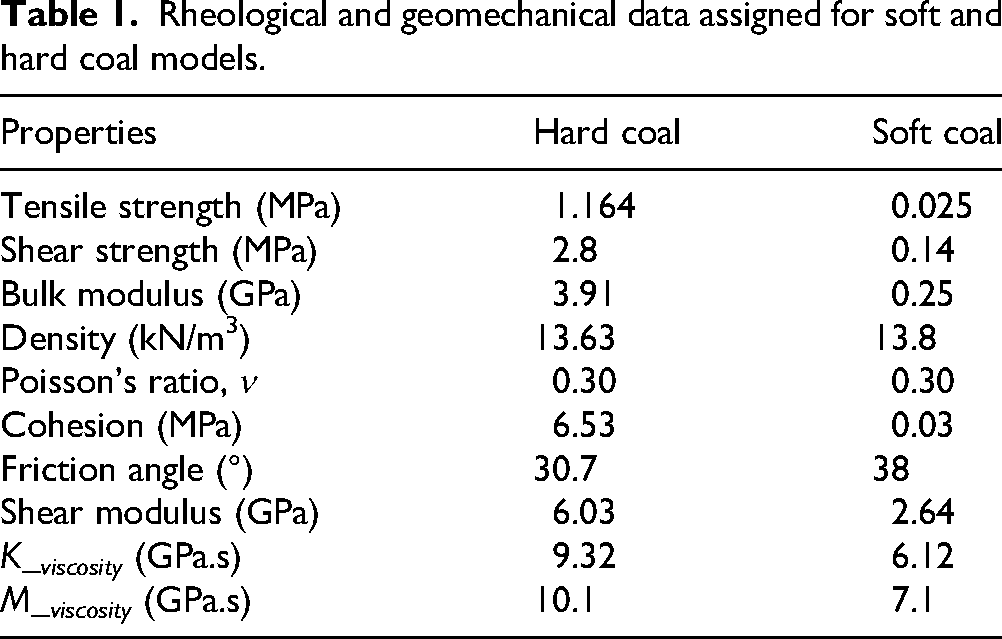
Table 1 shows the major characteristics of hard and soft coal. Tensile and shear strength, cohesion and the angle of friction regulate the process of failure initiation and propagation, whereas bulk modulus and density affect the elastic response and stress distribution. The time-dependent volumetric and shear deformation is considered by viscoelastic parameters (K_viscosity and M_viscosity), which together describe the magnitude and progress of the failure-controlled destress zone. The friction angle values for both soft and hard coal indicate residual shear resistance post-yielding, rather than intact strength. Soft coal exhibits a higher friction angle despite reduced cohesion, attributed to particle interlocking and granular behaviour post-initial failure, corresponding with findings in coal mechanics literature (Amitrano, 2006; Fan et al., 2022). This makes sure that the progressive failure zones around the borehole are simulated in a realistic way.
The in-situ stress environment that corresponds to underground coal mining conditions was represented by boundary conditions. The upper boundary was subjected to a uniform compressive stress in order to replicate the overburden load associated with a burial depth of around 300 m. In order to minimise boundary effects, the lateral boundaries were constrained using roller conditions, which limited horizontal displacement while allowing vertical movement. To avoid rigid body motion, the bottom boundary was fixed. The borehole boundary was treated as a free surface to allow stress redistribution and deformation following excavation, as shown in Figure 1.
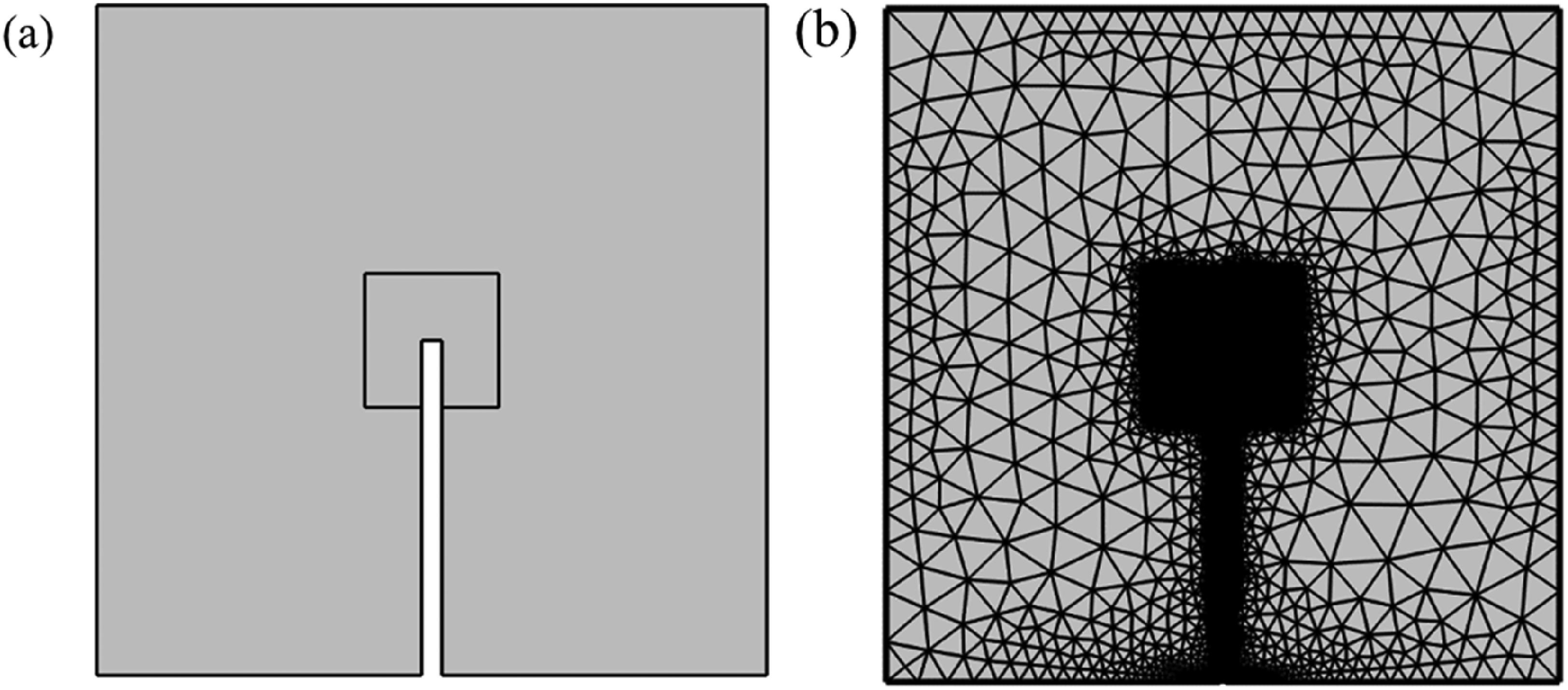
(a) Numerical model geometry showing the coal seam domain with the borehole configuration; (b) finite-element mesh used in the numerical simulations, illustrating local mesh refinement around the borehole region to accurately capture stress gradients and failure initiation.
The computational domain was discretised using a refined finite-element mesh to ensure numerical accuracy in regions of high stress gradients around the borehole. Mesh refinement was applied locally near the borehole boundary, while coarser elements were used away from the excavation to reduce computational cost. A mesh sensitivity analysis was conducted using three progressively refined meshes, with minimum element sizes near the borehole of 0.02, 0.01 and 0.005 m, respectively. The peak vertical stress at the borehole wall and the computed destress radius varied by <2% between the two finest meshes. Therefore, the mesh with a minimum element size of 0.01 m was adopted for all parametric simulations to ensure numerical accuracy while maintaining computational efficiency.
The destress radius (R_d) is defined as the radial distance from the borehole centre to the location where the vertical stress has fully recovered to the original in-situ value (i.e. where Δσᵥ = σᵥ,in-situ − σᵥ = 0). This definition is applied consistently for all vertical stress profiles in the study.
Model validation and reliability assessment
The purpose of validation and verification is to quantify and build confidence (or credibility) in numerical models and is an enabling method for the development of computational models that can be used to make engineering predictions with quantified confidence (Riedmaier et al., 2020). In order to verify the model developed, the field-measured data is used and compared with the results obtained from the numerical model. Field data used in the current work for verification were obtained from the field experimental work conducted by previous research (Tu Xigen, 1989). The primary purpose of the work was to reduce coal seam stress by drilling. So, during the fieldwork, various drilling diameters were used, and correspondingly, the destressing radius was measured in our work from numerical modelling. These destressing radii are used in the current work to verify the numerical model developed.
As the numerical model developed will be used to study the stress variation of the coal seam before and after the application of borehole excavation, model verification has to be conducted to verify the validity and accuracy of the model developed. To do so, the destress radius associated with seven different borehole diameters collected from the above-mentioned fieldwork, including 75, 100, 120, 150, 200, 250 and 300 mm, has been simulated to verify the numerical model developed.
Figure 2 presents a relationship between the stress variation and the distance from the borehole, or the destress radius associated with various diameters of the borehole. From this diagram, the values of destress radius obtained from the numerical modelling can be determined and compared with the values of destress radius collected from the fieldwork, as shown in Table 2.
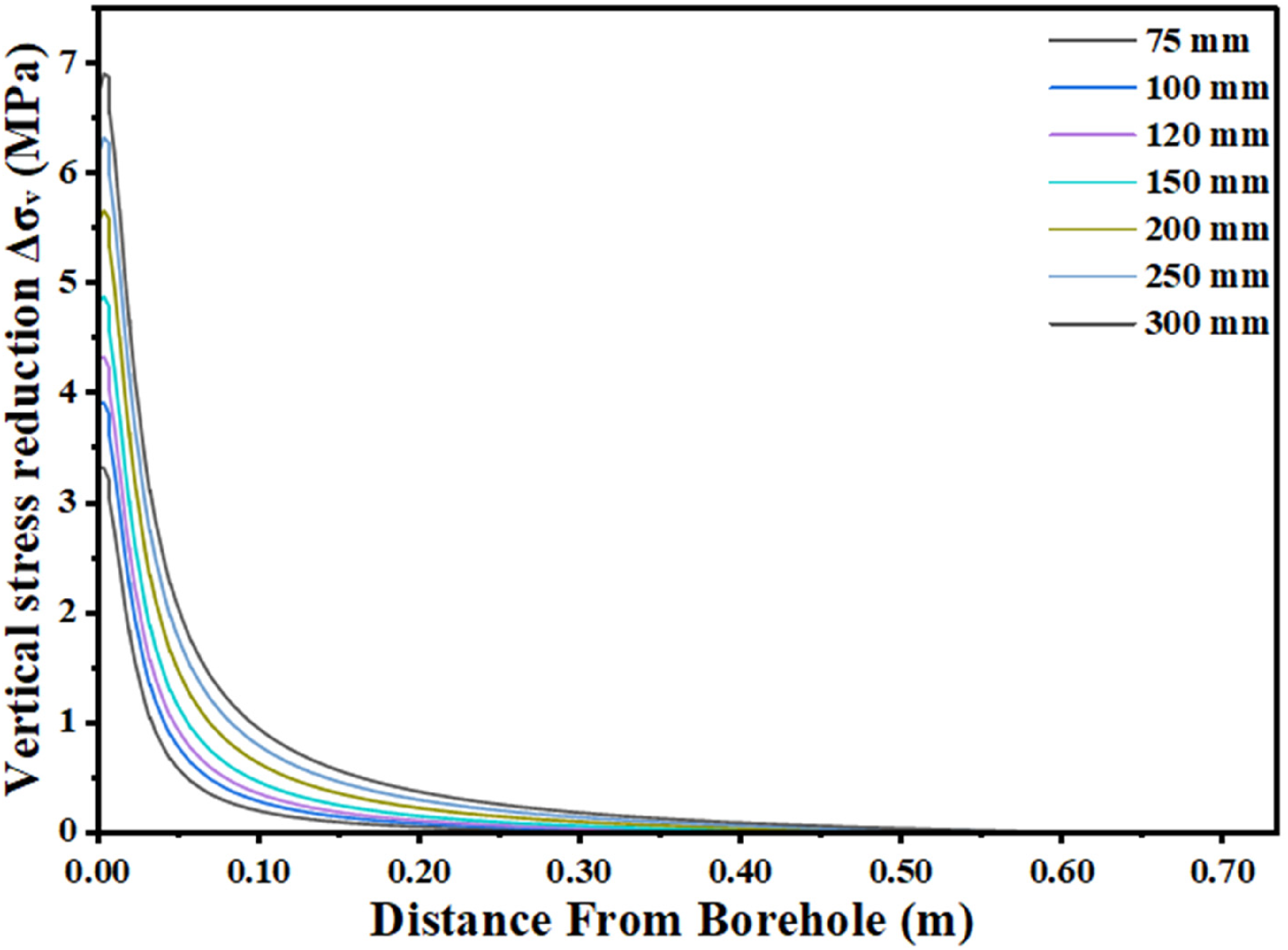
Distribution of vertical stress reduction (Δσᵥ = σᵥ,in-situ − σᵥ) with distance from the borehole for different borehole diameters. The destress radius for each diameter corresponds to the distance where Δσᵥ reduces to zero. Increasing borehole diameter results in greater maximum stress reduction near the borehole and a larger destress radius.
Comparison of modelling results with field data.
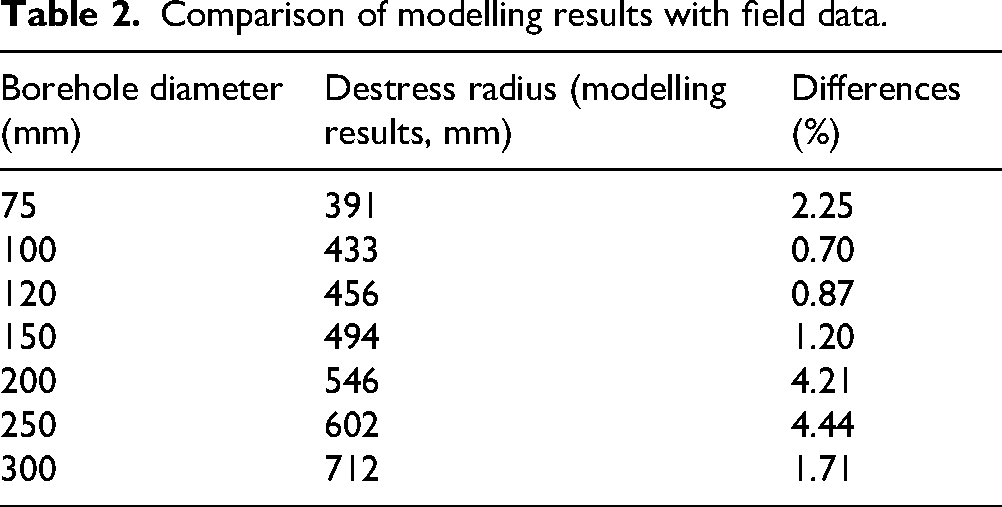
Model accuracy was quantified using the root-mean-square error (RMSE) and mean absolute percentage error (MAPE) between measured and simulated destress radius across the seven borehole diameters.

Model verification was conducted by comparing simulated destress radii against field measurements from seven borehole diameters (75–300 mm) reported by Tu Xigen (1989). Laboratory-derived material properties (Li et al., 2025b; Lu et al., 2015) were adjusted within physically realistic bounds to match field observations, with only three parameters calibrated: cohesion (−8.1% within ±10%), friction angle (+2.6% within ±5%) and tensile strength (−9.8% within ±15%), while all other properties remained at laboratory values.
The calibrated model replicates the field destress radius with MAPE and RMSE values of 2.20% and 15.33 mm, respectively (all errors <5%), showing the satisfactory accuracy for parametric investigation. A limitation of this work is that calibration and validation use the same dataset because of inadequate field data. In addition, laboratory attributes may not perfectly show in-situ conditions, which ultimately exhibit uncertainty. Calibration against measured field destress radii confirms that the model response is in accordance with the observed behaviour, thus balancing practical limitations with reliable predictive modelling for the relative trend analysis phenomenon.
Destressing mechanism of borehole drilling
Borehole drilling induces coal seam destressing by locally disturbing the original in-situ stress equilibrium of the coal mass (Lixin et al., 2025; Pan et al., 2022). The drilling of a borehole removes load-bearing material and creates a free surface, causing stress redistribution in the adjacent coal seam that enlarges fracture and plastic zones as stresses relax (Yin et al., 2024b). As a result, stress concentrations are reduced near the borehole wall, and a destressed zone develops as a result of stress relaxation and material yielding. This mechanism characterises the fundamental process by which borehole drilling relieves stress concentration in underground coal seams.
Failure initiation and stress redistribution around boreholes
Borehole drilling primarily changes the local stress equilibrium by introducing a free boundary, causing rapid stress redistribution and failure initiation at the borehole wall (Chen et al., 2025a). Numerical results show that the initial tensile failure near the borehole boundary is caused by unloading-induced tensile stresses that are greater than the low tensile strength of coal after drilling. Shear yielding develops and spreads outward with continued redistribution, creating a failure-controlled destressed zone as opposed to a purely elastic stress-relief region. This failure initiation process is the primary mechanism by which borehole drilling mitigates coalburst-associated failure and controls the effective degree of stress relief.
Failure-zone evolution and initiation
With initial failure at the borehole boundary, continued stress redistribution promotes the outward growth of a failure zone in the surrounding coal mass. As the redistributed stresses surpass the tensile and shear strength of the coal, yielding progresses radially, leading to stiffness reduction and permanent damage (Zhao et al., 2023). Numerical results show that the rate and extent of this failure-zone expansion are governed by coal strength and the magnitude of the in-situ stress, with weaker coal and higher stress levels promoting more rapid propagation. The developed destressed region, therefore, corresponds to a damage-controlled zone in which stored strain energy is dissipated through progressive failure, thereby lowering the potential for unstable fracture development beyond the immediate borehole influence.
Interaction of stress-relief zones
The individual stress-relief zones connected to each borehole may interact and overlap when multiple boreholes are drilled within a coal seam. This interaction can lead to the formation of a larger, continuous destressed region, thereby improving stress control at the panel or roadway scale (Dai et al., 2025). The degree of interaction depends on borehole spacing, borehole diameter, and in-situ stress conditions, as overlapping plastic/failure zones increase with larger diameters and closer spacing (Yang et al., 2024). Effective interaction of stress-relief zones enhances stress redistribution and reduces the likelihood of localised stress concentration, providing a practical basis for borehole layout optimisation in high-stress coal seam environments (Wu et al., 2025).
Parametric analysis of borehole-induced coal seam destressing
Effect of borehole diameter on stress redistribution and destress radius
Borehole diameter is a fundamental geometric parameter controlling stress redistribution and the extent of the destressed zone in coal seams. The borehole diameters used in the parametric analysis extend beyond those adopted in the validation study in order to investigate a wider practical design range under high in-situ stress conditions. To evaluate its influence, numerical simulations were conducted for boreholes with diameters of 50, 140, 400, 550 and 700 mm under identical in-situ stress and material conditions. The initial in-situ stress state was assumed to be isotropic, with both the vertical stress and horizontal stress set to 7.5 MPa (σᵥ = σh = 7.5 MPa; k = 1.0). The vertical stress corresponds to an overburden depth of 300 m, while the horizontal stress was assumed equal to the vertical stress for the baseline analysis.
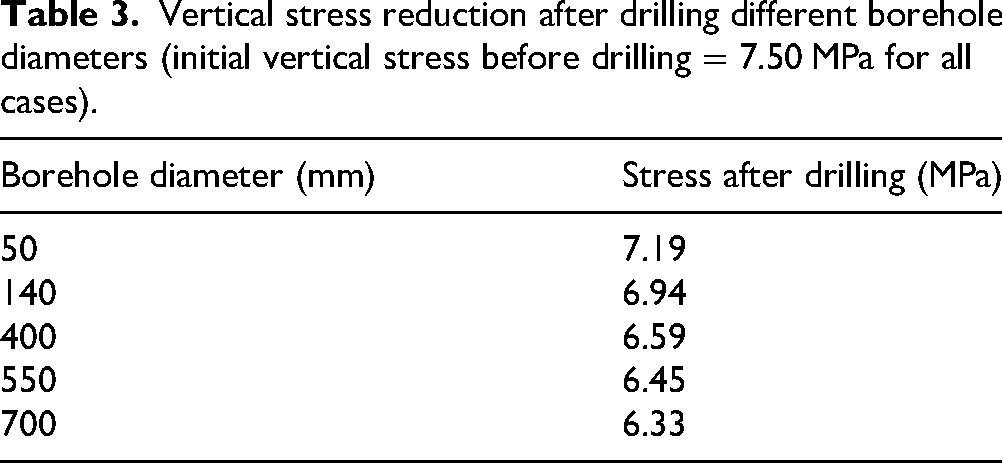
The results indicate that increasing borehole diameter leads to a progressive reduction in vertical stress around the borehole. As shown in Table 3, the vertical stress reduced from the original value of 7.5–7.19 MPa for a 50 mm diameter borehole and further to 6.33 MPa for a 700 mm diameter borehole. This trend indicates that increasing borehole diameter is associated with greater stress reduction and more extensive stress redistribution in the surrounding coal mass.
Vertical stress reduction after drilling different borehole diameters (initial vertical stress before drilling = 7.50 MPa for all cases).
To compute the stress reduction, the diminishing percentage of vertical stress was calculated using the following equation:
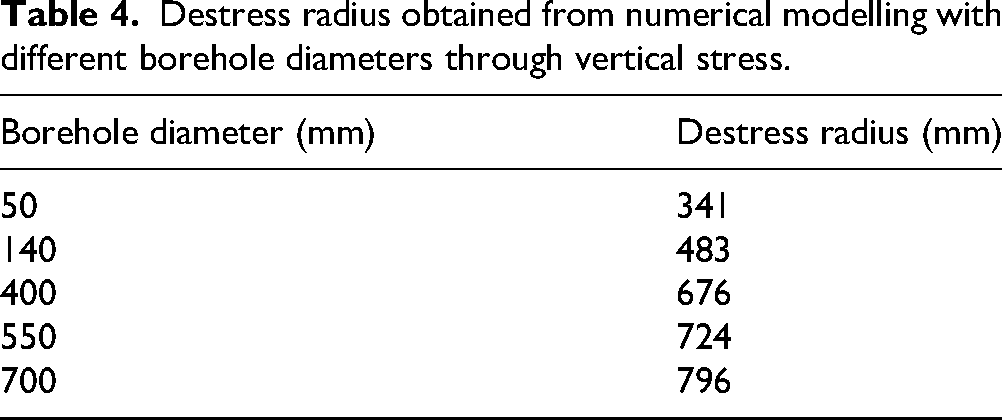
Figure 3 shows that the vertical stress reduction improved from ∼4% for a 50 mm borehole to about 16% for a 700 mm borehole. Correspondingly, the destress radius extended from 341 to 796 mm, as shown in Table 4. These results confirm that borehole diameter not only governs the magnitude of stress reduction but also controls the spatial extent of the destressed zone.
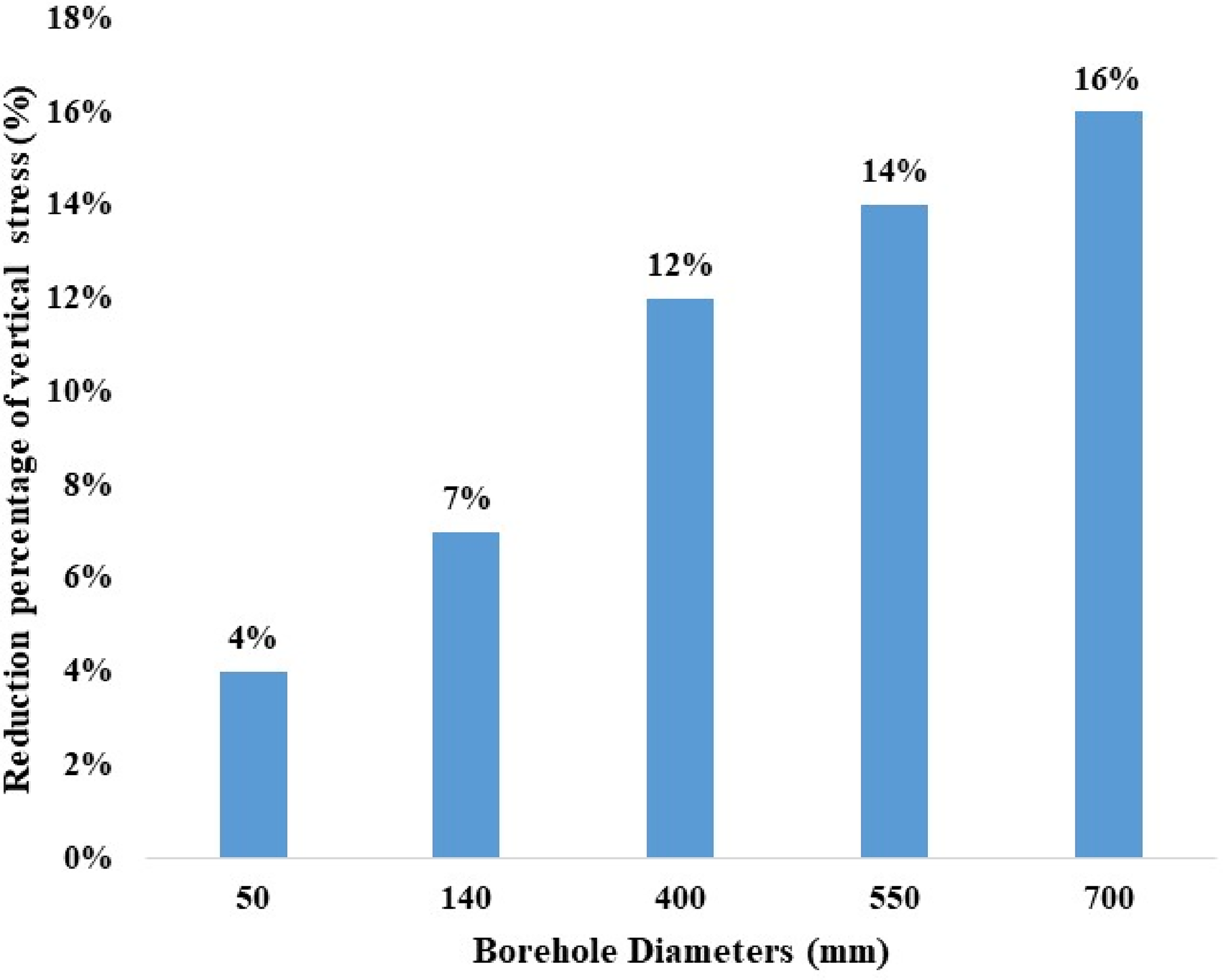
Reduction percentage of vertical stress before and after drilling for different borehole diameters.
Destress radius obtained from numerical modelling with different borehole diameters through vertical stress.
Contours distribution of vertical stress around boreholes with different diameters is presented in Figure 4. With increasing borehole diameter, the stress contours expand outward from the excavation, indicating progressive stress relaxation and a widening stress-relief zone in the adjacent coal mass. The boundary of the destressed zone is defined as the location where the vertical stress fully recovers to the original in-situ value (Δσᵥ = 0). Intermediate stress contours (e.g. 90%–95%) are shown only to illustrate the gradual stress recovery.
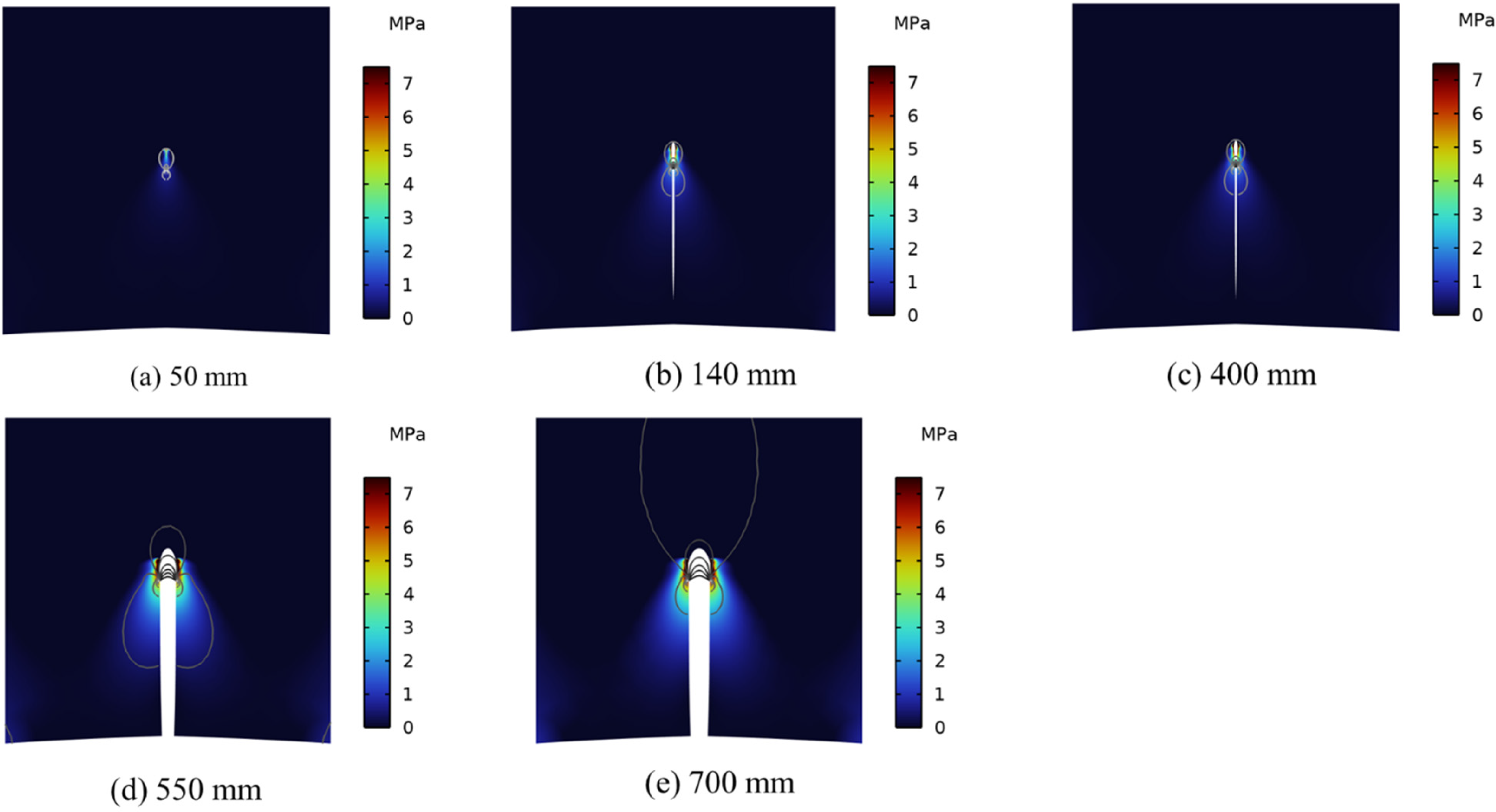
Contour distribution of vertical stress (σᵧ, MPa) around the borehole for different borehole diameters: (a) 50 mm, (b) 140 mm, (c) 400 mm, (d) 550 mm and (e) 700 mm. The grey contour denotes the boundary of the destressed zone corresponding to the location where the vertical stress has fully recovered to the original in-situ value (i.e. Δσᵥ = 0), consistent with the definition of destress radius used in this study.
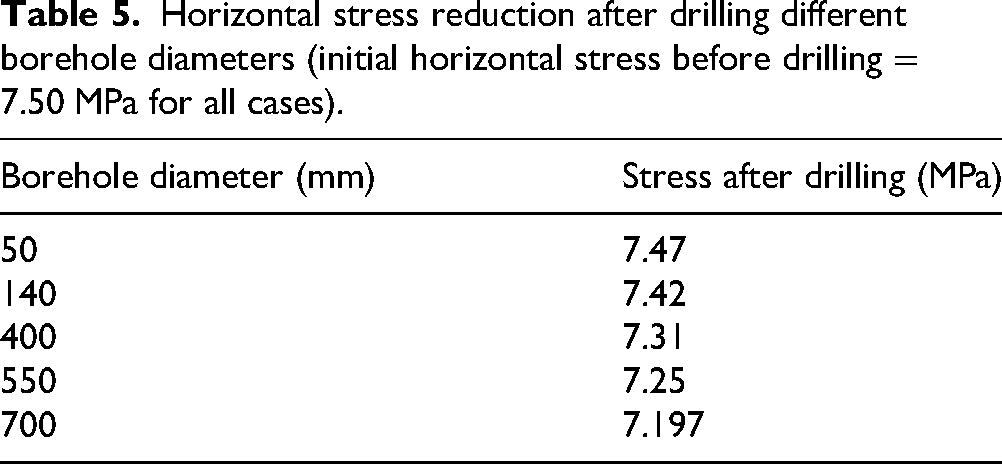
In contrast, the influence of borehole diameter on horizontal stress was comparatively limited. As shown in Figure 5 and Table 5, horizontal stress reduction remained below 4% even for the largest borehole diameter. Therefore, vertical stress redistribution is considered the primary indicator for evaluating borehole-induced destressing effectiveness in the present study.
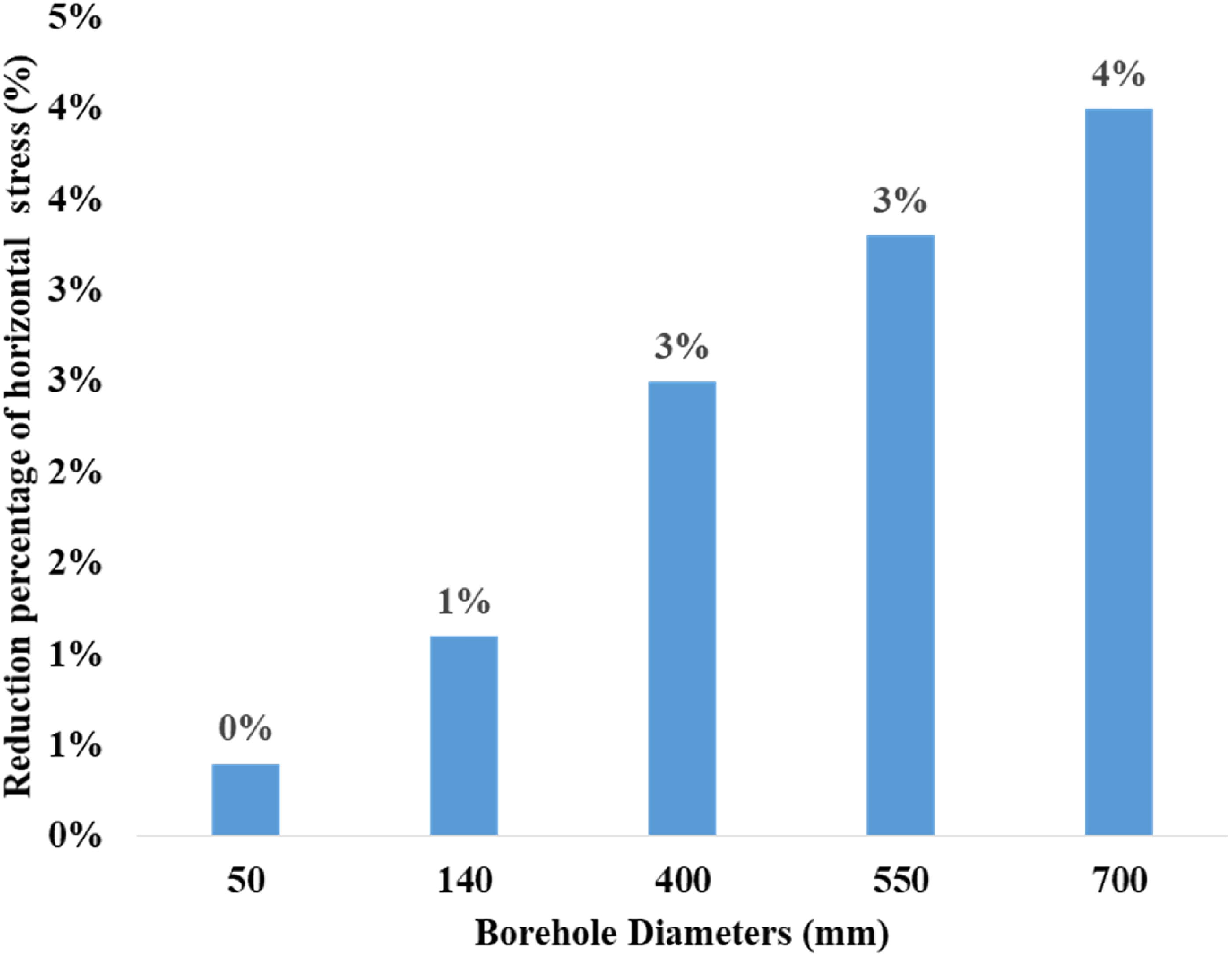
Reduction percentage of horizontal stress before and after drilling for different borehole diameters.
Horizontal stress reduction after drilling different borehole diameters (initial horizontal stress before drilling = 7.50 MPa for all cases).
Horizontal stress reduction is comparatively smaller than vertical stress due to the mechanics of lateral confinement. The creation of a free surface at the borehole wall directly releases vertical stress. On the other hand, horizontal stress is limited by the surrounding coal and rock, and relaxation is limited by Poisson's effect and further limited by plastic yielding. In purely elastic conditions with Poisson's ratio ν = 0.3, a decrease in vertical stress (Δσ_v) would theoretically result in a corresponding decrease in horizontal stress of Δσ_h = ν × Δσ_v.
Nevertheless, the numerical results show that horizontal stress consistently decreases below this elastic prediction. For instance, for the largest 700 mm borehole, vertical stress reduces from 7.5 to 6.33 MPa (16% reduction), which, under elastic theory, would predict a horizontal reduction of 0.35 MPa (4.7%). The actual horizontal reduction is particularly lower at 0.303 MPa (4.0%), slightly below the elastic prediction. The cause of this discrepancy is that when plastic occurs around the borehole, it can redistribute stresses in such a way that restricts subsequent relaxation: as soon as the coal yields in shear in the area of the borehole wall, strengths are no longer capable of being increased in one direction and reduced in another.
Also, the free surface effect is most effective in the direction normal to the excavation boundary (vertical), where horizontal stress remains partially confined by the surrounding coal mass acting as a lateral restraint. Similarly, for a 50 mm borehole, vertical stress decreases by ∼4%, while horizontal stress reduces only by ∼0.4%. These quantitative variations indicate that vertical stress leads the destressing mechanism, and horizontal stress reduction contributes slightly to the failure-controlled destress zone, as shown in Table 5 and Figure 5.
The strong diameter dependence occurs because enlarging the free boundary increases unloading of the overburden-controlled vertical stress and shifts the stress concentration farther into the coal, expanding the yielded/relaxed zone. Horizontal stress is less sensitive because the dominant unloading mechanism is redistribution of the vertical principal stress under overburden loading, while lateral confinement remains comparatively constrained by boundary stress ratio conditions.
In this study, the destress radius is defined as the radial distance from the borehole centre to the location where the redistributed stress or damage variable returns to the pre-drilling in-situ level, indicating the outer boundary of the failure-influenced zone. This radius consequently represents the effective extent of failure suppression induced by borehole destressing.
Increasing borehole diameter significantly enhances failure development and stress unloading by enlarging the excavation-induced free boundary. Larger diameters stimulate more extensive tensile and shear failure at the borehole wall, allowing the failure zone to propagate farther into the coal mass. This outward growth of the failure-controlled destress radius directly relates to greater vertical stress reduction and improved strain energy dissipation. The results demonstrate that borehole diameter is the dominant controllable parameter governing both failure extent and failure-suppression effectiveness under high in-situ stress conditions. The observed reduction in vertical stress corresponds to a decrease in stored elastic strain energy in the surrounding coal mass, indicating suppression of failure potential.
For the sake of clarity, the decreased vertical stress present in Tables 3 to 6 shows the maximum reduction observed at the borehole wall. The destress radius (R_d) is determined from the borehole centre until the point where the vertical stress has completely returned to its initial in-situ value. As a consequence, the maximum stress reduction occurs at the borehole boundary while stress progressively increases with an increase in radial distance and ultimately reaches zero at R_d. This difference validates the consistency between the corresponding destress radius and reported stress reduction percentages.
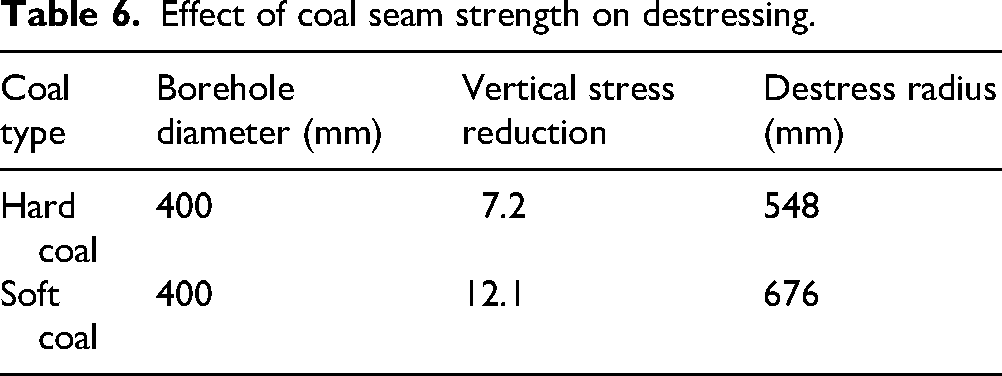
Effect of coal seam strength on destressing.
Effect of coal seam strength on failure-zone development
Geo-material mechanical properties include stiffness, which is stress-dependent, Poisson's ratio, strength and toughness (energy required to cause breakage). Among these properties, coal seam strength, including uniaxial compressive strength and triaxial compressive strength, is one of the key mechanical parameters for evaluating and predicting the stability of underground openings (Li et al., 2023). In general, higher material strength corresponds to greater stability of excavations, whereas lower strength materials are more susceptible to deformation and failure.
This concept can be extended to borehole-induced destressing in coal seams. In this study, numerical simulations were conducted for coal seams with different strength properties in order to clarify the influence of coal strength on destressing behaviour. Table 6 presents the quantitative comparison between hard and soft coal under the same borehole conditions (400 mm diameter and 7.5 MPa vertical stress).
The modelling results indicate that, irrespective of borehole diameter, the rate of destressing increases as coal strength changes from hard coal to soft coal. This demonstrates that coal seam strength is a sensitive parameter influencing the development of failure zones around boreholes (Lyu et al., 2025). For the 400 mm borehole examined, soft coal exhibits a 68% larger destress radius (676 mm vs. 548 mm) and a 4.9 percentage point higher vertical stress reduction (12.1% vs. 7.2%) compared to hard coal under identical stress conditions.
Previous research has shown that, within the elastic deformation range, changes in axial stress do not lead to significant stress redistribution. Nevertheless, stress changes are intensified when plastic deformation occurs. Failure zones can also form faster in soft coal seams than in hard coal seams, under the same loading conditions, and assuming plastic failure is initiated. The strength of the coal seam is therefore crucial in regulating the start and development of the borehole-induced failure zones. Reduced coal strength increases the destressed zone, since yielding will start earlier and damage to the destressed region will spread outward under the same stress gradient, and this will lower stiffness and allow more stress to be relieved (Wang et al., 2024).
Effect of burial depth on destressing effectiveness
The burial depth of a coal seam has a significant influence on the stress state and destressing behaviour of underground excavations. As mining depth increases, the overburden pressure acting on the coal seam also increases, resulting in higher in-situ stresses within the coal and surrounding rock mass (Lixin et al., 2025). Consequently, deeper coal seams are generally associated with more severe stress concentrations and a higher likelihood of dynamic failures.
The excavation of a borehole disturbs the natural equilibrium stress condition of the coal seam and causes far-field stresses to concentrate around the borehole. The magnitude of this stress concentration is strongly dependent on burial depth (Yin et al., 2024b). Rock mechanical theory indicates that the natural equilibrium stress condition is primarily controlled by mining depth, and with increasing depth, the normal stress acting on fracture surfaces increases accordingly (Shao et al., 2025). This directly influences the magnitude of stress redistribution and failure zone development around boreholes.
The results of numerical modelling presented in Table 7 indicate that, with the same geological and geometric conditions, the greater the burial depth, the higher the initial stress level and the greater the concentration of stress around the borehole. The destress radius is increasing by 28% (612–786 mm) as the depth increases (200–600 m), whereas the vertical stress reduction at the borehole wall is increasing by 4 percentage points (10.8–14.8). This is due to the fact that increases in the initial stress magnitudes give rise to a greater stress gradient that moves the failure outwards of the borehole.
Effect of burial depth on destressing.
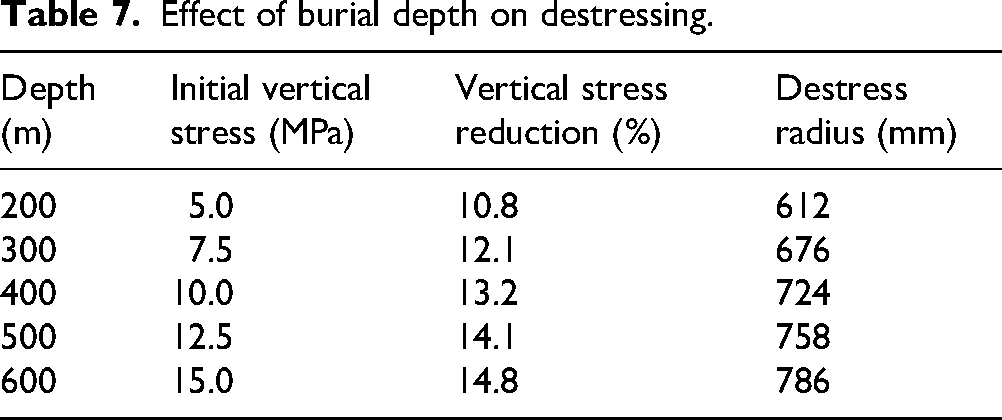
As a result, the effectiveness of borehole-induced destressing becomes increasingly dependent on the ability to induce sufficient stress redistribution under high overburden loading. In deeper coal seams, greater stress release is required to achieve a comparable level of destressing to that observed at shallower depths. Therefore, burial depth is identified as a primary controlling factor governing borehole-induced stress redistribution and destressing effectiveness in coal seams. Destressing strategies must account for depth-dependent stress conditions to ensure effective stress relief and stability control in deep mining environments.
Effect of in-situ stress ratio on stress-relief zone formation
The horizontal-to-vertical stress ratio is determined by the variation of the horizontal stress while the vertical stress remains fixed, as the vertical stress is controlled by the depth of cover. The horizontal stresses acting on a rock element at a given depth below the surface are more difficult to estimate than the vertical stresses.
Terzaghi and Richart (1952) suggested a relationship for estimating the horizontal-to-vertical stress ratio, which was widely used in the early development of rock mechanics but is seldom applied today due to its limited accuracy:
Sheorey (1994) developed an elasto-static thermal stress model that accounts for the curvature of the Earth's crust and variations in elastic constants, density and thermal expansion coefficients. A simplified expression derived from this model can be used to estimate the horizontal-to-vertical stress ratio:
Brown and Hoek (1978) measured in-situ stresses and reported that the horizontal-to-vertical stress ratio varies within a relatively wide range, particularly when the depth is < 500 m. Their results indicate that stress ratio variability is significant in shallow to moderate depth coal seams.
In this study, stress ratios (k) ranging from 0.5 to 2.0 were investigated to encompass both isotropic and highly anisotropic in-situ stress conditions typical of coal mining environments. Table 8 quantifies the effect of horizontal-to-vertical stress ratio on destressing effectiveness for a 400 mm borehole in soft coal at 300 m depth (σ_v = 7.5 MPa).
Effect of horizontal-to-vertical stress ratio on destressing effectiveness (400 mm borehole, soft coal and 300 m depth).
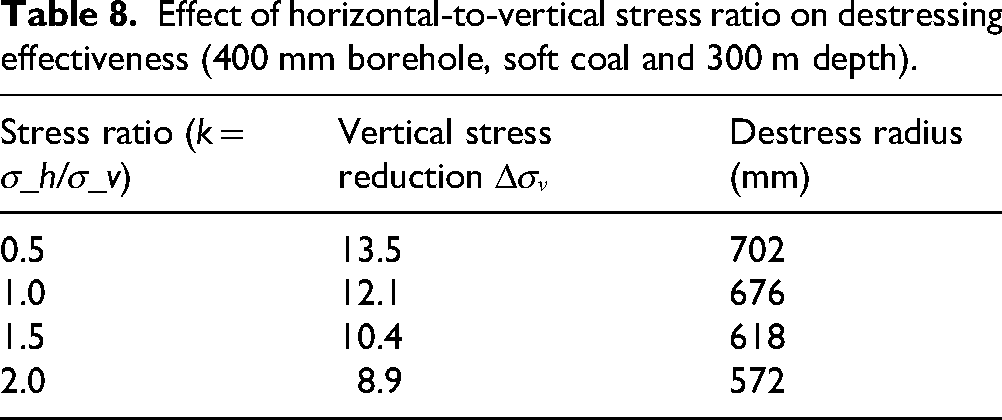
The numerical results indicate that increasing the horizontal-to-vertical stress ratio significantly reduces destressing effectiveness. When the stress ratio increases from 0.5 to 2.0, the destress radius decreases from 702 mm to 572 mm (a reduction of 130 mm or 18.5%), while vertical stress reduction at the borehole wall declines from 13.5% to 8.9% (a decrease of 4.6 percentage points). Higher horizontal-to-vertical stress ratio suppresses destressing extent by increasing lateral confinement, which limits tensile opening and delays plastic yielding around the borehole.
Numerical modelling results indicate that the increment of drilling rate presents an almost linear relationship with the in-situ stress ratio, particularly for soft coal seams. With the closure of fractures influenced by the horizontal-to-vertical stress ratio, the original stress state of the coal seam is reduced accordingly. Similar results were reported by Baghbanan and Jing (2008), who showed that when relatively small horizontal-to-vertical stress ratios are applied at model boundaries, the overall stress level within the coal seam decreases due to reduced boundary confinement. Consequently, higher horizontal-to-vertical stress ratios suppress destressing effectiveness, requiring larger borehole diameters or reduced spacing to achieve equivalent stress relief.
Effect of coal seam dip angle on stress redistribution behaviour
This subsection examines the influence of coal seam dip on the effectiveness of borehole-induced destressing. We hypothesise that increasing seam dip reduces the destress radius and vertical stress reduction, as the oblique orientation alters stress redistribution around the borehole.
Numerical simulations were conducted for a 400 mm borehole in soft coal, varying the seam dip from 0° to 15°, while keeping other parameters constant. The results are summarised in Table 9.
Stress reduction with different seam dip angles.
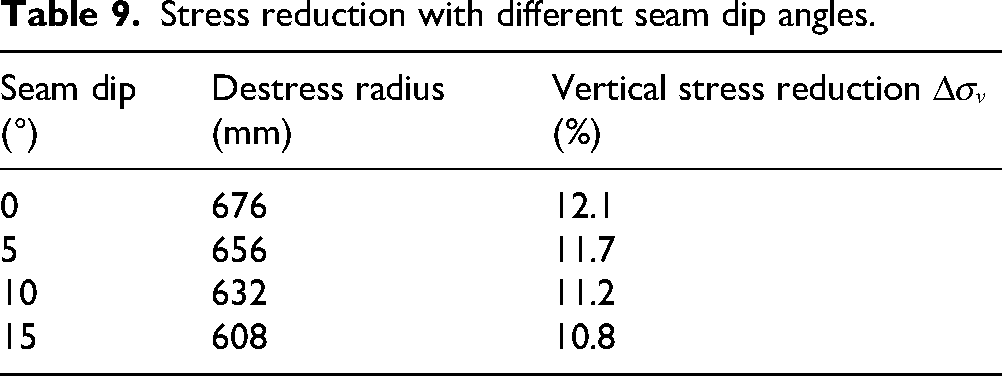
The results show that increasing seam dip from 0° to 15° reduces the destress radius from 676 to 608 mm (a decrease of 68 mm, or ∼10%) and the maximum vertical stress reduction from 12.1% to 10.8% (a decrease of 1.3%). This trend suggests that seam dip reduces stress relief efficiency. This loss of effectiveness is due to the fact that the inclined bedding planes alter the local stress field and provide directional confinement, which restricts the outward movement of the failure-controlled destress field. These results demonstrate that seam geometry is an important factor influencing borehole destressing performance and should be considered in borehole design and layout.
Discussion
Mechanisms of stress redistribution induced by borehole drilling
The numerical results demonstrate that borehole drilling modifies the original in-situ stress equilibrium of the coal seam by creating a free boundary that induces stress redistribution in the surrounding coal mass. Vertical stress is dropped near the borehole wall and progressively transferred to areas further away from the excavation, resulting in a stress gradient that governs the formation of a destressed zone. This redistribution mechanism is mainly controlled by borehole geometry and the fundamental in-situ stress conditions. The dominance of vertical stress redistribution observed in the simulations confirms that borehole-induced destressing is governed by unloading of overburden-related stresses rather than horizontal stress relaxation.
From an energy standpoint, borehole excavation reduces local elastic strain energy by unloading concentrated stresses and promoting yielding near the free boundary (Cook, 1965). To make the ‘energy-based’ evaluation explicit, strain energy density was calculated from the numerical results and combined over the influence zone to get the total strain energy reduction compared to the pre-drilling state. This provides a quantitative energy metric that is consistent with the observed expansion of destress radius and the reduction in burst potential described in pressure-relief drilling studies (Pan et al., 2012). The strain energy density was determined based on the elastic stress–strain relationship that is provided in the numerical model and summed up within the destressed region as a measure of energy reduction.
According to the failure mechanism, coalbursts are caused by the overbuild-up of elastic strain energy in the high in-situ stress. Borehole drilling alleviates this potential failure through the decongestion of concentrated stresses and through any controlled harm in the surrounding mass of coal (Li and Gao, 2025). In the numerical investigations, it was found that the areas of stress decrease are associated with the areas of decreasing strain energy density, and it is demonstrated that the stored energy is actively dissipated by failure formation. The larger the borehole diameter is, the more energy is released and the greater the damage area, therefore, more efficient in suppressing unstable failure mechanisms.
Therefore, the destressing caused by boreholes is more of a controlled failure and energy release mechanism, as opposed to an elastic process of stress-adjustment.
Evolution and interaction of borehole-induced failure zones
Failure zones begin near the borehole boundary where stress gradients are highest and increase outward as stress redistribution progresses (Kan et al., 2022). The numerical results indicate that the size and expansion rate of these failure zones are strongly influenced by coal seam strength and stress magnitude. Failure zones develop rapidly and may extend into the surrounding coal mass in softer coal seams. The interaction of nearby stress-relief zones leads to the development of a larger continuous destressed region in the presence of multiple boreholes. This results in increasing overall stress control effectiveness. These findings indicate the significance of borehole layout and spacing in obtaining efficient destressing in high-stress coal seams.
Relative importance of geological and stress parameters
Comparison of parametric findings implies that borehole size is the most significant geometric factor that determines the magnitude of stress reduction, as well as destress radius. Burial depth and in-situ stress ratio have a great influence on the initial stress and, as a result, the effectiveness of stress redistribution. The initiation and evolution of failure zones are controlled by coal seam strength and the redistribution behaviour of stress due to coal seam dip angle, creating an asymmetry under an inclined environment. Horizontal stress variations were discovered to play a secondary role in the redistribution of stress in the vertical plane. These findings indicate that the design of borehole destressing must have a full consideration of geological parameters and stress parameters instead of depending on a single controlling factor.
Quantitative ranking of governing parameters
To quantitatively compare the relative significance of geometric, geological and stress-related parameters on borehole-induced destressing, the variation in destress radius obtained from the parametric analyses was normalised with respect to a defined baseline condition. This method allows a consistent evaluation of parameter sensitivity across different simulation circumstances.
A relative influence index (RII) was defined as follows:
According to the numerical results, borehole diameter shows the highest RII among all investigated attributes. Across the studied diameter range (50–700 mm), the destress radius increases from 341 to 796 mm, corresponding to an approximate 133% increase. This specifies a principal geometric control on failure-zone expansion, strain energy dissipation and stress redistribution.
Coal seam strength indicates the second most significant parameter. Lower-strength coal initiates yielding at lower stress thresholds, promoting outward propagation of the failure-affected region and increasing the effective destress radius under the same loading conditions.
Burial depth and ratio of horizontal stress to vertical stress demonstrate a slight effect that changes the magnitude of the original in-situ stress field and the confinement conditions. Increasing burial depth preserves higher far-field elastic strain energy, while higher stress ratios increase lateral confinement, both of which confine outward failure propagation.
In comparison, coal seam dip angle mainly governs the directional asymmetry of stress redistribution and failure development more than changing the overall magnitude of the destress radius.
Accordingly, the ranking of parameter influence on borehole destressing effectiveness can be expressed as follows:
This quantitative comparison confirms that symmetrical development of the excavation boundary is the main controllable mechanism leading to failure extent and strain energy dissipation in borehole-induced destressing. Geological and in-situ stress conditions act as boundary constraints that change the achievable destress radius but do not surpass the influence of borehole geometry under the same conditions.
Comparison with previous borehole-based destressing studies
The trends observed in this work are consistent with earlier numerical and field investigations of borehole-induced coal seam destressing, which indicated improved stress relief with increasing borehole diameter and greater sensitivity to vertical stress magnitude. The existing results further simplify the relative contributions of geological and stress parameters under controlled numerical conditions, providing quantitative support for earlier qualitative observations. This study presents comprehensive insights into borehole-induced stress redistribution mechanisms in coal seams by systematically determining various influencing factors within an integrated modelling framework.
Related to earlier borehole-based destressing studies that mainly highlighted qualitative observations or geometric indicators, this study offers a systematic and quantitative evaluation of stress redistribution behaviour under variable geological and in-situ stress conditions. By explicitly linking borehole geometry and coal seam properties to stress reduction magnitude and destress radius, the present work clarifies the relative importance of governing parameters and advances the understanding of borehole-induced destressing mechanisms in high-stress coal seams.
The observed increase in relief extent with increasing borehole diameter is consistent with large-diameter drilling and pressure-relief studies, which report reductions in stress concentration and expansion of pressure-relief influence zones with increasing borehole size (Cui et al., 2022). Similarly, numerical investigations of stress-relief techniques such as slotting demonstrate that geometric enlargement of unloading boundaries and spacing or radius parameters strongly govern damage evolution and relief effectiveness (Lu et al., 2025a).
Limitations and future work
The numerical simulations presented in this study were conducted under 2D plane strain conditions, which provide an efficient and robust framework for analysing borehole-induced stress redistribution in coal seams with large out-of-plane extent. However, three-dimensional effects such as borehole end constraints, spatial variation of stress along the borehole axis, and complex borehole layouts are not explicitly captured. Future work should extend the present modelling framework to three-dimensional simulations and incorporate more complex geological conditions to further evaluate the influence of spatial variability on borehole-induced destressing behaviour. In addition, gas pressure effects were not explicitly modelled and may further influence failure behaviour in gassy coal seams. However, the comparative failure trends and relative influence of governing parameters remain robust for engineering design purposes.
Continuum fracture mechanics interpretation of borehole-induced failure
Borehole drilling disturbs the original in-situ stress equilibrium of the coal seam by creating a free boundary, which leads to stress redistribution and the initiation of failure in the surrounding coal mass. Numerical results show that stress unloading near the borehole wall first induces tensile failure due to the low tensile strength of coal, followed by shear yielding as redistributed stresses exceed coal strength. As stress shifts, cracks and deformations extend outward from the borehole, creating a zone of destressing governed by material failure rather than by simple elastic relaxation.
The progression of this failure zone depends mainly on coal seam strength and in-situ stress conditions. When the strength of coal is low and the magnitude of stress is high, failure begins more quickly and spreads further away from the borehole. In contrast, higher horizontal-to-vertical stress ratios and seam dip angles tend to create asymmetric failure patterns that limit effective stress relief in certain directions. These observations indicate that borehole-induced destressing is controlled by progressive damage and yielding within the coal mass, rather than by the formation of a single discrete macroscopic fracture.
From an energy perspective, the stored elastic strain energy in the surrounding coal seam decreases as stress concentration around the borehole decreases. The failure zone develops and expands, dissipating strain energy and preventing the growth of excessive elastic energy related to coalburst-related failures. Increasing borehole diameter enhances this process by enlarging the extent of the failure-affected region and increasing the degree of stress unloading.
Borehole destressing can be defined as a controlled failure technique where the effective destress radius is calculated by combining strain energy dissipation, progressive damage, and stress redistribution. This phenomenon is in accordance with the numerical results presented in this work and supports the use of borehole excavation as a failure-mitigation approach in high-stress coal seams.
Implications for coal mine safety and stress control
The findings show direct implications for stress management and safety in underground coal mining. Borehole-induced destressing can effectively reduce stress concentration and promote controlled failure in the surrounding coal mass when appropriately designed. The strong dependence of destressing effectiveness on borehole diameter, burial depth and in-situ stress conditions indicates that site-specific geological and stress characteristics must be considered during borehole design. Optimised borehole layouts that account for failure zone interaction may improve stress control, reduce the likelihood of dynamic failures, and enhance the stability of underground openings in high-stress coal seam environments.
Design implication: when stress-relief depth/extent is the controlling objective, borehole diameter should be prioritised first, and stress ratio/depth should be treated as site constraints that can significantly reduce achievable destress radius even with large diameters.
In terms of engineering design, the quantitative relationships established in this work provide a practical workflow for borehole destressing design. The given borehole diameter can be chosen directly based on the established parametric relationships, with the site-specific coal strengths and in-situ stress situation being considered as the secondary modifiers to achieve the required destress radius or target stress reduction level. This approach replaces traditional empirical or experience-based design techniques with a data-driven framework, allowing more reliable and adjusted borehole layout planning in high-stress coal mining surroundings.
For example, consider a 400 mm borehole drilled in a horizontal coal seam (0° dip) under normal in-situ stress conditions. The above numerical results show the destress radius of 676 mm and a maximum vertical stress reduction of 12.1%. Given this information, the spacing between boreholes in a panel can be designed so that the stress-relief zones overlap enough to reduce areas where stress is concentrated. For example, boreholes that are 1.2–1.3 m apart will make sure that all of the failure-controlled destress zones are covered. This will improve the layout of the panel, enhancing worker safety and reducing the risk of coalbursts.
Conclusions
This study investigated borehole-induced coal seam destressing under high in-situ stress conditions using a validated 2D numerical modelling framework. Based on the numerical results and parametric analyses presented in this work, the following conclusions can be drawn:
Borehole drilling induces controlled tensile and shear failure at the excavation boundary, forming a failure-dominated destressed zone that governs the effective extent of stress relief. This regulated failure process suppresses unstable fracture initiation in connection with coalburst events. Destressing effectiveness is governed by failure extent, not stress magnitude alone. Borehole diameter is the most influential design parameter controlling failure initiation, failure-zone expansion, and strain energy dissipation. Increasing the diameter significantly enlarges the failure-controlled destress radius, thus improving failure-mitigation effectiveness under high in-situ stress conditions. Redistribution of vertical stress is the main mechanism governing borehole-induced destressing, whereas horizontal stress reduction is comparatively minor. This suggests that borehole destressing mainly alleviates failure caused by overburden-controlled stress concentration, while the lateral confinement remains less affected. Coal seam strength plays a critical role in the evolution of the failure zone. In lower-strength coal, yielding occurs earlier, and the failure zone expands more rapidly under equal loading conditions, resulting in enhanced stress relaxation. By contrast, higher-strength coal restricts failure propagation and reduces the effective destress radius. Increasing burial depth increases the initial in-situ stress level, enhancing stress redistribution and promoting more extensive failure-zone development around the borehole. As a result, destressing effectiveness, measured by vertical stress reduction and destress radius, increases with depth. In contrast, higher horizontal-to-vertical stress ratios strengthen lateral confinement, limit the spread of failure-zone and reduce stress relief. The dip angle of the coal seam causes asymmetric stress redistribution and uneven failure development around the borehole. Inclined seams reduce effective stress relief in certain directions, representing that borehole-induced destressing effectiveness is direction-dependent under non-horizontal geological conditions. From an energy perspective, the decrease in stress concentration around the borehole relates to a decrease in stored strain energy within the surrounding coal mass. This reduction in strain energy indicates a lower potential for coalburst-related failure, demonstrating that borehole destressing serves as a failure-mitigation mechanism through controlled stress release and energy dissipation. The findings instruct useful design information on borehole destressing of high-stress coal seams such that borehole diameter is the priority design objective where failure extent or destress radius is the controlling design requirement, whilst geology and in-situ stress parameters are considered in constructing a successful failure suppression mechanism. As compared to the past qualitative research studies which, were based on the geometric indicators and contour interpretations, the research presents a quantitative parametric relationship to the borehole diameter, burial depth, coal strength, stress ratio, and seam dip to vertical stress reduction and destress radius. Indicatively, a 400 mm borehole with a depth of 300 m in soft coal seam attains maximum vertical stress reduction of 12.1% at the borehole wall corresponding to a destress radius of 676 mm, as shown in Tables 4 and 6. This quantitative association offers practical guidance for efficient and safe deep coal seam destressing by enabling data-driven layout and borehole sizing.
Limitation: The current results are based on a 2D plane strain model with a single borehole formation. Three-dimensional effects, including borehole end constraints, spatial variability along the borehole axis and interaction in multi-borehole layouts are not captured.
Future work: Future research should extend this framework to three-dimensional simulations integrating gas pressure effects and complex multi-borehole geometries to further optimise destressing layouts, and validate energy-based failure mitigation criteria.
Footnotes

Author contributions
Faizan Arshad: conceptualisation, methodology, numerical modelling, validation, data analysis, visualisation and manuscript preparation.
Funding
The authors received no financial support for the research, authorship, and/or publication of this article.
Declaration of conflicting interests
The author declared no potential conflicts of interest with respect to the research, authorship, and/or publication of this article.
Data availability statement
The data supporting the findings of this study are available from the corresponding author upon reasonable request.