






Abstract
The Permian Wujiaping Formation (WJP FM) in the Sichuan Basin is a significant successor shale gas play to the Silurian Longmaxi Formation. To systematically evaluate the reservoir characteristics of the Permian WJP FM shale, this study integrates multi-scale experimental analyses, including geochemistry, X-ray diffraction (XRD), and field emission scanning electron microscopy (FE-SEM) on core samples from the Nanya Syncline, Sichuan Basin. Results show that the third member (Wu-3 Member), deposited in deep-water shelf facies, is the core reservoir interval. Within it, siliceous shale concentrated in Sublayers 3–6 represents the most favourable lithofacies. This siliceous shale is rich in biogenic silica, with reservoir space dominated by organic-matter-hosted pores and enhanced by lamellation fractures. It exhibits moderate porosity (avg. 5.6%), high gas content (avg. 5.2 m3/t), and high brittleness (brittle minerals 83.95%), with Sublayer 4 identified as the optimal fracturing interval. Organic matter is predominantly Type II1–III kerogen, over-mature (avg. Ro 2.8%), providing abundant gas and organic pores. Reservoir development is governed by three synergistic factors: an anoxic deep-water shelf environment that enabled organic enrichment and biogenic silica formation; over-mature thermal evolution that generated abundant organic pores; and Yanshanian–Himalayan tectonic compression that induced microfracture networks, while the broad, gentle synclinal geometry favoured pressure maintenance and gas preservation. Based on these findings, an evaluation system integrating sedimentary environment, reservoir quality, and preservation conditions is established, and three categories of favourable zones are delineated. The Class I favourable zone in the syncline core is the primary exploration target. This study provides a systematic framework for shale gas potential evaluation in structurally complex areas and direct guidance for well placement and stimulation design.
Introduction
Shale gas is a clean and efficient unconventional natural gas resource. It is profoundly reshaping the global energy landscape. Globally, the United States and Canada pioneered the commercial development of shale gas, with production from basins such as the Appalachian (Marcellus) and Western Canadian Sedimentary Basin transforming their domestic energy markets.1–3 Their success has demonstrated that technological advancements in horizontal drilling and multi-stage hydraulic fracturing are keys to unlocking these unconventional resources. China, as a latecomer, has rapidly grown into the world's third-largest shale gas producer, driven by extensive exploration in the resource-rich Sichuan Basin. While the United States and Canada have established mature exploration and production systems for Palaeozoic and Mesozoic formations, China's industry is now shifting focus from the proven Silurian Longmaxi Formation (LMX FM) to identify new, deeper plays.4–6
In recent years, China has achieved significant breakthroughs in the exploration and development of the Silurian Wufeng–Longmaxi Formation (WF–LMX FM) shale in the Sichuan Basin. National shale gas demonstration zones have been established in Fuling, Changning–Weiyuan, Zhaotong, and other areas.7–10 The commercial-scale development of the WF–LMX FM in the Sichuan Basin represents a milestone for China's shale gas industry. Over a decade of intensive exploration, this play has yielded a series of major technological advances. These include the establishment of a ‘sweet spot’ prediction system based on high-quality deep-water shelf facies, the development of a comprehensive reservoir evaluation framework integrating total organic carbon (TOC), porosity, brittleness, and preservation conditions, and breakthroughs in horizontal well placement within thin, high-quality shale intervals combined with volumetric fracturing techniques.11–13 These proven methodologies, from geological evaluation to engineering optimisation, provide a critical knowledge base and operational paradigm for unlocking the potential of new, deeper plays, including the Permian Wujiaping Formation (WJP FM). However, development from a single stratigraphic unit alone cannot meet the strategic demand for long-term stable production. Consequently, identifying new shale gas plays beyond the Silurian strata has become a key focus.14–17 In recent years, the Permian WJP FM marine shale in the Sichuan Basin has demonstrated substantial exploration potential. It has emerged as one of the most promising successor plays to the LMX FM. This unit comprises a set of widely distributed marine organic-rich shales.18,19 It possesses favourable source and reservoir conditions. These are characterised by high organic matter abundance and moderate thermal maturity. In 2020, Well HY1, deployed by Sinopec in the Hongxing area, yielded a daily gas production of 8.9 × 10⁴ m3. By 2022, cumulative gas production had reached 2221 × 104 m3. In 2022, Well DY1H, deployed by PetroChina in the Nanya area, tested a high-yield gas flow of 32.06 × 1104 m3/d from the third member of the WJP FM (Wu-3 Member). This confirmed the resource potential of this region. It marks the entry of the Permian WJP FM into the stage of large-scale development.20,21
Nevertheless, significant differences exist among various structural units. These differences arise from variations in sedimentary environments and tectonic evolution. This results in pronounced differentiation in reservoir characteristics and exploration potential.22–25 The Nanya Syncline is a key component of the high-steep complex structural belt in the eastern Sichuan Basin. It is located to the southeast of the Kaijiang–Liangping Trough. Shale gas accumulation and reservoir evolution in this area are dually controlled. They are controlled by multi-phase tectonic superimposition and sedimentary facies variation. 26 Previous studies have extensively investigated the Permian WJP FM. 27 However, most have focused on shale development characteristics and sedimentary environment. Detailed characterisation of the shale reservoir within the Nanya Syncline remains relatively limited. Few researchers have evaluated the shale gas resource potential of this specific syncline. This has constrained subsequent exploration deployment and well location optimisation. Therefore, this study takes the Permian WJP FM shale reservoir in the Nanya Syncline as the research object. It is based on drilling, logging, and core data. It employs geochemical analysis, X-ray diffraction (XRD), and other methods. The reservoir characteristics are systematically characterised. The exploration potential is evaluated. The aim is to provide a scientific basis for efficient shale gas exploration and development in the Nanya Syncline.
Geological setting
The Sichuan Basin is a large superimposed basin developed on the Yangtze Craton. It has undergone superimposition and modification through multiple tectonic cycles. This results in pronounced structural differentiation.28–30 The study area, the Nanya Syncline, is located within the high-steep fault–fold belt of the eastern Sichuan paleo-uplift. It is situated between the Huaying Mountain Fault and the Qiyue Mountain Fault. It represents a typical detachment fold zone. The syncline is bounded by the Datianchi structure to the west and the Nanmenchang structure to the east. It exhibits an overall NE–SW strike. Structural width gradually decreases from north to south. It displays an elongate geometry in plan view (Figure 1(a) and (b)). 19 . Structural deformation in this area is relatively weak. Strata exhibit gentle dips.
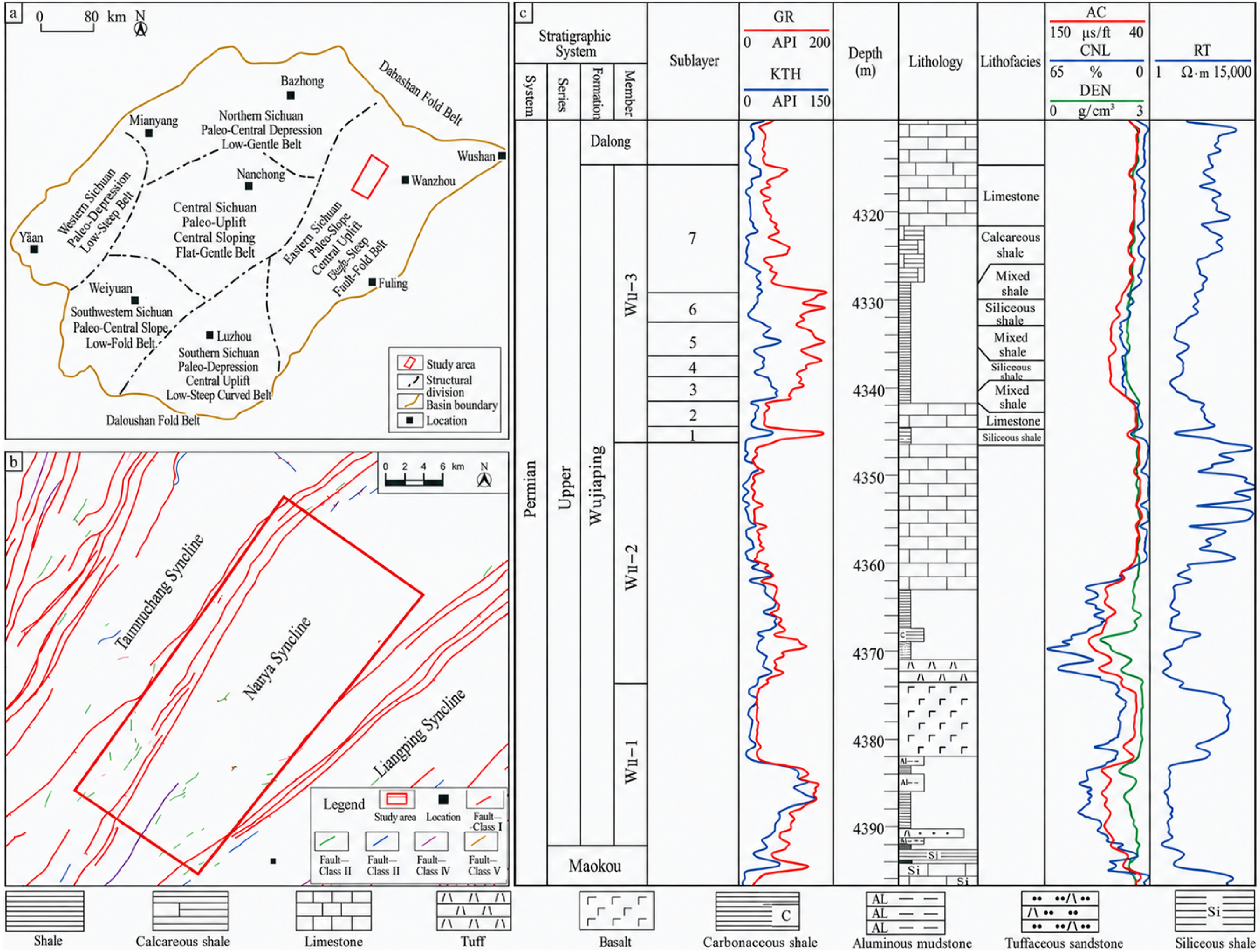
Geological setting of the study area. (a) Structural location; (b) fault distribution; (c) comprehensive stratigraphic column.
The Permian WJP FM in the Nanya Syncline was influenced by the deep-water depositional environment of the Kaijiang–Liangping Trough. It comprises a set of thick, laterally extensive marine organic-rich shales. These are intercalated with argillaceous limestones. Based on lithological assemblages, sedimentary cycles, and well log responses, the WJP FM can be subdivided from bottom to top. Based on lithological assemblages, sedimentary cycles, and well log responses, the WJP FM can be subdivided from bottom to top into the first member (Wujiaping-1 Member, abbreviated as Wu-1 Member), the second member (Wujiaping-2 Member, abbreviated as Wu-2 Member), and the third member (Wujiaping-3 Member, abbreviated as Wu-3 Member) (Figure 1(c)). The Wu-1 Member exhibits complex lithology. It primarily consists of bauxitic mudstone, shale, and basalt. The Wu-2 Member is dominated by calcareous shale and micritic limestone. The Wu-3 Member is the key interval for exploration and development. It comprises shale interbedded with thin limestone layers. It is the primary research target of this study. Based on lithological characteristics and well log responses, the Wu-3 Member can be further subdivided into seven sublayers. Sublayers 1 and 3–6 are dominated by black organic-rich shale deposited in relatively deep water. Their well log responses show high gamma-ray, high acoustic transit time, low density, and moderate-to-low resistivity. Sublayers 2 and 7 are dominated by micritic limestone. They have moderate GR values and higher density. In Sublayer 7, the water depth further shallowed. Carbonate content increased. Well log responses show moderate-to-low gamma-ray and moderate-to-high resistivity.
Samples and methods
Samples
This study focuses on the Permian WJP FM shale in the Nanya Syncline, eastern Sichuan Basin. A total of 35 core samples were systematically collected. Samples came from typical high-yield wells in the study area (Well DY1H and Well D201) and relevant adjacent wells. Sampling intervals cover various lithofacies types within the Wu-3 Member. This ensures adequate representativeness. To systematically characterise reservoir properties, the following analytical tests were conducted. These were based on existing petroleum exploration data and regional geological survey results. The tests include: organic geochemical analysis, XRD, and measurement of physical property parameters. The experimental data obtained provide reliable fundamental information. They support analysis of shale reservoir characteristics, pore development mechanisms, and exploration potential evaluation.
Methods
Thin section preparation
Ordinary and cast thin sections were prepared at the State Key Laboratory of Oil and Gas Reservoir Geology and Exploitation, Southwest Petroleum University, following the Chinese national standard Methods for Rock Thin Section Identification (GB/T 17412-1998). For ordinary thin sections, rock samples were cut perpendicular and parallel to bedding, impregnated with epoxy resin, ground, polished, and cover-glass mounted to a standard thickness of ∼0.03 mm. For cast thin sections, blue-dyed epoxy resin was injected into the pore space under controlled temperature and pressure. After solidification, the samples were ground to the required thickness.31,32 Mineral morphology and texture were observed under a Leica DM2700P transmitted/reflected polarising microscope.
Organic geochemical analysis
TOC content and vitrinite reflectance (Ro) were measured at the Geological Laboratory of the Exploration and Development Research Institute, Daqing Oilfield Company Limited. TOC was determined using a LECO CS230 carbon–sulfur analyzer after acid dissolution (HCl, 60–80 °C), with analytical accuracy better than 5%, following standard GB/T 19145-2003. For Ro measurement, fresh shale samples were embedded in epoxy resin, ground, and polished into polished blocks. Random reflectance was measured under oil immersion using a reflected light microscope and photometer calibrated with standard reference materials.33,34 After exclusion of anomalous readings, the arithmetic mean of measurements on unstructured vitrinite was reported as the Ro value, following standard GB/T 18602-2012.
X-ray diffraction analysis
Whole-rock and clay-fraction mineral compositions were determined with a Rigaku D/Max-2500 X-ray diffractometer at the Chongqing Gas Field laboratory, following the industry standard SY/T 5163-2018. Quantitative mineral percentages were calculated from peak area intensities, with an analytical accuracy better than 2%.
Field emission scanning electron microscopy observation
Reservoir space and pore types were investigated using FE-SEM combined with argon-ion polishing. Shale samples were cut anhydrously along the axial direction into cubes (10 mm × 5 mm × 5 mm), mounted in epoxy resin, and polished with sandpaper (180–4000 mesh) to a surface roughness of ∼0.5 mm. 35 The polished surfaces were then milled under vacuum using a high-energy argon-ion beam (Leica EM RES 102) prior to observation.
Major and trace element analysis
Major element concentrations were measured with an S4 PIONEER X-ray fluorescence (XRF) spectrometer, following standard Q/SY DQ0338-2013, with accuracy better than 2%. 36 Trace element analysis was performed using an ELAN DRC-e high-resolution inductively coupled plasma mass spectrometer (ICP-MS), with accuracy better than 5%. The analysis was conducted at 25 °C and 30% humidity. Whole-rock powder samples (200 mesh) were oven-dried at 60 °C for 12 h, and 2–3 g of dried powder was pressed uniformly onto a sample tray for measurement.
Low-temperature nitrogen adsorption and high-pressure methane isothermal adsorption
Low-temperature N₂ adsorption and high-pressure CH4 isothermal adsorption experiments were conducted to characterise pore structure and gas adsorption capacity. N2 adsorption isotherms were measured with an ASAP 2460 surface area and porosity analyser, and specific surface area was calculated using the Brunauer-Emmett-Teller (BET) model. 37 High-pressure CH4 isothermal adsorption was measured using an Ispsprp apparatus, and the adsorption data were fitted with the Langmuir model. All procedures followed the Chinese standard GB/T 35210.2-2020.
Results
Shale reservoir characteristics
Petrology and reservoir space characteristics
The WJP FM in the study area contains four lithofacies types. They are siliceous shale, mixed shale, calcareous shale, and argillaceous shale (Figure 2(a) and (b)). 38 Among these, siliceous shale is the dominant reservoir lithofacies. It is primarily distributed in Sublayer 1 and Sublayers 3–6 of the Wu-3 Member. Its mineral composition is dominated by quartz. It contains minor feldspar, carbonate minerals, and clay minerals. The core appears grey to grayish-black. It has a dense, massive structure. It exhibits well-developed, continuous planar horizontal bedding. This indicates a quiet-water depositional environment. The continuous planar bedding, composed of alternating dark organic-rich laminae and lighter siliceous laminae, suggests slow suspension sedimentation below storm wave base. Under the microscope, microcrystalline quartz aggregates (<5 μm) form a rigid interlocking framework that effectively resists mechanical compaction, a critical prerequisite for primary pore preservation (Figure 2(a) and (b)).

Lithofacies and reservoir space characteristics of the WJP FM shale in the Nanya area: (a) Well D201, 4570.47 m, calcareous–siliceous mixed shale; (b) Well DY1H, 4367.42 m, argillaceous shale; (c) Well TD106, siliceous shale with radiolarians; (d) Well DY1H, 4332.69 m, calcareous–argillaceous mixed shale with minor bioclasts; (e) Well DY1H, 4329.51 m, irregular organic-matter-hosted pores; (f) Well DY1H, intragranular dissolution pores; (g) Well DY1H, 4337.28 m, platy illite intergranular pores; (h) Well D201, 4569.71 m, finely crystalline calcite with minor intragranular pores and grain-boundary fractures; (i) Well D201, 4573.8–4573.9 m, tensile fractures and abnormal high-pressure fractures showing crosscutting relationships; (j) Well D201, 4559.56–4559.70 m, lamellation fractures; (k) Well DY1H, 4375.56 m, slickensides; (l) Well DY1H, 4377.94 m, high-angle shear fractures.
Microscopically, subhedral to anhedral quartz and large bivalve fossils aligned parallel to bedding are observed. A small amount of radiolarian fossils is also present (Figure 2(c) and (d)). This indicates biogenic characteristics under deep-water silica-rich conditions. The source of silica is related to hydrothermal activity triggered by the Emeishan basalt eruption. Silica enrichment in seawater promoted the proliferation of siliceous organisms. 39 This led to the formation of biogenic silica.
The WJP FM shale reservoir exhibits diverse types of reservoir space. These are classified into pores and fractures. Pores are dominated by organic-matter-hosted pores. Inorganic pores are subordinate. Honeycomb-like pores are commonly developed within amorphous organic matter. These pores are mostly circular to elliptical or irregular in shape. Pore sizes vary. They are primarily distributed in the ranges of 10–40 nm and 100–300 nm. Most pores occur in isolation. Some exhibit connectivity. They constitute the primary storage space for adsorbed gas. The larger pores (100–300 nm) commonly exhibit elongated or polygonal boundaries, suggesting coalescence of adjacent pores during progressive thermal maturation. These connected clusters enhance pore network accessibility, as revealed by the local merging of adjacent honeycomb cells observed under FE-SEM (Figure 2(e)). 40 The areal porosity proportion of organic-matter-hosted pores reaches 70%–90%. This indicates favourable conditions for gas occurrence. Inorganic pores are less developed. They mainly include intragranular dissolution pores, intergranular pores, and intercrystalline pores. Their morphology is predominantly sub-rounded, square, or rhombic. Pore sizes are concentrated between 200 nm and 500 nm. They are dominated by macropores (>50 nm) (Figure 2(f) to (h)). These serve as secondary storage space for free gas. Intragranular dissolution pores are most abundant within carbonate bioclasts and feldspar grains, where selective dissolution along cleavage planes and twin lamellae produces intraparticle porosity (Figure 2(f)). Intergranular pores between authigenic illite platelets form slit-shaped voids, typically less than 100 nm wide, that contribute significantly to the micropore volume (Figure 2(g)). Intercrystalline pores developed between finely crystalline calcite crystals display well-defined rhombic geometries and are generally isolated (Figure 2(h)). Although these inorganic pore types contribute less to total porosity than organic-matter-hosted pores, they provide essential storage volume for free gas. 41
Fractures constitute important flow pathways and storage space within shale reservoirs. They play a significant role in improving permeability and connecting isolated pores.42,43 Fracture development in the WJP FM shale is generally poor. Fractures are primarily structural and non-structural.44,45 Structural fractures include shear fractures and tensile fractures. Shear fractures predominantly occur at high angles (dip angles of 55°–75°). They exhibit smooth, planar walls and stable orientation. They cut across shale bedding planes without being constrained by them. Their extension length can reach tens of centimetres. They show strong penetrative capability. A minority are influenced by stress attenuation. They extend only a few centimetres and occur as short, isolated features. Slickensides are observable (Figure 2(i)). Due to subsequent tectonic compressive stress, most shear fracture walls are tightly closed (aperture 0.1–0.3 mm). They are predominantly unfilled. They constitute effective flow pathways. The high-angle orientation (55°–75°) of these shear fractures, coupled with their penetration across multiple bedding planes, establishes vertical connectivity between otherwise isolated horizontal lamellation fractures (Figure 2(j)). Where two conjugate shear fracture sets intersect, fracture density increases locally, forming a reticulated network. A small number are filled with later-stage calcite and minor quartz. Boundaries between fill and fracture walls are distinct. No strong cementation has occurred. Some partially filled fractures retain minor residual void space. Tensile fractures generally have short extension distances. They may intersect with lamellation fractures and shear fractures to form networks. They rarely form penetrative fractures. They are generally curved. Fracture wall edges are irregular, jagged, or hackly (Figure 2(k)). Under tensile stress, their aperture (approx. 0.5 mm, locally >1 mm) is significantly larger than that of shear fractures. However, most are semi-filled to fully filled by minerals. This results in loss of storage and flow capacity. They require reactivation through hydraulic fracturing. Morphologically, these tensile fractures are distinguishable from shear fractures by their irregular, curved walls and variable aperture along the fracture trace. Their intersection with bedding-parallel lamellation fractures creates localised nodes of enhanced permeability, although the high degree of mineral filling limits their contribution to present-day flow capacity. Non-structural fractures mainly include lamellation fractures and abnormal high-pressure fractures.46–48 Lamellation fractures are influenced by sedimentary laminae and hydrocarbon generation overpressure. They are distributed nearly parallel to bedding (dip angle <10°). They appear as elongated strips or wavy, curved features. They exhibit relatively high development density. They can effectively enhance horizontal permeability. However, their lateral extension is limited. Continuity and connectivity are poor. Most occur as segmented features. They exhibit a high degree of mineral filling (calcite, organic matter, etc.) (Figure 2(l)). Abnormal high-pressure fractures are poorly developed. They are mostly distributed along lithological transition surfaces. They exhibit unstable orientation. They are highly filled and appear as discontinuous veins. Some veins exhibit hollow centres. At the microscopic scale, microfractures such as grain-boundary fractures can be observed (Figure 2(l)).
Physical properties and pore structure
The physical properties of the WJP FM shale reservoir exhibit strong heterogeneity. Based on systematic core sample testing, overall porosity ranges from 0.16% to 9.75%. Porosity and permeability display a strong correlation. The exponential function correlation coefficient is R2 = 0.97 (Figure 3). Vertically, the Wu-3 Member exhibits the best porosity. It ranges from 3.6% to 6.8%, with an average of 5.6%. Among its sublayers, Sublayers 4 and 5 possess the highest porosity. Porosity in Sublayer 4 is generally high. It ranges from 3.42% to 6.48% in Well DY1H. It ranges from 3.30% to 7.99% in Well D201. Sublayer 5 also exhibits relatively high porosity. Sublayers 3 and 6 display relatively lower porosity. However, locally high porosity still occurs. This reflects the inherent heterogeneity of the reservoir (Figure 4(a) and (b)). Pulse permeability tests were conducted on 12 shale plug samples from Well DY1H. Samples were from different depth intervals (4328.83–4336.73 m and 4342.46–4367.82 m). Results show that permeability is at a very low level. It exhibits typical characteristics of a tight reservoir. There is strong vertical heterogeneity. Permeability ranges from 0.000347 mD to 0.125 mD. Average permeability is 0.0312 mD (Figure 4(c)). The extremely low permeability dictates that efficient development will require artificial stimulation measures. Hydraulic fracturing is necessary.
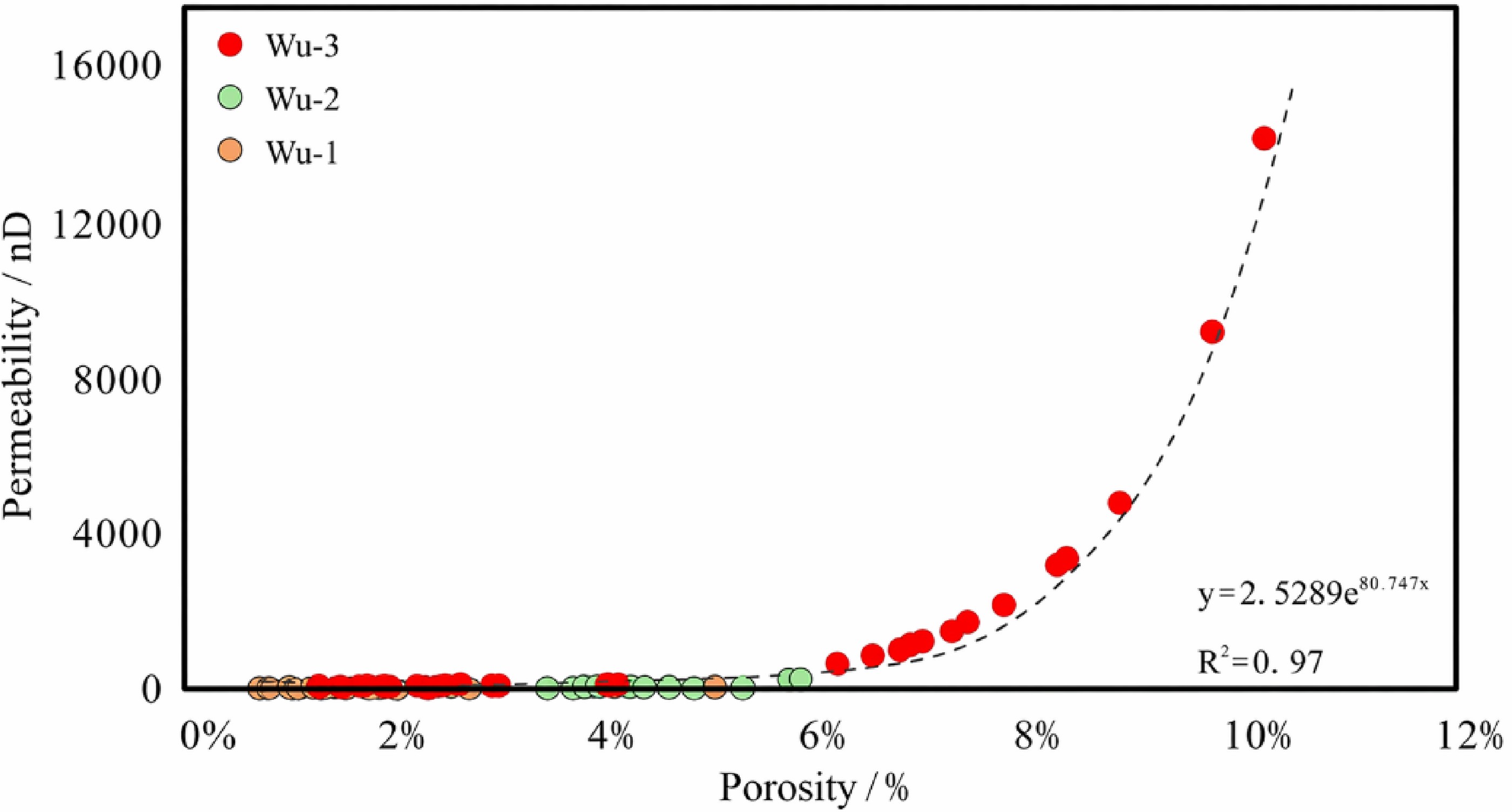
Correlation between porosity and permeability of the WJP FM in Well DY1H.
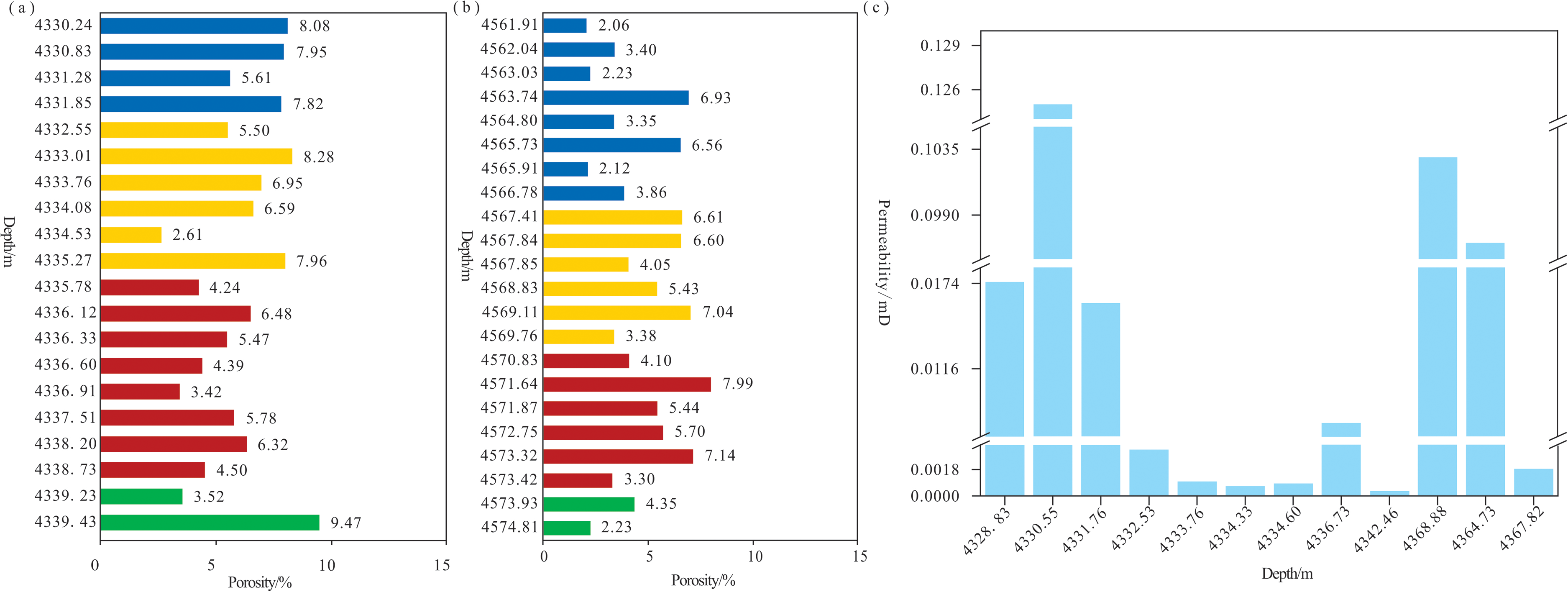
Physical property characteristics of the WJP FM in the Nanya area: (a) porosity of sublayers in the Wu-3 Member, Well DY1H; (b) porosity of sublayers in the Wu-3 Member, Well D201; (c) permeability histogram of the WJP FM, Well DY1H.
In this study, two complementary techniques were employed to characterise the pore structure and gas storage potential of the shale. Low-temperature N2 adsorption is a standard method for characterising the specific surface area and pore size distribution (PSD) of mesopores (2–50 nm) and micropores (<2 nm), providing crucial information on the storage capacity for adsorbed gas.49–51 However, N₂ molecules may have limited access to fine micropores due to kinetic and steric effects. To address this, high-pressure CH4 isothermal adsorption experiments were conducted. This method, conducted under reservoir-like pressure and temperature conditions, uses methane as the probing molecule, which has a kinetic diameter closer to that of shale gas. It directly measures the gas storage capacity, including both the adsorbed and free gas phases. While it cannot replace N2 adsorption for high-resolution PSD analysis, it provides a more operationally relevant measure of the total gas uptake under in situ conditions. Combining both methods offers a comprehensive understanding, bridging the gap between detailed pore structure characterisation and actual reservoir gas storage capacity.
The low-temperature nitrogen adsorption curves of the WJP FM shale exhibit a reverse ‘S’ shape. They form a closed loop composed of adsorption and desorption branches. This is known as a hysteresis loop. It is a typical characteristic of porous media. IUPAC classifies hysteresis loops into four types: H1 (cylindrical pores), H2 (ink-bottle pores), H3 (wedge-shaped pores), and H4 (parallel plate-like pores). The adsorption hysteresis loops here exhibit characteristics of both H2 and H4. This indicates complex pore types (Figure 5(a)). The WJP FM shale is predominantly composed of micropores and mesopores. They account for 47.3% and 38.5%, respectively (Figure 5(b)). From the high-temperature methane adsorption curves, the adsorbed amount initially increases then decreases with increasing pressure. For Well D202 samples, peak excess adsorption is reached at 16.0 MPa. Maximum excess adsorption ranges from 0.200 cm3/g to 1.327 cm3/g. Average adsorption capacity is 0.716 cm3/g (Figure 5(c)). For Well DY1H samples, peak excess adsorption is reached at 12.87 MPa. Maximum excess adsorption ranges from 0.880 cm3/g to 5.180 cm3/g. Average adsorption capacity is 2.703 cm3/g (Figure 5(d)). This reflects how pore structure influences high-pressure curve morphology. It regulates the dynamic equilibrium between adsorbed phase density and gas phase density. The peak excess adsorption value effectively evaluates shale gas adsorption capacity.
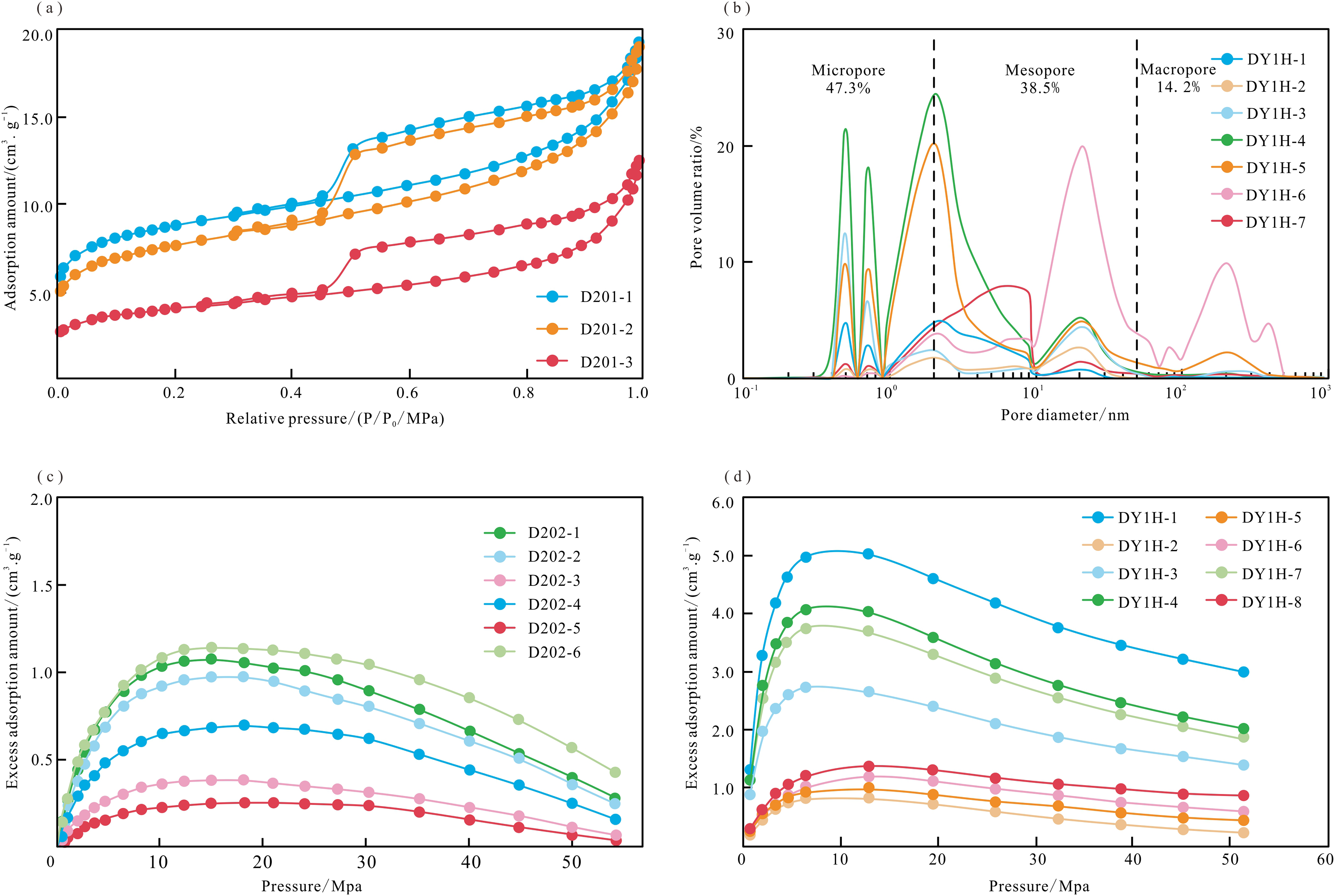
Adsorption curves and pore size distribution curves of the WJP FM shale in the Nanya area: (a) N2 isothermal adsorption–desorption characteristics, Well D201; (b) pore size distribution, Well DY1H; (c) high-pressure methane isothermal adsorption characteristics, Well D202; (d) high-pressure methane isothermal adsorption characteristics, Well DY1H.
Gas-bearing characteristics
The total gas content of the WJP FM shale is generally high. Measured gas contents from multiple wells exceed 3.0 m3/t. According to on-site desorbed gas content tests, Well DY1H exhibits the highest total gas content. It ranges from 1.12 mL/g to 16.16 mL/g. The average is 8.05 mL/g. Well D201 ranges from 0.38 mL/g to 7.39 mL/g. The average is 4.29 mL/g. Well D202 ranges from 0.35 mL/g to 5.56 mL/g. The average is 2.55 mL/g (Figure 6(a) to (c)). Vertically, the Wu-3 Member exhibits the highest gas content in all wells. Gas chromatography analysis of shale samples from Well DY1H shows that produced gas is dominated by hydrocarbons. Non-hydrocarbon gas content is low. It exhibits typical dry gas characteristics. Among hydrocarbon components, methane is absolutely dominant. Its molar fraction is as high as 95.00%. Heavier hydrocarbon content is extremely low. Ethane molar fraction is only 0.73%. Propane is 0.04%. Isobutane, n-butane, isopentane, and others are all 0%. This extreme depletion indicates high thermal maturity. The shale has undergone relatively strong thermal evolution.
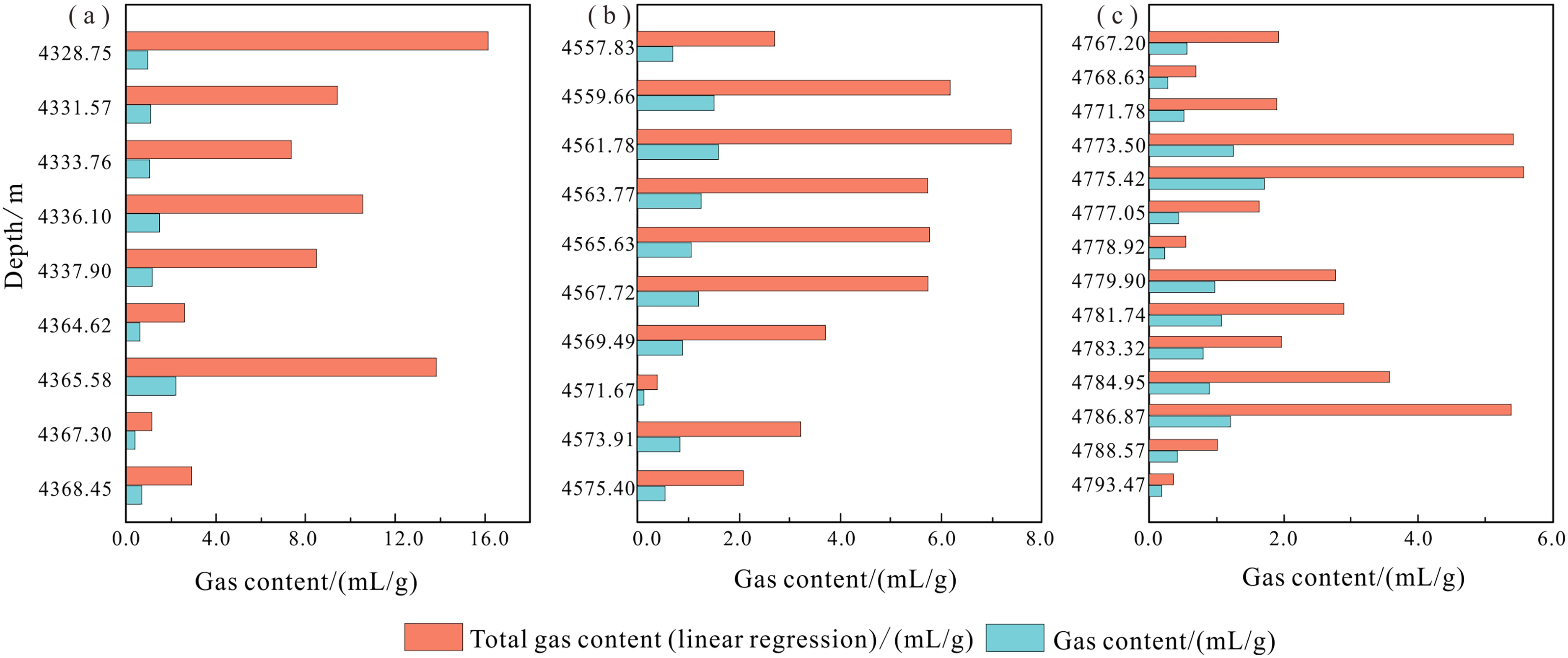
Gas content test results of individual wells in the Wu-3 Member. (a) Well DY1H; (b) Well D201; (c) Well D202.
Brittleness characteristics
In this study, shale brittleness is evaluated using a mineral composition-based method, which is the most widely applied approach in the absence of dynamic elastic parameters. 52 The Brittleness Index (BI) is defined as the weight percentage of brittle minerals relative to the total mineral content. The brittle minerals considered in this study include quartz, feldspar (plagioclase and K-feldspar), and carbonate minerals (calcite and dolomite). In contrast, clay minerals and other minor phases are considered as non-brittle, plastic components.53–55 The Wu-3 Member is characterised by high siliceous content and the lowest clay mineral content. Brittle minerals account for up to 83.95% of total mineralogy. Consequently, the reservoir exhibits the strongest brittleness. It is prone to forming complex fracture networks during fracturing. It is the favourable interval for stimulation. In the Wu-2 Member, siliceous content decreases. Clay mineral content increases. Brittle minerals account for 59.73%. This indicates moderate brittleness and enhanced plastic characteristics. Fracturing potential is reduced compared to the Wu-3 Member. The Wu-1 Member contains over 50% clay minerals. The reservoir is dominated by plasticity. Brittleness is weak. Fractures tend to close easily during fracturing. This poses significant stimulation challenges (Figure 7(a)). Significant vertical variations in brittleness are observed among sublayers. Brittle mineral content in Sublayers 3–6 ranges from 53% to 88%. This indicates high overall brittleness. Sublayer 4 exhibits a high quartz proportion and low clay content. It has the strongest brittleness. It is the primary target interval for fracturing stimulation. Sublayer 3 exhibits relatively higher plasticity (Figure 7(b)). Optimisation of operational parameters is required during fracturing. This will improve fracture proppant placement efficiency.
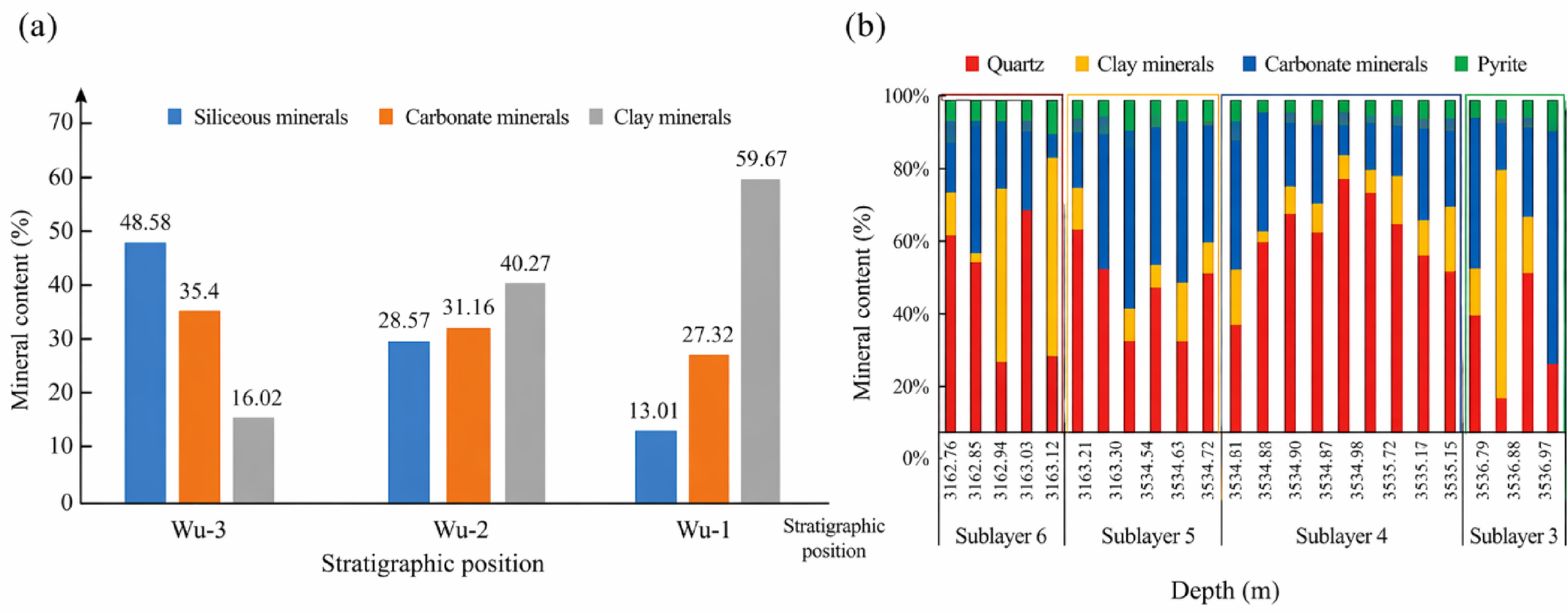
Brittle mineral characteristics of the WJP FM in the Nanya Syncline: (a) histogram of brittle minerals in the WJP FM, Well DY1H; (b) distribution of brittle mineral content in sublayers of the Wu-3 Member, Well DY1H.
Geochemical characteristics
Organic matter type
Organic matter type is a key parameter determining shale hydrocarbon generation potential. Different kerogen types possess varying oil- and gas-generating capacities. Organic matter type was determined using kerogen carbon isotope analysis and kerogen microscopy. Organic matter in the WJP FM shale is predominantly Type II1 to Type III kerogen. This combination corresponds to relatively strong hydrocarbon generation potential. It provides foundational source rock potential for shale gas enrichment. Kerogen isotopic geochemistry shows δ13C values concentrated between −30‰ and −20‰. This is consistent with marine depositional environment characteristics. Combined with the regional deep-water reducing setting and biomarker characteristics, organic matter source is primarily marine algae and benthic organisms (Figure 8(a) to (d)). The relatively high lipoid content of this biogenic material constitutes the source material. It forms Type II1 to Type III kerogen.
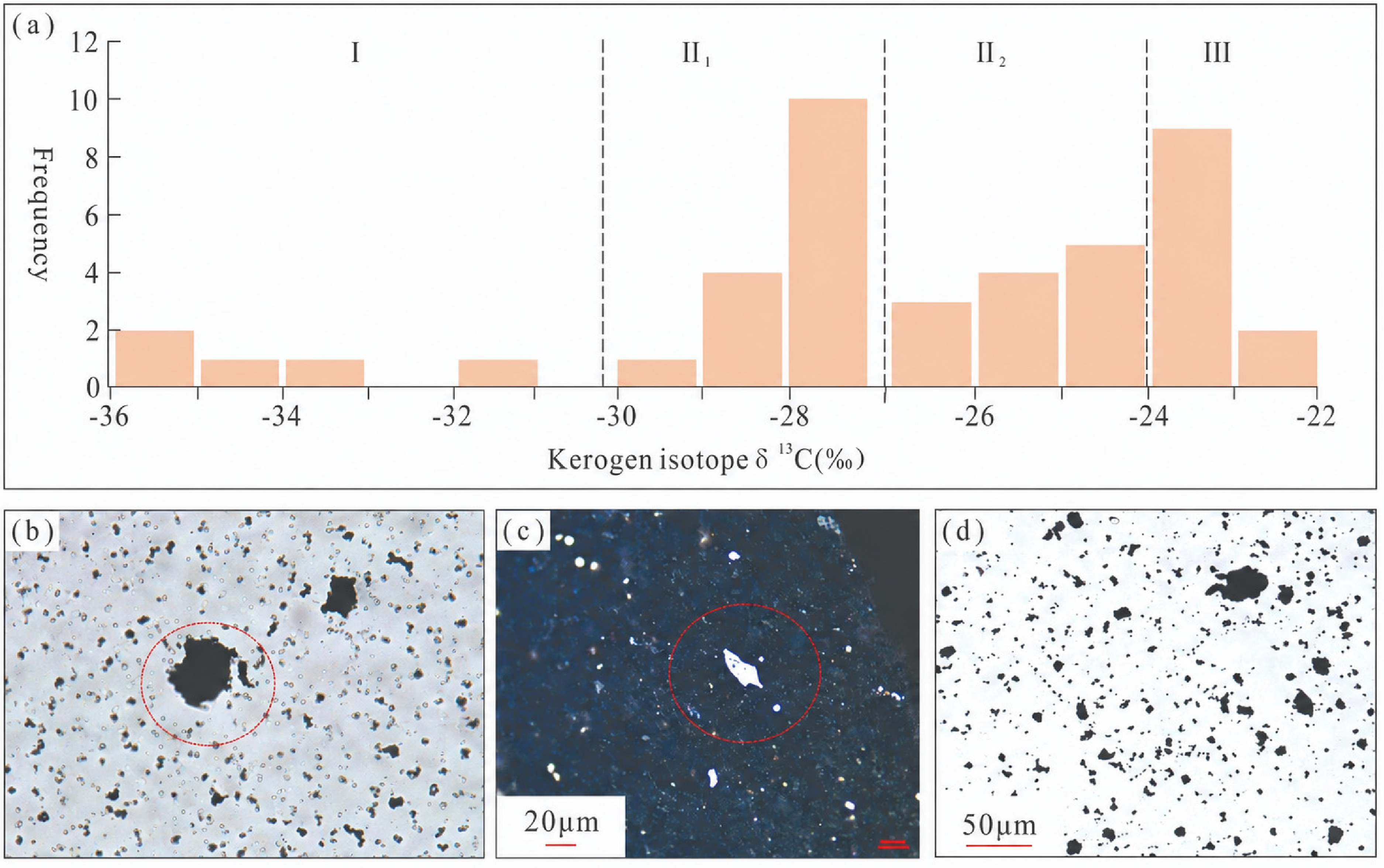
Organic matter type of the WJP FM in the Nanya Syncline: (a) statistical histogram of kerogen types; (b) Well DY1H, humic amorphous organic matter; (c) Well G36, vitrinite; (d) Well DT003-3, amorphous organic matter and vitrinite.
Organic matter maturity
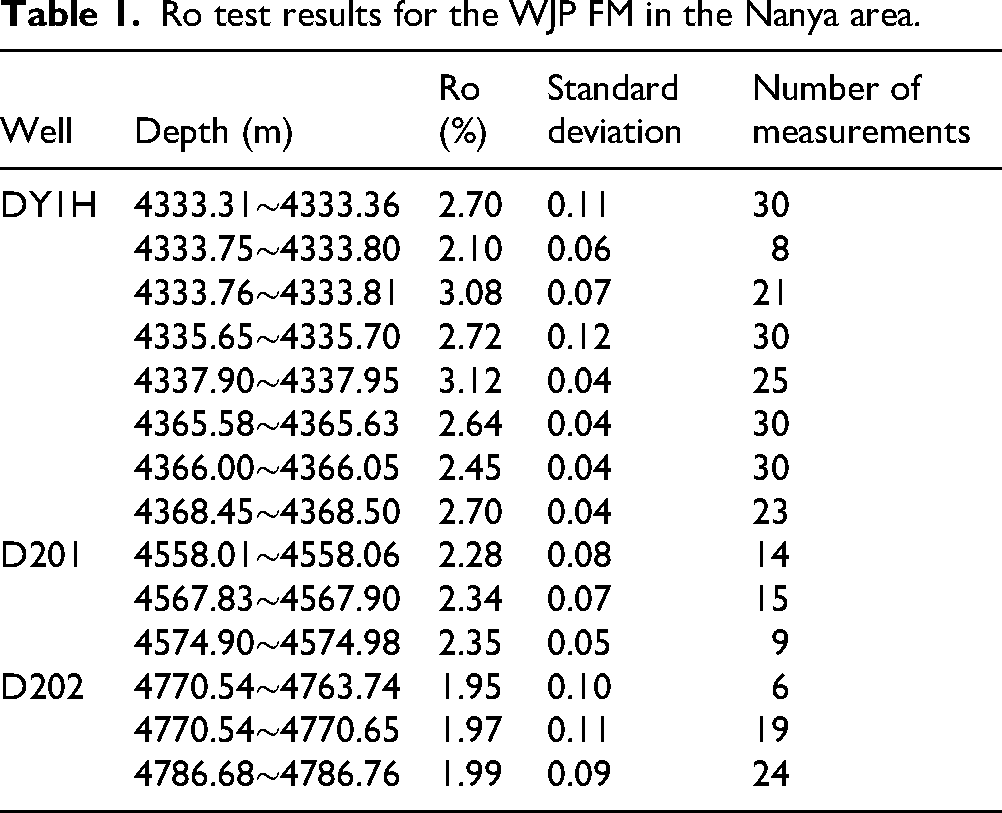
Organic matter maturity reflects the degree of kerogen evolution. It was quantitatively evaluated using the Ro method. Test data from Well DY1H show that Ro ranges between 2.5% and 3.1%. Average Ro is 3.0% for the Wu-3 Member. It is 2.5% for the Wu-2 Member. It is 3.1% for the Wu-1 Member. All values exceed 2.0%. Significant maturity differences exist among members. These are related to variations in burial depth and thermal event intensity. Ro data from three typical shale gas wells show Ro values ranging from 1.95% to 3.12%. They fall within the high-mature to over-mature stage (Table 1). Average Ro is 2.8%. This indicates over-mature evolution. Hydrocarbon products are predominantly natural gas. Hydrocarbon generation potential is largely exhausted. The reservoir primarily preserves early-generated natural gas.
Ro test results for the WJP FM in the Nanya area.
Organic matter abundance
TOC content is the core indicator for quantifying organic matter abundance. Based on determined type and maturity, analyzing TOC patterns provides a more comprehensive understanding. Organic matter abundance is generally high. Samples with TOC between 0% and 2% account for 39.22%. Samples with TOC greater than 4% collectively account for 49.02%. This indicates high organic matter content (Figure 9(a)). Organic carbon content exhibits strong heterogeneity. Higher TOC intervals are concentrated in the Wu-3 Member and upper Wu-2 Member. A histogram of 61 samples from the Wu-3 Member shows TOC content of 4%–6% accounts for the highest proportion (22.95%). Samples with TOC greater than 4% collectively account for 73.78%. This indicates high organic matter abundance in the Wu-3 Member. It is the primary gas-generating interval. It is key to shale gas accumulation (Figure 9(b)). Vertically, Wu-3 Member TOC content is significantly higher than Wu-1 and Wu-2 Members. Average TOC is 6.93% for Wu-3. It is 2.93% for Wu-2. It is 0.24% for Wu-1. TOC exhibits an increasing trend from bottom to top. The deep-water shelf facies of Wu-3 is conducive to organic matter preservation. Organic matter abundance exhibits significant interlayer differences vertically. TOC values within sublayers show the greatest variation. They range from 0.15% to 14.10%. Some intervals exceed 10% (Figure 9(c)). These vertical variations are primarily controlled by sedimentary cycles and paleo-oceanic environment changes. Sublayers 4 and 5 exhibit the highest average TOC content. This is presumably due to deepening water during transgression. Anoxic reducing conditions were enhanced. Organic matter preservation was favourable. This resulted in significantly increased TOC abundance.
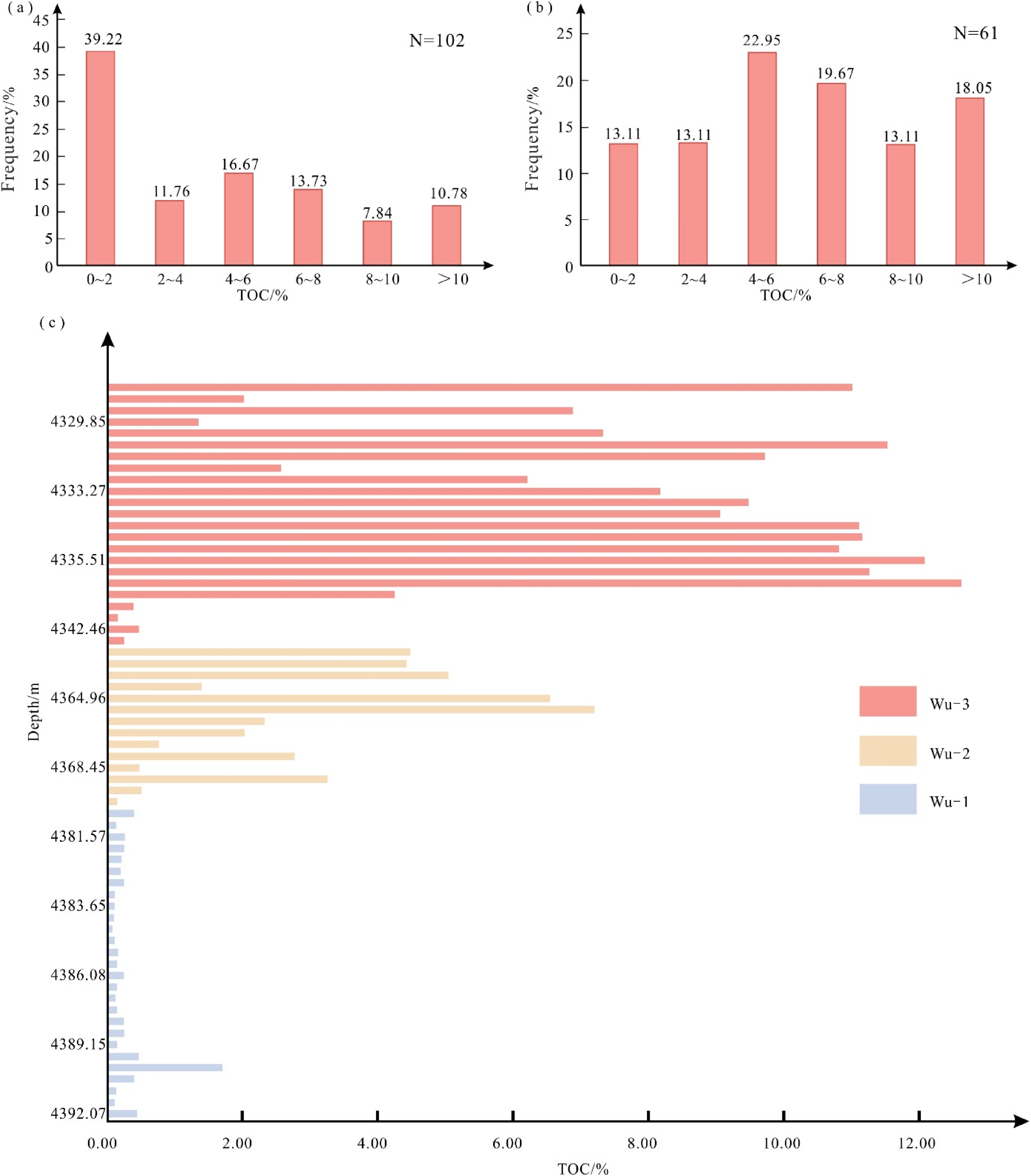
TOC content distribution of the WJP FM in the Nanya area: (a) TOC content interval distribution of the WJP FM; (b) TOC content interval distribution of the Wu-3 Member; (c) Vertical distribution of TOC content of the WJP FM
Analysis of factors influencing reservoir characteristics
Influence of sedimentary environment on reservoir development
Reservoir development is closely related to sedimentary environment. It is the core factor controlling reservoir quality. It regulates mineral types, content, and organic matter accumulation and preservation. It governs hydrocarbon generation potential and reservoir properties. The deep-water shelf facies laid the material foundation for high-quality reservoirs.
During deposition of the Wu-3 Member, sea-level rise and rift tectonic activity influenced the area. Thick successions of deep-water shelf facies sediments were deposited. They exhibited a banded distribution in the Kaijiang–Liangping Trough and Wanzhou area. This provided a favourable setting for organic-rich shale formation. 56 This environment controlled mineralogical composition and organic matter enrichment. Deep water and weak circulation created a high-salinity, anoxic, reducing environment. This was conducive to organic matter preservation. TOC content is generally high. Organic matter is dominated by Type II1 kerogen. It has favourable hydrocarbon generation potential.56,57 This environment suppressed aerobic microbial decomposition. It ensured organic matter burial. It formed high-quality source rock intervals. Upwelling brought abundant nutrients. This led to extensive development of biogenic silica. During early diagenesis, biogenic silica closely associated with organic matter. This formed siliceous shale with high hydrocarbon generation capacity. High brittle mineral content (up to 83.95%) enhances fracability.58–60 It also provides a rigid framework that resists compaction. This preserves organic-matter-hosted pores. In contrast, Wu-1 and Wu-2 Members were deposited during the trough formation transition. They received significant terrigenous clay and carbonate input. Resulting argillaceous shale and calcareous shale have lower compaction resistance. Their pore development is significantly less than Wu-3 Member. Furthermore, sedimentary environment heterogeneity directly influences vertical reservoir quality variation. Factors like eustatic fluctuations, volcanic activity, and paleoproductivity control terrigenous supply and silica precipitation. They also control organic matter enrichment degree. This causes differences in pore development, mineral composition, and gas-bearing properties. 61 In summary, the anoxic deep-water shelf environment is the key controlling factor. It determines high organic matter content and biogenic silica-rich assemblage. This controls reservoir development.
Influence of organic matter hydrocarbon generation, pore formation, and thermal evolution
Development of organic-matter-hosted pores is closely related to thermal evolution mechanisms. Organic matter type, occurrence mode, and thermal maturity collectively control pore formation and preservation.
62
Organic matter is predominantly Type II1 kerogen. Organic-matter-hosted pores mainly develop within sapropelic components and solid bitumen. They are poorly developed within vitrinite. As thermal maturity increases, shale has reached the over-mature stage (average Ro
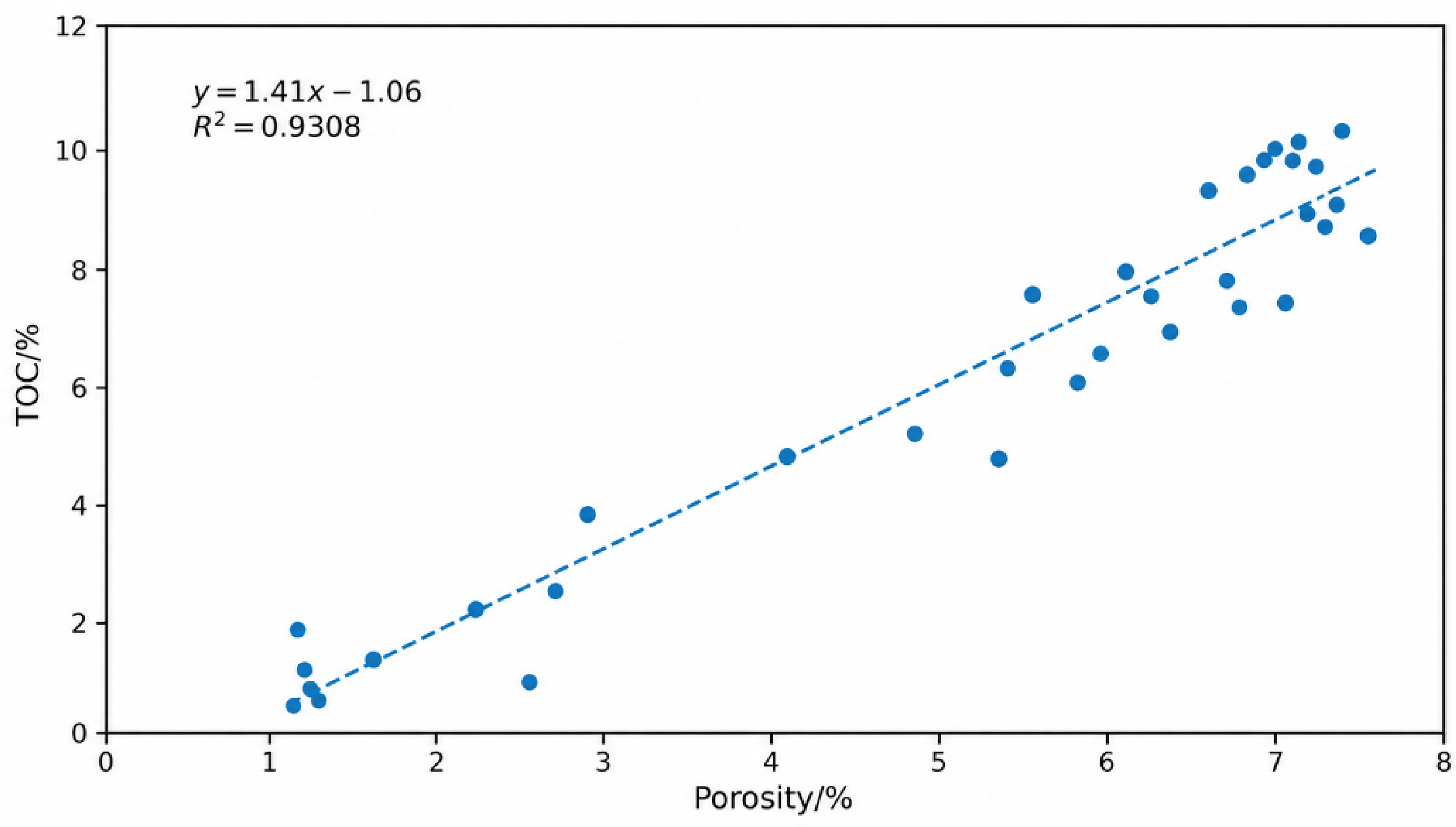
Linear relationship between organic matter and porosity in the Well DY1H.
Regulation of microfracture networks and their effectiveness by the tectonic stress field
Microfracture network development and effectiveness are strongly regulated by the tectonic stress field. Studies indicate the eastern Sichuan Basin has undergone multiple tectonic modification phases.63,64 This shaped the present-day detachment fold belt pattern. Intense tectonic compression during the Yanshanian–Himalayan orogenies played a key role in microfracture development. Compared with tight anticlines, strata in synclinal areas exhibit gentle dips. Structural deformation intensity is moderate (Figure 11(a)). Microfractures and nanometer-scale pores provide important storage space. When network fracture systems align with maximum horizontal principal stress direction, they effectively improve shale physical properties. They promote shale gas migration and enrichment. This tectonic evolution exerts a dual regulatory effect. First, Wu-3 Member siliceous shale possesses an extremely high brittleness index. It is susceptible to brittle fracturing under tectonic stress. Abundant bedding-parallel microfractures and oblique tectonic fractures are generated (Figure 11(b)). These microfractures provide storage space for free gas. More importantly, they ‘bridge’ originally isolated nanopores. They form a three-dimensional flow network. This significantly enhances reservoir flow efficiency. Meanwhile, the broad, gentle structural geometry of the Nanya Syncline is conducive to maintaining formation pressure. This avoids large-scale gas loss due to seal failure from excessive stress. Widespread pyrite and other anoxic indicator minerals corroborate this. The area has long been within a closed, reducing fluid system. This provides favourable preservation conditions. It allows shale to retain high gas content (>3.0 m3/t) even at the over-mature stage. However, regulation by tectonic stress is dual. Moderate modification forms effective network fractures. It increases storage space and flow pathways. On the other hand, major faults (especially Class I strike-slip faults with throw >300 m) act as primary gas escape pathways. They exert destructive effects on preservation. 65 Subsequent differences in preservation conditions lead to significant variations among reservoirs. They differ in pore type, scale, porosity, and gas-bearing properties. Therefore, reservoir effectiveness is governed by key factors. These are ‘moderate tectonic modification, effective network fractures, and an intact sealing system’.

Seismic profile and 3D fracture prediction of the WJP FM in the Nanya Syncline. (a) Seismic profile of the Nanya Syncline; (b) 3D fracture prediction map.
Discussion
Evaluation of shale gas preservation conditions
Favourable shale gas zone selection is a systematic engineering endeavour. It is based on multi-factor comprehensive evaluation. The core principle is optimising superposition within the deep-water shelf facies. Key characteristics are ‘high organic matter abundance, high brittle mineral content, moderate thermal evolution, and favourable preservation conditions’. 66 Research indicates the primary criterion is sedimentary facies. The deep-water shelf facies controls organic-rich shale distribution. It determines initial reservoir quality. Organic-rich shale in the Nanya Syncline is widely distributed. Sedimentary environments are favourable. It is situated within a deep-water shelf setting. The Wu-3 Member is the prime target interval. Favourable zones require TOC ≥2%. Organic matter is predominantly Type II1 kerogen. Thermal maturity Ro is in the over-mature stage. This provides a sufficient material basis for gas generation. Brittle mineral content should exceed 40%. This ensures feasibility of hydraulic fracturing. Preservation conditions are critically important. Structural preservation integrity is incorporated into the evaluation system. Areas with well-developed major faults must be avoided. This ensures effective shale gas enrichment. Integrating the above considerations, multiple indicators are used. These include source rock quality, reservoir physical properties, rock mechanics, and gas-bearing characteristics. Reference is made to evaluation criteria for the LMX FM and WJP FM in northeastern Sichuan. This is in accordance with Chinese energy industry standard NB/T 10398-2020. Fourteen evaluation parameters have been selected from three aspects. These are: (1) Sedimentary environment: sedimentary facies, TOC content, Ro, kerogen type, shale thickness; (2) Reservoir characteristics: porosity, brittle mineral content, gas content; (3) Preservation conditions: seal condition, bottom boundary burial depth, controlling faults, fracture development degree, structural style, pressure coefficient (Table 2).
Evaluation criteria for geologically favourable shale gas enrichment zones of the WJP FM in the Nanya area.
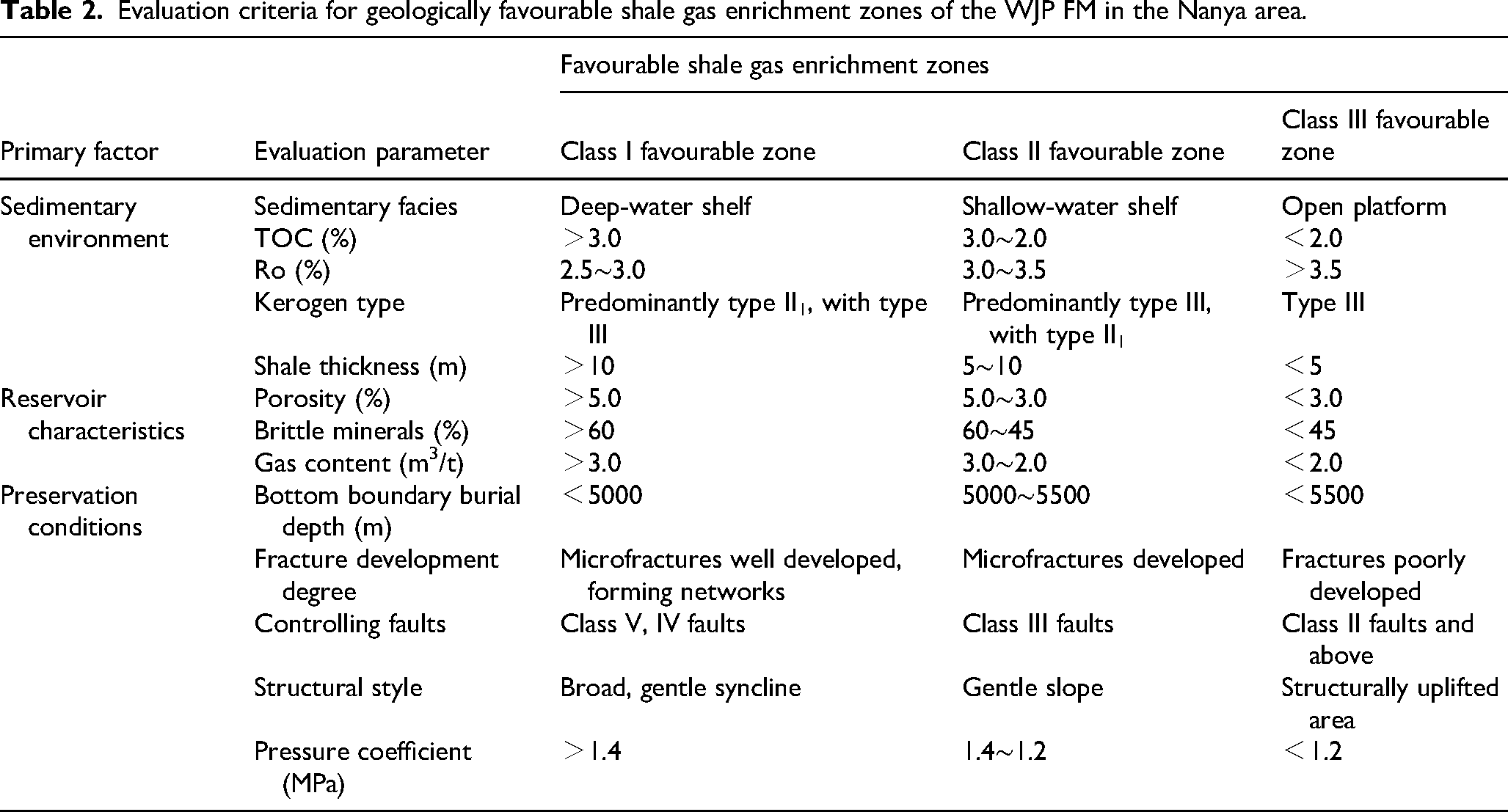
The definition of these parameters and their specific thresholds is based on a multi-source data integration. The Class I threshold for TOC (>3.0%) represents the average value of the high-yield intervals in Wells DY1H and D201, ensuring a sufficient material base for gas generation. The Ro window of 2.5%–3.0% for Class I is defined to target the peak gas generation window where abundant organic-matter-hosted pores are formed while avoiding excessive thermal cracking (Ro > 3.0%) that could lead to pore collapse and graphitisation. The porosity and brittle mineral thresholds are derived from the reservoir characteristics of Sublayer 4, which is the most productive interval in the study area. The pressure coefficient (>1.4) is defined to screen for overpressured reservoirs, a clear indicator of a well-preserved, closed system. Furthermore, the classification of controlling faults is based on vertical throw, as Class I and II faults (throw >300 m) are considered primary escape pathways, whereas Class IV and V faults have limited impact on seal integrity. These criteria represent a synthesis of observed data from the study area, prior evaluation standards for marine shale gas in China, and theoretical understanding of shale gas accumulation. Furthermore, the determination of these values was based on the parameters used in the recent evaluation of shale gas preservation conditions in the WF–LMX FM of the Sichuan Basin.62,66–68
Based on established criteria, favourable target zones are delineated. Sedimentary environment, reservoir parameters, structural style, and burial depth are integrated. Three categories of favourable zones – Class I, Class II, and Class III – are defined (Figure 12).
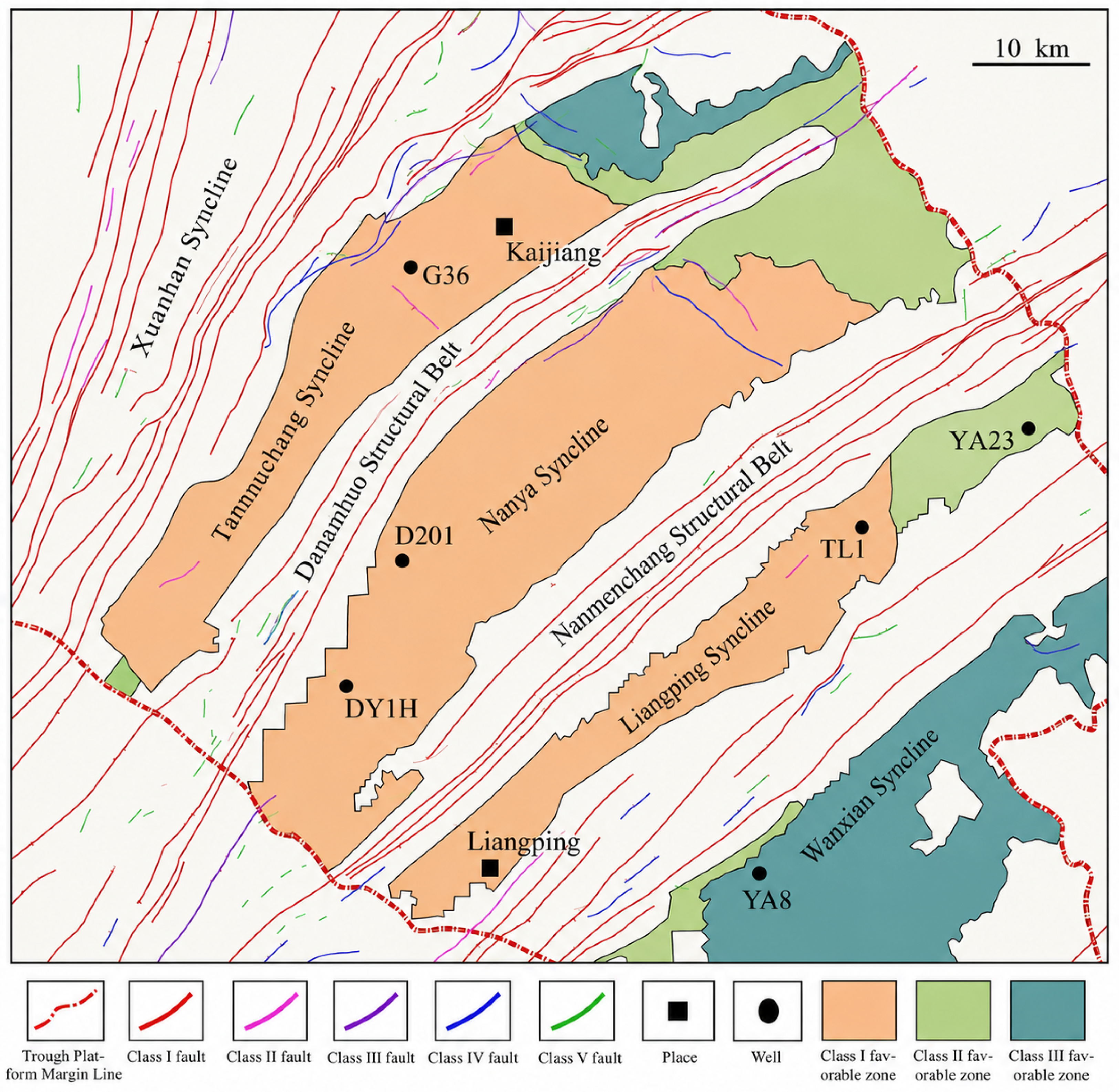
Geologically favourable shale gas enrichment zones of the Permian WJP FM in the Nanya area.
Class I favourable zones are primarily located within the 10 m reservoir thickness contour. They are distributed in the core area of the Nanya Syncline. They lie between the Datianchi structure and the Nanmenchang structural belt. Portions occur in the Tanmuchang Syncline and Liangping Syncline. Overall enrichment conditions are favourable. Within the Nanya Syncline, Wells DY1H and D201 tested high daily production rates. They produced 32.06 × 10⁴ m3 and 56.27 × 10⁴ m3, respectively. This confirms excellent exploration and development potential.
Class II favourable zones are situated within the trough platform margin line. They lie outside the 10 m reservoir thickness contour. Geographically, they are in northeastern parts of the Tanmuchang, Nanya, and Liangping synclines. Depositional and reservoir conditions are slightly inferior to Class I zones. Burial depth is greater. Some areas are influenced by controlling faults. Preservation conditions are poorer. These zones serve as secondary exploration areas.
Class III favourable zones are located in the Wanxian Syncline in the southeastern study area. A small portion occurs in the northeastern Tanmuchang Syncline. Overall depositional, reservoir, and preservation conditions are relatively poor. Burial depth is substantial. These areas are prospective zones for future exploration.
Influence of preservation conditions on shale gas enrichment
Preservation conditions are widely regarded as the ultimate determinant of shale gas enrichment, particularly for over-mature marine shales that have undergone complex, multi-phase tectonic evolution. As demonstrated in the preceding section, the Nanya Syncline preserves high gas content (avg. 5.2 m3/t in the Wu-3 Member) despite its location within the structurally active high-steep belt of eastern Sichuan. This apparent paradox is resolved by a combination of favourable structural style, moderate deformation intensity, and effective top and bottom seals, which collectively maintained a closed fluid system through the critical Yanshanian–Himalayan orogenic phases.
The broad, gently dipping geometry of the Nanya Syncline constitutes the first-order control on preservation. Unlike tightly folded anticlines where hinge-zone fracturing and crestal extension can breach seal integrity, synclinal structures tend to experience convergent stress regimes at their cores, limiting the development of large-scale through-going fractures that serve as gas escape pathways. The seismic profile confirms that structural deformation within the syncline core is relatively subdued, with strata maintaining their original near-horizontal attitudes. This structural configuration facilitates pressure retention: the pressure coefficient in Class I favourable zones exceeds 1.4, indicative of an overpressured system that has resisted significant gas leakage. Such overpressured conditions are consistent with well-preserved shale gas systems documented in the
At a finer scale, the behaviour of fault and fracture systems exerts a dual regulatory effect on gas preservation. The study area is bounded by the Datianchi and Nanmenchang structures, but major through-going faults (Class I–II, throw >300 m) are largely absent from the syncline core. Our evaluation criteria therefore classify only areas free of such large-displacement faults as Class I favourable zones. Where present, these faults can act as vertical conduits, channelling gas from the overpressured shale into overlying or laterally adjacent formations. In contrast, the microfracture networks pervasive within the brittle siliceous shale of the Wu-3 Member are predominantly bedding-parallel lamellation fractures and closed high-angle shear fractures. These fractures, with apertures typically less than 0.3 mm and commonly filled by calcite, improve horizontal permeability without compromising the vertical sealing capacity of the system. Only during hydraulic fracturing operations are these incipient weaknesses reactivated to create the complex fracture networks necessary for commercial production.69,70
Geochemical evidence further supports the interpretation of a long-lived closed system. The presence of authigenic pyrite framboids throughout the Wu-3 Member indicates sustained anoxic, reducing conditions during and after burial, precluding the influx of oxidising meteoric water that would signal seal failure. Moreover, the dry gas composition and high Ro values confirm that the shale reached the over-mature stage yet retained substantial gas volumes, implying that late-stage uplift and denudation did not lead to wholesale degassing. This contrasts sharply with areas along the basin margin where excessive uplift has depleted gas reserves, underscoring the importance of appropriate burial depth (Class I: <5000 m) as a preservation criterion.
The implications of these preservation analyses for exploration and development are threefold. First, in structurally complex regions such as the eastern Sichuan Basin, synclinal structures with gentle dips and minimal internal faulting should be prioritised as primary exploration targets. Second, horizontal well trajectories within the Nanya Syncline should be oriented to maximise penetration of the lamellation fracture network – ideally perpendicular to the maximum horizontal stress direction – to ensure effective fracture propagation during stimulation. Third, the evaluation methodology established here, which couples structural style analysis, fault displacement mapping, and pressure prediction from seismic data, can be directly transposed to analogous Permian marine shale plays in the Kaijiang–Liangping Trough and beyond. By integrating preservation conditions as an explicit evaluation parameter alongside conventional reservoir quality indicators, this framework offers a practical tool for de-risking exploration in frontier shale gas settings.
Conclusions
The siliceous shale within Sublayers 3–6 of the Wu-3 Member, deposited in a deep-water shelf environment, constitutes the highest-quality reservoir lithofacies in the Nanya Syncline. Its reservoir space is dominated by organic-matter-hosted pores, with lamellation fractures serving as the primary horizontal flow conduits.
Reservoir quality is governed by a three-way synergistic interaction among sedimentary environment, organic matter thermal evolution, and tectonic stress. The anoxic deep-water shelf setting enabled organic matter enrichment and biogenic silica formation, laying the material foundation. Over-mature thermal evolution (avg. Ro 2.8%) generated abundant organic-hosted pores, while organic acid dissolution created secondary inorganic pores. The broad, gently folded synclinal geometry favoured pressure maintenance and preservation, preventing large-scale gas escape despite the complex multi-phase tectonic history.
An integrated evaluation system coupling sedimentary environment, reservoir characteristics, and preservation conditions is established, from which three categories of favourable zones are delineated. The Class I favourable zone, located in the core of the Nanya Syncline, is characterised by high TOC, high porosity, high gas content, high brittleness, and overpressure, and represents the primary target for future exploration and development.
Footnotes
Author contributions
Qibing Wen, Liangjun Xu, and Licheng Yang contributed to conceptualisation. Licheng Yang, Xin Chen, and Xinrui Yang contributed to methodology. Xin Chen and Siyuan Chang contributed to the investigation. Xinrui Yang, Siyuan Chang, and Lu Xu contributed to data curation. Qibing Wen, Liangjun Xu, and Licheng Yang contributed to writing – original draft preparation. Xin Chen, Huilin Li, Tong Xia, Dongxi Liu and Ziyang Tang contributed to writing – review and editing. Qibing Wen, Liangjun Xu, Licheng Yang, and Xin Chen contributed to formal analysis.
Funding
The authors received no financial support for the research, authorship, and/or publication of this article.
Declaration of conflicting interests
The authors declared no potential conflicts of interest with respect to the research, authorship, and/or publication of this article.
Data availability statement
The original contributions presented in this study are included in the article. Further inquiries can be directed to the corresponding author.