






Abstract
Background:
Autism has historically been conceptualized in ways that exclude the possibility of flourishing or a “good life.” However, shifts in our understanding of autism, alongside a more recent discourse driven primarily by the voices of autistic people, have highlighted that many autistic people can flourish according to their subjectively determined standards. The application of neuronormative ideas of what it means to live a good life is increasingly challenged. This study, led by neurodivergent researchers, examines autistic flourishing from the perspective of autistic adults.
Methods:
This co-produced phenomenological study sought to explore autistic perspectives on flourishing. We interviewed a total of 29 autistic adults one to four times each, either through focus groups, individual oral interviews, or written responses. We analyzed the interview data using qualitative reflexive thematic analysis.
Results:
Participants described their definitions of flourishing, both short and long terms. They included personal growth, connection, and self-determination, as well as opportunities for experiencing pleasure. Based on the insights of autistic adults, we understand autistic flourishing as a dynamic phenomenon that unites long-term growth and autonomy with short-term experiences of mental, physical, or holistic enjoyment.
Conclusion:
Autistic flourishing means engaging with the world in one’s own autistic way, not adapting to neuronormative standards. It should not be conflated with neurotypical flourishing, as this weakens its meaning. It should be explored how support can nurture autistic ways of being, rather than push for conformity with neuronormative expectations.
Community Brief
Why is this an important issue?
Research on a good life has mostly focused on non-autistic people. We still know little about what makes a good life for autistic people. It is important to understand this. Then society can create better support and environments for autistic people to live good lives.
What was the purpose of this study?
Neurodivergent researchers led this study. We investigated what a good autistic life means for autistic adults.
What did the researchers do?
We interviewed 29 autistic adults who were either diagnosed or identified themselves as autistic. We asked about their experiences and thoughts of a good autistic life. An autistic researcher interviewed them one to four times. The interviews were done in groups, one-on-one conversations, or in writing. We looked for common topics and similarities in the participants’ answers. The research team included both neurodivergent and neurotypical researchers. We worked together and had different ways to understand the results.
What were the results and conclusions of the study?
Based on our analysis of the interviews, we define a good autistic life as: “A dynamic phenomenon that integrates long-term growth and autonomy with short-term experiences of mental, physical, or holistic enjoyment.”
Positive aspects of life came in two forms: short term and long term. Long-term experiences, like life going well and moving in the direction the autistic people wanted, were harder to achieve than short-term ones. Short-term experiences, such as moments of enjoyment or well-being, were reported by all participants. In short-term experiences, participants described two states: low energy and high energy. They said that a balance between them is needed.
What is new or controversial about these findings?
This study is one of the first studies to describe a good autistic life using autistic ways of thinking. Our findings question common ideas of what a good life for autistic people is. Our findings suggest that a good autistic life is about being yourself and being allowed to live in your own way. It is not about trying to remove “symptoms” or be like most people. Our study also highlighted things like energy balance, having one’s own space, and pleasant feelings from the senses (such as taste and touch). These were more common than in earlier research among other people. This means that a good autistic life is different from other types of good lives.
What are potential weaknesses in the study?
Most of the participants were women, and they came from a Western country. This means our findings might not be completely true for other groups of people. Some participants said that a good autistic life is something to aim for, not something they fully have. This suggests a good autistic life may not be fully understood yet.
How will these findings help autistic adults now or in the future?
Our findings help autistic adults, researchers, clinicians, and communities to understand what a good autistic life means to autistic adults. They also support autistic adults in making their own choices, being independent, and accepting themselves. Our findings may lead to more research on how healthcare, social services, workplaces, and society can help autistic adults to live a good autistic life.
Introduction
The way that autism and autistic experiences are understood is amid a paradigm shift. While research and practice have traditionally viewed autism through the lens of the medical model, focusing on deficits, risks, and conformity with neuronormative standards (e.g., reduction of autistic styles of communication and expressive behaviors),1,2 it is now increasingly viewed as a cognitive and social difference. With this shift in our understanding of autism has come a recognition that autistic experiences are not inherently negative, that bio-psycho-social factors influence outcomes, and that focusing on symptoms alone may not translate meaningfully to changes in quality of life.3–5 Interest is now moving away from solely remediating deficit and risk toward exploring opportunities to support autistic people to attain genuinely meaningful outcomes.
Although not directly comparable, this shift aligns with broader trends in positive psychology, which emphasize developing individual capacities and fostering personally meaningful outcomes rather than treating ill health.6,7 By moving away from neuronormative desirable outcomes, such as reducing “repetitive stereotypical behaviors” (stimming) 8 or copying neuronormative communication styles and expressive behaviors, such as social gaze,9,10 research can gain a more authentic understanding of autistic flourishing.4,11 Identifying what constitutes a good autistic life, that is, autistic flourishing, can guide support providers in how they design and set the goals of their support interventions, enabling autistic people to contribute to society in their own ways for the mutual benefit of themselves and communities. This neurodivergent-led study sought to explore how autistic adults conceptualize flourishing and provide a preliminary definition of autistic flourishing.
Flourishing as defined by neuronormative perspectives
Flourishing has been defined by many researchers/theorists.12–20 Although there is no single widely accepted definition, most definitions share common components. For example, Agenor et al. 15 summarize that the four most prominent frameworks of flourishing share the following aspects: meaning, positive relationships, engagement, competence, positive emotions, and self-esteem. Logan et al. 21 propose that vitality, defined as the level of energy, should also be included as a central dimension of flourishing. VanderWeele 16 argued that flourishing is often defined too narrowly and that understanding what constitutes a good life for a person requires a broader perspective, encompassing all dimensions and aspects of life.
Although existing definitions of flourishing may appear comprehensive, they are conceptualized according to neuronormative standards and may therefore be of limited use in understanding what flourishing means for autistic people. There are benefits to develop understandings of autistic flourishing for autistic people themselves and for society. For example, a deeper understanding of flourishing and the factors that contribute to it has the potential to help autistic people live longer, healthier lives, 15 a prospect that should be accessible to everyone regardless of neurotype. Also, flourishing people tend to miss work less frequently, use healthcare services less often, have lower incidence and risk of certain illnesses, 22 and incur lower healthcare costs as well as reduced sickness benefit expenditures. 23
Opening the door to autistic flourishing with neurodivergent-led research
Recent and preliminary publications on autistic flourishing indicate that autistic people may define a flourishing life somewhat differently from neurotypical people.3–5 For example, a collective autoethnographic work on autistic flourishing (conducted as one of the first steps in the same project, laying the grounds for this study), including eight autistic women, found that though their definitions of flourishing shared many similarities with neurotypical flourishing, they also emphasized particular nuances that may be particularly relevant for autistic people, 3 such as seeking sensory pleasures, 24 unmasking, understanding oneself from a nonpathological perspective, and the maintenance of energy balance 25 in everyday life.
Pellicano and Heyworth 4 observe that autism research has long assumed autistic people could only “flourish” by becoming less autistic. In other words, by minimizing or controlling autistic styles of communication and autistic expressive behaviors. According to this framing, autistic people are expected to conform to neuronormative standards. However, many autistic people have described that it is not their autistic way of functioning that inherently constitutes a barrier to a good life, but rather the systemic misfit between autism and a world adapted to neuronormative needs.3,26 Challenges for autistic people often stem from the absence of autistic-centered standards (explanatory models stemming from their own way of functioning) and lack of adequate support.27,28
In autism research, neuronormative standards have long influenced both the questions posed and the outcomes viewed as desirable. Research does not take place in a vacuum: the design, framing, interpretation, and conclusions are shaped by the researchers’ positionality, lived experience, and epistemic assumptions.29,30 To support autistic people’s participation in research, the involvement of both autistic researchers and lay people in genuine co-produced research is therefore pivotal for meaningfully advancing the field. When researchers themselves are autistic and otherwise neurodivergent, the research can be shaped through a lived experience-enriched analysis, thereby allowing the results to be presented in both a scientific and authentic manner. 31 This study therefore explores the phenomenon of autistic flourishing through a neurodivergent-led research design grounded in autistic lived experience.
Methods
Design
This study is part of a broader Swedish project on autistic flourishing, aiming to inform interventions that embrace it. To explore autistic people’s perspectives, we conducted a qualitative, hermeneutic phenomenological interview study with a co-constructive approach. Researcher positionality was acknowledged while focusing on participants’ lived experiences, ensuring transparency and rigor.
Positionality
We approached this work using a neurodiverse lens, informed by a neurodiversity approach 32 and a bio-psycho-social perspective, 33 viewing functioning as shaped by the interaction between personal strengths, challenges, and environmental factors. The research team is neurodiverse, including autistic, multiple neurodivergent, and neurotypical members. The neurodivergent researchers (first and last authors) led the study.
Community involvement
The study was carried out in collaboration with a co-creation group of four autistic community members, some of whom are AuDHD. 34 This group has actively contributed throughout the whole research process: from research design, development of interview questions, interpretation of data, and writing up the paper, and was included as co-authors.
Participants
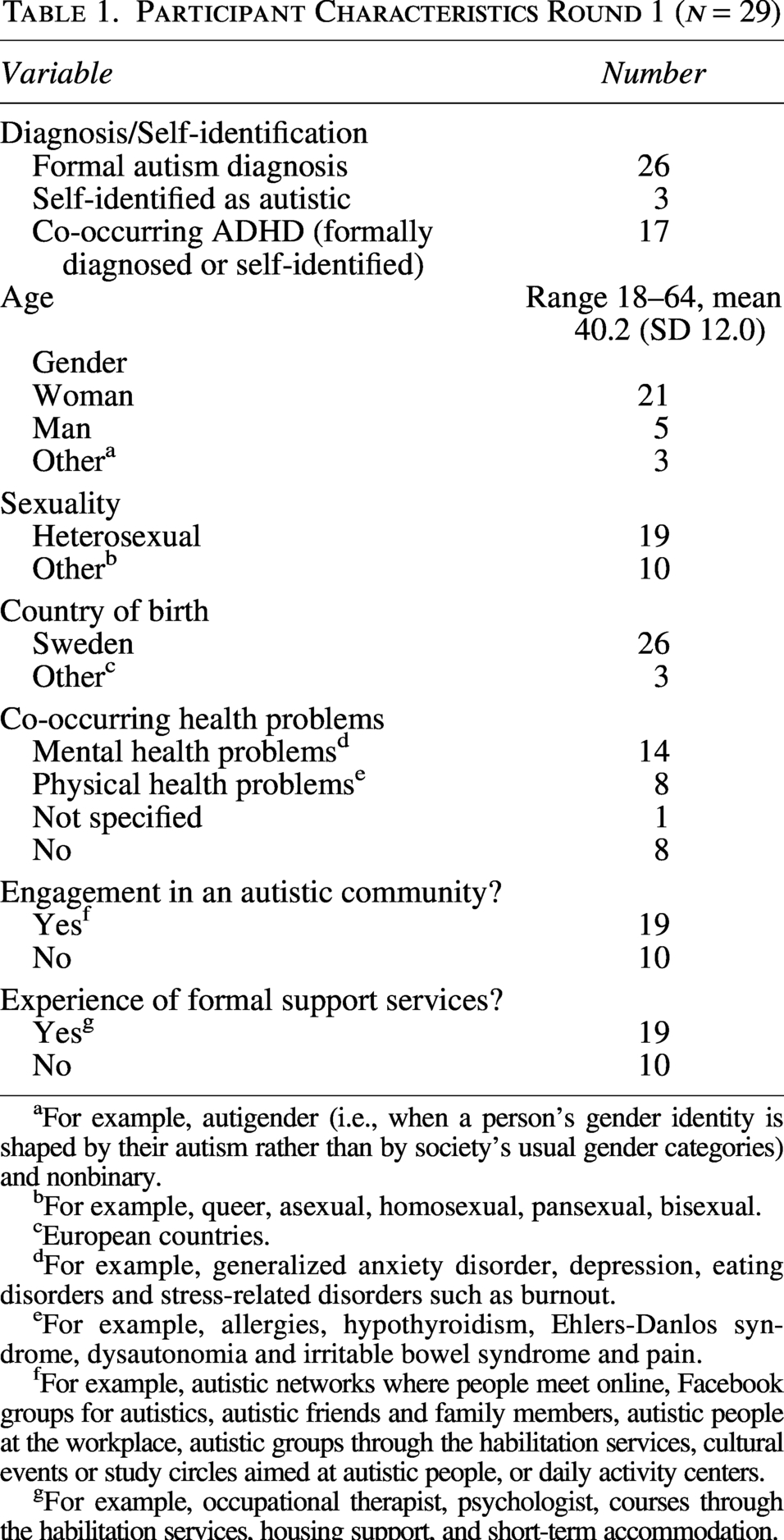
To be included in the study, participants needed to be 15 years or older and have a formal autism diagnosis according to DSM-5 or ICD-10/11, or self-identify as autistic and have sufficient Swedish language skills. We recruited participants through social media. Interested autistic people contacted ÅH by phone (SMS or call), after which ÅH sent them a link to a digital questionnaire including informed consent, background questions and a short video with a verbal description of the project. Once the questionnaire was completed, ÅH and each participant agreed on a suitable time and format for the interview. Participant characteristics are presented in Table 1.
Participant Characteristics Round 1 (n = 29)
For example, autigender (i.e., when a person’s gender identity is shaped by their autism rather than by society’s usual gender categories) and nonbinary.
For example, queer, asexual, homosexual, pansexual, bisexual.
European countries.
For example, generalized anxiety disorder, depression, eating disorders and stress-related disorders such as burnout.
For example, allergies, hypothyroidism, Ehlers-Danlos syndrome, dysautonomia and irritable bowel syndrome and pain.
For example, autistic networks where people meet online, Facebook groups for autistics, autistic friends and family members, autistic people at the workplace, autistic groups through the habilitation services, cultural events or study circles aimed at autistic people, or daily activity centers.
For example, occupational therapist, psychologist, courses through the habilitation services, housing support, and short-term accommodation.
Data collection
We pilot-tested the semi-structured interview guide and data collection procedures in focus groups with multiply neurodivergent people from the project’s co-creation group and reference group. 3 To capture the breadth and nuance of autistic flourishing and allow for processing time, ÅH invited each participant to take part in up to three interview rounds, typically spaced 3–4 weeks apart. We designed these rounds to enable participants to revisit and expand on earlier accounts. Although demanding for participants, we chose this approach to enrich the data, and it was supported through flexible scheduling.
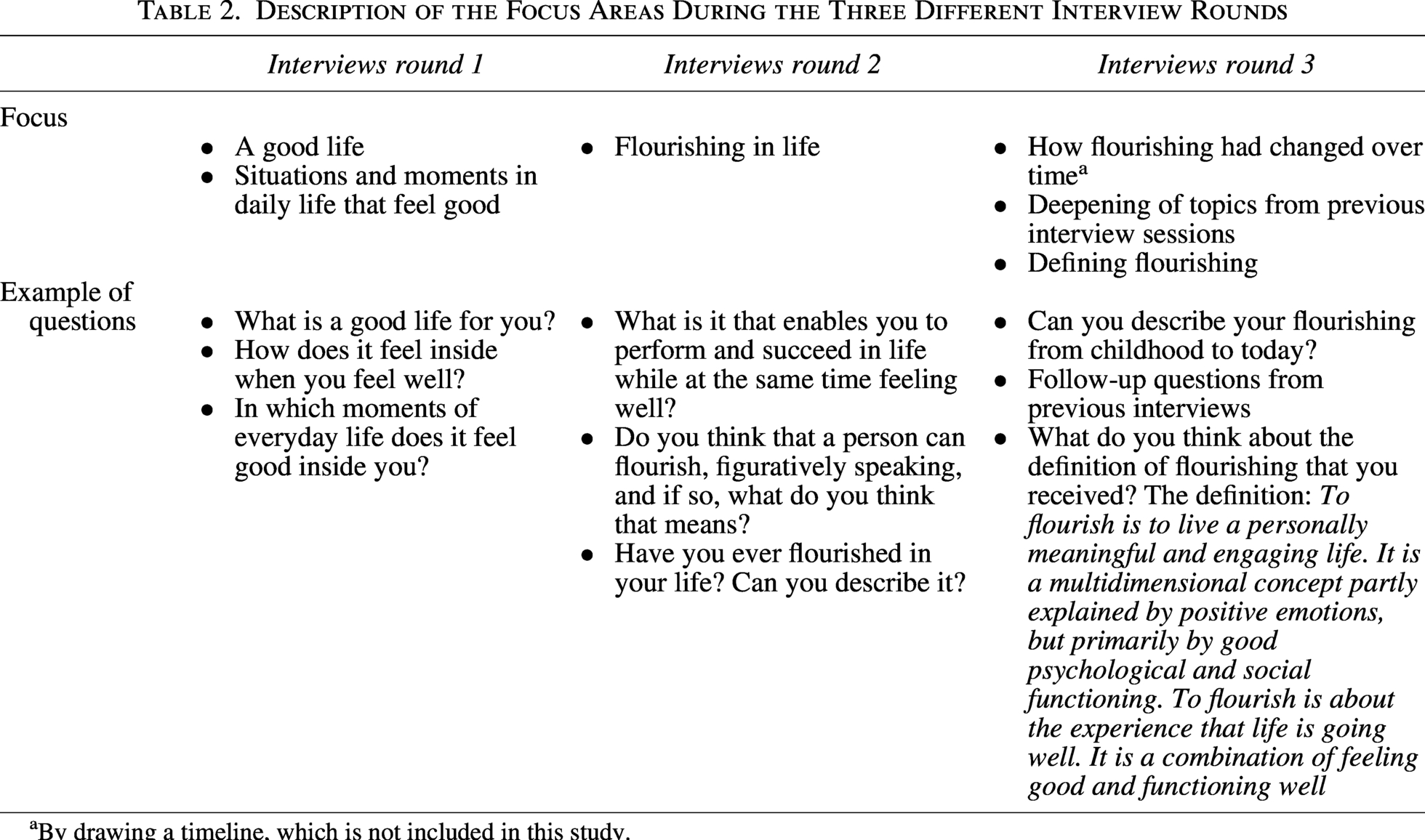
In each round of interviews, we focused on different topics; however, all interviews addressed, in different ways, the question of what constitutes a good life (Table 2). Participants could participate via focus group, an individual oral interview, or an individual written interview to accommodate differing access needs. Å.H. offered the participants the opportunity to familiarize themselves with the interview questions in advance, which some chose to receive. During oral interviews, the interviewer (Å.H.) encouraged the participants to participate according to their accessibility needs, for example, by turning off the camera if they wished, taking a break as needed, writing in the chat, or stimming. The full interview guide is provided in the Supplementary Data S1.
Description of the Focus Areas During the Three Different Interview Rounds
By drawing a timeline, which is not included in this study.
In total, Å.H. interviewed 29 participants (29 in round 1, 24 in round 2, 19 in round 3). Most participants chose the same data collection format in all three rounds. Individual oral interviews were most common (n = 15), followed by focus groups, while written interviews were least common (n = 3). We included no new participants in rounds 2 or 3. One participant took part in a focus group and three individual interviews, resulting in four interviews in total.
Å.H. conducted the oral interviews (including all rounds) between March and July 2025 (47 via the digital conference tool Zoom and two by phone), and they lasted between 29 and 90 minutes (M = 49 minutes) each. Å.H. sent a link to a digital form containing the interview questions to participants who preferred to participate through writing. The participants completed this independently and submitted their responses in writing to the interviewer, without real-time interaction. Just like the oral interviews, the interviewer added questions in the following round to explore something that had emerged in the previous round.
Data analysis
We transcribed the interviews verbatim using the transcription tool Amberscript (https://www.amberscript.com/en/). Then, we analyzed the interviews according to Braun and Clarke. 30 We followed six phases: (1) familiarizing with the data; (2) coding; (3) generating initial themes; (4) developing and reviewing themes; (5) refining, defining, and naming themes; and (6) writing. We analyzed data from all modalities using the same thematic procedures, focusing on the content of participants’ experiences. During the first stage of analysis (reviewing the interviews), we identified two content areas 35 based on recurring patterns in participants’ descriptions of flourishing in short-term situations and over the longer term: short-term flourishing and long-term flourishing. We decided during phase two (coding) to let these areas guide the organization and interpretation of the data, providing an inductive framework. Using in vivo coding of meaning units in the interview transcripts, we identified recurring patterns that could form the basis for initial themes. During the continued analysis process, we continuously moved back and forth between the initial themes, codes, and interview texts to ensure consistency and refine the theme names. We created themes based on conceptual salience and recurrence across the interviews through iterative reading and team discussions with relevance to the study aim. When writing the results, we translated descriptions and quotations from Swedish to English, which may have affected nuances in the reporting, although we aimed to translate the material as accurately as possible.
In the process of creating themes, we explored if and how the content areas and themes were connected, that is, thematic mapping. 30 Also, we examined the themes in relation to their contextual conditions, allowing us to identify the specific contexts in which flourishing emerged. Based on this iterative reflection, we developed a model of autistic flourishing (Fig. 1) to represent how the themes and contexts interacted. Then, we formulated a definition of autistic flourishing by carefully examining the model. We considered which features and patterns recurred across themes and contexts and how participants’ experiences clustered. While this step goes beyond traditional thematic analysis, it was firmly based on the empirical findings.
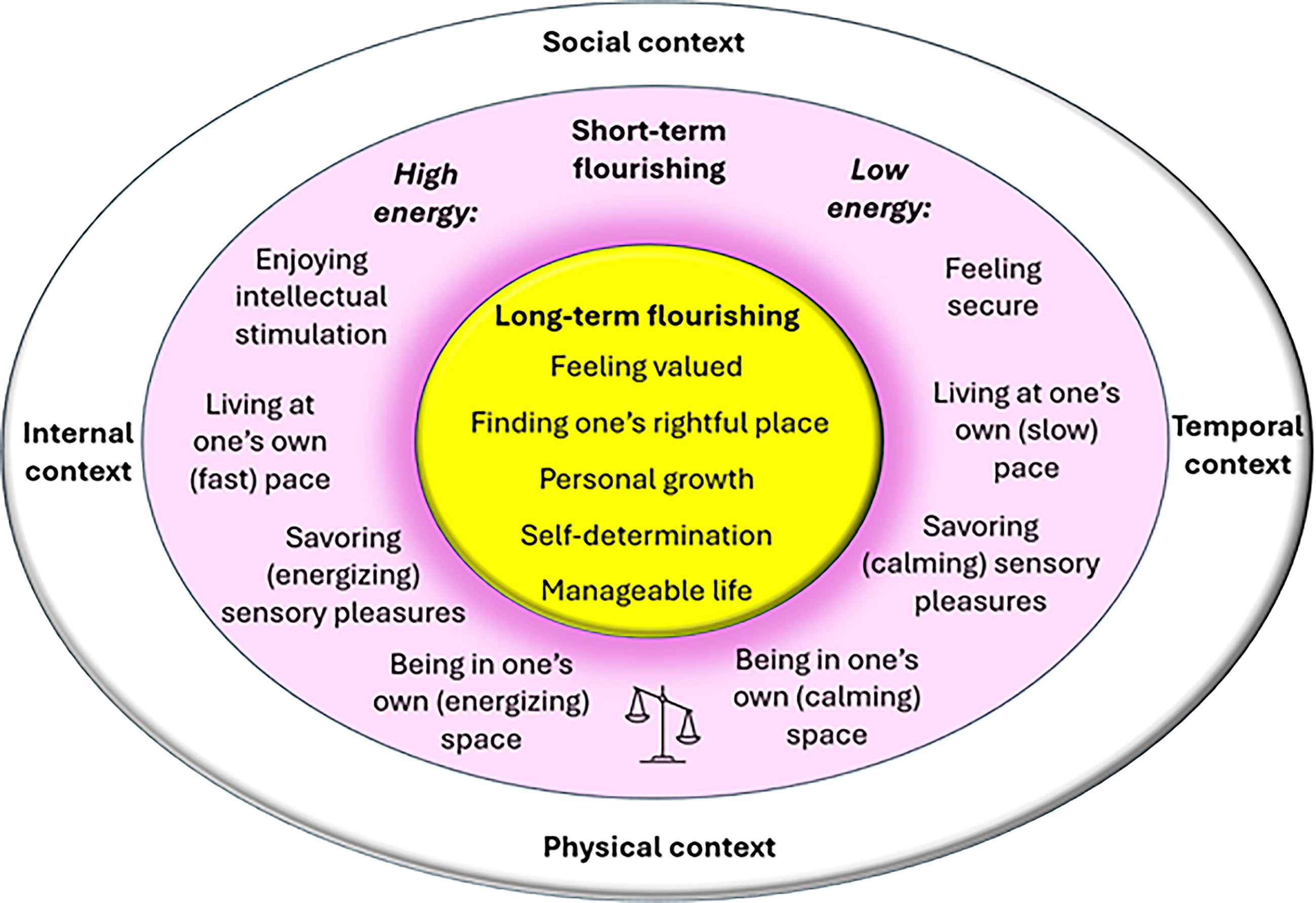
The model of autistic flourishing shows that all types of autistic flourishing occur within four contexts: internal aspects (e.g., thoughts, preferences, health), the physical environment (e.g., places, food, objects), the social environment (e.g., other people and animals), and the temporal context (i.e., time, being able to do things in one’s own pace). It also illustrates that short-term flourishing can appear in two forms, high energy and low energy, and that a balance between them is important. Finally, the model highlights that the closer a person is to long-term flourishing, or the more they experience it, the greater their opportunity for short-term flourishing.
The analysis was led by the first author (Å.H.) and the project leader (H.B.R.), but all authors contributed to the interpretation of the data. Neurodivergent researchers had the primary role in designing and conducting the study, analyzing the data, and shaping the conceptualization of the findings from an autistic perspective. 4 The neurotypical researchers contributed complementary skills and perspectives. Their involvement helped refine analytical frameworks, ensure methodological rigor, and situate the findings within a broader theoretical and empirical context. An example of steps in the analytic process is presented in Table 3.
Example of the Analytical Process

Through the analysis, we ensured trustworthiness through credibility, dependability, confirmability, and reflexivity, supported by iterative team discussions including reflexive consideration of positionality and involvement of community collaborators throughout the research process to keep interpretations grounded and ethically sensitive. These processes, together with all authors’ direct engagement with and review of the full dataset, ensured that the analysis remained closely tied to the empirical material.
Ethical considerations
The study was approved by the Swedish Ethical Review Authority (Dnr 2025-01033). We sent all participants information about the study’s purpose, procedures, confidentiality, and their right to withdraw from the study at any time without consequence, and obtained informed consent prior to participation. All data were handled in accordance with ethical and data protection regulations.
Results
Results are presented by content areas and themes, supported by participant quotes, with the number following each quote indicating the participant’s unique ID number for this study (for additional quotes, see Supplementary Data S2).
Based on our analysis, we define autistic flourishing as follows: “Autistic flourishing is a dynamic phenomenon that unites long-term growth and autonomy with short-term experiences of mental, physical, or holistic enjoyment.”
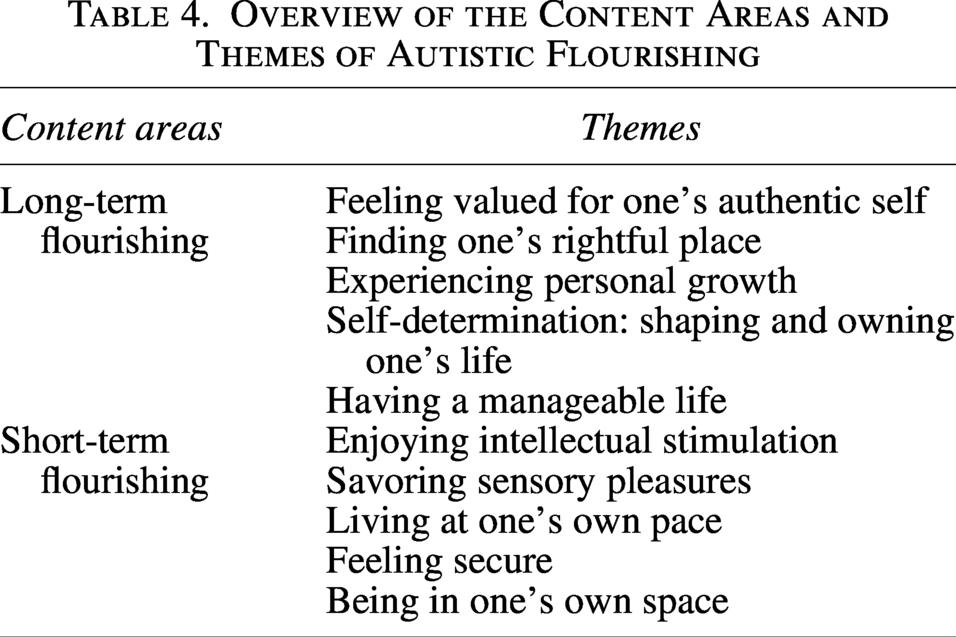
Two types of flourishing were identified in the analyses: short-term and long-term. Short-term flourishing, that is, moments in life that felt good, was something that everyone experienced in their lives to a greater or lesser extent. Long-term flourishing, that is, life going well and moving in the desired direction, was, however, more difficult to achieve. Participants described that within short-term flourishing, there was both low-energy flourishing and high-energy flourishing, and that these needed to be balanced against each other. The analysis further revealed that autistic flourishing occurs in relation to four different contexts: internal, temporal, physical, and social contexts. Table 4 provides an overview of content areas and themes.
Overview of the Content Areas and Themes of Autistic Flourishing
Long-term flourishing
We define long-term flourishing as the sustained experience that life is going well and that one generally feels well in it. It also involves moving in a direction that matters to oneself. It is a changeable state that may involve the full range of emotions (e.g., during temporary setbacks) and should therefore not be confused with everlasting happiness. Themes are presented below.
Feeling valued for one’s authentic self
Feeling valued for one’s authentic self by oneself and others was described as an important aspect of flourishing. This included feeling significant, “liked” (P8), meaningful to someone (human or animal) or to society at large, competent, and respected. Participants also described being “needed” (P17), “included” (P15), “listened to” (P14), “believed” (P21), complete (i.e., not ‘deficient’ as diagnostic criteria suggest), validated, desired, sought after, taken seriously, and being “accepted” (P28) for who they are when being their authentic selves and living their authentic lives (i.e., not masking). Two participants expressed that flourishing meant “…[to feel] accepted, liked, understood, and seen” (P16), and “…the feeling of being needed” (P17).
It was also about feeling respected for one’s needs and decisions not to follow neuronormative age-related expectations, for example, choosing not to have children and choosing not to work or only work a little. Feeling valued was described as important across multiple life domains, that is, both in relation to close others such as friends and partners, as well as in relation to work, education, and society at large. It was, however, not only about feeling valued by others but also by oneself: “[that] I am okay and I am not broken and I am allowed to be here. I know that this is how I think to feel better.” (P8).
Finding one’s rightful place
Finding one’s rightful place refers to the sense of being in a place (physically, socially, and in terms of activities) where one fits in, one’s “place on earth (P12).” It could be in the workplace, in education, and/or in private life. Finding one’s rightful place was described as being in a context where “one feels safe” (P14), “calm” (P41), “stimulated” (P16), “interested” (P2), and “fascinated” (P28), where one’s activities are aligned with personal values and one’s role feels self-evident. It was also described as a place where one can make a meaningful difference, experience “passion” (P13), joy, and engagement, where “one’s strengths are used” (P27), where one can leave a “mark” (P12) on the world, experience meaningfulness, and engage in what one feels intrinsically meant to do. Some described it as “being in one’s right element” (P6) and feeling a “sense of coherence” (P18). One participant described what such a life would be like: “Let me put it this way… A life where I fit in, and it’s both practical and in terms of relationships, emotions, so on all levels. Yes, a life that is, like, made for me” (P26). Another participant described the importance of being in one’s right place: “…that’s the only time I’ve felt well, when I’ve been able to do my thing. That’s the only time I’ve had enough energy to cope with life. I can. I just can’t do anything else” (P13).
Experiencing personal growth
Most participants emphasized that flourishing involved personal growth. Experiencing this means being in a constant state of exploration and personal progression toward one’s goals. It also involved growing toward one’s full and unique potential, perceiving opportunities, and a feeling of “striving forward in life, and outward” (P15). Participants described it as feeling “creative” (P5) and generative, blossoming, having direction and objectives, being “productive” (16), and “challenging” (P10) oneself. It also included being guided by intrinsic motivations rather than by neuronormative standards and experiencing “freedom” (P8) of thought, allowing ideas to “flow” (21) freely without resistance. More concretely, it could involve becoming more knowledgeable in one’s area of interest, becoming a better parent, developing one’s own coping strategies in life, or striving for and achieving success in one’s career. One participant described it as: “…for me, it’s more about the experience of life improving. That I am growing toward something. Not about standing still. So, if things are just going well, I wouldn’t call that flourishing” (P4).
Some participants suggested that growing was not only pleasurable but also involved a certain amount of (necessary and meaningful) suffering in the process of development, as one described it: There may be some risk or danger in linking the concept [flourishing] to positive feelings, as it could lead to seeing it as a personal failure whenever life feels a bit heavy or difficult. After all, it is not always because one is not working on oneself or anything like that, but it can simply result from entirely external factors. It is easy to be misled into thinking that you should always be happy and that this is somehow the goal of life, but that is not possible. Life goes very much up and down when it comes to flourishing (P25).
Self-determination: shaping and owning one’s life
Several participants described self-determination as an important part of flourishing. It was about experiencing the freedom to shape one’s life according to one’s own wishes and feeling able to express one’s needs (for example, setting boundaries with others) and experiencing sufficient self-awareness to understand those needs. It was also about feeling grounded and “stable” (P7), strong, and free to make decisions about one’s life and daily activities; feeling capable of realizing one’s dreams; experiencing independence from others practically and emotionally; perceiving oneself as having epistemic agency 36 and feeling “proud” (P8) of oneself. It also encompassed the sense of having the possibility to decide for oneself how and when to engage with others, as well as experiencing one’s voice as valid in society. Two participants described their view of self-determination as: “I have words, I have the right to speak” (P5) and “To be able to choose for yourself how you spend your time and who you spend it with. All those kinds of things. I think, at least for me… it’s […] a significant part of flourishing” (P3).
Having a manageable life
Several participants described a flourishing life as a manageable life, meaning a life that “rolls along” (P15) in a secure and fairly predictable way in one’s preferable rhythm, without having to constantly organize everything oneself all the time (e.g., daily routines or holiday celebrations). A life like that was described as “stable” (P15), “simple” (P20), pleasant, uncomplicated, relatively conflict-free, not draining, allowing one to get through a whole day without exhaustion in the evenings, and with a balance between work and leisure. One participant described it as:” “…a life for which one has enough resources to cope, with demands that are not too overwhelming” (P19).
Several of the participants described good health as an important part of a flourishing life. By good health, they meant feeling “physically well” (P14), physically strong, balanced, energetic, and sufficiently rested, as well as feeling light and calm in the body. It was about the body having enough energy, for example,” “… to feel alive and have the energy to maintain a social life and leisure activities” (P16).
Short-term flourishing
We define short-term flourishing as moments in life that involve positive experiences. It could be a mental, a physical, or a combination of both types of experience. Exactly what the experiences consisted of varied between people and depended on each person’s unique profile, including their interests, preferences, and sensory profile. The participants described a low-energy state (restful and slow-paced) and a high-energy state (fast-paced and energetic) and noted that these needed to be balanced for the person to feel well and function effectively in daily life. Participants described short-term flourishing as essential to their life and reflected upon these experiences as possibly more intense and central to their life than for neurotypicals, because they had not experienced neurotypicals as fascinated or completely absorbed in something as intensely as they themselves did. The short-term flourishing themes are presented below.
Enjoying intellectual stimulation
Experiencing moments of intellectual stimulation was an essential part of short-term flourishing (high-energy). The experience of being intellectually stimulated was described using the following words:” fun” (P5), “being in flow” (P13), “feeling curiosity” (P2), “desire” (P28), “unforced creative flow” (P21), and “drive” (P23). It also involved “excitement” (P14), “fascination” (P4), “happiness” (P2), “hyperfocus” (P7), engagement, learning, giving, inspiration, humor, gaining new insights, euphoria, enrichment, exhilaration, a sense of wholeness, wonder, free association, infatuation, satisfaction, creative joy, thrill, enthusiasm, connection, freedom of thought (“to use my brain however I want” P8), motivation, anticipation, a sense of quenching one’s thirst for knowledge/development, and the feeling of never wanting it to end. Two participants described it like: “I can feel a bubbling joy throughout my body, a pleasant, buzzing sensation in my stomach. I can fully enjoy myself and become completely absorbed in what I’m doing, becoming one with my interest” (P19), and “…it [flourishing] is mostly about engaging in my special interests […] about really getting into hyperfocus” (P14).
Several participants described this state as a profound experience, for example, where ideas simply “come to” you (P6) rather than actively creating them yourself, or when you’re in a deep state of “intense creation” (P21). Participants described engaging with their interests as an essential, deeply passionate, and crucial part of their life, involving being fully absorbed and more in a state of being than being a person.”, like “feelings don’t exist” (P6). This experience could also extend to the body, meaning that it produced a bodily sensation that made the body tingle and feel weightless.
Savoring sensory pleasures
Savoring sensory pleasures, that is, enjoyable sensory experiences related to hearing, sight, smell, taste, and touch, could be both low energy and high energy. The stimulus itself could come from oneself, from objects, or from other people. It was described as enhancing “focus” (P9), a “wow—feeling” (P8), “relaxation” (P26), cozy, calming, wonderful, gaining strength, feeling whole, letting go of thoughts and entering complete presence, satisfaction, gather one’s thoughts, feeling enchanted, feeling well, happy, experiencing physical relief/pleasure, and feeling “awe” (P19). Awe was mainly experienced in relation to nature, for example, when observing the ever-changing colors and formations of the sky or noticing intricate details in small objects, such as mosses and insects, creating a sense of wonder at the small worlds within the larger environment. Sensory pleasures could also involve the stimulation of multiple senses simultaneously, which produced an added effect of pleasure. One participant described his experience of (low-energy) sensory stimulation when several senses were stimulated at the same time (drink a pleasantly fragrant cold beverage in a warm bath) as: “I noticed that having all my senses… satisfied at the same time. That I was being stimulated in so many ways. It was very pleasant” (man, 23, P8).
Another participant described the experience of high-energy sensory stimulation, which was felt throughout the entire body: “I’ve always liked, like, roller coasters and stuff […] just, like, that kind of fast-paced stuff is something […] that’s been really, yeah, rewarding, you know” (woman, P7). Sensory stimulation, especially proprioceptive stimulation (e.g., another person lying on one’s body), was also described as a strategy for emotion regulation (i.e., feeling calmer), which could help one to recover from meltdowns/shutdowns.
Living at one’s own pace
Being in one’s own physical and cognitive pace was described as important and could involve either a slow pace (low energy) or a fast pace (high energy) compared with neuronormative expectations. Living at one’s own pace was described as delightful, “effortless” (P22), “calm” (P11), “pleasant” (P3), harmonious, relaxing, energizing, giving a sense of freedom, a feeling of following one’s inner nature, that one’s thoughts flow at a comfortable pace, and a sense of relief from having the time needed, for example, to finish thinking/complete cognitive “processing” (P3), feel grounded and not getting stuck in inertia.
37
One participant described the importance of doing things at their own pace, which could be either slower or faster than what fits with the world: …my own pace is fairly slow. I kind of want to be present in the details. And that requires me to be more in my senses […] at the same time, the mind can also go very fast. But it’s, like, a different kind of time than scheduled time (P14).
Participants who generally maintained a fast pace in most of their activities did not experience this as stressful, but rather as harmonious, since it aligned with their way of functioning: “My blood pressure always goes up when I get stressed. But when I’m just in a high-paced state, it’s mostly just a higher pulse, but it’s steady and calm even though it’s fast” (woman, 35, P22).
Feeling secure
Experiencing moments of safety (low-energy) in daily life was described as important. Safety encompassed feelings of trust, for example being able to rely on the world as harmless and adapted to fulfill one’s needs. It also encompassed feelings of “relaxation” (P15), along with a sense of self-acceptance in specific situations (e.g., not feeling embarrassed when doing activities at cross with neuronormative expectations, such as going to the cinema or concerts alone) and the perception that situations “are manageable” (P14). It also involved experiences of predictability, comprehensibility, and “control” (P22). In addition, feeling secure encompassed a sense of being able to handle challenges in different situations, as one participant described: “I trust that nothing terrible will happen. It will be difficult, it will be challenging. But, like, it will be worth it” (P8). Safety also involved a sense of belonging, knowing that support is available if needed, and giving and receiving love to and from others in different situations.
Being in one’s own space
Several participants described the feeling of having one’s own space and considered it an important part of flourishing. The sense of having one’s own space, a kind of a personal “sanctuary” (P6), occurred in both high- and low-energy forms. Common descriptions of the experience of being in one’s own space were feelings of “peace” (e.g., free from neuronormative expectations) (P21), “exhaling” (P19), “balance” (P27), “recovery” (P14), and a “sense of freedom” (P19). One described it like: “… that feeling of being home alone, being able to do what I love, creating, painting, writing, being creative, and being able to decide for myself what I do, when I want to do it, how I do it” (P13).
Participants described being in one’s own space in a variety of forms: as an internal mental retreat, a physical corner at home, or even a geographically secluded living situation. In social contexts, this sense of space could also be created through small acts of withdrawal (such as focusing on one’s phone instead of engaging in conversation). What defined these spaces was not isolation, but control over visibility. Several participants emphasized that what made a space truly their own was the freedom to perceive others without being perceived themselves. They preferred environments where they could see others, yet remain undisturbed and free from other’s gazes: “I feel comfortable when there are few people or some movement that I can […] watch and think about” (P2), and “I like to sit and look out the windows by myself and just watch what’s happening outside, without feeling like I need to be a part of it” (P15).
Discussion
In this study, we have taken an initial step toward framing and conceptualizing the notion of autistic flourishing by exploring what constitutes a good life from the perspective of autistic people. Several aspects we identified in our study of autistic flourishing align with previous neuronormative conceptualizations of flourishing, such as that it includes growth, positive social relationships, good health and meaning.16,21 At the same time, certain aspects were emphasized more strongly, for example, being in one’s own pace and space, savoring sensory pleasures and maintaining energy balance. The emphasis on these aspects can be explained both by their particular significance for autistic people and by the fact that they may be less developed or less accessible within this group.
Toward autistic-centered standards: Rethinking a good life for autistic people
At first glance, the idea that flourishing requires living in line with what matters most may appear to be a universal human concern. Indeed, insights from the participants suggest that there are many aspects that align with previous conceptualizations of flourishing, 15 including having a purpose, good health, and engagement; however, it also appears that they are insufficient to explain it. 5 For instance, they do not, in part, account for different types, intensity, or levels of flourishing, which means that neuronormative understandings of flourishing15,16,21 need to be complemented by autistic-centered standards to be relatable to autistic people.
In our study, participants emphasized things as “finding one’s place”, pursuing their interests and being valued for who they are—which are likely universal experiences desired by all people. Most people benefit from value-congruent living. 38 However, autistic people likely face greater barriers related to living a value-congruent living. While participants did not consistently describe these experiences in terms of ‘values,’ we interpret them through the lens of autistic identity theory, 38 which posits that autistic peoples’ interests and life values permeate their sense of their own identity. From this perspective, what participants described can be seen as forms of value-based living, where breaches of one’s values are not minor frustrations but deeply destabilizing experiences. Furthermore, in the present study, aspects such as positive sensory experiences, 5 being appreciated from a nondeficit perspective, and living at one’s own pace in one’s own space were highlighted, which have not been emphasized in previous conceptualizations. 15 This suggests that supporting autistic flourishing requires specific attention to these aspects and cannot be promoted through neuronormative standards of flourishing.
In the present study, we identified four contextual dimensions within which flourishing can occur: internal, temporal, physical and social contexts. Lomas et al. 12 presented a similar model, the so-called flexible map of flourishing, which also highlights the contextual aspects of flourishing. They emphasize that there is an “adaptive interaction and consonance between the individual and their contextual systems.” This underscores the importance of understanding flourishing as a process that takes place in interaction with both internal and surrounding contexts. 39 For support actors aiming to promote flourishing among autistic people, this implies considering cognitive factors (e.g., bottom-up processing), as well as taking temporal factors into account, that is, recognizing that levels of flourishing may change across the lifespan and adjusting support accordingly. It also involves physical (e.g., opportunities to have one’s own physical space) and social (e.g., opportunities to be oneself among other people) factors.
Long-term flourishing can be understood as a dynamic phenomenon. This contrasts with common neuronormative portrayals of autism, which often focus on traits such as rigidity or inflexibility. 2 Such portrayals risk presenting autistic development as static rather than dynamic and contextual. Such descriptions are neuronormative in that they measure flexibility against neuronormative standards of pace, social transitions, and life trajectories. From the perspective of participants, long-term flourishing was not the absence of change but precisely the possibility of ongoing development on the participants’ own terms. This may reflect a commitment to continuity of values (c.f. autistic identity theory 38 ) and structures that sustain well-being. Monotropism 40 offers one way to conceptualize this pattern: a monotropic attentional style can enable deep, sustained engagement with interests, which in turn generates growth/progression in long-term flourishing participants highlighted. These accounts point to the need for clinical and social practices that recognize and support autistic people’s own forms of personal development, rather than attempting to “break rigidity.”
Cracking the old walls: A glimpse into the future of autism support
For autistic people to flourish, both formal and informal support providers need to be actively engaged. Considering the present study’s findings and the broader call to shift focus from merely alleviating ill-health or remediating “autism symptoms” toward promoting positive outcomes, it is clear that formal support providers must prioritize outcomes that autistic people themselves consider meaningful and can relate to. 41 Research among autistic populations has shown that strength-based approaches may promote better mental health, higher well-being, and improved quality of life. 42 Introducing and promoting autistic flourishing within healthcare and social service settings therefore has the potential to support positive long-term outcomes both for autistic people and society. However, based on our results, we argue that this goes beyond a strengths-based approach, 43 that is, exploring individual resources. Rather, it is about generating prerequisites for working with authenticity and existential health. 44
There are likely barriers for autistic people to experience autistic flourishing. Participants described pleasurable sensory experiences and the creation of their own spaces as central to their flourishing. This was also described shortly in previous research.3,45 Although autistic people can use their own strategies to achieve these experiences, 3 these strategies can become a scarce resource, as autistic people may feel the need to mask their needs in the company of others.46,47 Clinical frameworks may unintentionally exacerbate this scarcity, as they typically focus on cognitive or behavioral interventions rather than embodied strategies. 2 Pathways to autistic flourishing may therefore require rethinking the role of embodied strategies in care settings, including training professionals in safe, consent-based bodily practices and recognizing the value of “own-space” in social and institutional contexts.48–50
Limitations
Although data collection was extensive, the sample was predominantly women from a Western context, which limits the transferability of the findings. While we designed repeated interviews to allow reflection and enhance data richness, not all participants completed all three sessions due to burnout (which, according to the participants, was present before study participation). This may have limited the range of experiences captured, highlighting a trade-off between the methodological benefits of multiple rounds and the demands placed on participants. Finally, several participants described flourishing as imagined rather than lived, which may mean that the study does not fully capture autistic flourishing in present autistic lives.
Conclusion
This study showed that autistic flourishing is not about conforming to neuronormative standards, but about developing and engaging with the world according to one’s own way of functioning. We argue that autistic flourishing should not be conflated with neuronormative flourishing as such an equation risk diluting its core meaning and impeding further exploration to truly define autistic flourishing; insights that are essential for advancing the rights, dignity, and full inclusion of autistic people. As a next step, interventions should be explored that support flourishing based on the person’s autistic way of functioning.
Authorship Confirmation Statement
Å.H: Data curation, investigation, methodology, visualization, writing—original draft, and writing—review and editing. T.L.: Methodology, validation, and writing—review and editing. S.B.: Funding acquisition, methodology, validation, and writing—review and editing. M.B.: Funding acquisition, methodology, validation, and writing—review and editing. T.H.: Methodology, validation, and writing—review and editing. K.I.: Writing—original draft, validation, and writing—review and editing. D.U.: Writing—original draft, validation, and writing—review and editing. C.I.: Writing—original draft, validation, and writing—review and editing. J.W.: Writing—original draft, validation, and writing—review and editing. H.B.R.: Conceptualization, formal analysis, funding acquisition, methodology, project administration, supervision, writing—original draft, and writing—review and editing. The article has been submitted solely to Autism in Adulthood.
Footnotes
Author Disclosure Statement
No competing financial interests exist.
Funding Information
This work was supported by the Swedish Research Council [grant number 2024 01426]. The funding agency had no role in study design, data collection and analysis, decision to publish, or preparation of the manuscript.
Supplemental Material
Supplemental Material
References
Supplementary Material
Please find the following supplemental material available below.
For Open Access articles published under a Creative Commons License, all supplemental material carries the same license as the article it is associated with.
For non-Open Access articles published, all supplemental material carries a non-exclusive license, and permission requests for re-use of supplemental material or any part of supplemental material shall be sent directly to the copyright owner as specified in the copyright notice associated with the article.
