






Abstract
Background:
While both cannabis and music have demonstrated significant independent impacts on emotional states, the synergies between these two modalities remain underexplored. This study investigates the interactions between cannabis consumption and music listening, focusing on their effects on emotional experiences, mood regulation, and sensory perceptions.
Methods:
An online cross-sectional survey consisting of 176 questions was administered to 122 cannabis users. The survey captured detailed information on demographics, cannabis use patterns, music engagement behaviors, emotional responsiveness, and the interplay between cannabis and music perception.
Results:
Most participants viewed the combination of cannabis and music favorably, reporting enhanced relaxation, improved mood, and increased feelings of connection. Cannabis use was also associated with altered responses to imposed music in various settings and a heightened likelihood of using music during routine activities. In addition, participants frequently reported the use of cannabis as a substitute for pharmaceutical treatments for pain, anxiety, and sleep disorders, with music further amplifying these therapeutic effects. However, no significant differences were observed in overall music reward experiences with or without cannabis, highlighting the nuanced and context-dependent nature of these interactions.
Conclusion:
These findings provide novel insights into the potential for cannabis and music to act as complementary tools for emotional well-being, underscoring the need for further research to elucidate the mechanisms underlying their combined effects. This study provides a foundation for future investigations into the therapeutic integration of music as a supportive adjunct to cannabinoid-based interventions targeting emotional and psychological health.
Introduction
Cannabis is commonly used for therapeutic purposes, with pain management 1 and improved sleep 2 cited as primary motivations. Emerging evidence suggests that cannabis may help regulate mood and emotions and alleviate symptoms, such as stress and anxiety in individuals with post-traumatic stress disorder. 3 Mood and emotional disorders represent a substantial public health challenge, impairing daily functioning and imposing significant individual and societal burdens. 4 Clearly, therapeutic use of cannabis is increasing as evidence is collected demonstrating its effectiveness for a variety of conditions. In addition to therapeutic uses, cannabis is commonly consumed recreationally. It has been reported to aid relaxation, alter mood, and enhance sensory experiences, particularly those involving music. 5 Like cannabis, interest in music as a therapeutic tool is increasing with evidence supporting its effectiveness. Music has been applied in health care contexts for emotional regulation and stress reduction. 6 Evidence also suggests that music influences both basic auditory perception and higher order cognitive processes.7,8 Both cannabis and music have demonstrated significant impacts on mood and emotions, 9 suggesting potential synergies that warrant further investigation, especially given the central role of music in psychedelic-assisted treatments. 10
Tart’s seminal cannabis research 11 documented a wide range of alterations in auditory perception and music appreciation during cannabis use, many of which were consistently endorsed by the participants in his studies. They frequently described an enhanced auditory clarity, with sounds perceived as richer, more distinct, and more detailed. Cannabis use also often heightened musical immersion beyond perceptual clarity, producing a sense of merging with the sound, in addition to altering temporal perception, with rhythm experienced as slowed or stretched. Spatial perception was also affected in some cases. A subset of participants reported synesthetic experiences, in which auditory stimuli were accompanied by visual impressions. While Tart’s accounts captured subjective reports of auditory enhancement, Globus et al. extended this line of inquiry by providing one of the first experimental investigations into cannabis-related alterations in auditory perception. 12 Using psychophysical tasks designed to probe auditory thresholds, pitch discrimination, and temporal processing, the authors found that cannabis produced measurable disruptions in auditory performance, even as users often subjectively reported heightened clarity and sensitivity to sound. This dissociation between subjective experience and objective function highlights the complexity of cannabis effects on sensory processing and underscores the need to examine both phenomenological and experimental dimensions when evaluating cannabis-music interactions.
More recent work has since examined the specific neurocognitive mechanisms through which cannabis alters perception and affect. For example, Ballard et al. 13 showed that tetrahydrocannabinol (THC), one of many chemical compounds called cannabinoids found in cannabis) selectively impaired recognition of threat-related facial emotions, while leaving responses to nonthreatening emotional cues largely unchanged. This pattern suggests that cannabis may dampen sensitivity to anxiety-provoking social signals without broadly diminishing affective processing. Such selective modulation of emotional reactivity provides a plausible framework for how cannabis could intensify the affective power of music, reducing negative responses while preserving or enhancing positive ones.
Musicians themselves have long described cannabis as a tool for reshaping auditory experience and performance practice. Cannabis has a strong historical link to music, with many musicians having reported its use to enhance creativity, experiment with novel sounds, and explore unconventional musical perspectives.14,15 Cannabis has also been reported to alleviate preperformance anxiety, support stress management, and facilitate fluid, expressive execution during live performances or recordings. 16 These effects are thought to result from cannabis’s modulation of attentional focus, sensory perception, and affective states, which together support both creative ideation and performance readiness. 17
Taken together, these historical, experimental, and experiential reports converge on the notion that cannabis modulates how individuals perceive and engage with music. Yet, systematic investigations into how these interactions translate into mood regulation and emotional well-being remain scarce. To address this gap, the current study employed an online questionnaire to explore the patterns and motivations underlying cannabis use, with a particular focus on its relationship to musical experiences and emotional regulation. This article presents the results of this investigation, offering insights into the interplay between cannabis consumption, music engagement, and emotional outcomes.
Methods
An online cross-sectional survey was administered in English via Qualtrics over a 25-week period, from February 1, 2023, to July 31, 2023. The survey consisted of 176 items, including the full item sets from the Beck Depression Inventory–II (BDI-II), 18 Hearing Sensitivity Questionnaire, 19 Noise Sensitivity Scale, 20 Barcelona Music Reward Questionnaire (BRMQ), 21 and Musical Responsiveness Questionnaire, 22 along with additional items designed to collect sociodemographic information (age, gender, marital status, education level, employment status, net household income), cannabis use patterns, tinnitus status, and interactions between music perception and cannabis use. To ensure completeness, respondents were required to answer each question before proceeding to the next. Most questions were answered using dichotomous scales (e.g., “yes” or “no”) or 5-point Likert-type response scales (e.g., 1—strongly disagree; 2—disagree; 3—moderately agree; 4—agree; 5—strongly agree). 23 To minimize potential order effects, questionnaire items were presented in a randomized sequence when possible (e.g., BRMQ items appeared in a different order across the “without cannabis” and “with cannabis” conditions).
Cannabis users were recruited via cannabis-focused online communities, including subreddits, private Discord servers, and Facebook groups. Eligibility criteria were (1) age over 18 years old, (2) proficiency in written English, and (3) cannabis consumption on at least four occasions in the last 12 months. Participants who completed the survey were offered entry into a raffle for a $100 CAD gift card, with a winning probability of 1/300. Informed consent was obtained electronically prior to participation. Of the 393 responses received, 122 were retained for analysis following exclusion of ineligible participants and suspected bots, identified via standard antibot procedures. The study was conducted according to the guidelines of the Declaration of Helsinki, and the study protocol received ethical approval from the Comité d’éthique de la recherche en éducation et en psychologie—CEREP at Université de Montréal in Montréal, Québec, Canada (#2021-2953).
Results
Cohort characteristics
Among the 122 respondents, 54% (n = 66) were under 35 years old, and 61% (n = 74) identified as male. 61% (n = 74) of participants reported being in committed relationships, with the most common statuses being married or living with a partner. A majority, 56% (n = 68), held a bachelor’s degree or higher, and 58% (n = 71) were employed full-time, predominantly in service-related occupations (84%, n = 102). Annual income of $50,000 or more was reported by 52% (n = 64) of participants.
Participants reported frequent cannabis use, with 85% (n = 104) consuming more than four times in the past 12 months (mean 4.6 ± 2.2 days/week; mean duration 9.3 ± 8.5 years). Sixty-one percent had used cannabis within 24 h of completing the survey, and 70% (n = 85) indicated no stable strain preference. Substantial difficulty abstaining was reported, with 38% (n = 46) finding it difficult/very difficult for 1 week and 58% (n = 71) for 1 month. Forty-three percent reported tobacco use, with smoking being the favored method over vaping or chewing, and 53% of tobacco users (n = 28) frequently mixing tobacco with cannabis. Vaporization (vape pen + vaporizers) and bong or water pipe use were the most preferred methods for cannabis consumption. Participants generally preferred strains with high THC and low cannabidiol (CBD) content, with Indica being the favored type of cannabis.
In addition to recreational use, participants reported using cannabis for symptom relief, rating it very to extremely effective for sleep disorders (52%, n = 63), anxiety (51%, n = 62), depression (48%, n = 59), pain (41%, n = 50), other mental health conditions (31%, n = 38), and physical health issues other than pain (27%, n = 33). Self-reported reductions in pharmaceutical use were observed, including nonopioid pain medications (21%, n = 26), antidepressants (17%, n = 21), antianxiety medications (16%, n = 19), sleeping pills (14%, n = 17), and opioids (7%, n = 9). Furthermore, some participants reported complete substitution of cannabis for sleeping pills (28%, n = 34), antianxiety medications (18%, n = 22), antidepressants (16%, n = 20), opioids (12%, n = 14), and nonopioid pain medications (6%, n = 7).
The mean BDI-II 18 score of this cohort was 16.5 (SD = 12.7), with 43% (n = 53) of participants falling within the moderate-to-severe depression range. The lower depressive symptomatology in this cohort may reflect our online recruitment strategy via music- and cannabis-focused communities, potentially overrepresenting individuals engaged in socially and creatively oriented activities that buffer against depression.
Hearing Sensitivity Index (HSI) scores were collected using the Hearing Sensitivity Questionnaire and analyzed using cut-off values based on thresholds proposed by Coren and Hakstian, 19 with HSI of 27 and 37 indicating mild and significant hearing loss, respectively. HSI results indicated that 41% (n = 50) of respondents were likely experiencing mild hearing loss, while 7% (n = 8) were likely experiencing major hearing loss. Hearing loss based on HSI scores was disproportionately observed in younger age groups (notably those aged 25–44), with fewer cases in older age groups, suggesting that cannabis use is unlikely to be a major risk factor for hearing loss and that factor other than age, such as noise exposure, prolonged exposure to amplified music or lifestyle-related risks, may account for the observed hearing loss.
Noise Sensitivity Scores (NSSs) were obtained using the Noise Sensitivity Scale and analyzed using cut-off values based on the mean scores of sensitive (67.9, rounded up 68) and insensitive (39.8, rounded up 40) groups as reported in Weinstein. 20 Participants scoring below 40 were classified as nonsensitive to noise, while those scoring above 68 were classified as noise-sensitive. Participants with scores between 40 and 68 were considered moderately sensitive. Results showed that 13% (n = 16) of participants were nonsensitive to noise, 74% (n = 90) were moderately sensitive, and 13% (n = 16) were very sensitive to noise. The mean NSS of cannabis users (52.96, SD = 11.11) is comparable to that reported by Bigras et al. (54.12, SD = 16.77), who investigated the sensory and affective dimensions of loudness in a cohort of 102 young adults with normal to mild hearing loss, 24 suggesting that cannabis use is not associated with increased noise sensitivity.
Fifty-three percent of participants reported experiencing tinnitus either occasionally or chronically. This proportion aligns with the 2022 tinnitus survey conducted by BIP Recherche for Audition Québec (55%) 25 and is comparable to national estimates from Statistics Canada, where 43% of Canadians aged 16–79 reported experiencing tinnitus at some point in their lives, 26 suggesting no clear link between cannabis use and higher tinnitus prevalence.
Attitude toward music and its combination with cannabis
A significant majority of participants (91%, n = 111) reported liking or loving music in general. 57% (n = 70) of participants reported listening to music often or always while at work, and 47% (n = 57) reported singing or playing an instrument. The majority of participants (93%, n = 114) reported a favorable perception of the combination of cannabis and music. In addition, 74% (n = 90) of the participants reported involving cannabis in music listening more than half of the time. 42% (n = 51) of participants reported that they consume cannabis before or during music listening (at least most of the time). Participants reported predominantly using cannabis and music together during social gatherings, relaxation, and household chores. No statistical difference was found between the number of hours per week spent listening to music with versus without cannabis.
Participants reported that combining music and cannabis typically helps reduce fear (61%, n = 75) and anger (54%, n = 66) while enhancing feelings of happiness (71%, n = 87), liveliness (71%, n = 87), relaxation (70%, n = 86), and nostalgia (57%, n = 70). A majority reported no perceived effects of cannabis on sound directionality (83%, n = 101), duration (87%, n = 106), or sound quality (62%, n = 76). The data are inconclusive on whether cannabis promotes feelings of cross-modal perception of music (41%, n = 50, said no, 41%, n = 50, said yes, and 18%, n = 22, were unsure) or affects the experience of musical chills or shivers (35%, n = 43, said no, 21%, n = 25, said yes, and 44%, n = 54, were unsure).
Cumulative scores were computed by assigning −2 to “extremely unlikely,” −1 to “somewhat unlikely,” 0 to “neither likely nor unlikely,” +1 to “somewhat likely,” and +2 to “extremely likely,” then summing across all 122 participants, to quantify participants’ perceptions of the potential benefits and negative consequences of combining cannabis and music. Using this metric, participants rated “increased mental relaxation” (127), “increased physical relaxation” (121), and “enhanced connection to others” (100) as the most likely benefits. Conversely, participants gave the lowest scores to “confusion in sensory or auditory acuity” (−56) and “progressive loss of motivation” (−51), suggesting that these outcomes were not widely perceived as negative consequences by the cannabis users in this study.
Music reward with and without cannabis
As part of this survey, participants also completed the Barcelona Music Reward Questionnaire (BMRQ) twice 21 : once imagining, they had not used cannabis, and once where they imagined, they had used cannabis. No statistical difference was observed between the two conditions across any of the BMRQ dimensions (musical seeking, emotional evocation, mood regulation, sensory-motor, and social reward) or in the overall score, suggesting that perceived musical reward may be relatively stable across sober and cannabis-influenced states.
Music responsiveness questionnaire
Participants also completed the Musical Responsiveness Questionnaire 22 to investigate (1) how cannabis users purposely and deliberately use music in many everyday situations (section “Uses of Music,” see Fig. 1), their affective responses to music (section “Functions of Music,” see Fig. 2), and (3) their attitudes toward music that is outside of their control (section “Attitudes to Imposed Music,” see Fig. 3).
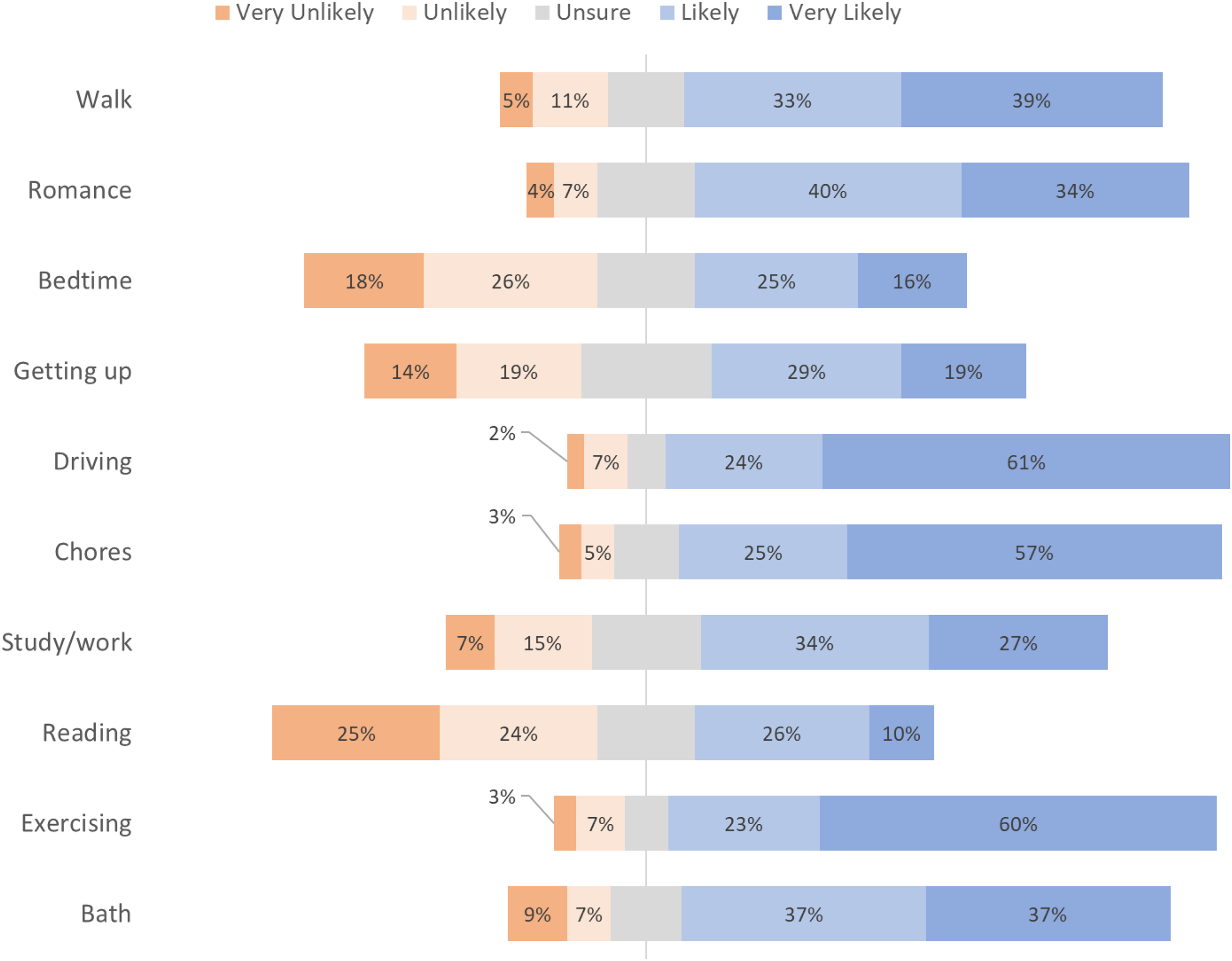
Musical Responsiveness Questionnaire—Inclusion of Music in Certain Everyday Situation.
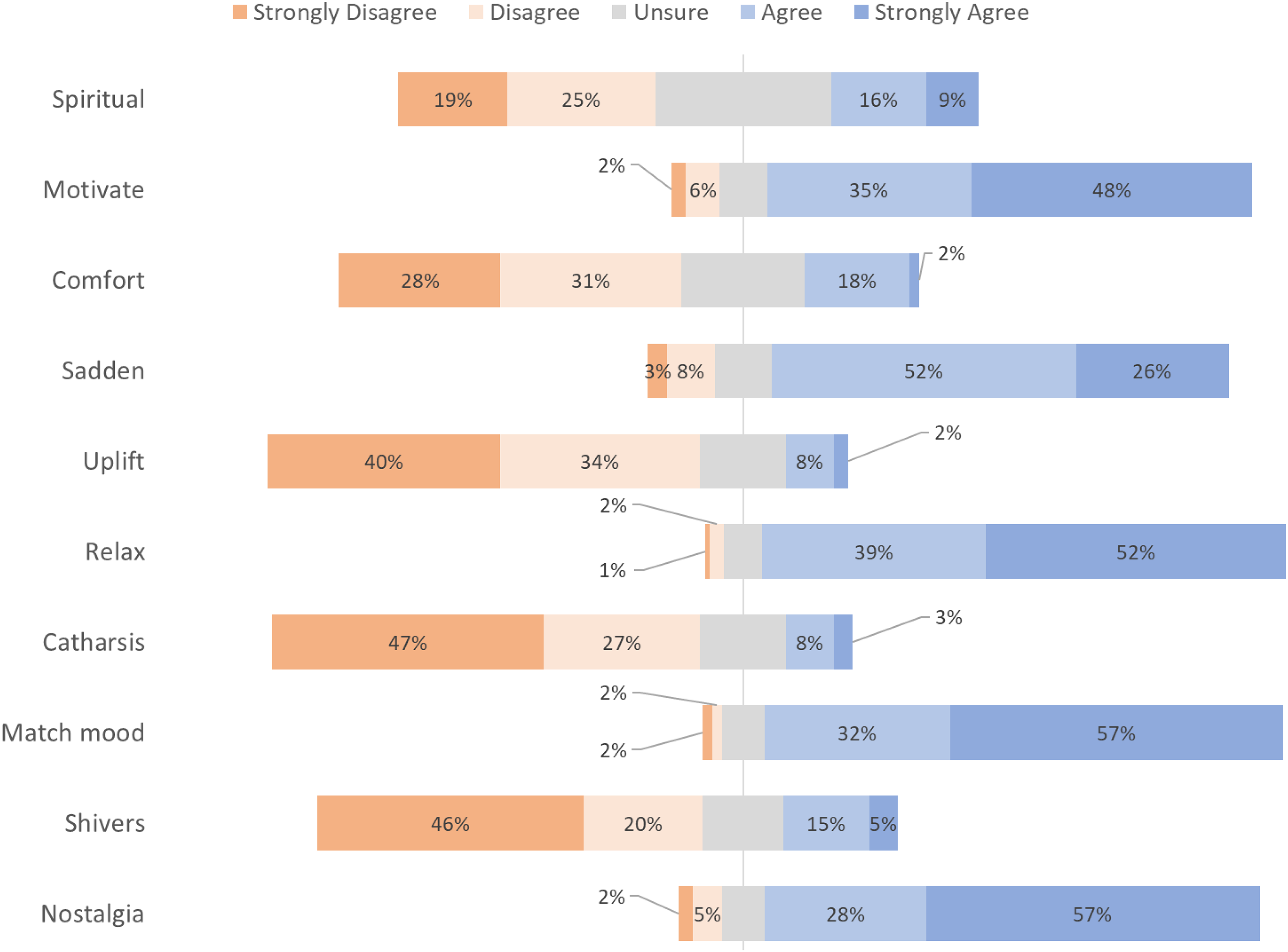
Musical Responsiveness Questionnaire—Ability of Music to Induce Certain Psychological Changes.
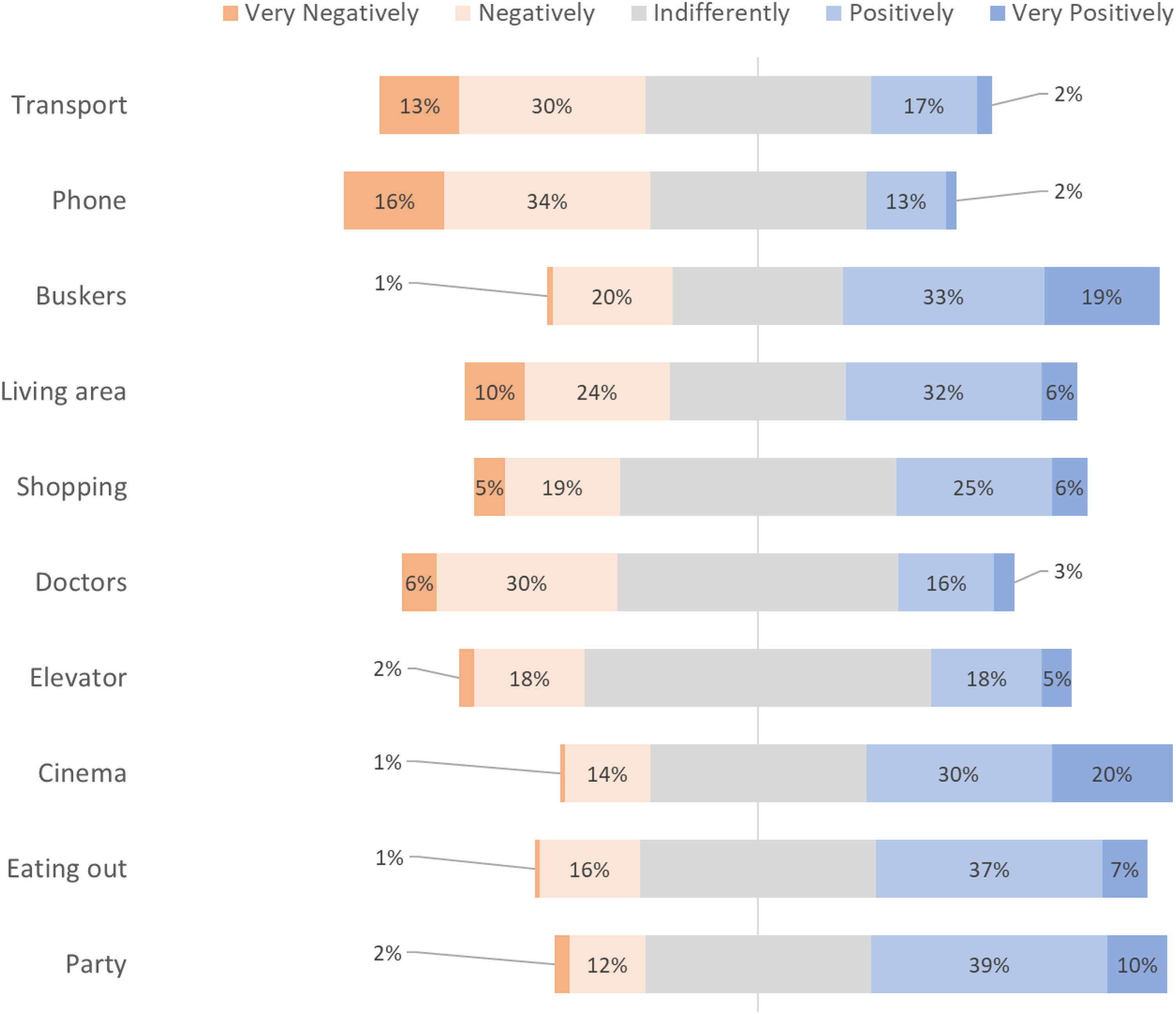
Musical Responsiveness Questionnaire—Impact of Imposed Music on Enjoyment of Certain Situations.
Associations with demographic variables and cannabis use frequency
Exploratory analyses were conducted to examine whether participant responses on music reward and music-related behaviors were associated with demographic variables (age, employment status, and household income) and frequency of cannabis use. Age was modestly negatively correlated with music reward with cannabis (ρ = −0.235, p = 0.009), but was not associated with music reward without cannabis or with measures derived from the musical responsiveness questionnaire (all p > 0.25). Frequency of cannabis use was negatively associated with the “Uses of Music” scores from the Musical Responsiveness Questionnaire (ρ = −0.251, p = 0.005), indicating that individuals reporting higher frequency of use were less likely to incorporate music into everyday situations. No significant associations were observed between frequency of use and music reward or attitudes toward imposed music (all p > 0.10).
Household income was not significantly associated with any of the outcome measures (all p > 0.19).
Similarly, employment status was not associated with differences in music reward or music responsiveness measures (all p > 0.13).
Discussion
Demographics
Relative to the 2024 Canadian Cannabis Survey 27 —an annual survey conducted by Health Canada since 2017 whose latest edition gathered responses from 11,666 Canadians aged 16 years and older across all provinces and territories—our sample included a slightly higher proportion of participants aged ≥25 years (89% vs. 82.7%) and an overrepresentation of male respondents (61% vs. 49.8%). These deviations likely reflect the self-selection bias inherent to online recruitment via Reddit and Discord forums, which are known to attract younger, predominantly male, and more highly educated individuals.
Demographic variables and cannabis use frequency were largely not associated with the measured outcomes, with the exception of a modest association between age and music reward under cannabis use and a negative association between frequency of use and everyday engagement with music. Overall, these findings suggest that the reported associations are broadly consistent across demographic and usage characteristics within the present sample.
Attitude toward music and its combination with cannabis
Darakjian et al., 28 who recently investigated the effect of cannabis on cognition and auditory perception, found that 69% of respondents often or always listened to music while high and that 80% preferred listening while high; both percentages closely mirror our 74% reporting cannabis use “more than half the time” when listening to music. However, our 42% “immediately before/during” score suggests somewhat lower immediacy of pairing.
In their survey of auditory effects, 60% of Darakjian’s participants reported that cannabis influenced their hearing, with 19% reporting no effect and 21% uncertain. By contrast, our cohort largely denied alterations in basic perceptual dimensions: 83% perceived no change in sound directionality, 87% no change in duration, and 62% no change in sound quality. These results may reflect either fewer perceptual shifts among music-engaged users or differences in how such changes are interpreted.
Participants in our study also reported that cannabis and music enhanced positive emotional responses to music (specifically increased happiness, liveliness, relaxation, and nostalgia) while reducing negative emotions such as fear and anger. These findings align with Darakjian et al.’s observations of heightened positive emotional recall and nostalgia during cannabis-enhanced music listening. Similarly, they are consistent with Inzlicht et al., 29 who found decreased stress and fear at the within-person level among chronic cannabis users.
Regarding altered sensory experience, 41% of participants reported cross-modal perceptions of music, while an equal proportion denied such effects, and 18% were unsure. This contrasts with Darakjian et al.’s, where synesthesia and auditory hallucinations were described as rare.
Finally, although 21% of our participants reported experiencing musical chills while using cannabis, 35% denied it, and 44% were unsure, suggesting ambiguity either in the phenomenon itself or in participants’ ability to identify it. This echoes Darakjian et al.’s qualitative findings, in which some (but not all) participants described cannabis-enhanced chills, pointing to substantial inter-individual variability and the need for more precise tools to assess music-evoked affective responses in altered states.
Music reward with and without cannabis
In our sample, BMRQ scores did not differ when participants imagined using cannabis versus abstaining, indicating no detectable change in self-reported musical reward between conditions. By contrast, Darakjian et al. 28 identified four qualitative themes (enhanced emotional openness, rhythmic perception, sensory-motor engagement, and immersive experiences), which they suggest as reflecting the six BMRQ dimensions: musical seeking, emotion evocation, mood regulation, social reward, sensory-motor, and absorption. The discrepancy between our null finding and these qualitative reports may reflect substantial interindividual variability in cannabis’s perceptual and affective effects, as well as the limitations of probing state-dependent changes through imagined rather than actual consumption.
Music responsiveness questionnaire
In our study, cannabis users reported incorporating music into a broader range of daily activities than participants in the controls group from McDonald and Stewart, 22 who completed the same questionnaire. They showed significantly greater music use during bathing, walking, exercising, getting up, and at bedtime. They also differed markedly in the psychological functions of music: nearly every function scored higher in our cannabis cohort, suggesting stronger mood regulation, emotional evocation, and sensory-motor engagement compared to controls. Finally, attitudes toward imposed music diverged: cannabis users were more indifferent to party music and judged film soundtracks less positively and more negatively, yet evaluated background music in elevators, shops, and transit more favorably and expressed stronger negative views of street-performer music (i.e., live music performed by a street musician or busker).
Conclusion
This study examines the intersection of cannabis use and music listening, with particular attention to their combined impact on emotional, perceptual, and sensory domains. While participants reported frequent couse of music and cannabis, no consistent self-reported changes were observed in the perceptual aspects of music listening. Instead, cannabis appeared to amplify music’s emotional impact, particularly in mood regulation, evocation of nostalgia, and integration of music into everyday routine. These findings suggest that music may act as a meaningful emotional adjunct during cannabis use. Although causality cannot be inferred from this cross-sectional design, the data provide preliminary support for the hypothesis that music and cannabis, when combined, may exert synergistic effects on emotional experience. This supports the idea of their potential joint application in therapeutic contexts aimed at emotional well-being. Importantly, no elevated risks were observed for hearing loss, noise sensitivity, or tinnitus among cannabis users, further reinforcing the plausibility of music-cannabis couse in nonclinical and potentially therapeutic settings. A limitation of this study is that race and ethnicity were not collected, precluding analysis of their potential influence on endocannabinoid-related variability and of broader cultural factors that may shape music perception, preferences, and cannabis use.
Footnotes
Acknowledgments
The authors would like to thank all the participants for giving their time to take part in this study.
Authors' contributions
Conceptualization: All Authors. Methodology: All Authors. Formal Analysis: O.V. Investigation: All Authors. Writing—Original Draft Preparation: O.V. and A.L. Writing—Review & Editing: All Authors.
Consent to Participate
All participants provided written informed consent in the study.
Data Availability
The data that support the findings of this study are not openly available because the participants did not give written consent for their data to be shared publicly. Data are available upon reasonable request by contacting the corresponding author, the Principal Investigator, or the Research Ethics Board “CEREP at Université de Montréal,” which approved this study.
Author Disclosure Statement
Dr. Zach Walsh has received research support from Tilray and DOJA, a licensed producer of cannabis, and has provided paid consulting and received honoraria for research talks from Avicanna, which is a company focused on cannabinoid products. Dr. Walsh is a former Director of Indigenous Bloom, which was a company that worked to provide opportunities to Indigenous communities in Canada to engage in cannabis cultivation and sale. The other authors declared no potential conflicts of interest with respect to the research, authorship, and/or publication of this article.
Funding Information
The author(s) disclosed receipt of the following financial support for the research, authorship, and/or publication of this article: Dr. Alexandre Lehmann received funding from the