Abstract
Not all White-Collar Crimes (WCCs) are the same with respect to complexity and risk. Using previous rankings of WCC complexity, we examined associations between the Dark Triad traits and the likelihood and self-perceived efficacy of committing these different WCCs. Study 1 (N = 167) found that those high in Machiavellianism reported higher likelihood of committing the most complex (antitrust violations) but not simplest (embezzlement) WCCs. Individuals high in psychopathy reported a different pattern: a higher likelihood of committing the simplest but not most complex WCCs. Study 2 (n = 257) replicated this effect among financial professionals. These results are consistent with the impulsive nature of psychopathy and the strategic nature of Machiavellianism. These findings have implications for profiling WCC offenders.
White Collar Crime (WCC) is one of the costliest crimes to society. The recent Global Economic Crime and Fraud Survey (Pricewaterhousecoopers, 2022) indicated that the proportion of organizations experiencing fraud has steadily increased worldwide since 2018. The previous version of this survey secured responses from 5000 companies, and reported that 47% of these companies had experienced internal fraud in the past two years (PricewaterhouseCoopers, 2020). In 2020, WCC created losses of $56 billion in the US alone (Dobrilova, 2021). In 2022, this number increased in range to $426 billion to $1.7 trillion (Flynn, 2023). Despite these losses, the past decade has seen declines in the overall number of prosecutions. In 2022, the US Department of Justice reported an all-time low for prosecutions of WCC (Lucas, 2023). These reduced consequences for WCC perpetration, coupled with the magnitude of losses caused by WCC, creates a financial strain on global economies and society more broadly. This strain creates an urgent need for preventative research on WCC, in addition to legal action.
Theoretically, WCC is positively associated with several antisocial personality traits, and has lower associations with more social personality traits. For instance, WCC has been associated with callousness, and manipulative behaviours (Blickle et al., 2006; Li-Ping Tang et al., 2008; Mathieu et al., 2013). Nee and colleagues (2019) interviewed a sample of 17 WCC offenders and indicated that these individuals were higher in sensation seeking and impulsivity, had a greater tendency to fake good behaviours, and were lower in self-regulation and anger control as compared to non-offender samples. Furthermore, research also indicates that WCC offenders score lower on the domains of responsibility and self-control as compared to non-offender samples (Collins & Schmidt, 1993). Individuals who are high on dark personality traits are also have more positive attitudes towards WCC (Amos et al., 2022).
The three most widely studied personality traits with a callous-manipulative core are the Dark Triad (Paulhus & Williams, 2002). The Dark Triad consists of the distinct but overlapping constructs of Machiavellianism, narcissism, and psychopathy (Jones & Figueredo, 2013; Paulhus & Williams, 2002). Machiavellianism is associated with manipulation, cynicism, and amorality (Christie & Geis, 1970). Machiavellian individuals are strategically focused on selfish instrumental gain with a longer-term focus (Jones & Paulhus, 2010). In contrast, narcissism is associated with entitlement, grandiosity, and self-enhancement tendencies (Raskin & Terry, 1988). Narcissistic individuals are typically ego-driven, constantly searching for social reinforcement (Morf & Rhodewalt, 2001). Finally, psychopathy is associated with impulsivity, recklessness, and overt antisocial tendencies (Hare & Neumann, 2008). Psychopathic individuals seek immediate gratification and fail to temper their antisocial behavior in the face of risk (Jones & Paulhus, 2017; Jones, 2014). Research indicates associations of psychopathy and Machiavellianism with WCC to varying degrees (Amos et al., 2022). Although narcissism has mixed results, theoretically, it is aligned with a predisposition for committing WCCs as well.
The Dark Triad traits have been associated with most forms of antisocial behavior and crime (Muris et al., 2017). Thus, the associations between the Dark Triad and WCC are fairly intuitive and their contributions towards understanding the perpetration of WCC are limited. Specifically, all three Dark Triad traits are associated with dishonesty (Lee et al., 2013), making all three types of individuals willing (in theory) to commit WCC. However, even within the Dark Triad, there are differences in the propensity for crime. For example, psychopathy is associated with all forms of criminal behavior, referred to as “criminal versatility” (Hare, 1996). This versatility stems from the reckless and antisocial nature of the trait. However, there are differences in criminal patterns of Machiavellianism and narcissism based on the unique aspects of these traits. For example, because of their strategic (Jones & Mueller, 2021) and flexible (Bereczkei, 2015) nature, individuals high in Machiavellianism should be more selective in the crimes they commit (Helm et al., 2023). Machiavellianism is associated with seeking maximum gains with minimal risk (Jones, 2016) and are therefore likely to avoid crimes associated with drugs or violence (Helm et al., 2023). Thus, because individuals high in Machiavellianism are cautious, they should be particularly drawn to complex types of WCC. This motivation stems from the difficulty in prosecuting certain forms of WCC (especially complex ones) and generalized leniency associated with WCC punishment (Burns & Meitl, 2019; Coleman, 1987).
Indeed, within WCC, there are levels of complexity. Some crimes range from simple and tactical whereas others are more complex and strategic (Wheeler, 1988). Although those high in psychopathy are criminally versatile, their inability to delay gratification is likely to attenuate any predisposition for WCC offenses requiring patience, strategy, planning or caution. Instead, individuals high in psychopathy should gravitate towards WCCs which lend themselves to impulsive behaviour and direct tactics such as embezzlement. Unlike those high in psychopathy, individuals high in Machiavellianism should avoid risky and tactical crimes in favor of crimes requiring patience and strategy. These crimes are not only more frequently profitable, but they are ostensibly safer due to their complex nature.
We argue that there are differential preferences among the Dark Triad traits, most especially between psychopathy and Machiavellianism, with respect to the types of WCC offenses they pursue. Because complex and strategic crimes bring with them higher reward and lower risk, they should disproportionately entice those high in Machiavellianism. In contrast, direct and impulsive crimes that bring immediate gratification should disproportionately entice those high in psychopathy. Routine Activities Theory (RAT; Cohen & Felson, 1979) states that crime is likely when a motivated offender, suitable target, and lack of a capable guardian are present. Thus, from a RAT perspective, we argue that individuals high in psychopathy, although sufficiently motivated criminals, do not see complex WCC offenses suitable because of the patience and planning involved. In contrast, although individuals high in Machiavellianism are also sufficiently motivated, there are too many capable guardians associated with lower complexity WCC offenses, deterring such offenses. Finally, we make no strong predictions about narcissism simply because they are the least criminally oriented of the three Dark Triad traits (Bogaerts et al., 2021).
According to the Fraud Triangle (Cressey, 1953) there are three factors that create increased risk for WCC: opportunity, rationalization, and financial need. From a Dark Triad perspective, these individuals are greedy and selfish (Carré et al., 2020), which explains need. They are callous and dishonest, thus obviating the need for rationalization most of the time. Thus, when presented with an opportunity to illegally profit from WCC, their antisocial nature is activated. Indeed, according to Trait Activation Theory (TAT; Tett & Burnett, 2003) personality traits guide behavior most prominently in trait-relevant situations. For example, a large cocktail party will activate different behaviors based on a person’s extraversion, whereas a funeral is less likely to guide differential behavior. Thus, the opportunity associated with a WCC is clearly a trait-relevant situation to the Dark Triad.
However, the risk involved in WCC will also activate caution among those high in Machiavellianism, whereas no such caution is present among those high in psychopathy. Thus, high-risk unguarded money would be a trait-relevant situation for those high in psychopathy, but not those high in Machiavellianism (Jones, 2014). In contrast, low-risk unguarded money would be a trait-relevant situation for both (Jones, 2013). Thus, safer crimes requiring strategy and delay of gratification would appeal most to those high in Machiavellianism.
In sum, we hypothesize that the Dark Triad traits should differentially predict WCC preferences:
Machiavellianism will predict a preference for complex and strategic WCCs that have delayed rewards but lower overall risks (H1)
Psychopathy will predict a preference for WCCs that have higher risks but bring about immediate gratification (H2)
Narcissism will not uniquely predict any specific type of WCC (H3)
Methods
Power Analysis
Research has shown that the average correlation size in personality psychology is .21, which requires a sample size of 173 (Richard et al., 2003). Thus, given the exploratory nature of Study 1, we attempted to recruit about 173 participants.
Participants
We collected data from 193 students from a medium sized university. We also included attention checks (e.g., I breathe oxygen every day) and removed participants who failed them, leading to a final sample of 167 (gender identification: men = 70, women = 94, other = 3; age: M = 20.95, SD = 4.16, range = 17–52; ethnicity: 61% = White/European Heritage, 14% = Latin American Heritage, 25% other; income: $15k-$25k/year). Students were recruited using a university-wide subject pool, which offers course credit or extra course credit for their participation.
Measures
Dark Triad
To assess the three Dark Triad traits, we used the Short Dark Triad (Jones & Paulhus, 2014). This 27-item inventory contains three subscales measuring Machiavellianism, narcissism, and psychopathy via nine items each. Participants had to indicate the extent to which they agreed or disagreed with the presented statements on a Likert scale of one to five (1 = Disagree strongly to 5 = Agree strongly). After appropriate coding, the Cronbach’s alphas for the three subscales ranged from medium to high for each of the scales αMAchiavellianism = .85; αNarcissism = .70; αpsychopathy = .70. An example item for Machiavellianism is ‘I like to use clever manipulation to get my way’; an example item for narcissism is ‘I have been compared to famous people’; an example item for psychopathy is ‘People who mess with me always regret it’.
WCC Outcomes
According to Wheeler (1988) different forms of WCC can be ordered hierarchically according to complexity. The top crimes in complexity consisted of two forms of antitrust violations (predatory pricing and price fixing). In contrast, the two least complex forms of WCC were embezzlement and mail fraud (Wheeler, 1988). Because antitrust violations has a wider umbrella, we chose these two common forms and averaged them. In contrast, we selected embelzzement for the simple WCC, which was listed at the bottom of Wheeler’s chart (1988; pg. 343). Thus, for the current study, these two types of crimes are selected to preliminarily establish whether WCCs differing in complexity have differential associations with the Dark Triad traits.
Complex WCC (Antitrust Violations)
To assess proclivity towards and likelihood of committing complex WCC we selected Antitrust Violations
Simple WCC (Embezzlement)
We asked the participants to indicate whether they would undertake embezzlement and whether they would be good at successfully undertaking embezzlement if given the opportunity.
Analytical Strategy
Across both studies, we approached data analysis two separate ways. Because partialing constructs can remove important variance associated with that construct (Lynam et al., 2006), we first examined raw correlations and correlation strength differences. Next, we conducted basic regressions controlling for the overlap among the three Dark Triad traits to determine unique associations.
Study 1 Results
Descriptives and Zero Order Correlations of the Dark Triad Traits, Antitrust Violations, and Embezzlement.
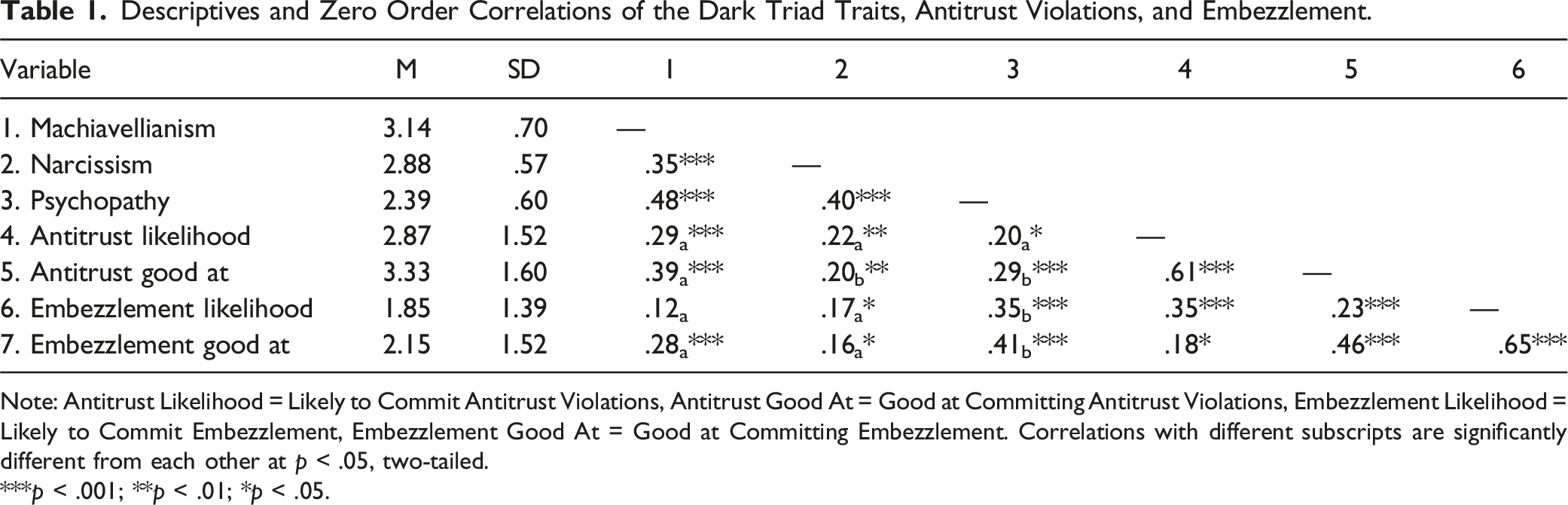
Note: Antitrust Likelihood = Likely to Commit Antitrust Violations, Antitrust Good At = Good at Committing Antitrust Violations, Embezzlement Likelihood = Likely to Commit Embezzlement, Embezzlement Good At = Good at Committing Embezzlement. Correlations with different subscripts are significantly different from each other at p < .05, two-tailed.
***p < .001; **p < .01; *p < .05.
Multiple Regression Analyses of the Dark Triad Traits Predicting Antitrust Violations, and Embezzlement.
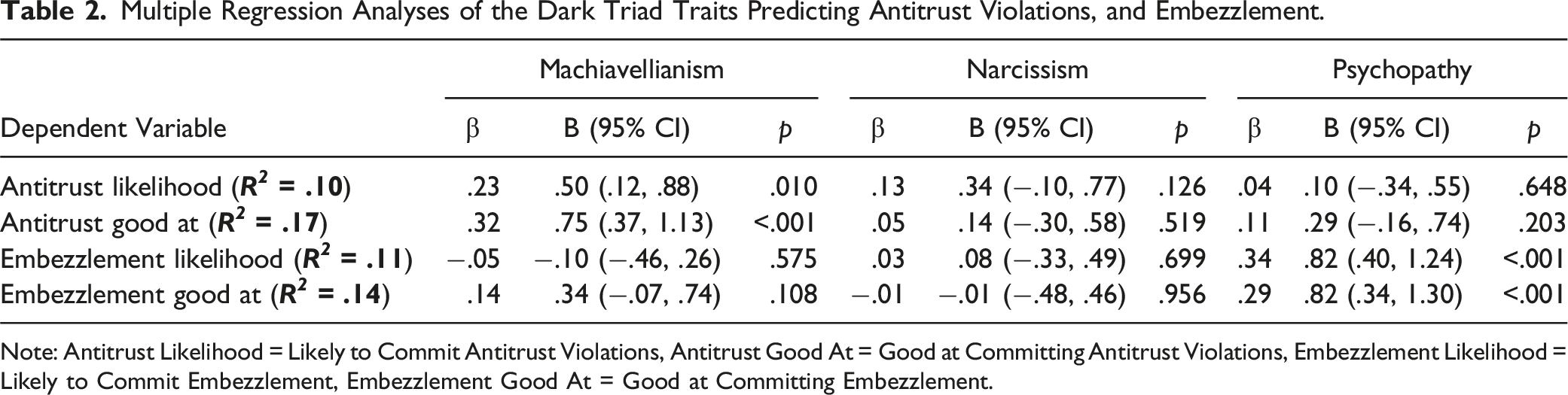
Note: Antitrust Likelihood = Likely to Commit Antitrust Violations, Antitrust Good At = Good at Committing Antitrust Violations, Embezzlement Likelihood = Likely to Commit Embezzlement, Embezzlement Good At = Good at Committing Embezzlement.
Study 1 Discussion
As expected, Machiavellianism predicted greater preferences for committing a complex WCC, which is characteristically high reward and low risk (i.e., antitrust violations). Individuals high on Machiavellianism are bottom-line focused and rational decision-makers when it comes to resources (Basak et al., 2018; Curtis et al., 2021), which makes them more likely to manipulate their environments and exploit any possible opportunities for personal gains. Further, individuals high in Machiavellianism see the potential for illegal gains in their environment more readily than do others (Carré et al., 2020). Thus, when an individual high on Machiavellianism sees an opportunity to undertake WCC that poses a reasonably low risk of getting caught and a reasonably high reward, they will be likely to pursue it. Antitrust violations involve planning where one colludes with the competition for higher gains or accept short term losses for long term profits. Because individuals high in Machiavellianism have confidence in their interpersonal abilities (Paulhus, 1983), and have a disposition towards planful thinking (at least among men; Szabó & Jones, 2019), they are more willing to perpetrate such a crime. Moreover, these activities do not involve the high that other crimes involve, making such complex WCCs more tempting to those high on Machiavellianism.
Psychopathy predicted greater preferences for less complex WCCs, such as embezzlement. These types of crimes are riskier, but they also require less planning or patience. Because individuals high in psychopathy lack inhibition (Newman, 1987) they are more likely to engage in high-risk activities that provide immediate rewards. Further, individuals high on psychopathy seek immediate gratification, but lack the attentional capabilities to be aware of impending punishment (Kosson & Newman, 1986). Thus, they are less averse to punishment than are those high in Machiavellianism (Jones, 2014) and are therefore more likely indifferent to risk of getting caught.
Narcissism was not uniquely associated either with the likelihood to engage in a certain type of WCC nor did narcissism correlate with perceptions of being good at committing one. This finding is consistent with the predictions of the current study as well as previous research indicating that narcissism is the least criminally oriented of the Dark Triad traits (Muris et al., 2017). Moreover, individuals high on narcissism have high social desirability tendencies and tend to engage in impression management. Thus, even if these individuals were to commit crimes in real life if an opportunity presented itself, they might not be likely to admit to the idea so as to not be perceived in a negative light (e.g., Bogaerts et al., 2021).
Overall, this study provides further evidence for the different criminal orientations of people high on dark personality traits. Furthermore, it also expands upon the distinct characteristics of the Dark Triad traits. Even though the Dark Triad traits share a common dark core, their unique characteristics determine different criminal preferences. This study increases our understanding of these differential manifestations of the Dark Triad traits. Such an understanding can aid organizations in building effective preventive measures against WCC.
Even though this work adds to our understanding of how the Dark Triad traits manifest within perpetration of crime, specifically WCC, there are limitations to Study 1. First, it consisted of a sample of college students who had volunteered to be contacted for participating in studies taking place on the university campus. Further, the study only investigated preferences for two types of WCC. However, WCCs can range from antitrust violations to embezzlement, with other moderately complex crimes (e.g., bribery) in the moderately complex range (Wheeler, 1988). Thus, the results of this study should be interpreted with caution and cannot be generalized to other populations without further investigations. Thus, it is important to determine if similar preferential patterns among the Dark Triad traits exist across other types of WCCs. It is also imperative to test these associations within other populations, specifically, financial professionals, to understand whether individuals who have conducive environments for committing WCCs will be likely to partake in them. Thus, we address some of these concerns in Study 2 by employing a sample of financial professionals through Prolific.co with a broader range of WCCs under fraud and embezzlement.
Study 2
This study had the same goals as Study 1, which were to establish the WCC preferences of individuals high on the Dark Triad traits. However, this study made use of a corporate sample using Prolific.co to understand whether individuals who work in environments conducive to the perpetration of WCC respond similarly. Thus, Study 2 assessed not only a relevant population, but also assessed the full suite of WCCs as outlined by Wheeler (1988, p. 343). Therefore, this study aims to improve the generalizability of the following hypotheses from Study 1:
Machiavellianism will predict a preference for complex and strategic WCCs that have delayed rewards but lower overall risks (H1)
Psychopathy will predict a preference for WCCs that have higher risks but bring about immediate gratification (H2)
Narcissism will not uniquely predict any specific type of WCC (H3)
Methods
Power Analysis
Although the correlations of Study 1 were moderate in strength, research has also shown that correlations do not stabilize until they reach 250 (Schönbrodt & Perugini, 2013). Given our emphasis in conducting a strong replication, we collected a minimum of 250 for Study 2.
Participants
We collected data from 300 financial professionals on Prolific.co using a screening tool to isolate only those in a financial profession. Like in Study 1, we included attention checks (e.g., “Disagree” with this question). After removing those who failed these attention checks, we had a final sample of 257 participants: men = 110, women = 145, other = 2; age: M = 35.92, SD = 12.31, range = 18–85; ethnicity: Black/African Heritage = 41; White/European Heritage = 182, Latin American Heritage = 10, East Asian = 8, South Asian = 6, Middle eastern/Arabic = 1, Native North American = 1, other nationalities = 7; income: Less than $15,000, $15,000 to $50,000, $51,000 to $90,000, $91,000 to $150,000, $151,000 to $250,000).
Measures
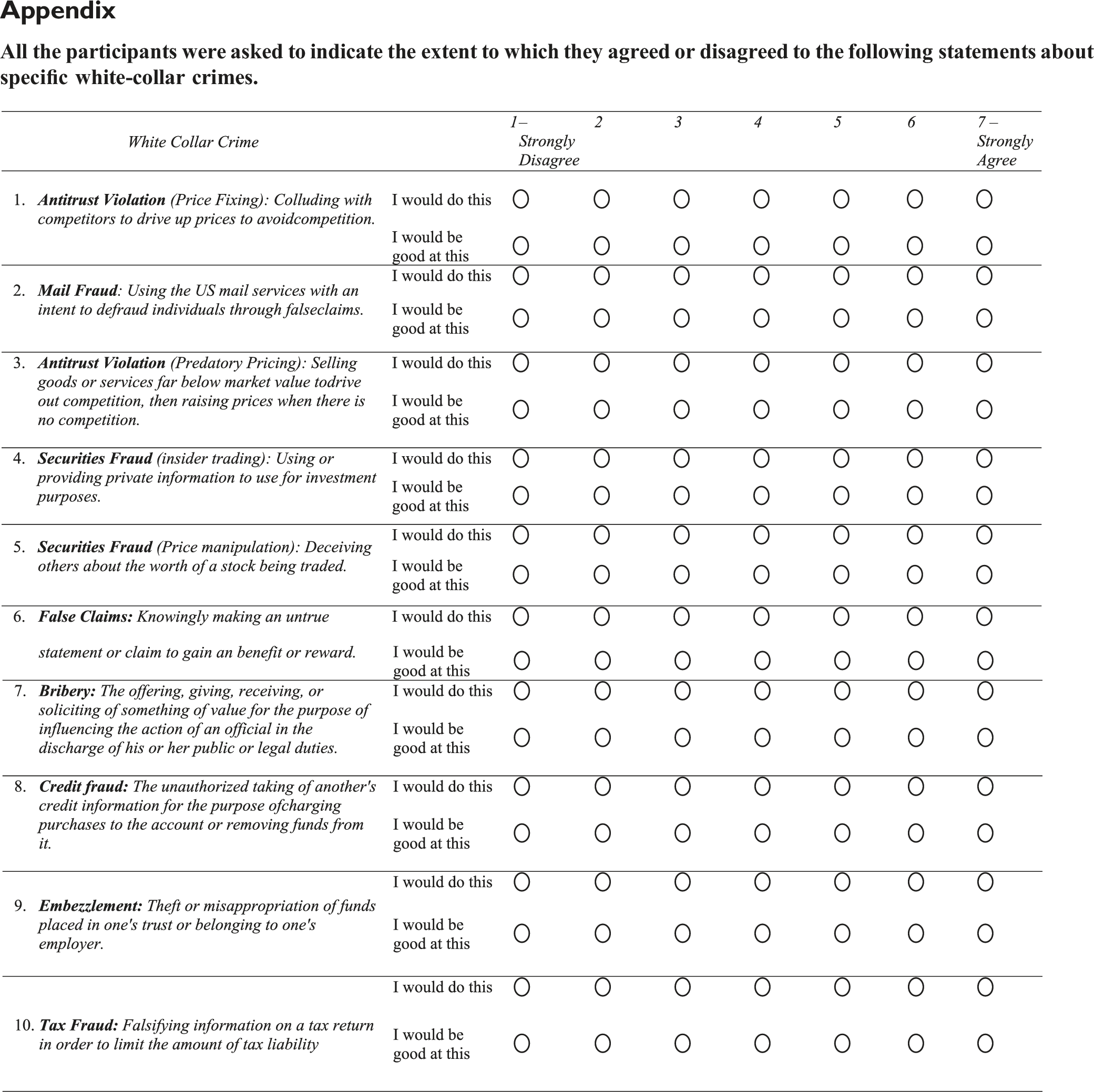
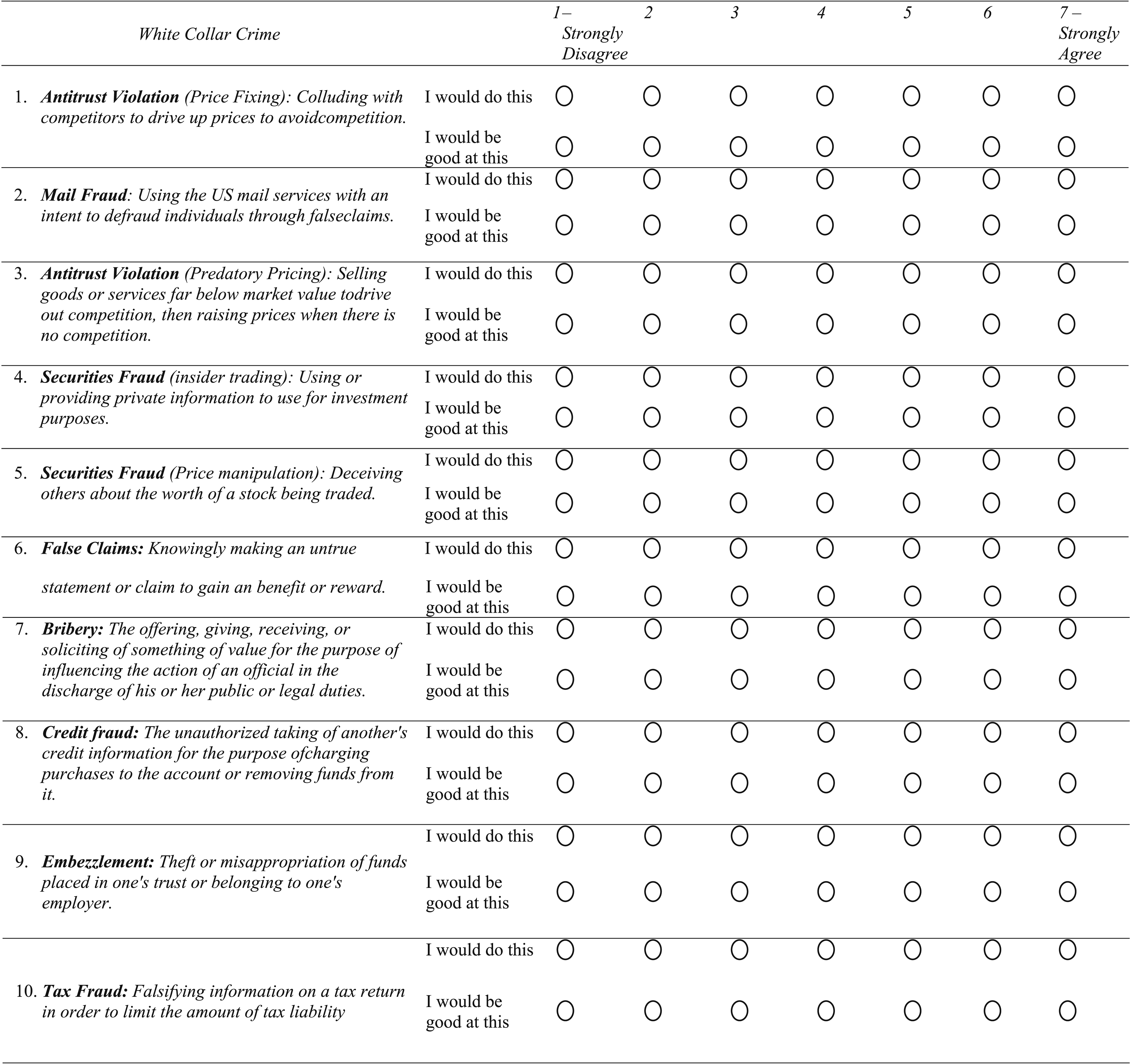
In addition to increasing the number of WCCs, we also included “filler” behaviours to obscure the purpose of the study. Thus, we asked participants how likely they would be (and how good they would be at) to engage in behaviours such as: Layoffs, research & development, merging with a parent company. All the WCCs are listed in the Appendix. Further, we used the Short Dark Tetrad (SD4; Paulhus et al., 2021) to measure Machiavellianism, narcissism, and psychopathy. We excluded sadism because we made no differential theoretical predictions for this trait and to lower response burden.
Results
Descriptives and Zero Order Correlations of the Dark Triad Traits and White Collar Crimes.
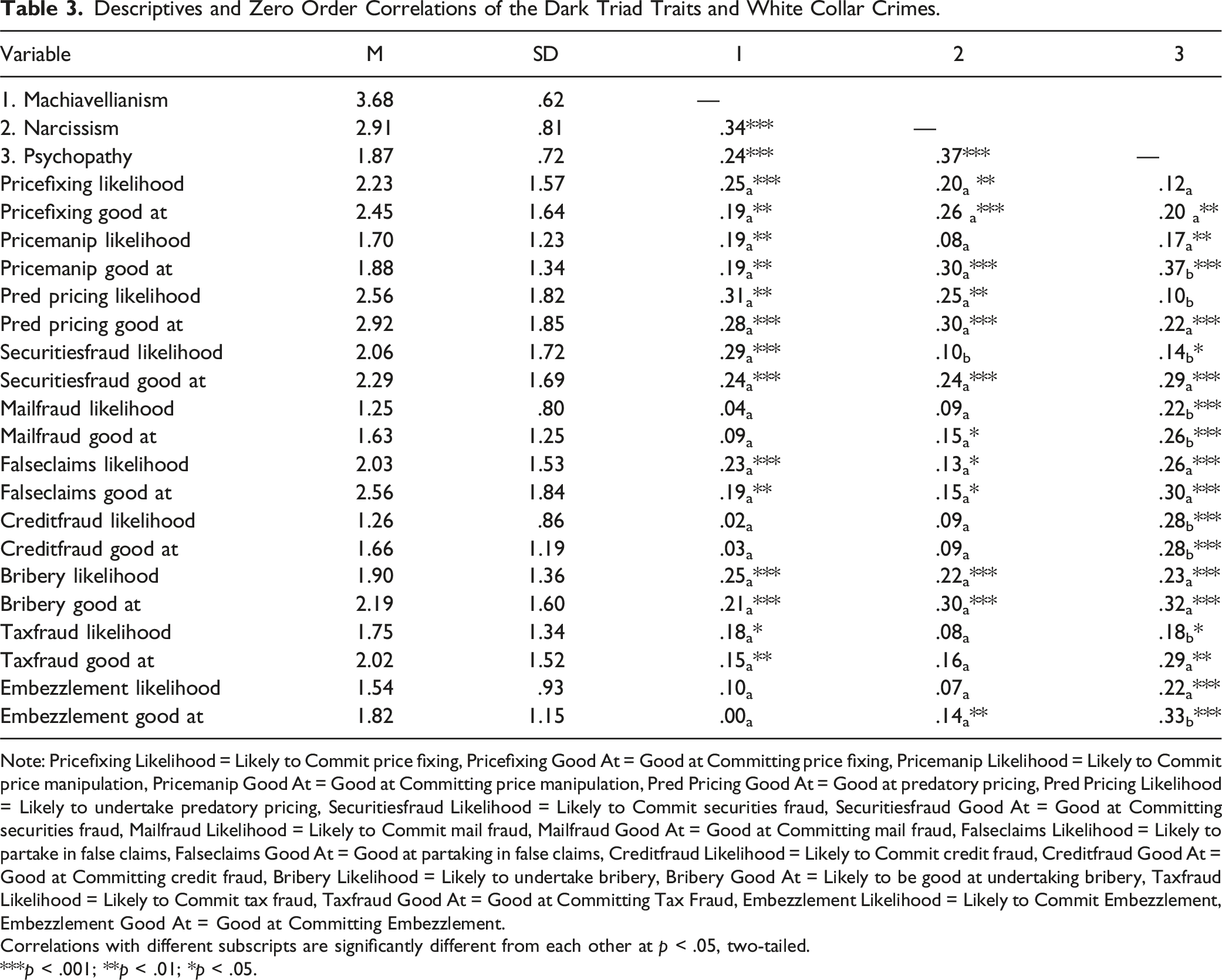
Note: Pricefixing Likelihood = Likely to Commit price fixing, Pricefixing Good At = Good at Committing price fixing, Pricemanip Likelihood = Likely to Commit price manipulation, Pricemanip Good At = Good at Committing price manipulation, Pred Pricing Good At = Good at predatory pricing, Pred Pricing Likelihood = Likely to undertake predatory pricing, Securitiesfraud Likelihood = Likely to Commit securities fraud, Securitiesfraud Good At = Good at Committing securities fraud, Mailfraud Likelihood = Likely to Commit mail fraud, Mailfraud Good At = Good at Committing mail fraud, Falseclaims Likelihood = Likely to partake in false claims, Falseclaims Good At = Good at partaking in false claims, Creditfraud Likelihood = Likely to Commit credit fraud, Creditfraud Good At = Good at Committing credit fraud, Bribery Likelihood = Likely to undertake bribery, Bribery Good At = Likely to be good at undertaking bribery, Taxfraud Likelihood = Likely to Commit tax fraud, Taxfraud Good At = Good at Committing Tax Fraud, Embezzlement Likelihood = Likely to Commit Embezzlement, Embezzlement Good At = Good at Committing Embezzlement.
Correlations with different subscripts are significantly different from each other at p < .05, two-tailed.
***p < .001; **p < .01; *p < .05.
Multiple Regression Analyses of the Dark Triad Traits Predicting Antitrust Violations, and Embezzlement.
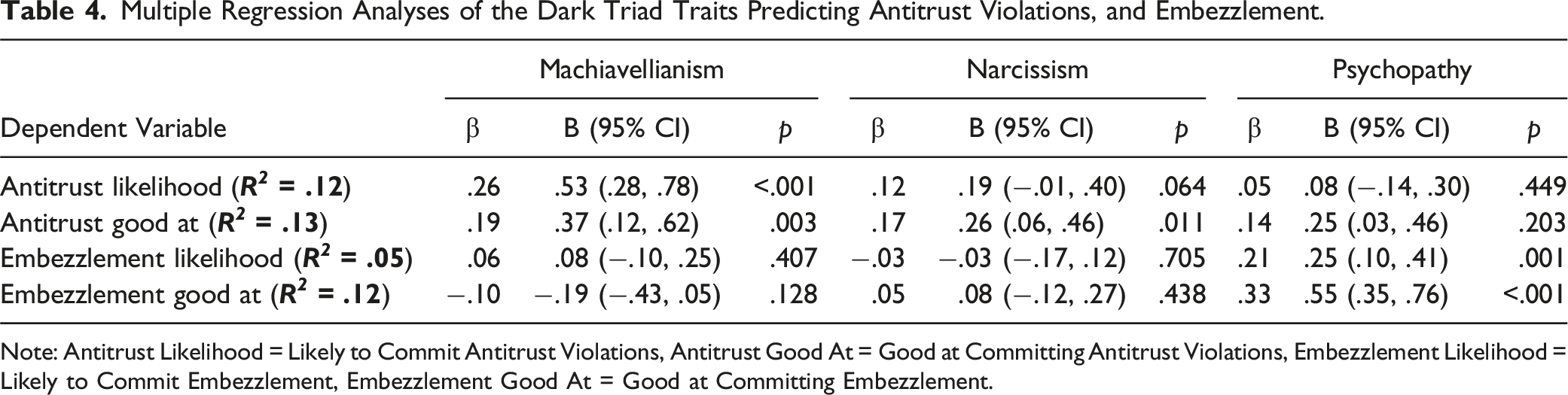
Note: Antitrust Likelihood = Likely to Commit Antitrust Violations, Antitrust Good At = Good at Committing Antitrust Violations, Embezzlement Likelihood = Likely to Commit Embezzlement, Embezzlement Good At = Good at Committing Embezzlement.
Discussion
Study 2 replicated and extended the results of Study 1 such that individuals high on Machiavellianism reported a higher likelihood of engaging in more strategic WCCs, which require strategy and planning, but pose less risk. However, individuals high on Machiavellianism had weak to absent associations with simple WCCs such as embezzlement. We also replicated the finding that individuals high on psychopathy prefer simple WCCs which might pose higher risks but can be implemented quickly and yield greater rewards. However, individuals high in psychopathy showed weak to absent associations with complex WCCs such as antitrust violations (especially predatory pricing).
It is noteworthy that individuals high on all three Dark Triad traits indicated that they would be good at committing a wide variety of WCCs, especially Antitrust violations, if given the opportunity. Thus, it is not a sense of poor aptitude or moral objection driving these differential associations. Instead, individuals high in psychopathy may simply lack the planning and patience required for complex WCCs. In contrast, individuals high in Machiavellianism may be averse to the risk involved in embezzlement, whereas the complexity of antitrust violations may obscure investigations and cause less risk.
These findings support the theoretical notion that individuals high in Machiavellianism are strategic and long-term oriented thinkers (Szabo & Jones, 2019). Even though individuals high on Machiavellianism might think that they would have the appropriate skill set for committing all forms of WCC, the risks of potentially exposing oneself to punishment by partaking in less complex forms of WCC might not be worth it for such individuals. Finally, all three Dark Triad traits were equally associated with a likelihood to commit bribery and were associated with feeling good at it. This finding supports that notion that all three Dark Triad traits are associated with interpersonal manipulation (Jones & Figueredo, 2013).
General Discussion
In sum, both studies showed that individuals high on the Dark Triad traits of personality have differential preferences for WCCs based on complexity. Individuals high on Machiavellianism and psychopathy showed clear differences in their likelihood to commit different WCCs based on their complexity. Whereas those high in Machiavellianism were most likely to engage in complicated WCCs such as antitrust violations, those high in psychopathy gravitated towards simple and impulsive WCCs such as embezzlement. Individuals high in narcissism did not show preferences for any WCC. Thus, all three of our hypotheses were supported across both studies, with Study 2 being preregistered. This research furthers the understanding of how different personality traits might contribute towards perpetration of WCC.
Our research not only provides information on who is likely to commit specific types of WCCs, but it also strengthens the theoretical arguments surrounding the construct definitions of Machiavellianism and psychopathy. It has been argued that individuals high in Machiavellianism are strategic and do indeed disproportionally gravitate towards WCCs because of the difficulties associated with prosecuting them and the high financial rewards associated (Jones, 2016). However, data were still needed to support some of these assertions. Similarly, Muris et al., (2017) among others have argued that there are no unique crimes with which Machiavellianism is associated. We now know that complex WCCs are a strong candidate for this. Finally, our research supports the efficacy of both the Short Dark Triad (Jones & Paulhus, 2014) and Short Dark Tetrad (Paulhus et al., 2021) operationalizations of the Dark Triad traits. The SD4 being the newer and more psychometrically strong of the two, the convergent findings lend great validation evidence to both.
Limitations and Future Directions
As aforementioned the current study demonstrated the same patterns across different samples and assessments of the Dark Triad, and Study 2 involved a sample of financial professionals who are most closely related to the situations that would tempt individuals to commit such crimes. Thus, we have confidence that these self-reported patterns are strong and replicable. Strengths notwithstanding, future studies should replicate these findings using different approaches. For example, our research is still vulnerable to issues related to same-source data collection (Podsakoff et al., 2003). Future research involving behavioural measures of WCC (such as financial reports or criminal records) would help strengthen our claims. Similarly, future research should track financial professionals over time in longitudinal fashion to determine how individuals high in different Dark Triad traits behave over time. Similarly, conducting Dark Triad assessments on convicted WCC offenders would be a valuable source of data. Finally, future research should examine other covariates such as employment status, job satisfaction, socioeconomic status, and situational forces in WCC preferences as well. WCCs are specifically associated with status maintenance and are committed by individuals with higher positions within the workforce.
Implications and Applications
These are also the individuals who have greater access to opportunities that can facilitate white collar crime. Thus, future studies should specifically investigate these associations among corporate populations. These findings are also aligned with previous research indicating that Machiavellianism is associated with unethical pro-organizational behaviors (Castille et al., 2018). Thus, examining pro-organizational WCC that benefits the individual over time may be a Machiavellian behavior worth exploring. Another approach to substantiate the current findings could be to interview individuals who have perpetrated white collar crime and examine their cognitive processes behind perpetration of those crimes.
Conclusion
In sum, individuals high in Machiavellianism and psychopathy are different with respect to their preferences for which WCC they may commit, based on complexity. Given the strategic and planful nature of those high in Machiavellianism, they displayed a clear preference for safe, complex, and high reward WCCs such as antitrust violations. In contrast, the reckless and impulsive nature of psychopathy drove individuals high in this trait to seek immediate benefit and high-risk crimes such as embezzlement. Given this information, practitioners and researchers can develop strategies and policies that may deter or identify likely perpetrators.
Footnotes
Declaration of Conflicting Interests
The author(s) declared no potential conflicts of interest with respect to the research, authorship, and/or publication of this article.
Funding
The author(s) received no financial support for the research, authorship, and/or publication of this article.

Appendix
All the participants were asked to indicate the extent to which they agreed or disagreed to the following statements about specific white-collar crimes. All the participants were asked to indicate the extent to which they agreed or disagreed to the following statements about specific white-collar crimes.