







Abstract
The current study proposes a comparison of sociodemographic correlates of knowledge about white-collar crime in France and the US, and predicts cross-national differences in how white-collar crime information is both obtained and processed. A total of 1,068 participants (536 from the US and 532 from France) answered an online survey that measured their level of familiarity with various aspects of white-collar crime as well as their sociodemographic characteristics. In both countries, age, income, and politically liberal views were positively associated with knowledge about white-collar crime, as was education (in France only). In addition, subjects who used internet news sites as their main source of information were generally better informed than those who relied on other media. On the other hand, conservatives (in the US only), men, younger participants, and social media users were more likely to adhere to white-collar crime myths. These findings imply that knowledge about white-collar crime may be increased by disseminating relevant information to targeted audiences. They also suggest, however, that some segments of the population may not be subject to reasoned persuasion.
Introduction
A sizable body of research has demonstrated increasing public concern about white-collar and corporate crime in the US and demand for tougher legal actions against upper-class offenders (Holtfreter et al., 2008; Huff et al., 2010; Kane & Wall, 2006; Levi, 2006, 2009; Piquero et al., 2008; Rebovich et al., 2000; Schoepfer et al., 2007). Nevertheless, none of these studies included a direct measure of knowledge about white-collar crime. This limitation obscures the extent and homogeneity of public awareness, and its effect on perceived seriousness and punitiveness. To address this issue, a group of scholars provided the first-ever measure of public knowledge about white-collar crime in the US and its consequences on general attitudes towards elite offenders (Michel et al., 2015; Michel et al., 2016). 1 These three studies concluded that the respondents were not sufficiently informed about upper-class criminality, overestimated their actual levels of information, and seemingly adhered to several myths. 2 The most common of these myths included the nonviolent nature of white-collar crime, and a “collar-blind” criminal justice system. Phrased differently, myth adherers were less inclined to acknowledge hard-earned empirical evidence about the greater physical harmfulness of upper-class illegality over traditional crime, as well as the relative legal immunity enjoyed by elite offenders compared with street criminals. Key sociodemographic predictors of knowledge emerged. More specifically, better-informed participants typically had higher education levels and used the internet as their main source of information. On the other hand, myth adherers were predominantly male, politically more conservative, and relied on traditional media sources (Michel et al., 2015). Further, more knowledgeable subjects expressed greater concern over white-collar crime and supported tougher sanctions against elite offenders (Michel, Heide, & Cochran, 2016). Conversely, myth adherers tended to downplay the seriousness of white-collar and corporate crime, and generally displayed greater leniency with upper-world criminals.
Almost a decade later, whether the conclusions of that research project are still relevant is uncertain. Starting in 2017, the Trump administration’s regulatory cutbacks created opportunities for corporate and environmental crime to flourish (Benson et al., 2019; Friedrichs & Rothe, 2020; Michalowski & Brown, 2020). Further, Trump’s term was tarnished by several accusations of white-collar crime such as emoluments violations, self-dealing, extortion, and inciting an insurrection (Pontell et al., 2021). In addition, the former president is currently facing multiple felony charges, including improperly removing classified documents from the White House when he left office, falsifying business records, and conspiring to defraud the government and disenfranchise voters in an effort to overturn the results of the 2020 election. While Trump himself has not been convicted, a number of his associates were (Fernandez, 2020). All these cases have been widely covered by both conservative and liberal media. We may therefore expect that US citizens have been exposed to relevant information about white-collar crime in the past seven years and should now possess better understanding of the concept.
Still, a previous iteration of the current study (forthcoming) that probed current levels of public knowledge about white-collar crime in France and the US found little evidence of heightened awareness of elite deviance. While American subjects were generally better informed than their French counterparts, they were also more likely to subscribe to various myths. As was the case in 2016, they were prone to believe that upper-class criminality is nonviolent, and that defendants in white-collar crime cases are treated just as harshly as traditional offenders. These results suggest greater knowledge heterogeneity in the US. It is unclear which factors may account for these cross-national differences. Like the US, France has experienced a marked increase in white-collar crime in recent years (“La délinquance en col blanc en hausse”, 2022). Several high-profile cases in the last decade have rocked the nation. For example, French trader Jérôme Kerviel was convicted of breach of trust, forgery and unauthorized use of his bank’s computers, resulting in losses valued at more than $5 billion (Capelle-Blancard, 2018). Former budget minister Jérôme Cahuzac was found guilty of tax fraud (Robert-Diard, 2018). Perhaps more importantly, ex-president Nicolas Sarkozy was convicted of corruption (Mazoue, 2021). As was the case in the US, these trials received extensive media coverage. French respondents’ low awareness of white-collar crime is therefore surprising. Equally puzzling is their American counterparts’ greater and seemingly persistent myth adherence. These findings point to cultural variation in how white-collar crime information is both obtained and processed.
Investigating the sources of this variation is important for two reasons. First, to the extent that knowledge about the seriousness of white-collar crime influences public demand for significant penal reform against it, identifying the best avenues to spread relevant information is crucial. Second, persistent belief in unfounded claims could thwart efforts to raise awareness and, indirectly, weaken public support for vigorous correctional policies. Understanding what sociodemographic factors may predict white-collar crime myth adherence is therefore warranted.
Using data from an online survey of 1,068 subjects (536 from the US and 532 from France) administered in the summer of 2022, the current study builds upon Michel, Heide and Cochran’s study (2015). In doing so, it makes unique contributions to the academic community. First, it provides an updated measure of white-collar crime knowledge heterogeneity in the US. Secondly, it teases out the respective sociodemographic correlates of knowledge about upperworld criminality in the US and in France, a comparison that does not exist in the extant literature. Thirdly, it draws a comparative profile of white-collar crime myth adherers in both countries. Lastly, it investigates ways to communicate knowledge as well as potential obstacles to such efforts.
Literature Review
Effects of Sociodemographic Characteristics on Public Perceptions of White-Collar Crime
Although research on public knowledge about white-collar crime is scarce, several studies have revealed sociodemographic differences in public perceptions of upper-class illegality. Older subjects, those with lower incomes, as well as Hispanics and Blacks have been found to rate white-collar crime as more serious than street crime (Simpson et al., 2023; Unnever et al., 2008). These results suggest higher perceived seriousness among those who fail to identify with archetypical white-collar and corporate offenders. Regarding gender, men are typically less likely than women to consider white-collar crime a serious societal issue (Dodge et al., 2013; Holtfreter et al., 2008; Simpson et al., 2023).
Interestingly, asking respondents about their perceptions of justice has indirectly revealed misconceptions about white-collar crime. For example, Holtfreter et al. (2008) found females, those with lower incomes, less education, and who perceived a higher risk of personal violent victimization to overestimate white-collar offenders’ odds of apprehension and punishment. In the same vein, politically conservative subjects were more likely to believe in equal chances of sanctions between traditional and upper-class criminals. These results point to misunderstanding about upperworld illegality among specific segments of the population.
Sociodemographic Correlates of Public Knowledge About White-Collar Crime
To the author’s knowledge, only one study has probed the sociodemographic correlates of public understanding of white-collar crime. Michel et al. (2015) exposed their participants to a 10-item multiple-choice questionnaire that measured their awareness of several science-backed white-collar crime facts. In an effort to distinguish actual knowledge from an educated guess, each question was paired with a measure of answer confidence. This methodology helped differentiate between truth acceptance (confidence in correct answers) and myth adherence (confidence in incorrect answers). Significant variation emerged in terms of gender, education, political ideology, and sources of information. More specifically, those with higher education levels and who used the internet as their main source of information seemed more knowledgeable. Further, males, politically more conservative subjects and those who relied on traditional media sources rather than the internet seemingly endorsed several white-collar crime myths, including a “collar-blind” criminal justice system and the nonviolent nature of white-collar crime. These findings are puzzling, for research has discredited such claims (Bennett et al., 2017; Croall, 2016; Healy & McGrath, 2019; McGurrin & Friedrichs, 2010). One of the study’s implications was the possible endurance of these myths in the face of contrary evidence. Nevertheless, myth adherers’ resistance to valid information about elite deviance could not be tested due to the cross-sectional data used.
Public knowledge about White-Collar Crime in France and the US
Similar myths emerged in the first iteration of the current research project (forthcoming) which proposed a comparison of public awareness of white-collar crime in the US and in France. Several comparative studies have revealed growing public concern about white-collar crime in other countries, including Australia (Grabosky et al., 1987; Holland, 1995), Canada (Goff & Nason-Clark, 1989), the UK (Almond, 2008), and Azerbaijan (Shahbazov & Afandiyev, 2020). France is absent from this list, but several similarities with the US make it a relevant choice for a cross-national comparison. Both countries are Western democracies, nuclear-power states, and among the world’s ten largest capitalist economies. As was the case in Michel et al.’s (2015) study, public knowledge was measured via a 10-question survey that covered various aspects of white-collar crime. These aspects included its definition, offense categories (Ponzi scheme, insider trading, antitrust violations), causal factors (deregulation), and consequences (financial costs, physical harmfulness, industrial pollution, and the legal treatment of offenders). Here also, answer correctness was matched with a measure of confidence to ascertain subjects’ level of familiarity with these different issues, reduce the risk of lucky guessing, and identify myth adherers. More specifically, myth adherence was conceptualized as strong, inaccurate beliefs and operationalized as subjects’ confidence in incorrect answers. In both countries, the participants did not seem sufficiently informed about white-collar crime. As previously mentioned, American subjects generally fared better than their French counterparts, which suggests better circulation of knowledge about white-collar crime in the US. However, the US respondents tended to overestimate their actual level of information, expressing greater confidence in their answers (even when those were erroneous) compared with the French. Importantly, their confidence generally translated into greater myth adherence. The most salient of these myths included (a) the nonviolent nature of white-collar crime, (b) a “collar-blind” criminal justice system, (c) environmental hazards being greatly exaggerated, and (d) the purpose of antitrust laws being to harm business. 3 These results reflect those found by Michel, Cochran, and Heide (2016). Since public support for unfounded claims in the US seems to have persisted since then, an investigation into the origins of white-collar crime myths is warranted.
How information About White-Collar Crime is Obtained
How does one learn about white-collar crime? One of the strongest predictors of knowledge in Michel et al.’s (2015) study was education. As of 2010, white-collar crime representation in both criminal justice journals and textbooks still paled in comparison with the distribution of street crime literature in these publications (McGurrin et al., 2013). Whether the situation is different today remains unclear. However, increased internet usage may have helped disseminate information about white-collar crime among students and the general public. Recall that subjects who used the web as their main source of information were found to be more knowledgeable (Michel et al., 2015). Historically, US citizens have relied primarily on the news media to inform themselves (Dowler, 2003). The sometimes inaccurate and overly sensationalistic portrayal of crime on prime-time TV has led to the propagation of myths such as rising violent crime rates, high reoffending rates, and the deterrent effect of the death penalty. White-collar crime gets less media coverage than street crime, and when it does, more focus is usually placed on financial crimes (Barlow & Barlow, 2010; Dodge, 2020), which might explain the common belief in its nonviolent nature. Conversely, white-collar crime representation on the internet does not depend on one editorial line. In fact, informative websites can avoid many of the problems associated with corporate media (e.g., concentration of ownership, increasing conformity of viewpoint and suppression of genuine reporting and debate about upperworld criminality). By browsing specific keywords (e.g., environmental crime), inquisitive users can stay informed about crimes of the powerful and better expand their knowledge base. Although the percentage of internet users in France and the US is almost equivalent (Johnson, 2022; Kemp, 2021), as of January 2023, English was the most popular language for web content, representing nearly 59% of websites (Petrosyan, 2023). This gives a clear advantage to American audiences, and suggests that relevant information about white-collar crime may be more accessible to English-speaking (and thus college-educated) French citizens.
How Information About White-Collar Crime is Processed
Still, one should not be overly enthusiastic about the internet’s pedagogical virtues. Falsity plagues social media platforms like Facebook or Twitter, which are now among the primary news sources for internet users (Bergström & Jervelycke Belfrage, 2018). Fake news producers can easily spread deliberately altered, yet seemingly legitimate journalistic information (Rochlin, 2017; Vizoso et al., 2021). Further, the internet confers its users the ability to select specific types of information based on their personal beliefs and political orientation, thereby increasing the risk of confirmation bias. Recall that myth adherers in Michel and colleagues’ study (2015) were mainly politically conservative. Right-leaning political thought typically extols the virtues of state disengagement from economic affairs. However, regulatory rollbacks have been shown to provide unique opportunities for upperworld criminality. Hypothetically, information about white-collar crime that is perceived to contradict fundamental principles of neoliberal capitalism (e.g., how deregulation actually increases the risk of corporate wrongdoing) could lead right-leaning individuals to disregard or downplay the consequences of elite deviance. This would explain adherence to myths such as the harmlessness of white-collar crime. Similarly, the alt-right’s propagation of debunked conspiracy theories (e.g., Pizzagate, QAnon, COVID-19 vaccination) and rejection of science on online forums (Bleakley, 2023) might serve to mask the nefarious effects of actual corporate and environmental crimes. One may therefore predict greater myth adherence among conservatives and right-leaning media platform users.
These relationships can be expected to be even more salient in the US. In contrast with American free-market capitalism, France’s mixed economic system is subject to regulatory control and state interventionism. France was the first country to require social and environmental reporting for all publicly listed French companies. Regulation mandating social and environmental reporting in France is compounded with a long-standing history of cultural as well as normative regulative pressures (Perrault Crawford & Clark Williams, 2010). On the other hand, social reporting in the US is mostly voluntary, and normative and cultural pressures relatively low (Brammer & Pavelin, 2004). As a result, one may anticipate a more pronounced relationship between conservatism and white-collar crime myth adherence among US internet users, especially if they favor alternative online information sources such as social media over legitimate news sites. Consequently, the predictive effects of various types of internet news outlets on knowledge about upper-class criminality should be investigated.
The present Study
The current research expands on prior studies that measured public knowledge about white-collar crime by providing the first comparison of sociodemographic correlates of such knowledge in France and the US. In doing so, it contributes to the literature on upper-class criminality by investigating ways to inform the public in both countries. This study proposes that increasing one’s level of knowledge about white-collar crime requires accepting information that may contradict economically and politically conservative principles. Such information is more likely to be obtained in college or on internet news sites rather than traditional and social media. However, staunch conservative political views may lead to the rejection of white-collar crime truths and to increased myth adherence. Given these considerations, the following hypotheses are tested:
Methods
Survey and Sample Characteristics
Data in this study came from an online panel survey administered on Qualtrics in the summer of 2022. Qualtrics managed the data collection process, set up and tested survey quotas, screeners, and related logic, and approved the survey prior to launching to targeted respondents. Prospective subjects were incentivized with a $4.54 payment. 4 Two versions of the same survey instrument (one in French and the other in English) were created and then disseminated online. This survey contained questions about white-collar crime as well as subjects’ socio-demographic characteristics.
Online panel research has become increasingly popular in recent years as a quick, effective, and relatively inexpensive way to recruit large samples (Boas et al., 2020). Several studies suggest that online surveys can be as valid and reliable as traditional survey modes (Chang & Vowles, 2013; Thompson & Pickett, 2020). Research has also demonstrated the representativeness of Qualtrics’ sampling strategies (Boas et al., 2020; Heen et al., 2014). For example, the use of quotas can help diversify samples by targeting survey participants who match specified criteria. Qualtrics compiles sampling sources from existing pools of research panel participants so that the sampling frame does not rely too heavily on any specific demographic (Miller et al., 2020). Instead, qualifying survey respondents are identified based on the demographic characteristics reported in their user profiles. In addition, Qualtrics surveys include several quality checks to make sure that the participants answer all the questions within the time imparted. Subjects who fail these checks are automatically excluded from the final sample.
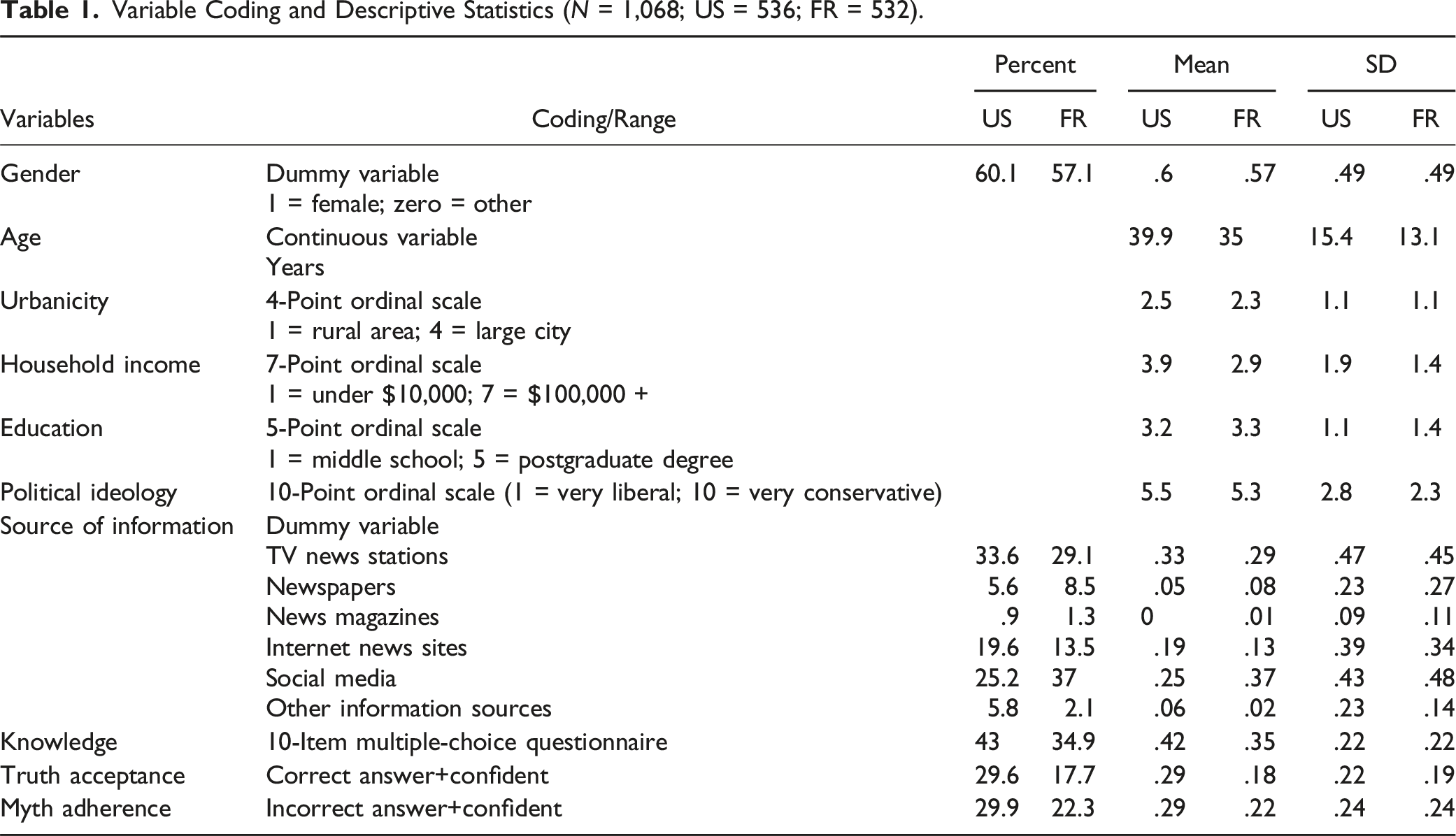
Variable Coding and Descriptive Statistics (N = 1,068; US = 536; FR = 532).
Measures
Independent Variables
In accordance with this study’s three hypotheses, the main independent variables are education, conservatism, and information sources. Gender, age, annual household income, and urbanicity are included as control variables due to their relevance in prior research (Michel et al., 2015). As depicted in Table 1, education, income, urbanicity (ranging from rural to urban) and political ideology (ranging from very liberal to very conservative) were measured continuously. Conversely, a series of dummy variables were employed to measure subjects’ main sources of information. These sources included TV news stations, newspapers, news magazines, the internet, and other undisclosed sources. In view of the aforementioned issue with digital falsity, the internet was categorized as either news sites or social media.
Dependent Variables
Knowledge about white-collar crime was measured via a 10-item multiple-choice questionnaire modeled after the survey instrument used in Michel et al. (2015) study. These questions probed subjects’ level of acquaintance with various aspects of upperworld criminality commonly discussed in college textbooks
5
(see, e.g., Friedrichs, 2010; Rosoff et al., 2020). The ten questions were as follows (correct answers are bolded): (1) Definition: The first question asked the respondents to identify the correct definition of white-collar crime among several possible answer options, including “Crimes committed by white supremacists”, “ (2) Ponzi scheme: The participants were asked what a Ponzi scheme (Known as système de Ponzi in France) consisted of. answer options included “ (3) Largest Ponzi scheme ever perpetrated: The respondents were asked to name the American fraudster and financier who ripped off thousands of investors for billions of dollars in the largest Ponzi scheme in history. Answer options included “Al Capone”, “Charles Ponzi”, “ (4) Insider trading: The subjects were asked to define the concept of insider trading (known as délit d’initiés in France). Answer options included “Stealing funds placed in one’s trust or belonging to one’s employer”, “Boosting a stock’s or security’s price based on misleading statements”, “ (5) Monopoly: The participants were asked to identify the reason that was not invoked for passing antitrust laws (droit de la concurrence in French). Answer options included “Poorer-quality products”, “Reduced competition”, “ (6) Financial costs: The respondents were asked how much white-collar crime cost society compared with street crime. Answer options included “Less”, “About the same”, and “ (7) Harmfulness: The subjects were asked to determine how many deaths corporations cause every year compared with criminals like mass shooters and gang members. Answer options included “Fewer”, “About as many”, and “ (8) Industrial pollution: The participants had to identify which of the following statements was supported by empirical evidence: “The health hazards of industrial pollution are greatly exaggerated”, “Industrial pollution is a price we must pay for access to technology”, “We must trade off economic growth against environmental protection”, “All of the above are true”, and “ (9) Relative legal immunity: The respondents were asked to determine the likelihood of a person engaging in burglary (i.e., a nonviolent crime) to be convicted and punished relative to a white-collar criminal who committed fraud if they stole the same amount of money ($1,000).
8
Answer options included “Less likely”, “As likely”, and “ (10) Deregulation: Lastly, the subjects had to identify the main factor of white-collar crime from a list of options that included “Excessive government regulation”, “
Binary categorical variables were used to measure the percentage of correct answers to each question (incorrect = 0; correct = 1), and the subjects’ responses were entered into an overall knowledge additive scale. In order to control for lucky guessing, each question was matched with a measure of answer confidence that asked subjects whether they felt positive about their responses (“No, I am not confident” = 0; “Yes, I am confident” = 1). Using this approach, the participants were classified as either (1) truth accepters (if they gave correct answers and felt confident about them) or (2) myth adherers (if they gave incorrect answers but felt positive about them). In the following analyses, three additive scales serve as the dependent variables: overall knowledge about white-collar crime, truth acceptance, and myth adherence.
Results
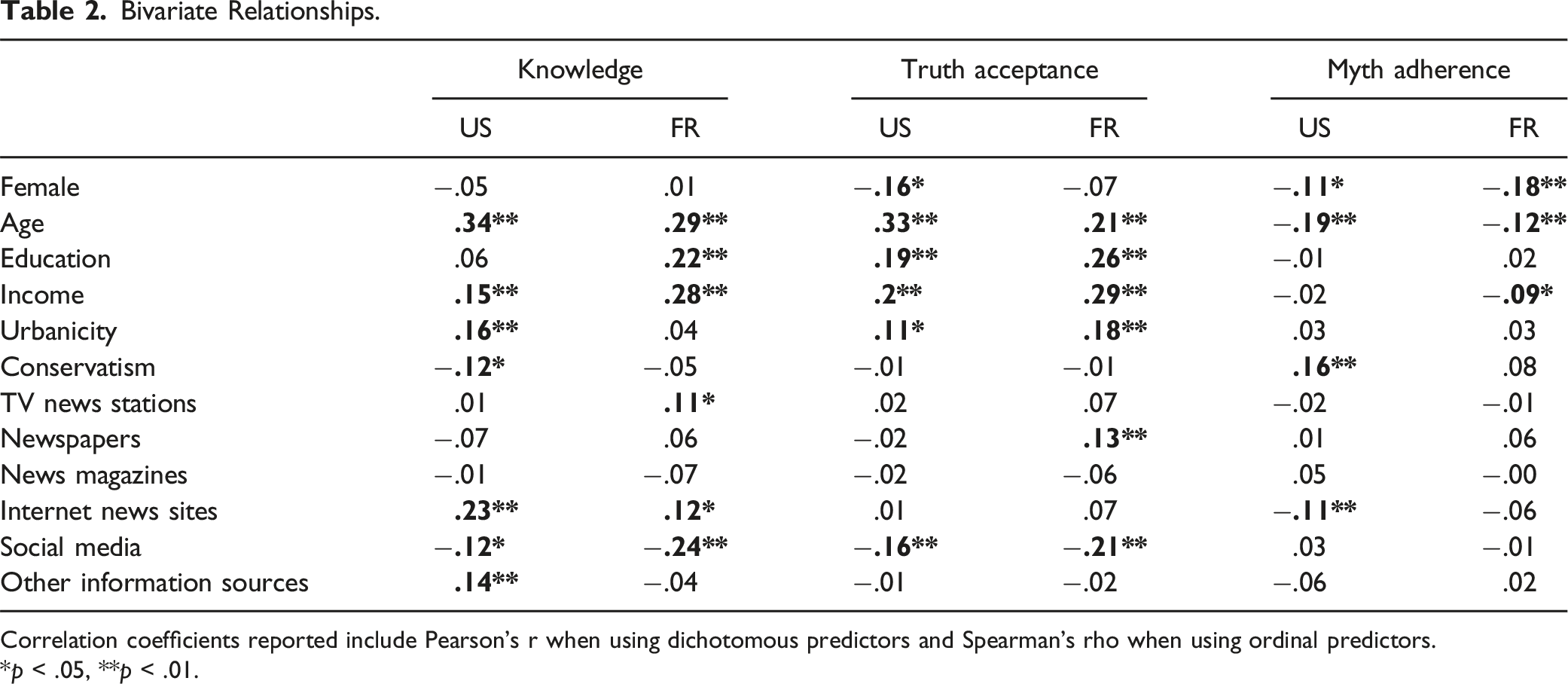
Bivariate Relationships.
Correlation coefficients reported include Pearson’s r when using dichotomous predictors and Spearman’s rho when using ordinal predictors.
*p < .05, **p < .01.
Similar results emerged with regard to truth acceptance. More specifically, in both the US and the French samples, positive associations emerged between the acknowledgement of white-collar crime truths and age (r = .33, p < .01, and r = .21, p < .01, respectively), education (r = .19, p < .01, and r = .26, p < .01), income (r = .2, p < .01, and r = .29, p < .01), and urbanicity (r = .11, p < .05, and r = .18, p < .01). Gender differences could be observed among the US participants, with females being less likely to confidently select correct answers (r = −.16, p < .05). On the other hand, using newspapers as one’s main source of information was associated with greater truth acceptance in France (r = .13, p < .01). Once again, in both countries those who used social media were less likely to confidently provide accurate answers (r = −.16, p < .01 in the US, and r = −.21, p < .01 in France).
Fewer associations with myth adherence attained statistical significance. In both the US and French samples, females were less likely to adhere to white-collar crime myths (r = −.11, p < .05, and r = −.18, p < .01, respectively), as were older subjects (r = −.19, p < .01, and r = −.12, p < .01). Wealthier French respondents were also less likely to feel confident about the incorrect answers they provided (r = −.09, p < .05). However, American conservatives expressed greater confidence in themselves even when they were wrong (r = .16, p < .01). Lastly, US subjects who relied on internet news sites were less likely to be myth adherers (r = −.11, p < .001).
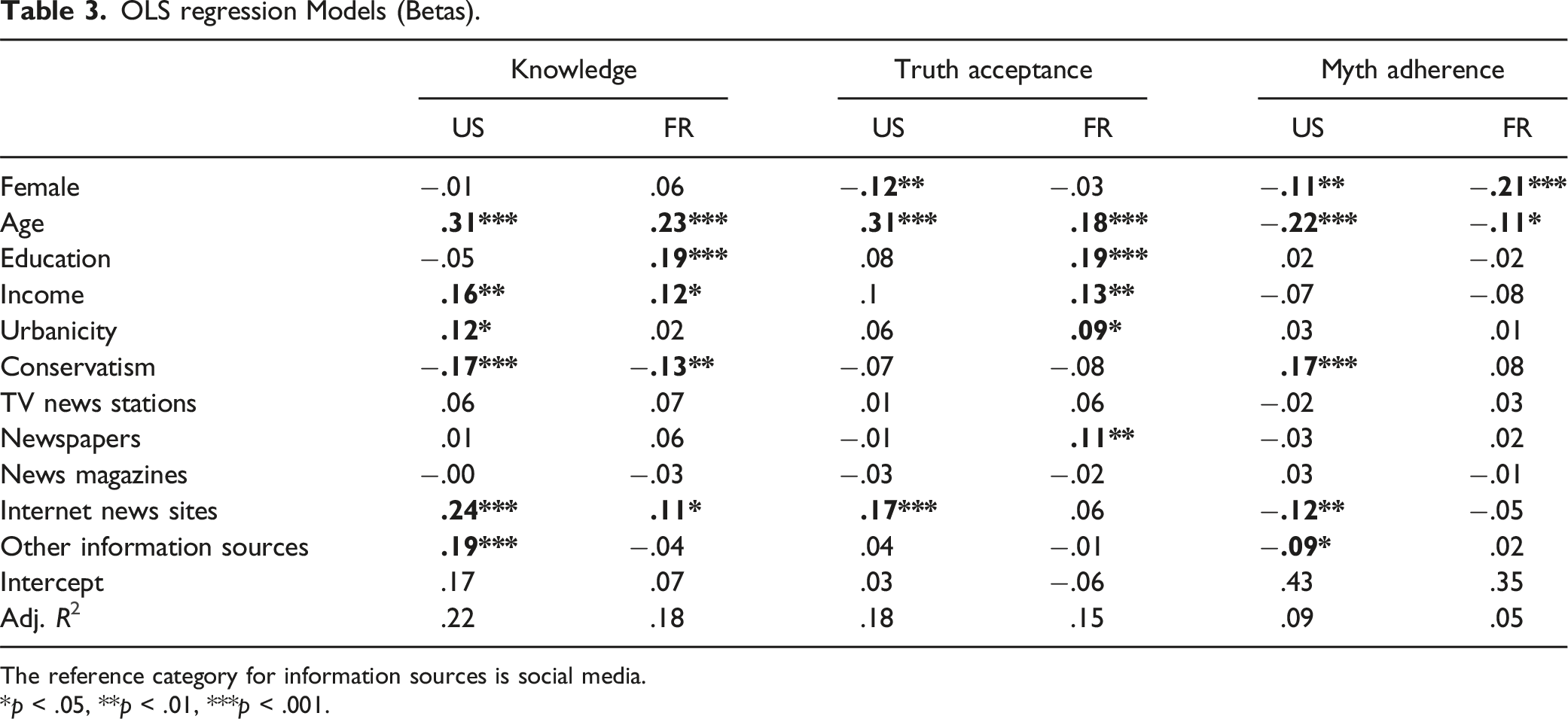
OLS regression Models (Betas).
The reference category for information sources is social media.
*p < .05, **p < .01, ***p < .001.
In the US sample, females were less likely to accept white-collar crime truths (b = −.12, p < .01). Conversely, older subjects in both samples reported higher confidence in their correct answers (b = .31, p < .001, and b = .18, p < .001). Further positive correlations appeared in the French sample with education (b = .19, p < .001), income (b = .13, p < .01), and, to a lesser degree, urbanicity (b = .09, p < .05). Regression models also confirmed the lack of merit of social media as a relevant information platform. More specifically, those who used newspapers (in France), and internet news sites (in the US) were more confident in their correct answers (b = .11, p < .05, and b = .17, p < .001, respectively).
Lastly, in both the US and French samples, female and older subjects were less likely to adhere to white-collar crime myths (b = −.11, p < .01, and b = −.21, p < .001, and b = −.22, p < .001, and b = −.11, p < .05, respectively). A few more associations emerged in the US sample only. Conservatives were once again more likely to express confidence in incorrect answers (b = .17, p < .001), unlike those who relied on internet news sites and other undisclosed information sources (b = −.12, p < .01, and b = −.09, p < .05), relative to social media users.
The final step is to determine whether the differences observed within the French and American samples are also significant across them. To do so requires testing the equality of regression coefficients between both samples. Drawing from the work of Clogg et al. (1995), Paternoster et al. (1998) recommend performing a Z test using the following formula
9
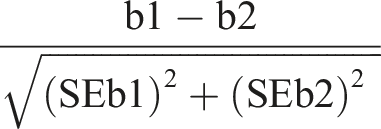
Almost every single Z statistic reached statistical significance, 10 suggesting that the differences in knowledge, truth acceptance and myth adherence observed in each sample (e.g., between more liberal and more conservative subjects) also exist between both countries. The only two exceptions are the relationships between myth adherence and (1) using internet news sites or (2) other sources besides social media. In these two cases, no significant difference between the French and US participants emerged.
Taken together, these results confirm the conclusions of Michel et al. (2015) study. Knowledge about white-collar crime and resistance to such knowledge still appear to depend on gender, education, and political orientation. Age also emerges as a strong predictor of public awareness. Moreover, distinguishing between different online information sources suggests that social media may not be properly used to disseminate relevant information about crimes of the powerful. Implications of these findings for both countries are addressed in the upcoming section.
Discussion
White-collar crime is a complex form of criminality with devastating financial and human impact. While US citizens have undeniably hardened their stance on upper-class offenders after being exposed to recent cases of corporate wrongdoing (Cullen et al., 2009), the extent to which the general public understands white-collar crime remains unclear. Past studies have suggested low and erratic levels of awareness (Michel, Cochran, & Heide, 2016) as well as knowledge heterogeneity (Michel et al., 2015) among American respondents. The present study took this research one step further by inquiring into the sociodemographic predictors of knowledge about white-collar crime in the US and in France. The dual purpose of this cross-national comparison was to identify what factors may improve the circulation and acceptance of information in both countries and to profile myth adherers.
The first hypothesis was partially supported. More specifically, and as predicted, using internet news sites as one’s main source of information (especially as opposed to social media) was associated with greater knowledge about white-collar crime in both countries. Further, French subjects with higher educational achievements were significantly more likely to be informed about upper-class criminality. However, and against original predictions, the relationship between education and knowledge did not achieve statistical significance in the US sample. It could be that the educational system in France is more inclined to expose its students to relevant information about crimes of the powerful. Further research is needed to confirm this difference, as the mean education level was slightly higher in the French sample. Other sociodemographic characteristics stood out as significant predictors of knowledge about white-collar crime. In both countries, age and knowledge were positively associated. Older subjects might have had more exposure to various white-collar and corporate crime cases over the years. To some extent, the fact that the French respondents were relatively younger could explain why they did not fare as well as their American counterparts on the survey. Statistical analyses revealed other associations with knowledge. In both samples, females were less likely to adhere to white-collar crime myths, even though they were also less inclined to accept truths in the US sample. These seemingly contradictory results align with previous research that found women to express less confidence in their self-assessments (Clark & Zehr, 1993; Smith et al., 1994), whereas men tend to be more self-assured about their scholarly abilities (Sax & Harper, 2007). Follow-up studies should attempt to determine whether men’s greater myth adherence was the result of persistent belief in unsubstantial claims or a mere artifact of male confidence. In addition, wealthier subjects in both samples were significantly more knowledgeable about white-collar crime. Perhaps affluent individuals are more aware of financial crimes because of a higher perceived risk of investment fraud victimization.
The second hypothesis received general support. As expected, in both countries, conservatism and using social media as one’s main source of information were associated with lower knowledge about white-collar crime. It could be that left-leaning respondents were more cognizant and critical of corporate wrongdoings because of their ideological opposition to deregulation. Further, it appears that using social media as one’s main source of information may not be the most effective vector of knowledge, either because these platforms hardly mention white-collar crime or fail to communicate credible information about it.
The third and last hypothesis only received partial support. As predicted, myth adherence was stronger among US conservatives. Interestingly, conservatism in the US sample was most strongly correlated with myths about industrial pollution (r = .14, p < .01) and deregulation (r = .2, p < .01). Phrased differently, American right-leaning subjects were significantly more likely to deny scientific conclusions about the dangers of environmental damage and regulatory rollbacks. These findings point to US conservatives’ precipitous decline in the perceived legitimacy of science and official news outlets (as could be observed during the Trump administration’s handling of the COVID-19 crisis) and tendency to seek out information that aligns with their own beliefs. Nevertheless, while relying on social networking as one’s main source of information was expectedly associated with greater myth adherence in the US sample, this relationship was not significantly different from that in the French sample.
Implications
Crime control policies in a democratic society should reflect the will of the people. Educating the masses about crimes of the powerful through vigorous fact checking could have the dual benefit of raising awareness about the risk of personal white-collar crime victimization while encouraging public support for fairer legal responses to elite deviance. If our discipline is to make a positive impact on society, it is incumbent upon us to find ways to share hard-earned empirical knowledge with the general public. This article offers two types of implications for white-collar criminologists. The first is that knowledge about white-collar crime may be increased by disseminating relevant information to targeted audiences. Using the internet can help target a broad audience that will be receptive to our message. Social media represent a potentially useful but currently misused vehicle to engender science communication about white-collar crime. These sites and applications have the ability to vulgarize scientific information while engaging the public via content sharing and online discussions. Scientific organizations and institutions can and should integrate public relations strategies across social media platforms to foster science learning and participation, and solidify public trust in science (see, e.g., Borchelt & Nielsen, 2014; Kurath & Gisler, 2009; Lee & VanDyke, 2015; Su et al., 2017). Moreover, technologies have been developed to counter the spread of misinformation. For example, computational analyses, including algorithm creation, have been used to understand how false content propagates on the internet (Cacciatore, 2021). Further, algorithms have been successfully utilized to identify a set of nodes in a social network that, if removed, will block rumors and misleading memes and redirect users towards relevant information (Pham et al., 2018; Saxena et al., 2018; Zhang et al., 2015).
At the same time, however, this article’s findings imply that not everyone might be subject to reasoned persuasion. The operationalization of knowledge used in the current study reflects an important difference between ignorance and misinformation in terms of both how much an individual knows and the degree of confidence they have in that knowledge. As noted by Cacciatore (2021), an ignorant person is not only ill-informed but realizes they are, while those who are misinformed are usually confident in their inaccurate beliefs (Kuklinski et al., 2000; Nyhan, 2010). Honestly uninformed subjects who felt confident in their incorrect answers to the questions that asked about Ponzi schemes, Madoff’s swindle or insider trading can easily be corrected. In this case, ignorance will be remedied via education, for these subjects have no stake in denying white-collar crime truths. On the other hand, persisting with incorrect beliefs about the financial costs and physical harmfulness of upper-class criminality, the realities of industrial pollution, elite offenders’ status-leniency, and the effects of deregulation might indicate possible obstacles to awareness campaigns because of the political nature of these issues. The current study’s results suggest that white-collar crime myth adherence could be a strategy to deal with inconvenient facts about neoliberal politics. In a study of US college students’ attitudes towards corporate crime (Michel, 2018), subjects who scored higher on measures of nationalism and support for capitalism were less likely to rate several cases of corporate wrongdoing as serious, and more inclined to rationalize the corporations’ actions. These findings align with cognitive dissonance theory (Festinger, 1957), which posits that factual information that contradicts strongly held beliefs causes psychological imbalance and discomfort. Equilibrium is typically restored by denying, justifying, or trivializing the dissonant message. Hypothetically, adherence to myths such as the relative harmlessness of corporate crime, a “collar blind” criminal justice system, and antitrust laws’ hostility to business might help regain balance. Follow-up research should examine the persistence of white-collar crime myths in the face of evidence to the contrary. One possible way to do so would be via an experimental study comparing attitudes toward white-collar crime before and after exposure to relevant information about it. This approach could help ascertain whether increased knowledge can actually alter opinions such as perceived seriousness and punitiveness. Moreover, the use of qualitative data would give staunch myth adherers the opportunity to justify their continued denial of empirical evidence about white-collar crime. In addition, it might be interesting to determine whether conservative myth adherers are equally dismissive of information relative to white-collar crime cases involving members of a different political party.
Limitations and Avenues for Future Research
To conclude, a review of the present study’s limitations will serve as a guide to scholars interested in extending this research. First of all, the measure of knowledge could be improved by including other dimensions of white-collar crime. More specifically, given the correlation between political orientation and information levels, it may be sagacious to probe subjects’ level of familiarity with political corruption. In addition, future research should consider further sociodemographic predictors, including particular dimensions of political orientation, such as general attitudes toward business. Granted, conservatives are typically more likely to resist government regulation, but they may also recognize that white-collar crime hurts businesses just as well as individuals. Further, racial identity had to be excluded from the present study due to French legislation barring the collection of data on race. Moreover, measuring subjects’ occupation might reveal what professions expose them to relevant white-collar crime information, as would a question asking respondents to name their favorite internet news sites. Lastly, sample and cross-population generalizability could be increased as quota samples are not immune to statistical bias. Care should therefore be exercised when generalizing this study’s findings to the adult population in both countries until future research using larger, probability-based samples replicates the results.
Footnotes
Declaration of Conflicting Interests
The author(s) declared no potential conflicts of interest with respect to the research, authorship, and/or publication of this article.
Funding
The author(s) disclosed receipt of the following financial support for the research, authorship, and/or publication of this article: This work was supported by the University of Tampa.