






Abstract
Gurugram, the “Millennium City” of the north Indian state of Haryana, is known for its corporate globalized character owing to its rapid technological and infrastructural development and emergence as a major financial hub. Though it is a city of many contradictions because of the distinct marking between the rural and urban Gurugram and an uneven, privatized development, yet the representative image of the city is that of hyper-urbanity, aspiration, upward mobility, and global exposure. The presence of the world’s leading progressive corporate headquarters and tech giants effortlessly projects the image of meritocracy, diversity consciousness, and inclusivity within the city’s professional landscape. However, beneath this great glass façade of progress and inclusivity lies a more complex reality. Despite the growing discourse around bias, diversity, and gender equity, the representation of gender within the corporate scene of Gurugram is often skewed in favor of men, whereas women are still struggling to navigate the treacherous terrains of the corporate world amidst the convenient co-existence of growth and persistent bias. This article is an attempt to explore the lived experiences of female professionals in the colossal corporate sector of Gurugram, based on a short survey data and unstructured interviews, exploring whether the apparent projection of gender inclusion is a reality of the substantive transformation in gender dynamics of a progressive city or is merely symbolic. The survey, however, shows that there has also been a visible shift toward positive change, and women are now equally claiming leadership roles and calling out bias.
Introduction
The Millennium City Gurugram has grown significantly in recent decades and has become a symbol of India’s corporate rise. The city is a bustling hub of multinational offices, high-end and upscale business parks, and rapid technical and infrastructural development. The towering glass buildings present a cosmopolitan image; the city often projects an aura of ultra-modernity and growth. Among the multifold stories woven into this fiber of transformation is that of female working professionals, who have increasingly become an indispensable part of Gurugram’s corporate landscape. This article begins with a question that sits at the very heart of gender discourse in the professional India of today: Are we actually witnessing real-time, structural change in the way women are inclusively held in corporate spaces, or are these signs and symptoms of diversity consciousness and inclusion merely tokenistic? The number and presence of women in higher echelons of the corporate spaces, including boardrooms and executive teams, may be growing, but still existing comfortably on the sidelines are the specters of unequal pay for the same work 1 constrained mobility, 2 subtle and unconscious bias, 3 visible exclusion from key decision-making spaces. 4 The glaring and stark contradiction between visible representation and invisible barriers forms the very core of this study. By focusing on Gurugram, the city that generates most of Haryana’s revenue owing to its being a hub of the MNCs and career opportunities in IT and other prominent sectors, a city that represents both aspiration and contradiction, this study captures the clear complexity of gender dynamics in Indian corporate life. It draws from survey findings, informal narrative inputs, and frameworks in the field of feminist studies to examine the layered realities of female professionals who must often work twice as hard to be seen, heard, and allowed growth in their professional journey. It seeks not just to bring forth the inequities, but also to put in the spotlight the small yet significant strides women are making in terms of navigating the treacherous corporate corridors and questioning the structures around them.
Literature Review
There have been many studies on gender discrimination in the workplace to underscore the continuous persistence of systemic challenges and barriers that women face in corporate spaces and hierarchies. According to Acker, 5 organizations are not gender-neutral by nature but are structured in a way that implicit norms often and invariably favor masculinity, more so in leadership and senior management roles. In the context of India, scholars such as Patel and Parmentier 6 and Kelkar and Nathan 7 have said that women in professional settings in general and corporate settings in particular often face a “dual burden”; the expectations from them to perform professionally while simultaneously veering through deeply embedded societal expectations around femininity, domesticity, and compliance. Indian corporate gender narrative has increasingly received attention from various researchers examining how aspirational diversity policies are versus how they are implemented and experienced. Sundar 8 points out that while many organizations take pride in showcasing diversity metrics, there are often sudden and obscure workplace cultures where women feel the need to overperform to be taken seriously. The notion of performative equality, a term often used in feminist scholarship in popular culture, describes the gap between dreamed inclusion and lived reality. Further, research by McKinsey 9 India has revealed that despite the increase in the amount of female participation at entry-level roles, the numbers drop drastically around mid-management and senior management levels. This is often referred to, as coined by Clark Blikenstaff, as the “leaky pipeline.” 10 Moreover, terms such as “glass ceiling,” “glass cliff,” and “second-generation bias” 11 have also gained importance in understanding the invisible but powerful barriers to women’s growth. Multiple studies document that women, especially mothers, face reduced advancement when marriage, childbirth, or relocation issues arise. For example, Torres et al. 12 scoping review talks about a very common and pervasive “motherhood penalty,” arguing that mothers are conveniently assumed to be less committed to their work and therefore often undergo “promotion delays and limited career options.” In practice, women who take breaks in their careers to care for family are noticeably deprived: After a break, “mothers are less likely to be…hired or promoted.” 13 Experimental studies confirm this bias: In one audit, childless women were 8.2 times more likely to be recommended for promotion than identically qualified mothers. 14 Gendered conventions also encompass general life events; there is enough factual data and reports that employers characteristically fired women on marriage or refused to hire married women. 15 Together, these findings reflect survey data and evidently show that marriage, pregnancy, or caregiving duties are a common trigger to activate discrimination in promotions and growth opportunities for female employees. There has also been a lot of qualitative and survey research, which highlights that women face a hostile or unaccommodating atmosphere, often masked as a micro and seemingly innocuous form of aggression or indifference. For instance, the Women in the Workplace 2024 16 report finds that women who experience repeated gender microaggressions at work are far more likely to feel burned out, consider quitting, and believe “their gender will make it harder to advance.” These microaggressions appear as plain dismissiveness or a downplaying attitude toward women employees. In short, both survey and experimental data support that women employees, especially those with breaks in work due to biological reasons, commonly face indifference, undermining comments, or actions that hinder their job performance and hamper a rise in their morale. However, as Prakash et al. say in Women and the Workplace, “discrimination can take many other significant forms, such as dismissal, harassment, and unfair promotion and demotion practices.” 17 Gender norms around flexibility in movement and mobility from one place to another, and caregiving, also significantly mark career progress and growth. Quantitative analyses show that mobility ensures more growth in the career of corporate employees, and men relocate for career growth far more in numbers than women and far more with ease than women, and this gap accounts for a large share of promotion differences. To illustrate, the Periodic Labor Force Survey 2020-2021 indicates that while the female migration rate in India is high at 47.9%, only a small fraction (1.8% as of 2020-2021) move specifically for employment, among males, migration in search of employment or better employment constitutes the highest share at 22.8% at the all-India level. These distinct patterns highlight the gender-specific nature of migration in India, with female migration largely influenced by social factors such as marriage, and male migration primarily shaped by labor market opportunities. 18 Likewise, Svarstad et al. 19 note that if women are “unable to relocate, this will severely restrict the pool of leadership positions” they can pursue. These constrictions arise from ingrained caregiving roles: The family and domestic responsibility disproportionately falls on women, and so they, more often than not, are geographically constrained. A topical understanding of workplace norms reveals that women still face the “ideal worker” 20 stereotype, the one with no obligations on the home front, which is why caregiving causes women to decrease hours or refuse relocations or transfers, delaying their growth and advancement. In conclusion, cross-national and major industry reports highlight that gendered flexibility expectations and care work, and “the second shift” 21 (a sociological term coined by Arlie Hochschild in 1989) unswervingly limit women’s career and promotional projections. Especially in Gurugram, despite the city’s economic prominence, some research studies have focused on the corporate sector’s gender dynamics. The current study suggests that gender discrimination definitely persists, ranging from insidious and apparently innocuous forms, such as exclusion in meetings, to direct wage disparities for the same role. However, there is also clear evidence of a growing feminist consciousness among female professionals, manifesting in collective confrontation, awareness regarding laws, and ambition for leadership.
Methodology
This study adopted a mixed-method approach, using both quantitative and qualitative contributions to develop an understanding of gender discrimination and dynamics, as well as the perceptions of progress among female corporate employees in Gurugram city. Keeping in mind the fast-paced and often objective nature of the corporate work-life, it was imperative to employ a data collection tool that was both easily manageable and discreet. A Google Forms survey was chosen for its convenience of circulation, permitting the respondents to share their experiences anonymously and at their convenience. The form consisted of a balanced combination of multiple-choice, Likert-scale, and open-ended questions, thoughtfully designed to capture statistical patterns as well as personal insights. Multiple professional networks, LinkedIn groups, and WhatsApp circles were used to share the forum for female professionals working in the corporate sector of Gurugram across a range of sectors, including finance, IT, HR, consulting, and marketing. The focus remained on gathering in-depth responses from women or non-male professionals. In total, 29 responses were received over a period of 2 weeks. The data was then collated and organized thematically, looking at workplace bias, trends in promotion, work-life balance, mechanisms pertaining to reporting, and practices of empowerment or resistance among female employees. Anonymity of the respondents was ensured to encourage honesty, providing a glimpse into workplace cultures that often appear refined from the outside but remain inadequate beneath the surface. The chronicles shared in the open-ended sections, in particular, provided rich material that forms the emotional and analytical core of this research.
Findings
The responses to the survey exposed a striking dichotomy. On one hand, the majority of respondents reported being primarily satisfied with their professional gender dynamics and established the fact that opportunities for women in Gurugram’s corporate sector have considerably expanded over the years. On the other hand, a significant percentage of respondents reported facing some form of gender bias, ranging from being overlooked for leadership roles to facing everyday sexism in conference rooms and the general ecosystem of their workplaces. There emerged certain hints from the survey that women needed to go the extra mile to be taken seriously, while their male counterparts were more willingly supposed to be competent. Several respondents mentioned subtle forms of omission: Being left out of key conversations, not being invited to informal or unceremonious decision-making spaces, and facing backlash for assertive behavior. What is more interesting is that a number of women also pointed to positive shifts. Some progressive organizations were revealed to be forward-looking with better HR policies, and open to conversations on gender: These were cited as signs of progress. However, skepticism continued about whether these changes were deep-seated or only ceremonial and cosmetic. The phrase “tick-box diversity” was also mentioned, highlighting the concerns about whether inclusion and diversity consciousness were just fancy terms, being treated as a compliance requirement rather than a genuine cultural shift. Most importantly, many respondents shared that they were no longer silent. From calling out inappropriate comments to reporting incidents, they described small acts of resistance that, though not always visible in corporate reports, signal a slow but meaningful transformation.
Educational Qualifications and Current Designation of Respondents
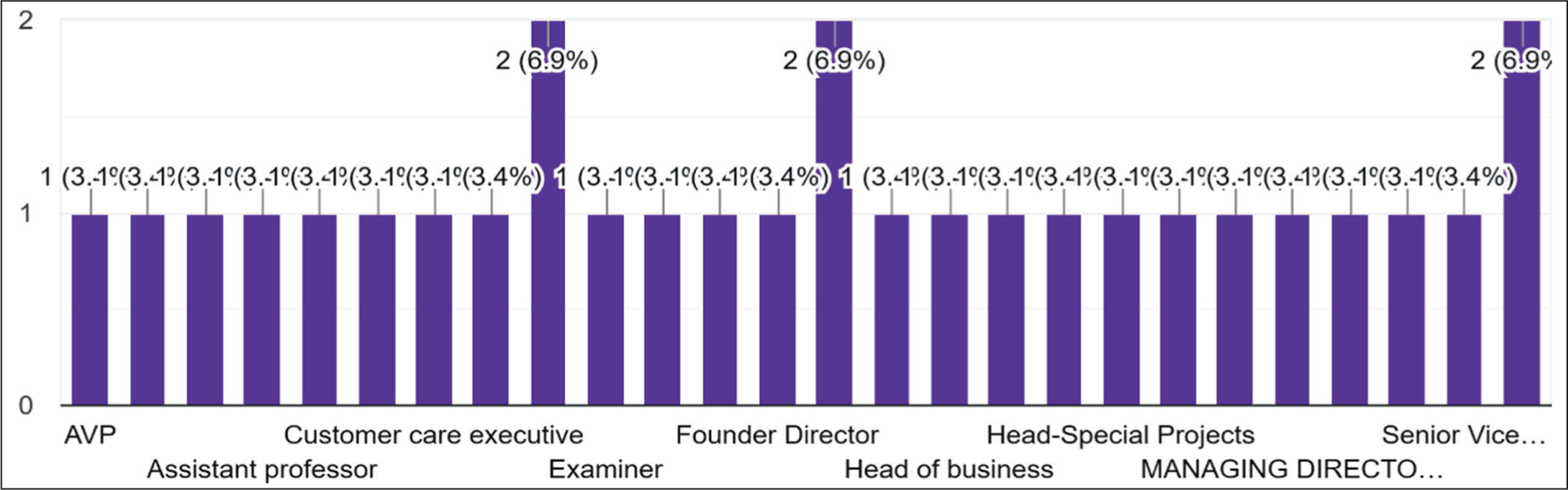
A total of 29 female professionals of Gurugram’s corporate sector responded to the survey. The educational background of these respondents varied widely; nonetheless, a clear trend also emerged. The most common qualification emerged to be MBA, with 10 respondents (34.5%) reporting either an MBA or PGDM, including one respondent who specifically mentioned being from ISB Hyderabad. This makes it evident that a large section of the sample is professionally trained at paramount institutions for designated corporate roles and are eligible and likely to occupy mid-to-senior level positions in their respective organizations. Other qualifications included post-graduate level degrees such as MA, MSc, PGDBM, and others: Nine respondents (~31%) have graduate degrees (BA, BSc, general graduate): Six respondents (~20.7%) have other combinations (such as MSc, BEd, PGDBM with specialization): The remaining respondents (each 3.4%). This data reflects a highly educated sample, in sync with the urban, white-collar demographic of Gurugram’s corporate workforce. It also highlights the dominance of management degrees, substantially reinforcing the corporate orientation of the respondents. The survey captured an equally wide spectrum (Figure 1) of roles and titles from respondents in the corporate sector, reflecting a varied diversity in roles and seniority levels of various organizations. The most commonly reported designations were Customer Care Executive, Founder Director, and Senior Vice President. A wide variety of other roles were also held by other respondents, such as AVP, Head of Business, Managing Director, Head of Special Projects, Consultant, Sales Director, HR Specialist, Relationship Manager, among others. This broad spectrum indicates that, despite the sample size being small, it includes both entry-to-mid-level roles and senior leadership positions: The top tier of the corporate ladder, offering a multi-layered view of gender dynamics across various hierarchical levels in corporate Gurugram.
Designations of Respondents.
Marital Status
Out of the 29 female corporate professionals that were surveyed, 79.3% are married, 10.3% have mentioned their status as single, and 10.3% of the respondents identified themselves as “other.” Out of 29 women respondents from Gurugram’s corporate sector, the majority (75.8%) are in the 30–50 age group, quintessentially considered the peak of the professional and managerial ladder. This very important demographic insight is a value addition to the context of the study, particularly regarding long-term exposure to corporate gender dynamics in terms of work experience, and also the work-life balance. Among the 37.9% of the sample who mentioned having more than 20 years of experience, 31% have 15-20 years of experience, 20.7% have been in the workforce for 10-15 years, and 10.3% have 5-10 years of work experience. This data also clearly indicates a largely senior and skilled respondent base with a wide range of experience, with nearly 69% having more than 15 years of experience. This amount of tenure allows for profounder insights into long-standing patterns of gender inclusion, exclusion, and shifts in corporate gender dynamics and policies. The annual income of respondents also showed a similar pattern; the majority (82.8%) earn more than ₹20 lakhs per year, about 13.8% earn below ₹10 lakhs, 3.4% fall in the ₹10–15 lakhs bracket. This skewed data toward the top tier income group emphasizes that the sample is a representation of well-established and high-earning professionals who hold senior roles in their organizations. This type of financial status also significantly influences the perceptions of workplace gender dynamics, access to privileges, and the conciliation of power.
Ratio of Male and Female Employees in the Organization
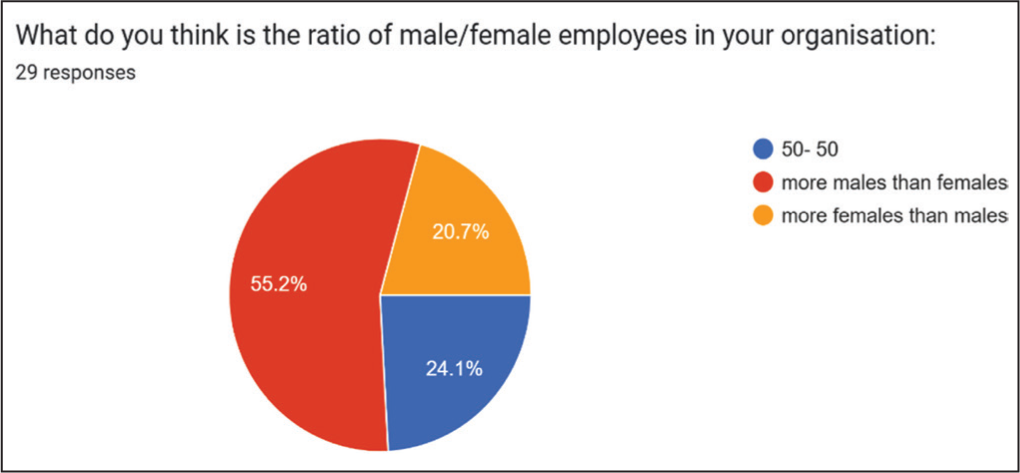
On the ratio of male/female employees in the organization (Figure 2), the data overview is such as follows: 55.2% said there are more males than females, 24.1% reported a 50:50 ratio and 20.7% said there are more females than male employees. More than half of the respondents (55.2%) remark that the data is skewed in favor of men, and that men still outnumber women in the respective organizations. This reinforces long-standing patterns of male dominance in corporate structures, even in an ultra-modern and progressive city such as Gurugram, going with the national pattern as reflected in the CFA Society India survey findings: “Indian women’s participation rates in the workforce, calculated as the number of women employed as a percentage of total employees, averaged 12.7% across the companies in our sample, or one woman for every eight people in payrolls.” 22 However, there is also a clear perception of gender balance, observed in some spaces. A notable 24.1% reported a 1:1 male-to-female ratio. This suggests some positive side of the gender dynamics, indicating progress, possibly influenced by mandates in place regarding gender diversity in hiring, some inclusion programs by MNCs, and more female participation in mid-management roles. However, perception ≠ and reality; these are idiosyncratic impressions and reflections. Actual HR data might differ, especially across departments. Only 20.7% perceived more females than males, which reflects a minority, and very few cases of females dominating the workspaces in numbers than males. These are mostly from the field of HR, marketing, or design departments, women-centric startups, or NGOs. There can also certainly be a few progressive organizations consciously building female-majority teams. These responses may also reveal vertical and horizontal gender segregation to a certain level. The vertical could be that women remain present in numbers but not in decision-making, and the horizontal could mean women concentrated in “soft” roles, while men still dominate in the “core” roles and positions. Given the study’s focus on corporate Gurugram, the contextual focus could be seen in this data, aligning with trends in technology giants and MNCs, where diversity initiatives definitely exist but are not always reaching the top levels. It could also align with fields such as finance and real estate, which are traditionally male-dominated, and startups, where hiring may be impulsive and needs-based and not gender-conscious.
Ratio of Female and Male Employees.
Ratio of Male/Female Employees in Top Leadership
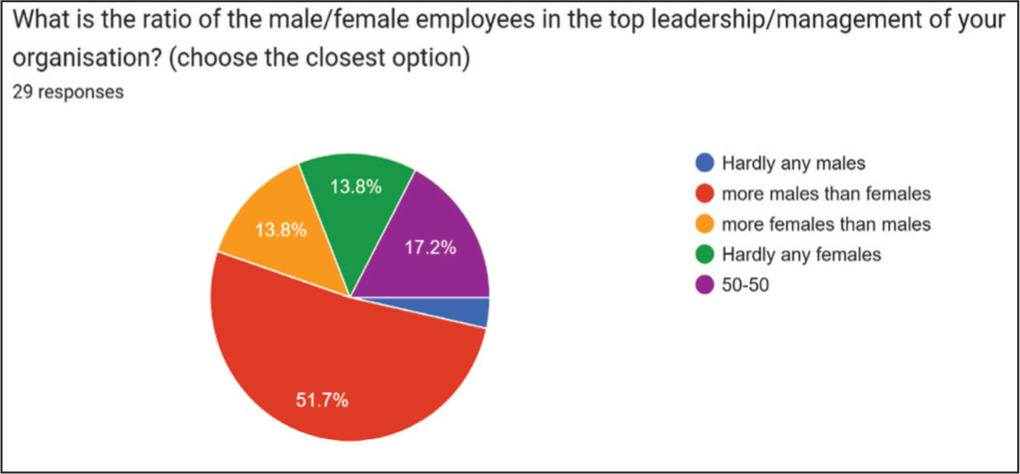
On the question of the ratio of male/female employees in the “top leadership/management” of the respective organization (Figure 3), the breakdown of responses was something such as this:
51.7%: More males than females 17.2%: 50–50 balance 13.8%: More females than males 13.8%: Hardly any females 3.4%: Hardly any males
Ratio of Female and Male Employees in Top Leadership.
Interpretation and Insights
The most evident interpretation is that the leadership in corporate roles is still male-dominated. With more than half of the respondents (51.7%) answering that males outnumber females in leadership positions, the survey data confirms that gender consciousness and inclusivity take a back seat as women move up the ladder in corporate hierarchy. This is a clear reflection of global and national trends in the corporate sector, where gender parity stagnates at the mid-management level. Deshmukh et al. remark 23 that the female leadership ratio representation remains “very poor” globally and in India. This also shows that women are underrepresented when we combine the two responses: More males than females (51.7%) and hardly any females (13.8%). It shows that nearly 65.5% of respondents experience male-dominated corporate leadership structures. This is a clear display of the glass ceiling effect. However, as the study focuses on transformation, there are some encouraging signals of balance in the gender dynamics here. A 17.2% response observes gender parity at the top rung, which is a hopeful sign, suggesting that some of the progressive organizations are encouraging an active promotion of women in leadership roles. There might also be diversity policies in place for hiring and succession, although this is still a minority view. One interesting percentage of respondents (13.8%) also felt that there are more women than their male counterparts in leadership. These organizations could be in sectors that are stereotypically female-dominated, such as education, fashion, wellness, or HR-led firms, and also reflect conscious leadership decisions or women-founded businesses. But such workplaces are exceptions, not the rule. A low percentage (3.4%) who said hardly any males highlights that female-dominated leadership is still a rarity, despite the discourse on equity, and that masculine gatekeeping is a thing in corporate landscapes. This figure, if analyzed in combination with the previous one (on gender ratio in the general workforce), shows a deepening imbalance at higher positions. It suggests that while gender diversity at the entry-level may be getting better, decision-making and policy-making roles remain largely male-heavy. This can have trickle-down effects on gender sensitive policy-making, support in terms of work-life balance, opportunities for women related to mentorship, equal wages, and promotion dynamics.
Gender as an Impediment in Growth/Promotion Opportunities
To the question as to whether the respondents had ever been denied a promotion/growth opportunity owing to reasons pertaining to gender, such as not being able to travel/move to a different city/marriage/childbirth, 20.7% answered in the affirmative and 79.3% responded in the negative. This data is suggestive of a notable minority (around one in five respondents) who have had experiences of gender-based limitations on career growth opportunities. While the majority of the respondents categorically deny such an experience, the glaring presence of this very issue, even if in a small percentage, is indicative of an unending apprehension regarding gendered prospects and limitations, especially around movement, marriage, and various caregiving roles. A related question was if they had faced any kind of hostility (indifference/sabotage/dismissiveness) owing to their gender: 31% → (approximately said yes and 69% → said no. A simple explanation of this data could be that nearly one-third of the respondents have at one point or another faced workplace indifference owing to their gender. The reactions can be classified as dismissiveness, indifference, sabotage, or undermining. While the majority have not come across such hostility, the 31% affirmative responses indicate that there is a need for continued attention to workplace fairness, especially in contexts involving career breaks or gender-based expectations. The data collected is from a small sample (29 individuals), yet it clearly reflects broader patterns commonly observed in gender studies, social dynamics of the workplace, one of them being systemic barriers or cultural bias. The first figure points to systemic barriers (denial of promotions, travel restrictions), while the second figure reveals cultural or attitudinal bias (hostility and microaggressions). Many affected women suffer silently as they do not report or openly challenge these issues due to fear of further isolation or internalized normalization of such behavior. The consequence of this is the disproportionate impact on women. Factors such as marriage, childbirth, and mobility expectations are disproportionately imposed on female employees, especially in traditional work cultures. 12 The fact that 20.7% have experienced career denial and 31% have experienced hostility underlines that gender discrimination is not an issue of the past; it is rather an issue of the present and future.
Gender Pay Gap and Presence of Pay Secrecy Policy in the Organization
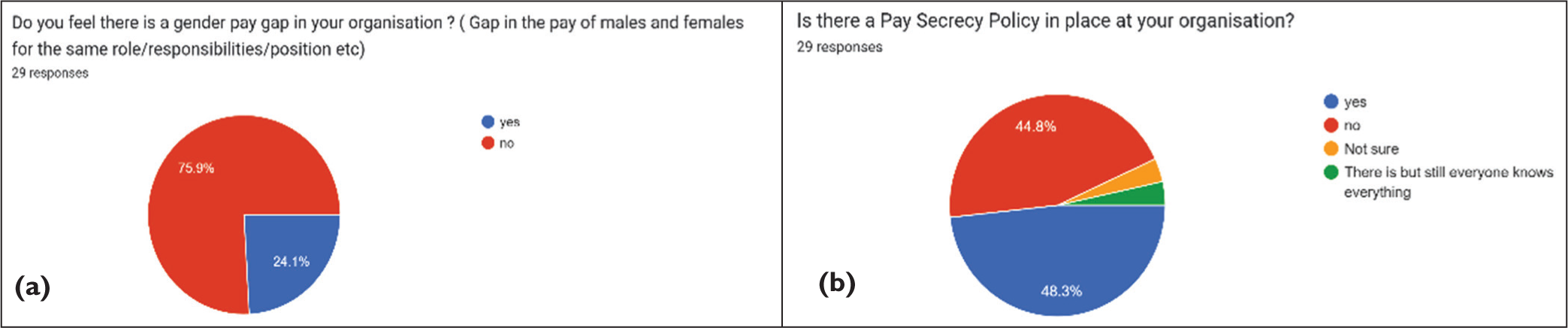
To the question if they feel there is a gender pay gap (gap in the wages of males and females for the same role and responsibility/role/position) (Figure 4a), 24.1% reported with a clear “yes” while 75.9% answered in the negative. Almost half (48.3%) say a formal pay secrecy policy exists at their workplace (Figure 4b), while a significant 44.8% report no such policy. A small fraction is either uncertain or acknowledges that the policy exists but is ineffective. Gender pay gap (men earning more than women for the same position or role) and pay secrecy policy work as a barrier to equity in a workplace. It often hides unjustified pay gaps and obstructs transparency. In workplaces where salaries are undisclosed, women employees, as a marginalized group, are less likely to negotiate the same or question the status quo in terms of unfair compensation, unconsciously contributing to reinforcing systemic pay inequity. Research shows women are less likely to ask for a raise in wages in impervious environments due to fear of negative consequences. Impervious salary structures can take into account pay inequalities caused by career intermissions (e.g., maternity leave), and limit responsibility for biases in promotion. In corporate spaces where promotion is denied for unseen gendered reasons and wages are not transparent, the snowballing drawback for women becomes harder to challenge. Work environments that are hostile and indifferent also have limited transparency, intensifying the difficulty for those already circumnavigating bias. When there are policies in place against discussing pay often and openly, it prevents employees from knowing whether they are being fairly or unfairly compensated, especially across genders or positions. Gender justice efforts must talk about organizational, cultural, and informational barriers together. 24 Practices pertaining to promotion, work, and workplace culture, and wage structures are interconnected systems that either advance or obstruct inclusion. Organizations should encourage pay audits and promote re-entry programs for women. In India, there is a legal framework in place for ensuring pay parity between men and women. It was established by the Equal Remuneration Act of 1976 and further reinforced by the Code on Wages, 2019. These laws mandate equal pay for equal or similar work, and prohibit bias in hiring, training, and promotions. While India has these laws in place, pay secrecy policies in some organizations and companies can hinder their effectiveness, making it difficult to identify and address pay disparities, particularly for women. Despite 53% of talent professionals agreeing that pay transparency is extremely important in shaping the future of recruiting and talent, enacting pay transparency is inherent with systemic challenges in the Indian context.
Gender Pay Gap and Pay Secrecy Policy.
Limited Growth Opportunities
To the question if the respondents felt that their growth and progression opportunities were limited as compared to their male counterparts, 27.6%, which is more than one in four respondents, said it was true. This is a clear reflection of the disparity in the upward mobility for women. While they can very well enter the corporate workforce, they face tough-to-negotiate barriers when aiming for project leadership roles, strategic positions, promotions, or international assignment opportunities. This data finds support in the earlier finding where 65.5% perceived a male-heavy leadership scenario in the corporate sector of Gurugram. Such trends or perceptions, even if not having experienced in a direct way, might severely affect the morale of female employees, and their motivation to aspire for leadership positions is diminished with time. In the long-term, this gives birth to “leaky pipeline” 25 syndrome, which is a metaphor for the way that women disappear from some careers due to the absence of a support system.
Signs of Unconscious/Implicit Gender Bias in the Organization
Approximately 31% of the respondents said that there exists an unconscious/implicit gender bias at their workplace. Implicit bias includes: Hiring committee favoring male candidates over females/hiring team overlooking a woman for a high-profile role or project because they think child birth will impede this/someone from another department assuming a man will be the leader due to decisive/strong behavior/someone complains the new mom/new dad takes too many leaves/female employees is asked to do odd jobs for office gatherings which is not a part of her work. This is a key statistic referring to unintentional and spontaneous stereotypes that have an impact on decisions and behaviors. These stereotypes are not noticed by those who practice them but have a negative impact on the workplace experience of those affected, in this case, women employees. These subtle biases undermine equity and equality and can slow down women’s growth in careers, discourage them, make them lose morale, and make them feel excluded. Unconscious bias is more harmful than overt discrimination because it is often difficult to identify or acknowledge, and is often understood as harmless or justified with labels for women, such as “too sensitive” or “overreacting” if they try to raise a concern. The ILO research called Breaking Barriers: Unconscious Gender Bias in the Workplace, 26 says that the ILO Bureau for Employers’ Activities surveyed many companies on the top barriers to women’s leadership. The results were published in the global report on Women in Business and Management: Gaining Momentum. Five of the barriers to women’s leadership were related to discrimination and unconscious gender bias.
Gender Insensitive Language/Sexism in Language at Workplace
Approximately 13.8% of respondents said they face gender insensitive or sexist language at the workplace “very often.” A similar 13.8% said they experience it “often,” which makes it a combined percentage of 27.6% experiencing it on a frequent basis. This refers to insensitive and casual sexist jokes, casual comments on clothing or appearance in the name of “light banter” and “humor/fun,” common usage of terminology such as “nagging,” “bossy,” “too aggressive,” and “overreacting” for women. This normalizes the use of everyday sexism against women, and the fact that around one-fourth of the employees face this on a regular basis is a clear indication of sexism in language being a part of corporate culture in Gurugram. The respondents should report the language-based microaggressions and keep demanding various gender sensitization workshops and trainings; this might work as a model for the leadership to commit themselves to respectful communication in the workplace.
Sexual Harassment
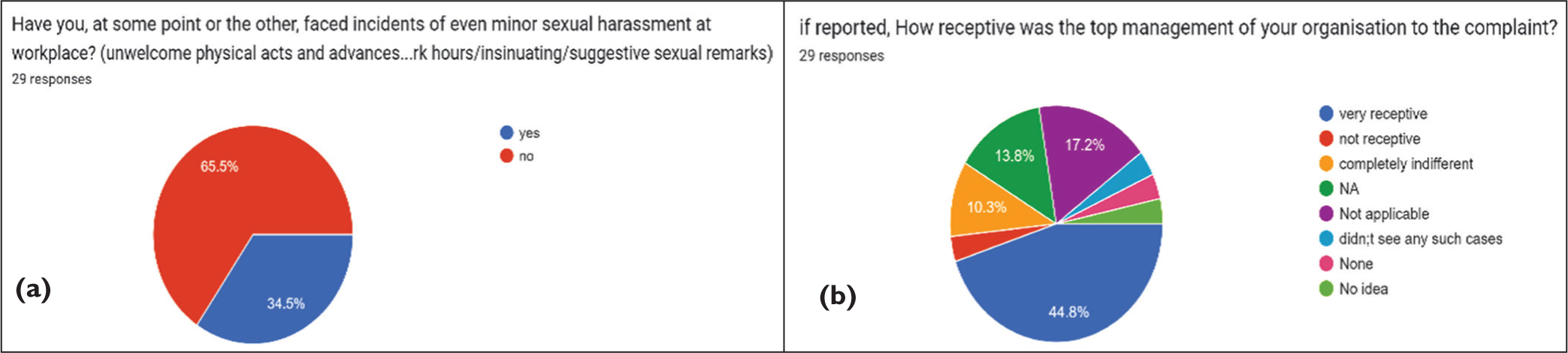
Despite being the Millennium City of highly educated urban dwellers who are aware of formal policies and rising awareness regarding acts such as POSH (100% of the respondents answered in affirmative to the question if they were aware about POSH), 34.5% of the respondents belonging to Gurugram’s corporate sector reported that they have, at some point, or the other, faced incidents of sexual harassment at workplace (Figure 5a). This includes both major and minor (unwelcome physical acts and advances/demand for sexual favors/making sexual remarks/any other unwelcome physical/verbal/non-verbal, textual conduct of a sexual nature/sending unwelcome text messages outside work hours/insinuating/suggestive sexual remarks) cases of sexual harassment. The survey data of 34.5%, although being a small percentage, is deeply disturbing to see that this statistic challenges and bursts the bubble of a narrative that holds Gurugram in the high echelons of corporate progressiveness in the overarching framework of the gender dynamics at the workplace. Although 65.5% of the respondents said they had never faced any such incident in their work history, the presence of considerable data being the opposite raises serious questions on the corporate culture of the extremely educated and highly paid employees’ spectrum of Gurugram’s corporate sector. Yet, the silver lining remains in the response of the management in addressing these cases of sexual harassment (Figure 5b). Notably, 44.8% of the respondents said that the management was very receptive to the reports of such incidents. This makes us believe in the hopefulness of the situation toward a transformation by challenging the status quo.
Sexual Harassment and Reporting.
Impediment to Economic Advancement and Psychological Well-being of Women
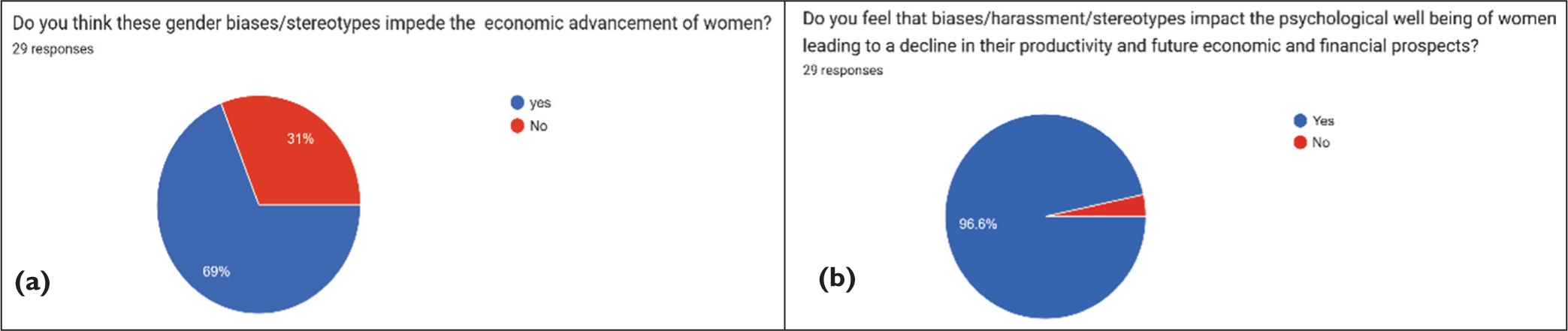
The ultra-modern and ultra-urban hub of extremely high-paying roles in the corporate sector and a land of rapid professional growth, the corporate sector of Gurugram is not unaffected by gender biases. As per the survey data (Figure 6a), a whopping 69% of the respondents believed that gender bias in the workplace directly works as an impediment to the economic growth of women, limiting their reach toward opportunities for growth, leadership positions, and equal wages. Even more striking is the almost unanimous answer to the question if these biases affect women’s psychological well-being (Figure 6b): 96% agree that it is responsible for lowering the self-confidence of women, resulting in a decline in their productivity. Giulia Lausi, in her article Discrimination and Gender: An Umbrella Review of Psychological Evidence, avers that
among all the negative effects associated with gender discrimination, deterioration of mental health has emerged as the most common and frequent outcome. Poorer mental health is identified as the most frequent consequence of gender discrimination, with several studies specifically measuring anxiety and depression through validated scales.
27
Gender Bias and Its Impact on the Economic Growth and Psychological Well-being of Women.
The Industrial Psychiatry Journal Women and the Workplace says,
WHO research on gender and mental diseases found that psychological health issues are more common in women. A significant determinant of mental health and mental disorders is gender. Gender determines differences in the degree of power and control over socioeconomic variables, such as social status, treatment, and status. Their control and power thus determine their exposure to and vulnerability to specific mental health hazards. Women are more vulnerable to mental health problems as a result of gender discrimination at work because they have less authority and control over the causes above. Common mental illnesses, including anxiety, depression, and physical ailments, are significant health issues.
17
Even in an extremely forward-looking and progressive corporate landscape in a city such as Gurugram, the everyday workplace dynamics continue to keep women in disproportionately disadvantageous positions. It is a systemic pattern, an organized oppression that results in loss of extremely potent female talent and leadership. Organizations simply cannot afford to ignore this if they want to keep themselves in the productive, creative, and equitable category of workplaces.
Conclusion
Gurugram and its corporate scene stand as a solid symbol of India’s economic ambition, aspiration, and global incorporation. But a complex narrative lies behind this narrative of scintillating success, one that overlaps the line between tokenism and transformation. The statistics and data gathered from this particular survey reveal a tenacious undercurrent of gendered inequality in the corporate sector of Gurugram: 69% of respondents agree that gender bias hampers women’s economic advancement, while 96% observe that such bias takes a toll on women’s psychological well-being, health, and productivity. There are 34.5% women who have faced sexual harassment, and the 27.6% who frequently encounter sexist or gender insensitive language. This is a reflection of the systemic normalization of sexism and bias in the everyday life of the Millennium City. These findings suggest that in many cases, efforts toward diversity consciousness remain ceremonial and superficial, which popular culture terms as “token inclusion” without institutional accountability. Yet, the picture is not entirely bleak. The very act of being aware: Recognizing, surveying, or reporting bias; especially the 31% reporting unconscious or implicit gender bias; specifies a shift from silence to self-awareness. Many female members of the workforce now understand how apparently minor behaviors, such as overlooking women for positions in leadership, relegating them to non-consequential and non-promotable tasks, or making them doubt their own competence post-maternity, “the motherhood penalty,” are in fact indicators of systemic inequality. The growing understanding of these patterns, even if not yet met with policy-level or structural reform, is itself a sign of transformation in motion. Gurugram’s corporate sector thus finds itself at an intersection. On the other hand lies transformation: A deliberate, conscious, and sustained effort to pull bias to pieces, ensure equity in workplace dynamics, and foster safe work environments, ensuring the psycho-sexual well-being of women employees. This study shows that while Gurugram has taken a few steps on the latter path, much ground remains to be covered. For Gurugram’s corporate future to be truly progressive, it must ensure that gender equity is not a quota, but a culture.
Footnotes
Author’s Contribution
The authors are directly related to the work submitted for publication.
Declaration of Conflicting Interests
The author declared no potential conflicts of interest with respect to the research, authorship, and/or publication of this article.
Ethical Approval
Not applicable.
Funding
The author received no financial support for the research, authorship, and/or publication of this article.
Informed Consent
Not applicable.