







Abstract
In Mexico, the phenomenon of disappearance resurfaced with the Drug War (2006) and in the state of Nuevo Leon it was mainly young men who disappeared the most between 2007 and 2012. However, since 2018, the disappearances of teenage girls increased. To analyze this situation, a study was undertaken in collaboration with the National Search Commission, whose methodology relies on analyzing the experiences of missing and found persons. With the support of the Local Search Commission in Nuevo León, a survey was sent to found persons between the ages of 0 and 29, interviews were conducted with missing and found persons, and files of the public child protection services were reviewed. This new methodology established the immediate and structural causes of disappearances and that the main factors of vulnerability are structural violence, mental health and addictions, gender violence and police abuse.
Keywords
Introduction
By the end of 2023, there were more than one hundred thousand missing persons in Mexico, whose relatives had been searching for days, weeks or years. This situation causes them a great deal of pain, not only because they do not know where they are, but also why they are missing, and how long will they be looking for their beloved ones.
It is worthy of attention that the most vulnerable people to go missing are young, among women, teenagers disappear more often, while missing men are usually between the ages of 20 to 40. This age and gender difference are the core of our research, and to analyze it we will focus in the state of Nuevo León, located in the northeast of the country, one of the five states with the highest number of missing persons in Mexico. The main research questions are: which violences explain why teenage girls and young men are most likely to disappear? How are structural and cultural violence (such as gender violence and adultcentrism) linked in cases of missing persons? What can the analysis of the experiences of persons found alive explain us about the phenomenon of disappearances in contemporary Mexico?
It’s important to understand that there are many types of violence, and following Johan Galtung’s proposal (1990), we must consider that structural, cultural and direct violence are linked. Galtung proposes that cultural violence refers to cultural aspects that justify the use of direct or structural violence, and the mechanism to legitimize it is internalization (1990). For example, gender-based violence is cultural and in specific contexts, male domination (Bourdieu, 1999) justifies physical or psychological abuse to limit women’s and girls’ actions, whose limited rights is structural violence. Adultcentrism, as cultural violence, also prevents adults from considering that teenagers are capable of making decisions and tend to think that they are manipulable (Morales, 2024). In the case of teenagers’ disappearances, adults tend to doubt that they may have run away (Hudson, 2020), but our study shows that in some cases they are fleeing from sexual or domestic violence, or because they have a personal project they wish to carry out that is not approved by their parents. That’s why it’s important to understand and analyze the teenager’s perspectives and experiences, as childhood anthropology proposes (Calderón, 2015; Duarte, 2015).
In Nuevo León’s case, we demonstrate that kids’, teenagers’ and youths’ disappearances mostly occur in areas where structural violence is higher, industrial development important, and the state intervention to guarantee the welfare rights of the population is scarce. It also prevails in a cultural context where gender roles limit women and men as being caregivers and providers respectively, and a politic situation where drugs’ production and use are highly criminalized, since the war on drugs 1 , which was declared by President Felipe Calderon (2006-2012) and legitimized the use of public and armed forces in public spaces to arrest and kill people suspected of drug trafficking. This contributed to the increase of gun force of armed actors, homicides rate, disappearances: high impact crimes that have not been solved. Rather than considering drug consumption as a public health issue, rooted in structural violence and lack of mental and emotional health access, it was criminalized. We also found that teenagers run away because they face difficulties pertaining sexual violence, gender discrimination or because they must act based on gender expectations (such as being a provider).
Next, we analyze the origins of disappearances in Mexico, the humanitarian and forensic crisis occurring throughout the last 15 years, which led to the creation of organizations led by seeking mothers, 2 then we explain the vulnerability of teenage girls and young men to disappear in Nuevo León. We present the methodology at the beginning of the section on the vulnerability of teenage girls to disappear.
Origins of disappearances in Mexico
The phenomenon of disappearances is part of the contemporary history of Mexico (Pozos, 2021). During the 20th century, during the period known as the Dirty War (1964-1982), state agents were responsible for the arrest and enforced disappearances of politics’ adversaries (Dutrénit and Varela, 2018; Robledo, 2015). Most relevantly, we can discuss the disappearances that occurred in Guerrero State, as well as that of members of the Liga Comunista 23 de Septiembre, the emblematic case of Jesus Piedra Ibarra, who disappeared in Monterrey in 1975, and whose mother, Rosario Ibarra de Piedra, created the Eureka Committee, and became an icon of the struggle against enforced disappearances in Mexico.
The phenomenon of enforced disappearances, which responsibility is under the state, has been perpetrated in south American countries ruled by authoritarian governments, such as Argentina, Chile, Uruguay and Guatemala military governments (Gatti, 2017). This led to the emergence of the detained-missing persons and the organizations which are looking for them, as the emblematic case of the Madres de la Plaza de Mayo 3 in Argentina (Pozos, 2021).
Despite the pluralization of the public life in Mexico, and the state reform in the 1990s, Mexican society went through a second period of missing persons, this time in a much higher rate.
4
Due to the decision of former president Felipe Calderon to combat drug trafficking through the presence of military forces in some regions of the country, homicides as well as disappearances drastically increased (Graphs 1 and 2). This strategy was well received by the American government, through the Merida Initiative, a collaboration agreement on security, signed in March 2007 (Estrada, 2012). Source: Mortality, INEGI (2024). Missing and not found persons in Mexico (2000-2023). Source: Comisión Nacional De Búsqueda (2024a).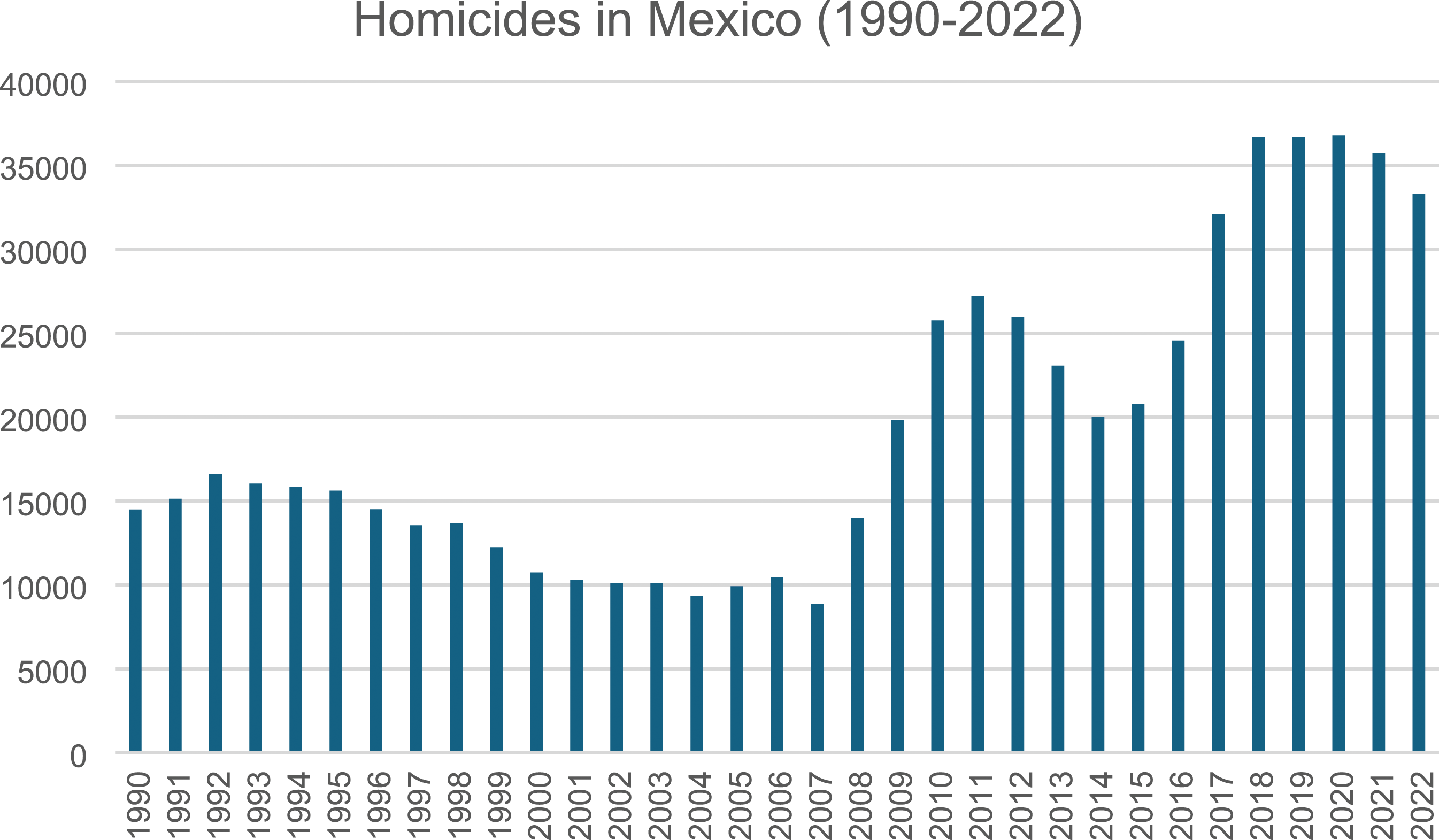
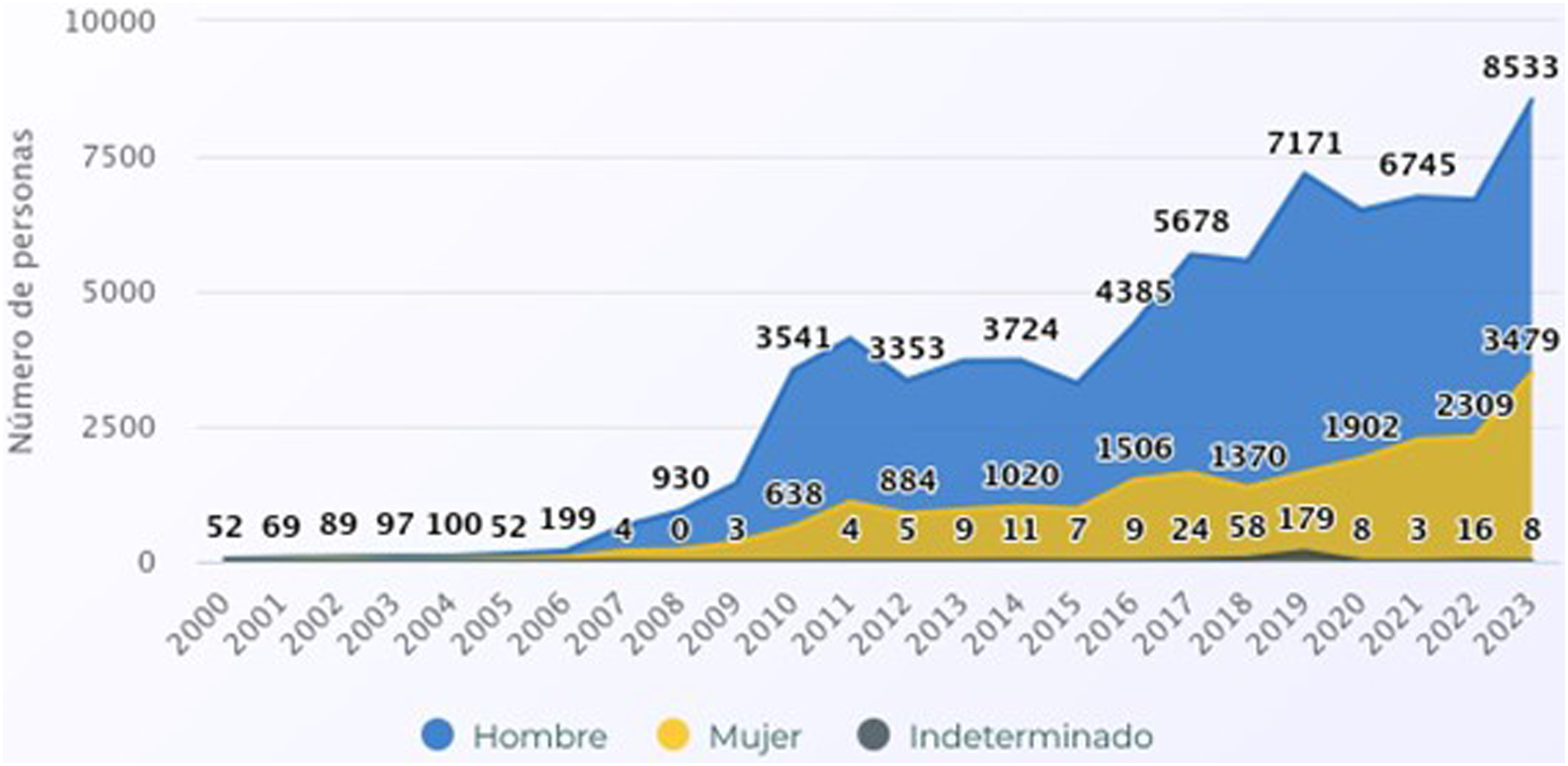
Since then, the number of missing persons has still increased, and regardless of the evident relationship between disappearances and militarization of public security to combat drug trafficking, this policy remained valid during the following governments. 5
Despite lawsuits being filed for disappearances, they weren’t punished because most of them have not been presented to a judge, so they were never sentenced. The visit report of the Committee on Enforced Disappearances to Mexico in 2021 considers that impunity is almost absolute and recommends the Mexican government to eradicate the structural causes of impunity. Impunity is a common factor between forced disappearances of the Dirty War and the contemporary disappearances (Dutrénit y Varela, 2018). And this is a vulnerability factor for Mexican population to disappear, for it being a crime that is not punished.
Seeking mothers facing the humanitarian and forensic crisis
Mexico is going thru an extraordinary humanitarian crisis. The National Register of Missing and Not Found Persons of the National Search Commission is registering 101,154 missing and not found persons from 1964 to 2023, most of them disappeared from 2007 to 2023 (98,833 persons).
Considering the high rates of homicides, it’s possible that these persons have passed away, and their human remains have been clandestinely buried, possibly dissolved, put in communal graves, or have been found but not identified by authorities. The forensic crisis is also extraordinary: 4000 mass graves were found (with more than 8000 bodies buried there) and almost 52,000 unidentified bodies are at the DA’s Office (Comisión Nacional De Búsqueda, 2024a). That was the reason of the creation of an extraordinary forensic identification mechanism on December 2019.
The challenges are enormous. In that context, the current federal government decided in 2023, against the opinion of the National Search Commissioner, Karla Quintana, to review whether all the persons registered in the National Register of Missing and not found Persons were indeed missing, by comparing their data with the lists of beneficiaries of the Welfare Bureau, as well as of vaccinated people, and cast doubt on 12,000 records (Ortiz, 2024). This situation led to the Commissioner’s resignation and the collectives of relatives of missing persons to express their disagreement with the apparent interest of the federal government to remove registries of missing persons. Behind the numbers, there are people and painful stories (Adónde van los desaparecidos, 2023).
Unlike the Dirty War, when people were detained and disappeared by state agents, in the current era uncertainty prevails as to who the perpetrators of disappearances are (Robledo, 2016). Although some members of the military have been sentenced for enforced disappearance (Vizcarra, 2022), there have been very few sentences for disappearances and impunity is almost absolute, as recognized by the United Nations Committee on Enforced Disappearances in April 2022 (Comité de las Naciones De Unidas contra La Desaparición Forzada, 2022). A particularity of the Mexican case, then, has been to typify disappearance by private agent, to differentiate it from enforced disappearance, in the federal law that was approved in 2017 (Pozos, 2021).
Faced with doubt, anxiety and grief, relatives of missing persons would go to the DA’s Office to report a disappearance and ask for the investigation of their loved ones’ whereabouts. Most often, they were confronted with the indifference of the public prosecutors, tardiness and were forced to investigate on their own. This is how the first collectives of relatives of missing persons emerged, especially in the north of the country, in Baja California, Nuevo León and Coahuila.
An inflection point in the recent history of disappearances in Mexico was the emergence of the victims’ movement in 2011, following the disappearance and murder of Javier Sicilia’s son in Morelos, a public figure who managed to mobilize victims in the northern entities of the country, and founded the Movement for Peace with Justice and Dignity, which brought together hundreds of victims (Pozos, 2021). This mobilization led to the creation of collectives in the states, as well as the drafting of a General Victims Law that was approved after the end of Felipe Calderón’s six-year term, in January 2013, and led to the creation of State and Federal Victims Commissions (Cámara de diputados, 2023).
A second turning point were the enforced disappearances of 43 students from the Normal School in Ayotzinapa, Guerrero, on September 26th, 2014. The participation of police forces, as well as the Army in their detention, and the execution of some students, generated a deep indignation that shook the society (Dutrénit and Varela, 2018). Since then, several collectives of relatives of missing persons decided to search for their missing loved ones in places where they suspected that their bodies might have been buried, thus giving life to the figure of the Seekers. Dozens of collectives, mostly made up of mothers, known as Seeking Mothers (madres buscadoras), began to search for mass graves. Although collectives of relatives of missing persons had existed for years in the north of Mexico (Villareal, 2014), when the forensic turn (Garibian et al., 2017) occurred in Mexico, the protagonists became the Seeking Mothers.
The collectives of relatives of missing persons, in collaboration with international and human rights organizations, struggled for the adoption of a legal framework, and at the end of 2017 the General Law on Enforced Disappearance of Persons, Disappearance by Private Agent and the National Search System was approved (Cámara de diputados, 2022). With this, the National Search Commission was created, as well as the state search commissions, whose prerogative is to search, as opposed to investigating, this being an attribution of the DA’ office. Both authorities are mandated to coordinate their actions, however, in practice they tend to compete and coordinate their actions minimally.
Next, we focus our attention on the state of Nuevo León, firstly on the vulnerability of teenage girls to disappear, and secondly on young men
The vulnerability of teenage girls to disappear in Nuevo León
Nuevo León is one of the five states with the highest number of missing persons; it has a history of repression of social movements that led to enforced disappearances during the Dirty War, and in recent times has been the scene of disappearances in the context of the war on drugs and the militarization of public security. At the end of 2023, Nuevo León added up to 6465 missing persons, mostly males (73.49% of the total).
With the militarization of public security, the federal government deployed military forces to certain regions of the country, which carried out joint security operations with the federal police. In the northeast, in 2007 Operation Tamaulipas-Nuevo León was implemented and in 2011 Operation Noreste in the states of Nuevo León, Tamaulipas, San Luis Potosí and Coahuila (Durin, 2019: 68). It is in this context that homicides, disappearances of people, as well as forced displacements throughout the northeast region increased dramatically (Durin, 2019). Faced with the disappearance of their loved ones, the relatives of missing persons in Nuevo León grouped into collectives. First they were accompanied by a human rights organizations (Irazuzta, 2017; Villareal, 2016), then other groups emerged, currently there are 5 collectives. 6 These groups achieved the criminalization of forced disappearance in Nuevo León in November 2012, and the creation of the Special Prosecutor’s Office for Missing Persons in 2015. In 2017, with the approval of the General Law on Enforced Disappearance of Persons, Disappearance by Private Agent and the National Search System, this led to the creation of the Local Search Commission in Nuevo León in May 2018.
Since 2007, Nuevo León experienced two intense periods of disappearances, during the years 2010 to 2012 and from 2018 to 2022. While in the first period 80% of the missing persons were male, in the second the percentage of missing women grew, reaching almost 30% (Graph 3). This evidences a transformation of patterns in disappearances, where women are now more vulnerable to disappear than they were in the recent past. The age profile is also striking, ranging from 15 to 19 years old. And the volume of young men going missing is also disturbing. Missing and not found persons by age (2018-2022). Source: registro Nacional de personas desaparecidas y no localizadas (Comisión Nacional De Búsqueda, 2024b).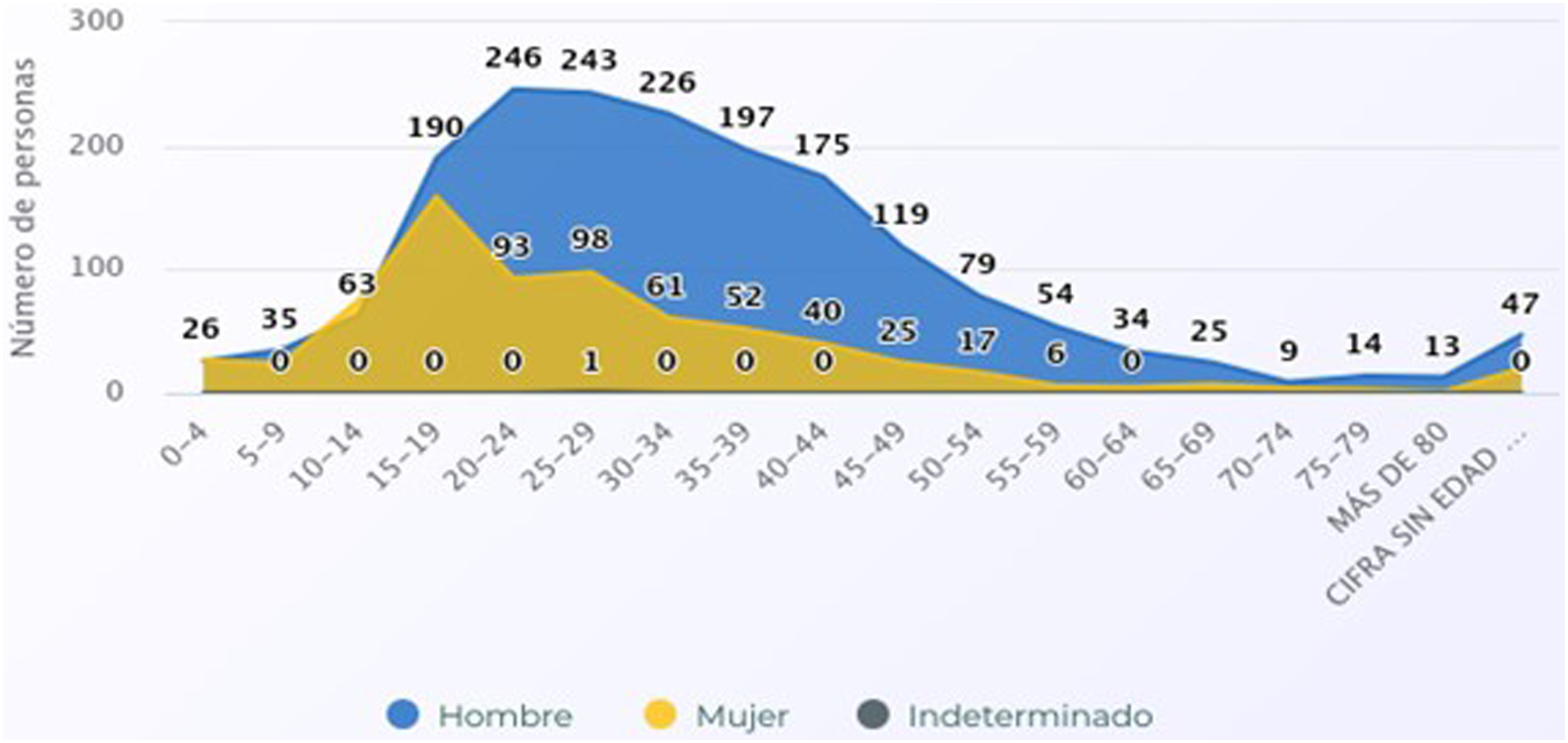
Theoretical and methodological approaches
Understanding what is happening to missing women, especially teenage girls, is necessary, but methodologically difficult, since missing persons cannot be interviewed. Nevertheless, there are people who were found, whose experiences of disappearance is worth analyzing. They allow us to understand the phenomenon of the missing persons from a new perspective.
With the exception of Cote et al. (2018) article regarding the Mexico City government’s experience in finding missing persons, academic studies generally ignore the case of missing persons who have been found, despite their experiences contributing to the understanding of the problem of disappearances in Mexico.
This study shows that it is necessary to distinguish forced disappearances from voluntary ones, people who flee their homes (runaway) or who leave their homes and are unable to return (lost). Most runaways are teenage girls between the ages of 13 and 17 who decide to run away from home, due to the social structures that subordinate them and make women stay at home to take care of people and do domestic work. In addition, runaways are more frequent in the most economically disadvantaged areas with problems of insecurity, which also explains the fears of parents and their restrictions on their children.
In Argentina, Pablo Hudson (2020) paid attention to the life of teenage girls in the peripheries of large cities and evidenced their reiterative run away from their homes as a result of domestic confinement. Their relatives and neighbors feared that the young girls missing were related to human trafficking. Hudson found that the heteropatriarchal model assumes that women are responsible for taking care of the house and people, especially younger siblings in the case of teenage girls, so they live a condition of confinement in their homes, even more so in the face of high crime rates in the neighborhood, which led their parents to forbid them to go out. They also suffered violence in their homes, with alcoholic and abusive parents. As a result, the teenagers spent most of their time on social media, and also lived a digital confinement due to their incessant connection.
Adultcentrism, which deprives adolescents of their agency, also means that adults cannot consider that they voluntary leave their home, instead they tend to believe that they have been manipulated, or object of harassment or threats on social media, and attribute their missing to drug trafficking groups. However, their capacity for agency is notorious: a young woman who was contacted by a male on social media and punished by her father who deleted her profile, soon created an alternate profile to see him (Hudson, 2020). In their daily lives, teenage girls try to circumvent these controls, feel freedom, and make up lies to miss a class or come home late after school. They devise strategies to gain small moments of autonomy, while being aware of the risks. Thus, “one of the radical ways that girls found to inhabit the new urban peripheries was through escaping from their homes to live intense experiences of friendship, love, sex, nightlife, leisure and consumption” (Hudson, 2020: 53).
These runaways’ practices are not without risks, especially when they flee with a partner. In some cases, it may be part of the recruitment mechanisms of human trafficking for sexual exploitation. In Mexican rural societies, such as in the state of Puebla, a traditional way of arranging a marriage alliance is by stealing the bride, but this is also a concerted runaway and a way of confronting paternal authority (D’Aubeterre, 2003). Among the Nahua of the Balsas River, Guerrero, bride theft in the form of a concerted runaway is also the norm. The bride and groom agree to elope one afternoon and spend the night at the groom’s house. This is a sign on his part that he takes the girl seriously, for he brought her to the parental home, and the next day his parents send a delegation to the girl’s house to inform her parents where she is and ask them for forgiveness. Thus begins a period of cohabitation that allows to test the couple, under the authority of the groom’s parents, and that may lead to a marital union a few months later (Goloubinoff, 2003).
This customary practice of the Mesoamerican cultural complex is also practiced in Tlaxcala, where it has been transformed and has become a mechanism for recruiting women for sexual exploitation. While in the beginning men prostituted local women, new generations recruit women from outside Tlaxcala. Today, the south of the state of Tlaxcala is a society producing pimps, where men are taught a practical sense of sexual slavery to recruit, transport and exploit women. They go to public places in different states of Mexico to hook, seduce and deceive women. They establish a conjugal relationship with them and take them to live in Tlaxcala where they subject them to economic and affective dependence, before moving them to another space inside or outside the country, to sexually exploit them (Montiel, 2018). They trick the young woman by making her fall in love, take her to their home and consummate the sexual act, whereupon she is now their property; instead of going to her parents’ home to ask for forgiveness, she is asked to make a call to her family to communicate that she is well and happy. Once the marital union is formalized, he induces her into prostitution through physical and emotional violence and allows her to maintain contact with her family members to avoid suspicion and accusations against her. This is how the pimp system takes advantage of this traditional form of conjugal unions (Ibid).
That’s why, when a teenage girl has fled with her boyfriend, her disappearance should be the reason for an immediate search, because she could have been taken by a pimp and transferred to another state or abroad. With similar recruitment techniques, there are pimps on the northern border who move to other states to recruit girls and young women, making them false promises of work or love to take them to Ciudad Juarez or Tijuana and introduce them to prostitution (Azaola, 2006).
That’s why this research is original as it focuses on the experiences of the missing and found persons, because they are the only ones who can relay their experience. Being disappeared is not cancelled out by being found, and their testimonies allow us to understand what kinds of violence are linked in missing person cases. Based on this reflection, I proposed to analyze what happened to the missing and found persons in order to understand the vulnerability factors to disappear in Nuevo León.
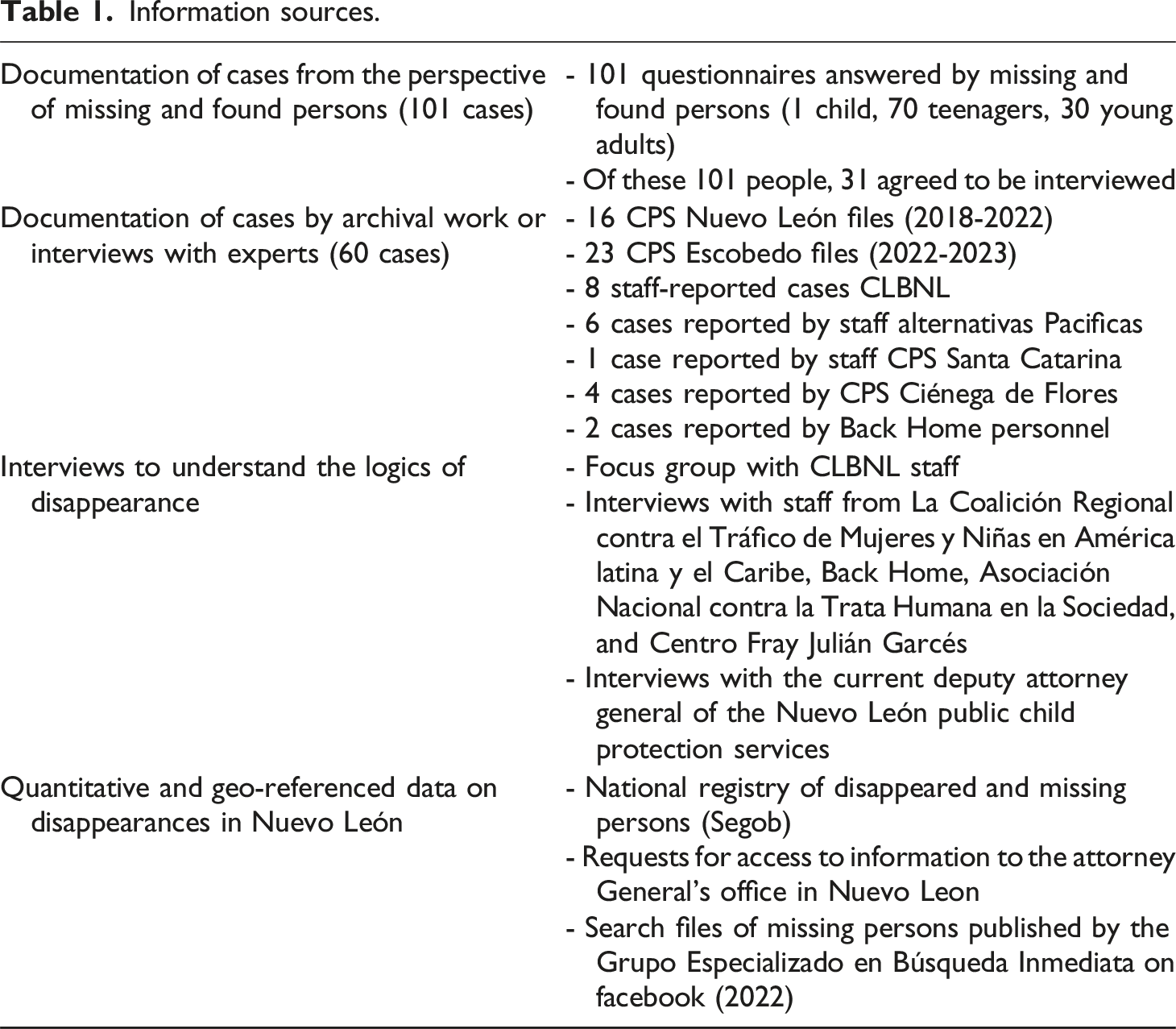
To do this, it was essential to have the support of the Local Search Commission in Nuevo León (CLBNL in Spanish) to access the contacts of the missing and found persons, and I also proposed the National Search Commission to collaborate in this research. The proposal consisted in calling and sending WhatsApp messages to all people from 0 to 29 years old, women and men, who were missing and found in Nuevo León between November 2022 and May 2023. The calls and messages were made by the CLBNL psychologist, from the CLBNL list of missing and found persons (which I had access to), to invite them to answer an online questionnaire about the circumstances of their disappearance and finding. The response rate to the questionnaire was 16% of those contacted 7 The questionnaire was sent to missing and found persons, 8 101 people answered, and I interviewed 31 of them. 9 At the end of the questionnaire, a video was included in which I introduced myself, as the researcher in charge, and asked people to be interviewed. Those who agreed to be interviewed gave their names and contact telephone numbers. That’s why this is a broad and representative sample, which offers first-hand information.
It is useful to explain why both females and males under 30 years of age were contacted. As evidenced by the statistical data, the marked difference in trend between female and male missing persons shows that gender is a major explanatory element. If we consider that gender refers to representations of the masculine and the feminine, as well as to the attitudes that people with female and male bodies are expected to adopt in accordance with these gender representations, we have to investigate the differences in experiences of disappearance with a gender perspective. In methodological terms, this implies contrasting the experiences and discourses of disappeared men and women, in order to analyze their singularity, as well as by age, so as to also differentiate the situations of children, teenagers and young people.
Information sources.
The following are the main findings of the study on vulnerability factors for the entire population that participated, then specifically for the population of teenage girls.
All disappearances are the result of violence
Among the findings, it stands out that every person that disappeared and was found (regardless of their age and gender) had experienced some type of violence, which means that when a person is found, public action cannot end there. Violence, in its different expressions, gives rise to runaways, lost people and abductions, stemming from different violent situations faced by people whose relatives report them as missing. And unlike the term voluntary runaway, which is often used by the authorities in charge of investigating and searching for missing persons when they run away from home or from their partner, the focus on violence shows that people never disappear on their own, but rather because of a situation of violence that they experience, as we will explain below. All disappearances are the result of violence.
A significant unattended mental health and addiction crisis
There was also a high incidence of untreated mental health problems, many of these people were coping with substance abuse. A significant number of missing and found persons were in private rehabilitation centers or had been admitted. Likewise, in several cases I heard testimonies of children who suffered violence from their drug-addicted parents.
Magdalena started using drugs with friends in the neighborhood, while her mother worked at night. She used Clonazepam and marijuana. Her mother is the provider at home, as her father lost his job at the Water Authority and is an alcoholic. Losing his role as provider undermind his masculinity, and since then, he has become violent. One night when he arrived home drunk, his daughters did not want to open the door, but after he caused a scene, they gave in. He entered in a rage, subdued Magdalena on the floor with one knee on her chest, and almost killed her. She mustered all her strength, managed to escape, and called 911. Her father was not detained by the police, but she was admitted to the public child protection services shelter and handed over to an aunt. Magdalena, feeling depressed about her poor relationship with her mother and using drugs, 1 day ran away to a friend’s house. A missing person report was then issued. Her mother sent her to a rehab center, where therapy is based on reading the Bible. At the time of the interview she was living with her grandparents and was clean; some time later she started using substances again and left her grandparents’ home.
It is striking that the State lacks public infrastructure for the care of people with addictions, leaving this responsibility to private agents. The study shows that torture is perpetrated in rehabilitation centers, but they are not regulated and supervised by the State. It seems that people with addictions are not considered important for health authorities, and drug use is not considered a public health problem either; in fact, drug use is criminalized.
Structural violence and the promise of nearshoring
Regarding teenage girls, four factors of vulnerability stand out. First, disappearances occur most frequently in the northeastern zone of Monterrey’s metropolitan area, in the arc formed by the municipalities of Salinas Victoria, Ciénega de Flores, Pesquería, Zuazua and Cadereyta, especially in Valle del Roble (Map 1). This is an area dedicated to industrial production, with a high concentration of industrial warehouses that operate around the clock, land routes that connect them with the United States, and which is experiencing a great boost in nearshoring (El Universal, 2023). Missing and not found girls and young women in Nuevo León in 2022. Source: Map by Hugo Luna based on District Attorney Office’s missing persons reports.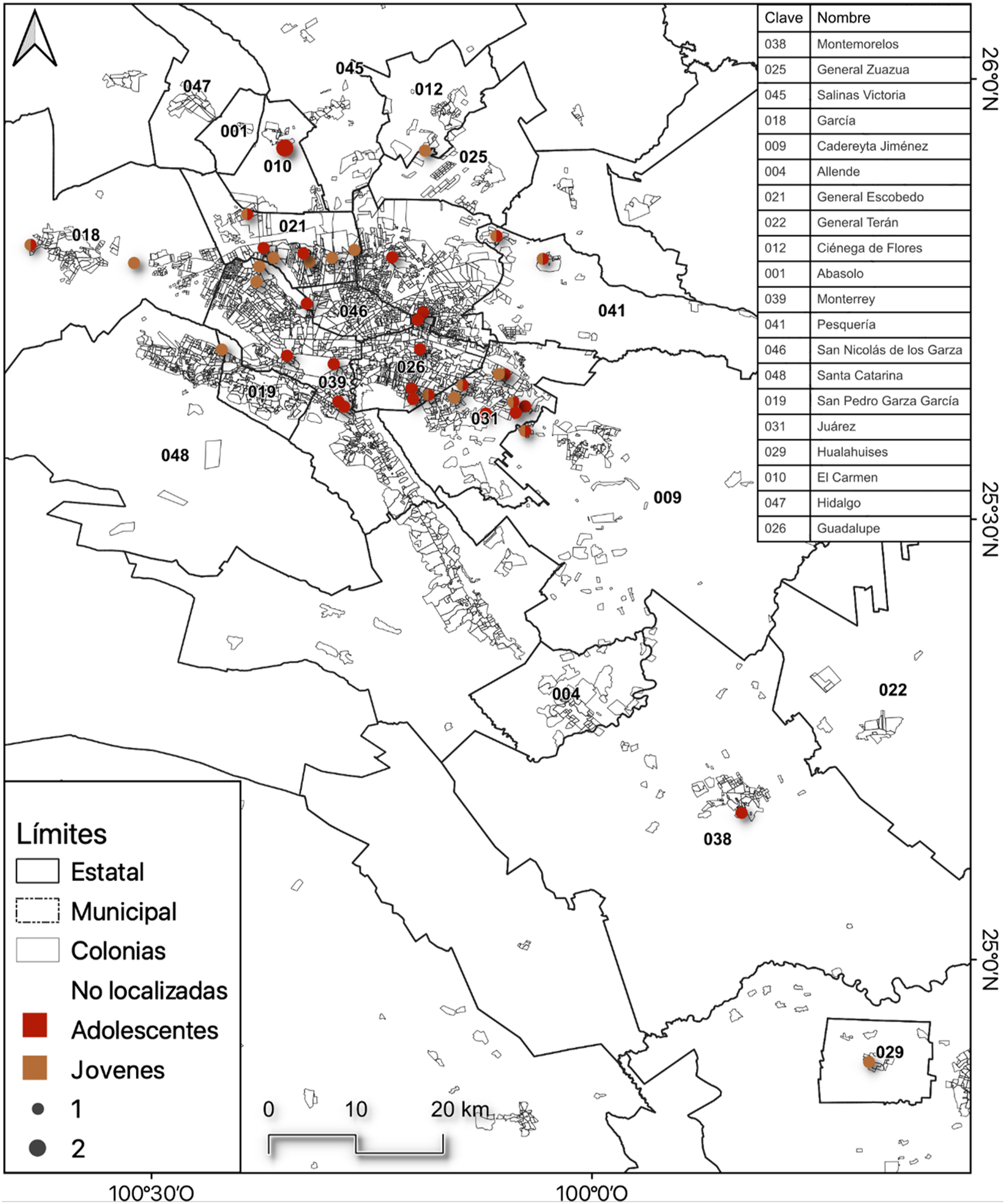
There, people’s lives are very precarious, they live in very small houses located in large neighborhoods, they are subject to labor exploitation practices (unjustified dismissals) and do not have public care services (childcare centers), high school education and public transportation. In other words, structural violence prevails that makes people’s lives very precarious and explains why in these municipalities, from 2018 to 2022, crimes of family violence, sexual abuse, rape, homicides and femicides increased (Durin, 2023). In this context, disappearances are part of the continuum of violence that people, and teenagers in particular, experience daily.
Conflicts and runaways of teenage girls as caregivers and sexual objects
Gender-based violence, in combination with structural violence, has serious consequences for teenage girls. In households where mothers work and provide on their own, in the absence of a partner, they are forced to take their teenage daughters out of school to care for their younger siblings. In the absence of childcare, the role of caregiver attributed to women deprives teenage girls of the right to study, have friends, boyfriends and be young, thus leading to conflicts with their mothers and cause runaways.
Karina is 16 years old and lives in Ciénega de Flores, in a small house where water is stored in a big pot for daily use. She has lost her father and lives with her mother, older brother (19), another brother (13) and a sister (11). Her mother is a seamstress at a factory in the area. Karina dropped out of junior high school during the pandemic because her mother did not have a cell phone to give her for school, and two years later she was able to get her certificate and is thinking about studying at a military high school. Since leaving junior high school, she has dedicated herself to taking care of her younger siblings. In the morning, she takes her sister to school, then she cooks for her brother, who is in high school. Then her sister eats, and Karina tries to clean the house. When her mother arrives, she helps her make dinner. The reason she was missing is because one weekend when they went to a family party, her younger sister swam in a pool even though Karina did not allow her to, her mother reprimanded Karina and slapped her wrist. Back home, she went to a friend’s house where she stayed for three days. When the Local Search Commission team arrived, they offered her two scenarios: she could talk to her mother or the ministerial police would come. She decided to return home, but communication with her mother never improved, it even got worse. Karina explained: “she won’t let me go out. My friends can’t come outside, she scares them off. I can’t go to the market,” if she goes to the store her mother says, “just go and come back,” and she doesn’t even have a telephone to communicate with her friends. In these circumstances, she would like to study or work, to be able to leave the house, to free herself from her mother’s overprotection and confinement, as Pablo Hudson (2020) also demonstrated for teenage girls in Argentina’s urban peripheries.
Likewise, the objectification of women’s bodies exposes them to sexual violence by family members, situations that are not always reported because they might be doubted upon. This can lead to emotional problems, including substance abuse and self-harm. Running away from home or school is the consequence of these unpunished sexual crimes. We could highlight the fact that when young women suffer sexual violence, or there is substance abuse during the disappearance, ministerial police use to revictimize them, for example, blaming the girl for being promiscuous.
Eréndira is 16 years old and looks very slim, petite size, perfect curly hair, and make-up. Her body is adorned by several tattoos on her hips and arms, which Eréndira got to hide scars. For years she has suffered psychological and sexual violence from her father and cousins on her father’s side. Her father blamed her for his divorce, because she found him with another woman, and since then she has suffered depression, used substances with neighborhood friends, and harmed herself. When her father found nude photographs of her on her phone, which her boyfriend requested, he asked her to give them to him as well. Then her paternal cousins also solicited and sexually abused her. At 16 years old, her history of sexual abuse, including online violence, is long. In this high vulnerability context, Eréndira ran away after a conflict with her mother, when a friend incited her to run away and stay at his house, where he abused her. When she was found, the police re-victimized her by loudly declaring that “we have the case of a whore.”
She moved to her father’s place. Her father didn’t take care of her and 15 days after she was found, she was abused by a young man at a party. When the police arrived, they considered that she had been responsible, and that the rape complaint was inadmissible. Faced with so much abuse perpetrated by people who should be taking care of her, Eréndira is tired of lawsuits, recurring conflict with her parents, and of the last abuse she suffered: “I know they are not going to do anything to him, they don’t arrest him. I want it to be over.” She no longer believes in justice and only wants peace. The case of Eréndira demonstrates that cultural violence tends to marginalize women from justice against sexual crimes by making them responsible for those crimes.
Domestic violence and adultcentrism
The home is structured by power relations that place children and teenagers in a position of subordination before their parents. Family violence, either by means of violent discipline or because of the parents’ mental issues and addictions, leads to the disappearance of teenagers who refuse to be abused.
Lizeth is 16 years old, she has been raised by her maternal grandmother and now lives with her mother, father and sisters. She left home after an argument with her mother who told her “Everything would be better if you weren’t at home” and she took shelter at a friend’s house. There, she describes constant altercations, including beatings, because her mother does not accept that she is a lesbian, arguing that she is confused, since she has had boyfriends. Lizeth suffers from headaches, anxiety, depression, self-harm and attempted suicide 2 weeks before being kicked out of her house. Her mother’s rejection is gender-discrimination based on her sexual orientation; this cultural violence caused the runaway of the teenage girl.
Likewise, adultcentrism is a more invisible form of violence, and arises from the idea that adults have better criteria than children and teenagers, who are considered immature, so they tend to decide what is good for them (Morales, 2024), such as the possibility of having a relationship. In Mexico, a 15-year-old girl is usually able to date. We observe that when this is not allowed, and it’s not possible to discuss it, teenagers defy parental authority and run away to their boyfriend’s house; upon their return, parents are forced to talk about it and accept the teenager’s decision.
Seventeen-year-old Mariluz met her boyfriend while they were living in Veracruz, and when she moved with her family to Quintana Roo, they kept in touch through her mother’s cell phone. Once Mariluz settled in Nuevo León with her family, and after two years of keeping in touch, the young man came with the idea of getting back together. Since her parents had forbidden her to have a boyfriend before her 18th birthday, one day Mariluz left home without saying she would catch up with the young man. Her parents put out a missing person report. Worried about the consequences, the young man accompanied his girlfriend to her parents’ house, and they allowed her to date him. Mariluz is emphatic in pointing out that going to her boyfriend’s house “is a decision that I made” and that she wasn’t forced to run away, thus showing her agency, as childhood anthropology points out (Calderón; 2015; Duarte, 2015).
Teenage girls getting hooked on social networks
Teenage girls’ engagement in social networks is a worrying situation because of the fatal outcomes it can lead to. Social networks became an important social space for everyone, especially during the pandemic, when children and teenagers attended online classes. In the digital space, not only grown-ups interact but also teenagers interact in search of friends and relationships.
A 13-year-old girl was contacted by a male, and after some time they agreed to meet in person; she showed up alone to the third encounter, then the young man forced her into a cab, kidnapped her and sexually abused her over a period of five days. Fortunately, after the diffusion of the Amber Alert, 11 she was found alive, but she might have wound up murdered or sexually exploited. Against her wishes, the mother did not allow her daughter’s assailant to be prosecuted; since she is a minor, it is her mother who is legally responsible to decide for her. In addition, her mother held her responsible for what happened: “I’m going to have you admitted in a psychiatric asylum.” It was the second time in her short life that she was sexually abused and that her mother did not agree to prosecute her assailant. Her maternal grandparents were the ones who mostly took care of her, welcomed her into their home, paid for online therapy years ago, and put her through school.
Social networks are full of apocryphal job postings, and the staff of the Local Search Commission shared the modus operandi of serial rapists who summon young girls to work at a ranch where they sexually abuse them. Similarly, mothers can be hooked on social networks, as it happened to the mother of a 15-year-old girl who wanted to take her daughter to Morocco to meet the man who contacted her through Instagram. The teenager fled after her mother processed her passport; she didn’t want to go to Morocco to meet a man whose intentions were unknown to her. “My mom wanted to take me to meet a man. My mom wanted to take me to Morocco [...]. But I didn’t want to go. And my mom told me that we were going to go this week. And then I said “I don’t want to go, I don’t want to go, I don’t want to go anywhere. So, I left the house.” She fled to her boyfriend’s home. The boy’s parents understood the situation and accepted to help Mariluz, by welcoming her. She didn’t run away to be with her boyfriend, but because she feared the outcome of her trip to Morocco would be a forced marriage, sexual exploitation, and turn into a human trafficking and smuggling case, such as the cases Donoso and González (2022) analyzed in Mexico state.
Disappearances of teenage girls as part of the continuum of femicide violence
These different factors of vulnerability reinforce each other, so that violence experienced in daily life tends to place marginalized young women, raised in single-parent households, or integrated by sexual aggressors, at risk of disappearance. In most extreme cases, when their location remains unknown, they may become victims of human trafficking or femicide. This is a continuum of femicide violence (Diagram 1). Femicide violence continuum. Source: Séverine Durin.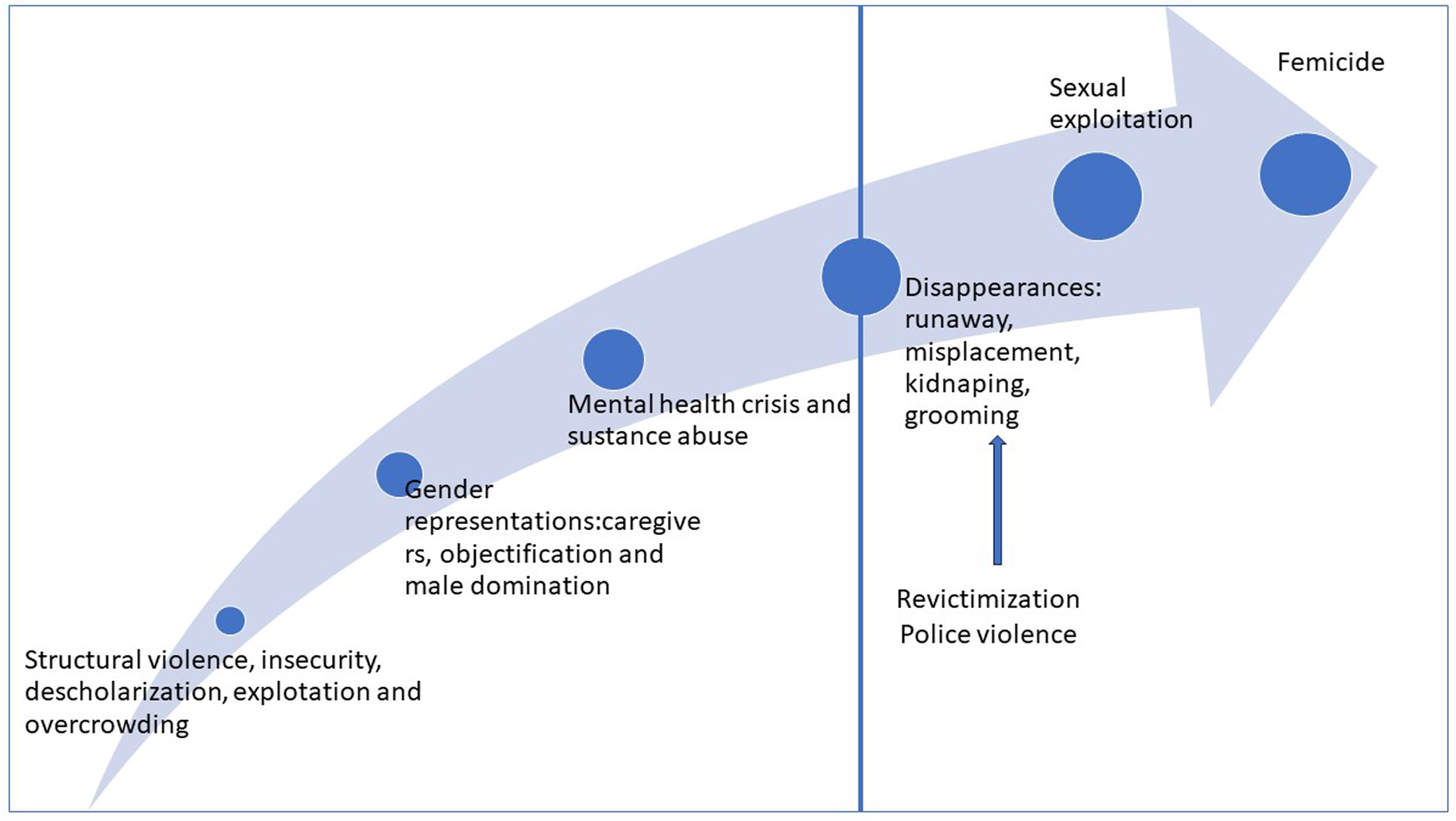
It should be explained that the greatest vulnerability factor for young adult women is the violence perpetrated by their partner or father, which forces them to seek refuge in safe spaces, such as the shelters of Alternativas Pacificas, so that they remain as missing until the authorities are informed of their protection. Many times, they are accompanied by their children, which is why femicide violence is also an important factor of vulnerability for children.
The vulnerability of young men to disappearance
Young men are the most vulnerable group to disappearance in Mexico. There are mainly two interrelated factors that place them in this situation. First, the practices of arbitrary detention and police abuse that constitute enforced disappearance, and second, substance abuse.
It is worth explaining that in the case of teenagers, gender violence is expressed in the imperative of being a provider at an early age. For example, 13-year-old Alexis was forced to take on the role of his father, who died of cancer, because he was the oldest in a household of seven. He began stealing bags and purses in the central market, once agreed to carry drugs in a backpack, and then ran away to go to work in Sinaloa, going missing for three days: “I said if we’re going to make money, fine then, I’ll continue providing for my family.” He was found and returned home. Earning money is a gender mandate for men that places them in vulnerable situations.
Young people detained and disappeared: new logics of forced disappearance
Among the young adult population, the results show the prevalence of police abuse in the arbitrary detention of young people on the streets, who are taken to municipal police or state investigative agency facilities, where they are held without communication for the maximum detention time of 72 hours allowed by the law. During these hours, their worried relatives or partners file a missing person report. The fact that police don’t let them phone their relatives entails they are concealing their whereabouts. This is the legal definition of enforced disappearance. And they don’t let them communicate with their family because they are detained arbitrarily.
Authorities denounced as responsible for arbitrary detention in complaints filed with the state human rights commission in Nuevo León (2018-2022). Source: transparency request 19065539191118623000154 (Comisión Estatal De Derechos Humanos, 2023).
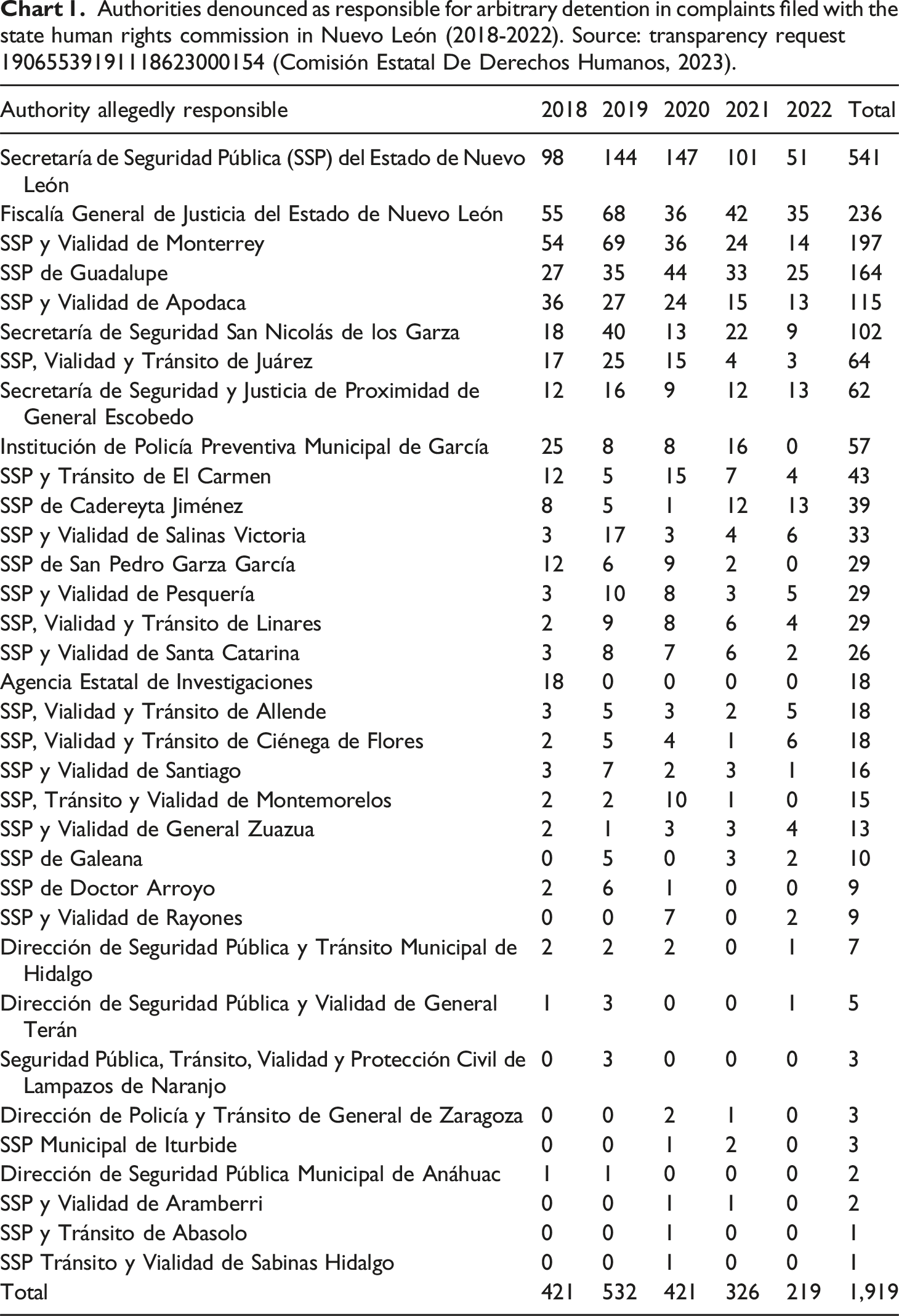
This situation invites us to consider the continuity of practices of detention and disappearance by state agents, that is, enforced disappearance, as occurred in the Dirty War period, but for different reasons. There is no evidence that it is about repressing political opponents, rather it seems that young people from marginalized sectors are subject to abuse, including robbery, by the police. We are facing a reconfiguration of the practices of enforced disappearance, now due to police abuse.
Fernando is native from Estado de México and was living in Monterrey with his girlfriend when he was arrested by the police. He had gone to the airport to meet his girlfriend, but since he could not find her and his phone battery had run out, they were unable to communicate, and he decided to leave. In search of public transportation, he walked along the highway, crossed a bridge over the railroad tracks, he felt lost and went down to the tracks. There he was stopped by police officers. That day he had been drinking alcohol “to kill the heat” and was slightly intoxicated. When questioned, he explained the situation, asked them permission to charge his cell phone or to be left in Monterrey, but they informed him that they would take him to the police station, and took his belongings. The policemen insisted that he had consumed an illegal substance, which he hadn’t, and that it was abnormal for him to be wandering in this area.
At the police station, they did not let him charge his cell phone to notify his girlfriend, and he was detained for disturbing the peace (even though this was not the case) for 72 hours. Upon his release, they made him sign his statement, and when he objected that he had not disturbed the peace, they ordered him to keep quiet, “you better not say anything, sign and leave.” They did not give him back his wallet and headphones and dismissed him with a “move or we’ll get you again.” His girlfriend had filed a missing person report and was in tears when they met again. She had called several police stations and none of them could account for him. Although Fernando did not denounce the violation of his human rights, he said, “I don’t know whether to be more afraid of the police or the criminals, because it’s practically the same thing. Not all policemen are the same, but it’s a shame.”
These practices of arbitrarily detaining and forbidding communication constitute practices of enforced disappearance, since the whereabouts of the person are concealed. In this sense, the high rate of complaints for arbitrary detention against the attorney general’s office in Nuevo León provides elements to understand why the prosecutors’ office won’t investigate their co-workers. This ethic conflict contributes to impunity of enforced disappearances.
It should be noted that the collaboration of the district attorney’s office with this investigation was subpar, all requests for transparency were rejected and we never could obtain the number of missing persons nor the number of found children and teenagers placed in the public child protection services on behalf of the prosecutor’s office. In other words, the prosecutor’s office is an actor that does not wish to make its investigation and victim protection practices transparent.
Addiction and disappearance of a missing person’s son
Police officers often justify their arrests on the grounds that the person stopped was under the influence of alcohol or in possession of an illegal substance (marijuana). Certainly, substance use is the second factor of vulnerability to the disappearance of young people, including cases of people who voluntarily entered a rehabilitation center or those who were wandering around intoxicated and were arrested. Let us now consider the consequences of being a victim of the crime of disappearance, for the child of a missing person, and how substance use is also a product of the pain and family disintegration it produces.
Joel is 19 years old, he has been using substances since he was 12, and believes that this is due to the family and neighborhood in which he grew up. It was a cousin who induced him to use substances, at home everyone does (crystal meth and marijuana). Joel is the son of his mother’s former partner, who was disappeared when he was 4 and has not been heard from since. He grew up with many shortcomings, he received no attention at home and remembers that even when he worked as a car washer, he was not given food. He describes his life at home as a permanent conflict, and what hurts him the most is that his mother told him “why didn’t your damn father take you.” Joel grew up feeling rejected. When he was 9 years old, his mother put him under the care of his paternal aunt, who took care of him until he attended high school, after which he returned to his mother’s house and started using substances. He has been admitted to rehab twice, both times for a year, and was tested by the treatment he received in these places, which for him was tantamount to torture. “It is the worst,” because “they beat you, they mistreat you psychologically” and they will even “wrap you in plastic and leave you standing for one or two days.” For the same reason, when he wanted to quit drugs again, he ran away to his aunt’s house, and was admitted to another center, where he stayed for fifteen days, before escaping. That’s when his mother put out a missing person report. Now he lives with his aunt, has been a teetotaler for three months and works as an assistant in a mechanic’s shop. He knows that he should not return to his mother’s house because he would relapse, and he wants psychological support.
Being admitted and fleeing from a rehabilitation center seems to be the symptom of a deep pain due to the disappearance of his father and the rejection he has felt since he was a child. The underlying problem, then, has to do with the practice of disappearance and its long-term effects on family members, and the need for psychological and financial support to deal with its consequences.
Conclusions
The phenomenon of disappearances in Mexico has gained new relevance in the context of the militarization of public security to combat drug trafficking over the last 15 years. Today, not only are there many more missing persons than in the context of the Dirty War (1964–1982), but the victims of disappearances do not constitute a government opposing sector. Rather, they are teenage women and men between the ages of 20 and 40 who, according to the study conducted in Nuevo León, live in contexts of structural violence. For young men, substance use is a way to mitigate their precarious living conditions, but they are prone to fall prey to police abuse and criminal violence, so they also make up the bulk of homicide victims.
The study carried out in Nuevo León is innovative in its methodology; because previous studies were based on testimonies and experiences of missing persons relatives only, ignoring the experiences of those who have been found. However, the experience of being disappeared is part of the memory of the missing person, even when he has been found. Rather, their experiences teach us that structural violence, prevalent in areas of high industrial growth but lacking in any kind of infrastructure for the population, is a major factor in explaining why teenage girls and young males are more vulnerable to disappearance.
The experiences of teenage women in Nuevo León invite us to compare them with the situation previously experienced in Ciudad Juárez, Chihuahua, in the nineties of the last century, when hundreds of young women who went missing were found murdered (Gutiérrez, 2022). Although attention was then focused on the phenomenon of femicide, and not so much on disappearances, femicides were preceded by the disappearance of the victims. It is striking that in both contexts (in the northeastern arc of the metropolitan area of Monterrey and Ciudad Juárez) there is a strong industrial development oriented towards the northern border, and structural violence expressed in the lack of public services, childcare, access to public health, decent living conditions and labor exploitation. Structural violence is an important factor of vulnerability to disappearance and is at the base of the continuum of femicide violence.
Disappearances also prevail in a cultural context where gender roles limit women and men to being caregivers and providers respectively. Thus, teenage girls suffer confinement, the obligation to take care of their siblings in a context where there are no childcare centers (linked to structural violence), so they run away to escape confinement and the burden of being a caregiver, while boys are expected to provide, according to the masculinity mandate, in the absence of support for widows and female led households. Sexual abuse against girls and teenagers and the impossibility of filing a lawsuit for these sexual crimes, are an important cause of emotional crises and the reason behind some runaways. Gender violence and adultcentrism are cultural violences that make teenage girls vulnerable to psychological and sexual abuse. Forced to stay at home and considered manipulable, they tend to run away to escape the violence.
Likewise, substance abuse and its criminalization are another factor of vulnerability to disappearance; however, this is not considered public health problem, but rather a public security issue. Since 2006, the idea has prevailed that the power of drug trafficking should be mitigated by armed means, rather than through justice and public health policies. In other words, a prevailing social representation makes armed violence, of state origin, desirable to regulate drug consumption and trafficking. This same idea is what legitimizes the arbitrary detention practices of the police against young people who are suspected of alcohol or drug consumption; whose whereabouts are concealed and for whom communication is forbidden, so they are enforcedly disappeared by the police. These practices, when not prosecuted, are perpetuated.
Thinking about disappearance from the experiences of missing and found persons allows us to rethink this concept that has been historically constructed to account for the case of detainees-disappeared by authoritarian regimes (Pozos, 2021). It allows us to notice the differences between the practices of enforced disappearance—which persist due to police abuse and the criminalization of substance use—and other forms of disappearance due to abuses perpetrated at home (sexual violence, violent disciplining) or by criminal actors seeking to hook women, but also as ways of resisting adultcentrism and the norms that parents impose on teenage girls (runaways). Disappearance can thus take the form of a runaway, lost people, an abduction and grooming for the purpose of sexual and labor exploitation, or an enforced disappearance.
Footnotes
Declaration of conflicting interests
The author(s) declared no potential conflicts of interest with respect to the research, authorship, and/or publication of this article.
Funding
The author(s) received no financial support for the research, authorship, and/or publication of this article.
