







Abstract
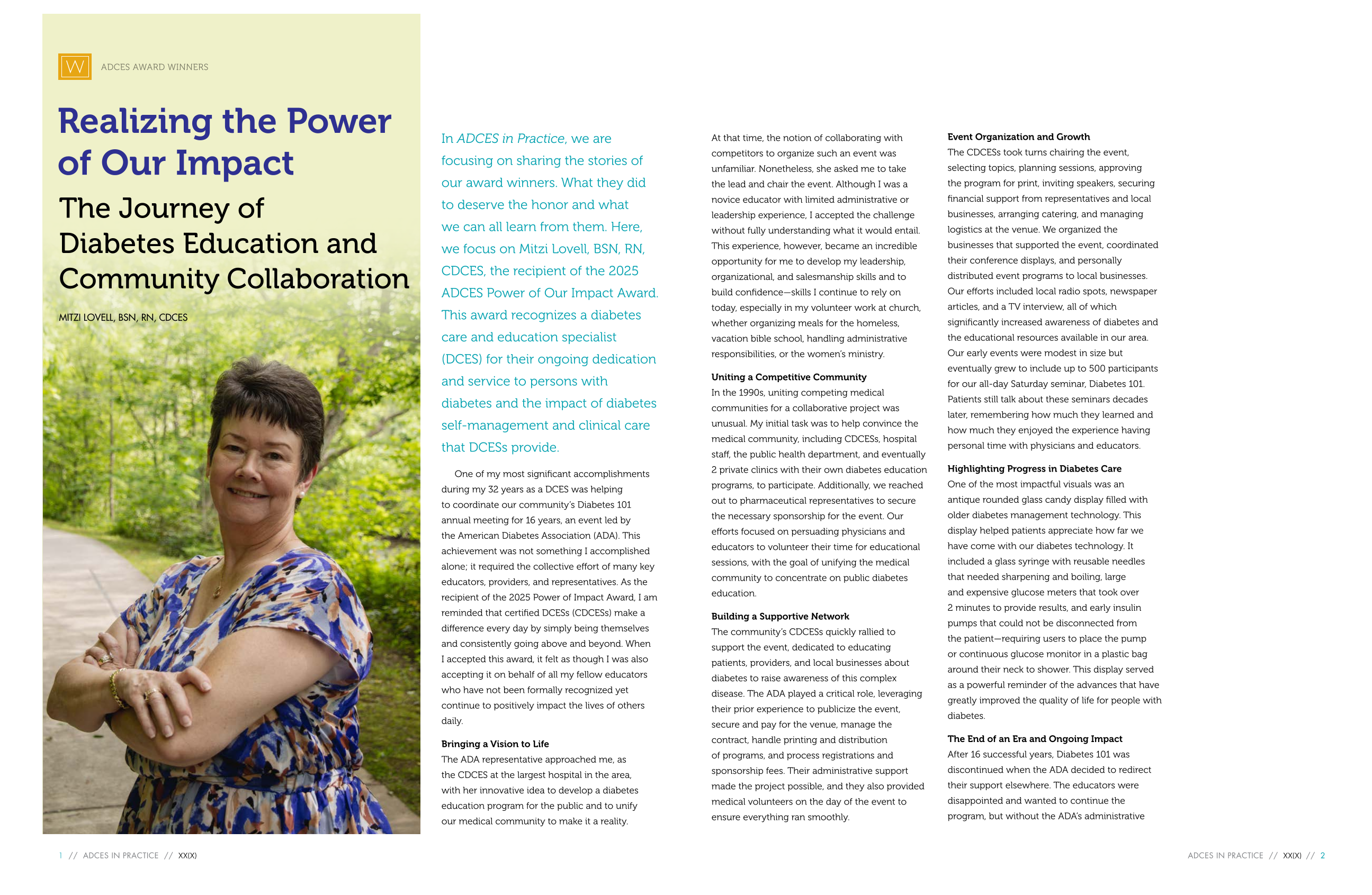
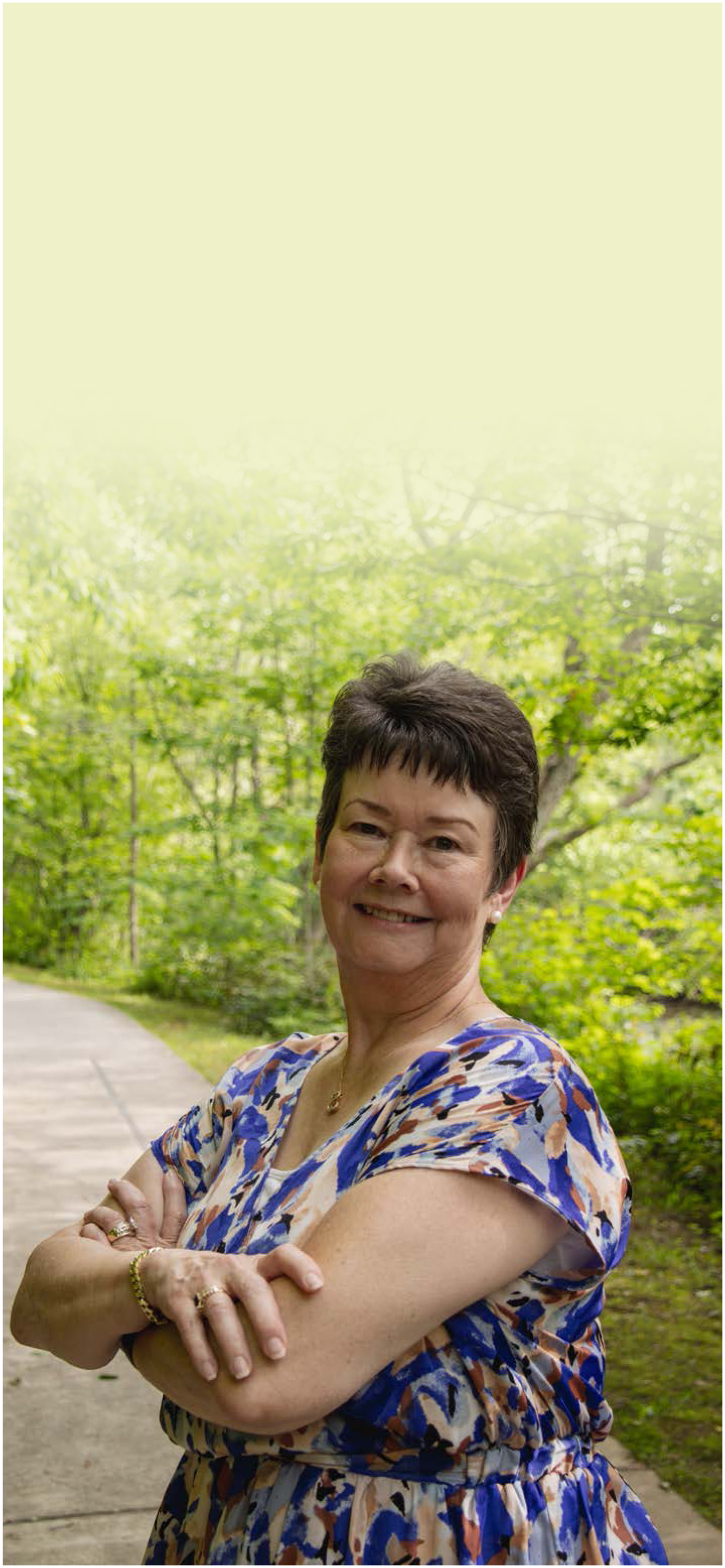
In ADCES in Practice, we are focusing on sharing the stories of our award winners. What they did to deserve the honor and what we can all learn from them. Here, we focus on Mitzi Lovell, BSN, RN, CDCES, the recipient of the 2025 ADCES Power of Our Impact Award. This award recognizes a diabetes care and education specialist (DCES) for their ongoing dedication and service to persons with diabetes and the impact of diabetes self-management and clinical care that DCESs provide.
One of my most significant accomplishments during my 32 years as a DCES was helping to coordinate our community’s Diabetes 101 annual meeting for 16 years, an event led by the American Diabetes Association (ADA). This achievement was not something I accomplished alone; it required the collective effort of many key educators, providers, and representatives. As the recipient of the 2025 Power of Impact Award, I am reminded that certified DCESs (CDCESs) make a difference every day by simply being themselves and consistently going above and beyond. When I accepted this award, it felt as though I was also accepting it on behalf of all my fellow educators who have not been formally recognized yet continue to positively impact the lives of others daily.
Bringing a Vision to Life
The ADA representative approached me, as the CDCES at the largest hospital in the area, with her innovative idea to develop a diabetes education program for the public and to unify our medical community to make it a reality. At that time, the notion of collaborating with competitors to organize such an event was unfamiliar. Nonetheless, she asked me to take the lead and chair the event. Although I was a novice educator with limited administrative or leadership experience, I accepted the challenge without fully understanding what it would entail. This experience, however, became an incredible opportunity for me to develop my leadership, organizational, and salesmanship skills and to build confidence—skills I continue to rely on today, especially in my volunteer work at church, whether organizing meals for the homeless, vacation bible school, handling administrative responsibilities, or the women’s ministry.
Uniting a Competitive Community
In the 1990s, uniting competing medical communities for a collaborative project was unusual. My initial task was to help convince the medical community, including CDCESs, hospital staff, the public health department, and eventually 2 private clinics with their own diabetes education programs, to participate. Additionally, we reached out to pharmaceutical representatives to secure the necessary sponsorship for the event. Our efforts focused on persuading physicians and educators to volunteer their time for educational sessions, with the goal of unifying the medical community to concentrate on public diabetes education.
Building a Supportive Network
The community’s CDCESs quickly rallied to support the event, dedicated to educating patients, providers, and local businesses about diabetes to raise awareness of this complex disease. The ADA played a critical role, leveraging their prior experience to publicize the event, secure and pay for the venue, manage the contract, handle printing and distribution of programs, and process registrations and sponsorship fees. Their administrative support made the project possible, and they also provided medical volunteers on the day of the event to ensure everything ran smoothly.
Event Organization and Growth
The CDCESs took turns chairing the event, selecting topics, planning sessions, approving the program for print, inviting speakers, securing financial support from representatives and local businesses, arranging catering, and managing logistics at the venue. We organized the businesses that supported the event, coordinated their conference displays, and personally distributed event programs to local businesses. Our efforts included local radio spots, newspaper articles, and a TV interview, all of which significantly increased awareness of diabetes and the educational resources available in our area.
Our early events were modest in size but eventually grew to include up to 500 participants for our all-day Saturday seminar, Diabetes 101. Patients still talk about these seminars decades later, remembering how much they learned and how much they enjoyed the experience having personal time with physicians and educators.
Highlighting Progress in Diabetes Care
One of the most impactful visuals was an antique rounded glass candy display filled with older diabetes management technology. This display helped patients appreciate how far we have come with our diabetes technology. It included a glass syringe with reusable needles that needed sharpening and boiling, large and expensive glucose meters that took over 2 minutes to provide results, and early insulin pumps that could not be disconnected from the patient—requiring users to place the pump or continuous glucose monitor in a plastic bag around their neck to shower. This display served as a powerful reminder of the advances that have greatly improved the quality of life for people with diabetes.
The End of an Era and Ongoing Impact
After 16 successful years, Diabetes 101 was discontinued when the ADA decided to redirect their support elsewhere. The educators were disappointed and wanted to continue the program, but without the ADA’s administrative infrastructure to manage registration and sponsorship funds, it became too challenging for any of the involved organizations to sustain it, especially given the demands of their full-time clinical roles.
Reflections and Lasting Influence
Having recently retired from over 25 years in clinic, I am now more aware than ever that we often do not realize the true impact we have on our patients and their families. Since retiring, I have been deeply moved by the outpouring of gratitude from patients and families, which has helped me see the influence I have had over the years. I want to remind DCESs that although we often hear criticism, we rarely hear about the positive effects of our work. We are the unsung heroes of the medical community, and it is important not to underestimate the difference you make each day in helping people manage their diabetes, mental health, and overall lives. I am humbled by this award and feel immense gratitude for the privilege of knowing and supporting so many wonderful individuals throughout their diabetes and life journeys.
Here is a community event checklist that can help you feel confident starting your own project and continue to modify as you go:
Define the event’s purpose, goals, financial support, and budget.
Select a chairperson.
Secure support from key stakeholders: educators, health care providers, and health department.
Form a planning committee with clear roles and deadlines with regular meetings.
Secure venue, date, and catering.
Develop timeline, sessions, and program.
Engage pharmaceutical representatives and local businesses for financial support.
Invite speakers and sponsors.
Approve and finalize the event program and distribute.
Coordinate conference displays.
Organize registration and pharmaceutical finances.
Create promotional materials, programs, and posters recognizing sponsors.
Arrange for local media coverage.
Secure volunteers (nursing and medical students) for setup and assistance.
Do a walk through in event space to help with logistics and last-minute issues.
Ensure all technical needs are met and audiovisual equipment rented if needed: laptops, screens, microphones, etc.
Provide clear signage and directions.
Obtain speaker handouts a week in advance and print.
Have moderators assigned for all speakers.
Have a contingency plan for emergencies.
Collect feedback from participants and stakeholders and review budget.
Debrief with planning committee and send thank you notes.
Share outcomes, impact, budget, and document processes and explore options for future development of program. ■