






Abstract

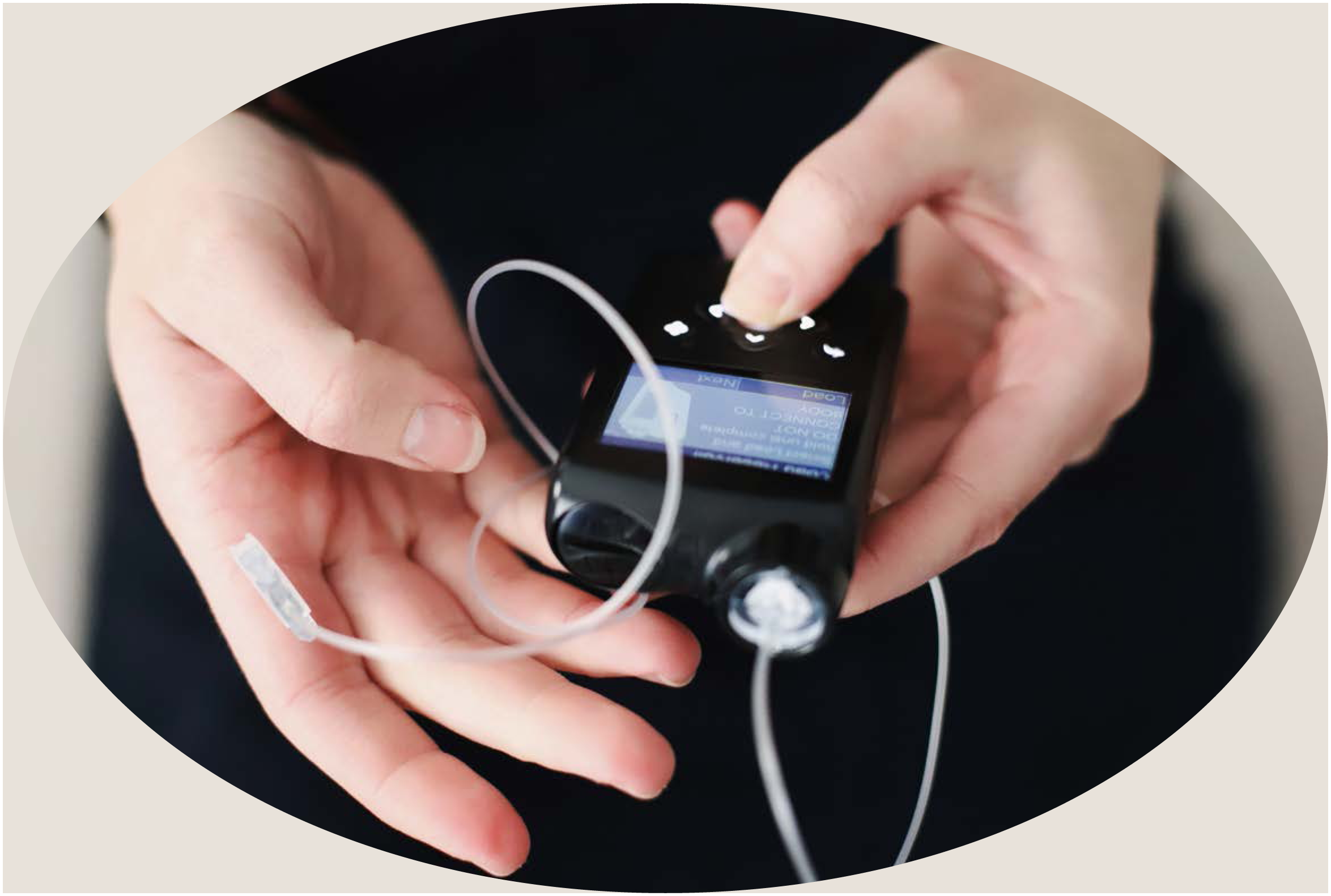
We are pleased to announce the newly updated and published practice paper, The Diabetes Care and Education Specialist Role in Insulin Pump Therapy. Below is a summary of the paper. We hope you will access the full paper on our website.
The goal of this paper is to outline the insulin pump therapy topics that should be covered by diabetes care and education specialists (DCESs) when teaching people with diabetes and their families and caregivers. The paper focuses on automated insulin delivery (AID) systems as the primary continuous subcutaneous insulin infusion system that DCESs must gain and maintain expertise in as a subspecialty in diabetes care and education.
DCESs play an essential role in supporting people with diabetes to successfully use AID systems. These technologies have been shown to improve glycemic outcomes, reduce hypoglycemia, and enhance quality of life for people with type 1 diabetes and others requiring intensive insulin management.
DCESs are uniquely positioned to provide the following:
Support people with diabetes and caregivers in using insulin pumps and AID systems.
Coordinate care among health care providers (HCPs), pump manufacturers, and pump trainers during initiation and follow-up of insulin pump therapy.
Train and support HCPs, school staff, community organizations, and families/caregivers involved in the person’s diabetes self-management to enhance their understanding of AID system use in real-world settings (eg, schools, workplaces, and travel).
Stay current on new and emerging diabetes technologies, including insulin pumps, continuous glucose monitors, and FDA-approved and non-FDA-approved AID systems, such as open-source systems.
Provide guidance that promotes safe and informed decision-making when people are using or considering unregulated systems.
Interpret sensor and insulin pump data by analyzing patterns in glucose data; provide recommendations to user to improve glucose and diabetes self-management.
Collaborate closely with other HCPs to recommend treatment changes based on data interpretation.
To fulfill these responsibilities, DCESs are encouraged to perform the following:
Obtain advanced training in managing AID systems, including carbohydrate counting, insulin-to-carb ratios, correction factors, and sensor interpretation.
Obtain certification in pump training as a certified pump trainer with each specific pump model or brand they train on, as required by the manufacturer.
Demonstrate competence in downloading and interpreting insulin pump and continuous glucose monitoring data and using this information to enhance treatment plans.
Commit to ongoing education, including staying informed of system updates, software upgrades, and emerging technologies.
The paper addresses the following:
Assessing people for insulin pump therapy use
Desired attributes of successful insulin pump users
Person-centered insulin pump selection
Nonautomated insulin patch pumps
Open-source systems
Infusion set selection
Initial and ongoing education objectives
Safe practices
Cybersecurity
Managing continuous monitoring
Special circumstances
Exercise
Travel
Insulin pumps in school and daycare settings
Medical procedures with insulin pumps
Insulin pump use during hospitalization
Special populations
Insulin pump use in older adults
Insulin pump use in people with disabilities
Pregnancy and insulin pump use.
The full paper can be found on the ADCES website. ■
Footnotes
Acknowledgements
ADCES gratefully acknowledges the following individuals for their role in creating this paper: Elizabeth Hanna, MS, RDN, CDCES; Carla Cox, PhD, RDN, CDCES; Cassandra Henderson, MS, MD, CDCES; and Paulina N. Duker, MPH, BSN, RN, CDCES