






Abstract

Living with type 1 diabetes (T1D) involves far more than numbers, devices, and treatment plans. For many people, the emotional and psychological load of diabetes is constant—often invisible and frequently underaddressed. DiabetesSangha exists to meet this need.
DiabetesSangha is a nonprofit organization dedicated to supporting the emotional well-being of people living with T1D through mindfulness, meditation, and community connection. Founded and led by individuals living with T1D, the organization offers free, accessible programs designed to support healthy coping alongside medical care.
At its core, DiabetesSangha recognizes that diabetes distress is not a personal failure—it is a natural response to living with a demanding, 24/7 disease. Mindfulness offers people with T1D a way to relate more kindly and skillfully to their experience, helping reduce burnout, increase self-compassion, and build sustainable resilience over time.
Addressing a Missing Need in Diabetes Care
Although medical advances have transformed T1D management, the emotional and psychological dimensions of living with the disease have remained largely unaddressed. People with T1D consistently report needing support beyond clinical care—support that addresses the relentless mental load, the isolation of constant vigilance, and the emotional toll of unpredictability despite careful management.
DiabetesSangha emerged in 2021 to fill this gap, creating a space where individuals with T1D could learn about and practice mindfulness designed around their experience. What began as pilot programs in compassion and mindfulness for T1D has grown into a thriving community that has now hosted over 1400 live meditation sessions—a testament to both the depth of the need and the impact.
DiabetesSangha offers:
live, guided meditation sessions held daily on Zoom
weekly workshops on special topics, to expose our community to other approaches to living well with T1D.
recorded meditations and workshops available on demand through YouTube
introductory courses in mindfulness specifically tailored for T1D
in-person events, such as mindfulness retreats.
These are all completely free to participants.
All programs are facilitated by trained mindfulness teachers who are living with T1D. The organization offers over 300 live practices each year, ensuring accessibility regardless of schedule or time zone.
Support That Complements Clinical Care
Diabetes care and education specialists often recognize the emotional challenges their patients face but lack time, tools, or referral options to fully address them. DiabetesSangha fills this gap by offering structured, evidence-based mindfulness practices in a peer-supported environment.
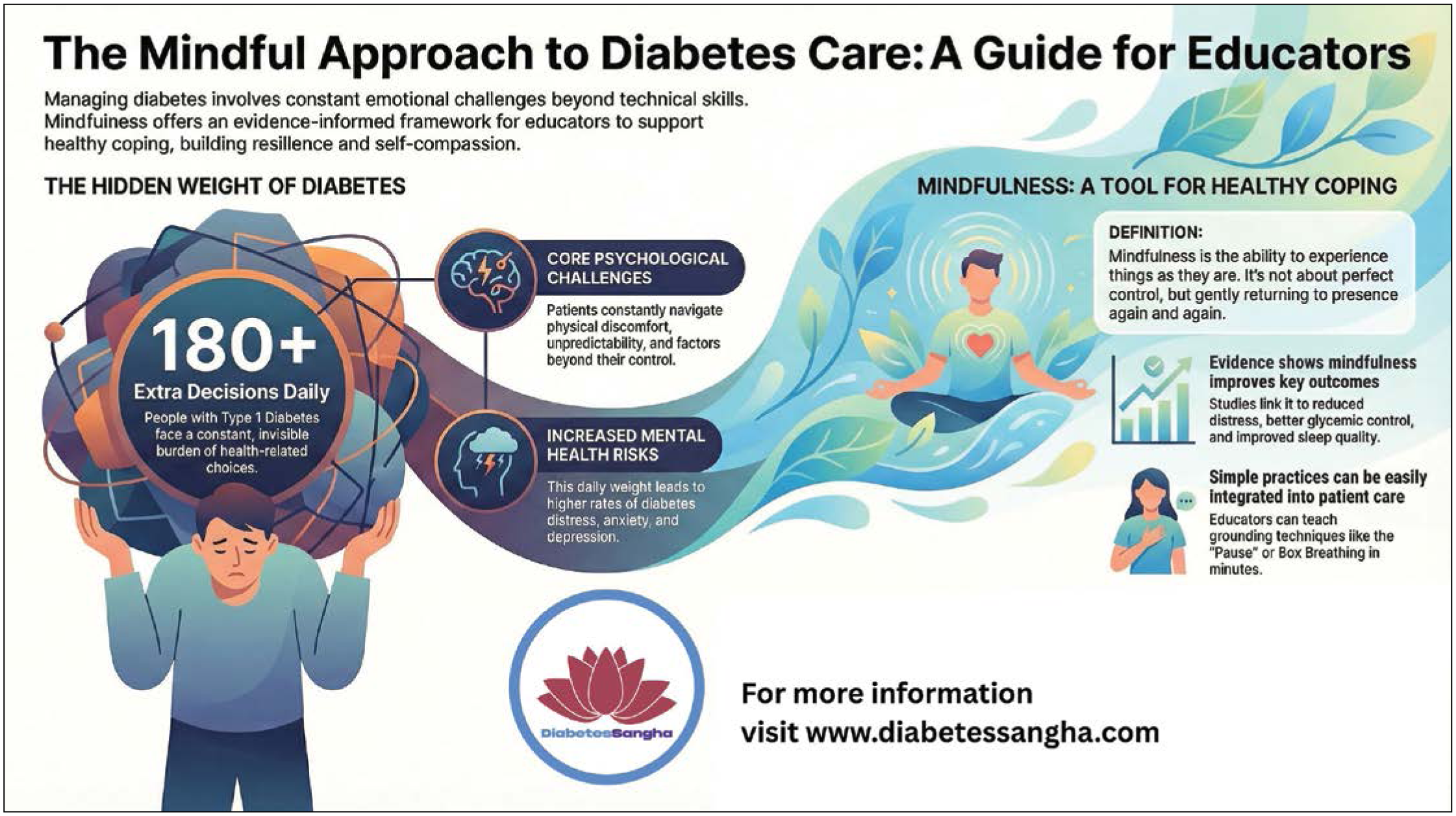
Participants frequently share feeling more attentive to their body and how it changes as glucose levels go up and down and how their emotional experience impacts their decision-making—allowing them to make wiser decisions on a day-to-day basis.
Why This Matters for Diabetes Care and Education Specialists
Healthy coping is a foundational self-care behavior in the ADCES7 framework, yet many people with diabetes struggle to find practical support in this area.
DiabetesSangha is an easy button for just that. It is:
free to participants
designed specifically for T1D
Supportive of balancing care goals with current harsh realities
a wellspring of foundational skills necessary to build long-term healthy coping strategies
an excellent place to find a supportive community.
Diabetes care and education specialists can recommend DiabetesSangha to individuals at any stage of their diabetes journey, whether newly diagnosed or experiencing long-term fatigue.
Building Community Across the Diabetes Ecosystem
DiabetesSangha is deeply engaged with the broader diabetes community, working to integrate mindfulness and mental health support into diverse diabetes settings. The organization serves as a wellness partner for Connected in Motion, bringing mindfulness practices to their community adventure weekends. DiabetesSangha participates in Breakthrough T1D’s Type One Nations summits and collaborates with diabetes health centers, including the Kovler Diabetes Center at the University of Chicago and the Barbara Davis Diabetes Center, to expand access to contemplative practices like mindfulness. DiabetesSangha facilitators have also presented at multiple ADCES national conferences.
Learning More
DiabetesSangha welcomes collaboration with diabetes care and education specialists and regularly works alongside clinicians, educators, and organizations committed to whole-person diabetes care.
To learn more or explore available resources, visit www.diabetessangha.com or email