Abstract

The minimally invasive approach to hiatal hernia repair has become standard of care and is increasingly performed as a same-day discharge surgery. Robotic-assisted surgery also has many advantages and has gained popularity over the years. This study aims to identify the trends for same-day home recovery between robotic-assisted and conventional laparoscopic hiatal hernia repairs in recent years and compare short-term clinical outcomes.
A retrospective analysis of elective, non-revisional robotic-assisted and conventional laparoscopic hiatal hernia repairs was performed between January 2020 and December 2022 within a large, multicenter healthcare system. Combined procedures were excluded. Demographic and intraoperative variables were compared between the cohorts, as well as short-term clinical outcomes to evaluate the safety of same-day home recovery.
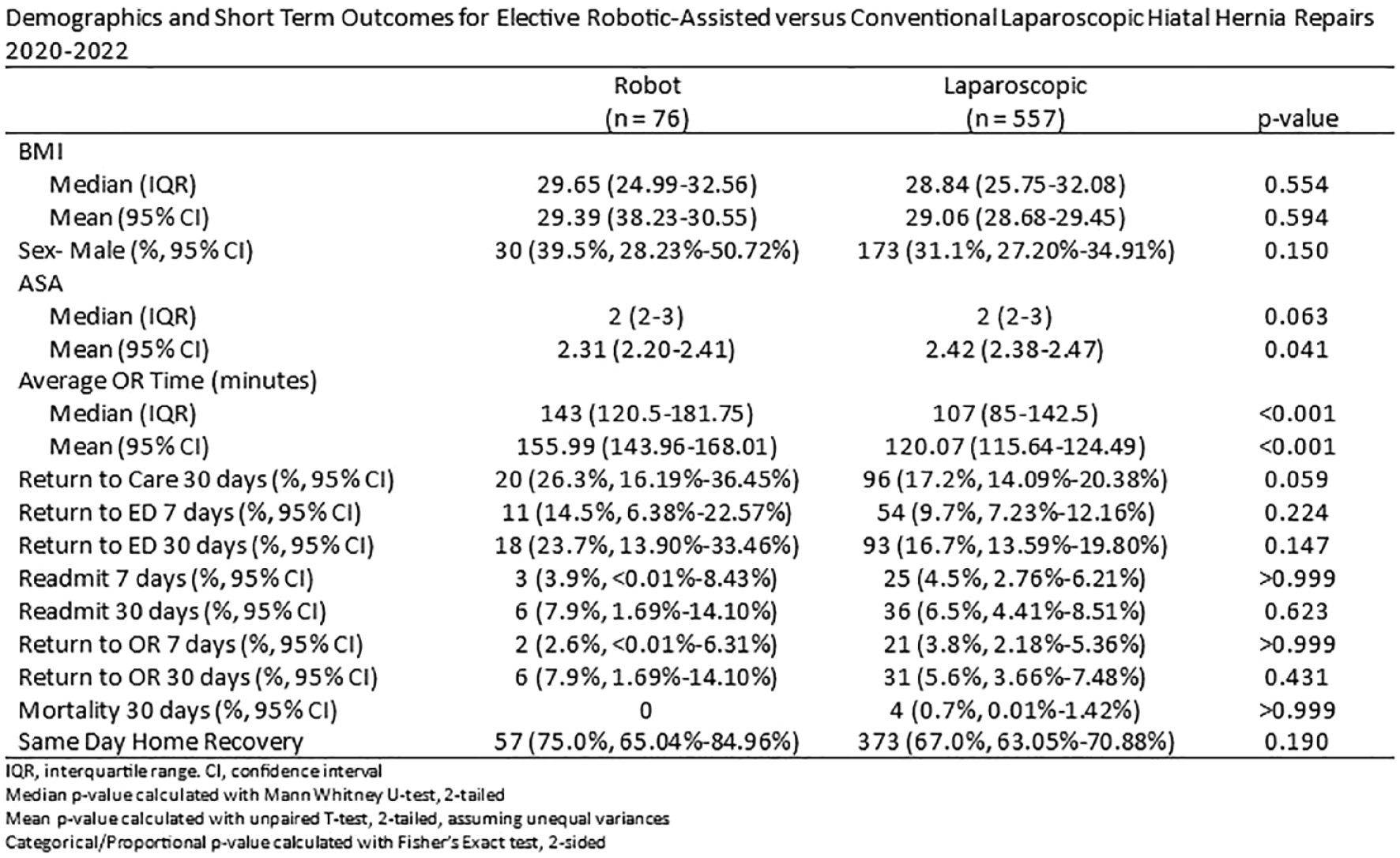
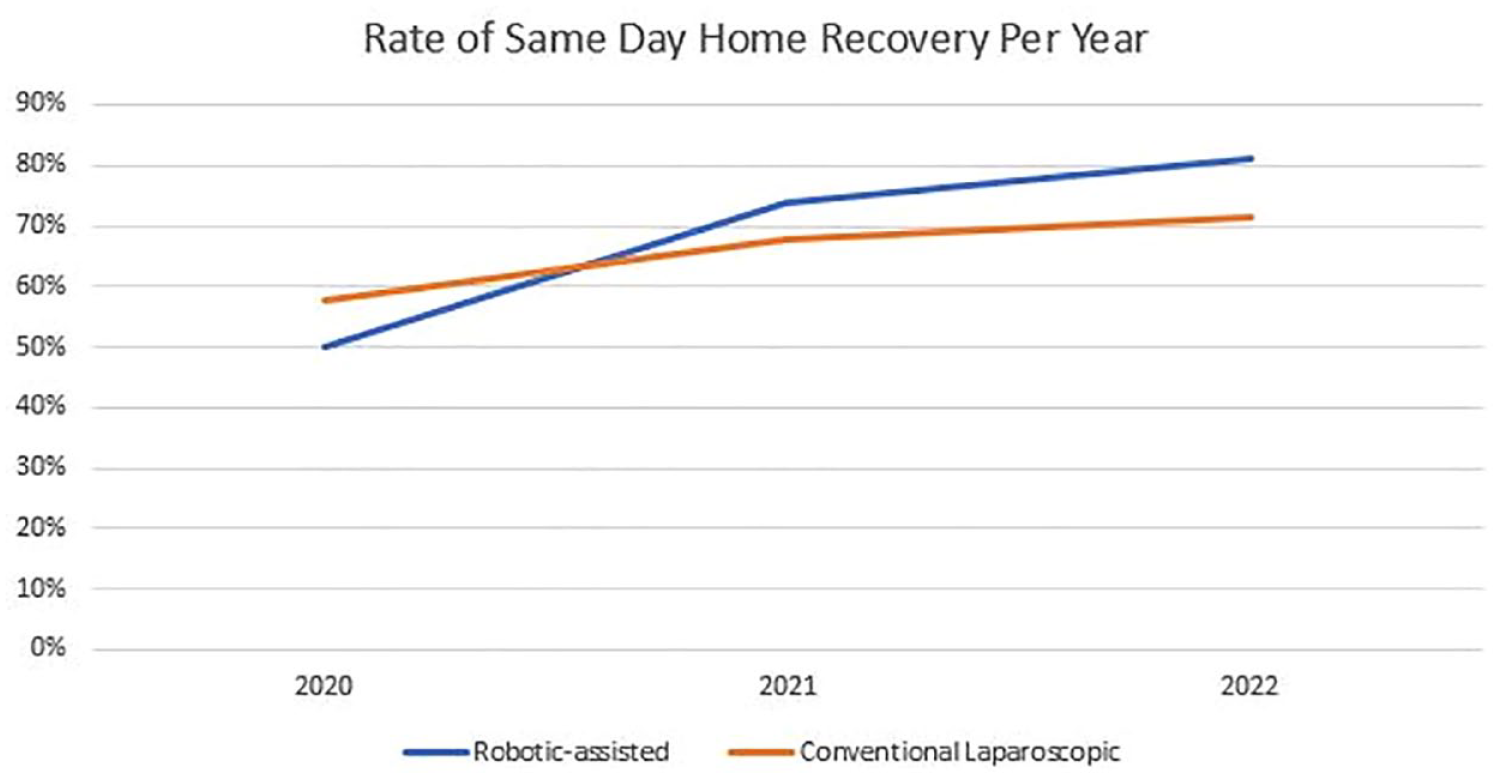
Analysis included 633 patients (76 robotic-assisted, 557 conventional laparoscopic). Year to year, there was an increasing rate of same-day discharges for both the robotic-assisted and conventional laparoscopic repairs. Robotic-assisted operative time was longer (median: 143 minutes vs 105 minutes; mean: 155 minutes vs 122 minutes, P < .001). There was no difference in 30-day outcomes, including 7- or 30-day return to emergency department, readmission to hospital, or mortality. Overall, there was a trend toward higher rates of same-day discharge in the robotic-assisted cohort, although this was not statistically significant (75% vs 67%).
With similar short-term outcomes, both the robotic-assisted hiatal hernia repair and conventional laparoscopic hiatal hernia repair allow for safe same-day home recovery.