Abstract
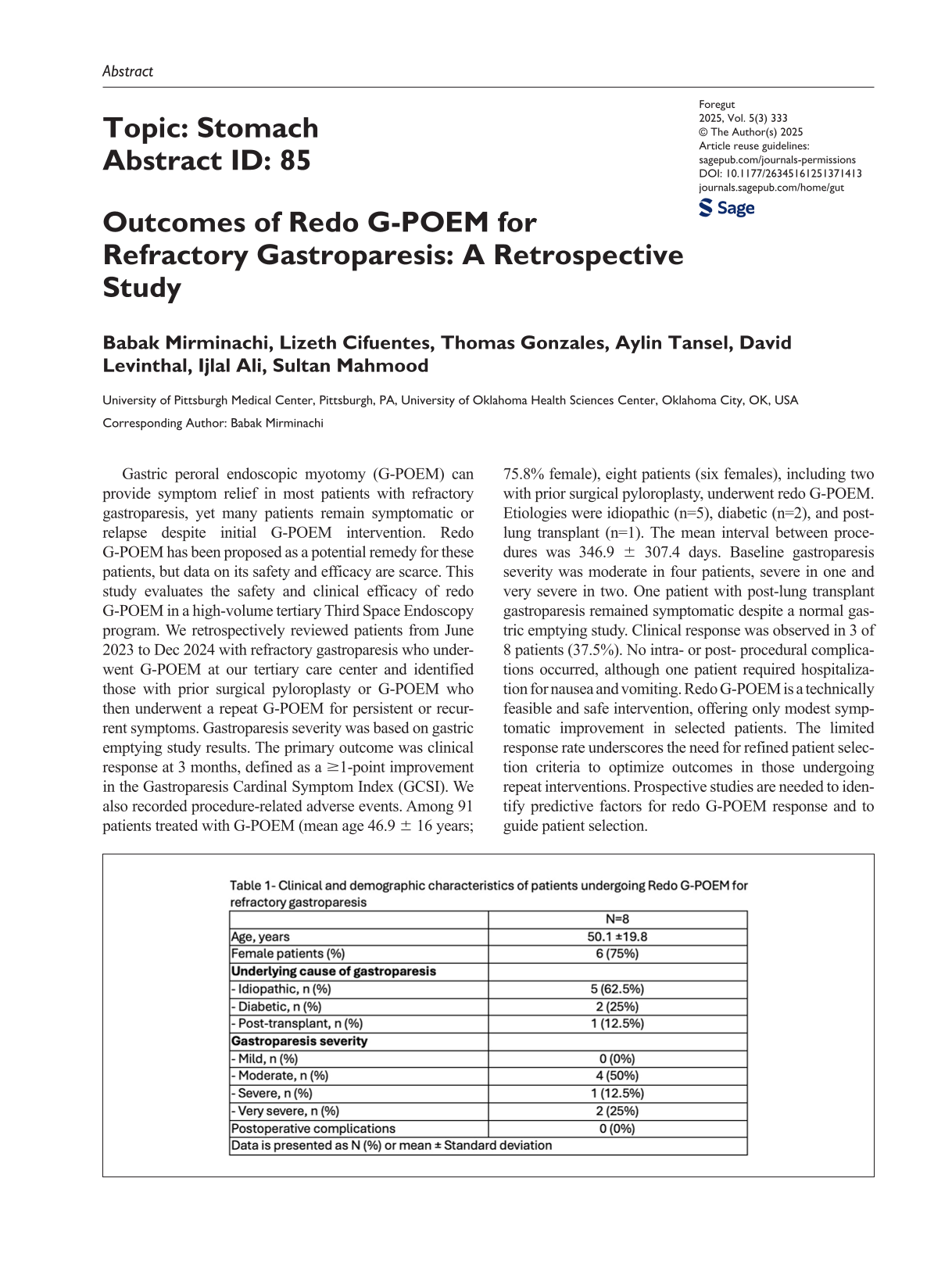
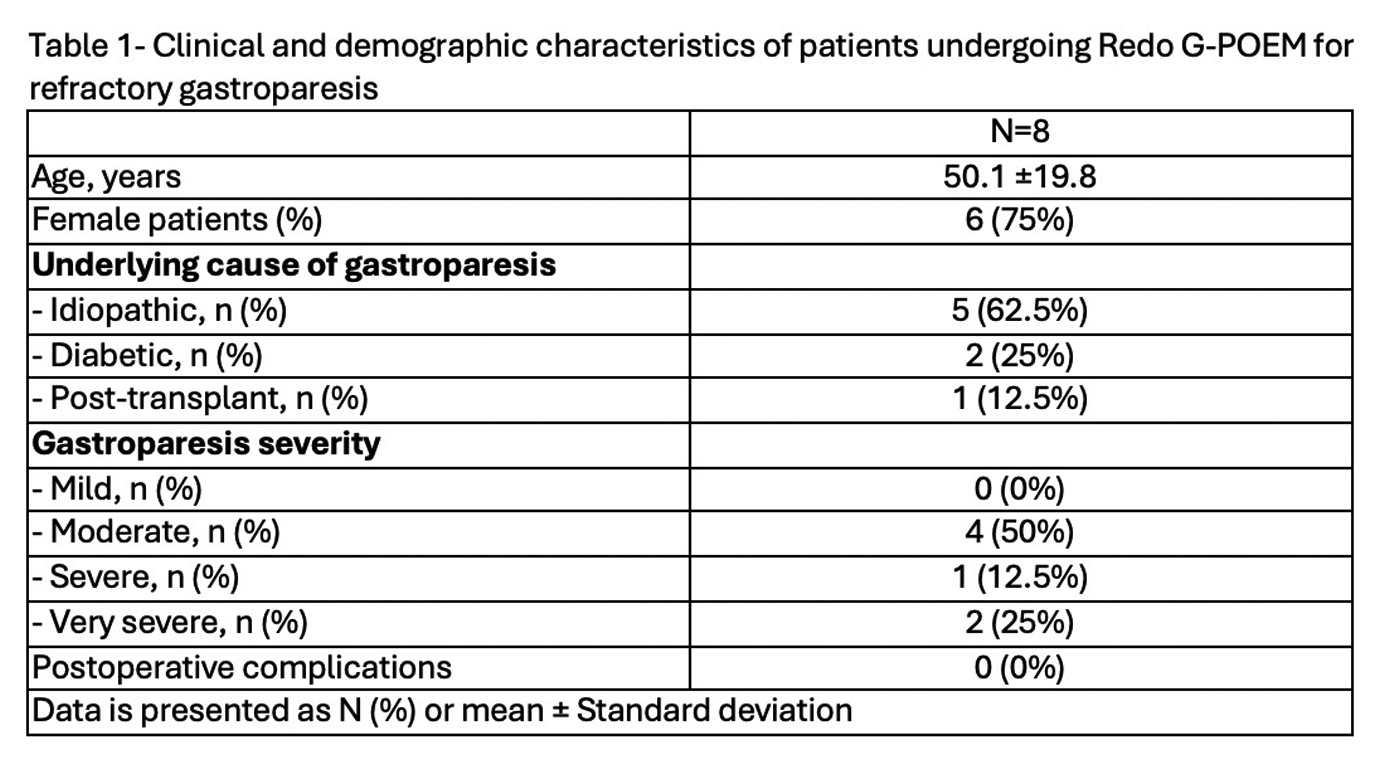
Gastric peroral endoscopic myotomy (G-POEM) can provide symptom relief in most patients with refractory gastroparesis, yet many patients remain symptomatic or relapse despite initial G-POEM intervention. Redo G-POEM has been proposed as a potential remedy for these patients, but data on its safety and efficacy are scarce. This study evaluates the safety and clinical efficacy of redo G-POEM in a high-volume tertiary Third Space Endoscopy program. We retrospectively reviewed patients from June 2023 to Dec 2024 with refractory gastroparesis who underwent G-POEM at our tertiary care center and identified those with prior surgical pyloroplasty or G-POEM who then underwent a repeat G-POEM for persistent or recurrent symptoms. Gastroparesis severity was based on gastric emptying study results. The primary outcome was clinical response at 3 months, defined as a ≥1-point improvement in the Gastroparesis Cardinal Symptom Index (GCSI). We also recorded procedure-related adverse events. Among 91 patients treated with G-POEM (mean age 46.9 ± 16 years; 75.8% female), eight patients (six females), including two with prior surgical pyloroplasty, underwent redo G-POEM. Etiologies were idiopathic (n=5), diabetic (n=2), and post-lung transplant (n=1). The mean interval between procedures was 346.9 ± 307.4 days. Baseline gastroparesis severity was moderate in four patients, severe in one and very severe in two. One patient with post-lung transplant gastroparesis remained symptomatic despite a normal gastric emptying study. Clinical response was observed in 3 of 8 patients (37.5%). No intra- or post- procedural complications occurred, although one patient required hospitalization for nausea and vomiting. Redo G-POEM is a technically feasible and safe intervention, offering only modest symptomatic improvement in selected patients. The limited response rate underscores the need for refined patient selection criteria to optimize outcomes in those undergoing repeat interventions. Prospective studies are needed to identify predictive factors for redo G-POEM response and to guide patient selection.